First, we describe the band-limited signals . The details can be seen in [6].
Definition: A function  is said to be
  band-limited if

Here  is the Fourier transform of
 :
:
 (1)
(1)
We then have the inversion formula:

In many practical problems, the signal  is noisy:
 (2)
(2)
where  is the noise
 (3)
(3)
and  is the exact band-limited signal.
In this paper, we will consider the problem low pass filtering:
 (4)
(4)
If the signal is noisy however, the filter is not reliable. We will give an example to show that the noise can become very large after the low pass filtering process. So this filter is not reliable in the noisy case. And a regularized low pass filtering algorithm will be presented.
In section 2 we give the property of the low pass filter. A regularized filtering algorithm and the proof of its convergence are in section 3. The numerical results of some examples are given in section 4. Finally, the conclusion is given in section 5.
2. The Property of the Low Pass Filter
In this section, we discuss the property of the low pass filter.
Example. Assume the noise is  where
where  is a given point in the time domain and
  is close to zero. Then the noise signal after the filtering is
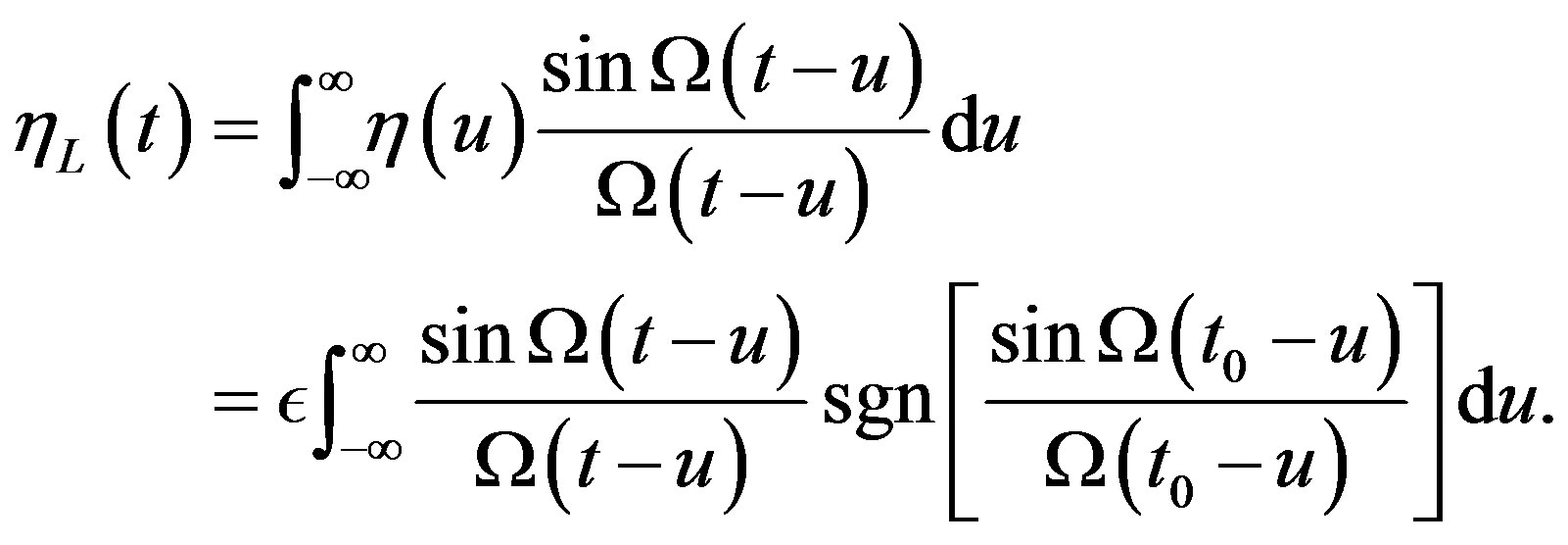
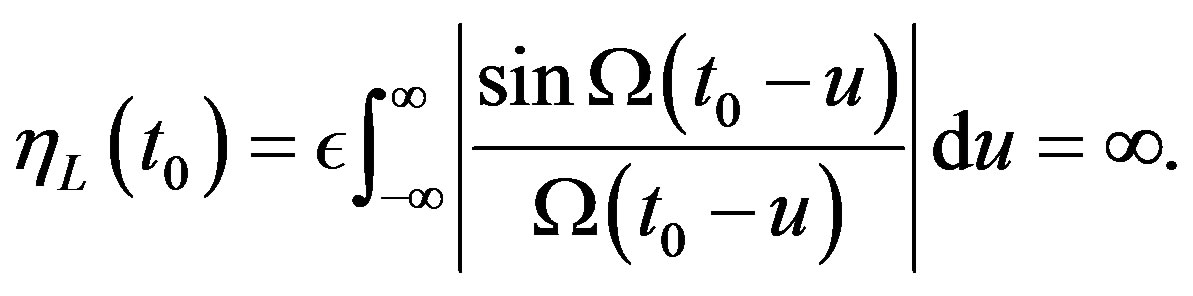
We can see that . However, the noise at
  after the filtering is
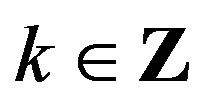
Also at any point ,
, 
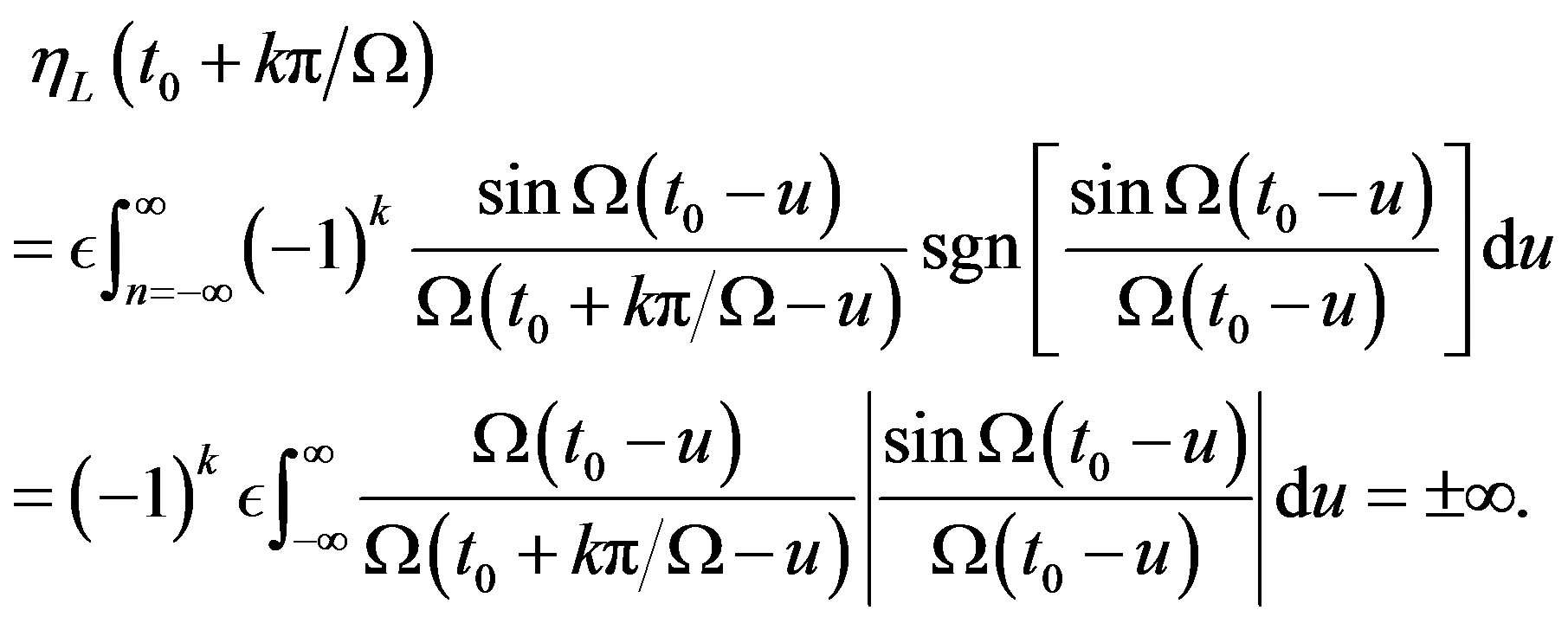
So the error after the filtering becomes .
.
Remark. This is only an example for analysis. In the section of numerical results we will show that the low pass filter (4) is not very effective for white noise.
3. The Regularized Filtering Algorithm
First, we consider the regularized Fourier transform [7]:
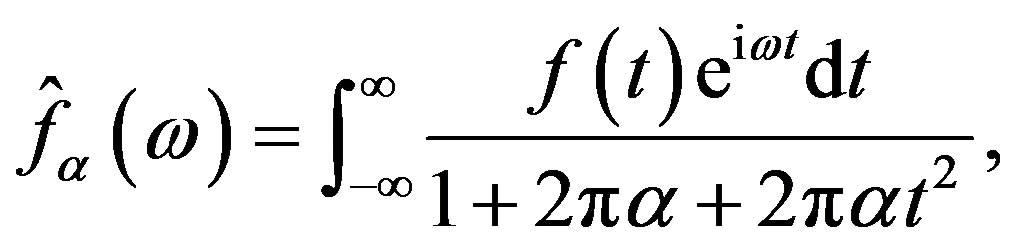
where  is the regularization parameter. Here
  is the minimizer of a smoothing functional. We have proved
  converges to the exact Fourier transform as the error of
  approaches to zero. In [7], we have successfully used the regularized Fourier transform in extrapolation. So the weight function
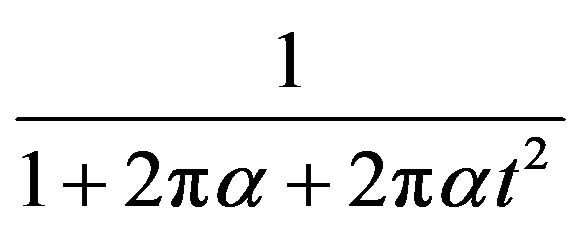
is helpful to solve ill-posed problems.
Based on the regularized Fourier transform we present the regularized filtering formula:
 (5)
(5)
where  is given in (2).
The convergence property of this regularized filtering formula is given in the theorem below.
Theorem 3.1. For , if
, if  and
and  as
as , then
  according to the maximum norm as
 .
.
 Proof.
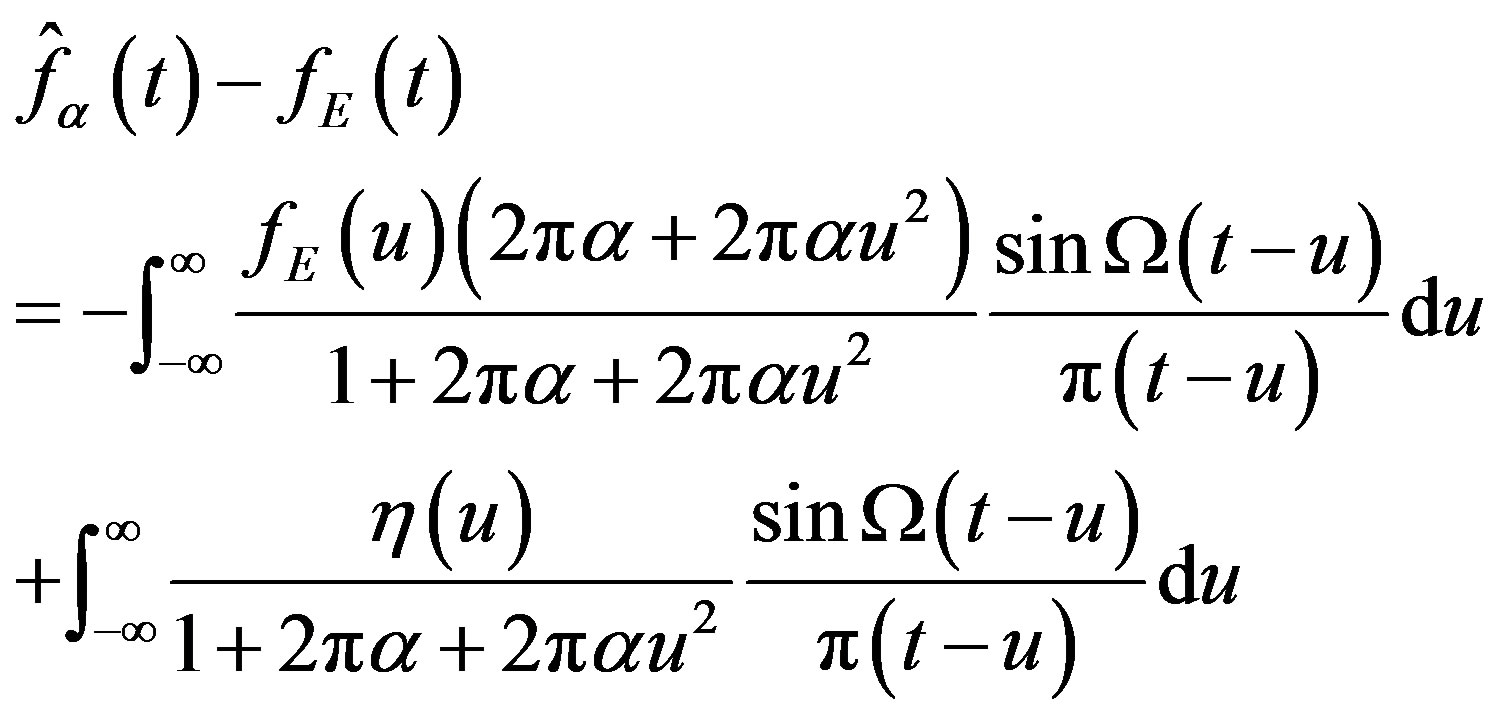
where

For each , there exists
  such that
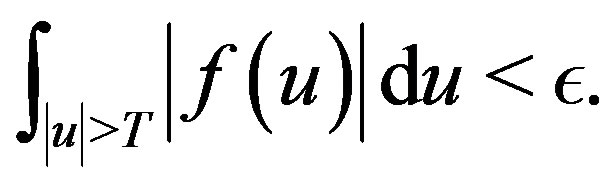
Then
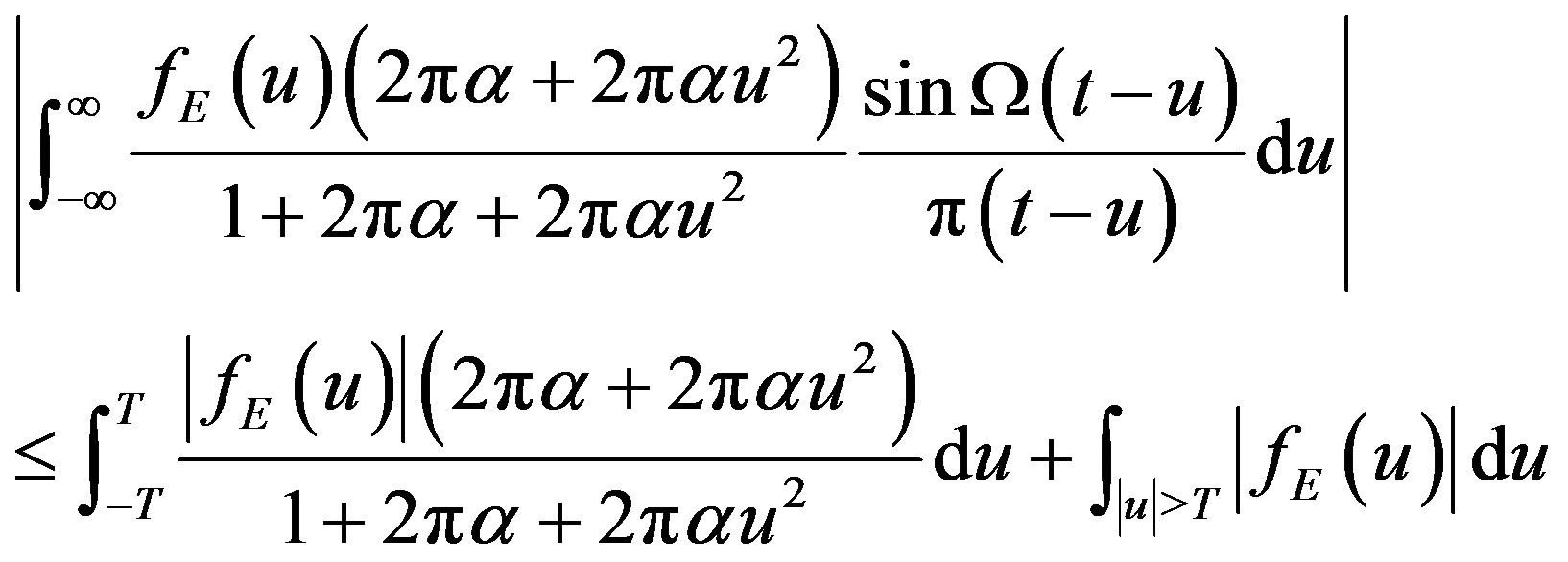
where
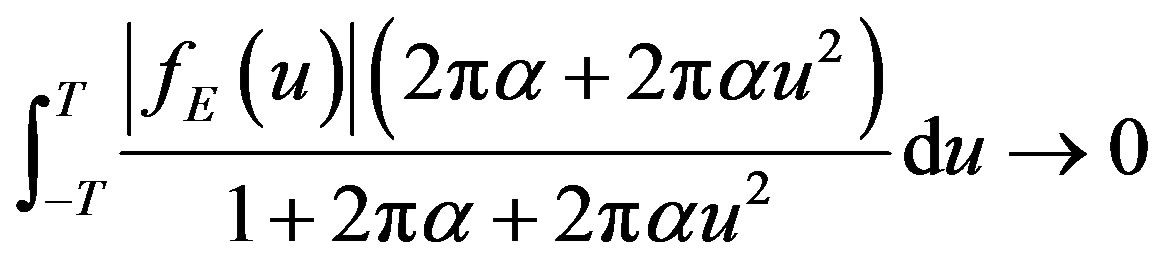
as .
.
4. Numerical Results
In this section, we give some examples to show that the regularized filtering algorithm (5) is more effective in reducing the noise than the convolution (4).
Suppose the exact signal in example 1 and 2 is

Then construct
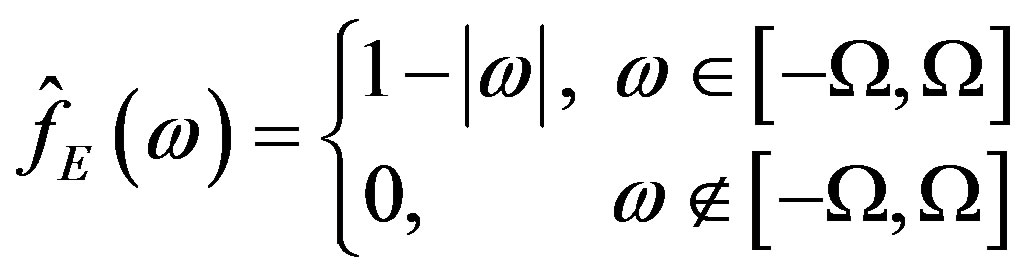
where .
.
Example 1. We consider the noise

where ,
,  , and
, and . This noise is used in the analysis of the stability in Section 2.
The result of (4) and the result of the regularized filtering algorithm with  are in figure 1.
Example 2. We consider the noise to be white noise that is Gauss distribution whose variance is 0.01. The result of (4) and the result of the regularized sampling algorithm with  are in figure 2.
5. Conclusion
The filter of convolution with sinc function is not stable. For some noises the results of the filtering are not reliable.
Regularized filtering algorithm is more effective in reducing the noise.

Figure 1. The numerical results of example 1.

Figure 2. The numerical results of example 2.
Acknowledgements
I would like thank University of Georgia for supporting my post doctoral work.