A Systematic Review of Neoadjuvant Therapy Compared to the “Resection First” Approach for Patients with Borderline Resectable Pancreatic Adenocarcinoma ()
1. Introduction
Pancreatic cancer continues to have a dismal prognosis, with four out of five patients initially presented with locally advanced unresectable tumors or metastatic disease that precludes any prospect for complete tumor extirpation [1-3]. Complete tumor resection for pancreatic cancer is the only hope for cure and has been shown to significantly improve survival [4-8]. Even still, patients who undergo pancreatic resection for pancreatic adenocarcinoma portend a 5-year survival of only about 20% [9,10].
Borderline resectable pancreatic adenocarcinoma is a preoperative diagnosis based on imaging that was clearly defined by Varadhachary et al. in 2005 [10,11]. The consensus statement by the Americas Hepato-Pancreato-Biliary Association, Society of Surgical Oncology, Society for Surgery of the Alimentary Tract (AHPBA/SSO/ SSAT) in 2009, the current National Comprehensive Cancer Network (NCCN) definition, and the MD Anderson definitions have all emerged as the leading contenders for one unified definition (Table 1) [10-13]. A main variation among definitions is the level of portovenous involvement, with abutment alone (AHPBA/SSO/SSAT) compared to impingement and/or short segment occlusion (NCCN/MD Anderson) being included as borderline resectable [10-13].
Gemcitabine has become the standard adjuvant chemotherapeutic regimen for patients with pancreatic adenocarcinoma. Approved by the Food and Drug Administration in 1997 for its beneficial effects on pain and quality of life, gemcitabine has less impact on prolonging survival in patients with pancreatic adenocarcinoma [14,15]. Gemcitabine was found to significantly improve, but not substantially improve, survival compared to 5-FU in a randomized control trial for patients with locally advanced or metastatic pancreatic cancer (5.6 months, 4.4 months; respectively) [14]. Neoadjuvant gemcitabine for patients presenting with resectable disease led to 82% of patients ultimately undergoing resection and 89% of them having R0 (microscopically/macroscopically negative margins) resection [16]. Patients who are presented with non-metastatic, locally advanced, unresectable pancreatic adenocarcinoma and who receive neoadjuvant gemcitabine undergo resection 46% of the time and 39% - 60% undergo an R0 resection [16,17]. Patients with borderline resectable pancreatic adenocarcinoma typically receive neoadjuvant gemcitabine in this modern era with the expectation of increased resectability without vascular reconstruction and an increased chance of R0 resections compared to patients who undergo a “resection first” approach. The consequences of neoadjuvant therapy are not trivial, as a significant portion of patients undergoing neoadjuvant therapy are unable to complete therapy and recover to undergo resection. Patients who undergo restaging during neoadjuvant therapy are also found to have progressive disease with locally advanced, unresectable tumors or metastatic diseases that preclude resection. Resection after neoadjuvant therapy is by no means universal.
This study was undertaken to systematically review the available data on patients with borderline resectable pancreatic adenocarcinoma who undergo neoadjuvant therapy compared to a “resection first” approach for borderline resectable pancreatic adenocarcinoma to determine the best approach for patients with borderline resectable pancreatic adenocarcinoma in terms of resectability, R0 resections, and long-term outcome. We hypothesized that the proportion of patients who ultimately undergo resection would be lower in patients who undergo neoadjuvant therapy than that in patients who underwent

Table 1. Definitions of borderline resectable pancreatic adenocarcinoma.
an “upfront resection.” Additionally, we also suspected that patients who undergo neoadjuvant therapy with subsequent resection would have an increased number of R0 resection and therefore an increased overall survival compared to patients who undergo an “upfront resection.”
2. Materials and Methods
A MEDLINE/Pubmed search undertaken with the key words “borderline resectable pancreatic”, “borderline resectable pancreas”, and “borderline chemotherapy pancreatic” yielded 112 studies (Figure 1). Ninety-one of the studies available were from 2005 to 2012, undoubtedly a consequence of the adoption of the definition for borderline resectable pancreatic adenocarcinoma in 2005. Ninety-eight studies were excluded from analysis, with 14 studies having cohorts of borderline resectable pancreatic adenocarcinoma patients receiving neoadjuvant therapy or resection first. Studies were excluded from analysis if we were unable to separate out the patients with borderline resectable pancreatic adenocarcinoma who were combined in analysis with patients with resectable or locally advanced pancreatic adenocarcinoma. We also excluded studies that did not specify if the patients received radiation alone or in combination with chemotherapy for neoadjuvant therapy. Studies that included only patients with borderline resectable to due to poor performance status or studies that had a non-standard definition for patients with borderline resectable pancreatic adenocarcinoma were excluded. Studies that only included patients with unresectable disease or data not pertinent to patients undergoing neoadjuvant therapy for borderline resectable pancreatic adenocarcinoma were excluded from analysis. Consensus statements, opinion articles, and reviews involving redundant studies were also excluded from analysis. Three of the 14 studies were near duplicate reports from the same institution with overlapping time intervals and therefore two of those studies were excluded. Two additional studies were identified; one from available online ASCO abstracts and

Figure 1. Flowchart for studies identified for analysis with a MEDLINE/PubMed search, ASCO abstracts and from available reviews for patients with borderline resectable pancreatic adenocarcinoma (BLR = borderline resectable).
one from a prior neoadjuvant therapy review. Of the included 14 studies, 10 studies had a cohort of patients who underwent neoadjuvant therapy prior to resection and did not have a cohort including the “resection first” approach. One study had patients who underwent resection first and three studies had both cohorts of patients who either underwent neoadjuvant therapy or resection first.
3. Results
A total of 14 studies with borderline resectable pancreatic adenocarcinoma cohorts could be isolated and analyzed: patients either underwent neoadjuvant therapy with the intention for subsequent resection or a “resection first” approach. Of the 14 studies included, ten studies include patients with borderline resectable pancreatic adenocarcinoma who underwent neoadjuvant therapy, one study includes patients who underwent upfront resection and three studies included both cohorts of patients who underwent neoadjuvant therapy or upfront resection. Gemcitabine-based neoadjuvant therapy was the utilized in 14 of the 16 studies with two of the studies excluded from analysis due to overlapping time intervals from the same institution (Table 2).
A total of 471 patients underwent neoadjuvant therapy and 76 patients underwent resection first. After neoadjuvant therapy, 49% (233/471) of patients underwent resection (Table 3). Ten studies (n = 398 patients) included margin status after neoadjuvant therapy for patients who underwent resection. Patients who underwent resection after neoadjuvant therapy had an R0 (microscopically/ macroscopically negative) margin 91% (172/190) of the time (Table 4). Patients who underwent upfront resection had an R0 margin 71% (54/76) of the time (Table 5).
Eight studies (n = 385 patients) included subgroup analysis of patients with borderline resectable pancreatic adenocarcinoma who underwent neoadjuvant therapy and did not undergo resection as well as patients who were resected after neoadjuvant therapy. Patients completed their neoadjuvant therapy 90% (345/385) of the time. A total of 57% (220/385) of patients underwent an operation, but 11% (43/385) of patients who underwent an operation did not undergo resection due to locally advanced disease or occult metastatic disease. For the 46% (177/385) of patients who underwent neoadjuvant therapy and underwent resection, 91% (161/177) of the had R0 resections (Figure 2). For the 385 patients who underwent neoadjuvant therapy with intent for resection, ultimately 42% (161/385) of patients had an R0 margin after neoadjuvant therapy and 4% (16/385) of patients who underwent resection had positive margins (Figure 2).
Given that the survival for patients who undergo neoadjuvant therapy alone or followed by an operation without resection is approximately 8 months, while patients who undergo R0 resections is approximately 21 months and patients who undergo R1 or R2 resections is approximately 10 months, we estimated the theoretical survival per patient to be 13.5 months for patients undergoing neoadjuvant therapy prior to resection and 15.3 months for patients undergoing a “resection first” approach (Figure 3) [5,18,19]. We also estimated that about 25% of patients who undergo a “resection first” approach will have unresectable disease at the time of operation or have occult metastatic disease at the time of operation based on our institutional review (25% nontherapeutic celiotomies) [20]. Additionally, patients who underwent staging laparoscopy for pancreatic adenocarcinoma have shown that staging laparoscopy could po-

Figure 2. Flowchart of outcomes for patients who underwent neoadjuvant therapy (n = 8 studies with all pathways [12,23,24, 29,31,32,34,36]) with ultimately 42% of patients obtaining an R0 resection after neoadjuvant therapy.

Figure 3. Flowchart of 100 patients who theoretically undergo neoadjuvant therapy prior to resection and 100 patients who theoretically undergo a “resection first” approach for borderline resectable pancreatic adenocarcinoma.
tentially avoid a nontherapeutic celiotomy 4% - 36% of the time [21].
4. Discussion
Patients with pancreatic adenocarcinoma have a dismal prognosis. Resection continues to be the only hope of cure. Only about 20% of patients with pancreatic adenocarcinoma have disease that is potentially amenable to resection at the time of diagnosis. “Borderline resectable disease” was defined less than a decade ago and since its inception, it seems that the majority of patients with borderline resectable pancreatic adenocarcinoma have undergone neoadjuvant therapy. Additionally, now the standard chemotherapy for pancreatic adenocarcinoma, gemcitabine, has been shown to increase rates of tumor response, yet still with dismal results. A recent metaanalysis of all patients who underwent neoadjuvant gemcitabine therapy who were initially resectable, 12% had an objective tumor response, while 27% of patients with initially unresectable disease had an objective tumor response [16]. It is not well understood, however, if these objective responses translate into a salutary impact for patients as “tumor response” may be a consequence of true tumor regression or due to reduction in peritumoral inflammatory changes (i.e. peritumoral pancreatitis).
Less than half of the patients who underwent neoadjuvant therapy for borderline resectable pancreatic adenocarcinoma ultimately underwent resection. Patients who underwent upfront resection for borderline resectable pancreatic adenocarcinoma had an R0 resection margin over two-thirds of the time, while patients who underwent neoadjuvant therapy had an R0 resection margin less than half of the time. Patients who undergo resection after neoadjuvant therapy do have an impressive R0 resection rate, but events during neoadjuvant therapy prevent any potential resection for over half of the patients. Given these data, it appears that about one-third of patients would benefit from upfront resection instead of neoadjuvant therapy.
It is unknown, though, how patients with borderline resectable pancreatic adenocarcinoma will respond to neoadjuvant therapy. Logically, neoadjuvant therapy for borderline resectable pancreatic adenocarcinoma has been undertaken to increase the likelihood of resectability and negative margins at the time of resection. However, this systematic review concludes that neoadjuvant therapy dramatically decreases the chance of resection and, thereby, negative margins when compared to upfront resection (42% of patients after neoadjuvant therapy have an R0 resection vs. 71% after a resection first approach). We estimate that adoption of the “resection first” approach would portend an increase in overall survival of about 1.8 months per patient (Figure 3). We feel the survival estimations are fair and objective, but each estimate could be debated.
The definitions for borderline resectable pancreatic
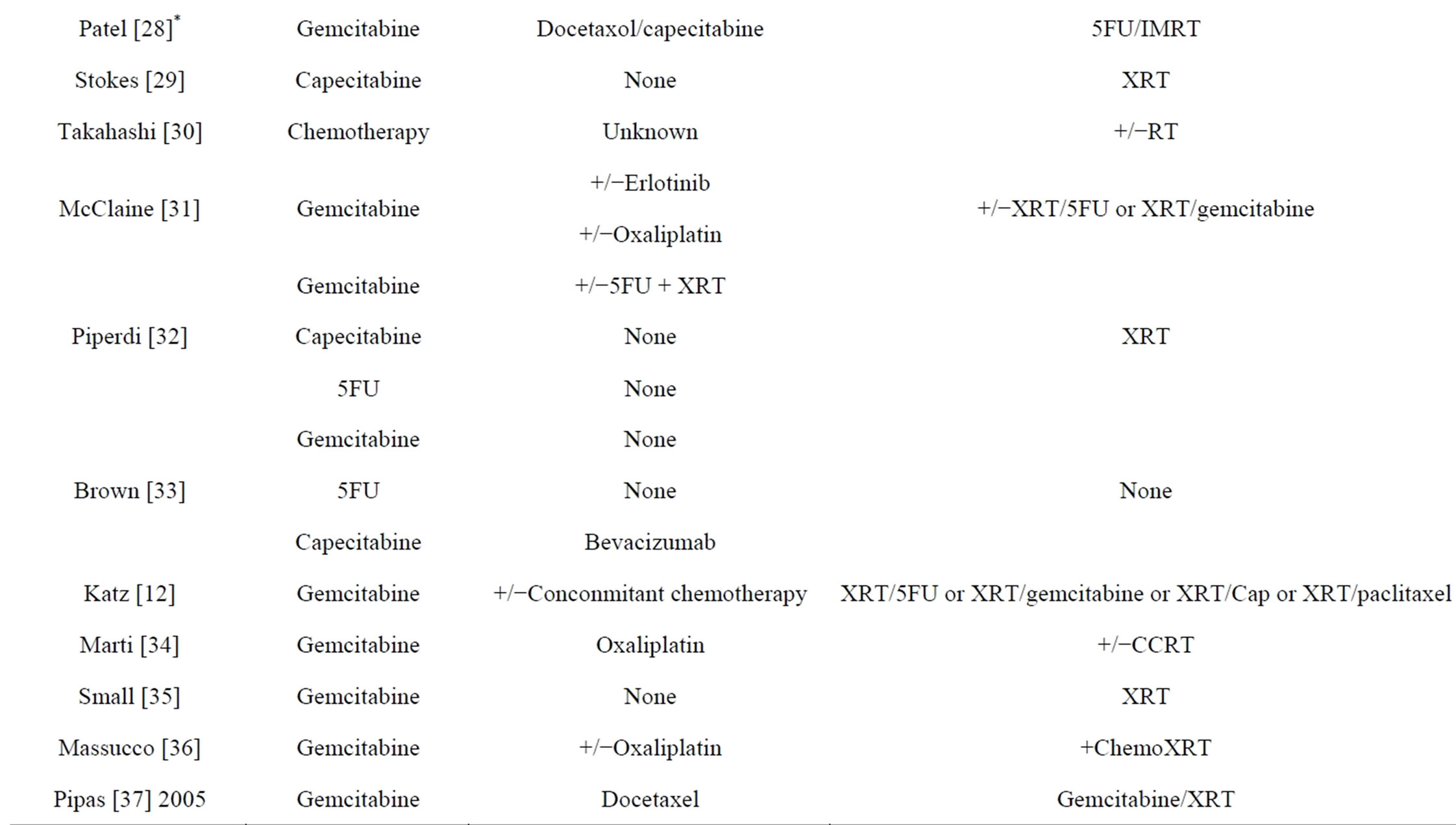

Table 2. Studies that include patients who underwent neoadjuvant therapy for borderline resectable pancreatic adenocarcinoma; *Studies from same institution with overlapping time interval (Pimiento et al. included for analysis); 5FU (5-fluorouracil); Intensity-Modulated Radiation Therapy (IMRT); computer controlled radiation therapy (CCRT); Stereotactic Body Radiation Therapy (SBRT); XRT (external beam radiation therapy); RT (radiation therapy).
adenocarcinoma have evolved to be more encompassing. The most recent definition by the AHPBA/SSO/SSAT consensus now includes patients with portovenous abutment alone without impingement. The original definitions established by Varadhachary et al. in 2005 deemed patients with borderline resectable pancreatic adenocar

Table 3. Number of patients who underwent neoadjuvant therapy, did not finish neoadjuvant therapy, finished neoadjuvant therapy but did not undergo an operation, underwent an operation after neoadjuvant therapy, and underwent resection after neoadjuvant therapy (n = 12 studies); *Stokes includes 3 patients resected with borderline resectable pancreatic adenocarcinoma due to performance status **Katz Type B (borderline resectable pancreatic adenocarcinoma due to concern for extrapancreatic disease from CT or EUS/FNA findings or prior laparotomy with nodal disease; n = 44) and Katz Type C (borderline resectable pancreatic adenocarcinoma due to performance status; n = 32) included.
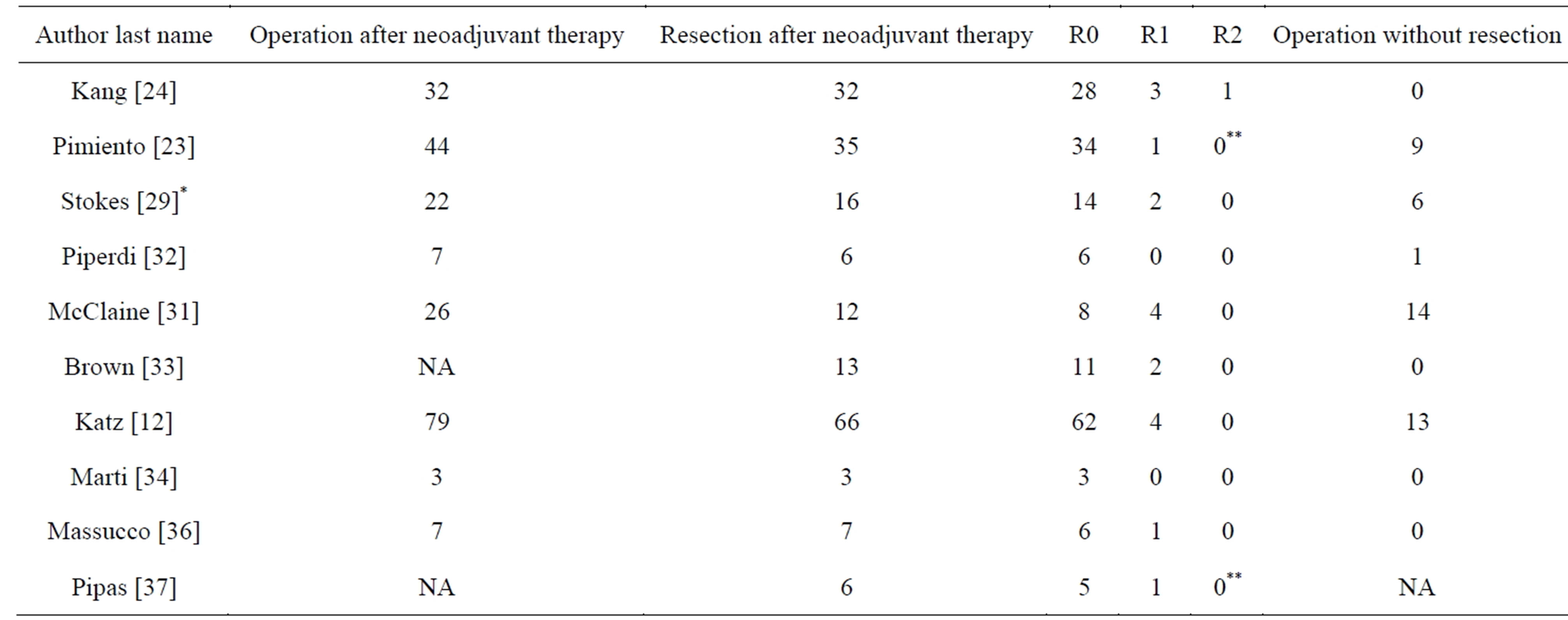
Table 4. Outcomes for patients who underwent an operation after neoadjuvant therapy; *Stokes et al includes three patients resected with borderline resectable pancreatic adenocarcinoma due to performance status; **single patient assumed to be R1 but not explicitly reported; R0 (microscopically/macroscopically negative), R1 (microscopically positive/macroscopically negative), R2 (microscopically/macroscopically positive).
cinoma as having short segment portovenous occlusion, while abutment alone was not sufficient. Given that the most recent definitions for borderline resectable pancreatic adenocarcinoma will deem an ever-increasing amount

Table 5. Patients with borderline resectable pancreatic adenocarcinoma who underwent upfront resection (n = 4 studies).
of patients as having borderline resectable pancreatic adenocarcinoma, it is imperative to determine whether a neoadjuvant therapy or an upfront resection approach yields the most resectable disease with negative margins. Additionally, borderline resectable pancreatic adenocarcinoma as defined by Katz et al. includes patients patients with “borderline resectability” due to concern for extrapancreatic disease (Type B) or performance status (Type C) [12]. The inclusion of these additional patient samples, especially the patients with poor performance status as criteria for borderline resectable pancreatic adenocarcinoma confuses the data given these patients will never undergo resection given their comorbidities will continually preclude the patient from undergoing resection. Patients with comorbidities that preclude upfront resection should be considered candidates for chemoradiation alone as a primary therapy. We require a distinct and unified anatomical definition based on preoperative imaging.
Despite small, but incremental advances with chemotherapeutic strategies, neoadjuvant therapy for borderline resectable pancreatic adenocarcinoma portends a median survival equivalent to chemotherapy alone in over half of the patients. For these patients, neoadjuvant therapy was not neoadjuvant therapy, it was palliation because they never underwent resection. The studies available did have heterogeneity regarding chemotherapeutic regimens, but these are the available current data. Results for neoadjuvant therapy utilizing fluorouracil [5-FU], leucovorin, irinotecan and oxaliplatin (FOLFIRINOX) as well as gemcitabine with protein-bound paclitaxel (Abraxane®) are anticipated, but are not yet available for patients with borderline resectable pancreatic adenocarcinoma.
Patients who present with borderline resectable pancreatic adenocarcinoma have two distinct options of neoadjuvant therapy or upfront resection. Given these data show that about one-third of patients would benefit from upfront resection to achieve R0 margins and more patients are being considered as having borderline resectable pancreatic adenocarcinoma, it is crucial that we undertake a multi-institutional randomized control trial comparing the dichotomized approaches. This manuscript cannot answer the questions as to which approach is best, only lay the groundwork for debate and foster a randomized control trial.
5. Conclusion
We expect that the paradigm will shift back to a resection first approach followed by adjuvant therapy, until more efficacious neoadjuvant therapies are established. In search of confirmation of more efficacious neoadjuvant therapies, we plan to undertake a trial for patients with initially resectable pancreatic adenocarcinoma using neoadjuvant gemcitabine with Abraxane, as the addition of protein-bound paclitaxel has been shown to induce superior tumor regression for patients with pancreatic adenocarcinoma as compared to gemcitabine-based therapy for patients with metastatic pancreatic adenocarcinoma [22].
Acknowledgements
We would like to thank Dr. Pimiento and Dr. Malafa as well as Dr. Chuong and Dr. Shridhar for allowing us access to their data prior to publication [23].
Abbreviations
BLR: borderline resectable
R0: microscopically/macroscopically negative
R1: microscopically positive/macroscopically negative
R2: microscopically/macroscopically positive
5FU: 5-fluorouracil
IMRT: intensity-modulated radiation therapy
CCRT: computer controlled radiation therapy
SBRT: stereotactic body radiation therapy
XRT: external beam radiation therapy
RT: radiation therapy