<?xml version="1.0" encoding="UTF-8"?><!DOCTYPE article  PUBLIC "-//NLM//DTD Journal Publishing DTD v3.0 20080202//EN" "http://dtd.nlm.nih.gov/publishing/3.0/journalpublishing3.dtd"><article xmlns:mml="http://www.w3.org/1998/Math/MathML" xmlns:xlink="http://www.w3.org/1999/xlink" dtd-version="3.0" xml:lang="en" article-type="research article"><front><journal-meta><journal-id journal-id-type="publisher-id">AJPS</journal-id><journal-title-group><journal-title>American Journal of Plant Sciences</journal-title></journal-title-group><issn pub-type="epub">2158-2742</issn><publisher><publisher-name>Scientific Research Publishing</publisher-name></publisher></journal-meta><article-meta><article-id pub-id-type="doi">10.4236/ajps.2017.86100</article-id><article-id pub-id-type="publisher-id">AJPS-76598</article-id><article-categories><subj-group subj-group-type="heading"><subject>Articles</subject></subj-group><subj-group subj-group-type="Discipline-v2"><subject>Biomedical&amp;Life Sciences</subject></subj-group></article-categories><title-group><article-title>
 
 
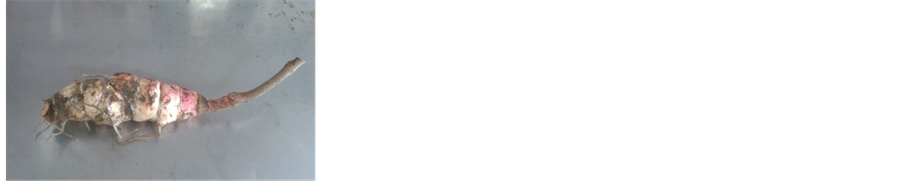
  Pharmacognostic and Phytochemical Studies of &lt;i&gt;Smilax domingensis&lt;/i&gt; Willd. in Cuba
 
</article-title></title-group><contrib-group><contrib contrib-type="author" xlink:type="simple"><name name-style="western"><surname>José</surname><given-names>González Yaque</given-names></name><xref ref-type="aff" rid="aff1"><sup>1</sup></xref></contrib><contrib contrib-type="author" xlink:type="simple"><name name-style="western"><surname>Max</surname><given-names>Monan</given-names></name><xref ref-type="aff" rid="aff2"><sup>2</sup></xref></contrib><contrib contrib-type="author" xlink:type="simple"><name name-style="western"><surname>Armando</surname><given-names>Cuéllar</given-names></name><xref ref-type="aff" rid="aff1"><sup>1</sup></xref></contrib><contrib contrib-type="author" xlink:type="simple"><name name-style="western"><surname>Teylor</surname><given-names>de Armas</given-names></name><xref ref-type="aff" rid="aff1"><sup>1</sup></xref></contrib><contrib contrib-type="author" xlink:type="simple"><name name-style="western"><surname>Enrique</surname><given-names>Gómez</given-names></name><xref ref-type="aff" rid="aff1"><sup>1</sup></xref></contrib><contrib contrib-type="author" xlink:type="simple"><name name-style="western"><surname>Eniel</surname><given-names>Dopico</given-names></name><xref ref-type="aff" rid="aff1"><sup>1</sup></xref></contrib></contrib-group><aff id="aff2"><addr-line>ARVARNAM, Martinica, France</addr-line></aff><aff id="aff1"><addr-line>Faculty of Pharmacy and Foods, Havana University, Havana, Cuba</addr-line></aff><pub-date pub-type="epub"><day>11</day><month>05</month><year>2017</year></pub-date><volume>08</volume><issue>06</issue><fpage>1462</fpage><lpage>1470</lpage><history><date date-type="received"><day>March</day>	<month>30,</month>	<year>2017</year></date><date date-type="rev-recd"><day>Accepted:</day>	<month>May</month>	<year>24,</year>	</date><date date-type="accepted"><day>May</day>	<month>27,</month>	<year>2017</year></date></history><permissions><copyright-statement>&#169; Copyright  2014 by authors and Scientific Research Publishing Inc. </copyright-statement><copyright-year>2014</copyright-year><license><license-p>This work is licensed under the Creative Commons Attribution International License (CC BY). http://creativecommons.org/licenses/by/4.0/</license-p></license></permissions><abstract><p>
 
 
  A preliminary pharmacognostical and phytochemical evaluation of 
  
  Smilax domingensis
   Willd
  .
  , (Smilacaceae) was realized to determine the macromorphology and micromorphology characteristics, the physicochemical and phytochemical parameters from the rhizome of this spice that grows in Cuba. This crude drug showed the characteristic physicochemical values such as moisture content (13.11%), extractable matter in ethanol at 70% (13.53%), total ashes (3.45%), water soluble ashes (2.43%) and acid insoluble ashes (0.64%). Phytochemical screening revealed the possible presence of alkaloids, oils and/or fats, coumarins, saponins, flavonoids, pyrogallol-type tannins, quinones, catechins, reductants sugars, triterpens and steroids and absence of resins, aminoacids, cardiotonic glycosides, anthocyanidins and astringent and/or bitter principles, realized under WHO parameters.
 
</p></abstract><kwd-group><kwd>&lt;i&gt;Smilax domingensis&lt;/i&gt;</kwd><kwd> Macromorphology</kwd><kwd> Micromorphology</kwd><kwd> Physicochemical Parameters</kwd><kwd> Phytochemical Screening</kwd></kwd-group></article-meta></front><body><sec id="s1"><title>1. Introduction</title><p>Smilax domingensis Willd., Smilacaceae, known as bejuco chino or ra&#237;z de china, zarzaparrilla de la tierra (Cuba); bejuco de membrillo, dunguez blanco (Puerto Rico); chiquihuite (M&#233;xico), is a climbing shrub from Tropical America. The rhizome is popularly used in medicine as anti-inflammatory, antiseptic, depurative, sudorific, antasthmatic, antiherpetic, antirheumatic and for venereal diseases [<xref ref-type="bibr" rid="scirp.76598-ref1">1</xref>] .</p><p>Smilacaceae is a family of climbing shrubs represented by the single genus Smilax with close to 250 species worldwide, present with 26 species in Mesoamerica [<xref ref-type="bibr" rid="scirp.76598-ref2">2</xref>] .Widely used since ancient times, the main species reported are Smilax aristolochiaefolia Mill., S. febrifuga Kunth, S. ornata Hook, and S. regelii Killip &amp; Morton, characterized by roots and small rhizomes used as antiseptic and anti-pruritic drug [<xref ref-type="bibr" rid="scirp.76598-ref3">3</xref>] .</p><p>Smilax domingensis Willd. is native from Tropical America, growing in lowlands, in humid forests of wide-leaved species [<xref ref-type="bibr" rid="scirp.76598-ref4">4</xref>] . Although widely used, there are several taxonomic difficulties. Few anatomic studies of American Smilax have been carried out, particularly for species from Argentina [<xref ref-type="bibr" rid="scirp.76598-ref5">5</xref>] and Brazil [<xref ref-type="bibr" rid="scirp.76598-ref6">6</xref>] .</p><p>In the scientific literature, there are some data of the phytochemical components and pharmacological actions while a small number of data of standards for identification and authentication about Smilax domingensis Willd. In Cuba, there is not available information for this spice.</p><p>The main components found and shared by most species of the genus are the steroidal saponins, phytosterols, and triterpenoids [<xref ref-type="bibr" rid="scirp.76598-ref3">3</xref>] . The antimicrobial and anti-tumoral activities are attributed to parillin [<xref ref-type="bibr" rid="scirp.76598-ref7">7</xref>] . Some pharmaceutical forms are available, such as infusion, tincture, elixir, lotion, and micropulverized powder [<xref ref-type="bibr" rid="scirp.76598-ref8">8</xref>] .</p><p>Hence, the pharmacognostic and phytochemical investigations on Smilax domingensis Willd. has been carried out in this research, for the development and utilization of the promising medicinal plant.</p></sec><sec id="s2"><title>2. Materials and Methods</title><sec id="s2_1"><title>2.1. Plant Material and Reagents</title><p>The S. domingensis Willd. rhizome was collected from Sierra Cristal, Sagua de T&#225;namo, Holgu&#237;n Province, Cuba, 850 - 1000 masl, by Elio M. Garc&#237;a Fargie in March, 2016. The authors are waiting for the Voucher specimen in the National Botany Garden in Havana, Cuba. The plant material is being authenticated by Dr. Jorge E. Guti&#233;rrez Amaro. The harvested rhizomes were dried in the shade at room temperature (temperature 30˚C - 40˚C) on the Research Lab <xref ref-type="table" rid="table">Table </xref>in the Faculty of Pharmacy and Foods (Havana University), ground into powdered form (1 mm) and stored in airtight containers. All reagents used were of analytical grade (Merck). All solvents were degassed prior to use in an ultrasonic bath without filtration.</p></sec><sec id="s2_2"><title>2.2. Macroscopic and Organoleptic Studies</title><p>Three rhizomes were examined for morphological characters including size, shape, color, odor, taste, and extra features. The macro-morphological characteristic of the rhizome were observed under the magnifying lens (10&#180;).</p></sec><sec id="s2_3"><title>2.3. Microscopic Studies</title><p>Dried rhizomes were ground to coarse powder and packed, for microscopic identification, in a suitable container. No clearing agents were used. Photomicrographs of the powder section were taken with the help of Biomicroscopy Primo Star (Zeiss Group, Germany) with 10x and 40x microscope objective lens (400 xs) and CX<sub>21</sub> bio-microscopy unit (Canon-1000D EOS digital camera, Japan, coupled to PC software EOS-utility).</p></sec><sec id="s2_4"><title>2.4. Phytochemical Studies</title><p>Dried rhizomes were ground to a coarse powder (grain size: 850 &#177; 29 &#181;m) and packed in a suitable container for phytochemical identification. The powder was extracted with 70% ethanol, filtered and concentrated using vacuum distillation.</p><p>The chemical constituents were screened according to Chhabra [<xref ref-type="bibr" rid="scirp.76598-ref9">9</xref>] to ascertain the presence of chemical components in diethyl ether, etanol and water. The UV spectrometric experiments were carried out on a UV-VIS JASCO V-530 (Japan). The scan range was 200 to 400 nm; absorbance 0.000-3.0000, band width 2.0 nm, spectral resolution 0.1 nm and the analyzed samples were diluted in methanol, into quartz cuvettes (d = 1 cm).</p><p>TLC conditions: TLCP (thin-layer chromatography plate) on silica gel with fluorescent indicator 254 nm on aluminum cards (layer thickness 0.2 mm) (10 &#215; 20 cm) using n-butanol: acetic acid: water (BAW 65:25:10) as developing agent (v/v/v), concentrated sulfuric acid plus heat, FeCl<sub>3</sub> and AlCl<sub>3</sub> were the chromogenic agents. Rutin (R), quercetin (Q) and gossypitrin (G) were used as standard. The TLCP were examined under ultraviolet (254 nm and 365 nm) and ordinary light.</p><p>The total ash, acid insoluble ash, water soluble ash, extractable matter and moisture content were determined according to the standard procedures mentioned in the general rule of WHO [<xref ref-type="bibr" rid="scirp.76598-ref10">10</xref>] .</p></sec></sec><sec id="s3"><title>3. Results and Discussion</title><sec id="s3_1"><title>3.1. Botanical Characteristics</title><sec id="s3_1_1"><title>3.1.1. Macroscopical Description</title><p>It is an evergreen dioic woody vine, 2 - 4 m high with lignified rhizomes. Rhizome is voluminous, with tuberous swelling, reddish brown in color, measuring 14 - 21 cm long, 3.925 cm wide and 3.175 cm high. The average weight is around 87.05 g. Roots are adventitious, growing from the rhizomes (<xref ref-type="fig" rid="fig1">Figure 1</xref>).</p><p>The powder drug is reddish brown in color, and displays a characteristic flavor and smell (<xref ref-type="fig" rid="fig2">Figure 2</xref>).</p><p>In this paper, the description by Huft [<xref ref-type="bibr" rid="scirp.76598-ref2">2</xref>] is enriched by our botanical observations. It is evident that the analyzed spice has a great coincidence by the description done by Ferrufino &amp; G&#243;mez-Laurito [<xref ref-type="bibr" rid="scirp.76598-ref11">11</xref>] , and C&#225;ceres [<xref ref-type="bibr" rid="scirp.76598-ref12">12</xref>] . We finally arrived to a clear description of S. domingensis in Cuba, represented by a big woody red rhizome.</p></sec><sec id="s3_1_2"><title>3.1.2. Microscopical Description</title><p>Analyzed individually, Fragmented drug shows the anatomical features in <xref ref-type="fig" rid="fig3">Figure 3</xref>. Cortical parenchyma cells are elongated, with idioblasts containing calcium-oxalate raphides, mucilage, and granular material (3A); long phloems</p><p><img src="http://html.scirp.org/file/22-2603151x3.png" /><img src="http://html.scirp.org/file/22-2603151x2.png" /></p><fig-group id="fig1"><label><xref ref-type="fig" rid="fig1">Figure 1</xref></label><caption><title> Rhizomes of S. domingensis Willd.</title></caption><fig id ="fig1_1"><label></label><graphic mimetype="image"   position="float"  xlink:type="simple"  xlink:href="http://html.scirp.org/file/22-2603151x5.png"/></fig></fig-group><fig id="fig2"  position="float"><label><xref ref-type="fig" rid="fig2">Figure 2</xref></label><caption><title> Powder drug of S. domingensis Willd</title></caption><graphic mimetype="image"   position="float"  xlink:type="simple"  xlink:href="http://html.scirp.org/file/22-2603151x6.png"/></fig><fig id="fig3"  position="float"><label><xref ref-type="fig" rid="fig3">Figure 3</xref></label><caption><title> Fragmented drug of S. domingensis Willd</title></caption><graphic mimetype="image"   position="float"  xlink:type="simple"  xlink:href="http://html.scirp.org/file/22-2603151x7.png"/></fig><p>measuring 36 &#181;m wide, with appendage and simple terminal plate (3B) and scalariformly thickening vessels (3C and 3D).</p><p>This is the first time that the micromorphological characteristics of S. domingensis rhizome are described, as well as the powder drug in our country.</p></sec></sec><sec id="s3_2"><title>3.2. Phytochemical Studies</title><sec id="s3_2_1"><title>3.2.1. Phytochemical Screening</title><p>Preliminary phytochemical screening suggested the presence of flavonoids, alkaloids, coumarins, catechins, pyrochatecolic tannins, fat and/or volatile oils, saponins, triterpens and/or steroid, quinones and reducing sugars, and the absence of resins, amino acids or amines, cardiotonic glycosides, anthocyanidins and astringents and/or bitter principles (<xref ref-type="table" rid="table">Table </xref>1). Data presented here refer to evaluations with wild material. Further studies are needed to establish the molecules responsible for the real chemical composition.</p><p>There were three absorption peaks at 205 nm, 280 nm and 394 nm. There may be the presence of flavonoids in 70% ethanol extract [<xref ref-type="bibr" rid="scirp.76598-ref13">13</xref>] . This result corroborates the suggested presence of flavonoids after phytochemical screening (<xref ref-type="fig" rid="fig4">Figure 4</xref>).</p><p>TLCP (thin-layer chromatography plate) presented four obvious spots (<xref ref-type="fig" rid="fig5">Figure 5</xref>). Under ordinary light two spots were observed, the first one (1) with R<sub>f</sub> = 0.37 and the second one with R<sub>f</sub> = 0.83. Both spots are cream-yellowish in</p><table-wrap id="table1" ><label><xref ref-type="table" rid="table">Table </xref>1</label><caption><title> Phytochemical screening of S. domingensis Willd</title></caption><table><tbody><thead><tr><th align="center" valign="middle" >Test for constituents groups</th><th align="center" valign="middle" >Diethyl ether</th><th align="center" valign="middle" >Alcohol</th><th align="center" valign="middle" >Water</th></tr></thead><tr><td align="center" valign="middle" >Dragendorff</td><td align="center" valign="middle" >+++</td><td align="center" valign="middle" >+++</td><td align="center" valign="middle" >+++</td></tr><tr><td align="center" valign="middle" >Wagner</td><td align="center" valign="middle" >+++</td><td align="center" valign="middle" >+++</td><td align="center" valign="middle" >+++</td></tr><tr><td align="center" valign="middle" >Sudan III</td><td align="center" valign="middle" >+</td><td align="center" valign="middle" ></td><td align="center" valign="middle" ></td></tr><tr><td align="center" valign="middle" >Baljet</td><td align="center" valign="middle" >+++</td><td align="center" valign="middle" >++</td><td align="center" valign="middle" ></td></tr><tr><td align="center" valign="middle" >Lieberman-Burchard</td><td align="center" valign="middle" >+</td><td align="center" valign="middle" >+</td><td align="center" valign="middle" ></td></tr><tr><td align="center" valign="middle" >Catechins</td><td align="center" valign="middle" ></td><td align="center" valign="middle" >+ (green)</td><td align="center" valign="middle" ></td></tr><tr><td align="center" valign="middle" >Resins</td><td align="center" valign="middle" ></td><td align="center" valign="middle" >−</td><td align="center" valign="middle" ></td></tr><tr><td align="center" valign="middle" >Fehling</td><td align="center" valign="middle" ></td><td align="center" valign="middle" >+</td><td align="center" valign="middle" >+</td></tr><tr><td align="center" valign="middle" >Foam test</td><td align="center" valign="middle" ></td><td align="center" valign="middle" >+</td><td align="center" valign="middle" >+</td></tr><tr><td align="center" valign="middle" >FeCl<sub>3</sub></td><td align="center" valign="middle" ></td><td align="center" valign="middle" >+ (intense green)</td><td align="center" valign="middle" >+ (intense green)</td></tr><tr><td align="center" valign="middle" >Ninhydrine</td><td align="center" valign="middle" ></td><td align="center" valign="middle" >−</td><td align="center" valign="middle" ></td></tr><tr><td align="center" valign="middle" >B&#246;rntrager</td><td align="center" valign="middle" ></td><td align="center" valign="middle" >+++</td><td align="center" valign="middle" ></td></tr><tr><td align="center" valign="middle" >Shinoda</td><td align="center" valign="middle" ></td><td align="center" valign="middle" >+</td><td align="center" valign="middle" >+</td></tr><tr><td align="center" valign="middle" >Kedde</td><td align="center" valign="middle" ></td><td align="center" valign="middle" >−</td><td align="center" valign="middle" ></td></tr><tr><td align="center" valign="middle" >Anthocyanidins</td><td align="center" valign="middle" ></td><td align="center" valign="middle" >−</td><td align="center" valign="middle" ></td></tr><tr><td align="center" valign="middle" >Bitter principles and/or astringents</td><td align="center" valign="middle" ></td><td align="center" valign="middle" ></td><td align="center" valign="middle" >−</td></tr></tbody></table></table-wrap><p>Legend: + (positive); ++ (very positive); +++ (highly positive); − (negative).</p><fig id="fig4"  position="float"><label><xref ref-type="fig" rid="fig4">Figure 4</xref></label><caption><title> The UV absorption spectrum of S. domingensis Willd</title></caption><graphic mimetype="image"   position="float"  xlink:type="simple"  xlink:href="http://html.scirp.org/file/22-2603151x8.png"/></fig><fig id="fig5"  position="float"><label><xref ref-type="fig" rid="fig5">Figure 5</xref></label><caption><title> TLC of S. domingensis Willd</title></caption><graphic mimetype="image"   position="float"  xlink:type="simple"  xlink:href="http://html.scirp.org/file/22-2603151x9.png"/></fig><p>color (5A). The colorimetric detection with concentrated sulfuric acid and heat presented the same two spots, with the identical R<sub>f</sub> (0.37; 0.83), but, with different colors, the first one yellow-green and the second one yellow-orange, both of them representative of chemical compounds type flavonoids [<xref ref-type="bibr" rid="scirp.76598-ref14">14</xref>] [<xref ref-type="bibr" rid="scirp.76598-ref15">15</xref>] and another one appear near the solvent front red violet in color that could be related with terpenoids structures (5B). Colorimetric detection with FeCl<sub>3</sub> showed two spots (4) with R<sub>f</sub> = 0.78 and another one near the solvent front (R<sub>f</sub> = 0.90), both of them black green in color, indicating the presence of phenolic compounds derivates from catechol (5C). In colorimetric detection with AlCl<sub>3</sub> were observed two spots (3 R<sub>f</sub> = 0.52; another one R<sub>f</sub> = 0.90), both spots with few chromatography complexity at ordinary light (5D), but changing their colors under UV 365 nm to pale yellow (3) and the other one to more brilliant yellow, and inside this last one and near to the solvent front, another one clear blue (R<sub>f</sub> = 0.94) (5E). Under UV 254 nm, the spots change in tonality, the three firsts with reddish orange colors, typically from chemical compounds like flavonoids and another one in the solvent front clear blue intense (5F).</p><p>The chemistry of Smilax has been described primarily for the long roots and small rhizome type of species, which include steroidal saponins, flavonoids, polyphenols and stigmasterol [<xref ref-type="bibr" rid="scirp.76598-ref5">5</xref>] .</p><p>Phytochemical screening of the extract by macro, semi-micro and TLC demonstrated steroids by Salkowsky, Liebermann-Burchard and foam test; flavonoids and anthocyanins by Shinoda and TLC (Rf 0.24 - 0.89). Alkaloids, antraquinones and tannins were not detected, only phenolic compounds by FeCl<sub>3</sub>. Ethanol (50%) extracts and fractions showed flavonoids, saponins, sesquiterpene lactones, coumarins and tannins. Rhizomes from female and male plants showed little difference, particularly the presence of sesquiterpene lactones in female plants, and the lack of these in male rhizomes. Flavonoids were present in the 1:1 extract at 0.02% &#177; 0.01% and in the dry extract at 0.08% &#177; 0.01%, expressed as quercetin; steroidal sapogenins in the 1:1 extract were 0.68% &#177; 0.02%, and in the dry extract 1.63% &#177; 0.02%. Contrary to expected according to the literature, sarsapogenin, smilagenin or steroids (stigmasterol, β-sitosterol and cholesterol) were not detected by GC/MS analysis, according to the molecular masses of known saponins from Smilax officinalis. From 10 samples from different locations in Guatemala, chromatographic profiles were similar, with the exception of a sample from Carch&#225;, which showed fragmentation patterns similar to sarsapogenin/smilagenin, which correspond to Smilax kunthii [<xref ref-type="bibr" rid="scirp.76598-ref12">12</xref>] .</p></sec><sec id="s3_2_2"><title>3.2.2. Physicochemical Characteristics</title><p>Moisture content (13.11%) was inside the limited index (8% - 14%). Extractable matter in ethanol at 70% (13.53%) suggests that this solvent is appropriated to the extraction of active components from the rhizomes. Total ash (3.45%) is according to the standard allowed (3% - 5%), while water soluble ash (2.43%) was relatively higher than the standard for medicinal plants (&lt; 2%), the possible reason is that medicinal rhizome is not clean, containing soil and another inorganic impurity. Acid insoluble ash (0.64%) was lower than the standard (&lt; 2%).</p></sec></sec></sec><sec id="s4"><title>4. Conclusions</title><p>Several studies suggest that adulteration and misidentification of crude drugs can cause serious health problems to consumers and legal challenges for the pharmaceutical industries. The macroscopic and microscopic characters of any plant drug are considered to be the preliminary steps for establishing their quality control profile. As per the guidelines of WHO, pharmacognostic standards should be proposed as a protocol for the diagnosis and authentication of the plants drugs.</p><p>Physicochemical parameters like ash values, moisture content are all indicators of quality plant medicine, which help to determinate the physiological and non-physiological ash, possibility of microbial growth or contamination and presence of impurities respectively. The relative high ratio of water soluble ash content of S. domingensis Willd. indicates that the crude drug contains plenty of physiological ash and the non-physiological content, it will affect the clinical efficacy of drugs, so it should pay attention to the control quality of medicinal materials in plants production.</p><p>This research showed that, S. domingensis Willd. can be identified by structural features or characteristics of rhizomes in Cuba. Specific cortical parenchyma cells with idioblasts containing calcium-oxalate raphides, mucilage, and granular material and scalariformly thickening vessels can be regarded as distinctive identification character.</p><p>Efforts have been made by the authors to bring out every detail on the macroscopical and microscopical characters of S. domingensis Willd. The study of pharmacognostical features had shown the standards, which will be useful for the detection of its identity and authenticity. It provides reference basis for formulating quality standard of S. domingensis Willd. authenticity of medicinal plant and resource utilization.</p></sec><sec id="s5"><title>Conflict of Interest</title><p>The authors declare no conflict of interest.</p></sec><sec id="s6"><title>Acknowledgements</title><p>The authors would like to thank Histology Department from Center of Natural Products (National Center of Scientific Researches) for supporting to bring out every detail on the microscopical characters of S. domingensis Willd. We extend our sincere thanks to Liorad Laboratory for their help in the acquisition of UV spectrum.</p></sec><sec id="s7"><title>Cite this paper</title><p>Yaque, J.G., Monan, M., Cu&#233;llar, A., de Armas, T., G&#243;mez, E. and Dopico, E. (2017) Pharmacognostic and Phytochemical Studies of Smilax domingensis Willd. in Cuba. American Journal of Plant Sciences, 8, 1462-1470. https://doi.org/10.4236/ajps.2017.86100</p></sec></body><back><ref-list><title>References</title><ref id="scirp.76598-ref1"><label>1</label><mixed-citation publication-type="other" xlink:type="simple">Roig, J.T. (2014) Plantas Medicinales Aromáticas y Venenosas de Cuba. Editorial Científico Técnica, La Habana, 671-672.</mixed-citation></ref><ref id="scirp.76598-ref2"><label>2</label><mixed-citation publication-type="book" xlink:type="simple">Huft, M.J. (1994) Smilacaceae. In: Devidse, G., Sousa, M. and Chater, A.O., Eds., Flora Mesoamericana, Universidad Nacional Autónoma de México, México, Missouri Botanical Garden y the National History Museum, London, 20-25.</mixed-citation></ref><ref id="scirp.76598-ref3"><label>3</label><mixed-citation publication-type="other" xlink:type="simple">British Herbal Pharmacopoeia (1983) Bournemouth. The British Herbal Medicine Association, 197-198.</mixed-citation></ref><ref id="scirp.76598-ref4"><label>4</label><mixed-citation publication-type="other" xlink:type="simple">Standley, P.C. and Steyermark, J.A. (1952) Flora of Guatemala. Fieldiana: Botany, 24, 92-100.</mixed-citation></ref><ref id="scirp.76598-ref5"><label>5</label><mixed-citation publication-type="other" xlink:type="simple">Guaglianone, E.R. and Gattuso, S. (1991) Estudios taxonómicos sobre el género Smilax (Smilacaceae). Boletín de la Sociedad Argentina de Botánica, 27, 105-129.</mixed-citation></ref><ref id="scirp.76598-ref6"><label>6</label><mixed-citation publication-type="journal" xlink:type="simple"><name name-style="western"><surname>Andreata</surname><given-names> R.H.P. </given-names></name>,<etal>et al</etal>. (<year>1997</year>)<article-title>Revis&amp;#227;o das espécies brasileiras do genero Smilax Linnaeus (Smilacaceae)</article-title><source> Pesquisas em Botanica</source><volume> 47</volume>,<fpage> 1</fpage>-<lpage>243</lpage>.<pub-id pub-id-type="doi"></pub-id></mixed-citation></ref><ref id="scirp.76598-ref7"><label>7</label><mixed-citation publication-type="other" xlink:type="simple">Bérdy, J., Aszalo, A., Bostian, M. and McKnitt, K.L. (1982) CRC Handbook of Antibiotic Compounds. Vol. 7, Part 2, Boca Raton, CRC Press, 255.</mixed-citation></ref><ref id="scirp.76598-ref8"><label>8</label><mixed-citation publication-type="other" xlink:type="simple">Cáceres, A. (2009) Vademécum Nacional de Plantas Medicinales. Guatemala, Editorial Universitaria, USAC, 247-248.</mixed-citation></ref><ref id="scirp.76598-ref9"><label>9</label><mixed-citation publication-type="other" xlink:type="simple">Chhabra, Sc., Uiso, F.C. and Mshin, E.N. (1989) Phytochemical Screening of Tanzanian Medical Plants. I. Journal of Ethnopharmacology, 11, 157-179.</mixed-citation></ref><ref id="scirp.76598-ref10"><label>10</label><mixed-citation publication-type="other" xlink:type="simple">WHO (1998) Quality Control Methods for Medicinal Plant Materials. Typeset in Hong Kong, Printed in England 95/10628-Bestset/Clays-6000.</mixed-citation></ref><ref id="scirp.76598-ref11"><label>11</label><mixed-citation publication-type="other" xlink:type="simple">Ferrufino, L. and Gómez-Laurito, J. (2004) Estudio Morfológico de Smilax L. (Smilacaceae) en Costa Rica, con Implicaciones Sistemáticas. Lankesteriana, 4, 5-36.</mixed-citation></ref><ref id="scirp.76598-ref12"><label>12</label><mixed-citation publication-type="other" xlink:type="simple">Cáceres, A., Cruz, S. M., Martínez, V., Gaitán, I., Santizo, A., Gattuso, S. and Gattuso, M. (2012) Ethnobotanical, Pharmacognostical, Pharmacological and Phytochemical Studies on Smilax domingensis in Guatemala. Revista Brasileira de Farmacognosia, 22, 239-248. https://doi.org/10.1590/S0102-695X2011005000211</mixed-citation></ref><ref id="scirp.76598-ref13"><label>13</label><mixed-citation publication-type="other" xlink:type="simple">Qin, Y., Wen, Q., Cao, J., Yin, C., Chen, D. and Cheng, Z. (2015) Flavonol Glycosides and Other Phenolic Compounds from Viola tianshanica and Their Anti-Complement Activities. Pharmaceutical Biology, 17, 1-8. https://doi.org/10.3109/13880209.2015.1055635</mixed-citation></ref><ref id="scirp.76598-ref14"><label>14</label><mixed-citation publication-type="other" xlink:type="simple">Lock, O.V. (1988) Investigación fitoquímica. Métodos en el estudio de productos naturales. Pontificia Universidad Católica del Perú, Fondo Editorial, Lima, Perú, 69.</mixed-citation></ref><ref id="scirp.76598-ref15"><label>15</label><mixed-citation publication-type="other" xlink:type="simple">Miranda, M. and Cuéllar, A. (2001) Farmacognosia y Productos Naturales. Editorial Félix Varela, La Habana.</mixed-citation></ref></ref-list></back></article>