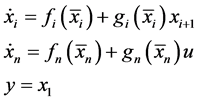
<?xml version="1.0" encoding="UTF-8"?><!DOCTYPE article  PUBLIC "-//NLM//DTD Journal Publishing DTD v3.0 20080202//EN" "http://dtd.nlm.nih.gov/publishing/3.0/journalpublishing3.dtd"><article xmlns:mml="http://www.w3.org/1998/Math/MathML" xmlns:xlink="http://www.w3.org/1999/xlink" dtd-version="3.0" xml:lang="en" article-type="research article"><front><journal-meta><journal-id journal-id-type="publisher-id">OALibJ</journal-id><journal-title-group><journal-title>Open Access Library Journal</journal-title></journal-title-group><issn pub-type="epub">2333-9705</issn><publisher><publisher-name>Scientific Research Publishing</publisher-name></publisher></journal-meta><article-meta><article-id pub-id-type="doi">10.4236/oalib.1103061</article-id><article-id pub-id-type="publisher-id">OALibJ-71849</article-id><article-categories><subj-group subj-group-type="heading"><subject>Articles</subject></subj-group><subj-group subj-group-type="Discipline-v2"><subject>Biomedical&amp;Life Sciences</subject><subject> Business&amp;Economics</subject><subject> Chemistry&amp;Materials Science</subject><subject> Computer Science&amp;Communications</subject><subject> Earth&amp;Environmental Sciences</subject><subject> Engineering</subject><subject> Medicine&amp;Healthcare</subject><subject> Physics&amp;Mathematics</subject><subject> Social Sciences&amp;Humanities</subject></subj-group></article-categories><title-group><article-title>
 
 
  Backstepping Technique Based on Error
 
</article-title></title-group><contrib-group><contrib contrib-type="author" xlink:type="simple"><name name-style="western"><surname>Li</surname><given-names>Wang</given-names></name><xref ref-type="aff" rid="aff1"><sub>1</sub></xref><xref ref-type="corresp" rid="cor1"><sup>*</sup></xref></contrib></contrib-group><aff id="aff1"><label>1</label><addr-line>School of Hydraulic, Energy and Power Engineering, Yangzhou University, Yangzhou, China</addr-line></aff><author-notes><corresp id="cor1">* E-mail:<email>wanglshenhl@126.com</email></corresp></author-notes><pub-date pub-type="epub"><day>02</day><month>11</month><year>2016</year></pub-date><volume>03</volume><issue>11</issue><fpage>1</fpage><lpage>12</lpage><history><date date-type="received"><day>September</day>	<month>14,</month>	<year>2016</year></date><date date-type="rev-recd"><day>Accepted:</day>	<month>November</month>	<year>5,</year>	</date><date date-type="accepted"><day>November</day>	<month>9,</month>	<year>2016</year></date></history><permissions><copyright-statement>&#169; Copyright  2014 by authors and Scientific Research Publishing Inc. </copyright-statement><copyright-year>2014</copyright-year><license><license-p>This work is licensed under the Creative Commons Attribution International License (CC BY). http://creativecommons.org/licenses/by/4.0/</license-p></license></permissions><abstract><p>
 
 
  Backstepping technique usually adopts back step design to construct the Lyapunov function gradually, and then to design the corresponding virtue controller. The backstepping technique based on error also adopts back step design process, but the design of virtue controllers depends on the corresponding errors which are designed to satisfy some expected behaviors. Six different error equations are deduced by chang
  ing the results of the virtue controls arbitrarily while guaranteeing the system behaviors such as stability, and an example shows the effectiveness of these six versions. Simulated results illustrate that these
  <b style="line-height:1.5;text-align:justify;white-space:normal;"> </b>
  six versions of backstepping technique based on error are effective.
 
</p></abstract><kwd-group><kwd>Backstepping Technique</kwd><kwd> Lyapunov Function</kwd><kwd> Error</kwd><kwd> Strictly Feedback Nonlinear Control System</kwd></kwd-group></article-meta></front><body><sec id="s1"><title>1. Introduction</title><p>Backstepping design methodology is among the most important nonlinear control design techniques with numerous applications. It was first presented by P. V. Kokotovic and his coauthors, see [<xref ref-type="bibr" rid="scirp.71849-ref1">1</xref>] [<xref ref-type="bibr" rid="scirp.71849-ref2">2</xref>] [<xref ref-type="bibr" rid="scirp.71849-ref3">3</xref>] and references therein, and was formulated by Krstic et al. in [<xref ref-type="bibr" rid="scirp.71849-ref4">4</xref>] , and was advanced in many papers and not limited in the following. Murat Arcak et al. [<xref ref-type="bibr" rid="scirp.71849-ref5">5</xref>] presented robustification of backstepping design methodology by two versions: cancellation backstepping and L<sub>G</sub>V-backstepping. In reference [<xref ref-type="bibr" rid="scirp.71849-ref6">6</xref>] , about ten-year development of this recursive design was introduced. Dragan B. Dacic et al. [<xref ref-type="bibr" rid="scirp.71849-ref7">7</xref>] studied the use of backstepping design methodology in power integrator triangular systems. Dimitrios Karagiannis et al. [<xref ref-type="bibr" rid="scirp.71849-ref8">8</xref>] considered an alternative to adaptive backstepping. Keng Peng Tee et al. [<xref ref-type="bibr" rid="scirp.71849-ref9">9</xref>] employed a barrier Lyapunov function for the control of output-constrained nonlinear systems.</p><p>In all the references mentioned above, the purpose of backstepping design methodology is the construction of various types of control Lyapunov functions: stable, adaptive, robust, etc. D. Swaroop et al. [<xref ref-type="bibr" rid="scirp.71849-ref10">10</xref>] introduced Dynamic Surface Control (DSC), which was similar to backstepping and multiple surface control methods, but with an important addition, one low pass filter was included in the design which ended the complexity arising due to the “explosion of terms” that had made backstepping methods difficult to implement in practice. In recent years, DSC has received a great deal attention, see [<xref ref-type="bibr" rid="scirp.71849-ref11">11</xref>] [<xref ref-type="bibr" rid="scirp.71849-ref12">12</xref>] and references therein.</p><p>A new redesign backstepping technique, backstepping technique based on error is presented in this paper, which also adopts backstepping design process, but doesn’t construct the system, control Lyapunov function; the design of the virtue controller depends on the corresponding errors which are designed to satisfy some expected behaviors. The method is also more flexible than DSC. Based on some results of [<xref ref-type="bibr" rid="scirp.71849-ref13">13</xref>] , we deduce six different error equations by changing the result of the virtue control law arbitrarily while guaranteeing the system behaviors such as stability.</p><p>In this paper, we call backstepping technique based on control Lyapunov functions as conventional backstepping, and call backstepping technique based on error as error backstepping. Section 2 presents the design and six results of error backstepping, in Section 3 an example shows the effectiveness of these six versions, and Section 4 concludes this paper.</p></sec><sec id="s2"><title>2. Backstepping Technique Based on Error</title><p>Consider a usual strictly feedback nonlinear system as follows:</p><p><img src="http://html.scirp.org/file/71849x3.png" /><img src="http://html.scirp.org/file/71849x2.png" /> (1)</p><p>where<inline-formula><inline-graphic xlink:href="http://html.scirp.org/file/71849x4.png" xlink:type="simple"/></inline-formula>, <inline-formula><inline-graphic xlink:href="http://html.scirp.org/file/71849x5.png" xlink:type="simple"/></inline-formula>, when <inline-formula><inline-graphic xlink:href="http://html.scirp.org/file/71849x6.png" xlink:type="simple"/></inline-formula> <inline-formula><inline-graphic xlink:href="http://html.scirp.org/file/71849x7.png" xlink:type="simple"/></inline-formula>, <inline-formula><inline-graphic xlink:href="http://html.scirp.org/file/71849x8.png" xlink:type="simple"/></inline-formula>,<inline-formula><inline-graphic xlink:href="http://html.scirp.org/file/71849x9.png" xlink:type="simple"/></inline-formula>. The design objective is to make<inline-formula><inline-graphic xlink:href="http://html.scirp.org/file/71849x10.png" xlink:type="simple"/></inline-formula>.</p><p>The backstepping design process is as follows.</p><p>Step 1: Consider the control goal<inline-formula><inline-graphic xlink:href="http://html.scirp.org/file/71849x11.png" xlink:type="simple"/></inline-formula>, take <inline-formula><inline-graphic xlink:href="http://html.scirp.org/file/71849x12.png" xlink:type="simple"/></inline-formula> as the first virtual control and pretend that <inline-formula><inline-graphic xlink:href="http://html.scirp.org/file/71849x13.png" xlink:type="simple"/></inline-formula> satisfies the following equation.</p><disp-formula id="scirp.71849-formula77"><label>(2)</label><graphic position="anchor" xlink:href="http://html.scirp.org/file/71849x14.png"  xlink:type="simple"/></disp-formula><p>Define the first tracking error</p><disp-formula id="scirp.71849-formula78"><label>(3)</label><graphic position="anchor" xlink:href="http://html.scirp.org/file/71849x15.png"  xlink:type="simple"/></disp-formula><p>Error <inline-formula><inline-graphic xlink:href="http://html.scirp.org/file/71849x16.png" xlink:type="simple"/></inline-formula> is wanted to converge to zero exponentially, therefore select the desired behaviour to be <inline-formula><inline-graphic xlink:href="http://html.scirp.org/file/71849x17.png" xlink:type="simple"/></inline-formula> <inline-formula><inline-graphic xlink:href="http://html.scirp.org/file/71849x18.png" xlink:type="simple"/></inline-formula> is chosen to satisfy the required dynamic characteristic.</p><disp-formula id="scirp.71849-formula79"><label>(4)</label><graphic position="anchor" xlink:href="http://html.scirp.org/file/71849x19.png"  xlink:type="simple"/></disp-formula><p>Then the following equality corresponds to desired behaviour</p><disp-formula id="scirp.71849-formula80"><label>(5)</label><graphic position="anchor" xlink:href="http://html.scirp.org/file/71849x20.png"  xlink:type="simple"/></disp-formula><p>Step 2: but we cannot just choose <inline-formula><inline-graphic xlink:href="http://html.scirp.org/file/71849x21.png" xlink:type="simple"/></inline-formula> to be<inline-formula><inline-graphic xlink:href="http://html.scirp.org/file/71849x21.png" xlink:type="simple"/></inline-formula><inline-formula><inline-graphic xlink:href="http://html.scirp.org/file/71849x22.png" xlink:type="simple"/></inline-formula>, so we “step back” one integrator to the <inline-formula><inline-graphic xlink:href="http://html.scirp.org/file/71849x21.png" xlink:type="simple"/></inline-formula><inline-formula><inline-graphic xlink:href="http://html.scirp.org/file/71849x22.png" xlink:type="simple"/></inline-formula><inline-formula><inline-graphic xlink:href="http://html.scirp.org/file/71849x23.png" xlink:type="simple"/></inline-formula> equation. Choose <inline-formula><inline-graphic xlink:href="http://html.scirp.org/file/71849x21.png" xlink:type="simple"/></inline-formula><inline-formula><inline-graphic xlink:href="http://html.scirp.org/file/71849x22.png" xlink:type="simple"/></inline-formula><inline-formula><inline-graphic xlink:href="http://html.scirp.org/file/71849x23.png" xlink:type="simple"/></inline-formula><inline-formula><inline-graphic xlink:href="http://html.scirp.org/file/71849x24.png" xlink:type="simple"/></inline-formula> as the second virtual control to solve the <inline-formula><inline-graphic xlink:href="http://html.scirp.org/file/71849x21.png" xlink:type="simple"/></inline-formula><inline-formula><inline-graphic xlink:href="http://html.scirp.org/file/71849x22.png" xlink:type="simple"/></inline-formula><inline-formula><inline-graphic xlink:href="http://html.scirp.org/file/71849x23.png" xlink:type="simple"/></inline-formula><inline-formula><inline-graphic xlink:href="http://html.scirp.org/file/71849x24.png" xlink:type="simple"/></inline-formula><inline-formula><inline-graphic xlink:href="http://html.scirp.org/file/71849x25.png" xlink:type="simple"/></inline-formula> tracking problem.</p><p>Introduce</p><disp-formula id="scirp.71849-formula81"><label>(6)</label><graphic position="anchor" xlink:href="http://html.scirp.org/file/71849x26.png"  xlink:type="simple"/></disp-formula><p>Define the second tracking error:</p><disp-formula id="scirp.71849-formula82"><label>(7)</label><graphic position="anchor" xlink:href="http://html.scirp.org/file/71849x27.png"  xlink:type="simple"/></disp-formula><p>The error <inline-formula><inline-graphic xlink:href="http://html.scirp.org/file/71849x28.png" xlink:type="simple"/></inline-formula> is also wanted to converge to zero exponentially, and select the desired behaviour to be:</p><disp-formula id="scirp.71849-formula83"><label>(8)</label><graphic position="anchor" xlink:href="http://html.scirp.org/file/71849x29.png"  xlink:type="simple"/></disp-formula><p><inline-formula><inline-graphic xlink:href="http://html.scirp.org/file/71849x30.png" xlink:type="simple"/></inline-formula>is chosen to satisfy the required dynamic characteristic.</p><disp-formula id="scirp.71849-formula84"><label>(9)</label><graphic position="anchor" xlink:href="http://html.scirp.org/file/71849x31.png"  xlink:type="simple"/></disp-formula><p>Then the following equality corresponds to desired behavior.</p><disp-formula id="scirp.71849-formula85"><label>(10)</label><graphic position="anchor" xlink:href="http://html.scirp.org/file/71849x32.png"  xlink:type="simple"/></disp-formula><p>Step i: Choose <inline-formula><inline-graphic xlink:href="http://html.scirp.org/file/71849x33.png" xlink:type="simple"/></inline-formula> as the i virtual control to solve the <inline-formula><inline-graphic xlink:href="http://html.scirp.org/file/71849x33.png" xlink:type="simple"/></inline-formula><inline-formula><inline-graphic xlink:href="http://html.scirp.org/file/71849x34.png" xlink:type="simple"/></inline-formula> tracking problem. Define the i tracking error</p><disp-formula id="scirp.71849-formula86"><label>(11)</label><graphic position="anchor" xlink:href="http://html.scirp.org/file/71849x35.png"  xlink:type="simple"/></disp-formula><p>Select its time derivative to satisfy the following behaviou</p><disp-formula id="scirp.71849-formula87"><label>(12)</label><graphic position="anchor" xlink:href="http://html.scirp.org/file/71849x36.png"  xlink:type="simple"/></disp-formula><p>Introduce</p><disp-formula id="scirp.71849-formula88"><label>(13)</label><graphic position="anchor" xlink:href="http://html.scirp.org/file/71849x37.png"  xlink:type="simple"/></disp-formula><p>Choose <inline-formula><inline-graphic xlink:href="http://html.scirp.org/file/71849x38.png" xlink:type="simple"/></inline-formula> to satisfy the required behaviour</p><disp-formula id="scirp.71849-formula89"><label>(14)</label><graphic position="anchor" xlink:href="http://html.scirp.org/file/71849x39.png"  xlink:type="simple"/></disp-formula><p>Then has</p><disp-formula id="scirp.71849-formula90"><label>(15)</label><graphic position="anchor" xlink:href="http://html.scirp.org/file/71849x40.png"  xlink:type="simple"/></disp-formula><p>Step n: Choose u to solve the <inline-formula><inline-graphic xlink:href="http://html.scirp.org/file/71849x41.png" xlink:type="simple"/></inline-formula> tracking problem. Define the n tracking error:</p><disp-formula id="scirp.71849-formula91"><label>(16)</label><graphic position="anchor" xlink:href="http://html.scirp.org/file/71849x42.png"  xlink:type="simple"/></disp-formula><p>Its derivative satisfies. <inline-formula><inline-graphic xlink:href="http://html.scirp.org/file/71849x43.png" xlink:type="simple"/></inline-formula></p><p>In fact:</p><disp-formula id="scirp.71849-formula92"><label>(17)</label><graphic position="anchor" xlink:href="http://html.scirp.org/file/71849x44.png"  xlink:type="simple"/></disp-formula><p>The last equality corresponds to what we are forcing.</p><disp-formula id="scirp.71849-formula93"><label>(18)</label><graphic position="anchor" xlink:href="http://html.scirp.org/file/71849x45.png"  xlink:type="simple"/></disp-formula><p>The deduced error equation is:</p><disp-formula id="scirp.71849-formula94"><label>(19)</label><graphic position="anchor" xlink:href="http://html.scirp.org/file/71849x46.png"  xlink:type="simple"/></disp-formula><p>Defining<inline-formula><inline-graphic xlink:href="http://html.scirp.org/file/71849x47.png" xlink:type="simple"/></inline-formula>, then</p><disp-formula id="scirp.71849-formula95"><label>(20)</label><graphic position="anchor" xlink:href="http://html.scirp.org/file/71849x48.png"  xlink:type="simple"/></disp-formula><p>Proposition 2.1: When choose parameters</p><p><inline-formula><inline-graphic xlink:href="http://html.scirp.org/file/71849x50.png" xlink:type="simple"/></inline-formula><inline-formula><inline-graphic xlink:href="http://html.scirp.org/file/71849x50.png" xlink:type="simple"/></inline-formula><inline-formula><inline-graphic xlink:href="http://html.scirp.org/file/71849x49.png" xlink:type="simple"/></inline-formula>and <inline-formula><inline-graphic xlink:href="http://html.scirp.org/file/71849x50.png" xlink:type="simple"/></inline-formula><inline-formula><inline-graphic xlink:href="http://html.scirp.org/file/71849x49.png" xlink:type="simple"/></inline-formula><inline-formula><inline-graphic xlink:href="http://html.scirp.org/file/71849x51.png" xlink:type="simple"/></inline-formula></p><p>where <inline-formula><inline-graphic xlink:href="http://html.scirp.org/file/71849x52.png" xlink:type="simple"/></inline-formula> is constant. It is obvious that errors <inline-formula><inline-graphic xlink:href="http://html.scirp.org/file/71849x52.png" xlink:type="simple"/></inline-formula><inline-formula><inline-graphic xlink:href="http://html.scirp.org/file/71849x53.png" xlink:type="simple"/></inline-formula> converge to origin exponentially, that is,<inline-formula><inline-graphic xlink:href="http://html.scirp.org/file/71849x52.png" xlink:type="simple"/></inline-formula><inline-formula><inline-graphic xlink:href="http://html.scirp.org/file/71849x53.png" xlink:type="simple"/></inline-formula><inline-formula><inline-graphic xlink:href="http://html.scirp.org/file/71849x54.png" xlink:type="simple"/></inline-formula>.</p><p>Proposition 2.2: When <inline-formula><inline-graphic xlink:href="http://html.scirp.org/file/71849x55.png" xlink:type="simple"/></inline-formula> is the function of<inline-formula><inline-graphic xlink:href="http://html.scirp.org/file/71849x55.png" xlink:type="simple"/></inline-formula><inline-formula><inline-graphic xlink:href="http://html.scirp.org/file/71849x56.png" xlink:type="simple"/></inline-formula>, and when select appropriate parameters<inline-formula><inline-graphic xlink:href="http://html.scirp.org/file/71849x55.png" xlink:type="simple"/></inline-formula><inline-formula><inline-graphic xlink:href="http://html.scirp.org/file/71849x56.png" xlink:type="simple"/></inline-formula><inline-formula><inline-graphic xlink:href="http://html.scirp.org/file/71849x57.png" xlink:type="simple"/></inline-formula>, It can make errors <inline-formula><inline-graphic xlink:href="http://html.scirp.org/file/71849x55.png" xlink:type="simple"/></inline-formula><inline-formula><inline-graphic xlink:href="http://html.scirp.org/file/71849x56.png" xlink:type="simple"/></inline-formula><inline-formula><inline-graphic xlink:href="http://html.scirp.org/file/71849x57.png" xlink:type="simple"/></inline-formula><inline-formula><inline-graphic xlink:href="http://html.scirp.org/file/71849x58.png" xlink:type="simple"/></inline-formula> globally stable at origin, then<inline-formula><inline-graphic xlink:href="http://html.scirp.org/file/71849x55.png" xlink:type="simple"/></inline-formula><inline-formula><inline-graphic xlink:href="http://html.scirp.org/file/71849x56.png" xlink:type="simple"/></inline-formula><inline-formula><inline-graphic xlink:href="http://html.scirp.org/file/71849x57.png" xlink:type="simple"/></inline-formula><inline-formula><inline-graphic xlink:href="http://html.scirp.org/file/71849x58.png" xlink:type="simple"/></inline-formula><inline-formula><inline-graphic xlink:href="http://html.scirp.org/file/71849x59.png" xlink:type="simple"/></inline-formula>.</p><p>Proof: error Equation (19) is in short as<inline-formula><inline-graphic xlink:href="http://html.scirp.org/file/71849x60.png" xlink:type="simple"/></inline-formula>, where</p><disp-formula id="scirp.71849-formula96"><label>(21)</label><graphic position="anchor" xlink:href="http://html.scirp.org/file/71849x61.png"  xlink:type="simple"/></disp-formula><p>Introduce</p><disp-formula id="scirp.71849-formula97"><label>(22)</label><graphic position="anchor" xlink:href="http://html.scirp.org/file/71849x62.png"  xlink:type="simple"/></disp-formula><p>Its time derivative is</p><disp-formula id="scirp.71849-formula98"><label>(23)</label><graphic position="anchor" xlink:href="http://html.scirp.org/file/71849x63.png"  xlink:type="simple"/></disp-formula><p>If parameters <inline-formula><inline-graphic xlink:href="http://html.scirp.org/file/71849x64.png" xlink:type="simple"/></inline-formula> <inline-formula><inline-graphic xlink:href="http://html.scirp.org/file/71849x64.png" xlink:type="simple"/></inline-formula><inline-formula><inline-graphic xlink:href="http://html.scirp.org/file/71849x65.png" xlink:type="simple"/></inline-formula> satisfy<inline-formula><inline-graphic xlink:href="http://html.scirp.org/file/71849x64.png" xlink:type="simple"/></inline-formula><inline-formula><inline-graphic xlink:href="http://html.scirp.org/file/71849x65.png" xlink:type="simple"/></inline-formula><inline-formula><inline-graphic xlink:href="http://html.scirp.org/file/71849x66.png" xlink:type="simple"/></inline-formula>, <inline-formula><inline-graphic xlink:href="http://html.scirp.org/file/71849x64.png" xlink:type="simple"/></inline-formula><inline-formula><inline-graphic xlink:href="http://html.scirp.org/file/71849x65.png" xlink:type="simple"/></inline-formula><inline-formula><inline-graphic xlink:href="http://html.scirp.org/file/71849x66.png" xlink:type="simple"/></inline-formula><inline-formula><inline-graphic xlink:href="http://html.scirp.org/file/71849x67.png" xlink:type="simple"/></inline-formula>, <inline-formula><inline-graphic xlink:href="http://html.scirp.org/file/71849x64.png" xlink:type="simple"/></inline-formula><inline-formula><inline-graphic xlink:href="http://html.scirp.org/file/71849x65.png" xlink:type="simple"/></inline-formula><inline-formula><inline-graphic xlink:href="http://html.scirp.org/file/71849x66.png" xlink:type="simple"/></inline-formula><inline-formula><inline-graphic xlink:href="http://html.scirp.org/file/71849x67.png" xlink:type="simple"/></inline-formula><inline-formula><inline-graphic xlink:href="http://html.scirp.org/file/71849x68.png" xlink:type="simple"/></inline-formula>, <inline-formula><inline-graphic xlink:href="http://html.scirp.org/file/71849x64.png" xlink:type="simple"/></inline-formula><inline-formula><inline-graphic xlink:href="http://html.scirp.org/file/71849x65.png" xlink:type="simple"/></inline-formula><inline-formula><inline-graphic xlink:href="http://html.scirp.org/file/71849x66.png" xlink:type="simple"/></inline-formula><inline-formula><inline-graphic xlink:href="http://html.scirp.org/file/71849x67.png" xlink:type="simple"/></inline-formula><inline-formula><inline-graphic xlink:href="http://html.scirp.org/file/71849x68.png" xlink:type="simple"/></inline-formula><inline-formula><inline-graphic xlink:href="http://html.scirp.org/file/71849x69.png" xlink:type="simple"/></inline-formula>, <inline-formula><inline-graphic xlink:href="http://html.scirp.org/file/71849x64.png" xlink:type="simple"/></inline-formula><inline-formula><inline-graphic xlink:href="http://html.scirp.org/file/71849x65.png" xlink:type="simple"/></inline-formula><inline-formula><inline-graphic xlink:href="http://html.scirp.org/file/71849x66.png" xlink:type="simple"/></inline-formula><inline-formula><inline-graphic xlink:href="http://html.scirp.org/file/71849x67.png" xlink:type="simple"/></inline-formula><inline-formula><inline-graphic xlink:href="http://html.scirp.org/file/71849x68.png" xlink:type="simple"/></inline-formula><inline-formula><inline-graphic xlink:href="http://html.scirp.org/file/71849x69.png" xlink:type="simple"/></inline-formula><inline-formula><inline-graphic xlink:href="http://html.scirp.org/file/71849x70.png" xlink:type="simple"/></inline-formula>, then<inline-formula><inline-graphic xlink:href="http://html.scirp.org/file/71849x64.png" xlink:type="simple"/></inline-formula><inline-formula><inline-graphic xlink:href="http://html.scirp.org/file/71849x65.png" xlink:type="simple"/></inline-formula><inline-formula><inline-graphic xlink:href="http://html.scirp.org/file/71849x66.png" xlink:type="simple"/></inline-formula><inline-formula><inline-graphic xlink:href="http://html.scirp.org/file/71849x67.png" xlink:type="simple"/></inline-formula><inline-formula><inline-graphic xlink:href="http://html.scirp.org/file/71849x68.png" xlink:type="simple"/></inline-formula><inline-formula><inline-graphic xlink:href="http://html.scirp.org/file/71849x69.png" xlink:type="simple"/></inline-formula><inline-formula><inline-graphic xlink:href="http://html.scirp.org/file/71849x70.png" xlink:type="simple"/></inline-formula><inline-formula><inline-graphic xlink:href="http://html.scirp.org/file/71849x71.png" xlink:type="simple"/></inline-formula>, so all the errors converge to origin globally.</p><p>End of proof.</p><p>Proposition 2.3: Assume the expression of virtual control (14) is changed into:</p><disp-formula id="scirp.71849-formula99"><label>(24)</label><graphic position="anchor" xlink:href="http://html.scirp.org/file/71849x72.png"  xlink:type="simple"/></disp-formula><p>where<inline-formula><inline-graphic xlink:href="http://html.scirp.org/file/71849x73.png" xlink:type="simple"/></inline-formula>, when choose the parameters <inline-formula><inline-graphic xlink:href="http://html.scirp.org/file/71849x73.png" xlink:type="simple"/></inline-formula><inline-formula><inline-graphic xlink:href="http://html.scirp.org/file/71849x74.png" xlink:type="simple"/></inline-formula> and <inline-formula><inline-graphic xlink:href="http://html.scirp.org/file/71849x73.png" xlink:type="simple"/></inline-formula><inline-formula><inline-graphic xlink:href="http://html.scirp.org/file/71849x74.png" xlink:type="simple"/></inline-formula><inline-formula><inline-graphic xlink:href="http://html.scirp.org/file/71849x75.png" xlink:type="simple"/></inline-formula> is the function of the corresponding states, errors <inline-formula><inline-graphic xlink:href="http://html.scirp.org/file/71849x73.png" xlink:type="simple"/></inline-formula><inline-formula><inline-graphic xlink:href="http://html.scirp.org/file/71849x74.png" xlink:type="simple"/></inline-formula><inline-formula><inline-graphic xlink:href="http://html.scirp.org/file/71849x75.png" xlink:type="simple"/></inline-formula><inline-formula><inline-graphic xlink:href="http://html.scirp.org/file/71849x76.png" xlink:type="simple"/></inline-formula> converge to origin globally, and<inline-formula><inline-graphic xlink:href="http://html.scirp.org/file/71849x73.png" xlink:type="simple"/></inline-formula><inline-formula><inline-graphic xlink:href="http://html.scirp.org/file/71849x74.png" xlink:type="simple"/></inline-formula><inline-formula><inline-graphic xlink:href="http://html.scirp.org/file/71849x75.png" xlink:type="simple"/></inline-formula><inline-formula><inline-graphic xlink:href="http://html.scirp.org/file/71849x76.png" xlink:type="simple"/></inline-formula><inline-formula><inline-graphic xlink:href="http://html.scirp.org/file/71849x77.png" xlink:type="simple"/></inline-formula>,<inline-formula><inline-graphic xlink:href="http://html.scirp.org/file/71849x73.png" xlink:type="simple"/></inline-formula><inline-formula><inline-graphic xlink:href="http://html.scirp.org/file/71849x74.png" xlink:type="simple"/></inline-formula><inline-formula><inline-graphic xlink:href="http://html.scirp.org/file/71849x75.png" xlink:type="simple"/></inline-formula><inline-formula><inline-graphic xlink:href="http://html.scirp.org/file/71849x76.png" xlink:type="simple"/></inline-formula><inline-formula><inline-graphic xlink:href="http://html.scirp.org/file/71849x77.png" xlink:type="simple"/></inline-formula><inline-formula><inline-graphic xlink:href="http://html.scirp.org/file/71849x78.png" xlink:type="simple"/></inline-formula>.</p><p>Proof: when virtual control (24) takes place (14) in recursive procedure, the new error equation is changed into</p><disp-formula id="scirp.71849-formula100"><graphic  xlink:href="http://html.scirp.org/file/71849x79.png"  xlink:type="simple"/></disp-formula><p>or</p><disp-formula id="scirp.71849-formula101"><label>(25)</label><graphic position="anchor" xlink:href="http://html.scirp.org/file/71849x80.png"  xlink:type="simple"/></disp-formula><p>It is the same as (2.27). Then all the errors converge to origin globally.</p><p>End of proof.</p><p>Proposition 3.4: Similarly assume the expression of virtual control (8) is changed into:</p><disp-formula id="scirp.71849-formula102"><label>(26)</label><graphic position="anchor" xlink:href="http://html.scirp.org/file/71849x81.png"  xlink:type="simple"/></disp-formula><p>where<inline-formula><inline-graphic xlink:href="http://html.scirp.org/file/71849x82.png" xlink:type="simple"/></inline-formula>, <inline-formula><inline-graphic xlink:href="http://html.scirp.org/file/71849x82.png" xlink:type="simple"/></inline-formula><inline-formula><inline-graphic xlink:href="http://html.scirp.org/file/71849x83.png" xlink:type="simple"/></inline-formula>, and <inline-formula><inline-graphic xlink:href="http://html.scirp.org/file/71849x82.png" xlink:type="simple"/></inline-formula><inline-formula><inline-graphic xlink:href="http://html.scirp.org/file/71849x83.png" xlink:type="simple"/></inline-formula><inline-formula><inline-graphic xlink:href="http://html.scirp.org/file/71849x84.png" xlink:type="simple"/></inline-formula> is the function of the corresponding states, then the new error equation is:</p><disp-formula id="scirp.71849-formula103"><graphic  xlink:href="http://html.scirp.org/file/71849x85.png"  xlink:type="simple"/></disp-formula><p>or</p><disp-formula id="scirp.71849-formula104"><label>(27)</label><graphic position="anchor" xlink:href="http://html.scirp.org/file/71849x86.png"  xlink:type="simple"/></disp-formula><p>When choose the parameters <inline-formula><inline-graphic xlink:href="http://html.scirp.org/file/71849x87.png" xlink:type="simple"/></inline-formula> and<inline-formula><inline-graphic xlink:href="http://html.scirp.org/file/71849x87.png" xlink:type="simple"/></inline-formula><inline-formula><inline-graphic xlink:href="http://html.scirp.org/file/71849x88.png" xlink:type="simple"/></inline-formula>, errors <inline-formula><inline-graphic xlink:href="http://html.scirp.org/file/71849x87.png" xlink:type="simple"/></inline-formula><inline-formula><inline-graphic xlink:href="http://html.scirp.org/file/71849x88.png" xlink:type="simple"/></inline-formula><inline-formula><inline-graphic xlink:href="http://html.scirp.org/file/71849x89.png" xlink:type="simple"/></inline-formula> are globally asymptotically stable at origin, and<inline-formula><inline-graphic xlink:href="http://html.scirp.org/file/71849x87.png" xlink:type="simple"/></inline-formula><inline-formula><inline-graphic xlink:href="http://html.scirp.org/file/71849x88.png" xlink:type="simple"/></inline-formula><inline-formula><inline-graphic xlink:href="http://html.scirp.org/file/71849x89.png" xlink:type="simple"/></inline-formula><inline-formula><inline-graphic xlink:href="http://html.scirp.org/file/71849x90.png" xlink:type="simple"/></inline-formula>.</p><p>Proof:</p><p>Defining</p><disp-formula id="scirp.71849-formula105"><label>(28)</label><graphic position="anchor" xlink:href="http://html.scirp.org/file/71849x91.png"  xlink:type="simple"/></disp-formula><p>where</p><p><img data-original="http://html.scirp.org/file/71849x93.png" /><img data-original="http://html.scirp.org/file/71849x92.png" /> (29)</p><p>Then</p><disp-formula id="scirp.71849-formula106"><label>(30)</label><graphic position="anchor" xlink:href="http://html.scirp.org/file/71849x94.png"  xlink:type="simple"/></disp-formula><p>Introduce a positive definite quadratic function</p><disp-formula id="scirp.71849-formula107"><label>(31)</label><graphic position="anchor" xlink:href="http://html.scirp.org/file/71849x95.png"  xlink:type="simple"/></disp-formula><p>It can be obtained</p><disp-formula id="scirp.71849-formula108"><label>(32)</label><graphic position="anchor" xlink:href="http://html.scirp.org/file/71849x96.png"  xlink:type="simple"/></disp-formula><p>Then <inline-formula><inline-graphic xlink:href="http://html.scirp.org/file/71849x97.png" xlink:type="simple"/></inline-formula> converge to origin globally, so errors are globally asymptotically stable at origin and<inline-formula><inline-graphic xlink:href="http://html.scirp.org/file/71849x97.png" xlink:type="simple"/></inline-formula><inline-formula><inline-graphic xlink:href="http://html.scirp.org/file/71849x98.png" xlink:type="simple"/></inline-formula>.</p><p>End of proof.</p><p>Proposition 2.5: The virtual control can also be choose as</p><disp-formula id="scirp.71849-formula109"><label>(33)</label><graphic position="anchor" xlink:href="http://html.scirp.org/file/71849x99.png"  xlink:type="simple"/></disp-formula><p>where<inline-formula><inline-graphic xlink:href="http://html.scirp.org/file/71849x100.png" xlink:type="simple"/></inline-formula>, <inline-formula><inline-graphic xlink:href="http://html.scirp.org/file/71849x100.png" xlink:type="simple"/></inline-formula><inline-formula><inline-graphic xlink:href="http://html.scirp.org/file/71849x101.png" xlink:type="simple"/></inline-formula>, and <inline-formula><inline-graphic xlink:href="http://html.scirp.org/file/71849x100.png" xlink:type="simple"/></inline-formula><inline-formula><inline-graphic xlink:href="http://html.scirp.org/file/71849x101.png" xlink:type="simple"/></inline-formula><inline-formula><inline-graphic xlink:href="http://html.scirp.org/file/71849x102.png" xlink:type="simple"/></inline-formula> is the function of the corresponding states, then the new error equation is:</p><disp-formula id="scirp.71849-formula110"><graphic  xlink:href="http://html.scirp.org/file/71849x103.png"  xlink:type="simple"/></disp-formula><p>or</p><disp-formula id="scirp.71849-formula111"><label>(34)</label><graphic position="anchor" xlink:href="http://html.scirp.org/file/71849x104.png"  xlink:type="simple"/></disp-formula><p>When choose parameters <inline-formula><inline-graphic xlink:href="http://html.scirp.org/file/71849x105.png" xlink:type="simple"/></inline-formula> <inline-formula><inline-graphic xlink:href="http://html.scirp.org/file/71849x105.png" xlink:type="simple"/></inline-formula><inline-formula><inline-graphic xlink:href="http://html.scirp.org/file/71849x106.png" xlink:type="simple"/></inline-formula> and the following inequality is satisfied</p><disp-formula id="scirp.71849-formula112"><label>(35)</label><graphic position="anchor" xlink:href="http://html.scirp.org/file/71849x107.png"  xlink:type="simple"/></disp-formula><p>Errors <inline-formula><inline-graphic xlink:href="http://html.scirp.org/file/71849x108.png" xlink:type="simple"/></inline-formula> c are globally asymptotically stable at origin, and <inline-formula><inline-graphic xlink:href="http://html.scirp.org/file/71849x108.png" xlink:type="simple"/></inline-formula><inline-formula><inline-graphic xlink:href="http://html.scirp.org/file/71849x109.png" xlink:type="simple"/></inline-formula>.</p><p>Proof:</p><p>Define <inline-formula><inline-graphic xlink:href="http://html.scirp.org/file/71849x110.png" xlink:type="simple"/></inline-formula> as follows:</p><p><img data-original="http://html.scirp.org/file/71849x112.png" /><img data-original="http://html.scirp.org/file/71849x111.png" /> (36)</p><p>Then it can be obtained</p><disp-formula id="scirp.71849-formula113"><label>(37)</label><graphic position="anchor" xlink:href="http://html.scirp.org/file/71849x113.png"  xlink:type="simple"/></disp-formula><p>where</p><disp-formula id="scirp.71849-formula114"><label>(38)</label><graphic position="anchor" xlink:href="http://html.scirp.org/file/71849x114.png"  xlink:type="simple"/></disp-formula><disp-formula id="scirp.71849-formula115"><label>(39)</label><graphic position="anchor" xlink:href="http://html.scirp.org/file/71849x115.png"  xlink:type="simple"/></disp-formula><p>Introduce a positive definite function<inline-formula><inline-graphic xlink:href="http://html.scirp.org/file/71849x116.png" xlink:type="simple"/></inline-formula>, where <inline-formula><inline-graphic xlink:href="http://html.scirp.org/file/71849x116.png" xlink:type="simple"/></inline-formula><inline-formula><inline-graphic xlink:href="http://html.scirp.org/file/71849x117.png" xlink:type="simple"/></inline-formula> is chosen as<inline-formula><inline-graphic xlink:href="http://html.scirp.org/file/71849x116.png" xlink:type="simple"/></inline-formula><inline-formula><inline-graphic xlink:href="http://html.scirp.org/file/71849x117.png" xlink:type="simple"/></inline-formula><inline-formula><inline-graphic xlink:href="http://html.scirp.org/file/71849x118.png" xlink:type="simple"/></inline-formula>, then<inline-formula><inline-graphic xlink:href="http://html.scirp.org/file/71849x116.png" xlink:type="simple"/></inline-formula><inline-formula><inline-graphic xlink:href="http://html.scirp.org/file/71849x117.png" xlink:type="simple"/></inline-formula><inline-formula><inline-graphic xlink:href="http://html.scirp.org/file/71849x118.png" xlink:type="simple"/></inline-formula><inline-formula><inline-graphic xlink:href="http://html.scirp.org/file/71849x119.png" xlink:type="simple"/></inline-formula>, where<inline-formula><inline-graphic xlink:href="http://html.scirp.org/file/71849x116.png" xlink:type="simple"/></inline-formula><inline-formula><inline-graphic xlink:href="http://html.scirp.org/file/71849x117.png" xlink:type="simple"/></inline-formula><inline-formula><inline-graphic xlink:href="http://html.scirp.org/file/71849x118.png" xlink:type="simple"/></inline-formula><inline-formula><inline-graphic xlink:href="http://html.scirp.org/file/71849x119.png" xlink:type="simple"/></inline-formula><inline-formula><inline-graphic xlink:href="http://html.scirp.org/file/71849x120.png" xlink:type="simple"/></inline-formula>, then the time derivative of <inline-formula><inline-graphic xlink:href="http://html.scirp.org/file/71849x116.png" xlink:type="simple"/></inline-formula><inline-formula><inline-graphic xlink:href="http://html.scirp.org/file/71849x117.png" xlink:type="simple"/></inline-formula><inline-formula><inline-graphic xlink:href="http://html.scirp.org/file/71849x118.png" xlink:type="simple"/></inline-formula><inline-formula><inline-graphic xlink:href="http://html.scirp.org/file/71849x119.png" xlink:type="simple"/></inline-formula><inline-formula><inline-graphic xlink:href="http://html.scirp.org/file/71849x120.png" xlink:type="simple"/></inline-formula><inline-formula><inline-graphic xlink:href="http://html.scirp.org/file/71849x121.png" xlink:type="simple"/></inline-formula> is</p><disp-formula id="scirp.71849-formula116"><label>(40)</label><graphic position="anchor" xlink:href="http://html.scirp.org/file/71849x122.png"  xlink:type="simple"/></disp-formula><p>Because</p><disp-formula id="scirp.71849-formula117"><label>(41)</label><graphic position="anchor" xlink:href="http://html.scirp.org/file/71849x123.png"  xlink:type="simple"/></disp-formula><p>So</p><disp-formula id="scirp.71849-formula118"><label>(42)</label><graphic position="anchor" xlink:href="http://html.scirp.org/file/71849x124.png"  xlink:type="simple"/></disp-formula><p>It is obvious that <inline-formula><inline-graphic xlink:href="http://html.scirp.org/file/71849x125.png" xlink:type="simple"/></inline-formula> is a diagonal matrix, and the i diagonal unit is<inline-formula><inline-graphic xlink:href="http://html.scirp.org/file/71849x125.png" xlink:type="simple"/></inline-formula><inline-formula><inline-graphic xlink:href="http://html.scirp.org/file/71849x126.png" xlink:type="simple"/></inline-formula>, from (35) and (36), we deduced that</p><disp-formula id="scirp.71849-formula119"><label>(43)</label><graphic position="anchor" xlink:href="http://html.scirp.org/file/71849x127.png"  xlink:type="simple"/></disp-formula><p>Substituting (42) into (43), it can be deduced that <inline-formula><inline-graphic xlink:href="http://html.scirp.org/file/71849x128.png" xlink:type="simple"/></inline-formula> is negative definite, so errors <inline-formula><inline-graphic xlink:href="http://html.scirp.org/file/71849x128.png" xlink:type="simple"/></inline-formula><inline-formula><inline-graphic xlink:href="http://html.scirp.org/file/71849x129.png" xlink:type="simple"/></inline-formula> converge to origin globally.</p><p>End of proof.</p><p>Proposition 2.6: The virtual control can also be choose as</p><disp-formula id="scirp.71849-formula120"><label>(44)</label><graphic position="anchor" xlink:href="http://html.scirp.org/file/71849x130.png"  xlink:type="simple"/></disp-formula><p>where<inline-formula><inline-graphic xlink:href="http://html.scirp.org/file/71849x131.png" xlink:type="simple"/></inline-formula>, <inline-formula><inline-graphic xlink:href="http://html.scirp.org/file/71849x131.png" xlink:type="simple"/></inline-formula><inline-formula><inline-graphic xlink:href="http://html.scirp.org/file/71849x132.png" xlink:type="simple"/></inline-formula>, and <inline-formula><inline-graphic xlink:href="http://html.scirp.org/file/71849x131.png" xlink:type="simple"/></inline-formula><inline-formula><inline-graphic xlink:href="http://html.scirp.org/file/71849x132.png" xlink:type="simple"/></inline-formula><inline-formula><inline-graphic xlink:href="http://html.scirp.org/file/71849x133.png" xlink:type="simple"/></inline-formula> is the function of the corresponding states, then the new error equation is:</p><disp-formula id="scirp.71849-formula121"><graphic  xlink:href="http://html.scirp.org/file/71849x134.png"  xlink:type="simple"/></disp-formula><p>or</p><disp-formula id="scirp.71849-formula122"><label>(45)</label><graphic position="anchor" xlink:href="http://html.scirp.org/file/71849x135.png"  xlink:type="simple"/></disp-formula><p>When choose parameters <inline-formula><inline-graphic xlink:href="http://html.scirp.org/file/71849x136.png" xlink:type="simple"/></inline-formula> <inline-formula><inline-graphic xlink:href="http://html.scirp.org/file/71849x136.png" xlink:type="simple"/></inline-formula><inline-formula><inline-graphic xlink:href="http://html.scirp.org/file/71849x137.png" xlink:type="simple"/></inline-formula> and the following inequality is satisfied</p><disp-formula id="scirp.71849-formula123"><label>(46)</label><graphic position="anchor" xlink:href="http://html.scirp.org/file/71849x138.png"  xlink:type="simple"/></disp-formula><p>Errors <inline-formula><inline-graphic xlink:href="http://html.scirp.org/file/71849x139.png" xlink:type="simple"/></inline-formula> are globally asymptotically stable at origin, and <inline-formula><inline-graphic xlink:href="http://html.scirp.org/file/71849x139.png" xlink:type="simple"/></inline-formula><inline-formula><inline-graphic xlink:href="http://html.scirp.org/file/71849x140.png" xlink:type="simple"/></inline-formula>.</p><p>Proof: it is similar to the proof of Proposition 2.5.</p></sec><sec id="s3"><title>3. Numerical Simulation</title><p>Consider the following two-order system:</p><disp-formula id="scirp.71849-formula124"><label>(47)</label><graphic position="anchor" xlink:href="http://html.scirp.org/file/71849x141.png"  xlink:type="simple"/></disp-formula><p>The control objective is to design a state feedback control to asymptotically stabilize the origin.</p><p>We adopt backstepping technique based on error to design control law. The calculated results are presented in <xref ref-type="table" rid="table1">Table 1</xref> by choosing parameters<inline-formula><inline-graphic xlink:href="http://html.scirp.org/file/71849x142.png" xlink:type="simple"/></inline-formula>. If the initial conditions are<inline-formula><inline-graphic xlink:href="http://html.scirp.org/file/71849x142.png" xlink:type="simple"/></inline-formula><inline-formula><inline-graphic xlink:href="http://html.scirp.org/file/71849x143.png" xlink:type="simple"/></inline-formula>, the simulated results are shown in <xref ref-type="fig" rid="fig1">Figure 1</xref>.</p><p>As it is shown in <xref ref-type="fig" rid="fig1">Figure 1</xref> the transients of state variables <inline-formula><inline-graphic xlink:href="http://html.scirp.org/file/71849x144.png" xlink:type="simple"/></inline-formula> and error variables <inline-formula><inline-graphic xlink:href="http://html.scirp.org/file/71849x144.png" xlink:type="simple"/></inline-formula><inline-formula><inline-graphic xlink:href="http://html.scirp.org/file/71849x145.png" xlink:type="simple"/></inline-formula> are stable, they get to origin in finite time. It is also shown that when the system structure or the control law is simple the transients of state variables <inline-formula><inline-graphic xlink:href="http://html.scirp.org/file/71849x144.png" xlink:type="simple"/></inline-formula><inline-formula><inline-graphic xlink:href="http://html.scirp.org/file/71849x145.png" xlink:type="simple"/></inline-formula><inline-formula><inline-graphic xlink:href="http://html.scirp.org/file/71849x146.png" xlink:type="simple"/></inline-formula> and <inline-formula><inline-graphic xlink:href="http://html.scirp.org/file/71849x144.png" xlink:type="simple"/></inline-formula><inline-formula><inline-graphic xlink:href="http://html.scirp.org/file/71849x145.png" xlink:type="simple"/></inline-formula><inline-formula><inline-graphic xlink:href="http://html.scirp.org/file/71849x146.png" xlink:type="simple"/></inline-formula><inline-formula><inline-graphic xlink:href="http://html.scirp.org/file/71849x147.png" xlink:type="simple"/></inline-formula> converge to origin perfectly.</p><table-wrap id="table1" ><label><xref ref-type="table" rid="table1">Table 1</xref></label><caption><title> Calculated results</title></caption><table><tbody><thead><tr><th align="center" valign="middle" ></th><th align="center" valign="middle" >Virtual control</th><th align="center" valign="middle" >Control law</th><th align="center" valign="middle" >error equation</th></tr></thead><tr><td align="center" valign="middle" ><inline-formula><inline-graphic xlink:href="http://html.scirp.org/file/71849x148.png" xlink:type="simple"/></inline-formula></td><td align="center" valign="middle" ><inline-formula><inline-graphic xlink:href="http://html.scirp.org/file/71849x149.png" xlink:type="simple"/></inline-formula></td><td align="center" valign="middle" ><inline-formula><inline-graphic xlink:href="http://html.scirp.org/file/71849x150.png" xlink:type="simple"/></inline-formula></td><td align="center" valign="middle" ><inline-formula><inline-graphic xlink:href="http://html.scirp.org/file/71849x151.png" xlink:type="simple"/></inline-formula></td></tr><tr><td align="center" valign="middle" ><inline-formula><inline-graphic xlink:href="http://html.scirp.org/file/71849x152.png" xlink:type="simple"/></inline-formula></td><td align="center" valign="middle" ><inline-formula><inline-graphic xlink:href="http://html.scirp.org/file/71849x153.png" xlink:type="simple"/></inline-formula></td><td align="center" valign="middle" ><inline-formula><inline-graphic xlink:href="http://html.scirp.org/file/71849x154.png" xlink:type="simple"/></inline-formula></td><td align="center" valign="middle" ><inline-formula><inline-graphic xlink:href="http://html.scirp.org/file/71849x155.png" xlink:type="simple"/></inline-formula></td></tr><tr><td align="center" valign="middle" ><inline-formula><inline-graphic xlink:href="http://html.scirp.org/file/71849x156.png" xlink:type="simple"/></inline-formula></td><td align="center" valign="middle" ><inline-formula><inline-graphic xlink:href="http://html.scirp.org/file/71849x157.png" xlink:type="simple"/></inline-formula></td><td align="center" valign="middle" ><inline-formula><inline-graphic xlink:href="http://html.scirp.org/file/71849x158.png" xlink:type="simple"/></inline-formula></td><td align="center" valign="middle" ><inline-formula><inline-graphic xlink:href="http://html.scirp.org/file/71849x159.png" xlink:type="simple"/></inline-formula></td></tr><tr><td align="center" valign="middle" ><inline-formula><inline-graphic xlink:href="http://html.scirp.org/file/71849x160.png" xlink:type="simple"/></inline-formula> <inline-formula><inline-graphic xlink:href="http://html.scirp.org/file/71849x161.png" xlink:type="simple"/></inline-formula></td><td align="center" valign="middle" ><inline-formula><inline-graphic xlink:href="http://html.scirp.org/file/71849x162.png" xlink:type="simple"/></inline-formula></td><td align="center" valign="middle" ><inline-formula><inline-graphic xlink:href="http://html.scirp.org/file/71849x163.png" xlink:type="simple"/></inline-formula></td><td align="center" valign="middle" ><inline-formula><inline-graphic xlink:href="http://html.scirp.org/file/71849x164.png" xlink:type="simple"/></inline-formula></td></tr><tr><td align="center" valign="middle" ><inline-formula><inline-graphic xlink:href="http://html.scirp.org/file/71849x165.png" xlink:type="simple"/></inline-formula> <inline-formula><inline-graphic xlink:href="http://html.scirp.org/file/71849x166.png" xlink:type="simple"/></inline-formula></td><td align="center" valign="middle" ><inline-formula><inline-graphic xlink:href="http://html.scirp.org/file/71849x167.png" xlink:type="simple"/></inline-formula></td><td align="center" valign="middle" ><inline-formula><inline-graphic xlink:href="http://html.scirp.org/file/71849x168.png" xlink:type="simple"/></inline-formula></td><td align="center" valign="middle" ><inline-formula><inline-graphic xlink:href="http://html.scirp.org/file/71849x169.png" xlink:type="simple"/></inline-formula></td></tr><tr><td align="center" valign="middle" ><inline-formula><inline-graphic xlink:href="http://html.scirp.org/file/71849x170.png" xlink:type="simple"/></inline-formula> <inline-formula><inline-graphic xlink:href="http://html.scirp.org/file/71849x171.png" xlink:type="simple"/></inline-formula></td><td align="center" valign="middle" ><inline-formula><inline-graphic xlink:href="http://html.scirp.org/file/71849x172.png" xlink:type="simple"/></inline-formula></td><td align="center" valign="middle" ><inline-formula><inline-graphic xlink:href="http://html.scirp.org/file/71849x173.png" xlink:type="simple"/></inline-formula></td><td align="center" valign="middle" ><inline-formula><inline-graphic xlink:href="http://html.scirp.org/file/71849x174.png" xlink:type="simple"/></inline-formula></td></tr></tbody></table></table-wrap><fig-group id="fig1"><label><xref ref-type="fig" rid="fig1">Figure 1</xref></label><caption><title> Simulated results.</title></caption><fig id ="fig1_1"><label></label><graphic mimetype="image"   position="float"  xlink:type="simple"  xlink:href="http://html.scirp.org/file/71849x175.png"/></fig><fig id ="fig1_2"><label></label><graphic mimetype="image"   position="float"  xlink:type="simple"  xlink:href="http://html.scirp.org/file/71849x176.png"/></fig><fig id ="fig1_3"><label></label><graphic mimetype="image"   position="float"  xlink:type="simple"  xlink:href="http://html.scirp.org/file/71849x177.png"/></fig><fig id ="fig1_4"><label></label><graphic mimetype="image"   position="float"  xlink:type="simple"  xlink:href="http://html.scirp.org/file/71849x178.png"/></fig><fig id ="fig1_5"><label></label><graphic mimetype="image"   position="float"  xlink:type="simple"  xlink:href="http://html.scirp.org/file/71849x179.png"/></fig><fig id ="fig1_6"><label></label><graphic mimetype="image"   position="float"  xlink:type="simple"  xlink:href="http://html.scirp.org/file/71849x180.png"/></fig></fig-group></sec><sec id="s4"><title>4. Conclusion</title><p>The backstepping technique based on error is the expansion of the backstepping technique, it adopts backstepping design process, but the design of the virtue controller depends on the corresponding errors which are designed to satisfy some expected behaviors. This method makes the design systematical and structural, and it can change the result of the virtue control law arbitrarily in six forms while guaranteeing the system stability. The method can be used for both stabilization control problems and tracking control problems. Subjects of future research include the discussions of systems that contain uncertain terms, unknown parameters or unmeasured signals.</p></sec><sec id="s5"><title>Cite this paper</title><p>Wang, L. (2016) Backstepping Technique Based on Error. Open Access Library Journal, 3: e3061. http://dx.doi.org/10.4236/oalib.1103061</p></sec></body><back><ref-list><title>References</title><ref id="scirp.71849-ref1"><label>1</label><mixed-citation publication-type="other" xlink:type="simple">Kanellakopoulos, I., Kokotovic, P.V. and Morse, A.S. (1991) Systematic Design of Adaptive Controllers for Feedback Linearizable Systems. IEEE Transactions on Automatic Control, 36, 1241-1253.</mixed-citation></ref><ref id="scirp.71849-ref2"><label>2</label><mixed-citation publication-type="journal" xlink:type="simple"><name name-style="western"><surname>Kovotovic</surname><given-names> P.V. </given-names></name>,<etal>et al</etal>. (<year>1992</year>)<article-title>The Joy of the Feedback: Nonlinear and Adaptive</article-title><source> IEEE Control System</source><volume> 12</volume>,<fpage> 7</fpage>-<lpage>17</lpage>.<pub-id pub-id-type="doi"></pub-id></mixed-citation></ref><ref id="scirp.71849-ref3"><label>3</label><mixed-citation publication-type="other" xlink:type="simple">Kokotovic, P.V., Krstic, M. and Kmellakopoulos, I. (1992) Backstepping to Passivity: Recursive Design of Adaptive Systems. Proceedings of the 31st Conference on Decision &amp; Control, Tucson, 16-18 December 1992, 3276-3280.</mixed-citation></ref><ref id="scirp.71849-ref4"><label>4</label><mixed-citation publication-type="other" xlink:type="simple">Krstic, M., Kanellakopoulos, I. and Kokotovic, P.V. (1995) Nonlinear and Adaptive Control Design. John Wiley &amp; Sons, New York.</mixed-citation></ref><ref id="scirp.71849-ref5"><label>5</label><mixed-citation publication-type="other" xlink:type="simple">Arcak, M., Seron, M., Braslavsky, J. and Kokotovic, P.V. (2000) Robustification of Backstepping against Input Unmodeled Dynamics. IEEE Transactions on Automatic Control, 45, 1358-1363. http://dx.doi.org/10.1109/9.867048</mixed-citation></ref><ref id="scirp.71849-ref6"><label>6</label><mixed-citation publication-type="other" xlink:type="simple">Kokotovic, P. and Arcak, M. (2001) Constructive nonlinear control: A Historical Perspective. Automatica, 37, 637-662. http://dx.doi.org/10.1016/S0005-1098(01)00002-4</mixed-citation></ref><ref id="scirp.71849-ref7"><label>7</label><mixed-citation publication-type="other" xlink:type="simple">Dacic, D.B. and Kokotovic, P.V. (2005) A Scaled Feedback Stabilization of Power Integrator Triangular Systems. Systems &amp; Control Letters, 54, 645-653.http://dx.doi.org/10.1016/j.sysconle.2004.11.004</mixed-citation></ref><ref id="scirp.71849-ref8"><label>8</label><mixed-citation publication-type="other" xlink:type="simple">Karagiannis, D. and Astolfi, A. (2008) Nonlinear Adaptive Control of Systems in Feedback Form: An Alternative to Adaptive Backstepping. Systems &amp; Control Letters, 57, 733-739.http://dx.doi.org/10.1016/j.sysconle.2008.02.006</mixed-citation></ref><ref id="scirp.71849-ref9"><label>9</label><mixed-citation publication-type="other" xlink:type="simple">Tee, K.P., Ge, S.S. and Tay, E.H. (2009) Barrier Lyapunov Functions for the Control of Output-Constrained Nonlinear Systems. Automatica, 45, 918-927.http://dx.doi.org/10.1016/j.automatica.2008.11.017</mixed-citation></ref><ref id="scirp.71849-ref10"><label>10</label><mixed-citation publication-type="other" xlink:type="simple">Swaroop, D., Hedrick, J.K., Yip, P.P. and Gerdes, J.C. (2000) Dynamic Surface Control for a Class of Nonlinear Systems. IEEE Transactions on Automatic Control, 45, 1893-1899.http://dx.doi.org/10.1109/TAC.2000.880994</mixed-citation></ref><ref id="scirp.71849-ref11"><label>11</label><mixed-citation publication-type="other" xlink:type="simple">Chen, L. and Pan, C.P. (2009) Dynamic Surface Backstepping Control Design for One Hypersonic Vehicle. Proceedings of the 2009 IEEE International Conference on Mechatronics and Automation, Changchun, 9-12 August 2009, 4770-4774. http://dx.doi.org/10.1109/ICMA.2009.5246455</mixed-citation></ref><ref id="scirp.71849-ref12"><label>12</label><mixed-citation publication-type="other" xlink:type="simple">Song, B. (2006) Decentralized Dynamic Surface Control for a Class of Interconnected Nonlinear Systems. Proceedings of the 2006 American Control Conference, Minneapolis, 14-16 June 2006, 130-135. http://dx.doi.org/10.1109/ACC.2006.1655342</mixed-citation></ref><ref id="scirp.71849-ref13"><label>13</label><mixed-citation publication-type="other" xlink:type="simple">Liu, B. and Zhang, Z.K. (2007) Stability of Nonlinear Systems with Tridiagonal Structure and Its Application. Acta Automatica Sinica, 33, 442-445.</mixed-citation></ref></ref-list></back></article>