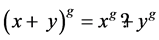
<?xml version="1.0" encoding="UTF-8"?><!DOCTYPE article  PUBLIC "-//NLM//DTD Journal Publishing DTD v3.0 20080202//EN" "http://dtd.nlm.nih.gov/publishing/3.0/journalpublishing3.dtd"><article xmlns:mml="http://www.w3.org/1998/Math/MathML" xmlns:xlink="http://www.w3.org/1999/xlink" dtd-version="3.0" xml:lang="en" article-type="research article"><front><journal-meta><journal-id journal-id-type="publisher-id">AM</journal-id><journal-title-group><journal-title>Applied Mathematics</journal-title></journal-title-group><issn pub-type="epub">2152-7385</issn><publisher><publisher-name>Scientific Research Publishing</publisher-name></publisher></journal-meta><article-meta><article-id pub-id-type="doi">10.4236/am.2016.75038</article-id><article-id pub-id-type="publisher-id">AM-64734</article-id><article-categories><subj-group subj-group-type="heading"><subject>Articles</subject></subj-group><subj-group subj-group-type="Discipline-v2"><subject>Physics&amp;Mathematics</subject></subj-group></article-categories><title-group><article-title>
 
 
  Group Action on Fuzzy Modules
 
</article-title></title-group><contrib-group><contrib contrib-type="author" xlink:type="simple"><name name-style="western"><surname>ohammad</surname><given-names>Yamin</given-names></name><xref ref-type="aff" rid="aff1"><sup>1</sup></xref><xref ref-type="corresp" rid="cor1"><sup>*</sup></xref></contrib><contrib contrib-type="author" xlink:type="simple"><name name-style="western"><surname>Poonam</surname><given-names>Kumar Sharma</given-names></name><xref ref-type="aff" rid="aff2"><sup>2</sup></xref><xref ref-type="corresp" rid="cor1"><sup>*</sup></xref></contrib></contrib-group><aff id="aff2"><addr-line>Department of Mathematics, D.A.V. College, Jalandhar City, India</addr-line></aff><aff id="aff1"><addr-line>Faculty of Economics and Administration, King Abdulaziz University, Jeddah, Saudi Arabia</addr-line></aff><author-notes><corresp id="cor1">* E-mail:<email>myamin@kau.edu.sa(OY)</email>;<email>pksharma@davjalandhar.com(PKS)</email>;</corresp></author-notes><pub-date pub-type="epub"><day>18</day><month>03</month><year>2016</year></pub-date><volume>07</volume><issue>05</issue><fpage>413</fpage><lpage>421</lpage><history><date date-type="received"><day>27</day>	<month>December</month>	<year>2015</year></date><date date-type="rev-recd"><day>accepted</day>	<month>15</month>	<year>March</year>	</date><date date-type="accepted"><day>18</day>	<month>March</month>	<year>2016</year></date></history><permissions><copyright-statement>&#169; Copyright  2014 by authors and Scientific Research Publishing Inc. </copyright-statement><copyright-year>2014</copyright-year><license><license-p>This work is licensed under the Creative Commons Attribution International License (CC BY). http://creativecommons.org/licenses/by/4.0/</license-p></license></permissions><abstract><p>
 
 
  In this article, we introduce the notion of fuzzy G-module by defining the group action of G on a fuzzy set of a Z-module M. We establish the cases in which fuzzy submodules also become fuzzy G-submodules. Notions of a fuzzy prime submodule, fuzzy prime G-submodule, fuzzy semi prime submodule, fuzzy G-semi prime submodule, G-invariant fuzzy submodule and G-invariant fuzzy prime submodule of M are introduced and their properties are described. The homomorphic image and pre-image of fuzzy G-submodules, G-invariant fuzzy submodules and G-invariant fuzzy prime submodules of M are also established.
 
</p></abstract><kwd-group><kwd>Fuzzy Submodule (FSM)</kwd><kwd> Fuzzy Prime Submodule (FPSM)</kwd><kwd> Fuzzy Semi Prime Submodule</kwd><kwd> Group Action (FSPSM)</kwd><kwd> G-Invariant Submodule</kwd><kwd> G-Module Homomorphism</kwd></kwd-group></article-meta></front><body><sec id="s1"><title>1. Introduction and Main Results</title><p>The concept of fuzzy subset of a non-empty set was introduced by Zadeh [<xref ref-type="bibr" rid="scirp.64734-ref1">1</xref>] who introduced the notion of a fuzzy set as a method of representing uncertainty in real physical world. Following this landmark discovery, a number of studies of Fuzzy Modules and their applications have emerged. In particular, Negoita and Ralescu in [<xref ref-type="bibr" rid="scirp.64734-ref2">2</xref>] introduced and examined the notion of a fuzzy submodule of a module. Since then, different types of fuzzy submodules have been investigated in the last three decades. Juncheol Han in [<xref ref-type="bibr" rid="scirp.64734-ref3">3</xref>] has studied group actions in regular rings. The notion of group action on fuzzy subset of a ring was defined and studied by Sharma in [<xref ref-type="bibr" rid="scirp.64734-ref4">4</xref>] [<xref ref-type="bibr" rid="scirp.64734-ref5">5</xref>] .</p><p>Let X be a non-empty set. A mapping &#181;: X &#174; [0, 1] is called a fuzzy subset of X. Rosenfeld [<xref ref-type="bibr" rid="scirp.64734-ref6">6</xref>] applied the concept of fuzzy sets to the theory of groups and defined the concept of fuzzy subgroups of a group. Since then, many papers concerning various fuzzy algebraic structures have appeared in the literature. As a generalization of a fuzzy set, the concept of an intuitionistic fuzzy set was introduced by Atanassov [<xref ref-type="bibr" rid="scirp.64734-ref7">7</xref>] . Further results on these and other aspects of fuzzy modules can be found in [<xref ref-type="bibr" rid="scirp.64734-ref8">8</xref>] - [<xref ref-type="bibr" rid="scirp.64734-ref17">17</xref>] .</p><p>In this paper, we define the group action on fuzzy subset of a module over the ring of integers and introduce the notion of fuzzy G-modules. Many properties of fuzzy G-modules will be established. The concept of fuzzy G-prime submodules will be introduced and studied. Following the definition of G-invariant submodule of a module M, we define and study G-invariant fuzzy submodule and G-invariant fuzzy prime submodule of a module M. The homomorphic image and pre-image of fuzzy G-modules will be established. A number of associated results will be obtained.</p></sec><sec id="s2"><title>2. Preliminaries Knowledge and Results</title><p>We recall some definitions and results for the smooth flow of our assertions and results. Throughout the paper, unless otherwise stated, R will denote a commutative ring with unity and M an R-module.</p><p>Definition (2.1) [<xref ref-type="bibr" rid="scirp.64734-ref18">18</xref>] Let <inline-formula><inline-graphic xlink:href="http://html.scirp.org/file/3-7403025x6.png" xlink:type="simple"/></inline-formula> and <inline-formula><inline-graphic xlink:href="http://html.scirp.org/file/3-7403025x7.png" xlink:type="simple"/></inline-formula> be any two fuzzy sets of an R-module, then</p><disp-formula id="scirp.64734-formula373"><label>(i)</label><graphic position="anchor" xlink:href="http://html.scirp.org/file/3-7403025x8.png"  xlink:type="simple"/></disp-formula><disp-formula id="scirp.64734-formula374"><label>(ii)</label><graphic position="anchor" xlink:href="http://html.scirp.org/file/3-7403025x9.png"  xlink:type="simple"/></disp-formula><disp-formula id="scirp.64734-formula375"><label>(iii)</label><graphic position="anchor" xlink:href="http://html.scirp.org/file/3-7403025x10.png"  xlink:type="simple"/></disp-formula><disp-formula id="scirp.64734-formula376"><label>(iv)</label><graphic position="anchor" xlink:href="http://html.scirp.org/file/3-7403025x11.png"  xlink:type="simple"/></disp-formula><disp-formula id="scirp.64734-formula377"><label>(v)</label><graphic position="anchor" xlink:href="http://html.scirp.org/file/3-7403025x12.png"  xlink:type="simple"/></disp-formula><p>Definition (2.2) [<xref ref-type="bibr" rid="scirp.64734-ref19">19</xref>] Let M be an R-module. Then the fuzzy set <inline-formula><inline-graphic xlink:href="http://html.scirp.org/file/3-7403025x13.png" xlink:type="simple"/></inline-formula> of M is called a fuzzy submodule (FSM) of M if</p><disp-formula id="scirp.64734-formula378"><label>(i)</label><graphic position="anchor" xlink:href="http://html.scirp.org/file/3-7403025x14.png"  xlink:type="simple"/></disp-formula><disp-formula id="scirp.64734-formula379"><label>(ii)</label><graphic position="anchor" xlink:href="http://html.scirp.org/file/3-7403025x15.png"  xlink:type="simple"/></disp-formula><disp-formula id="scirp.64734-formula380"><label>(iii)</label><graphic position="anchor" xlink:href="http://html.scirp.org/file/3-7403025x16.png"  xlink:type="simple"/></disp-formula><p>Definition (2.3) [<xref ref-type="bibr" rid="scirp.64734-ref19">19</xref>] Let m and n be two fuzzy submodules of an R-module M, then their sum m + n and product mn are defined as</p><disp-formula id="scirp.64734-formula381"><label>(i)</label><graphic position="anchor" xlink:href="http://html.scirp.org/file/3-7403025x17.png"  xlink:type="simple"/></disp-formula><disp-formula id="scirp.64734-formula382"><label>(ii)</label><graphic position="anchor" xlink:href="http://html.scirp.org/file/3-7403025x18.png"  xlink:type="simple"/></disp-formula><p>Theorem (2.4) [<xref ref-type="bibr" rid="scirp.64734-ref19">19</xref>] Let m and n be two fuzzy submodules of an R-module M. Then the sum m + n and the product mn of m and n are also fuzzy submodules of M.</p><p>Theorem (2.5) [<xref ref-type="bibr" rid="scirp.64734-ref20">20</xref>] Let m and n be two fuzzy submodules of an R-module M. Then m &#199; n is also a fuzzy submodule of M.</p><p>In particular, if {m<sub>i</sub>: i&#206;I} be a family of fuzzy submodules of an R-module M, then <inline-formula><inline-graphic xlink:href="http://html.scirp.org/file/3-7403025x19.png" xlink:type="simple"/></inline-formula> is also a fuzzy submodule of M.</p><p>Theorem (2.6) [<xref ref-type="bibr" rid="scirp.64734-ref20">20</xref>] Let m andnbe two fuzzy submodules of an R-module M. Then m &#215; n is also a fuzzy submodule of M &#180; M.</p></sec><sec id="s3"><title>3. Group Action on Fuzzy Modules</title><p>Most of the results below can be extended to an arbitrary commutative ring. We have not been able to remove the restriction to the ring of integers in Lemma (3.3) (iii) and so some results cannot be extended.</p><p>Let M be a module over the ring of integers Z and G a finite group which acts on M (i.e., &quot;g &#206; G, x &#206; M, x<sup>g</sup> = gxg<sup>−1</sup> &#206; M). The identity element of G is denoted by e.</p><p>Definition (3.1) A group action of G on a fuzzy set 𝜇of a Z-module M is denoted by m<sup>g</sup> and is defined by<inline-formula><inline-graphic xlink:href="http://html.scirp.org/file/3-7403025x20.png" xlink:type="simple"/></inline-formula></p><p>From the definition of group action G on a fuzzy set, following results are easy to verify.</p><p>Lemma (3.2) Let m and n be two fuzzy sets of Z-module M and G a finite group which acts on M. Then</p><disp-formula id="scirp.64734-formula383"><label>(i)</label><graphic position="anchor" xlink:href="http://html.scirp.org/file/3-7403025x21.png"  xlink:type="simple"/></disp-formula><disp-formula id="scirp.64734-formula384"><label>(ii)</label><graphic position="anchor" xlink:href="http://html.scirp.org/file/3-7403025x22.png"  xlink:type="simple"/></disp-formula><disp-formula id="scirp.64734-formula385"><label>(iii)</label><graphic position="anchor" xlink:href="http://html.scirp.org/file/3-7403025x23.png"  xlink:type="simple"/></disp-formula><disp-formula id="scirp.64734-formula386"><label>(iv)</label><graphic position="anchor" xlink:href="http://html.scirp.org/file/3-7403025x24.png"  xlink:type="simple"/></disp-formula><disp-formula id="scirp.64734-formula387"><label>(v)</label><graphic position="anchor" xlink:href="http://html.scirp.org/file/3-7403025x25.png"  xlink:type="simple"/></disp-formula><disp-formula id="scirp.64734-formula388"><label>(vi)</label><graphic position="anchor" xlink:href="http://html.scirp.org/file/3-7403025x26.png"  xlink:type="simple"/></disp-formula><p>Let us now prove</p><p>Lemma (3.3) Let G be a finite group which acts on Z-module M. Then for every x, y&#206; M, g&#206; G and r&#206; Z, we</p><p>(i) <img data-original="http://html.scirp.org/file/3-7403025x27.png" />(ii) <img data-original="http://html.scirp.org/file/3-7403025x28.png" />(iii) <img data-original="http://html.scirp.org/file/3-7403025x29.png" />(iv) <img data-original="http://html.scirp.org/file/3-7403025x30.png" /></p><p>Proof: (i) <inline-formula><inline-graphic xlink:href="http://html.scirp.org/file/3-7403025x31.png" xlink:type="simple"/></inline-formula></p><disp-formula id="scirp.64734-formula389"><label>(ii)</label><graphic position="anchor" xlink:href="http://html.scirp.org/file/3-7403025x32.png"  xlink:type="simple"/></disp-formula><disp-formula id="scirp.64734-formula390"><label>(iii)</label><graphic position="anchor" xlink:href="http://html.scirp.org/file/3-7403025x33.png"  xlink:type="simple"/></disp-formula><disp-formula id="scirp.64734-formula391"><label>(iv)</label><graphic position="anchor" xlink:href="http://html.scirp.org/file/3-7403025x34.png"  xlink:type="simple"/></disp-formula><p>Proposition (3.4) Let m be a fuzzy submodule of Z-module M and G a finite group which acts on M, then m<sup>g</sup> is also a fuzzy submodule of M.</p><p>Proof: Clearly, <inline-formula><inline-graphic xlink:href="http://html.scirp.org/file/3-7403025x35.png" xlink:type="simple"/></inline-formula></p><p>Let <inline-formula><inline-graphic xlink:href="http://html.scirp.org/file/3-7403025x36.png" xlink:type="simple"/></inline-formula> and <inline-formula><inline-graphic xlink:href="http://html.scirp.org/file/3-7403025x36.png" xlink:type="simple"/></inline-formula><inline-formula><inline-graphic xlink:href="http://html.scirp.org/file/3-7403025x37.png" xlink:type="simple"/></inline-formula> then, by lemma (3.3) (i),</p><disp-formula id="scirp.64734-formula392"><graphic  xlink:href="http://html.scirp.org/file/3-7403025x38.png"  xlink:type="simple"/></disp-formula><p>Moreover, <inline-formula><inline-graphic xlink:href="http://html.scirp.org/file/3-7403025x39.png" xlink:type="simple"/></inline-formula>by lemma (3.3) (iii).</p><p>Hence <inline-formula><inline-graphic xlink:href="http://html.scirp.org/file/3-7403025x40.png" xlink:type="simple"/></inline-formula> is a fuzzy submodule of M.</p><p>Remark (3.5) The converse of Proposition (3.4) does not hold.</p><p>Example (3.6) Let M = (Z<sub>4</sub> = {0, 1, 2, 3}, +<sub>4</sub>, &#180;<sub>4</sub>) regarded as Z-module, and a finite group G = ({1, 2, 3, 4}, &#180;<sub>5</sub>). Consider a fuzzy set 𝜇 of M given by μ(0) = 1, μ(1) = 0.4, μ(2) = 0.6, μ(3) = 0.5. Clearly μ is not fuzzy submodule of M because<inline-formula><inline-graphic xlink:href="http://html.scirp.org/file/3-7403025x41.png" xlink:type="simple"/></inline-formula>.</p><p>Take g = 2 so that g<sup>−1</sup> = 3, then<inline-formula><inline-graphic xlink:href="http://html.scirp.org/file/3-7403025x42.png" xlink:type="simple"/></inline-formula>, we get <inline-formula><inline-graphic xlink:href="http://html.scirp.org/file/3-7403025x42.png" xlink:type="simple"/></inline-formula><inline-formula><inline-graphic xlink:href="http://html.scirp.org/file/3-7403025x43.png" xlink:type="simple"/></inline-formula></p><p>Now, it is easy to check that μ<sup>g</sup> is a fuzzy submodule of M.</p><p>Definition (3.7) Let m be a fuzzy set of Z-module M and G be a finite group which acts on M. Then m is called a fuzzy G-submodule of M if m<sup>g </sup>is fuzzy submodule of M for all g&#206;G.</p><p>Remark (3.8) (i) From definition (3.7) we see that every fuzzy G-submodule is also a fuzzy submodule, for<inline-formula><inline-graphic xlink:href="http://html.scirp.org/file/3-7403025x44.png" xlink:type="simple"/></inline-formula>.</p><p>(ii) Note that the fuzzy set μ in example (3.6) is not a fuzzy G-submodule of M, for <inline-formula><inline-graphic xlink:href="http://html.scirp.org/file/3-7403025x45.png" xlink:type="simple"/></inline-formula> is not a fuzzy submodule of M.</p><p>Theorem (3.9) Let m be a fuzzy submodule of Z-module M and G be a finite group which acts on M, then m is a fuzzy G-submodule of M if and only if for every g&#206;G, <inline-formula><inline-graphic xlink:href="http://html.scirp.org/file/3-7403025x46.png" xlink:type="simple"/></inline-formula>satisfies the following conditions:</p><p>(i)<img data-original="http://html.scirp.org/file/3-7403025x47.png" />; (ii) <img data-original="http://html.scirp.org/file/3-7403025x48.png" /></p><p>Proof: Firstly, let m be a FSM of Z-module M and g &#206; G such that m<sup>g</sup> satisfies the given conditions.</p><p>Substituting r = s = 1 in condition (ii), we get</p><disp-formula id="scirp.64734-formula393"><graphic  xlink:href="http://html.scirp.org/file/3-7403025x49.png"  xlink:type="simple"/></disp-formula><p>Also, putting s = 0 in condition (ii) we get</p><disp-formula id="scirp.64734-formula394"><graphic  xlink:href="http://html.scirp.org/file/3-7403025x50.png"  xlink:type="simple"/></disp-formula><p>Thus <inline-formula><inline-graphic xlink:href="http://html.scirp.org/file/3-7403025x51.png" xlink:type="simple"/></inline-formula></p><p>Therefore, <inline-formula><inline-graphic xlink:href="http://html.scirp.org/file/3-7403025x52.png" xlink:type="simple"/></inline-formula>is a fuzzy submodule of M and hence <inline-formula><inline-graphic xlink:href="http://html.scirp.org/file/3-7403025x52.png" xlink:type="simple"/></inline-formula><inline-formula><inline-graphic xlink:href="http://html.scirp.org/file/3-7403025x53.png" xlink:type="simple"/></inline-formula> is a fuzzy G-submodule of M.</p><p>Conversely, let m be a fuzzy G-submodule of M, and g&#206;G. To establish (i) and (ii), we only need to prove (ii).</p><p>Let r, s &#206; Z and x, y &#206; M. Then</p><disp-formula id="scirp.64734-formula395"><graphic  xlink:href="http://html.scirp.org/file/3-7403025x54.png"  xlink:type="simple"/></disp-formula><p>Thus <inline-formula><inline-graphic xlink:href="http://html.scirp.org/file/3-7403025x55.png" xlink:type="simple"/></inline-formula> Hence the result proved.</p><p>Proposition (3.10) Let m and n be two fuzzy G-submodules of a Z-module M and G be a finite group which acts on M. Then m&#199;n is also a fuzzy G-submodule of M.</p><p>Proof: Since m and n are fuzzy G-submodules of M. Therefore <inline-formula><inline-graphic xlink:href="http://html.scirp.org/file/3-7403025x56.png" xlink:type="simple"/></inline-formula> and <inline-formula><inline-graphic xlink:href="http://html.scirp.org/file/3-7403025x56.png" xlink:type="simple"/></inline-formula><inline-formula><inline-graphic xlink:href="http://html.scirp.org/file/3-7403025x57.png" xlink:type="simple"/></inline-formula> are fuzzy submodules of M for all g &#206; G which implies that <inline-formula><inline-graphic xlink:href="http://html.scirp.org/file/3-7403025x56.png" xlink:type="simple"/></inline-formula><inline-formula><inline-graphic xlink:href="http://html.scirp.org/file/3-7403025x57.png" xlink:type="simple"/></inline-formula><inline-formula><inline-graphic xlink:href="http://html.scirp.org/file/3-7403025x58.png" xlink:type="simple"/></inline-formula> is fuzzy submodule of M [By Theorem (2.5)].</p><p>Thus <inline-formula><inline-graphic xlink:href="http://html.scirp.org/file/3-7403025x59.png" xlink:type="simple"/></inline-formula> is fuzzy submodule of M for all g &#206; G [By Lemma (3.2) (ii)]. Hence m &#199; n is also a fuzzy G-submodule of M.</p><p>Proposition (3.11) Let m and n be two fuzzy G-submodules of Z-module M and G be a finite group which acts on M. Then m &#215;n is also a fuzzy G-submodule of M &#180; M.</p><p>Proof: Since m and n are fuzzy G-submodules of M. Therefore <inline-formula><inline-graphic xlink:href="http://html.scirp.org/file/3-7403025x60.png" xlink:type="simple"/></inline-formula> and <inline-formula><inline-graphic xlink:href="http://html.scirp.org/file/3-7403025x60.png" xlink:type="simple"/></inline-formula><inline-formula><inline-graphic xlink:href="http://html.scirp.org/file/3-7403025x61.png" xlink:type="simple"/></inline-formula> are fuzzy submodules of M for all g &#206; G which implies that <inline-formula><inline-graphic xlink:href="http://html.scirp.org/file/3-7403025x60.png" xlink:type="simple"/></inline-formula><inline-formula><inline-graphic xlink:href="http://html.scirp.org/file/3-7403025x61.png" xlink:type="simple"/></inline-formula><inline-formula><inline-graphic xlink:href="http://html.scirp.org/file/3-7403025x62.png" xlink:type="simple"/></inline-formula> is fuzzy submodule of M &#180; M [By Theorem (2.6)]. Thus <inline-formula><inline-graphic xlink:href="http://html.scirp.org/file/3-7403025x60.png" xlink:type="simple"/></inline-formula><inline-formula><inline-graphic xlink:href="http://html.scirp.org/file/3-7403025x61.png" xlink:type="simple"/></inline-formula><inline-formula><inline-graphic xlink:href="http://html.scirp.org/file/3-7403025x62.png" xlink:type="simple"/></inline-formula><inline-formula><inline-graphic xlink:href="http://html.scirp.org/file/3-7403025x63.png" xlink:type="simple"/></inline-formula> is a</p><p>fuzzy submodule of M &#180; M for all g&#206;G [By Lemma (3.2) (iv)]. Hence m &#215; n is also a fuzzy G-submodule of M &#180; M.</p><p>We now define fuzzy prime submodule (FPSM) and fuzzy G-prime submodule of M.</p><p>Definition (3.12) A fuzzy submodule g of Z-module M is called a fuzzy prime submodule if for any two fuzzy submodules m,n of M such that mn &#205; g implies that either m &#205; g or n &#205; g.</p><p>Lemma (3.13) Let m and n be two fuzzy prime submodules of Z-module M. Then m&#199;n is fuzzy prime submodule of M if and only if either m &#205; n or n &#205; m.</p><p>Proof. We know that mn &#205; m &#199; n. Therefore, m &#199; n is fuzzy prime submodule of M if and only if either m &#205; m &#199; n or n &#205; m &#199; n. But m&#199;n &#205; m and m &#199; n &#205; m. Thus m &#199; n is fuzzy prime submodule of M if and only if either m = m &#199; n or n = m &#199; n, i.e., either m &#205; n or n &#205; m.</p><p>Remark (3.14) From Lemma (3.13) we infer that in general intersection of two fuzzy prime submodules need not to be a fuzzy prime submodule.</p><p>Theorem (3.15) Let g be a fuzzy prime submodule of a Z-module M and G be a finite group which acts on M. Then g<sup>g</sup> is also a fuzzy prime submodule of M.</p><p>Proof: Let m andn be fuzzy submodules of M such that mn &#205; g<sup>g</sup>. Now, we claim that<inline-formula><inline-graphic xlink:href="http://html.scirp.org/file/3-7403025x64.png" xlink:type="simple"/></inline-formula>. It is sufficient to show that <inline-formula><inline-graphic xlink:href="http://html.scirp.org/file/3-7403025x64.png" xlink:type="simple"/></inline-formula><inline-formula><inline-graphic xlink:href="http://html.scirp.org/file/3-7403025x65.png" xlink:type="simple"/></inline-formula></p><p>Now</p><disp-formula id="scirp.64734-formula396"><graphic  xlink:href="http://html.scirp.org/file/3-7403025x66.png"  xlink:type="simple"/></disp-formula><p>Thus <inline-formula><inline-graphic xlink:href="http://html.scirp.org/file/3-7403025x67.png" xlink:type="simple"/></inline-formula> which implies<inline-formula><inline-graphic xlink:href="http://html.scirp.org/file/3-7403025x67.png" xlink:type="simple"/></inline-formula><inline-formula><inline-graphic xlink:href="http://html.scirp.org/file/3-7403025x68.png" xlink:type="simple"/></inline-formula>. But <inline-formula><inline-graphic xlink:href="http://html.scirp.org/file/3-7403025x67.png" xlink:type="simple"/></inline-formula><inline-formula><inline-graphic xlink:href="http://html.scirp.org/file/3-7403025x68.png" xlink:type="simple"/></inline-formula><inline-formula><inline-graphic xlink:href="http://html.scirp.org/file/3-7403025x69.png" xlink:type="simple"/></inline-formula> is a fuzzy prime submodule of M. Therefore, either <inline-formula><inline-graphic xlink:href="http://html.scirp.org/file/3-7403025x67.png" xlink:type="simple"/></inline-formula><inline-formula><inline-graphic xlink:href="http://html.scirp.org/file/3-7403025x68.png" xlink:type="simple"/></inline-formula><inline-formula><inline-graphic xlink:href="http://html.scirp.org/file/3-7403025x69.png" xlink:type="simple"/></inline-formula><inline-formula><inline-graphic xlink:href="http://html.scirp.org/file/3-7403025x70.png" xlink:type="simple"/></inline-formula> or <inline-formula><inline-graphic xlink:href="http://html.scirp.org/file/3-7403025x67.png" xlink:type="simple"/></inline-formula><inline-formula><inline-graphic xlink:href="http://html.scirp.org/file/3-7403025x68.png" xlink:type="simple"/></inline-formula><inline-formula><inline-graphic xlink:href="http://html.scirp.org/file/3-7403025x69.png" xlink:type="simple"/></inline-formula><inline-formula><inline-graphic xlink:href="http://html.scirp.org/file/3-7403025x70.png" xlink:type="simple"/></inline-formula><inline-formula><inline-graphic xlink:href="http://html.scirp.org/file/3-7403025x71.png" xlink:type="simple"/></inline-formula> which amounts to <inline-formula><inline-graphic xlink:href="http://html.scirp.org/file/3-7403025x67.png" xlink:type="simple"/></inline-formula><inline-formula><inline-graphic xlink:href="http://html.scirp.org/file/3-7403025x68.png" xlink:type="simple"/></inline-formula><inline-formula><inline-graphic xlink:href="http://html.scirp.org/file/3-7403025x69.png" xlink:type="simple"/></inline-formula><inline-formula><inline-graphic xlink:href="http://html.scirp.org/file/3-7403025x70.png" xlink:type="simple"/></inline-formula><inline-formula><inline-graphic xlink:href="http://html.scirp.org/file/3-7403025x71.png" xlink:type="simple"/></inline-formula><inline-formula><inline-graphic xlink:href="http://html.scirp.org/file/3-7403025x72.png" xlink:type="simple"/></inline-formula> or<inline-formula><inline-graphic xlink:href="http://html.scirp.org/file/3-7403025x67.png" xlink:type="simple"/></inline-formula><inline-formula><inline-graphic xlink:href="http://html.scirp.org/file/3-7403025x68.png" xlink:type="simple"/></inline-formula><inline-formula><inline-graphic xlink:href="http://html.scirp.org/file/3-7403025x69.png" xlink:type="simple"/></inline-formula><inline-formula><inline-graphic xlink:href="http://html.scirp.org/file/3-7403025x70.png" xlink:type="simple"/></inline-formula><inline-formula><inline-graphic xlink:href="http://html.scirp.org/file/3-7403025x71.png" xlink:type="simple"/></inline-formula><inline-formula><inline-graphic xlink:href="http://html.scirp.org/file/3-7403025x72.png" xlink:type="simple"/></inline-formula><inline-formula><inline-graphic xlink:href="http://html.scirp.org/file/3-7403025x73.png" xlink:type="simple"/></inline-formula>. Hence <inline-formula><inline-graphic xlink:href="http://html.scirp.org/file/3-7403025x67.png" xlink:type="simple"/></inline-formula><inline-formula><inline-graphic xlink:href="http://html.scirp.org/file/3-7403025x68.png" xlink:type="simple"/></inline-formula><inline-formula><inline-graphic xlink:href="http://html.scirp.org/file/3-7403025x69.png" xlink:type="simple"/></inline-formula><inline-formula><inline-graphic xlink:href="http://html.scirp.org/file/3-7403025x70.png" xlink:type="simple"/></inline-formula><inline-formula><inline-graphic xlink:href="http://html.scirp.org/file/3-7403025x71.png" xlink:type="simple"/></inline-formula><inline-formula><inline-graphic xlink:href="http://html.scirp.org/file/3-7403025x72.png" xlink:type="simple"/></inline-formula><inline-formula><inline-graphic xlink:href="http://html.scirp.org/file/3-7403025x73.png" xlink:type="simple"/></inline-formula><inline-formula><inline-graphic xlink:href="http://html.scirp.org/file/3-7403025x74.png" xlink:type="simple"/></inline-formula> is a fuzzy prime submodule of M.</p><p>Definition (3.16) Let g be a fuzzy prime submodule of Z-module M and G be a finite group which acts on M. Then g is called a fuzzy G-prime submodule of M if g<sup>g </sup>is fuzzy prime submodule of M for all g&#206; G.</p><p>Remark (3.17) If we denote<inline-formula><inline-graphic xlink:href="http://html.scirp.org/file/3-7403025x75.png" xlink:type="simple"/></inline-formula>, where g is a fuzzy prime submodule of M. Then g<sup>G</sup> need not be a</p><p>fuzzy prime submodule of M, because intersection of fuzzy prime submodules of M, in general, is not a fuzzy prime submodule of M (See Remark (3.14)).</p><p>Definition (3.18) A fuzzy submodule g of Z-module M is called a fuzzy semi prime submodule (FSPSM) if for all fuzzy submodules m of M such that m<sup>2</sup> &#205; g implies that m &#205; g.</p><p>Theorem (3.19) Intersection of two fuzzy prime submodules of a Z-module M is always a fuzzy semi prime submodule of M.</p><p>Proof. Let g<sub>1</sub>, g<sub>2</sub> be two fuzzy prime submodule of a Z-module M. Let m be a fuzzy submodule of M such that m<sup>2</sup> &#205; g<sub>1</sub> &#199; g<sub>2</sub>. Then we have m<sup>2</sup> &#205; g<sub>1</sub> and m<sup>2</sup> &#205; g<sub>2</sub>. But g<sub>1</sub> and g<sub>2</sub> are FPSMs of M. Therefore, m &#205; g<sub>1</sub> and m &#205; g<sub>2</sub> which implies that m &#205; g<sub>1</sub> &#199; g<sub>2</sub>. Hence g<sub>1</sub> &#199; g<sub>2</sub> is fuzzy semi prime submodule of M.</p><p>Theorem (3.20) Let g be a fuzzy semi prime submodule of a Z-module M and G be a finite group which acts on M. Then g<sup>g</sup> is also a fuzzy semi prime submodule of M.</p><p>Proof. Let m be any fuzzy submodule of M and g &#206; G be any element such that m<sup>2</sup> &#205; g<sup>g</sup>, then <inline-formula><inline-graphic xlink:href="http://html.scirp.org/file/3-7403025x76.png" xlink:type="simple"/></inline-formula> [follows from Theorem (3.15)], but <inline-formula><inline-graphic xlink:href="http://html.scirp.org/file/3-7403025x76.png" xlink:type="simple"/></inline-formula><inline-formula><inline-graphic xlink:href="http://html.scirp.org/file/3-7403025x77.png" xlink:type="simple"/></inline-formula> is fuzzy semi prime submodule. Therefore, <inline-formula><inline-graphic xlink:href="http://html.scirp.org/file/3-7403025x76.png" xlink:type="simple"/></inline-formula><inline-formula><inline-graphic xlink:href="http://html.scirp.org/file/3-7403025x77.png" xlink:type="simple"/></inline-formula><inline-formula><inline-graphic xlink:href="http://html.scirp.org/file/3-7403025x78.png" xlink:type="simple"/></inline-formula>, implying<inline-formula><inline-graphic xlink:href="http://html.scirp.org/file/3-7403025x76.png" xlink:type="simple"/></inline-formula><inline-formula><inline-graphic xlink:href="http://html.scirp.org/file/3-7403025x77.png" xlink:type="simple"/></inline-formula><inline-formula><inline-graphic xlink:href="http://html.scirp.org/file/3-7403025x78.png" xlink:type="simple"/></inline-formula><inline-formula><inline-graphic xlink:href="http://html.scirp.org/file/3-7403025x79.png" xlink:type="simple"/></inline-formula>. Hence <inline-formula><inline-graphic xlink:href="http://html.scirp.org/file/3-7403025x76.png" xlink:type="simple"/></inline-formula><inline-formula><inline-graphic xlink:href="http://html.scirp.org/file/3-7403025x77.png" xlink:type="simple"/></inline-formula><inline-formula><inline-graphic xlink:href="http://html.scirp.org/file/3-7403025x78.png" xlink:type="simple"/></inline-formula><inline-formula><inline-graphic xlink:href="http://html.scirp.org/file/3-7403025x79.png" xlink:type="simple"/></inline-formula><inline-formula><inline-graphic xlink:href="http://html.scirp.org/file/3-7403025x80.png" xlink:type="simple"/></inline-formula> is fuzzy semi prime submodule of M.</p><p>Definition (3.21) Let g be a fuzzy semi prime submodule of Z-module M and G be a finite group which acts on M. Then g is called a fuzzy G-semi prime submodule (FGSPSM) of M ifg<sup>g</sup> is fuzzy semi prime submodule of M for all g &#206; G.</p><p>Theorem (3.22) If we denote<inline-formula><inline-graphic xlink:href="http://html.scirp.org/file/3-7403025x81.png" xlink:type="simple"/></inline-formula>, where g is a fuzzy semi prime submodule of M. Then g<sup>G</sup> is a fuzzy G-semi prime submodule of M.</p><p>Proof. Let m be a fuzzy submodule of M such that<inline-formula><inline-graphic xlink:href="http://html.scirp.org/file/3-7403025x82.png" xlink:type="simple"/></inline-formula>, &quot;g &#206; G &#222;&#181; &#205; g<sup>g</sup> ,&quot;g &#206; G<inline-formula><inline-graphic xlink:href="http://html.scirp.org/file/3-7403025x82.png" xlink:type="simple"/></inline-formula><inline-formula><inline-graphic xlink:href="http://html.scirp.org/file/3-7403025x83.png" xlink:type="simple"/></inline-formula>. Hence g<sup>G</sup> is a fuzzy G-semi prime submodule of M.</p><p>Following the definition of G-invariant submodule of a module M, we define G-invariant fuzzy submodule and G-invariant fuzzy prime submodule of Z-module M.</p><p>Definition (3.23) Let m be a fuzzy submodule of a Z-module M and G be a finite group. Then m is said to be G-invariant fuzzy submodule of M if and only if <inline-formula><inline-graphic xlink:href="http://html.scirp.org/file/3-7403025x84.png" xlink:type="simple"/></inline-formula></p><p>Proposition (3.24) Let m be a fuzzy submodule of a Z-module M and G be a finite group which acts on M. Then m is G-invariant fuzzy submodule of M if and only if<inline-formula><inline-graphic xlink:href="http://html.scirp.org/file/3-7403025x85.png" xlink:type="simple"/></inline-formula>, &quot;g &#206; G.</p><p>Proof: For x&#206;M, g&#206;G, we have <inline-formula><inline-graphic xlink:href="http://html.scirp.org/file/3-7403025x86.png" xlink:type="simple"/></inline-formula> implies that &quot;g &#206; G, we have<inline-formula><inline-graphic xlink:href="http://html.scirp.org/file/3-7403025x86.png" xlink:type="simple"/></inline-formula><inline-formula><inline-graphic xlink:href="http://html.scirp.org/file/3-7403025x87.png" xlink:type="simple"/></inline-formula>. Hence<inline-formula><inline-graphic xlink:href="http://html.scirp.org/file/3-7403025x86.png" xlink:type="simple"/></inline-formula><inline-formula><inline-graphic xlink:href="http://html.scirp.org/file/3-7403025x87.png" xlink:type="simple"/></inline-formula><inline-formula><inline-graphic xlink:href="http://html.scirp.org/file/3-7403025x88.png" xlink:type="simple"/></inline-formula>.</p><p>Lemma (3.25) Let m be a fuzzy submodule of a Z-module M and G be a finite group which acts on M. Let <inline-formula><inline-graphic xlink:href="http://html.scirp.org/file/3-7403025x89.png" xlink:type="simple"/></inline-formula> where<inline-formula><inline-graphic xlink:href="http://html.scirp.org/file/3-7403025x89.png" xlink:type="simple"/></inline-formula><inline-formula><inline-graphic xlink:href="http://html.scirp.org/file/3-7403025x90.png" xlink:type="simple"/></inline-formula>. Then m<sup>G</sup> is the largest G-invariant fuzzy submodule of M.</p><p>Proof: Since m be a fuzzy submodule of Z-module of M and so m<sup>g</sup> is fuzzy submodule of M for all g &#206; G. Also,intersection of fuzzy submodules of M is a fuzzy submodule of M. Now,</p><disp-formula id="scirp.64734-formula397"><graphic  xlink:href="http://html.scirp.org/file/3-7403025x91.png"  xlink:type="simple"/></disp-formula><p>Therefore, <inline-formula><inline-graphic xlink:href="http://html.scirp.org/file/3-7403025x92.png" xlink:type="simple"/></inline-formula>Thus m<sup>G</sup> is G-invariant fuzzy submodule of M. Further, let n be any G-invariant fuzzy submodule of M such thatn &#205; m. Then for g&#206;G, we get <inline-formula><inline-graphic xlink:href="http://html.scirp.org/file/3-7403025x92.png" xlink:type="simple"/></inline-formula><inline-formula><inline-graphic xlink:href="http://html.scirp.org/file/3-7403025x93.png" xlink:type="simple"/></inline-formula> Now, <inline-formula><inline-graphic xlink:href="http://html.scirp.org/file/3-7403025x92.png" xlink:type="simple"/></inline-formula><inline-formula><inline-graphic xlink:href="http://html.scirp.org/file/3-7403025x93.png" xlink:type="simple"/></inline-formula><inline-formula><inline-graphic xlink:href="http://html.scirp.org/file/3-7403025x94.png" xlink:type="simple"/></inline-formula>Thus <inline-formula><inline-graphic xlink:href="http://html.scirp.org/file/3-7403025x92.png" xlink:type="simple"/></inline-formula><inline-formula><inline-graphic xlink:href="http://html.scirp.org/file/3-7403025x93.png" xlink:type="simple"/></inline-formula><inline-formula><inline-graphic xlink:href="http://html.scirp.org/file/3-7403025x94.png" xlink:type="simple"/></inline-formula><inline-formula><inline-graphic xlink:href="http://html.scirp.org/file/3-7403025x95.png" xlink:type="simple"/></inline-formula> Hence <inline-formula><inline-graphic xlink:href="http://html.scirp.org/file/3-7403025x92.png" xlink:type="simple"/></inline-formula><inline-formula><inline-graphic xlink:href="http://html.scirp.org/file/3-7403025x93.png" xlink:type="simple"/></inline-formula><inline-formula><inline-graphic xlink:href="http://html.scirp.org/file/3-7403025x94.png" xlink:type="simple"/></inline-formula><inline-formula><inline-graphic xlink:href="http://html.scirp.org/file/3-7403025x95.png" xlink:type="simple"/></inline-formula><inline-formula><inline-graphic xlink:href="http://html.scirp.org/file/3-7403025x96.png" xlink:type="simple"/></inline-formula> is the largest G-invariant FSM of M.</p><p>Proposition (3.26) A fuzzy submodule m of Z-module is G-invariant fuzzysubmodule of M if and only if m<sup>G</sup> = m.</p><p>Proof: This follows from Proposition (3.4) and Proposition (3.24).</p><p>Proposition (3.27) Let m be fuzzy submodule of Z-module M. Then m<sup>G</sup> is the largest G-invariant fuzzy submodule of M contained in m.</p><p>Proof: This follows immediately from Proposition (3.4) and Proposition (3.25)</p><p>Theorem (3.28) If mand n are G-invariant fuzzy submodules of M, then m + n is also a G-invariant fuzzy submodule on M.</p><p>Proof. Let x, y&#206; M, g&#206;G be any elements, then</p><disp-formula id="scirp.64734-formula398"><graphic  xlink:href="http://html.scirp.org/file/3-7403025x97.png"  xlink:type="simple"/></disp-formula><p>Hence m + n is a G-invariant fuzzy submodule of M.</p><p>Theorem (3.29) If m and n are G-invariant fuzzy submodules of M, then mn is also a G-invariant fuzzy submodule on M.</p><p>Proof: Let x, y&#206; M, g&#206;G be any elements, then</p><disp-formula id="scirp.64734-formula399"><graphic  xlink:href="http://html.scirp.org/file/3-7403025x98.png"  xlink:type="simple"/></disp-formula><p>Hence <inline-formula><inline-graphic xlink:href="http://html.scirp.org/file/3-7403025x99.png" xlink:type="simple"/></inline-formula> is a G-invariant fuzzy submodule of M.</p><p>Definition (3.30) A non-constant fuzzy prime submodule g of Z-module M is called an G-invariant fuzzy G-prime submodule of M if for any two G-invariant fuzzy submodules m and nof M such that mn &#205; g implies that either m &#205; g or n &#205; g.</p><p>Theorem (3.31) If g is a fuzzy prime submodule of a Z-module M, then g<sup>G</sup> is G-invariant fuzzy G-prime submodule of M.</p><p>Proof: Let g be FPSM of M and let m and nbe two G-invariant FSM of M such that mn &#205; g<sup>G</sup>. Then mn &#205; g because g<sup>G</sup><sup> </sup>&#205; g. Since g is a fuzzy prime submodule of M, either m &#205; g or n &#205; g, thus either m &#205; g<sup>G</sup> or n &#205; g<sup>G</sup>. Since g<sup>G</sup> is the largest G-invariant fuzzy submodule of M contained in g. Hence g<sup>G</sup> is G-invariant fuzzy G-prime submodule of M.</p></sec><sec id="s4"><title>4. Homomorphism of Fuzzy G-Submodules</title><p>In this section, we study the image and pre image of fuzzy G-submodules under the module homomorphism.</p><p>Lemma (4.1) Let M and M&#162; be Z-modules and G be a finite group which acts on M and M&#162;. Let f : M &#174; M' be a mapping defined by<inline-formula><inline-graphic xlink:href="http://html.scirp.org/file/3-7403025x100.png" xlink:type="simple"/></inline-formula>, &quot;x &#206; M, g &#206; G. Then f is a module homomorphism. We call the map f as G-module homomorphism.</p><p>Proof: Let x, y &#206; M, g &#206; G and r &#206; Z be any elements, then we have</p><disp-formula id="scirp.64734-formula400"><graphic  xlink:href="http://html.scirp.org/file/3-7403025x101.png"  xlink:type="simple"/></disp-formula><p>Also <inline-formula><inline-graphic xlink:href="http://html.scirp.org/file/3-7403025x102.png" xlink:type="simple"/></inline-formula></p><p>Hence f is a module homomorphism.</p><p>Lemma (4.2) Let M and M&#162; be Z-modules and G be a finite group which acts on M and M&#162;. Let f : M &#174; M' be a G-module homomorphism and m and n are the fuzzy subsets of M and M' respectively. Then</p><disp-formula id="scirp.64734-formula401"><label>(i)</label><graphic position="anchor" xlink:href="http://html.scirp.org/file/3-7403025x103.png"  xlink:type="simple"/></disp-formula><disp-formula id="scirp.64734-formula402"><label>(ii)</label><graphic position="anchor" xlink:href="http://html.scirp.org/file/3-7403025x104.png"  xlink:type="simple"/></disp-formula><p>Proof. (i) Let <inline-formula><inline-graphic xlink:href="http://html.scirp.org/file/3-7403025x105.png" xlink:type="simple"/></inline-formula> and <inline-formula><inline-graphic xlink:href="http://html.scirp.org/file/3-7403025x105.png" xlink:type="simple"/></inline-formula><inline-formula><inline-graphic xlink:href="http://html.scirp.org/file/3-7403025x106.png" xlink:type="simple"/></inline-formula> be any element. Then</p><disp-formula id="scirp.64734-formula403"><graphic  xlink:href="http://html.scirp.org/file/3-7403025x107.png"  xlink:type="simple"/></disp-formula><p>Hence <inline-formula><inline-graphic xlink:href="http://html.scirp.org/file/3-7403025x108.png" xlink:type="simple"/></inline-formula></p><p>(ii) Let <inline-formula><inline-graphic xlink:href="http://html.scirp.org/file/3-7403025x109.png" xlink:type="simple"/></inline-formula> and <inline-formula><inline-graphic xlink:href="http://html.scirp.org/file/3-7403025x109.png" xlink:type="simple"/></inline-formula><inline-formula><inline-graphic xlink:href="http://html.scirp.org/file/3-7403025x110.png" xlink:type="simple"/></inline-formula> be any element. Then</p><disp-formula id="scirp.64734-formula404"><graphic  xlink:href="http://html.scirp.org/file/3-7403025x111.png"  xlink:type="simple"/></disp-formula><p>Hence <inline-formula><inline-graphic xlink:href="http://html.scirp.org/file/3-7403025x112.png" xlink:type="simple"/></inline-formula></p><p>Theorem (4.3) Let M and M&#162; be Z-modules on which G acts and let f be a G-module homomorphism from M into M&#162;. If n be a fuzzy G-submodule of M&#162;, then f<sup>−1</sup>(n) is a fuzzy G-submodule of M.</p><p>Proof: Let n be a fuzzy G-submodule of M&#162;. To show that f<sup>−1</sup>(n) is a fuzzy G-submodule of M. It is equivalent to showing that <inline-formula><inline-graphic xlink:href="http://html.scirp.org/file/3-7403025x113.png" xlink:type="simple"/></inline-formula> is a fuzzy submodule of M for all g&#206;G. But, in view of Lemma (4.2) (i), it is sufficient to show that f<sup>−1</sup>(n<sup>g</sup>) is a fuzzy submodule of M for all g &#206; G. For x, y&#206;M, r&#206;Z and g&#206;G, we have</p><disp-formula id="scirp.64734-formula405"><graphic  xlink:href="http://html.scirp.org/file/3-7403025x114.png"  xlink:type="simple"/></disp-formula><disp-formula id="scirp.64734-formula406"><graphic  xlink:href="http://html.scirp.org/file/3-7403025x115.png"  xlink:type="simple"/></disp-formula><disp-formula id="scirp.64734-formula407"><graphic  xlink:href="http://html.scirp.org/file/3-7403025x116.png"  xlink:type="simple"/></disp-formula><disp-formula id="scirp.64734-formula408"><graphic  xlink:href="http://html.scirp.org/file/3-7403025x117.png"  xlink:type="simple"/></disp-formula><p>Theorem (4.4) Let M and M&#162; be Z-modules on which G acts and let f be a bijective G-module homomorphism from M into M&#162;. If m is a fuzzy G-submodule of M, then f (m) is a fuzzy G-submodule of M&#162;.</p><p>Proof: Let m be a fuzzy G-submodule of M. To show that f(m) is a fuzzy G-submodule of M&#162; is equivalent to showing that <inline-formula><inline-graphic xlink:href="http://html.scirp.org/file/3-7403025x118.png" xlink:type="simple"/></inline-formula> is a fuzzy submodule of M&#162; for all g&#206;G.</p><p>For, in view of Lemma (4.2) (ii), it is sufficient to show that f(m<sup>g</sup>) is a fuzzy submodule of M&#162; for all g &#206; G.</p><disp-formula id="scirp.64734-formula409"><graphic  xlink:href="http://html.scirp.org/file/3-7403025x119.png"  xlink:type="simple"/></disp-formula><p>Then for any <inline-formula><inline-graphic xlink:href="http://html.scirp.org/file/3-7403025x120.png" xlink:type="simple"/></inline-formula> there exists unique x, y&#206;M such that <inline-formula><inline-graphic xlink:href="http://html.scirp.org/file/3-7403025x120.png" xlink:type="simple"/></inline-formula><inline-formula><inline-graphic xlink:href="http://html.scirp.org/file/3-7403025x121.png" xlink:type="simple"/></inline-formula> and<inline-formula><inline-graphic xlink:href="http://html.scirp.org/file/3-7403025x120.png" xlink:type="simple"/></inline-formula><inline-formula><inline-graphic xlink:href="http://html.scirp.org/file/3-7403025x121.png" xlink:type="simple"/></inline-formula><inline-formula><inline-graphic xlink:href="http://html.scirp.org/file/3-7403025x122.png" xlink:type="simple"/></inline-formula>.</p><disp-formula id="scirp.64734-formula410"><graphic  xlink:href="http://html.scirp.org/file/3-7403025x123.png"  xlink:type="simple"/></disp-formula><disp-formula id="scirp.64734-formula411"><graphic  xlink:href="http://html.scirp.org/file/3-7403025x124.png"  xlink:type="simple"/></disp-formula><disp-formula id="scirp.64734-formula412"><graphic  xlink:href="http://html.scirp.org/file/3-7403025x125.png"  xlink:type="simple"/></disp-formula><p>Theorem (4.5) Let M and M&#162; be Z-modules on which G acts and let f be a G-module homomorphism from M into M&#162;. If n be a G-invariant fuzzy submodule of M&#162;, then f<sup>−1</sup>(n) is a G-invariant fuzzy submodule of M.</p><p>Proof. Since n is G-invariant fuzzy submodule of M&#162;. Therefore, n<sup>g</sup> = n, for all g &#206; G.</p><disp-formula id="scirp.64734-formula413"><graphic  xlink:href="http://html.scirp.org/file/3-7403025x126.png"  xlink:type="simple"/></disp-formula><p>Theorem (4.6) Let M and M&#162; be Z-modules on which G acts and let f be a bijective G-module homo- morphism from M into M&#162;. If m is a G-invariant fuzzy submodule of M, then f (m) is a G-invariant fuzzy submodule of M&#162;.</p><p>Proof. Since m is G-invariant fuzzy submodule of M&#162;. Therefore, m<sup>g</sup> = m , for all g&#206;G.</p><disp-formula id="scirp.64734-formula414"><graphic  xlink:href="http://html.scirp.org/file/3-7403025x127.png"  xlink:type="simple"/></disp-formula></sec><sec id="s5"><title>5. Conclusion</title><p>In this paper, the notion of fuzzy G-submodule of a Z-module is defined and discussed. It has been proved that every fuzzy G-module is a fuzzy module but the converse is not true in general. It has also been proved that intersection and Cartesian product of two fuzzy G-submodules are fuzzy G-submodules. The notions of fuzzy prime submodule, fuzzy G-prime submodule, fuzzy semi prime submodule and fuzzy G-semi prime submodule are introduced and discussed. We have observed that intersection of two fuzzy prime submodules needs not be a fuzzy prime submodule; however intersection of two fuzzy prime submodules is always a fuzzy semi prime submodule. The notions of G-invariant fuzzy subset (submodule) and G-invariant fuzzy prime (G-prime) submodule of Z-module are also introduced and discussed. We have proved that sum and product of two G-inva- riant fuzzy sub-modules are G-invariant fuzzy submodules.</p></sec><sec id="s6"><title>Cite this paper</title><p>MohammadYamin,Poonam KumarSharma, (2016) Group Action on Fuzzy Modules. Applied Mathematics,07,413-421. doi: 10.4236/am.2016.75038</p></sec></body><back><ref-list><title>References</title><ref id="scirp.64734-ref1"><label>1</label><mixed-citation publication-type="other" xlink:type="simple">Zadeh, L.A. (1965) Fuzzy Sets. Information and Control, 8, 338-353. http://dx.doi.org/10.1016/S0019-9958(65)90241-X</mixed-citation></ref><ref id="scirp.64734-ref2"><label>2</label><mixed-citation publication-type="other" xlink:type="simple">Negoita, C.V. and Ralescu, D.A. (1975) Applications of Fuzzy Sets and System Analysis, Birkhous Basel. http://dx.doi.org/10.1007/978-3-0348-5921-9</mixed-citation></ref><ref id="scirp.64734-ref3"><label>3</label><mixed-citation publication-type="journal" xlink:type="simple"><name name-style="western"><surname>Han</surname><given-names> J.-C. </given-names></name>,<etal>et al</etal>. (<year>2005</year>)<article-title>Group Actions in a Regular Ring</article-title><source> Bulletin of the Korean Mathematical Society</source><volume> 42</volume>,<fpage> 807</fpage>-<lpage>815</lpage>.<pub-id pub-id-type="doi"></pub-id></mixed-citation></ref><ref id="scirp.64734-ref4"><label>4</label><mixed-citation publication-type="other" xlink:type="simple">Sharma, R.P. and Sharma, S. (1998) Group Action on Fuzzy Ideals. Communications in Algebra, 26, 4207-4220. http://dx.doi.org/10.1080/00927879808826406</mixed-citation></ref><ref id="scirp.64734-ref5"><label>5</label><mixed-citation publication-type="other" xlink:type="simple">Sharma, R.P., Gupta, J.R. and Arvind (2000) Characterization of G-Prime Fuzzy Ideals in a Ring—An Alternative Approach. Communications in Algebra, 28, 4981-4987. http://dx.doi.org/10.1080/00927870008827135</mixed-citation></ref><ref id="scirp.64734-ref6"><label>6</label><mixed-citation publication-type="other" xlink:type="simple">Rosenfeld, A. (1971) Fuzzy Groups. Journal of Mathematical Analysis and Application, 35, 512-517. http://dx.doi.org/10.1016/0022-247X(71)90199-5</mixed-citation></ref><ref id="scirp.64734-ref7"><label>7</label><mixed-citation publication-type="other" xlink:type="simple">Atanassov, K.T. (1986) Intuitionistic Fuzzy Sets. Fuzzy Sets and Systems, 20, 87-96. http://dx.doi.org/10.1016/S0165-0114(86)80034-3</mixed-citation></ref><ref id="scirp.64734-ref8"><label>8</label><mixed-citation publication-type="other" xlink:type="simple">Xu, C.Y. (2008) Intuitionistic Fuzzy Modules and Their Structures. Lecture Notes in Computer Science, 5227, 459-467. http://dx.doi.org/10.1007/978-3-540-85984-0_55</mixed-citation></ref><ref id="scirp.64734-ref9"><label>9</label><mixed-citation publication-type="other" xlink:type="simple">Saikia, H.K. and Kalita, M.C. (2009) On Annihilator of Fuzzy Subsets of Modules. International Journal of Algebra, 3, 483-488.</mixed-citation></ref><ref id="scirp.64734-ref10"><label>10</label><mixed-citation publication-type="journal" xlink:type="simple"><name name-style="western"><surname>Majumdar</surname><given-names> S. </given-names></name>,<etal>et al</etal>. (<year>1990</year>)<article-title>Theory of Fuzzy Modules</article-title><source> Bulletin of Calcutta Mathematical Society</source><volume> 82</volume>,<fpage> 395</fpage>-<lpage>399</lpage>.<pub-id pub-id-type="doi"></pub-id></mixed-citation></ref><ref id="scirp.64734-ref11"><label>11</label><mixed-citation publication-type="other" xlink:type="simple">Mukherjee, T.K., Sen, M.K. and Roy, D. (1996) On Fuzzy Submodules and Their Radicals. Journal of Fuzzy Mathematics, 4, 549-557.</mixed-citation></ref><ref id="scirp.64734-ref12"><label>12</label><mixed-citation publication-type="other" xlink:type="simple">Zheng, P.F. (1988) Fuzzy Quotient Modules. Fuzzy Sets and Systems, 28, 85-90. http://dx.doi.org/10.1016/0165-0114(88)90118-2</mixed-citation></ref><ref id="scirp.64734-ref13"><label>13</label><mixed-citation publication-type="journal" xlink:type="simple"><name name-style="western"><surname>Isaac</surname><given-names> P.</given-names></name>,<name name-style="western"><surname> and John</surname><given-names> P.P. </given-names></name>,<etal>et al</etal>. (<year>2011</year>)<article-title>On Intuitionistic fuzzy Submodules of a Module</article-title><source> International journal of Mathematical Sciences and Applications</source><volume> 1</volume>,<fpage> 1447</fpage>-<lpage>1454</lpage>.<pub-id pub-id-type="doi"></pub-id></mixed-citation></ref><ref id="scirp.64734-ref14"><label>14</label><mixed-citation publication-type="other" xlink:type="simple">Rahman, S. and Saikia, H.K. (2012) Some Aspects of Atannassoves Intuitionistic Fuzzy Submodules. International Journal of Pure and Applied Mathematics, 77, 369-383.</mixed-citation></ref><ref id="scirp.64734-ref15"><label>15</label><mixed-citation publication-type="other" xlink:type="simple">Rajkhowa, K.K. and Saikia, H.K. (2015) Center of Intersection Graph of Fuzzy Submodules of Modules. Fuzzy Information and Engineering, 7, 49-59. http://dx.doi.org/10.1016/j.fiae.2015.03.004</mixed-citation></ref><ref id="scirp.64734-ref16"><label>16</label><mixed-citation publication-type="journal" xlink:type="simple"><name name-style="western"><surname>Sharma</surname><given-names> P.K. </given-names></name>,<etal>et al</etal>. (<year>2013</year>)<article-title>(&amp;alpha;, &amp;beta;)-Cut of Intuitionistic Fuzzy Modules-II</article-title><source> International Journal of Mathematical Sciences and Applications</source><volume> 3</volume>,<fpage> 11</fpage>-<lpage>17</lpage>.<pub-id pub-id-type="doi"></pub-id></mixed-citation></ref><ref id="scirp.64734-ref17"><label>17</label><mixed-citation publication-type="journal" xlink:type="simple"><name name-style="western"><surname>Sharma</surname><given-names> P.K.</given-names></name>,<name name-style="western"><surname> and Bahl</surname><given-names> A. </given-names></name>,<etal>et al</etal>. (<year>2012</year>)<article-title>Translates of Intuitionistic Fuzzy Submodules</article-title><source> International Journal of Mathematicals Sciences</source><volume> 11</volume>,<fpage> 277</fpage>-<lpage>287</lpage>.<pub-id pub-id-type="doi"></pub-id></mixed-citation></ref><ref id="scirp.64734-ref18"><label>18</label><mixed-citation publication-type="other" xlink:type="simple">Mordeson, J.N. and Malik, D.S. (1998) Fuzzy Commutative Algebra. World Scientific, Singapore.</mixed-citation></ref><ref id="scirp.64734-ref19"><label>19</label><mixed-citation publication-type="other" xlink:type="simple">Zheng, P.F. (1987) Fuzzy Finitely Generated Modules. Fuzzy Sets and Systems, 21, 105-113. http://dx.doi.org/10.1016/0165-0114(87)90156-4</mixed-citation></ref><ref id="scirp.64734-ref20"><label>20</label><mixed-citation publication-type="other" xlink:type="simple">Kumar, R., Bhambri S.K. and Kumar P. (1995) Fuzzy Submodules: Some Analogues and Deviations. Fuzzy Sets and Systems, 70, 125-130. http://dx.doi.org/10.1016/0165-0114(94)00260-E</mixed-citation></ref></ref-list></back></article>