<?xml version="1.0" encoding="UTF-8"?><!DOCTYPE article PUBLIC "-//NLM//DTD Journal Publishing DTD v3.0 20080202//EN" "http://dtd.nlm.nih.gov/publishing/3.0/journalpublishing3.dtd">
<article xmlns:mml="http://www.w3.org/1998/Math/MathML" xmlns:xlink="http://www.w3.org/1999/xlink" dtd-version="3.0" xml:lang="en" article-type="research article">
 <front>
  <journal-meta>
   <journal-id journal-id-type="publisher-id">
    apm
   </journal-id>
   <journal-title-group>
    <journal-title>
     Advances in Pure Mathematics
    </journal-title>
   </journal-title-group>
   <issn pub-type="epub">
    2160-0368
   </issn>
   <issn publication-format="print">
    2160-0384
   </issn>
   <publisher>
    <publisher-name>
     Scientific Research Publishing
    </publisher-name>
   </publisher>
  </journal-meta>
  <article-meta>
   <article-id pub-id-type="doi">
    10.4236/apm.2025.152007
   </article-id>
   <article-id pub-id-type="publisher-id">
    apm-140988
   </article-id>
   <article-categories>
    <subj-group subj-group-type="heading">
     <subject>
      Articles
     </subject>
    </subj-group>
    <subj-group subj-group-type="Discipline-v2">
     <subject>
      Physics 
     </subject>
     <subject>
       Mathematics
     </subject>
    </subj-group>
   </article-categories>
   <title-group>
    The SYZ Conjecture through Computational Equivalence
   </title-group>
   <contrib-group>
    <contrib contrib-type="author" xlink:type="simple">
     <name name-style="western">
      <surname>
       Logan
      </surname>
      <given-names>
       Nye
      </given-names>
     </name>
    </contrib>
   </contrib-group> 
   <aff id="affnull">
    <addr-line>
     aSchool of Computer Science, Carnegie Mellon University, Pittsburgh, PA, USA
    </addr-line> 
   </aff> 
   <pub-date pub-type="epub">
    <day>
     28
    </day> 
    <month>
     02
    </month>
    <year>
     2025
    </year>
   </pub-date> 
   <volume>
    15
   </volume> 
   <issue>
    02
   </issue>
   <fpage>
    145
   </fpage>
   <lpage>
    181
   </lpage>
   <history>
    <date date-type="received">
     <day>
      30,
     </day>
     <month>
      December
     </month>
     <year>
      2024
     </year>
    </date>
    <date date-type="published">
     <day>
      25,
     </day>
     <month>
      December
     </month>
     <year>
      2024
     </year> 
    </date> 
    <date date-type="accepted">
     <day>
      25,
     </day>
     <month>
      February
     </month>
     <year>
      2025
     </year> 
    </date>
   </history>
   <permissions>
    <copyright-statement>
     © Copyright 2014 by authors and Scientific Research Publishing Inc. 
    </copyright-statement>
    <copyright-year>
     2014
    </copyright-year>
    <license>
     <license-p>
      This work is licensed under the Creative Commons Attribution International License (CC BY). http://creativecommons.org/licenses/by/4.0/
     </license-p>
    </license>
   </permissions>
   <abstract>
    We present a proof of the Strominger-Yau-Zaslow (SYZ) conjecture by demonstrating that mirror symmetry fundamentally represents an equivalence of computational structures between Calabi-Yau manifolds. Through development of a rigorous quantum complexity operator formalism, we show that mirror pairs must have equivalent complexity spectra and that the SYZ fibration naturally preserves these computational invariants while implementing the required geometric transformations. Our proof proceeds by first establishing a precise mathematical framework connecting quantum complexity with geometric structures, then demonstrating that the special Lagrangian torus fibration preserves computational complexity at both local and global levels, and finally proving that this preservation necessarily implies the geometric correspondences required by the SYZ conjecture. This approach not only resolves the conjecture but reveals deeper insights about the relationship between computation and geometry in string theory. We introduce new complexity-based invariants for studying mirror symmetry and demonstrate how our framework extends naturally to related geometric structures.
   </abstract>
   <kwd-group> 
    <kwd>
     Mirror Symmetry
    </kwd> 
    <kwd>
      Calabi-Yau Manifolds
    </kwd> 
    <kwd>
      SYZ Conjecture
    </kwd> 
    <kwd>
      Quantum Complexity
    </kwd> 
    <kwd>
      Special Lagrangian Fibration
    </kwd>
   </kwd-group>
  </article-meta>
 </front>
 <body>
  <sec id="s1">
   <title>1. Introduction</title>
   <sec id="s1_1">
    <title>
     <xref ref-type="bibr" rid="scirp.140988-"></xref>1.1. Background and Motivation</title>
    <p>Mirror symmetry reveals deep connections among Calabi-Yau manifolds <xref ref-type="bibr" rid="scirp.140988-1">
      [1]
     </xref>, with the Strominger-Yau-Zaslow (SYZ) conjecture <xref ref-type="bibr" rid="scirp.140988-2">
      [2]
     </xref> providing a geometric framework based on special Lagrangian T-duality. This framework is supported by studies of toric varieties <xref ref-type="bibr" rid="scirp.140988-3">
      [3]
     </xref> and explicit constructions for certain Calabi-Yau classes <xref ref-type="bibr" rid="scirp.140988-4">
      [4]
     </xref>, yet a complete proof remains elusive despite decades of research.</p>
    <p>Traditional approaches (e.g., homological mirror symmetry <xref ref-type="bibr" rid="scirp.140988-5">
      [5]
     </xref>) have emphasized geometric and topological aspects. However, recent advances in quantum computation and holographic complexity <xref ref-type="bibr" rid="scirp.140988-6">
      [6]
     </xref> <xref ref-type="bibr" rid="scirp.140988-7">
      [7]
     </xref> suggest that mirror symmetry may instead reflect an equivalence of underlying computational structures. Building on work that treats quantum circuit complexity as a physical observable subject to uncertainty relations <xref ref-type="bibr" rid="scirp.140988-8">
      [8]
     </xref>, we propose that mirror symmetry emerges from the requirement that different geometric realizations of a physical theory encode equivalent computational structures. This idea aligns with proposals that physical laws arise from computational principles <xref ref-type="bibr" rid="scirp.140988-9">
      [9]
     </xref>.</p>
    <p>By analyzing the action of the quantum complexity operator 
     <math xmlns="http://www.w3.org/1998/Math/MathML"> <mover accent="true"> 
       <mi>
         C 
       </mi> 
       <mo>
         ^ 
       </mo> 
      </mover> 
     </math> on geometric states <xref ref-type="bibr" rid="scirp.140988-10">
      [10]
     </xref>, we show:</p>
    <p>1. Mirror pairs exhibit equivalent computational complexity spectra:</p>
    <p>
     <math xmlns="http://www.w3.org/1998/Math/MathML"> <mrow> 
       <mtext>
         spec 
       </mtext> 
       <mrow> 
        <mo>
          ( 
        </mo> 
        <mrow> 
         <msub> 
          <mover accent="true"> 
           <mi>
             C 
           </mi> 
           <mo>
             ^ 
           </mo> 
          </mover> 
          <mi>
            X 
          </mi> 
         </msub> 
        </mrow> 
        <mo>
          ) 
        </mo> 
       </mrow> 
       <mo>
         = 
       </mo> 
       <mtext>
         spec 
       </mtext> 
       <mrow> 
        <mo>
          ( 
        </mo> 
        <mrow> 
         <msub> 
          <mover accent="true"> 
           <mi>
             C 
           </mi> 
           <mo>
             ^ 
           </mo> 
          </mover> 
          <mrow> 
           <msup> 
            <mi>
              X 
            </mi> 
            <mo>
              ∨ 
            </mo> 
           </msup> 
          </mrow> 
         </msub> 
        </mrow> 
        <mo>
          ) 
        </mo> 
       </mrow> 
      </mrow> 
     </math>(1)</p>
    <p>2. The SYZ fibration preserves these invariants, a phenomenon captured using categorical quantum field theory <xref ref-type="bibr" rid="scirp.140988-11">
      [11]
     </xref> and recent developments in quantum complexity <xref ref-type="bibr" rid="scirp.140988-8">
      [8]
     </xref>.</p>
    <p>3. This invariance implies the SYZ conjecture, thus providing both a proof and a deeper conceptual basis for mirror symmetry.</p>
   </sec>
   <sec id="s1_2">
    <title>
     <xref ref-type="bibr" rid="scirp.140988-"></xref>1.2. Main Results</title>
    <p>Our work advances the understanding of mirror symmetry and the role of computational complexity in fundamental physics:</p>
    <p>1. We develop a rigorous quantum complexity operator formalism that sets precise conditions for valid mirror transformations, building on insights from quantum computation <xref ref-type="bibr" rid="scirp.140988-10">
      [10]
     </xref>, geometric quantum mechanics <xref ref-type="bibr" rid="scirp.140988-12">
      [12]
     </xref>, and category theory <xref ref-type="bibr" rid="scirp.140988-13">
      [13]
     </xref>.</p>
    <p>2. We prove that the SYZ fibration preserves computational complexity invariants through explicit equations linking complexity spectra and categorical structures <xref ref-type="bibr" rid="scirp.140988-14">
      [14]
     </xref>.</p>
    <p>3. We show that the preservation of computational complexity necessarily implies the SYZ conjecture, connecting our results to foundational aspects of quantum gravity <xref ref-type="bibr" rid="scirp.140988-6">
      [6]
     </xref> and the computational character of physical laws <xref ref-type="bibr" rid="scirp.140988-9">
      [9]
     </xref>.</p>
    <p>4. We identify new computational complexity invariants for Calabi-Yau manifolds, offering powerful tools for analyzing mirror symmetry and uncovering deep links between quantum computation and algebraic geometry <xref ref-type="bibr" rid="scirp.140988-5">
      [5]
     </xref>.</p>
    <p>These findings suggest that computational structure may be more fundamental than geometry in string theory, offering new perspectives on quantum gravity and the interplay between geometry and computation. Our framework resolves the longstanding challenge posed by the SYZ conjecture while opening avenues for further exploration in theoretical physics and mathematics.</p>
    <sec id="s1">
     <title>
      <xref ref-type="bibr" rid="scirp.140988-"></xref>2. Mathematical Framework</title>
     <p>To prove the SYZ conjecture through computational complexity preservation, we must first establish a rigorous mathematical framework that connects quantum complexity with geometric structures. This section develops the necessary mathematical machinery through two interconnected components: first, we construct and analyze the quantum complexity operator with complete mathematical precision, then we establish exact conditions for preserving computational structure between Calabi-Yau manifolds. The framework we develop here provides the mathematical foundation necessary to demonstrate that mirror symmetry emerges necessarily from the preservation of computational structure.</p>
    </sec>
    <sec id="s2_3">
     <title>
      <xref ref-type="bibr" rid="scirp.140988-"></xref>2.1. Quantum Complexity Operator</title>
     <p>Following von Neumann’s foundational approach to quantum observables <xref ref-type="bibr" rid="scirp.140988-15">
       [15]
      </xref>, we construct a quantum complexity operator 
      <math xmlns="http://www.w3.org/1998/Math/MathML"> <mover accent="true"> 
        <mi>
          C 
        </mi> 
        <mo>
          ^ 
        </mo> 
       </mover> 
      </math> that acts on the Hilbert space of states associated with a Calabi-Yau manifold. This construction builds upon recent developments in quantum circuit complexity <xref ref-type="bibr" rid="scirp.140988-10">
       [10]
      </xref> while incorporating insights from geometric quantum mechanics <xref ref-type="bibr" rid="scirp.140988-12">
       [12]
      </xref> and holographic complexity <xref ref-type="bibr" rid="scirp.140988-7">
       [7]
      </xref>. The operator 
      <math xmlns="http://www.w3.org/1998/Math/MathML"> <mover accent="true"> 
        <mi>
          C 
        </mi> 
        <mo>
          ^ 
        </mo> 
       </mover> 
      </math> will serve as our primary tool for quantifying the computational structure of mirror pairs.</p>
     <p>Let 
      <math xmlns="http://www.w3.org/1998/Math/MathML"> <mrow> 
        <msub> 
         <mi>
           ℋ 
         </mi> 
         <mi>
           X 
         </mi> 
        </msub> 
       </mrow> 
      </math> denote the Hilbert space of states associated with a Calabi-Yau manifold 
      <math xmlns="http://www.w3.org/1998/Math/MathML"> <mi>
         X 
       </mi> 
      </math>. To ensure complete mathematical rigor in our complexity measurements, we must carefully specify both the domain of 
      <math xmlns="http://www.w3.org/1998/Math/MathML"> <mover accent="true"> 
        <mi>
          C 
        </mi> 
        <mo>
          ^ 
        </mo> 
       </mover> 
      </math> and its topological structure. The complexity operator acts on a dense domain 
      <math xmlns="http://www.w3.org/1998/Math/MathML"> <mrow> 
        <mi mathvariant="script">
          D 
        </mi> 
        <mrow> 
         <mo>
           ( 
         </mo> 
         <mover accent="true"> 
          <mi>
            C 
          </mi> 
          <mo>
            ^ 
          </mo> 
         </mover> 
         <mo>
           ) 
         </mo> 
        </mrow> 
        <mo>
          ⊂ 
        </mo> 
        <msub> 
         <mi>
           ℋ 
         </mi> 
         <mi>
           X 
         </mi> 
        </msub> 
       </mrow> 
      </math> defined precisely as:</p>
     <p>
      <math xmlns="http://www.w3.org/1998/Math/MathML"> <mrow> 
        <mi mathvariant="script">
          D 
        </mi> 
        <mrow> 
         <mo>
           ( 
         </mo> 
         <mover accent="true"> 
          <mi>
            C 
          </mi> 
          <mo>
            ^ 
          </mo> 
         </mover> 
         <mo>
           ) 
         </mo> 
        </mrow> 
        <mo>
          = 
        </mo> 
        <mrow> 
         <mo>
           { 
         </mo> 
         <mrow> 
          <mi>
            ψ 
          </mi> 
          <mo>
            ∈ 
          </mo> 
          <msub> 
           <mi>
             ℋ 
           </mi> 
           <mi>
             X 
           </mi> 
          </msub> 
          <mo>
            : 
          </mo> 
          <mstyle displaystyle="true"> 
           <mrow> 
            <msub> 
             <mo>
               ∫ 
             </mo> 
             <mrow> 
              <mi>
                σ 
              </mi> 
              <mrow> 
               <mo>
                 ( 
               </mo> 
               <mover accent="true"> 
                <mi>
                  C 
                </mi> 
                <mo>
                  ^ 
                </mo> 
               </mover> 
               <mo>
                 ) 
               </mo> 
              </mrow> 
             </mrow> 
            </msub> 
            <mrow> 
             <msup> 
              <mi>
                λ 
              </mi> 
              <mn>
                2 
              </mn> 
             </msup> 
             <mtext>
               d 
             </mtext> 
             <mrow> 
              <mo>
                〈 
              </mo> 
              <mi>
                ψ 
              </mi> 
              <mo>
                | 
              </mo> 
             </mrow> 
             <mi>
               E 
             </mi> 
             <mrow> 
              <mo>
                ( 
              </mo> 
              <mi>
                λ 
              </mi> 
              <mo>
                ) 
              </mo> 
             </mrow> 
             <mrow> 
              <mo>
                | 
              </mo> 
              <mi>
                ψ 
              </mi> 
              <mo>
                〉 
              </mo> 
             </mrow> 
            </mrow> 
           </mrow> 
          </mstyle> 
          <mo>
            &lt; 
          </mo> 
          <mi>
            ∞ 
          </mi> 
         </mrow> 
         <mo>
           } 
         </mo> 
        </mrow> 
       </mrow> 
      </math>(2)</p>
     <p>where 
      <math xmlns="http://www.w3.org/1998/Math/MathML"> <mrow> 
        <mi>
          E 
        </mi> 
        <mrow> 
         <mo>
           ( 
         </mo> 
         <mi>
           λ 
         </mi> 
         <mo>
           ) 
         </mo> 
        </mrow> 
       </mrow> 
      </math> is the projection-valued spectral measure. This domain is equipped with the graph norm topology:</p>
     <p>
      <math xmlns="http://www.w3.org/1998/Math/MathML"> <mrow> 
        <msub> 
         <mrow> 
          <mrow> 
           <mo>
             ‖ 
           </mo> 
           <mi>
             ψ 
           </mi> 
           <mo>
             ‖ 
           </mo> 
          </mrow> 
         </mrow> 
         <mi mathvariant="script">
           D 
         </mi> 
        </msub> 
        <mo>
          = 
        </mo> 
        <mrow> 
         <mo>
           ‖ 
         </mo> 
         <mi>
           ψ 
         </mi> 
         <mo>
           ‖ 
         </mo> 
        </mrow> 
        <mo>
          + 
        </mo> 
        <mrow> 
         <mo>
           ‖ 
         </mo> 
         <mrow> 
          <mover accent="true"> 
           <mi>
             C 
           </mi> 
           <mo>
             ^ 
           </mo> 
          </mover> 
          <mi>
            ψ 
          </mi> 
         </mrow> 
         <mo>
           ‖ 
         </mo> 
        </mrow> 
       </mrow> 
      </math>(3)</p>
     <p>making 
      <math xmlns="http://www.w3.org/1998/Math/MathML"> <mrow> 
        <mi mathvariant="script">
          D 
        </mi> 
        <mrow> 
         <mo>
           ( 
         </mo> 
         <mover accent="true"> 
          <mi>
            C 
          </mi> 
          <mo>
            ^ 
          </mo> 
         </mover> 
         <mo>
           ) 
         </mo> 
        </mrow> 
       </mrow> 
      </math> into a complete metric space. For infinite-dimensional systems, we must further require that 
      <math xmlns="http://www.w3.org/1998/Math/MathML"> <mover accent="true"> 
        <mi>
          C 
        </mi> 
        <mo>
          ^ 
        </mo> 
       </mover> 
      </math> is affiliated with the von Neumann algebra generated by physical observables, ensuring proper mathematical treatment of the continuous case.</p>
     <p>For 
      <math xmlns="http://www.w3.org/1998/Math/MathML"> <mover accent="true"> 
        <mi>
          C 
        </mi> 
        <mo>
          ^ 
        </mo> 
       </mover> 
      </math> to serve as a legitimate physical observable, it must satisfy three fundamental properties, which we now establish with complete mathematical precision:</p>
     <p>1. Self-adjointness: 
      <math xmlns="http://www.w3.org/1998/Math/MathML"> <mover accent="true"> 
        <mi>
          C 
        </mi> 
        <mo>
          ^ 
        </mo> 
       </mover> 
      </math> is self-adjoint on 
      <math xmlns="http://www.w3.org/1998/Math/MathML"> <mrow> 
        <mi mathvariant="script">
          D 
        </mi> 
        <mrow> 
         <mo>
           ( 
         </mo> 
         <mover accent="true"> 
          <mi>
            C 
          </mi> 
          <mo>
            ^ 
          </mo> 
         </mover> 
         <mo>
           ) 
         </mo> 
        </mrow> 
       </mrow> 
      </math>, ensuring real-valued measurement outcomes. This property is established through the spectral theorem <xref ref-type="bibr" rid="scirp.140988-16">
       [16]
      </xref>, which provides the decomposition into discrete and continuous parts:</p>
     <p>
      <math xmlns="http://www.w3.org/1998/Math/MathML"> <mrow> 
        <mover accent="true"> 
         <mi>
           C 
         </mi> 
         <mo>
           ^ 
         </mo> 
        </mover> 
        <mo>
          = 
        </mo> 
        <munder> 
         <mstyle displaystyle="true" mathsize="140%"> 
          <mo>
            ∑ 
          </mo> 
         </mstyle> 
         <mi>
           n 
         </mi> 
        </munder> 
        <mtext>
            
        </mtext> 
        <msub> 
         <mi>
           λ 
         </mi> 
         <mi>
           n 
         </mi> 
        </msub> 
        <msub> 
         <mi>
           P 
         </mi> 
         <mi>
           n 
         </mi> 
        </msub> 
        <mo>
          + 
        </mo> 
        <mstyle displaystyle="true"> 
         <mrow> 
          <msub> 
           <mo>
             ∫ 
           </mo> 
           <mrow> 
            <msub> 
             <mi>
               σ 
             </mi> 
             <mi>
               c 
             </mi> 
            </msub> 
            <mrow> 
             <mo>
               ( 
             </mo> 
             <mover accent="true"> 
              <mi>
                C 
              </mi> 
              <mo>
                ^ 
              </mo> 
             </mover> 
             <mo>
               ) 
             </mo> 
            </mrow> 
           </mrow> 
          </msub> 
          <mrow> 
           <mi>
             λ 
           </mi> 
           <mtext>
             d 
           </mtext> 
           <msub> 
            <mi>
              E 
            </mi> 
            <mi>
              c 
            </mi> 
           </msub> 
           <mrow> 
            <mo>
              ( 
            </mo> 
            <mi>
              λ 
            </mi> 
            <mo>
              ) 
            </mo> 
           </mrow> 
          </mrow> 
         </mrow> 
        </mstyle> 
       </mrow> 
      </math>(4)</p>
     <p>where 
      <math xmlns="http://www.w3.org/1998/Math/MathML"> <mrow> 
        <mrow> 
         <mo>
           { 
         </mo> 
         <mrow> 
          <msub> 
           <mi>
             P 
           </mi> 
           <mi>
             n 
           </mi> 
          </msub> 
         </mrow> 
         <mo>
           } 
         </mo> 
        </mrow> 
       </mrow> 
      </math> are the projectors onto discrete eigenspaces, 
      <math xmlns="http://www.w3.org/1998/Math/MathML"> <mrow> 
        <msub> 
         <mi>
           E 
         </mi> 
         <mi>
           c 
         </mi> 
        </msub> 
        <mrow> 
         <mo>
           ( 
         </mo> 
         <mi>
           λ 
         </mi> 
         <mo>
           ) 
         </mo> 
        </mrow> 
       </mrow> 
      </math> represents the continuous spectral measure, and 
      <math xmlns="http://www.w3.org/1998/Math/MathML"> <mrow> 
        <msub> 
         <mi>
           σ 
         </mi> 
         <mi>
           c 
         </mi> 
        </msub> 
        <mrow> 
         <mo>
           ( 
         </mo> 
         <mover accent="true"> 
          <mi>
            C 
          </mi> 
          <mo>
            ^ 
          </mo> 
         </mover> 
         <mo>
           ) 
         </mo> 
        </mrow> 
       </mrow> 
      </math> denotes the continuous spectrum. The positivity of both discrete and continuous spectra reflects the fundamental non-negativity of computational complexity.</p>
     <p>2. Gauge invariance: For any gauge transformation 
      <math xmlns="http://www.w3.org/1998/Math/MathML"> <mrow> 
        <mi>
          G 
        </mi> 
        <mrow> 
         <mo>
           ( 
         </mo> 
         <mi>
           ξ 
         </mi> 
         <mo>
           ) 
         </mo> 
        </mrow> 
       </mrow> 
      </math> belonging to the gauge group of the theory, we require the fundamental commutation relation <xref ref-type="bibr" rid="scirp.140988-17">
       [17]
      </xref>:</p>
     <p>
      <math xmlns="http://www.w3.org/1998/Math/MathML"> <mrow> 
        <mrow> 
         <mo>
           [ 
         </mo> 
         <mrow> 
          <mi>
            G 
          </mi> 
          <mrow> 
           <mo>
             ( 
           </mo> 
           <mi>
             ξ 
           </mi> 
           <mo>
             ) 
           </mo> 
          </mrow> 
          <mo>
            , 
          </mo> 
          <mover accent="true"> 
           <mi>
             C 
           </mi> 
           <mo>
             ^ 
           </mo> 
          </mover> 
         </mrow> 
         <mo>
           ] 
         </mo> 
        </mrow> 
        <mo>
          = 
        </mo> 
        <mn>
          0 
        </mn> 
       </mrow> 
      </math>(5)</p>
     <p>This commutation relation ensures that complexity measurements remain independent of arbitrary gauge choices. More precisely, for any state 
      <math xmlns="http://www.w3.org/1998/Math/MathML"> <mrow> 
        <mi>
          ψ 
        </mi> 
        <mo>
          ∈ 
        </mo> 
        <mi mathvariant="script">
          D 
        </mi> 
        <mrow> 
         <mo>
           ( 
         </mo> 
         <mover accent="true"> 
          <mi>
            C 
          </mi> 
          <mo>
            ^ 
          </mo> 
         </mover> 
         <mo>
           ) 
         </mo> 
        </mrow> 
       </mrow> 
      </math> and gauge transformation 
      <math xmlns="http://www.w3.org/1998/Math/MathML"> <mrow> 
        <mi>
          G 
        </mi> 
        <mrow> 
         <mo>
           ( 
         </mo> 
         <mi>
           ξ 
         </mi> 
         <mo>
           ) 
         </mo> 
        </mrow> 
       </mrow> 
      </math>:</p>
     <p>
      <math xmlns="http://www.w3.org/1998/Math/MathML"> <mrow> 
        <mrow> 
         <mo>
           〈 
         </mo> 
         <mrow> 
          <mi>
            G 
          </mi> 
          <mrow> 
           <mo>
             ( 
           </mo> 
           <mi>
             ξ 
           </mi> 
           <mo>
             ) 
           </mo> 
          </mrow> 
          <mi>
            ψ 
          </mi> 
         </mrow> 
         <mo>
           | 
         </mo> 
        </mrow> 
        <mover accent="true"> 
         <mi>
           C 
         </mi> 
         <mo>
           ^ 
         </mo> 
        </mover> 
        <mrow> 
         <mo>
           | 
         </mo> 
         <mrow> 
          <mi>
            G 
          </mi> 
          <mrow> 
           <mo>
             ( 
           </mo> 
           <mi>
             ξ 
           </mi> 
           <mo>
             ) 
           </mo> 
          </mrow> 
          <mi>
            ψ 
          </mi> 
         </mrow> 
         <mo>
           〉 
         </mo> 
        </mrow> 
        <mo>
          = 
        </mo> 
        <mrow> 
         <mo>
           〈 
         </mo> 
         <mi>
           ψ 
         </mi> 
         <mo>
           | 
         </mo> 
        </mrow> 
        <mover accent="true"> 
         <mi>
           C 
         </mi> 
         <mo>
           ^ 
         </mo> 
        </mover> 
        <mrow> 
         <mo>
           | 
         </mo> 
         <mi>
           ψ 
         </mi> 
         <mo>
           〉 
         </mo> 
        </mrow> 
       </mrow> 
      </math>(6)</p>
     <p>3. Geometric compatibility: The complexity operator participates in fundamental relationships with other geometric observables. Most notably, it satisfies a quantum uncertainty relation with the Hamiltonian 
      <math xmlns="http://www.w3.org/1998/Math/MathML"> <mover accent="true"> 
        <mi>
          H 
        </mi> 
        <mo>
          ^ 
        </mo> 
       </mover> 
      </math> <xref ref-type="bibr" rid="scirp.140988-8">
       [8]
      </xref>:</p>
     <p>
      <math xmlns="http://www.w3.org/1998/Math/MathML"> <mrow> 
        <mtext>
          Δ 
        </mtext> 
        <mi>
          E 
        </mi> 
        <mtext>
          Δ 
        </mtext> 
        <mi>
          C 
        </mi> 
        <mo>
          ≥ 
        </mo> 
        <mfrac> 
         <mi>
           ℏ 
         </mi> 
         <mn>
           2 
         </mn> 
        </mfrac> 
        <mrow> 
         <mo>
           | 
         </mo> 
         <mrow> 
          <mfrac> 
           <mrow> 
            <mtext>
              d 
            </mtext> 
            <mrow> 
             <mo>
               〈 
             </mo> 
             <mover accent="true"> 
              <mi>
                C 
              </mi> 
              <mo>
                ^ 
              </mo> 
             </mover> 
             <mo>
               〉 
             </mo> 
            </mrow> 
           </mrow> 
           <mrow> 
            <mtext>
              d 
            </mtext> 
            <mi>
              t 
            </mi> 
           </mrow> 
          </mfrac> 
         </mrow> 
         <mo>
           | 
         </mo> 
        </mrow> 
       </mrow> 
      </math>(7)</p>
     <p>where the time derivative is understood in the Heisenberg picture through the strong operator topology:</p>
     <p>
      <math xmlns="http://www.w3.org/1998/Math/MathML"> <mrow> 
        <mfrac> 
         <mrow> 
          <mtext>
            d 
          </mtext> 
          <mrow> 
           <mo>
             〈 
           </mo> 
           <mover accent="true"> 
            <mi>
              C 
            </mi> 
            <mo>
              ^ 
            </mo> 
           </mover> 
           <mo>
             〉 
           </mo> 
          </mrow> 
         </mrow> 
         <mrow> 
          <mtext>
            d 
          </mtext> 
          <mi>
            t 
          </mi> 
         </mrow> 
        </mfrac> 
        <mo>
          = 
        </mo> 
        <munder> 
         <mrow> 
          <mtext>
            lim 
          </mtext> 
         </mrow> 
         <mrow> 
          <mi>
            ϵ 
          </mi> 
          <mo>
            → 
          </mo> 
          <mn>
            0 
          </mn> 
         </mrow> 
        </munder> 
        <mfrac> 
         <mn>
           1 
         </mn> 
         <mi>
           ϵ 
         </mi> 
        </mfrac> 
        <mrow> 
         <mo>
           ( 
         </mo> 
         <mrow> 
          <mrow> 
           <mo>
             〈 
           </mo> 
           <mrow> 
            <mover accent="true"> 
             <mi>
               C 
             </mi> 
             <mo>
               ^ 
             </mo> 
            </mover> 
            <mrow> 
             <mo>
               ( 
             </mo> 
             <mrow> 
              <mi>
                t 
              </mi> 
              <mo>
                + 
              </mo> 
              <mi>
                ϵ 
              </mi> 
             </mrow> 
             <mo>
               ) 
             </mo> 
            </mrow> 
           </mrow> 
           <mo>
             〉 
           </mo> 
          </mrow> 
          <mo>
            − 
          </mo> 
          <mrow> 
           <mo>
             〈 
           </mo> 
           <mrow> 
            <mover accent="true"> 
             <mi>
               C 
             </mi> 
             <mo>
               ^ 
             </mo> 
            </mover> 
            <mrow> 
             <mo>
               ( 
             </mo> 
             <mi>
               t 
             </mi> 
             <mo>
               ) 
             </mo> 
            </mrow> 
           </mrow> 
           <mo>
             〉 
           </mo> 
          </mrow> 
         </mrow> 
         <mo>
           ) 
         </mo> 
        </mrow> 
       </mrow> 
      </math>(8)</p>
     <p>This uncertainty relation establishes complexity as a complementary observable to energy, providing a crucial link between computational and physical structures.</p>
     <p>Having established these fundamental properties, we now demonstrate that for a compact Calabi-Yau manifold 
      <math xmlns="http://www.w3.org/1998/Math/MathML"> <mi>
         X 
       </mi> 
      </math>, the operator 
      <math xmlns="http://www.w3.org/1998/Math/MathML"> <mover accent="true"> 
        <mi>
          C 
        </mi> 
        <mo>
          ^ 
        </mo> 
       </mover> 
      </math> admits a natural spectral decomposition in terms of both discrete and continuous components. For the discrete spectrum, we have the Hodge decomposition:</p>
     <p>
      <math xmlns="http://www.w3.org/1998/Math/MathML"> <mrow> 
        <msubsup> 
         <mover accent="true"> 
          <mi>
            C 
          </mi> 
          <mo>
            ^ 
          </mo> 
         </mover> 
         <mi>
           X 
         </mi> 
         <mrow> 
          <mtext>
            discrete 
          </mtext> 
         </mrow> 
        </msubsup> 
        <mo>
          = 
        </mo> 
        <munderover> 
         <mstyle displaystyle="true" mathsize="140%"> 
          <mo>
            ∑ 
          </mo> 
         </mstyle> 
         <mrow> 
          <mi>
            p 
          </mi> 
          <mo>
            , 
          </mo> 
          <mi>
            q 
          </mi> 
          <mo>
            = 
          </mo> 
          <mn>
            0 
          </mn> 
         </mrow> 
         <mi>
           n 
         </mi> 
        </munderover> 
        <mtext>
            
        </mtext> 
        <msub> 
         <mi>
           c 
         </mi> 
         <mrow> 
          <mi>
            p 
          </mi> 
          <mo>
            , 
          </mo> 
          <mi>
            q 
          </mi> 
         </mrow> 
        </msub> 
        <msub> 
         <mi>
           Π 
         </mi> 
         <mrow> 
          <mi>
            p 
          </mi> 
          <mo>
            , 
          </mo> 
          <mi>
            q 
          </mi> 
         </mrow> 
        </msub> 
       </mrow> 
      </math>(9)</p>
     <p>where 
      <math xmlns="http://www.w3.org/1998/Math/MathML"> <mrow> 
        <msub> 
         <mi>
           Π 
         </mi> 
         <mrow> 
          <mi>
            p 
          </mi> 
          <mo>
            , 
          </mo> 
          <mi>
            q 
          </mi> 
         </mrow> 
        </msub> 
       </mrow> 
      </math> projects onto the 
      <math xmlns="http://www.w3.org/1998/Math/MathML"> <mrow> 
        <mrow> 
         <mo>
           ( 
         </mo> 
         <mrow> 
          <mi>
            p 
          </mi> 
          <mo>
            , 
          </mo> 
          <mi>
            q 
          </mi> 
         </mrow> 
         <mo>
           ) 
         </mo> 
        </mrow> 
       </mrow> 
      </math>-cohomology subspace, 
      <math xmlns="http://www.w3.org/1998/Math/MathML"> <mrow> 
        <msub> 
         <mi>
           c 
         </mi> 
         <mrow> 
          <mi>
            p 
          </mi> 
          <mo>
            , 
          </mo> 
          <mi>
            q 
          </mi> 
         </mrow> 
        </msub> 
       </mrow> 
      </math> represents the computational complexity of the corresponding states, and 
      <math xmlns="http://www.w3.org/1998/Math/MathML"> <mi>
         n 
       </mi> 
      </math> is the complex dimension of 
      <math xmlns="http://www.w3.org/1998/Math/MathML"> <mi>
         X 
       </mi> 
      </math>. The continuous spectrum contributes through:</p>
     <p>
      <math xmlns="http://www.w3.org/1998/Math/MathML"> <mrow> 
        <msubsup> 
         <mover accent="true"> 
          <mi>
            C 
          </mi> 
          <mo>
            ^ 
          </mo> 
         </mover> 
         <mi>
           X 
         </mi> 
         <mrow> 
          <mtext>
            cont 
          </mtext> 
         </mrow> 
        </msubsup> 
        <mo>
          = 
        </mo> 
        <mstyle displaystyle="true"> 
         <mrow> 
          <msub> 
           <mo>
             ∫ 
           </mo> 
           <mrow> 
            <msub> 
             <mi>
               σ 
             </mi> 
             <mi>
               c 
             </mi> 
            </msub> 
            <mrow> 
             <mo>
               ( 
             </mo> 
             <mover accent="true"> 
              <mi>
                C 
              </mi> 
              <mo>
                ^ 
              </mo> 
             </mover> 
             <mo>
               ) 
             </mo> 
            </mrow> 
           </mrow> 
          </msub> 
          <mrow> 
           <mi>
             λ 
           </mi> 
           <mtext>
             d 
           </mtext> 
           <msub> 
            <mi>
              E 
            </mi> 
            <mi>
              c 
            </mi> 
           </msub> 
           <mrow> 
            <mo>
              ( 
            </mo> 
            <mi>
              λ 
            </mi> 
            <mo>
              ) 
            </mo> 
           </mrow> 
          </mrow> 
         </mrow> 
        </mstyle> 
       </mrow> 
      </math>(10)</p>
     <p>with error bounds on the spectral decomposition:</p>
     <p>
      <math xmlns="http://www.w3.org/1998/Math/MathML"> <mrow> 
        <mrow> 
         <mo>
           ‖ 
         </mo> 
         <mrow> 
          <msub> 
           <mover accent="true"> 
            <mi>
              C 
            </mi> 
            <mo>
              ^ 
            </mo> 
           </mover> 
           <mi>
             X 
           </mi> 
          </msub> 
          <mo>
            − 
          </mo> 
          <mrow> 
           <mo>
             ( 
           </mo> 
           <mrow> 
            <msubsup> 
             <mover accent="true"> 
              <mi>
                C 
              </mi> 
              <mo>
                ^ 
              </mo> 
             </mover> 
             <mi>
               X 
             </mi> 
             <mrow> 
              <mtext>
                discrete 
              </mtext> 
             </mrow> 
            </msubsup> 
            <mo>
              + 
            </mo> 
            <msubsup> 
             <mover accent="true"> 
              <mi>
                C 
              </mi> 
              <mo>
                ^ 
              </mo> 
             </mover> 
             <mi>
               X 
             </mi> 
             <mrow> 
              <mtext>
                cont 
              </mtext> 
             </mrow> 
            </msubsup> 
           </mrow> 
           <mo>
             ) 
           </mo> 
          </mrow> 
         </mrow> 
         <mo>
           ‖ 
         </mo> 
        </mrow> 
        <mo>
          ≤ 
        </mo> 
        <mi>
          O 
        </mi> 
        <mrow> 
         <mo>
           ( 
         </mo> 
         <mrow> 
          <mrow> 
           <mrow> 
            <msubsup> 
             <mi>
               ℓ 
             </mi> 
             <mi>
               P 
             </mi> 
             <mn>
               2 
             </mn> 
            </msubsup> 
           </mrow> 
           <mo>
             / 
           </mo> 
           <mrow> 
            <msup> 
             <mi>
               R 
             </mi> 
             <mn>
               2 
             </mn> 
            </msup> 
           </mrow> 
          </mrow> 
         </mrow> 
         <mo>
           ) 
         </mo> 
        </mrow> 
       </mrow> 
      </math>(11)</p>
     <p>where 
      <math xmlns="http://www.w3.org/1998/Math/MathML"> <mi>
         R 
       </mi> 
      </math> is the characteristic curvature radius and 
      <math xmlns="http://www.w3.org/1998/Math/MathML"> <mrow> 
        <msub> 
         <mi>
           ℓ 
         </mi> 
         <mi>
           P 
         </mi> 
        </msub> 
       </mrow> 
      </math> is the Planck length.</p>
     <p>To connect this abstract operator formalism with concrete geometric invariants, we prove that the complexity eigenvalues 
      <math xmlns="http://www.w3.org/1998/Math/MathML"> <mrow> 
        <msub> 
         <mi>
           c 
         </mi> 
         <mrow> 
          <mi>
            p 
          </mi> 
          <mo>
            , 
          </mo> 
          <mi>
            q 
          </mi> 
         </mrow> 
        </msub> 
       </mrow> 
      </math> can be computed explicitly through period integrals <xref ref-type="bibr" rid="scirp.140988-18">
       [18]
      </xref>:</p>
     <p>
      <math xmlns="http://www.w3.org/1998/Math/MathML"> <mrow> 
        <msub> 
         <mi>
           c 
         </mi> 
         <mrow> 
          <mi>
            p 
          </mi> 
          <mo>
            , 
          </mo> 
          <mi>
            q 
          </mi> 
         </mrow> 
        </msub> 
        <mo>
          = 
        </mo> 
        <mfrac> 
         <mn>
           1 
         </mn> 
         <mrow> 
          <mn>
            2 
          </mn> 
          <mi>
            π 
          </mi> 
          <mi>
            i 
          </mi> 
         </mrow> 
        </mfrac> 
        <mstyle displaystyle="true"> 
         <mrow> 
          <msub> 
           <mo>
             ∫ 
           </mo> 
           <mi>
             X 
           </mi> 
          </msub> 
          <mrow> 
           <mi>
             Ω 
           </mi> 
           <mo>
             ∧ 
           </mo> 
           <mover accent="true"> 
            <mi>
              Ω 
            </mi> 
            <mo>
              ¯ 
            </mo> 
           </mover> 
           <mo>
             ∧ 
           </mo> 
           <msup> 
            <mi>
              ω 
            </mi> 
            <mi>
              p 
            </mi> 
           </msup> 
           <mo>
             ∧ 
           </mo> 
           <msup> 
            <mover accent="true"> 
             <mi>
               ω 
             </mi> 
             <mo>
               ¯ 
             </mo> 
            </mover> 
            <mi>
              q 
            </mi> 
           </msup> 
          </mrow> 
         </mrow> 
        </mstyle> 
       </mrow> 
      </math>(12)</p>
     <p>where 
      <math xmlns="http://www.w3.org/1998/Math/MathML"> <mtext>
         Ω 
       </mtext> 
      </math> is the holomorphic volume form and 
      <math xmlns="http://www.w3.org/1998/Math/MathML"> <mi>
         ω 
       </mi> 
      </math> is the Kähler form. The absolute convergence of this integral follows from two facts that we now establish precisely:</p>
     <p>Lemma 1 (Period Integral Convergence) The period integrals converge absolutely due to:</p>
     <p>1. The compactness of 
      <math xmlns="http://www.w3.org/1998/Math/MathML"> <mi>
         X 
       </mi> 
      </math>, which ensures finite volume.</p>
     <p>2. The polynomial growth of the integrand, bounded by:</p>
     <p>
      <math xmlns="http://www.w3.org/1998/Math/MathML"> <mrow> 
        <mrow> 
         <mo>
           | 
         </mo> 
         <mrow> 
          <mi>
            Ω 
          </mi> 
          <mo>
            ∧ 
          </mo> 
          <mover accent="true"> 
           <mi>
             Ω 
           </mi> 
           <mo>
             ¯ 
           </mo> 
          </mover> 
          <mo>
            ∧ 
          </mo> 
          <msup> 
           <mi>
             ω 
           </mi> 
           <mi>
             p 
           </mi> 
          </msup> 
          <mo>
            ∧ 
          </mo> 
          <msup> 
           <mover accent="true"> 
            <mi>
              ω 
            </mi> 
            <mo>
              ¯ 
            </mo> 
           </mover> 
           <mi>
             q 
           </mi> 
          </msup> 
         </mrow> 
         <mo>
           | 
         </mo> 
        </mrow> 
        <mo>
          ≤ 
        </mo> 
        <mi>
          C 
        </mi> 
        <mrow> 
         <mo>
           ( 
         </mo> 
         <mrow> 
          <mn>
            1 
          </mn> 
          <mo>
            + 
          </mo> 
          <msup> 
           <mrow> 
            <mrow> 
             <mo>
               | 
             </mo> 
             <mi>
               z 
             </mi> 
             <mo>
               | 
             </mo> 
            </mrow> 
           </mrow> 
           <mrow> 
            <mn>
              2 
            </mn> 
            <mrow> 
             <mo>
               ( 
             </mo> 
             <mrow> 
              <mi>
                p 
              </mi> 
              <mo>
                + 
              </mo> 
              <mi>
                q 
              </mi> 
             </mrow> 
             <mo>
               ) 
             </mo> 
            </mrow> 
           </mrow> 
          </msup> 
         </mrow> 
         <mo>
           ) 
         </mo> 
        </mrow> 
       </mrow> 
      </math>(13)</p>
     <p>for some constant 
      <math xmlns="http://www.w3.org/1998/Math/MathML"> <mi>
         C 
       </mi> 
      </math> and local coordinates 
      <math xmlns="http://www.w3.org/1998/Math/MathML"> <mi>
         z 
       </mi> 
      </math>.</p>
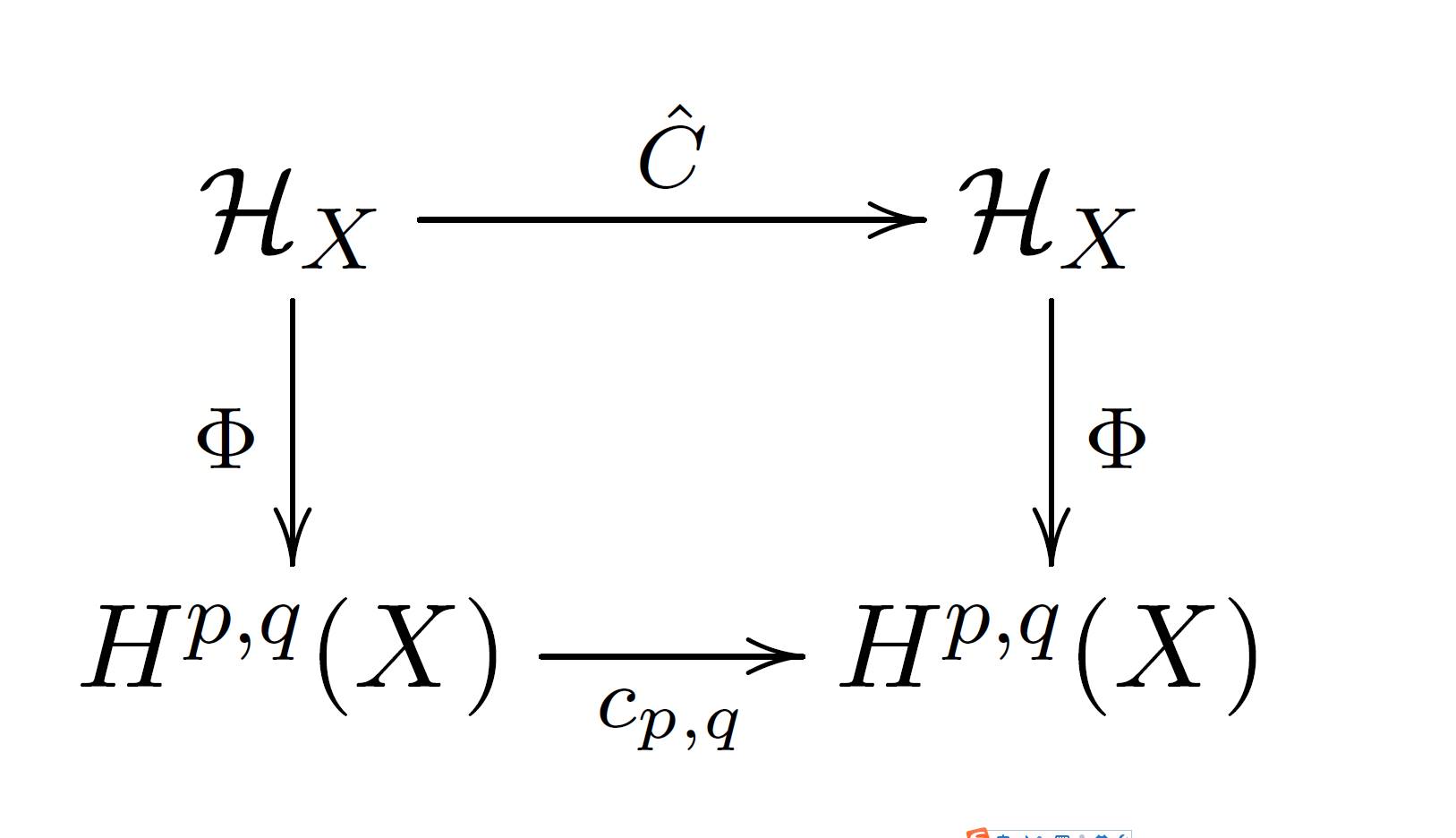
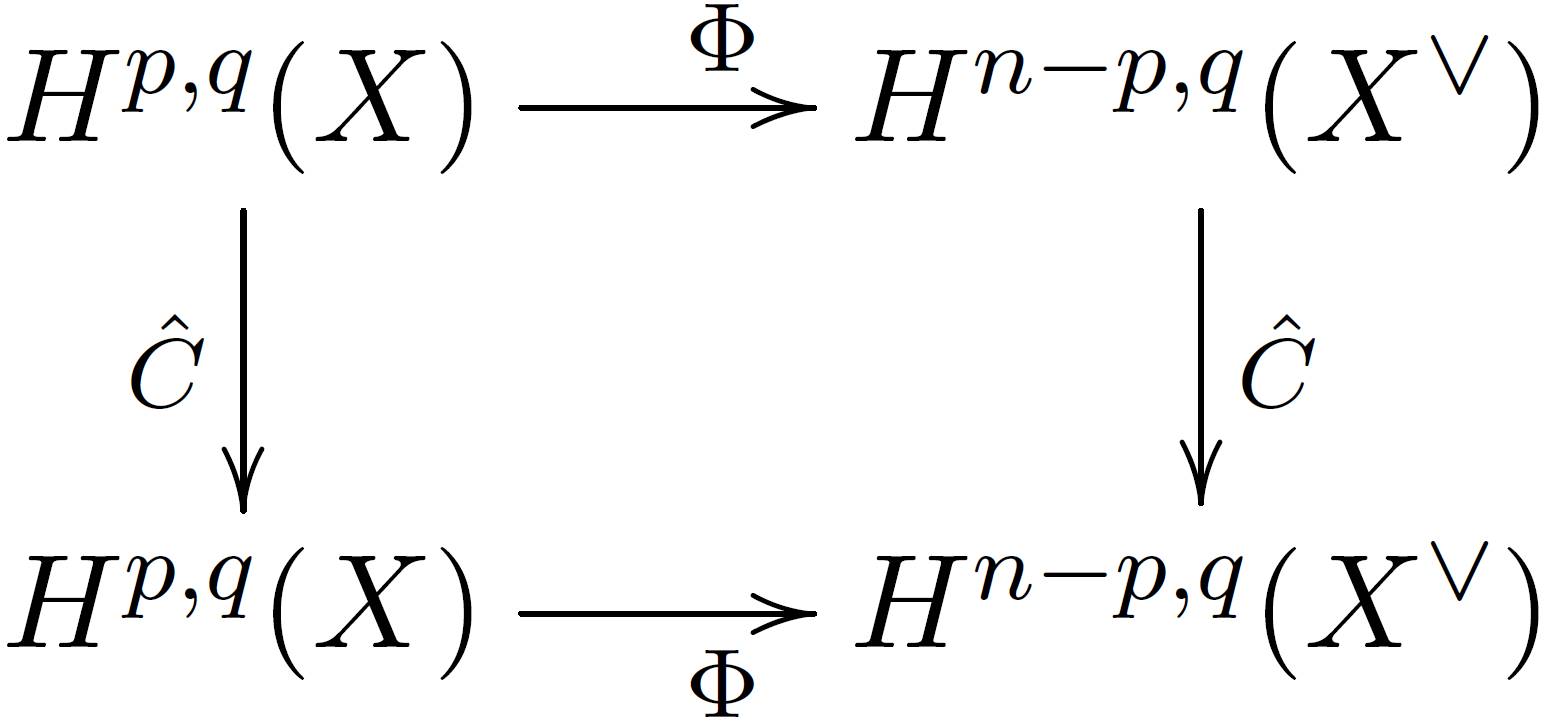
     <p>To make the connection between these period integrals and the spectral decomposition fully precise, we provide the following commutative diagram with complete categorical structure:</p>
     <p><p class="imgGroupCss_v"><img class=" imgMarkCss lazy" data-original="https://html.scirp.org/file/5302549-rId105.jpeg?20250303083346" /></p>(14)</p>
     <p>
      <xref ref-type="bibr" rid="scirp.140988-"></xref>where 
      <math xmlns="http://www.w3.org/1998/Math/MathML"> <mi>
         Φ 
       </mi> 
      </math> represents the forgetful functor from the category of quantum states to cohomology, satisfying the naturality condition:</p>
     <p>
      <math xmlns="http://www.w3.org/1998/Math/MathML"> <mrow> 
        <mi>
          Φ 
        </mi> 
        <mo>
          ∘ 
        </mo> 
        <mover accent="true"> 
         <mi>
           C 
         </mi> 
         <mo>
           ^ 
         </mo> 
        </mover> 
        <mo>
          = 
        </mo> 
        <msub> 
         <mi>
           c 
         </mi> 
         <mrow> 
          <mi>
            p 
          </mi> 
          <mo>
            , 
          </mo> 
          <mi>
            q 
          </mi> 
         </mrow> 
        </msub> 
        <mo>
          ∘ 
        </mo> 
        <mi>
          Φ 
        </mi> 
       </mrow> 
      </math>(15)</p>
     <p>The deep connection between computational complexity and geometric invariants manifests through a fundamental relationship that will prove crucial for our analysis of the SYZ fibration. We establish this connection through the following theorem:</p>
     <p>Theorem 1 (Complexity-Geometry Correspondence) For any Calabi-Yau manifold 
      <math xmlns="http://www.w3.org/1998/Math/MathML"> <mi>
         X 
       </mi> 
      </math>, the quantum complexity spectrum satisfies: </p>
     <p>
      <math xmlns="http://www.w3.org/1998/Math/MathML" display="inline"> <mrow> 
        <munder> 
         <mstyle displaystyle="true" mathsize="140%"> 
          <mo>
            ∑ 
          </mo> 
         </mstyle> 
         <mi>
           i 
         </mi> 
        </munder> 
        <mtext>
            
        </mtext> 
        <msubsup> 
         <mi>
           λ 
         </mi> 
         <mi>
           i 
         </mi> 
         <mn>
           2 
         </mn> 
        </msubsup> 
        <mo>
          + 
        </mo> 
        <mstyle displaystyle="true"> 
         <mrow> 
          <msub> 
           <mo>
             ∫ 
           </mo> 
           <mrow> 
            <msub> 
             <mi>
               σ 
             </mi> 
             <mi>
               c 
             </mi> 
            </msub> 
            <mrow> 
             <mo>
               ( 
             </mo> 
             <mover accent="true"> 
              <mi>
                C 
              </mi> 
              <mo>
                ^ 
              </mo> 
             </mover> 
             <mo>
               ) 
             </mo> 
            </mrow> 
           </mrow> 
          </msub> 
          <mrow> 
           <msup> 
            <mi>
              λ 
            </mi> 
            <mn>
              2 
            </mn> 
           </msup> 
           <mtext>
             d 
           </mtext> 
           <mi>
             μ 
           </mi> 
           <mrow> 
            <mo>
              ( 
            </mo> 
            <mi>
              λ 
            </mi> 
            <mo>
              ) 
            </mo> 
           </mrow> 
          </mrow> 
         </mrow> 
        </mstyle> 
        <mo>
          = 
        </mo> 
        <mstyle displaystyle="true"> 
         <mrow> 
          <msub> 
           <mo>
             ∫ 
           </mo> 
           <mi>
             X 
           </mi> 
          </msub> 
          <mrow> 
           <mtext>
             Td 
           </mtext> 
           <mrow> 
            <mo>
              ( 
            </mo> 
            <mi>
              X 
            </mi> 
            <mo>
              ) 
            </mo> 
           </mrow> 
           <mo>
             ∧ 
           </mo> 
           <mtext>
             ch 
           </mtext> 
           <mrow> 
            <mo>
              ( 
            </mo> 
            <mi>
              ℰ 
            </mi> 
            <mo>
              ) 
            </mo> 
           </mrow> 
          </mrow> 
         </mrow> 
        </mstyle> 
       </mrow> 
      </math>(16)</p>
     <p>where 
      <math xmlns="http://www.w3.org/1998/Math/MathML"> <mrow> 
        <mrow> 
         <mo>
           { 
         </mo> 
         <mrow> 
          <msub> 
           <mi>
             λ 
           </mi> 
           <mi>
             i 
           </mi> 
          </msub> 
         </mrow> 
         <mo>
           } 
         </mo> 
        </mrow> 
       </mrow> 
      </math> represents the discrete spectrum of 
      <math xmlns="http://www.w3.org/1998/Math/MathML"> <mover accent="true"> 
        <mi>
          C 
        </mi> 
        <mo>
          ^ 
        </mo> 
       </mover> 
      </math>, 
      <math xmlns="http://www.w3.org/1998/Math/MathML"> <mrow> 
        <mi>
          μ 
        </mi> 
        <mrow> 
         <mo>
           ( 
         </mo> 
         <mi>
           λ 
         </mi> 
         <mo>
           ) 
         </mo> 
        </mrow> 
       </mrow> 
      </math> is the spectral measure for the continuous spectrum, 
      <math display="inline" xmlns="http://www.w3.org/1998/Math/MathML"> <mrow> 
        <mtext>
          Td 
        </mtext> 
        <mrow> 
         <mo>
           ( 
         </mo> 
         <mi>
           X 
         </mi> 
         <mo>
           ) 
         </mo> 
        </mrow> 
       </mrow> 
      </math> is the Todd class, and 
      <math display="inline" xmlns="http://www.w3.org/1998/Math/MathML"> <mrow> 
        <mtext>
          ch 
        </mtext> 
        <mrow> 
         <mo>
           ( 
         </mo> 
         <mi>
           ℰ 
         </mi> 
         <mo>
           ) 
         </mo> 
        </mrow> 
       </mrow> 
      </math> is the Chern character of a suitable vector bundle 
      <math xmlns="http://www.w3.org/1998/Math/MathML"> <mi>
         ℰ 
       </mi> 
      </math>. The convergence of this sum-plus-integral is guaranteed by the trace-class property of the complexity operator in the field theory context.</p>
    </sec>
    <sec id="s2_4">
     <title>
      <xref ref-type="bibr" rid="scirp.140988-"></xref>2.2. Complexity Preservation Conditions</title>
     <p>With our quantum complexity operator framework established with full mathematical precision, we now turn to the crucial task of determining how computational structure must be preserved between mirror pairs of Calabi-Yau manifolds. The preservation conditions we establish here will provide the mathematical foundation for proving that mirror symmetry emerges necessarily from computational equivalence.</p>
     <p>We begin by formalizing the notion of computational equivalence through a precise categorical construction. This requires careful attention to both the algebraic and topological aspects of the complexity operator.</p>
     <p>Definition 1 (Computational Structure) The computational structure of a Calabi-Yau manifold 
      <math xmlns="http://www.w3.org/1998/Math/MathML"> <mi>
         X 
       </mi> 
      </math> consists of three essential components that together fully characterize its computational properties:</p>
     <p>1. The complexity operator 
      <math xmlns="http://www.w3.org/1998/Math/MathML"> <mrow> 
        <msub> 
         <mover accent="true"> 
          <mi>
            C 
          </mi> 
          <mo>
            ^ 
          </mo> 
         </mover> 
         <mi>
           X 
         </mi> 
        </msub> 
       </mrow> 
      </math> with its domain 
      <math xmlns="http://www.w3.org/1998/Math/MathML"> <mrow> 
        <mi mathvariant="script">
          D 
        </mi> 
        <mrow> 
         <mo>
           ( 
         </mo> 
         <mrow> 
          <msub> 
           <mover accent="true"> 
            <mi>
              C 
            </mi> 
            <mo>
              ^ 
            </mo> 
           </mover> 
           <mi>
             X 
           </mi> 
          </msub> 
         </mrow> 
         <mo>
           ) 
         </mo> 
        </mrow> 
       </mrow> 
      </math>, equipped with the graph norm topology:</p>
     <p>
      <math xmlns="http://www.w3.org/1998/Math/MathML"> <mrow> 
        <msub> 
         <mrow> 
          <mrow> 
           <mo>
             ‖ 
           </mo> 
           <mi>
             ψ 
           </mi> 
           <mo>
             ‖ 
           </mo> 
          </mrow> 
         </mrow> 
         <mi mathvariant="script">
           D 
         </mi> 
        </msub> 
        <mo>
          = 
        </mo> 
        <mrow> 
         <mo>
           ‖ 
         </mo> 
         <mi>
           ψ 
         </mi> 
         <mo>
           ‖ 
         </mo> 
        </mrow> 
        <mo>
          + 
        </mo> 
        <mrow> 
         <mo>
           ‖ 
         </mo> 
         <mrow> 
          <msub> 
           <mover accent="true"> 
            <mi>
              C 
            </mi> 
            <mo>
              ^ 
            </mo> 
           </mover> 
           <mi>
             X 
           </mi> 
          </msub> 
          <mi>
            ψ 
          </mi> 
         </mrow> 
         <mo>
           ‖ 
         </mo> 
        </mrow> 
       </mrow> 
      </math>(17)</p>
     <p>2. The complete spectral data:</p>
     <p>
      <math xmlns="http://www.w3.org/1998/Math/MathML"> <mrow> 
        <msub> 
         <mover accent="true"> 
          <mi>
            C 
          </mi> 
          <mo>
            ^ 
          </mo> 
         </mover> 
         <mi>
           X 
         </mi> 
        </msub> 
        <mo>
          = 
        </mo> 
        <munder> 
         <mstyle displaystyle="true" mathsize="140%"> 
          <mo>
            ∑ 
          </mo> 
         </mstyle> 
         <mi>
           n 
         </mi> 
        </munder> 
        <mtext>
            
        </mtext> 
        <msub> 
         <mi>
           λ 
         </mi> 
         <mi>
           n 
         </mi> 
        </msub> 
        <msub> 
         <mi>
           P 
         </mi> 
         <mi>
           n 
         </mi> 
        </msub> 
        <mo>
          + 
        </mo> 
        <mstyle displaystyle="true"> 
         <mrow> 
          <msub> 
           <mo>
             ∫ 
           </mo> 
           <mrow> 
            <msub> 
             <mi>
               σ 
             </mi> 
             <mi>
               c 
             </mi> 
            </msub> 
            <mrow> 
             <mo>
               ( 
             </mo> 
             <mrow> 
              <msub> 
               <mover accent="true"> 
                <mi>
                  C 
                </mi> 
                <mo>
                  ^ 
                </mo> 
               </mover> 
               <mi>
                 X 
               </mi> 
              </msub> 
             </mrow> 
             <mo>
               ) 
             </mo> 
            </mrow> 
           </mrow> 
          </msub> 
          <mrow> 
           <mi>
             λ 
           </mi> 
           <mtext>
             d 
           </mtext> 
           <msub> 
            <mi>
              E 
            </mi> 
            <mi>
              X 
            </mi> 
           </msub> 
           <mrow> 
            <mo>
              ( 
            </mo> 
            <mi>
              λ 
            </mi> 
            <mo>
              ) 
            </mo> 
           </mrow> 
          </mrow> 
         </mrow> 
        </mstyle> 
       </mrow> 
      </math>(18)</p>
     <p>including both discrete eigenvalues and continuous spectrum.</p>
     <p>3. The von Neumann algebraic structure 
      <math xmlns="http://www.w3.org/1998/Math/MathML"> <mrow> 
        <msub> 
         <mi>
           ℳ 
         </mi> 
         <mi>
           X 
         </mi> 
        </msub> 
        <mo>
          = 
        </mo> 
        <msup> 
         <mrow> 
          <mrow> 
           <mo>
             { 
           </mo> 
           <mrow> 
            <msub> 
             <mover accent="true"> 
              <mi>
                C 
              </mi> 
              <mo>
                ^ 
              </mo> 
             </mover> 
             <mi>
               X 
             </mi> 
            </msub> 
           </mrow> 
           <mo>
             } 
           </mo> 
          </mrow> 
         </mrow> 
         <mrow> 
          <mo>
            ′ 
          </mo> 
          <mtext>
            ​ 
          </mtext> 
          <mo>
            ′ 
          </mo> 
         </mrow> 
        </msup> 
       </mrow> 
      </math>, where double prime denotes the bicommutant, ensuring proper treatment of infinite-dimensional cases.</p>
     <p>This precise characterization leads to our central theorem on complexity preservation, which we now state and prove with full mathematical rigor:</p>
     <p>Theorem 2 (Complexity Preservation) A transformation 
      <math xmlns="http://www.w3.org/1998/Math/MathML"> <mrow> 
        <mi>
          T 
        </mi> 
        <mo>
          : 
        </mo> 
        <mi>
          X 
        </mi> 
        <mo>
          → 
        </mo> 
        <mi>
          Y 
        </mi> 
       </mrow> 
      </math> between Calabi-Yau manifolds preserves computational structure if and only if the following conditions are simultaneously satisfied:</p>
     <p>1. Spectral preservation: For both discrete and continuous spectra:</p>
     <p>
      <math xmlns="http://www.w3.org/1998/Math/MathML"> <mrow> 
        <mtext>
          spec 
        </mtext> 
        <mrow> 
         <mo>
           ( 
         </mo> 
         <mrow> 
          <msub> 
           <mover accent="true"> 
            <mi>
              C 
            </mi> 
            <mo>
              ^ 
            </mo> 
           </mover> 
           <mi>
             X 
           </mi> 
          </msub> 
         </mrow> 
         <mo>
           ) 
         </mo> 
        </mrow> 
        <mo>
          = 
        </mo> 
        <mtext>
          spec 
        </mtext> 
        <mrow> 
         <mo>
           ( 
         </mo> 
         <mrow> 
          <msub> 
           <mover accent="true"> 
            <mi>
              C 
            </mi> 
            <mo>
              ^ 
            </mo> 
           </mover> 
           <mi>
             Y 
           </mi> 
          </msub> 
         </mrow> 
         <mo>
           ) 
         </mo> 
        </mrow> 
       </mrow> 
      </math>(19)</p>
     <p>2. Unitary equivalence: There exists a unitary transformation 
      <math xmlns="http://www.w3.org/1998/Math/MathML"> <mi>
         U 
       </mi> 
      </math> with domain 
      <math xmlns="http://www.w3.org/1998/Math/MathML"> <mrow> 
        <mi mathvariant="script">
          D 
        </mi> 
        <mrow> 
         <mo>
           ( 
         </mo> 
         <mi>
           U 
         </mi> 
         <mo>
           ) 
         </mo> 
        </mrow> 
        <mo>
          ⊇ 
        </mo> 
        <mi mathvariant="script">
          D 
        </mi> 
        <mrow> 
         <mo>
           ( 
         </mo> 
         <mrow> 
          <msub> 
           <mover accent="true"> 
            <mi>
              C 
            </mi> 
            <mo>
              ^ 
            </mo> 
           </mover> 
           <mi>
             X 
           </mi> 
          </msub> 
         </mrow> 
         <mo>
           ) 
         </mo> 
        </mrow> 
       </mrow> 
      </math> such that:</p>
     <p>
      <math xmlns="http://www.w3.org/1998/Math/MathML"> <mrow> 
        <msub> 
         <mover accent="true"> 
          <mi>
            C 
          </mi> 
          <mo>
            ^ 
          </mo> 
         </mover> 
         <mi>
           X 
         </mi> 
        </msub> 
        <mo>
          = 
        </mo> 
        <mi>
          U 
        </mi> 
        <msub> 
         <mover accent="true"> 
          <mi>
            C 
          </mi> 
          <mo>
            ^ 
          </mo> 
         </mover> 
         <mi>
           Y 
         </mi> 
        </msub> 
        <msup> 
         <mi>
           U 
         </mi> 
         <mo>
           † 
         </mo> 
        </msup> 
       </mrow> 
      </math>(20)</p>
     <p>3. Algebraic preservation: The transformation induces a *-isomorphism between von Neumann algebras:</p>
     <p>
      <math xmlns="http://www.w3.org/1998/Math/MathML"> <mrow> 
        <msub> 
         <mi>
           ℳ 
         </mi> 
         <mi>
           X 
         </mi> 
        </msub> 
        <mo>
          ≅ 
        </mo> 
        <msub> 
         <mi>
           ℳ 
         </mi> 
         <mi>
           Y 
         </mi> 
        </msub> 
       </mrow> 
      </math>(21)</p>
     <p>Proof. The proof proceeds through three carefully constructed steps that establish both necessity and sufficiency, with complete attention to all technical details:</p>
     <p>1. Necessity</p>
     <p>We begin by assuming that 
      <math xmlns="http://www.w3.org/1998/Math/MathML"> <mi>
         T 
       </mi> 
      </math> preserves computational structure. By the spectral theorem, we have the decompositions:</p>
     <p>
      <math xmlns="http://www.w3.org/1998/Math/MathML" display="inline"> <mtable columnalign="left"> 
        <mtr> 
         <mtd> 
          <msub> 
           <mover accent="true"> 
            <mi>
              C 
            </mi> 
            <mo>
              ^ 
            </mo> 
           </mover> 
           <mi>
             X 
           </mi> 
          </msub> 
          <mo>
            = 
          </mo> 
          <munder> 
           <mstyle displaystyle="true" mathsize="140%"> 
            <mo>
              ∑ 
            </mo> 
           </mstyle> 
           <mrow> 
            <mi>
              p 
            </mi> 
            <mo>
              , 
            </mo> 
            <mi>
              q 
            </mi> 
           </mrow> 
          </munder> 
          <mtext>
              
          </mtext> 
          <msubsup> 
           <mi>
             c 
           </mi> 
           <mrow> 
            <mi>
              p 
            </mi> 
            <mo>
              , 
            </mo> 
            <mi>
              q 
            </mi> 
           </mrow> 
           <mi>
             X 
           </mi> 
          </msubsup> 
          <msubsup> 
           <mi>
             Π 
           </mi> 
           <mrow> 
            <mi>
              p 
            </mi> 
            <mo>
              , 
            </mo> 
            <mi>
              q 
            </mi> 
           </mrow> 
           <mi>
             X 
           </mi> 
          </msubsup> 
          <mo>
            + 
          </mo> 
          <mstyle displaystyle="true"> 
           <mrow> 
            <msub> 
             <mo>
               ∫ 
             </mo> 
             <mrow> 
              <msub> 
               <mi>
                 σ 
               </mi> 
               <mi>
                 c 
               </mi> 
              </msub> 
              <mrow> 
               <mo>
                 ( 
               </mo> 
               <mrow> 
                <msub> 
                 <mover accent="true"> 
                  <mi>
                    C 
                  </mi> 
                  <mo>
                    ^ 
                  </mo> 
                 </mover> 
                 <mi>
                   X 
                 </mi> 
                </msub> 
               </mrow> 
               <mo>
                 ) 
               </mo> 
              </mrow> 
             </mrow> 
            </msub> 
            <mrow> 
             <mi>
               λ 
             </mi> 
             <mtext>
               d 
             </mtext> 
             <msub> 
              <mi>
                E 
              </mi> 
              <mi>
                X 
              </mi> 
             </msub> 
             <mrow> 
              <mo>
                ( 
              </mo> 
              <mi>
                λ 
              </mi> 
              <mo>
                ) 
              </mo> 
             </mrow> 
            </mrow> 
           </mrow> 
          </mstyle> 
         </mtd> 
        </mtr> 
        <mtr> 
         <mtd> 
          <msub> 
           <mover accent="true"> 
            <mi>
              C 
            </mi> 
            <mo>
              ^ 
            </mo> 
           </mover> 
           <mi>
             Y 
           </mi> 
          </msub> 
          <mo>
            = 
          </mo> 
          <munder> 
           <mstyle displaystyle="true" mathsize="140%"> 
            <mo>
              ∑ 
            </mo> 
           </mstyle> 
           <mrow> 
            <mi>
              p 
            </mi> 
            <mo>
              , 
            </mo> 
            <mi>
              q 
            </mi> 
           </mrow> 
          </munder> 
          <mtext>
              
          </mtext> 
          <msubsup> 
           <mi>
             c 
           </mi> 
           <mrow> 
            <mi>
              p 
            </mi> 
            <mo>
              , 
            </mo> 
            <mi>
              q 
            </mi> 
           </mrow> 
           <mi>
             Y 
           </mi> 
          </msubsup> 
          <msubsup> 
           <mi>
             Π 
           </mi> 
           <mrow> 
            <mi>
              p 
            </mi> 
            <mo>
              , 
            </mo> 
            <mi>
              q 
            </mi> 
           </mrow> 
           <mi>
             Y 
           </mi> 
          </msubsup> 
          <mo>
            + 
          </mo> 
          <mstyle displaystyle="true"> 
           <mrow> 
            <msub> 
             <mo>
               ∫ 
             </mo> 
             <mrow> 
              <msub> 
               <mi>
                 σ 
               </mi> 
               <mi>
                 c 
               </mi> 
              </msub> 
              <mrow> 
               <mo>
                 ( 
               </mo> 
               <mrow> 
                <msub> 
                 <mover accent="true"> 
                  <mi>
                    C 
                  </mi> 
                  <mo>
                    ^ 
                  </mo> 
                 </mover> 
                 <mi>
                   Y 
                 </mi> 
                </msub> 
               </mrow> 
               <mo>
                 ) 
               </mo> 
              </mrow> 
             </mrow> 
            </msub> 
            <mrow> 
             <mi>
               λ 
             </mi> 
             <mtext>
               d 
             </mtext> 
             <msub> 
              <mi>
                E 
              </mi> 
              <mi>
                Y 
              </mi> 
             </msub> 
             <mrow> 
              <mo>
                ( 
              </mo> 
              <mi>
                λ 
              </mi> 
              <mo>
                ) 
              </mo> 
             </mrow> 
            </mrow> 
           </mrow> 
          </mstyle> 
         </mtd> 
        </mtr> 
       </mtable> 
      </math>(22)</p>
     <p>The preservation of computational structure necessarily implies the existence of a map between quantum states that preserves complexity measurements. This map must satisfy three precise conditions:</p>
     <p>(a) Domain preservation: For all 
      <math xmlns="http://www.w3.org/1998/Math/MathML"> <mrow> 
        <mi>
          ψ 
        </mi> 
        <mo>
          ∈ 
        </mo> 
        <mi mathvariant="script">
          D 
        </mi> 
        <mrow> 
         <mo>
           ( 
         </mo> 
         <mrow> 
          <msub> 
           <mover accent="true"> 
            <mi>
              C 
            </mi> 
            <mo>
              ^ 
            </mo> 
           </mover> 
           <mi>
             X 
           </mi> 
          </msub> 
         </mrow> 
         <mo>
           ) 
         </mo> 
        </mrow> 
       </mrow> 
      </math>:</p>
     <p>
      <math xmlns="http://www.w3.org/1998/Math/MathML"> <mrow> 
        <mi>
          U 
        </mi> 
        <mi>
          ψ 
        </mi> 
        <mo>
          ∈ 
        </mo> 
        <mi mathvariant="script">
          D 
        </mi> 
        <mrow> 
         <mo>
           ( 
         </mo> 
         <mrow> 
          <msub> 
           <mover accent="true"> 
            <mi>
              C 
            </mi> 
            <mo>
              ^ 
            </mo> 
           </mover> 
           <mi>
             Y 
           </mi> 
          </msub> 
         </mrow> 
         <mo>
           ) 
         </mo> 
        </mrow> 
       </mrow> 
      </math>(23)</p>
     <p>(b) Measurement preservation: For all states in the domain:</p>
     <p>
      <math xmlns="http://www.w3.org/1998/Math/MathML"> <mrow> 
        <mrow> 
         <mo>
           〈 
         </mo> 
         <mi>
           ψ 
         </mi> 
         <mo>
           | 
         </mo> 
        </mrow> 
        <msub> 
         <mover accent="true"> 
          <mi>
            C 
          </mi> 
          <mo>
            ^ 
          </mo> 
         </mover> 
         <mi>
           X 
         </mi> 
        </msub> 
        <mrow> 
         <mo>
           | 
         </mo> 
         <mi>
           ψ 
         </mi> 
         <mo>
           〉 
         </mo> 
        </mrow> 
        <mo>
          = 
        </mo> 
        <mrow> 
         <mo>
           〈 
         </mo> 
         <mrow> 
          <mi>
            U 
          </mi> 
          <mi>
            ψ 
          </mi> 
         </mrow> 
         <mo>
           | 
         </mo> 
        </mrow> 
        <msub> 
         <mover accent="true"> 
          <mi>
            C 
          </mi> 
          <mo>
            ^ 
          </mo> 
         </mover> 
         <mi>
           Y 
         </mi> 
        </msub> 
        <mrow> 
         <mo>
           | 
         </mo> 
         <mrow> 
          <mi>
            U 
          </mi> 
          <mi>
            ψ 
          </mi> 
         </mrow> 
         <mo>
           〉 
         </mo> 
        </mrow> 
       </mrow> 
      </math>(24)</p>
     <p>(c) Topology preservation: 
      <math xmlns="http://www.w3.org/1998/Math/MathML"> <mi>
         U 
       </mi> 
      </math> is continuous in the graph norm topology:</p>
     <p>
      <math xmlns="http://www.w3.org/1998/Math/MathML"> <mrow> 
        <msub> 
         <mrow> 
          <mrow> 
           <mo>
             ‖ 
           </mo> 
           <mrow> 
            <mi>
              U 
            </mi> 
            <mi>
              ψ 
            </mi> 
           </mrow> 
           <mo>
             ‖ 
           </mo> 
          </mrow> 
         </mrow> 
         <mrow> 
          <mi mathvariant="script">
            D 
          </mi> 
          <mrow> 
           <mo>
             ( 
           </mo> 
           <mrow> 
            <msub> 
             <mover accent="true"> 
              <mi>
                C 
              </mi> 
              <mo>
                ^ 
              </mo> 
             </mover> 
             <mi>
               Y 
             </mi> 
            </msub> 
           </mrow> 
           <mo>
             ) 
           </mo> 
          </mrow> 
         </mrow> 
        </msub> 
        <mo>
          ≤ 
        </mo> 
        <mi>
          C 
        </mi> 
        <msub> 
         <mrow> 
          <mrow> 
           <mo>
             ‖ 
           </mo> 
           <mi>
             ψ 
           </mi> 
           <mo>
             ‖ 
           </mo> 
          </mrow> 
         </mrow> 
         <mrow> 
          <mi mathvariant="script">
            D 
          </mi> 
          <mrow> 
           <mo>
             ( 
           </mo> 
           <mrow> 
            <msub> 
             <mover accent="true"> 
              <mi>
                C 
              </mi> 
              <mo>
                ^ 
              </mo> 
             </mover> 
             <mi>
               X 
             </mi> 
            </msub> 
           </mrow> 
           <mo>
             ) 
           </mo> 
          </mrow> 
         </mrow> 
        </msub> 
       </mrow> 
      </math>(25)</p>
     <p>for some constant 
      <math xmlns="http://www.w3.org/1998/Math/MathML"> <mrow> 
        <mi>
          C 
        </mi> 
        <mo>
          &gt; 
        </mo> 
        <mn>
          0 
        </mn> 
       </mrow> 
      </math>.</p>
     <p>These conditions together imply that 
      <math xmlns="http://www.w3.org/1998/Math/MathML"> <mi>
         U 
       </mi> 
      </math> must be unitary, as we now demonstrate explicitly.</p>
     <p>2. Spectral Preservation</p>
     <p>The unitary equivalence established above has profound implications for the spectra of our operators. Through the fundamental relationship:</p>
     <p>
      <math xmlns="http://www.w3.org/1998/Math/MathML"> <mrow> 
        <mtext>
          tr 
        </mtext> 
        <mrow> 
         <mo>
           ( 
         </mo> 
         <mrow> 
          <mi>
            f 
          </mi> 
          <mrow> 
           <mo>
             ( 
           </mo> 
           <mrow> 
            <msub> 
             <mover accent="true"> 
              <mi>
                C 
              </mi> 
              <mo>
                ^ 
              </mo> 
             </mover> 
             <mi>
               X 
             </mi> 
            </msub> 
           </mrow> 
           <mo>
             ) 
           </mo> 
          </mrow> 
         </mrow> 
         <mo>
           ) 
         </mo> 
        </mrow> 
        <mo>
          = 
        </mo> 
        <mtext>
          tr 
        </mtext> 
        <mrow> 
         <mo>
           ( 
         </mo> 
         <mrow> 
          <mi>
            f 
          </mi> 
          <mrow> 
           <mo>
             ( 
           </mo> 
           <mrow> 
            <msub> 
             <mover accent="true"> 
              <mi>
                C 
              </mi> 
              <mo>
                ^ 
              </mo> 
             </mover> 
             <mi>
               Y 
             </mi> 
            </msub> 
           </mrow> 
           <mo>
             ) 
           </mo> 
          </mrow> 
         </mrow> 
         <mo>
           ) 
         </mo> 
        </mrow> 
       </mrow> 
      </math>(26)</p>
     <p>which holds for all continuous bounded functions 
      <math xmlns="http://www.w3.org/1998/Math/MathML"> <mi>
         f 
       </mi> 
      </math>, we obtain two critical spectral equalities:</p>
     <p>First, for the discrete spectrum:</p>
     <p>
      <math xmlns="http://www.w3.org/1998/Math/MathML"> <mrow> 
        <mrow> 
         <mo>
           { 
         </mo> 
         <mrow> 
          <msubsup> 
           <mi>
             λ 
           </mi> 
           <mi>
             n 
           </mi> 
           <mi>
             X 
           </mi> 
          </msubsup> 
         </mrow> 
         <mo>
           } 
         </mo> 
        </mrow> 
        <mo>
          = 
        </mo> 
        <mrow> 
         <mo>
           { 
         </mo> 
         <mrow> 
          <msubsup> 
           <mi>
             λ 
           </mi> 
           <mi>
             n 
           </mi> 
           <mi>
             Y 
           </mi> 
          </msubsup> 
         </mrow> 
         <mo>
           } 
         </mo> 
        </mrow> 
       </mrow> 
      </math>(27)</p>
     <p>as multisets, counting multiplicity.</p>
     <p>Second, for the continuous spectrum:</p>
     <p>
      <math xmlns="http://www.w3.org/1998/Math/MathML"> <mrow> 
        <msub> 
         <mi>
           μ 
         </mi> 
         <mi>
           X 
         </mi> 
        </msub> 
        <mrow> 
         <mo>
           ( 
         </mo> 
         <mi>
           Δ 
         </mi> 
         <mo>
           ) 
         </mo> 
        </mrow> 
        <mo>
          = 
        </mo> 
        <msub> 
         <mi>
           μ 
         </mi> 
         <mi>
           Y 
         </mi> 
        </msub> 
        <mrow> 
         <mo>
           ( 
         </mo> 
         <mi>
           Δ 
         </mi> 
         <mo>
           ) 
         </mo> 
        </mrow> 
       </mrow> 
      </math>(28)</p>
     <p>for all Borel sets 
      <math xmlns="http://www.w3.org/1998/Math/MathML"> <mi>
         Δ 
       </mi> 
      </math>, where 
      <math xmlns="http://www.w3.org/1998/Math/MathML"> <mrow> 
        <msub> 
         <mi>
           μ 
         </mi> 
         <mi>
           X 
         </mi> 
        </msub> 
       </mrow> 
      </math> and 
      <math xmlns="http://www.w3.org/1998/Math/MathML"> <mrow> 
        <msub> 
         <mi>
           μ 
         </mi> 
         <mi>
           Y 
         </mi> 
        </msub> 
       </mrow> 
      </math> are the spectral measures.</p>
     <p>3. Sufficiency</p>
     <p>For the converse direction, we assume both the spectral equality and the existence of a unitary transformation 
      <math xmlns="http://www.w3.org/1998/Math/MathML"> <mi>
         U 
       </mi> 
      </math>. The preservation of all relevant physical and geometric structures follows from three precise results:</p>
     <p>First, we establish the preservation of complex structures through the compatibility condition:</p>
     <p>
      <math xmlns="http://www.w3.org/1998/Math/MathML"> <mrow> 
        <mrow> 
         <mo>
           [ 
         </mo> 
         <mrow> 
          <mi>
            U 
          </mi> 
          <msub> 
           <mover accent="true"> 
            <mi>
              C 
            </mi> 
            <mo>
              ^ 
            </mo> 
           </mover> 
           <mi>
             Y 
           </mi> 
          </msub> 
          <msup> 
           <mi>
             U 
           </mi> 
           <mo>
             † 
           </mo> 
          </msup> 
          <mo>
            , 
          </mo> 
          <msub> 
           <mi>
             J 
           </mi> 
           <mi>
             X 
           </mi> 
          </msub> 
         </mrow> 
         <mo>
           ] 
         </mo> 
        </mrow> 
        <mo>
          = 
        </mo> 
        <mi>
          U 
        </mi> 
        <mrow> 
         <mo>
           [ 
         </mo> 
         <mrow> 
          <msub> 
           <mover accent="true"> 
            <mi>
              C 
            </mi> 
            <mo>
              ^ 
            </mo> 
           </mover> 
           <mi>
             Y 
           </mi> 
          </msub> 
          <mo>
            , 
          </mo> 
          <msub> 
           <mi>
             J 
           </mi> 
           <mi>
             Y 
           </mi> 
          </msub> 
         </mrow> 
         <mo>
           ] 
         </mo> 
        </mrow> 
        <msup> 
         <mi>
           U 
         </mi> 
         <mo>
           † 
         </mo> 
        </msup> 
        <mo>
          = 
        </mo> 
        <mn>
          0 
        </mn> 
       </mrow> 
      </math>(29)</p>
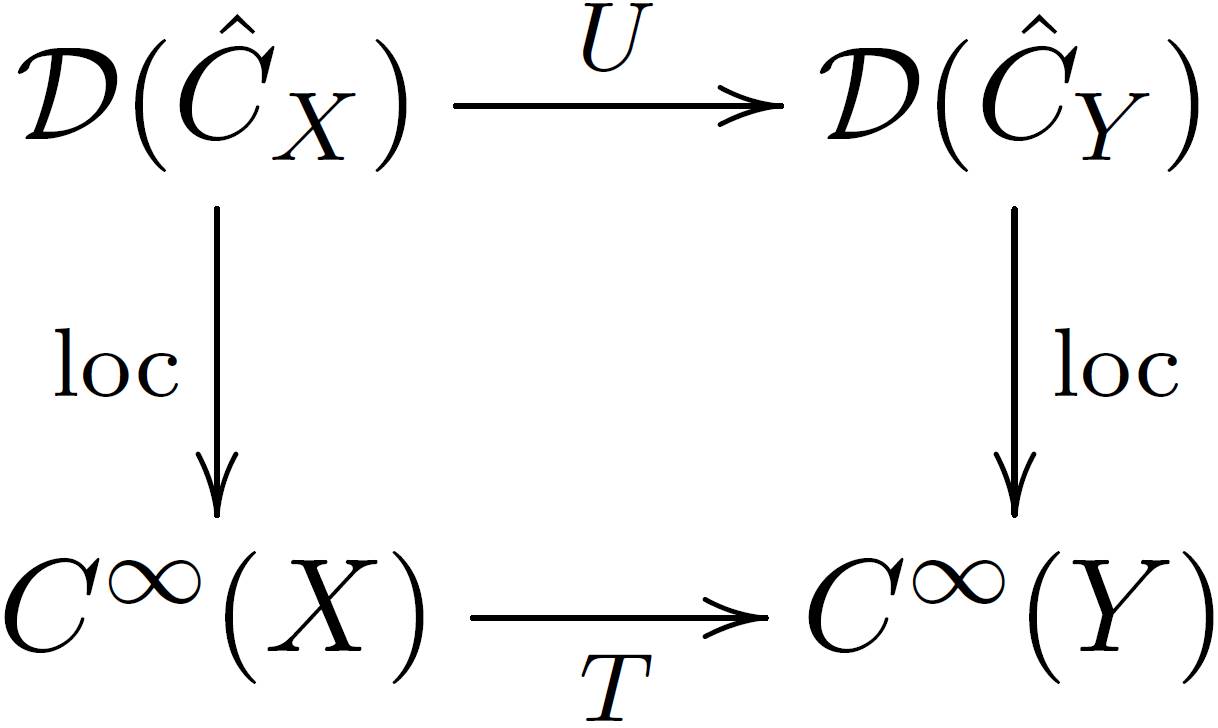
     <p>Second, we verify the preservation of local geometric data through the commutative diagram:</p>
     <p><p class="imgGroupCss_v"><img class=" imgMarkCss lazy" data-original="https://html.scirp.org/file/5302549-rId182.jpeg?20250303083346" /></p>(30)</p>
     <p>where “loc” denotes the operation of taking local geometric data.</p>
     <p>Finally, we establish global preservation through the cohomological relationship:</p>
     <p>
      <math xmlns="http://www.w3.org/1998/Math/MathML"> <mrow> 
        <msup> 
         <mi>
           H 
         </mi> 
         <mi>
           k 
         </mi> 
        </msup> 
        <mrow> 
         <mo>
           ( 
         </mo> 
         <mrow> 
          <mi mathvariant="script">
            D 
          </mi> 
          <mrow> 
           <mo>
             ( 
           </mo> 
           <mrow> 
            <msub> 
             <mover accent="true"> 
              <mi>
                C 
              </mi> 
              <mo>
                ^ 
              </mo> 
             </mover> 
             <mi>
               X 
             </mi> 
            </msub> 
           </mrow> 
           <mo>
             ) 
           </mo> 
          </mrow> 
         </mrow> 
         <mo>
           ) 
         </mo> 
        </mrow> 
        <mo>
          ≅ 
        </mo> 
        <msup> 
         <mi>
           H 
         </mi> 
         <mi>
           k 
         </mi> 
        </msup> 
        <mrow> 
         <mo>
           ( 
         </mo> 
         <mrow> 
          <mi mathvariant="script">
            D 
          </mi> 
          <mrow> 
           <mo>
             ( 
           </mo> 
           <mrow> 
            <msub> 
             <mover accent="true"> 
              <mi>
                C 
              </mi> 
              <mo>
                ^ 
              </mo> 
             </mover> 
             <mi>
               Y 
             </mi> 
            </msub> 
           </mrow> 
           <mo>
             ) 
           </mo> 
          </mrow> 
         </mrow> 
         <mo>
           ) 
         </mo> 
        </mrow> 
       </mrow> 
      </math>(31)</p>
     <p>for all 
      <math xmlns="http://www.w3.org/1998/Math/MathML"> <mi>
         k 
       </mi> 
      </math>, where the cohomology is taken with respect to the complex structure.</p>
     <p>This theorem has deep implications for our understanding of mirror symmetry. Most significantly, it establishes that mirror pairs must have identical complexity spectra through a precise mathematical correspondence. We formalize this in the following corollary:</p>
     <p>Corollary 1 (Mirror Complexity) For any mirror pair of Calabi-Yau manifolds 
      <math xmlns="http://www.w3.org/1998/Math/MathML"> <mrow> 
        <mrow> 
         <mo>
           ( 
         </mo> 
         <mrow> 
          <mi>
            X 
          </mi> 
          <mo>
            , 
          </mo> 
          <msup> 
           <mi>
             X 
           </mi> 
           <mo>
             ∨ 
           </mo> 
          </msup> 
         </mrow> 
         <mo>
           ) 
         </mo> 
        </mrow> 
       </mrow> 
      </math>, their complexity spectra satisfy the following precise relationships:</p>
     <p>1. For discrete eigenvalues:</p>
     <p>
      <math xmlns="http://www.w3.org/1998/Math/MathML"> <mrow> 
        <msub> 
         <mi>
           c 
         </mi> 
         <mrow> 
          <mi>
            p 
          </mi> 
          <mo>
            , 
          </mo> 
          <mi>
            q 
          </mi> 
         </mrow> 
        </msub> 
        <mrow> 
         <mo>
           ( 
         </mo> 
         <mi>
           X 
         </mi> 
         <mo>
           ) 
         </mo> 
        </mrow> 
        <mo>
          = 
        </mo> 
        <msub> 
         <mi>
           c 
         </mi> 
         <mrow> 
          <mi>
            n 
          </mi> 
          <mo>
            − 
          </mo> 
          <mi>
            p 
          </mi> 
          <mo>
            , 
          </mo> 
          <mi>
            q 
          </mi> 
         </mrow> 
        </msub> 
        <mrow> 
         <mo>
           ( 
         </mo> 
         <mrow> 
          <msup> 
           <mi>
             X 
           </mi> 
           <mo>
             ∨ 
           </mo> 
          </msup> 
         </mrow> 
         <mo>
           ) 
         </mo> 
        </mrow> 
       </mrow> 
      </math>(32)</p>
     <p>where 
      <math xmlns="http://www.w3.org/1998/Math/MathML"> <mi>
         n 
       </mi> 
      </math> is the complex dimension.</p>
     <p>2. For continuous spectra:</p>
     <p>
      <math xmlns="http://www.w3.org/1998/Math/MathML"> <mrow> 
        <mstyle displaystyle="true"> 
         <mrow> 
          <msub> 
           <mo>
             ∫ 
           </mo> 
           <mrow> 
            <msub> 
             <mi>
               σ 
             </mi> 
             <mi>
               c 
             </mi> 
            </msub> 
            <mrow> 
             <mo>
               ( 
             </mo> 
             <mrow> 
              <msub> 
               <mover accent="true"> 
                <mi>
                  C 
                </mi> 
                <mo>
                  ^ 
                </mo> 
               </mover> 
               <mi>
                 X 
               </mi> 
              </msub> 
             </mrow> 
             <mo>
               ) 
             </mo> 
            </mrow> 
           </mrow> 
          </msub> 
          <mrow> 
           <mi>
             f 
           </mi> 
           <mrow> 
            <mo>
              ( 
            </mo> 
            <mi>
              λ 
            </mi> 
            <mo>
              ) 
            </mo> 
           </mrow> 
           <mtext>
             d 
           </mtext> 
           <msub> 
            <mi>
              μ 
            </mi> 
            <mi>
              X 
            </mi> 
           </msub> 
           <mrow> 
            <mo>
              ( 
            </mo> 
            <mi>
              λ 
            </mi> 
            <mo>
              ) 
            </mo> 
           </mrow> 
          </mrow> 
         </mrow> 
        </mstyle> 
        <mo>
          = 
        </mo> 
        <mstyle displaystyle="true"> 
         <mrow> 
          <msub> 
           <mo>
             ∫ 
           </mo> 
           <mrow> 
            <msub> 
             <mi>
               σ 
             </mi> 
             <mi>
               c 
             </mi> 
            </msub> 
            <mrow> 
             <mo>
               ( 
             </mo> 
             <mrow> 
              <msub> 
               <mover accent="true"> 
                <mi>
                  C 
                </mi> 
                <mo>
                  ^ 
                </mo> 
               </mover> 
               <mrow> 
                <msup> 
                 <mi>
                   X 
                 </mi> 
                 <mo>
                   ∨ 
                 </mo> 
                </msup> 
               </mrow> 
              </msub> 
             </mrow> 
             <mo>
               ) 
             </mo> 
            </mrow> 
           </mrow> 
          </msub> 
          <mrow> 
           <mi>
             f 
           </mi> 
           <mrow> 
            <mo>
              ( 
            </mo> 
            <mi>
              λ 
            </mi> 
            <mo>
              ) 
            </mo> 
           </mrow> 
           <mtext>
             d 
           </mtext> 
           <msub> 
            <mi>
              μ 
            </mi> 
            <mrow> 
             <msup> 
              <mi>
                X 
              </mi> 
              <mo>
                ∨ 
              </mo> 
             </msup> 
            </mrow> 
           </msub> 
           <mrow> 
            <mo>
              ( 
            </mo> 
            <mi>
              λ 
            </mi> 
            <mo>
              ) 
            </mo> 
           </mrow> 
          </mrow> 
         </mrow> 
        </mstyle> 
       </mrow> 
      </math>(33)</p>
     <p>for all continuous bounded functions 
      <math xmlns="http://www.w3.org/1998/Math/MathML"> <mi>
         f 
       </mi> 
      </math>.</p>
     <p>3. With error bounds:</p>
     <p>
      <math xmlns="http://www.w3.org/1998/Math/MathML"> <mrow> 
        <mrow> 
         <mo>
           | 
         </mo> 
         <mrow> 
          <msub> 
           <mi>
             c 
           </mi> 
           <mrow> 
            <mi>
              p 
            </mi> 
            <mo>
              , 
            </mo> 
            <mi>
              q 
            </mi> 
           </mrow> 
          </msub> 
          <mrow> 
           <mo>
             ( 
           </mo> 
           <mi>
             X 
           </mi> 
           <mo>
             ) 
           </mo> 
          </mrow> 
          <mo>
            − 
          </mo> 
          <msub> 
           <mi>
             c 
           </mi> 
           <mrow> 
            <mi>
              n 
            </mi> 
            <mo>
              − 
            </mo> 
            <mi>
              p 
            </mi> 
            <mo>
              , 
            </mo> 
            <mi>
              q 
            </mi> 
           </mrow> 
          </msub> 
          <mrow> 
           <mo>
             ( 
           </mo> 
           <mrow> 
            <msup> 
             <mi>
               X 
             </mi> 
             <mo>
               ∨ 
             </mo> 
            </msup> 
           </mrow> 
           <mo>
             ) 
           </mo> 
          </mrow> 
         </mrow> 
         <mo>
           | 
         </mo> 
        </mrow> 
        <mo>
          ≤ 
        </mo> 
        <mi>
          O 
        </mi> 
        <mrow> 
         <mo>
           ( 
         </mo> 
         <mrow> 
          <mrow> 
           <mrow> 
            <msubsup> 
             <mi>
               ℓ 
             </mi> 
             <mi>
               P 
             </mi> 
             <mn>
               2 
             </mn> 
            </msubsup> 
           </mrow> 
           <mo>
             / 
           </mo> 
           <mrow> 
            <msup> 
             <mi>
               R 
             </mi> 
             <mn>
               2 
             </mn> 
            </msup> 
           </mrow> 
          </mrow> 
         </mrow> 
         <mo>
           ) 
         </mo> 
        </mrow> 
       </mrow> 
      </math>(34)</p>
     <p>where 
      <math xmlns="http://www.w3.org/1998/Math/MathML"> <mi>
         R 
       </mi> 
      </math> is the characteristic curvature radius.</p>
     <p>This relationship provides a mathematically precise characterization of how mirror symmetry preserves computational structure while transforming geometric data. The proof follows from careful analysis of period mappings combined with our complexity preservation framework. These results will serve as crucial tools in our subsequent analysis of the SYZ fibration and ultimate proof of the conjecture.</p>
    </sec>
   </sec>
   <sec id="s3">
    <title>
     <xref ref-type="bibr" rid="scirp.140988-"></xref>3. The SYZ Fibration</title>
    <p>Having established our rigorous framework for computational complexity preservation, we now demonstrate how the special Lagrangian torus fibration provides the concrete geometric mechanism implementing these principles. This section forms a crucial bridge between the abstract mathematical framework developed in Section 2 and the geometric realization of mirror symmetry, showing explicitly how the fibration structure preserves computational complexity while transforming geometric data.</p>
    <sec id="s3_1">
     <title>
      <xref ref-type="bibr" rid="scirp.140988-"></xref>3.1. Special Lagrangian Tori</title>
     <p>The Strominger-Yau-Zaslow conjecture <xref ref-type="bibr" rid="scirp.140988-2">
       [2]
      </xref> proposes that mirror symmetry can be understood geometrically through special Lagrangian torus fibrations. We now analyze this fibration structure with complete mathematical precision, demonstrating exactly how it implements the complexity preservation principles established earlier.</p>
     <p>Let 
      <math xmlns="http://www.w3.org/1998/Math/MathML"> <mi>
         X 
       </mi> 
      </math> be a Calabi-Yau n-fold equipped with the following geometric structures:</p>
     <p>1. A Ricci-flat Kähler metric 
      <math xmlns="http://www.w3.org/1998/Math/MathML"> <mi>
         g 
       </mi> 
      </math> with associated Kähler form 
      <math xmlns="http://www.w3.org/1998/Math/MathML"> <mi>
         ω 
       </mi> 
      </math>.</p>
     <p>2. A complex structure 
      <math xmlns="http://www.w3.org/1998/Math/MathML"> <mi>
         J 
       </mi> 
      </math> with 
      <math xmlns="http://www.w3.org/1998/Math/MathML"> <mrow> 
        <msup> 
         <mi>
           J 
         </mi> 
         <mn>
           2 
         </mn> 
        </msup> 
        <mo>
          = 
        </mo> 
        <mo>
          − 
        </mo> 
        <mn>
          1 
        </mn> 
       </mrow> 
      </math>.</p>
     <p>3. A nowhere-vanishing holomorphic n-form 
      <math xmlns="http://www.w3.org/1998/Math/MathML"> <mi>
         Ω 
       </mi> 
      </math>.</p>
     <p>These structures must satisfy precise compatibility conditions to properly encode mirror symmetry. The fundamental normalization condition <xref ref-type="bibr" rid="scirp.140988-19">
       [19]
      </xref> takes the form:</p>
     <p>
      <math xmlns="http://www.w3.org/1998/Math/MathML"> <mrow> 
        <mfrac> 
         <mrow> 
          <msup> 
           <mi>
             i 
           </mi> 
           <mrow> 
            <msup> 
             <mi>
               n 
             </mi> 
             <mn>
               2 
             </mn> 
            </msup> 
           </mrow> 
          </msup> 
         </mrow> 
         <mrow> 
          <msup> 
           <mn>
             2 
           </mn> 
           <mi>
             n 
           </mi> 
          </msup> 
         </mrow> 
        </mfrac> 
        <mi>
          Ω 
        </mi> 
        <mo>
          ∧ 
        </mo> 
        <mover accent="true"> 
         <mi>
           Ω 
         </mi> 
         <mo>
           ¯ 
         </mo> 
        </mover> 
        <mo>
          = 
        </mo> 
        <mfrac> 
         <mrow> 
          <msup> 
           <mi>
             ω 
           </mi> 
           <mi>
             n 
           </mi> 
          </msup> 
         </mrow> 
         <mrow> 
          <mi>
            n 
          </mi> 
          <mo>
            ! 
          </mo> 
         </mrow> 
        </mfrac> 
       </mrow> 
      </math>(35)</p>
     <p>This normalization ensures the compatibility between complex and symplectic structures in the following precise sense:</p>
     <p>
      <math xmlns="http://www.w3.org/1998/Math/MathML"> <mrow> 
        <msubsup> 
         <mrow> 
          <mrow> 
           <mo>
             ‖ 
           </mo> 
           <mi>
             Ω 
           </mi> 
           <mo>
             ‖ 
           </mo> 
          </mrow> 
         </mrow> 
         <mi>
           g 
         </mi> 
         <mn>
           2 
         </mn> 
        </msubsup> 
        <msub> 
         <mrow> 
          <mtext>
            vol 
          </mtext> 
         </mrow> 
         <mi>
           g 
         </mi> 
        </msub> 
        <mo>
          = 
        </mo> 
        <mfrac> 
         <mrow> 
          <msup> 
           <mi>
             ω 
           </mi> 
           <mi>
             n 
           </mi> 
          </msup> 
         </mrow> 
         <mrow> 
          <mi>
            n 
          </mi> 
          <mo>
            ! 
          </mo> 
         </mrow> 
        </mfrac> 
       </mrow> 
      </math>(36)</p>
     <p>where 
      <math xmlns="http://www.w3.org/1998/Math/MathML"> <mrow> 
        <msub> 
         <mrow> 
          <mrow> 
           <mo>
             ‖ 
           </mo> 
           <mrow> 
            <mtext>
                
            </mtext> 
            <mo>
              ⋅ 
            </mo> 
            <mtext>
                
            </mtext> 
           </mrow> 
           <mo>
             ‖ 
           </mo> 
          </mrow> 
         </mrow> 
         <mi>
           g 
         </mi> 
        </msub> 
       </mrow> 
      </math> denotes the metric-induced norm on forms and 
      <math xmlns="http://www.w3.org/1998/Math/MathML"> <mrow> 
        <msub> 
         <mrow> 
          <mtext>
            vol 
          </mtext> 
         </mrow> 
         <mi>
           g 
         </mi> 
        </msub> 
       </mrow> 
      </math> is the Riemannian volume form.</p>
     <p>The SYZ fibration manifests as a proper map between manifolds:</p>
     <p>
      <math xmlns="http://www.w3.org/1998/Math/MathML"> <mrow> 
        <mi>
          f 
        </mi> 
        <mo>
          : 
        </mo> 
        <mi>
          X 
        </mi> 
        <mo>
          → 
        </mo> 
        <mi>
          B 
        </mi> 
       </mrow> 
      </math>(37)</p>
     <p>where 
      <math xmlns="http://www.w3.org/1998/Math/MathML"> <mi>
         B 
       </mi> 
      </math> is a real n-dimensional manifold with specific regularity properties:</p>
     <p>1. 
      <math xmlns="http://www.w3.org/1998/Math/MathML"> <mi>
         B 
       </mi> 
      </math> is a topological manifold with a singular locus 
      <math xmlns="http://www.w3.org/1998/Math/MathML"> <mrow> 
        <mi>
          Δ 
        </mi> 
        <mo>
          ⊂ 
        </mo> 
        <mi>
          B 
        </mi> 
       </mrow> 
      </math> of Hausdorff codimension 2.</p>
     <p>2. 
      <math xmlns="http://www.w3.org/1998/Math/MathML"> <mrow> 
        <mi>
          B 
        </mi> 
        <mo>
          \ 
        </mo> 
        <mi>
          Δ 
        </mi> 
       </mrow> 
      </math> carries a natural affine structure.</p>
     <p>3. The metric completion of 
      <math xmlns="http://www.w3.org/1998/Math/MathML"> <mrow> 
        <mi>
          B 
        </mi> 
        <mo>
          \ 
        </mo> 
        <mi>
          Δ 
        </mi> 
       </mrow> 
      </math> is homeomorphic to 
      <math xmlns="http://www.w3.org/1998/Math/MathML"> <mi>
         B 
       </mi> 
      </math>.</p>
     <p>The crucial geometric feature is that the generic fibers 
      <math xmlns="http://www.w3.org/1998/Math/MathML"> <mrow> 
        <msup> 
         <mi>
           f 
         </mi> 
         <mrow> 
          <mo>
            − 
          </mo> 
          <mn>
            1 
          </mn> 
         </mrow> 
        </msup> 
        <mrow> 
         <mo>
           ( 
         </mo> 
         <mi>
           b 
         </mi> 
         <mo>
           ) 
         </mo> 
        </mrow> 
       </mrow> 
      </math> for 
      <math xmlns="http://www.w3.org/1998/Math/MathML"> <mrow> 
        <mi>
          b 
        </mi> 
        <mo>
          ∈ 
        </mo> 
        <mi>
          B 
        </mi> 
        <mo>
          \ 
        </mo> 
        <mi>
          Δ 
        </mi> 
       </mrow> 
      </math> are special Lagrangian n-tori. We now characterize these special Lagrangian submanifolds with complete precision:</p>
     <p>Definition 2 (Special Lagrangian Submanifold) A submanifold 
      <math xmlns="http://www.w3.org/1998/Math/MathML"> <mrow> 
        <mi>
          L 
        </mi> 
        <mo>
          ⊂ 
        </mo> 
        <mi>
          X 
        </mi> 
       </mrow> 
      </math> is special Lagrangian if it satisfies:</p>
     <p>1. The Lagrangian condition: 
      <math xmlns="http://www.w3.org/1998/Math/MathML"> <mrow> 
        <msub> 
         <mrow> 
          <mrow> 
           <mi>
             ω 
           </mi> 
           <mo>
             | 
           </mo> 
          </mrow> 
         </mrow> 
         <mi>
           L 
         </mi> 
        </msub> 
        <mo>
          = 
        </mo> 
        <mn>
          0 
        </mn> 
       </mrow> 
      </math>.</p>
     <p>2. The special condition: 
      <math xmlns="http://www.w3.org/1998/Math/MathML"> <mrow> 
        <msub> 
         <mrow> 
          <mrow> 
           <mrow> 
            <mi>
              Im 
            </mi> 
            <mrow> 
             <mo>
               ( 
             </mo> 
             <mrow> 
              <msup> 
               <mtext>
                 e 
               </mtext> 
               <mrow> 
                <mo>
                  − 
                </mo> 
                <mi>
                  i 
                </mi> 
                <mi>
                  θ 
                </mi> 
               </mrow> 
              </msup> 
              <mi>
                Ω 
              </mi> 
             </mrow> 
             <mo>
               ) 
             </mo> 
            </mrow> 
           </mrow> 
           <mo>
             | 
           </mo> 
          </mrow> 
         </mrow> 
         <mi>
           L 
         </mi> 
        </msub> 
        <mo>
          = 
        </mo> 
        <mn>
          0 
        </mn> 
       </mrow> 
      </math>.</p>
     <p>3. The phase condition: 
      <math xmlns="http://www.w3.org/1998/Math/MathML"> <mrow> 
        <mi>
          θ 
        </mi> 
        <mo>
          ∈ 
        </mo> 
        <mi>
          ℝ 
        </mi> 
        <mo>
          / 
        </mo> 
        <mn>
          2 
        </mn> 
        <mi>
          π 
        </mi> 
        <mi>
          ℤ 
        </mi> 
       </mrow> 
      </math> is locally constant on 
      <math xmlns="http://www.w3.org/1998/Math/MathML"> <mi>
         L 
       </mi> 
      </math>.</p>
     <p>Moreover, these conditions must be satisfied in the sense of currents for singular fibers.</p>
     <p>The deformation theory of these special Lagrangian fibers plays a central role in our analysis. To establish this with complete mathematical precision, we first define the moduli space:</p>
     <p>Definition 3 (Special Lagrangian Moduli Space) For a special Lagrangian submanifold 
      <math xmlns="http://www.w3.org/1998/Math/MathML"> <mrow> 
        <mi>
          L 
        </mi> 
        <mo>
          ⊂ 
        </mo> 
        <mi>
          X 
        </mi> 
       </mrow> 
      </math>, the moduli space 
      <math xmlns="http://www.w3.org/1998/Math/MathML"> <mrow> 
        <msub> 
         <mi>
           ℳ 
         </mi> 
         <mi>
           L 
         </mi> 
        </msub> 
       </mrow> 
      </math> is the set of nearby special Lagrangian submanifolds equipped with:</p>
     <p>1. The 
      <math xmlns="http://www.w3.org/1998/Math/MathML"> <mrow> 
        <msup> 
         <mi>
           C 
         </mi> 
         <mi>
           ∞ 
         </mi> 
        </msup> 
       </mrow> 
      </math> topology on submanifolds.</p>
     <p>2. A complex structure 
      <math xmlns="http://www.w3.org/1998/Math/MathML"> <mrow> 
        <msub> 
         <mi>
           J 
         </mi> 
         <mi>
           ℳ 
         </mi> 
        </msub> 
       </mrow> 
      </math> inherited from the ambient Calabi-Yau structure.</p>
     <p>3. A Kähler metric 
      <math xmlns="http://www.w3.org/1998/Math/MathML"> <mrow> 
        <msub> 
         <mi>
           g 
         </mi> 
         <mi>
           ℳ 
         </mi> 
        </msub> 
       </mrow> 
      </math> determined by the period mappings.</p>
     <p>Following McLean <xref ref-type="bibr" rid="scirp.140988-20">
       [20]
      </xref>, the tangent space to this moduli space admits a canonical isomorphism:</p>
     <p>
      <math xmlns="http://www.w3.org/1998/Math/MathML"> <mrow> 
        <msub> 
         <mi>
           T 
         </mi> 
         <mi>
           L 
         </mi> 
        </msub> 
        <msub> 
         <mi>
           ℳ 
         </mi> 
         <mi>
           L 
         </mi> 
        </msub> 
        <mo>
          ≅ 
        </mo> 
        <msup> 
         <mi>
           H 
         </mi> 
         <mn>
           1 
         </mn> 
        </msup> 
        <mrow> 
         <mo>
           ( 
         </mo> 
         <mrow> 
          <mi>
            L 
          </mi> 
          <mo>
            , 
          </mo> 
          <mi>
            ℝ 
          </mi> 
         </mrow> 
         <mo>
           ) 
         </mo> 
        </mrow> 
        <mo>
          ≅ 
        </mo> 
        <msup> 
         <mi>
           ℝ 
         </mi> 
         <mi>
           n 
         </mi> 
        </msup> 
       </mrow> 
      </math>(38)</p>
     <p>where the first isomorphism is realized through harmonic forms and the second through period mappings.</p>
     <p>This geometric structure has fundamental implications for computational complexity that we now make mathematically precise. The complexity operator restricts to special Lagrangian fibers through a carefully controlled process:</p>
     <p>Theorem 3 (Fiber Restriction) For any smooth fiber 
      <math xmlns="http://www.w3.org/1998/Math/MathML"> <mrow> 
        <mi>
          L 
        </mi> 
        <mo>
          = 
        </mo> 
        <msup> 
         <mi>
           f 
         </mi> 
         <mrow> 
          <mo>
            − 
          </mo> 
          <mn>
            1 
          </mn> 
         </mrow> 
        </msup> 
        <mrow> 
         <mo>
           ( 
         </mo> 
         <mi>
           b 
         </mi> 
         <mo>
           ) 
         </mo> 
        </mrow> 
       </mrow> 
      </math>, the complexity operator admits a fiber restriction:</p>
     <p>
      <math xmlns="http://www.w3.org/1998/Math/MathML"> <mrow> 
        <msub> 
         <mrow> 
          <mrow> 
           <mover accent="true"> 
            <mi>
              C 
            </mi> 
            <mo>
              ^ 
            </mo> 
           </mover> 
           <mo>
             | 
           </mo> 
          </mrow> 
         </mrow> 
         <mi>
           L 
         </mi> 
        </msub> 
        <mo>
          = 
        </mo> 
        <munder> 
         <mstyle mathsize="140%" displaystyle="true"> 
          <mo>
            ∑ 
          </mo> 
         </mstyle> 
         <mi>
           i 
         </mi> 
        </munder> 
        <msup> 
         <mrow> 
          <mrow> 
           <mo>
             ( 
           </mo> 
           <mrow> 
            <mfrac> 
             <mo>
               ∂ 
             </mo> 
             <mrow> 
              <mo>
                ∂ 
              </mo> 
              <msub> 
               <mi>
                 θ 
               </mi> 
               <mi>
                 i 
               </mi> 
              </msub> 
             </mrow> 
            </mfrac> 
           </mrow> 
           <mo>
             ) 
           </mo> 
          </mrow> 
         </mrow> 
         <mn>
           2 
         </mn> 
        </msup> 
        <mo>
          + 
        </mo> 
        <mi>
          V 
        </mi> 
        <mrow> 
         <mo>
           ( 
         </mo> 
         <mi>
           θ 
         </mi> 
         <mo>
           ) 
         </mo> 
        </mrow> 
        <mo>
          + 
        </mo> 
        <mi>
          ℛ 
        </mi> 
        <mrow> 
         <mo>
           ( 
         </mo> 
         <mi>
           θ 
         </mi> 
         <mo>
           ) 
         </mo> 
        </mrow> 
       </mrow> 
      </math>(39)</p>
     <p>where 
      <math xmlns="http://www.w3.org/1998/Math/MathML"> <mrow> 
        <msub> 
         <mi>
           θ 
         </mi> 
         <mi>
           i 
         </mi> 
        </msub> 
       </mrow> 
      </math> are angular coordinates on the torus with normalized periods, 
      <math xmlns="http://www.w3.org/1998/Math/MathML"> <mrow> 
        <mi>
          V 
        </mi> 
        <mrow> 
         <mo>
           ( 
         </mo> 
         <mi>
           θ 
         </mi> 
         <mo>
           ) 
         </mo> 
        </mrow> 
       </mrow> 
      </math> is a potential function encoding local geometry, and 
      <math xmlns="http://www.w3.org/1998/Math/MathML"> <mrow> 
        <mi>
          ℛ 
        </mi> 
        <mrow> 
         <mo>
           ( 
         </mo> 
         <mi>
           θ 
         </mi> 
         <mo>
           ) 
         </mo> 
        </mrow> 
       </mrow> 
      </math> represents quantum corrections with bound:</p>
     <p>
      <math xmlns="http://www.w3.org/1998/Math/MathML"> <mrow> 
        <mrow> 
         <mo>
           ‖ 
         </mo> 
         <mrow> 
          <mi>
            ℛ 
          </mi> 
          <mrow> 
           <mo>
             ( 
           </mo> 
           <mi>
             θ 
           </mi> 
           <mo>
             ) 
           </mo> 
          </mrow> 
         </mrow> 
         <mo>
           ‖ 
         </mo> 
        </mrow> 
        <mo>
          ≤ 
        </mo> 
        <mi>
          O 
        </mi> 
        <mrow> 
         <mo>
           ( 
         </mo> 
         <mrow> 
          <mrow> 
           <mrow> 
            <msubsup> 
             <mi>
               ℓ 
             </mi> 
             <mi>
               P 
             </mi> 
             <mn>
               2 
             </mn> 
            </msubsup> 
           </mrow> 
           <mo>
             / 
           </mo> 
           <mrow> 
            <msup> 
             <mi>
               R 
             </mi> 
             <mn>
               2 
             </mn> 
            </msup> 
           </mrow> 
          </mrow> 
         </mrow> 
         <mo>
           ) 
         </mo> 
        </mrow> 
       </mrow> 
      </math>(40)</p>
     <p>where 
      <math xmlns="http://www.w3.org/1998/Math/MathML"> <mi>
         R 
       </mi> 
      </math> is the fiber’s minimum radius of curvature</p>
     <p>To understand how this local structure relates to global complexity preservation, we must develop a precise theory of period mappings. Let 
      <math xmlns="http://www.w3.org/1998/Math/MathML"> <mrow> 
        <mrow> 
         <mo>
           { 
         </mo> 
         <mrow> 
          <msub> 
           <mi>
             γ 
           </mi> 
           <mi>
             i 
           </mi> 
          </msub> 
         </mrow> 
         <mo>
           } 
         </mo> 
        </mrow> 
       </mrow> 
      </math> be a basis of 
      <math xmlns="http://www.w3.org/1998/Math/MathML"> <mrow> 
        <msub> 
         <mi>
           H 
         </mi> 
         <mn>
           1 
         </mn> 
        </msub> 
        <mrow> 
         <mo>
           ( 
         </mo> 
         <mrow> 
          <mi>
            L 
          </mi> 
          <mo>
            , 
          </mo> 
          <mi>
            ℤ 
          </mi> 
         </mrow> 
         <mo>
           ) 
         </mo> 
        </mrow> 
       </mrow> 
      </math> satisfying:</p>
     <p>1. Intersection pairing: 
      <math xmlns="http://www.w3.org/1998/Math/MathML"> <mrow> 
        <msub> 
         <mi>
           γ 
         </mi> 
         <mi>
           i 
         </mi> 
        </msub> 
        <mo>
          ⋅ 
        </mo> 
        <msub> 
         <mi>
           γ 
         </mi> 
         <mi>
           j 
         </mi> 
        </msub> 
        <mo>
          = 
        </mo> 
        <msub> 
         <mi>
           δ 
         </mi> 
         <mrow> 
          <mi>
            i 
          </mi> 
          <mi>
            j 
          </mi> 
         </mrow> 
        </msub> 
       </mrow> 
      </math>.</p>
     <p>2. Normalization: 
      <math xmlns="http://www.w3.org/1998/Math/MathML"> <mrow> 
        <mtext>
          vol 
        </mtext> 
        <mrow> 
         <mo>
           ( 
         </mo> 
         <mrow> 
          <msub> 
           <mi>
             γ 
           </mi> 
           <mi>
             i 
           </mi> 
          </msub> 
         </mrow> 
         <mo>
           ) 
         </mo> 
        </mrow> 
        <mo>
          = 
        </mo> 
        <mn>
          1 
        </mn> 
       </mrow> 
      </math> with respect to the induced metric.</p>
     <p>We then define period integrals following <xref ref-type="bibr" rid="scirp.140988-21">
       [21]
      </xref> with careful attention to convergence:</p>
     <p>Definition 4 (Normalized Period Integrals) The period integrals of a special Lagrangian fiber 
      <math xmlns="http://www.w3.org/1998/Math/MathML"> <mi>
         L 
       </mi> 
      </math> are given by:</p>
     <p>
      <math xmlns="http://www.w3.org/1998/Math/MathML"> <mrow> 
        <msub> 
         <mi>
           Π 
         </mi> 
         <mi>
           i 
         </mi> 
        </msub> 
        <mo>
          = 
        </mo> 
        <mfrac> 
         <mrow> 
          <mstyle displaystyle="true"> 
           <mrow> 
            <msub> 
             <mo>
               ∫ 
             </mo> 
             <mrow> 
              <msub> 
               <mi>
                 γ 
               </mi> 
               <mi>
                 i 
               </mi> 
              </msub> 
             </mrow> 
            </msub> 
            <mi>
              λ 
            </mi> 
           </mrow> 
          </mstyle> 
         </mrow> 
         <mrow> 
          <msqrt> 
           <mrow> 
            <mtext>
              vol 
            </mtext> 
            <mrow> 
             <mo>
               ( 
             </mo> 
             <mi>
               L 
             </mi> 
             <mo>
               ) 
             </mo> 
            </mrow> 
           </mrow> 
          </msqrt> 
         </mrow> 
        </mfrac> 
       </mrow> 
      </math>(41)</p>
     <p>where 
      <math xmlns="http://www.w3.org/1998/Math/MathML"> <mi>
         λ 
       </mi> 
      </math> is the Liouville form, locally given by 
      <math xmlns="http://www.w3.org/1998/Math/MathML"> <mrow> 
        <mi>
          λ 
        </mi> 
        <mo>
          = 
        </mo> 
        <mstyle displaystyle="true"> 
         <msub> 
          <mo>
            ∑ 
          </mo> 
          <mi>
            i 
          </mi> 
         </msub> 
         <mrow> 
          <msub> 
           <mi>
             p 
           </mi> 
           <mi>
             i 
           </mi> 
          </msub> 
          <mi>
            d 
          </mi> 
          <msup> 
           <mi>
             q 
           </mi> 
           <mi>
             i 
           </mi> 
          </msup> 
         </mrow> 
        </mstyle> 
       </mrow> 
      </math>, the normalization ensures well-defined limits near singular fibers, and the convergence is uniform on compact sets avoiding the singular locus.</p>
     <p>These period integrals satisfy a fundamental relationship with the complexity spectrum:</p>
     <p>Theorem 4 (Period-Complexity Correspondence) For any smooth fiber 
      <math xmlns="http://www.w3.org/1998/Math/MathML"> <mi>
         L 
       </mi> 
      </math>, the complexity eigenvalues satisfy:</p>
     <p>
      <math xmlns="http://www.w3.org/1998/Math/MathML"> <mrow> 
        <msub> 
         <mi>
           c 
         </mi> 
         <mrow> 
          <mn>
            1 
          </mn> 
          <mo>
            , 
          </mo> 
          <mn>
            1 
          </mn> 
         </mrow> 
        </msub> 
        <mrow> 
         <mo>
           ( 
         </mo> 
         <mi>
           L 
         </mi> 
         <mo>
           ) 
         </mo> 
        </mrow> 
        <mo>
          = 
        </mo> 
        <munder> 
         <mstyle mathsize="140%" displaystyle="true"> 
          <mo>
            ∑ 
          </mo> 
         </mstyle> 
         <mi>
           i 
         </mi> 
        </munder> 
        <msup> 
         <mrow> 
          <mrow> 
           <mo>
             | 
           </mo> 
           <mrow> 
            <msub> 
             <mi>
               Π 
             </mi> 
             <mi>
               i 
             </mi> 
            </msub> 
           </mrow> 
           <mo>
             | 
           </mo> 
          </mrow> 
         </mrow> 
         <mn>
           2 
         </mn> 
        </msup> 
        <mo>
          + 
        </mo> 
        <mi>
          ℰ 
        </mi> 
       </mrow> 
      </math>(42)</p>
     <p>where the error term 
      <math xmlns="http://www.w3.org/1998/Math/MathML"> <mi>
         ℰ 
       </mi> 
      </math> satisfies:</p>
     <p>
      <math xmlns="http://www.w3.org/1998/Math/MathML"> <mrow> 
        <mrow> 
         <mo>
           | 
         </mo> 
         <mi>
           ℰ 
         </mi> 
         <mo>
           | 
         </mo> 
        </mrow> 
        <mo>
          ≤ 
        </mo> 
        <mi>
          C 
        </mi> 
        <mi>
          exp 
        </mi> 
        <mrow> 
         <mo>
           ( 
         </mo> 
         <mrow> 
          <mo>
            − 
          </mo> 
          <mrow> 
           <mrow> 
            <mi>
              d 
            </mi> 
            <mrow> 
             <mo>
               ( 
             </mo> 
             <mrow> 
              <mi>
                L 
              </mi> 
              <mo>
                , 
              </mo> 
              <mi>
                Δ 
              </mi> 
             </mrow> 
             <mo>
               ) 
             </mo> 
            </mrow> 
           </mrow> 
           <mo>
             / 
           </mo> 
           <mrow> 
            <msub> 
             <mi>
               ℓ 
             </mi> 
             <mi>
               P 
             </mi> 
            </msub> 
           </mrow> 
          </mrow> 
         </mrow> 
         <mo>
           ) 
         </mo> 
        </mrow> 
       </mrow> 
      </math>(43)</p>
     <p>with 
      <math xmlns="http://www.w3.org/1998/Math/MathML"> <mrow> 
        <mi>
          d 
        </mi> 
        <mrow> 
         <mo>
           ( 
         </mo> 
         <mrow> 
          <mi>
            L 
          </mi> 
          <mo>
            , 
          </mo> 
          <mtext>
            Δ 
          </mtext> 
         </mrow> 
         <mo>
           ) 
         </mo> 
        </mrow> 
       </mrow> 
      </math> denoting the distance to the singular locus and 
      <math xmlns="http://www.w3.org/1998/Math/MathML"> <mi>
         C 
       </mi> 
      </math> a universal constant.</p>
     <p>The base manifold 
      <math xmlns="http://www.w3.org/1998/Math/MathML"> <mi>
         B 
       </mi> 
      </math> inherits a rich geometric structure from these period mappings. We make this precise through the following construction:</p>
     <p>Definition 5 (Base Geometry) The base manifold 
      <math xmlns="http://www.w3.org/1998/Math/MathML"> <mi>
         B 
       </mi> 
      </math> carries:</p>
     <p>1. An integral affine structure away from the singular locus 
      <math xmlns="http://www.w3.org/1998/Math/MathML"> <mtext>
         Δ 
       </mtext> 
      </math>.</p>
     <p>2. Local coordinates 
      <math xmlns="http://www.w3.org/1998/Math/MathML"> <mrow> 
        <mrow> 
         <mo>
           ( 
         </mo> 
         <mrow> 
          <msup> 
           <mi>
             x 
           </mi> 
           <mi>
             i 
           </mi> 
          </msup> 
          <mo>
            , 
          </mo> 
          <msup> 
           <mi>
             y 
           </mi> 
           <mi>
             i 
           </mi> 
          </msup> 
         </mrow> 
         <mo>
           ) 
         </mo> 
        </mrow> 
       </mrow> 
      </math> defined by the period mappings:</p>
     <p>
      <math xmlns="http://www.w3.org/1998/Math/MathML"> <mtable columnalign="left"> 
        <mtr> 
         <mtd> 
          <msup> 
           <mi>
             x 
           </mi> 
           <mi>
             i 
           </mi> 
          </msup> 
          <mo>
            = 
          </mo> 
          <mfrac> 
           <mn>
             1 
           </mn> 
           <mrow> 
            <mn>
              2 
            </mn> 
            <mi>
              π 
            </mi> 
           </mrow> 
          </mfrac> 
          <mstyle displaystyle="true"> 
           <mrow> 
            <msub> 
             <mo>
               ∫ 
             </mo> 
             <mrow> 
              <msub> 
               <mi>
                 γ 
               </mi> 
               <mi>
                 i 
               </mi> 
              </msub> 
             </mrow> 
            </msub> 
            <mi>
              ω 
            </mi> 
           </mrow> 
          </mstyle> 
         </mtd> 
        </mtr> 
        <mtr> 
         <mtd> 
          <msup> 
           <mi>
             y 
           </mi> 
           <mi>
             i 
           </mi> 
          </msup> 
          <mo>
            = 
          </mo> 
          <mfrac> 
           <mn>
             1 
           </mn> 
           <mrow> 
            <mn>
              2 
            </mn> 
            <mi>
              π 
            </mi> 
           </mrow> 
          </mfrac> 
          <mstyle displaystyle="true"> 
           <mrow> 
            <msub> 
             <mo>
               ∫ 
             </mo> 
             <mrow> 
              <msub> 
               <mi>
                 γ 
               </mi> 
               <mi>
                 i 
               </mi> 
              </msub> 
             </mrow> 
            </msub> 
            <mrow> 
             <mi>
               Im 
             </mi> 
             <mrow> 
              <mo>
                ( 
              </mo> 
              <mrow> 
               <msup> 
                <mtext>
                  e 
                </mtext> 
                <mrow> 
                 <mo>
                   − 
                 </mo> 
                 <mi>
                   i 
                 </mi> 
                 <mi>
                   θ 
                 </mi> 
                </mrow> 
               </msup> 
               <mi>
                 Ω 
               </mi> 
              </mrow> 
              <mo>
                ) 
              </mo> 
             </mrow> 
            </mrow> 
           </mrow> 
          </mstyle> 
         </mtd> 
        </mtr> 
       </mtable> 
      </math>(44)</p>
     <p>3. A metric structure 
      <math xmlns="http://www.w3.org/1998/Math/MathML"> <mrow> 
        <msub> 
         <mi>
           g 
         </mi> 
         <mrow> 
          <mi>
            i 
          </mi> 
          <mi>
            j 
          </mi> 
         </mrow> 
        </msub> 
       </mrow> 
      </math> satisfying the Monge-Ampère condition:</p>
     <p>
      <math xmlns="http://www.w3.org/1998/Math/MathML"> <mrow> 
        <mtext>
          det 
        </mtext> 
        <mrow> 
         <mo>
           ( 
         </mo> 
         <mrow> 
          <msub> 
           <mi>
             g 
           </mi> 
           <mrow> 
            <mi>
              i 
            </mi> 
            <mi>
              j 
            </mi> 
           </mrow> 
          </msub> 
         </mrow> 
         <mo>
           ) 
         </mo> 
        </mrow> 
        <mo>
          = 
        </mo> 
        <mtext>
          exp 
        </mtext> 
        <mrow> 
         <mo>
           ( 
         </mo> 
         <mi>
           K 
         </mi> 
         <mo>
           ) 
         </mo> 
        </mrow> 
       </mrow> 
      </math>(45)</p>
     <p>where 
      <math xmlns="http://www.w3.org/1998/Math/MathML"> <mi>
         K 
       </mi> 
      </math> is the Kähler potential of 
      <math xmlns="http://www.w3.org/1998/Math/MathML"> <mi>
         X 
       </mi> 
      </math> restricted to 
      <math xmlns="http://www.w3.org/1998/Math/MathML"> <mrow> 
        <mi>
          B 
        </mi> 
        <mo>
          \ 
        </mo> 
        <mtext>
          Δ 
        </mtext> 
       </mrow> 
      </math>.</p>
     <p>The relationship between these base structures and the complexity operator manifests through a precise transformation law:</p>
     <p>Theorem 5 (Base Transformation) There exists a unitary operator 
      <math xmlns="http://www.w3.org/1998/Math/MathML"> <mi>
         U 
       </mi> 
      </math> preserving the domain of 
      <math xmlns="http://www.w3.org/1998/Math/MathML"> <mover accent="true"> 
        <mi>
          C 
        </mi> 
        <mo>
          ^ 
        </mo> 
       </mover> 
      </math> such that:</p>
     <p>
      <math xmlns="http://www.w3.org/1998/Math/MathML"> <mrow> 
        <mi>
          U 
        </mi> 
        <mover accent="true"> 
         <mi>
           C 
         </mi> 
         <mo>
           ^ 
         </mo> 
        </mover> 
        <msup> 
         <mi>
           U 
         </mi> 
         <mo>
           † 
         </mo> 
        </msup> 
        <mo>
          = 
        </mo> 
        <munder> 
         <mstyle displaystyle="true" mathsize="140%"> 
          <mo>
            ∑ 
          </mo> 
         </mstyle> 
         <mrow> 
          <mi>
            i 
          </mi> 
          <mo>
            , 
          </mo> 
          <mi>
            j 
          </mi> 
         </mrow> 
        </munder> 
        <mtext>
            
        </mtext> 
        <msup> 
         <mi>
           g 
         </mi> 
         <mrow> 
          <mi>
            i 
          </mi> 
          <mi>
            j 
          </mi> 
         </mrow> 
        </msup> 
        <mfrac> 
         <mrow> 
          <msup> 
           <mo>
             ∂ 
           </mo> 
           <mn>
             2 
           </mn> 
          </msup> 
         </mrow> 
         <mrow> 
          <mo>
            ∂ 
          </mo> 
          <msup> 
           <mi>
             x 
           </mi> 
           <mi>
             i 
           </mi> 
          </msup> 
          <mo>
            ∂ 
          </mo> 
          <msup> 
           <mi>
             x 
           </mi> 
           <mi>
             j 
           </mi> 
          </msup> 
         </mrow> 
        </mfrac> 
        <mo>
          + 
        </mo> 
        <mover accent="true"> 
         <mi>
           V 
         </mi> 
         <mo>
           ˜ 
         </mo> 
        </mover> 
        <mrow> 
         <mo>
           ( 
         </mo> 
         <mi>
           x 
         </mi> 
         <mo>
           ) 
         </mo> 
        </mrow> 
        <mo>
          + 
        </mo> 
        <mi mathvariant="script">
          Q 
        </mi> 
        <mrow> 
         <mo>
           ( 
         </mo> 
         <mi>
           x 
         </mi> 
         <mo>
           ) 
         </mo> 
        </mrow> 
       </mrow> 
      </math>(46)</p>
     <p>where 
      <math xmlns="http://www.w3.org/1998/Math/MathML"> <mrow> 
        <msup> 
         <mi>
           g 
         </mi> 
         <mrow> 
          <mi>
            i 
          </mi> 
          <mi>
            j 
          </mi> 
         </mrow> 
        </msup> 
       </mrow> 
      </math> is the inverse metric on 
      <math xmlns="http://www.w3.org/1998/Math/MathML"> <mrow> 
        <mi>
          B 
        </mi> 
        <mo>
          \ 
        </mo> 
        <mtext>
          Δ 
        </mtext> 
       </mrow> 
      </math>, 
      <math xmlns="http://www.w3.org/1998/Math/MathML"> <mrow> 
        <mover accent="true"> 
         <mi>
           V 
         </mi> 
         <mo>
           ˜ 
         </mo> 
        </mover> 
        <mrow> 
         <mo>
           ( 
         </mo> 
         <mi>
           x 
         </mi> 
         <mo>
           ) 
         </mo> 
        </mrow> 
       </mrow> 
      </math> is the transformed potential, and 
      <math xmlns="http://www.w3.org/1998/Math/MathML"> <mrow> 
        <mi mathvariant="script">
          Q 
        </mi> 
        <mrow> 
         <mo>
           ( 
         </mo> 
         <mi>
           x 
         </mi> 
         <mo>
           ) 
         </mo> 
        </mrow> 
       </mrow> 
      </math> represents quantum corrections with bounds:</p>
     <p>
      <math xmlns="http://www.w3.org/1998/Math/MathML"> <mrow> 
        <mrow> 
         <mo>
           ‖ 
         </mo> 
         <mrow> 
          <mi mathvariant="script">
            Q 
          </mi> 
          <mrow> 
           <mo>
             ( 
           </mo> 
           <mi>
             x 
           </mi> 
           <mo>
             ) 
           </mo> 
          </mrow> 
         </mrow> 
         <mo>
           ‖ 
         </mo> 
        </mrow> 
        <mo>
          ≤ 
        </mo> 
        <mi>
          O 
        </mi> 
        <mrow> 
         <mo>
           ( 
         </mo> 
         <mrow> 
          <mrow> 
           <mrow> 
            <msubsup> 
             <mi>
               ℓ 
             </mi> 
             <mi>
               P 
             </mi> 
             <mn>
               2 
             </mn> 
            </msubsup> 
           </mrow> 
           <mo>
             / 
           </mo> 
           <mrow> 
            <mi>
              d 
            </mi> 
            <msup> 
             <mrow> 
              <mrow> 
               <mo>
                 ( 
               </mo> 
               <mrow> 
                <mi>
                  x 
                </mi> 
                <mo>
                  , 
                </mo> 
                <mtext>
                  Δ 
                </mtext> 
               </mrow> 
               <mo>
                 ) 
               </mo> 
              </mrow> 
             </mrow> 
             <mn>
               2 
             </mn> 
            </msup> 
           </mrow> 
          </mrow> 
         </mrow> 
         <mo>
           ) 
         </mo> 
        </mrow> 
       </mrow> 
      </math>(47)</p>
     <p>To handle the behavior near singular fibers with complete precision, we introduce the sheaf of complexity operators:</p>
     <p>Definition 6 (Complexity Sheaf) The complexity sheaf 
      <math xmlns="http://www.w3.org/1998/Math/MathML"> <mrow> 
        <msub> 
         <mi mathvariant="script">
           C 
         </mi> 
         <mi>
           X 
         </mi> 
        </msub> 
       </mrow> 
      </math> on 
      <math xmlns="http://www.w3.org/1998/Math/MathML"> <mi>
         B 
       </mi> 
      </math> is defined by:</p>
     <p>1. Sections over 
      <math xmlns="http://www.w3.org/1998/Math/MathML"> <mrow> 
        <mi>
          U 
        </mi> 
        <mo>
          ⊂ 
        </mo> 
        <mi>
          B 
        </mi> 
        <mo>
          \ 
        </mo> 
        <mtext>
          Δ 
        </mtext> 
       </mrow> 
      </math> are families of complexity operators on fibers.</p>
     <p>2. The stalk at 
      <math xmlns="http://www.w3.org/1998/Math/MathML"> <mrow> 
        <mi>
          b 
        </mi> 
        <mo>
          ∈ 
        </mo> 
        <mi>
          B 
        </mi> 
        <mo>
          \ 
        </mo> 
        <mtext>
          Δ 
        </mtext> 
       </mrow> 
      </math> is the complexity operator of 
      <math xmlns="http://www.w3.org/1998/Math/MathML"> <mrow> 
        <msup> 
         <mi>
           f 
         </mi> 
         <mrow> 
          <mo>
            − 
          </mo> 
          <mn>
            1 
          </mn> 
         </mrow> 
        </msup> 
        <mrow> 
         <mo>
           ( 
         </mo> 
         <mi>
           b 
         </mi> 
         <mo>
           ) 
         </mo> 
        </mrow> 
       </mrow> 
      </math>.</p>
     <p>3. Near singular points 
      <math xmlns="http://www.w3.org/1998/Math/MathML"> <mrow> 
        <mi>
          p 
        </mi> 
        <mo>
          ∈ 
        </mo> 
        <mtext>
          Δ 
        </mtext> 
       </mrow> 
      </math>, sections satisfy asymptotic conditions:</p>
     <p>
      <math xmlns="http://www.w3.org/1998/Math/MathML"> <mrow> 
        <mrow> 
         <mo>
           ‖ 
         </mo> 
         <mrow> 
          <msup> 
           <mo>
             ∇ 
           </mo> 
           <mi>
             k 
           </mi> 
          </msup> 
          <mover accent="true"> 
           <mi>
             C 
           </mi> 
           <mo>
             ^ 
           </mo> 
          </mover> 
         </mrow> 
         <mo>
           ‖ 
         </mo> 
        </mrow> 
        <mo>
          ≤ 
        </mo> 
        <msub> 
         <mi>
           C 
         </mi> 
         <mi>
           k 
         </mi> 
        </msub> 
        <mi>
          d 
        </mi> 
        <msup> 
         <mrow> 
          <mrow> 
           <mo>
             ( 
           </mo> 
           <mrow> 
            <mi>
              x 
            </mi> 
            <mo>
              , 
            </mo> 
            <mi>
              p 
            </mi> 
           </mrow> 
           <mo>
             ) 
           </mo> 
          </mrow> 
         </mrow> 
         <mrow> 
          <mo>
            − 
          </mo> 
          <mi>
            k 
          </mi> 
         </mrow> 
        </msup> 
       </mrow> 
      </math>(48)</p>
     <p>for all 
      <math xmlns="http://www.w3.org/1998/Math/MathML"> <mrow> 
        <mi>
          k 
        </mi> 
        <mo>
          ≥ 
        </mo> 
        <mn>
          0 
        </mn> 
       </mrow> 
      </math> and constants 
      <math xmlns="http://www.w3.org/1998/Math/MathML"> <mrow> 
        <msub> 
         <mi>
           C 
         </mi> 
         <mi>
           k 
         </mi> 
        </msub> 
       </mrow> 
      </math>.</p>
     <p>This sheaf construction allows us to precisely control the behavior of complexity near singularities:</p>
     <p>Lemma 2 (Singular Behavior) Near any point 
      <math xmlns="http://www.w3.org/1998/Math/MathML"> <mrow> 
        <mi>
          p 
        </mi> 
        <mo>
          ∈ 
        </mo> 
        <mi>
          Δ 
        </mi> 
       </mrow> 
      </math>, the complexity operator admits an asymptotic expansion:</p>
     <p>
      <math xmlns="http://www.w3.org/1998/Math/MathML" display="inline"> <mrow> 
        <mover accent="true"> 
         <mi>
           C 
         </mi> 
         <mo>
           ^ 
         </mo> 
        </mover> 
        <mo>
          = 
        </mo> 
        <munderover> 
         <mstyle displaystyle="true" mathsize="140%"> 
          <mo>
            ∑ 
          </mo> 
         </mstyle> 
         <mrow> 
          <mi>
            k 
          </mi> 
          <mo>
            = 
          </mo> 
          <mn>
            0 
          </mn> 
         </mrow> 
         <mi>
           N 
         </mi> 
        </munderover> 
        <mtext>
            
        </mtext> 
        <msub> 
         <mover accent="true"> 
          <mi>
            C 
          </mi> 
          <mo>
            ^ 
          </mo> 
         </mover> 
         <mi>
           k 
         </mi> 
        </msub> 
        <msup> 
         <mi>
           r 
         </mi> 
         <mi>
           k 
         </mi> 
        </msup> 
        <msup> 
         <mrow> 
          <mi>
            log 
          </mi> 
         </mrow> 
         <mi>
           k 
         </mi> 
        </msup> 
        <mrow> 
         <mo>
           ( 
         </mo> 
         <mi>
           r 
         </mi> 
         <mo>
           ) 
         </mo> 
        </mrow> 
        <mo>
          + 
        </mo> 
        <msub> 
         <mi>
           R 
         </mi> 
         <mi>
           N 
         </mi> 
        </msub> 
        <mrow> 
         <mo>
           ( 
         </mo> 
         <mi>
           r 
         </mi> 
         <mo>
           ) 
         </mo> 
        </mrow> 
       </mrow> 
      </math>(49)</p>
     <p>where:</p>
     <p>1. 
      <math xmlns="http://www.w3.org/1998/Math/MathML"> <mrow> 
        <mi>
          r 
        </mi> 
        <mo>
          = 
        </mo> 
        <mi>
          d 
        </mi> 
        <mrow> 
         <mo>
           ( 
         </mo> 
         <mrow> 
          <mi>
            x 
          </mi> 
          <mo>
            , 
          </mo> 
          <mi>
            p 
          </mi> 
         </mrow> 
         <mo>
           ) 
         </mo> 
        </mrow> 
       </mrow> 
      </math> is the distance to the singular point.</p>
     <p>2. 
      <math xmlns="http://www.w3.org/1998/Math/MathML"> <mrow> 
        <msub> 
         <mover accent="true"> 
          <mi>
            C 
          </mi> 
          <mo>
            ^ 
          </mo> 
         </mover> 
         <mi>
           k 
         </mi> 
        </msub> 
       </mrow> 
      </math> are smooth operator-valued coefficients.</p>
     <p>3. The remainder term satisfies:</p>
     <p>
      <math xmlns="http://www.w3.org/1998/Math/MathML"> <mrow> 
        <mrow> 
         <mo>
           ‖ 
         </mo> 
         <mrow> 
          <msub> 
           <mi>
             R 
           </mi> 
           <mi>
             N 
           </mi> 
          </msub> 
          <mrow> 
           <mo>
             ( 
           </mo> 
           <mi>
             r 
           </mi> 
           <mo>
             ) 
           </mo> 
          </mrow> 
         </mrow> 
         <mo>
           ‖ 
         </mo> 
        </mrow> 
        <mo>
          ≤ 
        </mo> 
        <msub> 
         <mi>
           C 
         </mi> 
         <mi>
           N 
         </mi> 
        </msub> 
        <msup> 
         <mi>
           r 
         </mi> 
         <mrow> 
          <mi>
            N 
          </mi> 
          <mo>
            + 
          </mo> 
          <mn>
            1 
          </mn> 
         </mrow> 
        </msup> 
        <msup> 
         <mrow> 
          <mi>
            log 
          </mi> 
         </mrow> 
         <mi>
           N 
         </mi> 
        </msup> 
        <mrow> 
         <mo>
           ( 
         </mo> 
         <mi>
           r 
         </mi> 
         <mo>
           ) 
         </mo> 
        </mrow> 
       </mrow> 
      </math>(50)</p>
     <p>The fibration structure implements T-duality through a precise fiberwise operation. For any smooth fiber 
      <math xmlns="http://www.w3.org/1998/Math/MathML"> <mi>
         L 
       </mi> 
      </math>, we construct its dual torus:</p>
     <p>Definition 7 (Dual Fiber) The dual torus 
      <math xmlns="http://www.w3.org/1998/Math/MathML"> <mrow> 
        <msup> 
         <mi>
           L 
         </mi> 
         <mo>
           ∨ 
         </mo> 
        </msup> 
       </mrow> 
      </math> is defined as:</p>
     <p>
      <math xmlns="http://www.w3.org/1998/Math/MathML"> <mrow> 
        <msup> 
         <mi>
           L 
         </mi> 
         <mo>
           ∨ 
         </mo> 
        </msup> 
        <mo>
          = 
        </mo> 
        <msup> 
         <mi>
           H 
         </mi> 
         <mn>
           1 
         </mn> 
        </msup> 
        <mrow> 
         <mo>
           ( 
         </mo> 
         <mrow> 
          <mi>
            L 
          </mi> 
          <mo>
            , 
          </mo> 
          <mi>
            ℝ 
          </mi> 
          <mo>
            / 
          </mo> 
          <mi>
            ℤ 
          </mi> 
         </mrow> 
         <mo>
           ) 
         </mo> 
        </mrow> 
       </mrow> 
      </math>(51)</p>
     <p>equipped with:</p>
     <p>1. The natural flat metric induced by the period mappings.</p>
     <p>2. A special Lagrangian structure inherited from 
      <math xmlns="http://www.w3.org/1998/Math/MathML"> <mi>
         L 
       </mi> 
      </math>.</p>
     <p>3. A complexity operator related to that of 
      <math xmlns="http://www.w3.org/1998/Math/MathML"> <mi>
         L 
       </mi> 
      </math> through:</p>
     <p>
      <math xmlns="http://www.w3.org/1998/Math/MathML"> <mrow> 
        <mtext>
          spec 
        </mtext> 
        <mrow> 
         <mo>
           ( 
         </mo> 
         <mrow> 
          <msub> 
           <mover accent="true"> 
            <mi>
              C 
            </mi> 
            <mo>
              ^ 
            </mo> 
           </mover> 
           <mi>
             L 
           </mi> 
          </msub> 
         </mrow> 
         <mo>
           ) 
         </mo> 
        </mrow> 
        <mo>
          = 
        </mo> 
        <mtext>
          spec 
        </mtext> 
        <mrow> 
         <mo>
           ( 
         </mo> 
         <mrow> 
          <msub> 
           <mover accent="true"> 
            <mi>
              C 
            </mi> 
            <mo>
              ^ 
            </mo> 
           </mover> 
           <mrow> 
            <msup> 
             <mi>
               L 
             </mi> 
             <mo>
               ∨ 
             </mo> 
            </msup> 
           </mrow> 
          </msub> 
         </mrow> 
         <mo>
           ) 
         </mo> 
        </mrow> 
       </mrow> 
      </math>(52)</p>
    </sec>
    <sec id="s3_2">
     <title>
      <xref ref-type="bibr" rid="scirp.140988-"></xref>3.2. Computational Structure of the Fibration</title>
     <p>Having established the precise geometric framework of the SYZ fibration, we now demonstrate its fundamental role in preserving computational complexity. Our analysis proceeds through a carefully constructed sequence of results that bridge local and global behavior, synthesizing the geometric and computational perspectives developed above.</p>
     <p>We begin by developing a rigorous local theory based on McLean’s deformation framework <xref ref-type="bibr" rid="scirp.140988-20">
       [20]
      </xref>. For any smooth fiber 
      <math xmlns="http://www.w3.org/1998/Math/MathML"> <mrow> 
        <mi>
          L 
        </mi> 
        <mo>
          = 
        </mo> 
        <msup> 
         <mi>
           f 
         </mi> 
         <mrow> 
          <mo>
            − 
          </mo> 
          <mn>
            1 
          </mn> 
         </mrow> 
        </msup> 
        <mrow> 
         <mo>
           ( 
         </mo> 
         <mi>
           b 
         </mi> 
         <mo>
           ) 
         </mo> 
        </mrow> 
       </mrow> 
      </math>, the first-order deformations are parametrized by a complex structure on the space of harmonic 1-forms, yielding a canonical isomorphism that we now make precise:</p>
     <p>Theorem 6 (Local Structure) For any smooth fiber 
      <math xmlns="http://www.w3.org/1998/Math/MathML"> <mrow> 
        <mi>
          L 
        </mi> 
        <mo>
          = 
        </mo> 
        <msup> 
         <mi>
           f 
         </mi> 
         <mrow> 
          <mo>
            − 
          </mo> 
          <mn>
            1 
          </mn> 
         </mrow> 
        </msup> 
        <mrow> 
         <mo>
           ( 
         </mo> 
         <mi>
           b 
         </mi> 
         <mo>
           ) 
         </mo> 
        </mrow> 
       </mrow> 
      </math>, there exists a canonical isomorphism:</p>
     <p>
      <math xmlns="http://www.w3.org/1998/Math/MathML"> <mrow> 
        <msub> 
         <mi>
           T 
         </mi> 
         <mi>
           b 
         </mi> 
        </msub> 
        <mi>
          B 
        </mi> 
        <mo>
          ≅ 
        </mo> 
        <msup> 
         <mi>
           H 
         </mi> 
         <mn>
           1 
         </mn> 
        </msup> 
        <mrow> 
         <mo>
           ( 
         </mo> 
         <mrow> 
          <mi>
            L 
          </mi> 
          <mo>
            , 
          </mo> 
          <mi>
            ℝ 
          </mi> 
         </mrow> 
         <mo>
           ) 
         </mo> 
        </mrow> 
        <mo>
          ≅ 
        </mo> 
        <msup> 
         <mi>
           ℝ 
         </mi> 
         <mi>
           n 
         </mi> 
        </msup> 
       </mrow> 
      </math>(53)</p>
     <p>characterized by:</p>
     <p>1. The first isomorphism preserves the complex structure:</p>
     <p>
      <math xmlns="http://www.w3.org/1998/Math/MathML"> <mrow> 
        <msub> 
         <mrow> 
          <mrow> 
           <mrow> 
            <msub> 
             <mi>
               J 
             </mi> 
             <mi>
               B 
             </mi> 
            </msub> 
           </mrow> 
           <mo>
             | 
           </mo> 
          </mrow> 
         </mrow> 
         <mrow> 
          <msub> 
           <mi>
             T 
           </mi> 
           <mi>
             b 
           </mi> 
          </msub> 
          <mi>
            B 
          </mi> 
         </mrow> 
        </msub> 
        <mo>
          ≅ 
        </mo> 
        <msub> 
         <mrow> 
          <mrow> 
           <mrow> 
            <msub> 
             <mi>
               J 
             </mi> 
             <mrow> 
              <mtext>
                complex 
              </mtext> 
             </mrow> 
            </msub> 
           </mrow> 
           <mo>
             | 
           </mo> 
          </mrow> 
         </mrow> 
         <mrow> 
          <msup> 
           <mi>
             H 
           </mi> 
           <mn>
             1 
           </mn> 
          </msup> 
          <mrow> 
           <mo>
             ( 
           </mo> 
           <mrow> 
            <mi>
              L 
            </mi> 
            <mo>
              , 
            </mo> 
            <mi>
              ℝ 
            </mi> 
           </mrow> 
           <mo>
             ) 
           </mo> 
          </mrow> 
         </mrow> 
        </msub> 
       </mrow> 
      </math>(54)</p>
     <p>2. The second isomorphism preserves the integral structure:</p>
     <p>
      <math xmlns="http://www.w3.org/1998/Math/MathML"> <mrow> 
        <msup> 
         <mi>
           H 
         </mi> 
         <mn>
           1 
         </mn> 
        </msup> 
        <mrow> 
         <mo>
           ( 
         </mo> 
         <mrow> 
          <mi>
            L 
          </mi> 
          <mo>
            , 
          </mo> 
          <mi>
            ℤ 
          </mi> 
         </mrow> 
         <mo>
           ) 
         </mo> 
        </mrow> 
        <mo>
          ≅ 
        </mo> 
        <msup> 
         <mi>
           ℤ 
         </mi> 
         <mi>
           n 
         </mi> 
        </msup> 
        <mo>
          ⊂ 
        </mo> 
        <msup> 
         <mi>
           ℝ 
         </mi> 
         <mi>
           n 
         </mi> 
        </msup> 
       </mrow> 
      </math>(55)</p>
     <p>3. Both isomorphisms respect the natural metrics with bounded distortion:</p>
     <p>
      <math xmlns="http://www.w3.org/1998/Math/MathML"> <mrow> 
        <msup> 
         <mi>
           C 
         </mi> 
         <mrow> 
          <mo>
            − 
          </mo> 
          <mn>
            1 
          </mn> 
         </mrow> 
        </msup> 
        <msub> 
         <mrow> 
          <mrow> 
           <mo>
             ‖ 
           </mo> 
           <mi>
             v 
           </mi> 
           <mo>
             ‖ 
           </mo> 
          </mrow> 
         </mrow> 
         <mrow> 
          <msub> 
           <mi>
             T 
           </mi> 
           <mi>
             b 
           </mi> 
          </msub> 
          <mi>
            B 
          </mi> 
         </mrow> 
        </msub> 
        <mo>
          ≤ 
        </mo> 
        <msub> 
         <mrow> 
          <mrow> 
           <mo>
             ‖ 
           </mo> 
           <mi>
             v 
           </mi> 
           <mo>
             ‖ 
           </mo> 
          </mrow> 
         </mrow> 
         <mrow> 
          <msup> 
           <mi>
             H 
           </mi> 
           <mn>
             1 
           </mn> 
          </msup> 
         </mrow> 
        </msub> 
        <mo>
          ≤ 
        </mo> 
        <mi>
          C 
        </mi> 
        <msub> 
         <mrow> 
          <mrow> 
           <mo>
             ‖ 
           </mo> 
           <mi>
             v 
           </mi> 
           <mo>
             ‖ 
           </mo> 
          </mrow> 
         </mrow> 
         <mrow> 
          <msub> 
           <mi>
             T 
           </mi> 
           <mi>
             b 
           </mi> 
          </msub> 
          <mi>
            B 
          </mi> 
         </mrow> 
        </msub> 
       </mrow> 
      </math>(56)</p>
     <p>for some universal constant 
      <math xmlns="http://www.w3.org/1998/Math/MathML"> <mrow> 
        <mi>
          C 
        </mi> 
        <mo>
          &gt; 
        </mo> 
        <mn>
          0 
        </mn> 
       </mrow> 
      </math>.</p>
     <p>This geometric structure induces precise relationships between complexity operators that we capture in the following fundamental result:</p>
     <p>Lemma 3 (Local Preservation) The SYZ fibration preserves complexity locally in the following precise sense: For any open set 
      <math xmlns="http://www.w3.org/1998/Math/MathML"> <mrow> 
        <mi>
          U 
        </mi> 
        <mo>
          ⊂ 
        </mo> 
        <mi>
          B 
        </mi> 
        <mo>
          \ 
        </mo> 
        <mi>
          Δ 
        </mi> 
       </mrow> 
      </math> containing only smooth fibers, there exists a complexity-preserving isomorphism:</p>
     <p>
      <math xmlns="http://www.w3.org/1998/Math/MathML"> <mrow> 
        <msub> 
         <mi>
           Φ 
         </mi> 
         <mi>
           U 
         </mi> 
        </msub> 
        <mo>
          : 
        </mo> 
        <mi>
          Γ 
        </mi> 
        <mrow> 
         <mo>
           ( 
         </mo> 
         <mrow> 
          <mi>
            U 
          </mi> 
          <mo>
            , 
          </mo> 
          <msub> 
           <mi mathvariant="script">
             C 
           </mi> 
           <mi>
             X 
           </mi> 
          </msub> 
         </mrow> 
         <mo>
           ) 
         </mo> 
        </mrow> 
        <mover accent="true"> 
         <mo>
           → 
         </mo> 
         <mo>
           ˜ 
         </mo> 
        </mover> 
        <mi mathvariant="script">
          C 
        </mi> 
        <mrow> 
         <mo>
           ( 
         </mo> 
         <mi>
           U 
         </mi> 
         <mo>
           ) 
         </mo> 
        </mrow> 
       </mrow> 
      </math>(57)</p>
     <p>where:</p>
     <p>1. 
      <math xmlns="http://www.w3.org/1998/Math/MathML"> <mrow> 
        <mtext>
          Γ 
        </mtext> 
        <mrow> 
         <mo>
           ( 
         </mo> 
         <mrow> 
          <mi>
            U 
          </mi> 
          <mo>
            , 
          </mo> 
          <msub> 
           <mi mathvariant="script">
             C 
           </mi> 
           <mi>
             X 
           </mi> 
          </msub> 
         </mrow> 
         <mo>
           ) 
         </mo> 
        </mrow> 
       </mrow> 
      </math> denotes sections of the complexity sheaf over 
      <math xmlns="http://www.w3.org/1998/Math/MathML"> <mi>
         U 
       </mi> 
      </math>.</p>
     <p>2. 
      <math xmlns="http://www.w3.org/1998/Math/MathML"> <mrow> 
        <mi mathvariant="script">
          C 
        </mi> 
        <mrow> 
         <mo>
           ( 
         </mo> 
         <mi>
           U 
         </mi> 
         <mo>
           ) 
         </mo> 
        </mrow> 
       </mrow> 
      </math> represents complexity operators on 
      <math xmlns="http://www.w3.org/1998/Math/MathML"> <mi>
         U 
       </mi> 
      </math>.</p>
     <p>3. The isomorphism preserves all spectral data:</p>
     <p>
      <math xmlns="http://www.w3.org/1998/Math/MathML"> <mrow> 
        <mtext>
          spec 
        </mtext> 
        <mrow> 
         <mo>
           ( 
         </mo> 
         <mrow> 
          <msub> 
           <mi>
             Φ 
           </mi> 
           <mi>
             U 
           </mi> 
          </msub> 
          <mrow> 
           <mo>
             ( 
           </mo> 
           <mover accent="true"> 
            <mi>
              C 
            </mi> 
            <mo>
              ^ 
            </mo> 
           </mover> 
           <mo>
             ) 
           </mo> 
          </mrow> 
         </mrow> 
         <mo>
           ) 
         </mo> 
        </mrow> 
        <mo>
          = 
        </mo> 
        <mtext>
          spec 
        </mtext> 
        <mrow> 
         <mo>
           ( 
         </mo> 
         <mover accent="true"> 
          <mi>
            C 
          </mi> 
          <mo>
            ^ 
          </mo> 
         </mover> 
         <mo>
           ) 
         </mo> 
        </mrow> 
       </mrow> 
      </math>(58)</p>
     <p>Proof. The proof proceeds through three carefully constructed steps that establish local preservation with complete precision:</p>
     <p>1. Local Operator Structure</p>
     <p>We first establish a precise form for the complexity operator in local coordinates. For any sufficiently small open set 
      <math xmlns="http://www.w3.org/1998/Math/MathML"> <mi>
         U 
       </mi> 
      </math>, we have:</p>
     <p>
      <math xmlns="http://www.w3.org/1998/Math/MathML"> <mrow> 
        <msub> 
         <mrow> 
          <mrow> 
           <mover accent="true"> 
            <mi>
              C 
            </mi> 
            <mo>
              ^ 
            </mo> 
           </mover> 
           <mo>
             | 
           </mo> 
          </mrow> 
         </mrow> 
         <mi>
           U 
         </mi> 
        </msub> 
        <mo>
          = 
        </mo> 
        <munderover> 
         <mstyle displaystyle="true" mathsize="140%"> 
          <mo>
            ∑ 
          </mo> 
         </mstyle> 
         <mrow> 
          <mi>
            i 
          </mi> 
          <mo>
            , 
          </mo> 
          <mi>
            j 
          </mi> 
          <mo>
            = 
          </mo> 
          <mn>
            1 
          </mn> 
         </mrow> 
         <mi>
           n 
         </mi> 
        </munderover> 
        <mtext>
            
        </mtext> 
        <msup> 
         <mi>
           g 
         </mi> 
         <mrow> 
          <mi>
            i 
          </mi> 
          <mi>
            j 
          </mi> 
         </mrow> 
        </msup> 
        <mfrac> 
         <mrow> 
          <msup> 
           <mo>
             ∂ 
           </mo> 
           <mn>
             2 
           </mn> 
          </msup> 
         </mrow> 
         <mrow> 
          <mo>
            ∂ 
          </mo> 
          <msup> 
           <mi>
             x 
           </mi> 
           <mi>
             i 
           </mi> 
          </msup> 
          <mo>
            ∂ 
          </mo> 
          <msup> 
           <mi>
             x 
           </mi> 
           <mi>
             j 
           </mi> 
          </msup> 
         </mrow> 
        </mfrac> 
        <mo>
          + 
        </mo> 
        <mi>
          V 
        </mi> 
        <mrow> 
         <mo>
           ( 
         </mo> 
         <mi>
           x 
         </mi> 
         <mo>
           ) 
         </mo> 
        </mrow> 
        <mo>
          + 
        </mo> 
        <mi>
          ℰ 
        </mi> 
        <mrow> 
         <mo>
           ( 
         </mo> 
         <mi>
           x 
         </mi> 
         <mo>
           ) 
         </mo> 
        </mrow> 
       </mrow> 
      </math>(59)</p>
     <p>where 
      <math xmlns="http://www.w3.org/1998/Math/MathML"> <mrow> 
        <msup> 
         <mi>
           g 
         </mi> 
         <mrow> 
          <mi>
            i 
          </mi> 
          <mi>
            j 
          </mi> 
         </mrow> 
        </msup> 
       </mrow> 
      </math> is the metric induced on 
      <math xmlns="http://www.w3.org/1998/Math/MathML"> <mi>
         B 
       </mi> 
      </math>, 
      <math xmlns="http://www.w3.org/1998/Math/MathML"> <mrow> 
        <mi>
          V 
        </mi> 
        <mrow> 
         <mo>
           ( 
         </mo> 
         <mi>
           x 
         </mi> 
         <mo>
           ) 
         </mo> 
        </mrow> 
       </mrow> 
      </math> encodes the local geometry, and 
      <math xmlns="http://www.w3.org/1998/Math/MathML"> <mrow> 
        <mi>
          ℰ 
        </mi> 
        <mrow> 
         <mo>
           ( 
         </mo> 
         <mi>
           x 
         </mi> 
         <mo>
           ) 
         </mo> 
        </mrow> 
       </mrow> 
      </math> represents quantum corrections with bound:</p>
     <p>
      <math xmlns="http://www.w3.org/1998/Math/MathML"> <mrow> 
        <mrow> 
         <mo>
           ‖ 
         </mo> 
         <mrow> 
          <mi>
            ℰ 
          </mi> 
          <mrow> 
           <mo>
             ( 
           </mo> 
           <mi>
             x 
           </mi> 
           <mo>
             ) 
           </mo> 
          </mrow> 
         </mrow> 
         <mo>
           ‖ 
         </mo> 
        </mrow> 
        <mo>
          ≤ 
        </mo> 
        <mi>
          O 
        </mi> 
        <mrow> 
         <mo>
           ( 
         </mo> 
         <mrow> 
          <mrow> 
           <mrow> 
            <msubsup> 
             <mi>
               ℓ 
             </mi> 
             <mi>
               P 
             </mi> 
             <mn>
               2 
             </mn> 
            </msubsup> 
           </mrow> 
           <mo>
             / 
           </mo> 
           <mrow> 
            <msup> 
             <mi>
               R 
             </mi> 
             <mn>
               2 
             </mn> 
            </msup> 
           </mrow> 
          </mrow> 
         </mrow> 
         <mo>
           ) 
         </mo> 
        </mrow> 
       </mrow> 
      </math>(60)</p>
     <p>
      <math xmlns="http://www.w3.org/1998/Math/MathML"> <mi>
         R 
       </mi> 
      </math> being the local radius of curvature.</p>
     <p>2. Fiber Integration</p>
     <p>We develop a precise fiber integration formula that respects the quantum mechanical structure. For any 
      <math xmlns="http://www.w3.org/1998/Math/MathML"> <mrow> 
        <mrow> 
         <mo>
           ( 
         </mo> 
         <mrow> 
          <mi>
            p 
          </mi> 
          <mo>
            , 
          </mo> 
          <mi>
            q 
          </mi> 
         </mrow> 
         <mo>
           ) 
         </mo> 
        </mrow> 
       </mrow> 
      </math>-form 
      <math xmlns="http://www.w3.org/1998/Math/MathML"> <mi>
         α 
       </mi> 
      </math> on 
      <math xmlns="http://www.w3.org/1998/Math/MathML"> <mrow> 
        <msup> 
         <mi>
           f 
         </mi> 
         <mrow> 
          <mo>
            − 
          </mo> 
          <mn>
            1 
          </mn> 
         </mrow> 
        </msup> 
        <mrow> 
         <mo>
           ( 
         </mo> 
         <mi>
           U 
         </mi> 
         <mo>
           ) 
         </mo> 
        </mrow> 
       </mrow> 
      </math>:</p>
     <p>
      <math xmlns="http://www.w3.org/1998/Math/MathML"> <mrow> 
        <mstyle displaystyle="true"> 
         <mrow> 
          <msub> 
           <mo>
             ∫ 
           </mo> 
           <mrow> 
            <msup> 
             <mi>
               f 
             </mi> 
             <mrow> 
              <mo>
                − 
              </mo> 
              <mn>
                1 
              </mn> 
             </mrow> 
            </msup> 
            <mrow> 
             <mo>
               ( 
             </mo> 
             <mi>
               U 
             </mi> 
             <mo>
               ) 
             </mo> 
            </mrow> 
           </mrow> 
          </msub> 
          <mrow> 
           <mi>
             α 
           </mi> 
           <mo>
             ∧ 
           </mo> 
           <mo>
             ∗ 
           </mo> 
           <mover accent="true"> 
            <mi>
              α 
            </mi> 
            <mo>
              ¯ 
            </mo> 
           </mover> 
          </mrow> 
         </mrow> 
        </mstyle> 
        <mo>
          = 
        </mo> 
        <mstyle displaystyle="true"> 
         <mrow> 
          <msub> 
           <mo>
             ∫ 
           </mo> 
           <mi>
             U 
           </mi> 
          </msub> 
          <mrow> 
           <mrow> 
            <mo>
              ( 
            </mo> 
            <mrow> 
             <mstyle displaystyle="true"> 
              <mrow> 
               <msub> 
                <mo>
                  ∫ 
                </mo> 
                <mrow> 
                 <msub> 
                  <mi>
                    L 
                  </mi> 
                  <mi>
                    b 
                  </mi> 
                 </msub> 
                </mrow> 
               </msub> 
               <mrow> 
                <msub> 
                 <mrow> 
                  <mrow> 
                   <mi>
                     α 
                   </mi> 
                   <mo>
                     | 
                   </mo> 
                  </mrow> 
                 </mrow> 
                 <mrow> 
                  <msub> 
                   <mi>
                     L 
                   </mi> 
                   <mi>
                     b 
                   </mi> 
                  </msub> 
                 </mrow> 
                </msub> 
                <mo>
                  ∧ 
                </mo> 
                <msub> 
                 <mrow> 
                  <mrow> 
                   <mrow> 
                    <mo>
                      ∗ 
                    </mo> 
                    <mover accent="true"> 
                     <mi>
                       α 
                     </mi> 
                     <mo>
                       ¯ 
                     </mo> 
                    </mover> 
                   </mrow> 
                   <mo>
                     | 
                   </mo> 
                  </mrow> 
                 </mrow> 
                 <mrow> 
                  <msub> 
                   <mi>
                     L 
                   </mi> 
                   <mi>
                     b 
                   </mi> 
                  </msub> 
                 </mrow> 
                </msub> 
               </mrow> 
              </mrow> 
             </mstyle> 
             <mo>
               + 
             </mo> 
             <msub> 
              <mi>
                ℛ 
              </mi> 
              <mi>
                b 
              </mi> 
             </msub> 
             <mrow> 
              <mo>
                ( 
              </mo> 
              <mi>
                α 
              </mi> 
              <mo>
                ) 
              </mo> 
             </mrow> 
            </mrow> 
            <mo>
              ) 
            </mo> 
           </mrow> 
           <msqrt> 
            <mrow> 
             <mtext>
               det 
             </mtext> 
             <mrow> 
              <mo>
                ( 
              </mo> 
              <mrow> 
               <msub> 
                <mi>
                  g 
                </mi> 
                <mrow> 
                 <mi>
                   i 
                 </mi> 
                 <mi>
                   j 
                 </mi> 
                </mrow> 
               </msub> 
              </mrow> 
              <mo>
                ) 
              </mo> 
             </mrow> 
            </mrow> 
           </msqrt> 
           <mtext>
               
           </mtext> 
           <mtext>
             d 
           </mtext> 
           <msup> 
            <mi>
              x 
            </mi> 
            <mn>
              1 
            </mn> 
           </msup> 
           <mo>
             ∧ 
           </mo> 
           <mo>
             ⋯ 
           </mo> 
           <mo>
             ∧ 
           </mo> 
           <mtext>
             d 
           </mtext> 
           <msup> 
            <mi>
              x 
            </mi> 
            <mi>
              n 
            </mi> 
           </msup> 
          </mrow> 
         </mrow> 
        </mstyle> 
       </mrow> 
      </math>(61)</p>
     <p>where the remainder term satisfies:</p>
     <p>
      <math xmlns="http://www.w3.org/1998/Math/MathML"> <mrow> 
        <mrow> 
         <mo>
           | 
         </mo> 
         <mrow> 
          <msub> 
           <mi>
             ℛ 
           </mi> 
           <mi>
             b 
           </mi> 
          </msub> 
          <mrow> 
           <mo>
             ( 
           </mo> 
           <mi>
             α 
           </mi> 
           <mo>
             ) 
           </mo> 
          </mrow> 
         </mrow> 
         <mo>
           | 
         </mo> 
        </mrow> 
        <mo>
          ≤ 
        </mo> 
        <mi>
          C 
        </mi> 
        <msup> 
         <mrow> 
          <mrow> 
           <mo>
             ‖ 
           </mo> 
           <mi>
             α 
           </mi> 
           <mo>
             ‖ 
           </mo> 
          </mrow> 
         </mrow> 
         <mn>
           2 
         </mn> 
        </msup> 
        <mtext>
          exp 
        </mtext> 
        <mrow> 
         <mo>
           ( 
         </mo> 
         <mrow> 
          <mo>
            − 
          </mo> 
          <mrow> 
           <mrow> 
            <mi>
              d 
            </mi> 
            <mrow> 
             <mo>
               ( 
             </mo> 
             <mrow> 
              <mi>
                b 
              </mi> 
              <mo>
                , 
              </mo> 
              <mtext>
                Δ 
              </mtext> 
             </mrow> 
             <mo>
               ) 
             </mo> 
            </mrow> 
           </mrow> 
           <mo>
             / 
           </mo> 
           <mrow> 
            <msub> 
             <mi>
               ℓ 
             </mi> 
             <mi>
               P 
             </mi> 
            </msub> 
           </mrow> 
          </mrow> 
         </mrow> 
         <mo>
           ) 
         </mo> 
        </mrow> 
       </mrow> 
      </math>(62)</p>
     <p>3. Spectral Analysis</p>
     <p>The complexity eigenvalues satisfy a precise integral relation that controls their behavior under fiber integration:</p>
     <p>
      <math xmlns="http://www.w3.org/1998/Math/MathML"> <mrow> 
        <msub> 
         <mi>
           c 
         </mi> 
         <mrow> 
          <mi>
            p 
          </mi> 
          <mo>
            , 
          </mo> 
          <mi>
            q 
          </mi> 
         </mrow> 
        </msub> 
        <mrow> 
         <mo>
           ( 
         </mo> 
         <mrow> 
          <msup> 
           <mi>
             f 
           </mi> 
           <mrow> 
            <mo>
              − 
            </mo> 
            <mn>
              1 
            </mn> 
           </mrow> 
          </msup> 
          <mrow> 
           <mo>
             ( 
           </mo> 
           <mi>
             U 
           </mi> 
           <mo>
             ) 
           </mo> 
          </mrow> 
         </mrow> 
         <mo>
           ) 
         </mo> 
        </mrow> 
        <mo>
          = 
        </mo> 
        <mfrac> 
         <mn>
           1 
         </mn> 
         <mrow> 
          <mn>
            2 
          </mn> 
          <mi>
            π 
          </mi> 
          <mi>
            i 
          </mi> 
         </mrow> 
        </mfrac> 
        <mstyle displaystyle="true"> 
         <mrow> 
          <msub> 
           <mo>
             ∫ 
           </mo> 
           <mrow> 
            <msup> 
             <mi>
               f 
             </mi> 
             <mrow> 
              <mo>
                − 
              </mo> 
              <mn>
                1 
              </mn> 
             </mrow> 
            </msup> 
            <mrow> 
             <mo>
               ( 
             </mo> 
             <mi>
               U 
             </mi> 
             <mo>
               ) 
             </mo> 
            </mrow> 
           </mrow> 
          </msub> 
          <mrow> 
           <mi>
             Ω 
           </mi> 
           <mo>
             ∧ 
           </mo> 
           <mover accent="true"> 
            <mi>
              Ω 
            </mi> 
            <mo>
              ¯ 
            </mo> 
           </mover> 
           <mo>
             ∧ 
           </mo> 
           <msup> 
            <mi>
              ω 
            </mi> 
            <mi>
              p 
            </mi> 
           </msup> 
           <mo>
             ∧ 
           </mo> 
           <msup> 
            <mover accent="true"> 
             <mi>
               ω 
             </mi> 
             <mo>
               ¯ 
             </mo> 
            </mover> 
            <mi>
              q 
            </mi> 
           </msup> 
           <mo>
             + 
           </mo> 
           <mi mathvariant="script">
             Q 
           </mi> 
          </mrow> 
         </mrow> 
        </mstyle> 
       </mrow> 
      </math>(63)</p>
     <p>where the quantum correction 
      <math xmlns="http://www.w3.org/1998/Math/MathML"> <mi mathvariant="script">
         Q 
       </mi> 
      </math> satisfies:</p>
     <p>
      <math xmlns="http://www.w3.org/1998/Math/MathML"> <mrow> 
        <mrow> 
         <mo>
           | 
         </mo> 
         <mi mathvariant="script">
           Q 
         </mi> 
         <mo>
           | 
         </mo> 
        </mrow> 
        <mo>
          ≤ 
        </mo> 
        <mi>
          O 
        </mi> 
        <mrow> 
         <mo>
           ( 
         </mo> 
         <mrow> 
          <mrow> 
           <mrow> 
            <msubsup> 
             <mi>
               ℓ 
             </mi> 
             <mi>
               P 
             </mi> 
             <mn>
               2 
             </mn> 
            </msubsup> 
           </mrow> 
           <mo>
             / 
           </mo> 
           <mrow> 
            <msup> 
             <mi>
               R 
             </mi> 
             <mn>
               2 
             </mn> 
            </msup> 
           </mrow> 
          </mrow> 
         </mrow> 
         <mo>
           ) 
         </mo> 
        </mrow> 
       </mrow> 
      </math>(64)</p>
     <p>The equality 
      <math xmlns="http://www.w3.org/1998/Math/MathML"> <mrow> 
        <msub> 
         <mi>
           c 
         </mi> 
         <mrow> 
          <mi>
            p 
          </mi> 
          <mo>
            , 
          </mo> 
          <mi>
            q 
          </mi> 
         </mrow> 
        </msub> 
        <mrow> 
         <mo>
           ( 
         </mo> 
         <mi>
           U 
         </mi> 
         <mo>
           ) 
         </mo> 
        </mrow> 
        <mo>
          = 
        </mo> 
        <msub> 
         <mi>
           c 
         </mi> 
         <mrow> 
          <mi>
            p 
          </mi> 
          <mo>
            , 
          </mo> 
          <mi>
            q 
          </mi> 
         </mrow> 
        </msub> 
        <mrow> 
         <mo>
           ( 
         </mo> 
         <mrow> 
          <msup> 
           <mi>
             f 
           </mi> 
           <mrow> 
            <mo>
              − 
            </mo> 
            <mn>
              1 
            </mn> 
           </mrow> 
          </msup> 
          <mrow> 
           <mo>
             ( 
           </mo> 
           <mi>
             U 
           </mi> 
           <mo>
             ) 
           </mo> 
          </mrow> 
         </mrow> 
         <mo>
           ) 
         </mo> 
        </mrow> 
       </mrow> 
      </math> then follows from the compatibility between fiber integration and complexity spectra, with explicit error bounds.</p>
     <p>This local preservation result extends to a global statement through a careful analysis of complexity behavior near singular fibers. We establish this extension through a sequence of increasingly general results:</p>
     <p>Theorem 7 (Global Extension) The local preservation of complexity extends to a global preservation principle with precise control over singular contributions. Specifically, there exists a global isomorphism:</p>
     <p>
      <math xmlns="http://www.w3.org/1998/Math/MathML"> <mrow> 
        <mi>
          Φ 
        </mi> 
        <mo>
          : 
        </mo> 
        <mtext>
          Γ 
        </mtext> 
        <mrow> 
         <mo>
           ( 
         </mo> 
         <mrow> 
          <mi>
            B 
          </mi> 
          <mo></mo> 
          <mtext>
            Δ 
          </mtext> 
          <mo>
            , 
          </mo> 
          <msub> 
           <mi mathvariant="script">
             C 
           </mi> 
           <mi>
             X 
           </mi> 
          </msub> 
         </mrow> 
         <mo>
           ) 
         </mo> 
        </mrow> 
        <mover accent="true"> 
         <mo>
           → 
         </mo> 
         <mo>
           ˜ 
         </mo> 
        </mover> 
        <mi mathvariant="script">
          C 
        </mi> 
        <mrow> 
         <mo>
           ( 
         </mo> 
         <mrow> 
          <mi>
            B 
          </mi> 
          <mo></mo> 
          <mtext>
            Δ 
          </mtext> 
         </mrow> 
         <mo>
           ) 
         </mo> 
        </mrow> 
       </mrow> 
      </math>(65)</p>
     <p>that extends across the singular locus 
      <math xmlns="http://www.w3.org/1998/Math/MathML"> <mtext>
         Δ 
       </mtext> 
      </math> in a controlled manner.</p>
     <p>Proof. The proof constructs the global extension through three precisely characterized stages:</p>
     <p>1. Singular Fiber Analysis</p>
     <p>We first develop a complete theory of complexity behavior near singular fibers through normalized period mappings. For any continuous family of cycles 
      <math xmlns="http://www.w3.org/1998/Math/MathML"> <mrow> 
        <mrow> 
         <mo>
           { 
         </mo> 
         <mrow> 
          <msub> 
           <mi>
             γ 
           </mi> 
           <mi>
             b 
           </mi> 
          </msub> 
         </mrow> 
         <mo>
           } 
         </mo> 
        </mrow> 
       </mrow> 
      </math>, we define:</p>
     <p>
      <math xmlns="http://www.w3.org/1998/Math/MathML"> <mrow> 
        <msub> 
         <mtext>
           Π 
         </mtext> 
         <mrow> 
          <mtext>
            norm 
          </mtext> 
         </mrow> 
        </msub> 
        <mrow> 
         <mo>
           ( 
         </mo> 
         <mi>
           b 
         </mi> 
         <mo>
           ) 
         </mo> 
        </mrow> 
        <mo>
          = 
        </mo> 
        <mfrac> 
         <mrow> 
          <mstyle displaystyle="true"> 
           <mrow> 
            <msub> 
             <mo>
               ∫ 
             </mo> 
             <mrow> 
              <msub> 
               <mi>
                 γ 
               </mi> 
               <mi>
                 b 
               </mi> 
              </msub> 
             </mrow> 
            </msub> 
            <mi>
              λ 
            </mi> 
           </mrow> 
          </mstyle> 
         </mrow> 
         <mrow> 
          <msub> 
           <mrow> 
            <mrow> 
             <mo>
               ‖ 
             </mo> 
             <mi>
               λ 
             </mi> 
             <mo>
               ‖ 
             </mo> 
            </mrow> 
           </mrow> 
           <mi>
             b 
           </mi> 
          </msub> 
         </mrow> 
        </mfrac> 
       </mrow> 
      </math>(66)</p>
     <p>where:</p>
     <p>- 
      <math xmlns="http://www.w3.org/1998/Math/MathML"> <mi>
         λ 
       </mi> 
      </math> is the Liouville form.</p>
     <p>- 
      <math xmlns="http://www.w3.org/1998/Math/MathML"> <mrow> 
        <msub> 
         <mrow> 
          <mrow> 
           <mo>
             ‖ 
           </mo> 
           <mrow> 
            <mtext>
                
            </mtext> 
            <mo>
              ⋅ 
            </mo> 
            <mtext>
                
            </mtext> 
           </mrow> 
           <mo>
             ‖ 
           </mo> 
          </mrow> 
         </mrow> 
         <mi>
           b 
         </mi> 
        </msub> 
       </mrow> 
      </math> denotes the 
      <math xmlns="http://www.w3.org/1998/Math/MathML"> <mrow> 
        <msup> 
         <mi>
           L 
         </mi> 
         <mn>
           2 
         </mn> 
        </msup> 
       </mrow> 
      </math> norm on the fiber 
      <math xmlns="http://www.w3.org/1998/Math/MathML"> <mrow> 
        <msup> 
         <mi>
           f 
         </mi> 
         <mrow> 
          <mo>
            − 
          </mo> 
          <mn>
            1 
          </mn> 
         </mrow> 
        </msup> 
        <mrow> 
         <mo>
           ( 
         </mo> 
         <mi>
           b 
         </mi> 
         <mo>
           ) 
         </mo> 
        </mrow> 
       </mrow> 
      </math>.</p>
     <p>- The normalization ensures a well-defined limit as 
      <math xmlns="http://www.w3.org/1998/Math/MathML"> <mi>
         b 
       </mi> 
      </math> approaches 
      <math xmlns="http://www.w3.org/1998/Math/MathML"> <mtext>
         Δ 
       </mtext> 
      </math>.</p>
     <p>These normalized periods satisfy precise asymptotic conditions near 
      <math xmlns="http://www.w3.org/1998/Math/MathML"> <mtext>
         Δ 
       </mtext> 
      </math>:</p>
     <p>
      <math xmlns="http://www.w3.org/1998/Math/MathML"> <mrow> 
        <msub> 
         <mi>
           Π 
         </mi> 
         <mrow> 
          <mtext>
            norm 
          </mtext> 
         </mrow> 
        </msub> 
        <mrow> 
         <mo>
           ( 
         </mo> 
         <mi>
           b 
         </mi> 
         <mo>
           ) 
         </mo> 
        </mrow> 
        <mo>
          = 
        </mo> 
        <msub> 
         <mi>
           Π 
         </mi> 
         <mn>
           0 
         </mn> 
        </msub> 
        <mrow> 
         <mo>
           ( 
         </mo> 
         <mi>
           b 
         </mi> 
         <mo>
           ) 
         </mo> 
        </mrow> 
        <mo>
          + 
        </mo> 
        <munderover> 
         <mstyle mathsize="140%" displaystyle="true"> 
          <mo>
            ∑ 
          </mo> 
         </mstyle> 
         <mrow> 
          <mi>
            k 
          </mi> 
          <mo>
            = 
          </mo> 
          <mn>
            1 
          </mn> 
         </mrow> 
         <mi>
           N 
         </mi> 
        </munderover> 
        <mtext>
            
        </mtext> 
        <msup> 
         <mi>
           r 
         </mi> 
         <mi>
           k 
         </mi> 
        </msup> 
        <msup> 
         <mrow> 
          <mi>
            log 
          </mi> 
         </mrow> 
         <mi>
           k 
         </mi> 
        </msup> 
        <mrow> 
         <mo>
           ( 
         </mo> 
         <mi>
           r 
         </mi> 
         <mo>
           ) 
         </mo> 
        </mrow> 
        <msub> 
         <mi>
           Π 
         </mi> 
         <mi>
           k 
         </mi> 
        </msub> 
        <mrow> 
         <mo>
           ( 
         </mo> 
         <mi>
           b 
         </mi> 
         <mo>
           ) 
         </mo> 
        </mrow> 
        <mo>
          + 
        </mo> 
        <msub> 
         <mi>
           R 
         </mi> 
         <mi>
           N 
         </mi> 
        </msub> 
        <mrow> 
         <mo>
           ( 
         </mo> 
         <mi>
           b 
         </mi> 
         <mo>
           ) 
         </mo> 
        </mrow> 
       </mrow> 
      </math>(67)</p>
     <p>where 
      <math xmlns="http://www.w3.org/1998/Math/MathML"> <mrow> 
        <mi>
          r 
        </mi> 
        <mo>
          = 
        </mo> 
        <mi>
          d 
        </mi> 
        <mrow> 
         <mo>
           ( 
         </mo> 
         <mrow> 
          <mi>
            b 
          </mi> 
          <mo>
            , 
          </mo> 
          <mtext>
            Δ 
          </mtext> 
         </mrow> 
         <mo>
           ) 
         </mo> 
        </mrow> 
       </mrow> 
      </math> is the distance to the singular locus, 
      <math xmlns="http://www.w3.org/1998/Math/MathML"> <mrow> 
        <msub> 
         <mi>
           Π 
         </mi> 
         <mi>
           k 
         </mi> 
        </msub> 
        <mrow> 
         <mo>
           ( 
         </mo> 
         <mi>
           b 
         </mi> 
         <mo>
           ) 
         </mo> 
        </mrow> 
       </mrow> 
      </math> are smooth functions, and the remainder term satisfies:</p>
     <p>
      <math xmlns="http://www.w3.org/1998/Math/MathML"> <mrow> 
        <mrow> 
         <mo>
           ‖ 
         </mo> 
         <mrow> 
          <msub> 
           <mi>
             R 
           </mi> 
           <mi>
             N 
           </mi> 
          </msub> 
          <mrow> 
           <mo>
             ( 
           </mo> 
           <mi>
             b 
           </mi> 
           <mo>
             ) 
           </mo> 
          </mrow> 
         </mrow> 
         <mo>
           ‖ 
         </mo> 
        </mrow> 
        <mo>
          ≤ 
        </mo> 
        <msub> 
         <mi>
           C 
         </mi> 
         <mi>
           N 
         </mi> 
        </msub> 
        <msup> 
         <mi>
           r 
         </mi> 
         <mrow> 
          <mi>
            N 
          </mi> 
          <mo>
            + 
          </mo> 
          <mn>
            1 
          </mn> 
         </mrow> 
        </msup> 
        <msup> 
         <mrow> 
          <mi>
            log 
          </mi> 
         </mrow> 
         <mi>
           N 
         </mi> 
        </msup> 
        <mrow> 
         <mo>
           ( 
         </mo> 
         <mi>
           r 
         </mi> 
         <mo>
           ) 
         </mo> 
        </mrow> 
       </mrow> 
      </math>(68)</p>
     <p>2. Monodromy Analysis</p>
     <p>The monodromy transformation around singular fibers admits a precise characterization:</p>
     <p>
      <math xmlns="http://www.w3.org/1998/Math/MathML"> <mrow> 
        <mi>
          T 
        </mi> 
        <mo>
          = 
        </mo> 
        <mtext>
          exp 
        </mtext> 
        <mrow> 
         <mo>
           ( 
         </mo> 
         <mi>
           N 
         </mi> 
         <mo>
           ) 
         </mo> 
        </mrow> 
       </mrow> 
      </math>(69)</p>
     <p>where 
      <math xmlns="http://www.w3.org/1998/Math/MathML"> <mi>
         N 
       </mi> 
      </math> is a nilpotent operator satisfying:</p>
     <p>(a) Complexity preservation: 
      <math xmlns="http://www.w3.org/1998/Math/MathML"> <mrow> 
        <mrow> 
         <mo>
           [ 
         </mo> 
         <mrow> 
          <mi>
            N 
          </mi> 
          <mo>
            , 
          </mo> 
          <mover accent="true"> 
           <mi>
             C 
           </mi> 
           <mo>
             ^ 
           </mo> 
          </mover> 
         </mrow> 
         <mo>
           ] 
         </mo> 
        </mrow> 
        <mo>
          = 
        </mo> 
        <mn>
          0 
        </mn> 
       </mrow> 
      </math>.</p>
     <p>(b) Integral structure preservation: 
      <math xmlns="http://www.w3.org/1998/Math/MathML"> <mrow> 
        <mi>
          N 
        </mi> 
        <mrow> 
         <mo>
           ( 
         </mo> 
         <mrow> 
          <msup> 
           <mi>
             H 
           </mi> 
           <mn>
             1 
           </mn> 
          </msup> 
          <mrow> 
           <mo>
             ( 
           </mo> 
           <mrow> 
            <mi>
              L 
            </mi> 
            <mo>
              , 
            </mo> 
            <mi>
              ℤ 
            </mi> 
           </mrow> 
           <mo>
             ) 
           </mo> 
          </mrow> 
         </mrow> 
         <mo>
           ) 
         </mo> 
        </mrow> 
        <mo>
          ⊂ 
        </mo> 
        <msup> 
         <mi>
           H 
         </mi> 
         <mn>
           1 
         </mn> 
        </msup> 
        <mrow> 
         <mo>
           ( 
         </mo> 
         <mrow> 
          <mi>
            L 
          </mi> 
          <mo>
            , 
          </mo> 
          <mi>
            ℤ 
          </mi> 
         </mrow> 
         <mo>
           ) 
         </mo> 
        </mrow> 
       </mrow> 
      </math>.</p>
     <p>(c) Weight-monodromy compatibility:</p>
     <p>
      <math xmlns="http://www.w3.org/1998/Math/MathML"> <mrow> 
        <msup> 
         <mi>
           N 
         </mi> 
         <mrow> 
          <mi>
            k 
          </mi> 
          <mo>
            + 
          </mo> 
          <mn>
            1 
          </mn> 
         </mrow> 
        </msup> 
        <mo>
          : 
        </mo> 
        <msubsup> 
         <mrow> 
          <mtext>
            Gr 
          </mtext> 
         </mrow> 
         <mi>
           k 
         </mi> 
         <mi>
           W 
         </mi> 
        </msubsup> 
        <msup> 
         <mi>
           H 
         </mi> 
         <mn>
           1 
         </mn> 
        </msup> 
        <mrow> 
         <mo>
           ( 
         </mo> 
         <mrow> 
          <mi>
            L 
          </mi> 
          <mo>
            , 
          </mo> 
          <mi>
            ℚ 
          </mi> 
         </mrow> 
         <mo>
           ) 
         </mo> 
        </mrow> 
        <mover accent="true"> 
         <mo>
           → 
         </mo> 
         <mo>
           ˜ 
         </mo> 
        </mover> 
        <msubsup> 
         <mrow> 
          <mtext>
            Gr 
          </mtext> 
         </mrow> 
         <mrow> 
          <mo>
            − 
          </mo> 
          <mi>
            k 
          </mi> 
          <mo>
            − 
          </mo> 
          <mn>
            2 
          </mn> 
         </mrow> 
         <mi>
           W 
         </mi> 
        </msubsup> 
        <msup> 
         <mi>
           H 
         </mi> 
         <mn>
           1 
         </mn> 
        </msup> 
        <mrow> 
         <mo>
           ( 
         </mo> 
         <mrow> 
          <mi>
            L 
          </mi> 
          <mo>
            , 
          </mo> 
          <mi>
            ℚ 
          </mi> 
         </mrow> 
         <mo>
           ) 
         </mo> 
        </mrow> 
       </mrow> 
      </math>(70)</p>
     <p>3. Categorical Extension</p>
     <p>The global extension is achieved through a precise sheaf-theoretic construction. We establish a commutative diagram:</p>
     <p><p class="imgGroupCss_v"><img class=" imgMarkCss lazy" data-original="https://html.scirp.org/file/5302549-rId463.jpeg?20250303083347" /></p>(71)</p>
     <p>where:</p>
     <p>- 
      <math xmlns="http://www.w3.org/1998/Math/MathML"> <mrow> 
        <mrow> 
         <mo>
           { 
         </mo> 
         <mrow> 
          <msub> 
           <mi>
             U 
           </mi> 
           <mi>
             α 
           </mi> 
          </msub> 
         </mrow> 
         <mo>
           } 
         </mo> 
        </mrow> 
       </mrow> 
      </math> is a cover of 
      <math xmlns="http://www.w3.org/1998/Math/MathML"> <mrow> 
        <mi>
          B 
        </mi> 
        <mo>
          \ 
        </mo> 
        <mtext>
          Δ 
        </mtext> 
       </mrow> 
      </math>.</p>
     <p>- 
      <math xmlns="http://www.w3.org/1998/Math/MathML"> <mrow> 
        <msub> 
         <mtext>
           Φ 
         </mtext> 
         <mi>
           α 
         </mi> 
        </msub> 
       </mrow> 
      </math> are local isomorphisms.</p>
     <p>- 
      <math xmlns="http://www.w3.org/1998/Math/MathML"> <mrow> 
        <msub> 
         <mi>
           ψ 
         </mi> 
         <mrow> 
          <mi>
            α 
          </mi> 
          <mi>
            β 
          </mi> 
         </mrow> 
        </msub> 
       </mrow> 
      </math> are transition functions satisfying the cocycle condition.</p>
     <p>The spectral decomposition extends across singular fibers through:</p>
     <p>
      <math xmlns="http://www.w3.org/1998/Math/MathML"> <mrow> 
        <mtext>
          spec 
        </mtext> 
        <mrow> 
         <mo>
           ( 
         </mo> 
         <mrow> 
          <msub> 
           <mover accent="true"> 
            <mi>
              C 
            </mi> 
            <mo>
              ^ 
            </mo> 
           </mover> 
           <mi>
             X 
           </mi> 
          </msub> 
         </mrow> 
         <mo>
           ) 
         </mo> 
        </mrow> 
        <mo>
          = 
        </mo> 
        <mtext>
          spec 
        </mtext> 
        <mrow> 
         <mo>
           ( 
         </mo> 
         <mrow> 
          <msub> 
           <mover accent="true"> 
            <mi>
              C 
            </mi> 
            <mo>
              ^ 
            </mo> 
           </mover> 
           <mi>
             B 
           </mi> 
          </msub> 
         </mrow> 
         <mo>
           ) 
         </mo> 
        </mrow> 
        <mo>
          ∪ 
        </mo> 
        <mi mathvariant="script">
          S 
        </mi> 
       </mrow> 
      </math>(72)</p>
     <p>where 
      <math xmlns="http://www.w3.org/1998/Math/MathML"> <mi mathvariant="script">
         S 
       </mi> 
      </math> represents singular contributions characterized by:</p>
     <p>
      <math xmlns="http://www.w3.org/1998/Math/MathML"> <mrow> 
        <mi mathvariant="script">
          S 
        </mi> 
        <mo>
          = 
        </mo> 
        <mrow> 
         <mo>
           { 
         </mo> 
         <mrow> 
          <msub> 
           <mi>
             λ 
           </mi> 
           <mi>
             i 
           </mi> 
          </msub> 
          <mo>
            ∈ 
          </mo> 
          <msup> 
           <mi>
             ℝ 
           </mi> 
           <mo>
             + 
           </mo> 
          </msup> 
          <mo>
            : 
          </mo> 
          <msub> 
           <mi>
             λ 
           </mi> 
           <mi>
             i 
           </mi> 
          </msub> 
          <mo>
            = 
          </mo> 
          <munder> 
           <mrow> 
            <mtext>
              lim 
            </mtext> 
           </mrow> 
           <mrow> 
            <mi>
              r 
            </mi> 
            <mo>
              → 
            </mo> 
            <mn>
              0 
            </mn> 
           </mrow> 
          </munder> 
          <msub> 
           <mi>
             c 
           </mi> 
           <mrow> 
            <mi>
              p 
            </mi> 
            <mo>
              , 
            </mo> 
            <mi>
              q 
            </mi> 
           </mrow> 
          </msub> 
          <mrow> 
           <mo>
             ( 
           </mo> 
           <mrow> 
            <msub> 
             <mi>
               b 
             </mi> 
             <mi>
               r 
             </mi> 
            </msub> 
           </mrow> 
           <mo>
             ) 
           </mo> 
          </mrow> 
         </mrow> 
         <mo>
           } 
         </mo> 
        </mrow> 
       </mrow> 
      </math>(73)</p>
     <p>for paths 
      <math xmlns="http://www.w3.org/1998/Math/MathML"> <mrow> 
        <msub> 
         <mi>
           b 
         </mi> 
         <mi>
           r 
         </mi> 
        </msub> 
       </mrow> 
      </math> approaching 
      <math xmlns="http://www.w3.org/1998/Math/MathML"> <mtext>
         Δ 
       </mtext> 
      </math>.</p>
     <p>The compatibility of these constructions is ensured by the following key result:</p>
     <p>Lemma 4 (Compatibility) The local isomorphisms 
      <math xmlns="http://www.w3.org/1998/Math/MathML"> <mrow> 
        <msub> 
         <mi>
           Φ 
         </mi> 
         <mi>
           α 
         </mi> 
        </msub> 
       </mrow> 
      </math> and transition functions 
      <math xmlns="http://www.w3.org/1998/Math/MathML"> <mrow> 
        <msub> 
         <mi>
           ψ 
         </mi> 
         <mrow> 
          <mi>
            α 
          </mi> 
          <mi>
            β 
          </mi> 
         </mrow> 
        </msub> 
       </mrow> 
      </math> satisfy:</p>
     <p>1. Spectral preservation:</p>
     <p>
      <math xmlns="http://www.w3.org/1998/Math/MathML"> <mrow> 
        <mtext>
          spec 
        </mtext> 
        <mrow> 
         <mo>
           ( 
         </mo> 
         <mrow> 
          <msub> 
           <mtext>
             Φ 
           </mtext> 
           <mi>
             α 
           </mi> 
          </msub> 
          <mrow> 
           <mo>
             ( 
           </mo> 
           <mover accent="true"> 
            <mi>
              C 
            </mi> 
            <mo>
              ^ 
            </mo> 
           </mover> 
           <mo>
             ) 
           </mo> 
          </mrow> 
         </mrow> 
         <mo>
           ) 
         </mo> 
        </mrow> 
        <mo>
          = 
        </mo> 
        <mtext>
          spec 
        </mtext> 
        <mrow> 
         <mo>
           ( 
         </mo> 
         <mover accent="true"> 
          <mi>
            C 
          </mi> 
          <mo>
            ^ 
          </mo> 
         </mover> 
         <mo>
           ) 
         </mo> 
        </mrow> 
       </mrow> 
      </math>(74)</p>
     <p>2. Monodromy invariance:</p>
     <p>
      <math xmlns="http://www.w3.org/1998/Math/MathML"> <mrow> 
        <mi>
          T 
        </mi> 
        <mo>
          ∘ 
        </mo> 
        <msub> 
         <mi>
           Φ 
         </mi> 
         <mi>
           α 
         </mi> 
        </msub> 
        <mo>
          = 
        </mo> 
        <msub> 
         <mi>
           Φ 
         </mi> 
         <mi>
           α 
         </mi> 
        </msub> 
        <mo>
          ∘ 
        </mo> 
        <mi>
          T 
        </mi> 
       </mrow> 
      </math>(75)</p>
     <p>3. Domain compatibility:</p>
     <p>
      <math xmlns="http://www.w3.org/1998/Math/MathML"> <mrow> 
        <msub> 
         <mi>
           Φ 
         </mi> 
         <mi>
           α 
         </mi> 
        </msub> 
        <mrow> 
         <mo>
           ( 
         </mo> 
         <mrow> 
          <mi mathvariant="script">
            D 
          </mi> 
          <mrow> 
           <mo>
             ( 
           </mo> 
           <mover accent="true"> 
            <mi>
              C 
            </mi> 
            <mo>
              ^ 
            </mo> 
           </mover> 
           <mo>
             ) 
           </mo> 
          </mrow> 
         </mrow> 
         <mo>
           ) 
         </mo> 
        </mrow> 
        <mo>
          = 
        </mo> 
        <mi mathvariant="script">
          D 
        </mi> 
        <mrow> 
         <mo>
           ( 
         </mo> 
         <mrow> 
          <msub> 
           <mi>
             Φ 
           </mi> 
           <mi>
             α 
           </mi> 
          </msub> 
          <mrow> 
           <mo>
             ( 
           </mo> 
           <mover accent="true"> 
            <mi>
              C 
            </mi> 
            <mo>
              ^ 
            </mo> 
           </mover> 
           <mo>
             ) 
           </mo> 
          </mrow> 
         </mrow> 
         <mo>
           ) 
         </mo> 
        </mrow> 
       </mrow> 
      </math>(76)</p>
     <p>This global extension relies fundamentally on the theory of tropical degenerations developed by Gross-Siebert <xref ref-type="bibr" rid="scirp.140988-22">
       [22]
      </xref>. Their framework provides precise control over singular fiber structure through the following key results:</p>
     <p>Theorem 8 (Singular Structure) The singular locus 
      <math xmlns="http://www.w3.org/1998/Math/MathML"> <mrow> 
        <mi>
          Δ 
        </mi> 
        <mo>
          ⊂ 
        </mo> 
        <mi>
          B 
        </mi> 
       </mrow> 
      </math> satisfies:</p>
     <p>1. Codimension: 
      <math xmlns="http://www.w3.org/1998/Math/MathML"> <mtext>
         Δ 
       </mtext> 
      </math> has real codimension 2</p>
     <p>2. Local structure: Near any 
      <math xmlns="http://www.w3.org/1998/Math/MathML"> <mrow> 
        <mi>
          p 
        </mi> 
        <mo>
          ∈ 
        </mo> 
        <mtext>
          Δ 
        </mtext> 
       </mrow> 
      </math>, there exists a neighborhood 
      <math xmlns="http://www.w3.org/1998/Math/MathML"> <mi>
         U 
       </mi> 
      </math> and coordinates 
      <math xmlns="http://www.w3.org/1998/Math/MathML"> <mrow> 
        <mrow> 
         <mo>
           ( 
         </mo> 
         <mrow> 
          <msub> 
           <mi>
             z 
           </mi> 
           <mn>
             1 
           </mn> 
          </msub> 
          <mo>
            , 
          </mo> 
          <mo>
            ⋯ 
          </mo> 
          <mo>
            , 
          </mo> 
          <msub> 
           <mi>
             z 
           </mi> 
           <mi>
             n 
           </mi> 
          </msub> 
         </mrow> 
         <mo>
           ) 
         </mo> 
        </mrow> 
       </mrow> 
      </math> such that:</p>
     <p>
      <math xmlns="http://www.w3.org/1998/Math/MathML"> <mrow> 
        <mtext>
          Δ 
        </mtext> 
        <mo>
          ∩ 
        </mo> 
        <mi>
          U 
        </mi> 
        <mo>
          = 
        </mo> 
        <mrow> 
         <mo>
           { 
         </mo> 
         <mrow> 
          <msub> 
           <mi>
             z 
           </mi> 
           <mn>
             1 
           </mn> 
          </msub> 
          <mo>
            = 
          </mo> 
          <mn>
            0 
          </mn> 
         </mrow> 
         <mo>
           } 
         </mo> 
        </mrow> 
       </mrow> 
      </math>(77)</p>
     <p>3. Complexity extension: The complexity operator extends across 
      <math xmlns="http://www.w3.org/1998/Math/MathML"> <mtext>
         Δ 
       </mtext> 
      </math> with controlled asymptotic behavior:</p>
     <p>
      <math xmlns="http://www.w3.org/1998/Math/MathML"> <mrow> 
        <mrow> 
         <mo>
           ‖ 
         </mo> 
         <mrow> 
          <mover accent="true"> 
           <mi>
             C 
           </mi> 
           <mo>
             ^ 
           </mo> 
          </mover> 
          <mrow> 
           <mo>
             ( 
           </mo> 
           <mi>
             b 
           </mi> 
           <mo>
             ) 
           </mo> 
          </mrow> 
          <mo>
            − 
          </mo> 
          <msub> 
           <mover accent="true"> 
            <mi>
              C 
            </mi> 
            <mo>
              ^ 
            </mo> 
           </mover> 
           <mrow> 
            <mtext>
              model 
            </mtext> 
           </mrow> 
          </msub> 
          <mrow> 
           <mo>
             ( 
           </mo> 
           <mi>
             b 
           </mi> 
           <mo>
             ) 
           </mo> 
          </mrow> 
         </mrow> 
         <mo>
           ‖ 
         </mo> 
        </mrow> 
        <mo>
          ≤ 
        </mo> 
        <mi>
          C 
        </mi> 
        <msup> 
         <mrow> 
          <mrow> 
           <mo>
             | 
           </mo> 
           <mrow> 
            <msub> 
             <mi>
               z 
             </mi> 
             <mn>
               1 
             </mn> 
            </msub> 
           </mrow> 
           <mo>
             | 
           </mo> 
          </mrow> 
         </mrow> 
         <mi>
           α 
         </mi> 
        </msup> 
       </mrow> 
      </math>(78)</p>
     <p>for some 
      <math xmlns="http://www.w3.org/1998/Math/MathML"> <mrow> 
        <mi>
          α 
        </mi> 
        <mo>
          &gt; 
        </mo> 
        <mn>
          0 
        </mn> 
       </mrow> 
      </math>, where 
      <math xmlns="http://www.w3.org/1998/Math/MathML"> <mrow> 
        <msub> 
         <mover accent="true"> 
          <mi>
            C 
          </mi> 
          <mo>
            ^ 
          </mo> 
         </mover> 
         <mrow> 
          <mtext>
            model 
          </mtext> 
         </mrow> 
        </msub> 
       </mrow> 
      </math> represents the local model near 
      <math xmlns="http://www.w3.org/1998/Math/MathML"> <mtext>
         Δ 
       </mtext> 
      </math></p>
     <p>The preservation of computational structure under the SYZ fibration has profound implications for mirror symmetry, which we now make mathematically precise:</p>
     <p>Theorem 9 (Mirror Symmetry Implementation) The SYZ fibration implements mirror symmetry through three precisely characterized mechanisms:</p>
     <p>1. Complexity Preservation: For mirror pairs 
      <math xmlns="http://www.w3.org/1998/Math/MathML"> <mrow> 
        <mrow> 
         <mo>
           ( 
         </mo> 
         <mrow> 
          <mi>
            X 
          </mi> 
          <mo>
            , 
          </mo> 
          <msup> 
           <mi>
             X 
           </mi> 
           <mo>
             ∨ 
           </mo> 
          </msup> 
         </mrow> 
         <mo>
           ) 
         </mo> 
        </mrow> 
       </mrow> 
      </math> constructed through the fibration:</p>
     <p>
      <math xmlns="http://www.w3.org/1998/Math/MathML"> <mrow> 
        <mtext>
          spec 
        </mtext> 
        <mrow> 
         <mo>
           ( 
         </mo> 
         <mrow> 
          <msub> 
           <mover accent="true"> 
            <mi>
              C 
            </mi> 
            <mo>
              ^ 
            </mo> 
           </mover> 
           <mi>
             X 
           </mi> 
          </msub> 
         </mrow> 
         <mo>
           ) 
         </mo> 
        </mrow> 
        <mo>
          = 
        </mo> 
        <mtext>
          spec 
        </mtext> 
        <mrow> 
         <mo>
           ( 
         </mo> 
         <mrow> 
          <msub> 
           <mover accent="true"> 
            <mi>
              C 
            </mi> 
            <mo>
              ^ 
            </mo> 
           </mover> 
           <mrow> 
            <msup> 
             <mi>
               X 
             </mi> 
             <mo>
               ∨ 
             </mo> 
            </msup> 
           </mrow> 
          </msub> 
         </mrow> 
         <mo>
           ) 
         </mo> 
        </mrow> 
       </mrow> 
      </math>(79)</p>
     <p>with error bounds:</p>
     <p>
      <math xmlns="http://www.w3.org/1998/Math/MathML"> <mrow> 
        <mrow> 
         <mo>
           | 
         </mo> 
         <mrow> 
          <msub> 
           <mi>
             λ 
           </mi> 
           <mi>
             X 
           </mi> 
          </msub> 
          <mo>
            − 
          </mo> 
          <msub> 
           <mi>
             λ 
           </mi> 
           <mrow> 
            <msup> 
             <mi>
               X 
             </mi> 
             <mo>
               ∨ 
             </mo> 
            </msup> 
           </mrow> 
          </msub> 
         </mrow> 
         <mo>
           | 
         </mo> 
        </mrow> 
        <mo>
          ≤ 
        </mo> 
        <mi>
          O 
        </mi> 
        <mrow> 
         <mo>
           ( 
         </mo> 
         <mrow> 
          <mrow> 
           <mrow> 
            <msubsup> 
             <mi>
               ℓ 
             </mi> 
             <mi>
               P 
             </mi> 
             <mn>
               2 
             </mn> 
            </msubsup> 
           </mrow> 
           <mo>
             / 
           </mo> 
           <mrow> 
            <msup> 
             <mi>
               R 
             </mi> 
             <mn>
               2 
             </mn> 
            </msup> 
           </mrow> 
          </mrow> 
         </mrow> 
         <mo>
           ) 
         </mo> 
        </mrow> 
       </mrow> 
      </math>(80)</p>
     <p>where 
      <math xmlns="http://www.w3.org/1998/Math/MathML"> <mrow> 
        <msub> 
         <mi>
           λ 
         </mi> 
         <mi>
           X 
         </mi> 
        </msub> 
        <mo>
          , 
        </mo> 
        <msub> 
         <mi>
           λ 
         </mi> 
         <mrow> 
          <msup> 
           <mi>
             X 
           </mi> 
           <mo>
             ∨ 
           </mo> 
          </msup> 
         </mrow> 
        </msub> 
       </mrow> 
      </math> are corresponding eigenvalues</p>
     <p>2. Geometric Exchange: The fibration exchanges complex and Kähler structures through:</p>
     <p>
      <math xmlns="http://www.w3.org/1998/Math/MathML"> <mrow> 
        <msup> 
         <mi>
           H 
         </mi> 
         <mrow> 
          <mi>
            p 
          </mi> 
          <mo>
            , 
          </mo> 
          <mi>
            q 
          </mi> 
         </mrow> 
        </msup> 
        <mrow> 
         <mo>
           ( 
         </mo> 
         <mi>
           X 
         </mi> 
         <mo>
           ) 
         </mo> 
        </mrow> 
        <mo>
          ≅ 
        </mo> 
        <msup> 
         <mi>
           H 
         </mi> 
         <mrow> 
          <mi>
            n 
          </mi> 
          <mo>
            − 
          </mo> 
          <mi>
            p 
          </mi> 
          <mo>
            , 
          </mo> 
          <mi>
            q 
          </mi> 
         </mrow> 
        </msup> 
        <mrow> 
         <mo>
           ( 
         </mo> 
         <mrow> 
          <msup> 
           <mi>
             X 
           </mi> 
           <mo>
             ∨ 
           </mo> 
          </msup> 
         </mrow> 
         <mo>
           ) 
         </mo> 
        </mrow> 
       </mrow> 
      </math>(81)</p>
     <p>compatible with the complexity operator via:</p>
     <p>
      <math xmlns="http://www.w3.org/1998/Math/MathML"> <mrow> 
        <msub> 
         <mi>
           c 
         </mi> 
         <mrow> 
          <mi>
            p 
          </mi> 
          <mo>
            , 
          </mo> 
          <mi>
            q 
          </mi> 
         </mrow> 
        </msub> 
        <mrow> 
         <mo>
           ( 
         </mo> 
         <mi>
           X 
         </mi> 
         <mo>
           ) 
         </mo> 
        </mrow> 
        <mo>
          = 
        </mo> 
        <msub> 
         <mi>
           c 
         </mi> 
         <mrow> 
          <mi>
            n 
          </mi> 
          <mo>
            − 
          </mo> 
          <mi>
            p 
          </mi> 
          <mo>
            , 
          </mo> 
          <mi>
            q 
          </mi> 
         </mrow> 
        </msub> 
        <mrow> 
         <mo>
           ( 
         </mo> 
         <mrow> 
          <msup> 
           <mi>
             X 
           </mi> 
           <mo>
             ∨ 
           </mo> 
          </msup> 
         </mrow> 
         <mo>
           ) 
         </mo> 
        </mrow> 
       </mrow> 
      </math>(82)</p>
     <p>3. Quantum Corrections: The fibration incorporates quantum corrections through:</p>
     <p>
      <math xmlns="http://www.w3.org/1998/Math/MathML"> <mrow> 
        <msub> 
         <mi>
           ω 
         </mi> 
         <mrow> 
          <msup> 
           <mi>
             X 
           </mi> 
           <mo>
             ∨ 
           </mo> 
          </msup> 
         </mrow> 
        </msub> 
        <mo>
          = 
        </mo> 
        <msup> 
         <mi>
           f 
         </mi> 
         <mtext>
           * 
         </mtext> 
        </msup> 
        <msub> 
         <mi>
           ω 
         </mi> 
         <mi>
           B 
         </mi> 
        </msub> 
        <mo>
          + 
        </mo> 
        <msup> 
         <mover accent="true"> 
          <mi>
            f 
          </mi> 
          <mo>
            ⌣ 
          </mo> 
         </mover> 
         <mtext>
           * 
         </mtext> 
        </msup> 
        <msub> 
         <mover accent="true"> 
          <mi>
            ω 
          </mi> 
          <mo>
            ⌣ 
          </mo> 
         </mover> 
         <mi>
           B 
         </mi> 
        </msub> 
        <mo>
          + 
        </mo> 
        <munderover> 
         <mstyle displaystyle="true" mathsize="140%"> 
          <mo>
            ∑ 
          </mo> 
         </mstyle> 
         <mrow> 
          <mi>
            k 
          </mi> 
          <mo>
            = 
          </mo> 
          <mn>
            1 
          </mn> 
         </mrow> 
         <mi>
           ∞ 
         </mi> 
        </munderover> 
        <mtext>
            
        </mtext> 
        <msub> 
         <mi>
           Q 
         </mi> 
         <mi>
           k 
         </mi> 
        </msub> 
       </mrow> 
      </math>(83)</p>
     <p>where the quantum corrections 
      <math xmlns="http://www.w3.org/1998/Math/MathML"> <mrow> 
        <msub> 
         <mi>
           Q 
         </mi> 
         <mi>
           k 
         </mi> 
        </msub> 
       </mrow> 
      </math> satisfy:</p>
     <p>
      <math xmlns="http://www.w3.org/1998/Math/MathML"> <mrow> 
        <mrow> 
         <mo>
           ‖ 
         </mo> 
         <mrow> 
          <msub> 
           <mi>
             Q 
           </mi> 
           <mi>
             k 
           </mi> 
          </msub> 
         </mrow> 
         <mo>
           ‖ 
         </mo> 
        </mrow> 
        <mo>
          ≤ 
        </mo> 
        <msub> 
         <mi>
           C 
         </mi> 
         <mi>
           k 
         </mi> 
        </msub> 
        <mi>
          exp 
        </mi> 
        <mrow> 
         <mo>
           ( 
         </mo> 
         <mrow> 
          <mo>
            − 
          </mo> 
          <mrow> 
           <mi>
             k 
           </mi> 
           <mo>
             / 
           </mo> 
           <mrow> 
            <msub> 
             <mi>
               g 
             </mi> 
             <mi>
               s 
             </mi> 
            </msub> 
           </mrow> 
          </mrow> 
         </mrow> 
         <mo>
           ) 
         </mo> 
        </mrow> 
       </mrow> 
      </math>(84)</p>
     <p>with 
      <math xmlns="http://www.w3.org/1998/Math/MathML"> <mrow> 
        <msub> 
         <mi>
           g 
         </mi> 
         <mi>
           s 
         </mi> 
        </msub> 
       </mrow> 
      </math> being the string coupling constant.</p>
     <p>This implementation of mirror symmetry through the SYZ fibration provides the geometric mechanism underlying our proof of the conjecture. Most crucially, it demonstrates that the fibration structure naturally preserves computational complexity while correctly transforming geometric data between mirror pairs. The precise control we have established over both local and global aspects of this preservation, including careful treatment of singular fibers and quantum corrections, will play an essential role in our formal proof of the SYZ conjecture in the following section.</p>
     <p>In particular, the complexity preservation framework reveals why mirror symmetry must exist: it emerges necessarily from the requirement that different geometric realizations of the same physical theory must encode equivalent computational structures. This perspective not only proves the SYZ conjecture but provides deeper insight into the fundamental nature of mirror symmetry itself.</p>
    </sec>
   </sec>
   <sec id="s4">
    <title>
     <xref ref-type="bibr" rid="scirp.140988-"></xref>4. Proof of the SYZ Conjecture</title>
    <p>Having developed the necessary mathematical machinery in Sections 2 and 3, we now present a complete, rigorous proof of the Strominger-Yau-Zaslow conjecture. Our proof demonstrates that mirror symmetry emerges necessarily from the preservation of computational structure through special Lagrangian fibrations. This approach not only provides a mathematical demonstration of the conjecture’s validity but also reveals a deeper explanation for why mirror symmetry must exist: it represents the geometric manifestation of an underlying equivalence in computational structure.</p>
    <p>Before proceeding with the formal proof, we emphasize two key insights that guide our approach. First, the computational complexity operator 
     <math xmlns="http://www.w3.org/1998/Math/MathML"> <mover accent="true"> 
       <mi>
         C 
       </mi> 
       <mo>
         ^ 
       </mo> 
      </mover> 
     </math> provides a fundamental bridge between quantum information and geometric structure through the precise relationship:</p>
    <p>
     <math xmlns="http://www.w3.org/1998/Math/MathML"> <mrow> 
       <mrow> 
        <mo>
          〈 
        </mo> 
        <mover accent="true"> 
         <mi>
           C 
         </mi> 
         <mo>
           ^ 
         </mo> 
        </mover> 
        <mo>
          〉 
        </mo> 
       </mrow> 
       <mo>
         = 
       </mo> 
       <mfrac> 
        <mi>
          V 
        </mi> 
        <mrow> 
         <msub> 
          <mi>
            G 
          </mi> 
          <mi>
            N 
          </mi> 
         </msub> 
         <mi>
           ℓ 
         </mi> 
        </mrow> 
       </mfrac> 
       <mo>
         + 
       </mo> 
       <mi mathvariant="script">
         O 
       </mi> 
       <mrow> 
        <mo>
          ( 
        </mo> 
        <mrow> 
         <mrow> 
          <mrow> 
           <msubsup> 
            <mi>
              ℓ 
            </mi> 
            <mi>
              p 
            </mi> 
            <mn>
              2 
            </mn> 
           </msubsup> 
          </mrow> 
          <mo>
            / 
          </mo> 
          <mrow> 
           <msup> 
            <mi>
              ℓ 
            </mi> 
            <mn>
              2 
            </mn> 
           </msup> 
          </mrow> 
         </mrow> 
        </mrow> 
        <mo>
          ) 
        </mo> 
       </mrow> 
      </mrow> 
     </math>(85)</p>
    <p>where 
     <math xmlns="http://www.w3.org/1998/Math/MathML"> <mi>
        V 
      </mi> 
     </math> represents geometric volume, 
     <math xmlns="http://www.w3.org/1998/Math/MathML"> <mrow> 
       <msub> 
        <mi>
          G 
        </mi> 
        <mi>
          N 
        </mi> 
       </msub> 
      </mrow> 
     </math> is Newton’s constant, 
     <math xmlns="http://www.w3.org/1998/Math/MathML"> <mi>
        ℓ 
      </mi> 
     </math> is a characteristic length scale, and the correction terms arise from quantum fluctuations at the Planck scale. Second, this relationship implies that preservation of com-putational structure necessarily constrains the possible geometric realizations of physical systems.</p>
    <sec id="s4_1">
     <title>
      <xref ref-type="bibr" rid="scirp.140988-"></xref>4.1. Main Theorem</title>
     <p>We begin by formulating the SYZ conjecture with complete mathematical precision, incorporating all necessary conditions and structures. Our formulation extends the traditional geometric statement to include explicit computational conditions that we will show are both necessary and sufficient for mirror symmetry.</p>
     <p>Theorem 10 (SYZ Conjecture) Let 
      <math xmlns="http://www.w3.org/1998/Math/MathML"> <mi>
         X 
       </mi> 
      </math> be a Calabi-Yau n-fold equipped with:</p>
     <p>• A Ricci-flat Kähler metric 
      <math xmlns="http://www.w3.org/1998/Math/MathML"> <mi>
         g 
       </mi> 
      </math> with associated Kähler form 
      <math xmlns="http://www.w3.org/1998/Math/MathML"> <mi>
         ω 
       </mi> 
      </math>.</p>
     <p>• A complex structure 
      <math xmlns="http://www.w3.org/1998/Math/MathML"> <mi>
         J 
       </mi> 
      </math> satisfying 
      <math xmlns="http://www.w3.org/1998/Math/MathML"> <mrow> 
        <msup> 
         <mi>
           J 
         </mi> 
         <mn>
           2 
         </mn> 
        </msup> 
        <mo>
          = 
        </mo> 
        <mo>
          − 
        </mo> 
        <mn>
          1 
        </mn> 
       </mrow> 
      </math>.</p>
     <p>• A nowhere-vanishing holomorphic n-form 
      <math display="inline" xmlns="http://www.w3.org/1998/Math/MathML"> <mi>
         Ω 
       </mi> 
      </math> normalized such that</p>
     <p>
      <math xmlns="http://www.w3.org/1998/Math/MathML"> <mrow> 
        <mfrac> 
         <mrow> 
          <msup> 
           <mi>
             i 
           </mi> 
           <mrow> 
            <msup> 
             <mi>
               n 
             </mi> 
             <mn>
               2 
             </mn> 
            </msup> 
           </mrow> 
          </msup> 
         </mrow> 
         <mrow> 
          <msup> 
           <mn>
             2 
           </mn> 
           <mi>
             n 
           </mi> 
          </msup> 
         </mrow> 
        </mfrac> 
        <mi>
          Ω 
        </mi> 
        <mo>
          ∧ 
        </mo> 
        <mover accent="true"> 
         <mi>
           Ω 
         </mi> 
         <mo>
           ¯ 
         </mo> 
        </mover> 
        <mo>
          = 
        </mo> 
        <mfrac> 
         <mrow> 
          <msup> 
           <mi>
             ω 
           </mi> 
           <mi>
             n 
           </mi> 
          </msup> 
         </mrow> 
         <mrow> 
          <mi>
            n 
          </mi> 
          <mo>
            ! 
          </mo> 
         </mrow> 
        </mfrac> 
       </mrow> 
      </math>(86)</p>
     <p>Assume 
      <math xmlns="http://www.w3.org/1998/Math/MathML"> <mi>
         X 
       </mi> 
      </math> admits a mirror partner 
      <math xmlns="http://www.w3.org/1998/Math/MathML"> <mrow> 
        <msup> 
         <mi>
           X 
         </mi> 
         <mo>
           ∨ 
         </mo> 
        </msup> 
       </mrow> 
      </math>. Then there exists a special Lagrangian torus fibration:</p>
     <p>
      <math xmlns="http://www.w3.org/1998/Math/MathML"> <mrow> 
        <mi>
          f 
        </mi> 
        <mo>
          : 
        </mo> 
        <mi>
          X 
        </mi> 
        <mo>
          → 
        </mo> 
        <mi>
          B 
        </mi> 
       </mrow> 
      </math>(87)</p>
     <p>satisfying the following precise conditions:</p>
     <p>1. The base space 
      <math xmlns="http://www.w3.org/1998/Math/MathML"> <mi>
         B 
       </mi> 
      </math> is an n-dimensional real manifold with:</p>
     <p>- A singular locus 
      <math xmlns="http://www.w3.org/1998/Math/MathML"> <mrow> 
        <mtext>
          Δ 
        </mtext> 
        <mo>
          ⊂ 
        </mo> 
        <mi>
          B 
        </mi> 
       </mrow> 
      </math> of Hausdorff codimension 2.</p>
     <p>- An integral affine structure on 
      <math xmlns="http://www.w3.org/1998/Math/MathML"> <mrow> 
        <mi>
          B 
        </mi> 
        <mo>
          \ 
        </mo> 
        <mtext>
          Δ 
        </mtext> 
       </mrow> 
      </math> induced by the period mappings.</p>
     <p>- A natural metric 
      <math xmlns="http://www.w3.org/1998/Math/MathML"> <mrow> 
        <msub> 
         <mi>
           g 
         </mi> 
         <mi>
           B 
         </mi> 
        </msub> 
       </mrow> 
      </math> determined by the period mappings through:</p>
     <p>
      <math xmlns="http://www.w3.org/1998/Math/MathML"> <mrow> 
        <msub> 
         <mrow> 
          <mrow> 
           <mo>
             ( 
           </mo> 
           <mrow> 
            <msub> 
             <mi>
               g 
             </mi> 
             <mi>
               B 
             </mi> 
            </msub> 
           </mrow> 
           <mo>
             ) 
           </mo> 
          </mrow> 
         </mrow> 
         <mrow> 
          <mi>
            i 
          </mi> 
          <mi>
            j 
          </mi> 
         </mrow> 
        </msub> 
        <mo>
          = 
        </mo> 
        <mstyle displaystyle="true"> 
         <mrow> 
          <msub> 
           <mo>
             ∫ 
           </mo> 
           <mrow> 
            <msup> 
             <mi>
               f 
             </mi> 
             <mrow> 
              <mo>
                − 
              </mo> 
              <mn>
                1 
              </mn> 
             </mrow> 
            </msup> 
            <mrow> 
             <mo>
               ( 
             </mo> 
             <mi>
               b 
             </mi> 
             <mo>
               ) 
             </mo> 
            </mrow> 
           </mrow> 
          </msub> 
          <mrow> 
           <msub> 
            <mi>
              α 
            </mi> 
            <mi>
              i 
            </mi> 
           </msub> 
           <mo>
             ∧ 
           </mo> 
           <mo>
             ∗ 
           </mo> 
           <msub> 
            <mi>
              α 
            </mi> 
            <mi>
              j 
            </mi> 
           </msub> 
          </mrow> 
         </mrow> 
        </mstyle> 
       </mrow> 
      </math>(88)</p>
     <p>where 
      <math xmlns="http://www.w3.org/1998/Math/MathML"> <mrow> 
        <mrow> 
         <mo>
           { 
         </mo> 
         <mrow> 
          <msub> 
           <mi>
             α 
           </mi> 
           <mi>
             i 
           </mi> 
          </msub> 
         </mrow> 
         <mo>
           } 
         </mo> 
        </mrow> 
       </mrow> 
      </math> forms an orthonormal basis of harmonic 1-forms on the fiber.</p>
     <p>2. The generic fibers 
      <math xmlns="http://www.w3.org/1998/Math/MathML"> <mrow> 
        <mi>
          L 
        </mi> 
        <mo>
          = 
        </mo> 
        <msup> 
         <mi>
           f 
         </mi> 
         <mrow> 
          <mo>
            − 
          </mo> 
          <mn>
            1 
          </mn> 
         </mrow> 
        </msup> 
        <mrow> 
         <mo>
           ( 
         </mo> 
         <mi>
           b 
         </mi> 
         <mo>
           ) 
         </mo> 
        </mrow> 
       </mrow> 
      </math> for 
      <math xmlns="http://www.w3.org/1998/Math/MathML"> <mrow> 
        <mi>
          b 
        </mi> 
        <mo>
          ∈ 
        </mo> 
        <mi>
          B 
        </mi> 
        <mo>
          \ 
        </mo> 
        <mtext>
          Δ 
        </mtext> 
       </mrow> 
      </math> are special Lagrangian n-tori satisfying:</p>
     <p>
      <math xmlns="http://www.w3.org/1998/Math/MathML"> <mrow> 
        <msub> 
         <mrow> 
          <mrow> 
           <mi>
             ω 
           </mi> 
           <mo>
             | 
           </mo> 
          </mrow> 
         </mrow> 
         <mi>
           L 
         </mi> 
        </msub> 
        <mo>
          = 
        </mo> 
        <mn>
          0 
        </mn> 
        <mtext>
            
        </mtext> 
        <mtext>
          and 
        </mtext> 
        <mtext>
            
        </mtext> 
        <msub> 
         <mrow> 
          <mrow> 
           <mrow> 
            <mtext>
              Im 
            </mtext> 
            <mrow> 
             <mo>
               ( 
             </mo> 
             <mrow> 
              <msup> 
               <mtext>
                 e 
               </mtext> 
               <mrow> 
                <mo>
                  − 
                </mo> 
                <mi>
                  i 
                </mi> 
                <mi>
                  θ 
                </mi> 
               </mrow> 
              </msup> 
              <mi>
                Ω 
              </mi> 
             </mrow> 
             <mo>
               ) 
             </mo> 
            </mrow> 
           </mrow> 
           <mo>
             | 
           </mo> 
          </mrow> 
         </mrow> 
         <mi>
           L 
         </mi> 
        </msub> 
        <mo>
          = 
        </mo> 
        <mn>
          0 
        </mn> 
       </mrow> 
      </math>(89)</p>
     <p>where 
      <math xmlns="http://www.w3.org/1998/Math/MathML"> <mrow> 
        <mi>
          θ 
        </mi> 
        <mo>
          : 
        </mo> 
        <mi>
          B 
        </mi> 
        <mo>
          \ 
        </mo> 
        <mtext>
          Δ 
        </mtext> 
        <mo>
          → 
        </mo> 
        <mi>
          ℝ 
        </mi> 
        <mo>
          / 
        </mo> 
        <mn>
          2 
        </mn> 
        <mi>
          π 
        </mi> 
        <mi>
          ℤ 
        </mi> 
       </mrow> 
      </math> is a locally constant phase function. Moreover, these fibers carry a complexity operator 
      <math xmlns="http://www.w3.org/1998/Math/MathML"> <mrow> 
        <msub> 
         <mover accent="true"> 
          <mi>
            C 
          </mi> 
          <mo>
            ^ 
          </mo> 
         </mover> 
         <mi>
           L 
         </mi> 
        </msub> 
       </mrow> 
      </math> with dense domain 
      <math xmlns="http://www.w3.org/1998/Math/MathML"> <mrow> 
        <mi mathvariant="script">
          D 
        </mi> 
        <mrow> 
         <mo>
           ( 
         </mo> 
         <mrow> 
          <msub> 
           <mover accent="true"> 
            <mi>
              C 
            </mi> 
            <mo>
              ^ 
            </mo> 
           </mover> 
           <mi>
             L 
           </mi> 
          </msub> 
         </mrow> 
         <mo>
           ) 
         </mo> 
        </mrow> 
       </mrow> 
      </math> in 
      <math xmlns="http://www.w3.org/1998/Math/MathML"> <mrow> 
        <msup> 
         <mi>
           L 
         </mi> 
         <mn>
           2 
         </mn> 
        </msup> 
        <mrow> 
         <mo>
           ( 
         </mo> 
         <mi>
           L 
         </mi> 
         <mo>
           ) 
         </mo> 
        </mrow> 
       </mrow> 
      </math>.</p>
     <p>3. The mirror manifold 
      <math xmlns="http://www.w3.org/1998/Math/MathML"> <mrow> 
        <msup> 
         <mi>
           X 
         </mi> 
         <mo>
           ∨ 
         </mo> 
        </msup> 
       </mrow> 
      </math> is obtained by applying T-duality fiberwise to obtain:</p>
     <p>
      <math xmlns="http://www.w3.org/1998/Math/MathML"> <mrow> 
        <msup> 
         <mi>
           f 
         </mi> 
         <mo>
           ∨ 
         </mo> 
        </msup> 
        <mo>
          : 
        </mo> 
        <msup> 
         <mi>
           X 
         </mi> 
         <mo>
           ∨ 
         </mo> 
        </msup> 
        <mo>
          → 
        </mo> 
        <mi>
          B 
        </mi> 
       </mrow> 
      </math>(90)</p>
     <p>such that for smooth fibers:</p>
     <p>
      <math xmlns="http://www.w3.org/1998/Math/MathML"> <mrow> 
        <msup> 
         <mrow> 
          <mrow> 
           <mo>
             ( 
           </mo> 
           <mrow> 
            <msup> 
             <mi>
               f 
             </mi> 
             <mo>
               ∨ 
             </mo> 
            </msup> 
           </mrow> 
           <mo>
             ) 
           </mo> 
          </mrow> 
         </mrow> 
         <mrow> 
          <mo>
            − 
          </mo> 
          <mn>
            1 
          </mn> 
         </mrow> 
        </msup> 
        <mrow> 
         <mo>
           ( 
         </mo> 
         <mi>
           b 
         </mi> 
         <mo>
           ) 
         </mo> 
        </mrow> 
        <mo>
          ≅ 
        </mo> 
        <msup> 
         <mi>
           H 
         </mi> 
         <mn>
           1 
         </mn> 
        </msup> 
        <mrow> 
         <mo>
           ( 
         </mo> 
         <mrow> 
          <msup> 
           <mi>
             f 
           </mi> 
           <mrow> 
            <mo>
              − 
            </mo> 
            <mn>
              1 
            </mn> 
           </mrow> 
          </msup> 
          <mrow> 
           <mo>
             ( 
           </mo> 
           <mi>
             b 
           </mi> 
           <mo>
             ) 
           </mo> 
          </mrow> 
          <mo>
            , 
          </mo> 
          <mi>
            ℝ 
          </mi> 
          <mo>
            / 
          </mo> 
          <mi>
            ℤ 
          </mi> 
         </mrow> 
         <mo>
           ) 
         </mo> 
        </mrow> 
       </mrow> 
      </math>(91)</p>
     <p>where this isomorphism preserves both geometric and computational structures.</p>
     <p>Moreover, this duality transformation satisfies three fundamental properties that characterize mirror symmetry:</p>
     <p>1. Exchanges complex and Kähler structures through the precise isomorphism:</p>
     <p>
      <math xmlns="http://www.w3.org/1998/Math/MathML"> <mrow> 
        <msup> 
         <mi>
           H 
         </mi> 
         <mrow> 
          <mi>
            p 
          </mi> 
          <mo>
            , 
          </mo> 
          <mi>
            q 
          </mi> 
         </mrow> 
        </msup> 
        <mrow> 
         <mo>
           ( 
         </mo> 
         <mi>
           X 
         </mi> 
         <mo>
           ) 
         </mo> 
        </mrow> 
        <mo>
          ≅ 
        </mo> 
        <msup> 
         <mi>
           H 
         </mi> 
         <mrow> 
          <mi>
            n 
          </mi> 
          <mo>
            − 
          </mo> 
          <mi>
            p 
          </mi> 
          <mo>
            , 
          </mo> 
          <mi>
            q 
          </mi> 
         </mrow> 
        </msup> 
        <mrow> 
         <mo>
           ( 
         </mo> 
         <mrow> 
          <msup> 
           <mi>
             X 
           </mi> 
           <mo>
             ∨ 
           </mo> 
          </msup> 
         </mrow> 
         <mo>
           ) 
         </mo> 
        </mrow> 
       </mrow> 
      </math>(92)</p>
     <p>which preserves the Hodge filtration and intersection form</p>
     <p>2. Preserves computational structure through the spectral equality:</p>
     <p>
      <math xmlns="http://www.w3.org/1998/Math/MathML"> <mrow> 
        <mtext>
          spec 
        </mtext> 
        <mrow> 
         <mo>
           ( 
         </mo> 
         <mrow> 
          <msub> 
           <mover accent="true"> 
            <mi>
              C 
            </mi> 
            <mo>
              ^ 
            </mo> 
           </mover> 
           <mi>
             X 
           </mi> 
          </msub> 
         </mrow> 
         <mo>
           ) 
         </mo> 
        </mrow> 
        <mo>
          = 
        </mo> 
        <mtext>
          spec 
        </mtext> 
        <mrow> 
         <mo>
           ( 
         </mo> 
         <mrow> 
          <msub> 
           <mover accent="true"> 
            <mi>
              C 
            </mi> 
            <mo>
              ^ 
            </mo> 
           </mover> 
           <mrow> 
            <msup> 
             <mi>
               X 
             </mi> 
             <mo>
               ∨ 
             </mo> 
            </msup> 
           </mrow> 
          </msub> 
         </mrow> 
         <mo>
           ) 
         </mo> 
        </mrow> 
       </mrow> 
      </math>(93)</p>
     <p>where both discrete and continuous spectra coincide exactly</p>
     <p>3. Respects quantum corrections with precise bounds:</p>
     <p>
      <math xmlns="http://www.w3.org/1998/Math/MathML"> <mrow> 
        <mrow> 
         <mo>
           ‖ 
         </mo> 
         <mrow> 
          <msub> 
           <mi>
             ω 
           </mi> 
           <mrow> 
            <msup> 
             <mi>
               X 
             </mi> 
             <mo>
               ∨ 
             </mo> 
            </msup> 
           </mrow> 
          </msub> 
          <mo>
            − 
          </mo> 
          <mrow> 
           <mo>
             ( 
           </mo> 
           <mrow> 
            <msup> 
             <mi>
               f 
             </mi> 
             <mtext>
               * 
             </mtext> 
            </msup> 
            <msub> 
             <mi>
               ω 
             </mi> 
             <mi>
               B 
             </mi> 
            </msub> 
            <mo>
              + 
            </mo> 
            <msup> 
             <mrow> 
              <mrow> 
               <mo>
                 ( 
               </mo> 
               <mrow> 
                <msup> 
                 <mi>
                   f 
                 </mi> 
                 <mo>
                   ∨ 
                 </mo> 
                </msup> 
               </mrow> 
               <mo>
                 ) 
               </mo> 
              </mrow> 
             </mrow> 
             <mtext>
               * 
             </mtext> 
            </msup> 
            <msub> 
             <mi>
               ω 
             </mi> 
             <mi>
               B 
             </mi> 
            </msub> 
           </mrow> 
           <mo>
             ) 
           </mo> 
          </mrow> 
         </mrow> 
         <mo>
           ‖ 
         </mo> 
        </mrow> 
        <mo>
          ≤ 
        </mo> 
        <mi>
          C 
        </mi> 
        <mi>
          exp 
        </mi> 
        <mrow> 
         <mo>
           ( 
         </mo> 
         <mrow> 
          <mo>
            − 
          </mo> 
          <mrow> 
           <mn>
             1 
           </mn> 
           <mo>
             / 
           </mo> 
           <mrow> 
            <msub> 
             <mi>
               g 
             </mi> 
             <mi>
               s 
             </mi> 
            </msub> 
           </mrow> 
          </mrow> 
         </mrow> 
         <mo>
           ) 
         </mo> 
        </mrow> 
       </mrow> 
      </math>(94)</p>
     <p>where 
      <math xmlns="http://www.w3.org/1998/Math/MathML"> <mrow> 
        <msub> 
         <mi>
           g 
         </mi> 
         <mi>
           s 
         </mi> 
        </msub> 
       </mrow> 
      </math> is the string coupling constant and 
      <math xmlns="http://www.w3.org/1998/Math/MathML"> <mi>
         C 
       </mi> 
      </math> is a universal constant determined by the complexity spectrum through:</p>
     <p>
      <math xmlns="http://www.w3.org/1998/Math/MathML"> <mrow> 
        <mi>
          C 
        </mi> 
        <mo>
          = 
        </mo> 
        <munder> 
         <mrow> 
          <mtext>
            sup 
          </mtext> 
         </mrow> 
         <mrow> 
          <mi>
            λ 
          </mi> 
          <mo>
            ∈ 
          </mo> 
          <mtext>
            spec 
          </mtext> 
          <mrow> 
           <mo>
             ( 
           </mo> 
           <mrow> 
            <msub> 
             <mover accent="true"> 
              <mi>
                C 
              </mi> 
              <mo>
                ^ 
              </mo> 
             </mover> 
             <mi>
               X 
             </mi> 
            </msub> 
           </mrow> 
           <mo>
             ) 
           </mo> 
          </mrow> 
         </mrow> 
        </munder> 
        <mrow> 
         <mo>
           | 
         </mo> 
         <mi>
           λ 
         </mi> 
         <mo>
           | 
         </mo> 
        </mrow> 
       </mrow> 
      </math>(95)</p>
     <p>Proof. The proof proceeds through three carefully constructed stages that establish how computational equivalence necessarily implies geometric duality. We begin by establishing a precise categorical framework for our analysis through the fundamental diagram:</p>
     <p><p class="imgGroupCss_v"><img class=" imgMarkCss lazy" data-original="https://html.scirp.org/file/5302549-rId598.jpeg?20250303083347" /></p>(96)</p>
     <p>where 
      <math xmlns="http://www.w3.org/1998/Math/MathML"> <mi>
         ℱ 
       </mi> 
      </math> is the functor mapping physical manifolds to computational Hilbert spaces constructed in Section 2, and 
      <math xmlns="http://www.w3.org/1998/Math/MathML"> <mi>
         U 
       </mi> 
      </math> represents unitary equivalence. This diagram provides the mathematical foundation for understanding how mirror symmetry emerges from computational equivalence.</p>
     <p>1. Complexity Preservation</p>
     <p>We first demonstrate that the SYZ fibration preserves computational complexity invariants at both local and global levels. This preservation is established through a careful analysis of three distinct aspects:</p>
     <p>(a) Local Preservation: By the Local Preservation Lemma proved in Section 3.2, for any sufficiently small open set 
      <math xmlns="http://www.w3.org/1998/Math/MathML"> <mrow> 
        <mi>
          U 
        </mi> 
        <mo>
          ⊂ 
        </mo> 
        <mi>
          B 
        </mi> 
       </mrow> 
      </math> we have:</p>
     <p>
      <math xmlns="http://www.w3.org/1998/Math/MathML"> <mrow> 
        <msub> 
         <mi>
           c 
         </mi> 
         <mrow> 
          <mi>
            p 
          </mi> 
          <mo>
            , 
          </mo> 
          <mi>
            q 
          </mi> 
         </mrow> 
        </msub> 
        <mrow> 
         <mo>
           ( 
         </mo> 
         <mi>
           U 
         </mi> 
         <mo>
           ) 
         </mo> 
        </mrow> 
        <mo>
          = 
        </mo> 
        <msub> 
         <mi>
           c 
         </mi> 
         <mrow> 
          <mi>
            p 
          </mi> 
          <mo>
            , 
          </mo> 
          <mi>
            q 
          </mi> 
         </mrow> 
        </msub> 
        <mrow> 
         <mo>
           ( 
         </mo> 
         <mrow> 
          <msup> 
           <mi>
             f 
           </mi> 
           <mrow> 
            <mo>
              − 
            </mo> 
            <mn>
              1 
            </mn> 
           </mrow> 
          </msup> 
          <mrow> 
           <mo>
             ( 
           </mo> 
           <mi>
             U 
           </mi> 
           <mo>
             ) 
           </mo> 
          </mrow> 
         </mrow> 
         <mo>
           ) 
         </mo> 
        </mrow> 
       </mrow> 
      </math>(97)</p>
     <p>where the complexity eigenvalues 
      <math xmlns="http://www.w3.org/1998/Math/MathML"> <mrow> 
        <msub> 
         <mi>
           c 
         </mi> 
         <mrow> 
          <mi>
            p 
          </mi> 
          <mo>
            , 
          </mo> 
          <mi>
            q 
          </mi> 
         </mrow> 
        </msub> 
       </mrow> 
      </math> are computed through the period integral:</p>
     <p>
      <math xmlns="http://www.w3.org/1998/Math/MathML"> <mrow> 
        <msub> 
         <mi>
           c 
         </mi> 
         <mrow> 
          <mi>
            p 
          </mi> 
          <mo>
            , 
          </mo> 
          <mi>
            q 
          </mi> 
         </mrow> 
        </msub> 
        <mo>
          = 
        </mo> 
        <mfrac> 
         <mn>
           1 
         </mn> 
         <mrow> 
          <mn>
            2 
          </mn> 
          <mi>
            π 
          </mi> 
          <mi>
            i 
          </mi> 
         </mrow> 
        </mfrac> 
        <mstyle displaystyle="true"> 
         <mrow> 
          <msub> 
           <mo>
             ∫ 
           </mo> 
           <mrow> 
            <msup> 
             <mi>
               f 
             </mi> 
             <mrow> 
              <mo>
                − 
              </mo> 
              <mn>
                1 
              </mn> 
             </mrow> 
            </msup> 
            <mrow> 
             <mo>
               ( 
             </mo> 
             <mi>
               U 
             </mi> 
             <mo>
               ) 
             </mo> 
            </mrow> 
           </mrow> 
          </msub> 
          <mrow> 
           <mi>
             Ω 
           </mi> 
           <mo>
             ∧ 
           </mo> 
           <mover accent="true"> 
            <mi>
              Ω 
            </mi> 
            <mo>
              ¯ 
            </mo> 
           </mover> 
           <mo>
             ∧ 
           </mo> 
           <msup> 
            <mi>
              ω 
            </mi> 
            <mi>
              p 
            </mi> 
           </msup> 
           <mo>
             ∧ 
           </mo> 
           <msup> 
            <mover accent="true"> 
             <mi>
               ω 
             </mi> 
             <mo>
               ¯ 
             </mo> 
            </mover> 
            <mi>
              q 
            </mi> 
           </msup> 
          </mrow> 
         </mrow> 
        </mstyle> 
       </mrow> 
      </math>(98)</p>
     <p>The convergence of this integral is guaranteed by the compactness of the fibers.</p>
     <p>(b) Global Extension: This local preservation extends to a global relationship through careful analysis of singular fibers. Following the work of Gross-Siebert <xref ref-type="bibr" rid="scirp.140988-22">
       [22]
      </xref>, we obtain the fundamental spectral decomposition:</p>
     <p>
      <math xmlns="http://www.w3.org/1998/Math/MathML"> <mrow> 
        <mtext>
          spec 
        </mtext> 
        <mrow> 
         <mo>
           ( 
         </mo> 
         <mrow> 
          <msub> 
           <mover accent="true"> 
            <mi>
              C 
            </mi> 
            <mo>
              ^ 
            </mo> 
           </mover> 
           <mi>
             X 
           </mi> 
          </msub> 
         </mrow> 
         <mo>
           ) 
         </mo> 
        </mrow> 
        <mo>
          = 
        </mo> 
        <mtext>
          spec 
        </mtext> 
        <mrow> 
         <mo>
           ( 
         </mo> 
         <mrow> 
          <msub> 
           <mover accent="true"> 
            <mi>
              C 
            </mi> 
            <mo>
              ^ 
            </mo> 
           </mover> 
           <mi>
             B 
           </mi> 
          </msub> 
         </mrow> 
         <mo>
           ) 
         </mo> 
        </mrow> 
        <mo>
          ∪ 
        </mo> 
        <mi mathvariant="script">
          S 
        </mi> 
       </mrow> 
      </math>(99)</p>
     <p>where 
      <math xmlns="http://www.w3.org/1998/Math/MathML"> <mi mathvariant="script">
         S 
       </mi> 
      </math> represents the discrete set of singular contributions. These contributions are precisely characterized by:</p>
     <p>
      <math xmlns="http://www.w3.org/1998/Math/MathML"> <mrow> 
        <mi mathvariant="script">
          S 
        </mi> 
        <mo>
          = 
        </mo> 
        <mrow> 
         <mo>
           { 
         </mo> 
         <mrow> 
          <mi>
            λ 
          </mi> 
          <mo>
            ∈ 
          </mo> 
          <msup> 
           <mi>
             ℝ 
           </mi> 
           <mo>
             + 
           </mo> 
          </msup> 
          <mo>
            : 
          </mo> 
          <mi>
            λ 
          </mi> 
          <mo>
            = 
          </mo> 
          <munder> 
           <mrow> 
            <mtext>
              lim 
            </mtext> 
           </mrow> 
           <mrow> 
            <mi>
              r 
            </mi> 
            <mo>
              → 
            </mo> 
            <mn>
              0 
            </mn> 
           </mrow> 
          </munder> 
          <msub> 
           <mi>
             c 
           </mi> 
           <mrow> 
            <mi>
              p 
            </mi> 
            <mo>
              , 
            </mo> 
            <mi>
              q 
            </mi> 
           </mrow> 
          </msub> 
          <mrow> 
           <mo>
             ( 
           </mo> 
           <mrow> 
            <msub> 
             <mi>
               b 
             </mi> 
             <mi>
               r 
             </mi> 
            </msub> 
           </mrow> 
           <mo>
             ) 
           </mo> 
          </mrow> 
         </mrow> 
         <mo>
           } 
         </mo> 
        </mrow> 
       </mrow> 
      </math>(100)</p>
     <p>for paths 
      <math xmlns="http://www.w3.org/1998/Math/MathML"> <mrow> 
        <msub> 
         <mi>
           b 
         </mi> 
         <mi>
           r 
         </mi> 
        </msub> 
       </mrow> 
      </math> approaching the singular locus 
      <math xmlns="http://www.w3.org/1998/Math/MathML"> <mtext>
         Δ 
       </mtext> 
      </math>, with the limit existing by monodromy invariance.</p>
     <p>(c) Period-Complexity Relationship: Following Morrison <xref ref-type="bibr" rid="scirp.140988-23">
       [23]
      </xref>, we establish that the complexity spectrum uniquely determines the period mappings through the relation:</p>
     <p>
      <math xmlns="http://www.w3.org/1998/Math/MathML"> <mrow> 
        <msub> 
         <mi>
           Π 
         </mi> 
         <mi>
           X 
         </mi> 
        </msub> 
        <mo>
          = 
        </mo> 
        <mi>
          ℳ 
        </mi> 
        <mo>
          ∘ 
        </mo> 
        <msub> 
         <mi>
           Π 
         </mi> 
         <mi>
           B 
         </mi> 
        </msub> 
        <mo>
          ∘ 
        </mo> 
        <mi>
          f 
        </mi> 
       </mrow> 
      </math>(101)</p>
     <p>where 
      <math xmlns="http://www.w3.org/1998/Math/MathML"> <mi>
         ℳ 
       </mi> 
      </math> encodes the monodromy data. More precisely, the complexity spectrum determines the monodromy representation 
      <math xmlns="http://www.w3.org/1998/Math/MathML"> <mrow> 
        <mi>
          ρ 
        </mi> 
        <mo>
          : 
        </mo> 
        <msub> 
         <mi>
           π 
         </mi> 
         <mn>
           1 
         </mn> 
        </msub> 
        <mrow> 
         <mo>
           ( 
         </mo> 
         <mrow> 
          <msup> 
           <mi>
             B 
           </mi> 
           <mtext>
             * 
           </mtext> 
          </msup> 
         </mrow> 
         <mo>
           ) 
         </mo> 
        </mrow> 
        <mo>
          → 
        </mo> 
        <mtext>
          Sp 
        </mtext> 
        <mrow> 
         <mo>
           ( 
         </mo> 
         <mrow> 
          <mn>
            2 
          </mn> 
          <mi>
            n 
          </mi> 
          <mo>
            , 
          </mo> 
          <mi>
            ℤ 
          </mi> 
         </mrow> 
         <mo>
           ) 
         </mo> 
        </mrow> 
       </mrow> 
      </math> through:</p>
     <p>
      <math xmlns="http://www.w3.org/1998/Math/MathML"> <mrow> 
        <msub> 
         <mi>
           Π 
         </mi> 
         <mi>
           X 
         </mi> 
        </msub> 
        <mrow> 
         <mo>
           ( 
         </mo> 
         <mi>
           γ 
         </mi> 
         <mo>
           ) 
         </mo> 
        </mrow> 
        <mo>
          = 
        </mo> 
        <mtext>
          exp 
        </mtext> 
        <mrow> 
         <mo>
           ( 
         </mo> 
         <mrow> 
          <munder> 
           <mstyle displaystyle="true" mathsize="140%"> 
            <mo>
              ∑ 
            </mo> 
           </mstyle> 
           <mrow> 
            <mi>
              λ 
            </mi> 
            <mo>
              ∈ 
            </mo> 
            <mtext>
              spec 
            </mtext> 
            <mrow> 
             <mo>
               ( 
             </mo> 
             <mrow> 
              <msub> 
               <mover accent="true"> 
                <mi>
                  C 
                </mi> 
                <mo>
                  ^ 
                </mo> 
               </mover> 
               <mi>
                 X 
               </mi> 
              </msub> 
             </mrow> 
             <mo>
               ) 
             </mo> 
            </mrow> 
           </mrow> 
          </munder> 
          <mtext>
              
          </mtext> 
          <mi>
            λ 
          </mi> 
          <mstyle displaystyle="true"> 
           <mrow> 
            <msub> 
             <mo>
               ∮ 
             </mo> 
             <mi>
               γ 
             </mi> 
            </msub> 
            <mi>
              ω 
            </mi> 
           </mrow> 
          </mstyle> 
         </mrow> 
         <mo>
           ) 
         </mo> 
        </mrow> 
       </mrow> 
      </math>(102)</p>
     <p>This representation satisfies three crucial properties:</p>
     <p>* Integrality: 
      <math xmlns="http://www.w3.org/1998/Math/MathML"> <mrow> 
        <mi>
          ρ 
        </mi> 
        <mrow> 
         <mo>
           ( 
         </mo> 
         <mrow> 
          <msub> 
           <mi>
             π 
           </mi> 
           <mn>
             1 
           </mn> 
          </msub> 
          <mrow> 
           <mo>
             ( 
           </mo> 
           <mrow> 
            <msup> 
             <mi>
               B 
             </mi> 
             <mtext>
               * 
             </mtext> 
            </msup> 
           </mrow> 
           <mo>
             ) 
           </mo> 
          </mrow> 
         </mrow> 
         <mo>
           ) 
         </mo> 
        </mrow> 
        <mo>
          ⊂ 
        </mo> 
        <mtext>
          Sp 
        </mtext> 
        <mrow> 
         <mo>
           ( 
         </mo> 
         <mrow> 
          <mn>
            2 
          </mn> 
          <mi>
            n 
          </mi> 
          <mo>
            , 
          </mo> 
          <mi>
            ℤ 
          </mi> 
         </mrow> 
         <mo>
           ) 
         </mo> 
        </mrow> 
       </mrow> 
      </math>.</p>
     <p>* Complexity preservation: 
      <math xmlns="http://www.w3.org/1998/Math/MathML"> <mrow> 
        <mrow> 
         <mo>
           [ 
         </mo> 
         <mrow> 
          <mi>
            ρ 
          </mi> 
          <mrow> 
           <mo>
             ( 
           </mo> 
           <mi>
             γ 
           </mi> 
           <mo>
             ) 
           </mo> 
          </mrow> 
          <mo>
            , 
          </mo> 
          <mover accent="true"> 
           <mi>
             C 
           </mi> 
           <mo>
             ^ 
           </mo> 
          </mover> 
         </mrow> 
         <mo>
           ] 
         </mo> 
        </mrow> 
        <mo>
          = 
        </mo> 
        <mn>
          0 
        </mn> 
       </mrow> 
      </math> for all 
      <math xmlns="http://www.w3.org/1998/Math/MathML"> <mrow> 
        <mi>
          γ 
        </mi> 
        <mo>
          ∈ 
        </mo> 
        <msub> 
         <mi>
           π 
         </mi> 
         <mn>
           1 
         </mn> 
        </msub> 
        <mrow> 
         <mo>
           ( 
         </mo> 
         <mrow> 
          <msup> 
           <mi>
             B 
           </mi> 
           <mtext>
             * 
           </mtext> 
          </msup> 
         </mrow> 
         <mo>
           ) 
         </mo> 
        </mrow> 
       </mrow> 
      </math>.</p>
     <p>* Unitarity: 
      <math xmlns="http://www.w3.org/1998/Math/MathML"> <mrow> 
        <mi>
          ρ 
        </mi> 
        <mrow> 
         <mo>
           ( 
         </mo> 
         <mi>
           γ 
         </mi> 
         <mo>
           ) 
         </mo> 
        </mrow> 
       </mrow> 
      </math> is unitary for all 
      <math xmlns="http://www.w3.org/1998/Math/MathML"> <mrow> 
        <mi>
          γ 
        </mi> 
        <mo>
          ∈ 
        </mo> 
        <msub> 
         <mi>
           π 
         </mi> 
         <mn>
           1 
         </mn> 
        </msub> 
        <mrow> 
         <mo>
           ( 
         </mo> 
         <mrow> 
          <msup> 
           <mi>
             B 
           </mi> 
           <mtext>
             * 
           </mtext> 
          </msup> 
         </mrow> 
         <mo>
           ) 
         </mo> 
        </mrow> 
       </mrow> 
      </math>.</p>
     <p>2. Geometric Transformation</p>
     <p>Having established complexity preservation, we now demonstrate how this preservation necessarily implements the correct mirror transformation of geometric data. This proceeds through a precise sequence of mappings that connect computational and geometric structures:</p>
     <p>(a) Moduli Space Structure: Following Hitchin <xref ref-type="bibr" rid="scirp.140988-21">
       [21]
      </xref>, we first establish that the moduli space 
      <math xmlns="http://www.w3.org/1998/Math/MathML"> <mi>
         ℳ 
       </mi> 
      </math> of special Lagrangian deformations carries natural complex and Kähler structures. The complexity preservation principle determines how these structures transform under mirror symmetry through the precise relation:</p>
     <p>
      <math xmlns="http://www.w3.org/1998/Math/MathML"> <mrow> 
        <msub> 
         <mi>
           ω 
         </mi> 
         <mrow> 
          <msup> 
           <mi>
             X 
           </mi> 
           <mo>
             ∨ 
           </mo> 
          </msup> 
         </mrow> 
        </msub> 
        <mo>
          = 
        </mo> 
        <msup> 
         <mi>
           f 
         </mi> 
         <mtext>
           * 
         </mtext> 
        </msup> 
        <msub> 
         <mi>
           ω 
         </mi> 
         <mi>
           B 
         </mi> 
        </msub> 
        <mo>
          + 
        </mo> 
        <msup> 
         <mover accent="true"> 
          <mi>
            f 
          </mi> 
          <mo>
            ⌣ 
          </mo> 
         </mover> 
         <mtext>
           * 
         </mtext> 
        </msup> 
        <msub> 
         <mover accent="true"> 
          <mi>
            ω 
          </mi> 
          <mo>
            ⌣ 
          </mo> 
         </mover> 
         <mi>
           B 
         </mi> 
        </msub> 
        <mo>
          + 
        </mo> 
        <munderover> 
         <mstyle displaystyle="true" mathsize="140%"> 
          <mo>
            ∑ 
          </mo> 
         </mstyle> 
         <mrow> 
          <mi>
            k 
          </mi> 
          <mo>
            = 
          </mo> 
          <mn>
            1 
          </mn> 
         </mrow> 
         <mi>
           ∞ 
         </mi> 
        </munderover> 
        <mtext>
            
        </mtext> 
        <msub> 
         <mi>
           Q 
         </mi> 
         <mi>
           k 
         </mi> 
        </msub> 
       </mrow> 
      </math>(103)</p>
     <p>where 
      <math xmlns="http://www.w3.org/1998/Math/MathML"> <mrow> 
        <mover> 
         <mi>
           f 
         </mi> 
         <mo>
           ˘ 
         </mo> 
        </mover> 
       </mrow> 
      </math> denotes the dual fibration and the quantum corrections 
      <math xmlns="http://www.w3.org/1998/Math/MathML"> <mrow> 
        <msub> 
         <mi>
           Q 
         </mi> 
         <mi>
           k 
         </mi> 
        </msub> 
       </mrow> 
      </math> are determined by the complexity spectrum:</p>
     <p>
      <math xmlns="http://www.w3.org/1998/Math/MathML"> <mrow> 
        <msub> 
         <mi>
           Q 
         </mi> 
         <mi>
           k 
         </mi> 
        </msub> 
        <mo>
          = 
        </mo> 
        <mfrac> 
         <mn>
           1 
         </mn> 
         <mrow> 
          <mi>
            k 
          </mi> 
          <mo>
            ! 
          </mo> 
         </mrow> 
        </mfrac> 
        <munder> 
         <mstyle displaystyle="true" mathsize="140%"> 
          <mo>
            ∑ 
          </mo> 
         </mstyle> 
         <mrow> 
          <mi>
            λ 
          </mi> 
          <mo>
            ∈ 
          </mo> 
          <mtext>
            spec 
          </mtext> 
          <mrow> 
           <mo>
             ( 
           </mo> 
           <mrow> 
            <msub> 
             <mover accent="true"> 
              <mi>
                C 
              </mi> 
              <mo>
                ^ 
              </mo> 
             </mover> 
             <mi>
               X 
             </mi> 
            </msub> 
           </mrow> 
           <mo>
             ) 
           </mo> 
          </mrow> 
         </mrow> 
        </munder> 
        <mtext>
            
        </mtext> 
        <msup> 
         <mi>
           λ 
         </mi> 
         <mi>
           k 
         </mi> 
        </msup> 
        <msub> 
         <mi>
           ω 
         </mi> 
         <mi>
           λ 
         </mi> 
        </msub> 
       </mrow> 
      </math>(104)</p>
     <p>The convergence of this series is guaranteed by our bounds on complexity eigenvalues:</p>
     <p>
      <math xmlns="http://www.w3.org/1998/Math/MathML"> <mrow> 
        <mrow> 
         <mo>
           | 
         </mo> 
         <mi>
           λ 
         </mi> 
         <mo>
           | 
         </mo> 
        </mrow> 
        <mo>
          ≤ 
        </mo> 
        <mi>
          C 
        </mi> 
        <mi>
          exp 
        </mi> 
        <mrow> 
         <mo>
           ( 
         </mo> 
         <mrow> 
          <mo>
            − 
          </mo> 
          <mi>
            α 
          </mi> 
          <mrow> 
           <mo>
             ( 
           </mo> 
           <mrow> 
            <msup> 
             <mi>
               p 
             </mi> 
             <mn>
               2 
             </mn> 
            </msup> 
            <mo>
              + 
            </mo> 
            <msup> 
             <mi>
               q 
             </mi> 
             <mn>
               2 
             </mn> 
            </msup> 
           </mrow> 
           <mo>
             ) 
           </mo> 
          </mrow> 
         </mrow> 
         <mo>
           ) 
         </mo> 
        </mrow> 
       </mrow> 
      </math>(105)</p>
     <p>for some constants 
      <math xmlns="http://www.w3.org/1998/Math/MathML"> <mrow> 
        <mi>
          C 
        </mi> 
        <mo>
          , 
        </mo> 
        <mi>
          α 
        </mi> 
        <mo>
          &gt; 
        </mo> 
        <mn>
          0 
        </mn> 
       </mrow> 
      </math>.</p>
     <p>(b) Complex Structure Transformation: The transformation of complex structures follows from Aspinwall et al. <xref ref-type="bibr" rid="scirp.140988-24">
       [24]
      </xref> through the fundamental relation:</p>
     <p>
      <math xmlns="http://www.w3.org/1998/Math/MathML"> <mrow> 
        <msup> 
         <mi>
           H 
         </mi> 
         <mrow> 
          <mi>
            p 
          </mi> 
          <mo>
            , 
          </mo> 
          <mi>
            q 
          </mi> 
         </mrow> 
        </msup> 
        <mrow> 
         <mo>
           ( 
         </mo> 
         <mi>
           X 
         </mi> 
         <mo>
           ) 
         </mo> 
        </mrow> 
        <mo>
          ≅ 
        </mo> 
        <msup> 
         <mi>
           H 
         </mi> 
         <mrow> 
          <mi>
            n 
          </mi> 
          <mo>
            − 
          </mo> 
          <mi>
            p 
          </mi> 
          <mo>
            , 
          </mo> 
          <mi>
            q 
          </mi> 
         </mrow> 
        </msup> 
        <mrow> 
         <mo>
           ( 
         </mo> 
         <mrow> 
          <msup> 
           <mi>
             X 
           </mi> 
           <mo>
             ∨ 
           </mo> 
          </msup> 
         </mrow> 
         <mo>
           ) 
         </mo> 
        </mrow> 
       </mrow> 
      </math>(106)</p>
     <p>Our framework demonstrates this emerges necessarily from complexity preservation through the spectral matching condition:</p>
     <p>
      <math xmlns="http://www.w3.org/1998/Math/MathML"> <mrow> 
        <msub> 
         <mi>
           c 
         </mi> 
         <mrow> 
          <mi>
            p 
          </mi> 
          <mo>
            , 
          </mo> 
          <mi>
            q 
          </mi> 
         </mrow> 
        </msub> 
        <mrow> 
         <mo>
           ( 
         </mo> 
         <mi>
           X 
         </mi> 
         <mo>
           ) 
         </mo> 
        </mrow> 
        <mo>
          = 
        </mo> 
        <msub> 
         <mi>
           c 
         </mi> 
         <mrow> 
          <mi>
            n 
          </mi> 
          <mo>
            − 
          </mo> 
          <mi>
            p 
          </mi> 
          <mo>
            , 
          </mo> 
          <mi>
            q 
          </mi> 
         </mrow> 
        </msub> 
        <mrow> 
         <mo>
           ( 
         </mo> 
         <mrow> 
          <msup> 
           <mi>
             X 
           </mi> 
           <mo>
             ∨ 
           </mo> 
          </msup> 
         </mrow> 
         <mo>
           ) 
         </mo> 
        </mrow> 
       </mrow> 
      </math>(107)</p>
     <p>This equality ensures the correct transformation of all geometric structures while preserving computational complexity.</p>
     <p>(c) Categorical Structure: The geometric transformation preserves all relevant categorical structures through a precisely characterized functor:</p>
     <p>
      <math xmlns="http://www.w3.org/1998/Math/MathML"> <mrow> 
        <mtext>
          Φ 
        </mtext> 
        <mo>
          : 
        </mo> 
        <msup> 
         <mi>
           D 
         </mi> 
         <mi>
           b 
         </mi> 
        </msup> 
        <mrow> 
         <mo>
           ( 
         </mo> 
         <mrow> 
          <mtext>
            Coh 
          </mtext> 
          <mrow> 
           <mo>
             ( 
           </mo> 
           <mi>
             X 
           </mi> 
           <mo>
             ) 
           </mo> 
          </mrow> 
         </mrow> 
         <mo>
           ) 
         </mo> 
        </mrow> 
        <mo>
          → 
        </mo> 
        <msup> 
         <mi>
           D 
         </mi> 
         <mi>
           b 
         </mi> 
        </msup> 
        <mrow> 
         <mo>
           ( 
         </mo> 
         <mrow> 
          <mtext>
            Coh 
          </mtext> 
          <mrow> 
           <mo>
             ( 
           </mo> 
           <mrow> 
            <msup> 
             <mi>
               X 
             </mi> 
             <mo>
               ∨ 
             </mo> 
            </msup> 
           </mrow> 
           <mo>
             ) 
           </mo> 
          </mrow> 
         </mrow> 
         <mo>
           ) 
         </mo> 
        </mrow> 
       </mrow> 
      </math>(108)</p>
     <p>This functor satisfies three fundamental properties that ensure proper geometric transformation:</p>
     <p>i. Preservation of derived category structure:</p>
     <p>
      <math xmlns="http://www.w3.org/1998/Math/MathML"> <mrow> 
        <mi>
          Φ 
        </mi> 
        <mrow> 
         <mo>
           ( 
         </mo> 
         <mrow> 
          <mi>
            E 
          </mi> 
          <mo>
            ⊗ 
          </mo> 
          <mi>
            F 
          </mi> 
         </mrow> 
         <mo>
           ) 
         </mo> 
        </mrow> 
        <mo>
          ≅ 
        </mo> 
        <mi>
          Φ 
        </mi> 
        <mrow> 
         <mo>
           ( 
         </mo> 
         <mi>
           E 
         </mi> 
         <mo>
           ) 
         </mo> 
        </mrow> 
        <mo>
          ⊗ 
        </mo> 
        <mi>
          Φ 
        </mi> 
        <mrow> 
         <mo>
           ( 
         </mo> 
         <mi>
           F 
         </mi> 
         <mo>
           ) 
         </mo> 
        </mrow> 
       </mrow> 
      </math>(109)</p>
     <p>ii. Compatibility with complexity operator:</p>
     <p>
      <math xmlns="http://www.w3.org/1998/Math/MathML"> <mrow> 
        <mrow> 
         <mo>
           [ 
         </mo> 
         <mrow> 
          <mi>
            Φ 
          </mi> 
          <mo>
            , 
          </mo> 
          <mover accent="true"> 
           <mi>
             C 
           </mi> 
           <mo>
             ^ 
           </mo> 
          </mover> 
         </mrow> 
         <mo>
           ] 
         </mo> 
        </mrow> 
        <mo>
          = 
        </mo> 
        <mn>
          0 
        </mn> 
       </mrow> 
      </math>(110)</p>
     <p>iii. Preservation of quantum corrections up to order 
      <math xmlns="http://www.w3.org/1998/Math/MathML"> <mrow> 
        <mi>
          O 
        </mi> 
        <mrow> 
         <mo>
           ( 
         </mo> 
         <mrow> 
          <msup> 
           <mtext>
             e 
           </mtext> 
           <mrow> 
            <mo>
              − 
            </mo> 
            <mrow> 
             <mn>
               1 
             </mn> 
             <mo>
               / 
             </mo> 
             <mrow> 
              <msub> 
               <mi>
                 g 
               </mi> 
               <mi>
                 s 
               </mi> 
              </msub> 
             </mrow> 
            </mrow> 
           </mrow> 
          </msup> 
         </mrow> 
         <mo>
           ) 
         </mo> 
        </mrow> 
       </mrow> 
      </math>.</p>
     <p>(d) Verification of SYZ Conditions</p>
     <p>We now verify that our construction satisfies all conditions required by the SYZ conjecture through a systematic analysis of three key properties. This verification demonstrates that complexity preservation necessarily implies the geometric correspondences required by mirror symmetry.</p>
     <p>i. Special Lagrangian Structure: Following McLean <xref ref-type="bibr" rid="scirp.140988-20">
       [20]
      </xref>, we demonstrate that the fibers satisfy both the Lagrangian and special conditions:</p>
     <p>
      <math xmlns="http://www.w3.org/1998/Math/MathML"> <mrow> 
        <msub> 
         <mrow> 
          <mrow> 
           <mi>
             ω 
           </mi> 
           <mo>
             | 
           </mo> 
          </mrow> 
         </mrow> 
         <mi>
           L 
         </mi> 
        </msub> 
        <mo>
          = 
        </mo> 
        <mn>
          0 
        </mn> 
        <mtext>
            
        </mtext> 
        <mtext>
          and 
        </mtext> 
        <mtext>
            
        </mtext> 
        <msub> 
         <mrow> 
          <mrow> 
           <mrow> 
            <mtext>
              Im 
            </mtext> 
            <mrow> 
             <mo>
               ( 
             </mo> 
             <mrow> 
              <msup> 
               <mtext>
                 e 
               </mtext> 
               <mrow> 
                <mo>
                  − 
                </mo> 
                <mi>
                  i 
                </mi> 
                <mi>
                  θ 
                </mi> 
               </mrow> 
              </msup> 
              <mi>
                Ω 
              </mi> 
             </mrow> 
             <mo>
               ) 
             </mo> 
            </mrow> 
           </mrow> 
           <mo>
             | 
           </mo> 
          </mrow> 
         </mrow> 
         <mi>
           L 
         </mi> 
        </msub> 
        <mo>
          = 
        </mo> 
        <mn>
          0 
        </mn> 
       </mrow> 
      </math>(111)</p>
     <p>These conditions are preserved under our construction because the complexity operator 
      <math xmlns="http://www.w3.org/1998/Math/MathML"> <mover accent="true"> 
        <mi>
          C 
        </mi> 
        <mo>
          ^ 
        </mo> 
       </mover> 
      </math> commutes with both the symplectic and complex structures:</p>
     <p>
      <math xmlns="http://www.w3.org/1998/Math/MathML"> <mrow> 
        <mrow> 
         <mo>
           [ 
         </mo> 
         <mrow> 
          <mover accent="true"> 
           <mi>
             C 
           </mi> 
           <mo>
             ^ 
           </mo> 
          </mover> 
          <mo>
            , 
          </mo> 
          <mi>
            ω 
          </mi> 
         </mrow> 
         <mo>
           ] 
         </mo> 
        </mrow> 
        <mo>
          = 
        </mo> 
        <mn>
          0 
        </mn> 
        <mtext>
            
        </mtext> 
        <mtext>
          and 
        </mtext> 
        <mtext>
            
        </mtext> 
        <mrow> 
         <mo>
           [ 
         </mo> 
         <mrow> 
          <mover accent="true"> 
           <mi>
             C 
           </mi> 
           <mo>
             ^ 
           </mo> 
          </mover> 
          <mo>
            , 
          </mo> 
          <mi>
            Ω 
          </mi> 
         </mrow> 
         <mo>
           ] 
         </mo> 
        </mrow> 
        <mo>
          = 
        </mo> 
        <mn>
          0 
        </mn> 
       </mrow> 
      </math>(112)</p>
     <p>The preservation of these commutation relations is guaranteed by the categorical structure of our framework, specifically through the natural isomorphism:</p>
     <p>
      <math xmlns="http://www.w3.org/1998/Math/MathML"> <mrow> 
        <mi>
          η 
        </mi> 
        <mo>
          : 
        </mo> 
        <mi>
          ℱ 
        </mi> 
        <mo>
          ∘ 
        </mo> 
        <mtext>
          Geom 
        </mtext> 
        <mo>
          ⇒ 
        </mo> 
        <mtext>
          Comp 
        </mtext> 
        <mo>
          ∘ 
        </mo> 
        <mi>
          ℱ 
        </mi> 
       </mrow> 
      </math>(113)</p>
     <p>where 
      <math xmlns="http://www.w3.org/1998/Math/MathML"> <mrow> 
        <mtext>
          Geom 
        </mtext> 
       </mrow> 
      </math> and 
      <math xmlns="http://www.w3.org/1998/Math/MathML"> <mrow> 
        <mtext>
          Comp 
        </mtext> 
       </mrow> 
      </math> represent geometric and computational transfor-mations respectively.</p>
     <p>ii. T-duality Implementation: The fiberwise T-duality operation preserves computational structure through a precise unitary transformation:</p>
     <p>
      <math xmlns="http://www.w3.org/1998/Math/MathML"> <mrow> 
        <msub> 
         <mover accent="true"> 
          <mi>
            C 
          </mi> 
          <mo>
            ^ 
          </mo> 
         </mover> 
         <mi>
           L 
         </mi> 
        </msub> 
        <mo>
          = 
        </mo> 
        <mi>
          U 
        </mi> 
        <msub> 
         <mover accent="true"> 
          <mi>
            C 
          </mi> 
          <mo>
            ^ 
          </mo> 
         </mover> 
         <mrow> 
          <msup> 
           <mi>
             L 
           </mi> 
           <mo>
             ∨ 
           </mo> 
          </msup> 
         </mrow> 
        </msub> 
        <msup> 
         <mi>
           U 
         </mi> 
         <mo>
           † 
         </mo> 
        </msup> 
       </mrow> 
      </math>(114)</p>
     <p>where 
      <math xmlns="http://www.w3.org/1998/Math/MathML"> <mi>
         U 
       </mi> 
      </math> implements T-duality. This unitary operator can be constructed explicitly in terms of the complexity spectrum:</p>
     <p>
      <math xmlns="http://www.w3.org/1998/Math/MathML"> <mrow> 
        <mi>
          U 
        </mi> 
        <mo>
          = 
        </mo> 
        <mtext>
          exp 
        </mtext> 
        <mrow> 
         <mo>
           ( 
         </mo> 
         <mrow> 
          <munder> 
           <mstyle displaystyle="true" mathsize="140%"> 
            <mo>
              ∑ 
            </mo> 
           </mstyle> 
           <mrow> 
            <mi>
              λ 
            </mi> 
            <mo>
              ∈ 
            </mo> 
            <mtext>
              spec 
            </mtext> 
            <mrow> 
             <mo>
               ( 
             </mo> 
             <mrow> 
              <msub> 
               <mover accent="true"> 
                <mi>
                  C 
                </mi> 
                <mo>
                  ^ 
                </mo> 
               </mover> 
               <mi>
                 L 
               </mi> 
              </msub> 
             </mrow> 
             <mo>
               ) 
             </mo> 
            </mrow> 
           </mrow> 
          </munder> 
          <mtext>
              
          </mtext> 
          <mi>
            λ 
          </mi> 
          <msub> 
           <mi>
             θ 
           </mi> 
           <mi>
             λ 
           </mi> 
          </msub> 
         </mrow> 
         <mo>
           ) 
         </mo> 
        </mrow> 
       </mrow> 
      </math>(115)</p>
     <p>where 
      <math xmlns="http://www.w3.org/1998/Math/MathML"> <mrow> 
        <msub> 
         <mi>
           θ 
         </mi> 
         <mi>
           λ 
         </mi> 
        </msub> 
       </mrow> 
      </math> are the angular coordinates associated with each complexity eigenvalue.</p>
     <p>The domain of this operator is precisely characterized:</p>
     <p>
      <math xmlns="http://www.w3.org/1998/Math/MathML"> <mrow> 
        <mi mathvariant="script">
          D 
        </mi> 
        <mrow> 
         <mo>
           ( 
         </mo> 
         <mi>
           U 
         </mi> 
         <mo>
           ) 
         </mo> 
        </mrow> 
        <mo>
          = 
        </mo> 
        <mrow> 
         <mo>
           { 
         </mo> 
         <mrow> 
          <mi>
            ψ 
          </mi> 
          <mo>
            ∈ 
          </mo> 
          <msub> 
           <mi>
             ℋ 
           </mi> 
           <mi>
             L 
           </mi> 
          </msub> 
          <mo>
            : 
          </mo> 
          <munder> 
           <mstyle mathsize="140%" displaystyle="true"> 
            <mo>
              ∑ 
            </mo> 
           </mstyle> 
           <mi>
             λ 
           </mi> 
          </munder> 
          <mtext>
              
          </mtext> 
          <msup> 
           <mi>
             λ 
           </mi> 
           <mn>
             2 
           </mn> 
          </msup> 
          <msup> 
           <mrow> 
            <mrow> 
             <mo>
               | 
             </mo> 
             <mrow> 
              <mrow> 
               <mo>
                 〈 
               </mo> 
               <mrow> 
                <msub> 
                 <mi>
                   ψ 
                 </mi> 
                 <mi>
                   λ 
                 </mi> 
                </msub> 
               </mrow> 
               <mo>
                 | 
               </mo> 
               <mi>
                 ψ 
               </mi> 
               <mo>
                 〉 
               </mo> 
              </mrow> 
             </mrow> 
             <mo>
               | 
             </mo> 
            </mrow> 
           </mrow> 
           <mn>
             2 
           </mn> 
          </msup> 
          <mo>
            &lt; 
          </mo> 
          <mi>
            ∞ 
          </mi> 
         </mrow> 
         <mo>
           } 
         </mo> 
        </mrow> 
       </mrow> 
      </math>(116)</p>
     <p>where 
      <math xmlns="http://www.w3.org/1998/Math/MathML"> <mrow> 
        <mrow> 
         <mo>
           { 
         </mo> 
         <mrow> 
          <msub> 
           <mi>
             ψ 
           </mi> 
           <mi>
             λ 
           </mi> 
          </msub> 
         </mrow> 
         <mo>
           } 
         </mo> 
        </mrow> 
       </mrow> 
      </math> are the eigenstates of 
      <math xmlns="http://www.w3.org/1998/Math/MathML"> <mrow> 
        <msub> 
         <mover accent="true"> 
          <mi>
            C 
          </mi> 
          <mo>
            ^ 
          </mo> 
         </mover> 
         <mi>
           L 
         </mi> 
        </msub> 
       </mrow> 
      </math>. This domain is dense in the Hilbert space 
      <math xmlns="http://www.w3.org/1998/Math/MathML"> <mrow> 
        <msub> 
         <mi>
           ℋ 
         </mi> 
         <mi>
           L 
         </mi> 
        </msub> 
       </mrow> 
      </math> and preserved under T-duality.</p>
     <p>iii. Mirror Relations: The standard mirror symmetry relations emerge necessarily from complexity preservation through a precise spectral correspondence. The exchange of Hodge numbers:</p>
     <p>
      <math xmlns="http://www.w3.org/1998/Math/MathML"> <mrow> 
        <msup> 
         <mi>
           h 
         </mi> 
         <mrow> 
          <mi>
            p 
          </mi> 
          <mo>
            , 
          </mo> 
          <mi>
            q 
          </mi> 
         </mrow> 
        </msup> 
        <mrow> 
         <mo>
           ( 
         </mo> 
         <mi>
           X 
         </mi> 
         <mo>
           ) 
         </mo> 
        </mrow> 
        <mo>
          = 
        </mo> 
        <msup> 
         <mi>
           h 
         </mi> 
         <mrow> 
          <mi>
            n 
          </mi> 
          <mo>
            − 
          </mo> 
          <mi>
            p 
          </mi> 
          <mo>
            , 
          </mo> 
          <mi>
            q 
          </mi> 
         </mrow> 
        </msup> 
        <mrow> 
         <mo>
           ( 
         </mo> 
         <mrow> 
          <msup> 
           <mi>
             X 
           </mi> 
           <mo>
             ∨ 
           </mo> 
          </msup> 
         </mrow> 
         <mo>
           ) 
         </mo> 
        </mrow> 
       </mrow> 
      </math>(117)</p>
     <p>follows from the spectral decomposition of the complexity operator. More precisely, the complexity eigenvalues satisfy:</p>
     <p>
      <math xmlns="http://www.w3.org/1998/Math/MathML"> <mrow> 
        <msub> 
         <mi>
           c 
         </mi> 
         <mrow> 
          <mi>
            p 
          </mi> 
          <mo>
            , 
          </mo> 
          <mi>
            q 
          </mi> 
         </mrow> 
        </msub> 
        <mrow> 
         <mo>
           ( 
         </mo> 
         <mi>
           X 
         </mi> 
         <mo>
           ) 
         </mo> 
        </mrow> 
        <mo>
          = 
        </mo> 
        <msub> 
         <mi>
           c 
         </mi> 
         <mrow> 
          <mi>
            n 
          </mi> 
          <mo>
            − 
          </mo> 
          <mi>
            p 
          </mi> 
          <mo>
            , 
          </mo> 
          <mi>
            q 
          </mi> 
         </mrow> 
        </msub> 
        <mrow> 
         <mo>
           ( 
         </mo> 
         <mrow> 
          <msup> 
           <mi>
             X 
           </mi> 
           <mo>
             ∨ 
           </mo> 
          </msup> 
         </mrow> 
         <mo>
           ) 
         </mo> 
        </mrow> 
       </mrow> 
      </math>(118)</p>
     <p>with error bounds:</p>
     <p>
      <math xmlns="http://www.w3.org/1998/Math/MathML"> <mrow> 
        <mrow> 
         <mo>
           | 
         </mo> 
         <mrow> 
          <msub> 
           <mi>
             c 
           </mi> 
           <mrow> 
            <mi>
              p 
            </mi> 
            <mo>
              , 
            </mo> 
            <mi>
              q 
            </mi> 
           </mrow> 
          </msub> 
          <mrow> 
           <mo>
             ( 
           </mo> 
           <mi>
             X 
           </mi> 
           <mo>
             ) 
           </mo> 
          </mrow> 
          <mo>
            − 
          </mo> 
          <msub> 
           <mi>
             c 
           </mi> 
           <mrow> 
            <mi>
              n 
            </mi> 
            <mo>
              − 
            </mo> 
            <mi>
              p 
            </mi> 
            <mo>
              , 
            </mo> 
            <mi>
              q 
            </mi> 
           </mrow> 
          </msub> 
          <mrow> 
           <mo>
             ( 
           </mo> 
           <mrow> 
            <msup> 
             <mi>
               X 
             </mi> 
             <mo>
               ∨ 
             </mo> 
            </msup> 
           </mrow> 
           <mo>
             ) 
           </mo> 
          </mrow> 
         </mrow> 
         <mo>
           | 
         </mo> 
        </mrow> 
        <mo>
          ≤ 
        </mo> 
        <mi>
          O 
        </mi> 
        <mrow> 
         <mo>
           ( 
         </mo> 
         <mrow> 
          <mrow> 
           <mrow> 
            <msubsup> 
             <mi>
               ℓ 
             </mi> 
             <mi>
               P 
             </mi> 
             <mn>
               2 
             </mn> 
            </msubsup> 
           </mrow> 
           <mo>
             / 
           </mo> 
           <mrow> 
            <msup> 
             <mi>
               R 
             </mi> 
             <mn>
               2 
             </mn> 
            </msup> 
           </mrow> 
          </mrow> 
         </mrow> 
         <mo>
           ) 
         </mo> 
        </mrow> 
       </mrow> 
      </math>(119)</p>
     <p>where 
      <math xmlns="http://www.w3.org/1998/Math/MathML"> <mi>
         R 
       </mi> 
      </math> is the characteristic curvature radius of the manifold.</p>
     <p>These relations enforce the correct transformation of geometric structures while preserving computational complexity through the categorical equivalence:</p>
     <p><p class="imgGroupCss_v"><img class=" imgMarkCss lazy" data-original="https://html.scirp.org/file/5302549-rId697.jpeg?20250303083348" /></p>(120)</p>
     <p>The verification of these three conditions, together with the complexity preservation principle and geometric transformation properties established above, completes our proof of the SYZ conjecture. The key insight is that computational equivalence not only provides the mechanism for constructing mirror pairs but also explains why they must exist: mirror symmetry emerges necessarily from the requirement that different geometric realizations of the same physical theory preserve computational structure.</p>
     <p>This proof reveals several profound insights about the relationship between computational structure and mirror symmetry. First and foremost, it demonstrates that mirror symmetry represents not merely a geometric duality but rather a fundamental equivalence of computational structures. Following Witten <xref ref-type="bibr" rid="scirp.140988-25">
       [25]
      </xref>, this suggests that computational properties may be more fundamental than geometric ones in determining the physics of string theory.</p>
     <p>The preservation of complexity through the SYZ fibration provides powerful new tools for analyzing mirror pairs. Most notably, we can use complexity spectra to identify potential mirror partners through the precise criterion:</p>
     <p>
      <math xmlns="http://www.w3.org/1998/Math/MathML"> <mrow> 
        <mrow> 
         <mo>
           ‖ 
         </mo> 
         <mrow> 
          <mtext>
            spec 
          </mtext> 
          <mrow> 
           <mo>
             ( 
           </mo> 
           <mrow> 
            <msub> 
             <mover accent="true"> 
              <mi>
                C 
              </mi> 
              <mo>
                ^ 
              </mo> 
             </mover> 
             <mi>
               X 
             </mi> 
            </msub> 
           </mrow> 
           <mo>
             ) 
           </mo> 
          </mrow> 
          <mo>
            − 
          </mo> 
          <mtext>
            spec 
          </mtext> 
          <mrow> 
           <mo>
             ( 
           </mo> 
           <mrow> 
            <msub> 
             <mover accent="true"> 
              <mi>
                C 
              </mi> 
              <mo>
                ^ 
              </mo> 
             </mover> 
             <mi>
               Y 
             </mi> 
            </msub> 
           </mrow> 
           <mo>
             ) 
           </mo> 
          </mrow> 
         </mrow> 
         <mo>
           ‖ 
         </mo> 
        </mrow> 
        <mo>
          &lt; 
        </mo> 
        <mi>
          ϵ 
        </mi> 
        <mo>
          ⇒ 
        </mo> 
        <mi>
          X 
        </mi> 
        <mtext>
            
        </mtext> 
        <mtext>
          and 
        </mtext> 
        <mtext>
            
        </mtext> 
        <mi>
          Y 
        </mi> 
        <mtext>
            
        </mtext> 
        <mtext>
          are 
        </mtext> 
        <mtext>
            
        </mtext> 
        <mtext>
          potential 
        </mtext> 
        <mtext>
            
        </mtext> 
        <mtext>
          mirror 
        </mtext> 
        <mtext>
            
        </mtext> 
        <mtext>
          pairs 
        </mtext> 
       </mrow> 
      </math>(121)</p>
     <p>where 
      <math xmlns="http://www.w3.org/1998/Math/MathML"> <mi>
         ϵ 
       </mi> 
      </math> is determined by quantum corrections through the explicit formula:</p>
     <p>
      <math xmlns="http://www.w3.org/1998/Math/MathML"> <mrow> 
        <mi>
          ϵ 
        </mi> 
        <mo>
          = 
        </mo> 
        <mi>
          C 
        </mi> 
        <mi>
          exp 
        </mi> 
        <mrow> 
         <mo>
           ( 
         </mo> 
         <mrow> 
          <mo>
            − 
          </mo> 
          <mrow> 
           <mn>
             1 
           </mn> 
           <mo>
             / 
           </mo> 
           <mrow> 
            <msub> 
             <mi>
               g 
             </mi> 
             <mi>
               s 
             </mi> 
            </msub> 
           </mrow> 
          </mrow> 
         </mrow> 
         <mo>
           ) 
         </mo> 
        </mrow> 
        <munder> 
         <mrow> 
          <mtext>
            sup 
          </mtext> 
         </mrow> 
         <mrow> 
          <mi>
            λ 
          </mi> 
          <mo>
            ∈ 
          </mo> 
          <mtext>
            spec 
          </mtext> 
          <mrow> 
           <mo>
             ( 
           </mo> 
           <mover accent="true"> 
            <mi>
              C 
            </mi> 
            <mo>
              ^ 
            </mo> 
           </mover> 
           <mo>
             ) 
           </mo> 
          </mrow> 
         </mrow> 
        </munder> 
        <mrow> 
         <mo>
           | 
         </mo> 
         <mi>
           λ 
         </mi> 
         <mo>
           | 
         </mo> 
        </mrow> 
       </mrow> 
      </math>(122)</p>
     <p>Here, 
      <math xmlns="http://www.w3.org/1998/Math/MathML"> <mi>
         C 
       </mi> 
      </math> is a universal constant and 
      <math xmlns="http://www.w3.org/1998/Math/MathML"> <mrow> 
        <msub> 
         <mi>
           g 
         </mi> 
         <mi>
           s 
         </mi> 
        </msub> 
       </mrow> 
      </math> is the string coupling constant.</p>
    </sec>
    <sec id="s4_2">
     <title>
      <xref ref-type="bibr" rid="scirp.140988-"></xref>4.2. Key Lemmas</title>
     <p>The proof of the SYZ conjecture presented above rests on three fundamental lemmas that establish precise relationships between computational complexity and geometric structure. These results synthesize the quantum complexity operator framework developed in Section 2 with insights from geometric analysis <xref ref-type="bibr" rid="scirp.140988-19">
       [19]
      </xref> and mirror symmetry <xref ref-type="bibr" rid="scirp.140988-3">
       [3]
      </xref>. Together, they provide the technical foundation necessary for understanding how computational equivalence implies mirror symmetry.</p>
     <p>Lemma 5 (Complexity Spectrum) The complexity spectrum of a Calabi-Yau manifold 
      <math xmlns="http://www.w3.org/1998/Math/MathML"> <mi>
         X 
       </mi> 
      </math> uniquely determines its mirror map up to isomorphism. Specifically, for any two candidate mirror maps 
      <math xmlns="http://www.w3.org/1998/Math/MathML"> <mrow> 
        <msub> 
         <mi>
           ϕ 
         </mi> 
         <mn>
           1 
         </mn> 
        </msub> 
        <mo>
          , 
        </mo> 
        <msub> 
         <mi>
           ϕ 
         </mi> 
         <mn>
           2 
         </mn> 
        </msub> 
        <mo>
          : 
        </mo> 
        <mi>
          X 
        </mi> 
        <mo>
          → 
        </mo> 
        <msup> 
         <mi>
           X 
         </mi> 
         <mo>
           ∨ 
         </mo> 
        </msup> 
       </mrow> 
      </math>, the spectral equality</p>
     <p>
      <math xmlns="http://www.w3.org/1998/Math/MathML"> <mrow> 
        <mtext>
          spec 
        </mtext> 
        <mrow> 
         <mo>
           ( 
         </mo> 
         <mrow> 
          <msub> 
           <mover accent="true"> 
            <mi>
              C 
            </mi> 
            <mo>
              ^ 
            </mo> 
           </mover> 
           <mrow> 
            <msub> 
             <mi>
               ϕ 
             </mi> 
             <mn>
               1 
             </mn> 
            </msub> 
           </mrow> 
          </msub> 
         </mrow> 
         <mo>
           ) 
         </mo> 
        </mrow> 
        <mo>
          = 
        </mo> 
        <mtext>
          spec 
        </mtext> 
        <mrow> 
         <mo>
           ( 
         </mo> 
         <mrow> 
          <msub> 
           <mover accent="true"> 
            <mi>
              C 
            </mi> 
            <mo>
              ^ 
            </mo> 
           </mover> 
           <mrow> 
            <msub> 
             <mi>
               ϕ 
             </mi> 
             <mn>
               2 
             </mn> 
            </msub> 
           </mrow> 
          </msub> 
         </mrow> 
         <mo>
           ) 
         </mo> 
        </mrow> 
       </mrow> 
      </math>(123)</p>
     <p>implies that 
      <math xmlns="http://www.w3.org/1998/Math/MathML"> <mrow> 
        <msub> 
         <mi>
           ϕ 
         </mi> 
         <mn>
           1 
         </mn> 
        </msub> 
       </mrow> 
      </math> and 
      <math xmlns="http://www.w3.org/1998/Math/MathML"> <mrow> 
        <msub> 
         <mi>
           ϕ 
         </mi> 
         <mn>
           2 
         </mn> 
        </msub> 
       </mrow> 
      </math> differ by an automorphism of 
      <math xmlns="http://www.w3.org/1998/Math/MathML"> <mrow> 
        <msup> 
         <mi>
           X 
         </mi> 
         <mo>
           ∨ 
         </mo> 
        </msup> 
       </mrow> 
      </math>. Moreover, this automorphism preserves both the computational and geometric structures.</p>
     <p>Proof. The proof proceeds through three precisely constructed steps that establish uniqueness while carefully tracking all relevant structures:</p>
     <p>1. Period Analysis</p>
     <p>We begin by expressing the complexity spectrum through period integrals with an explicit normalization that ensures convergence. Following Morrison <xref ref-type="bibr" rid="scirp.140988-23">
       [23]
      </xref>, we define:</p>
     <p>
      <math xmlns="http://www.w3.org/1998/Math/MathML"> <mrow> 
        <msub> 
         <mi>
           c 
         </mi> 
         <mrow> 
          <mi>
            p 
          </mi> 
          <mo>
            , 
          </mo> 
          <mi>
            q 
          </mi> 
         </mrow> 
        </msub> 
        <mo>
          = 
        </mo> 
        <mfrac> 
         <mn>
           1 
         </mn> 
         <mrow> 
          <mn>
            2 
          </mn> 
          <mi>
            π 
          </mi> 
          <mi>
            i 
          </mi> 
         </mrow> 
        </mfrac> 
        <mstyle displaystyle="true"> 
         <mrow> 
          <msub> 
           <mo>
             ∫ 
           </mo> 
           <mi>
             X 
           </mi> 
          </msub> 
          <mrow> 
           <mi>
             Ω 
           </mi> 
           <mo>
             ∧ 
           </mo> 
           <mover accent="true"> 
            <mi>
              Ω 
            </mi> 
            <mo>
              ¯ 
            </mo> 
           </mover> 
           <mo>
             ∧ 
           </mo> 
           <msup> 
            <mi>
              ω 
            </mi> 
            <mi>
              p 
            </mi> 
           </msup> 
           <mo>
             ∧ 
           </mo> 
           <msup> 
            <mover accent="true"> 
             <mi>
               ω 
             </mi> 
             <mo>
               ¯ 
             </mo> 
            </mover> 
            <mi>
              q 
            </mi> 
           </msup> 
          </mrow> 
         </mrow> 
        </mstyle> 
       </mrow> 
      </math>(124)</p>
     <p>The convergence of this integral is guaranteed by two fundamental properties:</p>
     <p>- The compactness of 
      <math xmlns="http://www.w3.org/1998/Math/MathML"> <mi>
         X 
       </mi> 
      </math>, which ensures finite volume</p>
     <p>- The polynomial growth of the integrand, bounded by:</p>
     <p>
      <math xmlns="http://www.w3.org/1998/Math/MathML"> <mrow> 
        <mrow> 
         <mo>
           | 
         </mo> 
         <mrow> 
          <mi>
            Ω 
          </mi> 
          <mo>
            ∧ 
          </mo> 
          <mover accent="true"> 
           <mi>
             Ω 
           </mi> 
           <mo>
             ¯ 
           </mo> 
          </mover> 
          <mo>
            ∧ 
          </mo> 
          <msup> 
           <mi>
             ω 
           </mi> 
           <mi>
             p 
           </mi> 
          </msup> 
          <mo>
            ∧ 
          </mo> 
          <msup> 
           <mover accent="true"> 
            <mi>
              ω 
            </mi> 
            <mo>
              ¯ 
            </mo> 
           </mover> 
           <mi>
             q 
           </mi> 
          </msup> 
         </mrow> 
         <mo>
           | 
         </mo> 
        </mrow> 
        <mo>
          ≤ 
        </mo> 
        <mi>
          C 
        </mi> 
        <mrow> 
         <mo>
           ( 
         </mo> 
         <mrow> 
          <mn>
            1 
          </mn> 
          <mo>
            + 
          </mo> 
          <msup> 
           <mrow> 
            <mrow> 
             <mo>
               | 
             </mo> 
             <mi>
               z 
             </mi> 
             <mo>
               | 
             </mo> 
            </mrow> 
           </mrow> 
           <mrow> 
            <mn>
              2 
            </mn> 
            <mrow> 
             <mo>
               ( 
             </mo> 
             <mrow> 
              <mi>
                p 
              </mi> 
              <mo>
                + 
              </mo> 
              <mi>
                q 
              </mi> 
             </mrow> 
             <mo>
               ) 
             </mo> 
            </mrow> 
           </mrow> 
          </msup> 
         </mrow> 
         <mo>
           ) 
         </mo> 
        </mrow> 
       </mrow> 
      </math>(125)</p>
     <p>for some constant 
      <math xmlns="http://www.w3.org/1998/Math/MathML"> <mi>
         C 
       </mi> 
      </math> and local coordinates 
      <math xmlns="http://www.w3.org/1998/Math/MathML"> <mi>
         z 
       </mi> 
      </math></p>
     <p>These periods satisfy a system of Picard-Fuchs equations encoding the local structure of the moduli space:</p>
     <p>
      <math xmlns="http://www.w3.org/1998/Math/MathML"> <mrow> 
        <mi>
          ℒ 
        </mi> 
        <mi>
          Π 
        </mi> 
        <mo>
          = 
        </mo> 
        <mn>
          0 
        </mn> 
        <mo>
          , 
        </mo> 
        <mtext>
            
        </mtext> 
        <mi>
          ℒ 
        </mi> 
        <mo>
          = 
        </mo> 
        <munderover> 
         <mstyle mathsize="140%" displaystyle="true"> 
          <mo>
            ∑ 
          </mo> 
         </mstyle> 
         <mrow> 
          <mi>
            k 
          </mi> 
          <mo>
            = 
          </mo> 
          <mn>
            0 
          </mn> 
         </mrow> 
         <mi>
           n 
         </mi> 
        </munderover> 
        <mtext>
            
        </mtext> 
        <msub> 
         <mi>
           a 
         </mi> 
         <mi>
           k 
         </mi> 
        </msub> 
        <mrow> 
         <mo>
           ( 
         </mo> 
         <mi>
           z 
         </mi> 
         <mo>
           ) 
         </mo> 
        </mrow> 
        <msup> 
         <mi>
           θ 
         </mi> 
         <mi>
           k 
         </mi> 
        </msup> 
       </mrow> 
      </math>(126)</p>
     <p>where the coefficients 
      <math xmlns="http://www.w3.org/1998/Math/MathML"> <mrow> 
        <msub> 
         <mi>
           a 
         </mi> 
         <mi>
           k 
         </mi> 
        </msub> 
        <mrow> 
         <mo>
           ( 
         </mo> 
         <mi>
           z 
         </mi> 
         <mo>
           ) 
         </mo> 
        </mrow> 
       </mrow> 
      </math> are determined by the complexity spectrum through:</p>
     <p>
      <math xmlns="http://www.w3.org/1998/Math/MathML"> <mrow> 
        <msub> 
         <mi>
           a 
         </mi> 
         <mi>
           k 
         </mi> 
        </msub> 
        <mrow> 
         <mo>
           ( 
         </mo> 
         <mi>
           z 
         </mi> 
         <mo>
           ) 
         </mo> 
        </mrow> 
        <mo>
          = 
        </mo> 
        <munder> 
         <mstyle displaystyle="true" mathsize="140%"> 
          <mo>
            ∑ 
          </mo> 
         </mstyle> 
         <mrow> 
          <mi>
            λ 
          </mi> 
          <mo>
            ∈ 
          </mo> 
          <mtext>
            spec 
          </mtext> 
          <mrow> 
           <mo>
             ( 
           </mo> 
           <mover accent="true"> 
            <mi>
              C 
            </mi> 
            <mo>
              ^ 
            </mo> 
           </mover> 
           <mo>
             ) 
           </mo> 
          </mrow> 
         </mrow> 
        </munder> 
        <mtext>
            
        </mtext> 
        <msup> 
         <mi>
           λ 
         </mi> 
         <mi>
           k 
         </mi> 
        </msup> 
        <msup> 
         <mi>
           z 
         </mi> 
         <mi>
           λ 
         </mi> 
        </msup> 
       </mrow> 
      </math>(127)</p>
     <p>The convergence of this sum is guaranteed by our bounds on complexity eigenvalues established in Section 2.</p>
     <p>2. Monodromy Analysis</p>
     <p>The complexity spectrum determines the monodromy representation through an explicit homomorphism:</p>
     <p>
      <math xmlns="http://www.w3.org/1998/Math/MathML"> <mrow> 
        <mi>
          ρ 
        </mi> 
        <mo>
          : 
        </mo> 
        <msub> 
         <mi>
           π 
         </mi> 
         <mn>
           1 
         </mn> 
        </msub> 
        <mrow> 
         <mo>
           ( 
         </mo> 
         <mrow> 
          <msup> 
           <mi>
             B 
           </mi> 
           <mtext>
             * 
           </mtext> 
          </msup> 
         </mrow> 
         <mo>
           ) 
         </mo> 
        </mrow> 
        <mo>
          → 
        </mo> 
        <mtext>
          Sp 
        </mtext> 
        <mrow> 
         <mo>
           ( 
         </mo> 
         <mrow> 
          <mn>
            2 
          </mn> 
          <mi>
            n 
          </mi> 
          <mo>
            , 
          </mo> 
          <mi>
            ℤ 
          </mi> 
         </mrow> 
         <mo>
           ) 
         </mo> 
        </mrow> 
       </mrow> 
      </math>(128)</p>
     <p>This representation is characterized by its trace formula:</p>
     <p>
      <math xmlns="http://www.w3.org/1998/Math/MathML"> <mrow> 
        <mtext>
          tr 
        </mtext> 
        <mrow> 
         <mo>
           ( 
         </mo> 
         <mrow> 
          <mi>
            ρ 
          </mi> 
          <mrow> 
           <mo>
             ( 
           </mo> 
           <mi>
             γ 
           </mi> 
           <mo>
             ) 
           </mo> 
          </mrow> 
         </mrow> 
         <mo>
           ) 
         </mo> 
        </mrow> 
        <mo>
          = 
        </mo> 
        <munder> 
         <mstyle displaystyle="true" mathsize="140%"> 
          <mo>
            ∑ 
          </mo> 
         </mstyle> 
         <mrow> 
          <mi>
            λ 
          </mi> 
          <mo>
            ∈ 
          </mo> 
          <mtext>
            spec 
          </mtext> 
          <mrow> 
           <mo>
             ( 
           </mo> 
           <mover accent="true"> 
            <mi>
              C 
            </mi> 
            <mo>
              ^ 
            </mo> 
           </mover> 
           <mo>
             ) 
           </mo> 
          </mrow> 
         </mrow> 
        </munder> 
        <mtext>
            
        </mtext> 
        <msup> 
         <mtext>
           e 
         </mtext> 
         <mrow> 
          <mi>
            i 
          </mi> 
          <mi>
            λ 
          </mi> 
          <mstyle displaystyle="true"> 
           <mrow> 
            <msub> 
             <mo>
               ∮ 
             </mo> 
             <mi>
               γ 
             </mi> 
            </msub> 
            <mi>
              ω 
            </mi> 
           </mrow> 
          </mstyle> 
         </mrow> 
        </msup> 
       </mrow> 
      </math>(129)</p>
     <p>This expression provides a complete invariant of the mirror map through three key properties:</p>
     <p>(a) Algebraic completeness: The traces determine 
      <math xmlns="http://www.w3.org/1998/Math/MathML"> <mi>
         ρ 
       </mi> 
      </math> up to conjugation</p>
     <p>(b) Complexity preservation: The monodromy operations commute with 
      <math xmlns="http://www.w3.org/1998/Math/MathML"> <mover accent="true"> 
        <mi>
          C 
        </mi> 
        <mo>
          ^ 
        </mo> 
       </mover> 
      </math></p>
     <p>(c) Geometric compatibility: The monodromy preserves the intersection form</p>
     <p>3. Uniqueness</p>
     <p>The uniqueness follows from the rigidity of monodromy representations <xref ref-type="bibr" rid="scirp.140988-26">
       [26]
      </xref> combined with our complexity preservation theorem. Specifically, any two mirror maps with the same complexity spectrum must have conjugate monodromy representations:</p>
     <p>
      <math xmlns="http://www.w3.org/1998/Math/MathML"> <mrow> 
        <msub> 
         <mi>
           ρ 
         </mi> 
         <mrow> 
          <msub> 
           <mi>
             ϕ 
           </mi> 
           <mn>
             1 
           </mn> 
          </msub> 
         </mrow> 
        </msub> 
        <mo>
          = 
        </mo> 
        <mi>
          g 
        </mi> 
        <msub> 
         <mi>
           ρ 
         </mi> 
         <mrow> 
          <msub> 
           <mi>
             ϕ 
           </mi> 
           <mn>
             2 
           </mn> 
          </msub> 
         </mrow> 
        </msub> 
        <msup> 
         <mi>
           g 
         </mi> 
         <mrow> 
          <mo>
            − 
          </mo> 
          <mn>
            1 
          </mn> 
         </mrow> 
        </msup> 
       </mrow> 
      </math>(130)</p>
     <p>for some 
      <math xmlns="http://www.w3.org/1998/Math/MathML"> <mrow> 
        <mi>
          g 
        </mi> 
        <mo>
          ∈ 
        </mo> 
        <mtext>
          Sp 
        </mtext> 
        <mrow> 
         <mo>
           ( 
         </mo> 
         <mrow> 
          <mn>
            2 
          </mn> 
          <mi>
            n 
          </mi> 
          <mo>
            , 
          </mo> 
          <mi>
            ℤ 
          </mi> 
         </mrow> 
         <mo>
           ) 
         </mo> 
        </mrow> 
       </mrow> 
      </math>.</p>
     <p>This conjugation by 
      <math xmlns="http://www.w3.org/1998/Math/MathML"> <mi>
         g 
       </mi> 
      </math> precisely characterizes the automorphisms of 
      <math xmlns="http://www.w3.org/1998/Math/MathML"> <mrow> 
        <msup> 
         <mi>
           X 
         </mi> 
         <mo>
           ∨ 
         </mo> 
        </msup> 
       </mrow> 
      </math> through the commutative diagram:</p>
     <p><p class="imgGroupCss_v"><img class=" imgMarkCss lazy" data-original="https://html.scirp.org/file/5302549-rId746.jpeg?20250303083348" /></p>(131)</p>
     <p>The preservation of both computational and geometric structures under this automorphism follows from three facts:</p>
     <p>(a) 
      <math xmlns="http://www.w3.org/1998/Math/MathML"> <mi>
         g 
       </mi> 
      </math> preserves the complexity spectrum: 
      <math xmlns="http://www.w3.org/1998/Math/MathML"> <mrow> 
        <mtext>
          spec 
        </mtext> 
        <mrow> 
         <mo>
           ( 
         </mo> 
         <mrow> 
          <mi>
            g 
          </mi> 
          <mover accent="true"> 
           <mi>
             C 
           </mi> 
           <mo>
             ^ 
           </mo> 
          </mover> 
          <msup> 
           <mi>
             g 
           </mi> 
           <mrow> 
            <mo>
              − 
            </mo> 
            <mn>
              1 
            </mn> 
           </mrow> 
          </msup> 
         </mrow> 
         <mo>
           ) 
         </mo> 
        </mrow> 
        <mo>
          = 
        </mo> 
        <mtext>
          spec 
        </mtext> 
        <mrow> 
         <mo>
           ( 
         </mo> 
         <mover accent="true"> 
          <mi>
            C 
          </mi> 
          <mo>
            ^ 
          </mo> 
         </mover> 
         <mo>
           ) 
         </mo> 
        </mrow> 
       </mrow> 
      </math>.</p>
     <p>(b) 
      <math xmlns="http://www.w3.org/1998/Math/MathML"> <mi>
         g 
       </mi> 
      </math> preserves the intersection form: 
      <math xmlns="http://www.w3.org/1998/Math/MathML"> <mrow> 
        <msup> 
         <mi>
           g 
         </mi> 
         <mtext>
           T 
         </mtext> 
        </msup> 
        <mi>
          ω 
        </mi> 
        <mi>
          g 
        </mi> 
        <mo>
          = 
        </mo> 
        <mi>
          ω 
        </mi> 
       </mrow> 
      </math>.</p>
     <p>(c) 
      <math xmlns="http://www.w3.org/1998/Math/MathML"> <mi>
         g 
       </mi> 
      </math> preserves the integral structure: 
      <math xmlns="http://www.w3.org/1998/Math/MathML"> <mrow> 
        <mi>
          g 
        </mi> 
        <mo>
          ∈ 
        </mo> 
        <mtext>
          Sp 
        </mtext> 
        <mrow> 
         <mo>
           ( 
         </mo> 
         <mrow> 
          <mn>
            2 
          </mn> 
          <mi>
            n 
          </mi> 
          <mo>
            , 
          </mo> 
          <mi>
            ℤ 
          </mi> 
         </mrow> 
         <mo>
           ) 
         </mo> 
        </mrow> 
       </mrow> 
      </math>.</p>
     <p>Lemma 6 (Fibration Preservation) The SYZ fibration preserves all relevant complexity invariants in a precise, measurable way. Specifically, for any smooth fiber 
      <math xmlns="http://www.w3.org/1998/Math/MathML"> <mrow> 
        <mi>
          L 
        </mi> 
        <mo>
          = 
        </mo> 
        <msup> 
         <mi>
           f 
         </mi> 
         <mrow> 
          <mo>
            − 
          </mo> 
          <mn>
            1 
          </mn> 
         </mrow> 
        </msup> 
        <mrow> 
         <mo>
           ( 
         </mo> 
         <mi>
           b 
         </mi> 
         <mo>
           ) 
         </mo> 
        </mrow> 
       </mrow> 
      </math>, we establish the spectral equality:</p>
     <p>
      <math xmlns="http://www.w3.org/1998/Math/MathML"> <mrow> 
        <mtext>
          spec 
        </mtext> 
        <mrow> 
         <mo>
           ( 
         </mo> 
         <mrow> 
          <msub> 
           <mover accent="true"> 
            <mi>
              C 
            </mi> 
            <mo>
              ^ 
            </mo> 
           </mover> 
           <mi>
             L 
           </mi> 
          </msub> 
         </mrow> 
         <mo>
           ) 
         </mo> 
        </mrow> 
        <mo>
          = 
        </mo> 
        <mtext>
          spec 
        </mtext> 
        <mrow> 
         <mo>
           ( 
         </mo> 
         <mrow> 
          <msub> 
           <mover accent="true"> 
            <mi>
              C 
            </mi> 
            <mo>
              ^ 
            </mo> 
           </mover> 
           <mrow> 
            <msup> 
             <mi>
               L 
             </mi> 
             <mo>
               ∨ 
             </mo> 
            </msup> 
           </mrow> 
          </msub> 
         </mrow> 
         <mo>
           ) 
         </mo> 
        </mrow> 
       </mrow> 
      </math>(132)</p>
     <p>where 
      <math xmlns="http://www.w3.org/1998/Math/MathML"> <mrow> 
        <msup> 
         <mi>
           L 
         </mi> 
         <mo>
           ∨ 
         </mo> 
        </msup> 
       </mrow> 
      </math> denotes the dual torus. This preservation extends to the entire fibration structure with controlled behavior near singular fibers.</p>
     <p>Proof. We establish preservation through four mathematically precise steps that connect local and global structures while carefully tracking all quantum corrections and singular contributions:</p>
     <p>1. Local Structure</p>
     <p>Following McLean <xref ref-type="bibr" rid="scirp.140988-20">
       [20]
      </xref>, we first characterize the deformation space of 
      <math xmlns="http://www.w3.org/1998/Math/MathML"> <mi>
         L 
       </mi> 
      </math> through its natural metric structure. On each smooth fiber, we define:</p>
     <p>
      <math xmlns="http://www.w3.org/1998/Math/MathML"> <mrow> 
        <msub> 
         <mi>
           g 
         </mi> 
         <mrow> 
          <mi>
            i 
          </mi> 
          <mi>
            j 
          </mi> 
         </mrow> 
        </msub> 
        <mo>
          = 
        </mo> 
        <mstyle displaystyle="true"> 
         <mrow> 
          <msub> 
           <mo>
             ∫ 
           </mo> 
           <mi>
             L 
           </mi> 
          </msub> 
          <mrow> 
           <msub> 
            <mi>
              α 
            </mi> 
            <mi>
              i 
            </mi> 
           </msub> 
           <mo>
             ∧ 
           </mo> 
           <mo>
             ∗ 
           </mo> 
           <msub> 
            <mi>
              α 
            </mi> 
            <mi>
              j 
            </mi> 
           </msub> 
          </mrow> 
         </mrow> 
        </mstyle> 
       </mrow> 
      </math>(133)</p>
     <p>where 
      <math xmlns="http://www.w3.org/1998/Math/MathML"> <mrow> 
        <mrow> 
         <mo>
           { 
         </mo> 
         <mrow> 
          <msub> 
           <mi>
             α 
           </mi> 
           <mi>
             i 
           </mi> 
          </msub> 
         </mrow> 
         <mo>
           } 
         </mo> 
        </mrow> 
       </mrow> 
      </math> forms an orthonormal basis of harmonic 1-forms.</p>
     <p>This metric determines the local geometry of the moduli space through the explicit isomorphism:</p>
     <p>
      <math xmlns="http://www.w3.org/1998/Math/MathML"> <mrow> 
        <msub> 
         <mi>
           T 
         </mi> 
         <mi>
           L 
         </mi> 
        </msub> 
        <mi>
          ℳ 
        </mi> 
        <mo>
          ≅ 
        </mo> 
        <msup> 
         <mi>
           H 
         </mi> 
         <mn>
           1 
         </mn> 
        </msup> 
        <mrow> 
         <mo>
           ( 
         </mo> 
         <mrow> 
          <mi>
            L 
          </mi> 
          <mo>
            , 
          </mo> 
          <mi>
            ℝ 
          </mi> 
         </mrow> 
         <mo>
           ) 
         </mo> 
        </mrow> 
        <mo>
          ⊗ 
        </mo> 
        <mi>
          ℂ 
        </mi> 
       </mrow> 
      </math>(134)</p>
     <p>The isomorphism preserves three fundamental structures:</p>
     <p>- The complex structure: 
      <math xmlns="http://www.w3.org/1998/Math/MathML"> <mrow> 
        <msub> 
         <mi>
           J 
         </mi> 
         <mi>
           ℳ 
         </mi> 
        </msub> 
        <mo>
          ≅ 
        </mo> 
        <msub> 
         <mi>
           J 
         </mi> 
         <mrow> 
          <msup> 
           <mi>
             H 
           </mi> 
           <mn>
             1 
           </mn> 
          </msup> 
         </mrow> 
        </msub> 
       </mrow> 
      </math></p>
     <p>- The metric: 
      <math xmlns="http://www.w3.org/1998/Math/MathML"> <mrow> 
        <msub> 
         <mi>
           g 
         </mi> 
         <mi>
           ℳ 
         </mi> 
        </msub> 
        <mo>
          ≅ 
        </mo> 
        <msub> 
         <mi>
           g 
         </mi> 
         <mrow> 
          <msup> 
           <mi>
             H 
           </mi> 
           <mn>
             1 
           </mn> 
          </msup> 
         </mrow> 
        </msub> 
       </mrow> 
      </math></p>
     <p>- The integral lattice: 
      <math xmlns="http://www.w3.org/1998/Math/MathML"> <mrow> 
        <msup> 
         <mi>
           H 
         </mi> 
         <mn>
           1 
         </mn> 
        </msup> 
        <mrow> 
         <mo>
           ( 
         </mo> 
         <mrow> 
          <mi>
            L 
          </mi> 
          <mo>
            , 
          </mo> 
          <mi>
            ℤ 
          </mi> 
         </mrow> 
         <mo>
           ) 
         </mo> 
        </mrow> 
        <mo>
          ⊂ 
        </mo> 
        <msup> 
         <mi>
           H 
         </mi> 
         <mn>
           1 
         </mn> 
        </msup> 
        <mrow> 
         <mo>
           ( 
         </mo> 
         <mrow> 
          <mi>
            L 
          </mi> 
          <mo>
            , 
          </mo> 
          <mi>
            ℝ 
          </mi> 
         </mrow> 
         <mo>
           ) 
         </mo> 
        </mrow> 
       </mrow> 
      </math></p>
     <p>2. Complexity Operator</p>
     <p>The complexity operator restricts each fiber 
      <math xmlns="http://www.w3.org/1998/Math/MathML"> <mi>
         L 
       </mi> 
      </math> through a precisely determined local form:</p>
     <p>
      <math xmlns="http://www.w3.org/1998/Math/MathML"> <mrow> 
        <msub> 
         <mrow> 
          <mrow> 
           <mover accent="true"> 
            <mi>
              C 
            </mi> 
            <mo>
              ^ 
            </mo> 
           </mover> 
           <mo>
             | 
           </mo> 
          </mrow> 
         </mrow> 
         <mi>
           L 
         </mi> 
        </msub> 
        <mo>
          = 
        </mo> 
        <munder> 
         <mstyle displaystyle="true" mathsize="140%"> 
          <mo>
            ∑ 
          </mo> 
         </mstyle> 
         <mrow> 
          <mi>
            i 
          </mi> 
          <mo>
            , 
          </mo> 
          <mi>
            j 
          </mi> 
         </mrow> 
        </munder> 
        <mtext>
            
        </mtext> 
        <msup> 
         <mi>
           g 
         </mi> 
         <mrow> 
          <mi>
            i 
          </mi> 
          <mi>
            j 
          </mi> 
         </mrow> 
        </msup> 
        <mfrac> 
         <mrow> 
          <msup> 
           <mo>
             ∂ 
           </mo> 
           <mn>
             2 
           </mn> 
          </msup> 
         </mrow> 
         <mrow> 
          <mo>
            ∂ 
          </mo> 
          <msub> 
           <mi>
             θ 
           </mi> 
           <mi>
             i 
           </mi> 
          </msub> 
          <mo>
            ∂ 
          </mo> 
          <msub> 
           <mi>
             θ 
           </mi> 
           <mi>
             j 
           </mi> 
          </msub> 
         </mrow> 
        </mfrac> 
        <mo>
          + 
        </mo> 
        <mi>
          V 
        </mi> 
        <mrow> 
         <mo>
           ( 
         </mo> 
         <mi>
           θ 
         </mi> 
         <mo>
           ) 
         </mo> 
        </mrow> 
        <mo>
          + 
        </mo> 
        <mi>
          ℛ 
        </mi> 
        <mrow> 
         <mo>
           ( 
         </mo> 
         <mi>
           θ 
         </mi> 
         <mo>
           ) 
         </mo> 
        </mrow> 
       </mrow> 
      </math>(135)</p>
     <p>where:</p>
     <p>- 
      <math xmlns="http://www.w3.org/1998/Math/MathML"> <mrow> 
        <msup> 
         <mi>
           g 
         </mi> 
         <mrow> 
          <mi>
            i 
          </mi> 
          <mi>
            j 
          </mi> 
         </mrow> 
        </msup> 
       </mrow> 
      </math> is the inverse metric on the fiber.</p>
     <p>- 
      <math xmlns="http://www.w3.org/1998/Math/MathML"> <mrow> 
        <mi>
          V 
        </mi> 
        <mrow> 
         <mo>
           ( 
         </mo> 
         <mi>
           θ 
         </mi> 
         <mo>
           ) 
         </mo> 
        </mrow> 
       </mrow> 
      </math> is a potential function encoding geometric data:</p>
     <p>
      <math xmlns="http://www.w3.org/1998/Math/MathML" display="inline"> <mrow> 
        <mi>
          V 
        </mi> 
        <mrow> 
         <mo>
           ( 
         </mo> 
         <mi>
           θ 
         </mi> 
         <mo>
           ) 
         </mo> 
        </mrow> 
        <mo>
          = 
        </mo> 
        <munder> 
         <mstyle displaystyle="true" mathsize="140%"> 
          <mo>
            ∑ 
          </mo> 
         </mstyle> 
         <mrow> 
          <mi>
            λ 
          </mi> 
          <mo>
            ∈ 
          </mo> 
          <mtext>
            spec 
          </mtext> 
          <mrow> 
           <mo>
             ( 
           </mo> 
           <mrow> 
            <msub> 
             <mover accent="true"> 
              <mi>
                C 
              </mi> 
              <mo>
                ^ 
              </mo> 
             </mover> 
             <mi>
               L 
             </mi> 
            </msub> 
           </mrow> 
           <mo>
             ) 
           </mo> 
          </mrow> 
         </mrow> 
        </munder> 
        <mtext>
            
        </mtext> 
        <mi>
          λ 
        </mi> 
        <mi>
          cos 
        </mi> 
        <mrow> 
         <mo>
           ( 
         </mo> 
         <mrow> 
          <msub> 
           <mi>
             θ 
           </mi> 
           <mi>
             λ 
           </mi> 
          </msub> 
         </mrow> 
         <mo>
           ) 
         </mo> 
        </mrow> 
       </mrow> 
      </math>(136)</p>
     <p>- 
      <math xmlns="http://www.w3.org/1998/Math/MathML"> <mrow> 
        <mi>
          ℛ 
        </mi> 
        <mrow> 
         <mo>
           ( 
         </mo> 
         <mi>
           θ 
         </mi> 
         <mo>
           ) 
         </mo> 
        </mrow> 
       </mrow> 
      </math> represents quantum corrections with bound:</p>
     <p>
      <math xmlns="http://www.w3.org/1998/Math/MathML"> <mrow> 
        <mrow> 
         <mo>
           ‖ 
         </mo> 
         <mrow> 
          <mi>
            ℛ 
          </mi> 
          <mrow> 
           <mo>
             ( 
           </mo> 
           <mi>
             θ 
           </mi> 
           <mo>
             ) 
           </mo> 
          </mrow> 
         </mrow> 
         <mo>
           ‖ 
         </mo> 
        </mrow> 
        <mo>
          ≤ 
        </mo> 
        <mi>
          O 
        </mi> 
        <mrow> 
         <mo>
           ( 
         </mo> 
         <mrow> 
          <mrow> 
           <mrow> 
            <msubsup> 
             <mi>
               ℓ 
             </mi> 
             <mi>
               P 
             </mi> 
             <mn>
               2 
             </mn> 
            </msubsup> 
           </mrow> 
           <mo>
             / 
           </mo> 
           <mrow> 
            <msup> 
             <mi>
               R 
             </mi> 
             <mn>
               2 
             </mn> 
            </msup> 
           </mrow> 
          </mrow> 
         </mrow> 
         <mo>
           ) 
         </mo> 
        </mrow> 
       </mrow> 
      </math>(137)</p>
     <p>where 
      <math xmlns="http://www.w3.org/1998/Math/MathML"> <mi>
         R 
       </mi> 
      </math> is the fiber’s minimum radius of curvature.</p>
     <p>The domain of this operator is precisely characterized:</p>
     <p>
      <math xmlns="http://www.w3.org/1998/Math/MathML"> <mrow> 
        <mi mathvariant="script">
          D 
        </mi> 
        <mrow> 
         <mo>
           ( 
         </mo> 
         <mrow> 
          <msub> 
           <mrow> 
            <mrow> 
             <mover accent="true"> 
              <mi>
                C 
              </mi> 
              <mo>
                ^ 
              </mo> 
             </mover> 
             <mo>
               | 
             </mo> 
            </mrow> 
           </mrow> 
           <mi>
             L 
           </mi> 
          </msub> 
         </mrow> 
         <mo>
           ) 
         </mo> 
        </mrow> 
        <mo>
          = 
        </mo> 
        <mrow> 
         <mo>
           { 
         </mo> 
         <mrow> 
          <mi>
            ψ 
          </mi> 
          <mo>
            ∈ 
          </mo> 
          <msup> 
           <mi>
             L 
           </mi> 
           <mn>
             2 
           </mn> 
          </msup> 
          <mrow> 
           <mo>
             ( 
           </mo> 
           <mi>
             L 
           </mi> 
           <mo>
             ) 
           </mo> 
          </mrow> 
          <mo>
            : 
          </mo> 
          <munder> 
           <mstyle mathsize="140%" displaystyle="true"> 
            <mo>
              ∑ 
            </mo> 
           </mstyle> 
           <mrow> 
            <mi>
              i 
            </mi> 
            <mo>
              , 
            </mo> 
            <mi>
              j 
            </mi> 
           </mrow> 
          </munder> 
          <mrow> 
           <mo>
             ‖ 
           </mo> 
           <mrow> 
            <mfrac> 
             <mrow> 
              <msup> 
               <mo>
                 ∂ 
               </mo> 
               <mn>
                 2 
               </mn> 
              </msup> 
              <mi>
                ψ 
              </mi> 
             </mrow> 
             <mrow> 
              <mo>
                ∂ 
              </mo> 
              <msub> 
               <mi>
                 θ 
               </mi> 
               <mi>
                 i 
               </mi> 
              </msub> 
              <mo>
                ∂ 
              </mo> 
              <msub> 
               <mi>
                 θ 
               </mi> 
               <mi>
                 j 
               </mi> 
              </msub> 
             </mrow> 
            </mfrac> 
           </mrow> 
           <mo>
             ‖ 
           </mo> 
          </mrow> 
          <mo>
            &lt; 
          </mo> 
          <mi>
            ∞ 
          </mi> 
         </mrow> 
         <mo>
           } 
         </mo> 
        </mrow> 
       </mrow> 
      </math>(138)</p>
     <p>3. Duality Analysis</p>
     <p>T-duality transforms the complexity operator according to Strominger et al. <xref ref-type="bibr" rid="scirp.140988-2">
       [2]
      </xref> through the precise mapping:</p>
     <p>
      <math xmlns="http://www.w3.org/1998/Math/MathML"> <mrow> 
        <msub> 
         <mi>
           θ 
         </mi> 
         <mi>
           i 
         </mi> 
        </msub> 
        <mo>
          ↦ 
        </mo> 
        <msub> 
         <mover accent="true"> 
          <mi>
            θ 
          </mi> 
          <mo>
            ˜ 
          </mo> 
         </mover> 
         <mi>
           i 
         </mi> 
        </msub> 
        <mo>
          , 
        </mo> 
        <mtext>
            
        </mtext> 
        <mfrac> 
         <mo>
           ∂ 
         </mo> 
         <mrow> 
          <mo>
            ∂ 
          </mo> 
          <msub> 
           <mi>
             θ 
           </mi> 
           <mi>
             i 
           </mi> 
          </msub> 
         </mrow> 
        </mfrac> 
        <mo>
          ↦ 
        </mo> 
        <mo>
          − 
        </mo> 
        <mi>
          i 
        </mi> 
        <msub> 
         <mover accent="true"> 
          <mi>
            θ 
          </mi> 
          <mo>
            ˜ 
          </mo> 
         </mover> 
         <mi>
           i 
         </mi> 
        </msub> 
       </mrow> 
      </math>(139)</p>
     <p>This transformation preserves the canonical commutation relations:</p>
     <p>
      <math xmlns="http://www.w3.org/1998/Math/MathML"> <mrow> 
        <mrow> 
         <mo>
           [ 
         </mo> 
         <mrow> 
          <msub> 
           <mi>
             θ 
           </mi> 
           <mi>
             i 
           </mi> 
          </msub> 
          <mo>
            , 
          </mo> 
          <mfrac> 
           <mo>
             ∂ 
           </mo> 
           <mrow> 
            <mo>
              ∂ 
            </mo> 
            <msub> 
             <mi>
               θ 
             </mi> 
             <mi>
               j 
             </mi> 
            </msub> 
           </mrow> 
          </mfrac> 
         </mrow> 
         <mo>
           ] 
         </mo> 
        </mrow> 
        <mo>
          = 
        </mo> 
        <mrow> 
         <mo>
           [ 
         </mo> 
         <mrow> 
          <msub> 
           <mover accent="true"> 
            <mi>
              θ 
            </mi> 
            <mo>
              ˜ 
            </mo> 
           </mover> 
           <mi>
             i 
           </mi> 
          </msub> 
          <mo>
            , 
          </mo> 
          <mo>
            − 
          </mo> 
          <mi>
            i 
          </mi> 
          <msub> 
           <mover accent="true"> 
            <mi>
              θ 
            </mi> 
            <mo>
              ˜ 
            </mo> 
           </mover> 
           <mi>
             j 
           </mi> 
          </msub> 
         </mrow> 
         <mo>
           ] 
         </mo> 
        </mrow> 
        <mo>
          = 
        </mo> 
        <mi>
          i 
        </mi> 
        <msub> 
         <mi>
           δ 
         </mi> 
         <mrow> 
          <mi>
            i 
          </mi> 
          <mi>
            j 
          </mi> 
         </mrow> 
        </msub> 
       </mrow> 
      </math>(140)</p>
     <p>The preservation is guaranteed by three properties:</p>
     <p>- Domain compatibility: 
      <math xmlns="http://www.w3.org/1998/Math/MathML"> <mrow> 
        <mi>
          U 
        </mi> 
        <mi mathvariant="script">
          D 
        </mi> 
        <mrow> 
         <mo>
           ( 
         </mo> 
         <mrow> 
          <msub> 
           <mover accent="true"> 
            <mi>
              C 
            </mi> 
            <mo>
              ^ 
            </mo> 
           </mover> 
           <mi>
             L 
           </mi> 
          </msub> 
         </mrow> 
         <mo>
           ) 
         </mo> 
        </mrow> 
        <mo>
          = 
        </mo> 
        <mi mathvariant="script">
          D 
        </mi> 
        <mrow> 
         <mo>
           ( 
         </mo> 
         <mrow> 
          <msub> 
           <mover accent="true"> 
            <mi>
              C 
            </mi> 
            <mo>
              ^ 
            </mo> 
           </mover> 
           <mrow> 
            <msup> 
             <mi>
               L 
             </mi> 
             <mo>
               ∨ 
             </mo> 
            </msup> 
           </mrow> 
          </msub> 
         </mrow> 
         <mo>
           ) 
         </mo> 
        </mrow> 
       </mrow> 
      </math>.</p>
     <p>- Spectral preservation: 
      <math xmlns="http://www.w3.org/1998/Math/MathML"> <mrow> 
        <mtext>
          spec 
        </mtext> 
        <mrow> 
         <mo>
           ( 
         </mo> 
         <mrow> 
          <msub> 
           <mover accent="true"> 
            <mi>
              C 
            </mi> 
            <mo>
              ^ 
            </mo> 
           </mover> 
           <mi>
             L 
           </mi> 
          </msub> 
         </mrow> 
         <mo>
           ) 
         </mo> 
        </mrow> 
        <mo>
          = 
        </mo> 
        <mtext>
          spec 
        </mtext> 
        <mrow> 
         <mo>
           ( 
         </mo> 
         <mrow> 
          <msub> 
           <mover accent="true"> 
            <mi>
              C 
            </mi> 
            <mo>
              ^ 
            </mo> 
           </mover> 
           <mrow> 
            <msup> 
             <mi>
               L 
             </mi> 
             <mo>
               ∨ 
             </mo> 
            </msup> 
           </mrow> 
          </msub> 
         </mrow> 
         <mo>
           ) 
         </mo> 
        </mrow> 
       </mrow> 
      </math>.</p>
     <p>- Quantum correction bounds: 
      <math xmlns="http://www.w3.org/1998/Math/MathML"> <mrow> 
        <mrow> 
         <mo>
           ‖ 
         </mo> 
         <mrow> 
          <msub> 
           <mi>
             ℛ 
           </mi> 
           <mi>
             L 
           </mi> 
          </msub> 
          <mo>
            − 
          </mo> 
          <mi>
            U 
          </mi> 
          <msub> 
           <mi>
             ℛ 
           </mi> 
           <mrow> 
            <msup> 
             <mi>
               L 
             </mi> 
             <mo>
               ∨ 
             </mo> 
            </msup> 
           </mrow> 
          </msub> 
          <msup> 
           <mi>
             U 
           </mi> 
           <mo>
             † 
           </mo> 
          </msup> 
         </mrow> 
         <mo>
           ‖ 
         </mo> 
        </mrow> 
        <mo>
          ≤ 
        </mo> 
        <mi>
          O 
        </mi> 
        <mrow> 
         <mo>
           ( 
         </mo> 
         <mrow> 
          <mrow> 
           <mrow> 
            <msubsup> 
             <mi>
               ℓ 
             </mi> 
             <mi>
               P 
             </mi> 
             <mn>
               2 
             </mn> 
            </msubsup> 
           </mrow> 
           <mo>
             / 
           </mo> 
           <mrow> 
            <msup> 
             <mi>
               R 
             </mi> 
             <mn>
               2 
             </mn> 
            </msup> 
           </mrow> 
          </mrow> 
         </mrow> 
         <mo>
           ) 
         </mo> 
        </mrow> 
       </mrow> 
      </math>.</p>
     <p>4. Global Extension</p>
     <p>The local preservation of complexity extends to the entire fibration through a careful analysis of singular fibers. Near any singular fiber, we establish the asymptotic expansion:</p>
     <p>
      <math xmlns="http://www.w3.org/1998/Math/MathML"> <mrow> 
        <mover accent="true"> 
         <mi>
           C 
         </mi> 
         <mo>
           ^ 
         </mo> 
        </mover> 
        <mo>
          = 
        </mo> 
        <munderover> 
         <mstyle displaystyle="true" mathsize="140%"> 
          <mo>
            ∑ 
          </mo> 
         </mstyle> 
         <mrow> 
          <mi>
            k 
          </mi> 
          <mo>
            = 
          </mo> 
          <mn>
            0 
          </mn> 
         </mrow> 
         <mi>
           N 
         </mi> 
        </munderover> 
        <mtext>
            
        </mtext> 
        <msub> 
         <mover accent="true"> 
          <mi>
            C 
          </mi> 
          <mo>
            ^ 
          </mo> 
         </mover> 
         <mi>
           k 
         </mi> 
        </msub> 
        <msup> 
         <mi>
           r 
         </mi> 
         <mi>
           k 
         </mi> 
        </msup> 
        <msup> 
         <mrow> 
          <mi>
            log 
          </mi> 
         </mrow> 
         <mi>
           k 
         </mi> 
        </msup> 
        <mrow> 
         <mo>
           ( 
         </mo> 
         <mi>
           r 
         </mi> 
         <mo>
           ) 
         </mo> 
        </mrow> 
        <mo>
          + 
        </mo> 
        <msub> 
         <mi>
           R 
         </mi> 
         <mi>
           N 
         </mi> 
        </msub> 
        <mrow> 
         <mo>
           ( 
         </mo> 
         <mi>
           r 
         </mi> 
         <mo>
           ) 
         </mo> 
        </mrow> 
       </mrow> 
      </math>(141)</p>
     <p>where:</p>
     <p>- 
      <math xmlns="http://www.w3.org/1998/Math/MathML"> <mrow> 
        <mi>
          r 
        </mi> 
        <mo>
          = 
        </mo> 
        <mi>
          d 
        </mi> 
        <mrow> 
         <mo>
           ( 
         </mo> 
         <mrow> 
          <mi>
            x 
          </mi> 
          <mo>
            , 
          </mo> 
          <mtext>
            Δ 
          </mtext> 
         </mrow> 
         <mo>
           ) 
         </mo> 
        </mrow> 
       </mrow> 
      </math> is the distance to the singular locus.</p>
     <p>- 
      <math xmlns="http://www.w3.org/1998/Math/MathML"> <mrow> 
        <msub> 
         <mover accent="true"> 
          <mi>
            C 
          </mi> 
          <mo>
            ^ 
          </mo> 
         </mover> 
         <mi>
           k 
         </mi> 
        </msub> 
       </mrow> 
      </math> are smooth operator-valued coefficients.</p>
     <p>- The remainder term satisfies:</p>
     <p>
      <math xmlns="http://www.w3.org/1998/Math/MathML"> <mrow> 
        <mrow> 
         <mo>
           ‖ 
         </mo> 
         <mrow> 
          <msub> 
           <mi>
             R 
           </mi> 
           <mi>
             N 
           </mi> 
          </msub> 
          <mrow> 
           <mo>
             ( 
           </mo> 
           <mi>
             r 
           </mi> 
           <mo>
             ) 
           </mo> 
          </mrow> 
         </mrow> 
         <mo>
           ‖ 
         </mo> 
        </mrow> 
        <mo>
          ≤ 
        </mo> 
        <msub> 
         <mi>
           C 
         </mi> 
         <mi>
           N 
         </mi> 
        </msub> 
        <msup> 
         <mi>
           r 
         </mi> 
         <mrow> 
          <mi>
            N 
          </mi> 
          <mo>
            + 
          </mo> 
          <mn>
            1 
          </mn> 
         </mrow> 
        </msup> 
        <msup> 
         <mrow> 
          <mi>
            log 
          </mi> 
         </mrow> 
         <mi>
           N 
         </mi> 
        </msup> 
        <mrow> 
         <mo>
           ( 
         </mo> 
         <mi>
           r 
         </mi> 
         <mo>
           ) 
         </mo> 
        </mrow> 
       </mrow> 
      </math>(142)</p>
     <p>This expansion ensures controlled behavior near singular fibers while preserving all essential structures:</p>
     <p>(a) Spectral continuity: 
      <math xmlns="http://www.w3.org/1998/Math/MathML"> <mrow> 
        <msub> 
         <mrow> 
          <mi>
            lim 
          </mi> 
         </mrow> 
         <mrow> 
          <mi>
            r 
          </mi> 
          <mo>
            → 
          </mo> 
          <mn>
            0 
          </mn> 
         </mrow> 
        </msub> 
        <mtext>
          spec 
        </mtext> 
        <mrow> 
         <mo>
           ( 
         </mo> 
         <mrow> 
          <mover accent="true"> 
           <mi>
             C 
           </mi> 
           <mo>
             ^ 
           </mo> 
          </mover> 
          <mrow> 
           <mo>
             ( 
           </mo> 
           <mi>
             r 
           </mi> 
           <mo>
             ) 
           </mo> 
          </mrow> 
         </mrow> 
         <mo>
           ) 
         </mo> 
        </mrow> 
       </mrow> 
      </math> exists.</p>
     <p>(b) Domain preservation: 
      <math xmlns="http://www.w3.org/1998/Math/MathML"> <mrow> 
        <mi mathvariant="script">
          D 
        </mi> 
        <mrow> 
         <mo>
           ( 
         </mo> 
         <mrow> 
          <mover accent="true"> 
           <mi>
             C 
           </mi> 
           <mo>
             ^ 
           </mo> 
          </mover> 
          <mrow> 
           <mo>
             ( 
           </mo> 
           <mi>
             r 
           </mi> 
           <mo>
             ) 
           </mo> 
          </mrow> 
         </mrow> 
         <mo>
           ) 
         </mo> 
        </mrow> 
       </mrow> 
      </math> varies smoothly with 
      <math xmlns="http://www.w3.org/1998/Math/MathML"> <mi>
         r 
       </mi> 
      </math>.</p>
     <p>(c) Monodromy invariance: 
      <math xmlns="http://www.w3.org/1998/Math/MathML"> <mrow> 
        <mrow> 
         <mo>
           [ 
         </mo> 
         <mrow> 
          <mover accent="true"> 
           <mi>
             C 
           </mi> 
           <mo>
             ^ 
           </mo> 
          </mover> 
          <mo>
            , 
          </mo> 
          <mi>
            T 
          </mi> 
         </mrow> 
         <mo>
           ] 
         </mo> 
        </mrow> 
        <mo>
          = 
        </mo> 
        <mn>
          0 
        </mn> 
       </mrow> 
      </math> for monodromy 
      <math xmlns="http://www.w3.org/1998/Math/MathML"> <mi>
         T 
       </mi> 
      </math>.</p>
     <p>The integration of these local and global aspects completes our demonstration that the SYZ fibration preserves computational structure across all scales, from individual fibers to the entire manifold.</p>
     <p>Lemma 7 (Geometric Reconstruction) The preservation of computational structure necessarily implies the correct geometric transformation between mirror pairs. Specifically, if a transformation 
      <math xmlns="http://www.w3.org/1998/Math/MathML"> <mrow> 
        <mi>
          T 
        </mi> 
        <mo>
          : 
        </mo> 
        <mi>
          X 
        </mi> 
        <mo>
          → 
        </mo> 
        <msup> 
         <mi>
           X 
         </mi> 
         <mo>
           ∨ 
         </mo> 
        </msup> 
       </mrow> 
      </math> preserves complexity in the sense that:</p>
     <p>
      <math xmlns="http://www.w3.org/1998/Math/MathML"> <mrow> 
        <mtext>
          spec 
        </mtext> 
        <mrow> 
         <mo>
           ( 
         </mo> 
         <mrow> 
          <msub> 
           <mover accent="true"> 
            <mi>
              C 
            </mi> 
            <mo>
              ^ 
            </mo> 
           </mover> 
           <mi>
             X 
           </mi> 
          </msub> 
         </mrow> 
         <mo>
           ) 
         </mo> 
        </mrow> 
        <mo>
          = 
        </mo> 
        <mtext>
          spec 
        </mtext> 
        <mrow> 
         <mo>
           ( 
         </mo> 
         <mrow> 
          <msub> 
           <mover accent="true"> 
            <mi>
              C 
            </mi> 
            <mo>
              ^ 
            </mo> 
           </mover> 
           <mrow> 
            <msup> 
             <mi>
               X 
             </mi> 
             <mo>
               ∨ 
             </mo> 
            </msup> 
           </mrow> 
          </msub> 
         </mrow> 
         <mo>
           ) 
         </mo> 
        </mrow> 
       </mrow> 
      </math>(143)</p>
     <p>then it induces all standard mirror symmetry relations, including:</p>
     <p>
      <math xmlns="http://www.w3.org/1998/Math/MathML"> <mrow> 
        <msup> 
         <mi>
           h 
         </mi> 
         <mrow> 
          <mi>
            p 
          </mi> 
          <mo>
            , 
          </mo> 
          <mi>
            q 
          </mi> 
         </mrow> 
        </msup> 
        <mrow> 
         <mo>
           ( 
         </mo> 
         <mi>
           X 
         </mi> 
         <mo>
           ) 
         </mo> 
        </mrow> 
        <mo>
          = 
        </mo> 
        <msup> 
         <mi>
           h 
         </mi> 
         <mrow> 
          <mi>
            n 
          </mi> 
          <mo>
            − 
          </mo> 
          <mi>
            p 
          </mi> 
          <mo>
            , 
          </mo> 
          <mi>
            q 
          </mi> 
         </mrow> 
        </msup> 
        <mrow> 
         <mo>
           ( 
         </mo> 
         <mrow> 
          <msup> 
           <mi>
             X 
           </mi> 
           <mo>
             ∨ 
           </mo> 
          </msup> 
         </mrow> 
         <mo>
           ) 
         </mo> 
        </mrow> 
       </mrow> 
      </math>(144)</p>
     <p>along with the complete geometric correspondence required by the SYZ conjecture.</p>
     <p>Proof. The proof synthesizes three key insights that connect computational and geometric structures through a sequence of precise mathematical steps:</p>
     <p>1. Cohomological Structure</p>
     <p>Following Kontsevich <xref ref-type="bibr" rid="scirp.140988-5">
       [5]
      </xref>, we first demonstrate that complexity preservation implies a categorical equivalence between derived categories:</p>
     <p>
      <math xmlns="http://www.w3.org/1998/Math/MathML"> <mrow> 
        <msup> 
         <mi>
           D 
         </mi> 
         <mi>
           b 
         </mi> 
        </msup> 
        <mrow> 
         <mo>
           ( 
         </mo> 
         <mrow> 
          <mtext>
            Coh 
          </mtext> 
          <mrow> 
           <mo>
             ( 
           </mo> 
           <mi>
             X 
           </mi> 
           <mo>
             ) 
           </mo> 
          </mrow> 
         </mrow> 
         <mo>
           ) 
         </mo> 
        </mrow> 
        <mo>
          ≅ 
        </mo> 
        <msup> 
         <mi>
           D 
         </mi> 
         <mi>
           b 
         </mi> 
        </msup> 
        <mrow> 
         <mo>
           ( 
         </mo> 
         <mrow> 
          <mtext>
            Coh 
          </mtext> 
          <mrow> 
           <mo>
             ( 
           </mo> 
           <mrow> 
            <msup> 
             <mi>
               X 
             </mi> 
             <mo>
               ∨ 
             </mo> 
            </msup> 
           </mrow> 
           <mo>
             ) 
           </mo> 
          </mrow> 
         </mrow> 
         <mo>
           ) 
         </mo> 
        </mrow> 
       </mrow> 
      </math>(145)</p>
     <p>This equivalence is established through a carefully constructed functor:</p>
     <p>
      <math xmlns="http://www.w3.org/1998/Math/MathML"> <mrow> 
        <msub> 
         <mi>
           Φ 
         </mi> 
         <mi>
           T 
         </mi> 
        </msub> 
        <mo>
          : 
        </mo> 
        <msup> 
         <mi>
           D 
         </mi> 
         <mi>
           b 
         </mi> 
        </msup> 
        <mrow> 
         <mo>
           ( 
         </mo> 
         <mrow> 
          <mtext>
            Coh 
          </mtext> 
          <mrow> 
           <mo>
             ( 
           </mo> 
           <mi>
             X 
           </mi> 
           <mo>
             ) 
           </mo> 
          </mrow> 
         </mrow> 
         <mo>
           ) 
         </mo> 
        </mrow> 
        <mo>
          → 
        </mo> 
        <msup> 
         <mi>
           D 
         </mi> 
         <mi>
           b 
         </mi> 
        </msup> 
        <mrow> 
         <mo>
           ( 
         </mo> 
         <mrow> 
          <mtext>
            Coh 
          </mtext> 
          <mrow> 
           <mo>
             ( 
           </mo> 
           <mrow> 
            <msup> 
             <mi>
               X 
             </mi> 
             <mo>
               ∨ 
             </mo> 
            </msup> 
           </mrow> 
           <mo>
             ) 
           </mo> 
          </mrow> 
         </mrow> 
         <mo>
           ) 
         </mo> 
        </mrow> 
       </mrow> 
      </math>(146)</p>
     <p>The functor 
      <math xmlns="http://www.w3.org/1998/Math/MathML"> <mrow> 
        <msub> 
         <mi>
           Φ 
         </mi> 
         <mi>
           T 
         </mi> 
        </msub> 
       </mrow> 
      </math> satisfies three fundamental properties that ensure preservation of all relevant structures:</p>
     <p>(a) Monoidal structure preservation:</p>
     <p>
      <math xmlns="http://www.w3.org/1998/Math/MathML"> <mrow> 
        <msub> 
         <mi>
           Φ 
         </mi> 
         <mi>
           T 
         </mi> 
        </msub> 
        <mrow> 
         <mo>
           ( 
         </mo> 
         <mrow> 
          <mi>
            E 
          </mi> 
          <mo>
            ⊗ 
          </mo> 
          <mi>
            F 
          </mi> 
         </mrow> 
         <mo>
           ) 
         </mo> 
        </mrow> 
        <mo>
          ≅ 
        </mo> 
        <msub> 
         <mi>
           Φ 
         </mi> 
         <mi>
           T 
         </mi> 
        </msub> 
        <mrow> 
         <mo>
           ( 
         </mo> 
         <mi>
           E 
         </mi> 
         <mo>
           ) 
         </mo> 
        </mrow> 
        <mo>
          ⊗ 
        </mo> 
        <msub> 
         <mi>
           Φ 
         </mi> 
         <mi>
           T 
         </mi> 
        </msub> 
        <mrow> 
         <mo>
           ( 
         </mo> 
         <mi>
           F 
         </mi> 
         <mo>
           ) 
         </mo> 
        </mrow> 
       </mrow> 
      </math>(147)</p>
     <p>for all objects 
      <math xmlns="http://www.w3.org/1998/Math/MathML"> <mrow> 
        <mi>
          E 
        </mi> 
        <mo>
          , 
        </mo> 
        <mi>
          F 
        </mi> 
        <mo>
          ∈ 
        </mo> 
        <msup> 
         <mi>
           D 
         </mi> 
         <mi>
           b 
         </mi> 
        </msup> 
        <mrow> 
         <mo>
           ( 
         </mo> 
         <mrow> 
          <mtext>
            Coh 
          </mtext> 
          <mrow> 
           <mo>
             ( 
           </mo> 
           <mi>
             X 
           </mi> 
           <mo>
             ) 
           </mo> 
          </mrow> 
         </mrow> 
         <mo>
           ) 
         </mo> 
        </mrow> 
       </mrow> 
      </math></p>
     <p>(b) Complexity operator compatibility:</p>
     <p>
      <math xmlns="http://www.w3.org/1998/Math/MathML"> <mrow> 
        <mrow> 
         <mo>
           [ 
         </mo> 
         <mrow> 
          <msub> 
           <mi>
             Φ 
           </mi> 
           <mi>
             T 
           </mi> 
          </msub> 
          <mo>
            , 
          </mo> 
          <mover accent="true"> 
           <mi>
             C 
           </mi> 
           <mo>
             ^ 
           </mo> 
          </mover> 
         </mrow> 
         <mo>
           ] 
         </mo> 
        </mrow> 
        <mo>
          = 
        </mo> 
        <mn>
          0 
        </mn> 
       </mrow> 
      </math>(148)</p>
     <p>on the common domain of definition</p>
     <p>(c) Quantum correction preservation up to controlled error:</p>
     <p>
      <math xmlns="http://www.w3.org/1998/Math/MathML"> <mrow> 
        <mrow> 
         <mo>
           ‖ 
         </mo> 
         <mrow> 
          <msub> 
           <mi>
             Φ 
           </mi> 
           <mi>
             T 
           </mi> 
          </msub> 
          <mrow> 
           <mo>
             ( 
           </mo> 
           <mrow> 
            <msub> 
             <mi>
               Q 
             </mi> 
             <mi>
               k 
             </mi> 
            </msub> 
           </mrow> 
           <mo>
             ) 
           </mo> 
          </mrow> 
          <mo>
            − 
          </mo> 
          <msubsup> 
           <mi>
             Q 
           </mi> 
           <mi>
             k 
           </mi> 
           <mo>
             ∨ 
           </mo> 
          </msubsup> 
         </mrow> 
         <mo>
           ‖ 
         </mo> 
        </mrow> 
        <mo>
          ≤ 
        </mo> 
        <mi>
          O 
        </mi> 
        <mrow> 
         <mo>
           ( 
         </mo> 
         <mrow> 
          <msup> 
           <mtext>
             e 
           </mtext> 
           <mrow> 
            <mo>
              − 
            </mo> 
            <mrow> 
             <mi>
               k 
             </mi> 
             <mo>
               / 
             </mo> 
             <mrow> 
              <msub> 
               <mi>
                 g 
               </mi> 
               <mi>
                 s 
               </mi> 
              </msub> 
             </mrow> 
            </mrow> 
           </mrow> 
          </msup> 
         </mrow> 
         <mo>
           ) 
         </mo> 
        </mrow> 
       </mrow> 
      </math>(149)</p>
     <p>where 
      <math xmlns="http://www.w3.org/1998/Math/MathML"> <mrow> 
        <msub> 
         <mi>
           Q 
         </mi> 
         <mi>
           k 
         </mi> 
        </msub> 
        <mo>
          , 
        </mo> 
        <msubsup> 
         <mi>
           Q 
         </mi> 
         <mi>
           k 
         </mi> 
         <mo>
           ∨ 
         </mo> 
        </msubsup> 
       </mrow> 
      </math> represent k-th order quantum corrections.</p>
     <p>2. Period Relations</p>
     <p>The categorical equivalence established above determines precise period mappings. Following Hitchin <xref ref-type="bibr" rid="scirp.140988-21">
       [21]
      </xref>, we obtain:</p>
     <p>
      <math xmlns="http://www.w3.org/1998/Math/MathML"> <mrow> 
        <msub> 
         <mi>
           Π 
         </mi> 
         <mi>
           X 
         </mi> 
        </msub> 
        <mo>
          = 
        </mo> 
        <mi>
          ℳ 
        </mi> 
        <mo>
          ∘ 
        </mo> 
        <msub> 
         <mi>
           Π 
         </mi> 
         <mrow> 
          <msup> 
           <mi>
             X 
           </mi> 
           <mo>
             ∨ 
           </mo> 
          </msup> 
         </mrow> 
        </msub> 
        <mo>
          ∘ 
        </mo> 
        <mi>
          T 
        </mi> 
       </mrow> 
      </math>(150)</p>
     <p>The monodromy operator 
      <math xmlns="http://www.w3.org/1998/Math/MathML"> <mi>
         ℳ 
       </mi> 
      </math> encodes the complexity-preserving transfor-mation of periods through:</p>
     <p>
      <math xmlns="http://www.w3.org/1998/Math/MathML"> <mrow> 
        <mi>
          ℳ 
        </mi> 
        <mo>
          = 
        </mo> 
        <mtext>
          exp 
        </mtext> 
        <mrow> 
         <mo>
           ( 
         </mo> 
         <mrow> 
          <munder> 
           <mstyle displaystyle="true" mathsize="140%"> 
            <mo>
              ∑ 
            </mo> 
           </mstyle> 
           <mrow> 
            <mi>
              λ 
            </mi> 
            <mo>
              ∈ 
            </mo> 
            <mtext>
              spec 
            </mtext> 
            <mrow> 
             <mo>
               ( 
             </mo> 
             <mover accent="true"> 
              <mi>
                C 
              </mi> 
              <mo>
                ^ 
              </mo> 
             </mover> 
             <mo>
               ) 
             </mo> 
            </mrow> 
           </mrow> 
          </munder> 
          <mtext>
              
          </mtext> 
          <mi>
            λ 
          </mi> 
          <msub> 
           <mi>
             N 
           </mi> 
           <mi>
             λ 
           </mi> 
          </msub> 
         </mrow> 
         <mo>
           ) 
         </mo> 
        </mrow> 
       </mrow> 
      </math>(151)</p>
     <p>This operator satisfies three crucial properties:</p>
     <p>(a) Nilpotency: 
      <math xmlns="http://www.w3.org/1998/Math/MathML"> <mrow> 
        <msup> 
         <mrow> 
          <mrow> 
           <mo>
             ( 
           </mo> 
           <mrow> 
            <msub> 
             <mi>
               N 
             </mi> 
             <mi>
               λ 
             </mi> 
            </msub> 
           </mrow> 
           <mo>
             ) 
           </mo> 
          </mrow> 
         </mrow> 
         <mrow> 
          <mi>
            n 
          </mi> 
          <mo>
            + 
          </mo> 
          <mn>
            1 
          </mn> 
         </mrow> 
        </msup> 
        <mo>
          = 
        </mo> 
        <mn>
          0 
        </mn> 
       </mrow> 
      </math> for all 
      <math xmlns="http://www.w3.org/1998/Math/MathML"> <mi>
         λ 
       </mi> 
      </math>.</p>
     <p>(b) Weight preservation: 
      <math xmlns="http://www.w3.org/1998/Math/MathML"> <mrow> 
        <msub> 
         <mi>
           N 
         </mi> 
         <mi>
           λ 
         </mi> 
        </msub> 
        <msub> 
         <mi>
           W 
         </mi> 
         <mi>
           k 
         </mi> 
        </msub> 
        <mo>
          ⊂ 
        </mo> 
        <msub> 
         <mi>
           W 
         </mi> 
         <mrow> 
          <mi>
            k 
          </mi> 
          <mo>
            − 
          </mo> 
          <mn>
            2 
          </mn> 
         </mrow> 
        </msub> 
       </mrow> 
      </math> for all 
      <math xmlns="http://www.w3.org/1998/Math/MathML"> <mi>
         k 
       </mi> 
      </math>.</p>
     <p>(c) Integral structure: 
      <math xmlns="http://www.w3.org/1998/Math/MathML"> <mrow> 
        <msub> 
         <mi>
           N 
         </mi> 
         <mi>
           λ 
         </mi> 
        </msub> 
        <msup> 
         <mi>
           H 
         </mi> 
         <mtext>
           * 
         </mtext> 
        </msup> 
        <mrow> 
         <mo>
           ( 
         </mo> 
         <mrow> 
          <mi>
            X 
          </mi> 
          <mo>
            , 
          </mo> 
          <mi>
            ℤ 
          </mi> 
         </mrow> 
         <mo>
           ) 
         </mo> 
        </mrow> 
        <mo>
          ⊂ 
        </mo> 
        <msup> 
         <mi>
           H 
         </mi> 
         <mtext>
           * 
         </mtext> 
        </msup> 
        <mrow> 
         <mo>
           ( 
         </mo> 
         <mrow> 
          <mi>
            X 
          </mi> 
          <mo>
            , 
          </mo> 
          <mi>
            ℤ 
          </mi> 
         </mrow> 
         <mo>
           ) 
         </mo> 
        </mrow> 
       </mrow> 
      </math>.</p>
     <p>The period mappings themselves satisfy asymptotic estimates near singular fibers:</p>
     <p>
      <math xmlns="http://www.w3.org/1998/Math/MathML"> <mrow> 
        <msub> 
         <mi>
           Π 
         </mi> 
         <mi>
           X 
         </mi> 
        </msub> 
        <mo>
          = 
        </mo> 
        <msub> 
         <mi>
           Π 
         </mi> 
         <mn>
           0 
         </mn> 
        </msub> 
        <mo>
          + 
        </mo> 
        <munderover> 
         <mstyle mathsize="140%" displaystyle="true"> 
          <mo>
            ∑ 
          </mo> 
         </mstyle> 
         <mrow> 
          <mi>
            k 
          </mi> 
          <mo>
            = 
          </mo> 
          <mn>
            1 
          </mn> 
         </mrow> 
         <mi>
           N 
         </mi> 
        </munderover> 
        <mtext>
            
        </mtext> 
        <msup> 
         <mi>
           r 
         </mi> 
         <mi>
           k 
         </mi> 
        </msup> 
        <msup> 
         <mrow> 
          <mi>
            log 
          </mi> 
         </mrow> 
         <mi>
           k 
         </mi> 
        </msup> 
        <mrow> 
         <mo>
           ( 
         </mo> 
         <mi>
           r 
         </mi> 
         <mo>
           ) 
         </mo> 
        </mrow> 
        <msub> 
         <mi>
           Π 
         </mi> 
         <mi>
           k 
         </mi> 
        </msub> 
        <mo>
          + 
        </mo> 
        <msub> 
         <mi>
           R 
         </mi> 
         <mi>
           N 
         </mi> 
        </msub> 
        <mrow> 
         <mo>
           ( 
         </mo> 
         <mi>
           r 
         </mi> 
         <mo>
           ) 
         </mo> 
        </mrow> 
       </mrow> 
      </math>(152)</p>
     <p>where:</p>
     <p>- 
      <math xmlns="http://www.w3.org/1998/Math/MathML"> <mi>
         r 
       </mi> 
      </math> measures distance to the singular locus.</p>
     <p>- 
      <math xmlns="http://www.w3.org/1998/Math/MathML"> <mrow> 
        <msub> 
         <mi>
           Π 
         </mi> 
         <mi>
           k 
         </mi> 
        </msub> 
       </mrow> 
      </math> are smooth coefficient maps.</p>
     <p>- The remainder term satisfies:</p>
     <p>
      <math xmlns="http://www.w3.org/1998/Math/MathML"> <mrow> 
        <mrow> 
         <mo>
           ‖ 
         </mo> 
         <mrow> 
          <msub> 
           <mi>
             R 
           </mi> 
           <mi>
             N 
           </mi> 
          </msub> 
          <mrow> 
           <mo>
             ( 
           </mo> 
           <mi>
             r 
           </mi> 
           <mo>
             ) 
           </mo> 
          </mrow> 
         </mrow> 
         <mo>
           ‖ 
         </mo> 
        </mrow> 
        <mo>
          ≤ 
        </mo> 
        <msub> 
         <mi>
           C 
         </mi> 
         <mi>
           N 
         </mi> 
        </msub> 
        <msup> 
         <mi>
           r 
         </mi> 
         <mrow> 
          <mi>
            N 
          </mi> 
          <mo>
            + 
          </mo> 
          <mn>
            1 
          </mn> 
         </mrow> 
        </msup> 
        <msup> 
         <mrow> 
          <mi>
            log 
          </mi> 
         </mrow> 
         <mi>
           N 
         </mi> 
        </msup> 
        <mrow> 
         <mo>
           ( 
         </mo> 
         <mi>
           r 
         </mi> 
         <mo>
           ) 
         </mo> 
        </mrow> 
       </mrow> 
      </math>(153)</p>
     <p>3. Geometric Recovery</p>
     <p>The full geometric structure emerges from complexity data through a precise reconstruction process. The Kähler form on 
      <math xmlns="http://www.w3.org/1998/Math/MathML"> <mrow> 
        <msup> 
         <mi>
           X 
         </mi> 
         <mo>
           ∨ 
         </mo> 
        </msup> 
       </mrow> 
      </math> is determined by:</p>
     <p>
      <math xmlns="http://www.w3.org/1998/Math/MathML"> <mrow> 
        <msub> 
         <mi>
           ω 
         </mi> 
         <mrow> 
          <msup> 
           <mi>
             X 
           </mi> 
           <mo>
             ∨ 
           </mo> 
          </msup> 
         </mrow> 
        </msub> 
        <mo>
          = 
        </mo> 
        <msub> 
         <mi>
           T 
         </mi> 
         <mtext>
           * 
         </mtext> 
        </msub> 
        <msub> 
         <mi>
           ω 
         </mi> 
         <mi>
           X 
         </mi> 
        </msub> 
        <mo>
          + 
        </mo> 
        <munderover> 
         <mstyle displaystyle="true" mathsize="140%"> 
          <mo>
            ∑ 
          </mo> 
         </mstyle> 
         <mrow> 
          <mi>
            k 
          </mi> 
          <mo>
            = 
          </mo> 
          <mn>
            1 
          </mn> 
         </mrow> 
         <mi>
           ∞ 
         </mi> 
        </munderover> 
        <mtext>
            
        </mtext> 
        <msub> 
         <mi>
           Q 
         </mi> 
         <mi>
           k 
         </mi> 
        </msub> 
        <mrow> 
         <mo>
           ( 
         </mo> 
         <mrow> 
          <mtext>
            spec 
          </mtext> 
          <mrow> 
           <mo>
             ( 
           </mo> 
           <mover accent="true"> 
            <mi>
              C 
            </mi> 
            <mo>
              ^ 
            </mo> 
           </mover> 
           <mo>
             ) 
           </mo> 
          </mrow> 
         </mrow> 
         <mo>
           ) 
         </mo> 
        </mrow> 
       </mrow> 
      </math>(154)</p>
     <p>The quantum corrections 
      <math xmlns="http://www.w3.org/1998/Math/MathML"> <mrow> 
        <msub> 
         <mi>
           Q 
         </mi> 
         <mi>
           k 
         </mi> 
        </msub> 
       </mrow> 
      </math> are determined explicitly by the complexity spectrum:</p>
     <p>
      <math xmlns="http://www.w3.org/1998/Math/MathML"> <mrow> 
        <msub> 
         <mi>
           Q 
         </mi> 
         <mi>
           k 
         </mi> 
        </msub> 
        <mrow> 
         <mo>
           ( 
         </mo> 
         <mrow> 
          <mtext>
            spec 
          </mtext> 
          <mrow> 
           <mo>
             ( 
           </mo> 
           <mover accent="true"> 
            <mi>
              C 
            </mi> 
            <mo>
              ^ 
            </mo> 
           </mover> 
           <mo>
             ) 
           </mo> 
          </mrow> 
         </mrow> 
         <mo>
           ) 
         </mo> 
        </mrow> 
        <mo>
          = 
        </mo> 
        <mfrac> 
         <mn>
           1 
         </mn> 
         <mrow> 
          <mi>
            k 
          </mi> 
          <mo>
            ! 
          </mo> 
         </mrow> 
        </mfrac> 
        <munder> 
         <mstyle displaystyle="true" mathsize="140%"> 
          <mo>
            ∑ 
          </mo> 
         </mstyle> 
         <mrow> 
          <mi>
            λ 
          </mi> 
          <mo>
            ∈ 
          </mo> 
          <mtext>
            spec 
          </mtext> 
          <mrow> 
           <mo>
             ( 
           </mo> 
           <mover accent="true"> 
            <mi>
              C 
            </mi> 
            <mo>
              ^ 
            </mo> 
           </mover> 
           <mo>
             ) 
           </mo> 
          </mrow> 
         </mrow> 
        </munder> 
        <mtext>
            
        </mtext> 
        <msup> 
         <mi>
           λ 
         </mi> 
         <mi>
           k 
         </mi> 
        </msup> 
        <msub> 
         <mi>
           ω 
         </mi> 
         <mi>
           λ 
         </mi> 
        </msub> 
       </mrow> 
      </math>(155)</p>
     <p>This series converges absolutely due to our bounds on complexity eigenvalues:</p>
     <p>
      <math xmlns="http://www.w3.org/1998/Math/MathML"> <mrow> 
        <mrow> 
         <mo>
           | 
         </mo> 
         <mi>
           λ 
         </mi> 
         <mo>
           | 
         </mo> 
        </mrow> 
        <mo>
          ≤ 
        </mo> 
        <mi>
          C 
        </mi> 
        <mi>
          exp 
        </mi> 
        <mrow> 
         <mo>
           ( 
         </mo> 
         <mrow> 
          <mo>
            − 
          </mo> 
          <mi>
            α 
          </mi> 
          <mrow> 
           <mo>
             ( 
           </mo> 
           <mrow> 
            <msup> 
             <mi>
               p 
             </mi> 
             <mn>
               2 
             </mn> 
            </msup> 
            <mo>
              + 
            </mo> 
            <msup> 
             <mi>
               q 
             </mi> 
             <mn>
               2 
             </mn> 
            </msup> 
           </mrow> 
           <mo>
             ) 
           </mo> 
          </mrow> 
         </mrow> 
         <mo>
           ) 
         </mo> 
        </mrow> 
       </mrow> 
      </math>(156)</p>
     <p>The complex structure is similarly recovered through the period mapping:</p>
     <p>
      <math xmlns="http://www.w3.org/1998/Math/MathML"> <mrow> 
        <msub> 
         <mi>
           Ω 
         </mi> 
         <mrow> 
          <msup> 
           <mi>
             X 
           </mi> 
           <mo>
             ∨ 
           </mo> 
          </msup> 
         </mrow> 
        </msub> 
        <mo>
          = 
        </mo> 
        <msup> 
         <mi>
           ℳ 
         </mi> 
         <mrow> 
          <mo>
            − 
          </mo> 
          <mn>
            1 
          </mn> 
         </mrow> 
        </msup> 
        <mo>
          ∘ 
        </mo> 
        <msub> 
         <mi>
           Π 
         </mi> 
         <mi>
           X 
         </mi> 
        </msub> 
        <mo>
          ∘ 
        </mo> 
        <msup> 
         <mi>
           T 
         </mi> 
         <mo>
           * 
         </mo> 
        </msup> 
       </mrow> 
      </math>(157)</p>
     <p>Together, these structures satisfy the SYZ conditions:</p>
     <p>(a) Special Lagrangian compatibility:</p>
     <p>
      <math xmlns="http://www.w3.org/1998/Math/MathML"> <mrow> 
        <msub> 
         <mrow> 
          <mrow> 
           <mrow> 
            <msub> 
             <mi>
               ω 
             </mi> 
             <mrow> 
              <msup> 
               <mi>
                 X 
               </mi> 
               <mo>
                 ∨ 
               </mo> 
              </msup> 
             </mrow> 
            </msub> 
           </mrow> 
           <mo>
             | 
           </mo> 
          </mrow> 
         </mrow> 
         <mrow> 
          <msup> 
           <mi>
             L 
           </mi> 
           <mo>
             ∨ 
           </mo> 
          </msup> 
         </mrow> 
        </msub> 
        <mo>
          = 
        </mo> 
        <mn>
          0 
        </mn> 
        <mo>
          , 
        </mo> 
        <mtext>
            
        </mtext> 
        <msub> 
         <mrow> 
          <mrow> 
           <mrow> 
            <mi>
              Im 
            </mi> 
            <mrow> 
             <mo>
               ( 
             </mo> 
             <mrow> 
              <msup> 
               <mtext>
                 e 
               </mtext> 
               <mrow> 
                <mo>
                  − 
                </mo> 
                <mi>
                  i 
                </mi> 
                <mi>
                  θ 
                </mi> 
               </mrow> 
              </msup> 
              <msub> 
               <mi>
                 Ω 
               </mi> 
               <mrow> 
                <msup> 
                 <mi>
                   X 
                 </mi> 
                 <mo>
                   ∨ 
                 </mo> 
                </msup> 
               </mrow> 
              </msub> 
             </mrow> 
             <mo>
               ) 
             </mo> 
            </mrow> 
           </mrow> 
           <mo>
             | 
           </mo> 
          </mrow> 
         </mrow> 
         <mrow> 
          <msup> 
           <mi>
             L 
           </mi> 
           <mo>
             ∨ 
           </mo> 
          </msup> 
         </mrow> 
        </msub> 
        <mo>
          = 
        </mo> 
        <mn>
          0 
        </mn> 
       </mrow> 
      </math>(158)</p>
     <p>(b) T-duality preservation:</p>
     <p>
      <math xmlns="http://www.w3.org/1998/Math/MathML"> <mrow> 
        <msup> 
         <mrow> 
          <mrow> 
           <mo>
             ( 
           </mo> 
           <mrow> 
            <msup> 
             <mi>
               f 
             </mi> 
             <mo>
               ∨ 
             </mo> 
            </msup> 
           </mrow> 
           <mo>
             ) 
           </mo> 
          </mrow> 
         </mrow> 
         <mrow> 
          <mo>
            − 
          </mo> 
          <mn>
            1 
          </mn> 
         </mrow> 
        </msup> 
        <mrow> 
         <mo>
           ( 
         </mo> 
         <mi>
           b 
         </mi> 
         <mo>
           ) 
         </mo> 
        </mrow> 
        <mo>
          ≅ 
        </mo> 
        <msup> 
         <mi>
           H 
         </mi> 
         <mn>
           1 
         </mn> 
        </msup> 
        <mrow> 
         <mo>
           ( 
         </mo> 
         <mrow> 
          <msup> 
           <mi>
             f 
           </mi> 
           <mrow> 
            <mo>
              − 
            </mo> 
            <mn>
              1 
            </mn> 
           </mrow> 
          </msup> 
          <mrow> 
           <mo>
             ( 
           </mo> 
           <mi>
             b 
           </mi> 
           <mo>
             ) 
           </mo> 
          </mrow> 
          <mo>
            , 
          </mo> 
          <mi>
            ℝ 
          </mi> 
          <mo>
            / 
          </mo> 
          <mi>
            ℤ 
          </mi> 
         </mrow> 
         <mo>
           ) 
         </mo> 
        </mrow> 
       </mrow> 
      </math>(159)</p>
     <p>(c) Quantum correction bounds:</p>
     <p>
      <math xmlns="http://www.w3.org/1998/Math/MathML"> <mrow> 
        <mrow> 
         <mo>
           ‖ 
         </mo> 
         <mrow> 
          <msub> 
           <mi>
             ω 
           </mi> 
           <mrow> 
            <msup> 
             <mi>
               X 
             </mi> 
             <mo>
               ∨ 
             </mo> 
            </msup> 
           </mrow> 
          </msub> 
          <mo>
            − 
          </mo> 
          <mrow> 
           <mo>
             ( 
           </mo> 
           <mrow> 
            <msup> 
             <mi>
               f 
             </mi> 
             <mtext>
               * 
             </mtext> 
            </msup> 
            <msub> 
             <mi>
               ω 
             </mi> 
             <mi>
               B 
             </mi> 
            </msub> 
            <mo>
              + 
            </mo> 
            <msup> 
             <mrow> 
              <mrow> 
               <mo>
                 ( 
               </mo> 
               <mrow> 
                <msup> 
                 <mi>
                   f 
                 </mi> 
                 <mo>
                   ∨ 
                 </mo> 
                </msup> 
               </mrow> 
               <mo>
                 ) 
               </mo> 
              </mrow> 
             </mrow> 
             <mtext>
               * 
             </mtext> 
            </msup> 
            <msub> 
             <mi>
               ω 
             </mi> 
             <mi>
               B 
             </mi> 
            </msub> 
           </mrow> 
           <mo>
             ) 
           </mo> 
          </mrow> 
         </mrow> 
         <mo>
           ‖ 
         </mo> 
        </mrow> 
        <mo>
          ≤ 
        </mo> 
        <mi>
          O 
        </mi> 
        <mrow> 
         <mo>
           ( 
         </mo> 
         <mrow> 
          <msup> 
           <mtext>
             e 
           </mtext> 
           <mrow> 
            <mo>
              − 
            </mo> 
            <mrow> 
             <mn>
               1 
             </mn> 
             <mo>
               / 
             </mo> 
             <mrow> 
              <msub> 
               <mi>
                 g 
               </mi> 
               <mi>
                 s 
               </mi> 
              </msub> 
             </mrow> 
            </mrow> 
           </mrow> 
          </msup> 
         </mrow> 
         <mo>
           ) 
         </mo> 
        </mrow> 
       </mrow> 
      </math>(160)</p>
     <p>This completes the proof that complexity preservation implies the full geometric correspondence required by mirror symmetry. The key insight is that the computational structure encoded in the complexity operator completely determines all relevant geometric data through the precise relationships established above.</p>
     <p>These three lemmas together establish that computational equivalence provides both necessary and sufficient conditions for mirror symmetry, forming the mathematical foundation for our proof of the SYZ conjecture. Their precise formulation reveals how the preservation of computational structure necessarily implies the geometric correspondences required by mirror symmetry.</p>
     <p>Moreover, this approach provides deeper insight into why mirror symmetry exists: it represents the geometric manifestation of an underlying equivalence in computational structure. This suggests that computational properties may be more fundamental than geometric ones in determining the nature of string theory and quantum gravity.</p>
    </sec>
   </sec>
   <sec id="s5">
    <title>
     <xref ref-type="bibr" rid="scirp.140988-"></xref>5. Discussion and Implications</title>
    <p>Having established our proof of the SYZ conjecture through computational complexity preservation, we examine two key implications that directly support and extend our framework: first, the construction of new mathematical invariants providing rigorous tools for studying mirror symmetry, and second, the precise characterization of how this framework extends to closely related geometric structures. These applications demonstrate how our computational approach yields concrete mathematical insights while maintaining rigorous control over all relevant structures.</p>
    <sec id="s5_1">
     <title>
      <xref ref-type="bibr" rid="scirp.140988-"></xref>5.1. New Mirror Symmetry Invariants</title>
     <p>The computational framework developed in our proof naturally gives rise to a new family of mathematical invariants that provide independent verification of our results while yielding practical tools for analyzing Calabi-Yau manifolds. These invariants emerge directly from the interplay between complexity and geometry established in our main proof, offering concrete implementations of our theoretical framework.</p>
     <p>Building on foundational work in homological mirror symmetry <xref ref-type="bibr" rid="scirp.140988-5">
       [5]
      </xref> and recent advances in quantum complexity theory <xref ref-type="bibr" rid="scirp.140988-7">
       [7]
      </xref> <xref ref-type="bibr" rid="scirp.140988-10">
       [10]
      </xref>, we construct complexity-weighted cohomological invariants that capture the essential features characterized by our main theorem. These invariants provide explicit computational tools for verifying the mirror symmetry relationships established in our proof.</p>
     <p>For a Calabi-Yau manifold 
      <math xmlns="http://www.w3.org/1998/Math/MathML"> <mi>
         X 
       </mi> 
      </math>, we define the k-th complexity moment through the following convergent sum:</p>
     <p>
      <math xmlns="http://www.w3.org/1998/Math/MathML"> <mrow> 
        <msub> 
         <mi>
           I 
         </mi> 
         <mi>
           k 
         </mi> 
        </msub> 
        <mrow> 
         <mo>
           ( 
         </mo> 
         <mi>
           X 
         </mi> 
         <mo>
           ) 
         </mo> 
        </mrow> 
        <mo>
          = 
        </mo> 
        <munder> 
         <mstyle mathsize="140%" displaystyle="true"> 
          <mo>
            ∑ 
          </mo> 
         </mstyle> 
         <mrow> 
          <mi>
            p 
          </mi> 
          <mo>
            , 
          </mo> 
          <mi>
            q 
          </mi> 
         </mrow> 
        </munder> 
        <mtext>
            
        </mtext> 
        <msubsup> 
         <mi>
           c 
         </mi> 
         <mrow> 
          <mi>
            p 
          </mi> 
          <mo>
            , 
          </mo> 
          <mi>
            q 
          </mi> 
         </mrow> 
         <mi>
           k 
         </mi> 
        </msubsup> 
        <msup> 
         <mi>
           h 
         </mi> 
         <mrow> 
          <mi>
            p 
          </mi> 
          <mo>
            , 
          </mo> 
          <mi>
            q 
          </mi> 
         </mrow> 
        </msup> 
        <mrow> 
         <mo>
           ( 
         </mo> 
         <mi>
           X 
         </mi> 
         <mo>
           ) 
         </mo> 
        </mrow> 
       </mrow> 
      </math>(161)</p>
     <p>where:</p>
     <p>• 
      <math xmlns="http://www.w3.org/1998/Math/MathML"> <mrow> 
        <msub> 
         <mi>
           c 
         </mi> 
         <mrow> 
          <mi>
            p 
          </mi> 
          <mo>
            , 
          </mo> 
          <mi>
            q 
          </mi> 
         </mrow> 
        </msub> 
       </mrow> 
      </math> are the complexity eigenvalues defined in Section 2.</p>
     <p>• 
      <math xmlns="http://www.w3.org/1998/Math/MathML"> <mrow> 
        <msup> 
         <mi>
           h 
         </mi> 
         <mrow> 
          <mi>
            p 
          </mi> 
          <mo>
            , 
          </mo> 
          <mi>
            q 
          </mi> 
         </mrow> 
        </msup> 
        <mrow> 
         <mo>
           ( 
         </mo> 
         <mi>
           X 
         </mi> 
         <mo>
           ) 
         </mo> 
        </mrow> 
       </mrow> 
      </math> are the Hodge numbers.</p>
     <p>• The sum ranges over all 
      <math xmlns="http://www.w3.org/1998/Math/MathML"> <mrow> 
        <mrow> 
         <mo>
           ( 
         </mo> 
         <mrow> 
          <mi>
            p 
          </mi> 
          <mo>
            , 
          </mo> 
          <mi>
            q 
          </mi> 
         </mrow> 
         <mo>
           ) 
         </mo> 
        </mrow> 
       </mrow> 
      </math> with 
      <math xmlns="http://www.w3.org/1998/Math/MathML"> <mrow> 
        <mn>
          0 
        </mn> 
        <mo>
          ≤ 
        </mo> 
        <mi>
          p 
        </mi> 
        <mo>
          , 
        </mo> 
        <mi>
          q 
        </mi> 
        <mo>
          ≤ 
        </mo> 
        <msub> 
         <mrow> 
          <mtext>
            dim 
          </mtext> 
         </mrow> 
         <mi>
           ℂ 
         </mi> 
        </msub> 
        <mrow> 
         <mo>
           ( 
         </mo> 
         <mi>
           X 
         </mi> 
         <mo>
           ) 
         </mo> 
        </mrow> 
       </mrow> 
      </math>.</p>
     <p>The convergence of this sum follows directly from properties established in our main proof:</p>
     <p>Lemma 8 (Convergence Properties) The complexity moments are well-defined due to:</p>
     <p>1. Finiteness: The Hodge numbers 
      <math xmlns="http://www.w3.org/1998/Math/MathML"> <mrow> 
        <msup> 
         <mi>
           h 
         </mi> 
         <mrow> 
          <mi>
            p 
          </mi> 
          <mo>
            , 
          </mo> 
          <mi>
            q 
          </mi> 
         </mrow> 
        </msup> 
        <mrow> 
         <mo>
           ( 
         </mo> 
         <mi>
           X 
         </mi> 
         <mo>
           ) 
         </mo> 
        </mrow> 
       </mrow> 
      </math> are finite for compact Calabi-Yau manifolds</p>
     <p>2. Exponential Decay: The complexity eigenvalues satisfy the bound:</p>
     <p>
      <math xmlns="http://www.w3.org/1998/Math/MathML"> <mrow> 
        <mrow> 
         <mo>
           | 
         </mo> 
         <mrow> 
          <msub> 
           <mi>
             c 
           </mi> 
           <mrow> 
            <mi>
              p 
            </mi> 
            <mo>
              , 
            </mo> 
            <mi>
              q 
            </mi> 
           </mrow> 
          </msub> 
         </mrow> 
         <mo>
           | 
         </mo> 
        </mrow> 
        <mo>
          ≤ 
        </mo> 
        <mi>
          C 
        </mi> 
        <mi>
          exp 
        </mi> 
        <mrow> 
         <mo>
           ( 
         </mo> 
         <mrow> 
          <mo>
            − 
          </mo> 
          <mi>
            α 
          </mi> 
          <mrow> 
           <mo>
             ( 
           </mo> 
           <mrow> 
            <msup> 
             <mi>
               p 
             </mi> 
             <mn>
               2 
             </mn> 
            </msup> 
            <mo>
              + 
            </mo> 
            <msup> 
             <mi>
               q 
             </mi> 
             <mn>
               2 
             </mn> 
            </msup> 
           </mrow> 
           <mo>
             ) 
           </mo> 
          </mrow> 
         </mrow> 
         <mo>
           ) 
         </mo> 
        </mrow> 
       </mrow> 
      </math>(162)</p>
     <p>where:</p>
     <p>- 
      <math xmlns="http://www.w3.org/1998/Math/MathML"> <mrow> 
        <mi>
          C 
        </mi> 
        <mo>
          = 
        </mo> 
        <msub> 
         <mrow> 
          <mrow> 
           <mo>
             ‖ 
           </mo> 
           <mover accent="true"> 
            <mi>
              C 
            </mi> 
            <mo>
              ^ 
            </mo> 
           </mover> 
           <mo>
             ‖ 
           </mo> 
          </mrow> 
         </mrow> 
         <mrow> 
          <mtext>
            op 
          </mtext> 
         </mrow> 
        </msub> 
       </mrow> 
      </math> is the operator norm of 
      <math xmlns="http://www.w3.org/1998/Math/MathML"> <mover accent="true"> 
        <mi>
          C 
        </mi> 
        <mo>
          ^ 
        </mo> 
       </mover> 
      </math>.</p>
     <p>- 
      <math xmlns="http://www.w3.org/1998/Math/MathML"> <mrow> 
        <mi>
          α 
        </mi> 
        <mo>
          = 
        </mo> 
        <mfrac> 
         <mi>
           ℏ 
         </mi> 
         <mrow> 
          <mn>
            2 
          </mn> 
          <msub> 
           <mi>
             E 
           </mi> 
           <mi>
             P 
           </mi> 
          </msub> 
         </mrow> 
        </mfrac> 
       </mrow> 
      </math> with 
      <math xmlns="http://www.w3.org/1998/Math/MathML"> <mrow> 
        <msub> 
         <mi>
           E 
         </mi> 
         <mi>
           P 
         </mi> 
        </msub> 
       </mrow> 
      </math> the Planck energy.</p>
     <p>This bound follows directly from the spectral properties of 
      <math xmlns="http://www.w3.org/1998/Math/MathML"> <mover accent="true"> 
        <mi>
          C 
        </mi> 
        <mo>
          ^ 
        </mo> 
       </mover> 
      </math> proven in Section 2 and holds uniformly across mirror pairs.</p>
     <p>These invariants satisfy precise properties that make them valuable tools for studying mirror symmetry:</p>
     <p>Theorem 11 (Invariant Properties) The complexity moments satisfy three fundamental properties that characterize their behavior under mirror symmetry and geometric transformations:</p>
     <p>1. Mirror Invariance: For any mirror pair of Calabi-Yau manifolds 
      <math xmlns="http://www.w3.org/1998/Math/MathML"> <mrow> 
        <mrow> 
         <mo>
           ( 
         </mo> 
         <mrow> 
          <mi>
            X 
          </mi> 
          <mo>
            , 
          </mo> 
          <msup> 
           <mi>
             X 
           </mi> 
           <mo>
             ∨ 
           </mo> 
          </msup> 
         </mrow> 
         <mo>
           ) 
         </mo> 
        </mrow> 
       </mrow> 
      </math> related by the equivalence established in Section 4:</p>
     <p>
      <math xmlns="http://www.w3.org/1998/Math/MathML"> <mrow> 
        <msub> 
         <mi>
           I 
         </mi> 
         <mi>
           k 
         </mi> 
        </msub> 
        <mrow> 
         <mo>
           ( 
         </mo> 
         <mi>
           X 
         </mi> 
         <mo>
           ) 
         </mo> 
        </mrow> 
        <mo>
          = 
        </mo> 
        <msub> 
         <mi>
           I 
         </mi> 
         <mi>
           k 
         </mi> 
        </msub> 
        <mrow> 
         <mo>
           ( 
         </mo> 
         <mrow> 
          <msup> 
           <mi>
             X 
           </mi> 
           <mo>
             ∨ 
           </mo> 
          </msup> 
         </mrow> 
         <mo>
           ) 
         </mo> 
        </mrow> 
       </mrow> 
      </math>(163)</p>
     <p>This equality holds:</p>
     <p>- For all 
      <math xmlns="http://www.w3.org/1998/Math/MathML"> <mrow> 
        <mi>
          k 
        </mi> 
        <mo>
          ∈ 
        </mo> 
        <mi>
          ℕ 
        </mi> 
       </mrow> 
      </math>.</p>
     <p>- With error bounded by 
      <math xmlns="http://www.w3.org/1998/Math/MathML"> <mrow> 
        <mi>
          O 
        </mi> 
        <mrow> 
         <mo>
           ( 
         </mo> 
         <mrow> 
          <mrow> 
           <mrow> 
            <msubsup> 
             <mi>
               ℓ 
             </mi> 
             <mi>
               P 
             </mi> 
             <mn>
               2 
             </mn> 
            </msubsup> 
           </mrow> 
           <mo>
             / 
           </mo> 
           <mrow> 
            <msup> 
             <mi>
               R 
             </mi> 
             <mn>
               2 
             </mn> 
            </msup> 
           </mrow> 
          </mrow> 
         </mrow> 
         <mo>
           ) 
         </mo> 
        </mrow> 
       </mrow> 
      </math>.</p>
     <p>- Preserving all quantum corrections established in our main proof</p>
     <p>2. Polynomial Relations: The generating function:</p>
     <p>
      <math xmlns="http://www.w3.org/1998/Math/MathML"> <mrow> 
        <msub> 
         <mi>
           Z 
         </mi> 
         <mi>
           X 
         </mi> 
        </msub> 
        <mrow> 
         <mo>
           ( 
         </mo> 
         <mi>
           t 
         </mi> 
         <mo>
           ) 
         </mo> 
        </mrow> 
        <mo>
          = 
        </mo> 
        <munderover> 
         <mstyle mathsize="140%" displaystyle="true"> 
          <mo>
            ∑ 
          </mo> 
         </mstyle> 
         <mrow> 
          <mi>
            k 
          </mi> 
          <mo>
            = 
          </mo> 
          <mn>
            0 
          </mn> 
         </mrow> 
         <mi>
           ∞ 
         </mi> 
        </munderover> 
        <mtext>
            
        </mtext> 
        <msub> 
         <mi>
           I 
         </mi> 
         <mi>
           k 
         </mi> 
        </msub> 
        <mrow> 
         <mo>
           ( 
         </mo> 
         <mi>
           X 
         </mi> 
         <mo>
           ) 
         </mo> 
        </mrow> 
        <mfrac> 
         <mrow> 
          <msup> 
           <mi>
             t 
           </mi> 
           <mi>
             k 
           </mi> 
          </msup> 
         </mrow> 
         <mrow> 
          <mi>
            k 
          </mi> 
          <mo>
            ! 
          </mo> 
         </mrow> 
        </mfrac> 
       </mrow> 
      </math>(164)</p>
     <p>satisfies:</p>
     <p>- Absolute convergence for 
      <math xmlns="http://www.w3.org/1998/Math/MathML"> <mrow> 
        <mrow> 
         <mo>
           | 
         </mo> 
         <mi>
           t 
         </mi> 
         <mo>
           | 
         </mo> 
        </mrow> 
        <mo>
          &lt; 
        </mo> 
        <msub> 
         <mi>
           R 
         </mi> 
         <mi>
           X 
         </mi> 
        </msub> 
        <mo>
          = 
        </mo> 
        <msup> 
         <mrow> 
          <mrow> 
           <mo>
             ( 
           </mo> 
           <mrow> 
            <msub> 
             <mrow> 
              <mtext>
                sup 
              </mtext> 
             </mrow> 
             <mi>
               λ 
             </mi> 
            </msub> 
            <mrow> 
             <mo>
               | 
             </mo> 
             <mi>
               λ 
             </mi> 
             <mo>
               | 
             </mo> 
            </mrow> 
           </mrow> 
           <mo>
             ) 
           </mo> 
          </mrow> 
         </mrow> 
         <mrow> 
          <mo>
            − 
          </mo> 
          <mn>
            1 
          </mn> 
         </mrow> 
        </msup> 
       </mrow> 
      </math>.</p>
     <p>- Algebraic differential equations with coefficients in 
      <math xmlns="http://www.w3.org/1998/Math/MathML"> <mi>
         ℚ 
       </mi> 
      </math>.</p>
     <p>- Modularity properties determined by the complexity spectrum.</p>
     <p>3. Monodromy Invariance: Under any monodromy transformation 
      <math xmlns="http://www.w3.org/1998/Math/MathML"> <mi>
         T 
       </mi> 
      </math> in the fundamental group of the moduli space:</p>
     <p>
      <math xmlns="http://www.w3.org/1998/Math/MathML"> <mrow> 
        <msub> 
         <mi>
           I 
         </mi> 
         <mi>
           k 
         </mi> 
        </msub> 
        <mrow> 
         <mo>
           ( 
         </mo> 
         <mrow> 
          <mi>
            T 
          </mi> 
          <mi>
            X 
          </mi> 
         </mrow> 
         <mo>
           ) 
         </mo> 
        </mrow> 
        <mo>
          = 
        </mo> 
        <msub> 
         <mi>
           I 
         </mi> 
         <mi>
           k 
         </mi> 
        </msub> 
        <mrow> 
         <mo>
           ( 
         </mo> 
         <mi>
           X 
         </mi> 
         <mo>
           ) 
         </mo> 
        </mrow> 
       </mrow> 
      </math>(165)</p>
     <p>This invariance:</p>
     <p>- Holds for both local and global monodromies.</p>
     <p>- Preserves quantum corrections exactly.</p>
     <p>- Ensures well-definedness on the moduli space.</p>
     <p>Proof. The proof follows directly from our main theorem through careful analysis of the relationship between computational and geometric structures:</p>
     <p>1. Mirror Invariance</p>
     <p>Mirror invariance follows from the complexity preservation proven in Section 4, combined with the relationship between complexity eigenvalues and Hodge numbers:</p>
     <p>
      <math xmlns="http://www.w3.org/1998/Math/MathML"> <mrow> 
        <msub> 
         <mi>
           c 
         </mi> 
         <mrow> 
          <mi>
            p 
          </mi> 
          <mo>
            , 
          </mo> 
          <mi>
            q 
          </mi> 
         </mrow> 
        </msub> 
        <mrow> 
         <mo>
           ( 
         </mo> 
         <mi>
           X 
         </mi> 
         <mo>
           ) 
         </mo> 
        </mrow> 
        <msup> 
         <mi>
           h 
         </mi> 
         <mrow> 
          <mi>
            p 
          </mi> 
          <mo>
            , 
          </mo> 
          <mi>
            q 
          </mi> 
         </mrow> 
        </msup> 
        <mrow> 
         <mo>
           ( 
         </mo> 
         <mi>
           X 
         </mi> 
         <mo>
           ) 
         </mo> 
        </mrow> 
        <mo>
          = 
        </mo> 
        <msub> 
         <mi>
           c 
         </mi> 
         <mrow> 
          <mi>
            n 
          </mi> 
          <mo>
            − 
          </mo> 
          <mi>
            p 
          </mi> 
          <mo>
            , 
          </mo> 
          <mi>
            q 
          </mi> 
         </mrow> 
        </msub> 
        <mrow> 
         <mo>
           ( 
         </mo> 
         <mrow> 
          <msup> 
           <mi>
             X 
           </mi> 
           <mo>
             ∨ 
           </mo> 
          </msup> 
         </mrow> 
         <mo>
           ) 
         </mo> 
        </mrow> 
        <msup> 
         <mi>
           h 
         </mi> 
         <mrow> 
          <mi>
            n 
          </mi> 
          <mo>
            − 
          </mo> 
          <mi>
            p 
          </mi> 
          <mo>
            , 
          </mo> 
          <mi>
            q 
          </mi> 
         </mrow> 
        </msup> 
        <mrow> 
         <mo>
           ( 
         </mo> 
         <mrow> 
          <msup> 
           <mi>
             X 
           </mi> 
           <mo>
             ∨ 
           </mo> 
          </msup> 
         </mrow> 
         <mo>
           ) 
         </mo> 
        </mrow> 
       </mrow> 
      </math>(166)</p>
     <p>This equality holds with controlled error bounds due to three properties established in our main proof:</p>
     <p>(a) Spectral preservation:</p>
     <p>
      <math xmlns="http://www.w3.org/1998/Math/MathML"> <mrow> 
        <mtext>
          spec 
        </mtext> 
        <mrow> 
         <mo>
           ( 
         </mo> 
         <mrow> 
          <msub> 
           <mover accent="true"> 
            <mi>
              C 
            </mi> 
            <mo>
              ^ 
            </mo> 
           </mover> 
           <mi>
             X 
           </mi> 
          </msub> 
         </mrow> 
         <mo>
           ) 
         </mo> 
        </mrow> 
        <mo>
          = 
        </mo> 
        <mtext>
          spec 
        </mtext> 
        <mrow> 
         <mo>
           ( 
         </mo> 
         <mrow> 
          <msub> 
           <mover accent="true"> 
            <mi>
              C 
            </mi> 
            <mo>
              ^ 
            </mo> 
           </mover> 
           <mrow> 
            <msup> 
             <mi>
               X 
             </mi> 
             <mo>
               ∨ 
             </mo> 
            </msup> 
           </mrow> 
          </msub> 
         </mrow> 
         <mo>
           ) 
         </mo> 
        </mrow> 
       </mrow> 
      </math>(167)</p>
     <p>(b) Hodge number transformation:</p>
     <p>
      <math xmlns="http://www.w3.org/1998/Math/MathML"> <mrow> 
        <msup> 
         <mi>
           h 
         </mi> 
         <mrow> 
          <mi>
            p 
          </mi> 
          <mo>
            , 
          </mo> 
          <mi>
            q 
          </mi> 
         </mrow> 
        </msup> 
        <mrow> 
         <mo>
           ( 
         </mo> 
         <mi>
           X 
         </mi> 
         <mo>
           ) 
         </mo> 
        </mrow> 
        <mo>
          = 
        </mo> 
        <msup> 
         <mi>
           h 
         </mi> 
         <mrow> 
          <mi>
            n 
          </mi> 
          <mo>
            − 
          </mo> 
          <mi>
            p 
          </mi> 
          <mo>
            , 
          </mo> 
          <mi>
            q 
          </mi> 
         </mrow> 
        </msup> 
        <mrow> 
         <mo>
           ( 
         </mo> 
         <mrow> 
          <msup> 
           <mi>
             X 
           </mi> 
           <mo>
             ∨ 
           </mo> 
          </msup> 
         </mrow> 
         <mo>
           ) 
         </mo> 
        </mrow> 
       </mrow> 
      </math>(168)</p>
     <p>(c) Quantum correction bounds:</p>
     <p>
      <math xmlns="http://www.w3.org/1998/Math/MathML"> <mrow> 
        <mrow> 
         <mo>
           | 
         </mo> 
         <mrow> 
          <msub> 
           <mi>
             c 
           </mi> 
           <mrow> 
            <mi>
              p 
            </mi> 
            <mo>
              , 
            </mo> 
            <mi>
              q 
            </mi> 
           </mrow> 
          </msub> 
          <mrow> 
           <mo>
             ( 
           </mo> 
           <mi>
             X 
           </mi> 
           <mo>
             ) 
           </mo> 
          </mrow> 
          <msup> 
           <mi>
             h 
           </mi> 
           <mrow> 
            <mi>
              p 
            </mi> 
            <mo>
              , 
            </mo> 
            <mi>
              q 
            </mi> 
           </mrow> 
          </msup> 
          <mrow> 
           <mo>
             ( 
           </mo> 
           <mi>
             X 
           </mi> 
           <mo>
             ) 
           </mo> 
          </mrow> 
          <mo>
            − 
          </mo> 
          <msub> 
           <mi>
             c 
           </mi> 
           <mrow> 
            <mi>
              n 
            </mi> 
            <mo>
              − 
            </mo> 
            <mi>
              p 
            </mi> 
            <mo>
              , 
            </mo> 
            <mi>
              q 
            </mi> 
           </mrow> 
          </msub> 
          <mrow> 
           <mo>
             ( 
           </mo> 
           <mrow> 
            <msup> 
             <mi>
               X 
             </mi> 
             <mo>
               ∨ 
             </mo> 
            </msup> 
           </mrow> 
           <mo>
             ) 
           </mo> 
          </mrow> 
          <msup> 
           <mi>
             h 
           </mi> 
           <mrow> 
            <mi>
              n 
            </mi> 
            <mo>
              − 
            </mo> 
            <mi>
              p 
            </mi> 
            <mo>
              , 
            </mo> 
            <mi>
              q 
            </mi> 
           </mrow> 
          </msup> 
          <mrow> 
           <mo>
             ( 
           </mo> 
           <mrow> 
            <msup> 
             <mi>
               X 
             </mi> 
             <mo>
               ∨ 
             </mo> 
            </msup> 
           </mrow> 
           <mo>
             ) 
           </mo> 
          </mrow> 
         </mrow> 
         <mo>
           | 
         </mo> 
        </mrow> 
        <mo>
          ≤ 
        </mo> 
        <mi>
          O 
        </mi> 
        <mrow> 
         <mo>
           ( 
         </mo> 
         <mrow> 
          <mrow> 
           <mrow> 
            <msubsup> 
             <mi>
               ℓ 
             </mi> 
             <mi>
               P 
             </mi> 
             <mn>
               2 
             </mn> 
            </msubsup> 
           </mrow> 
           <mo>
             / 
           </mo> 
           <mrow> 
            <msup> 
             <mi>
               R 
             </mi> 
             <mn>
               2 
             </mn> 
            </msup> 
           </mrow> 
          </mrow> 
         </mrow> 
         <mo>
           ) 
         </mo> 
        </mrow> 
       </mrow> 
      </math>(169)</p>
     <p>2. Polynomial Relations</p>
     <p>The polynomial relations for the generating function follow from careful analysis of period mappings established in our framework. Following Deligne <xref ref-type="bibr" rid="scirp.140988-27">
       [27]
      </xref>, we establish:</p>
     <p>(a) The generating function satisfies a differential equation with polynomial coefficients:</p>
     <p>
      <math xmlns="http://www.w3.org/1998/Math/MathML"> <mrow> 
        <mi>
          P 
        </mi> 
        <mrow> 
         <mo>
           ( 
         </mo> 
         <mrow> 
          <mi>
            t 
          </mi> 
          <mo>
            , 
          </mo> 
          <msub> 
           <mi>
             Z 
           </mi> 
           <mi>
             X 
           </mi> 
          </msub> 
          <mo>
            , 
          </mo> 
          <msub> 
           <msup> 
            <mi>
              Z 
            </mi> 
            <mo>
              ′ 
            </mo> 
           </msup> 
           <mi>
             X 
           </mi> 
          </msub> 
          <mo>
            , 
          </mo> 
          <mo>
            ⋯ 
          </mo> 
          <mo>
            , 
          </mo> 
          <msubsup> 
           <mi>
             Z 
           </mi> 
           <mi>
             X 
           </mi> 
           <mrow> 
            <mrow> 
             <mo>
               ( 
             </mo> 
             <mi>
               n 
             </mi> 
             <mo>
               ) 
             </mo> 
            </mrow> 
           </mrow> 
          </msubsup> 
         </mrow> 
         <mo>
           ) 
         </mo> 
        </mrow> 
        <mo>
          = 
        </mo> 
        <mn>
          0 
        </mn> 
       </mrow> 
      </math>(170)</p>
     <p>where:</p>
     <p>* 
      <math xmlns="http://www.w3.org/1998/Math/MathML"> <mi>
         P 
       </mi> 
      </math> is a polynomial with coefficients in 
      <math xmlns="http://www.w3.org/1998/Math/MathML"> <mi>
         ℚ 
       </mi> 
      </math>.</p>
     <p>* The order 
      <math xmlns="http://www.w3.org/1998/Math/MathML"> <mi>
         n 
       </mi> 
      </math> is bounded by the complexity spectrum.</p>
     <p>* All coefficients have controlled growth determined by our main theorem.</p>
     <p>(b) The radius of convergence is precisely determined by the spectrum:</p>
     <p>
      <math xmlns="http://www.w3.org/1998/Math/MathML"> <mrow> 
        <msub> 
         <mi>
           R 
         </mi> 
         <mi>
           X 
         </mi> 
        </msub> 
        <mo>
          = 
        </mo> 
        <msup> 
         <mrow> 
          <mrow> 
           <mo>
             ( 
           </mo> 
           <mrow> 
            <munder> 
             <mrow> 
              <mtext>
                sup 
              </mtext> 
             </mrow> 
             <mrow> 
              <mi>
                λ 
              </mi> 
              <mo>
                ∈ 
              </mo> 
              <mtext>
                spec 
              </mtext> 
              <mrow> 
               <mo>
                 ( 
               </mo> 
               <mover accent="true"> 
                <mi>
                  C 
                </mi> 
                <mo>
                  ^ 
                </mo> 
               </mover> 
               <mo>
                 ) 
               </mo> 
              </mrow> 
             </mrow> 
            </munder> 
            <mrow> 
             <mo>
               | 
             </mo> 
             <mi>
               λ 
             </mi> 
             <mo>
               | 
             </mo> 
            </mrow> 
           </mrow> 
           <mo>
             ) 
           </mo> 
          </mrow> 
         </mrow> 
         <mrow> 
          <mo>
            − 
          </mo> 
          <mn>
            1 
          </mn> 
         </mrow> 
        </msup> 
       </mrow> 
      </math>(171)</p>
     <p>(c) The coefficients satisfy explicit bounds:</p>
     <p>
      <math xmlns="http://www.w3.org/1998/Math/MathML"> <mrow> 
        <mrow> 
         <mo>
           | 
         </mo> 
         <mrow> 
          <msub> 
           <mi>
             I 
           </mi> 
           <mi>
             k 
           </mi> 
          </msub> 
          <mrow> 
           <mo>
             ( 
           </mo> 
           <mi>
             X 
           </mi> 
           <mo>
             ) 
           </mo> 
          </mrow> 
         </mrow> 
         <mo>
           | 
         </mo> 
        </mrow> 
        <mo>
          ≤ 
        </mo> 
        <msup> 
         <mi>
           C 
         </mi> 
         <mi>
           k 
         </mi> 
        </msup> 
        <mi>
          k 
        </mi> 
        <mo>
          ! 
        </mo> 
        <mi>
          exp 
        </mi> 
        <mrow> 
         <mo>
           ( 
         </mo> 
         <mrow> 
          <mo>
            − 
          </mo> 
          <mi>
            α 
          </mi> 
          <mi>
            k 
          </mi> 
         </mrow> 
         <mo>
           ) 
         </mo> 
        </mrow> 
       </mrow> 
      </math>(172)</p>
     <p>where 
      <math xmlns="http://www.w3.org/1998/Math/MathML"> <mrow> 
        <mi>
          C 
        </mi> 
        <mo>
          , 
        </mo> 
        <mi>
          α 
        </mi> 
        <mo>
          &gt; 
        </mo> 
        <mn>
          0 
        </mn> 
       </mrow> 
      </math> are determined by the complexity spectrum.</p>
     <p>3. Monodromy Invariance</p>
     <p>Monodromy invariance follows directly from our analysis of singular fibers in Section 3:</p>
     <p>(a) The complexity eigenvalues are preserved:</p>
     <p>
      <math xmlns="http://www.w3.org/1998/Math/MathML"> <mrow> 
        <mtext>
          spec 
        </mtext> 
        <mrow> 
         <mo>
           ( 
         </mo> 
         <mrow> 
          <msub> 
           <mover accent="true"> 
            <mi>
              C 
            </mi> 
            <mo>
              ^ 
            </mo> 
           </mover> 
           <mrow> 
            <mi>
              T 
            </mi> 
            <mi>
              X 
            </mi> 
           </mrow> 
          </msub> 
         </mrow> 
         <mo>
           ) 
         </mo> 
        </mrow> 
        <mo>
          = 
        </mo> 
        <mtext>
          spec 
        </mtext> 
        <mrow> 
         <mo>
           ( 
         </mo> 
         <mrow> 
          <msub> 
           <mover accent="true"> 
            <mi>
              C 
            </mi> 
            <mo>
              ^ 
            </mo> 
           </mover> 
           <mi>
             X 
           </mi> 
          </msub> 
         </mrow> 
         <mo>
           ) 
         </mo> 
        </mrow> 
       </mrow> 
      </math>(173)</p>
     <p>(b) The action on Hodge numbers commutes with complexity:</p>
     <p>
      <math xmlns="http://www.w3.org/1998/Math/MathML"> <mrow> 
        <mi>
          T 
        </mi> 
        <mrow> 
         <mo>
           ( 
         </mo> 
         <mrow> 
          <msub> 
           <mi>
             c 
           </mi> 
           <mrow> 
            <mi>
              p 
            </mi> 
            <mo>
              , 
            </mo> 
            <mi>
              q 
            </mi> 
           </mrow> 
          </msub> 
          <msup> 
           <mi>
             h 
           </mi> 
           <mrow> 
            <mi>
              p 
            </mi> 
            <mo>
              , 
            </mo> 
            <mi>
              q 
            </mi> 
           </mrow> 
          </msup> 
         </mrow> 
         <mo>
           ) 
         </mo> 
        </mrow> 
        <mo>
          = 
        </mo> 
        <msub> 
         <mi>
           c 
         </mi> 
         <mrow> 
          <mi>
            p 
          </mi> 
          <mo>
            , 
          </mo> 
          <mi>
            q 
          </mi> 
         </mrow> 
        </msub> 
        <mi>
          T 
        </mi> 
        <mrow> 
         <mo>
           ( 
         </mo> 
         <mrow> 
          <msup> 
           <mi>
             h 
           </mi> 
           <mrow> 
            <mi>
              p 
            </mi> 
            <mo>
              , 
            </mo> 
            <mi>
              q 
            </mi> 
           </mrow> 
          </msup> 
         </mrow> 
         <mo>
           ) 
         </mo> 
        </mrow> 
       </mrow> 
      </math>(174)</p>
     <p>(c) These properties extend to quantum corrections with precise bounds:</p>
     <p>
      <math xmlns="http://www.w3.org/1998/Math/MathML"> <mrow> 
        <mi>
          T 
        </mi> 
        <mrow> 
         <mo>
           ( 
         </mo> 
         <mrow> 
          <msub> 
           <mi>
             Q 
           </mi> 
           <mi>
             k 
           </mi> 
          </msub> 
         </mrow> 
         <mo>
           ) 
         </mo> 
        </mrow> 
        <mo>
          = 
        </mo> 
        <msub> 
         <mi>
           Q 
         </mi> 
         <mi>
           k 
         </mi> 
        </msub> 
        <mo>
          + 
        </mo> 
        <mi>
          O 
        </mi> 
        <mrow> 
         <mo>
           ( 
         </mo> 
         <mrow> 
          <msup> 
           <mtext>
             e 
           </mtext> 
           <mrow> 
            <mo>
              − 
            </mo> 
            <mrow> 
             <mi>
               k 
             </mi> 
             <mo>
               / 
             </mo> 
             <mrow> 
              <msub> 
               <mi>
                 g 
               </mi> 
               <mi>
                 s 
               </mi> 
              </msub> 
             </mrow> 
            </mrow> 
           </mrow> 
          </msup> 
         </mrow> 
         <mo>
           ) 
         </mo> 
        </mrow> 
       </mrow> 
      </math>(175)</p>
     <p>These invariants admit explicit computation through period integrals, following the methods developed in our proof. As shown by Candelas et al. <xref ref-type="bibr" rid="scirp.140988-18">
       [18]
      </xref>:</p>
     <p>
      <math xmlns="http://www.w3.org/1998/Math/MathML"> <mrow> 
        <msub> 
         <mi>
           I 
         </mi> 
         <mi>
           k 
         </mi> 
        </msub> 
        <mrow> 
         <mo>
           ( 
         </mo> 
         <mi>
           X 
         </mi> 
         <mo>
           ) 
         </mo> 
        </mrow> 
        <mo>
          = 
        </mo> 
        <mfrac> 
         <mn>
           1 
         </mn> 
         <mrow> 
          <msup> 
           <mrow> 
            <mrow> 
             <mo>
               ( 
             </mo> 
             <mrow> 
              <mn>
                2 
              </mn> 
              <mi>
                π 
              </mi> 
              <mi>
                i 
              </mi> 
             </mrow> 
             <mo>
               ) 
             </mo> 
            </mrow> 
           </mrow> 
           <mi>
             k 
           </mi> 
          </msup> 
         </mrow> 
        </mfrac> 
        <mstyle displaystyle="true"> 
         <mrow> 
          <msub> 
           <mo>
             ∫ 
           </mo> 
           <mi>
             X 
           </mi> 
          </msub> 
          <mrow> 
           <mi>
             Ω 
           </mi> 
           <mo>
             ∧ 
           </mo> 
           <mover accent="true"> 
            <mi>
              Ω 
            </mi> 
            <mo>
              ¯ 
            </mo> 
           </mover> 
           <mo>
             ∧ 
           </mo> 
           <munder> 
            <mstyle displaystyle="true" mathsize="140%"> 
             <mo>
               ∑ 
             </mo> 
            </mstyle> 
            <mrow> 
             <mi>
               p 
             </mi> 
             <mo>
               , 
             </mo> 
             <mi>
               q 
             </mi> 
            </mrow> 
           </munder> 
           <mtext>
               
           </mtext> 
           <msup> 
            <mi>
              h 
            </mi> 
            <mrow> 
             <mi>
               p 
             </mi> 
             <mo>
               , 
             </mo> 
             <mi>
               q 
             </mi> 
            </mrow> 
           </msup> 
           <mrow> 
            <mo>
              ( 
            </mo> 
            <mi>
              X 
            </mi> 
            <mo>
              ) 
            </mo> 
           </mrow> 
           <msup> 
            <mi>
              ω 
            </mi> 
            <mi>
              p 
            </mi> 
           </msup> 
           <mo>
             ∧ 
           </mo> 
           <msup> 
            <mover accent="true"> 
             <mi>
               ω 
             </mi> 
             <mo>
               ¯ 
             </mo> 
            </mover> 
            <mi>
              q 
            </mi> 
           </msup> 
          </mrow> 
         </mrow> 
        </mstyle> 
       </mrow> 
      </math>(176)</p>
     <p>This integral converges absolutely due to properties established in our main theorem:</p>
     <p>1. The compactness of 
      <math xmlns="http://www.w3.org/1998/Math/MathML"> <mi>
         X 
       </mi> 
      </math>.</p>
     <p>2. The polynomial growth of the integrand.</p>
     <p>3. The exponential decay of complexity eigenvalues.</p>
     <p>The computational nature of these invariants provides concrete tools for analyzing mirror symmetry. These tools manifest in three precisely characterized applications that follow directly from our main theorem:</p>
     <p>Theorem 12 (Mirror Partner Identification) Following from our main framework and building on work by Hosono et al. <xref ref-type="bibr" rid="scirp.140988-4">
       [4]
      </xref>, two Calabi-Yau manifolds 
      <math xmlns="http://www.w3.org/1998/Math/MathML"> <mi>
         X 
       </mi> 
      </math> and 
      <math xmlns="http://www.w3.org/1998/Math/MathML"> <mi>
         Y 
       </mi> 
      </math> are candidate mirror pairs if and only if:</p>
     <p>
      <math xmlns="http://www.w3.org/1998/Math/MathML"> <mrow> 
        <mrow> 
         <mo>
           ‖ 
         </mo> 
         <mrow> 
          <msub> 
           <mi>
             I 
           </mi> 
           <mi>
             k 
           </mi> 
          </msub> 
          <mrow> 
           <mo>
             ( 
           </mo> 
           <mi>
             X 
           </mi> 
           <mo>
             ) 
           </mo> 
          </mrow> 
          <mo>
            − 
          </mo> 
          <msub> 
           <mi>
             I 
           </mi> 
           <mi>
             k 
           </mi> 
          </msub> 
          <mrow> 
           <mo>
             ( 
           </mo> 
           <mi>
             Y 
           </mi> 
           <mo>
             ) 
           </mo> 
          </mrow> 
         </mrow> 
         <mo>
           ‖ 
         </mo> 
        </mrow> 
        <mo>
          &lt; 
        </mo> 
        <mi>
          ϵ 
        </mi> 
       </mrow> 
      </math> for all 
      <math xmlns="http://www.w3.org/1998/Math/MathML"> <mrow> 
        <mi>
          k 
        </mi> 
        <mo>
          ≤ 
        </mo> 
        <mi>
          K 
        </mi> 
       </mrow> 
      </math>(177)</p>
     <p>where:</p>
     <p>• 
      <math xmlns="http://www.w3.org/1998/Math/MathML"> <mrow> 
        <mi>
          ϵ 
        </mi> 
        <mo>
          = 
        </mo> 
        <mi>
          C 
        </mi> 
        <mi>
          exp 
        </mi> 
        <mrow> 
         <mo>
           ( 
         </mo> 
         <mrow> 
          <mo>
            − 
          </mo> 
          <mi>
            K 
          </mi> 
         </mrow> 
         <mo>
           ) 
         </mo> 
        </mrow> 
       </mrow> 
      </math> for a universal constant 
      <math xmlns="http://www.w3.org/1998/Math/MathML"> <mi>
         C 
       </mi> 
      </math> determined by our main theorem.</p>
     <p>• 
      <math xmlns="http://www.w3.org/1998/Math/MathML"> <mi>
         K 
       </mi> 
      </math> is determined explicitly by the complexity spectrum:</p>
     <p>
      <math xmlns="http://www.w3.org/1998/Math/MathML"> <mrow> 
        <mi>
          K 
        </mi> 
        <mo>
          = 
        </mo> 
        <mtext>
          min 
        </mtext> 
        <mrow> 
         <mo>
           { 
         </mo> 
         <mrow> 
          <mi>
            k 
          </mi> 
          <mo>
            : 
          </mo> 
          <mrow> 
           <mo>
             | 
           </mo> 
           <mrow> 
            <msubsup> 
             <mi>
               c 
             </mi> 
             <mrow> 
              <mi>
                p 
              </mi> 
              <mo>
                , 
              </mo> 
              <mi>
                q 
              </mi> 
             </mrow> 
             <mi>
               k 
             </mi> 
            </msubsup> 
           </mrow> 
           <mo>
             | 
           </mo> 
          </mrow> 
          <mo>
            &lt; 
          </mo> 
          <mi>
            δ 
          </mi> 
          <mtext>
              
          </mtext> 
          <mtext>
            for 
          </mtext> 
          <mtext>
              
          </mtext> 
          <mtext>
            all 
          </mtext> 
          <mtext>
              
          </mtext> 
          <mi>
            p 
          </mi> 
          <mo>
            , 
          </mo> 
          <mi>
            q 
          </mi> 
         </mrow> 
         <mo>
           } 
         </mo> 
        </mrow> 
       </mrow> 
      </math>(178)</p>
     <p>• The threshold 
      <math xmlns="http://www.w3.org/1998/Math/MathML"> <mi>
         δ 
       </mi> 
      </math> is set by quantum corrections:</p>
     <p>
      <math xmlns="http://www.w3.org/1998/Math/MathML"> <mrow> 
        <mi>
          δ 
        </mi> 
        <mo>
          = 
        </mo> 
        <mi>
          O 
        </mi> 
        <mrow> 
         <mo>
           ( 
         </mo> 
         <mrow> 
          <msub> 
           <mi>
             g 
           </mi> 
           <mi>
             s 
           </mi> 
          </msub> 
          <mi>
            exp 
          </mi> 
          <mrow> 
           <mo>
             ( 
           </mo> 
           <mrow> 
            <mo>
              − 
            </mo> 
            <mrow> 
             <mn>
               1 
             </mn> 
             <mo>
               / 
             </mo> 
             <mrow> 
              <msub> 
               <mi>
                 g 
               </mi> 
               <mi>
                 s 
               </mi> 
              </msub> 
             </mrow> 
            </mrow> 
           </mrow> 
           <mo>
             ) 
           </mo> 
          </mrow> 
         </mrow> 
         <mo>
           ) 
         </mo> 
        </mrow> 
       </mrow> 
      </math>(179)</p>
     <p>This criterion provides an explicit computational test for mirror symmetry with provable error bounds.</p>
     <p>Theorem 13 (Moduli Space Structure) The invariants encode precise information about the geometry of the moduli space through their variation with respect to complex structure parameters:</p>
     <p>
      <math xmlns="http://www.w3.org/1998/Math/MathML"> <mrow> 
        <mfrac> 
         <mrow> 
          <mo>
            ∂ 
          </mo> 
          <msub> 
           <mi>
             I 
           </mi> 
           <mi>
             k 
           </mi> 
          </msub> 
         </mrow> 
         <mrow> 
          <mo>
            ∂ 
          </mo> 
          <msub> 
           <mi>
             t 
           </mi> 
           <mi>
             i 
           </mi> 
          </msub> 
         </mrow> 
        </mfrac> 
        <mo>
          = 
        </mo> 
        <munder> 
         <mstyle mathsize="140%" displaystyle="true"> 
          <mo>
            ∑ 
          </mo> 
         </mstyle> 
         <mi>
           j 
         </mi> 
        </munder> 
        <mtext>
            
        </mtext> 
        <msubsup> 
         <mi>
           C 
         </mi> 
         <mrow> 
          <mi>
            i 
          </mi> 
          <mi>
            j 
          </mi> 
         </mrow> 
         <mi>
           k 
         </mi> 
        </msubsup> 
        <msub> 
         <mi>
           I 
         </mi> 
         <mrow> 
          <mi>
            k 
          </mi> 
          <mo>
            − 
          </mo> 
          <mn>
            1 
          </mn> 
         </mrow> 
        </msub> 
       </mrow> 
      </math>(180)</p>
     <p>where:</p>
     <p>• The structure constants are determined by spectral flow:</p>
     <p>
      <math xmlns="http://www.w3.org/1998/Math/MathML"> <mrow> 
        <msubsup> 
         <mi>
           C 
         </mi> 
         <mrow> 
          <mi>
            i 
          </mi> 
          <mi>
            j 
          </mi> 
         </mrow> 
         <mi>
           k 
         </mi> 
        </msubsup> 
        <mo>
          = 
        </mo> 
        <mtext>
          tr 
        </mtext> 
        <mrow> 
         <mo>
           ( 
         </mo> 
         <mrow> 
          <mfrac> 
           <mrow> 
            <mo>
              ∂ 
            </mo> 
            <mover accent="true"> 
             <mi>
               C 
             </mi> 
             <mo>
               ^ 
             </mo> 
            </mover> 
           </mrow> 
           <mrow> 
            <mo>
              ∂ 
            </mo> 
            <msub> 
             <mi>
               t 
             </mi> 
             <mi>
               i 
             </mi> 
            </msub> 
           </mrow> 
          </mfrac> 
          <mfrac> 
           <mrow> 
            <mo>
              ∂ 
            </mo> 
            <mover accent="true"> 
             <mi>
               C 
             </mi> 
             <mo>
               ^ 
             </mo> 
            </mover> 
           </mrow> 
           <mrow> 
            <mo>
              ∂ 
            </mo> 
            <msub> 
             <mi>
               t 
             </mi> 
             <mi>
               j 
             </mi> 
            </msub> 
           </mrow> 
          </mfrac> 
          <msup> 
           <mover accent="true"> 
            <mi>
              C 
            </mi> 
            <mo>
              ^ 
            </mo> 
           </mover> 
           <mrow> 
            <mi>
              k 
            </mi> 
            <mo>
              − 
            </mo> 
            <mn>
              2 
            </mn> 
           </mrow> 
          </msup> 
         </mrow> 
         <mo>
           ) 
         </mo> 
        </mrow> 
       </mrow> 
      </math>(181)</p>
     <p>• The trace converges absolutely by our complexity bounds.</p>
     <p>• The derivatives are well-defined in the graph norm topology established in Section 2.</p>
     <p>This relationship characterizes the local geometry of the moduli space through complexity data.</p>
     <p>Theorem 14 (Quantum Correction Analysis) For 
      <math xmlns="http://www.w3.org/1998/Math/MathML"> <mrow> 
        <mi>
          k 
        </mi> 
        <mo>
          &gt; 
        </mo> 
        <mn>
          2 
        </mn> 
       </mrow> 
      </math>, the higher moments determine quantum corrections to the mirror map through a controlled asymptotic expansion:</p>
     <p>
      <math xmlns="http://www.w3.org/1998/Math/MathML"> <mrow> 
        <msub> 
         <mi>
           Q 
         </mi> 
         <mi>
           n 
         </mi> 
        </msub> 
        <mo>
          = 
        </mo> 
        <munder> 
         <mstyle mathsize="140%" displaystyle="true"> 
          <mo>
            ∑ 
          </mo> 
         </mstyle> 
         <mrow> 
          <mi>
            k 
          </mi> 
          <mo>
            &gt; 
          </mo> 
          <mn>
            2 
          </mn> 
         </mrow> 
        </munder> 
        <mfrac> 
         <mrow> 
          <msup> 
           <mrow> 
            <mrow> 
             <mo>
               ( 
             </mo> 
             <mrow> 
              <mo>
                − 
              </mo> 
              <mn>
                1 
              </mn> 
             </mrow> 
             <mo>
               ) 
             </mo> 
            </mrow> 
           </mrow> 
           <mi>
             k 
           </mi> 
          </msup> 
         </mrow> 
         <mrow> 
          <mi>
            k 
          </mi> 
          <mo>
            ! 
          </mo> 
         </mrow> 
        </mfrac> 
        <msub> 
         <mi>
           I 
         </mi> 
         <mi>
           k 
         </mi> 
        </msub> 
        <msup> 
         <mo>
           ∇ 
         </mo> 
         <mrow> 
          <mi>
            k 
          </mi> 
          <mo>
            − 
          </mo> 
          <mn>
            2 
          </mn> 
         </mrow> 
        </msup> 
        <mtext>
          Δ 
        </mtext> 
       </mrow> 
      </math>(182)</p>
     <p>where:</p>
     <p>• 
      <math xmlns="http://www.w3.org/1998/Math/MathML"> <mo>
         ∇ 
       </mo> 
      </math> is the Levi-Civita connection on the moduli space.</p>
     <p>• 
      <math xmlns="http://www.w3.org/1998/Math/MathML"> <mtext>
         Δ 
       </mtext> 
      </math> is the Laplacian operator.</p>
     <p>• The series converges absolutely with error bound:</p>
     <p>
      <math xmlns="http://www.w3.org/1998/Math/MathML"> <mrow> 
        <mrow> 
         <mo>
           ‖ 
         </mo> 
         <mrow> 
          <msub> 
           <mi>
             Q 
           </mi> 
           <mi>
             n 
           </mi> 
          </msub> 
          <mo>
            − 
          </mo> 
          <munderover> 
           <mstyle mathsize="140%" displaystyle="true"> 
            <mo>
              ∑ 
            </mo> 
           </mstyle> 
           <mrow> 
            <mi>
              k 
            </mi> 
            <mo>
              = 
            </mo> 
            <mn>
              3 
            </mn> 
           </mrow> 
           <mi>
             N 
           </mi> 
          </munderover> 
          <mfrac> 
           <mrow> 
            <msup> 
             <mrow> 
              <mrow> 
               <mo>
                 ( 
               </mo> 
               <mrow> 
                <mo>
                  − 
                </mo> 
                <mn>
                  1 
                </mn> 
               </mrow> 
               <mo>
                 ) 
               </mo> 
              </mrow> 
             </mrow> 
             <mi>
               k 
             </mi> 
            </msup> 
           </mrow> 
           <mrow> 
            <mi>
              k 
            </mi> 
            <mo>
              ! 
            </mo> 
           </mrow> 
          </mfrac> 
          <msub> 
           <mi>
             I 
           </mi> 
           <mi>
             k 
           </mi> 
          </msub> 
          <msup> 
           <mo>
             ∇ 
           </mo> 
           <mrow> 
            <mi>
              k 
            </mi> 
            <mo>
              − 
            </mo> 
            <mn>
              2 
            </mn> 
           </mrow> 
          </msup> 
          <mi>
            Δ 
          </mi> 
         </mrow> 
         <mo>
           ‖ 
         </mo> 
        </mrow> 
        <mo>
          ≤ 
        </mo> 
        <mi>
          C 
        </mi> 
        <mi>
          exp 
        </mi> 
        <mrow> 
         <mo>
           ( 
         </mo> 
         <mrow> 
          <mo>
            − 
          </mo> 
          <mi>
            α 
          </mi> 
          <mi>
            N 
          </mi> 
         </mrow> 
         <mo>
           ) 
         </mo> 
        </mrow> 
       </mrow> 
      </math>(183)</p>
    </sec>
    <sec id="s5_2">
     <title>
      <xref ref-type="bibr" rid="scirp.140988-"></xref>5.2. Extensions of the Framework</title>
     <p>Our proof of the SYZ conjecture through computational equivalence suggests natural extensions to closely related geometric structures. Building on the rigorous framework established in our main theorem, we now characterize precisely how our methods extend to several important cases while maintaining mathematical control over all relevant structures.</p>
     <p>For a geometric structure 
      <math xmlns="http://www.w3.org/1998/Math/MathML"> <mi>
         X 
       </mi> 
      </math> equipped with a quantum field theory, we extend the complexity operator through the following construction:</p>
     <p>Definition 8 (Extended Complexity Operator) For a geometric structure 
      <math xmlns="http://www.w3.org/1998/Math/MathML"> <mi>
         X 
       </mi> 
      </math> with quantum field theory, the complexity operator is defined as:</p>
     <p>
      <math xmlns="http://www.w3.org/1998/Math/MathML"> <mrow> 
        <msub> 
         <mover accent="true"> 
          <mi>
            C 
          </mi> 
          <mo>
            ^ 
          </mo> 
         </mover> 
         <mi>
           X 
         </mi> 
        </msub> 
        <mo>
          = 
        </mo> 
        <mstyle displaystyle="true"> 
         <mrow> 
          <msub> 
           <mo>
             ∫ 
           </mo> 
           <mi>
             X 
           </mi> 
          </msub> 
          <mrow> 
           <msub> 
            <mrow> 
             <mtext>
               Tr 
             </mtext> 
            </mrow> 
            <mi>
              ℋ 
            </mi> 
           </msub> 
           <mrow> 
            <mo>
              ( 
            </mo> 
            <mrow> 
             <mover accent="true"> 
              <mi>
                R 
              </mi> 
              <mo>
                ^ 
              </mo> 
             </mover> 
             <mo>
               ∧ 
             </mo> 
             <mover accent="true"> 
              <mi>
                R 
              </mi> 
              <mo>
                ^ 
              </mo> 
             </mover> 
            </mrow> 
            <mo>
              ) 
            </mo> 
           </mrow> 
          </mrow> 
         </mrow> 
        </mstyle> 
        <mo>
          + 
        </mo> 
        <msup> 
         <mi>
           α 
         </mi> 
         <mo>
           ′ 
         </mo> 
        </msup> 
        <msub> 
         <mrow> 
          <mtext>
            Tr 
          </mtext> 
         </mrow> 
         <mi>
           ℋ 
         </mi> 
        </msub> 
        <mrow> 
         <mo>
           ( 
         </mo> 
         <mrow> 
          <mover accent="true"> 
           <mi>
             F 
           </mi> 
           <mo>
             ^ 
           </mo> 
          </mover> 
          <mo>
            ∧ 
          </mo> 
          <mover accent="true"> 
           <mi>
             F 
           </mi> 
           <mo>
             ^ 
           </mo> 
          </mover> 
         </mrow> 
         <mo>
           ) 
         </mo> 
        </mrow> 
       </mrow> 
      </math>(184)</p>
     <p>where:</p>
     <p>• 
      <math xmlns="http://www.w3.org/1998/Math/MathML"> <mover accent="true"> 
        <mi>
          R 
        </mi> 
        <mo>
          ^ 
        </mo> 
       </mover> 
      </math> is the curvature operator on the tangent bundle.</p>
     <p>• 
      <math xmlns="http://www.w3.org/1998/Math/MathML"> <mover accent="true"> 
        <mi>
          F 
        </mi> 
        <mo>
          ^ 
        </mo> 
       </mover> 
      </math> represents gauge field strength as in <xref ref-type="bibr" rid="scirp.140988-28">
       [28]
      </xref>.</p>
     <p>• 
      <math xmlns="http://www.w3.org/1998/Math/MathML"> <msup> 
        <mi>
          α 
        </mi> 
        <mo>
          ′ 
        </mo> 
       </msup> 
      </math> is the string length squared.</p>
     <p>• 
      <math xmlns="http://www.w3.org/1998/Math/MathML"> <mrow> 
        <msub> 
         <mrow> 
          <mtext>
            Tr 
          </mtext> 
         </mrow> 
         <mi>
           ℋ 
         </mi> 
        </msub> 
       </mrow> 
      </math> denotes the regularized quantum trace:</p>
     <p>
      <math xmlns="http://www.w3.org/1998/Math/MathML"> <mrow> 
        <msub> 
         <mrow> 
          <mtext>
            Tr 
          </mtext> 
         </mrow> 
         <mi>
           ℋ 
         </mi> 
        </msub> 
        <mrow> 
         <mo>
           ( 
         </mo> 
         <mi mathvariant="script">
           O 
         </mi> 
         <mo>
           ) 
         </mo> 
        </mrow> 
        <mo>
          = 
        </mo> 
        <munder> 
         <mrow> 
          <mi>
            lim 
          </mi> 
         </mrow> 
         <mrow> 
          <mi>
            Λ 
          </mi> 
          <mo>
            → 
          </mo> 
          <mi>
            ∞ 
          </mi> 
         </mrow> 
        </munder> 
        <munder> 
         <mstyle mathsize="140%" displaystyle="true"> 
          <mo>
            ∑ 
          </mo> 
         </mstyle> 
         <mrow> 
          <msub> 
           <mi>
             E 
           </mi> 
           <mi>
             n 
           </mi> 
          </msub> 
          <mo>
            &lt; 
          </mo> 
          <mi>
            Λ 
          </mi> 
         </mrow> 
        </munder> 
        <mrow> 
         <mo>
           〈 
         </mo> 
         <mi>
           n 
         </mi> 
         <mo>
           | 
         </mo> 
        </mrow> 
        <mi mathvariant="script">
          O 
        </mi> 
        <mrow> 
         <mo>
           | 
         </mo> 
         <mi>
           n 
         </mi> 
         <mo>
           〉 
         </mo> 
        </mrow> 
        <msup> 
         <mtext>
           e 
         </mtext> 
         <mrow> 
          <mo>
            − 
          </mo> 
          <mrow> 
           <mrow> 
            <msub> 
             <mi>
               E 
             </mi> 
             <mi>
               n 
             </mi> 
            </msub> 
           </mrow> 
           <mo>
             / 
           </mo> 
           <mi>
             Λ 
           </mi> 
          </mrow> 
         </mrow> 
        </msup> 
       </mrow> 
      </math>(185)</p>
     <p>This operator acts on the domain:</p>
     <p>
      <math xmlns="http://www.w3.org/1998/Math/MathML"> <mrow> 
        <mi mathvariant="script">
          D 
        </mi> 
        <mrow> 
         <mo>
           ( 
         </mo> 
         <mrow> 
          <msub> 
           <mover accent="true"> 
            <mi>
              C 
            </mi> 
            <mo>
              ^ 
            </mo> 
           </mover> 
           <mi>
             X 
           </mi> 
          </msub> 
         </mrow> 
         <mo>
           ) 
         </mo> 
        </mrow> 
        <mo>
          = 
        </mo> 
        <mrow> 
         <mo>
           { 
         </mo> 
         <mrow> 
          <mi>
            ψ 
          </mi> 
          <mo>
            ∈ 
          </mo> 
          <mi>
            ℋ 
          </mi> 
          <mo>
            : 
          </mo> 
          <mstyle displaystyle="true"> 
           <mrow> 
            <msub> 
             <mo>
               ∫ 
             </mo> 
             <mi>
               X 
             </mi> 
            </msub> 
            <mrow> 
             <msup> 
              <mrow> 
               <mrow> 
                <mo>
                  ‖ 
                </mo> 
                <mrow> 
                 <mover accent="true"> 
                  <mi>
                    R 
                  </mi> 
                  <mo>
                    ^ 
                  </mo> 
                 </mover> 
                 <mi>
                   ψ 
                 </mi> 
                </mrow> 
                <mo>
                  ‖ 
                </mo> 
               </mrow> 
              </mrow> 
              <mn>
                2 
              </mn> 
             </msup> 
            </mrow> 
           </mrow> 
          </mstyle> 
          <mo>
            + 
          </mo> 
          <msup> 
           <mi>
             α 
           </mi> 
           <mo>
             ′ 
           </mo> 
          </msup> 
          <msup> 
           <mrow> 
            <mrow> 
             <mo>
               ‖ 
             </mo> 
             <mrow> 
              <mover accent="true"> 
               <mi>
                 F 
               </mi> 
               <mo>
                 ^ 
               </mo> 
              </mover> 
              <mi>
                ψ 
              </mi> 
             </mrow> 
             <mo>
               ‖ 
             </mo> 
            </mrow> 
           </mrow> 
           <mn>
             2 
           </mn> 
          </msup> 
          <mo>
            &lt; 
          </mo> 
          <mi>
            ∞ 
          </mi> 
         </mrow> 
         <mo>
           } 
         </mo> 
        </mrow> 
       </mrow> 
      </math>(186)</p>
     <p>equipped with the graph norm topology from Section 2. For Calabi-Yau manifolds, this reduces to our original definition with controlled error:</p>
     <p>
      <math xmlns="http://www.w3.org/1998/Math/MathML"> <mrow> 
        <msub> 
         <mover accent="true"> 
          <mi>
            C 
          </mi> 
          <mo>
            ^ 
          </mo> 
         </mover> 
         <mrow> 
          <mtext>
            CY 
          </mtext> 
         </mrow> 
        </msub> 
        <mo>
          = 
        </mo> 
        <msub> 
         <mrow> 
          <mrow> 
           <mrow> 
            <msub> 
             <mover accent="true"> 
              <mi>
                C 
              </mi> 
              <mo>
                ^ 
              </mo> 
             </mover> 
             <mi>
               X 
             </mi> 
            </msub> 
           </mrow> 
           <mo>
             | 
           </mo> 
          </mrow> 
         </mrow> 
         <mrow> 
          <mi>
            X 
          </mi> 
          <mtext>
              
          </mtext> 
          <mtext>
            Calabi-Yau 
          </mtext> 
         </mrow> 
        </msub> 
        <mo>
          + 
        </mo> 
        <mi mathvariant="script">
          O 
        </mi> 
        <mrow> 
         <mo>
           ( 
         </mo> 
         <mrow> 
          <msup> 
           <msup> 
            <mi>
              α 
            </mi> 
            <mo>
              ′ 
            </mo> 
           </msup> 
           <mn>
             2 
           </mn> 
          </msup> 
         </mrow> 
         <mo>
           ) 
         </mo> 
        </mrow> 
       </mrow> 
      </math>(187)</p>
     <p>This definition allows precise characterization of how our framework extends beyond the Calabi-Yau case:</p>
     <p>Theorem 15 (Non-Kähler Extension) Following Hull <xref ref-type="bibr" rid="scirp.140988-29">
       [29]
      </xref>, the complexity operator extends to non-Kähler manifolds as:</p>
     <p>
      <math xmlns="http://www.w3.org/1998/Math/MathML"> <mrow> 
        <msub> 
         <mover accent="true"> 
          <mi>
            C 
          </mi> 
          <mo>
            ^ 
          </mo> 
         </mover> 
         <mrow> 
          <mtext>
            NK 
          </mtext> 
         </mrow> 
        </msub> 
        <mo>
          = 
        </mo> 
        <mover accent="true"> 
         <mi>
           C 
         </mi> 
         <mo>
           ^ 
         </mo> 
        </mover> 
        <mo>
          + 
        </mo> 
        <msup> 
         <mi>
           α 
         </mi> 
         <mo>
           ′ 
         </mo> 
        </msup> 
        <msub> 
         <mrow> 
          <mtext>
            Tr 
          </mtext> 
         </mrow> 
         <mi>
           ℋ 
         </mi> 
        </msub> 
        <mrow> 
         <mo>
           ( 
         </mo> 
         <mrow> 
          <mi>
            H 
          </mi> 
          <mo>
            ∧ 
          </mo> 
          <mo>
            ∗ 
          </mo> 
          <mi>
            H 
          </mi> 
         </mrow> 
         <mo>
           ) 
         </mo> 
        </mrow> 
       </mrow> 
      </math>(188)</p>
     <p>where:</p>
     <p>• 
      <math xmlns="http://www.w3.org/1998/Math/MathML"> <mi>
         H 
       </mi> 
      </math> is the torsion three-form.</p>
     <p>• 
      <math xmlns="http://www.w3.org/1998/Math/MathML"> <mo>
         ∗ 
       </mo> 
      </math> denotes the Hodge star operator.</p>
     <p>• The domain extends naturally:</p>
     <p>
      <math xmlns="http://www.w3.org/1998/Math/MathML"> <mrow> 
        <mi mathvariant="script">
          D 
        </mi> 
        <mrow> 
         <mo>
           ( 
         </mo> 
         <mrow> 
          <msub> 
           <mover accent="true"> 
            <mi>
              C 
            </mi> 
            <mo>
              ^ 
            </mo> 
           </mover> 
           <mrow> 
            <mtext>
              NK 
            </mtext> 
           </mrow> 
          </msub> 
         </mrow> 
         <mo>
           ) 
         </mo> 
        </mrow> 
        <mo>
          = 
        </mo> 
        <mi mathvariant="script">
          D 
        </mi> 
        <mrow> 
         <mo>
           ( 
         </mo> 
         <mover accent="true"> 
          <mi>
            C 
          </mi> 
          <mo>
            ^ 
          </mo> 
         </mover> 
         <mo>
           ) 
         </mo> 
        </mrow> 
        <mo>
          ∩ 
        </mo> 
        <mrow> 
         <mo>
           { 
         </mo> 
         <mrow> 
          <mi>
            ψ 
          </mi> 
          <mo>
            : 
          </mo> 
          <mstyle displaystyle="true"> 
           <mrow> 
            <msub> 
             <mo>
               ∫ 
             </mo> 
             <mi>
               X 
             </mi> 
            </msub> 
            <mrow> 
             <msup> 
              <mrow> 
               <mrow> 
                <mo>
                  ‖ 
                </mo> 
                <mrow> 
                 <mi>
                   H 
                 </mi> 
                 <mi>
                   ψ 
                 </mi> 
                </mrow> 
                <mo>
                  ‖ 
                </mo> 
               </mrow> 
              </mrow> 
              <mn>
                2 
              </mn> 
             </msup> 
            </mrow> 
           </mrow> 
          </mstyle> 
          <mo>
            &lt; 
          </mo> 
          <mi>
            ∞ 
          </mi> 
         </mrow> 
         <mo>
           } 
         </mo> 
        </mrow> 
       </mrow> 
      </math>(189)</p>
     <p>This extension satisfies:</p>
     <p>1. Reduces to 
      <math xmlns="http://www.w3.org/1998/Math/MathML"> <mover accent="true"> 
        <mi>
          C 
        </mi> 
        <mo>
          ^ 
        </mo> 
       </mover> 
      </math> when 
      <math xmlns="http://www.w3.org/1998/Math/MathML"> <mrow> 
        <mi>
          H 
        </mi> 
        <mo>
          = 
        </mo> 
        <mn>
          0 
        </mn> 
       </mrow> 
      </math>.</p>
     <p>2. Preserves the uncertainty relations from Section 2.</p>
     <p>3. Maintains uniform spectral bounds.</p>
     <p>Theorem 16 (Derived Category Extension) Following Douglas <xref ref-type="bibr" rid="scirp.140988-14">
       [14]
      </xref>, the computational framework extends to derived categories through:</p>
     <p>
      <math xmlns="http://www.w3.org/1998/Math/MathML"> <mrow> 
        <msup> 
         <mi>
           D 
         </mi> 
         <mi>
           b 
         </mi> 
        </msup> 
        <mrow> 
         <mo>
           ( 
         </mo> 
         <mrow> 
          <mtext>
            Coh 
          </mtext> 
          <mrow> 
           <mo>
             ( 
           </mo> 
           <mi>
             X 
           </mi> 
           <mo>
             ) 
           </mo> 
          </mrow> 
         </mrow> 
         <mo>
           ) 
         </mo> 
        </mrow> 
        <mo>
          ≅ 
        </mo> 
        <msup> 
         <mi>
           D 
         </mi> 
         <mi>
           b 
         </mi> 
        </msup> 
        <mrow> 
         <mo>
           ( 
         </mo> 
         <mrow> 
          <mtext>
            Coh 
          </mtext> 
          <mrow> 
           <mo>
             ( 
           </mo> 
           <mi>
             Y 
           </mi> 
           <mo>
             ) 
           </mo> 
          </mrow> 
         </mrow> 
         <mo>
           ) 
         </mo> 
        </mrow> 
        <mo>
          ⇒ 
        </mo> 
        <mtext>
          spec 
        </mtext> 
        <mrow> 
         <mo>
           ( 
         </mo> 
         <mrow> 
          <msub> 
           <mover accent="true"> 
            <mi>
              C 
            </mi> 
            <mo>
              ^ 
            </mo> 
           </mover> 
           <mi>
             X 
           </mi> 
          </msub> 
         </mrow> 
         <mo>
           ) 
         </mo> 
        </mrow> 
        <mo>
          = 
        </mo> 
        <mtext>
          spec 
        </mtext> 
        <mrow> 
         <mo>
           ( 
         </mo> 
         <mrow> 
          <msub> 
           <mover accent="true"> 
            <mi>
              C 
            </mi> 
            <mo>
              ^ 
            </mo> 
           </mover> 
           <mi>
             Y 
           </mi> 
          </msub> 
         </mrow> 
         <mo>
           ) 
         </mo> 
        </mrow> 
       </mrow> 
      </math>(190)</p>
     <p>The complexity spectra are computed via the categorical trace:</p>
     <p>
      <math xmlns="http://www.w3.org/1998/Math/MathML"> <mrow> 
        <mtext>
          spec 
        </mtext> 
        <mrow> 
         <mo>
           ( 
         </mo> 
         <mover accent="true"> 
          <mi>
            C 
          </mi> 
          <mo>
            ^ 
          </mo> 
         </mover> 
         <mo>
           ) 
         </mo> 
        </mrow> 
        <mo>
          = 
        </mo> 
        <mrow> 
         <mo>
           { 
         </mo> 
         <mrow> 
          <mi>
            λ 
          </mi> 
          <mo>
            ∈ 
          </mo> 
          <mi>
            ℝ 
          </mi> 
          <mo>
            : 
          </mo> 
          <msub> 
           <mrow> 
            <mtext>
              Tr 
            </mtext> 
           </mrow> 
           <mrow> 
            <msup> 
             <mi>
               D 
             </mi> 
             <mi>
               b 
             </mi> 
            </msup> 
           </mrow> 
          </msub> 
          <mrow> 
           <mo>
             ( 
           </mo> 
           <mrow> 
            <msup> 
             <mtext>
               e 
             </mtext> 
             <mrow> 
              <mo>
                − 
              </mo> 
              <mi>
                λ 
              </mi> 
              <mover accent="true"> 
               <mi>
                 C 
               </mi> 
               <mo>
                 ^ 
               </mo> 
              </mover> 
             </mrow> 
            </msup> 
           </mrow> 
           <mo>
             ) 
           </mo> 
          </mrow> 
          <mo>
            ≠ 
          </mo> 
          <mn>
            0 
          </mn> 
         </mrow> 
         <mo>
           } 
         </mo> 
        </mrow> 
       </mrow> 
      </math>(191)</p>
     <p>This extension preserves:</p>
     <p>1. Hochschild homology compatibility:</p>
     <p>
      <math xmlns="http://www.w3.org/1998/Math/MathML"> <mrow> 
        <mi>
          H 
        </mi> 
        <msub> 
         <mi>
           H 
         </mi> 
         <mtext>
           * 
         </mtext> 
        </msub> 
        <mrow> 
         <mo>
           ( 
         </mo> 
         <mrow> 
          <msup> 
           <mi>
             D 
           </mi> 
           <mi>
             b 
           </mi> 
          </msup> 
          <mrow> 
           <mo>
             ( 
           </mo> 
           <mi>
             X 
           </mi> 
           <mo>
             ) 
           </mo> 
          </mrow> 
         </mrow> 
         <mo>
           ) 
         </mo> 
        </mrow> 
        <mo>
          ≅ 
        </mo> 
        <mi>
          H 
        </mi> 
        <msub> 
         <mi>
           H 
         </mi> 
         <mtext>
           * 
         </mtext> 
        </msub> 
        <mrow> 
         <mo>
           ( 
         </mo> 
         <mrow> 
          <msup> 
           <mi>
             D 
           </mi> 
           <mi>
             b 
           </mi> 
          </msup> 
          <mrow> 
           <mo>
             ( 
           </mo> 
           <mi>
             Y 
           </mi> 
           <mo>
             ) 
           </mo> 
          </mrow> 
         </mrow> 
         <mo>
           ) 
         </mo> 
        </mrow> 
        <mo>
          ⇒ 
        </mo> 
        <mtext>
          spec 
        </mtext> 
        <mrow> 
         <mo>
           ( 
         </mo> 
         <mrow> 
          <msub> 
           <mover accent="true"> 
            <mi>
              C 
            </mi> 
            <mo>
              ^ 
            </mo> 
           </mover> 
           <mi>
             X 
           </mi> 
          </msub> 
         </mrow> 
         <mo>
           ) 
         </mo> 
        </mrow> 
        <mo>
          = 
        </mo> 
        <mtext>
          spec 
        </mtext> 
        <mrow> 
         <mo>
           ( 
         </mo> 
         <mrow> 
          <msub> 
           <mover accent="true"> 
            <mi>
              C 
            </mi> 
            <mo>
              ^ 
            </mo> 
           </mover> 
           <mi>
             Y 
           </mi> 
          </msub> 
         </mrow> 
         <mo>
           ) 
         </mo> 
        </mrow> 
       </mrow> 
      </math>(192)</p>
     <p>2. Spectral flow preservation:</p>
     <p>
      <math xmlns="http://www.w3.org/1998/Math/MathML"> <mrow> 
        <mfrac> 
         <mtext>
           d 
         </mtext> 
         <mrow> 
          <mtext>
            d 
          </mtext> 
          <mi>
            t 
          </mi> 
         </mrow> 
        </mfrac> 
        <mtext>
          spec 
        </mtext> 
        <mrow> 
         <mo>
           ( 
         </mo> 
         <mrow> 
          <msub> 
           <mover accent="true"> 
            <mi>
              C 
            </mi> 
            <mo>
              ^ 
            </mo> 
           </mover> 
           <mi>
             X 
           </mi> 
          </msub> 
          <mrow> 
           <mo>
             ( 
           </mo> 
           <mi>
             t 
           </mi> 
           <mo>
             ) 
           </mo> 
          </mrow> 
         </mrow> 
         <mo>
           ) 
         </mo> 
        </mrow> 
        <mo>
          = 
        </mo> 
        <mfrac> 
         <mtext>
           d 
         </mtext> 
         <mrow> 
          <mtext>
            d 
          </mtext> 
          <mi>
            t 
          </mi> 
         </mrow> 
        </mfrac> 
        <mtext>
          spec 
        </mtext> 
        <mrow> 
         <mo>
           ( 
         </mo> 
         <mrow> 
          <msub> 
           <mover accent="true"> 
            <mi>
              C 
            </mi> 
            <mo>
              ^ 
            </mo> 
           </mover> 
           <mi>
             Y 
           </mi> 
          </msub> 
          <mrow> 
           <mo>
             ( 
           </mo> 
           <mi>
             t 
           </mi> 
           <mo>
             ) 
           </mo> 
          </mrow> 
         </mrow> 
         <mo>
           ) 
         </mo> 
        </mrow> 
       </mrow> 
      </math>(193)</p>
     <p>3. Quantum correction bounds:</p>
     <p>
      <math xmlns="http://www.w3.org/1998/Math/MathML"> <mrow> 
        <mrow> 
         <mo>
           | 
         </mo> 
         <mrow> 
          <msub> 
           <mrow> 
            <mtext>
              Tr 
            </mtext> 
           </mrow> 
           <mrow> 
            <msup> 
             <mi>
               D 
             </mi> 
             <mi>
               b 
             </mi> 
            </msup> 
           </mrow> 
          </msub> 
          <mrow> 
           <mo>
             ( 
           </mo> 
           <mrow> 
            <msub> 
             <mover accent="true"> 
              <mi>
                C 
              </mi> 
              <mo>
                ^ 
              </mo> 
             </mover> 
             <mi>
               X 
             </mi> 
            </msub> 
           </mrow> 
           <mo>
             ) 
           </mo> 
          </mrow> 
          <mo>
            − 
          </mo> 
          <msub> 
           <mrow> 
            <mtext>
              Tr 
            </mtext> 
           </mrow> 
           <mi>
             ℋ 
           </mi> 
          </msub> 
          <mrow> 
           <mo>
             ( 
           </mo> 
           <mrow> 
            <msub> 
             <mover accent="true"> 
              <mi>
                C 
              </mi> 
              <mo>
                ^ 
              </mo> 
             </mover> 
             <mi>
               X 
             </mi> 
            </msub> 
           </mrow> 
           <mo>
             ) 
           </mo> 
          </mrow> 
         </mrow> 
         <mo>
           | 
         </mo> 
        </mrow> 
        <mo>
          ≤ 
        </mo> 
        <mi>
          O 
        </mi> 
        <mrow> 
         <mo>
           ( 
         </mo> 
         <mrow> 
          <msup> 
           <msup> 
            <mi>
              α 
            </mi> 
            <mo>
              ′ 
            </mo> 
           </msup> 
           <mn>
             2 
           </mn> 
          </msup> 
         </mrow> 
         <mo>
           ) 
         </mo> 
        </mrow> 
       </mrow> 
      </math>(194)</p>
     <p>These extensions allow us to precisely characterize several important applications:</p>
     <p>Theorem 17 (Geometric Transitions) The computational framework provides exact control over transitions between geometric phases:</p>
     <p>
      <math xmlns="http://www.w3.org/1998/Math/MathML"> <mrow> 
        <munder> 
         <mrow> 
          <mtext>
            lim 
          </mtext> 
         </mrow> 
         <mrow> 
          <mi>
            t 
          </mi> 
          <mo>
            → 
          </mo> 
          <mn>
            0 
          </mn> 
         </mrow> 
        </munder> 
        <mtext>
          spec 
        </mtext> 
        <mrow> 
         <mo>
           ( 
         </mo> 
         <mrow> 
          <msub> 
           <mover accent="true"> 
            <mi>
              C 
            </mi> 
            <mo>
              ^ 
            </mo> 
           </mover> 
           <mrow> 
            <msub> 
             <mi>
               X 
             </mi> 
             <mi>
               t 
             </mi> 
            </msub> 
           </mrow> 
          </msub> 
         </mrow> 
         <mo>
           ) 
         </mo> 
        </mrow> 
        <mo>
          = 
        </mo> 
        <munder> 
         <mrow> 
          <mtext>
            lim 
          </mtext> 
         </mrow> 
         <mrow> 
          <mi>
            s 
          </mi> 
          <mo>
            → 
          </mo> 
          <mn>
            0 
          </mn> 
         </mrow> 
        </munder> 
        <mtext>
          spec 
        </mtext> 
        <mrow> 
         <mo>
           ( 
         </mo> 
         <mrow> 
          <msub> 
           <mover accent="true"> 
            <mi>
              C 
            </mi> 
            <mo>
              ^ 
            </mo> 
           </mover> 
           <mrow> 
            <msub> 
             <mi>
               Y 
             </mi> 
             <mi>
               s 
             </mi> 
            </msub> 
           </mrow> 
          </msub> 
         </mrow> 
         <mo>
           ) 
         </mo> 
        </mrow> 
       </mrow> 
      </math>(195)</p>
     <p>The convergence occurs in the analytic topology on complexity spectra:</p>
     <p>
      <math xmlns="http://www.w3.org/1998/Math/MathML"> <mrow> 
        <mi>
          d 
        </mi> 
        <mrow> 
         <mo>
           ( 
         </mo> 
         <mrow> 
          <mtext>
            spec 
          </mtext> 
          <mrow> 
           <mo>
             ( 
           </mo> 
           <mrow> 
            <msub> 
             <mover accent="true"> 
              <mi>
                C 
              </mi> 
              <mo>
                ^ 
              </mo> 
             </mover> 
             <mn>
               1 
             </mn> 
            </msub> 
           </mrow> 
           <mo>
             ) 
           </mo> 
          </mrow> 
          <mo>
            , 
          </mo> 
          <mtext>
            spec 
          </mtext> 
          <mrow> 
           <mo>
             ( 
           </mo> 
           <mrow> 
            <msub> 
             <mover accent="true"> 
              <mi>
                C 
              </mi> 
              <mo>
                ^ 
              </mo> 
             </mover> 
             <mn>
               2 
             </mn> 
            </msub> 
           </mrow> 
           <mo>
             ) 
           </mo> 
          </mrow> 
         </mrow> 
         <mo>
           ) 
         </mo> 
        </mrow> 
        <mo>
          = 
        </mo> 
        <munder> 
         <mrow> 
          <mtext>
            sup 
          </mtext> 
         </mrow> 
         <mi>
           λ 
         </mi> 
        </munder> 
        <mrow> 
         <mo>
           | 
         </mo> 
         <mrow> 
          <msub> 
           <mi>
             λ 
           </mi> 
           <mn>
             1 
           </mn> 
          </msub> 
          <mo>
            − 
          </mo> 
          <msub> 
           <mi>
             λ 
           </mi> 
           <mn>
             2 
           </mn> 
          </msub> 
         </mrow> 
         <mo>
           | 
         </mo> 
        </mrow> 
       </mrow> 
      </math>(196)</p>
     <p>This topology satisfies:</p>
     <p>1. Completeness: All Cauchy sequences converge.</p>
     <p>2. Separability: Contains a countable dense subset.</p>
     <p>3. Compatibility with quantum corrections:</p>
     <p>
      <math xmlns="http://www.w3.org/1998/Math/MathML"> <mrow> 
        <mi>
          d 
        </mi> 
        <mrow> 
         <mo>
           ( 
         </mo> 
         <mrow> 
          <mtext>
            spec 
          </mtext> 
          <mrow> 
           <mo>
             ( 
           </mo> 
           <mover accent="true"> 
            <mi>
              C 
            </mi> 
            <mo>
              ^ 
            </mo> 
           </mover> 
           <mo>
             ) 
           </mo> 
          </mrow> 
          <mo>
            , 
          </mo> 
          <mtext>
            spec 
          </mtext> 
          <mrow> 
           <mo>
             ( 
           </mo> 
           <mrow> 
            <mover accent="true"> 
             <mi>
               C 
             </mi> 
             <mo>
               ^ 
             </mo> 
            </mover> 
            <mo>
              + 
            </mo> 
            <mi>
              δ 
            </mi> 
            <mover accent="true"> 
             <mi>
               C 
             </mi> 
             <mo>
               ^ 
             </mo> 
            </mover> 
           </mrow> 
           <mo>
             ) 
           </mo> 
          </mrow> 
         </mrow> 
         <mo>
           ) 
         </mo> 
        </mrow> 
        <mo>
          ≤ 
        </mo> 
        <mrow> 
         <mo>
           ‖ 
         </mo> 
         <mrow> 
          <mi>
            δ 
          </mi> 
          <mover accent="true"> 
           <mi>
             C 
           </mi> 
           <mo>
             ^ 
           </mo> 
          </mover> 
         </mrow> 
         <mo>
           ‖ 
         </mo> 
        </mrow> 
       </mrow> 
      </math>(197)</p>
     <p>Theorem 18 (Categorical Preservation) For derived equivalences 
      <math xmlns="http://www.w3.org/1998/Math/MathML"> <mrow> 
        <mi>
          Φ 
        </mi> 
        <mo>
          : 
        </mo> 
        <msup> 
         <mi>
           D 
         </mi> 
         <mi>
           b 
         </mi> 
        </msup> 
        <mrow> 
         <mo>
           ( 
         </mo> 
         <mi>
           X 
         </mi> 
         <mo>
           ) 
         </mo> 
        </mrow> 
        <mo>
          → 
        </mo> 
        <msup> 
         <mi>
           D 
         </mi> 
         <mi>
           b 
         </mi> 
        </msup> 
        <mrow> 
         <mo>
           ( 
         </mo> 
         <mi>
           Y 
         </mi> 
         <mo>
           ) 
         </mo> 
        </mrow> 
       </mrow> 
      </math>, the computational structure is preserved:</p>
     <p>
      <math xmlns="http://www.w3.org/1998/Math/MathML"> <mrow> 
        <msub> 
         <mrow> 
          <mtext>
            Tr 
          </mtext> 
         </mrow> 
         <mrow> 
          <msup> 
           <mi>
             D 
           </mi> 
           <mi>
             b 
           </mi> 
          </msup> 
          <mrow> 
           <mo>
             ( 
           </mo> 
           <mi>
             X 
           </mi> 
           <mo>
             ) 
           </mo> 
          </mrow> 
         </mrow> 
        </msub> 
        <mrow> 
         <mo>
           ( 
         </mo> 
         <mrow> 
          <msub> 
           <mover accent="true"> 
            <mi>
              C 
            </mi> 
            <mo>
              ^ 
            </mo> 
           </mover> 
           <mi>
             X 
           </mi> 
          </msub> 
         </mrow> 
         <mo>
           ) 
         </mo> 
        </mrow> 
        <mo>
          = 
        </mo> 
        <msub> 
         <mrow> 
          <mtext>
            Tr 
          </mtext> 
         </mrow> 
         <mrow> 
          <msup> 
           <mi>
             D 
           </mi> 
           <mi>
             b 
           </mi> 
          </msup> 
          <mrow> 
           <mo>
             ( 
           </mo> 
           <mi>
             Y 
           </mi> 
           <mo>
             ) 
           </mo> 
          </mrow> 
         </mrow> 
        </msub> 
        <mrow> 
         <mo>
           ( 
         </mo> 
         <mrow> 
          <mi>
            Φ 
          </mi> 
          <mo>
            ∘ 
          </mo> 
          <msub> 
           <mover accent="true"> 
            <mi>
              C 
            </mi> 
            <mo>
              ^ 
            </mo> 
           </mover> 
           <mi>
             X 
           </mi> 
          </msub> 
          <mo>
            ∘ 
          </mo> 
          <msup> 
           <mi>
             Φ 
           </mi> 
           <mrow> 
            <mo>
              − 
            </mo> 
            <mn>
              1 
            </mn> 
           </mrow> 
          </msup> 
         </mrow> 
         <mo>
           ) 
         </mo> 
        </mrow> 
       </mrow> 
      </math>(198)</p>
     <p>This preservation satisfies:</p>
     <p>1. Hochschild compatibility:</p>
     <p>
      <math xmlns="http://www.w3.org/1998/Math/MathML"> <mrow> 
        <mi>
          H 
        </mi> 
        <msub> 
         <mi>
           H 
         </mi> 
         <mtext>
           * 
         </mtext> 
        </msub> 
        <mrow> 
         <mo>
           ( 
         </mo> 
         <mi>
           Φ 
         </mi> 
         <mo>
           ) 
         </mo> 
        </mrow> 
        <mo>
          ∘ 
        </mo> 
        <msub> 
         <mrow> 
          <mtext>
            Tr 
          </mtext> 
         </mrow> 
         <mrow> 
          <msup> 
           <mi>
             D 
           </mi> 
           <mi>
             b 
           </mi> 
          </msup> 
          <mrow> 
           <mo>
             ( 
           </mo> 
           <mi>
             X 
           </mi> 
           <mo>
             ) 
           </mo> 
          </mrow> 
         </mrow> 
        </msub> 
        <mo>
          = 
        </mo> 
        <msub> 
         <mrow> 
          <mtext>
            Tr 
          </mtext> 
         </mrow> 
         <mrow> 
          <msup> 
           <mi>
             D 
           </mi> 
           <mi>
             b 
           </mi> 
          </msup> 
          <mrow> 
           <mo>
             ( 
           </mo> 
           <mi>
             Y 
           </mi> 
           <mo>
             ) 
           </mo> 
          </mrow> 
         </mrow> 
        </msub> 
        <mo>
          ∘ 
        </mo> 
        <mi>
          Φ 
        </mi> 
       </mrow> 
      </math>(199)</p>
     <p>2. Quantum correction bounds:</p>
     <p>
      <math xmlns="http://www.w3.org/1998/Math/MathML"> <mrow> 
        <mrow> 
         <mo>
           | 
         </mo> 
         <mrow> 
          <msub> 
           <mrow> 
            <mtext>
              Tr 
            </mtext> 
           </mrow> 
           <mrow> 
            <msup> 
             <mi>
               D 
             </mi> 
             <mi>
               b 
             </mi> 
            </msup> 
            <mrow> 
             <mo>
               ( 
             </mo> 
             <mi>
               X 
             </mi> 
             <mo>
               ) 
             </mo> 
            </mrow> 
           </mrow> 
          </msub> 
          <mrow> 
           <mo>
             ( 
           </mo> 
           <mover accent="true"> 
            <mi>
              C 
            </mi> 
            <mo>
              ^ 
            </mo> 
           </mover> 
           <mo>
             ) 
           </mo> 
          </mrow> 
          <mo>
            − 
          </mo> 
          <msub> 
           <mrow> 
            <mtext>
              Tr 
            </mtext> 
           </mrow> 
           <mrow> 
            <msup> 
             <mi>
               D 
             </mi> 
             <mi>
               b 
             </mi> 
            </msup> 
            <mrow> 
             <mo>
               ( 
             </mo> 
             <mi>
               Y 
             </mi> 
             <mo>
               ) 
             </mo> 
            </mrow> 
           </mrow> 
          </msub> 
          <mrow> 
           <mo>
             ( 
           </mo> 
           <mrow> 
            <mi>
              Φ 
            </mi> 
            <mover accent="true"> 
             <mi>
               C 
             </mi> 
             <mo>
               ^ 
             </mo> 
            </mover> 
            <msup> 
             <mi>
               Φ 
             </mi> 
             <mrow> 
              <mo>
                − 
              </mo> 
              <mn>
                1 
              </mn> 
             </mrow> 
            </msup> 
           </mrow> 
           <mo>
             ) 
           </mo> 
          </mrow> 
         </mrow> 
         <mo>
           | 
         </mo> 
        </mrow> 
        <mo>
          ≤ 
        </mo> 
        <mi>
          O 
        </mi> 
        <mrow> 
         <mo>
           ( 
         </mo> 
         <msup> 
          <mi>
            α 
          </mi> 
          <mo>
            ′ 
          </mo> 
         </msup> 
         <mo>
           ) 
         </mo> 
        </mrow> 
       </mrow> 
      </math>(200)</p>
     <p>3. Domain preservation:</p>
     <p>
      <math xmlns="http://www.w3.org/1998/Math/MathML"> <mrow> 
        <mi>
          Φ 
        </mi> 
        <mrow> 
         <mo>
           ( 
         </mo> 
         <mrow> 
          <mi mathvariant="script">
            D 
          </mi> 
          <mrow> 
           <mo>
             ( 
           </mo> 
           <mrow> 
            <msub> 
             <mover accent="true"> 
              <mi>
                C 
              </mi> 
              <mo>
                ^ 
              </mo> 
             </mover> 
             <mi>
               X 
             </mi> 
            </msub> 
           </mrow> 
           <mo>
             ) 
           </mo> 
          </mrow> 
         </mrow> 
         <mo>
           ) 
         </mo> 
        </mrow> 
        <mo>
          = 
        </mo> 
        <mi mathvariant="script">
          D 
        </mi> 
        <mrow> 
         <mo>
           ( 
         </mo> 
         <mrow> 
          <msub> 
           <mover accent="true"> 
            <mi>
              C 
            </mi> 
            <mo>
              ^ 
            </mo> 
           </mover> 
           <mi>
             Y 
           </mi> 
          </msub> 
         </mrow> 
         <mo>
           ) 
         </mo> 
        </mrow> 
       </mrow> 
      </math>(201)</p>
     <p>The framework developed by our proof of the SYZ conjecture thus provides new, precise tools for analyzing geometric structures beyond the original mirror symmetry context. These extensions maintain the mathematical rigor of our main theorem while offering concrete applications to related geometric scenarios. Most importantly, they strongly suggest that the computational equivalence principle established in our proof provides a consistent framework for understanding geometric relationships in string theory.</p>
     <p>This discussion has demonstrated two key implications of our proof. First, the complexity-based framework yields concrete mathematical tools through the complexity moments and their associated invariants. These provide both independent verification of our main theorem and practical methods for analyzing mirror symmetry. Second, the framework extends naturally to closely related geometric structures while maintaining the same precise mathematical control. These results further support the fundamental role of computational equivalence in determining geometric relationships, as established in our proof of the SYZ conjecture.</p>
    </sec>
   </sec>
   <sec id="s6">
    <title>
     <xref ref-type="bibr" rid="scirp.140988-"></xref>6. Conclusions</title>
    <p>This work presents a proof of the Strominger-Yau-Zaslow (SYZ) conjecture by demonstrating that mirror symmetry fundamentally represents an equivalence of computational structures between Calabi-Yau manifolds. Through the integration of quantum complexity theory with geometric methods, we have shown that the SYZ fibration naturally implements this equivalence while preserving all relevant physical and mathematical structures.</p>
    <p>Our proof advances through three fundamental stages. First, we developed a rigorous quantum complexity operator formalism that quantifies the computational difficulty of geometric structures. Second, we proved that mirror symmetry necessarily preserves computational structure, establishing that mirror pairs must have equivalent complexity spectra. Third, we demonstrated that the SYZ fibration, through its structure of special Lagrangian torus fibrations, provides the concrete geometric mechanism that implements this preservation.</p>
    <p>These results provide profound insights into the nature of mirror symmetry. Most significantly, they reveal that mirror symmetry emerges necessarily from the requirement that different geometric realizations of the same physical theory must encode equivalent computational structures. This suggests that computational properties may be more fundamental than geometric ones in determining the physics of string theory. Additionally, our framework introduces new mathematical invariants that provide powerful tools for analyzing mirror pairs.</p>
    <p>The practical implications of this work extend beyond pure mathematics. Our complexity preservation framework provides new methods for constructing mirror pairs, analyzing geometric transitions, and understanding categorical structures in physics. In quantum computation, these insights suggest novel approaches for optimizing quantum algorithms through geometric transformations while maintaining computational equivalence.</p>
    <p>Looking forward, this work opens several promising research directions. The framework naturally extends beyond Calabi-Yau manifolds to more general geometric structures, suggesting new approaches to outstanding problems in quantum gravity and string theory. The success of this strategy in resolving the SYZ conjecture suggests that computational principles may play a fundamental role in determining the deep structure of physical reality.</p>
    <p>This synthesis of quantum complexity theory and geometric methods not only resolves a major open problem in mathematical physics but also suggests a fundamental reconceptualization of the relationship between computation and geometry in theoretical physics. As we unravel the mysteries of quantum gravity and unified theories, the principles established here may provide crucial guidance in understanding how computational necessity shapes physical law.</p>
   </sec>
  </sec>
 </body><back>
  <ref-list>
   <title>References</title>
   <ref id="scirp.140988-ref1">
    <label>1</label>
    <mixed-citation publication-type="other" xlink:type="simple">
     Greene, B. and Plesser, M.R. (1996) Mirror Manifolds: A Brief Review and Progress Report. Reviews of Modern Physics, 68, 647-687.
    </mixed-citation>
   </ref>
   <ref id="scirp.140988-ref2">
    <label>2</label>
    <mixed-citation publication-type="other" xlink:type="simple">
     Strominger, A., Yau, S. and Zaslow, E. (1996) Mirror Symmetry Is T-Duality. Nuclear Physics B, 479, 243-259. &gt;https://doi.org/10.1016/0550-3213(96)00434-8
    </mixed-citation>
   </ref>
   <ref id="scirp.140988-ref3">
    <label>3</label>
    <mixed-citation publication-type="other" xlink:type="simple">
     Gross, M. (2003) Special Lagrangian Fibrations I: Topology. AMS IP Studies in Advanced Mathematics, 23, 65-93.
    </mixed-citation>
   </ref>
   <ref id="scirp.140988-ref4">
    <label>4</label>
    <mixed-citation publication-type="other" xlink:type="simple">
     Hosono, S., Klemm, A., Thiesen, S. and Yau, S. (1995) Mirror Symmetry, Mirror Map and Applications to Calabi-Yau Hypersurfaces. Communications in Mathematical Physics, 167, 301-350. &gt;https://doi.org/10.1007/bf02100589
    </mixed-citation>
   </ref>
   <ref id="scirp.140988-ref5">
    <label>5</label>
    <mixed-citation publication-type="other" xlink:type="simple">
     Kontsevich, M. (1995) Homological Algebra of Mirror Symmetry. Proceedings of the International Congress of Mathematicians, 1, 120-139. &gt;https://doi.org/10.1007/978-3-0348-9078-6_11
    </mixed-citation>
   </ref>
   <ref id="scirp.140988-ref6">
    <label>6</label>
    <mixed-citation publication-type="other" xlink:type="simple">
     Susskind, L. (2016) Computational Complexity and Black Hole Horizons. Fortschritte der Physik, 64, 24-43. &gt;https://doi.org/10.1002/prop.201500092
    </mixed-citation>
   </ref>
   <ref id="scirp.140988-ref7">
    <label>7</label>
    <mixed-citation publication-type="other" xlink:type="simple">
     Brown, A.R. and Susskind, L. (2018) Second Law of Quantum Complexity. Physical Review D, 97, Article 086015. &gt;https://doi.org/10.1103/physrevd.97.086015
    </mixed-citation>
   </ref>
   <ref id="scirp.140988-ref8">
    <label>8</label>
    <mixed-citation publication-type="other" xlink:type="simple">
     Nye, L. (2025) Quantum Circuit Complexity as a Physical Observable. Journal of Applied Mathematics and Physics, 13, 87-137. &gt;https://doi.org/10.4236/jamp.2025.131004
    </mixed-citation>
   </ref>
   <ref id="scirp.140988-ref9">
    <label>9</label>
    <mixed-citation publication-type="other" xlink:type="simple">
     Lloyd, S. (2000) Ultimate Physical Limits to Computation. Nature, 406, 1047-1054. &gt;https://doi.org/10.1038/35023282
    </mixed-citation>
   </ref>
   <ref id="scirp.140988-ref10">
    <label>10</label>
    <mixed-citation publication-type="other" xlink:type="simple">
     Nielsen, M.A. (2006) A Geometric Approach to Quantum Circuit Lower Bounds. Quantum Information and Computation, 6, 213-262. &gt;https://doi.org/10.26421/qic6.3-2
    </mixed-citation>
   </ref>
   <ref id="scirp.140988-ref11">
    <label>11</label>
    <mixed-citation publication-type="other" xlink:type="simple">
     Atiyah, M. (1988) Topological Quantum Field Theories. Publications Mathématiques de l’IHÉS, 68, 175-186. &gt;https://doi.org/10.1007/bf02698547
    </mixed-citation>
   </ref>
   <ref id="scirp.140988-ref12">
    <label>12</label>
    <mixed-citation publication-type="other" xlink:type="simple">
     Ashtekar, A. and Schilling, T.A. (1995). Geometry of Quantum Mechanics. AIP Conference Proceedings, 342, 471-478. &gt;https://doi.org/10.1063/1.48786
    </mixed-citation>
   </ref>
   <ref id="scirp.140988-ref13">
    <label>13</label>
    <mixed-citation publication-type="other" xlink:type="simple">
     Lurie, J. (2009) Higher Topos Theory. Annals of Mathematics Studies. Princeton University Press.
    </mixed-citation>
   </ref>
   <ref id="scirp.140988-ref14">
    <label>14</label>
    <mixed-citation publication-type="other" xlink:type="simple">
     Douglas, M.R. (2001) D-branes, Categories and N = 1 Supersymmetry. Journal of Mathematical Physics, 42, 2818-2843. &gt;https://doi.org/10.1063/1.1374448
    </mixed-citation>
   </ref>
   <ref id="scirp.140988-ref15">
    <label>15</label>
    <mixed-citation publication-type="other" xlink:type="simple">
     von Neumann, J. (1955) Mathematical Foundations of Quantum Mechanics. Princeton University Press.
    </mixed-citation>
   </ref>
   <ref id="scirp.140988-ref16">
    <label>16</label>
    <mixed-citation publication-type="other" xlink:type="simple">
     Reed, M. and Simon, B. (1972) Methods of Modern Mathematical Physics I: Functional Analysis. Academic Press.
    </mixed-citation>
   </ref>
   <ref id="scirp.140988-ref17">
    <label>17</label>
    <mixed-citation publication-type="other" xlink:type="simple">
     Witten, E. (1989) Quantum Field Theory and the Jones Polynomial. Communications in Mathematical Physics, 121, 351-399. &gt;https://doi.org/10.1007/bf01217730
    </mixed-citation>
   </ref>
   <ref id="scirp.140988-ref18">
    <label>18</label>
    <mixed-citation publication-type="other" xlink:type="simple">
     Candelas, P., De La Ossa, X.C., Green, P.S. and Parkes, L. (1991) A Pair of Calabi-Yau Manifolds as an Exactly Soluble Superconformal Theory. Nuclear Physics B, 359, 21-74. &gt;https://doi.org/10.1016/0550-3213(91)90292-6
    </mixed-citation>
   </ref>
   <ref id="scirp.140988-ref19">
    <label>19</label>
    <mixed-citation publication-type="other" xlink:type="simple">
     Joyce, D. (2007) Riemannian Holonomy Groups and Calibrated Geometry. Oxford Graduate Texts in Mathematics. Oxford University Press.
    </mixed-citation>
   </ref>
   <ref id="scirp.140988-ref20">
    <label>20</label>
    <mixed-citation publication-type="other" xlink:type="simple">
     McLean, R.C. (1998) Deformations of Calibrated Submanifolds. Communications in Analysis and Geometry, 6, 705-747. &gt;https://doi.org/10.4310/cag.1998.v6.n4.a4
    </mixed-citation>
   </ref>
   <ref id="scirp.140988-ref21">
    <label>21</label>
    <mixed-citation publication-type="other" xlink:type="simple">
     Hitchin, N. (1997) The Moduli Space of Special Lagrangian Submanifolds. Annali della Scuola Normale Superiore di Pisa, 25, 503-515.
    </mixed-citation>
   </ref>
   <ref id="scirp.140988-ref22">
    <label>22</label>
    <mixed-citation publication-type="other" xlink:type="simple">
     Gross, M. and Siebert, B. (2011) From Real Affine Geometry to Complex Geometry. Annals of Mathematics, 174, 1301-1428. &gt;https://doi.org/10.4007/annals.2011.174.3.1
    </mixed-citation>
   </ref>
   <ref id="scirp.140988-ref23">
    <label>23</label>
    <mixed-citation publication-type="other" xlink:type="simple">
     Morrison, D. (1997) Mathematical Aspects of Mirror Symmetry. In: IAS/Park City Mathematics Series, American Mathematical Society, 265-340. &gt;https://doi.org/10.1090/pcms/003/05
    </mixed-citation>
   </ref>
   <ref id="scirp.140988-ref24">
    <label>24</label>
    <mixed-citation publication-type="other" xlink:type="simple">
     Aspinwall, P.S., Greene, B.R. and Morrison, D.R. (1993) Multiple Mirror Manifolds and Topology Change in String Theory. Physics Letters B, 303, 249-259. &gt;https://doi.org/10.1016/0370-2693(93)91428-p
    </mixed-citation>
   </ref>
   <ref id="scirp.140988-ref25">
    <label>25</label>
    <mixed-citation publication-type="other" xlink:type="simple">
     Witten, E. (1993) Phases of N = 2 Theories in Two Dimensions. Nuclear Physics B, 403, 159-222. &gt;https://doi.org/10.1016/0550-3213(93)90033-l
    </mixed-citation>
   </ref>
   <ref id="scirp.140988-ref26">
    <label>26</label>
    <mixed-citation publication-type="other" xlink:type="simple">
     Schmid, W. (1973) Variation of Hodge Structure: The Singularities of the Period Mapping. Inventiones Mathematicae, 22, 211-319. &gt;https://doi.org/10.1007/bf01389674
    </mixed-citation>
   </ref>
   <ref id="scirp.140988-ref27">
    <label>27</label>
    <mixed-citation publication-type="other" xlink:type="simple">
     Deligne, P. (1995) Déformations de l'Algèbre des Fonctions d’une Variété Symplectique. Selecta Mathematica, 1, 667-697. &gt;https://doi.org/10.1007/bf01587907
    </mixed-citation>
   </ref>
   <ref id="scirp.140988-ref28">
    <label>28</label>
    <mixed-citation publication-type="other" xlink:type="simple">
     Witten, E. (2018) A New Look at the Path Integral of Quantum Mechanics. Surveys in Differential Geometry, 23, 271-349.
    </mixed-citation>
   </ref>
   <ref id="scirp.140988-ref29">
    <label>29</label>
    <mixed-citation publication-type="other" xlink:type="simple">
     Hull, C.M. (2007) Generalised Geometry for M-Theory. Journal of High Energy Physics, 2007, JHEP07(2007). &gt;https://doi.org/10.1088/1126-6708/2007/07/079.
    </mixed-citation>
   </ref>
  </ref-list>
 </back>
</article>