<?xml version="1.0" encoding="UTF-8"?><!DOCTYPE article PUBLIC "-//NLM//DTD Journal Publishing DTD v3.0 20080202//EN" "http://dtd.nlm.nih.gov/publishing/3.0/journalpublishing3.dtd">
<article xmlns:mml="http://www.w3.org/1998/Math/MathML" xmlns:xlink="http://www.w3.org/1999/xlink" dtd-version="3.0" xml:lang="en" article-type="research article">
 <front>
  <journal-meta>
   <journal-id journal-id-type="publisher-id">
    ijaa
   </journal-id>
   <journal-title-group>
    <journal-title>
     International Journal of Astronomy and Astrophysics
    </journal-title>
   </journal-title-group>
   <issn pub-type="epub">
    2161-4717
   </issn>
   <issn publication-format="print">
    2161-4725
   </issn>
   <publisher>
    <publisher-name>
     Scientific Research Publishing
    </publisher-name>
   </publisher>
  </journal-meta>
  <article-meta>
   <article-id pub-id-type="doi">
    10.4236/ijaa.2024.143010
   </article-id>
   <article-id pub-id-type="publisher-id">
    ijaa-134916
   </article-id>
   <article-categories>
    <subj-group subj-group-type="heading">
     <subject>
      Articles
     </subject>
    </subj-group>
    <subj-group subj-group-type="Discipline-v2">
     <subject>
      Physics 
     </subject>
     <subject>
       Mathematics
     </subject>
    </subj-group>
   </article-categories>
   <title-group>
    Thin-Shell Wormholes Admitting Conformal Motions in Spacetimes of Embedding Class One
   </title-group>
   <contrib-group>
    <contrib contrib-type="author" xlink:type="simple">
     <name name-style="western">
      <surname>
       Peter K. F.
      </surname>
      <given-names>
       Kuhfittig
      </given-names>
     </name>
    </contrib>
   </contrib-group> 
   <aff id="affnull">
    <addr-line>
     aDepartment of Mathematics, Milwaukee School of Engineering, Milwaukee, USA
    </addr-line> 
   </aff> 
   <pub-date pub-type="epub">
    <day>
     30
    </day> 
    <month>
     07
    </month>
    <year>
     2024
    </year>
   </pub-date> 
   <volume>
    14
   </volume> 
   <issue>
    03
   </issue>
   <fpage>
    162
   </fpage>
   <lpage>
    171
   </lpage>
   <history>
    <date date-type="received">
     <day>
      24,
     </day>
     <month>
      May
     </month>
     <year>
      2024
     </year>
    </date>
    <date date-type="published">
     <day>
      27,
     </day>
     <month>
      May
     </month>
     <year>
      2024
     </year> 
    </date> 
    <date date-type="accepted">
     <day>
      27,
     </day>
     <month>
      July
     </month>
     <year>
      2024
     </year> 
    </date>
   </history>
   <permissions>
    <copyright-statement>
     © Copyright 2014 by authors and Scientific Research Publishing Inc. 
    </copyright-statement>
    <copyright-year>
     2014
    </copyright-year>
    <license>
     <license-p>
      This work is licensed under the Creative Commons Attribution International License (CC BY). http://creativecommons.org/licenses/by/4.0/
     </license-p>
    </license>
   </permissions>
   <abstract>
    This paper discusses the feasibility of thin-shell wormholes in spacetimes of embedding class one admitting a one-parameter group of conformal motions. It is shown that the surface energy density 
    <math display="inline" xmlns="http://www.w3.org/1998/Math/MathML"> <mi>
      σ
     </mi> 
    </math> is positive, while the surface pressure 
    <img src="https://html.scirp.org/file/4501321-rId15.svg?20240730111638"> is negative, resulting in <img src="https://html.scirp.org/file/4501321-rId17.svg?20240730111638">, thereby signaling a violation of the null energy condition, a necessary condition for holding a wormhole open. For a Morris-Thorne wormhole, matter that violates the null energy condition is referred to as “exotic”. For the thin-shell wormholes in this paper, however, the violation has a physical explanation since it is a direct consequence of the embedding theory in conjunction with the assumption of conformal symmetry. These properties avoid the need to hypothesize the existence of the highly problematical exotic matter.</img></img>
   </abstract>
   <kwd-group> 
    <kwd>
     Thin-Shell Wormholes
    </kwd> 
    <kwd>
      Conformal Symmetry
    </kwd> 
    <kwd>
      Embedding Class One
    </kwd> 
    <kwd>
      Exotic Matter
    </kwd>
   </kwd-group>
  </article-meta>
 </front>
 <body>
  <sec id="s1">
   <title>1. Introduction</title>
   <p>Wormholes are handles or tunnels in spacetime connecting different regions of our universe or entirely different universes. While there had been some forerunners, macroscopic traversable wormholes were first discussed in detail by Morris and Thorne in 1988 <xref ref-type="bibr" rid="scirp.134916-1"></xref><xref ref-type="bibr" rid="scirp.134916-1"></xref><xref ref-type="bibr" rid="scirp.134916-1"></xref><xref ref-type="bibr" rid="scirp.134916-1"></xref><xref ref-type="bibr" rid="scirp.134916-1">
     [1]
    </xref><xref ref-type="bibr" rid="scirp.134916-1"></xref>. The wormhole geometry is described by the following static and spherically symmetric line element</p>
   <p>
    <math display="inline" xmlns="http://www.w3.org/1998/Math/MathML"> <mrow> 
      <mtext>
        d 
      </mtext> 
      <msup> 
       <mi>
         s 
       </mi> 
       <mn>
         2 
       </mn> 
      </msup> 
      <mo>
        = 
      </mo> 
      <mo>
        − 
      </mo> 
      <msup> 
       <mtext>
         e 
       </mtext> 
       <mrow> 
        <mi>
          ν 
        </mi> 
        <mrow> 
         <mo>
           ( 
         </mo> 
         <mi>
           r 
         </mi> 
         <mo>
           ) 
         </mo> 
        </mrow> 
       </mrow> 
      </msup> 
      <mtext>
        d 
      </mtext> 
      <msup> 
       <mi>
         t 
       </mi> 
       <mn>
         2 
       </mn> 
      </msup> 
      <mo>
        + 
      </mo> 
      <mfrac> 
       <mrow> 
        <mtext>
          d 
        </mtext> 
        <msup> 
         <mi>
           r 
         </mi> 
         <mn>
           2 
         </mn> 
        </msup> 
       </mrow> 
       <mrow> 
        <mn>
          1 
        </mn> 
        <mo>
          − 
        </mo> 
        <mfrac> 
         <mrow> 
          <mi>
            b 
          </mi> 
          <mrow> 
           <mo>
             ( 
           </mo> 
           <mi>
             r 
           </mi> 
           <mo>
             ) 
           </mo> 
          </mrow> 
         </mrow> 
         <mi>
           r 
         </mi> 
        </mfrac> 
       </mrow> 
      </mfrac> 
      <mo>
        + 
      </mo> 
      <msup> 
       <mi>
         r 
       </mi> 
       <mn>
         2 
       </mn> 
      </msup> 
      <mrow> 
       <mo>
         ( 
       </mo> 
       <mrow> 
        <mtext>
          d 
        </mtext> 
        <msup> 
         <mi>
           θ 
         </mi> 
         <mn>
           2 
         </mn> 
        </msup> 
        <mo>
          + 
        </mo> 
        <msup> 
         <mrow> 
          <mtext>
            sin 
          </mtext> 
         </mrow> 
         <mn>
           2 
         </mn> 
        </msup> 
        <mi>
          θ 
        </mi> 
        <mtext>
          d 
        </mtext> 
        <msup> 
         <mi>
           ϕ 
         </mi> 
         <mn>
           2 
         </mn> 
        </msup> 
       </mrow> 
       <mo>
         ) 
       </mo> 
      </mrow> 
      <mn>
        , 
      </mn> 
     </mrow> 
    </math>(1)</p>
   <p>using units in which 
    <math display="inline" xmlns="http://www.w3.org/1998/Math/MathML"> <mrow> 
      <mi>
        c 
      </mi> 
      <mo>
        = 
      </mo> 
      <mi>
        G 
      </mi> 
      <mo>
        = 
      </mo> 
      <mn>
        1 
      </mn> 
     </mrow> 
    </math>. Here 
    <math display="inline" xmlns="http://www.w3.org/1998/Math/MathML"> <mrow> 
      <mi>
        ν 
      </mi> 
      <mo>
        = 
      </mo> 
      <mi>
        ν 
      </mi> 
      <mrow> 
       <mo>
         ( 
       </mo> 
       <mi>
         r 
       </mi> 
       <mo>
         ) 
       </mo> 
      </mrow> 
     </mrow> 
    </math> is usually referred to as the redshift function, which must be everywhere finite to prevent the occurrence of an event horizon. The function 
    <math display="inline" xmlns="http://www.w3.org/1998/Math/MathML"> <mrow> 
      <mi>
        b 
      </mi> 
      <mo>
        = 
      </mo> 
      <mi>
        b 
      </mi> 
      <mrow> 
       <mo>
         ( 
       </mo> 
       <mi>
         r 
       </mi> 
       <mo>
         ) 
       </mo> 
      </mrow> 
     </mrow> 
    </math> is called the shape function since it determines the spatial shape of the wormhole when viewed, for example, in an embedding diagram. The spherical surface 
    <math display="inline" xmlns="http://www.w3.org/1998/Math/MathML"> <mrow> 
      <mi>
        r 
      </mi> 
      <mo>
        = 
      </mo> 
      <msub> 
       <mi>
         r 
       </mi> 
       <mn>
         0 
       </mn> 
      </msub> 
     </mrow> 
    </math> is called the throat of the wormhole. At the throat, 
    <math display="inline" xmlns="http://www.w3.org/1998/Math/MathML"> <mrow> 
      <mi>
        b 
      </mi> 
      <mo>
        = 
      </mo> 
      <mi>
        b 
      </mi> 
      <mrow> 
       <mo>
         ( 
       </mo> 
       <mi>
         r 
       </mi> 
       <mo>
         ) 
       </mo> 
      </mrow> 
     </mrow> 
    </math> must satisfy the following conditions: 
    <math display="inline" xmlns="http://www.w3.org/1998/Math/MathML"> <mrow> 
      <mi>
        b 
      </mi> 
      <mrow> 
       <mo>
         ( 
       </mo> 
       <mrow> 
        <msub> 
         <mi>
           r 
         </mi> 
         <mn>
           0 
         </mn> 
        </msub> 
       </mrow> 
       <mo>
         ) 
       </mo> 
      </mrow> 
      <mo>
        = 
      </mo> 
      <msub> 
       <mi>
         r 
       </mi> 
       <mn>
         0 
       </mn> 
      </msub> 
     </mrow> 
    </math>, 
    <math display="inline" xmlns="http://www.w3.org/1998/Math/MathML"> <mrow> 
      <mi>
        b 
      </mi> 
      <mrow> 
       <mo>
         ( 
       </mo> 
       <mi>
         r 
       </mi> 
       <mo>
         ) 
       </mo> 
      </mrow> 
      <mo>
        &lt; 
      </mo> 
      <mi>
        r 
      </mi> 
     </mrow> 
    </math> for 
    <math display="inline" xmlns="http://www.w3.org/1998/Math/MathML"> <mrow> 
      <mi>
        r 
      </mi> 
      <mo>
        &gt; 
      </mo> 
      <msub> 
       <mi>
         r 
       </mi> 
       <mn>
         0 
       </mn> 
      </msub> 
     </mrow> 
    </math>, and 
    <math display="inline" xmlns="http://www.w3.org/1998/Math/MathML"> <mrow> 
      <msup> 
       <mi>
         b 
       </mi> 
       <mo>
         ′ 
       </mo> 
      </msup> 
      <mrow> 
       <mo>
         ( 
       </mo> 
       <mrow> 
        <msub> 
         <mi>
           r 
         </mi> 
         <mn>
           0 
         </mn> 
        </msub> 
       </mrow> 
       <mo>
         ) 
       </mo> 
      </mrow> 
      <mo>
        ≤ 
      </mo> 
      <mn>
        1 
      </mn> 
     </mrow> 
    </math>, usually called the flare-out condition. This condition can only be satisfied by violating the null energy condition (NEC), which states that for the stress-energy tensor 
    <math display="inline" xmlns="http://www.w3.org/1998/Math/MathML"> <mrow> 
      <msub> 
       <mi>
         T 
       </mi> 
       <mrow> 
        <mi>
          α 
        </mi> 
        <mi>
          β 
        </mi> 
       </mrow> 
      </msub> 
     </mrow> 
    </math>, we must have</p>
   <p>
    <math display="inline" xmlns="http://www.w3.org/1998/Math/MathML"> <mrow> 
      <msub> 
       <mi>
         T 
       </mi> 
       <mrow> 
        <mi>
          α 
        </mi> 
        <mi>
          β 
        </mi> 
       </mrow> 
      </msub> 
      <msup> 
       <mi>
         k 
       </mi> 
       <mi>
         α 
       </mi> 
      </msup> 
      <msup> 
       <mi>
         k 
       </mi> 
       <mi>
         β 
       </mi> 
      </msup> 
      <mo>
        ≥ 
      </mo> 
      <mn>
        0 
      </mn> 
     </mrow> 
    </math>(2)</p>
   <p>for all null vectors 
    <math display="inline" xmlns="http://www.w3.org/1998/Math/MathML"> <mrow> 
      <msup> 
       <mi>
         k 
       </mi> 
       <mi>
         α 
       </mi> 
      </msup> 
     </mrow> 
    </math>. For the outgoing null vector 
    <math display="inline" xmlns="http://www.w3.org/1998/Math/MathML"> <mrow> 
      <mrow> 
       <mo>
         ( 
       </mo> 
       <mrow> 
        <mn>
          1,1,0,0 
        </mn> 
       </mrow> 
       <mo>
         ) 
       </mo> 
      </mrow> 
     </mrow> 
    </math>, the violation becomes</p>
   <p>
    <math display="inline" xmlns="http://www.w3.org/1998/Math/MathML"> <mrow> 
      <msub> 
       <mi>
         T 
       </mi> 
       <mrow> 
        <mi>
          α 
        </mi> 
        <mi>
          β 
        </mi> 
       </mrow> 
      </msub> 
      <msup> 
       <mi>
         k 
       </mi> 
       <mi>
         α 
       </mi> 
      </msup> 
      <msup> 
       <mi>
         k 
       </mi> 
       <mi>
         β 
       </mi> 
      </msup> 
      <mo>
        = 
      </mo> 
      <mi>
        ρ 
      </mi> 
      <mo>
        + 
      </mo> 
      <msub> 
       <mi>
         p 
       </mi> 
       <mi>
         r 
       </mi> 
      </msub> 
      <mo>
        &lt; 
      </mo> 
      <mn>
        0. 
      </mn> 
     </mrow> 
    </math>(3)</p>
   <p>Here 
    <math display="inline" xmlns="http://www.w3.org/1998/Math/MathML"> <mrow> 
      <msup> 
       <mi>
         T 
       </mi> 
       <mi>
         t 
       </mi> 
      </msup> 
      <msub> 
       <mrow></mrow> 
       <mi>
         t 
       </mi> 
      </msub> 
      <mo>
        = 
      </mo> 
      <mo>
        − 
      </mo> 
      <mi>
        ρ 
      </mi> 
     </mrow> 
    </math> is the energy density, 
    <math display="inline" xmlns="http://www.w3.org/1998/Math/MathML"> <mrow> 
      <msup> 
       <mi>
         T 
       </mi> 
       <mi>
         r 
       </mi> 
      </msup> 
      <msub> 
       <mrow></mrow> 
       <mi>
         r 
       </mi> 
      </msub> 
      <mo>
        = 
      </mo> 
      <msub> 
       <mi>
         p 
       </mi> 
       <mi>
         r 
       </mi> 
      </msub> 
     </mrow> 
    </math> is the radial pressure, and 
    <math display="inline" xmlns="http://www.w3.org/1998/Math/MathML"> <mrow> 
      <msup> 
       <mi>
         T 
       </mi> 
       <mi>
         θ 
       </mi> 
      </msup> 
      <msub> 
       <mrow></mrow> 
       <mi>
         θ 
       </mi> 
      </msub> 
      <mo>
        = 
      </mo> 
      <msup> 
       <mi>
         T 
       </mi> 
       <mi>
         ϕ 
       </mi> 
      </msup> 
      <msub> 
       <mrow></mrow> 
       <mi>
         ϕ 
       </mi> 
      </msub> 
      <mo>
        = 
      </mo> 
      <msub> 
       <mi>
         p 
       </mi> 
       <mi>
         t 
       </mi> 
      </msub> 
     </mrow> 
    </math> is the lateral (transverse) pressure. For a Morris-Thorne wormhole, matter that violates the NEC is called “exotic”, a term borrowed from quantum field theory.</p>
   <p>The purpose of this paper is to account for the problematical nature of exotic matter by studying the effects of conformal symmetry in conjunction with some well-known classical embedding theorems. More precisely, by conformal symmetry we mean the existence of a conformal Killing vector 
    <math display="inline" xmlns="http://www.w3.org/1998/Math/MathML"> <mi>
       ξ 
     </mi> 
    </math> defined by the action of 
    <math display="inline" xmlns="http://www.w3.org/1998/Math/MathML"> <mrow> 
      <msub> 
       <mi>
         ℒ 
       </mi> 
       <mi>
         ξ 
       </mi> 
      </msub> 
     </mrow> 
    </math> on the metric tensor:</p>
   <p>
    <math display="inline" xmlns="http://www.w3.org/1998/Math/MathML"> <mrow> 
      <msub> 
       <mi>
         ℒ 
       </mi> 
       <mi>
         ξ 
       </mi> 
      </msub> 
      <msub> 
       <mi>
         g 
       </mi> 
       <mrow> 
        <mi>
          μ 
        </mi> 
        <mi>
          ν 
        </mi> 
       </mrow> 
      </msub> 
      <mo>
        = 
      </mo> 
      <mi>
        ψ 
      </mi> 
      <mrow> 
       <mo>
         ( 
       </mo> 
       <mi>
         r 
       </mi> 
       <mo>
         ) 
       </mo> 
      </mrow> 
      <msub> 
       <mi>
         g 
       </mi> 
       <mrow> 
        <mi>
          μ 
        </mi> 
        <mi>
          ν 
        </mi> 
       </mrow> 
      </msub> 
      <mn> 
       <mo>
         ; 
       </mo> 
      </mn> 
     </mrow> 
    </math>(4)</p>
   <p>here 
    <math display="inline" xmlns="http://www.w3.org/1998/Math/MathML"> <mrow> 
      <msub> 
       <mi>
         ℒ 
       </mi> 
       <mi>
         ξ 
       </mi> 
      </msub> 
     </mrow> 
    </math> is the Lie derivative operator and 
    <math display="inline" xmlns="http://www.w3.org/1998/Math/MathML"> <mrow> 
      <mi>
        ψ 
      </mi> 
      <mrow> 
       <mo>
         ( 
       </mo> 
       <mi>
         r 
       </mi> 
       <mo>
         ) 
       </mo> 
      </mrow> 
     </mrow> 
    </math> is the conformal factor. Embedding theorems, which have their origin in classical geometry, depend on Campbell’s theorem, which has been used to show that a Riemannian space can be embedded in a higher-dimensional flat space.</p>
  </sec><sec id="s2">
   <title>
    <xref ref-type="bibr" rid="scirp.134916-"></xref>2. Conformal Killing Vectors</title>
   <p>As indicated in the Introduction, we assume in this paper that our static spherically symmetric spacetime admits a one-parameter group of conformal motions, by which we mean motions along which the metric tensor of a spacetime remains invariant up to a scale factor. In other words, there exist conformal Killing vectors such that</p>
   <p>
    <math display="inline" xmlns="http://www.w3.org/1998/Math/MathML"> <mrow> 
      <msub> 
       <mi>
         ℒ 
       </mi> 
       <mi>
         ξ 
       </mi> 
      </msub> 
      <msub> 
       <mi>
         g 
       </mi> 
       <mrow> 
        <mi>
          μ 
        </mi> 
        <mi>
          ν 
        </mi> 
       </mrow> 
      </msub> 
      <mo>
        = 
      </mo> 
      <msub> 
       <mi>
         g 
       </mi> 
       <mrow> 
        <mi>
          η 
        </mi> 
        <mi>
          ν 
        </mi> 
       </mrow> 
      </msub> 
      <msup> 
       <mi>
         ξ 
       </mi> 
       <mi>
         η 
       </mi> 
      </msup> 
      <msub> 
       <mrow></mrow> 
       <mrow> 
        <mn> 
         <mo>
           ; 
         </mo> 
        </mn> 
        <mi>
          μ 
        </mi> 
       </mrow> 
      </msub> 
      <mo>
        + 
      </mo> 
      <msub> 
       <mi>
         g 
       </mi> 
       <mrow> 
        <mi>
          μ 
        </mi> 
        <mi>
          η 
        </mi> 
       </mrow> 
      </msub> 
      <msup> 
       <mi>
         ξ 
       </mi> 
       <mi>
         η 
       </mi> 
      </msup> 
      <msub> 
       <mrow></mrow> 
       <mrow> 
        <mn> 
         <mo>
           ; 
         </mo> 
        </mn> 
        <mi>
          ν 
        </mi> 
       </mrow> 
      </msub> 
      <mo>
        = 
      </mo> 
      <mi>
        ψ 
      </mi> 
      <mrow> 
       <mo>
         ( 
       </mo> 
       <mi>
         r 
       </mi> 
       <mo>
         ) 
       </mo> 
      </mrow> 
      <msub> 
       <mi>
         g 
       </mi> 
       <mrow> 
        <mi>
          μ 
        </mi> 
        <mi>
          ν 
        </mi> 
       </mrow> 
      </msub> 
      <mn>
        , 
      </mn> 
     </mrow> 
    </math>(5)</p>
   <p>where the left-hand side is the Lie derivative of the metric tensor and 
    <math display="inline" xmlns="http://www.w3.org/1998/Math/MathML"> <mrow> 
      <mi>
        ψ 
      </mi> 
      <mrow> 
       <mo>
         ( 
       </mo> 
       <mi>
         r 
       </mi> 
       <mo>
         ) 
       </mo> 
      </mrow> 
     </mrow> 
    </math> is the conformal factor <xref ref-type="bibr" rid="scirp.134916-2">
     [2]
    </xref> <xref ref-type="bibr" rid="scirp.134916-3">
     [3]
    </xref>. In the usual terminology, the vector 
    <math display="inline" xmlns="http://www.w3.org/1998/Math/MathML"> <mi>
       ξ 
     </mi> 
    </math> generates the conformal symmetry and the metric tensor 
    <math display="inline" xmlns="http://www.w3.org/1998/Math/MathML"> <mrow> 
      <msub> 
       <mi>
         g 
       </mi> 
       <mrow> 
        <mi>
          μ 
        </mi> 
        <mi>
          ν 
        </mi> 
       </mrow> 
      </msub> 
     </mrow> 
    </math> is conformally mapped into itself along 
    <math display="inline" xmlns="http://www.w3.org/1998/Math/MathML"> <mi>
       ξ 
     </mi> 
    </math>. According to Refs. <xref ref-type="bibr" rid="scirp.134916-4">
     [4]
    </xref> <xref ref-type="bibr" rid="scirp.134916-5">
     [5]
    </xref>, this type of symmetry has proved to be effective in describing relativistic stellar-type objects. Furthermore, conformal symmetry has led to new solutions, as well as to new geometric and kinematical insights <xref ref-type="bibr" rid="scirp.134916-6">
     [6]
    </xref>-<xref ref-type="bibr" rid="scirp.134916-9">
     [9]
    </xref>. Two earlier studies assumed non-static conformal symmetry <xref ref-type="bibr" rid="scirp.134916-3">
     [3]
    </xref> <xref ref-type="bibr" rid="scirp.134916-10">
     [10]
    </xref>.</p>
   <p>To study the effect of conformal symmetry, we wish to make use of Ref. <xref ref-type="bibr" rid="scirp.134916-11">
     [11]
    </xref>, which uses the following form of the line element:</p>
   <p>
    <math display="inline" xmlns="http://www.w3.org/1998/Math/MathML"> <mrow> 
      <mtext>
        d 
      </mtext> 
      <msup> 
       <mi>
         s 
       </mi> 
       <mn>
         2 
       </mn> 
      </msup> 
      <mo>
        = 
      </mo> 
      <mo>
        − 
      </mo> 
      <msup> 
       <mtext>
         e 
       </mtext> 
       <mrow> 
        <mi>
          ν 
        </mi> 
        <mrow> 
         <mo>
           ( 
         </mo> 
         <mi>
           r 
         </mi> 
         <mo>
           ) 
         </mo> 
        </mrow> 
       </mrow> 
      </msup> 
      <mtext>
        d 
      </mtext> 
      <msup> 
       <mi>
         t 
       </mi> 
       <mn>
         2 
       </mn> 
      </msup> 
      <mo>
        + 
      </mo> 
      <msup> 
       <mtext>
         e 
       </mtext> 
       <mrow> 
        <mi>
          λ 
        </mi> 
        <mrow> 
         <mo>
           ( 
         </mo> 
         <mi>
           r 
         </mi> 
         <mo>
           ) 
         </mo> 
        </mrow> 
       </mrow> 
      </msup> 
      <mtext>
        d 
      </mtext> 
      <msup> 
       <mi>
         r 
       </mi> 
       <mn>
         2 
       </mn> 
      </msup> 
      <mo>
        + 
      </mo> 
      <msup> 
       <mi>
         r 
       </mi> 
       <mn>
         2 
       </mn> 
      </msup> 
      <mrow> 
       <mo>
         ( 
       </mo> 
       <mrow> 
        <mtext>
          d 
        </mtext> 
        <msup> 
         <mi>
           θ 
         </mi> 
         <mn>
           2 
         </mn> 
        </msup> 
        <mo>
          + 
        </mo> 
        <msup> 
         <mrow> 
          <mtext>
            sin 
          </mtext> 
         </mrow> 
         <mn>
           2 
         </mn> 
        </msup> 
        <mi>
          θ 
        </mi> 
        <mtext>
          d 
        </mtext> 
        <msup> 
         <mi>
           ϕ 
         </mi> 
         <mn>
           2 
         </mn> 
        </msup> 
       </mrow> 
       <mo>
         ) 
       </mo> 
      </mrow> 
      <mn>
        . 
      </mn> 
     </mrow> 
    </math>(6)</p>
   <p>The Einstein field equations then become</p>
   <p>
    <math display="inline" xmlns="http://www.w3.org/1998/Math/MathML"> <mrow> 
      <msup> 
       <mtext>
         e 
       </mtext> 
       <mrow> 
        <mo>
          − 
        </mo> 
        <mi>
          λ 
        </mi> 
       </mrow> 
      </msup> 
      <mrow> 
       <mo>
         ( 
       </mo> 
       <mrow> 
        <mfrac> 
         <msup> 
          <mi>
            λ 
          </mi> 
          <mo>
            ′ 
          </mo> 
         </msup> 
         <mi>
           r 
         </mi> 
        </mfrac> 
        <mo>
          − 
        </mo> 
        <mfrac> 
         <mn>
           1 
         </mn> 
         <mrow> 
          <msup> 
           <mi>
             r 
           </mi> 
           <mn>
             2 
           </mn> 
          </msup> 
         </mrow> 
        </mfrac> 
       </mrow> 
       <mo>
         ) 
       </mo> 
      </mrow> 
      <mo>
        + 
      </mo> 
      <mfrac> 
       <mn>
         1 
       </mn> 
       <mrow> 
        <msup> 
         <mi>
           r 
         </mi> 
         <mn>
           2 
         </mn> 
        </msup> 
       </mrow> 
      </mfrac> 
      <mo>
        = 
      </mo> 
      <mn>
        8 
      </mn> 
      <mi>
        π 
      </mi> 
      <mi>
        ρ 
      </mi> 
      <mn>
        , 
      </mn> 
     </mrow> 
    </math>(7)</p>
   <p>
    <math display="inline" xmlns="http://www.w3.org/1998/Math/MathML"> <mrow> 
      <msup> 
       <mtext>
         e 
       </mtext> 
       <mrow> 
        <mo>
          − 
        </mo> 
        <mi>
          λ 
        </mi> 
       </mrow> 
      </msup> 
      <mrow> 
       <mo>
         ( 
       </mo> 
       <mrow> 
        <mfrac> 
         <mn>
           1 
         </mn> 
         <mrow> 
          <msup> 
           <mi>
             r 
           </mi> 
           <mn>
             2 
           </mn> 
          </msup> 
         </mrow> 
        </mfrac> 
        <mo>
          + 
        </mo> 
        <mfrac> 
         <msup> 
          <mi>
            ν 
          </mi> 
          <mo>
            ′ 
          </mo> 
         </msup> 
         <mi>
           r 
         </mi> 
        </mfrac> 
       </mrow> 
       <mo>
         ) 
       </mo> 
      </mrow> 
      <mo>
        − 
      </mo> 
      <mfrac> 
       <mn>
         1 
       </mn> 
       <mrow> 
        <msup> 
         <mi>
           r 
         </mi> 
         <mn>
           2 
         </mn> 
        </msup> 
       </mrow> 
      </mfrac> 
      <mo>
        = 
      </mo> 
      <mn>
        8 
      </mn> 
      <mi>
        π 
      </mi> 
      <msub> 
       <mi>
         p 
       </mi> 
       <mi>
         r 
       </mi> 
      </msub> 
      <mn>
        , 
      </mn> 
     </mrow> 
    </math>(8)</p>
   <p>and</p>
   <p>
    <math display="inline" xmlns="http://www.w3.org/1998/Math/MathML"> <mrow> 
      <mfrac> 
       <mn>
         1 
       </mn> 
       <mn>
         2 
       </mn> 
      </mfrac> 
      <msup> 
       <mtext>
         e 
       </mtext> 
       <mrow> 
        <mo>
          − 
        </mo> 
        <mi>
          λ 
        </mi> 
       </mrow> 
      </msup> 
      <mrow> 
       <mo>
         [ 
       </mo> 
       <mrow> 
        <mfrac> 
         <mn>
           1 
         </mn> 
         <mn>
           2 
         </mn> 
        </mfrac> 
        <msup> 
         <mrow> 
          <mrow> 
           <mo>
             ( 
           </mo> 
           <msup> 
            <mi>
              ν 
            </mi> 
            <mo>
              ′ 
            </mo> 
           </msup> 
           <mo>
             ) 
           </mo> 
          </mrow> 
         </mrow> 
         <mn>
           2 
         </mn> 
        </msup> 
        <mo>
          + 
        </mo> 
        <msup> 
         <mi>
           ν 
         </mi> 
         <mo>
           ″ 
         </mo> 
        </msup> 
        <mo>
          − 
        </mo> 
        <mfrac> 
         <mn>
           1 
         </mn> 
         <mn>
           2 
         </mn> 
        </mfrac> 
        <msup> 
         <mi>
           λ 
         </mi> 
         <mo>
           ′ 
         </mo> 
        </msup> 
        <msup> 
         <mi>
           ν 
         </mi> 
         <mo>
           ′ 
         </mo> 
        </msup> 
        <mo>
          + 
        </mo> 
        <mfrac> 
         <mn>
           1 
         </mn> 
         <mi>
           r 
         </mi> 
        </mfrac> 
        <mrow> 
         <mo>
           ( 
         </mo> 
         <mrow> 
          <msup> 
           <mi>
             ν 
           </mi> 
           <mo>
             ′ 
           </mo> 
          </msup> 
          <mo>
            − 
          </mo> 
          <msup> 
           <mi>
             λ 
           </mi> 
           <mo>
             ′ 
           </mo> 
          </msup> 
         </mrow> 
         <mo>
           ) 
         </mo> 
        </mrow> 
       </mrow> 
       <mo>
         ] 
       </mo> 
      </mrow> 
      <mo>
        = 
      </mo> 
      <mn>
        8 
      </mn> 
      <mi>
        π 
      </mi> 
      <msub> 
       <mi>
         p 
       </mi> 
       <mi>
         t 
       </mi> 
      </msub> 
      <mn>
        . 
      </mn> 
     </mrow> 
    </math>(9)</p>
   <p>Here 
    <math display="inline" xmlns="http://www.w3.org/1998/Math/MathML"> <mi>
       ρ 
     </mi> 
    </math> is the energy density, 
    <math display="inline" xmlns="http://www.w3.org/1998/Math/MathML"> <mrow> 
      <msub> 
       <mi>
         p 
       </mi> 
       <mi>
         r 
       </mi> 
      </msub> 
     </mrow> 
    </math> is the radial pressure, and 
    <math display="inline" xmlns="http://www.w3.org/1998/Math/MathML"> <mrow> 
      <msub> 
       <mi>
         p 
       </mi> 
       <mi>
         t 
       </mi> 
      </msub> 
     </mrow> 
    </math> is the transverse pressure. It is well known that Equation (9) could be obtained from the conservation of the stress-energy tensor, i.e., 
    <math display="inline" xmlns="http://www.w3.org/1998/Math/MathML"> <mrow> 
      <msubsup> 
       <mi>
         T 
       </mi> 
       <mrow> 
        <mtext>
            
        </mtext> 
        <mn> 
         <mo>
           ; 
         </mo> 
        </mn> 
        <mi>
          ν 
        </mi> 
       </mrow> 
       <mrow> 
        <mi>
          μ 
        </mi> 
        <mi>
          ν 
        </mi> 
       </mrow> 
      </msubsup> 
      <mo>
        = 
      </mo> 
      <mn>
        0 
      </mn> 
     </mrow> 
    </math>. So we need to use only Equations (7) and (8).</p>
   <p>As pointed out by Herrera and Ponce de León <xref ref-type="bibr" rid="scirp.134916-4">
     [4]
    </xref>, the subsequent analysis can be simplified somewhat by restricting the vector field in a certain way: we require that 
    <math display="inline" xmlns="http://www.w3.org/1998/Math/MathML"> <mrow> 
      <msup> 
       <mi>
         ξ 
       </mi> 
       <mi>
         α 
       </mi> 
      </msup> 
      <msub> 
       <mi>
         U 
       </mi> 
       <mi>
         α 
       </mi> 
      </msub> 
      <mo>
        = 
      </mo> 
      <mn>
        0 
      </mn> 
     </mrow> 
    </math>, where 
    <math display="inline" xmlns="http://www.w3.org/1998/Math/MathML"> <mrow> 
      <msub> 
       <mi>
         U 
       </mi> 
       <mi>
         α 
       </mi> 
      </msub> 
     </mrow> 
    </math> is the four-velocity of the perfect fluid distribution, and that fluid flow lines are mapped conformally onto fluid flow lines. According to Ref. <xref ref-type="bibr" rid="scirp.134916-4">
     [4]
    </xref>, the assumption of spherical symmetry then implies that 
    <math display="inline" xmlns="http://www.w3.org/1998/Math/MathML"> <mrow> 
      <msup> 
       <mi>
         ξ 
       </mi> 
       <mn>
         0 
       </mn> 
      </msup> 
      <mo>
        = 
      </mo> 
      <msup> 
       <mi>
         ξ 
       </mi> 
       <mn>
         2 
       </mn> 
      </msup> 
      <mo>
        = 
      </mo> 
      <msup> 
       <mi>
         ξ 
       </mi> 
       <mn>
         3 
       </mn> 
      </msup> 
      <mo>
        = 
      </mo> 
      <mn>
        0 
      </mn> 
     </mrow> 
    </math>. Equation (5) now yields the following results:</p>
   <p>
    <math display="inline" xmlns="http://www.w3.org/1998/Math/MathML"> <mrow> 
      <msup> 
       <mi>
         ξ 
       </mi> 
       <mn>
         1 
       </mn> 
      </msup> 
      <msup> 
       <mi>
         ν 
       </mi> 
       <mo>
         ′ 
       </mo> 
      </msup> 
      <mo>
        = 
      </mo> 
      <mi>
        ψ 
      </mi> 
      <mn>
        , 
      </mn> 
     </mrow> 
    </math>(10)</p>
   <p>
    <math display="inline" xmlns="http://www.w3.org/1998/Math/MathML"> <mrow> 
      <msup> 
       <mi>
         ξ 
       </mi> 
       <mn>
         1 
       </mn> 
      </msup> 
      <mo>
        = 
      </mo> 
      <mfrac> 
       <mn>
         1 
       </mn> 
       <mn>
         2 
       </mn> 
      </mfrac> 
      <mi>
        ψ 
      </mi> 
      <mi>
        r 
      </mi> 
      <mn>
        , 
      </mn> 
     </mrow> 
    </math>(11)</p>
   <p>and</p>
   <p>
    <math display="inline" xmlns="http://www.w3.org/1998/Math/MathML"> <mrow> 
      <msup> 
       <mi>
         ξ 
       </mi> 
       <mn>
         1 
       </mn> 
      </msup> 
      <msup> 
       <mi>
         λ 
       </mi> 
       <mo>
         ′ 
       </mo> 
      </msup> 
      <mo>
        + 
      </mo> 
      <mn>
        2 
      </mn> 
      <msup> 
       <mi>
         ξ 
       </mi> 
       <mn>
         1 
       </mn> 
      </msup> 
      <msub> 
       <mrow></mrow> 
       <mrow> 
        <mn>
          ,1 
        </mn> 
       </mrow> 
      </msub> 
      <mo>
        = 
      </mo> 
      <mi>
        ψ 
      </mi> 
      <mn>
        . 
      </mn> 
     </mrow> 
    </math>(12)</p>
   <p>From Equations (10) and (11), we then obtain</p>
   <p>
    <math display="inline" xmlns="http://www.w3.org/1998/Math/MathML"> <mrow> 
      <msup> 
       <mtext>
         e 
       </mtext> 
       <mi>
         ν 
       </mi> 
      </msup> 
      <mo>
        = 
      </mo> 
      <mi>
        C 
      </mi> 
      <msup> 
       <mi>
         r 
       </mi> 
       <mn>
         2 
       </mn> 
      </msup> 
      <mn>
        , 
      </mn> 
     </mrow> 
    </math>(13)</p>
   <p>where C is an integration constant. Combined with Equation (12), this yields</p>
   <p>
    <math display="inline" xmlns="http://www.w3.org/1998/Math/MathML"> <mrow> 
      <msup> 
       <mtext>
         e 
       </mtext> 
       <mi>
         λ 
       </mi> 
      </msup> 
      <mo>
        = 
      </mo> 
      <msup> 
       <mrow> 
        <mrow> 
         <mo>
           ( 
         </mo> 
         <mrow> 
          <mfrac> 
           <mn>
             1 
           </mn> 
           <mi>
             ψ 
           </mi> 
          </mfrac> 
         </mrow> 
         <mo>
           ) 
         </mo> 
        </mrow> 
       </mrow> 
       <mn>
         2 
       </mn> 
      </msup> 
      <mn>
        . 
      </mn> 
     </mrow> 
    </math>(14)</p>
   <p>The arbitrary constant in Equation (13) can be obtained from the junction conditions in the usual way. This is a necessary step since, according to Equation (13), our wormhole spacetime is not asymptotically flat and must therefore be cut off at some 
    <math display="inline" xmlns="http://www.w3.org/1998/Math/MathML"> <mrow> 
      <mi>
        r 
      </mi> 
      <mo>
        = 
      </mo> 
      <mi>
        a 
      </mi> 
     </mrow> 
    </math> and joined to an exterior Schwarzschild spacetime,</p>
   <p>
    <math display="inline" xmlns="http://www.w3.org/1998/Math/MathML"> <mrow> 
      <mtext>
        d 
      </mtext> 
      <msup> 
       <mi>
         s 
       </mi> 
       <mn>
         2 
       </mn> 
      </msup> 
      <mo>
        = 
      </mo> 
      <mo>
        − 
      </mo> 
      <mrow> 
       <mo>
         ( 
       </mo> 
       <mrow> 
        <mn>
          1 
        </mn> 
        <mo>
          − 
        </mo> 
        <mfrac> 
         <mrow> 
          <mn>
            2 
          </mn> 
          <mi>
            M 
          </mi> 
         </mrow> 
         <mi>
           r 
         </mi> 
        </mfrac> 
       </mrow> 
       <mo>
         ) 
       </mo> 
      </mrow> 
      <mtext>
        d 
      </mtext> 
      <msup> 
       <mi>
         t 
       </mi> 
       <mn>
         2 
       </mn> 
      </msup> 
      <mo>
        + 
      </mo> 
      <mfrac> 
       <mrow> 
        <mtext>
          d 
        </mtext> 
        <msup> 
         <mi>
           r 
         </mi> 
         <mn>
           2 
         </mn> 
        </msup> 
       </mrow> 
       <mrow> 
        <mn>
          1 
        </mn> 
        <mo>
          − 
        </mo> 
        <mrow> 
         <mrow> 
          <mn>
            2 
          </mn> 
          <mi>
            M 
          </mi> 
         </mrow> 
         <mo>
           / 
         </mo> 
         <mi>
           r 
         </mi> 
        </mrow> 
       </mrow> 
      </mfrac> 
      <mo>
        + 
      </mo> 
      <msup> 
       <mi>
         r 
       </mi> 
       <mn>
         2 
       </mn> 
      </msup> 
      <mrow> 
       <mo>
         ( 
       </mo> 
       <mrow> 
        <mtext>
          d 
        </mtext> 
        <msup> 
         <mi>
           θ 
         </mi> 
         <mn>
           2 
         </mn> 
        </msup> 
        <mo>
          + 
        </mo> 
        <msup> 
         <mrow> 
          <mtext>
            sin 
          </mtext> 
         </mrow> 
         <mn>
           2 
         </mn> 
        </msup> 
        <mi>
          θ 
        </mi> 
        <mtext>
          d 
        </mtext> 
        <msup> 
         <mi>
           ϕ 
         </mi> 
         <mn>
           2 
         </mn> 
        </msup> 
       </mrow> 
       <mo>
         ) 
       </mo> 
      </mrow> 
      <mn>
        . 
      </mn> 
     </mrow> 
    </math>(15)</p>
   <p>It follows that 
    <math display="inline" xmlns="http://www.w3.org/1998/Math/MathML"> <mrow> 
      <msup> 
       <mtext>
         e 
       </mtext> 
       <mrow> 
        <mi>
          ν 
        </mi> 
        <mrow> 
         <mo>
           ( 
         </mo> 
         <mi>
           a 
         </mi> 
         <mo>
           ) 
         </mo> 
        </mrow> 
       </mrow> 
      </msup> 
      <mo>
        = 
      </mo> 
      <mi>
        C 
      </mi> 
      <msup> 
       <mi>
         a 
       </mi> 
       <mn>
         2 
       </mn> 
      </msup> 
      <mo>
        = 
      </mo> 
      <mn>
        1 
      </mn> 
      <mo>
        − 
      </mo> 
      <mrow> 
       <mrow> 
        <mn>
          2 
        </mn> 
        <mi>
          M 
        </mi> 
       </mrow> 
       <mo>
         / 
       </mo> 
       <mi>
         a 
       </mi> 
      </mrow> 
     </mrow> 
    </math>, so that</p>
   <p>
    <math display="inline" xmlns="http://www.w3.org/1998/Math/MathML"> <mrow> 
      <mi>
        C 
      </mi> 
      <mo>
        = 
      </mo> 
      <mfrac> 
       <mrow> 
        <mn>
          1 
        </mn> 
        <mo>
          − 
        </mo> 
        <mrow> 
         <mrow> 
          <mn>
            2 
          </mn> 
          <mi>
            M 
          </mi> 
         </mrow> 
         <mo>
           / 
         </mo> 
         <mi>
           a 
         </mi> 
        </mrow> 
       </mrow> 
       <mrow> 
        <msup> 
         <mi>
           a 
         </mi> 
         <mn>
           2 
         </mn> 
        </msup> 
       </mrow> 
      </mfrac> 
      <mn>
        , 
      </mn> 
     </mrow> 
    </math>(16)</p>
   <p>where M is the mass of the wormhole as seen by a distant observer. We also have 
    <math display="inline" xmlns="http://www.w3.org/1998/Math/MathML"> <mrow> 
      <mi>
        b 
      </mi> 
      <mrow> 
       <mo>
         ( 
       </mo> 
       <mi>
         a 
       </mi> 
       <mo>
         ) 
       </mo> 
      </mrow> 
      <mo>
        = 
      </mo> 
      <mn>
        2 
      </mn> 
      <mi>
        M 
      </mi> 
     </mrow> 
    </math>.</p>
   <p>For future reference, let us note that the field Equations (7) and (8) can be rewritten as follows:</p>
   <p>
    <math display="inline" xmlns="http://www.w3.org/1998/Math/MathML"> <mrow> 
      <mfrac> 
       <mn>
         1 
       </mn> 
       <mrow> 
        <msup> 
         <mi>
           r 
         </mi> 
         <mn>
           2 
         </mn> 
        </msup> 
       </mrow> 
      </mfrac> 
      <mrow> 
       <mo>
         ( 
       </mo> 
       <mrow> 
        <mn>
          1 
        </mn> 
        <mo>
          − 
        </mo> 
        <msup> 
         <mi>
           ψ 
         </mi> 
         <mn>
           2 
         </mn> 
        </msup> 
       </mrow> 
       <mo>
         ) 
       </mo> 
      </mrow> 
      <mo>
        − 
      </mo> 
      <mfrac> 
       <mrow> 
        <msup> 
         <mrow> 
          <mrow> 
           <mo>
             ( 
           </mo> 
           <mrow> 
            <msup> 
             <mi>
               ψ 
             </mi> 
             <mn>
               2 
             </mn> 
            </msup> 
           </mrow> 
           <mo>
             ) 
           </mo> 
          </mrow> 
         </mrow> 
         <mo>
           ′ 
         </mo> 
        </msup> 
       </mrow> 
       <mi>
         r 
       </mi> 
      </mfrac> 
      <mo>
        = 
      </mo> 
      <mn>
        8 
      </mn> 
      <mi>
        π 
      </mi> 
      <mi>
        ρ 
      </mi> 
     </mrow> 
    </math>(17)</p>
   <p>and</p>
   <p>
    <math display="inline" xmlns="http://www.w3.org/1998/Math/MathML"> <mrow> 
      <mfrac> 
       <mn>
         1 
       </mn> 
       <mrow> 
        <msup> 
         <mi>
           r 
         </mi> 
         <mn>
           2 
         </mn> 
        </msup> 
       </mrow> 
      </mfrac> 
      <mrow> 
       <mo>
         ( 
       </mo> 
       <mrow> 
        <mn>
          3 
        </mn> 
        <msup> 
         <mi>
           ψ 
         </mi> 
         <mn>
           2 
         </mn> 
        </msup> 
        <mo>
          − 
        </mo> 
        <mn>
          1 
        </mn> 
       </mrow> 
       <mo>
         ) 
       </mo> 
      </mrow> 
      <mo>
        = 
      </mo> 
      <mn>
        8 
      </mn> 
      <mi>
        π 
      </mi> 
      <msub> 
       <mi>
         p 
       </mi> 
       <mi>
         r 
       </mi> 
      </msub> 
      <mn>
        . 
      </mn> 
     </mrow> 
    </math>(18)</p>
   <p>To see why, we get from Equation (14)</p>
   <p>
    <math display="inline" xmlns="http://www.w3.org/1998/Math/MathML"> <mrow> 
      <msup> 
       <mtext>
         e 
       </mtext> 
       <mrow> 
        <mo>
          − 
        </mo> 
        <mi>
          λ 
        </mi> 
       </mrow> 
      </msup> 
      <mo>
        = 
      </mo> 
      <msup> 
       <mi>
         ψ 
       </mi> 
       <mn>
         2 
       </mn> 
      </msup> 
      <mtext>
          
      </mtext> 
      <mtext>
        and 
      </mtext> 
      <mtext>
          
      </mtext> 
      <msup> 
       <mi>
         λ 
       </mi> 
       <mo>
         ′ 
       </mo> 
      </msup> 
      <mo>
        = 
      </mo> 
      <mo>
        − 
      </mo> 
      <mfrac> 
       <mrow> 
        <mn>
          2 
        </mn> 
        <msup> 
         <mi>
           ψ 
         </mi> 
         <mo>
           ′ 
         </mo> 
        </msup> 
       </mrow> 
       <mi>
         ψ 
       </mi> 
      </mfrac> 
      <mn>
        . 
      </mn> 
     </mrow> 
    </math></p>
   <p>Substituting in Equation (7), we get</p>
   <p>
    <math display="inline" xmlns="http://www.w3.org/1998/Math/MathML"> <mrow> 
      <msup> 
       <mi>
         ψ 
       </mi> 
       <mn>
         2 
       </mn> 
      </msup> 
      <mrow> 
       <mo>
         ( 
       </mo> 
       <mrow> 
        <mo>
          − 
        </mo> 
        <mfrac> 
         <mrow> 
          <mn>
            2 
          </mn> 
          <msup> 
           <mi>
             ψ 
           </mi> 
           <mo>
             ′ 
           </mo> 
          </msup> 
         </mrow> 
         <mrow> 
          <mi>
            ψ 
          </mi> 
          <mi>
            r 
          </mi> 
         </mrow> 
        </mfrac> 
        <mo>
          − 
        </mo> 
        <mfrac> 
         <mn>
           1 
         </mn> 
         <mrow> 
          <msup> 
           <mi>
             r 
           </mi> 
           <mn>
             2 
           </mn> 
          </msup> 
         </mrow> 
        </mfrac> 
       </mrow> 
       <mo>
         ) 
       </mo> 
      </mrow> 
      <mo>
        + 
      </mo> 
      <mfrac> 
       <mn>
         1 
       </mn> 
       <mrow> 
        <msup> 
         <mi>
           r 
         </mi> 
         <mn>
           2 
         </mn> 
        </msup> 
       </mrow> 
      </mfrac> 
      <mo>
        = 
      </mo> 
      <mo>
        − 
      </mo> 
      <mfrac> 
       <mrow> 
        <mn>
          2 
        </mn> 
        <mi>
          ψ 
        </mi> 
        <msup> 
         <mi>
           ψ 
         </mi> 
         <mo>
           ′ 
         </mo> 
        </msup> 
       </mrow> 
       <mi>
         r 
       </mi> 
      </mfrac> 
      <mo>
        − 
      </mo> 
      <mfrac> 
       <mn>
         1 
       </mn> 
       <mrow> 
        <msup> 
         <mi>
           r 
         </mi> 
         <mn>
           2 
         </mn> 
        </msup> 
       </mrow> 
      </mfrac> 
      <msup> 
       <mi>
         ψ 
       </mi> 
       <mn>
         2 
       </mn> 
      </msup> 
      <mo>
        + 
      </mo> 
      <mfrac> 
       <mn>
         1 
       </mn> 
       <mrow> 
        <msup> 
         <mi>
           r 
         </mi> 
         <mn>
           2 
         </mn> 
        </msup> 
       </mrow> 
      </mfrac> 
      <mo>
        = 
      </mo> 
      <mfrac> 
       <mn>
         1 
       </mn> 
       <mrow> 
        <msup> 
         <mi>
           r 
         </mi> 
         <mn>
           2 
         </mn> 
        </msup> 
       </mrow> 
      </mfrac> 
      <mrow> 
       <mo>
         ( 
       </mo> 
       <mrow> 
        <mn>
          1 
        </mn> 
        <mo>
          − 
        </mo> 
        <msup> 
         <mi>
           ψ 
         </mi> 
         <mn>
           2 
         </mn> 
        </msup> 
       </mrow> 
       <mo>
         ) 
       </mo> 
      </mrow> 
      <mo>
        − 
      </mo> 
      <mfrac> 
       <mrow> 
        <msup> 
         <mrow> 
          <mrow> 
           <mo>
             ( 
           </mo> 
           <mrow> 
            <msup> 
             <mi>
               ψ 
             </mi> 
             <mn>
               2 
             </mn> 
            </msup> 
           </mrow> 
           <mo>
             ) 
           </mo> 
          </mrow> 
         </mrow> 
         <mo>
           ′ 
         </mo> 
        </msup> 
       </mrow> 
       <mi>
         r 
       </mi> 
      </mfrac> 
      <mo>
        = 
      </mo> 
      <mn>
        8 
      </mn> 
      <mi>
        π 
      </mi> 
      <mi>
        ρ 
      </mi> 
      <mn>
        . 
      </mn> 
     </mrow> 
    </math></p>
   <p>Similarly, combining Equation (8) with Equation (13), yields Equation (18).</p>
  </sec><sec id="s3">
   <title>
    <xref ref-type="bibr" rid="scirp.134916-"></xref>3. The Role of Embedding</title>
   <p>Embedding theorems have a long history in the general theory od relativity. For example, according to Refs. <xref ref-type="bibr" rid="scirp.134916-11">
     [11]
    </xref> <xref ref-type="bibr" rid="scirp.134916-12">
     [12]
    </xref>, the vacuum field equations in five dimensions yield the Einstein field equations with matter, called the induced-matter theory, to be understood in the following sense: what we perceive as matter is just the impingement of the higher-dimensional space onto ours; this may very well include exotic matter.</p>
   <p>According to Campbell’s theorem <xref ref-type="bibr" rid="scirp.134916-13">
     [13]
    </xref>, a Riemannian space can be embedded in a higher-dimensional flat space: an n-dimensional Riemannian space is said to be of embedding class m if 
    <math display="inline" xmlns="http://www.w3.org/1998/Math/MathML"> <mrow> 
      <mi>
        m 
      </mi> 
      <mo>
        + 
      </mo> 
      <mi>
        n 
      </mi> 
     </mrow> 
    </math> is the lowest dimension d of the flat space in which</p>
   <p>the given space can be embedded. Given that 
    <math display="inline" xmlns="http://www.w3.org/1998/Math/MathML"> <mrow> 
      <mi>
        d 
      </mi> 
      <mo>
        = 
      </mo> 
      <mfrac> 
       <mn>
         1 
       </mn> 
       <mn>
         2 
       </mn> 
      </mfrac> 
      <mi>
        n 
      </mi> 
      <mrow> 
       <mo>
         ( 
       </mo> 
       <mrow> 
        <mi>
          n 
        </mi> 
        <mo>
          − 
        </mo> 
        <mn>
          1 
        </mn> 
       </mrow> 
       <mo>
         ) 
       </mo> 
      </mrow> 
     </mrow> 
    </math>, a four-dimensional</p>
   <p>Riemannian space is of class two since it can be embedded in a six-dimensional flat space, i.e., 
    <math display="inline" xmlns="http://www.w3.org/1998/Math/MathML"> <mrow> 
      <mi>
        d 
      </mi> 
      <mo>
        = 
      </mo> 
      <mn>
        6 
      </mn> 
     </mrow> 
    </math>. Moreover, a line element of class two can be reduced to a line element of class one by a suitable transformation of coordinates <xref ref-type="bibr" rid="scirp.134916-14">
     [14]
    </xref>-<xref ref-type="bibr" rid="scirp.134916-19">
     [19]
    </xref>. Such a metric can therefore be embedded in the five-dimensional flat spacetime</p>
   <p>
    <math display="inline" xmlns="http://www.w3.org/1998/Math/MathML"> <mrow> 
      <mtext>
        d 
      </mtext> 
      <msup> 
       <mi>
         s 
       </mi> 
       <mn>
         2 
       </mn> 
      </msup> 
      <mo>
        = 
      </mo> 
      <mo>
        − 
      </mo> 
      <msup> 
       <mrow> 
        <mrow> 
         <mo>
           ( 
         </mo> 
         <mrow> 
          <mtext>
            d 
          </mtext> 
          <msup> 
           <mi>
             z 
           </mi> 
           <mn>
             1 
           </mn> 
          </msup> 
         </mrow> 
         <mo>
           ) 
         </mo> 
        </mrow> 
       </mrow> 
       <mn>
         2 
       </mn> 
      </msup> 
      <mo>
        + 
      </mo> 
      <msup> 
       <mrow> 
        <mrow> 
         <mo>
           ( 
         </mo> 
         <mrow> 
          <mtext>
            d 
          </mtext> 
          <msup> 
           <mi>
             z 
           </mi> 
           <mn>
             2 
           </mn> 
          </msup> 
         </mrow> 
         <mo>
           ) 
         </mo> 
        </mrow> 
       </mrow> 
       <mn>
         2 
       </mn> 
      </msup> 
      <mo>
        + 
      </mo> 
      <msup> 
       <mrow> 
        <mrow> 
         <mo>
           ( 
         </mo> 
         <mrow> 
          <mtext>
            d 
          </mtext> 
          <msup> 
           <mi>
             z 
           </mi> 
           <mn>
             3 
           </mn> 
          </msup> 
         </mrow> 
         <mo>
           ) 
         </mo> 
        </mrow> 
       </mrow> 
       <mn>
         2 
       </mn> 
      </msup> 
      <mo>
        + 
      </mo> 
      <msup> 
       <mrow> 
        <mrow> 
         <mo>
           ( 
         </mo> 
         <mrow> 
          <mtext>
            d 
          </mtext> 
          <msup> 
           <mi>
             z 
           </mi> 
           <mn>
             4 
           </mn> 
          </msup> 
         </mrow> 
         <mo>
           ) 
         </mo> 
        </mrow> 
       </mrow> 
       <mn>
         2 
       </mn> 
      </msup> 
      <mo>
        + 
      </mo> 
      <msup> 
       <mrow> 
        <mrow> 
         <mo>
           ( 
         </mo> 
         <mrow> 
          <mtext>
            d 
          </mtext> 
          <msup> 
           <mi>
             z 
           </mi> 
           <mn>
             5 
           </mn> 
          </msup> 
         </mrow> 
         <mo>
           ) 
         </mo> 
        </mrow> 
       </mrow> 
       <mn>
         2 
       </mn> 
      </msup> 
      <mn> 
       <mo>
         ; 
       </mo> 
      </mn> 
     </mrow> 
    </math>(19)</p>
   <p>the coordinate transformation is given by 
    <math display="inline" xmlns="http://www.w3.org/1998/Math/MathML"> <mrow> 
      <msup> 
       <mi>
         z 
       </mi> 
       <mn>
         1 
       </mn> 
      </msup> 
      <mo>
        = 
      </mo> 
      <msqrt> 
       <mi>
         K 
       </mi> 
      </msqrt> 
      <mtext>
          
      </mtext> 
      <msup> 
       <mtext>
         e 
       </mtext> 
       <mrow> 
        <mfrac> 
         <mi>
           ν 
         </mi> 
         <mn>
           2 
         </mn> 
        </mfrac> 
       </mrow> 
      </msup> 
      <mi>
        sinh 
      </mi> 
      <mfrac> 
       <mi>
         t 
       </mi> 
       <mrow> 
        <msqrt> 
         <mi>
           K 
         </mi> 
        </msqrt> 
       </mrow> 
      </mfrac> 
     </mrow> 
    </math>, 
    <math display="inline" xmlns="http://www.w3.org/1998/Math/MathML"> <mrow> 
      <msup> 
       <mi>
         z 
       </mi> 
       <mn>
         2 
       </mn> 
      </msup> 
      <mo>
        = 
      </mo> 
      <msqrt> 
       <mi>
         K 
       </mi> 
      </msqrt> 
      <mtext>
          
      </mtext> 
      <msup> 
       <mtext>
         e 
       </mtext> 
       <mrow> 
        <mfrac> 
         <mi>
           ν 
         </mi> 
         <mn>
           2 
         </mn> 
        </mfrac> 
       </mrow> 
      </msup> 
      <mi>
        cosh 
      </mi> 
      <mfrac> 
       <mi>
         t 
       </mi> 
       <mrow> 
        <msqrt> 
         <mi>
           K 
         </mi> 
        </msqrt> 
       </mrow> 
      </mfrac> 
     </mrow> 
    </math>, 
    <math display="inline" xmlns="http://www.w3.org/1998/Math/MathML"> <mrow> 
      <msup> 
       <mi>
         z 
       </mi> 
       <mn>
         3 
       </mn> 
      </msup> 
      <mo>
        = 
      </mo> 
      <mi>
        r 
      </mi> 
      <mi>
        sin 
      </mi> 
      <mi>
        θ 
      </mi> 
      <mi>
        cos 
      </mi> 
      <mi>
        ϕ 
      </mi> 
     </mrow> 
    </math>, 
    <math display="inline" xmlns="http://www.w3.org/1998/Math/MathML"> <mrow> 
      <msup> 
       <mi>
         z 
       </mi> 
       <mn>
         4 
       </mn> 
      </msup> 
      <mo>
        = 
      </mo> 
      <mi>
        r 
      </mi> 
      <mi>
        sin 
      </mi> 
      <mi>
        θ 
      </mi> 
      <mi>
        sin 
      </mi> 
      <mi>
        ϕ 
      </mi> 
     </mrow> 
    </math>, and 
    <math display="inline" xmlns="http://www.w3.org/1998/Math/MathML"> <mrow> 
      <msup> 
       <mi>
         z 
       </mi> 
       <mn>
         5 
       </mn> 
      </msup> 
      <mo>
        = 
      </mo> 
      <mi>
        r 
      </mi> 
      <mi>
        cos 
      </mi> 
      <mi>
        θ 
      </mi> 
     </mrow> 
    </math>. The differentials of these components are</p>
   <p>
    <math display="inline" xmlns="http://www.w3.org/1998/Math/MathML"> <mrow> 
      <mtext>
        d 
      </mtext> 
      <msup> 
       <mi>
         z 
       </mi> 
       <mn>
         1 
       </mn> 
      </msup> 
      <mo>
        = 
      </mo> 
      <msqrt> 
       <mi>
         K 
       </mi> 
      </msqrt> 
      <mtext>
          
      </mtext> 
      <msup> 
       <mtext>
         e 
       </mtext> 
       <mrow> 
        <mfrac> 
         <mi>
           ν 
         </mi> 
         <mn>
           2 
         </mn> 
        </mfrac> 
       </mrow> 
      </msup> 
      <mfrac> 
       <msup> 
        <mi>
          ν 
        </mi> 
        <mo>
          ′ 
        </mo> 
       </msup> 
       <mn>
         2 
       </mn> 
      </mfrac> 
      <mi>
        sinh 
      </mi> 
      <mfrac> 
       <mi>
         t 
       </mi> 
       <mrow> 
        <msqrt> 
         <mi>
           K 
         </mi> 
        </msqrt> 
       </mrow> 
      </mfrac> 
      <mtext>
        d 
      </mtext> 
      <mi>
        r 
      </mi> 
      <mo>
        + 
      </mo> 
      <msup> 
       <mtext>
         e 
       </mtext> 
       <mrow> 
        <mfrac> 
         <mi>
           ν 
         </mi> 
         <mn>
           2 
         </mn> 
        </mfrac> 
       </mrow> 
      </msup> 
      <mi>
        cosh 
      </mi> 
      <mfrac> 
       <mi>
         t 
       </mi> 
       <mrow> 
        <msqrt> 
         <mi>
           K 
         </mi> 
        </msqrt> 
       </mrow> 
      </mfrac> 
      <mtext>
        d 
      </mtext> 
      <mi>
        t 
      </mi> 
      <mo>
        , 
      </mo> 
     </mrow> 
    </math>(20)</p>
   <p>
    <math display="inline" xmlns="http://www.w3.org/1998/Math/MathML"> <mrow> 
      <mtext>
        d 
      </mtext> 
      <msup> 
       <mi>
         z 
       </mi> 
       <mn>
         2 
       </mn> 
      </msup> 
      <mo>
        = 
      </mo> 
      <msqrt> 
       <mi>
         K 
       </mi> 
      </msqrt> 
      <mtext>
          
      </mtext> 
      <msup> 
       <mtext>
         e 
       </mtext> 
       <mrow> 
        <mfrac> 
         <mi>
           ν 
         </mi> 
         <mn>
           2 
         </mn> 
        </mfrac> 
       </mrow> 
      </msup> 
      <mfrac> 
       <msup> 
        <mi>
          ν 
        </mi> 
        <mo>
          ′ 
        </mo> 
       </msup> 
       <mn>
         2 
       </mn> 
      </mfrac> 
      <mi>
        cosh 
      </mi> 
      <mfrac> 
       <mi>
         t 
       </mi> 
       <mrow> 
        <msqrt> 
         <mi>
           K 
         </mi> 
        </msqrt> 
       </mrow> 
      </mfrac> 
      <mtext>
        d 
      </mtext> 
      <mi>
        r 
      </mi> 
      <mo>
        + 
      </mo> 
      <msup> 
       <mtext>
         e 
       </mtext> 
       <mrow> 
        <mfrac> 
         <mi>
           ν 
         </mi> 
         <mn>
           2 
         </mn> 
        </mfrac> 
       </mrow> 
      </msup> 
      <mi>
        sinh 
      </mi> 
      <mfrac> 
       <mi>
         t 
       </mi> 
       <mrow> 
        <msqrt> 
         <mi>
           K 
         </mi> 
        </msqrt> 
       </mrow> 
      </mfrac> 
      <mtext>
        d 
      </mtext> 
      <mi>
        t 
      </mi> 
      <mo>
        , 
      </mo> 
     </mrow> 
    </math>(21)</p>
   <p>
    <math display="inline" xmlns="http://www.w3.org/1998/Math/MathML"> <mrow> 
      <mtext>
        d 
      </mtext> 
      <msup> 
       <mi>
         z 
       </mi> 
       <mn>
         3 
       </mn> 
      </msup> 
      <mo>
        = 
      </mo> 
      <mi>
        sin 
      </mi> 
      <mi>
        θ 
      </mi> 
      <mi>
        cos 
      </mi> 
      <mi>
        ϕ 
      </mi> 
      <mtext>
          
      </mtext> 
      <mtext>
        d 
      </mtext> 
      <mi>
        r 
      </mi> 
      <mo>
        + 
      </mo> 
      <mi>
        r 
      </mi> 
      <mi>
        cos 
      </mi> 
      <mi>
        θ 
      </mi> 
      <mi>
        cos 
      </mi> 
      <mi>
        ϕ 
      </mi> 
      <mtext>
          
      </mtext> 
      <mtext>
        d 
      </mtext> 
      <mi>
        θ 
      </mi> 
      <mo>
        − 
      </mo> 
      <mi>
        r 
      </mi> 
      <mi>
        sin 
      </mi> 
      <mi>
        θ 
      </mi> 
      <mi>
        sin 
      </mi> 
      <mi>
        ϕ 
      </mi> 
      <mtext>
          
      </mtext> 
      <mtext>
        d 
      </mtext> 
      <mi>
        ϕ 
      </mi> 
      <mo>
        , 
      </mo> 
     </mrow> 
    </math>(22)</p>
   <p>
    <math display="inline" xmlns="http://www.w3.org/1998/Math/MathML"> <mrow> 
      <mtext>
        d 
      </mtext> 
      <msup> 
       <mi>
         z 
       </mi> 
       <mn>
         4 
       </mn> 
      </msup> 
      <mo>
        = 
      </mo> 
      <mi>
        sin 
      </mi> 
      <mi>
        θ 
      </mi> 
      <mi>
        sin 
      </mi> 
      <mi>
        ϕ 
      </mi> 
      <mtext>
          
      </mtext> 
      <mtext>
        d 
      </mtext> 
      <mi>
        r 
      </mi> 
      <mo>
        + 
      </mo> 
      <mi>
        r 
      </mi> 
      <mi>
        cos 
      </mi> 
      <mi>
        θ 
      </mi> 
      <mi>
        sin 
      </mi> 
      <mi>
        ϕ 
      </mi> 
      <mtext>
          
      </mtext> 
      <mtext>
        d 
      </mtext> 
      <mi>
        θ 
      </mi> 
      <mo>
        + 
      </mo> 
      <mi>
        r 
      </mi> 
      <mi>
        sin 
      </mi> 
      <mi>
        θ 
      </mi> 
      <mi>
        cos 
      </mi> 
      <mi>
        ϕ 
      </mi> 
      <mtext>
          
      </mtext> 
      <mtext>
        d 
      </mtext> 
      <mi>
        ϕ 
      </mi> 
      <mo>
        , 
      </mo> 
     </mrow> 
    </math>(23)</p>
   <p>and</p>
   <p>
    <math display="inline" xmlns="http://www.w3.org/1998/Math/MathML"> <mrow> 
      <mtext>
        d 
      </mtext> 
      <msup> 
       <mi>
         z 
       </mi> 
       <mn>
         5 
       </mn> 
      </msup> 
      <mo>
        = 
      </mo> 
      <mi>
        cos 
      </mi> 
      <mi>
        θ 
      </mi> 
      <mtext>
          
      </mtext> 
      <mtext>
        d 
      </mtext> 
      <mi>
        r 
      </mi> 
      <mo>
        − 
      </mo> 
      <mi>
        r 
      </mi> 
      <mi>
        sin 
      </mi> 
      <mi>
        θ 
      </mi> 
      <mtext>
          
      </mtext> 
      <mtext>
        d 
      </mtext> 
      <mi>
        θ 
      </mi> 
      <mn>
        . 
      </mn> 
     </mrow> 
    </math>(24)</p>
   <p>The substitution yields</p>
   <p>
    <math display="inline" xmlns="http://www.w3.org/1998/Math/MathML"> <mrow> 
      <mtext>
        d 
      </mtext> 
      <msup> 
       <mi>
         s 
       </mi> 
       <mn>
         2 
       </mn> 
      </msup> 
      <mo>
        = 
      </mo> 
      <mo>
        − 
      </mo> 
      <msup> 
       <mtext>
         e 
       </mtext> 
       <mi>
         ν 
       </mi> 
      </msup> 
      <mtext>
        d 
      </mtext> 
      <msup> 
       <mi>
         t 
       </mi> 
       <mn>
         2 
       </mn> 
      </msup> 
      <mo>
        + 
      </mo> 
      <mrow> 
       <mo>
         ( 
       </mo> 
       <mrow> 
        <mn>
          1 
        </mn> 
        <mo>
          + 
        </mo> 
        <mfrac> 
         <mn>
           1 
         </mn> 
         <mn>
           4 
         </mn> 
        </mfrac> 
        <mi>
          K 
        </mi> 
        <mtext>
            
        </mtext> 
        <msup> 
         <mtext>
           e 
         </mtext> 
         <mi>
           ν 
         </mi> 
        </msup> 
        <msup> 
         <mrow> 
          <mrow> 
           <mo>
             ( 
           </mo> 
           <msup> 
            <mi>
              ν 
            </mi> 
            <mo>
              ′ 
            </mo> 
           </msup> 
           <mo>
             ) 
           </mo> 
          </mrow> 
         </mrow> 
         <mn>
           2 
         </mn> 
        </msup> 
       </mrow> 
       <mo>
         ) 
       </mo> 
      </mrow> 
      <mtext>
        d 
      </mtext> 
      <msup> 
       <mi>
         r 
       </mi> 
       <mn>
         2 
       </mn> 
      </msup> 
      <mo>
        + 
      </mo> 
      <msup> 
       <mi>
         r 
       </mi> 
       <mn>
         2 
       </mn> 
      </msup> 
      <mrow> 
       <mo>
         ( 
       </mo> 
       <mrow> 
        <mtext>
          d 
        </mtext> 
        <msup> 
         <mi>
           θ 
         </mi> 
         <mn>
           2 
         </mn> 
        </msup> 
        <mo>
          + 
        </mo> 
        <msup> 
         <mrow> 
          <mi>
            sin 
          </mi> 
         </mrow> 
         <mn>
           2 
         </mn> 
        </msup> 
        <mi>
          θ 
        </mi> 
        <mtext>
            
        </mtext> 
        <mtext>
          d 
        </mtext> 
        <msup> 
         <mi>
           ϕ 
         </mi> 
         <mn>
           2 
         </mn> 
        </msup> 
       </mrow> 
       <mo>
         ) 
       </mo> 
      </mrow> 
      <mo>
        . 
      </mo> 
     </mrow> 
    </math>(25)</p>
   <p>Metric (25) is therefore equivalent to metric (6) if</p>
   <p>
    <math display="inline" xmlns="http://www.w3.org/1998/Math/MathML"> <mrow> 
      <msup> 
       <mtext>
         e 
       </mtext> 
       <mi>
         λ 
       </mi> 
      </msup> 
      <mo>
        = 
      </mo> 
      <mn>
        1 
      </mn> 
      <mo>
        + 
      </mo> 
      <mfrac> 
       <mn>
         1 
       </mn> 
       <mn>
         4 
       </mn> 
      </mfrac> 
      <mi>
        K 
      </mi> 
      <mtext>
          
      </mtext> 
      <msup> 
       <mtext>
         e 
       </mtext> 
       <mi>
         ν 
       </mi> 
      </msup> 
      <msup> 
       <mrow> 
        <mrow> 
         <mo>
           ( 
         </mo> 
         <msup> 
          <mi>
            ν 
          </mi> 
          <mo>
            ′ 
          </mo> 
         </msup> 
         <mo>
           ) 
         </mo> 
        </mrow> 
       </mrow> 
       <mn>
         2 
       </mn> 
      </msup> 
      <mn>
        , 
      </mn> 
     </mrow> 
    </math>(26)</p>
   <p>where 
    <math display="inline" xmlns="http://www.w3.org/1998/Math/MathML"> <mrow> 
      <mi>
        K 
      </mi> 
      <mo>
        &gt; 
      </mo> 
      <mn>
        0 
      </mn> 
     </mrow> 
    </math> is a free parameter. The result is a metric of embedding class one. Equation (26) can also be obtained from the Karmarkar condition <xref ref-type="bibr" rid="scirp.134916-20">
     [20]
    </xref>:</p>
   <p>
    <math display="inline" xmlns="http://www.w3.org/1998/Math/MathML"> <mrow> 
      <msub> 
       <mi>
         R 
       </mi> 
       <mrow> 
        <mn>
          1414 
        </mn> 
       </mrow> 
      </msub> 
      <mo>
        = 
      </mo> 
      <mfrac> 
       <mrow> 
        <msub> 
         <mi>
           R 
         </mi> 
         <mrow> 
          <mn>
            1212 
          </mn> 
         </mrow> 
        </msub> 
        <msub> 
         <mi>
           R 
         </mi> 
         <mrow> 
          <mn>
            3434 
          </mn> 
         </mrow> 
        </msub> 
        <mo>
          + 
        </mo> 
        <msub> 
         <mi>
           R 
         </mi> 
         <mrow> 
          <mn>
            1224 
          </mn> 
         </mrow> 
        </msub> 
        <msub> 
         <mi>
           R 
         </mi> 
         <mrow> 
          <mn>
            1334 
          </mn> 
         </mrow> 
        </msub> 
       </mrow> 
       <mrow> 
        <msub> 
         <mi>
           R 
         </mi> 
         <mrow> 
          <mn>
            2323 
          </mn> 
         </mrow> 
        </msub> 
       </mrow> 
      </mfrac> 
      <mn>
        , 
      </mn> 
      <mtext>
          
      </mtext> 
      <msub> 
       <mi>
         R 
       </mi> 
       <mrow> 
        <mn>
          2323 
        </mn> 
       </mrow> 
      </msub> 
      <mo>
        ≠ 
      </mo> 
      <mn>
        0. 
      </mn> 
     </mrow> 
    </math>(27)</p>
   <p>It is interesting to note that Equation (26) is a solution of the differential equation</p>
   <p>
    <math display="inline" xmlns="http://www.w3.org/1998/Math/MathML"> <mrow> 
      <mfrac> 
       <mrow> 
        <msup> 
         <mi>
           ν 
         </mi> 
         <mo>
           ′ 
         </mo> 
        </msup> 
        <msup> 
         <mi>
           λ 
         </mi> 
         <mo>
           ′ 
         </mo> 
        </msup> 
       </mrow> 
       <mrow> 
        <mn>
          1 
        </mn> 
        <mo>
          − 
        </mo> 
        <msup> 
         <mtext>
           e 
         </mtext> 
         <mi>
           λ 
         </mi> 
        </msup> 
       </mrow> 
      </mfrac> 
      <mo>
        = 
      </mo> 
      <msup> 
       <mi>
         ν 
       </mi> 
       <mo>
         ′ 
       </mo> 
      </msup> 
      <msup> 
       <mi>
         λ 
       </mi> 
       <mo>
         ′ 
       </mo> 
      </msup> 
      <mo>
        − 
      </mo> 
      <mn>
        2 
      </mn> 
      <msup> 
       <msup> 
        <mi>
          ν 
        </mi> 
        <mo>
          ′ 
        </mo> 
       </msup> 
       <mo>
         ′ 
       </mo> 
      </msup> 
      <mo>
        − 
      </mo> 
      <msup> 
       <mrow> 
        <mrow> 
         <mo>
           ( 
         </mo> 
         <msup> 
          <mi>
            ν 
          </mi> 
          <mo>
            ′ 
          </mo> 
         </msup> 
         <mo>
           ) 
         </mo> 
        </mrow> 
       </mrow> 
       <mn>
         2 
       </mn> 
      </msup> 
      <mn>
        , 
      </mn> 
     </mrow> 
    </math>(28)</p>
   <p>which is readily solved by separation of variables. So the free parameter K is actually an arbitrary constant of integration.</p>
  </sec><sec id="s4">
   <title>
    <xref ref-type="bibr" rid="scirp.134916-"></xref>4. Thin-Shell Wormholes</title>
   <p>Our first task in this section is to recall from Sec. 1 that for a Morris-Thorne wormhole, the shape function 
    <math display="inline" xmlns="http://www.w3.org/1998/Math/MathML"> <mrow> 
      <mi>
        b 
      </mi> 
      <mo>
        = 
      </mo> 
      <mi>
        b 
      </mi> 
      <mrow> 
       <mo>
         ( 
       </mo> 
       <mi>
         r 
       </mi> 
       <mo>
         ) 
       </mo> 
      </mrow> 
     </mrow> 
    </math> must satisfy the flare-out condition 
    <math display="inline" xmlns="http://www.w3.org/1998/Math/MathML"> <mrow> 
      <msup> 
       <mi>
         b 
       </mi> 
       <mo>
         ′ 
       </mo> 
      </msup> 
      <mrow> 
       <mo>
         ( 
       </mo> 
       <mrow> 
        <msub> 
         <mi>
           r 
         </mi> 
         <mn>
           0 
         </mn> 
        </msub> 
       </mrow> 
       <mo>
         ) 
       </mo> 
      </mrow> 
      <mo>
        ≤ 
      </mo> 
      <mn>
        1 
      </mn> 
     </mrow> 
    </math>, a geometric requirement that can only be satisfied by violating the NEC 
    <math display="inline" xmlns="http://www.w3.org/1998/Math/MathML"> <mrow> 
      <mi>
        ρ 
      </mi> 
      <mo>
        + 
      </mo> 
      <msub> 
       <mi>
         p 
       </mi> 
       <mi>
         r 
       </mi> 
      </msub> 
      <mo>
        &lt; 
      </mo> 
      <mn>
        0 
      </mn> 
     </mrow> 
    </math>. Our discussion of conformal symmetry has yielded Equations (13) and (14). From Equation (13), 
    <math display="inline" xmlns="http://www.w3.org/1998/Math/MathML"> <mrow> 
      <msup> 
       <mtext>
         e 
       </mtext> 
       <mi>
         ν 
       </mi> 
      </msup> 
      <mo>
        = 
      </mo> 
      <mi>
        C 
      </mi> 
      <msup> 
       <mi>
         r 
       </mi> 
       <mn>
         2 
       </mn> 
      </msup> 
     </mrow> 
    </math>, we obtain</p>
   <p>
    <math display="inline" xmlns="http://www.w3.org/1998/Math/MathML"> <mrow> 
      <msup> 
       <mi>
         ν 
       </mi> 
       <mo>
         ′ 
       </mo> 
      </msup> 
      <mo>
        = 
      </mo> 
      <mfrac> 
       <mn>
         2 
       </mn> 
       <mi>
         r 
       </mi> 
      </mfrac> 
      <mn>
        . 
      </mn> 
     </mrow> 
    </math>(29)</p>
   <p>Substituting Equations (29) and (14) in Equation (26) from the embedding theory, we obtain</p>
   <p>
    <math display="inline" xmlns="http://www.w3.org/1998/Math/MathML"> <mrow> 
      <mfrac> 
       <mn>
         1 
       </mn> 
       <mrow> 
        <msup> 
         <mi>
           ψ 
         </mi> 
         <mn>
           2 
         </mn> 
        </msup> 
       </mrow> 
      </mfrac> 
      <mo>
        = 
      </mo> 
      <mn>
        1 
      </mn> 
      <mo>
        + 
      </mo> 
      <mfrac> 
       <mn>
         1 
       </mn> 
       <mn>
         4 
       </mn> 
      </mfrac> 
      <mi>
        K 
      </mi> 
      <mrow> 
       <mo>
         ( 
       </mo> 
       <mrow> 
        <mi>
          C 
        </mi> 
        <msup> 
         <mi>
           r 
         </mi> 
         <mn>
           2 
         </mn> 
        </msup> 
       </mrow> 
       <mo>
         ) 
       </mo> 
      </mrow> 
      <msup> 
       <mrow> 
        <mrow> 
         <mo>
           ( 
         </mo> 
         <mrow> 
          <mfrac> 
           <mn>
             2 
           </mn> 
           <mi>
             r 
           </mi> 
          </mfrac> 
         </mrow> 
         <mo>
           ) 
         </mo> 
        </mrow> 
       </mrow> 
       <mn>
         2 
       </mn> 
      </msup> 
      <mn>
        . 
      </mn> 
     </mrow> 
    </math>(30)</p>
   <p>The result is</p>
   <p>
    <math display="inline" xmlns="http://www.w3.org/1998/Math/MathML"> <mrow> 
      <msup> 
       <mi>
         ψ 
       </mi> 
       <mn>
         2 
       </mn> 
      </msup> 
      <mo>
        = 
      </mo> 
      <mfrac> 
       <mn>
         1 
       </mn> 
       <mrow> 
        <mn>
          1 
        </mn> 
        <mo>
          + 
        </mo> 
        <mi>
          K 
        </mi> 
        <mi>
          C 
        </mi> 
       </mrow> 
      </mfrac> 
      <mn>
        . 
      </mn> 
     </mrow> 
    </math>(31)</p>
   <p>Returning to Equations (17) and (18), since 
    <math display="inline" xmlns="http://www.w3.org/1998/Math/MathML"> <mrow> 
      <msup> 
       <mrow> 
        <mrow> 
         <mo>
           ( 
         </mo> 
         <mrow> 
          <msup> 
           <mi>
             ψ 
           </mi> 
           <mn>
             2 
           </mn> 
          </msup> 
         </mrow> 
         <mo>
           ) 
         </mo> 
        </mrow> 
       </mrow> 
       <mo>
         ′ 
       </mo> 
      </msup> 
      <mo>
        = 
      </mo> 
      <mn>
        0 
      </mn> 
     </mrow> 
    </math>, it follows at once that</p>
   <p>
    <math display="inline" xmlns="http://www.w3.org/1998/Math/MathML"> <mrow> 
      <msub> 
       <mi>
         T 
       </mi> 
       <mrow> 
        <mi>
          α 
        </mi> 
        <mi>
          β 
        </mi> 
       </mrow> 
      </msub> 
      <msup> 
       <mi>
         k 
       </mi> 
       <mi>
         α 
       </mi> 
      </msup> 
      <msup> 
       <mi>
         k 
       </mi> 
       <mi>
         β 
       </mi> 
      </msup> 
      <mo>
        = 
      </mo> 
      <mn>
        8 
      </mn> 
      <mi>
        π 
      </mi> 
      <mrow> 
       <mo>
         ( 
       </mo> 
       <mrow> 
        <mi>
          ρ 
        </mi> 
        <mo>
          + 
        </mo> 
        <msub> 
         <mi>
           p 
         </mi> 
         <mi>
           r 
         </mi> 
        </msub> 
       </mrow> 
       <mo>
         ) 
       </mo> 
      </mrow> 
      <mo>
        = 
      </mo> 
      <mn>
        0. 
      </mn> 
     </mrow> 
    </math>(32)</p>
   <p>Since the NEC is not violated, we do not get a wormhole solution. We will therefore consider instead a thin-shell wormhole by first defining a suitable shape function, making use of Equation (31):</p>
   <p>
    <math display="inline" xmlns="http://www.w3.org/1998/Math/MathML"> <mrow> 
      <mi>
        b 
      </mi> 
      <mrow> 
       <mo>
         ( 
       </mo> 
       <mi>
         r 
       </mi> 
       <mo>
         ) 
       </mo> 
      </mrow> 
      <mo>
        = 
      </mo> 
      <mi>
        r 
      </mi> 
      <mrow> 
       <mo>
         ( 
       </mo> 
       <mrow> 
        <mn>
          1 
        </mn> 
        <mo>
          − 
        </mo> 
        <mfrac> 
         <mrow> 
          <mi>
            r 
          </mi> 
          <mo>
            − 
          </mo> 
          <msub> 
           <mi>
             r 
           </mi> 
           <mn>
             0 
           </mn> 
          </msub> 
         </mrow> 
         <mrow> 
          <mn>
            1 
          </mn> 
          <mo>
            + 
          </mo> 
          <mi>
            K 
          </mi> 
          <mi>
            C 
          </mi> 
         </mrow> 
        </mfrac> 
       </mrow> 
       <mo>
         ) 
       </mo> 
      </mrow> 
      <mn>
        . 
      </mn> 
     </mrow> 
    </math>(33)</p>
   <p>Observe that we have indeed 
    <math display="inline" xmlns="http://www.w3.org/1998/Math/MathML"> <mrow> 
      <mi>
        b 
      </mi> 
      <mrow> 
       <mo>
         ( 
       </mo> 
       <mrow> 
        <msub> 
         <mi>
           r 
         </mi> 
         <mn>
           0 
         </mn> 
        </msub> 
       </mrow> 
       <mo>
         ) 
       </mo> 
      </mrow> 
      <mo>
        = 
      </mo> 
      <msub> 
       <mi>
         r 
       </mi> 
       <mn>
         0 
       </mn> 
      </msub> 
     </mrow> 
    </math>, while</p>
   <p>
    <math display="inline" xmlns="http://www.w3.org/1998/Math/MathML"> <mrow> 
      <mn>
        0 
      </mn> 
      <mo>
        &lt; 
      </mo> 
      <msup> 
       <mi>
         b 
       </mi> 
       <mo>
         ′ 
       </mo> 
      </msup> 
      <mrow> 
       <mo>
         ( 
       </mo> 
       <mrow> 
        <msub> 
         <mi>
           r 
         </mi> 
         <mn>
           0 
         </mn> 
        </msub> 
       </mrow> 
       <mo>
         ) 
       </mo> 
      </mrow> 
      <mo>
        = 
      </mo> 
      <mn>
        1 
      </mn> 
      <mo>
        − 
      </mo> 
      <mfrac> 
       <mrow> 
        <msub> 
         <mi>
           r 
         </mi> 
         <mn>
           0 
         </mn> 
        </msub> 
       </mrow> 
       <mrow> 
        <mn>
          1 
        </mn> 
        <mo>
          + 
        </mo> 
        <mi>
          K 
        </mi> 
        <mi>
          C 
        </mi> 
       </mrow> 
      </mfrac> 
      <mo>
        &lt; 
      </mo> 
      <mn>
        1 
      </mn> 
     </mrow> 
    </math>(34)</p>
   <p>for K sufficiently large. (Recall that C was obtained from the junction condition, Equation (16)). Conformally symmetric wormholes are also discussed in Ref. <xref ref-type="bibr" rid="scirp.134916-21">
     [21]
    </xref>.</p>
   <p>A thin-shell wormhole is constructed by taking two copies of a Schwarzschild spacetime and removing from each the four-dimensional region</p>
   <p>
    <math display="inline" xmlns="http://www.w3.org/1998/Math/MathML"> <mrow> 
      <mi>
        Ω 
      </mi> 
      <mo>
        = 
      </mo> 
      <mrow> 
       <mo>
         { 
       </mo> 
       <mrow> 
        <mi>
          r 
        </mi> 
        <mo>
          ≤ 
        </mo> 
        <mi>
          a 
        </mi> 
        <mo>
          | 
        </mo> 
        <mi>
          a 
        </mi> 
        <mo>
          &gt; 
        </mo> 
        <mn>
          2 
        </mn> 
        <mi>
          M 
        </mi> 
       </mrow> 
       <mo>
         } 
       </mo> 
      </mrow> 
      <mo>
        , 
      </mo> 
     </mrow> 
    </math>(35)</p>
   <p>where a is a constant <xref ref-type="bibr" rid="scirp.134916-22">
     [22]
    </xref>. By identifying the boundaries, i.e., by letting</p>
   <p>
    <math display="inline" xmlns="http://www.w3.org/1998/Math/MathML"> <mrow> 
      <mo>
        ∂ 
      </mo> 
      <mi>
        Ω 
      </mi> 
      <mo>
        = 
      </mo> 
      <mrow> 
       <mo>
         { 
       </mo> 
       <mrow> 
        <mi>
          r 
        </mi> 
        <mo>
          = 
        </mo> 
        <mi>
          a 
        </mi> 
        <mo>
          | 
        </mo> 
        <mi>
          a 
        </mi> 
        <mo>
          &gt; 
        </mo> 
        <mn>
          2 
        </mn> 
        <mi>
          M 
        </mi> 
       </mrow> 
       <mo>
         } 
       </mo> 
      </mrow> 
      <mo>
        , 
      </mo> 
     </mrow> 
    </math>(36)</p>
   <p>we obtain a manifold that is geodesically complete. In our situation, we take 
    <math display="inline" xmlns="http://www.w3.org/1998/Math/MathML"> <mrow> 
      <mi>
        r 
      </mi> 
      <mo>
        = 
      </mo> 
      <mi>
        a 
      </mi> 
     </mrow> 
    </math> to be the cut-off in Equation (16) since we already know that 
    <math display="inline" xmlns="http://www.w3.org/1998/Math/MathML"> <mrow> 
      <mi>
        b 
      </mi> 
      <mrow> 
       <mo>
         ( 
       </mo> 
       <mi>
         a 
       </mi> 
       <mo>
         ) 
       </mo> 
      </mrow> 
      <mo>
        = 
      </mo> 
      <mn>
        2 
      </mn> 
      <mi>
        M 
      </mi> 
     </mrow> 
    </math>; typically, 
    <math display="inline" xmlns="http://www.w3.org/1998/Math/MathML"> <mrow> 
      <mi>
        a 
      </mi> 
      <mo>
        ≫ 
      </mo> 
      <msub> 
       <mi>
         r 
       </mi> 
       <mn>
         0 
       </mn> 
      </msub> 
     </mrow> 
    </math>.</p>
   <p>To meet this goal, let us consider the surface stresses using the Lanczos equations <xref ref-type="bibr" rid="scirp.134916-23">
     [23]
    </xref>:</p>
   <p>
    <math display="inline" xmlns="http://www.w3.org/1998/Math/MathML"> <mrow> 
      <mi>
        σ 
      </mi> 
      <mo>
        = 
      </mo> 
      <mo>
        − 
      </mo> 
      <mfrac> 
       <mn>
         1 
       </mn> 
       <mrow> 
        <mn>
          4 
        </mn> 
        <mi>
          π 
        </mi> 
       </mrow> 
      </mfrac> 
      <msup> 
       <mi>
         κ 
       </mi> 
       <mi>
         θ 
       </mi> 
      </msup> 
      <msub> 
       <mrow></mrow> 
       <mi>
         θ 
       </mi> 
      </msub> 
     </mrow> 
    </math>(37)</p>
   <p>and</p>
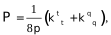
   <p><img width="144.0972222222222" src="https://html.scirp.org/file/4501321-rId193.svg?20240730111638">(38)</img></p>
   <p>where 
    <math display="inline" xmlns="http://www.w3.org/1998/Math/MathML"> <mrow> 
      <msub> 
       <mi>
         κ 
       </mi> 
       <mrow> 
        <mi>
          i 
        </mi> 
        <mi>
          j 
        </mi> 
       </mrow> 
      </msub> 
      <mo>
        = 
      </mo> 
      <msubsup> 
       <mi>
         K 
       </mi> 
       <mrow> 
        <mi>
          i 
        </mi> 
        <mi>
          j 
        </mi> 
       </mrow> 
       <mo>
         + 
       </mo> 
      </msubsup> 
      <mo>
        − 
      </mo> 
      <msubsup> 
       <mi>
         K 
       </mi> 
       <mrow> 
        <mi>
          i 
        </mi> 
        <mi>
          j 
        </mi> 
       </mrow> 
       <mo>
         − 
       </mo> 
      </msubsup> 
     </mrow> 
    </math> and 
    <math display="inline" xmlns="http://www.w3.org/1998/Math/MathML"> <mrow> 
      <msub> 
       <mi>
         K 
       </mi> 
       <mrow> 
        <mi>
          i 
        </mi> 
        <mi>
          j 
        </mi> 
       </mrow> 
      </msub> 
     </mrow> 
    </math> is the extrinsic curvature. Still following Ref. <xref ref-type="bibr" rid="scirp.134916-23">
     [23]
    </xref>,</p>
   <p>
    <math display="inline" xmlns="http://www.w3.org/1998/Math/MathML"> <mrow> 
      <msup> 
       <mi>
         κ 
       </mi> 
       <mi>
         θ 
       </mi> 
      </msup> 
      <msub> 
       <mrow></mrow> 
       <mi>
         θ 
       </mi> 
      </msub> 
      <mo>
        = 
      </mo> 
      <mfrac> 
       <mn>
         1 
       </mn> 
       <mi>
         a 
       </mi> 
      </mfrac> 
      <msqrt> 
       <mrow> 
        <mn>
          1 
        </mn> 
        <mo>
          − 
        </mo> 
        <mfrac> 
         <mrow> 
          <mn>
            2 
          </mn> 
          <mi>
            M 
          </mi> 
         </mrow> 
         <mi>
           a 
         </mi> 
        </mfrac> 
       </mrow> 
      </msqrt> 
      <mo>
        − 
      </mo> 
      <mfrac> 
       <mn>
         1 
       </mn> 
       <mi>
         a 
       </mi> 
      </mfrac> 
      <msqrt> 
       <mrow> 
        <mn>
          1 
        </mn> 
        <mo>
          − 
        </mo> 
        <mfrac> 
         <mrow> 
          <mi>
            b 
          </mi> 
          <mrow> 
           <mo>
             ( 
           </mo> 
           <mi>
             a 
           </mi> 
           <mo>
             ) 
           </mo> 
          </mrow> 
         </mrow> 
         <mi>
           a 
         </mi> 
        </mfrac> 
       </mrow> 
      </msqrt> 
      <mn>
        . 
      </mn> 
     </mrow> 
    </math>(39)</p>
   <p>So by Equation (37),</p>
   <p>
    <math display="inline" xmlns="http://www.w3.org/1998/Math/MathML"> <mrow> 
      <mi>
        σ 
      </mi> 
      <mo>
        = 
      </mo> 
      <mo>
        − 
      </mo> 
      <mfrac> 
       <mn>
         1 
       </mn> 
       <mrow> 
        <mn>
          4 
        </mn> 
        <mi>
          π 
        </mi> 
        <mi>
          a 
        </mi> 
       </mrow> 
      </mfrac> 
      <mrow> 
       <mo>
         ( 
       </mo> 
       <mrow> 
        <msqrt> 
         <mrow> 
          <mn>
            1 
          </mn> 
          <mo>
            − 
          </mo> 
          <mfrac> 
           <mrow> 
            <mn>
              2 
            </mn> 
            <mi>
              M 
            </mi> 
           </mrow> 
           <mi>
             a 
           </mi> 
          </mfrac> 
         </mrow> 
        </msqrt> 
        <mo>
          − 
        </mo> 
        <msqrt> 
         <mrow> 
          <mn>
            1 
          </mn> 
          <mo>
            − 
          </mo> 
          <mfrac> 
           <mrow> 
            <mi>
              b 
            </mi> 
            <mrow> 
             <mo>
               ( 
             </mo> 
             <mi>
               a 
             </mi> 
             <mo>
               ) 
             </mo> 
            </mrow> 
           </mrow> 
           <mi>
             a 
           </mi> 
          </mfrac> 
         </mrow> 
        </msqrt> 
       </mrow> 
       <mo>
         ) 
       </mo> 
      </mrow> 
      <mn>
        . 
      </mn> 
     </mrow> 
    </math>(40)</p>
   <p>Given that the shell is infinitely thin, the radial pressure is zero. If the surface density is denoted by 
    <math display="inline" xmlns="http://www.w3.org/1998/Math/MathML"> <mi>
       σ 
     </mi> 
    </math>, then the NEC violation 
    <math display="inline" xmlns="http://www.w3.org/1998/Math/MathML"> <mrow> 
      <mi>
        σ 
      </mi> 
      <mo>
        + 
      </mo> 
      <msub> 
       <mi>
         p 
       </mi> 
       <mi>
         r 
       </mi> 
      </msub> 
      <mo>
        &lt; 
      </mo> 
      <mn>
        0 
      </mn> 
     </mrow> 
    </math> implies that 
    <math display="inline" xmlns="http://www.w3.org/1998/Math/MathML"> <mi>
       σ 
     </mi> 
    </math> is negative, which is completely unphysical. One of the goals in this paper is to show that under the assumption of conformal symmetry in conjunction with the embedding theory, 
    <math display="inline" xmlns="http://www.w3.org/1998/Math/MathML"> <mi>
       σ 
     </mi> 
    </math> can be positive. More precisely, if <img width="20.815264527320036" src="https://html.scirp.org/file/4501321-rId209.svg?20240730111638"> denotes the surface pressure, then we must have <img width="72.88503253796095" src="https://html.scirp.org/file/4501321-rId211.svg?20240730111638"> to ensure that the NEC is violated on the thin shell itself, even though the NEC is met for the radial outgoing null vector 
      <math display="inline" xmlns="http://www.w3.org/1998/Math/MathML"> <mrow> 
        <mrow> 
         <mo>
           ( 
         </mo> 
         <mrow> 
          <mn>
            1,1,0,0 
          </mn> 
         </mrow> 
         <mo>
           ) 
         </mo> 
        </mrow> 
       </mrow> 
      </math>, as shown in Inequality (32). Even though 
      <math display="inline" xmlns="http://www.w3.org/1998/Math/MathML"> <mrow> 
        <mi>
          b 
        </mi> 
        <mrow> 
         <mo>
           ( 
         </mo> 
         <mi>
           a 
         </mi> 
         <mo>
           ) 
         </mo> 
        </mrow> 
        <mo>
          = 
        </mo> 
        <mn>
          2 
        </mn> 
        <mi>
          M 
        </mi> 
       </mrow> 
      </math>, part of the junction formalism is to assume that the junction surface 
      <math display="inline" xmlns="http://www.w3.org/1998/Math/MathML"> <mrow> 
        <mi>
          r 
        </mi> 
        <mo>
          = 
        </mo> 
        <mi>
          a 
        </mi> 
       </mrow> 
      </math> is an infinitely thin surface having a nonzero density that may be positive or negative. For </img></img></p>
   <p>
    <math display="inline" xmlns="http://www.w3.org/1998/Math/MathML"> <mi>
       σ 
     </mi> 
    </math> to be positive, we must have 
    <math display="inline" xmlns="http://www.w3.org/1998/Math/MathML"> <mrow> 
      <msqrt> 
       <mrow> 
        <mn>
          1 
        </mn> 
        <mo>
          − 
        </mo> 
        <mfrac> 
         <mrow> 
          <mn>
            2 
          </mn> 
          <mi>
            M 
          </mi> 
         </mrow> 
         <mi>
           a 
         </mi> 
        </mfrac> 
       </mrow> 
      </msqrt> 
      <mo>
        &lt; 
      </mo> 
      <msqrt> 
       <mrow> 
        <mn>
          1 
        </mn> 
        <mo>
          − 
        </mo> 
        <mfrac> 
         <mrow> 
          <mi>
            b 
          </mi> 
          <mrow> 
           <mo>
             ( 
           </mo> 
           <mi>
             a 
           </mi> 
           <mo>
             ) 
           </mo> 
          </mrow> 
         </mrow> 
         <mi>
           a 
         </mi> 
        </mfrac> 
       </mrow> 
      </msqrt> 
     </mrow> 
    </math>, which implies that 
    <math display="inline" xmlns="http://www.w3.org/1998/Math/MathML"> <mrow> 
      <mi>
        b 
      </mi> 
      <mrow> 
       <mo>
         ( 
       </mo> 
       <mi>
         a 
       </mi> 
       <mo>
         ) 
       </mo> 
      </mrow> 
      <mo>
        &lt; 
      </mo> 
      <mn>
        2 
      </mn> 
      <mi>
        M 
      </mi> 
     </mrow> 
    </math>. So let us assume for now that 
    <math display="inline" xmlns="http://www.w3.org/1998/Math/MathML"> <mrow> 
      <mi>
        b 
      </mi> 
      <mrow> 
       <mo>
         ( 
       </mo> 
       <mi>
         a 
       </mi> 
       <mo>
         ) 
       </mo> 
      </mrow> 
      <mo>
        ≈ 
      </mo> 
      <mn>
        2 
      </mn> 
      <mi>
        M 
      </mi> 
     </mrow> 
    </math> and return to Ref. <xref ref-type="bibr" rid="scirp.134916-23">
     [23]
    </xref>:</p>
   <p>
    <math display="inline" xmlns="http://www.w3.org/1998/Math/MathML"> <mrow> 
      <msubsup> 
       <mi>
         K 
       </mi> 
       <mrow> 
        <mtext>
            
        </mtext> 
        <mi>
          τ 
        </mi> 
       </mrow> 
       <mrow> 
        <mi>
          τ 
        </mi> 
        <mo>
          + 
        </mo> 
       </mrow> 
      </msubsup> 
      <mo>
        = 
      </mo> 
      <mfrac> 
       <mrow> 
        <mrow> 
         <mi>
           M 
         </mi> 
         <mo>
           / 
         </mo> 
         <mrow> 
          <msup> 
           <mi>
             a 
           </mi> 
           <mn>
             2 
           </mn> 
          </msup> 
         </mrow> 
        </mrow> 
       </mrow> 
       <mrow> 
        <msqrt> 
         <mrow> 
          <mn>
            1 
          </mn> 
          <mo>
            − 
          </mo> 
          <mrow> 
           <mrow> 
            <mn>
              2 
            </mn> 
            <mi>
              M 
            </mi> 
           </mrow> 
           <mo>
             / 
           </mo> 
           <mi>
             a 
           </mi> 
          </mrow> 
         </mrow> 
        </msqrt> 
       </mrow> 
      </mfrac> 
     </mrow> 
    </math>(41)</p>
   <p>and</p>
   <p>
    <math display="inline" xmlns="http://www.w3.org/1998/Math/MathML"> <mrow> 
      <msubsup> 
       <mi>
         K 
       </mi> 
       <mrow> 
        <mtext>
            
        </mtext> 
        <mi>
          τ 
        </mi> 
       </mrow> 
       <mrow> 
        <mi>
          τ 
        </mi> 
        <mo>
          − 
        </mo> 
       </mrow> 
      </msubsup> 
      <mo>
        = 
      </mo> 
      <mfrac> 
       <mn>
         1 
       </mn> 
       <mn>
         2 
       </mn> 
      </mfrac> 
      <msup> 
       <mi>
         ν 
       </mi> 
       <mo>
         ′ 
       </mo> 
      </msup> 
      <mrow> 
       <mo>
         ( 
       </mo> 
       <mi>
         a 
       </mi> 
       <mo>
         ) 
       </mo> 
      </mrow> 
      <msqrt> 
       <mrow> 
        <mn>
          1 
        </mn> 
        <mo>
          − 
        </mo> 
        <mfrac> 
         <mrow> 
          <mi>
            b 
          </mi> 
          <mrow> 
           <mo>
             ( 
           </mo> 
           <mi>
             a 
           </mi> 
           <mo>
             ) 
           </mo> 
          </mrow> 
         </mrow> 
         <mi>
           a 
         </mi> 
        </mfrac> 
       </mrow> 
      </msqrt> 
      <mn>
        . 
      </mn> 
     </mrow> 
    </math>(42)</p>
   <p>Since 
    <math display="inline" xmlns="http://www.w3.org/1998/Math/MathML"> <mrow> 
      <msup> 
       <mi>
         ν 
       </mi> 
       <mo>
         ′ 
       </mo> 
      </msup> 
      <mrow> 
       <mo>
         ( 
       </mo> 
       <mi>
         a 
       </mi> 
       <mo>
         ) 
       </mo> 
      </mrow> 
      <mo>
        = 
      </mo> 
      <mrow> 
       <mn>
         2 
       </mn> 
       <mo>
         / 
       </mo> 
       <mi>
         r 
       </mi> 
      </mrow> 
     </mrow> 
    </math> by Equation (29), the surface pressure is given by</p>
   <p><img width="449.65277777777777" src="https://html.scirp.org/file/4501321-rId230.svg?20240730111638">(43)</img></p>
   <p>It now becomes apparent that for 
    <math display="inline" xmlns="http://www.w3.org/1998/Math/MathML"> <mrow> 
      <mi>
        b 
      </mi> 
      <mrow> 
       <mo>
         ( 
       </mo> 
       <mi>
         a 
       </mi> 
       <mo>
         ) 
       </mo> 
      </mrow> 
      <mo>
        ≲ 
      </mo> 
      <mn>
        2 
      </mn> 
      <mi>
        M 
      </mi> 
     </mrow> 
    </math>, the last term on the right-hand side is close to zero. As a result,</p>
   <p><img width="298.6111111111111" src="https://html.scirp.org/file/4501321-rId234.svg?20240730111638">(44)</img></p>
   <p>Using our shape function, Equation (33), this leads to</p>
   <p><img width="298.6111111111111" src="https://html.scirp.org/file/4501321-rId236.svg?20240730111638">(45)</img></p>
   <p>We know from the flare-out condition, Equation (34), that 
    <math display="inline" xmlns="http://www.w3.org/1998/Math/MathML"> <mrow> 
      <mn>
        1 
      </mn> 
      <mo>
        + 
      </mo> 
      <mi>
        K 
      </mi> 
      <mi>
        C 
      </mi> 
     </mrow> 
    </math> is going to be a fixed quantity. Moreover, 
    <math display="inline" xmlns="http://www.w3.org/1998/Math/MathML"> <mrow> 
      <mi>
        a 
      </mi> 
      <mo>
        ≫ 
      </mo> 
      <msub> 
       <mi>
         r 
       </mi> 
       <mn>
         0 
       </mn> 
      </msub> 
     </mrow> 
    </math>; so for a sufficiently large, 
    <math display="inline" xmlns="http://www.w3.org/1998/Math/MathML"> 
    </math> is negative and bounded away from zero, while under the assumption that 
    <math display="inline" xmlns="http://www.w3.org/1998/Math/MathML"> <mrow> 
      <mi>
        b 
      </mi> 
      <mo>
        ≲ 
      </mo> 
      <mn>
        2 
      </mn> 
      <mi>
        M 
      </mi> 
     </mrow> 
    </math>, 
    <math display="inline" xmlns="http://www.w3.org/1998/Math/MathML"> <mi>
       σ 
     </mi> 
    </math> is close to zero. We therefore get 
    <math display="inline" xmlns="http://www.w3.org/1998/Math/MathML"> <mrow> 
      <mi>
        σ 
      </mi> 
      <mo>
        + 
      </mo> 
      <mo>
        &lt; 
      </mo> 
      <mn>
        0 
      </mn> 
     </mrow> 
    </math>, which was to be shown.</p>
   <p>The inequality 
    <math display="inline" xmlns="http://www.w3.org/1998/Math/MathML"> <mrow> 
      <mi>
        σ 
      </mi> 
      <mo>
        + 
      </mo> 
      <mo>
        &lt; 
      </mo> 
      <mn>
        0 
      </mn> 
     </mrow> 
    </math> indicates that the NEC has indeed been violated on the thin shell. In a Morris-Thorne wormhole, matter that violates the NEC is referred to as “exotic,” a requirement that many researchers consider to be unphysical. In our situation, however, this violation has a physical basis since it is a direct consequence of the embedding in a higher-dimensional spacetime in conjunction with the assumption of conformal symmetry. These properties avoid the need to hypothesize the existence of the highly problematical exotic matter.</p>
  </sec><sec id="s5">
   <title>
    <xref ref-type="bibr" rid="scirp.134916-"></xref>5. Conclusion</title>
   <p>This paper discusses thin-shell wormholes based on the standard cut-and-paste technique. We assume that the wormhole spacetime admits a one-parameter group of conformal motions. We also make use of an embedding theorem that allows a Riemannian space to be embedded in a higher-dimensional flat space. The extra degree of freedom enables us to show that the surface energy density 
    <math display="inline" xmlns="http://www.w3.org/1998/Math/MathML"> <mi>
       σ 
     </mi> 
    </math> is positive, while the surface pressure 
    <math display="inline" xmlns="http://www.w3.org/1998/Math/MathML"> 
    </math> is negative, but, in addition, 
    <math display="inline" xmlns="http://www.w3.org/1998/Math/MathML"> <mrow> 
      <mi>
        σ 
      </mi> 
      <mo>
        + 
      </mo> 
      <mo>
        &lt; 
      </mo> 
      <mn>
        0 
      </mn> 
     </mrow> 
    </math>. So the null energy condition (NEC) has been violated. For a Morris-Thorne wormhole, matter that violated the NEC is referred to as “exotic”, a condition that many researchers consider to be unphysical. In this paper, the violation has a physical explanation since it is a direct consequence of the embedding theory in conjunction with the assumption of conformal symmetry and can therefore be viewed as part of the induced-matter theory.</p>
  </sec>
 </body><back>
  <ref-list>
   <title>References</title>
   <ref id="scirp.134916-ref1">
    <label>1</label>
    <mixed-citation publication-type="other" xlink:type="simple">
     Morris, M.S. and Thorne, K.S. (1988) Wormholes in Spacetime and Their Use for Interstellar Travel: A Tool for Teaching General Relativity. American Journal of Physics, 56, 395-412. &gt;https://doi.org/10.1119/1.15620
    </mixed-citation>
   </ref>
   <ref id="scirp.134916-ref2">
    <label>2</label>
    <mixed-citation publication-type="other" xlink:type="simple">
     Maartens, R. and Mellin, C.M. (1996) Anisotropic Universes with Conformal Motion. Classical and Quantum Gravity, 13, 1571-1577. &gt;https://doi.org/10.1088/0264-9381/13/6/021
    </mixed-citation>
   </ref>
   <ref id="scirp.134916-ref3">
    <label>3</label>
    <mixed-citation publication-type="other" xlink:type="simple">
     Böhmer, C.G., Harko, T. and Lobo, F.S.N. (2007) Conformally Symmetric Traversable Wormholes. Physical Review D, 76, Article ID: 084014. &gt;https://doi.org/10.1103/physrevd.76.084014
    </mixed-citation>
   </ref>
   <ref id="scirp.134916-ref4">
    <label>4</label>
    <mixed-citation publication-type="other" xlink:type="simple">
     Herrera, L. and Ponce de León, J. (1985) Perfect Fluid Spheres Admitting a One-Parameter Group of Conformal Motions. Journal of Mathematical Physics, 26, 778-784. &gt;https://doi.org/10.1063/1.526567
    </mixed-citation>
   </ref>
   <ref id="scirp.134916-ref5">
    <label>5</label>
    <mixed-citation publication-type="other" xlink:type="simple">
     Herrera, L. and Ponce de León, J. (1985) Anisotropic Spheres Admitting a One-Parameter Group of Conformal Motions. Journal of Mathematical Physics, 26, 2018-2023. &gt;https://doi.org/10.1063/1.526872
    </mixed-citation>
   </ref>
   <ref id="scirp.134916-ref6">
    <label>6</label>
    <mixed-citation publication-type="other" xlink:type="simple">
     Mars, M. and Senovilla, J.M.M. (1993) Axial Symmetry and Conformal Killing Vectors. Classical and Quantum Gravity, 10, 1633-1647. &gt;https://doi.org/10.1088/0264-9381/10/8/020
    </mixed-citation>
   </ref>
   <ref id="scirp.134916-ref7">
    <label>7</label>
    <mixed-citation publication-type="other" xlink:type="simple">
     Ray, S., Usmani, A.A., Rahaman, F., Kalam, M., and Chakraborty K. (2008) Electromagnetic Mass Model Admitting Conformal Motion. Indian Journal of Physics, 82, Article ID: 1191.
    </mixed-citation>
   </ref>
   <ref id="scirp.134916-ref8">
    <label>8</label>
    <mixed-citation publication-type="other" xlink:type="simple">
     Rahaman, F., Jamil, M., Kalam, M., Chakraborty, K. and Ghosh, A. (2009) On Role of Pressure Anisotropy for Relativistic Stars Admitting Conformal Motion. Astrophysics and Space Science, 325, 137-147. &gt;https://doi.org/10.1007/s10509-009-0167-7
    </mixed-citation>
   </ref>
   <ref id="scirp.134916-ref9">
    <label>9</label>
    <mixed-citation publication-type="other" xlink:type="simple">
     Rahaman, F., Ray, S., Karar, I., Fatima, H.I., Bhowmick, S., and Ghosh, G.K. (2012) Static Charged Fluid in (2+1) Dimensions Admitting Conformal Killing Vectors. arXiv: 1211.1228.
    </mixed-citation>
   </ref>
   <ref id="scirp.134916-ref10">
    <label>10</label>
    <mixed-citation publication-type="other" xlink:type="simple">
     Böhmer, C.G., Harko, T. and Lobo, F.S.N. (2008) Wormhole Geometries with Conformal Motions. Classical and Quantum Gravity, 25, Article ID: 075016. &gt;https://doi.org/10.1088/0264-9381/25/7/075016
    </mixed-citation>
   </ref>
   <ref id="scirp.134916-ref11">
    <label>11</label>
    <mixed-citation publication-type="other" xlink:type="simple">
     Wesson, P.S. and Ponce de Leon, J. (1992) Kaluza-Klein Equations, Einstein’s Equations, and an Effective Energy-Momentum Tensor. Journal of Mathematical Physics, 33, 3883-3887. &gt;https://doi.org/10.1063/1.529834
    </mixed-citation>
   </ref>
   <ref id="scirp.134916-ref12">
    <label>12</label>
    <mixed-citation publication-type="other" xlink:type="simple">
     Seahra, S.S. and Wesson, P.S. (2003) Application of the Campbell Magaard Theorem to Higher-Dimensional Physics. Classical and Quantum Gravity, 20, 1321-1339. &gt;https://doi.org/10.1088/0264-9381/20/7/306
    </mixed-citation>
   </ref>
   <ref id="scirp.134916-ref13">
    <label>13</label>
    <mixed-citation publication-type="other" xlink:type="simple">
     Campbell, J. (1926) A Course on Differential Geometry. The Clarendon Press.
    </mixed-citation>
   </ref>
   <ref id="scirp.134916-ref14">
    <label>14</label>
    <mixed-citation publication-type="other" xlink:type="simple">
     Maurya, S.K., Deb, D., Ray, S. and Kuhfittig, P.K.F. (2019) A Study of Anisotropic Compact Stars Based on Embedding Class 1 Condition. International Journal of Modern Physics D, 28, Article ID: 1950116. &gt;https://doi.org/10.1142/s0218271819501165
    </mixed-citation>
   </ref>
   <ref id="scirp.134916-ref15">
    <label>15</label>
    <mixed-citation publication-type="other" xlink:type="simple">
     Maurya, S.K., Gupta, Y.K., Ray, S. and Deb, D. (2016) Generalised Model for Anisotropic Compact Stars. The European Physical Journal C, 76, Article No. 693. &gt;https://doi.org/10.1140/epjc/s10052-016-4527-5
    </mixed-citation>
   </ref>
   <ref id="scirp.134916-ref16">
    <label>16</label>
    <mixed-citation publication-type="other" xlink:type="simple">
     Maurya, S.K., Ratanpal, B.S. and Govender, M. (2017) Anisotropic Stars for Spherically Symmetric Spacetimes Satisfying the Karmarkar Condition. Annals of Physics, 382, 36-49. &gt;https://doi.org/10.1016/j.aop.2017.04.008
    </mixed-citation>
   </ref>
   <ref id="scirp.134916-ref17">
    <label>17</label>
    <mixed-citation publication-type="other" xlink:type="simple">
     Maurya, S.K., Gupta, Y.K., Ray, S. and Deb, D. (2017) A New Model for Spherically Symmetric Charged Compact Stars of Embedding Class 1. The European Physical Journal C, 77, Article No. 45. &gt;https://doi.org/10.1140/epjc/s10052-017-4604-4
    </mixed-citation>
   </ref>
   <ref id="scirp.134916-ref18">
    <label>18</label>
    <mixed-citation publication-type="other" xlink:type="simple">
     Maurya, S.K. and Maharaj, S.D. (2017) Anisotropic Fluid Spheres of Embedding Class One Using Karmarkar Condition. The European Physical Journal C, 77, Article No. 328. &gt;https://doi.org/10.1140/epjc/s10052-017-4905-7
    </mixed-citation>
   </ref>
   <ref id="scirp.134916-ref19">
    <label>19</label>
    <mixed-citation publication-type="other" xlink:type="simple">
     Maurya, S.K. and Govender, M. (2017) Generating Physically Realizable Stellar Structures via Embedding. The European Physical Journal C, 77, Article No. 347. &gt;https://doi.org/10.1140/epjc/s10052-017-4916-4
    </mixed-citation>
   </ref>
   <ref id="scirp.134916-ref20">
    <label>20</label>
    <mixed-citation publication-type="other" xlink:type="simple">
     Karmarkar, K.R. (1948) Gravitational Metrics of Spherical Symmetry and Class One. Proceedings of the Indian Academy of Sciences—Section A, 27, Article No. 56. &gt;https://doi.org/10.1007/bf03173443
    </mixed-citation>
   </ref>
   <ref id="scirp.134916-ref21">
    <label>21</label>
    <mixed-citation publication-type="other" xlink:type="simple">
     Kuhfittig, P.K.F. (2017) Conformal Symmetry Wormholes and the Null Energy Condition. Journal of the Korean Physical Society, 70, 962-966. &gt;https://doi.org/10.3938/jkps.70.962
    </mixed-citation>
   </ref>
   <ref id="scirp.134916-ref22">
    <label>22</label>
    <mixed-citation publication-type="other" xlink:type="simple">
     Poisson, E. and Visser, M. (1995) Thin-Shell Wormholes: Linearization Stability. Physical Review D, 52, 7318-7321. &gt;https://doi.org/10.1103/physrevd.52.7318
    </mixed-citation>
   </ref>
   <ref id="scirp.134916-ref23">
    <label>23</label>
    <mixed-citation publication-type="other" xlink:type="simple">
     Lobo, F.S.N. (2004) Surface Stresses on a Thin Shell Surrounding a Traversable Wormhole. Classical and Quantum Gravity, 21, 4811-4832. &gt;https://doi.org/10.1088/0264-9381/21/21/005
    </mixed-citation>
   </ref>
  </ref-list>
 </back>
</article>