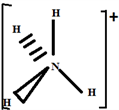
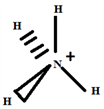
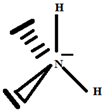
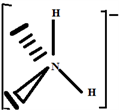
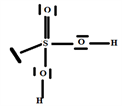
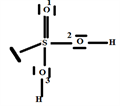
<?xml version="1.0" encoding="UTF-8"?><!DOCTYPE article  PUBLIC "-//NLM//DTD Journal Publishing DTD v3.0 20080202//EN" "http://dtd.nlm.nih.gov/publishing/3.0/journalpublishing3.dtd"><article xmlns:mml="http://www.w3.org/1998/Math/MathML" xmlns:xlink="http://www.w3.org/1999/xlink" dtd-version="3.0" xml:lang="en" article-type="research article"><front><journal-meta><journal-id journal-id-type="publisher-id">OJIC</journal-id><journal-title-group><journal-title>Open Journal of Inorganic Chemistry</journal-title></journal-title-group><issn pub-type="epub">2161-7406</issn><publisher><publisher-name>Scientific Research Publishing</publisher-name></publisher></journal-meta><article-meta><article-id pub-id-type="doi">10.4236/ojic.2024.141001</article-id><article-id pub-id-type="publisher-id">OJIC-131545</article-id><article-categories><subj-group subj-group-type="heading"><subject>Articles</subject></subj-group><subj-group subj-group-type="Discipline-v2"><subject>Chemistry&amp;Materials Science</subject></subj-group></article-categories><title-group><article-title>
 
 
  Systematic Method for Constructing Lewis Representations
 
</article-title></title-group><contrib-group><contrib contrib-type="author" xlink:type="simple"><name name-style="western"><surname>Lahbib</surname><given-names>Abbas</given-names></name><xref ref-type="aff" rid="aff1"><sup>1</sup></xref><xref ref-type="corresp" rid="cor1"><sup>*</sup></xref></contrib><contrib contrib-type="author" xlink:type="simple"><name name-style="western"><surname>Lahcen</surname><given-names>Bih</given-names></name><xref ref-type="aff" rid="aff2"><sup>2</sup></xref></contrib><contrib contrib-type="author" xlink:type="simple"><name name-style="western"><surname>Khalid</surname><given-names>Yamni</given-names></name><xref ref-type="aff" rid="aff3"><sup>3</sup></xref></contrib><contrib contrib-type="author" xlink:type="simple"><name name-style="western"><surname>Abderrahim</surname><given-names>Elyahyaouy</given-names></name><xref ref-type="aff" rid="aff4"><sup>4</sup></xref></contrib><contrib contrib-type="author" xlink:type="simple"><name name-style="western"><surname>Abdelmalik</surname><given-names>El Attaoui</given-names></name><xref ref-type="aff" rid="aff5"><sup>5</sup></xref></contrib><contrib contrib-type="author" xlink:type="simple"><name name-style="western"><surname>Zahra</surname><given-names>Ramzi</given-names></name><xref ref-type="aff" rid="aff6"><sup>6</sup></xref></contrib></contrib-group><aff id="aff1"><addr-line>Materials, Membranes and Nanotechnology, Faculty of Science and Technology, Moulay Ismail University Meknes, Er-Rachidia, Morocco</addr-line></aff><aff id="aff4"><addr-line>Physics Department, Faculty of Sciences, Ibn Tofail University, Kenitra, Morocco</addr-line></aff><aff id="aff3"><addr-line>Materials, Membranes and Nanotechnology, Chemistry Department, Faculty of Sciences, Moulay Ismail University Meknes, Meknes, Morocco</addr-line></aff><aff id="aff2"><addr-line>Engineering Sciences and Professions Laboratory, National School of Arts and Crafts, Moulay Ismail University Meknes, Meknes, Morocco</addr-line></aff><aff id="aff5"><addr-line>Laboratory of Molecular Chemistry, Materials and Environment (LCM2E), Multidisciplinary Faculty of Nador, Mohamed 1st University Oujda, Nador, Morocco</addr-line></aff><aff id="aff6"><addr-line>Laboratory of SCiMATOP, Chemistry Department, Faculty of Sciences Semlalia, Cadi Ayyad University, Marrakech, Morocco</addr-line></aff><pub-date pub-type="epub"><day>29</day><month>02</month><year>2024</year></pub-date><volume>14</volume><issue>01</issue><fpage>1</fpage><lpage>18</lpage><history><date date-type="received"><day>25,</day>	<month>November</month>	<year>2023</year></date><date date-type="rev-recd"><day>28,</day>	<month>January</month>	<year>2024</year>	</date><date date-type="accepted"><day>31,</day>	<month>January</month>	<year>2024</year></date></history><permissions><copyright-statement>&#169; Copyright  2014 by authors and Scientific Research Publishing Inc. </copyright-statement><copyright-year>2014</copyright-year><license><license-p>This work is licensed under the Creative Commons Attribution International License (CC BY). http://creativecommons.org/licenses/by/4.0/</license-p></license></permissions><abstract><p>
 
 
  The systematic method for constructing Lewis representations is a method for representing chemical bonds between atoms in a molecule. It uses symbols to represent the valence electrons of the atoms involved in the bond. Using a number of rules in a defined order, it is often better suited to complicated cases than the Lewis representation of atoms. This method allows us to determine the formal charge and oxidation number of each atom in the edifice more efficiently than other methods.
 
</p></abstract><kwd-group><kwd>Systematic Method</kwd><kwd> Lewis Representation</kwd><kwd> Chemical Bond</kwd><kwd> Formal Charge</kwd><kwd> Oxidation Number</kwd></kwd-group></article-meta></front><body><sec id="s1"><title>1. Introduction</title><p>Polyatomic structures are the result of interactions between the valence electrons of atoms that form chemical bonds [<xref ref-type="bibr" rid="scirp.131545-ref1">1</xref>] - [<xref ref-type="bibr" rid="scirp.131545-ref6">6</xref>] .</p><p>In a Lewis diagram, atoms are represented by their chemical symbol, surrounded by one or more dots representing valence electrons. Covalent bonds are represented by a line connecting two atoms, with each atom sharing a pair of electrons. Non-bonding electrons, also known as lone electrons, are represented by pairs of electrons located on a single atom.</p><p>The use of Lewis diagrams is useful for understanding the molecular geometry, chemical properties and reactivity of molecules [<xref ref-type="bibr" rid="scirp.131545-ref7">7</xref>] - [<xref ref-type="bibr" rid="scirp.131545-ref12">12</xref>] .</p><p>The sequence of the eight rules of the systematic method for constructing Lewis representations of buildings are:</p><p>Step 1: Determine the total number of valence electrons (n<sub>E.V</sub>) in the molecule, which is equal to the sum of the number of valence electrons n<sub>E</sub><sub> V</sub> in each atom of the molecule minus the building block charge according to the following relationship:</p><p>n<sub>E.V</sub>(building) = ∑ i numberofatomsinthebuilding n E .V ( atom   i ) – charge of the building (Relationship 1)</p><p>Step 2: Determine the number of binding and free doublets in the molecule (n<sub>D</sub>):</p><p>n<sub>D</sub>(building) = 1/2 total number of valence electrons of the building n<sub>E</sub><sub> V</sub> (Relationship 2)</p><p>If the number of doublets is not integer but half-integer, we are dealing with a radical (single electron).</p><p>Step 3: Determine the number of anti-binding doublets in the molecule (n<sub>D.A.L</sub>):</p><p>n<sub>D.A.L</sub>(building) = ∑ i numberofatomsinthebuilding n D .A .L ( atom   i ) – charge of the building (Relationship 3)</p><p>Step 4: Determine the number of binding doublets in the molecule (n<sub>D.L</sub>):</p><p>n<sub>D.L</sub>(building) = n<sub>D</sub>(building) – n<sub>D.A.L</sub>(building) (Relationship 4)</p><p>Step 5: Determine the geometry according to Gillespie, which tells us about the spatial geometry of the species:</p><p>The geometry of a molecule around a given atom will be that for which the repulsions between the doublets are minimal.</p><p>Gillespie gave the rules for the orientation of bonds around the central atom of a molecule.</p><p>Gillespie postulate:</p><p>- All pairs of electrons (binding or non-binding) are at the same distance from the nucleus.</p><p>- These pairs are assumed to be located on the surface of a sphere with the nucleus at its center.</p><p>- These doublets repel each other, and are furthest apart to minimize electron repulsions.</p><p>- The V.S.E.P.R formulation is expressed as follows: AX<sub>n</sub>E<sub>n</sub><sub>'</sub>: (Relationship 5).</p><p>A: Central atom.</p><p>X: atoms or molecules covalently bonded to atom A and n their number.</p><p>E: free doublets or single electrons and n' their number on the valence layer of atom A.</p><p>Gillespie considers that multiple bonds behave like single bonds, to establish the V.S.E.P.R. formulation, it is necessary to establish the Lewis representation.</p><p>Step 6: Position any formal load(s).</p><p>The formal charge carried by an atom corresponds to the difference in valence electrons between the isolated atom and the atom when the edifice is formed, all bonds being considered purely covalent.</p><p>The sum of all formal charges is equal to the charge of the species.</p><p>C.F(atom) = n<sub>E.V</sub>(atom in isolated state) – n<sub>E.V</sub>(atom linked to the structure) (Relationship 6)</p><p>Step 7: Build the structure by positioning the doublets (binding—by single, double or triple bond—or non-binding), respecting the octet rule as far as possible and placing any single electron.</p><p>Step 8: Determine the oxidation number of each atom in the structure.</p><p>The oxidation number of an atom corresponds to the difference in valence electrons between the isolated atom and the atom when the structure is formed, all bonds being considered purely ionic.</p><p>The sum of the oxidation numbers is equal to the formal charge of the species</p><p>d.o(atom) = n<sub>E.V</sub>(atom in isolated state) – n<sub>E.V</sub>(atom bound to the structure) (Relationship 7)</p></sec><sec id="s2"><title>2. Constructing Lewis Representations of Buildings Using the Systematic Method</title><p>In the following, we present the construction of Lewis representations according to the systematic method for some of the following molecules: NH 4 + ; NH 2 − ; NO 2 − ; PCl<sub>5</sub>; SO<sub>2</sub>; H<sub>2</sub>SO<sub>3</sub>; Cr 2 O 7 2 − ; Fe<sub>3</sub>O<sub>4</sub>; Pb<sub>3</sub>O<sub>4</sub>; H<sub>2</sub>O<sub>2</sub>.</p><sec id="s2_1"><title>2.1. The Building N H 4 +</title><p>Step 1:</p><p>Applying relation 1, we find: n<sub>E</sub><sub> V</sub>( NH 4 + ) = n<sub>E.V</sub>(N) + 4n<sub>E.V</sub>(H) – 1</p><p>Z(N) = 7 from where [He] 2s<sup>2</sup> 2p<sup>3</sup> → n<sub>E.V</sub>(N) = 5</p><p>and Z(H) = 1 from where 1s<sup>1</sup> → n<sub>E.V</sub>(H) = 1</p><p>n<sub>E.V</sub>( NH 4 + ) = 5 + 4 &#215; 1 – 1 = 8</p><p>Step 2:</p><p>Applying relation 2, we find:</p><p>n<sub>D</sub>( NH 4 + ) = 1/2 &#215; n<sub>E</sub><sub> V</sub>( NH 4 + ) = 8/2 = 4 binding and non-binding doublets</p><p>Step 3:</p><p>Applying relation 3, we find: n<sub>D.A.L</sub>( NH 4 + ) = n<sub>D.N.L</sub>(N) + 4n<sub>D.N.L</sub>(H) – 1</p><p>Z(N) = 7 from where [He] 2s<sup>2</sup> 2p<sup>3</sup> → n<sub>D.N.L</sub>(N) = 1</p><p>and Z(H) = 1 from where n<sub>D.N.L</sub>(H) = 0</p><p>n<sub>D.A.L</sub>( NH 4 + ) = 1 + 4 &#215; 0 – 1 = 0 free doublets</p><p>Step 4:</p><p>Applying relation 4, we find:</p><p>n<sub>D.L</sub>( NH 4 + ) = n<sub>D</sub>( NH 4 + ) – n<sub>D.A.L</sub>( NH 4 + )</p><p>so n<sub>D.L</sub>( NH 4 + ) = 4 – 0 = 4 Bonding doublets</p><p>Step 5:</p><p>The V.S.E.P.R formulation is expressed as follows: AX<sub>n</sub>E<sub>n</sub><sub>'</sub>:</p><p>N: central atom</p><p>Four hydrogen atoms covalently bonded to the nitrogen atom and n = 4 their number.</p><p>E: free doublets and n' = 0, zero their number on the valence layer of the nitrogen atom.</p><p>The type of molecule according to Gillespie is NH<sub>4</sub> and the basic geometry tetrahedral, as shown in the diagram opposite.</p><disp-formula id="scirp.131545-formula1"><graphic  xlink:href="//html.scirp.org/file/1-1310248x19.png?20240301083539170"  xlink:type="simple"/></disp-formula><p>Step 6:</p><p>Applying relation 6, we find:</p><p>C.F(N) = n<sub>E.V</sub>(N in isolated state) – n<sub>E.V</sub>(N linked to the building) = 5 – 4 = + 1</p><p>C.F(H) = n<sub>E.V</sub>(H in the isolated state) – n<sub>E.V</sub>(H bound to the structure) = 1 – 1 = 0 no charge for the four hydrogens</p><p>Step 7:</p><p>Build the structure using the systematic method:</p><p><img src="//html.scirp.org/file/1-1310248x21.png?20240301083539170" /><img src="//html.scirp.org/file/1-1310248x20.png?20240301083539170" /></p></sec><sec id="s2_2"><title>2.2. The Species N H 2 −</title><p>Step 1:</p><p>n<sub>E.V</sub>( NH 2 − ) = n<sub>E.V</sub>(N) + 2n<sub>E.V</sub>(H) – (–1)</p><p>Z(N) = 7 from where n<sub>E.V</sub>(N) = 5 and Z(H) = 1 from where n<sub>E.V</sub>(H) = 1</p><p>n<sub>E.V</sub>( NH 2 − ) = 5 + 2 &#215; 1 + 1 = 8</p><p>Step 2:</p><p>n<sub>D</sub>( NH 2 − ) = 1/2 &#215; n<sub>E.V</sub>( NH 2 − ) = 8/2 = 4 binding and non-binding doublets.</p><p>Step 3:</p><p>n<sub>D.A.L</sub>( NH 2 − ) = n<sub>D.N.L</sub>(N) + 2n<sub>D.N.L</sub>(H) – (–1)</p><p>Z(N) = 7 from where n<sub>D.N.L</sub>(N) = 1 and Z(H) = 1 from where n<sub>D.N.L</sub>(H) = 0</p><p>n<sub>D.A.L</sub>( NH 2 − ) = 1 + 2 &#215; 0 + 1 = 2 free doublets.</p><p>Step 4:</p><p>n<sub>D.L</sub>( NH 2 − ) = n<sub>D</sub>( NH 2 − ) – n<sub>D.A.L</sub>( NH 2 − )</p><p>so n<sub>D.L</sub>( NH 2 − ) = 4 – 2 = 2 Bonding doublets.</p><p>Step 5:</p><p>The V.S.E.P.R formulation is expressed as follows: AX<sub>n</sub>E<sub>n</sub><sub>'</sub>:</p><p>N: central atom.</p><p>H: two atoms covalently bonded to the N atom and n = 2 is the number of covalent bonds that hydrogen can form with nitrogen.</p><p>E: two free doublets on the valence layer of the N atom.</p><p>So the Gillespie type of molecule is NH<sub>2</sub>E<sub>2</sub> and the basic geometry tetrahedral, as shown in the diagram opposite.</p><disp-formula id="scirp.131545-formula2"><graphic  xlink:href="//html.scirp.org/file/1-1310248x33.png?20240301083539170"  xlink:type="simple"/></disp-formula><p>Step 6:</p><p>C.F(N) = n<sub>E.V</sub>(N in isolated state) – n<sub>E.V</sub>(N linked to the building) = 5 – 6 = –1</p><p>C.F(H) = n<sub>E.V</sub>(H in the isolated state) – n<sub>E.V</sub>(H bound to the structure) = 1 – 1 = 0 no charge for the two hydrogens.</p><p>Step 7:</p><p>Build the structure using the systematic method:</p><p><img src="//html.scirp.org/file/1-1310248x34.png?20240301083539170" /> <img src="//html.scirp.org/file/1-1310248x35.png?20240301083539170" /></p></sec><sec id="s2_3"><title>2.3. The Species N O 2 −</title><p>Step 1:</p><p>n<sub>E.V</sub>( NO 2 − ) = n<sub>E.V</sub>(N) + 2n<sub>E.V</sub>(O) – (–1)</p><p>Z(N) = 7 from where n<sub>E.V</sub>(N) = 5 and Z(O) = 8 from where [He] 2s<sup>2</sup> 2p<sup>4</sup> → n<sub>E.V</sub> (O) = 6</p><p>n<sub>E.V</sub>( NO 2 − ) = 5 + 2 &#215; 6 + 1 = 18</p><p>Step 2:</p><p>n<sub>D</sub>( NO 2 − ) = 1/2 &#215; n<sub>E.V</sub>( NO 2 − ) = 18/2 = 9 binding and non-binding doublets.</p><p>Step 3:</p><p>n<sub>D.A.L</sub>( NO 2 − ) = n<sub>D.N.L</sub>(N) + 2n<sub>D.N.L</sub>(O) – (–1)</p><p>Z(N) = 7 from where n<sub>D.N.L</sub>(N) = 1 and Z(O) = 8 from where n<sub>D.N.L</sub>(O) = 2</p><p>n<sub>D.A.L</sub>( NO 2 − ) = 1 + 2 &#215; 2 + 1 = 6 free doublets.</p><p>Step 4:</p><p>n<sub>D.L</sub>( NO 2 − ) = n<sub>D</sub>( NO 2 − ) – n<sub>D.A.L</sub>( NO 2 − )</p><p>so n<sub>D.L</sub>( NO 2 − ) = 9 – 6 = 3 bonding doublets.</p><p>Step 5:</p><p>The V.S.E.P.R formulation is expressed as follows: AX<sub>n</sub>E<sub>n</sub><sub>'</sub>:</p><p>N: central atom.</p><p>O: two atoms covalently bonded to the N atom and n = 2 is the number of covalent bonds oxygen can form with nitrogen.</p><p>E: one free doublet on the valence layer of the N atom.</p><p>So the Gillespie type of molecule is NO<sub>2</sub>E<sub>1</sub> and the basic geometry triangular planar as shown in the diagram opposite.</p><disp-formula id="scirp.131545-formula3"><graphic  xlink:href="//html.scirp.org/file/1-1310248x47.png?20240301083539170"  xlink:type="simple"/></disp-formula><p>Step 6:</p><p>C.F(N) = n<sub>E.V</sub>(N in isolated state) – n<sub>E.V</sub>(N linked to the building) = 5 – 5 = O no formal charge on N.</p><p>C.F(O<sub>1</sub>) = n<sub>E.V</sub>(O<sub>1</sub> in the isolated state) – n<sub>E.V</sub>(O<sub>1</sub> bound to the structure) = 6 – 6 = 0 no formal charge on O<sub>1</sub>.</p><p>C.F(O<sub>2</sub>) = n<sub>E.V</sub>(O<sub>2</sub> in isolated state) – n<sub>E.V</sub>(O<sub>2</sub> bound to the structure) = 6 – 7 = –1.</p><p>Step 7:</p><p>Build the structure using the systematic method:</p><p><img src="//html.scirp.org/file/1-1310248x48.png?20240301083539170" /> <img src="//html.scirp.org/file/1-1310248x49.png?20240301083539170" /></p></sec><sec id="s2_4"><title>2.4. The Species PCl<sub>5</sub></title><p>Step 1:</p><p>n<sub>E</sub><sub> V</sub>(PCl<sub>5</sub>) = n<sub>E.V</sub>(P) + 5n<sub>E.V</sub>(Cl) – 0</p><p>Z(P) = 15 from where [Ne] 2s<sup>2</sup> 2p<sup>3</sup> → n<sub>E.V</sub>(P) = 5</p><p>and Z(Cl) = 17 from where [Ne] 2s<sup>2</sup> 2p<sup>5</sup> → n<sub>E.V</sub>(Cl) = 7</p><p>n<sub>E</sub><sub> V</sub>(PCl<sub>5</sub>) = 5 + 5 &#215; 7 – 0 = 40</p><p>Step 2:</p><p>n<sub>D</sub>(PCl<sub>5</sub>) = 1/2 &#215; n<sub>E</sub><sub> V</sub>(PCl<sub>5</sub>) = 40/2 = 20 binding and non-binding doublets.</p><p>Step 3:</p><p>n<sub>D.A.L</sub>(PCl<sub>5</sub>) = n<sub>D.N.L</sub>(P) + 5n<sub>D.N.L</sub>(Cl) – 0</p><p>Z(P) = 15 from where n<sub>D.N.L</sub>(P) = 1 and Z(Cl) = 17 from where n<sub>D.N.L</sub>(Cl) = 3</p><p>n<sub>D.A.L</sub>(PCl<sub>5</sub>) = 1 + 5 &#215; 3 – 0 = 16 free doublets.</p><p>Step 4:</p><p>n<sub>D.L</sub>(PCl<sub>5</sub>) = n<sub>D</sub>(PCl<sub>5</sub>) – n<sub>D.A.L</sub>(PCl<sub>5</sub>)</p><p>So n<sub>D.L</sub>(PCl<sub>5</sub>) = 20 − 16 = 4 Binding doublets.</p><p>Step 5:</p><p>The V.S.E.P.R formulation is expressed as follows: AX<sub>n</sub>E<sub>n</sub><sub>'</sub>:</p><p>P: central atom.</p><p>Cl: four atoms covalently bonded to the P atom and n = 4 is the number of covalent bonds that chlorine can form with phosphorus.</p><p>E: one free doublet on the valence layer of atom P.</p><p>So the Gillespie type of molecule is PCl<sub>4</sub>E and the basic geometry trigonal bipyramid, as shown in the diagram opposite.</p><disp-formula id="scirp.131545-formula4"><graphic  xlink:href="//html.scirp.org/file/1-1310248x50.png?20240301083539170"  xlink:type="simple"/></disp-formula><p>Step 6:</p><p>C.F(P) = n<sub>E.V</sub>(P in isolated state) – n<sub>E.V</sub>(P linked to the building) = 5 − 5 = 0 no formal charge on P.</p><p>C.F(Cl) = n<sub>E.V</sub>(Cl in isolated state) – n<sub>E.V</sub>(Cl bound to the structure) = 7 − 7 = 0 no formal charge on the five Cl atoms.</p><p>Step 7:</p><p>Build the structure using the systematic method:</p><disp-formula id="scirp.131545-formula5"><graphic  xlink:href="//html.scirp.org/file/1-1310248x51.png?20240301083539170"  xlink:type="simple"/></disp-formula></sec><sec id="s2_5"><title>2.5. The Species SO<sub>2</sub></title><p>Step 1:</p><p>n<sub>E.V</sub>(SO<sub>2</sub>) = n<sub>E.V</sub>(S) + 2n<sub>E.V</sub>(O) − 0</p><p>Z(S) = 16 hence [Ne] 2s<sup>2</sup> 2p<sup>4</sup> → n<sub>E.V</sub>(S) = 6 and Z(O) = 8 hence n<sub>E.V</sub>(O) = 6</p><p>n<sub>E.V</sub>(SO<sub>2</sub>) = 6 + 2 &#215; 6 − 0 = 18</p><p>Step 2:</p><p>n<sub>D</sub>(SO<sub>2</sub>) = 1/2 &#215; n<sub>E.V</sub>(SO<sub>2</sub>) = 18/2 = 9 binding and non-binding doublets.</p><p>Step 3:</p><p>n<sub>D.A.L</sub>(SO<sub>2</sub>) = n<sub>D.N.L</sub>(S) + 2n<sub>D.N.L</sub>(O) − 0</p><p>Z(S) = 16 hence n<sub>D.N.L</sub>(S) = 2 and Z(O) = 8 hence n<sub>D.N.L</sub>(O) = 2</p><p>n<sub>D.A.L</sub>(SO<sub>2</sub>) = 2 + 2 &#215; 2 − 0 = 6 free doublets.</p><p>Step 4:</p><p>n<sub>D.L</sub>(SO<sub>2</sub>) = n<sub>D</sub>(SO<sub>2</sub>) – n<sub>D.A.L</sub>(SO<sub>2</sub>)</p><p>so n<sub>D.L</sub>(SO<sub>2</sub>) = 9 − 6 = 3 Binding doublets.</p><p>Step 5:</p><p>The V.S.E.P.R formulation is expressed as follows: AX<sub>n</sub>E<sub>n</sub><sub>'</sub>:</p><p>S: central atom.</p><p>O: two atoms covalently bonded to the S atom and n = 2 is the number of covalent bonds oxygen can form with sulfur.</p><p>E: one free doublet on the valence layer of atom S.</p><p>So the Gillespie type of molecule is SO<sub>2</sub>E and the basic geometry triangular planar, as shown in the diagram opposite.</p><disp-formula id="scirp.131545-formula6"><graphic  xlink:href="//html.scirp.org/file/1-1310248x52.png?20240301083539170"  xlink:type="simple"/></disp-formula><p>Step 6:</p><p>C.F(S) = n<sub>E.V</sub>(S in isolated state) − n<sub>E.V</sub>(S linked to the building) = 6 − 5 = +1</p><p>C.F(O<sub>1</sub>) = n<sub>E.V</sub>(O<sub>1</sub> in isolated state) – n<sub>E.V</sub>(O<sub>1</sub> bound to the structure) = 6 − 6 = 0 no formal charge on O<sub>1</sub></p><p>C.F(O<sub>2</sub>) = n<sub>E.V</sub>(O<sub>2</sub> in isolated state) – n<sub>E.V</sub>(O<sub>2</sub> bound to the structure) = 6 − 7 = −1</p><p>C.F(SO<sub>2</sub>) = C.F(S) + C.F(O<sub>1</sub>) + C.F(O<sub>2</sub>) = 1 + 0 − 1 = 0</p><p>Step 7:</p><p>Build the structure using the systematic method:</p><p><img src="//html.scirp.org/file/1-1310248x53.png?20240301083539170" /> <img src="//html.scirp.org/file/1-1310248x54.png?20240301083539170" /></p></sec><sec id="s2_6"><title>2.6. The Species H<sub>2</sub>SO<sub>3</sub></title><p>Step 1:</p><p>n<sub>E.V</sub>(H<sub>2</sub>SO<sub>3</sub>) = n<sub>E.V</sub>(S) + 3n<sub>E.V</sub>(O) + 2n<sub>E.V</sub>(H) − 0</p><p>Z(S) = 16 hence n<sub>E.V</sub>(S) = 6; Z(H) = 1 hence n<sub>E.V</sub>(H) = 1</p><p>and Z(O) = 8 hence n<sub>E.V</sub>(O) = 6</p><p>n<sub>E.V</sub>(H<sub>2</sub>SO<sub>3</sub>) = 6 + 3 &#215; 6 + 2 &#215; 1 − 0 = 26</p><p>Step 2:</p><p>n<sub>D</sub>(H<sub>2</sub>SO<sub>3</sub>) = 1/2 &#215; n<sub>E.V</sub>(H<sub>2</sub>SO<sub>3</sub>) = 26/2 = 13 binding and non-binding doublets.</p><p>Step 3:</p><p>n<sub>D.A.L</sub>(H<sub>2</sub>SO<sub>3</sub>) = n<sub>D.N.L</sub>(S) + 3n<sub>D.N.L</sub>(O) + 2n<sub>D.N.L</sub>(H) − 0</p><p>Z(S) = 16 hence n<sub>D.N.L</sub>(S) = 2; Z(H) = 1 hence n<sub>D.N.L</sub>(H) = 0</p><p>and Z(O) = 8 hence n<sub>D.N.L</sub>(O) = 2</p><p>n<sub>D.A.L</sub>(H<sub>2</sub>SO<sub>3</sub>) = 2 + 3 &#215; 2 + 2 &#215; 0 − 0 = 8 free doublets.</p><p>Step 4:</p><p>n<sub>D.L</sub>(H<sub>2</sub>SO<sub>3</sub>) = n<sub>D</sub>(H<sub>2</sub>SO<sub>3</sub>) – n<sub>D.A.L</sub>(H<sub>2</sub>SO<sub>3</sub>)</p><p>so n<sub>D.L</sub>(H<sub>2</sub>SO<sub>3</sub>) = 13 − 8 = 5 Bonding Doublets.</p><p>Step 5:</p><p>The V.S.E.P.R formulation is expressed as follows: AX<sub>n</sub>E<sub>n</sub><sub>'’</sub>:</p><p>S: central atom.</p><p>O: three oxygen atoms covalently bonded to the S atom and n = 3 is the number of covalent bonds that oxygen can form with sulfur.</p><p>E: two free doublets on the valence layer of atom S.</p><p>So the Gillespie type of molecule is H<sub>2</sub>SO<sub>3</sub>E<sub>2</sub> and the energetically most favorable trigonal bipyramid base geometry in T, as shown in the diagram opposite.</p><disp-formula id="scirp.131545-formula7"><graphic  xlink:href="//html.scirp.org/file/1-1310248x55.png?20240301083539170"  xlink:type="simple"/></disp-formula><p>Step 6:</p><p>C.F(S) = n<sub>E.V</sub>(S in isolated state) – n<sub>E.V</sub>(S linked to the building) = 6 − 6 = 0</p><p>C.F(O<sub>1</sub>) = n<sub>E.V</sub> (O<sub>1</sub> in isolated state) – n<sub>E.V</sub>(O<sub>1</sub> bound to the structure) = 6 − 6 = 0 no formal charge on O<sub>1</sub></p><p>C.F(O<sub>2</sub>) = n<sub>E.V</sub>(O<sub>2</sub> in isolated state) – n<sub>E.V</sub>(O<sub>2</sub> bound to the structure) = 6 − 6 = 0 no formal charge on O<sub>2</sub></p><p>C.F(O<sub>3</sub>) = n<sub>E.V</sub>(O<sub>3</sub> in isolated state) – n<sub>E.V</sub>(O<sub>3</sub> bound to the structure) = 6 − 6 = 0 no formal charge on O<sub>3</sub></p><p>C.F(H) = n<sub>E.V</sub>(H in isolated state) – n<sub>E.V</sub>(H linked to the building) = 1 − 1 = 0 no formal charge on twice H</p><p>C.F(H<sub>2</sub>SO<sub>3</sub>) = C.F(S) + C.F(O<sub>1</sub>) + C.F(O<sub>2</sub>) + C.F(O<sub>3</sub>) + 2 C.F(H) = 0 + 3 &#215; 0 + 2 &#215; 0 = 0</p><p>Step 7:</p><p>Build the structure using the systematic method:</p><p><img src="//html.scirp.org/file/1-1310248x57.png?20240301083539170" /><img src="//html.scirp.org/file/1-1310248x56.png?20240301083539170" /></p></sec><sec id="s2_7"><title>2.7. The Species C r 2 O 7 2 −</title><p>Step 1:</p><p>n<sub>E.V</sub>( Cr 2 O 7 2 − ) = 2n<sub>E.V</sub>(Cr) + 7n<sub>E.V</sub>(O) – (−2)</p><p>Z(Cr) = 24 where Cr’s valence layer is: [Ar] 3d<sup>5</sup> 4s<sup>1</sup> → n<sub>E.V</sub>(Cr) = 6;</p><p>Z(O) = 8 from which the valence layer of O is: [He] 2s<sup>2</sup> 2p<sup>4</sup> n<sub>E.V</sub>(O) = 6;</p><p>n<sub>E.V</sub>( Cr 2 O 7 2 − ) = 2 &#215; 6 + 7 &#215; 6 − (−2) = 56</p><p>Step 2:</p><p>n<sub>D</sub>( Cr 2 O 7 2 − ) = 1/2 &#215; n<sub>E.V</sub>( Cr 2 O 7 2 − ) = 56/2 = 28 binding and non-binding doublets.</p><p>Step 3:</p><p>n<sub>D.A.L</sub>( Cr 2 O 7 2 − ) = 2n<sub>D.N.L</sub>(Cr) + 7n<sub>D.N.L</sub>(O) – (−2)</p><p>Z(Cr) = 24 hence n<sub>D.N.L</sub>(Cr) = 1 and Z(O) = 8 hence n<sub>D.N.L</sub>(O) = 2</p><p>n<sub>D</sub><sub> A L</sub>( Cr 2 O 7 2 − ) = 2 &#215; 1 + 7 &#215; 2 – (−2) = 18 free doublets.</p><p>Step 4:</p><p>n<sub>D.L</sub>( Cr 2 O 7 2 − ) = n<sub>D</sub>( Cr 2 O 7 2 − ) – n<sub>D.A.L</sub>( Cr 2 O 7 2 − )</p><p>so n<sub>D.L</sub>( Cr 2 O 7 2 − ) = 28 − 18 = 10 Bonding Doublets.</p><p>Step 5:</p><p>The V.S.E.P.R formulation is expressed as follows: AX<sub>n</sub>E<sub>n</sub><sub>'</sub>:</p><p>Cr: central atom.</p><p>O: four oxygen atoms covalently bonded to the Cr atom and n = 4 is the number of covalent bonds that oxygen can form with chromium.</p><p>E: one free doublet on the valence layer of the Cr atom.</p><p>The Gillespie type of molecule is therefore CrO<sub>4</sub>E and the basic geometry trigonal bipyramid, as shown in the diagram opposite.</p><disp-formula id="scirp.131545-formula8"><graphic  xlink:href="//html.scirp.org/file/1-1310248x69.png?20240301083539170"  xlink:type="simple"/></disp-formula><p>Step 6:</p><p>C.F(Cr) = n<sub>E.V</sub>(Cr in isolated state) − n<sub>E.V</sub>(Cr bound to the structure) = 6 − 5 = +1</p><p>C.F(O<sub>1</sub>) = n<sub>E.V</sub>(O<sub>1</sub> in isolated state) – n<sub>E.V</sub>(O<sub>1</sub> bound to the structure) = 6 − 6 = 0 no formal charge on O<sub>1</sub></p><p>C.F(O<sub>2</sub>) = n<sub>E.V</sub>(O<sub>2</sub> in isolated state) − n<sub>E.V</sub>(O<sub>2</sub> bound to the structure) = 6 − 6 = 0 no formal charge on O<sub>2</sub></p><p>C.F(O<sub>3</sub>) = n<sub>E.V</sub>(O<sub>3</sub> in isolated state) – n<sub>E.V</sub>(O<sub>3</sub> bound to the structure) = 6 − 7 = −1</p><p>C.F(O<sub>4</sub>) = n<sub>E.V</sub>(O<sub>4</sub> in isolated state) – n<sub>E.V</sub>(O<sub>4</sub> bound to the structure) = 6 − 7 = −1</p><p>C.F( Cr 2 O 7 2 − ) = 2C.F (Cr) + C.F(O<sub>1</sub>) + 2C.F(O<sub>2</sub>) + 2C.F(O<sub>3</sub>) + 2C.F(O<sub>4</sub>) = 2 &#215; 1 + 1 &#215; 0 + 2 &#215; 0 +2 &#215; (−1) + 2 &#215; (−1)</p><p>C.F( Cr 2 O 7 2 − ) = −2</p><p>Step 7:</p><p>Build the structure using the systematic method:</p><p><img data-original="//html.scirp.org/file/1-1310248x72.png?20240301083539170" /> <img data-original="//html.scirp.org/file/1-1310248x73.png?20240301083539170" /></p></sec><sec id="s2_8"><title>2.8. The Species Fe<sub>3</sub>O<sub>4</sub></title><p>Step 1:</p><p>n<sub>E</sub><sub> V</sub>(Fe<sub>3</sub>O<sub>4</sub>) = 3n<sub>E.V</sub>(Fe) + 4n<sub>E.V</sub>(O) – 0</p><p>Z(Fe) = 26 from which the valence layer of Fe is: [Ar] 3d<sup>6</sup> 4s<sup>2</sup> → n<sub>E.V</sub>(Cr) = 8;</p><p>Z(O) = 8 from which the valence layer of O is: [He] 2s<sup>2</sup> 2p<sup>4</sup> → n<sub>E.V</sub>(O) = 6;</p><p>n<sub>E.V</sub>(Fe<sub>3</sub>O<sub>4</sub>) = 3 &#215; 8 + 4 &#215; 6 − 0 = 48</p><p>Step 2:</p><p>n<sub>D</sub>(Fe<sub>3</sub>O<sub>4</sub>) = 1/2 &#215;n<sub>E.V</sub>(Fe<sub>3</sub>O<sub>4</sub>) = 48/2 = 24 binding and non-binding doublets.</p><p>Step 3:</p><p>n<sub>D.A.L</sub>(Fe<sub>3</sub>O<sub>4</sub>) = 3n<sub>D.N.L</sub>(Fe) + 4n<sub>D.N.L</sub>(O) – 0</p><p>Z(Fe) = 26 from where n<sub>D.N.L</sub>(Fe) = 2 and Z(O) = 8 from where n<sub>D.N.L</sub>(O) = 2</p><p>n<sub>D.A.L</sub>(Fe<sub>3</sub>O<sub>4</sub>) = 3 &#215;2 + 4 &#215; 2 – 0 = 14 free doublets.</p><p>Step 4:</p><p>n<sub>D.L</sub>(Fe<sub>3</sub>O<sub>4</sub>) = n<sub>D</sub>(Fe<sub>3</sub>O<sub>4</sub>) – n<sub>D.A.L</sub>(Fe<sub>3</sub>O<sub>4</sub>)</p><p>Therefore n<sub>D.L</sub>(Fe<sub>3</sub>O<sub>4</sub>) = 24 − 14 = 10 Bonding doublets.</p><p>Step 5:</p><p>The V.S.E.P.R formulation is expressed as follows: AX<sub>n</sub>E<sub>n</sub><sub>'</sub>:</p><p>Fe<sub>1</sub>: central atom</p><p>Two oxygen atoms and one Fe<sub>2</sub> atom covalently bonded to the Fe<sub>1</sub> atom and n = 3 is their number.</p><p>E: two free doublets on the valence layer of the Fe<sub>1</sub> atom.</p><p>The Gillespie type of molecule is therefore Fe<sub>1</sub>O<sub>2</sub>Fe<sub>2</sub>E<sub>2</sub> and the basic geometry trigonal bipyramid.</p><p>Fe<sub>2</sub>: central atom</p><p>Two iron atoms and one oxygen atom covalently bonded to the central Fe<sub>2</sub> atom and n = 3 their number.</p><p>E: two free doublets on the valence shell of the central Fe atom.</p><p>The Gillespie type of molecule is therefore Fe<sub>2</sub>Fe<sub>1</sub>Fe<sub>3</sub>OE<sub>2</sub> and the basic geometry trigonal bipyramid, as shown in the diagram opposite.</p><disp-formula id="scirp.131545-formula9"><graphic  xlink:href="//html.scirp.org/file/1-1310248x74.png?20240301083539170"  xlink:type="simple"/></disp-formula><p>Step 6:</p><p>C.F(Fe<sub>1</sub>) = n<sub>E.V</sub>(Fe1 in isolated state) − n<sub>E.V</sub>(Fe<sub>1</sub> bound to the structure) = 8 − 8 = 0</p><p>C.F(Fe<sub>2</sub>) = n<sub>E.V</sub>(Fe2 in isolated state) − n<sub>E.V</sub>(Fe<sub>2</sub> bound to the structure) = 8 − 8 = 0</p><p>C.F(Fe<sub>3</sub>) = n<sub>E.V</sub>(Fe3 in isolated state) − n<sub>E.V</sub>(Fe<sub>3</sub> bound to the structure) = 8 − 8 = 0</p><p>C.F(O) = n<sub>E.V</sub>(O in isolated state) − n<sub>E.V</sub>(O bound to the structure) = 6 − 6 = 0 no formal charge on the three O.</p><p>C.F(Fe<sub>3</sub>O<sub>4</sub>) = 3C.F(Fe) + 4C.F(O) = 3 &#215; 0 + 4 &#215; 0</p><p>C.F(Fe<sub>3</sub>O<sub>4</sub>) = 0</p><p>Step 7:</p><p>Build the structure using the systematic method: same layout as described for geometry.</p></sec><sec id="s2_9"><title>2.9. The Species Pb<sub>3</sub>O<sub>4</sub></title><p>Step 1:</p><p>n<sub>E.V</sub>(Pb<sub>3</sub>O<sub>4</sub>) = 3 n<sub>E.V</sub>(Pb) + 4n<sub>E.V</sub>(O) – 0</p><p>Z(Pb) = 82 from which the valence layer of Pb is [Xe] 4f<sup>14</sup> 5d<sup>10</sup> 6s<sup>2</sup>6p<sup>2</sup> → n<sub>E.V</sub>(Pb) = 4;</p><p>Z(O) = 8 from which the valence layer of O is: [He] 2s<sup>2</sup> 2p<sup>4</sup> → n<sub>E.V</sub>(O) = 6;</p><p>n<sub>E.V</sub>(Pb<sub>3</sub>O<sub>4</sub>) = 3 &#215; 4 + 4 &#215; 6 − 0 = 36</p><p>Step 2:</p><p>n<sub>D</sub>(Pb<sub>3</sub>O<sub>4</sub>) = 1/2 &#215; n<sub>E.V</sub>(Pb<sub>3</sub>O<sub>4</sub>) = 36/2 = 18 binding and non-binding doublets.</p><p>Step 3:</p><p>n<sub>D.A.L</sub>(Pb<sub>3</sub>O<sub>4</sub>) = 3n<sub>D.N.L</sub>(Pb) + 4n<sub>D.N.L</sub>(O) – 0</p><p>Z(Pb) = 82 from where n<sub>D.N.L</sub>(Pb) = 1 and Z(O) = 8 from where n<sub>D.N.L</sub>(O) = 2</p><p>n<sub>D.A.L</sub>(Pb<sub>3</sub>O<sub>4</sub>) = 3 &#215; 1 + 4 &#215; 2 – 0 = 11 free doublets.</p><p>Step 4:</p><p>n<sub>D.L</sub>(Pb<sub>3</sub>O<sub>4</sub>) = n<sub>D</sub>(Pb<sub>3</sub>O<sub>4</sub>) – n<sub>D.A.L</sub>(Pb<sub>3</sub>O<sub>4</sub>)</p><p>so n<sub>D.L</sub>(Pb<sub>3</sub>O<sub>4</sub>) = 18 − 11 = 7 Bonding Doublets.</p><p>Step 5:</p><p>The V.S.E.P.R formulation is expressed as follows: AX<sub>n</sub>E<sub>n</sub><sub>'</sub>:</p><p>Pb<sub>1</sub>: central atom</p><p>two oxygen atoms and one Pb<sub>2</sub> atom covalently bonded to the</p><p>central Pb<sub>1</sub> atom and n = 3 in number.</p><p>E: zero free doublet on the valence layer of the central atom Pb<sub>1</sub>.</p><p>So the Gillespie type of molecule is Pb<sub>1</sub>O<sub>2</sub>Pb<sub>2</sub> and the basic geometry triangular planar.</p><p>Pb<sub>2</sub>: central atom</p><p>two lead atoms and one oxygen atom covalently bonded to the central Pb<sub>2</sub> atom and n = 3 their number.</p><p>E: zero free doublets on the valence layer of the central atom Pb<sub>2</sub>.</p><p>So the Gillespie type of molecule is Pb<sub>2</sub>Pb<sub>1</sub>Pb<sub>3</sub>O and the basic geometry triangular planar, as shown in the diagram opposite.</p><disp-formula id="scirp.131545-formula10"><graphic  xlink:href="//html.scirp.org/file/1-1310248x75.png?20240301083539170"  xlink:type="simple"/></disp-formula><p>Step 6:</p><p>C.F(Pb<sub>1</sub>) = n<sub>E.V</sub>(Pb<sub>1</sub> in isolated state) − n<sub>E.V</sub>(Pb<sub>1</sub> linked to the building) = 4 − 4 = 0</p><p>C.F(Pb<sub>2</sub>) = n<sub>E.V</sub>(Pb<sub>2</sub> in isolated state) − n<sub>E.V</sub>(Pb<sub>2</sub> linked to the building) = 4 − 4 = 0</p><p>C.F(Pb<sub>3</sub>) = n<sub>E.V</sub>(Pb<sub>3</sub> in isolated state) − n<sub>E.V</sub>(Pb<sub>3</sub> linked to the building) = 4 − 4 = 0</p><p>C.F(O) = n<sub>E.V</sub>(O in isolated state) − n<sub>E.V</sub>(O bound to the structure) = 6 − 6 = 0 no formal charge on the three O</p><p>C.F(Pb<sub>3</sub>O<sub>4</sub>) = 3C.F(Pb) + 4 C.F(O) = 3 &#215; 0 + 4 &#215; 0</p><p>C.F(Pb<sub>3</sub>O<sub>4</sub>) = 0</p><p>Step 7:</p><p>Build the structure using the systematic method:</p><disp-formula id="scirp.131545-formula11"><graphic  xlink:href="//html.scirp.org/file/1-1310248x76.png?20240301083539170"  xlink:type="simple"/></disp-formula></sec><sec id="s2_10"><title>2.10. The Species H<sub>2</sub>O<sub>2</sub></title><p>Step 1:</p><p>n<sub>E.V</sub>(H<sub>2</sub>O<sub>2</sub>) = 2n<sub>E.V</sub>(O) + 2n<sub>E.V</sub>(H) − 0</p><p>Z(O) = 8 from where n<sub>E.V</sub>(O) = 6 and Z(H) = 1 from where n<sub>E.V</sub>(H) = 1</p><p>n<sub>E.V</sub>(H<sub>2</sub>O<sub>2</sub>) = 2 &#215; 6 + 2 &#215; 1 − 0 = 14</p><p>Step 2:</p><p>n<sub>D</sub>(H<sub>2</sub>O<sub>2</sub>) = 1/2 &#215;n<sub>E.V</sub>(H<sub>2</sub>O<sub>2</sub>) = 14/2 = 7 binding and non-binding doublets.</p><p>Step 3:</p><p>n<sub>D.A.L</sub>(H<sub>2</sub>O<sub>2</sub>) = 2n<sub>D.N.L</sub>(O) + 2n<sub>D.N.L</sub>(H) − 0</p><p>Z(O) = 8 from where n<sub>D.N.L</sub>(O) = 2 and Z(H) = 1 from where n<sub>D.N.L</sub>(H) = 0</p><p>n<sub>D.A.L</sub>(H<sub>2</sub>O<sub>2</sub>) = 2 &#215; 2 + 2 &#215; 0 – 0 = 4 free doublets.</p><p>Step 4:</p><p>n<sub>D.L</sub>(H<sub>2</sub>O<sub>2</sub>) = n<sub>D</sub>(H<sub>2</sub>O<sub>2</sub>) – n<sub>D.A.L</sub>(H<sub>2</sub>O<sub>2</sub>)</p><p>Therefore n<sub>D.L</sub>(H<sub>2</sub>O<sub>2</sub>) = 7 − 4 = 3 Bonding Doublets.</p><p>Step 5:</p><p>The V.S.E.P.R formulation is expressed as follows: AX<sub>n</sub>E<sub>n</sub><sub>'</sub>:</p><p>O: central atom.</p><p>An oxygen atom and a hydrogen atom covalently bonded to the O atom and n = 2 is the number of covalent bonds that oxygen 1 can form with oxygen 2 and hydrogen.</p><p>E: free doublets and 2 their number on the valence layer of the O<sub>1</sub> atom.</p><p>So the Gillespie type of molecule is O<sub>1</sub>H<sub>1</sub>E<sub>2</sub> and the basic geometry is tetrahedral angled, as shown in the diagram opposite.</p><disp-formula id="scirp.131545-formula12"><graphic  xlink:href="//html.scirp.org/file/1-1310248x77.png?20240301083539170"  xlink:type="simple"/></disp-formula><p>Step 6:</p><p>C.F(O) = n<sub>E.V</sub>(O in isolated state) – n<sub>E.V</sub>(O bound to the structure) = 6 − 6 = 0 no charge for both oxygens</p><p>C.F(H) = n<sub>E.V</sub>(H in the isolated state) – n<sub>E.V</sub>(H bound to the structure) = 1 − 1 = 0 no charge for the two hydrogens</p><p>C.F(H<sub>2</sub>O<sub>2</sub>) = 2C.F(O) + 2C.F(H) = 2 &#215; 0 + 2 &#215; 0 = 0</p><p>Step 7:</p><p>Build the structure using the systematic method:</p><disp-formula id="scirp.131545-formula13"><graphic  xlink:href="//html.scirp.org/file/1-1310248x78.png?20240301083539170"  xlink:type="simple"/></disp-formula></sec></sec><sec id="s3"><title>3. Oxidation Number of Atoms in Buildings Using the Systematic Method</title><p>We determine the degree of oxidation of the various atoms in the structure using the systematic method for some of the following molecules: NH 4 + ; NH 2 − ; NO 2 − ; PCl<sub>5</sub>; SO<sub>2</sub>; H<sub>2</sub>SO<sub>3</sub>; Cr 2 O 7 2 − ; Fe<sub>3</sub>O<sub>4</sub>; Pb<sub>3</sub>O<sub>4</sub>; H<sub>2</sub>O<sub>2</sub>.</p><sec id="s3_1"><title>3.1. The Species N H 4 +</title><p>Step 8:</p><p>We have χ(N) &gt; χ(H), so the nitrogen atom will attract towards itself the electrons involved with hydrogen.</p><p>d.o(N) = n<sub>E.V</sub>(N atom in isolated state) – n<sub>E.V</sub>(N atom bound to the structure) = 5 − 8 = −3</p><p>d.o(H) = n<sub>E.V</sub>(H atom in isolated state) – n<sub>E.V</sub>(H atom bound to the structure) = 1 − 0 = 1</p><p>C.F( NH 4 + ) = d.o(N) + 4d.o(H) = −3 + 4 &#215; 1 = +1</p></sec><sec id="s3_2"><title>3.2. The Species N H 2 −</title><p>Step 8:</p><p>We have χ(N) &gt; χ(H), so the nitrogen atom will attract towards itself the electrons involved with hydrogen.</p><p>d.o (N) = n<sub>E.V</sub> (N atom in isolated state) – n<sub>E.V</sub> (N atom bound to the structure) = 5 − 8 = −3</p><p>d.o (H) = n<sub>E.V</sub> (H atom in isolated state) – n<sub>E.V</sub> (H atom bound to the structure) = 1 − 0 = 1</p><p>C.F ( NH 2 − ) = d.o (N) + d.o (H<sub>1</sub>) + d.o (H<sub>2</sub>) = −3 + 2 &#215; 1 = −1</p></sec><sec id="s3_3"><title>3.3. The Species N O 2 −</title><p>We have χ(O) &gt; χ(N), so the oxygen atom will attract to itself the electrons involved with nitrogen.</p><p>d.o(N) = n<sub>E.V</sub>(N atom in isolated state) – n<sub>E.V</sub>(N atom bound to the structure) = 5 − 2 = 3</p><p>d.o(O<sub>1</sub>) = n<sub>E.V</sub>(O atom1 in isolated state) – n<sub>E.V</sub>(O atom1 bound to the edifice) = 6 − 8 = −2</p><p>d.o(O<sub>2</sub>) = n<sub>E.V</sub>(O atom2 in isolated state) – n<sub>E.V</sub>(O atom2 bound to the edifice) = 6 - 8 = - 2</p><p>C.F( NO 2 − ) = d.o(N) + d.o(O<sub>1</sub>) + d.o(O<sub>2</sub>) = 3 + 2 &#215; (−2) = −1</p></sec><sec id="s3_4"><title>3.4. The Species PCl<sub>5</sub></title><p>We have χ(Cl) &gt; χ(P), so the chlorine atom will attract to itself the electrons involved with the phosphorus.</p><p>d.o(Cl) = n<sub>E.V</sub>(Cl atom in isolated state) – n<sub>E.V</sub>(Cl atom bound to the structure) = 7 − 8 = −1</p><p>d.o(P) = n<sub>E.V</sub>(P atom in isolated state) − n<sub>E.V</sub>(P atom bound to the structure) = 5 − 0 = +5</p><p>C.F(PCl<sub>5</sub>) = d.o(S) + 5d.o(Cl) = 5 + 5 &#215; (−1) = 0</p></sec><sec id="s3_5"><title>3.5. The Species SO<sub>2</sub></title><p>We have χ(O) &gt; χ(S), so the oxygen atom will attract to itself the electrons involved with sulfur.</p><p>d.o(S) = n<sub>E.V</sub>(S atom in isolated state) – n<sub>E.V</sub>(S atom bound to the structure) = 6 − 2 = +4</p><p>d.o(O<sub>1</sub>) = n<sub>E.V</sub>(O atom1 in isolated state) – n<sub>E.V</sub>(O atom1 bound to the edifice) = 6 − 8 = −2</p><p>d.o(O<sub>2</sub>) = n<sub>E.V</sub>(O atom2 in isolated state) – n<sub>E.V</sub>(O atom2 bound to the edifice) = 6 − 8 = −2</p><p>C.F(SO<sub>2</sub>) = d.o(S) + d.o(O<sub>1</sub>) + d.o(O<sub>2</sub>) = 4 + 2 &#215; (−2) = 0</p></sec><sec id="s3_6"><title>3.6. The Species H<sub>2</sub>SO<sub>3</sub></title><p>We have χ(O) &gt; χ(S) and χ(O) &gt; χ(S), so the oxygen atom will attract the electrons involved with sulfur and hydrogen.</p><p>d.o(S) = n<sub>E.V</sub>(S atom in isolated state) – n<sub>E.V</sub>(S atom bound to the structure) = 6 − 2 = +4</p><p>d.o(O<sub>1</sub>) = n<sub>E.V</sub>(O atom1 in isolated state) – n<sub>E.V</sub>(O atom1 bound to the edifice) = 6 − 8 = −2</p><p>d.o(O<sub>2</sub>) = n<sub>E.V</sub>(O atom2 in isolated state) – n<sub>E.V</sub>(O atom2 bound to the edifice) = 6 − 8 = −2</p><p>d.o(O<sub>3</sub>) = n<sub>E.V</sub> (O atom3 in isolated state) – n<sub>E.V</sub>(O atom3 bound to the edifice) = 6 − 8 = −2</p><p>d.o(H) = n<sub>E.V</sub> (H atom in isolated state) – n<sub>E.V</sub>(H atom bound to the structure) = 1 − 0 = +1</p><p>C.F(H<sub>2</sub>SO<sub>3</sub>) = d.o(S) + d.o(O<sub>1</sub>) + d.o(O<sub>2</sub>) + d.o(O<sub>3</sub>) + 2d.o(H) = 4 + 3 &#215; (−2) + 2 &#215; 1 = 0</p></sec><sec id="s3_7"><title>3.7. The Species C r 2 O 7 2 −</title><p>We have χ(O) &gt; χ(Cr), so the oxygen atom will draw the electrons involved with chromium towards itself.</p><p>d.o(Cr) = n<sub>E.V</sub>(Cr atom in the isolated state) – n<sub>E.V</sub>(Cr atom bound to the structure) = 6 − 0 = + 6</p><p>d.o(O<sub>1</sub>) = n<sub>E.V</sub>(O atom1 in isolated state) - n<sub>E.V</sub>(O atom1 bound to the edifice) = 6 − 8 = −2</p><p>d.o(O<sub>2</sub>) = n<sub>E.V</sub>(O atom2 in isolated state) – n<sub>E.V</sub>(O atom2 bound to the edifice) = 6 − 8 = −2</p><p>d.o(O<sub>3</sub>) = n<sub>E.V</sub>(O atom3 in isolated state) – n<sub>E.V</sub>(O atom3 bound to the edifice) = 6 − 8 = −2</p><p>d.o(O<sub>4</sub>) = n<sub>E.V</sub>(O atom4 in isolated state) – n<sub>E.V</sub>(O atom4 bound to the edifice) = 6 − 8 = −2</p><p>C.F( Cr 2 O 7 2 − ) = 2d.o(Cr) + d.o(O<sub>1</sub>) + 2d.o(O<sub>2</sub>) + 2d.o(O<sub>3</sub>) + 2d.o(O<sub>4</sub>) = 2 &#215; 6 + 1 &#215; (−2) + 2 &#215; (−2) + 2 &#215; (−2)</p><p>C.F( Cr 2 O 7 2 − ) = −2</p></sec><sec id="s3_8"><title>3.8. The Species Fe<sub>3</sub>O<sub>4</sub></title><p>We have χ(O) &gt; χ(Fe), so the oxygen atom will attract towards itself the electrons involved with the iron.</p><p>d.o(Fe<sub>1</sub>) = n<sub>E.V</sub>(Fe atom1 in isolated state) – n<sub>E.V</sub>(Fe atom1 bound to the structure) = 8 − 5 = +3</p><p>d.o(Fe<sub>2</sub>) = n<sub>E.V</sub>(Fe atom2 in isolated state) – n<sub>E.V</sub>(Fe atom2 bound to the structure) = 8 − 6 = +2</p><p>d.o(Fe<sub>3</sub>) = n<sub>E.V</sub>(Fe atom3 in isolated state) – n<sub>E.V</sub>(Fe atom3 bound to the structure) = 8 − 5 = +3</p><p>d.o(O) = n<sub>E.V</sub>(O atom in isolated state) – n<sub>E.V</sub>(O atom bound to the structure) = 6 − 8 = −2</p><p>C.F(Fe<sub>3</sub>O<sub>4</sub>) = d.o(Fe<sub>1</sub>) + d.o(Fe<sub>2</sub>) + d.o(Fe<sub>3</sub>) + 4d.o(O) = 3 + 2 + 3 + 4 &#215; (−2) C.F(Fe<sub>3</sub>O<sub>4</sub>) = 0</p></sec><sec id="s3_9"><title>3.9. The Species Pb<sub>3</sub>O<sub>4</sub></title><p>We have χ(O) &gt; χ(Pb), so the oxygen atom will attract towards itself the electrons involved with lead.</p><p>d.o(Pb<sub>1</sub>) = n<sub>E.V</sub>(Pb atom1 in isolated state) – n<sub>E.V</sub>(Pb atom1 bound to the structure) = 4 − 1 = +3</p><p>d.o(Pb<sub>2</sub>) = n<sub>E.V</sub>(Pb atom2 in isolated state) – n<sub>E.V</sub>(Pb atom2 bound to the structure) = 4 − 2 = +2</p><p>d.o(Pb<sub>3</sub>) = n<sub>E.V</sub>(Pb atom3 in isolated state) – n<sub>E.V</sub>(Pb atom3 bound to the structure) = 4 − 1 = +3</p><p>d.o(O) = n<sub>E.V</sub>(O atom in isolated state) – n<sub>E.V</sub>(O atom bound to the structure) = 6 − 8 = −2</p><p>C.F(Pb<sub>3</sub>O<sub>4</sub>) = d.o(Pb<sub>1</sub>) + d.o(Pb<sub>2</sub>) + d.o(Pb<sub>3</sub>) + 4d.o(O) = 3 + 2 + 3 + 4 &#215; (−2) C.F(Pb<sub>3</sub>O<sub>4</sub>) = 0</p></sec><sec id="s3_10"><title>3.10. The Species H<sub>2</sub>O<sub>2</sub></title><p>We have χ(O) &gt; χ(H), so the oxygen atom will attract towards itself the electrons brought into play with hydrogen.</p><p>d.o(O<sub>1</sub>) = d.o(O<sub>2</sub>) = n<sub>E.V</sub>(O atom in isolated state) - n<sub>E.V</sub>(O atom bound to the structure) = 6 − 7 = −1</p><p>d.o(H<sub>1</sub>) = d.o(H<sub>2</sub>) = n<sub>E.V</sub>(H atom in isolated state) – n<sub>E.V</sub>(H atom bound to the structure) = 1 − 0 = +1</p><p>C.F(H<sub>2</sub>O<sub>2</sub>) = 2d.o(O) + 2d.o(H) = 2 &#215; (−1) + 2 &#215; 1 = 0</p><p>The importance of this systematic method for the Lewis representation of molecules lies in determining the oxidation state of each atom in the structure [<xref ref-type="bibr" rid="scirp.131545-ref7">7</xref>] - [<xref ref-type="bibr" rid="scirp.131545-ref12">12</xref>] .</p></sec></sec><sec id="s4"><title>4. Conclusion</title><p>The systematic method for constructing Lewis representations of molecules is an excellent method for simultaneously determining the Gillespie geometry, formal charge and oxidation state of molecules, and is better than the other methods Lewis representations of atoms as well as the linear combination method of atomic orbitals [<xref ref-type="bibr" rid="scirp.131545-ref1">1</xref>] - [<xref ref-type="bibr" rid="scirp.131545-ref6">6</xref>] .</p></sec><sec id="s5"><title>Conflicts of Interest</title><p>The authors declare no conflicts of interest regarding the publication of this paper.</p></sec><sec id="s6"><title>Cite this paper</title><p>Abbas, L., Bih, L., Yamni, K., Elyahyaouy, A., El Attaoui, A. and Ramzi, Z. (2024) Systematic Method for Constructing Lewis Representations. Open Journal of Inorganic Chemistry, 14, 1-18. https://doi.org/10.4236/ojic.2024.141001</p></sec></body><back><ref-list><title>References</title><ref id="scirp.131545-ref1"><label>1</label><mixed-citation publication-type="other" xlink:type="simple">Didier, R. (1997) General Chemistry. TEC &amp; Doc Lavoisier, Paris.</mixed-citation></ref><ref id="scirp.131545-ref2"><label>2</label><mixed-citation publication-type="other" xlink:type="simple">Atkins, P. (1992) General Chemistry. Inter Editions. Paris-Sud, Orsay.</mixed-citation></ref><ref id="scirp.131545-ref3"><label>3</label><mixed-citation publication-type="other" xlink:type="simple">Mahan, B. (1992) Chimie. Inter Editions, Paris.</mixed-citation></ref><ref id="scirp.131545-ref4"><label>4</label><mixed-citation publication-type="other" xlink:type="simple">Marucco, J.-F. (2004) Solid State Chemistry. Journal of Physics and Chemistry of Solids, 42.</mixed-citation></ref><ref id="scirp.131545-ref5"><label>5</label><mixed-citation publication-type="other" xlink:type="simple">Ouahes, R. and Devallez, B. (2015) Chimie Générale. 8e éd. Alger: Office des Publications Universitaires, Paris.</mixed-citation></ref><ref id="scirp.131545-ref6"><label>6</label><mixed-citation publication-type="other" xlink:type="simple">Bardez, E. (2009) Chimie Générale, Cours et exercices corrigés, Dunod, Paris.</mixed-citation></ref><ref id="scirp.131545-ref7"><label>7</label><mixed-citation publication-type="other" xlink:type="simple">Chang, R. (2009) Chimie générale. 3e éd. CHENELIERE, Paris.</mixed-citation></ref><ref id="scirp.131545-ref8"><label>8</label><mixed-citation publication-type="other" xlink:type="simple">McQuarrie, D.A. (2012) Chimie générale. 3e éd. DE BOECK, Paris.</mixed-citation></ref><ref id="scirp.131545-ref9"><label>9</label><mixed-citation publication-type="book" xlink:type="simple">Mesplede, J. and Queyrel J.L. (1996) Précis de chimie (cours, exercices résolus). Ed. Bréal, Sablons.</mixed-citation></ref><ref id="scirp.131545-ref10"><label>10</label><mixed-citation publication-type="book" xlink:type="simple">Drillat, J., Torrès, L., Layole, J. and Vallino, M. (1990) Structure de la matière. Ed. Armand Colin, Sargent-Welch Scientifique Canada.</mixed-citation></ref><ref id="scirp.131545-ref11"><label>11</label><mixed-citation publication-type="other" xlink:type="simple">Ouahes, R. and Devallez, B. (2016) Chimie Générale. PUBLISUD, Paris.</mixed-citation></ref><ref id="scirp.131545-ref12"><label>12</label><mixed-citation publication-type="other" xlink:type="simple">de Aguire, I. and Van de Wiel, M.A. (1999) Introduction à la chimie générale. De Boeck Université, Collection: Bibl.desUniversites, Bruxelles.</mixed-citation></ref></ref-list></back></article>