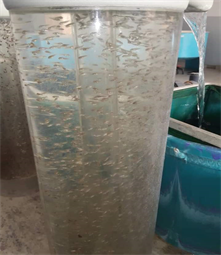
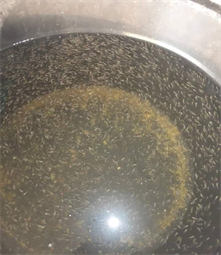
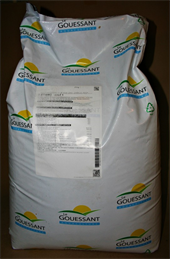
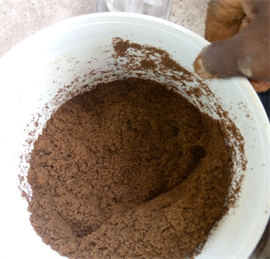
<?xml version="1.0" encoding="UTF-8"?><!DOCTYPE article  PUBLIC "-//NLM//DTD Journal Publishing DTD v3.0 20080202//EN" "http://dtd.nlm.nih.gov/publishing/3.0/journalpublishing3.dtd"><article xmlns:mml="http://www.w3.org/1998/Math/MathML" xmlns:xlink="http://www.w3.org/1999/xlink" dtd-version="3.0" xml:lang="en" article-type="research article"><front><journal-meta><journal-id journal-id-type="publisher-id">JACEN</journal-id><journal-title-group><journal-title>Journal of Agricultural Chemistry and Environment</journal-title></journal-title-group><issn pub-type="epub">2325-7458</issn><publisher><publisher-name>Scientific Research Publishing</publisher-name></publisher></journal-meta><article-meta><article-id pub-id-type="doi">10.4236/jacen.2023.124025</article-id><article-id pub-id-type="publisher-id">JACEN-128277</article-id><article-categories><subj-group subj-group-type="heading"><subject>Articles</subject></subj-group><subj-group subj-group-type="Discipline-v2"><subject>Chemistry&amp;Materials Science</subject><subject> Earth&amp;Environmental Sciences</subject></subj-group></article-categories><title-group><article-title>
 
 
  Effects of &lt;i&gt;Garcinia kola&lt;/i&gt; “Bitter Kola” Powder on Sex Reversal, Survival and Growth Performance of Tilapia (&lt;i&gt;Oreochromis niloticus&lt;/i&gt; L.)
 
</article-title></title-group><contrib-group><contrib contrib-type="author" xlink:type="simple"><name name-style="western"><surname>Cheikh</surname><given-names>Sarr</given-names></name><xref ref-type="aff" rid="aff1"><sup>1</sup></xref><xref ref-type="corresp" rid="cor1"><sup>*</sup></xref></contrib><contrib contrib-type="author" xlink:type="simple"><name name-style="western"><surname>Ngor</surname><given-names>Ndour</given-names></name><xref ref-type="aff" rid="aff2"><sup>2</sup></xref></contrib><contrib contrib-type="author" xlink:type="simple"><name name-style="western"><surname>Ousmane</surname><given-names>Ndiaye</given-names></name><xref ref-type="aff" rid="aff3"><sup>3</sup></xref></contrib><contrib contrib-type="author" xlink:type="simple"><name name-style="western"><surname>Hamet</surname><given-names>Diaw Diadhiou</given-names></name><xref ref-type="aff" rid="aff4"><sup>4</sup></xref></contrib></contrib-group><aff id="aff3"><addr-line>Thies National Agriculture College (ENSA), Thies, Senegal</addr-line></aff><aff id="aff4"><addr-line>Thiaroye Oceanographic Research Center, Senegalese Agricultural Research Institute, Dakar, Senegal</addr-line></aff><aff id="aff1"><addr-line>Agroforestry and Plant Production Laboratory, Itato Community Agricultural Estate, Kedougou, Senegal</addr-line></aff><aff id="aff2"><addr-line>Agroforestry and Plant Production Laboratory, Assane Seck University, Ziguinchor, Senegal</addr-line></aff><pub-date pub-type="epub"><day>27</day><month>09</month><year>2023</year></pub-date><volume>12</volume><issue>04</issue><fpage>351</fpage><lpage>364</lpage><history><date date-type="received"><day>21,</day>	<month>June</month>	<year>2023</year></date><date date-type="rev-recd"><day>9,</day>	<month>October</month>	<year>2023</year>	</date><date date-type="accepted"><day>12,</day>	<month>October</month>	<year>2023</year></date></history><permissions><copyright-statement>&#169; Copyright  2014 by authors and Scientific Research Publishing Inc. </copyright-statement><copyright-year>2014</copyright-year><license><license-p>This work is licensed under the Creative Commons Attribution International License (CC BY). http://creativecommons.org/licenses/by/4.0/</license-p></license></permissions><abstract><p>
 
 
  This study was carried out in 2022 at the Itato agriculture community estate of fish hatchery in eastern Senegal with the aim of finding an alternative method to 17-α-methyl testosterone (MT) by using 
  <em>Garcinia kola</em> “Bitter kola” powder to obtain 
  <em>Oreochromis niloticus</em> male sex populations. 1800 fry of average size between 0.01 and 0.02 g were distributed in 12 aboveground tanks of 1 m3 each at a rate of 150 individuals/tank, following 6 duplicate treatments. The negative (B1 and B2) and positive (B3 and B4) control diets, to which between 0 and 60 mg/kg of 17alpha-methyl testosterone had been added respectively, were mixed with industrial feed containing 40% protein; the tank diets (B5 and B6), (B7 and B8), (B9 and B10) and (B11 and B12) contained 10 g, 20 g, 30 g and 40 g of 
  <em>Garcinia kola</em> powder respectively for 1 kg of industrial feed con-taining 40% protein. These different treatments resulted in high proportions of males in the order of 97.03%; 98.09% for the hormone and proportions of 94.03%; 93.26% for 20 g of 
  <em>Garcinia kola</em> extracts. In terms of weight growth, the best average weights for the hormone and 
  <em>Garcinia kola</em> were 0.896 g and 0.980 g respectively. With regard to fish survival, the following results were recorded: 95.53% and 94.56% respectively for additions of 20 g and 30 g of 
  <em>Garcinia kola</em> extracts to the feed supplied to the fish. On the other hand, a significant difference in the mortality rate of 35% and 5% respectively for the conventional hormone and 20 g of 
  <em>Garcinia kola</em> extracts was observed. To conclude the study, it is recommended that further studies be carried out to determine the quality of the flesh, their life stages and the profile of the amino acids present in their proteins.
 
</p></abstract><kwd-group><kwd>Tilapia</kwd><kwd> &lt;i&gt;Oreochromis niloticus&lt;/i&gt;</kwd><kwd> 17-&lt;i&gt;α&lt;/i&gt;-Methyl Testosterone</kwd><kwd> &lt;i&gt;Garcinia kola&lt;/i&gt;</kwd><kwd> Sexual Inversion</kwd><kwd> Male Fry</kwd><kwd> Hormonal Feed</kwd></kwd-group></article-meta></front><body><sec id="s1"><title>1. Introduction</title><p>In recent decades, fisheries resources have come under considerable pressure (overfishing, climate change, etc.), leading to a considerable decline in the potential of fish stocks in estuaries, rivers and seas [<xref ref-type="bibr" rid="scirp.128277-ref1">1</xref>] . To deal with this over-exploitation of fisheries resources and to make up for the shortfall in capture fisheries, the Senegalese government committed itself to developing aquaculture with the creation in 2006 of the National Agency of Aquaculture (NAA), which is responsible for implementing Senegal’s aquaculture policy. To further illustrate the commitment of the Senegalese government, aquaculture has been included among the 6 priority sectors and 27 flagship projects that will create jobs and wealth and boost the country’s growth. Alongside this, institutions were created such as the Directorate of Inland Fisheries (DPC), the National Agency for Agricultural Integration and Development (NAAID) and the Community Agricultural Areas Programme (PRODAC). Among the species farmed in Senegal, tilapia is the group of fish whose farming has seen the strongest growth over the last ten years [<xref ref-type="bibr" rid="scirp.128277-ref2">2</xref>] . However, the development of this production is faced with a problem linked to the high reproduction of the species and the difference in growth between males and females in favor of the males. With this in mind, a technology transfer project financed by the National Agricultural Research Fund (NARF) and led by CRODT between 2016 and 2017 worked with development structures such as NAA and NAAID to solve the problem of the availability in quantity of male tilapia fry by using the hormone methyl testosterone. However, the high cost and difficulties in importing the synthetic hormone currently limit its use for the production of male monosex tilapia in developing countries.</p><p>With this in mind, it is important to find methods of producing male monosex fry using Garcinia kola powder as a feed supplement which, with its bioactive principles, influences various parameters including appetite stimulation and fish growth in aquaculture [<xref ref-type="bibr" rid="scirp.128277-ref3">3</xref>] [<xref ref-type="bibr" rid="scirp.128277-ref4">4</xref>] . It is widely available and distributed throughout the country. It is a medicinal plant commonly used in traditional medicine, rich in flavonoids, saponins, steroids, tannins and terpenoids [<xref ref-type="bibr" rid="scirp.128277-ref5">5</xref>] [<xref ref-type="bibr" rid="scirp.128277-ref6">6</xref>] . They also act as endocrine modulators and have anti-estrogenic properties [<xref ref-type="bibr" rid="scirp.128277-ref7">7</xref>] . In this way, they can block the synthesis of estrogens through their ability to inhibit aromatase and reduce the level of estrogens in the body. Inhibiting aromatase enzyme activity or blocking estrogen signaling pathways leads to functional masculinization [<xref ref-type="bibr" rid="scirp.128277-ref1">1</xref>] . The objective of the present study is to contribute to the improvement of the piscicultural productivity of O. nilotica. The effect of Garcinia kola on the mass production of monosex male fry of O. niloticus was evaluated, and the optimum dose and lethal dose of Garcinia kola on sexual inversion, survival and growth performance were determined.</p></sec><sec id="s2"><title>2. Materials and Methods</title><p>Study area</p><p>Located 15 km from the department of Kedougou, the Community Agriculture Area fish farm is in the commune of Bandafassi, in the village of Itato. It is close to the River Gambia, a strategic choice for supplying water to the ponds. The following infrastructure is on site: a pumping station with a 10,000 m<sup>3</sup> water reservoir; a hatchery with a capacity of 100,000 fry/month; grow-out units consisting of 80 concrete tanks, including 10 of 10 m<sup>3</sup> tanks, 20 of 20 m<sup>3</sup> tanks and 50 of 50 m<sup>3</sup> tanks; a feed and equipment storage warehouse.</p><p>This study was carried out at this fish farm between March 2022 and May 2023. Picture 1 shows the fish farm on the community agriculture area.</p><sec id="s2_1"><title>2.1. Material</title><p>To carry out this study, we used as biological material the species O. niloticus, a strain from the Senegal River valley (NAA Richard TOLL). The experiments began with the recovery of larvae (average weight between 0.01 and 0.02 g) from broodstock (body mass between 100 and 200 g) well adapted to life in captivity at the agriculture community estate of fish farm. These larvae were subdivided into 12 batches (12 aboveground tanks of 1 m<sup>3</sup> each) of 150 individuals each +−5%. We used two (02) 10 m<sup>3</sup> concrete tanks for breeding, with a ratio of 1 male to 3 females. For the incubation equipment, we used: six (06) bottles of zoug for incubating the eggs; six (06) trays for resorbing the yolk sac; six (06) happas for recovering the larvae and one (01) 12 kV submersible pump for supplying water to the incubation table. To formulate the hormone feed, we used 60 mg/kg of 17-alpha-methyl-testosterone powder; 95% alcohol (Ethanol); very fine industrial feed containing 40% protein and glassware (test tubes, spoons, trays, bottles; gloves, gown, boots, bags, cloth, mask). For the formulation of the feed containing the Garcinia kola powder: Garcinia kola (bitter kola) from the Republic of Guinea; 95% alcohol (ethanol) and very fine industrial feed containing</p><disp-formula id="scirp.128277-formula31"><graphic  xlink:href="//html.scirp.org/file/2-2750624x2.png?20231011175404967"  xlink:type="simple"/></disp-formula><p>Picture 1. Itato DAC fish farm (Sarr, 2022).</p><p>40% protein. And equipment to measure physical and chemical parameters (thermometer: to measure the temperature of the water, oximeter (DO9100): to measure the dissolved oxygen in the water, pH-meter: to measure the hydrogen potential of the water, GPS: to locate the study area, scales: to measure weights).</p></sec><sec id="s2_2"><title>2.2. Methods</title><sec id="s2_2_1"><title>2.2.1. Broodstock Reproduction</title><p>To obtain twelve (12) batches of fry, Tilapia broodstock were spawned in two concrete tanks of 10 m<sup>3</sup> each, with a sex ratio of 1 male to 3 females in the tank. The water temperature varied between 25 and 30˚C. These spawners are fed three times a day (which varies according to their needs and behavior. Parameters, such as temperature, are checked three times a day (9 am, 1 pm and 5 pm) and oxygen twice a day (10 am and 4 pm). The eggs incubated by the females are recovered.</p></sec><sec id="s2_2_2"><title>2.2.2. Recovery of Eggs and Larvae</title><p>During this study, broodstock were maintained under optimal abiotic rearing conditions. Several signs allow the identification of incubating females, such as the appearance of a dark band on the forehead and black spots on the flanks, a rapid and discontinuous clouding with fairly aggressive behavior towards other individuals present in the tank [<xref ref-type="bibr" rid="scirp.128277-ref8">8</xref>] . Eggs were collected by capturing the females one by one in each pond using a small-mesh net. Picture 2 shows the egg and larva recovery phase.</p></sec><sec id="s2_2_3"><title>2.2.3. Egg Incubation</title><p>The incubation phase was carried out artificially. Two thousand seven hundred and thirty (2730) already fertilized eggs were collected and incubated in zoug bottles (1.5l). The incubation temperature during the experiment was 28˚C until the resorption of the yolk vesicle between days 5 and 7. The larvae obtained were then weighed, counted and divided into 12 batches of 150 individuals each. Picture 3 shows the incubation phase.</p><disp-formula id="scirp.128277-formula32"><graphic  xlink:href="//html.scirp.org/file/2-2750624x3.png?20231011175404967"  xlink:type="simple"/></disp-formula><p>Picture 2. Egg and larva recovery phase (Sarr, 2022).</p></sec><sec id="s2_2_4"><title>2.2.4. Feed Preparation</title><p>The feed used during the experiment was industrial “GOUESSANT AQUACULTURE” in 20 kg bags. Picture 4 shows the images A and B.</p><p>In this experiment, 12 diets, each corresponding to a treatment, were developed, with 4 controls (2 negative and 2 positive) and 8 tests (Garcinia kola).</p><p>&#183; The negative controls were applied directly (simple food containing 40% protein);</p><p>&#183; The positive controls were obtained by dissolving 60 mg of hormone 17 alpha-methyl testosterone in 250 ml of 95% ethanol in an industrial foodstuff containing 40% protein. To evaporate the alcohol, the feed was carefully mixed and dried at room temperature in the dark. The biochemical composition of the feed is given in <xref ref-type="table" rid="table1">Table 1</xref>.</p><p><img src="//html.scirp.org/file/2-2750624x4.png?20231011175404967" /> <img src="//html.scirp.org/file/2-2750624x5.png?20231011175404967" /></p><p>Picture 3. Zug bottle incubation phase (Sarr, 2022).</p><p><img src="//html.scirp.org/file/2-2750624x6.png?20231011175404967" />(a) <img src="//html.scirp.org/file/2-2750624x7.png?20231011175404967" />(b)</p><p>Picture 4. (a) Bag of industrial feed with 40% protein “GOUESSANT AQUACULTURE”; (b) Industrial feed treated with the hormone 17 alpha-methyl testosterone in 250 ml 95% ethanol.</p><p>&#183; Concerning the preparation of the test foods, 8 diets were prepared, with 2 diets for each dose of G. kola (Diagram 1). To this end, fresh G. kola seeds were cleaned with distilled water, cut into small pieces, dried separately at room temperature for seven days, made into powder, and then passed through a 0.1 mm mesh sieve [<xref ref-type="bibr" rid="scirp.128277-ref8">8</xref>] . For each kilogram of food, G. kola samples of 10, 20, 30 and 40 g were macerated respectively in 50, 100, 150 and 200 ml of 95% ethanol in the dark at room temperature for 24 h.</p><p>Four times four (4 &#215; 4) test diets: B5 and B6 (10 g of G. kola powder each), B7 and B8 (20 g of G. kola powder each), B9 and B10 (30 g of G. kola powder each) and B11 and B12 (40 g of G. kola powder each) for one kilogram of food containing 40% protein. Diagram 1 shows the experimental set-up adopted.</p><table-wrap id="table1" ><label><xref ref-type="table" rid="table1">Table 1</xref></label><caption><title> Physical and chemical parameters of the different rearing systems</title></caption><table><tbody><thead><tr><th align="center" valign="middle" >Breeding systems</th><th align="center" valign="middle" >T<sup>⁰</sup>C</th><th align="center" valign="middle" >pH</th><th align="center" valign="middle" >DO</th></tr></thead><tr><td align="center" valign="middle" >Reproduction</td><td align="center" valign="middle" >25 - 37</td><td align="center" valign="middle" >7.7 - 8.3</td><td align="center" valign="middle" >2.1 - 5.0</td></tr><tr><td align="center" valign="middle" >Fish hatchery</td><td align="center" valign="middle" >28 - 29</td><td align="center" valign="middle" >7.2 - 8.0</td><td align="center" valign="middle" >2.9 - 4.9</td></tr><tr><td align="center" valign="middle" >Treatment (sexual inversion)</td><td align="center" valign="middle" >28 - 30</td><td align="center" valign="middle" >7.1 - 7.9</td><td align="center" valign="middle" >3.1 - 4.7</td></tr><tr><td align="center" valign="middle" >Frying</td><td align="center" valign="middle" >27 - 35</td><td align="center" valign="middle" >6.5 - 7.5</td><td align="center" valign="middle" >3.0 - 5.2</td></tr></tbody></table></table-wrap><disp-formula id="scirp.128277-formula33"><graphic  xlink:href="//html.scirp.org/file/2-2750624x8.png?20231011175404967"  xlink:type="simple"/></disp-formula><p>Diagram 1. Experimental scheme adopted.</p></sec><sec id="s2_2_5"><title>2.2.5. Feed Ration and Feeding Frequency</title><p>The daily food ration (R.A) is calculated according to this formula [<xref ref-type="bibr" rid="scirp.128277-ref9">9</xref>] ,</p><disp-formula id="scirp.128277-formula34"><graphic  xlink:href="//html.scirp.org/file/2-2750624x9.png?20231011175404967"  xlink:type="simple"/></disp-formula><p><inline-formula><inline-graphic xlink:href="/html.scirp.org/file/2-2750624x10.png" xlink:type="simple"/></inline-formula>; <inline-formula><inline-graphic xlink:href="/html.scirp.org/file/2-2750624x11.png" xlink:type="simple"/></inline-formula></p><p>The rate and frequency of feeding at the start of the experiment were the same for all twelve batches, but the rate changed according to the average weight of the individuals; it was 25% of the biomass from day 1 to day 10, then 20% from day 11 to day 20 and finally 15% from day 21 to day 28.</p><p>The feed ration was distributed twelve (12) times a day over a period of 28 days after each parameter was taken.</p></sec></sec></sec><sec id="s3"><title>3. Monitoring Physical, Chemical and Zootechnical Parameters</title><sec id="s3_1"><title>3.1. Physical and Chemical Parameters</title><p>The physical and chemical parameters of the water, such as temperature, pH and dissolved oxygen, are measured every day using a thermometer, a pH meter and an oximeter. <xref ref-type="table" rid="table1">Table 1</xref> shows the physico-chemical parameters of the different rearing systems.</p></sec><sec id="s3_2"><title>3.2. Zootechnical Parameters</title><p>A sample of 25% of the population was taken on a weekly basis to check the biomass and readjust the feed ration for the week. After 28 days of rearing, all the fish were sampled and counted, and 20 individuals chosen at random from each tank were measured for length and individual weight. On day 75, corresponding to the end of pre-pregnancy, all the fish were captured and sexed manually. Sex was confirmed by direct observation of the genital papillae of each specimen. Various zootechnical parameters such as sex ratio, survival rate, average weight gain, specific growth rate, nutrient quotient and mortality rate were calculated. <xref ref-type="table" rid="table2">Table 2</xref> shows the calculation of zootechnical performance parameters.</p><table-wrap id="table2" ><label><xref ref-type="table" rid="table2">Table 2</xref></label><caption><title> Calculation of zootechnical performance parameters</title></caption><table><tbody><thead><tr><th align="center" valign="middle" >Parameters</th><th align="center" valign="middle" >Formulas</th></tr></thead><tr><td align="center" valign="middle" >Sex-ratio (%)</td><td align="center" valign="middle" >(Number of females/Number of males) &#215; 100</td></tr><tr><td align="center" valign="middle" >Weight gain (g)</td><td align="center" valign="middle" >Average final weight (g) − Average initial weight (g)</td></tr><tr><td align="center" valign="middle" >Daily weight gain (g/d)</td><td align="center" valign="middle" >Weight gain (g)/Duration of treatment</td></tr><tr><td align="center" valign="middle" >Specific growth rate (%/d)</td><td align="center" valign="middle" >((Ln final average weight) − (Ln initial average weight)/ Duration of treatment) &#215; 100</td></tr><tr><td align="center" valign="middle" >Nutrient quotient</td><td align="center" valign="middle" >Quantity of dry feed distributed/(final biomass-initial biomass)</td></tr><tr><td align="center" valign="middle" >Survival rate (%)</td><td align="center" valign="middle" >(Final number/initial number of fish) &#215; 100</td></tr></tbody></table></table-wrap></sec></sec><sec id="s4"><title>4. Statistical Analysis</title><p>Sexual reversal rate, daily weight gain, weight growth and survival rate were subjected to one-way analysis of variance (ANOVA 1). The ANOVA indicated significant differences (p &lt; 0.05). These analyses were performed using STATISTICA 7.1 software.</p></sec><sec id="s5"><title>5. Results</title><sec id="s5_1"><title>5.1. Sex Reversal Rate (%)</title><p>Data on sexual inversion rates are listed in <xref ref-type="table" rid="table3">Table 3</xref>. The percentages of males in the positive control batch and the batch treated with 20 g of G. kola were significantly (p &lt; 0.0001) higher than those in the other batches. On the other hand, that of the negative control batch was significantly lower than that of the batches treated with the food supplement (p &lt; 0.017). For the batches treated with G. kola powder, the best male rate was obtained in the batch treated with 20 g of G. kola (94.03% - 93.06%). The greater quantity of G. kola extract, the less the individuals consumed the food because of its bitter taste (high tannin content). The comparison of the two batches (positive control and 20 g of G. kola) was significantly better than those of the other batches (negative control and 10, 30 and 40 g of G. kola). The positive control batch had 97.03% and 98.09% males respectively and the batch treated with 20 g of G. kola had 94.03% and 93.26% males respectively. The negative control batch had 49.22% and 53.02% males respectively and the batch treated with 10 g of G. kola had 80.01% and 75.72% males respectively. <xref ref-type="table" rid="table3">Table 3</xref> shows the distribution of sexual inversion rates by basin and <xref ref-type="fig" rid="fig1">Figure 1</xref>, <xref ref-type="fig" rid="fig2">Figure 2</xref> show sexual inversion rates as a function of treatment.</p></sec><sec id="s5_2"><title>5.2. Weight Growth</title><p>Weight growth data are shown in <xref ref-type="table" rid="table4">Table 4</xref>. The treatment duration was set at 28 days. The observed weight growth performances were significantly better (p &lt; 0.009; Friedman’s k paired samples comparison test) (<xref ref-type="table" rid="table4">Table 4</xref>) in the batches fed the positive control diet and 30 g of G. kola extract, followed by those fed diets containing 10 and 20 g of G. kola extract. On the other hand, the negative controls were closer to those containing 40 g of G. kola extract. On the 28th day of treatment, a sample of 50 individuals was taken from each tank and the mean final weights of the populations treated with 10, 20, 30 and 40 g of G. kola extract reached 0.532 - 0.588 g, 0.672 - 0.644 g, 0.868 - 0.896 g and 0.476 - 0.504 g respectively. Those of the negative and positive control populations reached</p><table-wrap id="table3" ><label><xref ref-type="table" rid="table3">Table 3</xref></label><caption><title> Distribution of sexual inversion rates by basin</title></caption><table><tbody><thead><tr><th align="center" valign="middle" >Parameter</th><th align="center" valign="middle"  colspan="2"  >Witnesses−</th><th align="center" valign="middle" ></th><th align="center" valign="middle"  colspan="2"  >Witnesses+</th><th align="center" valign="middle" ></th><th align="center" valign="middle"  colspan="8"  >Garcinia kola</th></tr></thead><tr><td align="center" valign="middle" >Above-ground tank</td><td align="center" valign="middle" >B1</td><td align="center" valign="middle" >B2</td><td align="center" valign="middle" ></td><td align="center" valign="middle" >B3</td><td align="center" valign="middle" >B4</td><td align="center" valign="middle" ></td><td align="center" valign="middle" >B5</td><td align="center" valign="middle" >B6</td><td align="center" valign="middle" >B7</td><td align="center" valign="middle" >B8</td><td align="center" valign="middle" >B9</td><td align="center" valign="middle" >B10</td><td align="center" valign="middle" >B11</td><td align="center" valign="middle" >B12</td></tr><tr><td align="center" valign="middle" >Sex-ratios (%)</td><td align="center" valign="middle" >49.22<sup>c </sup></td><td align="center" valign="middle"  colspan="2"  >53.02<sup>c </sup></td><td align="center" valign="middle" >97.03<sup>a </sup></td><td align="center" valign="middle"  colspan="2"  >98.09<sup>a </sup></td><td align="center" valign="middle" >80.01<sup>b </sup></td><td align="center" valign="middle" >75.72<sup>b </sup></td><td align="center" valign="middle" >94.03<sup>a </sup></td><td align="center" valign="middle" >93.26<sup>a </sup></td><td align="center" valign="middle" >71.30<sup>b </sup></td><td align="center" valign="middle" >70.40<sup>b </sup></td><td align="center" valign="middle" >56.03<sup>c </sup></td><td align="center" valign="middle" >58.09<sup>c </sup></td></tr><tr><td align="center" valign="middle" ></td><td align="center" valign="middle" ></td><td align="center" valign="middle" ></td><td align="center" valign="middle" ></td><td align="center" valign="middle" ></td><td align="center" valign="middle" ></td><td align="center" valign="middle" ></td><td align="center" valign="middle" ></td><td align="center" valign="middle" ></td><td align="center" valign="middle" ></td><td align="center" valign="middle" ></td><td align="center" valign="middle" ></td><td align="center" valign="middle" ></td><td align="center" valign="middle" ></td><td align="center" valign="middle" ></td></tr></tbody></table></table-wrap><table-wrap id="table4" ><label><xref ref-type="table" rid="table4">Table 4</xref></label><caption><title> Weight growth performance as a function of treatment duration</title></caption><table><tbody><thead><tr><th align="center" valign="middle"  rowspan="2"  >Average weight/ week/Treatment</th><th align="center" valign="middle"  colspan="2"  >Negative witnesses</th><th align="center" valign="middle" ></th><th align="center" valign="middle"  colspan="2"  >Positive witnesses</th><th align="center" valign="middle" ></th><th align="center" valign="middle"  colspan="8"  >Garcinia kola</th></tr></thead><tr><td align="center" valign="middle" >Bac1</td><td align="center" valign="middle" >Bac2</td><td align="center" valign="middle" ></td><td align="center" valign="middle" >Bac3</td><td align="center" valign="middle" >Bac4</td><td align="center" valign="middle" ></td><td align="center" valign="middle" >Bac5 (10 g)</td><td align="center" valign="middle" >Bac6 (10 g)</td><td align="center" valign="middle" >Bac7 (20 g)</td><td align="center" valign="middle" >Bac8 (20 g)</td><td align="center" valign="middle" >Bac9 (30 g)</td><td align="center" valign="middle" >Bac10 (30 g)</td><td align="center" valign="middle" >Bac11 (40 g)</td><td align="center" valign="middle" >Bac12 (40 qg)</td></tr><tr><td align="center" valign="middle" >Initial weight (Pi) in (g)</td><td align="center" valign="middle" >0.02</td><td align="center" valign="middle"  colspan="2"  >0.02</td><td align="center" valign="middle" >0.02</td><td align="center" valign="middle"  colspan="2"  >0.02</td><td align="center" valign="middle" >0.02</td><td align="center" valign="middle" >0.02</td><td align="center" valign="middle" >0.02</td><td align="center" valign="middle" >0.02</td><td align="center" valign="middle" >0.02</td><td align="center" valign="middle" >0.02</td><td align="center" valign="middle" >0.02</td><td align="center" valign="middle" >0.02</td></tr><tr><td align="center" valign="middle" >Day7</td><td align="center" valign="middle" >0.077</td><td align="center" valign="middle"  colspan="2"  >0.075</td><td align="center" valign="middle" >0.224</td><td align="center" valign="middle"  colspan="2"  >0.245</td><td align="center" valign="middle" >0.133</td><td align="center" valign="middle" >0.147</td><td align="center" valign="middle" >0.217</td><td align="center" valign="middle" >0.224</td><td align="center" valign="middle" >0.168</td><td align="center" valign="middle" >0.162</td><td align="center" valign="middle" >0.119</td><td align="center" valign="middle" >0.126</td></tr><tr><td align="center" valign="middle" >Day14</td><td align="center" valign="middle" >0.154</td><td align="center" valign="middle"  colspan="2"  >0.154</td><td align="center" valign="middle" >0.448</td><td align="center" valign="middle"  colspan="2"  >0.490</td><td align="center" valign="middle" >0.266</td><td align="center" valign="middle" >0.294</td><td align="center" valign="middle" >0.434</td><td align="center" valign="middle" >0.148</td><td align="center" valign="middle" >0.336</td><td align="center" valign="middle" >0.322</td><td align="center" valign="middle" >0.238</td><td align="center" valign="middle" >0.252</td></tr><tr><td align="center" valign="middle" >Day21</td><td align="center" valign="middle" >0.231</td><td align="center" valign="middle"  colspan="2"  >0.231</td><td align="center" valign="middle" >0.672</td><td align="center" valign="middle"  colspan="2"  >0.735</td><td align="center" valign="middle" >0.399</td><td align="center" valign="middle" >0.441</td><td align="center" valign="middle" >0.651</td><td align="center" valign="middle" >0.672</td><td align="center" valign="middle" >0.504</td><td align="center" valign="middle" >0.483</td><td align="center" valign="middle" >0.357</td><td align="center" valign="middle" >0.378</td></tr><tr><td align="center" valign="middle" >Day28</td><td align="center" valign="middle" >0.308<sup>c</sup></td><td align="center" valign="middle"  colspan="2"  >0.308<sup>c</sup></td><td align="center" valign="middle" >0.896<sup>a</sup></td><td align="center" valign="middle"  colspan="2"  >0.980<sup>a</sup></td><td align="center" valign="middle" >0.532<sup>b</sup></td><td align="center" valign="middle" >0.588<sup>b</sup></td><td align="center" valign="middle" >0.672<sup>b</sup></td><td align="center" valign="middle" >0.644<sup>b</sup></td><td align="center" valign="middle" >0.868<sup>a</sup></td><td align="center" valign="middle" >0.896<sup>a</sup></td><td align="center" valign="middle" >0.476<sup>c</sup></td><td align="center" valign="middle" >0.504<sup>b</sup></td></tr><tr><td align="center" valign="middle" ></td><td align="center" valign="middle" ></td><td align="center" valign="middle" ></td><td align="center" valign="middle" ></td><td align="center" valign="middle" ></td><td align="center" valign="middle" ></td><td align="center" valign="middle" ></td><td align="center" valign="middle" ></td><td align="center" valign="middle" ></td><td align="center" valign="middle" ></td><td align="center" valign="middle" ></td><td align="center" valign="middle" ></td><td align="center" valign="middle" ></td><td align="center" valign="middle" ></td><td align="center" valign="middle" ></td></tr></tbody></table></table-wrap><p>0.308 - 0.308 g and 0.896 - 0.980 g respectively. The growth performance of the inverted fry was very good. These results confirm the study according to which the incorporation of plant extracts and hormone in the diet of tilapia O. niloticus significantly improves the growth performance of fry compared to the simple commercial feed commonly used in fish farming [<xref ref-type="bibr" rid="scirp.128277-ref1">1</xref>] . <xref ref-type="fig" rid="fig3">Figure 3</xref> shows the dynamics of tilapia weight growth according to the feed ration.</p></sec><sec id="s5_3"><title>5.3. Weight Gain of Tilapia on Day 28 According to Feed Ration</title><p>On day 28, the Tilapia had the same weight gain when fed the positive control as when fed a ration supplemented with 30 g of Garcinia kola. In fact, any increase of 10 g in the amount of Garcinia kola produced a significant weight gain up to 30 g (p ≤ 0.023). Beyond this quantity, the increase in the proportion of bitter cola had a depressive effect on the weight growth of the Tilapia. <xref ref-type="fig" rid="fig4">Figure 4</xref> shows the weight gain of Tilapia on day 28 according to the feed ration.</p></sec><sec id="s5_4"><title>5.4. Survival Rates</title><p>Survival rates were higher when Tilapia were fed a diet enriched with Garcinia cola powder compared to survival rates obtained with fish fed Positive Control and Negative Control (p ≤ 0.039). Although the survival rate was not significantly different in Tilapia supplemented with Garcinia, the excess would appear to lead to Tilapia mortality. Thus, on day 28, the mortality rate recorded for the survival rates was close to 95% in the batch of fish treated with fish given 20 g of G. kola. On the other hand, high mortality was recorded in batches treated with the hormone 17alpha methytestosterone (MT) compared with the negative control (p ≤ 0.0002). Mortality was greater during the 28 days of hormone inversion than during fry rearing. <xref ref-type="fig" rid="fig5">Figure 5</xref> shows the survival rate of fish populations in different tanks.</p></sec></sec><sec id="s6"><title>6. Discussion</title><sec id="s6_1"><title>6.1. Sexual Inversion</title><p>Populations of fish treated with the hormone 17-α-methyl testosterone and 20 g of G. kola extract recorded the highest proportions of males. According to [<xref ref-type="bibr" rid="scirp.128277-ref10">10</xref>] , the hormone 17-α-methyl testosterone has anabolic effects. Thus, androgen-treated Tilapia fry generally grow faster than untreated individuals, probably due to increased appetite, improved food utilization and protein synthesis. However, there are certain limitations to the techniques involved, such as: contamination of broodstock, the vigilance required in the selection and maintenance of broodstock, the requirements for a high level of control and consumer acceptance of hormonal sex-reversal fish may be limited even in countries where hormonal applications to food fish are an accepted practice. On the other hand, G. kola extracts incorporated in different fish diets, favors the increase of male proportions [<xref ref-type="bibr" rid="scirp.128277-ref1">1</xref>] . The results of the present study confirm the studies of several</p><p>authors with a reversal rate of over 95% males. The presence of steroids in G. kola seeds could be the basis of their androgenic activity. According to [<xref ref-type="bibr" rid="scirp.128277-ref11">11</xref>] , various pathways are associated with functional mechanisms of phytochemicals causing both masculinization and feminization at different concentrations.</p></sec><sec id="s6_2"><title>6.2. Weight Growth</title><p>The present study shows that the presence of plant extracts (Garcinia kola) in the various fish diets improves their growth. The plant extracts did not have a negative influence on growth performance except for the batch of populations treated with 40 g of G. kola extracts. In fact, the various studies have shown that the use of medicinal plants as feed supplements gives interesting zootechnical results, more specifically Garcinia kola (Gultiferae). However, the results also show poor growth in populations treated with a high concentration of Garcinia kola (40 g). G. kola is a plant rich in tannins. The tannins derived from this plant are bitter and form a high polyphenolic complex with proteins, making it unavailable in the diet. Tannin can reduce protein quality by lowering digestibility and palatability. It also inhibits the activities of digestive enzymes. The presence of a high proportion of tannins in diets enriched with higher concentrations of root or seed powder could lead to poor food consumption by fish, resulting in stunted growth. G. kola is a medicinal plant commonly used in traditional medicine, rich in flavonoids, saponins, steroids, tannins and terpenoids [<xref ref-type="bibr" rid="scirp.128277-ref12">12</xref>] . These bioactive principles are thought to influence various parameters, including appetite stimulation and fish growth in aquaculture. In addition, the growth of inverted fry is very impressive. [<xref ref-type="bibr" rid="scirp.128277-ref13">13</xref>] Compared the rearing performance of different strains of Oreochromis niloticus and found that across all strains, TM treatment of the fish resulted in a final size 10.7% larger than untreated fish. This supports the idea that treated fish populations grow much faster than those fed simple feed and is consistent with the results of our present study.</p></sec><sec id="s6_3"><title>6.3. Survival Rates</title><p>In the course of this study, we recorded good survival rates for batches fed with G. kola plant extracts and also for batches treated with simple feed. On the other hand, the populations of fish treated with methytestosterone hormone were low. [<xref ref-type="bibr" rid="scirp.128277-ref12">12</xref>] Specifies that the mortality rate is higher in the early stages of development, during hormone treatments, and tends to stabilize in the later stages of ontogeny. In other words, concentrations of plant extracts did not have a negative influence on larval survival rates. Similar conclusions were reached by [<xref ref-type="bibr" rid="scirp.128277-ref1">1</xref>] . Similarly, the survival rates observed would indicate that these fry value the feed well without affecting their survival.</p></sec></sec><sec id="s7"><title>7. Conclusion</title><p>The use of feed supplements in the diet of fish populations improves growth performance. One of the best results recorded for growth performance and survival rate is 20 g/kg. For a concentration higher than 30 g/kg, growth envoys that of populations fed with simple food and the fry tend not to eat because of the high concentration of tannin in the food. In fact, in tanks treated with 40 g of G. kola extract, almost half of the feed was not consumed by the fish. Further studies would therefore be required to extract the tannin from the Garcinia cola powder in order to achieve the ideal requirement of 100% males and enable the fry to eat properly.</p></sec><sec id="s8"><title>Conflicts of Interest</title><p>The authors declare no conflicts of interest regarding the publication of this paper.</p></sec><sec id="s9"><title>Cite this paper</title><p>Sarr, C., Ndour, N., Ndiaye, O. and Diadhiou, H.D. (2023) Effects of Garcinia kola “Bitter Kola” Powder on Sex Reversal, Survival and Growth Performance of Tilapia (Oreochromis niloticus L.). Journal of Agricultural Chemistry and Environment, 12, 351-364. https://doi.org/10.4236/jacen.2023.124025</p></sec></body><back><ref-list><title>References</title><ref id="scirp.128277-ref1"><label>1</label><mixed-citation publication-type="other" xlink:type="simple">FAO (2002) Les méthodes de production d’alevins de tilapia nilotica.adcp/rep/89/46, 120 p.</mixed-citation></ref><ref id="scirp.128277-ref2"><label>2</label><mixed-citation publication-type="other" xlink:type="simple">Flynn, S.R. and Benfey, T.J. (2007) Effects of Dietary Estradiol-l7β in Juvenile Short Nose Sturgeon, Acipenser brevirostrum, Lesueur. Aquaculture, 270, 405-412. https://doi.org/10.1016/j.aquaculture.2007.04.073</mixed-citation></ref><ref id="scirp.128277-ref3"><label>3</label><mixed-citation publication-type="other" xlink:type="simple">Chakraborty, S.B., Horn, P. and Hancz, C. (2014) Application of Phytochemicals as Growth Promoters and Endocrine Modulators in Fish Culture. Reviews in Aquaculture, 6, 1-19. https://doi.org/10.1111/raq.12021</mixed-citation></ref><ref id="scirp.128277-ref4"><label>4</label><mixed-citation publication-type="other" xlink:type="simple">Yété, P., Togbé, A., Koudoro, Y., Agbangnan, P., Ndahischimiye, V., Djenontin, T.S., Wotto, D., Azandegbe, E.C. an Sohounhloue, D. (2015) Etude comparative des Composés phénoliques et activité anti-radicalaire des extraits des Graines de Garcinia kola (Guttifféraea) et de Cucumeropsise dulis (cucurbitacéae) du Bénin. International Journal of Innovation Sciences Research, 15, 217-227.</mixed-citation></ref><ref id="scirp.128277-ref5"><label>5</label><mixed-citation publication-type="other" xlink:type="simple">Little, D.C., Bhujel, R.C. and Pham, T.A. (2003) Advanced Nursing of Mixed-Sex and Mono-Sex Tilapia (Oreochromis niloticus) Fry, and Its Impact on Subsequent Growth in Fertilized Ponds. Aquaculture, 221, 265-276.  https://doi.org/10.1016/S0044-8486(03)00008-5</mixed-citation></ref><ref id="scirp.128277-ref6"><label>6</label><mixed-citation publication-type="other" xlink:type="simple">Laouar et Barhoumi, L. (2017) Approche technico-économique de l’élevage en cages de tilapia du nil dans les retenues de barrages tunisiennes, Centre Technique d’Aquaculture (Ed), Tunis, p. 9.</mixed-citation></ref><ref id="scirp.128277-ref7"><label>7</label><mixed-citation publication-type="other" xlink:type="simple">Syahidah, A., Saad, C.R., Daud, H.M. and Abdelhadi, Y.M. (2015) Status and Potential of Herbal Applications in Aquaculture. Iranian Journal of Fisheries Sciences, 14, 27-44.</mixed-citation></ref><ref id="scirp.128277-ref8"><label>8</label><mixed-citation publication-type="other" xlink:type="simple">Boua, B.B., Mamyrbekova-Bekro, J.A., Kouame, B.A. &amp; Bekro, Y.A. (2013) Criblage phyto-chimique et potentiel érectile de Turraea heterophylla de Cote d’Ivoire. Journal of Applied Biosciences, 68, 5394-5403. https://doi.org/10.4314/jab.v68i0.95065</mixed-citation></ref><ref id="scirp.128277-ref9"><label>9</label><mixed-citation publication-type="other" xlink:type="simple">Chakraborty, S.B. and Hancz, C. (2011) Application of Phytochemicals as Immune Stimulant, Antipathogenic and Antistress Agents in Finfish Culture. Review in Aquaculture, 3, 103-119. https://doi.org/10.1111/j.1753-5131.2011.01048.x</mixed-citation></ref><ref id="scirp.128277-ref10"><label>10</label><mixed-citation publication-type="other" xlink:type="simple">Citarasu, T. (2010) Herbal Biomedicines: A New Opportunity for Aquaculture Industry. Aquaculture International, 18, 403-414. https://doi.org/10.1007/s10499-009-9253-7</mixed-citation></ref><ref id="scirp.128277-ref11"><label>11</label><mixed-citation publication-type="journal" xlink:type="simple"><name name-style="western"><surname>Lazard</surname><given-names> J. </given-names></name>,<etal>et al</etal>. (<year>2007</year>)<article-title>Transfert de poissons et développement de la production piscicole. Exemple de 3 pays d’Afrique Subsaharienne</article-title><source> Hydrobiologie Tropicale</source><volume> 23</volume>,<fpage> 251</fpage>-<lpage>265</lpage>.<pub-id pub-id-type="doi"></pub-id></mixed-citation></ref><ref id="scirp.128277-ref12"><label>12</label><mixed-citation publication-type="other" xlink:type="simple">Ministère de la Pêche et de l’Economie Maritime (2011) Document introductif du conseil interministériel sur la pêche, 54p. MPEM, Sénégal.</mixed-citation></ref><ref id="scirp.128277-ref13"><label>13</label><mixed-citation publication-type="other" xlink:type="simple">Tigoli, K., Cissé, M., Koné, M., Ouattara, M., Ouattara, A. and Gourène, G. (2017) Effets de l’hormone (17-á-méthyltestostérone) sur les performances zootechniques des souches &amp;laquo;Bouaké&amp;raquo; et &amp;laquo;Akosombo&amp;raquo; de Oreochromis niloticus (Linneaus, 1758). Agronomie Africaine, 29, 21-31.</mixed-citation></ref></ref-list></back></article>