Induced BVOC emissions from pyrolyzed plants that may accumulate in confined topographies have been a controversy for their role in wildfire eruptions or flashovers.
α-pinene (C
10H
16) is one of the most abundant monoterpenes emitted from pyrolyzed Mediterranean vegetation in wildfires. Its thermal degradation under fire thermal stresses produces a range of highly flammable gases. In order to identify these products, thermal degradation experiments were performed on
α-pinene in a tubular furnace in an inert atmosphere and a high-temperature range (300°C - 900°C). The pyrolysis products were identified using gas chromatography (GC) linked to a tubular furnace outlet by which their retention times were compared with those of reference standards. The degradation products were mainly terpenoids, aliphatic hydrocarbons (methane, ethane, ethene, propane, propene, 1,3-butadiene, isoprene), and aromatics (benzene, toluene) in addition to hydrogen. The radical mechanisms of the chemical reactions associated with the formation of the products at different experimental temperatures were addressed and compared with the literature. Monoterpenes, butadiene, isoprene, aliphatic hydrocarbons, and aromatics formations from α-pinene were consistent with the literature. However, even if benzene has been identified in our experiments, we cannot support with certainty the mechanisms of its formation described in the literature since acetylene was not observed.
Wildfire flashovers are forms of sudden fire eruptions hosted primarily by Mediterranean climate wildlands [1] [2] and have been previously reported by firefighters who were overwhelmed by their occurrences in wildfires [3] [4]. They are also referred to by the scientific community as Accelerated Forest Fires (AFFs) [5], eruptive fires [6], or generalized blaze fires (GBFs) [4]. Flashovers in wildfires [7], occur when an accumulated mixture of plants emissions composed of biogenic volatile organic compounds (BVOCs) and their degradation products, combusts rapidly. Literature provides records about the emission factors (EF) and emission ratios (ER) of BVOCs [8] [9] from Mediterranean forests in wildfire events because of their role in bio-sphere-atmosphere interactions [10] and global warming [11]. However, as flashovers are more commonly witnessed by firefighters, it is interesting to analyse the role of BVOCs and their degradation products, as a favouring factor.
Bicyclic monoterpenes such as α-pinene possess high density of ~0.86 g·ml−1 [12], which doesn’t change greatly with increasing temperatures [13]. Therefore, for example, when pyrolyzing plants in a wildfire emit α-pinene, its higher density relative to air allows it to migrate downwind at ground level and concentrate in nearby confined topographies such as canyons [14]. If accumulated, α-pinene will degrade under the thermal stresses of the approaching fire front [5]. Normally, the thermal degradation products of BVOCs (e.g. α-pinene), form a mixture of their VOC isomers in addition to aliphatic and aromatic hydrocarbons [15] [16]. When an accumulation of these gases is favoured by atmospheric conditions, it becomes possible for them to reach a lower flammability limit (LFL) [17], which is defined as the lowest concentration in air at which a combustible gas or vapor can ignite and propagate flame in the presence of an ignition source (spark, flame, heat), albeit such an ignition source will not be necessary if their LFLs were coupled with their auto-ignition temperatures (AIT). Notably, common BVOCs have an LFL of lower than 1% vol in air [18] and an auto ignition temperature (AIT) of 300˚C [19]. α-Pinene, for example, has an LFL of 0.81 and an AIT of 255˚C [20]. It remains important to identify the thermal degradation products of these BVOCs (e.g. α-Pinene) in order to also link their flammability characteristics (LFL, UFL & AIT) to the probability of a flashover in a wildfire.
Low temperature analytical pyrolysis studies on α-pinene are many and they primarily address its isomerization and rearrangement products however, the studies identifying the total range of its thermal degradation products at high temperatures are rather few [21] [22] [23]. This article covers the total range of the compounds emitted from the thermal degradation of α-pinene at temperatures similar to those reached in wildfires and describes the probable chemical reactions responsible for their production with the help of literature. In this work, α-pinene was thermally degraded in an inert atmosphere using a tubular oven set at a temperature range (300˚C - 900˚C).
2. State of the Art2.1. BVOC Emissions and Volatility2.1.1. Constitutive BVOC Emissions
Plants, particularly trees, emit considerable amounts of different constitutive biogenic volatile organic compounds (BVOCs) with a global average of 1150 Tg·C·year−1 [24]. Plant BVOCs are mainly terpenoids (hemi-, mono-, sesqui-, and diterpenes) [25], which are involved in plant growth, reproduction, defense, and communication within plant communities [26] [27] [28]. They are also strongly related to plant flammability [29]. The 5-carbons isomers isopentenyl pyrophosphate (IPP) and dimethylallyl pyrophosphate (DMAPP) are responsible for the biosynthesis of terpenoids [30]. On the basis of C5 units involved in their synthesis, terpenoids can be classified into hemiterpenoids or isoprene (C5H8), monoterpenes (C10H16), sesquiterpenes (C15H24), diterpenes (C20H32), and other polyterpenoids [31] [32]. The production precursors and the functional characteristics of the main BVOCs are reported in (Table 1).
2.1.2. Induced BVOC Emissions
When plants are exposed to various abiotic (extremes in temperatures, Ozone (O3), radiation, drought, etc.) or biotic (fungi, bacteria, herbivores, etc.) stresses, their constitutive BVOC emissions become induced (IBVOCs). Isoprene followed by monoterpenic hydrocarbons (C10H16) dominated by α-pinene, have been reported to be the most abundant BVOCs emitted from Mediterranean plant species during pyrolysis testing at moderate temperature ranges [33] [34]. However, analyses of smoke samples from wildfire plumes in Mediterranean forests, where temperatures are likely to exceed 900˚C, showed remarkable concentrations of BVOCs (isoprene, α-pinene, β-pinene) and aromatics (toluene and benzene), when compared to their concentrations in background air (Table 2).
2.1.3. BVOC Volatility
In the events of wildfires, IBVOCs originate from plants’ storage pools or de novo synthesis with proportions depending on the duration and severity of the thermal stresses, the plant species (with or without BVOC storage compartments), and the BVOC volatility [35]. The volatility of a BVOC is defined as the partition between its liquid and gas phase in the plant under high temperatures and it is measured by Henry’s law constant (Kh) [36]. Indeed, the compounds with a larger Kh partition primarily to the gas phase whereas those with a low Kh partition mainly to the aqueous phase [37]. The Kh of common BVOCs at 25˚C are listed in (Table 3). The Henry’s law constant of α-pinene at 25˚C is 13590 Pa·m3·mol−1 and is augmented by 1.3- to 1.8- fold for every 10˚C increase in temperature [38]. Therefore, our choice to study the thermal degradation of α-pinene is justified by its high volatility, coupled with its highest emission rates among other monoterpenes from Mediterranean plants during wildfires [34] [39].
Main group of plant-produced biogenic volatile organic compounds (BVOCs) and their functional characteristics, [<xref ref-type="bibr" rid="scirp.117393-ref25">25</xref>]
Herbivore-induced signal Attractant to pollinator, fragrance
Sesquiterpenes
β-Caryophyllene, β-Farnesene, Farnesol, Nerolidol
FDP
Herbivore-induced signal Anti-microbial activity
Homoterpenes
TMTT DMNT
(E, E)-Geranyl- linalool (E)-Nerolidol
Herbivore-induced signal
Concentrations of the main BVOCs and aromatics in background air and wildfire smoke plume, [<xref ref-type="bibr" rid="scirp.117393-ref8">8</xref>]
Concentration (ppbv)
BVOCS
isoprene
α-pinene
β-pinene
benzene
toluene
Smoke plume samples
27
13
1.5
90
53
Background air samples
4
0.2
0.063
0.78
3.95
Henry’s law constants (K<sub>h</sub>) at 25˚C of common BVOCs
Compound Class
BVOC Name
Kh (Pa·m3·mol−1)
Acyclic Hydrocarbonsa
Isoprene
7789
Myrcene
6300
β-Ocimene
2507
Monocyclic Hydrocarbonsa
α-Pinene
13590
Sabinene
6451
Limonene
2850
α-Phellandrene
5496
Sesquiterpenesb
β-Caryophyllene
2731
α-Cadrene
3510
aCopolovici and Niinemets, 2005 [38]. bCopolovici and Niinemets, 2015 [40].
2.2. Pyrolysis of α-Pinene in the Literature
According to the literature demonstrated in this section, the pyrolysis of α-pinene begins by its isomerization and rearrangement and isoprene formation at moderate temperatures ranging from 350˚C to 500˚C, followed by the formation of aliphatic hydrocarbons at elevated temperatures from 600˚C to 700˚C, and finally aromatic hydrocarbons at temperatures exceeding 700˚C.
2.2.1. α-Pinene Pyrolysis to Isoprene
The works of Hlasiwetz and Hinterberger, Schultz, Mokiewski, Tilden, and Mahood about the thermal degradation of terpenic hydrocarbons (mainly α-pinene) in the temperature range from 300˚C to 800˚C, were gathered in [23]. They found that α-pinene degrades in the temperature range from 300˚C to 450˚C to produce isoprene (C5H8) also known as (2-methyl-1,3-butadiene). Isoprene reaches a maximum production between 550˚C and 600˚C and degrades after that to produce a range of compounds. In the range from 400˚C to 500˚C, isoprene gets partially polymerized to higher unsaturated hydrocarbons of terpenic nature, while its transformation from 600˚C to 700˚C is almost complete to produce gases such as hydrogen (H2), saturated hydrocarbons such as methane (CH4) and unsaturated hydrocarbons such as ethylene (C2H4), propylene (C3H6), and 1,3-butadiene (C4H6). Aromatic compounds such as benzene (C6H6), toluene (C7H8), and xylene (C8H10) begin to appear at 700˚C and become the exclusive products above 800˚C. The percentages of the gases formed from the pyrolysis of isoprene in a range from 400˚C to 800˚C, are: 13.6% unsaturated hydrocarbons as ethylene, 58% - 66.3% methane (CH4), and 19.9% - 25.3% hydrogen, while the tar collected contained 10 grams of benzene, 53 grams of toluene, and 21 grams of naphthalene (C10H8), [23].
2.2.2. Thermal Isomerization of α-Pinene
The thermal isomerization of α-pinene has been studied in detail at temperatures ranging from 300˚C to 500˚C and lead to the conclusion that the products are dipentene (racemic limonene) and allo-ocimene through its precursor ocimene [41]. Later works provided precision to the temperature values responsible for the evolution of the isomerization products (e.g. dipentene and allo-ocimene) and their percentages [42] [43] (Figure 1). The degradation of α-pinene is negligible at 300˚C, then it undergoes a conversion of 25% and 75% at 360˚C and 395˚C, respectively [42]. As shown in (Figure 2), α-pinene conversion in the temperature range from 350˚C to 500˚C results primarily in 45% of limonene (4) and 2% of reactive ocimene which rapidly rearranges to alloocimene (3). Compounds (3) and (4) have maximum concentrations at 400˚C while other compounds such as pyronene (cp), is classified as a secondary reaction product from (2) and (4).
2.2.3. α-Pinene Pyrolysis to Aliphatic Hydrocarbons
The pyrolysis of isoprene produced from α-pinene above 400˚C, leads to hydrogen (H2), methane (CH4), and ethylene (C2H4). The latter will continue to degrade under the influence of temperature, [23]. Pyrolysis experiments conducted on orange bagasse from 350˚C to 600˚C showed considerable amounts of α-pinene in the collected pyrolysis oil, while the pyrolysis gas content was dominated by methane (CH4) with a remarkable increase in its production starting from 400˚C,
[44]. The coupled effect of methane abundance and increasing pyrolysis temperature also increased the yield of lower hydrocarbons such as acetylene (C2H2), ethane (C2H6), and propane (C3H8), [44]. Methane may not have been formed from α-pinene solely, but it is certain that the increase in the yield of ethyne, ethane and propane were mainly dependent on the increasing methane concentration in the pyrolysis process [44]. Therefore, it is reasonable for us to analyse the pyrolysis products of methane from α-pinene as it appears to be the main source of aliphatic and aromatic compounds. The pyrolysis of methane is a very complex process because it involves several radical reactions that have been studied extensively in the literature [45] [46] [47]. The following will provide a detailed step by step degradation analysis of methane to flammable hydrocarbons and later to aromatics through 1,3-butadiene in the temperature range from 700˚C to 900˚C as suggested in [48], (Figure 3).
A large number of reactions occur when methane is heated. However, the predominance of specific reactions is a function of temperature and composition of the gas mixture. The first reaction from methane pyrolysis at 700˚C is the dissociation reaction in (Figure 3(a), (stage 1)) where a methane molecule splits to form a methyl radical and a hydrogen radical in reaction (1) followed by the formation of ethane and hydrogen in reaction (2).
CH 4 → CH 3 • + H • (1)
2CH 3 • + 2H • → C 2 H 6 + H 2 (2)
As more ethane is formed it undergoes molecular scission in a highly endothermic reaction to produce methyl radicals in reaction(3). While reaction (2) continues, ethane undergoes an indirect dehydrogenation within seconds under the influence of heat to produce ethylene (C2H4) in (Figure 3(a), (stage 2)) through
series of reactions (4) to (7)resulting in decreased rate of ethane formation and increased ethylene production.
C 2 H 6 → 2CH 3 • (3)
C 2 H 6 → C 2 H 4 + H 2 (4)
where,
C 2 H 6 + CH 3 • → CH 4 + C 2 H 5 • (5)
C 2 H 5 • → C 2 H 4 + H • (6)
CH 4 + H • → CH 3 • + H 2 (7)
The yield of ethylene reaches a maximum at 726˚C and gradually decreases beyond this temperature simultaneously with the decrease in methane as no more methyl radicals can be generated. In (Figure 3(a), (stage 3)), ethylene degradation produces acetylene (C2H2) in reaction (8) and propene (C3H6) in reaction (9). The kinetics of these reactions and their activation energies can be obtained from [48].
C 2 H 4 → C 2 H 2 + H 2 (8)
C 2 H 4 + CH 4 → C 3 H 6 + H 2 (9)
2.2.4. α-Pinene Pyrolysis to Aromatic Hydrocarbons through the Unimolecular Decomposition of 1,3-Butadiene
The yield of benzene (C6H6) from the pyrolysis of pine chips which are rich in α-pinene ranged from 0.071% of emissions at 500˚C to a maximum of 3.13% at 900˚C [49]. An important role in aromatics formation from α-pinene is played by 1,3-butadiene (C4H6) which is formed in the pyrolytic processes of isoprene and methane from 600˚C to 700˚C [23] [48]. However, the production of aromatics from 1,3-butadiene is suggested to occur through radical mechanisms instead of the Diels-Alder reaction which is not favoured above 400˚C, [48]. The most important reactions in the formation of benzene from methane pyrolysis through 1,3-butadiene are illustrated in (Figure 4). Literature provided several reaction pathways for the formation of aromatics from 1,3-butadiene after its unimolecular decomposition to vinyl radicals (C2H3·) at 700˚C through reaction (10).
C 4 H 6 → 2C 2 H 3 • (10)
A vinyl radical (C2H3·) reacts with acetylene (C2H2) to produce butadienyl-radical C4H5·, which in turn reacts with acetylene (C2H2) to produce benzene (C6H6) and release a hydrogen radical as in reactions (11) & (12), [50].
C 2 H 3 • + C 2 H 2 → C 4 H 5 • (11)
C 2 H 2 + C 4 H 5 • → C 6 H 6 + H • (12)
Above 700˚C one molecule of vinyl radical reacts with one molecule of 1,3-butadiene to produce a 1,3-cyclohexadienyl radical. The later loses a hydrogen radical to produce 1,3-cyclohexadiene which leads to benzene and hydrogen in reaction (13), [48].
2.2.5. α-Pinene Pyrolysis to Aromatic Hydrocarbons through the Dimerization of 1,3-Butadiene
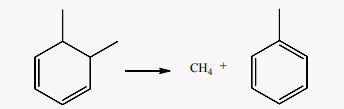
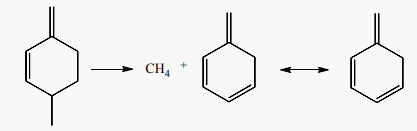
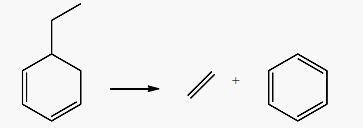
Aromatics can also be formed from 550˚C to 700˚C after the dimerization of 1,3-butadiene into 4-vinylcycloxenes (C8H12). Literature addressed this mechanism to refute the aromatization scheme based on Diels-Alder reaction between butadiene and a lower olefin. Aromatization schemes of 1,3-butadiene at 550˚C and 700˚C, showed that the presence of an olefin is not necessary to produce the precursors of C6 to C8 aromatics through the Diels-Alder reaction, especially that this last is not favored above 400˚C [48] [51]. It is also suggested that cyclohexene (C6H10) formed from the reaction of 1,3-butadiene with an olefin (i.e. ethylene or propene) in Diels-Alder reaction, can’t undergo direct dehydrogenation to produce benzene (C6H6). Even in the presence of a cracking catalyst, the cyclohexene formed will only yield to 7% of benzene and 4% of toluene at 550˚C, [51]. On the other hand, the dehydrogenation of a cyclohexadiene (C6H8) to produce benzene (C6H6) should be easier because both of the hydrogens to be removed are allylic [51]. The alternative schemes of 1,3-butadiene aromatization begin by its dimerization to 4-vinylcyclohexenes (C8H12) from 550˚C. 4-vinylcyclohexenes (C8H12) undergo double bond and skeleton isomerization to produce C8 aromatics (styrene), and splitting of one and two of their carbon atoms to form C7 aromatic (toluene) in reaction (14) and C6 aromatic (benzene) in reaction (15), [51]. At 550˚C, styrene production (2.4 moles/100 moles of butadiene) dominates the production of toluene (1.10 moles) and benzene (0.9 moles) while at 700˚C benzene and toluene predominate at 11.71 and 7.22 molar % of butadiene, respectively [51]. Toluene (C7H8) production from 4-vinylcycloxene is accompanied by an equimolar amount of methane (CH4) in reaction (14), while the production of benzene produces an equimolar amount of C2 hydrocarbons in reaction (15).
(14)
(15)
Benzene can also be produced from toluene via the highly selective demethylation reaction which occurs when toluene is heated from 626˚C to 726˚C in the presence of excess hydrogen to produce benzene and methane in reaction (16), [52].
In this section we demonstrated the information collected from literature about the stages of α-pinene pyrolysis to isoprene, then to its monoterpenic-isomers, aliphatic hydrocarbons (methane, ethane) and finally to aromatics through 1,3-butadiene. The following sections demonstrate the formation of these products through our pyrolysis experiments on α-pinene in an inert atmosphere (N2) using a tubular furnace set at a temperature range from 300˚C to 900˚C.
3. Materials and Methods
6 ml liquid sample of α-pinene (purity > 98%) from Sigma Aldrich®, was placed in a crucible with a rod (nacelle) equipped with a thermocouple (0.16 mm silica coated chromel – alumel) to measure the temperatures developed at the sample level when introduced into the reactor in (Figure 5(a)). The nacelle was introduced in a tubular quartz reactor (80 cm long × 5 cm in diameter) connected to two gas chromatographs (GC) through heated transfer lines in order to avoid condensation of the pyrolysed products. The reactor was swept for 5 min with nitrogen to remove oxygen from the system. The quartz tube was then placed in a 40 cm long × 6.5 cm diameter tubular furnace heated at different temperatures ranging from 300˚C to 900˚C with a step of 50˚C. At the desired temperature, the sample was heated for 2 mins then the pyrolysis products were flushed by a nitrogen flow (1.5 L·min−1) to the GC for analysis.
Nitrogen allows the transfer of the vaporized sample from the reactor to the gas chromatographs (GC). Two gas chromatographs (GC) were used for the vaporized sample analysis, a PeriChrom 2100 (A) and a Varian CP 3800 (B) (Figure 5(b)). Each chromatograph is equipped with columns and two detectors; a flame ionization detector (FID) and a thermal conductivity detector (TCD) (Table 4).
Hydrogen can be detected with TCD when the reference gas is helium, but the response is very low because the thermal conductivity of hydrogen (0.1805 W·m−1·K−1) and helium (0.1513 W·m−1·K−1) are very close. On the contrary, the difference between the thermal conductivities of argon (0.017 W·m−1·K−1) and
Detectors of chromatographs (A) & (B) their columns, and the detected compounds
Gas Chromatograph (GC)
Perichrom 2100 (A)
Varian CP 3800 (B)
Detector
FID
TCD
FID
TCD
Column Type
F1 activated alumina
Chrompack 13x
Capillary
Molecular Sieve 5 Å
Detected Compounds
C1 to C6
H2, O2, N2, CH4 & CO
C4 to C10
H2, O2, N2, CO & CH4
hydrogen is high which makes argon more interesting for the hydrogen detection using TCD. For this reason, we relied on the hydrogen readings of the TCD of (B) which uses argon as a reference gas, contrarily to (A) which uses helium.
Notably, the vapor colour changed from white into beige at 700˚C and brown at 800˚C and 900˚C. Once the vapor was visible at the chromatograph entrance, the analysis was carried out after a delay of 30 seconds to allow the mixture to fully enter the columns. Between the different trials, the oven was shut down and the apparatus was purged with nitrogen flow for 30 mins. The uncertainity of our results depended on several factors including the stability of the experimental apparatus, precision of data acquistion, and the atmospheric conditions (pressure, temperature). However, based on the relative standard deviation in the percentages of the compounds identified from the experiments repeated twice at the same temperatures, the reproducibility of our results was found to be 75%.
4. Results and Discussion
At 300˚C no degradation products of α-pinene were observed. This result is consistent with the results of the oxidative degradation of α-pinene from 300 to 900˚C in [22]. Therefore, the following analyses will be carried out on the products formed from 400˚C to 900˚C. The relative concentrations of the compounds detected by each detector were normalized according to the total sum normalization (TSN) technique and plotted according to the separation range of each column.
4.1. Monoterpenes and Isoprene
Through the FID detector of (B), we detected monoterpenes (C10H16) and isoprene (C5H8), and compared them to the findings in [41] (cf. section 2.2.1 & 2.2.2). At 400˚C, the vapours were composed of 19% α-pinene and 65% monoterpenes as shown in (Figure 6). Both followed a decreasing profile beyond 400˚C. However, the notable concentration of monoterpenes from 500˚C, even after the complete consumption of α-pinene, could be explained by the presence of limonene and pyronene. Isoprene (C5H8) production from α-pinene in an inert gas atmosphere begins at 500˚C while the maximum production is obtained at 600˚C consistent with the suggestions in [23] and [53].
4.2. Aliphatic Hydrocarbons and Hydrogen
During α-pinene pyrolysis experiments, the TCD of (B) detected methane (CH4) and hydrogen (H2), (Figure 7(a)). Methane and hydrogen production schemes follow that of isoprene from 400˚C to 600˚C, then their concentrations boost in parallel with isoprene degradation starting from 600˚C (cf. Section 2.2.1). The noticeable increase in hydrogen concentration beyond 700˚C can be explained by methane degradation (cf. Section 2.2.3) butadiene aromatization (cf. Section 2.2.4 & 2.2.5). The FID of (A) measured concentrations of ethane, ethene, propene, and propane (Figure 7(b)) which allowed us to correlate their production schemes to the pyrolysis processes of isoprene and methane.
The production of propane (C3H8) and ethane (C2H6) from 400˚C to 550˚C in (Figure 7(b)) can be referred to the coupled effect of methane abundance and high temperatures [44] (cf. Section 2.2.3). Ethane and hydrogen formation following that of methane from 400˚C is consistent with (Figure 3(a), (stage 1)), and reaction (2) where two methane molecules combine to form ethane and hydrogen. With no apparent isoprene concentrations from 600˚C as shown in (Figure 6), the rate of ethane formation decreases and ethene production boosts as in (Figure 3(a), (stage 2)), and reaction (4) [23] [50]. Propene (C3H6) concentrations in (Figure 7(b)) can be referred to the pyrolysis of isoprene from α-pinene between 400˚C and 800˚C as suggested in [23]. Also, propene and hydrogen were found in propane pyrolysates from 650˚C to 800˚C [46], which can explain why propene concentrations remain larger than propane in this temperature range, (Figure 7(b)). The overall reactions of the compounds formed from methane can be described by the stepwise dehydrogenation reaction (17) [48] [50].
Acetylene (C2H2) was not detected by the Perichrom FID during our experiments despite that its formation was suggested to result from the degradation of
butadiene below 400˚C or from the various interactions of free radicals and molecules during the pyrolysis process of ethane beyond 764˚C [48]. Acetylene is necessary for benzene formation via reactions (11) & (12) [50], however, our results do not support this step because unless acetylene was directly degraded upon formation, we couldn’t trace it in our experiments.
4.3. 1,3-Butadiene and Aromatics
The production scheme of 1,3-butadiene (C4H6) follows that of isoprene (Figure 8). Significant concentrations of aromatics such as benzene and toluene were measured from 550˚C by the FID of the Varian (B) (Figure 8).
The literature in sections 2.2.4 & 2.2.5 presented a refutation to the formation of aromatics through Diels-Alder reaction between 1,3-butadiene and an olefin. Instead, the unsaturated structure of 1,3-butadiene makes it play an important role in the formation of poly-aromatic hydrocarbons (PAH) through its own
pyrolysis [54]. As suggested in Section 2.2.5 with reference to [51], the dimerization of 1,3-butadiene results in the production of benzene and toluene from 550˚C with humble concentrations as shown in (Figure 8). At 700˚C the decrease in 1,3-butadiene indicates the initiation of its degradation assumingly to vinyl radicals (C2H3·) through reaction (10) and is accompanied by the increase in the formation of benzene and toluene from 700˚C probably through reactions (13), (14), and (15). However, the constant concentration of hydrogen from 550˚C to 600˚C and from 700˚C to 750˚C may be an indication that no direct dehydrogenation occurs during the production of aromatics which can support the refutation of the aromatization scheme through the Diels-Alder reaction. On a separate note, the fluctuating concentration of toluene along with a continuous increase in benzene can be referred to reaction (16) signalling the production of benzene from toluene from 600˚C to 700˚C and from 750˚C to 900˚C, [52].
5. Conclusion
Gases formed from the pyrolysis of α-pinene in a tubular furnace at a temperature range from 300˚C to 900˚C were monitored by chromatography. α-Pinene thermal decomposition is a complex and temperature dependent process. The temperature range adopted in our experiments resulted in a mixture containing aliphatic hydrocarbons (monoterpenes, paraffins, and olefins) and aromatics. Isoprene production was observed to reach a maximum between 550˚C and 600˚C. Methane production from α-pinene was observed to dominate before its degradation at 700˚C. Abundance of methane and the increased pyrolysis temperature was coupled with an increase in the yield of lower hydrocarbons as propane and ethane. This later degrades to yield ethene. Benzene and toluene were the main aromatics produced while their formation was referred to reactions of radical mechanisms instead of the conventional Diels-Alder scheme. The evolution of the pyrolysis products of α-pinene in a wildfire will certainly participate in flame propagation. However, their accumulations ahead of the fire front in topographic relief depressions such as canyons, coupled with their flammability characteristics (LFL, AIT) are being currently investigated in relation to wildfire flashover phenomena. While α-pinene is considered the most abundant monoterpene emitted from the plants of the Mediterranean climate, it remains important to undergo pyrolysis testing on the complete range of the BVOCs emitted during wildfires in order to configure the behaviour and gaseous identities of their product yield under significant fire temperatures.
Conflicts of Interest
The authors declare no conflicts of interests regarding the publication of this paper.
Cite this paper
Jamaladdeen, R., Coudour, B., Lemée, L., Wang, H.-Y. and Garo, J.-P. (2022) Thermal Degradation Products of α-Pinene in a Tubular Furnace in the Temperature Range from 300˚C to 900˚C: Contribution to Wildfire Flashovers. Journal of Agricultural Chemistry and Environment, 11, 143-162. https://doi.org/10.4236/jacen.2022.112010
ReferencesViegas, D., Stipanicev, D., Ribeiro, L., Pita, L. and Rossa, C. (2008) The Kornati Fire Accident—Eruptive Fire in Relatively Low Fuel Load Herbaceous Fuel Conditions. WIT Transactions on Ecology and the Environment, 119, 365-375. https://doi.org/10.2495/FIVA080361Dold, J., Simeoni, A., Zinoviev, A. and Weber, R. (2009) The Palasca Fire, September 2000: Eruption or Flashover? In: Viegas, D.X., Simeoni, A., Xanthopoulos, G., Rossa, C., Ribeiro, L., Pita, L., et al., Ed., Recent Forest Fire Related Accidents in Europe, Publications Office of the European Union, Luxembourg, 54-64.Barboni, T., Cannac, M., Leoni, E. and Chiaramonti, N. (2010) Emission of Biogenic Volatile Organic Compounds Involved in Eruptive Fire: Implications for the Safety of Firefighters. International Journal of Wildland Fire, 20, 152-161. https://doi.org/10.1071/WF08122Chatelon, J., Sauvagnargues, S., Dusserre, G. and Balbi, J. (2014) Generalized Blaze Flash, a “Flashover” Behavior for Forest Fires-Analysis from the Firefighter's Point of View. Open Journal of Forestry, 4, 547-557. https://doi.org/10.4236/ojf.2014.45059Coudour, B., Chetehouna, K., Conan, B., Aubrun, S., Kaiss, A. and Garo, J.P. (2016) Experimental and Numerical Investigations of the Geometry Influence on Gas Accumulation using a V-Shaped Forest Model. Atmospheric Environment, 141, 67-79. https://doi.org/10.1016/j.atmosenv.2016.06.051Viegas, D. and Pita, L. (2004) Fire Spread in Canyons. International Journal of Wildland Fire, 13, 253-274. https://doi.org/10.1071/WF03050Courty, L., Chetehouna, K., Garo, J.P. and Fernandez-Pello, C. (2014) Experimental Investigations on Accelerating Forest Fires Thermochemical Hypothesis. In: Viegas, D.X., Ed., Advances in Forest Fire Research, Coimbra, 23-30. https://doi.org/10.14195/978-989-26-0884-6_22Evtyugina, M., Calvo, A., Nunes, T., Alves, C., Fernandes, A., Tarelho, L., Vicente, A. and Pio, C. (2013) VOC Emissions of Smouldering Combustion from Mediterranean Wildfires in Central Portugal. Atmospheric Environment, 64, 339-348. https://doi.org/10.1016/j.atmosenv.2012.10.001Akagi, S.K., Yokelson, R.J., Burling, I.R., Meinardi, S., Simpson, I., Blake, D.R., McMeeking, G.R., Sullivan, A., Lee, T., Kreidenweis, S., Urbanski, S., Reardon, J., Griffith, D.W.T., Johnson, T.J. and Weise, D.R. (2013) Measurements of Reactive Trace Gases and Variable Formation Rates in Some South Carolina Biomass Burning Plumes. Atmospheric Chemistry and Physics, 13, 1141-1165. https://doi.org/10.5194/acp-13-1141-2013Loreto, F. and Fares, S. (2013) Biogenic Volatile Organic Compounds and Their Impacts on Biosphere-Atmosphere Interactions. Developments in Environmental Science, 13, 57-75. https://doi.org/10.1016/B978-0-08-098349-3.00004-9Penuelas, J. and Staudt, M. (2010) BVOCs and Global Change. Trends in Plant Science, 15, 133-144. https://doi.org/10.1016/j.tplants.2009.12.005Woodroffe, J.-D., Lupton, D., Garrison, M., Nagel, E., Siirila, M. and Harvey, B. (2021) Synthesis and Fuel Properties of High-Energy Density Cyclopropanated Monoterpenes. Fuel Processing Technology, 222, Article ID: 106952. https://doi.org/10.1016/j.fuproc.2021.106952Wagner, Z., Bendová, M., Rotrekl, J. and Orvalho, S. (2019) Densities, Vapor Pressures, and Surface Tensions of Selected Terpenes. Journal of Solution Chemistry, 48, 1147-1166. https://doi.org/10.1007/s10953-019-00900-3Rodrigues, A., Ribeiro, C., Raposo, J., Viegas, D. and André, J. (2019) Effect of Canyons on a Fire Propagating Laterally over Slopes. Frontiers in Mechanical Engineering, 5, Article No. 41. https://doi.org/10.3389/fmech.2019.00041Barboni, T. and Chiaramonti, N. (2010) BTEX Emissions during Prescribed Burning in Function of Combustion Stage and Distance from Flame Front. Combustion Science and Technology, 182, 1193-1200. https://doi.org/10.1080/00102201003660199Maleknia, S., Bell, T. and Adams, M. (2009) Eucalypt Smoke and Wildfires: Temperature Dependent Emissions of Biogenic Volatile Organic Compounds. International Journal of Mass Spectrometry, 279, 126-133. https://doi.org/10.1016/j.ijms.2008.10.027Barboni, T. (2010) Emission of Biogenic Volatile Organic Compounds Involved in Eruptive Fire: Implications for the Safety of Firefighters. International Journal of Wildland Fire, 20, 152-161. https://doi.org/10.1071/WF08122Chetehouna, K., Courty, L., Garo, J.P., Viegas, D. and Fernandez-Pello, C.(2014) Flammability Limits of Biogenic Volatile Organic Compounds Emitted by Fire-Heated Vegetation (Rosmarinus officinalis) and Their Potential Link with Accelerating Forest Fires in Canyons: A Froude-Scaling Approach. Journal of Fire Sciences, 32, 316-327. https://doi.org/10.1177/0734904113514810Kim, Y., Lee, S., Kim, J., Kim, J. and No, K.T. (2002) Prediction of Autoignition Temperatures (AITs) for Hydrocarbons and Compounds Containing Heteroatoms by the Quantitative Structure-Property Relationship. Journal of the Chemical Society, Perkin Transactions 2, No. 12, 2087-2092. https://doi.org/10.1039/B207203CCoudour, B., Chetehouna, K., Rudz, S., Gillard, P. and Garo, J.P. (2014) Investigation on Minimum Ignition Energy of Mixtures of α-Pinene-Benzene/Air. Journal of Hazardous Materials, 283, 507-511. https://doi.org/10.1016/j.jhazmat.2014.09.057Mokrani, N., Fateh, T. and Courty, L. (2020) Thermal Degradation of α-Pinene and β-Pinene: An Experimental Study. Fuel, 267, Article ID: 117177. https://doi.org/10.1016/j.fuel.2020.117177Coudour, B., Chetehouna, K., Lemee, L., Bertin, P. and Garo, J.P. (2019) Thermal Degradation of α-Pinene Using a Py-GC/MS. Journal of Thermal Analysis and Calorimetry, 137, 1315-1328. https://doi.org/10.1007/s10973-019-08028-8Egloff, G., Herrman, M., Levinson, B. and Dull, M. (2002) Thermal Reactions of Terpene Hydrocarbons. Chemical Reviews, 14, 287-383. https://doi.org/10.1021/cr60049a001Calfapietra, C., Fares, S., Manes, F., Morani, A., Sgrigna, G. and Loreto, F. (2013) Role of Biogenic Volatile Organic Compounds (BVOC) Emitted by Urban Trees on Ozone Concentration in Cities: A Review. Environmental pollution, 183, 71-80. https://doi.org/10.1016/j.envpol.2013.03.012Singh, B. and Sharma, R. (2014) Plant Terpenes: Defense Responses, Phylogenetic Analysis, Regulation and Clinical Applications. 3 Biotech, 5, 129-151. https://doi.org/10.1007/s13205-014-0220-2Iijima, Y. (2014) Recent Advances in the Application of Metabolomics to Studies of Biogenic Volatile Organic Compounds (BVOC) Produced by Plant. Metabolites, 4, 699-721. https://doi.org/10.3390/metabo4030699Penuelas, J. and Llusia, J. (2003) BVOCs: Plant Defence against Climate Warming. Trends in Plant Science, 8, 105-109. https://doi.org/10.1016/S1360-1385(03)00008-6Owen, S., Boissard, C. and Nicholas, H.C. (2001) Volatile Organic Compounds (VOCs) Emitted from 40 Mediterranean Plant Species. Atmospheric Environment, 35, 5393-5409. https://doi.org/10.1016/S1352-2310(01)00302-8Madrigal, J., Della Rocca, G., Marchi, E., Michelozzi, M., Moya, B. and Danti, R. (2017) Relevance of Terpenoids on Flammability of Mediterranean Species: An experimental Approach at a Low Radiant Heat Flux. iForest - Biogeosciences and Forestry, 10, 766-775.https://doi.org/10.3832/ifor2327-010Keeling, C. and Bohlmann, J. (2006) Genes, Enzymes and Chemicals of Terpenoid Diversity in the Constitutive and Induced Defence of Conifers Against Insects and Pathogens. New Phytologist, 170, 657-675. https://doi.org/10.1111/j.1469-8137.2006.01716.xWang, Q., Quan, S. and Xiao, H. (2019) Towards Efficient Terpenoid Biosynthesis: Manipulating IPP and DMAPP Supply. Bioresources and Bioprocessing, 6, Article No. 6. https://doi.org/10.1186/s40643-019-0242-zLaothawornkitkul, J., Taylor, J., Nigel, P. and Nicholas, H.C. (2009) Biogenic Volatile Organic Compounds in the Earth System: Tansley Review. New Phytologist, 183, 27-51. https://doi.org/10.1111/j.1469-8137.2009.02859.xStaudt, M. and Nadia, B. (2002) Light and Temperature Dependence of the Emission of Cyclic and Acyclic Monoterpenes from Holm Oak (Quercus ilex L.) Leaves. Plant, Cell & Environment, 21, 385-395. https://doi.org/10.1046/j.1365-3040.1998.00288.xZhao, F.-J., Shu, L.-F., Wang, Q.-H., Wang, M.-Y. and Tian, X. (2011) Emissions of Volatile Organic Compounds from Heated Needles and Twigs of Pinus pumila. Journal of Forestry Research, 22, Article No. 243. https://doi.org/10.1007/s11676-011-0157-9Kleist, E., Mentel, T., Andrés, S., Bohne, A., Folkers, A., Kiendler-Scharr, A., Rudich, Y., Springer, M., Tillmann, R. and Wildt, J. (2012) Irreversible Impacts of Heat on the Emissions of Monoterpenes, Sesquiterpenes, Phenolic BVOC and Green Leaf Volatiles from Several Tree Species. Biogeosciences, 9, 5111-5123. https://doi.org/10.5194/bg-9-5111-2012Wang, M. (2019) Study of Volatile Organic Compounds (VOC) in the Cloudy Atmosphere: Air/Droplet Partitioning of VOC. Doctoral Dissertation, Université Clermont Auvergne, Auvergne.Niinemets, ü., Loreto, F. and Reichstein, M. (2004) Physiological and PhysioChemical Controls on Foliar Volatile Organic Compound Emissions. Trends in Plant Science, 9, 180-186.https://doi.org/10.1016/j.tplants.2004.02.006Copolovici, L. And Niinemets, ü. (2005) Temperature Dependencies of Henry’s Law Constants and Octanol/Water Partition Coefficients for Key Plant Volatile Monoterpenoids. Chemosphere, 61, 1390-1400. https://doi.org/10.1016/j.chemosphere.2005.05.003Ciccioli, P., Centritto, M. and Loreto, F. (2014) Biogenic Volatile Organic Compound Emissions from Vegetation Fires. Plant, Cell & Environment, 37, 1810-1825. https://doi.org/10.1111/pce.12336Copolovici, L. and Niinemets, ü. (2015) Temperature Dependencies of Henry’s Law Cons Tants for Different Plant Sesquiterpenes. Chemosphere, 138, 751-757. https://doi.org/10.1016/j.chemosphere.2015.07.075Crowley, K.J. and Traynor, S.G. (1978) Ground State Sigmatropic and Electrocyclic Rearrangements in Some Monoterpenes: The Pyrolysis of α-Pinene. Tetrahedron, 34, 2783-2789. https://doi.org/10.1016/0040-4020(78)88420-8Stolle, A., Ondruschka, B. and Findeisen, M. (2008) Mechanistic and Kinetic Insights into the Thermally Induced Rearrangement of α-Pinene. The Journal of organic chemistry, 73, 8228-8235. https://doi.org/10.1021/jo8012995Anikeev, V. (2010) ChemInform Abstract: Thermal Transformations of Some Monoterpene Compounds in Supercritical Lower Alcohols. Flavour and Fragrance Journal, 25, 443-455. https://doi.org/10.1002/ffj.2004Bhattacharjee, N. and Biswas, A. (2019) Pyrolysis of Orange Bagasse: Comparative study and Parametric Influence on the Product Yield and Their Characterization. Journal of Environmental Chemical Engineering, 7, Article ID: 102903. https://doi.org/10.1016/j.jece.2019.102903Chen, C.-J., Back, M. and Back, R. (2011) The Thermal Decomposition of Methane. I. Kinetics of the Primary Decomposition to C2H6 + H2; Rate Constant for the Homogeneous Unimolecular Dissociation of Methane and Its Pressure Dependence. Canadian Journal of Chemistry, 53, 3580-3590. https://doi.org/10.1139/v75-516Guéret, C., Daroux, M. and Billaud, F. (1997) Methane Pyrolysis: Thermodynamics. Chemical Engineering Science, 52, 815-827. https://doi.org/10.1016/S0009-2509(96)00444-7Matheu, D., Dean, A., Grenda, J. and Green, W. (2003) Mechanism Generation with Integrated Pressure Dependence: A New Model for Methane Pyrolysis. The Journal of Physical Chemistry A, 107, 8552-8565.https://doi.org/10.1021/jp0345957Moldoveanu, S.C. (2019) Pyrolysis of Hydrocarbons. In Pyrolysis of Organic Molecules, Elsevier Science, Amsterdam, 135-161. https://doi.org/10.1016/B978-0-444-64000-0.00002-0Wang, C., Hao, Q., Lu, D., Jia, Q., Li, G. and Xu, B. (2008) Production of Light Aromatic Hydrocarbons from Biomass by Catalytic Pyrolysis. Chinese Journal of Catalysis, 29, 907-912. https://doi.org/10.1016/S1872-2067(08)60073-XHolmen, A., Olsvik, O. and Rokstad, O.A. (1995) Pyrolysis of Natural Gas: Chemistry and Process Concepts. Fuel Processing Technology, 42, 249-267. https://doi.org/10.1016/0378-3820(94)00109-7Gil-Av, E., Shabtai, J. and Steckel, F. (1960) Study of Thermal Aromatization of 1,3-Butadiene. Industrial & Engineering Chemistry, 5, 98-105. https://doi.org/10.1021/je60005a024Amano, A. and Horie, O. (1976) Effect of Thermal Activation on the Reaction of Toluene with Hydrogen Atoms. International Journal of Chemical Kinetics, 8, 321-339. https://doi.org/10.1002/kin.550080302Mahood, S. (2002) The Thermal Decomposition of Turpentine with Particular Reference to the Production of Toluene and Isoprene. Journal of Industrial & Engineering Chemistry, 12, 1152-1154. https://doi.org/10.1021/ie50132a009Dagaut, P. and Cathonnet, M. (1998) The Oxidation of 1,3Butadiene: Experimental Results and Kinetic Modeling. Combustion Science and Technology, 140, 225-257. https://doi.org/10.1080/00102209808915773
 (14)
(14)
 (15)
(15)