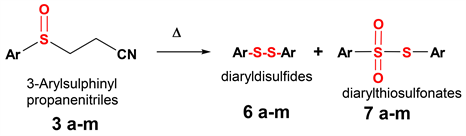
<?xml version="1.0" encoding="UTF-8"?><!DOCTYPE article  PUBLIC "-//NLM//DTD Journal Publishing DTD v3.0 20080202//EN" "http://dtd.nlm.nih.gov/publishing/3.0/journalpublishing3.dtd"><article xmlns:mml="http://www.w3.org/1998/Math/MathML" xmlns:xlink="http://www.w3.org/1999/xlink" dtd-version="3.0" xml:lang="en" article-type="research article"><front><journal-meta><journal-id journal-id-type="publisher-id">ABC</journal-id><journal-title-group><journal-title>Advances in Biological Chemistry</journal-title></journal-title-group><issn pub-type="epub">2162-2183</issn><publisher><publisher-name>Scientific Research Publishing</publisher-name></publisher></journal-meta><article-meta><article-id pub-id-type="doi">10.4236/abc.2021.115017</article-id><article-id pub-id-type="publisher-id">ABC-112844</article-id><article-categories><subj-group subj-group-type="heading"><subject>Articles</subject></subj-group><subj-group subj-group-type="Discipline-v2"><subject>Chemistry&amp;Materials Science</subject></subj-group></article-categories><title-group><article-title>
 
 
  Synthesis and &lt;i&gt;In Vitro&lt;/i&gt; Anti-Helicobacter and Anti-Staphylococcal Activities of Novel Diaryldisulfides and Diarylthiosulfonates
 
</article-title></title-group><contrib-group><contrib contrib-type="author" xlink:type="simple"><name name-style="western"><surname>Muhammad</surname><given-names>Akram Khan</given-names></name><xref ref-type="aff" rid="aff1"><sup>1</sup></xref></contrib><contrib contrib-type="author" xlink:type="simple"><name name-style="western"><surname>Keith</surname><given-names>Miller</given-names></name><xref ref-type="aff" rid="aff1"><sup>1</sup></xref></contrib><contrib contrib-type="author" xlink:type="simple"><name name-style="western"><surname>Kirstie</surname><given-names>Rawson</given-names></name><xref ref-type="aff" rid="aff1"><sup>1</sup></xref></contrib><contrib contrib-type="author" xlink:type="simple"><name name-style="western"><surname>Yong</surname><given-names>Zhou</given-names></name><xref ref-type="aff" rid="aff1"><sup>1</sup></xref></contrib></contrib-group><aff id="aff1"><addr-line>Biomedical Research Centre, Sheffield Hallam University, Sheffield, UK</addr-line></aff><pub-date pub-type="epub"><day>26</day><month>09</month><year>2021</year></pub-date><volume>11</volume><issue>05</issue><fpage>251</fpage><lpage>265</lpage><history><date date-type="received"><day>28,</day>	<month>June</month>	<year>2021</year></date><date date-type="rev-recd"><day>26,</day>	<month>October</month>	<year>2021</year>	</date><date date-type="accepted"><day>29,</day>	<month>October</month>	<year>2021</year></date></history><permissions><copyright-statement>&#169; Copyright  2014 by authors and Scientific Research Publishing Inc. </copyright-statement><copyright-year>2014</copyright-year><license><license-p>This work is licensed under the Creative Commons Attribution International License (CC BY). http://creativecommons.org/licenses/by/4.0/</license-p></license></permissions><abstract><p>
 
 
  Arylthiols were reacted with acrylonitrile under basic conditions to form the corresponding aryl
   
  sulfides which were oxidised with sodium metaperiodate in aqueous methanol to yield 3-arylsulphinylpropanenitriles that upon thermolysis in refluxing toluene produced a mixture of diarylthiosulfonates and diaryldisulfides. The mixture of 
  the 
  two products w
  as
   easily separated by flash chromatography and characterized spectroscopically. The diarylthiosulfonates and diaryldisulfides, garlic-like organosulfur compounds, were tested for their antimicrobial properties against Escherichia coli, Pseudomonas aeruginosa, Staphylococcus aureus and Helicobacter pylori and had been found to have good activity against S. aureas and H. pylori with no activity against the other two organisms.
 
</p></abstract><kwd-group><kwd>Diarylthiosulfonates</kwd><kwd> Diaryldisulfides</kwd><kwd> &lt;i&gt;Helicobacter pylori&lt;/i&gt;</kwd><kwd> Arylsulfenic Acids</kwd><kwd> Michael Reaction</kwd></kwd-group></article-meta></front><body><sec id="s1"><title>1. Introduction</title><p>The medicinal properties of crushed garlic and onions are well recognized [<xref ref-type="bibr" rid="scirp.112844-ref1">1</xref>] [<xref ref-type="bibr" rid="scirp.112844-ref2">2</xref>]. The natural products in garlic responsible for the therapeutic actions are identified as the thiosulfinate esters alliin (S-allyl-L-cysteine sulfoxide) and allicin (diallylthiosulfinate) (<xref ref-type="fig" rid="fig1">Figure 1</xref>) which have been reported to have a broad range of biological activities such as for example anti-inflammatory [<xref ref-type="bibr" rid="scirp.112844-ref1">1</xref>] and antibacterial [<xref ref-type="bibr" rid="scirp.112844-ref3">3</xref>] [<xref ref-type="bibr" rid="scirp.112844-ref4">4</xref>] actions.</p><p>In the laboratory synthetic versions of thiosulfinate esters have usually been made by either the oxidation of diaryldisulfides [<xref ref-type="bibr" rid="scirp.112844-ref5">5</xref>] [<xref ref-type="bibr" rid="scirp.112844-ref6">6</xref>] [<xref ref-type="bibr" rid="scirp.112844-ref7">7</xref>] [<xref ref-type="bibr" rid="scirp.112844-ref8">8</xref>] with peracids or by condensation of a sulfinyl chloride with a thiol in the presence of a tertiary amine [<xref ref-type="bibr" rid="scirp.112844-ref8">8</xref>] [<xref ref-type="bibr" rid="scirp.112844-ref9">9</xref>] [<xref ref-type="bibr" rid="scirp.112844-ref10">10</xref>]. A third method which has been little used for making symmetrical diarylthiosulfinates involves the condensation of arylsulfenic acids generated in situ by thermolysis of arylsulfoxides possessing β-hydrogens. The β-elimination of sulfoxides to yield sulfenic acids and the condensation of sulfenic acids to form thiosulfinate esters are well documented in the literature [<xref ref-type="bibr" rid="scirp.112844-ref11">11</xref>] (<xref ref-type="fig" rid="fig2">Figure 2</xref>).</p><p>In our previously reported synthesis of phenylsulfinyl alkene derivatives by the Markovnikov addition of benzenesulfenic acid to terminal alkynes, generated in situ by thermolysis of 3-phenylsulfinylpropanenitrile [<xref ref-type="bibr" rid="scirp.112844-ref12">12</xref>] the diphenylthiosulfinate produced as a by-product was always disposed of. In this article, we report this synthetic strategy of making diarylthiosulfinates by condensation of arylsulfenic acids in the absence of any terminal alkynes as trapping agents.</p><p>The antimicrobial activity of garlic is mainly due to the thiosulfinate ester called allicin and is reported to be three times more effective on Gram-positive bacteria than Gram-negative ones [<xref ref-type="bibr" rid="scirp.112844-ref13">13</xref>]. The antibacterial activity of aqueous garlic extract against 16 H. pylori strains has been assessed and MIC<sub>50</sub> concentrations in the range 2 - 5 mg ml<sup>−1</sup> were able to inhibit the strains. In most cases, the inhibitory concentrations [<xref ref-type="bibr" rid="scirp.112844-ref4">4</xref>] were also bactericidal.</p><p>Helicobacter pylori and its clinical association with the development of peptic ulcers has led to the development of various chemotherapeutic agents to eliminate infection caused by this pathogen [<xref ref-type="bibr" rid="scirp.112844-ref14">14</xref>] [<xref ref-type="bibr" rid="scirp.112844-ref15">15</xref>] [<xref ref-type="bibr" rid="scirp.112844-ref16">16</xref>] [<xref ref-type="bibr" rid="scirp.112844-ref17">17</xref>] [<xref ref-type="bibr" rid="scirp.112844-ref18">18</xref>]. H. pylori is also implicated in the development of acute and chronic gastritis, gastric adenocarcinoma and gastric lymphoma (MALT), and has been classified as a class I carcinogen in humans and is a major contributing factor in the development of gastric cancer [<xref ref-type="bibr" rid="scirp.112844-ref19">19</xref>]. Infection with H. pylori is typically treated with a combination of clartithromycin, ampicillin and a proton pump inhibitor, but this triple therapy approach is costly [<xref ref-type="bibr" rid="scirp.112844-ref20">20</xref>]. The infection is eradicated in up to 90% of patients but side effects, poor compliance and the development of antimicrobial resistance are common causes of treatment failure [<xref ref-type="bibr" rid="scirp.112844-ref21">21</xref>]. H. pylori infection has been implicated with increased COX-2 expression in gastric antral mucosa for both NSAID users and non-users [<xref ref-type="bibr" rid="scirp.112844-ref22">22</xref>] [<xref ref-type="bibr" rid="scirp.112844-ref23">23</xref>] [<xref ref-type="bibr" rid="scirp.112844-ref24">24</xref>]. We have been engaged with the search for compounds with anti-H. pylori activity and have recently reported anti-H. pylori activity of novel quinoline-derived propionic acid esters [<xref ref-type="bibr" rid="scirp.112844-ref25">25</xref>]. In this paper, we report the synthesis and antimicrobial activities of a set of diaryl disulfides 6 and diaryl thiosulfonates 7.</p><p>Staphylococcus aureus is a versatile pathogen that can cause a range of infectious diseases ranging from superficial skin infections to life-threatening septicaemia. The emergence of antibiotic-resistant strains of S. aureus including MRSA, VISA, LRSA and multi-drug resistant isolates has led to a great deal of interest in developing novel anti-staphylococcal agents [<xref ref-type="bibr" rid="scirp.112844-ref26">26</xref>] [<xref ref-type="bibr" rid="scirp.112844-ref27">27</xref>] [<xref ref-type="bibr" rid="scirp.112844-ref28">28</xref>].</p><p>Escherichia coli is a common commensal organism in the human gastrointestinal tract but it is also a significant pathogen that can cause a range of human infections including diarrheal diseases and urinary tract infections through wound infections and life-threatening ulcerative colitis and septicaemia [<xref ref-type="bibr" rid="scirp.112844-ref29">29</xref>] [<xref ref-type="bibr" rid="scirp.112844-ref30">30</xref>].</p><p>Due to the structural similarity of our synthetic compounds 6 and 7 to thiosulfinate esters found in garlic, we decided to investigate their preliminary antimicrobial activity against Helicobacter pylori and a Gram-positive bacterium, Staphylococcus aureus (including resistant strains of this species), and the Gram-negative bacterium, Escherichia coli.</p></sec><sec id="s2"><title>2. Results and Discussion</title><sec id="s2_1"><title>2.1. Chemistry</title><p>Conjugate addition of thiolate anions to acrylonitrile furnished the arylsulfides 2a-i and 2k-m in excellent date yields (93% - 98%) with 2j obtained in 82% yield. Sodium metaperiodate is a specific oxidising agent for converting sulfides into sulfoxides. Thus oxidation of the sulfides 2a-m with one-molar equivalent of sodium metaperiodate in aqueous methanol yielded the corresponding sulfoxides 3a-m which were isolated in good yields (63% - 89%) and characterised spectroscopically. The FTIR spectra showed the &gt;S=O absorbance at 1043 - 1093 cm<sup>−1</sup>. Upon refluxing in toluene under nitrogen the sulfoxides 3a-m thermolized to furnish the disulfides 6a-m and diarythiosulfonates 7a-m as the only reaction products according to TLC analysis. The mixtures diaryldisulfides6a-m and diarylthiosulfonates 7a-m were separated and isolated by flash chromatography (Scheme 1).</p><p>Our disappointment in not obtaining the anticipated diarylthiosulfinates 5 as reaction products was shown by subsequent literature search that described diarylthiosulfinates 5 to be thermally unstable compounds due to the weak S-S bond (bond strength ~ 35 kcal) [<xref ref-type="bibr" rid="scirp.112844-ref31">31</xref>]. Thermolysis of the sulfoxides 3 initially generates arylsulfenic acids 4 which by virtue of their high reactivity condense to</p><p>form diarylthiosulfinates 5 and water. Compounds of the formula RS(O)SR tend to be unstable and usually cannot be isolated. At the high temperature of the reaction the weak sulfinyl-sulfide S-S bond cleaves homolytically to generate radical pairs [<xref ref-type="bibr" rid="scirp.112844-ref32">32</xref>]. The recombination of arylsulfinyl radicals then produces the isolated symmetrical product 6 (Scheme 2).</p><p>The recombination of arylsulfinyl radicals did not produce any of the anticipated α,α’-diaryldisulfoxide 8 as reaction product [<xref ref-type="bibr" rid="scirp.112844-ref33">33</xref>] [<xref ref-type="bibr" rid="scirp.112844-ref34">34</xref>] but instead produced the thiosulfonate 7 as the isolated reaction product. The only evidence to date for the existence of stable α,α-disulfoxides has been provided by bridged bicyclic compound 9 [<xref ref-type="bibr" rid="scirp.112844-ref35">35</xref>].</p></sec><sec id="s2_2"><title>2.2. Microbiological Results and Discussion</title><p>An increase in resistance of bacteria and fungi towards currently available antibacterial and antifungal agents has resulted in a huge demand for the identification of novel antimicrobial agents. This is due to the rapid development of antimicrobial-resistant bacterial and fungal strains as well as a lack of new antimicrobial drugs that are effective against these resistant strains. Antimicrobial screening assays provide a robust method for the discovery of potential inhibitors of microbial growth. Due to the structural similarity of our synthetic compounds 6 and 7 to thiosulfinate esters found in garlic we decided to investigate their preliminary antimicrobial activity against Helicobacter pylori and a Gram-positive bacterium, Staphylococcus aureus (including resistant strains of this species, and the Gram-negative bacterium, Escherichia coli. The diarylthiosulfonates 7d, 7h, 7j, 7k, 7l and 7m and diaryldisulfides 6d, 6h, 6j, 6k, 6l and 6m were dissolved in 50% DMSO and tested for their antimicrobial activities using the broth microdilution method (<xref ref-type="table" rid="table1">Table 1</xref>).</p><table-wrap id="table1" ><label><xref ref-type="table" rid="table1">Table 1</xref></label><caption><title> Antimicrobial activity of compounds 6a-f, 6h, 6j, 6k-m and 7b-e, 7g-h, 7j-l</title></caption><table><tbody><thead><tr><th align="center" valign="middle" >Compound</th><th align="center" valign="middle" >MIC (μg/ml) H. pylori 3339</th><th align="center" valign="middle" >MIC (μg/ml) H. pylori 26695</th><th align="center" valign="middle" >MIC (μg/ml) E. coli</th><th align="center" valign="middle" >MIC (μg/ml) S. aureus</th></tr></thead><tr><td align="center" valign="middle" >6a</td><td align="center" valign="middle" ></td><td align="center" valign="middle" ></td><td align="center" valign="middle" >&gt;256</td><td align="center" valign="middle" ></td></tr><tr><td align="center" valign="middle" >6b</td><td align="center" valign="middle" >64</td><td align="center" valign="middle" >32</td><td align="center" valign="middle" >&gt;256</td><td align="center" valign="middle" >64</td></tr><tr><td align="center" valign="middle" >6c</td><td align="center" valign="middle" >32</td><td align="center" valign="middle" >64</td><td align="center" valign="middle" ></td><td align="center" valign="middle" ></td></tr><tr><td align="center" valign="middle" >6d</td><td align="center" valign="middle" >64</td><td align="center" valign="middle" >128</td><td align="center" valign="middle" ></td><td align="center" valign="middle" ></td></tr><tr><td align="center" valign="middle" >6e</td><td align="center" valign="middle" >16</td><td align="center" valign="middle" >32</td><td align="center" valign="middle" >&gt;256</td><td align="center" valign="middle" >&gt;256</td></tr><tr><td align="center" valign="middle" >6f</td><td align="center" valign="middle" ></td><td align="center" valign="middle" ></td><td align="center" valign="middle" >&gt;256</td><td align="center" valign="middle" >&gt;256</td></tr><tr><td align="center" valign="middle" >6h</td><td align="center" valign="middle" >32</td><td align="center" valign="middle" >32</td><td align="center" valign="middle" >&gt;256</td><td align="center" valign="middle" >4</td></tr><tr><td align="center" valign="middle" >6j</td><td align="center" valign="middle" >16</td><td align="center" valign="middle" >32</td><td align="center" valign="middle" >&gt;256</td><td align="center" valign="middle" >16</td></tr><tr><td align="center" valign="middle" >6k</td><td align="center" valign="middle" >32</td><td align="center" valign="middle" >32</td><td align="center" valign="middle" >&gt;256</td><td align="center" valign="middle" >8</td></tr><tr><td align="center" valign="middle" >6l</td><td align="center" valign="middle" >16</td><td align="center" valign="middle" >64</td><td align="center" valign="middle" >&gt;256</td><td align="center" valign="middle" >16</td></tr><tr><td align="center" valign="middle" >6m</td><td align="center" valign="middle" >64</td><td align="center" valign="middle" >64</td><td align="center" valign="middle" ></td><td align="center" valign="middle" ></td></tr><tr><td align="center" valign="middle" >7b</td><td align="center" valign="middle" >16</td><td align="center" valign="middle" >64</td><td align="center" valign="middle" >&gt;256</td><td align="center" valign="middle" >32</td></tr><tr><td align="center" valign="middle" >7c</td><td align="center" valign="middle" >16</td><td align="center" valign="middle" >32</td><td align="center" valign="middle" ></td><td align="center" valign="middle" ></td></tr><tr><td align="center" valign="middle" >7d</td><td align="center" valign="middle" ></td><td align="center" valign="middle" >32</td><td align="center" valign="middle" >&gt;256</td><td align="center" valign="middle" >16</td></tr><tr><td align="center" valign="middle" >7e</td><td align="center" valign="middle" >32</td><td align="center" valign="middle" >64</td><td align="center" valign="middle" >&gt;256</td><td align="center" valign="middle" >128</td></tr><tr><td align="center" valign="middle" >7g</td><td align="center" valign="middle" >16</td><td align="center" valign="middle" >16</td><td align="center" valign="middle" >&gt;256</td><td align="center" valign="middle" >32</td></tr><tr><td align="center" valign="middle" >7h</td><td align="center" valign="middle" >64</td><td align="center" valign="middle" >&gt;128</td><td align="center" valign="middle" >&gt;256</td><td align="center" valign="middle" >4</td></tr><tr><td align="center" valign="middle" >7j</td><td align="center" valign="middle" >16</td><td align="center" valign="middle" >64</td><td align="center" valign="middle" >&gt;256</td><td align="center" valign="middle" >32</td></tr><tr><td align="center" valign="middle" >7k</td><td align="center" valign="middle" >16</td><td align="center" valign="middle" >32</td><td align="center" valign="middle" >&gt;256</td><td align="center" valign="middle" >2</td></tr><tr><td align="center" valign="middle" >7l</td><td align="center" valign="middle" >32</td><td align="center" valign="middle" >32</td><td align="center" valign="middle" >&gt;256</td><td align="center" valign="middle" >&gt;256</td></tr><tr><td align="center" valign="middle" >Ampicillin</td><td align="center" valign="middle" >0.032</td><td align="center" valign="middle" >0.032</td><td align="center" valign="middle" >4</td><td align="center" valign="middle" >4</td></tr><tr><td align="center" valign="middle" >Ciprofloxacin</td><td align="center" valign="middle" >0.5</td><td align="center" valign="middle" >0.5</td><td align="center" valign="middle" >0.06</td><td align="center" valign="middle" >0.25</td></tr><tr><td align="center" valign="middle" >Tetracycline</td><td align="center" valign="middle" >1</td><td align="center" valign="middle" >1</td><td align="center" valign="middle" >1</td><td align="center" valign="middle" >1</td></tr></tbody></table></table-wrap><p>Although there was no antimicrobial activity of any of the compounds against the Gram-negative pathogen E. coli there was some very promising effect on the common Gram-positive pathogen S. aureus. Compounds 6 and 7 were significantly inactive in antimicrobial activity against E. coli showing activity only at &gt; 256 μg/mL but displayed modest activity against the other two organisms H. pylori 3339 and S. aureus. All the derivatives 6e, 6j, 6l, 7b, 7c, 7g and 6g as a mixture, 7j and 7k have shown modest antimicrobial activity against H. pylori 3339 when compared with the standard anti-Helicobacter agents shown in <xref ref-type="table" rid="table1">Table 1</xref>. There is a noticeable common Structure-Activity Relationship (SAR) observed in inhibitory activity for the two different sets of compounds 6 and 7 on the H. pylori strain 3339. It was seen that when the aromatic rings in compounds 6 and 7 are ortho- and para-substituted with -OMe, -Cl and -Br groups the compounds tend to have the lowest concentration inhibitory effects overall. On the other hand some of the compounds 6 and 7 have shown modest to good antimicrobial activity against S. aureus In particular the diaryldisulfides 6h, 6k and diarylthiosulfonates 7h and 7k gave the lowest inhibitory responses that are either equal or better than ampicillin. Thus, it is interesting to note that diarylthiosulfonate 7k is the most active at 2 μg/mL whilst its counterpart diaryldisulfide 6k inhibits at a somewhat higher concentration of 8 μg/mL. Similarly the 2-chloro derivatives of 6 and 7 showed good inhibitory action against S. aureus at 4 μg/mL. Thus, a noticeable structure-activity feature of the most promising four active compounds 6h, 6k, 7h and 7k is the presence of chloro- or bromo-groups in the 2-position of the aromatic rings. We conclude that for good inhibitory activity against S. aureus compounds 6 and 7 require of an ortho-substituted chlorine or bromine atoms as best candidates for further antibacterial studies.</p></sec></sec><sec id="s3"><title>3. Experimental</title><sec id="s3_1"><title>3.1. General Methods</title><p>Melting points are uncorrected and were determined on Stuart Scientific SMP3 apparatus. Infrared spectra were recorded with an ATI Mattson Genesis series FTIR spectrophotometer. <sup>1</sup>H NMR and <sup>13</sup>C NMR spectra were recorded in CDCl<sub>3</sub> using a Bruker AC 250 spectrometer operating at 250 and 62.9 MHz, respectively. Chemical shifts (δ) are in ppm downfield from Me<sub>4</sub>Si as internal standard and J values are given in Hz. Mass spectra were recorded with EI-VG 7070E mass spectrometer. Accurate masses were determined on VG Autospec, EI mass spectrometer with magnetic sector instrument.</p></sec><sec id="s3_2"><title>3.2. Typical Experimental Procedure for the Formation of Sulfides 2 a-m</title><p>To a magnetically stirred solution of thiol 1 (0.10 mol) and acrylonitrile (20 ml, an excess) in THF (40 ml) at 0˚C was added a solution of tetrabutylammonium fluoride in THF (2 ml) and the mixture was allowed to stir and come to room temperature overnight. The solvent was rotary evaporated and the residue extracted with DCM (160 ml). The organic solution was washed with 2M NaOH solution (2 &#215; 40 ml) and water (50 ml) before being dried over MgSO<sub>4</sub> and evaporated to yield the crude sulfide 2 which according to TLC [1: 5 EtOAc-petrol] did not require any further purification. 2a [<xref ref-type="bibr" rid="scirp.112844-ref12">12</xref>], 2b: oil, 98% yield, IR ν 2248 (CN) cm<sup>−1</sup>; <sup>1</sup>HNMR δ 2.43 (3H, s, CH<sub>3</sub>), 2.56 (2H, t, J = 7.8 Hz, SCH<sub>2</sub>-), 3.10 (2H, t, J = 7.8 Hz, -CH<sub>2</sub>CN), 7.10 - 7.40 (4H, m, Ar); MS m/z 177 (M<sup>+</sup>, 73%), 137 (M-CH<sub>2</sub>CN, 100%); 2c: oil, 93% yield, IR ν 2248 (CN) cm<sup>−1</sup>; <sup>1</sup>HNMR δ 2.35 (3H, s, CH<sub>3</sub>), 2.58 (2H, t, J = 7.8 Hz, SCH<sub>2</sub>-), 3.08 (2H, t, J = 7.8 Hz, -CH<sub>2</sub>CN), 7.03 - 7.30 (4H, m, Ar); EIMS: m/z 177 (M<sup>+</sup>, 64%), 137 (M-CH<sub>2</sub>CN, 100%); 2d: oil, 93% yield, IR ν 2248 (CN) cm<sup>−1</sup>; <sup>1</sup>HNMR δ 2.37 (3H, s, CH<sub>3</sub>), 2.55 (2H, t, J = 7.8 Hz, SCH<sub>2</sub>-), 3.10 (2H, t, J = 7.8 Hz, -CH<sub>2</sub>CN), 7.15 (2H, d, J = 7.5 Hz, AB system Ar), 7.34 (2H, d, J = 7.5 Hz, AB system Ar); EIMS: m/z 177 (M<sup>+</sup>, 64%), 137 (M-CH<sub>2</sub>CN, 100%); 2e: oil, 98% yield, IR ν 2248 (CN) cm<sup>−1</sup>; <sup>1</sup>HNMR δ 2.58 (2H, t, J = 7.8 Hz, SCH<sub>2</sub>-), 3.11 (2H, t, J = 7.8 Hz, -CH<sub>2</sub>CN), 3.90 (3H, s, OCH<sub>3</sub>), 6.83 - 6.94 (2H, m, Ar); 7.23 - 7.40 (2H, m, Ar); EIMS: m/z 193 (M<sup>+</sup>, 100%), 153 (M-CH<sub>2</sub>CN, 69%); 2f: oil, 98% yield, IR ν 2248 (CN) cm<sup>−1</sup>; <sup>1</sup>HNMR δ 2.63 (2H, t, J = 7.8 Hz, SCH<sub>2</sub>-), 3.13 (2H, t, J = 7.8 Hz, -CH<sub>2</sub>CN), 3.80 (3H, s, OCH<sub>3</sub>), 6.80 (1H, d, J = 7.5 Hz, Ar H-4); 6.88 - 7.00 (2H, m, Ar); (1H, t, J = 7.5 Hz, Ar H-5); EIMS: m/z 193 (M<sup>+</sup>, 100%), 153 (M-CH<sub>2</sub>CN, 68%), 140 (M-CH<sub>2</sub>CH<sub>2</sub>CN, 63%); 2g: oil, 93% yield, IR ν 2248 (CN) cm<sup>−1</sup>; <sup>1</sup>HNMR δ 2.52 (2H, t, J = 7.8 Hz, SCH<sub>2</sub>-), 2.98 (2H, t, J = 7.8 Hz, -CH<sub>2</sub>CN), 3.80 (3H, s, OCH<sub>3</sub>), 6.87 (2H, d, J = 7.5 Hz, AB system Ar H-3 and H-5), 7.40 (2H, d, J = 7.5 Hz, AB system Ar H-2 and H-6); EIMS: m/z 193 (M<sup>+</sup>, 100%), 153 (M-CH<sub>2</sub>CN, 77%), 140 (M-CH<sub>2</sub>CH<sub>2</sub>CN, 70%); 2h: oil, 98% yield, IR ν 2252 (CN) cm<sup>−1</sup>; <sup>1</sup>HNMR δ 2.64 (2H, t, J = 7.8 Hz, SCH<sub>2</sub>-), 3.17 (2H, t, J = 7.8 Hz, -CH<sub>2</sub>CN), 7.15 - 7.30 (2H, m, Ar); 7.35 - 7.45 (2H, m, Ar); EIMS: m/z 197.5 (M<sup>+</sup>, 52%), 157.5 (M-CH<sub>2</sub>CN, 100%); 2i: oil, 98% yield, IR ν 2252 (CN) cm<sup>−1</sup>; <sup>1</sup>HNMR δ 2.63 (2H, t, J = 7.8 Hz, SCH<sub>2</sub>-), 3.12 (2H, t, J = 7.8 Hz, -CH<sub>2</sub>CN), 7.17 - 7.30 (3H, m, Ar), 7.37 (1H, s, Ar); EIMS: m/z 197.5 (M<sup>+</sup>, 60%), 157.5 (M-CH<sub>2</sub>CN, 100%); 2j: oil, 82% yield, IR ν 2243 (CN) cm<sup>−1</sup>; <sup>1</sup>HNMR δ 2.58 (2H, t, J = 7.8 Hz, SCH<sub>2</sub>-), 3.12 (2H, t, J = 7.8 Hz, -CH<sub>2</sub>CN), 7.20 - 7.38 (4H, m, Ar); EIMS: m/z 197.5 (M<sup>+</sup>, 56%), 157.5 (M-CH<sub>2</sub>CN, 100%); 2k: oil, 98% yield, IR ν 2248 (CN) cm<sup>−1</sup>; <sup>1</sup>HNMR δ 2.65 (2H, t, J = 7.8 Hz, SCH<sub>2</sub>-), 3.18 (2H, t, J = 7.8 Hz, -CH<sub>2</sub>CN), 7.05 - 7.18 (1H, m, Ar); 7.20 - 7.50 (2H, m, Ar), 7.52 - 7.67 (1H, m, Ar); EIMS: m/z 242 (M<sup>+</sup>, 37%), 202 (M-CH<sub>2</sub>CN, 100%); 2l: oil, 98% yield, IR ν 2243 (CN) cm<sup>−1</sup>; <sup>1</sup>HNMR δ 2.57 (2H, t, J = 7.8 Hz, SCH<sub>2</sub>-), 3.10 (2H, t, J = 7.8 Hz, -CH<sub>2</sub>CN), 7.26 (2H, d, J = 7.5Hz, AB system Ar), 7.45 (2H, d, J = 7.5 Hz, AB system Ar); EIMS: m/z 242 (M<sup>+</sup>, 48%), 202 (M-CH<sub>2</sub>CN, 51%); 2m: oil, 93% yield, IR ν 2248 (CN) cm<sup>−1</sup>; <sup>1</sup>HNMR δ 2.60 (2H, t, J = 7.8 Hz, SCH<sub>2</sub>-), 3.20 (2H, t, J = 7.8 Hz, -CH<sub>2</sub>CN), 7.40 - 7.60 (3H, m, Ar); 7.72 - 7.95 (4H, m, Ar); EIMS: m/z 213 (M<sup>+</sup>, 49%), 202 (M-CH<sub>2</sub>CN, 46%), 43 (100%).</p><p>Typical experimental procedure for the formation of 3-arylsulfinylpropanenitriles 3a-m:</p><p>To a vigorously stirred solution of sodium metaperiodate (0.0763 mol) in water (135 ml) at 0˚C was quickly added a solution of the sulfide 2 (0.0763 mol) in methanol (135 ml) and the mixture was stirred for 22h and allowed to come to RT. The precipitated inorganic solid was filtered at the pump and the mother liquor extracted with DCM (3 &#215; 200 ml). After washing with water (100 ml) the organic layer was dried (MgSO<sub>4</sub>) and evaporated to yield the crude sulfoxide 3 which was purified by flash chromatography [2:3 ethyl acetate-petrol followed by ethyl acetate]. 3a [<xref ref-type="bibr" rid="scirp.112844-ref12">12</xref>], 3b: 82% yield, IR ν 2246 (CN), 1035, 1068 (&gt;S=O) cm<sup>−1</sup>; <sup>1</sup>H NMR δ 2.30 (3H, s, CH<sub>3</sub>), 2.40 - 2.60 (1H, m, -CHCN), 2.75 - 2.93 (2H, m, -SO-CH<sub>2</sub>-), 3.05 - 3.22 (1H, m, -CHCN), 7.10 - 7.25 (1H, m, Ar), 7.30 - 7.45 (2H, m, Ar), 7.67 - 7.80 (1H, m, Ar); EIMS: m/z 193 (M<sup>+</sup>, 29%), 140 (M-CH<sub>2</sub>=CH-CN, 46%), 139 (M-CH<sub>2</sub>CH<sub>2</sub>CN, 60%), 77 (100%); HRMS: Found 193.0565. Calcd. for C<sub>10</sub>H<sub>11</sub>NOS 193.0561; 3c: 85% yield, IR ν 2246 (CN), 1049, 1085 (&gt;S=O) cm<sup>−1</sup>; <sup>1</sup>H NMR δ 2.36 (3H, s, CH<sub>3</sub>), 2.32 - 2.50 (1H, m, -CHCN), 2.72 - 2.95 (2H, m, -SO-CH<sub>2</sub>-), 3.10 - 3.25 (1H, m, -CHCN), 7.20 - 7.40 (4H, m, Ar); EIMS: m/z 193 (M<sup>+</sup>, 14%), 140 (M-CH<sub>2</sub>=CH-CN, 16%), 139 (M-CH<sub>2</sub>CH<sub>2</sub>CN, 67%), 66 (100%); HRMS: Found 193.0568. Calcd. for C<sub>10</sub>H<sub>11</sub>NOS 193.0561; 3d: 76% yield, IR ν 2246 (CN), 1045, 1085 (&gt; S=O) cm<sup>−1</sup>; <sup>1</sup>H NMR δ 2.33 (3H, s, CH<sub>3</sub>), 2.27 - 2.50 (1H, m, -CHCN), 2.70 - 2.95 (2H, m, -SO-CH<sub>2</sub>-), 3.05 - 3.20 (1H, m, -CHCN), 7.30 (2H, d, J = 7.5 Hz, AB system Ar), 7.43 (2H, d, J = 7.5 Hz, AB system Ar); EIMS: m/z 193 (M<sup>+</sup>, 13%), 140 (M-CH<sub>2</sub>=CH-CN, 23%), 139 (M-CH<sub>2</sub>CH<sub>2</sub>CN, 100%), 91 (43%); HRMS: Found 193.0557. Calcd. for C<sub>10</sub>H<sub>11</sub>NOS 193.0561; 3e: 65% yield, IR ν 2246 (CN), 1039, 1068 (&gt;S=O) cm<sup>−1</sup>; <sup>1</sup>H NMR δ 2.25 - 2.45 (1H, m, -CHCN), 2.64 - 2.85 (1H, m, -SO-CH-), 2.97 - 3.13 (1H, m, -SOCH-), 3.15 - 3.34 (1H, m, -CHCN), 2.83 (3H, s, OCH<sub>3</sub>), 6.86 (1H, d, J = 7.5 Hz, Ar), 7.10 (1H, t, J = 7.5 Hz, Ar), 7.43 (1H,t, J = 7.5 Hz, Ar), 7.60 (1H, d, J = 7.5Hz, Ar); EIMS: m/z 209 (M<sup>+</sup>, 18%), 156 (M-CH<sub>2</sub>=CH-CN, 44%), 155 (M-CH<sub>2</sub>CH<sub>2</sub>CN, 100%); HRMS: Found 209.0517. Calcd. for C<sub>10</sub>H<sub>11</sub>NO<sub>2</sub>S 209.0510; 3f: 89% yield, IR ν 2246 (CN), 1043 (&gt;S=O) cm<sup>−1</sup>; <sup>1</sup>H NMR δ 2.32 - 2.52 (1H, m, -CHCN), 2.67 - 2.94 (2H, m, -SO-CH<sub>2</sub>-), 3.05 - 3.22 (1H, m, -CHCN), 2.75 (3H, s, OCH<sub>3</sub>), 6.88 - 7.10 (3H, m, Ar), 7.28 - 7.43 (1H, t, J = 7.5 Hz, Ar); EIMS: m/z 209 (M<sup>+</sup>, 12%), 156 (M-CH<sub>2</sub>=CH-CN, 18%), 155 (M-CH<sub>2</sub>CH<sub>2</sub>CN, 65%); HRMS: Found 209.0515. Calcd for C<sub>10</sub>H<sub>11</sub>NO<sub>2</sub>S 209.0510; 3g: 89% yield, IR ν 2246 (CN), 1043, 1087 (&gt;S=O) cm<sup>−1</sup>; <sup>1</sup>H NMR δ 2.38 - 2.53 (1H, m, -CHCN), 2.69 - 2.95 (2H, m, -SO-CH<sub>2</sub>-), 3.03 - 3.17 (1H, m, -CHCN), 3.77 (3H, s, OCH<sub>3</sub>), 6.97 (2H, d, J = 7.5 Hz, AB system Ar), 7.47 (2H, d, J = 7.5 Hz, AB system Ar); EIMS: m/z 209 (M<sup>+</sup>, 16%), 156 (M-CH<sub>2</sub>=CH-CN, 45%), 155 (M-CH<sub>2</sub>CH<sub>2</sub>CN, 100%); HRMS: Found 209.0509. Calcd for C<sub>10</sub>H<sub>11</sub>NO<sub>2</sub>S 209.0510; 3h: 86% yield, IR ν 2246 (CN), 1043, 1087 (&gt; S=O) cm<sup>−1</sup>; <sup>1</sup>H NMR δ 2.38 - 2.40 (1H, m, -CHCN), 2.70 - 2.90 (1H, m, -SO-CH-), 3.00 - 3.18 (1H, m, -SO-CH-), 3.22 - 3.42 (1H, m, -CHCN), 7.30 - 7.60 (3H, m, Ar), 7.75 (1H, d, J = 7.5 Hz, Ar); EIMS: m/z 213.5 (M<sup>+</sup>, 38%), 160.5 (M-CH<sub>2</sub>=CH-CN, 34%), 159.5 (M-CH<sub>2</sub>-CH<sub>2</sub>CN, 100%); HRMS: Found 213.00146. Calcd for C<sub>9</sub>H<sub>8</sub>NSCl 213.0015 (Cl<sup>35</sup>); 3i: 73% yield, IR ν 2246 (CN), 1051 (&gt;S=O) cm<sup>−1</sup>; <sup>1</sup>H NMR δ 2.40 - 2.58 (1H, m, -CHCN), 2.70 - 2.98 (2H, m, -SO-CH<sub>2</sub>-), 3.10 - 3.28 (1H, m, -CHCN), 7.33 - 7.47 (3H, m, Ar), 7.75 (1H, s, Ar); EIMS: m/z 213.5 (M<sup>+</sup>, 25%), 160.5 (M-CH<sub>2</sub>=CH-CN, 30%), 159.5 (M-CH<sub>2</sub>CH<sub>2</sub>CN, 100%); HRMS: Found 213.0016. Calcd for C<sub>9</sub>H<sub>8</sub>NSCl 213.0015 (Cl<sup>35</sup>); 3j: 66% yield, IR ν 2246 (CN), 1047, 1081 (&gt;S=O) cm<sup>−1</sup>; <sup>1</sup>H NMR δ 2.40 - 2.60 (1H, m, -CHCN), 2.74 - 2.98 (2H, m, -SO-CH<sub>2</sub>-), 3.10 - 3.28 (1H, m, -CHCN), 7.43 - 7.60 (4H, m, Ar); EIMS: m/z 213.5 (M<sup>+</sup>, 15%), 160.5 (M-CH<sub>2</sub>=CH-CN, 25%), 159.5 (M-CH<sub>2</sub>CH<sub>2</sub>CN, 100%); HRMS: Found 213.00146. Calcd for C<sub>9</sub>H<sub>8</sub>NSCl 213.0015 (Cl<sup>35</sup>); 3k: 63% yield, IR ν 2246 (CN), 1056, 1093 (&gt;S=O) cm<sup>−1</sup>; <sup>1</sup>H NMR δ 2.40 - 2.60 (1H, m, -CHCN), 2.76 - 2.98 (1H, m, -SO-CH-), 3.08 - 3.25 (1H, m, -SO-CH-), 3.30 - 3.50 (1H, m, -CHCN), 7.42 (1H, t, J = 7.5 Hz, Ar), 7.50 - 7.65 (2H, m, Ar), 7.77 (1H, d, J = 7.5 Hz, Ar); EIMS: m/z 258 (M<sup>+</sup>, 20%), 205 (M-CH<sub>2</sub>=CH-CN, 29%), 204 (M-CH<sub>2</sub>CH<sub>2</sub>CN, 100%); HRMS: Found 256.9516. Calcd for C<sub>9</sub>H<sub>8</sub>NSBr 256.9510 (Br<sup>79</sup>); 3l: 83% yield, IR ν 2246 (CN), 1047, 1083 (&gt;S=O) cm<sup>−1</sup>; <sup>1</sup>H NMR δ 2.38 - 2.60 (1H, m, -CHCN), 2.74 - 2.97 (2H, m, -SO-CH<sub>2</sub>-), 3.06 - 3.25 (1H, m, -CHCN), 7.44 (2H, d, J = 7.5 Hz, AB system Ar) 7.65 (2H, d, J = 7.5 Hz, AB system Ar); EIMS: m/z 258 (M<sup>+</sup>, 7%), 205 (M-CH<sub>2</sub>=CH-CN, 58%), 204 (M-CH<sub>2</sub>CH<sub>2</sub>CN, 29%); HRMS: Found 256.9518. Calcd for C<sub>9</sub>H<sub>8</sub>NSBr 256.9510 (Br<sup>79</sup>); 3m: 74% yield, IR ν 2246 (CN), 1040, 1068 (&gt;S=O) cm<sup>−1</sup>; <sup>1</sup>H NMR δ 2.35 - 2.53 (1H, m, -CHCN), 2.78 - 3.08 (2H, m, -SO-CH<sub>2</sub>-), 3.10 - 3.35 (1H, m, -CHCN), 7.37 - 7.70 (3H, m, Ar), 77.70 - 8.05 (3H, m, Ar), 8.15 (1H, s, Ar); EIMS: m/z 229 (M<sup>+</sup>, 13%), 176 (M-CH<sub>2</sub>=CH-CN, 35%), 175 (M-CH<sub>2</sub>CH<sub>2</sub>CN, 100%); HRMS: Found 229.0571 Calcd for C<sub>13</sub>H<sub>11</sub>NS 229.0561.</p><p>Typical experimental procedure for the formation of diaryldisulfides 6a-m and diarylthiosulfonates 7a-m:</p><p>The sulfoxide 3 (0.03 mol) in dry toluene (80 ml) was heated at reflux under nitrogen for 2h after which the solvent was evaporated and the residue showing two spots by TLC [1:5 ethyl acetate-petrol] was separated by flash chromatography to yield firstly 6 followed by 7. 6a [<xref ref-type="bibr" rid="scirp.112844-ref12">12</xref>] and 7a [<xref ref-type="bibr" rid="scirp.112844-ref12">12</xref>]. 6b: 32% yield, oil, IR ν 1461, 1041, 1149 cm<sup>−1</sup>; <sup>1</sup>H NMR δ 2.50 (6H, s, 2x CH<sub>3</sub>), 7.13 - 7.30 (6H, m, Ar), 7.55 - 7.65 (2H, d, J = 7.50 Hz, Ar); <sup>13</sup>C NMR δ 20.85, 125.38, 126.05, 130.96, 133.32, 142.08; EIMS: m/z 246 (M<sup>+</sup>, 83%), 123 (M – SC<sub>6</sub>H<sub>4</sub>-Me, 100%); HRMS: Calcd for C<sub>14</sub>H<sub>14</sub>S<sub>2</sub> 246.0537; Found 246.0530; 7b: 30% yield, oil, IR ν 1315, 1145 cm<sup>−1</sup>; <sup>1</sup>H NMR δ 2.15 (3H, s, CH<sub>3</sub>), 2.69 (3H, s, CH<sub>3</sub>), 7.02 - 7.50 (8H, m, Ar); <sup>13</sup>C NMR δ 21.26, 21.64, 125.45, 126.10, 126.80, 128.25, 129.29, 131.24, 132.30, 133.20, 133.58, 137.65, 139.18, 142.10; EIMS: m/z 278 (M<sup>+</sup>, 50%), 123 (M – SC<sub>6</sub>H<sub>4</sub>-Me, 85%); HRMS: Calcd for C<sub>14</sub>H<sub>14</sub>O<sub>2</sub>S<sub>2</sub> 278.04352; Found 278.04356; 6c: 30% yield, oil, IR ν 1079, 1141 cm<sup>−1</sup>; <sup>1</sup>H NMR δ 2.34 (6H, s, 2x CH<sub>3</sub>), 7.05 (2H, d, J = 7.80 Hz, Ar), 7.22 (2H, t, J = 7.80 Hz, Ar), 7.34 - 7.47 (4H, m, Ar); <sup>13</sup>C NMR δ 21.02, 124.22, 125.78, 126.75, 136.05, 140.59; EIMS: m/z 246 (M<sup>+</sup>, 100%), 123 (M – SC<sub>6</sub>H<sub>4</sub>-Me, 77%); HRMS: Found 246.0526. Calcd for C<sub>14</sub>H<sub>14</sub>S<sub>2</sub> 246.0537 7c: 24% yield, oil, IR ν 1318(-SO<sub>2</sub>), 1146 (S-O) cm<sup>−1</sup>; <sup>1</sup>H NMR δ 2.30 (3H, s, CH<sub>3</sub>), 2.35 (3H, s, CH<sub>3</sub>), 7.15 (2H, s, Ar), 7.20 - 7.45 (6H, m, Ar); <sup>13</sup>C NMR δ 21.42, 124.99, 128.28, 128.95, 129.49, 132.54, 133.89, 134.72, 13741, 137.42, 139.71, 143.42, 143.05; EIMS: m/z 278 (M<sup>+</sup>, 47%), 139 (SO<sub>2</sub>C<sub>6</sub>H<sub>4</sub>-Me, 100%); HRMS: Calcd for C<sub>14</sub>H<sub>14</sub>O<sub>2</sub>S<sub>2</sub> 278.04352; Found 278.0447; 6d: 35% yield, mp 45˚C - 47˚C, IR ν 1340, 1116 cm<sup>−1</sup>; <sup>1</sup>H NMR δ 2.34 (6H, s, 2x CH<sub>3</sub>), 7.13 (4H, d, J = 7.80 Hz, AB system Ar), 7.41 (4H, d, J = 7.80 Hz, AB system Ar), <sup>13</sup>C NMR δ 21.48, 128.47, 129.70, 133.85, 137.33; EIMS: m/z 246 (M<sup>+</sup>, 100%), 123 (M – SC<sub>6</sub>H<sub>4</sub>-Me, 86%); HRMS: Calcd for C<sub>14</sub>H<sub>14</sub>S<sub>2</sub> 246.0537; Found 246.05424; 7d: 36% yield, mp 82˚C - 84˚C, IR ν 1321 (-SO<sub>2</sub>), 1137 (S-O) cm<sup>−1</sup>; <sup>1</sup>H NMR δ 2.38 (3H, s, CH<sub>3</sub>), 2.43 (3H, s, CH<sub>3</sub>), 7.07 - 7.30 (4H, m, Ar), 7.46 (2H, d, J = 7.80 Hz, Ar); <sup>13</sup>C NMR δ 21.33, 21.51, 124.44, 127.43, 129.25, 130.08, 136.32, 140.30, 141.93, 144.51; EIMS: m/z 278 (M<sup>+</sup>, 48%), 139 (SO<sub>2</sub>C<sub>6</sub>H<sub>4</sub>-Me, 90%); HRMS: Calcd for C<sub>14</sub>H<sub>14</sub>O<sub>2</sub>S<sub>2</sub> 278.04352; Found 278.0447; 6e: 26% yield, mp 90˚C - 93˚C, IR ν 1238 cm<sup>−1</sup>; <sup>1</sup>H NMR δ 3.91 (6H, s, 2x CH<sub>3</sub>), 6.80 - 7.00 (4H, m, Ar), 7.13 - 7.30 (2H, m, Ar), 7.54 (2H, d, J = 7.60 Hz, Ar); <sup>13</sup>C NMR δ 56.25, 110.92, 121.70, 128.14, 138.68, 156.99; EIMS: m/z 278 (M<sup>+</sup>, 82%), 139 (SC<sub>6</sub>H<sub>4</sub>-OMe, 100%); HRMS: Calcd. for C<sub>14</sub>H<sub>14</sub>O<sub>2</sub>S<sub>2</sub> 278.0435; Found 278.0440; 7e: 35.5% yield, mp 113˚C - 115˚C, IR ν 1247 (-SO<sub>2</sub>), 1095, 1153 (S-O) cm<sup>−1</sup>; <sup>1</sup>H NMR δ 3.82 (3H, s, CH<sub>3</sub>), 3.86 (3H, s, CH<sub>3</sub>), 6.85 (4H, t, J = 7.80, Ar), 7.25 (2H, d, J = 7.80 Hz, Ar), 7.49 (2H, d, J = 7.80 Hz, Ar); <sup>13</sup>C NMR δ 55.82, 56.06, 114.32, 114.72, 115.26, 115.46, 130.14, 130.57, 138.15, 138.60, 162.57, 163.92; EIMS: m/z 310 (M<sup>+</sup>, 44%), 177 (SO<sub>2</sub>C<sub>6</sub>H<sub>4</sub>-OMe, 22%), 155 (SOC<sub>6</sub>H<sub>4</sub>OMe, 62%), 139 (SC<sub>6</sub>H<sub>4</sub>-OMe, 100%); HRMS: Calcd for C<sub>14</sub>H<sub>14</sub>O<sub>4</sub>S<sub>2</sub> 310.0333; Found 310.0344; 6f: 31% yield, oil, IR ν 1249, 1085,1152 cm<sup>−1</sup>; <sup>1</sup>H NMR δ 3.79 (6H, s, 2x CH<sub>3</sub>), 6.78 (2H, d, J = 7.80 Hz, Ar), 7.05 - 7.15 (4H, m, Ar), 7.23 (2H, d, J = 7.8 Hz, Ar); <sup>13</sup>C NMR δ 55.84, 111.09, 114.16, 119.47, 137.02, 161.00; EIMS: m/z 278 (M<sup>+</sup>, 41%), 139 (M-SC<sub>6</sub>H<sub>4</sub>-OMe, 100%); HRMS: Calcd for C<sub>14</sub>H<sub>14</sub>O<sub>2</sub>S<sub>2</sub> 278.0435; Found 278.0439; 7f: 45% yield, oil, IR ν 1286(-SO<sub>2</sub>), 1139,1183 (S-O) cm<sup>−1</sup>; <sup>1</sup>H NMR δ 3.70 (6H, s, 2x OCH<sub>3</sub>), 6.80 - 7.38 (8H, m, Ar); <sup>13</sup>C NMR δ 55.85, 111.20, 112.19, 114.09, 119.36, 120.72, 121.63, 130.10, 130.62, 133.50, 139.64, 160.06, 161.00; EIMS: m/z 310 (M<sup>+</sup>, 73%), 155 (SC<sub>6</sub>H<sub>4</sub>-OMe, 100%); HRMS: Calcd for C<sub>14</sub>H<sub>14</sub>O<sub>4</sub>S<sub>2</sub> 310.0333; Found 310.0340; 6g: 34% yield, oil, IR ν 1030, 1171 cm<sup>−1</sup>; <sup>1</sup>H NMR δ 3.81 (6H, s, 2x OCH<sub>3</sub>), 6.84 (4H, d, J = 7.75 Hz, AB system Ar), 7.41 (4H, d, J = 7.75 Hz, AB system Ar); <sup>13</sup>C NMR δ 55.90, 114.50, 128.54, 130.21, 157.10; EIMS: m/z 278 (M<sup>+</sup>, 95%), 139 (SC<sub>6</sub>H<sub>4</sub>-OMe, 100%); HRMS: Calcd. for C<sub>14</sub>H<sub>14</sub>O<sub>2</sub>S<sub>2</sub> 278.0435; Found 278.0435; 7g: 31% yield, oil, IR ν 1288 (-SO<sub>2</sub>), 1170, 1032 (S-O) cm<sup>−1</sup>; <sup>1</sup>H NMR δ 3.75 (6H, s, 2x OCH<sub>3</sub>), 7.50 (4H, d, J = 7.80 Hz, AB system Ar), 7.65 (4H, d, J = 7.80 Hz, AB system Ar); <sup>13</sup>C NMR δ 55.88, 114.64, 115.28, 124.90, 129.30, 130.37, 130.77, 130.81, 157.45, 165.72; EIMS: m/z 310 (M<sup>+</sup>, 60%), 155 (SC<sub>6</sub>H<sub>4</sub>-OMe, 100%); HRMS: Calcd. for C<sub>14</sub>H<sub>14</sub>O<sub>4</sub>S<sub>2</sub> 310.0333; Found 310.0338; 6h: 41% yield, 88˚C - 90˚C, IR ν 1113, 1446 cm<sup>−1</sup>; <sup>1</sup>H NMR δ 7.12 - 7.30 (4H, m, Ar), 7.38 (2H, d, J = 7.80 Hz, Ar), 7.56 (2H, d, J = 7.80 Hz, Ar), 7.18 - 7.47 (4H, m, Ar), 7.48 - 7.70 (4H, m, Ar); <sup>13</sup>C NMR δ 127.17, 127.47, 127.73, 129.61, 131.80, 134.31; EIMS: m/z 286 (Cl<sup>35</sup>) (M<sup>+</sup>, 90%), 143 (SC<sub>6</sub>H<sub>4</sub>-Cl<sup>35</sup>, 85%); HRMS: Calcd. for C<sub>12</sub>H<sub>8</sub> S<sub>2</sub>Cl<sub>2</sub> 285.9444 (Cl<sup>35</sup>); Found 285.9455; 7h: 37% yield, mp 157˚C - 160˚C, IR ν 1329(-SO<sub>2</sub>), 1147 (S-O) cm<sup>−1</sup>; <sup>1</sup>H NMR δ 7.08 - 7.30 (4H, m, Ar), 7.38 (2H, d, J = 7.80 Hz, Ar), 7.56 (2H, d, J = 7.80 Hz, Ar); <sup>13</sup>C NMR δ 126.54, 127.60, 130.19, 130.91, 132.36, 133.10, 134.76, 139.72, 140.11, 140.21; EIMS: m/z 318 (Cl<sup>35</sup>) (M<sup>+</sup>, 30%), 175 (SO<sub>2</sub>C<sub>6</sub>H<sub>4</sub>-Cl<sup>35</sup>, 35%), 143 (SC<sub>6</sub>H<sub>4</sub>-Cl<sup>35</sup>, 68%), 159 (SOC<sub>6</sub>H<sub>4</sub>-Cl<sup>35</sup>, 71%), 108 (100%); HRMS: Calcd. for C<sub>12</sub>H<sub>8</sub>O<sub>2</sub> S<sub>2</sub>Cl<sub>2</sub> 317.9343 (Cl<sup>35</sup>); Found 317.9330; 6i: 31% yield, oil, IR ν 1127, 1456 cm<sup>−1</sup>; <sup>1</sup>H NMR δ 7.17 - 7.30 (4H, m, Ar), 7.30 - 7.42 (2H, m, Ar), 7.49 (2H, s, Ar); <sup>13</sup>C NMR δ 125.33, 125.59, 129.15, 13.58, 133.50, 137.38; EIMS: m/z 286 (Cl<sup>35</sup>) (M<sup>+</sup>, 100%), 143 (SC<sub>6</sub>H<sub>4</sub>-Cl<sup>35</sup>, 78%); HRMS: Calcd. for C<sub>12</sub>H<sub>8</sub> S<sub>2</sub>Cl<sub>2</sub> 285.9444 (Cl<sup>35</sup>); Found 285.9455; 7i: 32% yield, oil, IR ν 1294 (-SO<sub>2</sub>), 1117 (S-O) cm<sup>−1</sup>; <sup>1</sup>H NMR δ 7.16 - 7.65 (8H, m, Ar); <sup>13</sup>C NMR δ 125.58, 126.39, 127.63, 127.61, 129.10, 130.71, 131.20, 133.61, 133.82, 133.93, 135.36, 140.10; EIMS: m/z 318 (Cl<sup>35</sup>) (M<sup>+</sup>, 41%), 159 (SO<sub>2</sub>C<sub>6</sub>H<sub>4</sub>-Cl<sup>35</sup>, 100%), 143 (SC<sub>6</sub>H<sub>4</sub>-Cl<sup>35</sup>, 64%); HRMS: Calcd. for C<sub>12</sub>H<sub>8</sub>O<sub>2</sub> S<sub>2</sub>Cl<sub>2</sub> 317.9343 (Cl<sup>35</sup>); Found 317.9343; 6j: 53% yield, mp 70 - 72˚C, IR ν 1151 cm<sup>−1</sup>; <sup>1</sup>H NMR δ 7.28 (4H, d, J = 7.80 Hz, AB system Ar), 7.41 (4H, d, J = 7.80 Hz, AB system Ar), 7.28 (2H, t, J = 7.80 Hz, Ar), 7.48 - 7.64 (4H, m, Ar); <sup>13</sup>C NMR δ 129.15, 129.79, 133.51, 135.04; EIMS: m/z 286 (Cl<sup>35</sup>) (M<sup>+</sup>, 86%), 143 (M-SC<sub>6</sub>H<sub>4</sub>-Cl<sup>35</sup>, 100%); HRMS: Calcd. for C<sub>12</sub>H<sub>8</sub> S<sub>2</sub>Cl<sub>2</sub> 285.9444 (Cl<sup>35</sup>); Found 285.9451; 7j: 26%, mp 131˚C - 135˚C, IR ν 1322 (-SO<sub>2</sub>), 1107 (S-O) cm<sup>−1</sup>; <sup>1</sup>H NMR δ 7.25 - 7.39 (4H, m, Ar), 7.42 (2H, d, J = 7.80 Hz, AB system Ar), 7.52 (2H, d, J = 7.80 Hz, Ar); <sup>13</sup>C NMR δ 129.25, 129.60, 130.22, 130.71, 137.98, 138.85, 140.87, 141.65; EIMS: m/z 318 (Cl<sup>35</sup>) (M<sup>+</sup>, 50%), 175(M-SC<sub>6</sub>H<sub>4</sub>-Cl<sup>35</sup>, 85%), 143 (SC<sub>6</sub>H<sub>4</sub>-Cl<sup>35</sup>, 83%), 111 (100%); HRMS: Calcd. for C<sub>12</sub>H<sub>8</sub>O<sub>2</sub> S<sub>2</sub>Cl<sub>2</sub> 317.9343 (Cl<sup>35</sup>); Found 317.9345; 6k: 43% yield, 91˚C - 93˚C, IR ν 1357, 1151 cm<sup>−1</sup>; <sup>1</sup>H NMR δ 7.09 (2H, t, J = 7.80 Hz, Ar), 7.28 (2H, t, J = 7.80 Hz, Ar), 7.54 (4H, d, J = 7.80 Hz, Ar); <sup>13</sup>C NMR δ 121.00, 126.88, 127.83, 128.08, 132.80, 136.06; EIMS: m/z 378 (Br<sup>81</sup>) (M<sup>+</sup>, 28%), 374 (Br<sup>79</sup>) (M<sup>+</sup>, 25%), 189 (SC<sub>6</sub>H<sub>4</sub>-Br<sup>81</sup>, 18%), 187 (SC<sub>6</sub>H<sub>4</sub>-Br<sup>79</sup>, 17%); HRMS: Calcd. for C<sub>12</sub>H<sub>8</sub> S<sub>2</sub>Br<sub>2</sub> 373.8434 (Br<sup>79</sup>); Found 373.8445; 7k: 35% yield, mp 138˚C - 140˚C, IR ν 1326 (-SO<sub>2</sub>), 1151 (S-O) cm<sup>−1</sup>; <sup>1</sup>H NMR δ 7.24 - 7.47 (4H, m, Ar), 7.57 (2H, t, J = 7.80 Hz, Ar), 7.71 (1H, d, J = 7.80 Hz, Ar), 7.80 (1H, d, J = 7.80 Hz, Ar); <sup>13</sup>C NMR δ 121.07, 121.25, 127.18, 128.20, 128.95, 131.07, 131.22, 132.93, 133.52, 134.56, 135.95, 141.82; EIMS: m/z 410 (Br<sup>81</sup>) (M<sup>+</sup>, 17%), 406 (Br<sup>79</sup>) (M<sup>+</sup>, 15%), 221 (SO<sub>2</sub>C<sub>6</sub>H<sub>4</sub>-Br<sup>81</sup>, 18%), 219 (SO<sub>2</sub>C<sub>6</sub>H<sub>4</sub>-Br<sup>79</sup>, 19%), 205 (SOC<sub>6</sub>H<sub>4</sub>Br<sup>81</sup>, 64%), 203 (SOC<sub>6</sub>H<sub>4</sub>Br<sup>79</sup>, 61%), 108 (100%); HRMS: Calcd. for C<sub>12</sub>H<sub>8</sub> O<sub>2</sub>S<sub>2</sub>Br<sub>2</sub> 405.8332 (Br<sup>79</sup>); Found 405.8344; 6l: 57% yield, 87˚C - 88˚C, IR ν 1149 cm<sup>−1</sup>; <sup>1</sup>H NMR δ 7.34 (4H, d, J = 7.80 Hz, AB system Ar), 7.43 (4H, d, J = 7.80 Hz, AB system Ar); <sup>13</sup>C NMR δ 121.43, 129.28, 132.09, 135.62; EIMS: m/z 378 (Br<sup>81</sup>) (M<sup>+</sup>, 52%), 374 (Br<sup>79</sup>) (M<sup>+</sup>, 52%), 189 (SC<sub>6</sub>H<sub>4</sub>-Br<sup>81</sup>, 60%), 187 (SC<sub>6</sub>H<sub>4</sub>-Br<sup>79</sup>, 57%); HRMS: Calcd for C<sub>12</sub>H<sub>8</sub> S<sub>2</sub>Br<sub>2</sub> 373.8434 (Br<sup>79</sup>); Found 373.8439; 7l: 28% yield, mp 105˚C - 107˚C, IR ν 1323 (-SO<sub>2</sub>), 1142 (S-O) cm<sup>−1</sup>; <sup>1</sup>H NMR δ 7.24 (2H, d, J = 7.80 Hz, AB system, Ar), 7.44 (2H, d, J = 7.80 Hz, AB system, Ar), 7.52 (2H, d, J = 7.80 Hz, AB system Ar), 7.60 (2H, d, J = 7.80 Hz, AB system Ar); <sup>13</sup>C NMR δ 126.49, 126.88, 128.82, 129.06, 132.10, 132.78, 137.70, 141.75; EIMS: m/z 410 (Br<sup>81</sup>) (M<sup>+</sup>, 38%), 406 (Br<sup>79</sup>) (M<sup>+</sup>, 33%), 221 (SC<sub>6</sub>H<sub>4</sub>-Br<sup>81</sup>, 52%), 199 (SC<sub>6</sub>H<sub>4</sub>-Br<sup>79</sup>, 51%), 108 (100%); HRMS: Calcd for C<sub>12</sub>H<sub>8</sub> O<sub>2</sub>S<sub>2</sub>Br<sub>2</sub> 405.8332 (Br<sup>79</sup>); Found 405.8321; 6m: 46% yield,; IR ν 1149 cm<sup>−1</sup>; <sup>1</sup>H NMR δ 7.54 (2H, d, J = 7.80 Hz, H-3), 7.60 (4H, m, H-6, H-7), 7.86 (2H, s, H-1), 7.98 (4H, m, H-4, H-8), 8.06 (2H, d, J = 7.80 Hz, H-4); <sup>13</sup>C NMR δ 126.58, 126.90, 128.09, 128.55, 129.30, 129.63, 129.68, 129.76; EIMS: m/z 318 (M<sup>+</sup>, 48%), 159 (SC<sub>10</sub>H<sub>7</sub>, 59%), 115 (100%); HRMS: Calcd. for C<sub>20</sub>H<sub>14</sub>S<sub>2</sub> 318.0537; Found 318.0536; 7m: 40% yield, IR ν 1323(-SO<sub>2</sub>), 1124 (S-O) cm<sup>−1</sup>; <sup>1</sup>H NMR δ 7.24 (1H, d, J = 7.80 Hz, H-3’), 7.60 (5H, m, H-1’, H-6, H-6’, H-7, H-7’), 7.85 (5H, m, H-4’, H-5, H-5’, H-8, H-8’), 8.15 (1H, d, J = 7.80 Hz, H-3), 8.38 (1H, d, J = 7.80 Hz, H-4), 8.85 (1H, s, H-1); <sup>13</sup>C NMR δ 126.05, 126.60, 126.88, 127.06, 128.10, 128.71, 129.30, 129.35, 129.41, 129.69, 129.80, 129.90, 130.2; EIMS: m/z 350 (M<sup>+</sup>, 10%), 159 (SC<sub>10</sub>H<sub>7</sub>, 51%), 115 (100%); HRMS: Calcd for C<sub>20</sub>H<sub>14</sub>O<sub>2</sub>S<sub>2</sub> 350.0435; Found 350.0436.</p></sec><sec id="s3_3"><title>3.3. Microbiological Methods<sup> </sup></title><p>Microorganisms: E. coli (JM 109) and S. aureus (SH1000) control strains were used to test antimicrobial activity. The series of compounds 6 and 7 were dissolved in DMSO to produce various concentrations which were refrigerated.</p><p>Inoculum: E. coli and S. aureus microorganisms were grown on Muller-Hinton Broth (MHB) for 24 hours at 37˚C. Starting innocula were prepared by diluting overnight cultures in fresh MHB to a culture density of 1 &#215; 10<sup>6</sup> cfu/ml. Minimum Inhibitory Concentrations (MIC) were determined according to the BSAC broth microdilution MIC methodology described by Andrews (2001).</p></sec></sec><sec id="s4"><title>4. Conclusion</title><p>We have shown how diarylthiosulfonates and diaryldisulfides, garlic-like organosulphur compounds can be conveniently synthesised in two steps in good yields. These compounds were tested for their antimicrobial properties against Escherichia coli, Pseudomonas aeruginosa, Staphylococcus aureus and Helicobacter pylori and had been found to have good activity against S. aureas and H. pylori with no activity against the other two organisms. SAR analysis of the results has shown the presence of chloro- or bromo-groups in the 2-position of the aromatic rings to be crucial for antimicrobial activities. By SAR analysis the most promising four active compounds were 6h, 6k, 7h and 7k against Gram-positive organisms H. pylori and S. aureus. These compounds offer the promising prospects for development into clinical candidates by further studies.</p></sec><sec id="s5"><title>Acknowledgements</title><p>The authors thank Smith, T.J., Biomedical Research Centre (BMRC), Sheffield Hallam University, for use of microbiological facilities. We thank David Kelly (University of Sheffield) for generous donations of the H. pylori strains used in these studies. We also thank Kevin Osborne and Daniel Kinsman for recording the large volume of NMR and MS data respectively. We express our thanks to Simon Thorpe, Chemistry Department, and the University of Sheffield for the measurement of accurate masses.</p></sec><sec id="s6"><title>Conflicts of Interest</title><p>These studies were supported by the BMRC and there is no conflict of interest to disclose.</p></sec><sec id="s7"><title>Cite this paper</title><p>Khan, M.A., Miller, K., Rawson, K. and Zhou, Y. (2021) Synthesis and In Vitro Anti-Helicobacter and Anti-Staphylococcal Activities of Novel Diaryldisulfides and Diarylthiosulfonates. Advances in Biological Chemistry, 11, 251-265. https://doi.org/10.4236/abc.2021.115017</p></sec><sec id="s8"><title>Graphical Abstract</title><p><img src="//html.scirp.org/file/5-1350571x6.png?20211029090151596" /></p></sec></body><back><ref-list><title>References</title><ref id="scirp.112844-ref1"><label>1</label><mixed-citation publication-type="other" xlink:type="simple">Afzal, M., Ali, M., Thomson, M. and Armstrong, D. (2000) Garlic and Its Medicinal Potential. Inflammopharmacology, 8, 123-148.  
https://doi.org/10.1163/15685600038134</mixed-citation></ref><ref id="scirp.112844-ref2"><label>2</label><mixed-citation publication-type="other" xlink:type="simple">Ankri, S. and Mirelman, D. (1999) Antimicrobial Properties of Allicin from Garlic. Microbes and Infection, 1, 125-129.  
https://doi.org/10.1016/S1286-4579(99)80003-3</mixed-citation></ref><ref id="scirp.112844-ref3"><label>3</label><mixed-citation publication-type="other" xlink:type="simple">Slusarenko, A.J., et al. (2014) Allicin: Chemistry and Biological Properties. Molecules, 19, 12591-12618.</mixed-citation></ref><ref id="scirp.112844-ref4"><label>4</label><mixed-citation publication-type="other" xlink:type="simple">Cellini, L., Campli, E.D., Masulli, M., Bartolomeo, S.D. and Allocati, N. (1996) Inhibition of Helicobacter pylori by Garlic Extract (Allium sativum). FEMS Immunology &amp; Medical Microbiology, 13, 273-277.  
https://doi.org/10.1111/j.1574-695X.1996.tb00251.x</mixed-citation></ref><ref id="scirp.112844-ref5"><label>5</label><mixed-citation publication-type="other" xlink:type="simple">Ross, Z.M., O’Gara, E.A., Hill, D.J., Sleightholme, H.V. and Maslin, D.J. (2001) Antimicrobial Properties of Garlic Oil against Human Enteric Bacteria: Evaluation of Methodologies and Comparisons with Garlic Oil Sulfides and Garlic Powder. Applied and Environmental Microbiology, 67, 475-480.</mixed-citation></ref><ref id="scirp.112844-ref6"><label>6</label><mixed-citation publication-type="book" xlink:type="simple">Field, L. (1977) Disulfides and Polysulfides. In: Oae, S., Ed., Organic Chemistry of Sulfur, Springer, Boston, 303-382.  
https://doi.org/10.1007/978-1-4684-2049-4_7</mixed-citation></ref><ref id="scirp.112844-ref7"><label>7</label><mixed-citation publication-type="other" xlink:type="simple">Benassi, R., Fiandri, L.G. and Ferdinando, T. (1997) Ab-Initio MO Study of the Peracid Oxidation of Dimethyl Thiosulfinate. The Journal of Organic Chemistry, 62, 8018-8023. https://doi.org/10.1021/jo970758+</mixed-citation></ref><ref id="scirp.112844-ref8"><label>8</label><mixed-citation publication-type="other" xlink:type="simple">Wang, Y. and Espenson, J.H. (2000) Oxidation of Symmetric Disulfides with Hydrogen Peroxide Catalyzed by Methyltrioxorhenium(VII). The Journal of Organic Chemistry, 65, 104-107. https://doi.org/10.1021/jo991109w</mixed-citation></ref><ref id="scirp.112844-ref9"><label>9</label><mixed-citation publication-type="other" xlink:type="simple">Oae, S., Takata, T. and Kim, Y.H. (1981) Reaction of Organic Sulfur Compounds with Superoxide Anion—III: Oxidation of Organic Sulfur Compounds to Sulf1nic and Sulfonic Acids. Tetrahedron, 37, 37-44.  
https://doi.org/10.1016/S0040-4020(01)97712-9</mixed-citation></ref><ref id="scirp.112844-ref10"><label>10</label><mixed-citation publication-type="other" xlink:type="simple">Kamigata, N., Sawada, H. and Kobayashi, M. (1983) Reactions of Arenesulfonyl Chlorides with Olefins Catalyzed by a Ruthenium(II) Complex. The Journal of Organic Chemistry, 48, 3793-3796. https://doi.org/10.1021/jo00169a038</mixed-citation></ref><ref id="scirp.112844-ref11"><label>11</label><mixed-citation publication-type="other" xlink:type="simple">Jones, D.N. (1984) Conjugate Additions to α,β-Unsaturated Sulphoxides: Syntheses of Cyclopentenones and 9-Deoxyprostanoids. Journal of the Chemical Society, Perkin Transactions 1, 1, 2049-2060. https://doi.org/10.1039/P19840002049</mixed-citation></ref><ref id="scirp.112844-ref12"><label>12</label><mixed-citation publication-type="other" xlink:type="simple">Khan, M.A. (1991) The Synthesis and Regioselectivity of Elimination of Some 1,3-Difunctional Sulphoxides. Journal of Chemical Research, 1991, 62.</mixed-citation></ref><ref id="scirp.112844-ref13"><label>13</label><mixed-citation publication-type="other" xlink:type="simple">Hosseini, S.E., et al. (2014) Antibacterial Effect of Garlic Aqueous Extract on Staphylococcus aureus in Hamburger. Jundishapur Journal of Microbiology, 7, e13134.  
https://doi.org/10.5812/jjm.13134</mixed-citation></ref><ref id="scirp.112844-ref14"><label>14</label><mixed-citation publication-type="other" xlink:type="simple">IARC (1994) IARC Monographs on the Evaluation of Carcinogenic Risks to Humans.</mixed-citation></ref><ref id="scirp.112844-ref15"><label>15</label><mixed-citation publication-type="journal" xlink:type="simple"><name name-style="western"><surname>Kearney</surname><given-names> D.J. </given-names></name>,<etal>et al</etal>. (<year>2003</year>)<article-title>Helicobacter pylori Infection</article-title><source> Current Treatment Options in Infectious Diseases</source><volume> 5</volume>,<fpage> 197</fpage>-<lpage>206</lpage>.<pub-id pub-id-type="doi"></pub-id></mixed-citation></ref><ref id="scirp.112844-ref16"><label>16</label><mixed-citation publication-type="other" xlink:type="simple">Ribeiro, M.L., Vitiello, L., Miranda, M.C., Benvengo, Y.H., Godoy, A.P., Mendonca, S. and Pedrazzoli, J. (2003) Mutations in the 23S rRNA Gene Are Associated with Clarithromycin Resistance in Helicobacter pylori Isolates in Brazil. Annals of Clinical Microbiology and Antimicrobials, 2, Article No. 11.  
https://doi.org/10.1186/1476-0711-2-11</mixed-citation></ref><ref id="scirp.112844-ref17"><label>17</label><mixed-citation publication-type="other" xlink:type="simple">Bazzoli, F., De luca, L. and Graham, D.Y. (2001) Helicobacter pylori Infection and the Use of NSAIDs. Best Practice &amp; Research Clinical Gastroenterology, 15, 775-785. 
https://doi.org/10.1053/bega.2001.0234</mixed-citation></ref><ref id="scirp.112844-ref18"><label>18</label><mixed-citation publication-type="other" xlink:type="simple">Wu, C.Y., Wu, M.S., Chen, C.J., Li, M.C., Lin, J.T. and Chen, G.H. (2005) The Interaction of H. pylori Infection and NSAIDs in Cyclooxygenase-2 mRNA Expression in Gastric Antral, Corpus Mucosa, and Gastric Ulcer. Journal of Clinical Gastroenterology, 39, 50-55.</mixed-citation></ref><ref id="scirp.112844-ref19"><label>19</label><mixed-citation publication-type="other" xlink:type="simple">Brzozowski, T., Konturek, P.C., Konturek, S.J., Brzozowska, I. and Pawlik, T. (2006) Role of Prostaglandins in Gastroprotection and Gastric Adaptation. Journal of Physiology and Pharmacology, 56, 33-55.  
http://www.jpp.krakow.pl/journal/archive/09_05_s5/articles/02_article.html</mixed-citation></ref><ref id="scirp.112844-ref20"><label>20</label><mixed-citation publication-type="other" xlink:type="simple">Marshall, B. and Warren, J. (1984) Unidentified Curved Bacilli in the Stomach of Patients with Gastritis and Peptic Ulceration. The Lancet, 323, 1311-1315. 
https://doi.org/10.1016/S0140-6736(84)91816-6</mixed-citation></ref><ref id="scirp.112844-ref21"><label>21</label><mixed-citation publication-type="other" xlink:type="simple">Warren, J.R. (2000) Gastric Pathology Associated with Helicobacter pylori. Gastroenterology Clinics of North America, 29, 705-751.  
https://doi.org/10.1016/S0889-8553(05)70139-4</mixed-citation></ref><ref id="scirp.112844-ref22"><label>22</label><mixed-citation publication-type="other" xlink:type="simple">Warren, J.R. (2006) Helicobacter: The Ease and Difficulty of a New Discovery (Nobel Lecture). ChemMedChem, 1, 672-685. https://doi.org/10.1002/cmdc.200600121</mixed-citation></ref><ref id="scirp.112844-ref23"><label>23</label><mixed-citation publication-type="other" xlink:type="simple">Leung, W.K. and Graham, D.Y. (2002) Rescue Therapy for Helicobacter pylori. Current Treatment Options in Gastroenterology, 5, 133-138.  
https://doi.org/10.1007/s11938-002-0060-8</mixed-citation></ref><ref id="scirp.112844-ref24"><label>24</label><mixed-citation publication-type="other" xlink:type="simple">Li, H.C., Stoicov, C., Cai, X., Wang, T.C. and Houghton, J.M. (2003) Helicobacter and Gastric Cancer Disease Mechanisms: Host Response and Disease Susceptibility. Current Gastroenterology Reports, 5, 459-467.  
https://doi.org/10.1007/s11894-003-0034-6</mixed-citation></ref><ref id="scirp.112844-ref25"><label>25</label><mixed-citation publication-type="other" xlink:type="simple">Khan, M.A., Miller, K., Rainsford, K.D. and Zhou, Y. (2013) Synthesis and Antimicrobial Activity of Novel Substituted Ethyl 2-(Quinolin-4-yl)-Propanoates. Molecules, 18, 3227-3240.</mixed-citation></ref><ref id="scirp.112844-ref26"><label>26</label><mixed-citation publication-type="other" xlink:type="simple">Hassoun, A., Linden P.K. and Friedman, B. (2017) Incidence, Prevalence, and Management of MRSA Bacteremia across Patient Populations—A Review of Recent Developments in MRSA Management and Treatment. Critical Care, 21, Article No. 211. 
https://doi.org/10.1186/s13054-017-1801-3</mixed-citation></ref><ref id="scirp.112844-ref27"><label>27</label><mixed-citation publication-type="other" xlink:type="simple">Tsiodras, S., Gold, H.S., Sakoulas, G., Eliopoulos, G.M., Wennersten, C., Venkataraman, L., Moellering, R.C. and Ferraro, M.J. (2001) Linezolid Resistance in a Clinical Isolate of Staphylococcus aureus. The Lancet, 358, 207-208. 
https://doi.org/10.1016/S0140-6736(01)05410-1</mixed-citation></ref><ref id="scirp.112844-ref28"><label>28</label><mixed-citation publication-type="other" xlink:type="simple">Zhang, S., Sun, X., Chang, W., Dai, Y. and Ma, X. (2015) Systematic Review and Meta-Analysis of the Epidemiology of Vancomycin-Intermediate and Heterogeneous Vancomycin-Intermediate Staphylococcus aureus Isolates. PLoS ONE, 10, e0136082. 
https://doi.org/10.1371/journal.pone.0136082</mixed-citation></ref><ref id="scirp.112844-ref29"><label>29</label><mixed-citation publication-type="other" xlink:type="simple">Croxen, M.A., Law, R.J., Scholz, R., Keeney, K.M., Wlodarska, M. and Finlay, B.B. (2013) Recent Advances in Understanding Enteric Pathogenic Escherichia coli. Clinical Microbiology Reviews, 26, 822-880.</mixed-citation></ref><ref id="scirp.112844-ref30"><label>30</label><mixed-citation publication-type="other" xlink:type="simple">Zhang, S., Sun, X., Chang, W., Dai, Y. and Ma, X. (2015) Systematic Review and Meta-Analysis of the Epidemiology of Vancomycin-Intermediate and Heterogeneous Vancomycin-Intermediate Staphylococcus aureus Isolates. PLoS ONE, 10, e0136082. 
https://doi.org/10.1371/journal.pone.0136082</mixed-citation></ref><ref id="scirp.112844-ref31"><label>31</label><mixed-citation publication-type="other" xlink:type="simple">Block, E. and O’Connor, J. (1974) Chemistry of Alkyl Thiolsulfinate Esters. VII. Mechanistic Studies and Synthetic Applications. Journal of the American Chemical Society, 96, 3929-3944. https://doi.org/10.1021/ja00819a034</mixed-citation></ref><ref id="scirp.112844-ref32"><label>32</label><mixed-citation publication-type="other" xlink:type="simple">Ciuffarin, P.K.E. and Fava, A. (1970) Thermal Disproportionation of Aryl Arenethiolsulfinates. Kinetics and Mechanism. Journal of the American Chemical Society, 92, 5971-5977. https://doi.org/10.1021/ja00723a026</mixed-citation></ref><ref id="scirp.112844-ref33"><label>33</label><mixed-citation publication-type="other" xlink:type="simple">Kice, J.L., Venier, C.G. and Heasley, L. (1967) Mechanisms of Reactions of Thiosulfinates (Sulfenic Anhydrides). I. Thiosulfinate-Sulfinic acid Reaction. Journal of the American Chemical Society, 89, 3557-3565. https://doi.org/10.1021/ja00990a037</mixed-citation></ref><ref id="scirp.112844-ref34"><label>34</label><mixed-citation publication-type="other" xlink:type="simple">Kice, J.L., Venier, C.G., Large, G.B. and Heasley, L. (1969) Mechanisms of Reactions of Thiosulfinates (Sulfenic Anhydrides). III. Sulfide-Catalyzed Disproportionation of Aryl Thiosulfinates. Journal of the American Chemical Society, 91, 2028-2035.  
https://doi.org/10.1021/ja01036a028</mixed-citation></ref><ref id="scirp.112844-ref35"><label>35</label><mixed-citation publication-type="other" xlink:type="simple">Folkins, P.L. and Harpp, D.N. (1991) Clear Evidence for the Formation of α-Disulfoxides and Other Intermediates in the m-Chloroperbenzoic Acid (m-CPBA) Oxidation of Bridged Bicyclic Thiosulfinates. Journal of the American Chemical Society, 113, 8998-9000. https://doi.org/10.1021/ja00023a088</mixed-citation></ref></ref-list></back></article>