

Paper Menu >>
Journal Menu >>
 American Journal of Plant Sciences, 2011, 2, 650-656 doi:10.4236/ajps.2011.25077 Published Online November 2011 (http://www.SciRP.org/journal/ajps) Copyright © 2011 SciRes. AJPS Expression of Six Chloroplast Genes in Jatropha curcas Callus under Light and Dark Conditions Wilson Thau Lym Yong, Cassandra Sze Yii Chew, Kenneth Francis Rodrigues Biotechnology Research Institute, Universiti Malaysia Sabah, Kota Kina balu, Sabah, Malaysia. Email: [email protected].m y; [email protected] Received September 8th, 2011; revised September 30th, 2011; accepted October 30th, 2011. ABSTRACT The induction of genes encoded in the open reading frames (ORFs) of chloroplast genomes have been posited to be in- fluenced by ambient light condition. The current study focused on determining which of the six ORFs, encoding the genes ycf 1, ycf 2, psbD (photosystem II), rbcl (Rubisco), matK (Maturase K) and rpoC1 (RNA polymerase) were influ- enced by light. Characterization of gene expression at the whole plant level and callus stage facilitates the identifica- tion of transcripts which are differentially regulated under these environmental conditions. Specificity of these primers was tested against genomic DNA and total RNA. Transcripts of six targeted genes were detected in all three replicates of the green and white callus under light and dark conditions, except for ycf 2 gene in green callus under light. The re- sult showed that a partial transcript of the gene ycf 2 located on the J. curcas chloroplast genome was not detectable using reverse transcription PCR. This finding was then validated using quantitative real-time PCR. The gene was sus- pected to be post-transcriptionally modified. The transcripts of the remaining five ORFs could be detected using quan- titative real-time PCR. Specific transcripts can be identified for application as biomarkers for selection of callus for plantlet regeneration. Keywords: Chloroplast DNA, Gene Expression, Jatropha curcas, Post-Transcriptional Modification 1. Introduction Jatropha curcas is a dro ught-resistant oil plan t which be- longs to the family Euphorbiceae and widely distributed in tropical and subtropical areas, especially in Central and South America, Africa, India and Southeast Asia. The development of J. curcas as a high-yielding and effi- cient new biofuel source is still at a relatively early stage. Some tactical strategies such as molecular characteriza- tion of J. curcas will facilitate the development of this important oilseed crop [1]. The complete chloroplast DNA (cpDNA) sequence of J. curcas is now available (Accession number FJ695500), however there is no data pertaining for the expression of cpDNA open reading frames (ORFs). The cultivation of J. curcas encounters challenges such as disease problems and climate lead to reduced plant productivity. Abiotic stress resultin g from abnormal light conditions is one of the major reasons for declin e in plan t productivity. According to [2], the expression patterns of different genes need to be identified and studied for up- regulation or silencing as part of the transgenic approach to Jatropha improvement. Integration of gene analysis with gene discovery and modelling of genetic networks will facilitate a comprehensive understanding of stress tolerance, permit the development of useful and effective molecular markers, and identify candidate genes for ge- netic transformation and engineering [3]. In order to carry out a preliminary study on the diffe- rential induction of chloroplast genes under different light conditio ns, a total of six transcripts representing the genes ycf 1, ycf 2, psbD (photosystem II), rbcl (Rubis- CO), rpoC 1 (RNA polymerase) and matK (Maturase K) were targeted. The approach which was undertaken in- volved the design and application of primers to target specific transcripts which have been conjectured to be in- fluenced by light and dark conditions. The main objec- tives for this study were to identify the chloroplast genes which are induced under conditions of light and com- plete darkness in J. curcas in vivo and in vitro and to validate expression of genes using real-time PCR. 2. Materials and Methods 2.1. Plant Material and Growth Conditions Two week old of green and white callus cultured under 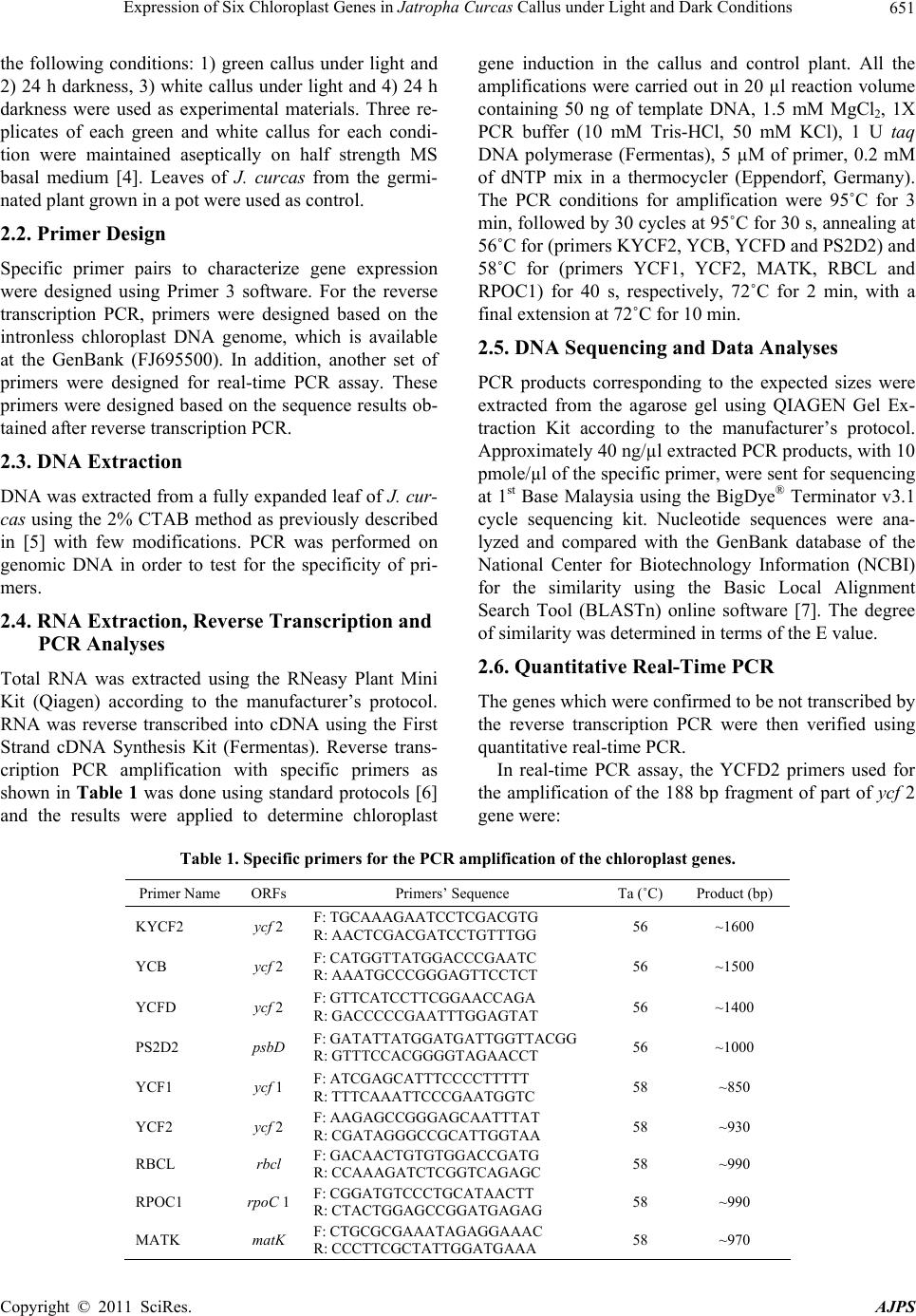 Expression of Six Chloroplast Genes in Jatropha Curcas Callus under Light and Dark Conditions651 the following conditions: 1) green callus under light and 2) 24 h darkness, 3) white callus under light and 4) 24 h darkness were used as experimental materials. Three re- plicates of each green and white callus for each condi- tion were maintained aseptically on half strength MS basal medium [4]. Leaves of J. curcas from the germi- nated plant grown in a pot were used as control. 2.2. Primer Design Specific primer pairs to characterize gene expression were designed using Primer 3 software. For the reverse transcription PCR, primers were designed based on the intronless chloroplast DNA genome, which is available at the GenBank (FJ695500). In addition, another set of primers were designed for real-time PCR assay. These primers were designed based on the sequence results ob- tained after reverse transcription PCR. 2.3. DNA Extraction DNA was extracted from a fully expanded leaf of J. cur- cas using the 2% CTAB method as previously described in [5] with few modifications. PCR was performed on genomic DNA in order to test for the specificity of pri- mers. 2.4. RNA Extraction, Reverse Transcription and PCR Analyses Total RNA was extracted using the RNeasy Plant Mini Kit (Qiagen) according to the manufacturer’s protocol. RNA was reverse transcribed into cDNA using the First Strand cDNA Synthesis Kit (Fermentas). Reverse trans- cription PCR amplification with specific primers as shown in Table 1 was done using standard protocols [6] and the results were applied to determine chloroplast gene induction in the callus and control plant. All the amplifications were carried out in 20 µl reaction volume containing 50 ng of template DNA, 1.5 mM MgCl2, 1X PCR buffer (10 mM Tris-HCl, 50 mM KCl), 1 U taq DNA polymerase (Fermentas), 5 µM of primer, 0.2 mM of dNTP mix in a thermocycler (Eppendorf, Germany). The PCR conditions for amplification were 95˚C for 3 min, followed by 30 cycles at 95˚C for 30 s, annealing at 56˚C for (primers KYCF2, YCB, YCFD and PS2D2) and 58˚C for (primers YCF1, YCF2, MATK, RBCL and RPOC1) for 40 s, respectively, 72˚C for 2 min, with a final extension at 72˚C for 10 min. 2.5. DNA Sequencing and Data Analyses PCR products corresponding to the expected sizes were extracted from the agarose gel using QIAGEN Gel Ex- traction Kit according to the manufacturer’s protocol. Approximately 40 ng/µl ex tracted PCR produ cts, with 10 pmole/µl of the specific primer, were sent fo r sequen cing at 1st Base Malaysia using the BigDye® Terminator v3.1 cycle sequencing kit. Nucleotide sequences were ana- lyzed and compared with the GenBank database of the National Center for Biotechnology Information (NCBI) for the similarity using the Basic Local Alignment Search Tool (BLASTn) online software [7]. The degree of similarity was determined in terms of the E value. 2.6. Quantitative Real-Time PCR The genes which were confirmed to be not transcribed by the reverse transcription PCR were then verified using quantitative real-time PCR. In real-time PCR assay, the YCFD2 primers used for the amplification of the 188 bp fragment of part of ycf 2 gene were: Table 1. Specific primers for the PCR amplification of the chloroplast genes. Primer Name ORFs Primers’ Sequence Ta (˚C) Product (bp) KYCF2 ycf 2 F: TGCAAAGAATCCTCGACGTG R: AACTCGACGATCCTGTTTGG 56 ~1600 YCB ycf 2 F: CATGGTTATGGACCCGAATC R: AAATGCCCGGGAGTTCCTCT 56 ~1500 YCFD ycf 2 F: GTTCATCCTTCGGAACCAGA R: GACCCCCGAATTTGGAGTAT 56 ~1400 PS2D2 psbD F: GATATTATGGATGATTGGTTACGG R: GTTTCCACGGGGTAGAACCT 56 ~1000 YCF1 ycf 1 F: ATCGAGCATTTCCCCTTTTT R: TTTCAAATTCCCGAATGGTC 58 ~850 YCF2 ycf 2 F: AAGAGCCGGGAGCAATTTAT R: CGATAGGGCCGCATTGGTAA 58 ~930 RBCL rbcl F: GACAACTGTGTGGACCGATG R: CCAAAGATCTCGGTCAGAGC 58 ~990 RPOC1 rpoC 1 F: CGGATGTCCCTGCATAACTT R: CTACTGGAGCCGGATGAGAG 58 ~990 MATK matK F: CTGCGCGAAATAGAGGAAAC R: CCCTTCGCTATTGGATGAAA 58 ~970 Copyright © 2011 SciRes. AJPS 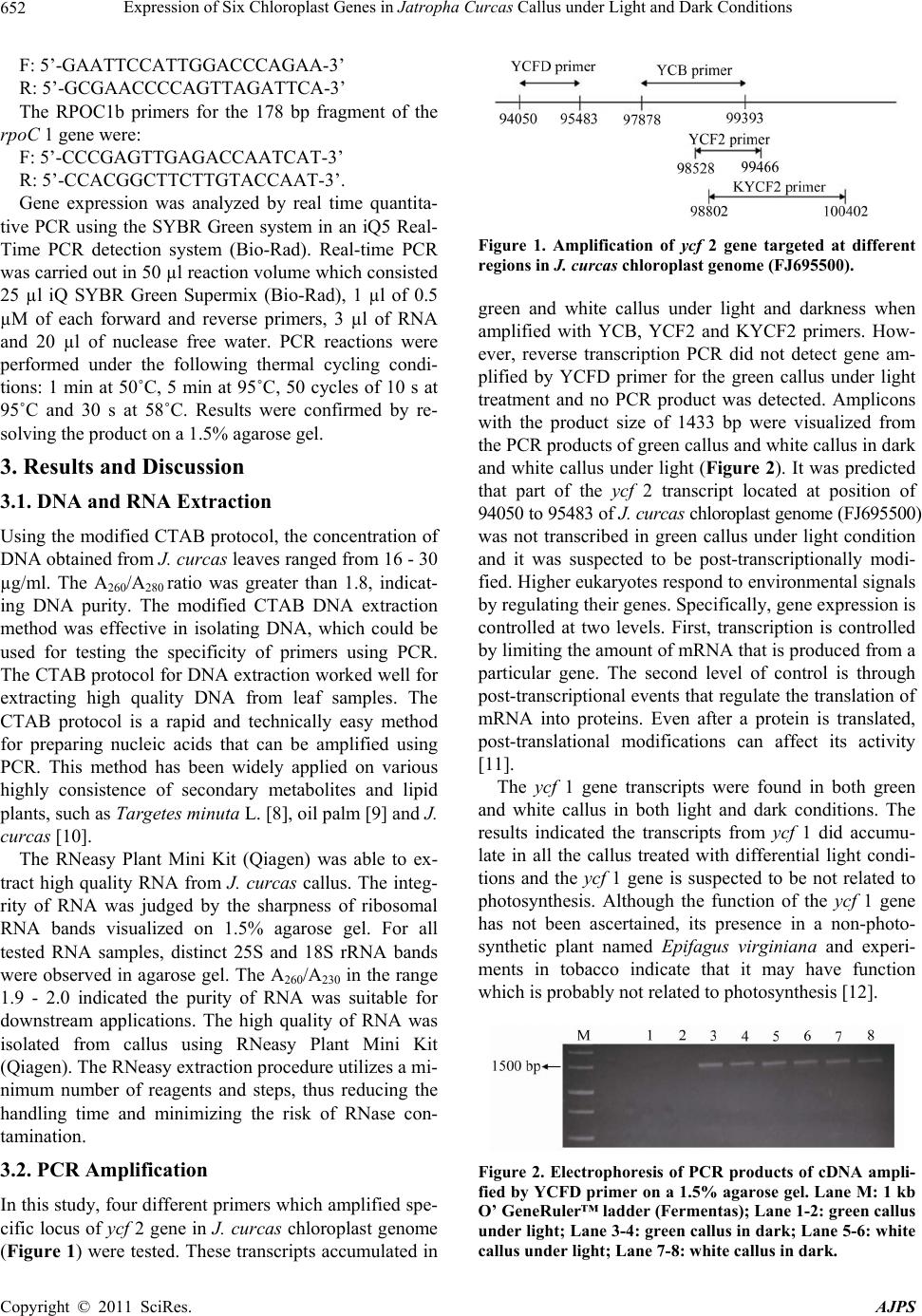 Expression of Six Chloroplast Genes in Jatropha Curcas Callus under Light and Dark Conditions 652 F: 5’-GAATTCCATTGGACCCAGAA-3’ R: 5’-GCGAACCCCAGTTAGATTCA-3’ The RPOC1b primers for the 178 bp fragment of the rpoC 1 gene were: F: 5’-CCCGAGTTGAGACCAATCAT-3’ R: 5’-CCACGGCTTCTTGTACCAAT-3’. Gene expression was analyzed by real time quantita- tive PCR using the SYBR Green system in an iQ5 Real- Time PCR detection system (Bio-Rad). Real-time PCR was carried out in 50 µl reaction volume which consisted 25 µl iQ SYBR Green Supermix (Bio-Rad), 1 µl of 0.5 µM of each forward and reverse primers, 3 µl of RNA and 20 µl of nuclease free water. PCR reactions were performed under the following thermal cycling condi- tions: 1 min at 50˚C, 5 min at 95˚C, 50 cycles of 10 s at 95˚C and 30 s at 58˚C. Results were confirmed by re- solving the product on a 1.5% agarose gel. 3. Results and Discussion 3.1. DNA and RNA Extraction Using the modified CTAB protocol, the concentration of DNA obtained from J. curcas leaves ranged from 16 - 30 µg/ml. The A260/A280 ratio was greater than 1.8, indicat- ing DNA purity. The modified CTAB DNA extraction method was effective in isolating DNA, which could be used for testing the specificity of primers using PCR. The CTAB protocol for DNA extraction worked well for extracting high quality DNA from leaf samples. The CTAB protocol is a rapid and technically easy method for preparing nucleic acids that can be amplified using PCR. This method has been widely applied on various highly consistence of secondary metabolites and lipid plants , s u ch as Targetes minuta L. [8 ], oil p alm [9 ] an d J. curcas [10]. The RNeasy Plant Mini Kit (Qiagen) was able to ex- tract high quality RNA from J. curcas callus. The integ- rity of RNA was judged by the sharpness of ribosomal RNA bands visualized on 1.5% agarose gel. For all tested RNA samples, distinct 25S and 18S rRNA bands were observed in agarose gel. The A260/A230 in the range 1.9 - 2.0 indicated the purity of RNA was suitable for downstream applications. The high quality of RNA was isolated from callus using RNeasy Plant Mini Kit (Qiagen). The RNeasy extraction procedure utilizes a mi- nimum number of reagents and steps, thus reducing the handling time and minimizing the risk of RNase con- tamination. 3.2. PCR Amplification In this study, four different primers which amplified spe- cific locus of ycf 2 gene in J. curcas chloroplast genome (Figure 1) were tested. These transcripts accumulated in Figure 1. Amplification of ycf 2 gene targeted at different regions in J. curcas chloroplast genome (FJ695500). green and white callus under light and darkness when amplified with YCB, YCF2 and KYCF2 primers. How- ever, reverse transcription PCR did not detect gene am- plified by YCFD primer for the green callus under light treatment and no PCR product was detected. Amplicons with the product size of 1433 bp were visualized from the PCR products of green callus and white callus in dark and white callus under light (Figure 2). It was predicted that part of the ycf 2 transcript located at position of 94050 to 95483 of J. curcas chloroplast genome (FJ695500) was not transcribed in green callus under light condition and it was suspected to be post-transcriptionally modi- fied. Higher eukaryotes respond to environmental signals by regulating their genes. Specifically, gene expression is controlled at two levels. First, transcription is controlled by limiting the amount of mRNA that is produced from a particular gene. The second level of control is through post-transcriptiona l events that regulate the translation of mRNA into proteins. Even after a protein is translated, post-translational modifications can affect its activity [11]. The ycf 1 gene transcripts were found in both green and white callus in both light and dark conditions. The results indicated the transcripts from ycf 1 did accumu- late in all the callus treated with differential light condi- tions and the ycf 1 gene is suspected to be not related to photosynthesis. Although the function of the ycf 1 gene has not been ascertained, its presence in a non-photo- synthetic plant named Epifagus virginiana and experi- ments in tobacco indicate that it may have function which is probably not related to pho tosynthesis [12]. Figure 2. Electrophoresis of PCR products of cDNA ampli- fied by YCFD primer on a 1.5% agarose gel. Lane M: 1 kb O’ GeneRuler™ ladder (Fermentas); Lane 1-2: green callus under light; Lane 3-4: green callus in dark; Lane 5-6: white callus under light; Lane 7-8: white callus in dark. Copyright © 2011 SciRes. AJPS 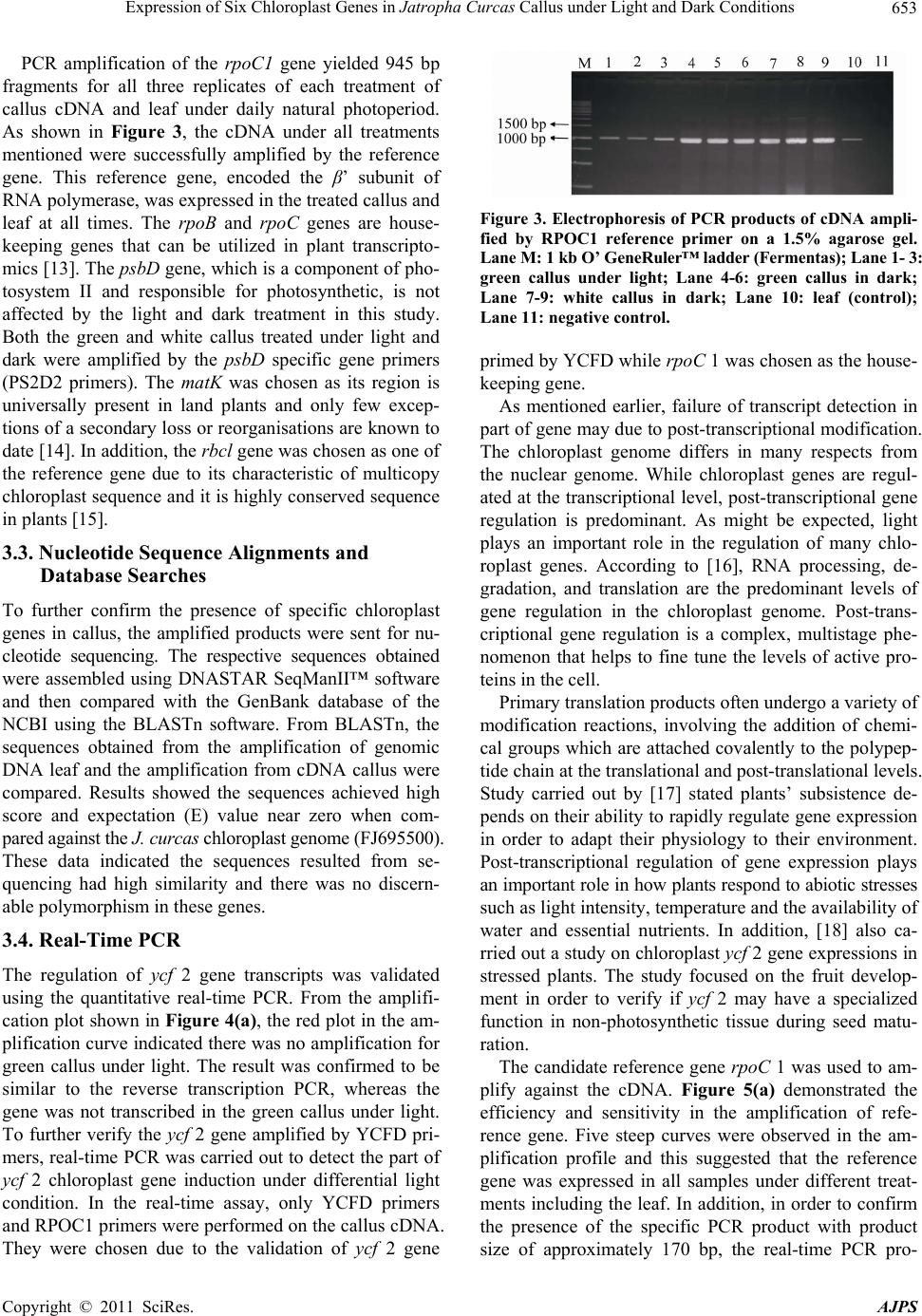 Expression of Six Chloroplast Genes in Jatropha Curcas Callus under Light and Dark Conditions653 PCR amplification of the rpoC1 gene yielded 945 bp fragments for all three replicates of each treatment of callus cDNA and leaf under daily natural photoperiod. As shown in Figure 3, the cDNA under all treatments mentioned were successfully amplified by the reference gene. This reference gene, encoded the β’ subunit of RNA polymerase, was expressed in the treated callus and leaf at all times. The rpoB and rpoC genes are house- keeping genes that can be utilized in plant transcripto- mics [13]. The psbD gene, which is a component of pho- tosystem II and responsible for photosynthetic, is not affected by the light and dark treatment in this study. Both the green and white callus treated under light and dark were amplified by the psbD specific gene primers (PS2D2 primers). The matK was chosen as its region is universally present in land plants and only few excep- tions of a secondary loss or reorganisations are known to date [14]. In add ition, th e rbcl gene was chosen as one of the reference gene due to its characteristic of multicopy chloroplast sequence an d it is highly conserved sequence in plants [15]. 3.3. Nucleotide Sequence Alignments and Database Searches To further confirm the presence of specific chloroplast genes in callus, the amplified products were sent for nu- cleotide sequencing. The respective sequences obtained were assembled using DNASTAR SeqManII™ software and then compared with the GenBank database of the NCBI using the BLASTn software. From BLASTn, the sequences obtained from the amplification of genomic DNA leaf and the amplification from cDNA callus were compared. Results showed the sequences achieved high score and expectation (E) value near zero when com- pared against the J. curcas chloroplast genome (FJ695500). These data indicated the sequences resulted from se- quencing had high similarity and there was no discern- able polymorphism in these genes. 3.4. Real-Time PCR The regulation of ycf 2 gene transcripts was validated using the quantitative real-time PCR. From the amplifi- cation plot shown in Figure 4(a), the red plot in the am- plification curve indicated there was no amplification for green callus under light. The result was confirmed to be similar to the reverse transcription PCR, whereas the gene was not transcribed in the green callus under light. To further verify the ycf 2 gene amplified by YCFD pri- mers, real-time PCR was carried out to detect the part of ycf 2 chloroplast gene induction under differential light condition. In the real-time assay, only YCFD primers and RPOC1 primers were performed on the callus cDNA. They were chosen due to the validation of ycf 2 gene Figure 3. Electrophoresis of PCR products of cDNA ampli- fied by RPOC1 reference primer on a 1.5% agarose gel. Lane M: 1 kb O’ GeneRuler™ ladder (Fermentas); Lane 1- 3: green callus under light; Lane 4-6: green callus in dark; Lane 7-9: white callus in dark; Lane 10: leaf (control); Lane 11: negative control. primed by YCFD while rpoC 1 was chosen as the house- keeping gene. As mentioned earlier, failure of transcript detection in part of gene may due to post-transcriptional modification. The chloroplast genome differs in many respects from the nuclear genome. While chloroplast genes are regul- ated at the transcriptional level, po st-transcriptional gene regulation is predominant. As might be expected, light plays an important role in the regulation of many chlo- roplast genes. According to [16], RNA processing, de- gradation, and translation are the predominant levels of gene regulation in the chloroplast genome. Post-trans- criptional gene regulation is a complex, multistage phe- nomenon that helps to fine tune the levels of active pro- teins in the cell. Primary translation products often undergo a variety of modification reactions, involving the addition of chemi- cal groups which are attached covalently to the polypep- tide chain at the translation al and post-translational levels. Study carried out by [17] stated plants’ subsistence de- pends on their ability to rapidly regu late gene expression in order to adapt their physiology to their environment. Post-transcriptional regulation of gene expression plays an important role in how plants respond to abiotic stresses such as light inten sity, te mperature an d the av ailab ility of water and essential nutrients. In addition, [18] also ca- rried out a study on chloroplast ycf 2 gene expressions in stressed plants. The study focused on the fruit develop- ment in order to verify if ycf 2 may have a specialized function in non-photosynthetic tissue during seed matu- ration. The candidate reference gene rpoC 1 was used to am- plify against the cDNA. Figure 5(a) demonstrated the efficiency and sensitivity in the amplification of refe- rence gene. Five steep curves were observed in the am- plification profile and this suggested that the reference gene was expressed in all samples under different treat- ments including the leaf. In addition , in order to confirm the presence of the specific PCR product with product size of approximately 170 bp, the real-time PCR pro- Copyright © 2011 SciRes. AJPS 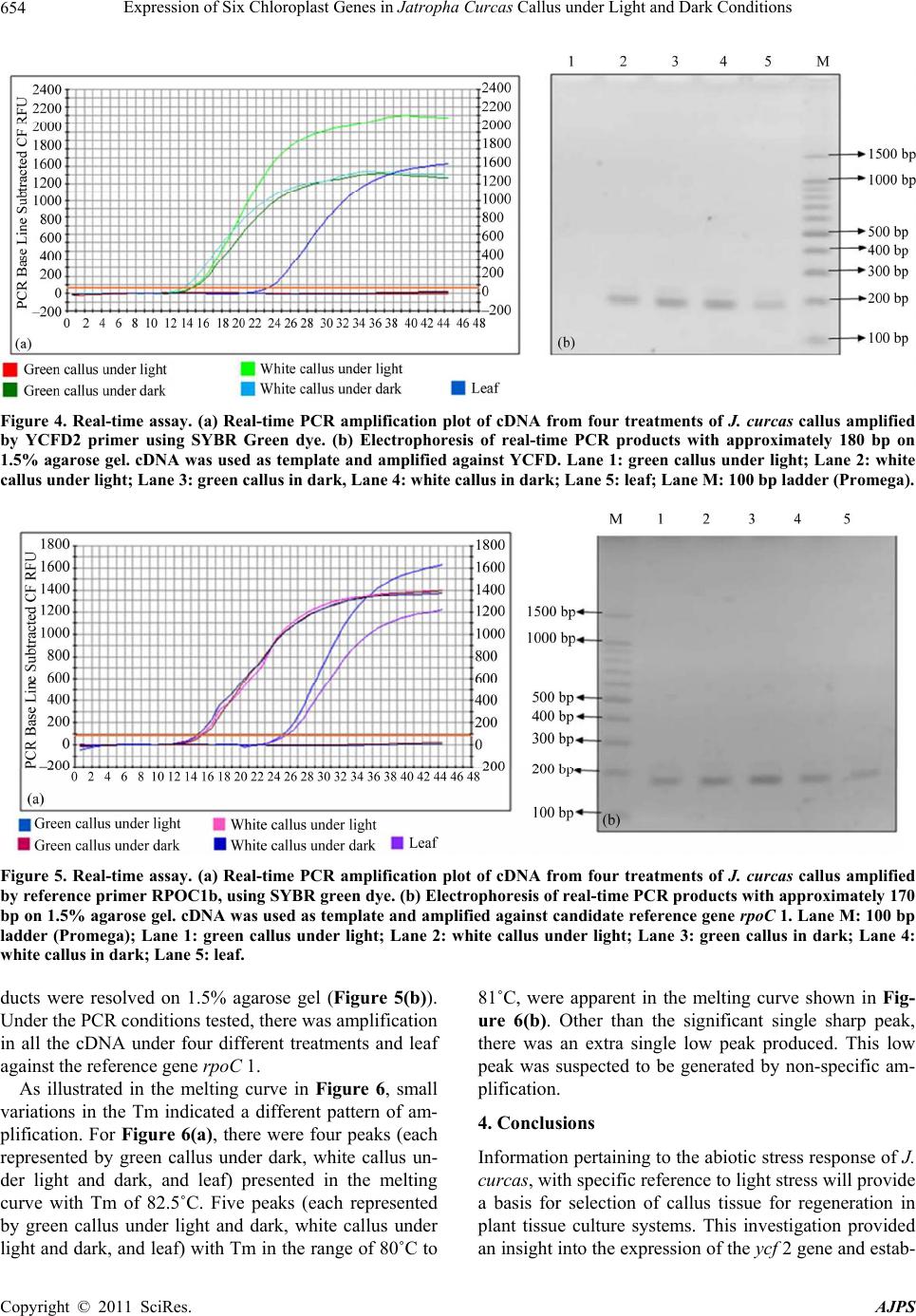 Expression of Six Chloroplast Genes in Jatropha Curcas Callus under Light and Dark Conditions Copyright © 2011 SciRes. AJPS 654 Figure 4. Real-time assay. (a) Real-time PCR amplification plot of cDNA from four treatments of J. curcas callus amplified by YCFD2 primer using SYBR Green dye. (b) Electrophoresis of real-time PCR products with approximately 180 bp on 1.5% agarose gel. cDNA was used as template and amplified against YCFD. Lane 1: green callus under light; Lane 2: white callus under light; Lane 3: green callus in dark, Lane 4: white callus in dark; Lane 5: leaf; Lane M: 100 bp ladder (Promega). Figure 5. Real-time assay. (a) Real-time PCR amplification plot of cDNA from four treatments of J. curcas callus amplified by reference primer RPOC1b, using SYBR green dye. (b) Electrophoresis of real-time PCR products with approximately 170 bp on 1.5% agarose gel. cDNA was used as template and amplified against candidate reference gene rpoC 1. Lane M: 100 bp ladder (Promega); Lane 1: green callus under light; Lane 2: white callus under light; Lane 3: green callus in dark; Lane 4: white callus in dark; Lane 5: leaf. ducts were resolved on 1.5% agarose gel (Figure 5(b)). Under the PCR conditions tested, there was amplification in all the cDNA under four different treatments and leaf against the reference gene rpoC 1. As illustrated in the melting curve in Figure 6, small variations in the Tm indicated a different pattern of am- plification. For Figure 6(a), there were four peaks (each represented by green callus under dark, white callus un- der light and dark, and leaf) presented in the melting curve with Tm of 82.5˚C. Five peaks (each represented by green callus under light and dark, white callus under light and dark, and leaf) with Tm in the range of 80˚C to 81˚C, were apparent in the melting curve shown in Fig- ure 6(b). Other than the significant single sharp peak, there was an extra single low peak produced. This low peak was suspected to be generated by non-specific am- plification. 4. Conclusion s Information pertaining to the abiotic stress respon se of J. curcas, with specific reference to light stress will provide a basis for selection of callus tissue for regeneration in plant tissue culture systems. This investigation provided an insight into the expression of the ycf 2 gene and estab- 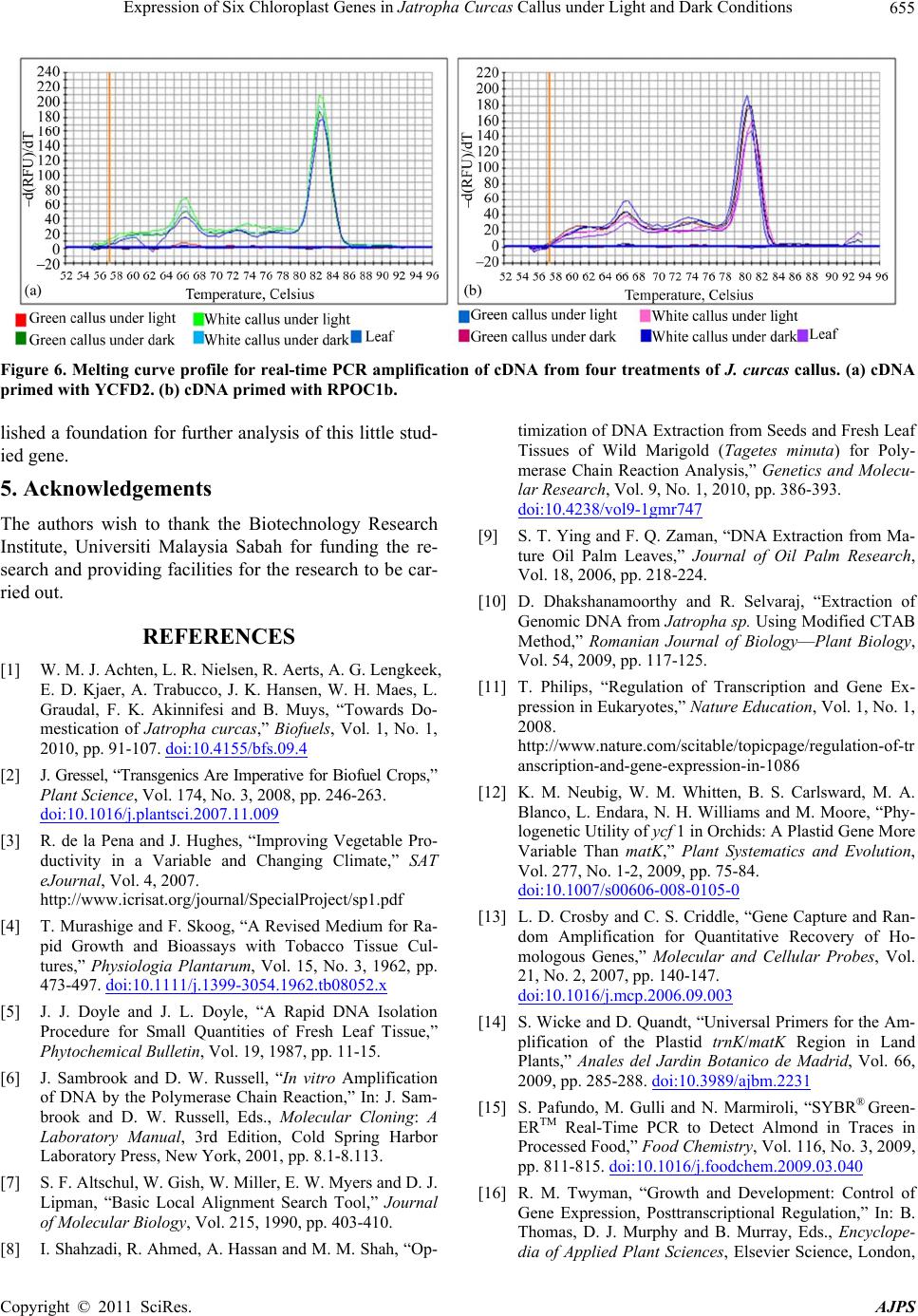 Expression of Six Chloroplast Genes in Jatropha Curcas Callus under Light and Dark Conditions655 Figure 6. Melting curve profile for real-time PCR amplification of cDNA from four treatments of J. curcas callus. (a) cDNA primed with YCFD2. (b) cDNA primed with RPOC1b. lished a foundation fo r further analysis of this little stud- ied gene. 5. Acknowledgements The authors wish to thank the Biotechnology Research Institute, Universiti Malaysia Sabah for funding the re- search and providing facilities for the research to be car- ried out. REFERENCES [1] W. M. J. Achten, L. R. Nielsen, R. Aerts, A. G. Lengkeek, E. D. Kjaer, A. Trabucco, J. K. Hansen, W. H. Maes, L. Graudal, F. K. Akinnifesi and B. Muys, “Towards Do- mestication of Jatropha curcas,” Biofuels, Vol. 1, No. 1, 2010, pp. 91-107. doi:10.4155/bfs.09.4 [2] J. Gressel, “Tra nsgenics Are Imperative for Bi ofuel Crop s,” Plant Science, Vol. 174, No. 3, 2008, pp. 246-263. doi:10.1016/j.plantsci.2007.11.009 [3] R. de la Pena and J. Hughes, “Improving Vegetable Pro- ductivity in a Variable and Changing Climate,” SAT eJournal, Vol. 4, 2007. http://www.icrisat.org/journal/SpecialProject/sp1.pdf [4] T. Murashige and F. Skoog, “A Revised Medium for Ra- pid Growth and Bioassays with Tobacco Tissue Cul- tures,” Physiologia Plantarum, Vol. 15, No. 3, 1962, pp. 473-497. doi:10.1111/j.1399-3054.1962.tb08052.x [5] J. J. Doyle and J. L. Doyle, “A Rapid DNA Isolation Procedure for Small Quantities of Fresh Leaf Tissue,” Phytochemical Bulletin, Vol. 19, 1987, pp. 11-15. [6] J. Sambrook and D. W. Russell, “In vitro Amplification of DNA by the Polymerase Chain Reaction,” In: J. Sam- brook and D. W. Russell, Eds., Molecular Cloning: A Laboratory Manual, 3rd Edition, Cold Spring Harbor Laboratory Press, New York, 2001, pp. 8.1-8.113. [7] S. F. Altschul, W. Gish, W. Miller, E. W. Myers and D. J. Lipman, “Basic Local Alignment Search Tool,” Journal of Molecular Biology, Vol. 215, 1990, pp. 403-410. [8] I. Shahzadi, R. Ahmed, A. Hassan and M. M. Shah, “Op- timization of DNA Extraction from Seeds and Fresh Leaf Tissues of Wild Marigold (Tagetes minuta) for Poly- merase Chain Reaction Analysis,” Genetics and Molecu- lar Research, Vol. 9, No. 1, 2010, pp. 386-393. doi:10.4238/vol9-1gmr747 [9] S. T. Ying and F. Q. Zaman, “DNA Extraction from Ma- ture Oil Palm Leaves,” Journal of Oil Palm Research, Vol. 18, 2006, pp. 218-224. [10] D. Dhakshanamoorthy and R. Selvaraj, “Extraction of Genomic DNA from Jatropha sp. Using Modified CTAB Method,” Romanian Journal of Biology—Plant Biology, Vol. 54, 2009, pp. 117-125. [11] T. Philips, “Regulation of Transcription and Gene Ex- pression in Eukaryotes,” Nature Education, Vol. 1, No. 1, 2008. http://www.nature.com/scitable/topicpage/regulation-of-tr anscription-and-gene-expression-in-1086 [12] K. M. Neubig, W. M. Whitten, B. S. Carlsward, M. A. Blanco, L. Endara, N. H. Williams and M. Moore, “Phy- logenetic Utility of ycf 1 in Orchids: A Plastid Gene More Variable Than matK,” Plant Systematics and Evolution, Vol. 277, No. 1-2, 2009, pp. 75-84. doi:10.1007/s00606-008-0105-0 [13] L. D. Crosby and C. S. Criddle, “Gene Capture and Ran- dom Amplification for Quantitative Recovery of Ho- mologous Genes,” Molecular and Cellular Probes, Vol. 21, No. 2, 2007, pp. 140-147. doi:10.1016/j.mcp.2006.09.003 [14] S. Wicke and D. Quandt, “Universal Primers for the Am- plification of the Plastid trnK/matK Region in Land Plants,” Anales del Jardin Botanico de Madrid, Vol. 66, 2009, pp. 285-288. doi:10.3989/ajbm.2231 [15] S. Pafundo, M. Gulli and N. Marmiroli, “SYBR® Green- ERTM Real-Time PCR to Detect Almond in Traces in Processed Food,” Food Chemistry, Vol. 116, No. 3, 2009, pp. 811-815. doi:10.1016/j.foodchem.2009.03.040 [16] R. M. Twyman, “Growth and Development: Control of Gene Expression, Posttranscriptional Regulation,” In: B. Thomas, D. J. Murphy and B. Murray, Eds., Encyclope- dia of Applied Plant Sciences, Elsevier Science, London, Copyright © 2011 SciRes. AJPS  Expression of Six Chloroplast Genes in Jatropha Curcas Callus under Light and Dark Conditions 656 2003, pp. 549-557. [17] M. Floris, H. Mahgoub, E. Lanet, C. Robaglia and B. Menand, “Post-Transcriptional Regulation of Gene Ex- pression in Plants during Abiotic Stress,” International Journal of Molecular Sciences, Vol. 10, No. 7, 2009, pp. 3168- 3185. doi:10.3390/ijms10073168 [18] M. Durante, M. Pieretti and R. Bernardi, “Chloroplastic ycf 2 Gene Expression in Stressed Plants,” Proceedings of the 53rd Italian Society of Agricultural Genetics Annual Congress, Torino, 16-19 September 2009. Copyright © 2011 SciRes. AJPS |