

Paper Menu >>
Journal Menu >>
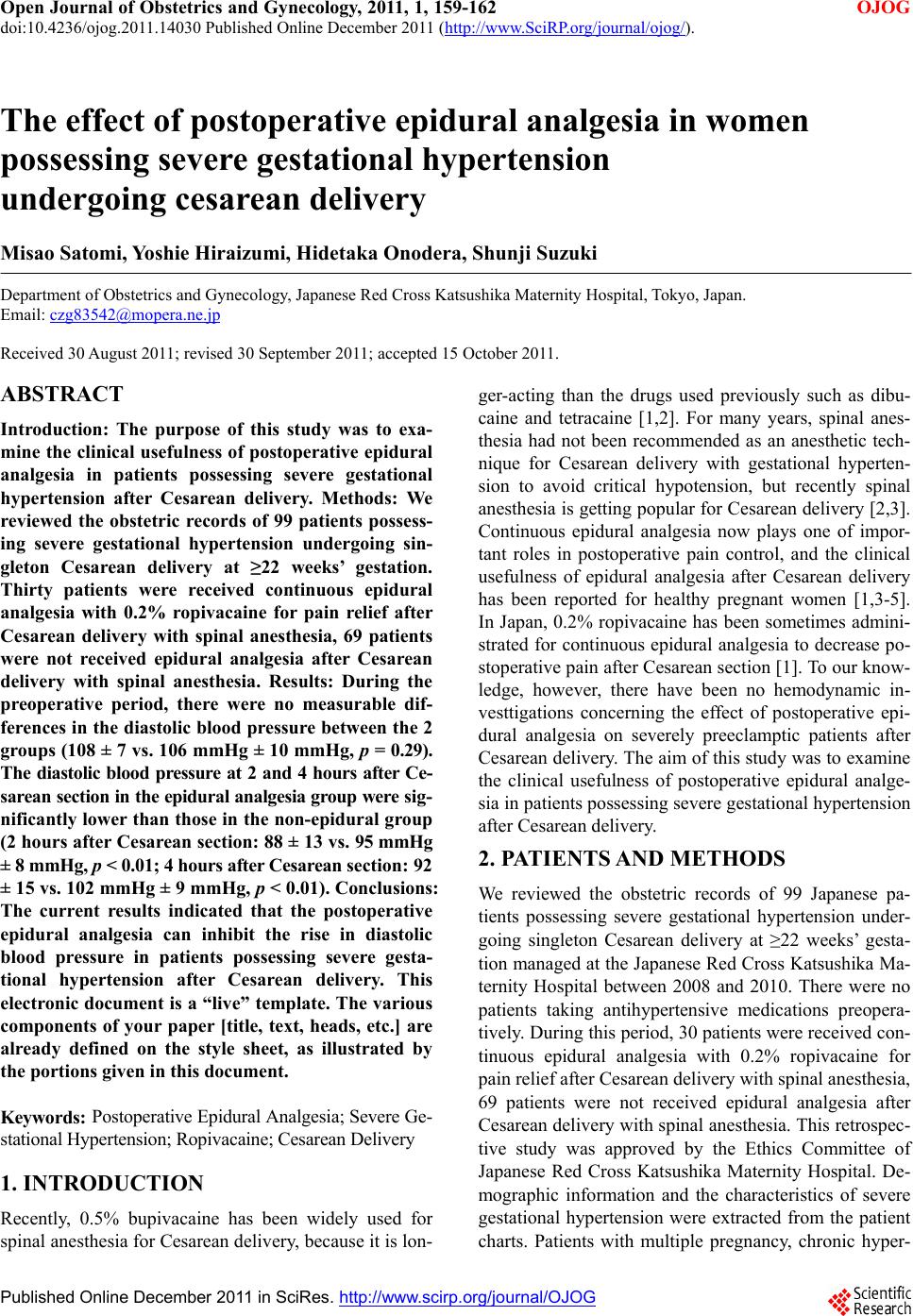 Open Journal of Obstetrics and Gynecology, 2011, 1, 159-162 doi:10.4236/ojog.2011.14030 Published Online December 2011 (http://www.SciRP.org/journal/ojog/ OJOG ). Published Online December 2011 in SciRes. http://www.scirp.org/journal/OJOG The effect of postoperative epidural analgesia in women possessing severe gestational hypertension undergoing cesarean delivery Misao Satomi, Yoshie Hiraizumi, Hidetaka Onodera, Shunji Suzuki Department of Obstetrics and Gynecology, Japanese Red Cross Katsushika Maternity Hospital, Tokyo, Japan. Email: [email protected] Received 30 August 2011; revised 30 September 2011; accepted 15 October 2011. ABSTRACT Introduction: The purpose of this study was to exa- mine the clinical usefulness of postoperative epidural analgesia in patients possessing severe gestational hypertension after Cesarean delivery. Methods: We reviewed the obstetric records of 99 patients possess- ing severe gestational hypertension undergoing sin- gleton Cesarean delivery at ≥22 weeks’ gestation. Thirty patients were received continuous epidural analgesia with 0.2% ropivacaine for pain relief after Cesarean delivery with spinal anesthesia, 69 patients were not received epidural analgesia after Cesarean delivery with spinal anesthesia. Results: During the preoperative period, there were no measurable dif- ferences in the diastolic blood pressure between the 2 groups (108 ± 7 vs. 106 mmHg ± 10 mmHg, p = 0.29). The diastolic blood pressure at 2 and 4 hours after Ce- sarean section in the epidural analgesia group were sig- nificantly lower than those in the non-epidural group (2 hours after Cesarean section: 88 ± 13 vs. 95 mmHg ± 8 mmHg, p < 0.01; 4 hours after Cesarean section: 92 ± 15 vs. 102 mmHg ± 9 mmHg, p < 0.01). Conclusions: The current results indicated that the postoperative epidural analgesia can inhibit the rise in diastolic blood pressure in patients possessing severe gesta- tional hypertension after Cesarean delivery. This electronic document is a “live” template. The various components of your paper [title, text, heads, etc.] are already defined on the style sheet, as illustrated by the portions given in this document. Keywords: Postoperative Epidural Analgesia; Severe Ge- stational Hypertension; Ropivacaine; Cesarean Delivery 1. INTRODUCTION Recently, 0.5% bupivacaine has been widely used for spinal anesthesia for Cesarean delivery, because it is lon- ger-acting than the drugs used previously such as dibu- caine and tetracaine [1,2]. For many years, spinal anes- thesia had not been recommended as an anesthetic tech- nique for Cesarean delivery with gestational hyperten- sion to avoid critical hypotension, but recently spinal anesthesia is getting popular for Cesarean delivery [2,3]. Continuous epidural analgesia now plays one of impor- tant roles in postoperative pain control, and the clinical usefulness of epidural analgesia after Cesarean delivery has been reported for healthy pregnant women [1,3-5]. In Japan, 0.2% ropivacaine has been sometimes admini- strated for continuous epidural analgesia to decrease po- stoperative pain after Cesarean section [1]. To our know- ledge, however, there have been no hemodynamic in- vesttigations concerning the effect of postoperative epi- dural analgesia on severely preeclamptic patients after Cesarean delivery. The aim of this study was to examine the clinical usefulness of postoperative epidural analge- sia in patients possessing severe gestational hypertension after Cesarean delivery. 2. PATIENTS AND METHODS We reviewed the obstetric records of 99 Japanese pa- tients possessing severe gestational hypertension under- going singleton Cesarean delivery at ≥22 weeks’ gesta- tion managed at the Japanese Red Cross Katsushika Ma- ternity Hospital between 2008 and 2010. There were no patients taking antihypertensive medications preopera- tively. During this period, 30 patients were received con- tinuous epidural analgesia with 0.2% ropivacaine for pain relief after Cesarean delivery with spinal anesthesia, 69 patients were not received epidural analgesia after Cesarean delivery with spinal anesthesia. This retrospec- tive study was approved by the Ethics Committee of Japanese Red Cross Katsushika Maternity Hospital. De- mographic information and the characteristics of severe gestational hypertension were extracted from the patient charts. Patients with multiple pregnancy, chronic hyper- 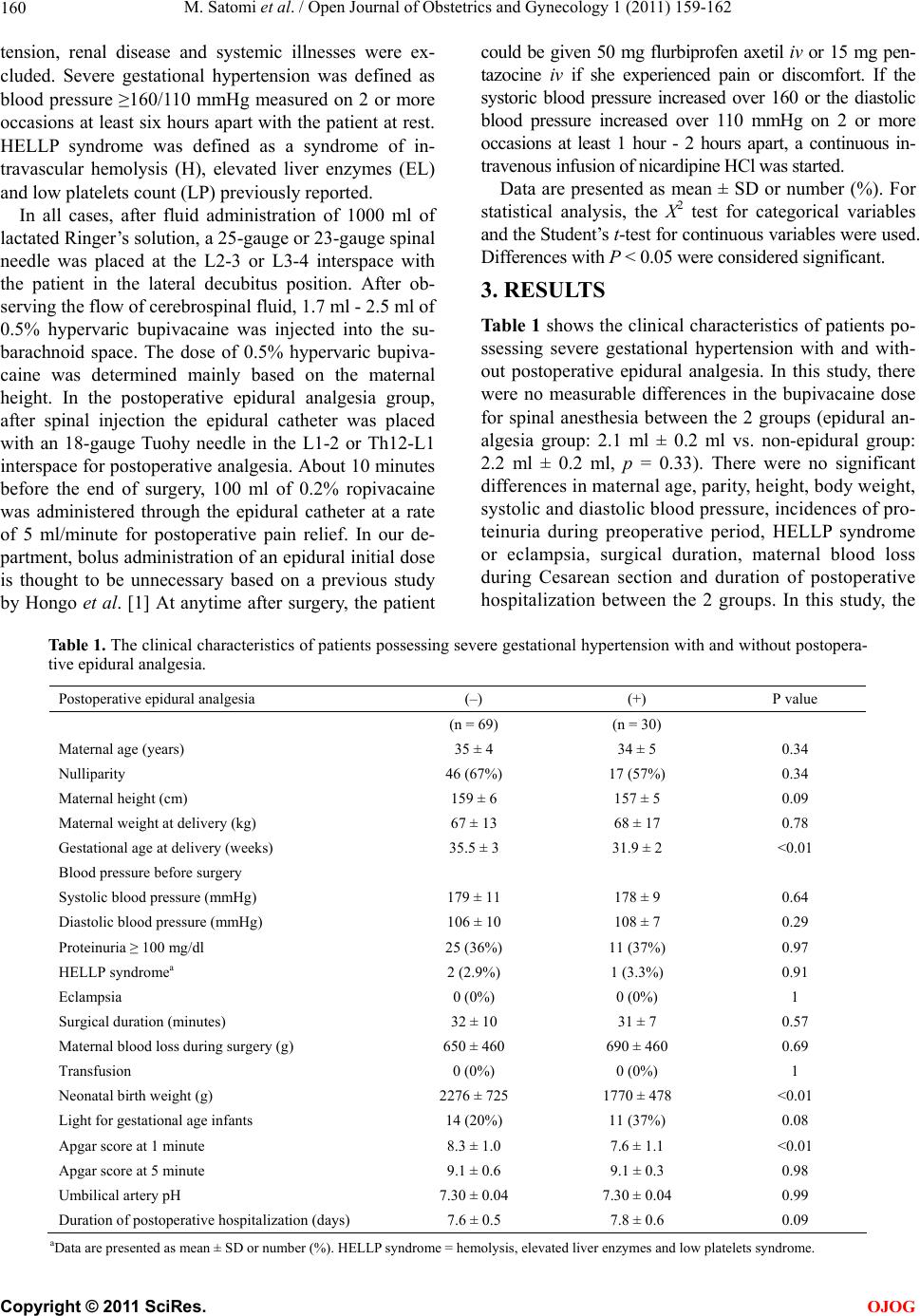 M. Satomi et al. / Open Journal of Obstetrics and Gynecology 1 (2011) 159-162 160 tension, renal disease and systemic illnesses were ex- cluded. Severe gestational hypertension was defined as blood pressure ≥160/110 mmHg measured on 2 or more occasions at least six hours apart with the patient at rest. HELLP syndrome was defined as a syndrome of in- travascular hemolysis (H), elevated liver enzymes (EL) and low platelets count (LP) previously reported. In all cases, after fluid administration of 1000 ml of lactated Ringer’s solution, a 25-gauge or 23-gauge spinal needle was placed at the L2-3 or L3-4 interspace with the patient in the lateral decubitus position. After ob- serving the flow of cerebrospinal fluid, 1.7 ml - 2.5 ml of 0.5% hypervaric bupivacaine was injected into the su- barachnoid space. The dose of 0.5% hypervaric bupiva- caine was determined mainly based on the maternal height. In the postoperative epidural analgesia group, after spinal injection the epidural catheter was placed with an 18-gauge Tuohy needle in the L1-2 or Th12-L1 interspace for postoperative analgesia. About 10 minutes before the end of surgery, 100 ml of 0.2% ropivacaine was administered through the epidural catheter at a rate of 5 ml/minute for postoperative pain relief. In our de- partment, bolus administration of an epidural initial dose is thought to be unnecessary based on a previous study by Hongo et al. [1] At anytime after surgery, the patient could be given 50 mg flurbiprofen axetil iv or 15 mg pen- tazocine iv if she experienced pain or discomfort. If the systoric blood pressure increased over 160 or the diastolic blood pressure increased over 110 mmHg on 2 or more occasions at least 1 hour - 2 hours apart, a continuous in- travenous infusion of nicardipine HCl was started. Data are presented as mean ± SD or number (%). For statistical analysis, the Χ2 test for categorical variables and the Student’s t-test for continuous variables were used. Differences with P < 0.05 were considered significant. 3. RESULTS Table 1 shows the clinical characteristics of patients po- ssessing severe gestational hypertension with and with- out postoperative epidural analgesia. In this study, there were no measurable differences in the bupivacaine dose for spinal anesthesia between the 2 groups (epidural an- algesia group: 2.1 ml ± 0.2 ml vs. non-epidural group: 2.2 ml ± 0.2 ml, p = 0.33). There were no significant differences in maternal age, parity, height, body weight, systolic and diastolic blood pressure, incidences of pro- teinuria during preoperative period, HELLP syndrome or eclampsia, surgical duration, maternal blood loss during Cesarean section and duration of postoperative hospitalization between the 2 groups. In this study, the Table 1. The clinical characteristics of patients possessing severe gestational hypertension with and without postopera- tive epidural analgesia. Postoperative epidural analgesia (–) (+) P value (n = 69) (n = 30) Maternal age (years) 35 ± 4 34 ± 5 0.34 Nulliparity 46 (67%) 17 (57%) 0.34 Maternal height (cm) 159 ± 6 157 ± 5 0.09 Maternal weight at delivery (kg) 67 ± 13 68 ± 17 0.78 Gestational age at delivery (weeks) 35.5 ± 3 31.9 ± 2 <0.01 Blood pressure before surgery Systolic blood pressure (mmHg) 179 ± 11 178 ± 9 0.64 Diastolic blood pressure (mmHg) 106 ± 10 108 ± 7 0.29 Proteinuria ≥ 100 mg/dl 25 (36%) 11 (37%) 0.97 HELLP syndromea 2 (2.9%) 1 (3.3%) 0.91 Eclampsia 0 (0%) 0 (0%) 1 Surgical duration (minutes) 32 ± 10 31 ± 7 0.57 Maternal blood loss during surgery (g) 650 ± 460 690 ± 460 0.69 Transfusion 0 (0%) 0 (0%) 1 Neonatal birth weight (g) 2276 ± 725 1770 ± 478 <0.01 Light for gestational age infants 14 (20%) 11 (37%) 0.08 Apgar score at 1 minute 8.3 ± 1.0 7.6 ± 1.1 <0.01 Apgar score at 5 minute 9.1 ± 0.6 9.1 ± 0.3 0.98 Umbilical artery pH 7.30 ± 0.04 7.30 ± 0.04 0.99 Duration of postoperative hospitalization (days) 7.6 ± 0.5 7.8 ± 0.6 0.09 aData are presented as mean ± SD or number (%). HELLP syndrome = hemolysis, elevated liver enzymes and low platelets syndrome. C opyright © 2011 SciRes. OJOG 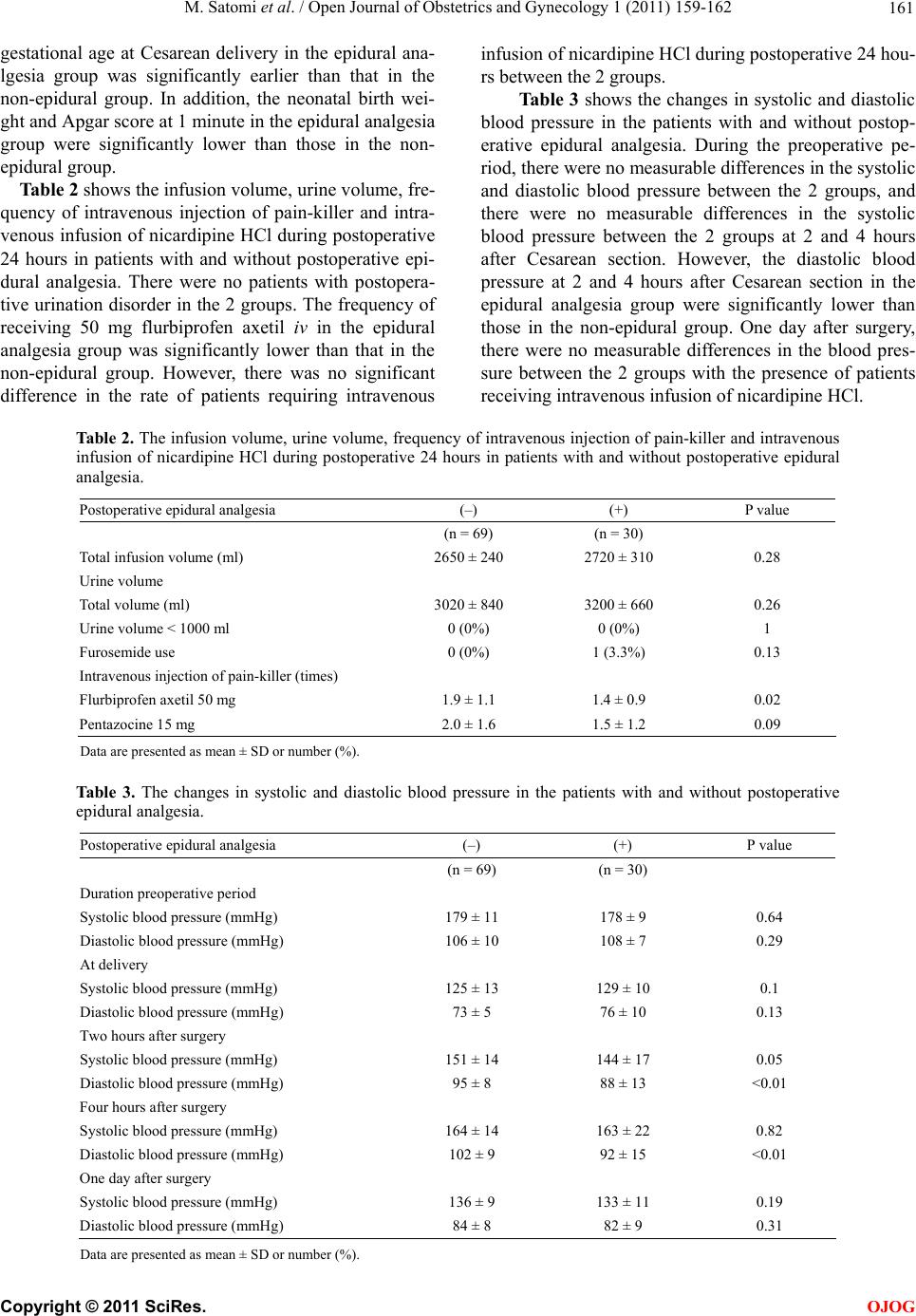 M. Satomi et al. / Open Journal of Obstetrics and Gynecology 1 (2011) 159-162 161 gestational age at Cesarean delivery in the epidural ana- lgesia group was significantly earlier than that in the non-epidural group. In addition, the neonatal birth wei- ght and Apgar score at 1 minute in the epidural analgesia group were significantly lower than those in the non- epidural group. Table 2 shows the infusion volume, urine volume, fre- quency of intravenous injection of pain-killer and intra- venous infusion of nicardipine HCl during postoperative 24 hours in patients with and without postoperative epi- dural analgesia. There were no patients with postopera- tive urination disorder in the 2 groups. The frequency of receiving 50 mg flurbiprofen axetil iv in the epidural analgesia group was significantly lower than that in the non-epidural group. However, there was no significant difference in the rate of patients requiring intravenous infusion of nicardipine HCl during postoperative 24 hou- rs between the 2 groups. Table 3 shows the changes in systolic and diastolic blood pressure in the patients with and without postop- erative epidural analgesia. During the preoperative pe- riod, there were no measurable differences in the systolic and diastolic blood pressure between the 2 groups, and there were no measurable differences in the systolic blood pressure between the 2 groups at 2 and 4 hours after Cesarean section. However, the diastolic blood pressure at 2 and 4 hours after Cesarean section in the epidural analgesia group were significantly lower than those in the non-epidural group. One day after surgery, there were no measurable differences in the blood pres- sure between the 2 groups with the presence of patients receiving intravenous infusion of nicardipine HCl. Table 2. The infusion volume, urine volume, frequency of intravenous injection of pain-killer and intravenous infusion of nicardipine HCl during postoperative 24 hours in patients with and without postoperative epidural analgesia. Postoperative epidural analgesia (–) (+) P value (n = 69) (n = 30) Total infusion volume (ml) 2650 ± 240 2720 ± 310 0.28 Urine volume Total volume (ml) 3020 ± 840 3200 ± 660 0.26 Urine volume < 1000 ml 0 (0%) 0 (0%) 1 Furosemide use 0 (0%) 1 (3.3%) 0.13 Intravenous injection of pain-killer (times) Flurbiprofen axetil 50 mg 1.9 ± 1.1 1.4 ± 0.9 0.02 Pentazocine 15 mg 2.0 ± 1.6 1.5 ± 1.2 0.09 Data are presented as mean ± SD or number (%). Table 3. The changes in systolic and diastolic blood pressure in the patients with and without postoperative epidural analgesia. Postoperative epidural analgesia (–) (+) P value (n = 69) (n = 30) Duration preoperative period Systolic blood pressure (mmHg) 179 ± 11 178 ± 9 0.64 Diastolic blood pressure (mmHg) 106 ± 10 108 ± 7 0.29 At delivery Systolic blood pressure (mmHg) 125 ± 13 129 ± 10 0.1 Diastolic blood pressure (mmHg) 73 ± 5 76 ± 10 0.13 Two hours after surgery Systolic blood pressure (mmHg) 151 ± 14 144 ± 17 0.05 Diastolic blood pressure (mmHg) 95 ± 8 88 ± 13 <0.01 Four hours after surgery Systolic blood pressure (mmHg) 164 ± 14 163 ± 22 0.82 Diastolic blood pressure (mmHg) 102 ± 9 92 ± 15 <0.01 One day after surgery Systolic blood pressure (mmHg) 136 ± 9 133 ± 11 0.19 Diastolic blood pressure (mmHg) 84 ± 8 82 ± 9 0.31 Data are presented as mean ± SD or number (%). C opyright © 2011 SciRes. OJOG  M. Satomi et al. / Open Journal of Obstetrics and Gynecology 1 (2011) 159-162 162 4. DISCUSSION In this study, the epidural continuous infusion provided pain relief in severe hypertensive patients after Cesaren section as previously reported [6,7]. In this study, there was no significant difference in the rate of patients re- quiring antihypertensive agents between the patients with and without postoperative epidural analgesia be- cause there were no significant differences in the systolic blood pressure levels between the 2 groups; however the current results indicated that the postoperative epidural analgesia can inhibit the rise in diastolic blood pressure in patients possessing severe gestational hypertension af- ter Cesarean delivery. In patients possessing gestational hypertension, the blood pressure has been observed to be sometimes re- increased to the severely levels after Cesarean delivery associated with the postoperative pain and the return of vascular tone following delivery [8,9]. This return of vascular tone has been suggested to be also related to profound fluid shifts that occur in the puerperium with a rise in intravascular volume due to mobilization of ex- travascular fluid [8,9]. Regional anesthesia-induced sy- mpathetic blockade may be contributed to the decrease in diastolic blood pressure associate with the systemic peripheral vascular dilation in patients with severe gesta- tional hypertension. However, the current results also indicated the sympathetic blockade with vascular dila- tion may not be able to prevent the fluid shifts associated with the re-increased systolic blood pressure in patients possessing gestational hypertension although there were no significant differences in the urine volume during po- stoperative 24 hours. We know that there are some limitations in this retro- spective study. Firstly, this may be a small study. Se- condly, in this study the parturient required Cesarean delivery at earlier gestation received epidural analgesia more frequently. We cannot explain the reason for this tendency well; however it may also support the efficacy of postoperative epidural analgesia inhibiting the rise in blood pressure because hypertensive disorders develop- ing at earlier gestation have been reported to tend to be severe [10]. Otherwise, a circulating blood volume may- be smaller in the epidural group than that in the non- epidural group and the smaller volume may explain the decreased diastolic pressure in the epidural group after Cesarean delivery. Therefore, a prospective study to clear this difference may be needed. The postoperative epidural analgesia may be useful in the management of patient with severe gestational hy- pertension after Cesarean delivery, because adequate control of diastolic blood pressure is important to pre- vent systemic organ dysfunction in severe gestational hypertension [11]. However, further studies may be nee- ded concerning the changes in systolic blood pressure. REFERENCES [1] Hongo, T., Kitamura, A., Yokozuka, M., Kim, C. and Sa- kamoto, A. (2006) An epidural initial dose in unneces- sary in combined spinal epidural anesthesia for Caesar- ean section. Journal of Nippon Medical Scool, 73, 70-74. doi:10.1272/jnms.73.70 [2] Suzuki, H., Ogawa, S., Hanaoka, K., Kugimiya, T., Yo- koyama, K., Isshiki, A., Hosoyamada, A., Kikuchi, H. and Numata, K. (1998) Clinical study of AJ-007 (bupiva- caine) in spinal anesthesia—investigation of clinical dos- age of isobaric and hyperbaric formulations (in Japanese). Masui, 47, 447-465. [3] Block, B.M., Lieu, S.S., Rowlingson, A.J., Cowan, A.R., Cowan, J.A. Jr. and Wu, C.L. (2003) Efficacy of postope- rative epidural analgesia. Journal of the American Medi- cal Association, 290, 2455-2463. doi:10.1001/jama.290.18.2455 [4] Mendez, R., Eisenach, J.C. and Kashtan, K. (1990) Epi- dural clonidine analgesia after Cesarean section. Anes- thesiology, 73, 848-852. doi:10.1097/00000542-199011000-00009 [5] Jens-Christian, S., Adam, K., Joerg, Z., Joachim, N., An- dreas, H. and Rudolf, H. (2009) Effects of spinal anaes- thesia versus epidural anaesthesia for caesarean section on postoperative analgesic consumption and postopera- tive pain. European Journal of Anaesthesiology, 26, 52- 59. doi:10.1097/EJA.0b013e328318c639 [6] Hood, D.D. and Curry, R. (1990) Spinal versus epidural anesthesia for Cesarean section in severely preeclamptic patients. Anesthesiology, 90, 1276-1282. doi:10.1097/00000542-199905000-00009 [7] Visalyaputa, S., Rodanant, O., Somboonviboon, W., Tan- tivitayatan, K., Thienthong, S. and Saengchote, W. (2005) Spinal versus epidural anesthesia for Cesarean delivery in severe preeclampsia: A prospective randomized multi- center study. Anesthesia and Analgesia, 101, 862-868. doi:10.1213/01.ANE.0000160535.95678.34 [8] Ferrazani, S., DeCarolis, S., Pomini, F., Testa, A.C., Mas- tomarino, C. and Caruso, A. (1994) The duration of hy- pertension in the puerperium of preeclamptic women: Relationship with renal impairment and week of delivery. American Journal of Obstetrics and Gynecology, 171, 506-512. [9] Walters, B.N., Thompson, M.E., Lee, A. and de Swiet, M. (1986) Blood pressure in the puerperium. Clinical Sci- ence(Lond), 71, 589-594. [10] Paruk, F. and Moodley, J. (2000) Maternal and neonatal outcome in early- and late-onset pre-eclampsia. Seminars in Neonatology, 5, 197-207. doi:10.1053/siny.2000.0023 [11] Von Dadelszen, P., Menzies, J., Gilgoff, S., Xie, F., Douglas, M.J., Sawchuck, D. and Magee, L.A. (2007) Evidence-based management for preeclampsia. Frontiers in Bioscience, 12, 2876-2889. doi:10.2741/2279 C opyright © 2011 SciRes. OJOG |