

Paper Menu >>
Journal Menu >>
 Vol.1, No.3, 135-142 (2011) doi:10.4236/ojpm.2011.13018 C opyright © 2011 SciRes. Openly accessible at http://www.scirp.org/journal/OJPM/ Open Journal of Preventive Medicine Factors influencing parent satisfaction with preventive health services for the early detection of speech and language delay in preschool children* Isabelle Bairati1,2#, François Meyer1, Cheikh Bamba Dieye Gueye1, Chantal Desmarais1, Nancie Rouleau1, Audette Sylvestre1 1Université Laval, Quebec, Canada; #Corresponding Author: [email protected] 2Direction régionale de santé publique, Agence de la santé et des services sociaux de la Capitale-Nationale, Quebec, Canada. Received 10 September 2011; revised 14 October 2011; accepted 26 October 2011. ABSTRACT The aim of this study was to identify parent and child characteristics which could influence par- ent satisfaction with preventive health services designed to detect preschool children with speech and language (SL) delay . This study was conducted on 101 children aged 18 to 36 months who participated in an organized SL delay early detection program. Validated instruments were used to assess children’s and parents’ charac- teristics. Satisfaction was evaluated using the client satisfaction questionnaire for the three activities of the program: 1) a p ublic informatio n session about SL development, 2) parent train- ing sessions for parents concerned by their child SL development, and 3) a child’s SL assessment. Multiple logistic regressions w ere used to iden- tify all independent factors (p < 0.05) associated with satisfaction and to estimate the odds ratios (OR) for satisfaction. Economically disadvan- taged parents were less prone to participate in the first two activities of the early detection pro- gram. Older parents were more satisfied with the public information session (OR = 1.33 for 1 year increment; p = 0.001). Distressed parents were less satisfied with both the parent training sessions (OR = 0.28; p = 0.009) and the SL as- sessment (OR = 0.43; p = 0.046). Parents whose child had health problems at birth were less sa- tisfied with the public information session (OR = 0.14, p = 0.03) an d the SL assessme nt (OR = 0. 33, p = 0.036). There is a need to better adapt the delivery of preventive services for the early de- tection of SL dela y, especially for d isadvantaged and distressed parents and for those whose child had suffered from health problems at birth. Keywords: Consumer Satisfaction; Preventive Health Services; Early Intervention; Language Development Disorders 1. INTRODUCTION Speech and language (SL) delay is a common deve- lopmental problem occurring in approximately 10% - 15% of preschool children without underlying patholo- gies [1-4]. The persistence of language problems could compromise children’s socialization, behavior and school performance. It is highly recommended that preventive SL therapy interventions be initiated early in life. Ac- cording to a meta-analysis, SL therapy interventions are effective in children with phonological or vocabulary difficulties [3]. Yet, accessibility to SL therapy services remains a major concern in several communities [4,5]. A SL therapy program was implemented in primary health centers in the Quebec City area with early detection of SL delay as one of its main component. Parental involvement is an important element in chil- dren’s early intervention programs [6-8]. Parents play a central role by using relevant community services and by complying with early intervention programs. They are generally targeted to take an active role in the SL ther- apy interventions since children generally learn language most efficiently in their natural environment. In addition, parent satisfaction with their child’s medical services has been reported to be associated with therapy adherence and health improvements [9-11]. This underscores the importance to tailor SL preventive services according to the needs of the parents. Parent satisfaction with care is a measure of quality of care [12-14]. Satisfaction refers to the degree to which parents perceive that the services meet their needs and those of their child. This perception might reflect par- ents’ expectations and their personal preferences. Less is known about the parent and child features which could *Supported by a grant from the FRSQ. 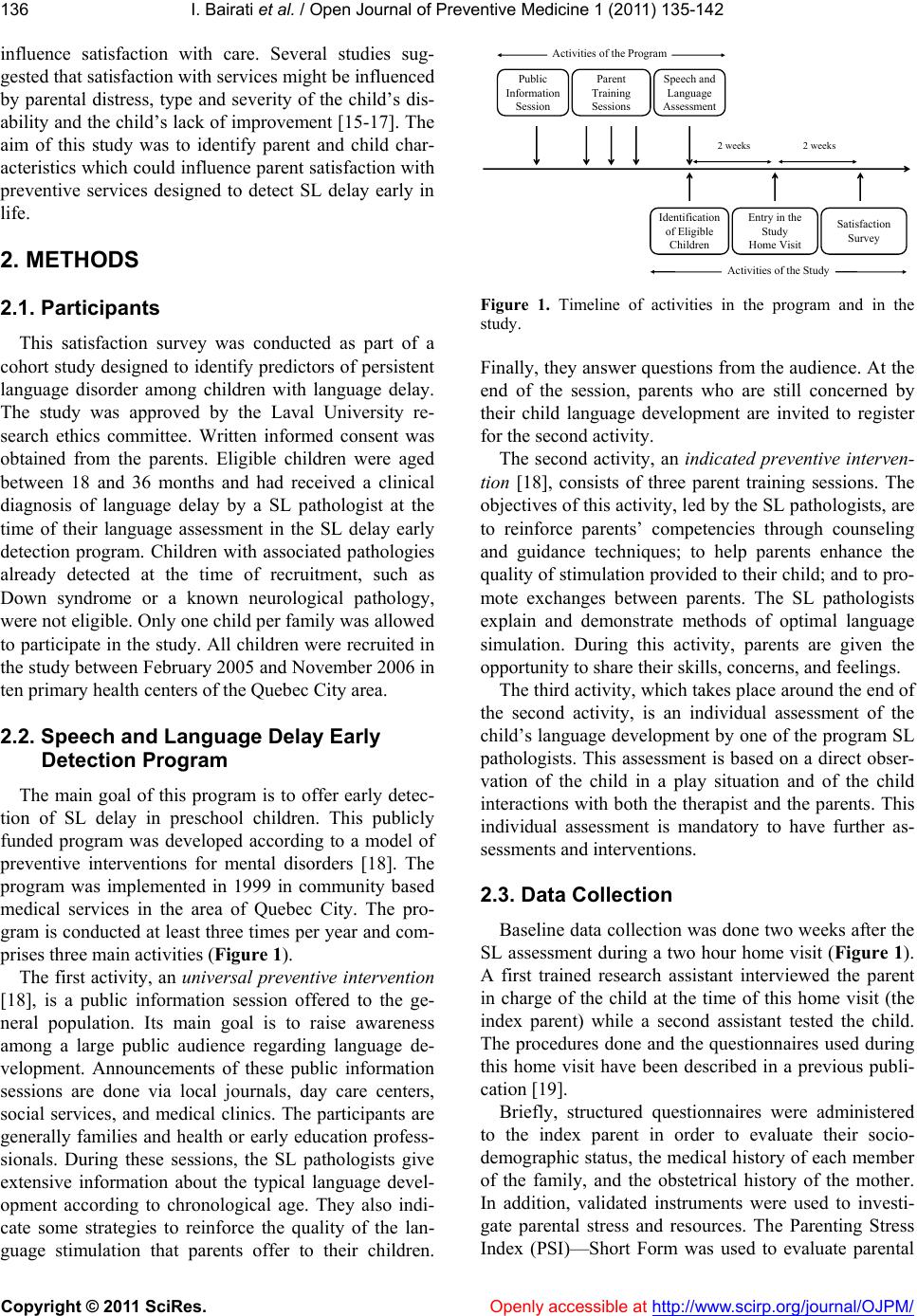 I. Bairati et al. / Open Journal of Preventive Medicine 1 (2 011) 135-142 Copyright © 2011 SciRes. Openly accessible at http://www.scirp.org/journal/OJPM/ 136 influence satisfaction with care. Several studies sug- gested that satisfaction with services might be influenced by parental distress, type and severity of the child’s dis- ability and the child’s lack of improvement [15-17]. The aim of this study was to identify parent and child char- acteristics which could influence parent satisfaction with preventive services designed to detect SL delay early in life. 2. METHODS 2.1. Participants This satisfaction survey was conducted as part of a cohort study designed to identify predictors of persistent language disorder among children with language delay. The study was approved by the Laval University re- search ethics committee. Written informed consent was obtained from the parents. Eligible children were aged between 18 and 36 months and had received a clinical diagnosis of language delay by a SL pathologist at the time of their language assessment in the SL delay early detection program. Children with associated pathologies already detected at the time of recruitment, such as Down syndrome or a known neurological pathology, were not eligible. Only one child per family was allowed to participate in the study. All children were recruited in the study between February 2005 and November 2006 in ten primary health centers of the Quebec City area. 2.2. Speech and Language Delay Early Detection Program The main goal of this program is to offer early detec- tion of SL delay in preschool children. This publicly funded program was developed according to a model of preventive interventions for mental disorders [18]. The program was implemented in 1999 in community based medical services in the area of Quebec City. The pro- gram is conducted at least three times per year and com- prises three main activities (Figure 1). The first activity, an universal preventive intervention [18], is a public information session offered to the ge- neral population. Its main goal is to raise awareness among a large public audience regarding language de- velopment. Announcements of these public information sessions are done via local journals, day care centers, social services, and medical clinics. The participants are generally families and health or early education profess- sionals. During these sessions, the SL pathologists give extensive information about the typical language devel- opment according to chronological age. They also indi- cate some strategies to reinforce the quality of the lan- guage stimulation that parents offer to their children. Public Information Sess ion Parent Training Sessions Speech and Language Assessmen t Identification of Eligible Children Entry in the Study Home Visit Satisfactio n Survey 2 weeks2 weeks Activities of the Study Activities of the Program Figure 1. Timeline of activities in the program and in the study. Finally, they answer questions from the audience. At the end of the session, parents who are still concerned by their child language development are invited to register for the second activity. The second activity, an indicated preventive interven- tion [18], consists of three parent training sessions. The objectives of this activity, led by the SL pathologists, are to reinforce parents’ competencies through counseling and guidance techniques; to help parents enhance the quality of stimulation provided to their child; and to pro- mote exchanges between parents. The SL pathologists explain and demonstrate methods of optimal language simulation. During this activity, parents are given the opportunity to share their skills, concerns, and feelings. The third activity, which takes place around the end of the second activity, is an individual assessment of the child’s language development by one of the program SL pathologists. This assessment is based on a direct obser- vation of the child in a play situation and of the child interactions with both the therapist and the parents. This individual assessment is mandatory to have further as- sessments and interventions. 2.3. Data Collection Baseline data collection was done two weeks after the SL assessment during a two hour home visit (Figure 1). A first trained research assistant interviewed the parent in charge of the child at the time of this home visit (the index parent) while a second assistant tested the child. The procedures done and the questionnaires used during this home visit have been described in a previous publi- cation [19]. Briefly, structured questionnaires were administered to the index parent in order to evaluate their socio- demographic status, the medical history of each member of the family, and the obstetrical history of the mother. In addition, validated instruments were used to investi- gate parental stress and resources. The Parenting Stress Index (PSI)—Short Form was used to evaluate parental 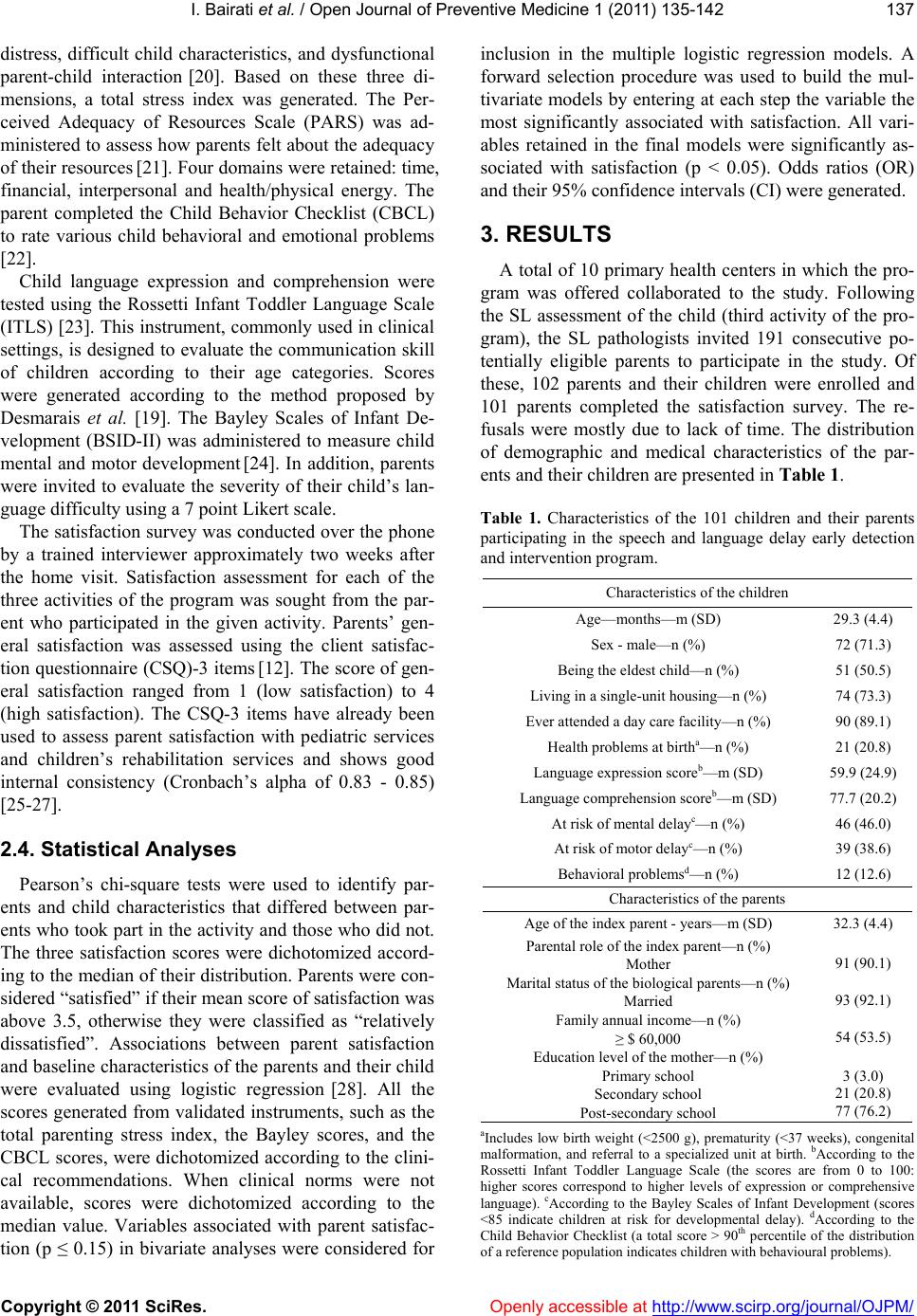 I. Bairati et al. / Open Journal of Preventive Medicine 1 (2 011) 135-142 Copyright © 2011 SciRes. Openly accessible at http://www.scirp.org/journal/OJPM/ 137 distress, difficult child characteristics, and dysfunctional parent-child interaction [20]. Based on these three di- mensions, a total stress index was generated. The Per- ceived Adequacy of Resources Scale (PARS) was ad- ministered to assess how parents felt about the adequacy of their resources [21]. Four domains were retained: time, financial, interpersonal and health/physical energy. The parent completed the Child Behavior Checklist (CBCL) to rate various child behavioral and emotional problems [22]. Child language expression and comprehension were tested using the Rossetti Infant Toddler Language Scale (ITLS) [23]. This instrument, commonly used in clinical settings, is designed to evaluate the communication skill of children according to their age categories. Scores were generated according to the method proposed by Desmarais et al. [19]. The Bayley Scales of Infant De- velopment (BSID-II) was administered to measure child mental and motor development [24]. In addition, parents were invited to evaluate the severity of their child’s lan- guage difficulty using a 7 point Likert scale. The satisfaction survey was conducted over the phone by a trained interviewer approximately two weeks after the home visit. Satisfaction assessment for each of the three activities of the program was sought from the par- ent who participated in the given activity. Parents’ gen- eral satisfaction was assessed using the client satisfac- tion questionnaire (CSQ)-3 items [12]. The score of gen- eral satisfaction ranged from 1 (low satisfaction) to 4 (high satisfaction). The CSQ-3 items have already been used to assess parent satisfaction with pediatric services and children’s rehabilitation services and shows good internal consistency (Cronbach’s alpha of 0.83 - 0.85) [25-27]. 2.4. Statistical Analyses Pearson’s chi-square tests were used to identify par- ents and child characteristics that differed between par- ents who took part in the activity and those who did not. The three satisfaction scores were dichotomized accord- ing to the median of their distribution. Parents were con- sidered “satisfied” if their mean score of satisfaction was above 3.5, otherwise they were classified as “relatively dissatisfied”. Associations between parent satisfaction and baseline characteristics of the parents and their child were evaluated using logistic regression [28]. All the scores generated from validated instruments, such as the total parenting stress index, the Bayley scores, and the CBCL scores, were dichotomized according to the clini- cal recommendations. When clinical norms were not available, scores were dichotomized according to the median value. Variables associated with parent satisfac- tion (p ≤ 0.15) in bivariate analyses were considered for inclusion in the multiple logistic regression models. A forward selection procedure was used to build the mul- tivariate models by entering at each step the variable the most significantly associated with satisfaction. All vari- ables retained in the final models were significantly as- sociated with satisfaction (p < 0.05). Odds ratios (OR) and their 95% confidence intervals (CI) were generated. 3. RESULTS A total of 10 primary health centers in which the pro- gram was offered collaborated to the study. Following the SL assessment of the child (third activity of the pro- gram), the SL pathologists invited 191 consecutive po- tentially eligible parents to participate in the study. Of these, 102 parents and their children were enrolled and 101 parents completed the satisfaction survey. The re- fusals were mostly due to lack of time. The distribution of demographic and medical characteristics of the par- ents and their children are presented in Table 1. Table 1. Characteristics of the 101 children and their parents participating in the speech and language delay early detection and intervention program. Characteristics of the children Age—months—m (SD) 29.3 (4.4) Sex - male—n (%) 72 (71.3) Being the eldest child—n (%) 51 (50.5) Living in a single-unit housing—n (%) 74 (73.3) Ever attended a day care facility—n (%) 90 (89.1) Health problems at birtha—n (%) 21 (20.8) Language expression scoreb—m (SD) 59.9 (24.9) Language comprehension scoreb—m (SD) 77.7 (20.2) At risk of mental delayc—n (%) 46 (46.0) At risk of motor delayc—n (%) 39 (38.6) Behavioral problemsd—n (%) 12 (12.6) Characteristics of the parents Age of the index parent - years—m (SD) 32.3 (4.4) Parental role of the index parent—n (%) Mother 91 (90.1) Marital status of the biological parents—n (%) Married 93 (92.1) Family annual income—n (%) ≥ $ 60,000 54 (53.5) Education level of the mother—n (%) Primary school Secondary school Post-secondary school 3 (3.0) 21 (20.8) 77 (76.2) aIncludes low birth weight (<2500 g), prematurity (<37 weeks), congenital malformation, and referral to a specialized unit at birth. bAccording to the Rossetti Infant Toddler Language Scale (the scores are from 0 to 100: higher scores correspond to higher levels of expression or comprehensive language). cAccording to the Bayley Scales of Infant Development (scores <85 indicate children at risk for developmental delay). dAccording to the Child Behavior Checklist (a total score > 90th percentile of the distribution of a reference population indicates children with behavioural problems). 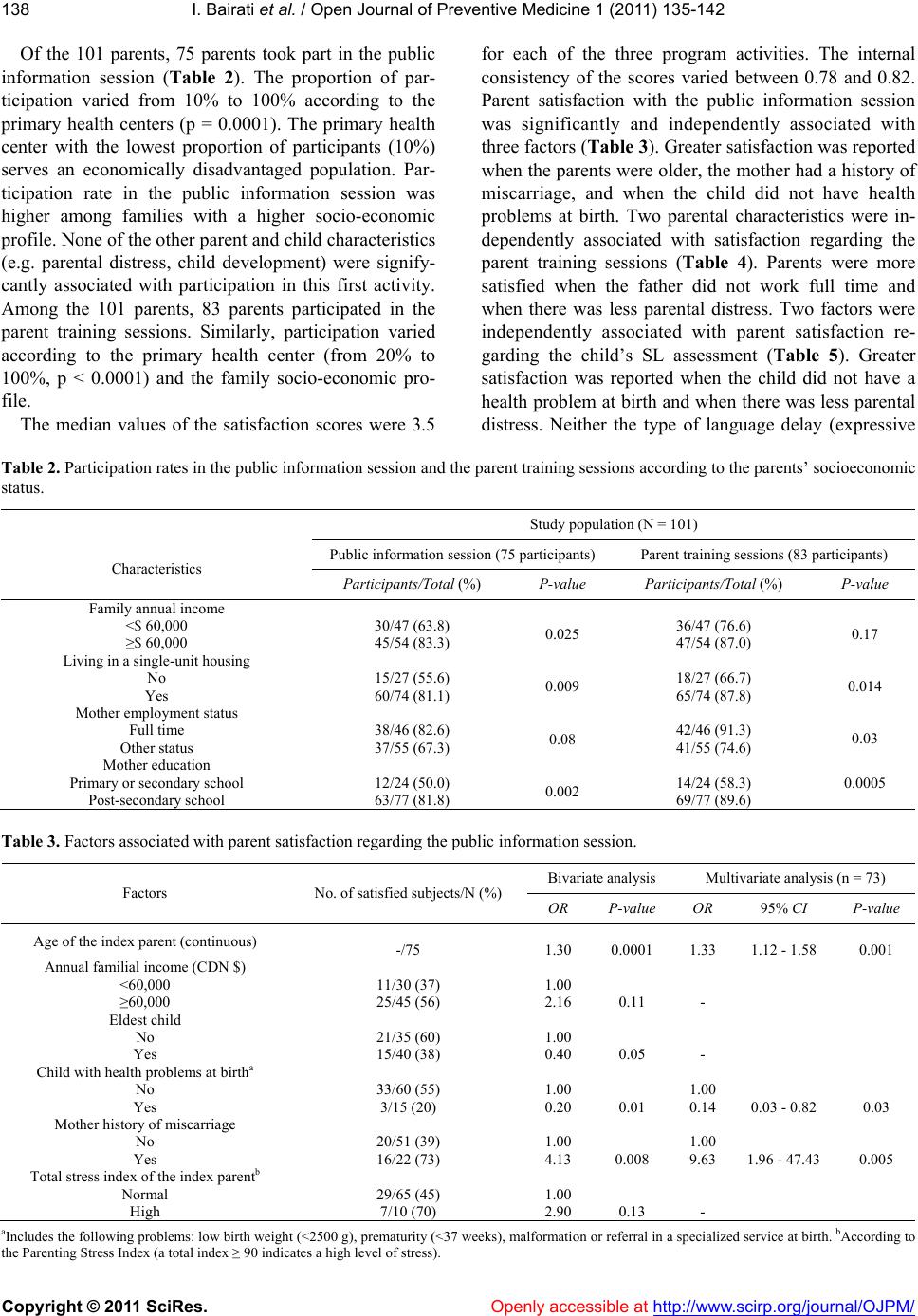 I. Bairati et al. / Open Journal of Preventive Medicine 1 (2 011) 135-142 Copyright © 2011 SciRes. http://www.scirp.org/journal/OJPM/Openly accessible at 138 Of the 101 parents, 75 parents took part in the public information session (Table 2). The proportion of par- ticipation varied from 10% to 100% according to the primary health centers (p = 0.0001). The primary health center with the lowest proportion of participants (10%) serves an economically disadvantaged population. Par- ticipation rate in the public information session was higher among families with a higher socio-economic profile. None of the other parent and child characteristics (e.g. parental distress, child development) were signify- cantly associated with participation in this first activity. Among the 101 parents, 83 parents participated in the parent training sessions. Similarly, participation varied according to the primary health center (from 20% to 100%, p < 0.0001) and the family socio-economic pro- file. The median values of the satisfaction scores were 3.5 for each of the three program activities. The internal consistency of the scores varied between 0.78 and 0.82. Parent satisfaction with the public information session was significantly and independently associated with three factors (Table 3). Greater satisfaction was reported when the parents were older, the mother had a history of miscarriage, and when the child did not have health problems at birth. Two parental characteristics were in- dependently associated with satisfaction regarding the parent training sessions (Table 4). Parents were more satisfied when the father did not work full time and when there was less parental distress. Two factors were independently associated with parent satisfaction re- garding the child’s SL assessment (Table 5). Greater satisfaction was reported when the child did not have a health problem at birth and when there was less parental distress. Neither the type of language delay (expressive Table 2. Participation rates in the public information session and the parent training sessions according to the parents’ socioeconomic status. Study population (N = 101) Public information session (75 participants) Parent training sessions (83 participants) Characteristics Participants/Total (%) P-value Participants/Total (%) P-value Family annual income <$ 60,000 ≥$ 60,000 30/47 (63.8) 45/54 (83.3) 0.025 36/47 (76.6) 47/54 (87.0) 0.17 Living in a single-unit housing No Yes 15/27 (55.6) 60/74 (81.1) 0.009 18/27 (66.7) 65/74 (87.8) 0.014 Mother employment status Full time Other status 38/46 (82.6) 37/55 (67.3) 0.08 42/46 (91.3) 41/55 (74.6) 0.03 Mother education Primary or secondary school Post-secondary school 12/24 (50.0) 63/77 (81.8) 0.002 14/24 (58.3) 69/77 (89.6) 0.0005 Table 3. Factors associated with parent satisfaction regarding the public information session. Bivariate analysis Multivariate analysis (n = 73) Factors No. of satisfied subjects/N (%) OR P-value OR 95% CI P-value Age of the index parent (continuous) -/75 1.30 0.0001 1.33 1.12 - 1.58 0.001 Annual familial income (CDN $) <60,000 ≥60,000 11/30 (37) 25/45 (56) 1.00 2.16 0.11 - Eldest child No Yes 21/35 (60) 15/40 (38) 1.00 0.40 0.05 - Child with health problems at birtha No Yes 33/60 (55) 3/15 (20) 1.00 0.20 0.01 1.00 0.14 0.03 - 0.82 0.03 Mother history of miscarriage No Yes 20/51 (39) 16/22 (73) 1.00 4.13 0.008 1.00 9.63 1.96 - 47.43 0.005 Total stress index of the index parentb Normal High 29/65 (45) 7/10 (70) 1.00 2.90 0.13 - aIncludes the following problems: low birth weight (<2500 g), prematurity (<37 weeks), malformation or referral in a specialized service at birth. bAccording to the Parenting Stress Index (a total index ≥ 90 indicates a high level of stress). 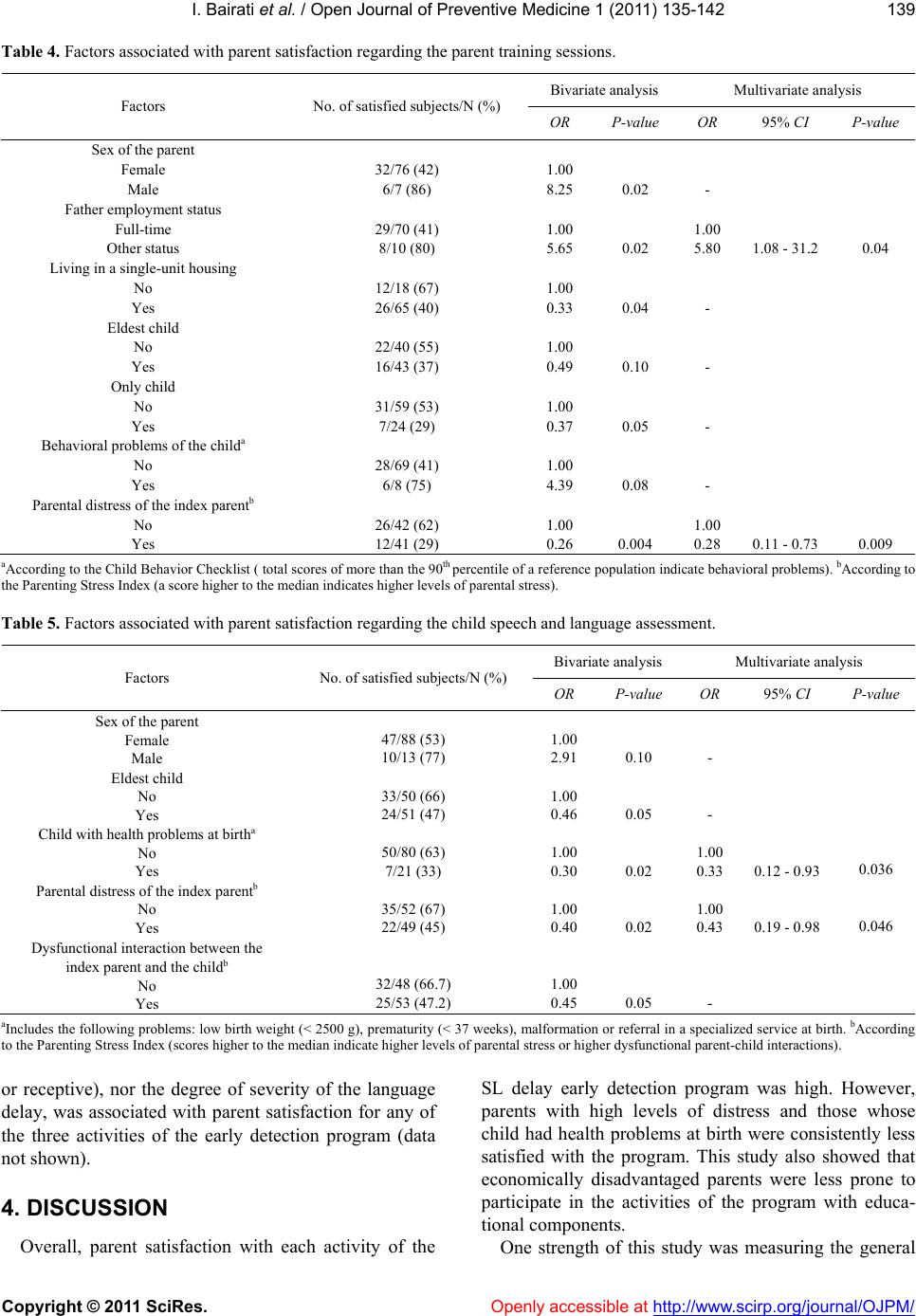 I. Bairati et al. / Open Journal of Preventive Medicine 1 (2 011) 135-142 Copyright © 2011 SciRes. Openly accessible at http://www.scirp.org/journal/OJPM/ 139 Table 4. Factors associated with parent satisfaction regarding the parent training sessions. Bivariate analysis Multivariate analysis Factors No. of satisfied subjects/N (%) OR P-value OR 95% CI P-value Sex of the parent Female Male 32/76 (42) 6/7 (86) 1.00 8.25 0.02 - Father employment status Full-time Other status 29/70 (41) 8/10 (80) 1.00 5.65 0.02 1.00 5.80 1.08 - 31.2 0.04 Living in a single-unit housing No Yes 12/18 (67) 26/65 (40) 1.00 0.33 0.04 - Eldest child No Yes 22/40 (55) 16/43 (37) 1.00 0.49 0.10 - Only child No Yes 31/59 (53) 7/24 (29) 1.00 0.37 0.05 - Behavioral problems of the childa No Yes 28/69 (41) 6/8 (75) 1.00 4.39 0.08 - Parental distress of the index parentb No Yes 26/42 (62) 12/41 (29) 1.00 0.26 0.004 1.00 0.28 0.11 - 0.73 0.009 aAccording to the Child Behavior Checklist ( total scores of more than the 90th percentile of a reference population indicate behavioral problems). bAccording to the Parenting Stress Index (a score higher to the median indicates higher levels of parental stress). Table 5. Factors associated with parent satisfaction regarding the child speech and language assessment. Bivariate analysis Multivariate analysis Factors No. of satisfied subjects/N (%) OR P-value OR 95% CI P-value Sex of the parent Female Male 47/88 (53) 10/13 (77) 1.00 2.91 0.10 - Eldest child No Yes 33/50 (66) 24/51 (47) 1.00 0.46 0.05 - Child with health problems at birtha No Yes 50/80 (63) 7/21 (33) 1.00 0.30 0.02 1.00 0.33 0.12 - 0.93 0.036 Parental distress of the index parentb No Yes 35/52 (67) 22/49 (45) 1.00 0.40 0.02 1.00 0.43 0.19 - 0.98 0.046 Dysfunctional interaction between the index parent and the childb No Yes 32/48 (66.7) 25/53 (47.2) 1.00 0.45 0.05 - aIncludes the following problems: low birth weight (< 2500 g), prematurity (< 37 weeks), malformation or referral in a specialized service at birth. bAccording to the Parenting Stress Index (scores higher to the median indicate higher levels of parental stress or higher dysfunctional parent-child interactions). or receptive), nor the degree of severity of the language delay, was associated with parent satisfaction for any of the three activities of the early detection program (data not shown). 4. DISCUSSION Overall, parent satisfaction with each activity of the SL delay early detection program was high. However, parents with high levels of distress and those whose child had health problems at birth were consistently less satisfied with the program. This study also showed that economically disadvantaged parents were less prone to participate in the activities of the program with educa- tional components. One strength of this study was measuring the general 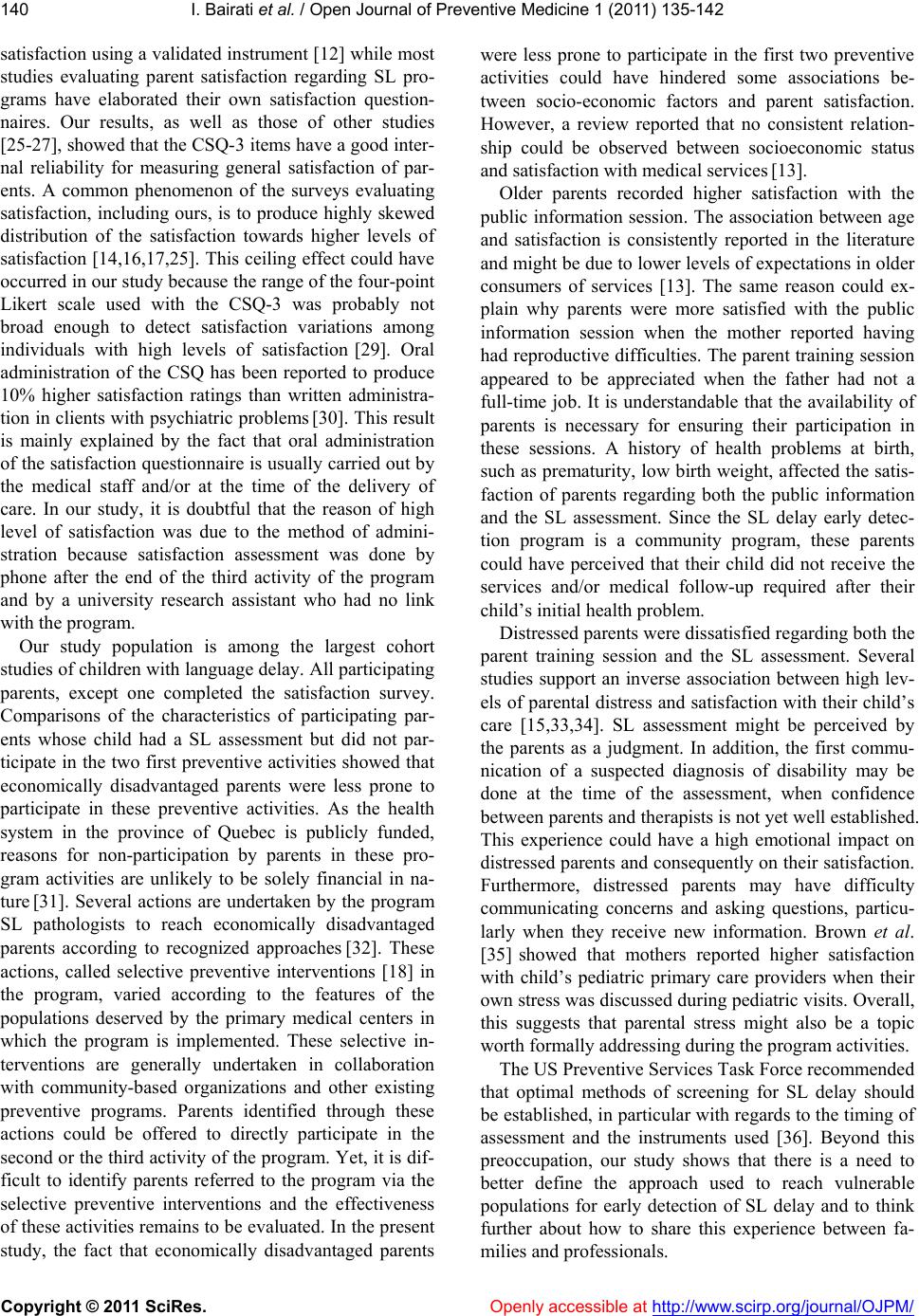 I. Bairati et al. / Open Journal of Preventive Medicine 1 (2 011) 135-142 Copyright © 2011 SciRes. Openly accessible at http://www.scirp.org/journal/OJPM/ 140 satisfaction using a validated instrument [12] while most studies evaluating parent satisfaction regarding SL pro- grams have elaborated their own satisfaction question- naires. Our results, as well as those of other studies [25-27], showed that the CSQ-3 items have a good inter- nal reliability for measuring general satisfaction of par- ents. A common phenomenon of the surveys evaluating satisfaction, including ours, is to produce highly skewed distribution of the satisfaction towards higher levels of satisfaction [14,16,17,25]. This ceiling effect could have occurred in our study because the range of the four-point Likert scale used with the CSQ-3 was probably not broad enough to detect satisfaction variations among individuals with high levels of satisfaction [29]. Oral administration of the CSQ has been reported to produce 10% higher satisfaction ratings than written administra- tion in clients with psychiatric problems [30]. This result is mainly explained by the fact that oral administration of the satisfaction questionnaire is usually carried out by the medical staff and/or at the time of the delivery of care. In our study, it is doubtful that the reason of high level of satisfaction was due to the method of admini- stration because satisfaction assessment was done by phone after the end of the third activity of the program and by a university research assistant who had no link with the program. Our study population is among the largest cohort studies of children with language delay. All participating parents, except one completed the satisfaction survey. Comparisons of the characteristics of participating par- ents whose child had a SL assessment but did not par- ticipate in the two first preventive activities showed that economically disadvantaged parents were less prone to participate in these preventive activities. As the health system in the province of Quebec is publicly funded, reasons for non-participation by parents in these pro- gram activities are unlikely to be solely financial in na- ture [31]. Several actions are undertaken by the program SL pathologists to reach economically disadvantaged parents according to recognized approaches [32]. These actions, called selective preventive interventions [18] in the program, varied according to the features of the populations deserved by the primary medical centers in which the program is implemented. These selective in- terventions are generally undertaken in collaboration with community-based organizations and other existing preventive programs. Parents identified through these actions could be offered to directly participate in the second or the third activity of the program. Yet, it is dif- ficult to identify parents referred to the program via the selective preventive interventions and the effectiveness of these activities remains to be evaluated. In the present study, the fact that economically disadvantaged parents were less prone to participate in the first two preventive activities could have hindered some associations be- tween socio-economic factors and parent satisfaction. However, a review reported that no consistent relation- ship could be observed between socioeconomic status and satisfaction with medical services [13]. Older parents recorded higher satisfaction with the public information session. The association between age and satisfaction is consistently reported in the literature and might be due to lower levels of expectations in older consumers of services [13]. The same reason could ex- plain why parents were more satisfied with the public information session when the mother reported having had reproductive difficulties. The parent training session appeared to be appreciated when the father had not a full-time job. It is understandable that the availability of parents is necessary for ensuring their participation in these sessions. A history of health problems at birth, such as prematurity, low birth weight, affected the satis- faction of parents regarding both the public information and the SL assessment. Since the SL delay early detec- tion program is a community program, these parents could have perceived that their child did not receive the services and/or medical follow-up required after their child’s initial health problem. Distressed parents were dissatisfied regarding both the parent training session and the SL assessment. Several studies support an inverse association between high lev- els of parental distress and satisfaction with their child’s care [15,33,34]. SL assessment might be perceived by the parents as a judgment. In addition, the first commu- nication of a suspected diagnosis of disability may be done at the time of the assessment, when confidence between parents and therapists is not yet well established. This experience could have a high emotional impact on distressed parents and consequently on their satisfaction. Furthermore, distressed parents may have difficulty communicating concerns and asking questions, particu- larly when they receive new information. Brown et al. [35] showed that mothers reported higher satisfaction with child’s pediatric primary care providers when their own stress was discussed during pediatric visits. Overall, this suggests that parental stress might also be a topic worth formally addressing during the program activities. The US Preventive Services Task Force recommended that optimal methods of screening for SL delay should be established, in particular with regards to the timing of assessment and the instruments used [36]. Beyond this preoccupation, our study shows that there is a need to better define the approach used to reach vulnerable populations for early detection of SL delay and to think further about how to share this experience between fa- milies and professionals.  I. Bairati et al. / Open Journal of Preventive Medicine 1 (2 011) 135-142 Copyright © 2011 SciRes. Openly accessible at http://www.scirp.org/journal/OJPM/ 141 5. ACKNOWLEDGEMENTS We thank all the SL therapists from the program who invited fami- lies to participate in the study. REFERENCES [1] Desmarais, C., Sylvestre, A., Meyer, F., Bairati, I. and Rouleau, N. (2008) Systematic review of the literature on characteristics of late-talking toddlers. International Jour- nal of Language and Communication Disorders, 4, 361- 389. doi:10.1080/13682820701546854 [2] National Institute on Deafness and Other Communication Disorders (2010) Statistics on voice, speech, and lan- guage. htpp://www.nidcd.nih.gov/health/statistics/vsl.asp [3] Law, J., Garrett, Z. and Nye, C. (2003) Speech and lan- guage therapy interventions for children with primary speech and language delay or disorder. Cochrane Data- base of Systematic Reviews, 3, 1-77. doi:10.1002/14651858.CD004110 [4] McLeod, S. and Harrison, L.J. (2009) Epidemiology of speech and language impairment in a nationally repre- sentative sample of 4- to 5-year-old children. Journal of Speech, Language, and Hearing Research, 52, 1213-1229. doi:10.1044/1092-4388(2009/08-0085) [5] Allard, F., Grégoire, L. and Leclerc, M.C. (1998) Organi- sation des services de première ligne en déficience du langage et de la parole destinés aux enfants dans la région de Québec. Régie Régionale de Québec et de la Direction de la santé publique de Québec, Quebec City, Report No. ISBN 2-921332-70-1. [6] Buschmann, A., Jooss, B., Rupp, A., Feldhusen, F., Pietz, J. and Philippi, H. (2009) Parent based language inter- vention for a 2-year-old children with specific expressive language delay: a randomised controlled trial. Archives of Disease in Childhood, 94, 110-116. doi:10.1136/adc.2008.141572 [7] Fey, M.E., Warren, S.F., Brady, N., Finestack, L.H., Bredin-Oja, S.L., Fairchild, M., Sokol, S. and Yoder, P.J. (2006) Early effects of responsivity education/ prelim- guistic milieu teaching for children with developmental delays and their parents. Journal of Speech, Language, and Hearing Research, 49, 526-547. doi:10.1044/1092-4388(2006/039) [8] Girolametto, L. and Weitzman, E. (2006) It takes two to talk—The Hanen program for parents: Early language in- tervention through caregiver training. In: MacCauley, R.J. and Fey, M.E., Eds, Treatment of language disorders in children, Brookes, M.A., Baltimore, 77-104. [9] Van Ripper, M. (1999) Maternal perceptions of family- provider relationship and well-being in families of chil- dren with Down Syndrom. Resear ch in Nurs ing an d Health, 22, 357-368. doi:10.1002/(SICI)1098-240X(199910)22:5<357::AID-N UR2>3.0.CO;2-Q [10] Rosenbaum, P., King, S., Law, M., King, G. and Evans, J. (1998) Family-centered services: A conceptual frame- work and research review. Physical and Occupational Therapy in Pediatrics, 18, 1-20. doi:10.1080/J006v18n01_01 [11] Garland, A.F., Haine, R.A. and Lewczyl-Boxmeyer, C. (2007) Determinates of youth and parent satisfaction in usual care psychotherapy. Evaluation and Program Plan- ning, 30, 45-54. doi:10.1016/j.evalprogplan.2006.10.003 [12] Larsen, D.L., Attkisson, C., Hargreaves, W.A. and Nguyen, T.D. (1979) Assessment of client/patient satisfaction de- velopment of a general scale. Evaluation and Program Planning, 2, 197-207. doi:10.1016/0149-7189(79)90094-6 [13] Crow, R., Gage, H., Hampson, S., Hart, J., Kimber, A., Storey, L. and Thomas, H. (2002) The measurement of satisfaction with health care: Implications for practice from a systematic review of the literature. Health Tech- nology Assessment, 6, 1-244. [14] Urden, L.D. (2002) Patient satisfaction measurement: current issues and implications. Lippincotts Case Man- agement, 7, 194-200. doi:10.1097/00129234-200209000-00006 [15] Rodger, S., Keen, D., Braithwaite, M. and Cook, S. (2008) Mothers’ satisfaction with a home based early in- tervention programme for children with ASD. Journal of Applied Research in Intellectual Disabilities, 21, 174-182. doi:10.1111/j.1468-3148.2 007.00 393.x [16] Wood, D.L., McCaskill, Q.E., Winterbauer, N., Jobli, E., Hou, T., Wludyka, P.S., Stowers, K. and Livingood, W. (2009) A multi-method assessment of satisfaction with services in the medical home by parents of children and youth with special health care needs. Maternal and Child Health Journal, 13, 5-17. doi:10.1007/s10995-008-0321-9 [17] Favez, N., Métral, E. and Govaerts, P. (2008) Parental satisfaction with a home-based intervention for devel- opmentally delayed children in Switzerland: A survey over a 10-year period. Child Care in Practice, 14, 147- 163. doi:10.1080/13575270701868751 [18] Mrazek, P.J. and Haggerty, R.J. (1994) New directions in definitions. In: Mrazek, P.J. and Haggerty, R.J. Eds, Re- ducing risks for mental disorders: Frontiers for preven- tive intervention research, National Academy Press, Washington, 19-29. [19] Desmarais, C., Sylvestre, A., Meyer, F., Bairati, I. and Rouleau, N. (2010) Three profiles of language abilities in toddlers with an expressive vocabulary delay: variations on a theme. Journal of Speech, Language, and Hearing Research, 53, 699-709. doi:10.1044/1092-4388(2009/07-0245) [20] Abidin, R. (1990) Parenting stress index short form— test manual. Pediatric Psychology Press, Charlottesville. [21] Rowland, V.T., Dodder, R.A. and Nickols, S.Y. (1985) Perceived adequacy of resources: Development of a scale. Home Economics Research Journal, 14, 218-225. doi:10.1177/1077727X8501400205 [22] Achenbach, T.M. and Rescorla, L. (2000) Manual for ASEBA preschool forms & profiles. University of Ver- mont, Research Center for Children, Youth and Families, Burlington. [23] Rossetti, L. (1990) Infant toddler language scales. Lin- guisystems, East Moline. [24] Bailey, N. (1993) Bayley Scales of Infant and Toddler Development, 2nd Edition, Harcourt Assessment, San Antonio. [25] Rahi, J.S., Manaras, I., Tuomainen, H. and Hundt, G.L. (2004). Meeting the needs of parents around the time of  I. Bairati et al. / Open Journal of Preventive Medicine 1 (2 011) 135-142 Copyright © 2011 SciRes. http://www.scirp.org/journal/OJPM/Openly accessible at 142 diagnosis of disability among their children: evaluation of a novel program for information, support, and liaison by key workers. Pediatrics, 114, e477-e482. doi:10.1542/peds.2004-0240 [26] Rahi, J.S., Manaras, I., Tuomainen, H. and Hundt, G.L. (2005) Health services experiences of parents of recently diagnosed visually impaired children. British Journal of Ophthalmology, 89, 213-218. doi:10.1136/bjo.2004.051409 [27] Koch, L.C. and Merz, M.A. (1995) Assessing client sat- isfaction in vocational rehabilitation program evaluation: A review of instrumentation. Journal of Rehabilitation, 61, 24-30. [28] Hosmer, D.W. and Lemeshow, S. (2007) Applied logis- tic regression, John Wiley and Sons, New York. [29] Fayers, P.M. and Machin, D. (2007) Quality of life. The assessment, analysis and interpretation of patient-re- ported outcomes. John Wiley and Sons, New York. [30] Levois, M., Nguyen, T.D. and Attkisson, C. (1981) Arti- fact in client satisfaction assessment: Experience in com- munity mental health settings. Evaluation and Program Planning, 4, 139-150. doi:10.1016/0149-7189(81)90004-5 [31] Garwick, A.W., Kohrman, C., Wolman, C. and Blum, R.W. (1998) Families’ recommandations for improving ser- vices for children with chronic conditions. Archives of Pediatrics and Adolescent Medicine, 152, 440-448. [32] Ford, A.F., Reddick, K., Browne, M.C., Robins, A., Thomas, S.B. and Crouse-Quinn, S. (2009) Beyond the cathedral: Building trust to engage the African American community in health promotion and disease promotion. Health Promotio n Prac ti c e, 10, 485-489. doi:10.1177/1524839909342848 [33] Lowoko, S. and Soares, J.J.F. (2004) Satisfaction with care: A study of parents of children with congenital dis- ease and parents of children with other diseases. Scandi- navian Journal of Caring Scie nces, 18, 90-102. doi:10.1111/j.1471-6712.2004.00264.x [34] Mitchell, D.B. and Hauser-Cram, P. (2008) The wellbeing of mothers of adolescents with developmental disabilities in relation to medical care utilization and satisfaction with health care. Research in Developmental Disabilities, 29, 97-112. doi:10.1016/j.ridd.2006.12.002 [35] Brown, J.D. and Wissow, L.S (2008). Discussion of ma- ternal stress during pediatric primary care visits. Ambu- latory Pediatrics, 8, 368-374. doi:10.1016/j.ambp.2008.08.004 [36] Nelson, H.D., Nygren, P., Walker, M. and Panoscha, R. (2006) Screening for speech and language delay in pre- school children: Systematic evidence review for the US Preventive Services Task Forces. Pediatrics, 117, e298- e319. doi:10.1542/peds.2005-1467 |