

Paper Menu >>
Journal Menu >>
 Advances in Chemical Engi neering and Science , 2011, 1, 191-197 doi:10.4236/aces.2011.14028 Published Online October 2011 (http://www.SciRP.org/journal/aces) Copyright © 2011 SciRes. ACES Copper and Cyanide Recovery in Cyanidation Effluents José R. Parga1, Jesús L. Valenzuela2, Héctor Moreno3, Jaime E. Pérez1 1Department of Metall ur gy an d Mat eri al s Science, Institute Technology of Saltillo, Saltillo, México 2Departament of Chemistry and Metallurgy, University of Sonora, Hermosillo, México 3Chemistry Department, Institute Technology of Laguna, Torreón, México E-mail: [email protected] Received August 26, 2011; revised Septembe r 13, 2011; accepted Se pt em b e r 23, 2011 Abstract Cyanidation is the main process for gold and silver recovery from its ores. In this study, a process is pro- posed to recover copper and cyanide from barren solutions from the Merrill-Crowe cementation process with zinc dust. This technology is based on inducing nucleated precipitation of copper and silver in a serpentine reactor, using sodium sulfide as the precipitator, and sulfuric acid for pH control. Results show that pH value has a significant effect on copper cyanide removal efficiency, and it was determined the optimal pH range to be 2.5 - 3. At this pH value, the copper cyanide removal efficiency achieved was up to 97% and 99%, when copper concentration in the influent was 636 and 900 ppm. respectively. In this process (sulphidiza- tion-acidification-thickening-HCN recycling), the cyanide associated with copper cyanide complexes, is re- leased as HCN gas under weakly acidic conditions, allowing it to be recycled back to the cyanidation process as free cyanide. Cyanide recovery was 90%. Finally, this procedure was successfully run at Minera William in México. Keywords: Precipitation, Cyanide Removal, Copper Recovery, Cyanidation 1. Introduction Actually, the most common process for gold and silver recovery from ores is cyanidation, due to the selectivity of free cyanide for both metals, and the stability of the cyanide complex (2 Au , k = 2 × 1038) [1 ]. Chemical recovery of gold from Merrill-Crowe process cyanide solution, involves two different operations: 1) gold dis- solution, where it is oxidized and dissolved to form Au (I) ion and cyanide complex 2, and 2) precipitation by reduction of metallic gold . In the cyanidation pro cess, free cyanide ions in solution can only be provided at a pH of 9.0. The pH of the pulp can be increased adding alkalis (e.g. Ca(OH)2, NaOH, etc.), known as protective alkalis. It is accepted that gold dissolution in cyanide solutions occurs as a sequence of two reactions, as shown in Equations (1) and (2). These reactions apply to silver as well. ( CN) Au(C N) 22 2 22 2Au4NaCNO2H O2NaAuCN 2NaOHHO (1) 22 2 2Au4NaCNH O2NaAuCN2NaOH (2) Elsner’s Equation (1) shows that oxygen is critical for the dissolution of gold. Stoichiometry of the process shows that 4 moles of cyanide are needed for each mole of oxygen present in solution. At room temperature and standard atmospheric pressure, approximately 8.2 mg of oxygen are present in one liter of water. This corre- sponds to 0.27 × 10⁻³ mol/L. The corresponding sodium cyanide concentration for a complete reaction (molecular weight of NaCN = 49) sh ould be equa l to 4 × 0.27 × 10–3 × 49 = 0.05 g/L or approximately 0.01%. This was con- firmed in practice at room temperature by a very dilute solution of NaCN of 0.01% - 0.5% for ores, and 0.5% - 5% for gold and silver concentrates [2]. Gold dissolution is an electrochemical reaction in which oxygen takes up electrons at one section of the metallic surface [cathodic zone], while the metal gives them up in another section [anodic zone]. Details of this electrochemical reaction have received considerable attention and under certain circumstances the reaction is limited by the coupled dif- fusion of CN– and O2 to the gold surface. Dissolution rate is normally mass-transport controlled in cyanide solutions and the activation energy is 8 - 20 kJ/mol [3]. The concentration of cyanide used to dissolve gold in ores is typically higher than the stoichiometric ratio, due 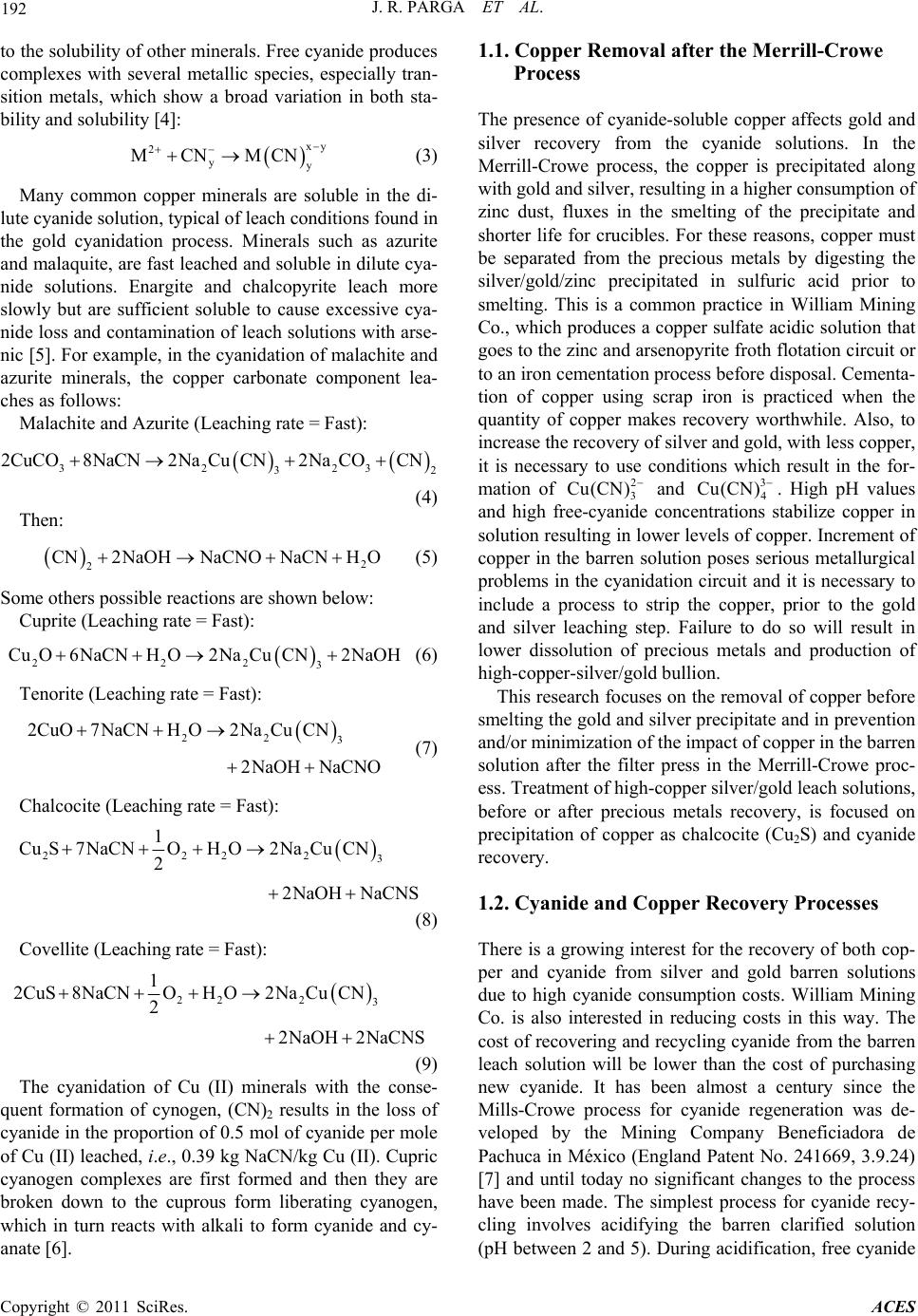 192 J. R. PARGA ET AL. to the solubility o f other minerals. Free cyanide produces complexes with several metallic species, especially tran- sition metals, which show a broad variation in both sta- bility and solub ility [4]: xy 2yy MCN MCN (3) Many common copper minerals are soluble in the di- lute cyanide solutio n, typical of leach conditio ns found in the gold cyanidation process. Minerals such as azurite and malaquite, are fast leached and soluble in dilute cya- nide solutions. Enargite and chalcopyrite leach more slowly but are sufficient soluble to cause excessive cya- nide loss and contamination of leach solutions with arse- nic [5]. For example, in the cyanidation of malachite and azurite minerals, the copper carbonate component lea- ches as follows: Malachite and Azurite (Leaching rate = Fast): 3223 3 2CuCO8NaCN2Na CuCN2Na COCN 2 (4) Then: 2 2 CN2NaOHNaCNONaCNH O (5) Some others possible reactions are shown below: Cuprite (Leaching rate = Fast): 222 3 Cu O6NaCNH O2NaCuCN2NaOH (6) Tenorite (Leaching rate = Fast): 22 3 2CuO7NaCNH O2NaCuCN 2NaOH NaCNO (7) Chalcocite (Leaching rate = Fast): 2222 3 1 Cu S7NaCNOH O2NaCuCN 2 2NaOH NaCNS (8) Covellite (Leaching rate = Fast): 2223 1 2CuS8NaCNOH O2Na CuCN 2 2NaOH 2NaCNS (9) The cyanidation of Cu (II) minerals with the conse- quent formation of cynogen, (CN)2 results in the loss of cyanide in the proportion of 0.5 mol of cyanide per mole of Cu (II) leach ed, i.e., 0.39 kg NaCN/kg Cu (II). Cupr ic cyanogen complexes are first formed and then they are broken down to the cuprous form liberating cyanogen, which in turn reacts with alkali to form cyanide and cy- anate [6]. 1.1. Copper Removal after the Merrill-Crowe Process The presence of cyanide-soluble copper affects gold and silver recovery from the cyanide solutions. In the Merrill-Crowe process, the copper is precipitated along with gold and silver, resulting in a higher consumption of zinc dust, fluxes in the smelting of the precipitate and shorter life for crucibles. For these reasons, copper must be separated from the precious metals by digesting the silver/gold/zinc precipitated in sulfuric acid prior to smelting. This is a common practice in William Mining Co., which produ ces a copper sulfate acidic solution that goes to the zinc and arsenopyrite froth flotation circuit or to an iron cementation process before disposal. Cementa- tion of copper using scrap iron is practiced when the quantity of copper makes recovery worthwhile. Also, to increase the recovery of silver and gold, with less copper, it is necessary to use conditions which result in the for- mation of 2 3 Cu(CN) and . High pH values and high free-cyanide concentrations stabilize copper in solution resulting in lower levels of copper. Increment of copper in the barren solution poses serious metallurgical problems in the cyanidation circuit and it is necessary to include a process to strip the copper, prior to the gold and silver leaching step. Failure to do so will result in lower dissolution of precious metals and production of high-copper-silver/gol d bullion. 3 4 Cu(CN) This research fo cuses on the removal of copper before smelting the gold and silver precipitate and in prevention and/or minimization of the impact of copper in the barren solution after the filter press in the Merrill-Crowe proc- ess. Treatment of high-copper silver/gold leach solutions, before or after precious metals recovery, is focused on precipitation of copper as chalcocite (Cu2S) and cyanide recovery. 1.2. Cyanide and Copper Recovery Processes There is a growing interest for the recovery of both cop- per and cyanide from silver and gold barren solutions due to high cyanide consumption costs. William Mining Co. is also interested in reducing costs in this way. The cost of recovering and recycling cyanide from the barren leach solution will be lower than the cost of purchasing new cyanide. It has been almost a century since the Mills-Crowe process for cyanide regeneration was de- veloped by the Mining Company Beneficiadora de Pachuca in México (England Patent No. 241669, 3.9.24) [7] and until today no significant changes to the process have been made. The simplest process for cyanide recy- cling involves acidifying the barren clarified solution (pH between 2 and 5). During acidification, free cyanide Copyright © 2011 SciRes. ACES  J. R. PARGA ET AL. 193 and relatively weakly complexed cyanide (Ag, Cu, Zn, Fe) are converted into HCN gas, which is then volatil- ized by passing a stream of air bu bbles through the solu- tion. The air/HCN gas stream is scrubbed in a caustic solution in a second tower reactor to convert the HCN back into free cyanide ions for recycling [8]. In this process copper and silver are not recovered for resale. This has prompted interest to also recover copper by se- lective metal sulphide precipitation. The copper sulphide precipitate is then recovered by conventional clarifica- tion and filtration to produce a filter cake (45% to 60% Cu) which can be shipped to a copper smelter. Among the chemical precipitation methods, precipita- tion of metal hydroxides is the most conventional, but it suffers from shortcoming, such as high solubilities for some metals. Sulphide precipitation of metals is a viable alternative process for copper recovery from the barren cyanide solutions because of the possible high degree of metal removal over a broad pH range. However; hydro- gen sulfide is odorous and highly toxic. It tends to accu- mulate in poorly ventilated spaces because it is heavier than air. Exposure to low level concentrations of this gas can result in eye irritation, sore throat and cough, short- ness of breath, and fluid in the lungs [9]. Sulphide pre- cipitation of metals has several advantages over hydrox- ide precipitation, such as low solubility, high stability of metal sulphides, fast reaction rates, better settling prop- erties and potential for re-use of sulphide precipitates by smelting. The thermodynamic equilibrium involved in metal sulphide precipitation has been proposed as [10]: Kp1 2 HSHS H , p1 2 HS H KHS , 1 p K6.99 (10) 2 Kp2 2p2 2 SH HSSH ,K,pK17.4 HS (11) 22 s MS MS (12) 2s MHSMSH (13) These equations show that concentration of sulphur species is a strong function of pH. The pK2 value is cur- rently the most reliable value. The use of sulphide precipitation process for copper and cyanide recovering after cyanidation has a key ad- vantage, the ability to operate in the barren solution to first recover copper/silver and after that establish acidic conditions in the solution. This results in rapid release of free cyanide (HCNgas) that is easily recoverable by vola- tilization at lowered pH value. If cyanide ions are present in the barren solution after precipitation from the Merrill Crowe process as free cya- nide (pKa = 9.4), it is possible to convert 99% of the cyanide into HCN gas by lowering the pH value of the solution to about 6: g CN HHCN (14) On the other hand, if cyanide ions are present as me- tal-cyanide complexes, pH must be lowered to more aci- dic values to break down the complex and produce HCN gas. As an example, the weak zinc-cyanide complex (log B4 = 17.4) breaks down completely at a pH close to 5, producing zinc sulfate as an aqueous soluble species, plus HCN gas: 22 24 4 4s g 4 ZnCN2H SOZnSO4HCNSO (15) The copper cyanide complex does not break down completely, even in strong acid solution, unless there is an oxidant present in the solution. In the absence of an oxidant, the copper tricyanide (which is the most stable copper complex under normal cyanidation conditions: log B3 = 28) decomposes to form a CuCN precipitate, plus HCN gas (Equation (16)), at pH values lower th an 3. Hence, 33% of potentially recoverable cyanide is lost to the precipitate: 2 s 3 Cu CN2HCuCN2HCN g 6s (16) Barren solution in the William Mining Co. process also contains ferrocyanide and cuprous cyanide that, a pH = 4, produces doub le metal cyanide precip itates such as Cu2Fe(CN)6 and Cu4Fe(CN)6: 24 4 36 g 4CuCNFe CN12HCuFe CN 12HCN (17) From the stoichiometry, it can be seen that the ferro- cyanide molecule releases the third molecule of CN from the copper tricyanide complex. Therefore, the presence of ferrocyanide results in increased recovery of cyanide from the copper-cyanide species. When thiocyanate is present, as it is often the case when leaching sulphide-bearing ores, insoluble CuSCN may also be responsible for copper precipitation and HCN gas formation in acid conditions, the following reaction show this behavior: 2 sg 3 Cu CNSCN3HCuSCN3HCN (18) Addition of sulphide ions (Na2S) to the acidified cya- nide solution results in the precipitation of cuprous sul- phide (chalcocite), which is favored because of its ex- tremely low solubility (Ksp = 2.3 × 10–48) [11]. The fol- Copyright © 2011 SciRes. ACES  J. R. PARGA ET AL. 194 g g lowing reaction takes place: 2 24 22 gs 3 2 4 2CuCN2H SOH SCu S6HCN 2SO (19) Stoichiometric rate of sulfide is approximately 0.25 grams S2– per gram of copper, 0.44 grams NaHS per gram of copper or 0.61 grams Na2S per gram of copper. However, the actual sulfide dosage required for near- complete copper precipitation is normally in excess of 200% due to additional ions in the barren solution. In precipitating copper, sulfide addition also results in the near-complete precipitation of silver, as shown in the following reaction: 22 gs 2 2AgCNH SAgS4HCN (20) Based upon reactions 15 - 20, acid conditions may cause the dissociation of the complexes, due to the for- mation of some copper precipitate and subsequent libera- tion of HCN by volatilization, considering these reac- tions, up to 99% of copper could be recovered and HCN gas could be stripped from the barren solutions and ad- sorbed in an alkali solution of NaOH. The simplified chemistry of the process is presented in the following reaction: 2 g HCNNaOHNaCNH O (21) The precipitate is a sellable copper product on its own, or can be blended with the arsenopirite flotation concen- trate from the flotation sulphide plant. 2. Materials and Methods Experiments were carried out on barren cyanide solution after the filter press on the Merrill Crowe process. The pregnant solution came from the cyanidation leach plant (500 ton/day), where the ores, from the Minera William mines, are a mixture of oxides and sulfides, with the copper ranging from 0.04% to 0.25% as the norm an average sample contains: 1.7 g/ton Au, 100 g/ton Ag, 0.6% Pb, 0.61% Zn, 0.12% Cu, 2.3 % Fe and 2% of As. A wet screen analysis of the plant sample indicated that the granulometry was 80%—74 m. The leaching practice in the plant was: leach pulps containing 40% solids over a period of 72 hours leaching at Ph = 11.0, O2 = 5 ppm and 2 kg/ton NaCN; leached residue: 0.20 g/ton Au and 0.18 g/ton Ag. Then, copper precipitation and cyanide regeneration experiments were performed to determine the effect of different process conditions on the solids of copper/silver sulphide produced by sulphide precipitation. Precipitation experiments were carried out in a 1 liter round-bottomed reaction vessel with ports for an over- head stirred, a gas sparger and a pH electrode. The pH meter is VWR 8005 Scientific and stirring motor with a glass impeller driven BDC 1850 CAFRAMO and cone size settler (1000 ml). The barren solutions used had copper, silver, zinc and iron ions of varying concentra- tion. The pH of the barren was adjusted to the required level with sulfuric acid and then a mixture of Na2S/water was added. All experimental samples of the liquor and solid were taken at known times, solutions and solids from the process were separated by filtration through cellulose filter paper. The sludge from the precipitation was dried either in an oven or under vacuum at room temperature. Analysis of copper, silver, zinc, iron, and arsenic were performed by digestion of the precipitate and subsequent ICP/Atomic Emission Spectrometry de- termination and free cyanide content was determined directly via titration, whereas the total cyanide was measured by means of titration after distillation. At the end of the experiment, HCN volatilization reached effi- ciencies above 97% and the capture of cyanide gas by NaOH (1 M) solution was almost 95%. 3. Results and Discussion The experimental results of the copper, silver, zinc and iron precipitation as well as CN removal (%) at different pH values are presented in Table 1. Results show that pH has a significant effect on copper cyanide removal efficiency, and it was determined the optimal pH range to be 2.5 - 3. With these pH values, when influ en t copp er co n c entr atio n was 636 pp m, co pp er cyanide removal efficiency was 99%. Some black pre- cipitates were observed in the solution of experiments 2 to 6; which suggested the presence of copper, silver, ar- senic, zinc and iron as sulphides. The presence of these sulphides was confirmed in Figure 1. The measured sample, which was collected from experiments of pH 2, 3 and 4 (see Table 2), gives rise to peaks corresponding to covellite, esfalerite and pyrite. The size, EDAX and morphology of the solids are also shown in Figure 1 by SEM micrograph and EDAX analysis. The solids in the precipitate are spherical and approximately 100 nm in diameter. The SEM micrograph confirms the excellent crystal- linity of synthetic covellite (CuS) formed during the sul- phide precipitation process. The EDAX chemical analy- sis pattern of the precipitate at different pH values is shown in Table 2. Results of Table 2, indicate that pH = 2 to 3 is the best condition for the sulphide precipitation of copper, be- cause the high recoveries > 99% of Cu and excellent quality. Copyright © 2011 SciRes. ACES 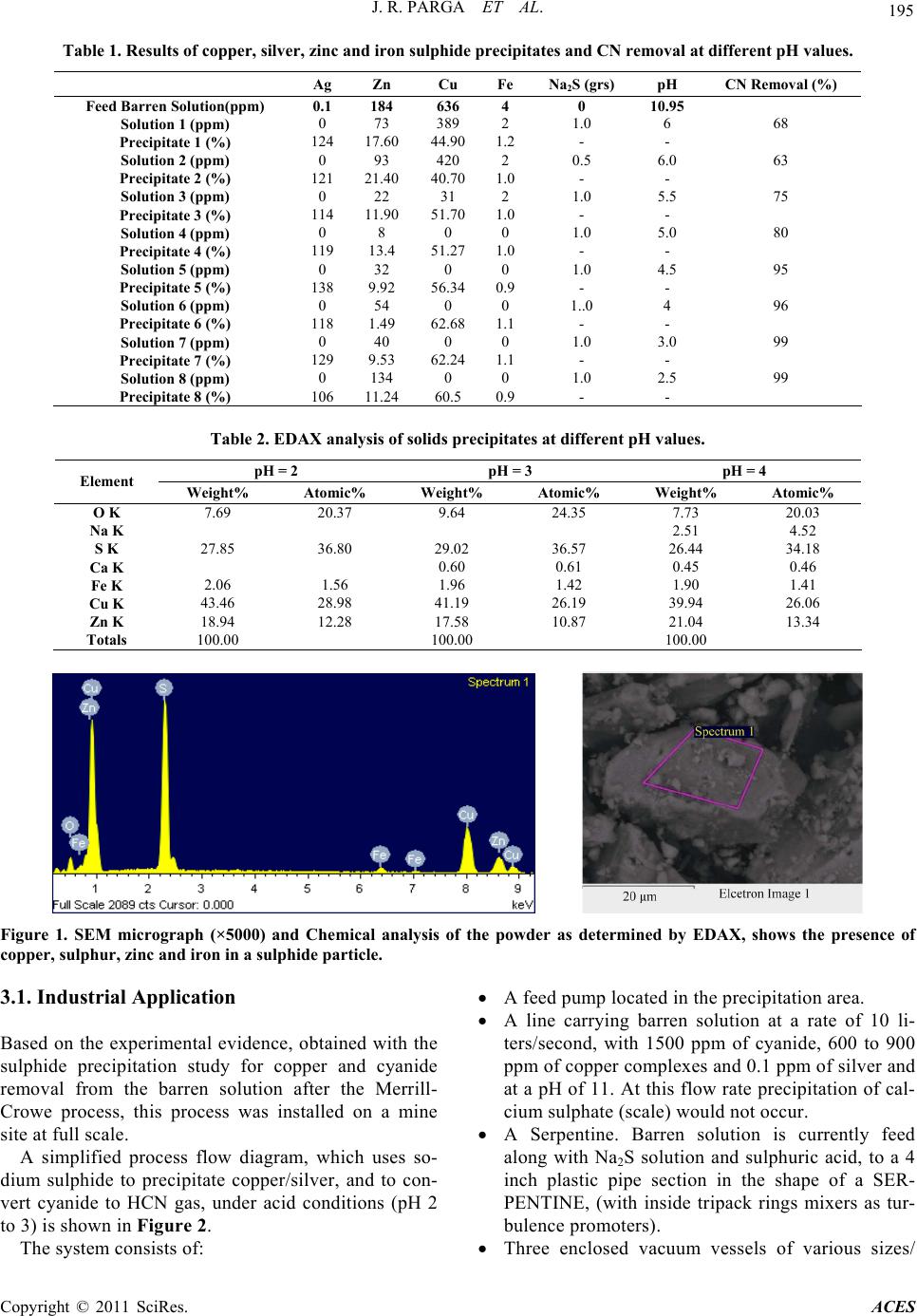 J. R. PARGA ET AL. Copyright © 2011 SciRes. ACES 195 Table 1. Results of copper, silver, zinc and iron sulphide precipitates and CN removal at different pH values. Ag Zn Cu Fe Na2S (gr s) pH CN Removal (%) Feed Barren Solution(ppm) 0.1 184 636 4 0 10.95 Solution 1 (ppm) 0 73 389 2 1.0 6 68 Precipitate 1 (%) 124 17.60 44.90 1.2- - Solution 2 (ppm) 0 93 420 2 0.5 6.0 63 Precipitate 2 (%) 121 21.40 40.70 1.0- - Solution 3 (ppm) 0 22 31 2 1.0 5.5 75 Precipitate 3 (%) 114 11.90 51.70 1.0- - Solution 4 (ppm) 0 8 0 0 1.0 5.0 80 Precipitate 4 (%) 119 13.4 51.27 1.0- - Solution 5 (ppm) 0 32 0 0 1.0 4.5 95 Precipitate 5 (%) 138 9.92 56.34 0.9- - Solution 6 (ppm) 0 54 0 0 1..0 4 96 Precipitate 6 (%) 118 1.49 62.68 1.1- - Solution 7 (ppm) 0 40 0 0 1.0 3.0 99 Precipitate 7 (%) 129 9.53 62.24 1.1- - Solution 8 (ppm) 0 134 0 0 1.0 2.5 99 Precipitate 8 (%) 106 11.24 60.5 0.9- - Table 2. EDAX analysis of solids precipitates at different pH values. pH = 2 pH = 3 pH = 4 Element Weight% Atomic% Weight% Atomic% Weight% Atomic% O K 7.69 20.37 9.64 24.35 7.73 20.03 Na K 2.51 4.52 S K 27.85 36.80 29.02 36.57 26.44 34.18 Ca K 0.60 0.61 0.45 0.46 Fe K 2.06 1.56 1.96 1.42 1.90 1.41 Cu K 43.46 28.98 41.19 26.19 39.94 26.06 Zn K 18.94 12.28 17.58 10.87 21.04 13.34 Totals 100.00 100.00 100.00 Figure 1. SEM micrograph (×5000) and Chemical analysis of the powder as determined by EDAX, shows the presence of copper, sulphur, zinc and ir on in a sulphide particle. 3.1. Industrial Application A feed pump located in the precipitation area. A line carrying barren solution at a rate of 10 li- ters/second, with 1500 ppm of cyanide, 600 to 900 ppm of copper complexes and 0.1 ppm of silver and at a pH of 11. At this flow rate precipitation of cal- cium sulphate (scale) would not occur. Based on the experimental evidence, obtained with the sulphide precipitation study for copper and cyanide removal from the barren solution after the Merrill- Crowe process, this process was installed on a mine site at full scale. A Serpentine. Barren solution is currently feed along with Na2S solution and sulphuric acid, to a 4 inch plastic pipe section in the shape of a SER- PENTINE, (with inside tripack rings mixers as tur- bulence promoters). A simplified process flow diagram, which uses so- dium sulphide to precipitate copper/silver, and to con- vert cyanide to HCN gas, under acid conditions (pH 2 to 3) is shown in Figure 2. Three enclosed vacuum vessels of various sizes/ The system consists of: 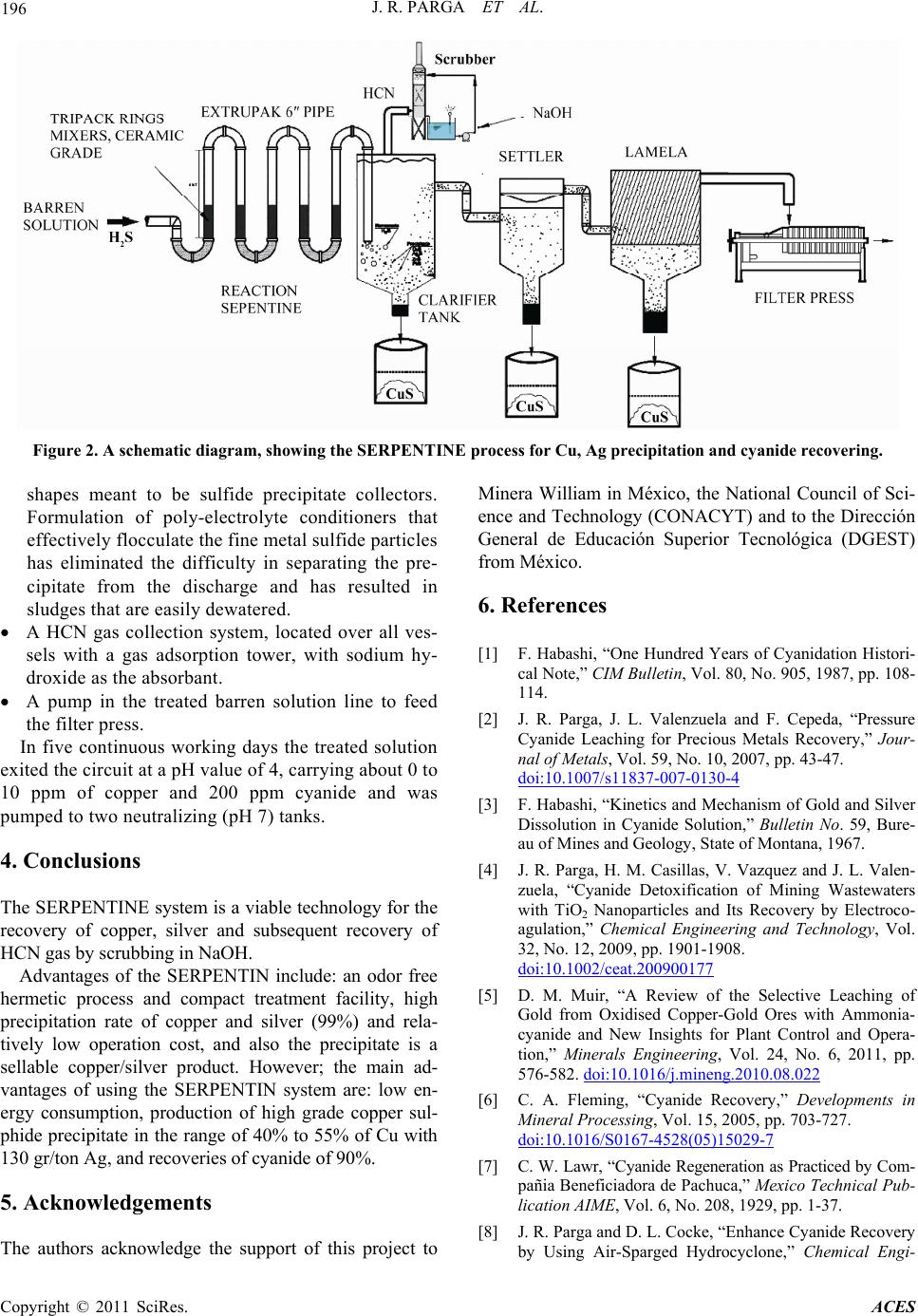 J. R. PARGA ET AL. Copyright © 2011 SciRes. ACES 196 Figure 2. A schematic diagram, showing the SERPENTINE process for Cu, Ag precipitation and cyanide recovering. shapes meant to be sulfide precipitate collectors. Formulation of poly-electrolyte conditioners that effectively flocculate the fine metal sulfide particles has eliminated the difficulty in separating the pre- cipitate from the discharge and has resulted in sludges that are easily dewatered. A HCN gas collection system, located over all ves- sels with a gas adsorption tower, with sodium hy- droxide as the absorbant. A pump in the treated barren solution line to feed the filter press. In five continuous working days the treated solution exited the circuit at a pH value of 4, carrying about 0 to 10 ppm of copper and 200 ppm cyanide and was pumped to two neutralizing (pH 7) tanks. 4. Conclusions The SERP ENTINE system is a viab le technology for th e recovery of copper, silver and subsequent recovery of HCN gas by scrubbing in NaOH. Advantages of the SERPENTIN include: an odor free hermetic process and compact treatment facility, high precipitation rate of copper and silver (99%) and rela- tively low operation cost, and also the precipitate is a sellable copper/silver product. However; the main ad- vantages of using the SERPENTIN system are: low en- ergy consumption, production of high grade copper sul- phide precipitate in the range of 40% to 55% of Cu with 130 gr/ton Ag, and recoveries of cyanide of 90%. 5. Acknowledgements The authors acknowledge the support of this project to Minera William in México, the National Council of Sci- ence and Technology (CONACYT) and to the Dirección General de Educación Superior Tecnológica (DGEST) from México. 6. References [1] F. Habashi, “One Hundred Years of Cyanidation Histori- cal Note,” CIM Bulletin, Vol. 80, No. 905, 1987, pp. 108- 114. [2] J. R. Parga, J. L. Valenzuela and F. Cepeda, “Pressure Cyanide Leaching for Precious Metals Recovery,” Jour- nal of Metals, Vol. 59, No. 10, 2007, pp. 43-47. doi:10.1007/s11837-007-0130-4 [3] F. Habashi, “Kinetics a nd Mechanism of Gold and Silver Dissolution in Cyanide Solution,” Bulletin No. 59, Bure- au of Mines and Geology, State of Montana, 1967. [4] J. R. Parga, H. M. Casillas, V. Vazquez and J. L. Valen- zuela, “Cyanide Detoxification of Mining Wastewaters with TiO2 Nanoparticles and Its Recovery by Electroco- agulation,” Chemical Engineering and Technology, Vol. 32, No. 12, 2009, pp. 1901-1908. doi:10.1002/ceat.200900177 [5] D. M. Muir, “A Review of the Selective Leaching of Gold from Oxidised Copper-Gold Ores with Ammonia- cyanide and New Insights for Plant Control and Opera- tion,” Minerals Engineering, Vol. 24, No. 6, 2011, pp. 576-582. doi:10.1016/j.mineng.2010.08.022 [6] C. A. Fleming, “Cyanide Recovery,” Developments in Mineral Processing, Vol. 15, 2005, pp. 703-727. doi:10.1016/S0167-4528(05)15029-7 [7] C. W. Lawr, “Cyanide Regenera tion as Practiced by Com- pañia Beneficiadora de Pachuca,” Mexico Technical Pub- lication AIME, Vol. 6, No. 208, 1929, pp. 1-37. [8] J. R. Parga and D. L. Cocke, “Enhance Cyanide Recovery by Using Air-Sparged Hydrocyclone,” Chemical Engi-  J. R. PARGA ET AL. 197 neering and Technology, Vol. 26, No. 4, 2003, pp. 503- 507. doi:10.1002/ceat.200390075 [9] Z. M. Shareefdeen, W. Ahmed and A. Aidan, “Kinetics and Modeling of H2S Removal in a Novel Biofilter,” Ad- vances in Chemical Engineering and Science, Vol. 1, No. 2, 2011, pp. 72-76. doi:10.4236/aces.2011.12012 [10] A. E. Lewis, “Review of Metal Sulphide Precipitation,” Hydrometallurgy, Vol. 104, No. 2, 2010, pp. 222-234. doi:10.1016/j.hydromet.2010.06.010 [11] M. Adams, R. Lawrence and M. Bratty, “Biogenic Sul- phide for Cyanide Recycle and Copper Recovery in Gold-Copper Ore Processing,” Minerals Engineering, Vol. 21, No. 6, 2008, pp. 509-517. doi:10.1016/j.mineng.2008.02.001 Copyright © 2011 SciRes. ACES |