

Paper Menu >>
Journal Menu >>
 Surgical Science, 2011, 2, 407-413 doi:10.4236/ss.2011.28089 Published Online October 2011 (http://www.SciRP.org/journal/ss) Copyright © 2011 SciRes. SS Blunt Traumatic Cervical Spine Fractures in Iran Soheil Saadat1, Aliashraf Eghbali1, Alexander R. Vaccaro2, Mahdi Sharif-Alhoseini1, Vafa Rahimi-Movaghar1,3 1Sina Trauma and Surgery Research Center, Tehran University of Medical Sciences, Tehran, Iran 2Department of Orthopaedic Surgery, Thomas Jefferson University and Rothman Institute, Philadelphia, USA 3Research Centre for Neural Repair, University of Tehran, Tehran, Iran E-mail: [email protected] Received April 4, 2011; revised Augu st 25, 2011; accepted September 26, 2011 Abstract Background: Blunt traumatic cervical spine fractures (TCSF) are serious injuries which may be associated with considerable mortality and morbidity. We describe the epidemiology of blunt traumatic cervical spine fracture in Iran over a definable time period. Methods: in a cross-sectional study, the data including the dis- tribution of TCSF, demographics, mechanisms, abbreviated injury scale (AIS), spinal cord associated inju- ries and final outcome of patients, was extracted from the Iranian national trauma registry database in target hospitals in eight major cities of Iran from 1999 to 2004. The Chi square test was used to compare mortality and one-way ANOVA was used to compare ISS amongst th e cate gorie s of TCSF. Results: T CSF was identi- fied in 120 cases, of these 70.8% were male. Their mean age was 36.6 ± 17.2 years. The overall incidence of TCSF among all trauma patients was 0.7% (95%CI: 0.61% - 0.88%). The TCSF incidence among all spine fractured patients was 19.38% (95%CI: 16.34% - 22.72%). The most common mechanism of TCSF was a motor vehicle collision (66.7%). The overall percentage of in-hospital death for TCSF was 12.6%. There were no statistically significant difference in death and injury severity scores (ISS) among TCSF categories (p > 0.05). Spinal cord and root injuries occurred in 34.9% and 2.4% of TCSF, respectively. Conclusions: preventive strategies need to be developed in order to reduce the number and severity of TCSF in the general Iranian population. Keywords: Cervical Spine, Fractures, Iran, Motor Vehicle Crash, Trauma 1. Introduction Injuries to the cervical spine are of critical importance given the potential risk of damage to the spinal cord leading to paralysis and life long consequences [1]. Studies of cervical spinal injury report prevalences rang- ing from 1% to 14% [2]. Blunt traumatic cervical spine fractures (TCSF) accounts for 1% to 3% of trauma pa- tients [3,4] but the resulting loss of neurologic function, i.e. incomplete/complete quadriplegia following cervical spinal cord injuries are an important source of mortality and morbidity [5]. TCSF is seen in 19.2% - 20.8% of blunt traumatic spine fractures [6-8]. It most frequently occurs in male patients [9]. The cervical spine is vulner- able to injuries resulting from high-energy motor vehicle collisions and falls [10]. TCSF can be potentially devas- tating, with delayed diagnosis and neurologic damage resulting in death and disability [11-13]. Prompt immo- bilization and timely diagnosis are essential for optimal therapy. Delayed, missed, or inaccurate diagnosis can result in life-long devastating i mplicatio ns [14]. Among patients undergoing emergency department cervical spine radiography following blunt trauma, cer- vical spine injuries were found to be more common among the young male patients [8,15] and the C1 - C2 was the most common location of inj ury [4]. The Injury severity score (ISS) is an anatomically based ordinal scale, with a range from 1 to 75. To com- pute the ISS, the nine abbreviated injury scale (AIS) body regions are grouped into six: head or neck, face, chest, abdominal or pelvic contents, extremities or pelvic girdle, and external. The ISS is then calculated as the sum of t he sq uar es of the high e st AIS sc or es fo r the t hre e most severely injured body regions [16]. So far, there has been no reliable investigation of dis- tribution of TCSF among hospitalized traumatic patients 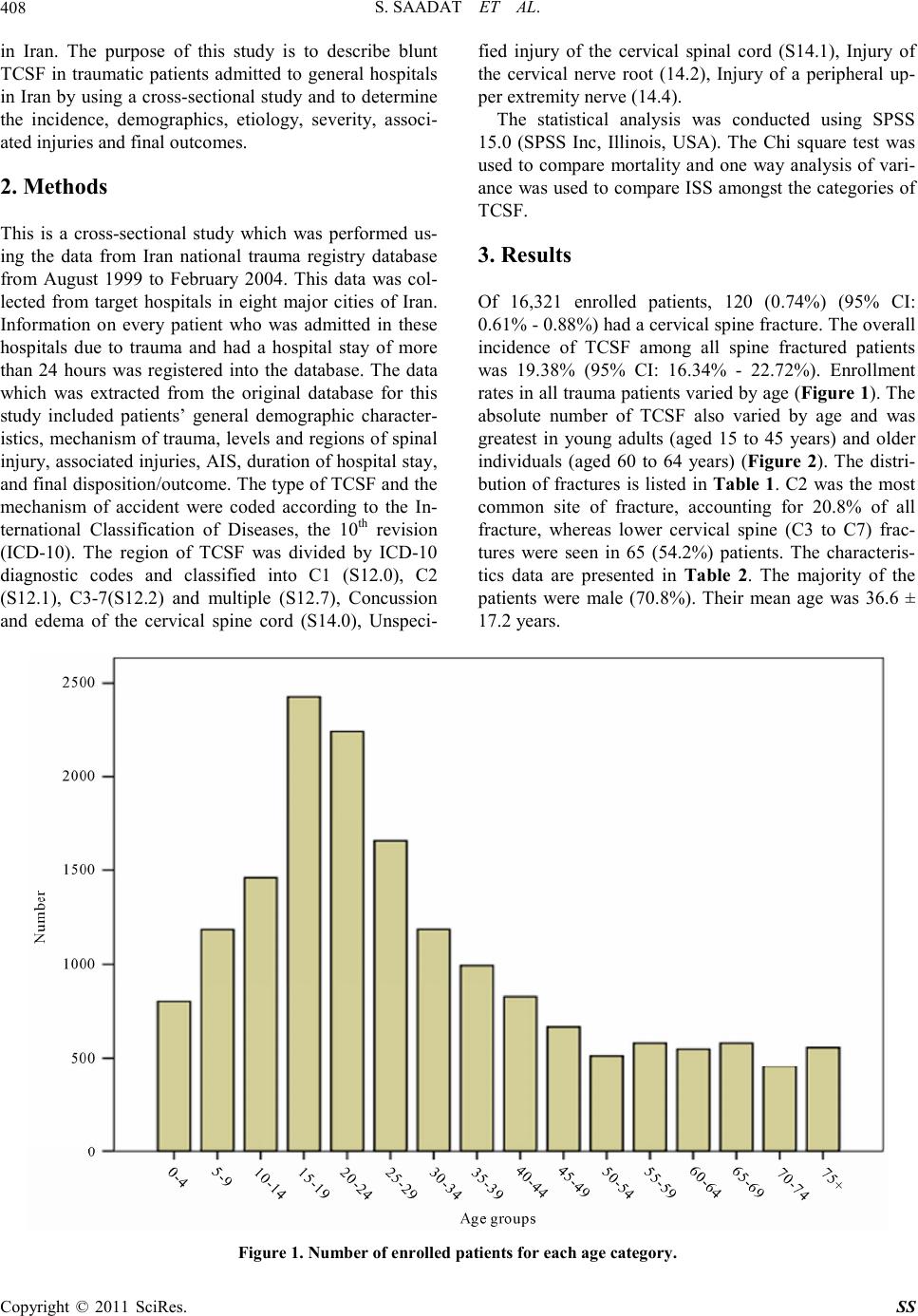 S. SAADAT ET AL. 408 in Iran. The purpose of this study is to describe blunt TCSF in traumatic patients ad mitted to general hospitals in Iran by using a cross-sectional study and to determine the incidence, demographics, etiology, severity, associ- ated injuries and final outcomes. 2. Methods This is a cross-sectional study which was performed us- ing the data from Iran national trauma registry database from August 1999 to February 2004. This data was col- lected from target hospitals in eight major cities of Iran. Information on every patient who was admitted in these hospitals due to trauma and had a hospital stay of more than 24 hours was registered into the database. The data which was extracted from the original database for this study included patients’ general demographic character- istics, mechanism of trauma, levels and regions of spinal injury, associated injuries, AIS, duration of hospital stay, and final disposition/outcome. The type of TCSF and the mechanism of accident were coded according to the In- ternational Classification of Diseases, the 10th revision (ICD-10). The region of TCSF was divided by ICD-10 diagnostic codes and classified into C1 (S12.0), C2 (S12.1), C3-7(S12.2) and multiple (S12.7), Concussion and edema of the cervical spine cord (S14.0), Unspeci- fied injury of the cervical spinal cord (S14.1), Injury of the cervical nerve root (14.2), Injury of a peripheral up- per extremity nerve (14.4). The statistical analysis was conducted using SPSS 15.0 (SPSS Inc, Illinois, USA). The Chi square test was used to compare mortality and one way analysis of vari- ance was used to compare ISS amongst the categories of TCSF. 3. Results Of 16,321 enrolled patients, 120 (0.74%) (95% CI: 0.61% - 0.88%) had a cervical spine fracture. The overall incidence of TCSF among all spine fractured patients was 19.38% (95% CI: 16.34% - 22.72%). Enrollment rates in all trau ma patients var ied by age ( Figure 1). The absolute number of TCSF also varied by age and was greatest in young adults (aged 15 to 45 years) and older individuals (aged 60 to 64 years) (Figure 2). The distri- bution of fractures is listed in Table 1. C2 was the most common site of fracture, accounting for 20.8% of all fracture, whereas lower cervical spine (C3 to C7) frac- tures were seen in 65 (54.2%) patients. The characteris- tics data are presented in Table 2. The majority of the patients were male (70.8%). Their mean age was 36.6 ± 17.2 years. Figure 1. Number of enroll ed patients for each age categ ory. Copyright © 2011 SciRes. SS 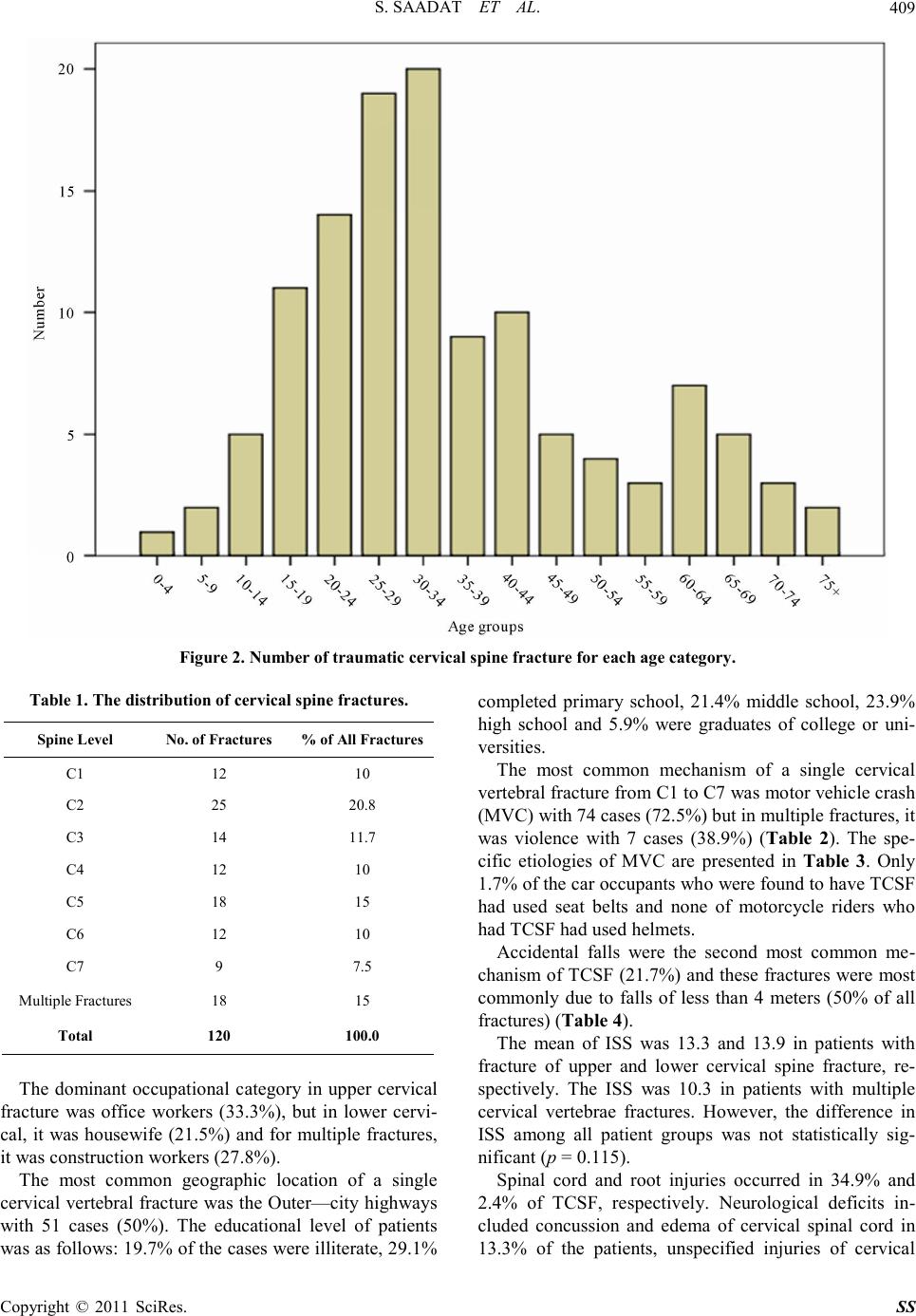 S. SAADAT ET AL.409 Figure 2. Number of traumatic cervical spine fracture for each age categ ory. Table 1. The distribution of cervical spine fract ures. Spine Level No. of Fractures % of All Fractures C1 12 10 C2 25 20.8 C3 14 11.7 C4 12 10 C5 18 15 C6 12 10 C7 9 7.5 Multiple Fractures 18 15 Total 120 100.0 The dominant occupational category in upper cervical fracture was office workers (33.3%), but in lower cervi- cal, it was housewife (21.5%) and for multiple fractures, it was construction wor kers (27.8%). The most common geographic location of a single cervical vertebral fracture was the Outer—city highways with 51 cases (50%). The educational level of patients was as follows: 19.7% of the cases were illiterate, 29.1% completed primary school, 21.4% middle school, 23.9% high school and 5.9% were graduates of college or uni- versities. The most common mechanism of a single cervical vertebral fracture fro m C1 to C7 was motor vehicle crash (MVC) with 74 cases (72.5%) but in multiple fractures, it was violence with 7 cases (38.9%) (Table 2). The spe- cific etiologies of MVC are presented in Table 3. Only 1.7% of the car occupants who were found to have TCSF had used seat belts and none of motorcycle riders who had TCSF had used helmet s. Accidental falls were the second most common me- chanism of TCSF (21.7%) and these fractures were most commonly due to falls of less than 4 meters (50% of all fractures) (Tabl e 4). The mean of ISS was 13.3 and 13.9 in patients with fracture of upper and lower cervical spine fracture, re- spectively. The ISS was 10.3 in patients with multiple cervical vertebrae fractures. However, the difference in ISS among all patient groups was not statistically sig- nificant (p = 0.115). Spinal cord and root injuries occurred in 34.9% and 2.4% of TCSF, respectively. Neurological deficits in- cluded concussion and edema of cervical spinal cord in 13.3% of the patients, unspecified injuries of cervical Copyright © 2011 SciRes. SS  S. SAADAT ET AL. 410 Table 2. Chara cteristics of pati ents w i th traumatic cervical spine fractures. Anatomical location Upper cervical (C1 - C2)Lower cervical (C3 - C7)Multiple Total Number (%) Number (%) Number (%) Number (%) Male 27 (73) 45 (69.2) 13 (72.2) 85 (70.8) Sex Female 10 (27) 20 (30.8) 5 (27.8) 35 (29.2) Age ± SD 36.8 ± 16.4 37.4 ± 17.8 33.3 ± 17.9 36.6 ± 17.2 MVC* 29 (78.4) 45 (69.2) 6 (33.3) 80 (66.7) Fall 6 (16.2) 15 (23.1) 5 (27.8) 26 (21.7) Violence 1 (2.7) 3 (4.6) 7 (38.9) 11 (9.2) Mech anism of trauma Others 0 (0) 1 (1.5) 0 (0) 1 (0.8) Home 6 (16.2) 7 (11.1) 6 (33.3) 19 (16.1) Outer –city highways 23 (62.2) 28 (44.4) 4 (22.2) 55 (46.6) Street 6 (16.2) 20 (31.7) 2 (11.1) 28 (23.7) At work 0 (0) 4 (6.3) 5 (27.8) 9 (7.6) Sports or lei s ure facilities 1 (2.7) 1 (1.6 ) 1 (5.6) 3 (2.5) Place of tra uma Others 1 (2.7) 3 (4. 8) 0 (0) 4 (3.3) Yes 4 (10.8) 8 (12.5) 3 (16.7) 15 (12.6) Death No 33 (89.2) 56 (87.5) 15 (83.3) 104 (87.4) *Motor vehicle crash. Table 3. Specifi c etiology of motor ve hicle crash. Anatomical location Upper cervical Lower cervical Multiple Total Number (%) Number (%) Number (%) Number (%) Car passenger or driver 16 (55.2) 26 (57.8) 3 (50.0) 45 (56.3) Pedestrian 2 (6.9) 9 (20.0) 0 (0) 11 (13.8 Motorcycle rider 8 (27.6) 9 (20.0) 0 (0) 17 (21.3) Bicycle rider 1 (3.4) 0 (0) 1 (16.7) 2 (2.5) Others 2 (6.9) 1 (2.2) 2 (33.3) 5 (6.3) Total 29 (100) 45 (100) 6 (100) 80 (100) All data have been demonstrated as percentage of total. spinal cord in 21.6%, injury of the nerve root of cervical spine in 0.8% and the injuries of the peripheral nerve of neck in 1.6% (Figure 3). None of patients with C1 fractures admitted into the hospital died. The percentages of in-hospital death in the upper, lower, and multiple cervical fractures were 10.8, 12.5, and 16.7, respectively. The mortality above rates difference was not statistically significant (p = 0.135). 4. Discussion The aim of this investigation was to d escribe blunt TCSF in Iran. TCSF is an uncommon injury in Iran, as the in- cidence among all trauma patients was only 0.7%. This is similar to the rates found in a recent literature review noting a TCSF rate of 1 to 3% of all trauma cases [3]. Claytor et al. reported 254 CSF in 572 cervical spine T Copyright © 2011 SciRes. SS 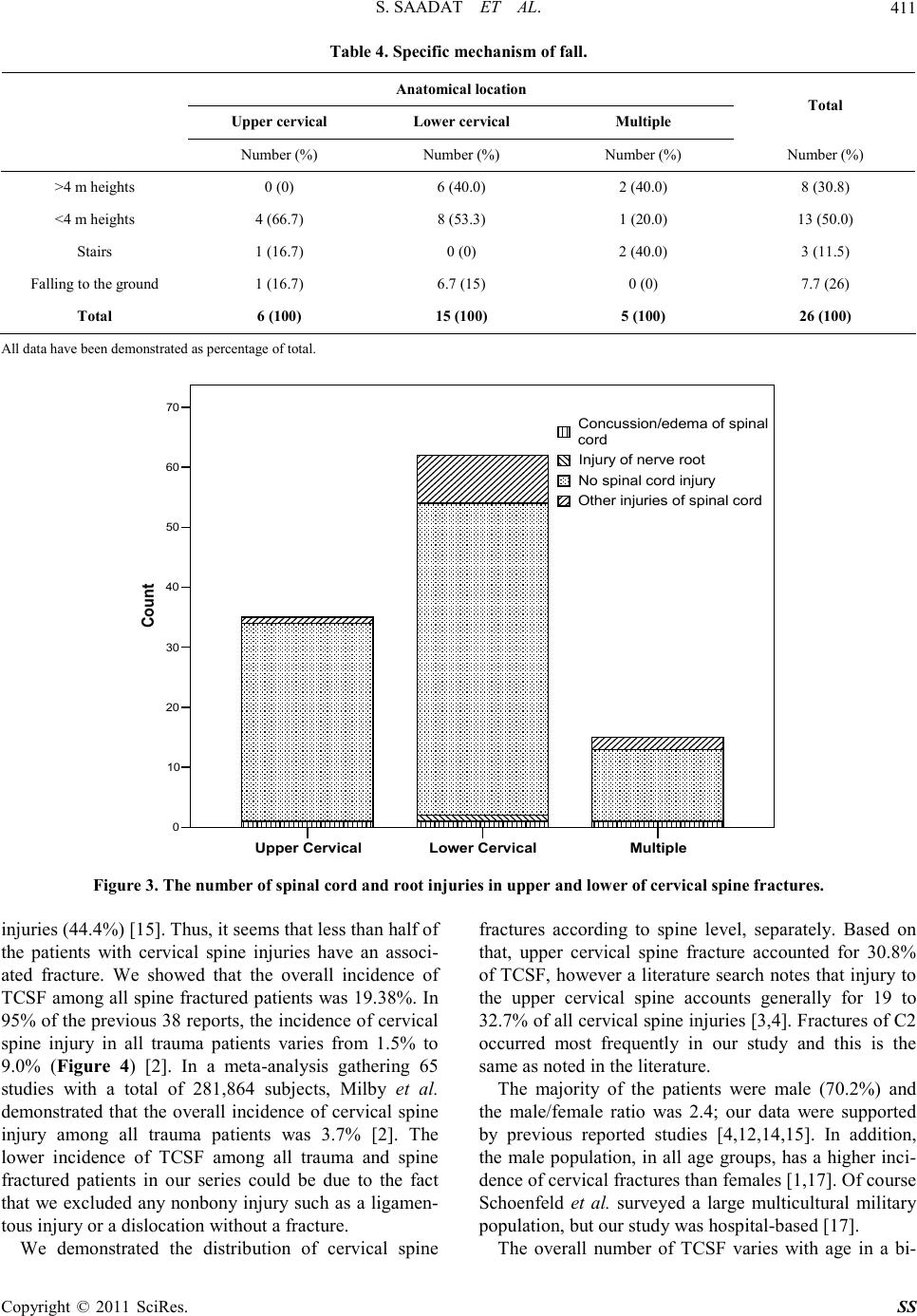 S. SAADAT ET AL.411 Table 4. Specific mechanism of fall. Anatomical location Upper cervical Lower cervical Multiple Total Number (%) Nu mber (%) Number (%) Number (%) >4 m heights 0 (0) 6 (40.0) 2 (40.0) 8 (30.8) <4 m heights 4 (66.7) 8 (53.3) 1 (20.0) 13 (50.0) Stairs 1 (16.7) 0 (0) 2 (40.0) 3 (11.5) Falling to the ground 1 (16.7) 6.7 (15) 0 (0) 7.7 (26) Total 6 (100) 15 (100) 5 (100) 26 (100) All data have been demonstrated as percentage of total. MultipleLower CervicalUpper Cervical 70 60 50 40 30 20 10 0 Count Other injuries of spinal cord No spinal cord injury Injury of nerve root Concussion/edema of spinal cord Figure 3. The number of spinal cor d a nd root injuries in upper and lower of cervical spine fractures. injuries (44.4%) [15]. Thus, it seems that less than half of the patients with cervical spine injuries have an associ- ated fracture. We showed that the overall incidence of TCSF among all spine fractured patients was 19.38%. In 95% of the previous 38 reports, the incidence of cervical spine injury in all trauma patients varies from 1.5% to 9.0% (Figure 4) [2]. In a meta-analysis gathering 65 studies with a total of 281,864 subjects, Milby et al. demonstrated that the overall incidence of cervical spine injury among all trauma patients was 3.7% [2]. The lower incidence of TCSF among all trauma and spine fractured patients in our series could be due to the fact that we excluded any nonbony injury such as a ligamen- tous injury or a dislocation without a fracture. We demonstrated the distribution of cervical spine fractures according to spine level, separately. Based on that, upper cervical spine fracture accounted for 30.8% of TCSF, however a literature search notes that injur y to the upper cervical spine accounts generally for 19 to 32.7% of all cervical spine injuries [3,4]. Fractures of C2 occurred most frequently in our study and this is the same as noted in the literature. The majority of the patients were male (70.2%) and the male/female ratio was 2.4; our data were supported by previous reported studies [4,12,14,15]. In addition, the male population, in all age groups, has a higher inci- dence of cervical fractures than females [1,17]. Of course Schoenfeld et al. surveyed a large multicultural military population, but our study was hospital-based [17]. The overall number of TCSF varies with age in a bi- Copyright © 2011 SciRes. SS 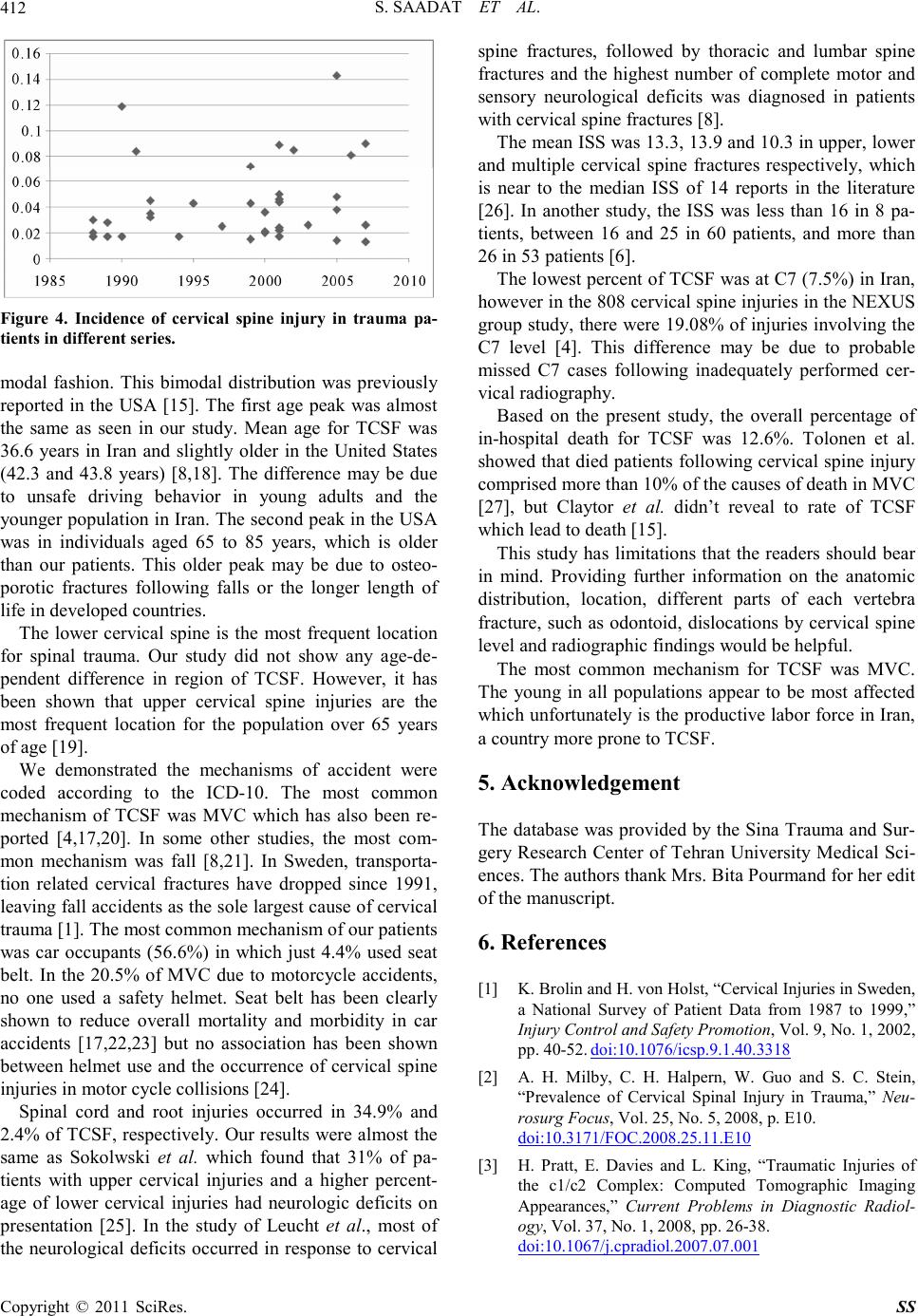 S. SAADAT ET AL. 412 Figure 4. Incidence of cervical spine injury in trauma pa- tients in different seri es. modal fashion. This bimodal distribution was previously reported in the USA [15]. The first age peak was almost the same as seen in our study. Mean age for TCSF was 36.6 years in Iran and slightly older in the United States (42.3 and 43.8 years) [8,18]. The difference may be due to unsafe driving behavior in young adults and the younger population in Iran. The second peak in the USA was in individuals aged 65 to 85 years, which is older than our patients. This older peak may be due to osteo- porotic fractures following falls or the longer length of life in developed countries. The lower cervical spine is the most frequent location for spinal trauma. Our study did not show any age-de- pendent difference in region of TCSF. However, it has been shown that upper cervical spine injuries are the most frequent location for the population over 65 years of age [19]. We demonstrated the mechanisms of accident were coded according to the ICD-10. The most common mechanism of TCSF was MVC which has also been re- ported [4,17,20]. In some other studies, the most com- mon mechanism was fall [8,21]. In Sweden, transporta- tion related cervical fractures have dropped since 1991, leaving fall accidents as the sole largest cause of cervical trauma [1]. The most common mechanism of our patients was car occupants (56.6%) in which just 4.4% used seat belt. In the 20.5% of MVC due to motorcycle accidents, no one used a safety helmet. Seat belt has been clearly shown to reduce overall mortality and morbidity in car accidents [17,22,23] but no association has been shown between helmet use and the occurrence of cervical spine injuries in motor cycle collisions [24]. Spinal cord and root injuries occurred in 34.9% and 2.4% of TCSF, respectively. Our results were almost the same as Sokolwski et al. which found that 31% of pa- tients with upper cervical injuries and a higher percent- age of lower cervical injuries had neurologic deficits on presentation [25]. In the study of Leucht et al., most of the neurological deficits occurred in response to cervical spine fractures, followed by thoracic and lumbar spine fractures and the highest number of complete motor and sensory neurological deficits was diagnosed in patients with cervical spine fractures [8]. The mean ISS was 13.3, 13.9 and 10.3 in upper, lower and multiple cervical spine fractures respectively, which is near to the median ISS of 14 reports in the literature [26]. In another study, the ISS was less than 16 in 8 pa- tients, between 16 and 25 in 60 patients, and more than 26 in 53 patients [6]. The lowest percent of TCSF was at C7 (7.5%) in Iran, however in the 808 cervical spine injuries in the NEXUS group study, ther e were 1 9.08% of inj uries invo lving the C7 level [4]. This difference may be due to probable missed C7 cases following inadequately performed cer- vical radiography. Based on the present study, the overall percentage of in-hospital death for TCSF was 12.6%. Tolonen et al. showed that died patients following cervical spine injury comprised more than 10% of the causes of death in MVC [27], but Claytor et al. didn’t reveal to rate of TCSF which lead to death [15]. This study has limitations that the readers should bear in mind. Providing further information on the anatomic distribution, location, different parts of each vertebra fracture, such as odontoid, dislocations by cervical spine level and radiographic findings would be helpful. The most common mechanism for TCSF was MVC. The young in all populations appear to be most affected which unfortunately is the pro ductive labor force in Iran, a country more prone to TCSF. 5. Acknowledgement The database was provided by the Sina Trauma and Sur- gery Research Center of Tehran University Medical Sci- ences. The authors thank Mrs. Bita Pourmand for her edit of the manuscript. 6. References [1] K. Brolin and H. von Holst, “Cervical Injuries in Sweden, a National Survey of Patient Data from 1987 to 1999,” Injury Control and Safety Promotion, Vo l. 9, No. 1 , 2002, pp. 40-5 2. doi:10.1076/icsp.9.1.40.3318 [2] A. H. Milby, C. H. Halpern, W. Guo and S. C. Stein, “Prevalence of Cervical Spinal Injury in Trauma,” Neu- rosurg Fo cus, Vol. 25, No. 5, 2008, p. E10. doi:10.3171/FOC.2008.25.11.E10 [3] H. Pratt, E. Davies and L. King, “Traumatic Injuries of the c1/c2 Complex: Computed Tomographic Imaging Appearances,” Current Problems in Diagnostic Radiol- ogy, Vol. 37, No. 1, 2008, pp. 26-38. doi:10.1067/j.cpradiol.2007.07.001 Copyright © 2011 SciRes. SS 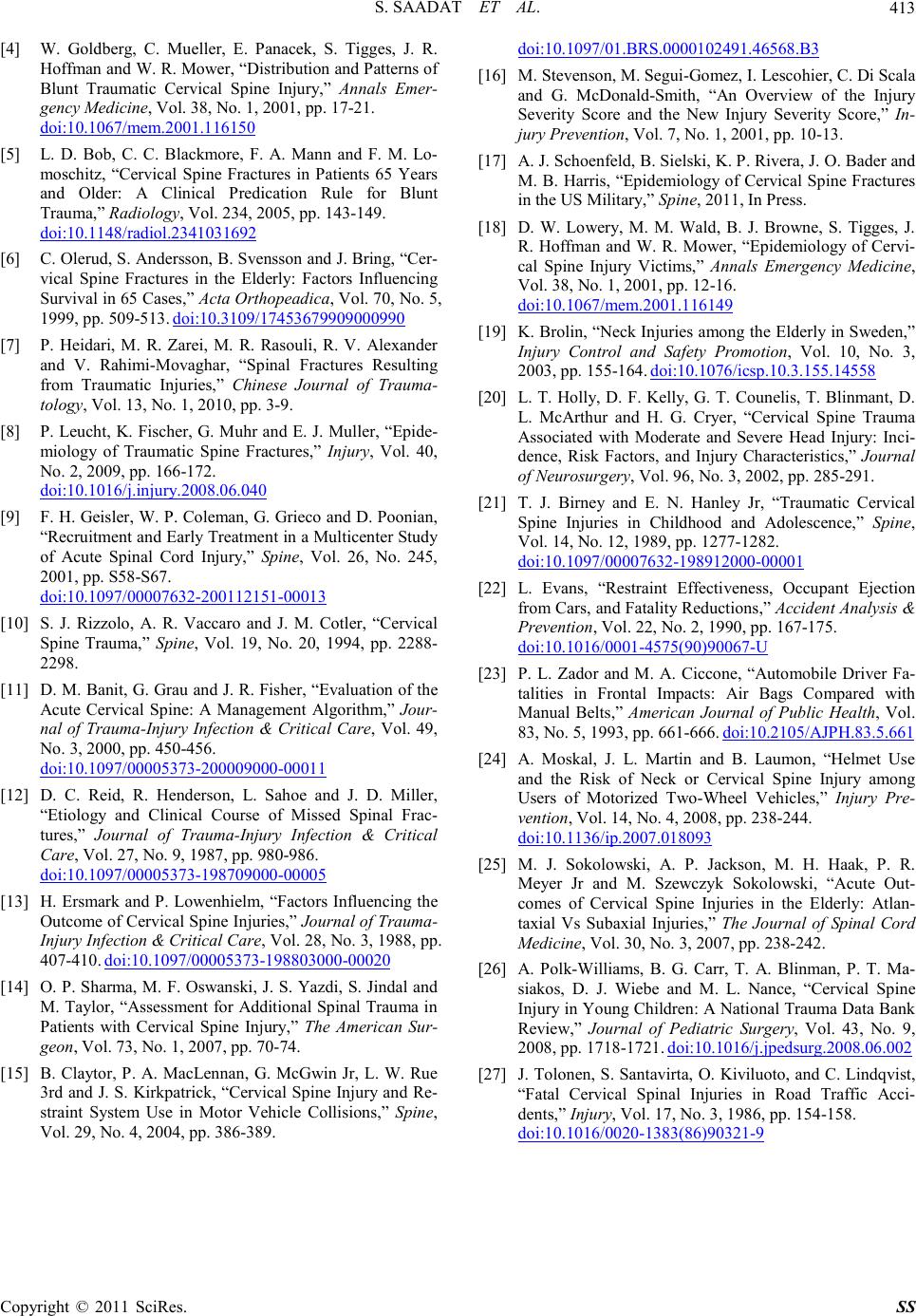 S. SAADAT ET AL. Copyright © 2011 SciRes. SS 413 [4] W. Goldberg, C. Mueller, E. Panacek, S. Tigges, J. R. Hoffman and W. R. Mower, “Distribution and Patterns of Blunt Traumatic Cervical Spine Injury,” Annals Emer- gency Medicine, Vol. 38, No. 1, 2 001 , pp. 17- 21 . doi:10.1067/mem.2001.116150 [5] L. D. Bob, C. C. Blackmore, F. A. Mann and F. M. Lo- moschitz, “Cervical Spine Fractures in Patients 65 Years and Older: A Clinical Predication Rule for Blunt Trauma,” Radiology, V ol. 23 4, 2 005, pp. 143-1 49. doi:10.1148/radiol.2341031692 [6] C. Olerud, S. Andersson, B. Svensson and J. Bring, “Cer- vical Spine Fractures in the Elderly: Factors Influencing Survival in 65 Cases,” Acta Orthopeadica, Vol. 7 0 , N o . 5, 1999, pp . 509-513. doi:10.3109/17453679909000990 [7] P. Heidari, M. R. Zarei, M. R. Rasouli, R. V. Alexander and V. Rahimi-Movaghar, “Spinal Fractures Resulting from Traumatic Injuries,” Chinese Journal of Trauma- tology, Vol. 13, No. 1, 20 10, pp. 3-9. [8] P. Leucht, K. Fischer, G. Muhr and E. J. Muller, “Epide- miology of Traumatic Spine Fractures,” Injury, Vol. 40, No. 2, 2009, pp. 166-172. doi:10.1016/j.injury.2008.06.040 [9] F. H. Geisler, W. P. Coleman, G. Grieco and D. Poonian, “Recruitmen t and E arly Treatmen t in a Multi center Study of Acute Spinal Cord Injury,” Spine, Vol. 26, No. 245, 2001, pp. S 58- S 6 7. do i:10.1097 /00007632-20 0112151-00013 [10] S. J. Rizzolo, A. R. Vaccaro and J. M. Cotler, “Cervical Spine Trauma,” Spine, Vol. 19, No. 20, 1994, pp. 2288- 2298. [11] D. M. Banit, G. Grau and J. R. Fisher, “Evaluation of the Acute Cervical Spine: A Management Algorithm,” Jour- nal of Trauma-Injury Infection & Critical Care, Vol. 49, No. 3, 2000, pp. 450-456. do i:10.1097 /00005373-20 0009000-00011 [12] D. C. Reid, R. Henderson, L. Sahoe and J. D. Miller, “Etiology and Clinical Course of Missed Spinal Frac- tures,” Journal of Trauma-Injury Infection & Critical Care, Vol. 27, No. 9, 1987, pp. 980-986. do i:10.1097 /00005373-19 8709000-00005 [13] H. Ersmark and P. Lowenhielm, “Factors Influencing the Outcome of Cervic al Spi ne Injuries,” Journal of Trauma- Injury Infection & Critical Care, Vo l. 28 , No. 3, 1988 , pp . 407-410. doi:10.1097/00005373-198803000-00020 [14] O. P. Sharma, M. F. Oswanski, J . S. Yazdi, S. Jind al and M. Taylor, “Assessment for Additional Spinal Trauma in Patients with Cervical Spine Injury,” The American Sur- geon, Vol. 73, No. 1, 2007, pp. 70-74. [15] B. Claytor, P. A. MacLennan, G. McGwin Jr, L. W. Rue 3rd and J. S. Kirkp atrick, “Cervical Spi ne Injury and Re- straint System Use in Motor Vehicle Collisions,” Spine, Vol. 29, No. 4, 2004, pp. 386-389. do i:10.1097/01 .BRS.0000102491.46568. B3 [16] M. Stevenson, M. Segui-Gomez, I. Lescohier, C. Di Scala and G. McDonald-Smith, “An Overview of the Injury Severity Score and the New Injury Severity Score,” In- jury Prevention, Vol. 7, No. 1, 2001, pp. 10-13. [17] A. J. Schoenfeld, B. Sielski, K. P. Rivera, J. O. Bader and M. B. Harris, “Epidemiology of Cervical Spine Fractures in the US Military,” Spine, 2011, In Pre s s. [18] D. W. Lowery, M. M. Wald, B. J. Browne, S. Tigges, J. R. Hoffman and W. R. Mower, “Epidemiology of Cervi- cal Spine Injury Victims,” Annals Emergency Medicine, Vol. 38, No. 1, 2001, pp. 12-16. doi:10.1067/mem.2001.116149 [19] K. Brolin, “Neck In juries among th e Elderly in Sweden,” Injury Control and Safety Promotion, Vol. 10, No. 3, 2003, pp . 155-164. doi:10.1076/icsp.10.3.155.14558 [20] L. T. Holly, D. F. Kelly, G. T. Counelis, T. Blinmant, D. L. McArthur and H. G. Cryer, “Cervical Spine Trauma Associated with Moderate and Severe Head Injury: Inci- dence, Risk Factors, and Injury Characteristics,” Journal of Neurosurgery, Vol. 96, N o. 3, 200 2 , pp . 285 -291. [21] T. J. Birney and E. N. Hanley Jr, “Traumatic Cervical Spine Injuries in Childhood and Adolescence,” Spine, Vol. 14, No. 12, 1989, pp. 1277-1282. do i:10.1097 /00007632-19 8912000-00001 [22] L. Evans, “Restraint Effectiveness, Occupant Ejection from Cars, and Fatality Reductions,” Accident Analysis & Preventi o n, Vol. 22, No. 2, 199 0, pp. 16 7- 175. do i:10.1016 /0001-45 75(90)90067-U [23] P. L. Zador and M. A. Ciccone, “Automobile Driver Fa- talities in Frontal Impacts: Air Bags Compared with Manual Belts,” American Journal of Public Health, Vol. 83, No. 5, 199 3 , pp. 661-666 . doi:10.2105/AJPH.83.5.661 [24] A. Moskal, J. L. Martin and B. Laumon, “Helmet Use and the Risk of Neck or Cervical Spine Injury among Users of Motorized Two-Wheel Vehicles,” Injury Pre- ventio n, Vol. 14, No. 4, 2008, pp. 238-244. do i:10.1136/ip.2007.018093 [25] M. J. Sokolowski, A. P. Jackson, M. H. Haak, P. R. Meyer Jr and M. Szewczyk Sokolowski, “Acute Out- comes of Cervical Spine Injuries in the Elderly: Atlan- taxial Vs Subaxial Injuries,” The Journal of Spinal Cord Medicine, Vol. 30, No. 3, 2007, pp. 238-242. [26] A. Polk-Williams, B. G. Carr, T. A. Blinman, P. T. Ma- siakos, D. J. Wiebe and M. L. Nance, “Cervical Spine Injury in Young Children: A National Trauma Data Bank Review,” Journal of Pediatric Surgery, Vol. 43, No. 9, 2008, pp. 1718-172 1. doi:10.1016/j.jpedsurg.2008.06.002 [27] J. Tolonen, S. Santavirta, O. Kiviluoto, and C. Lindqvist, “Fatal Cervical Spinal Injuries in Road Traffic Acci- dents,” Injury, Vol. 17, No. 3, 1986, pp . 154-158. do i:10.1016 /0020-13 83(86)90321-9 |