

Paper Menu >>
Journal Menu >>
 Journal of Environmental Protection, 2011, 2, 895-902 doi:10.4236/jep.2011.27102 Published Online September2011 (http://www.SciRP.org/journal/jep) Copyright © 2011 SciRes. JEP 895 Mineralization of Petroleum Contaminated Wastewater by Co-Culture of Petroleum-Degrading Bacterial Community and Biosurfactant-Producing Bacterium Bo young Jeon1, Il Lae Jung2, Doo Hyun Park1* 1Department of Chemical & Biological Engineering, Seokyeong University, Seoul, Korea; 2Department of Radiation Biology, Envi- ronmental Radiation Research Group, Korea Atomic Energy Research Institute, Daejeon, Korea. Email: *[email protected] Received June 15th, 2011; revised July 21th, 2011; accepted August 26th, 2011. ABSTRACT Activity of a crude biosurfactant extracted from the culture fluid of Serratia sp. that was isolated from riverbed soil was shown to increase in proportion to the cultivatio n time, and was higher at pH 8 than at pH 7. Serratia sp. grew in the mineral-based medium with soybean oil but was not with kerosene-diesel. The petroleum-degrading bacte- ria—Acinetobacter sp., Pseudomonas sp., Paracoccus sp., and Cupriavidus sp.—were isolated from a specially de- signed enrichment culture. Th e efficien cy of min era lization o f wa stewater con taminated with keros ene a nd diesel (WKD) by the petroleum-degrading bacterial community (PDBC) was enhanced significantly by addition of the crude biosur- factant. The efficiency of mineralization of the WKD was also about 2 times boosted by co-culture of Serratia sp. and PDBC. Bacterial community of Serratia sp. and PDBC co-cultivated in the WKD was maintained for at least 8 days according to the TGGE pattern of 16S rDNA obtained from the bacterial cu lture. In con clusion, the co -cultu re of Serra - tia sp. and PDBC is an applicable technique for the mineralization of wastewater contaminated with petroleum, which may substitute for chemica l or biological surfactant. Keywords: Biosurfactant, Serratia Sp. Petroleum-Degrading Bacteria, Mixed Culture, TGGE 1. Introduction The petroleum hydrocarbons can be converted biologi- cally or chemically to carbon dioxide, water, and inor- ganic compounds by dissimilatory metabolism of petro- leum-degrading bacteria or combustion technique. Both biological and chemical conversion of petroleum hydro- carbons to inorganic compounds is defined as minerali- zation; however, the combustion technique can’t be applied for mineralization of petroleum-contaminated wastewater and soil. A variety of petroleum-derived compounds have con- taminated soil and water in specific areas surrounding systems for the production, storage, distribution, and processing of petroleum by accidental spills and leakages. In particular, accidental petroleum leakages from under- ground storage tanks causes significant pollution of wa- ters and soils [1]. For the successful intrinsic and engi- neered bioremediation of soil or water contaminated with petroleum, the complex relationship existing among pol- lutants and microorganisms involved in contaminant degradation must be understood [2]. Light non-aqueous- phase liquids composed of petroleum hydrocarbon float- ing on water surface coagulate as the result of water fluctuations [3,4]. This phenomenon may effect the inhi- bition of hydrocarbon uptake by microorganisms or in- duce the adsorption of microorganisms onto oil drops. Theoretically, microorganisms within petroleum drops larger than bacterial size can lose their biological activity due to damage to the membrane. The emulsification process of utilizable carbon sources may constitute the rate-limiting step in the microbial degradation of petro- leum hydrocarbon pollutants contaminating water. Biosurfactants are unique amphipathic molecules that are metabolically generated by a variety of oil-utilizing microorganisms; they have been explored for possible use in a broad range of industrial and bioremediation applications [5-7]. Certain biosurfactants generated by 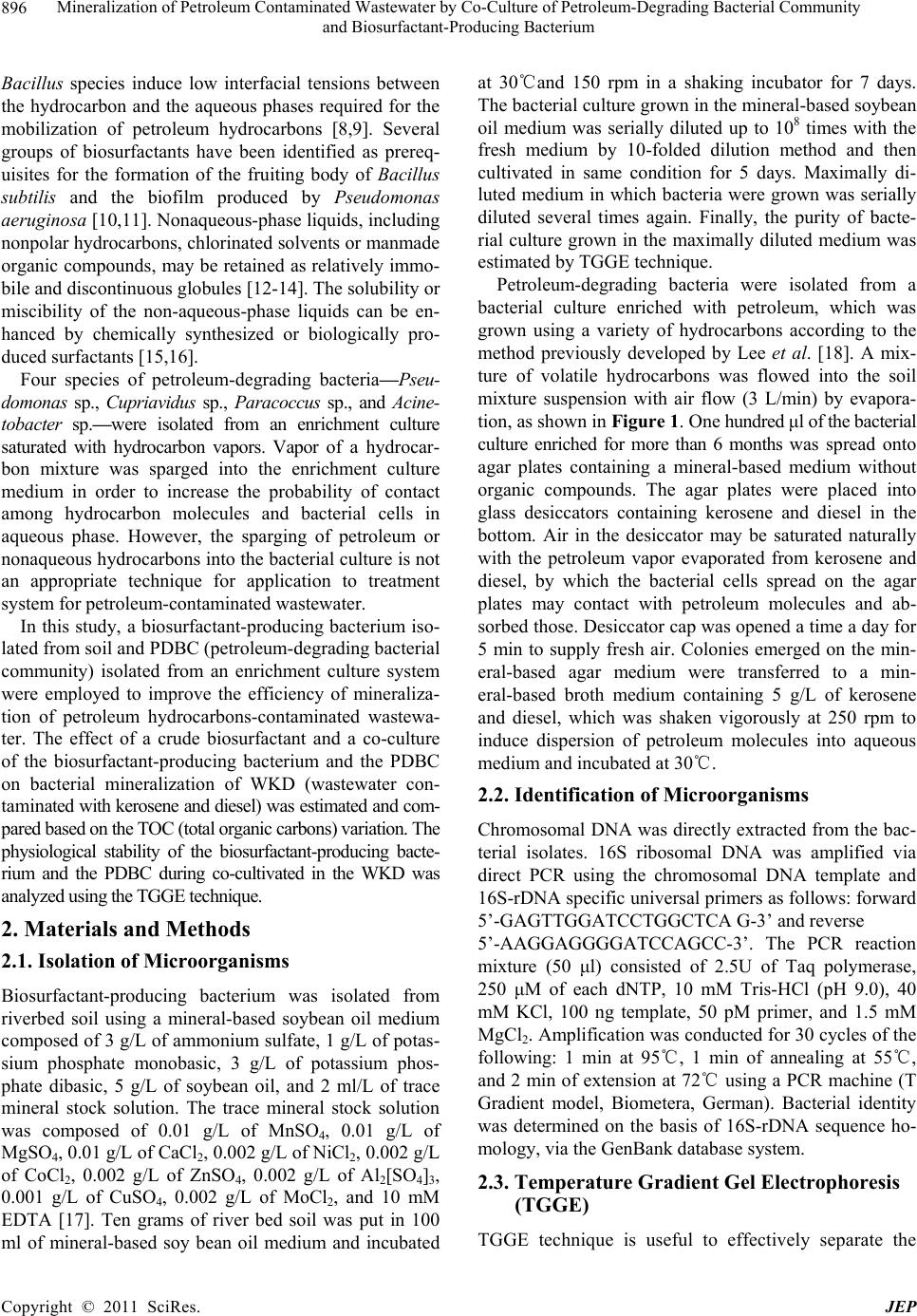 Mineralization of Petroleum Contaminated Wastewater by Co-Culture of Petroleum-Degrading Bacterial Community 896 and Biosurfactant-Producing Bacterium Bacillus species induce low interfacial tensions between the hydrocarbon and the aqueous phases required for the mobilization of petroleum hydrocarbons [8,9]. Several groups of biosurfactants have been identified as prereq- uisites for the formation of the fruiting body of Bacillus subtilis and the biofilm produced by Pseudomonas aeruginosa [10,11]. Nonaqueous-phase liquids, including nonpolar hydrocarbons, chlorinated solvents or manmade organic compounds, may be retained as relatively immo- bile and discontinuous globules [12-14]. The solubility or miscibility of the non-aqueous-phase liquids can be en- hanced by chemically synthesized or biologically pro- duced surfactants [15,16]. Four species of petroleum-degrading bacteria—Pseu- domonas sp., Cupriavidus sp., Paracoc cus sp., and Acine- tobacter sp.—were isolated from an enrichment culture saturated with hydrocarbon vapors. Vapor of a hydrocar- bon mixture was sparged into the enrichment culture medium in order to increase the probability of contact among hydrocarbon molecules and bacterial cells in aqueous phase. However, the sparging of petroleum or nonaqueous hydrocarbons into the bacterial culture is not an appropriate technique for application to treatment system for petroleum-contaminated wastewater. In this study, a biosurfactant-producing bacterium iso- lated from soil and PDBC (petroleum-degrading bacterial community) isolated from an enrichment culture system were employed to improve the efficiency of mineraliza- tion of petroleum hydrocarbons-contaminated wastewa- ter. The effect of a crude biosurfactant and a co-culture of the biosurfactant-producing bacterium and the PDBC on bacterial mineralization of WKD (wastewater con- taminated with kerosene and diesel) was estimated and com- pared based on the TOC (total organic carbons) variation. The physiological stability of the biosurfactant-producing bacte- rium and the PDBC during co-cultivated in the WKD was analyzed using the TGGE technique. 2. Materials and Methods 2.1. Isolation of Microorganisms Biosurfactant-producing bacterium was isolated from riverbed soil using a mineral-based soybean oil medium composed of 3 g/L of ammonium sulfate, 1 g/L of potas- sium phosphate monobasic, 3 g/L of potassium phos- phate dibasic, 5 g/L of soybean oil, and 2 ml/L of trace mineral stock solution. The trace mineral stock solution was composed of 0.01 g/L of MnSO4, 0.01 g/L of MgSO4, 0.01 g/L of CaCl2, 0.002 g/L of NiCl2, 0.002 g/L of CoCl2, 0.002 g/L of ZnSO4, 0.002 g/L of Al2[SO4]3, 0.001 g/L of CuSO4, 0.002 g/L of MoCl2, and 10 mM EDTA [17]. Ten grams of river bed soil was put in 100 ml of mineral-based soy bean oil medium and incubated at 30℃and 150 rpm in a shaking incubator for 7 days. The bacterial culture grown in the mineral-based soybean oil medium was serially diluted up to 108 times with the fresh medium by 10-folded dilution method and then cultivated in same condition for 5 days. Maximally di- luted medium in which bacteria were grown was serially diluted several times again. Finally, the purity of bacte- rial culture grown in the maximally diluted medium was estimated by TGGE technique. Petroleum-degrading bacteria were isolated from a bacterial culture enriched with petroleum, which was grown using a variety of hydrocarbons according to the method previously developed by Lee et al. [18]. A mix- ture of volatile hydrocarbons was flowed into the soil mixture suspension with air flow (3 L/min) by evapora- tion, as shown in Figure 1. One hundred μl of the bacterial culture enriched for more than 6 months was spread onto agar plates containing a mineral-based medium without organic compounds. The agar plates were placed into glass desiccators containing kerosene and diesel in the bottom. Air in the desiccator may be saturated naturally with the petroleum vapor evaporated from kerosene and diesel, by which the bacterial cells spread on the agar plates may contact with petroleum molecules and ab- sorbed those. Desiccator cap was opened a time a day for 5 min to supply fresh air. Colonies emerged on the min- eral-based agar medium were transferred to a min- eral-based broth medium containing 5 g/L of kerosene and diesel, which was shaken vigorously at 250 rpm to induce dispersion of petroleum molecules into aqueous medium and incubated at 30℃. 2.2. Identification of Microorganisms Chromosomal DNA was directly extracted from the bac- terial isolates. 16S ribosomal DNA was amplified via direct PCR using the chromosomal DNA template and 16S-rDNA specific universal primers as follows: forward 5’-GAGTTGGATCCTGGCTCA G-3’ and reverse 5’-AAGGAGGGGATCCAGCC-3’. The PCR reaction mixture (50 μl) consisted of 2.5U of Taq polymerase, 250 μM of each dNTP, 10 mM Tris-HCl (pH 9.0), 40 mM KCl, 100 ng template, 50 pM primer, and 1.5 mM MgCl2. Amplification was conducted for 30 cycles of the following: 1 min at 95℃, 1 min of annealing at 55℃, and 2 min of extension at 72℃ using a PCR machine (T Gradient model, Biometera, German). Bacterial identity was determined on the basis of 16S-rDNA sequence ho- mology, via the GenBank database system. 2.3. Temperature Gradient Gel Electrophoresis (TGGE) TGGE technique is useful to effectively separate the Copyright © 2011 SciRes. JEP 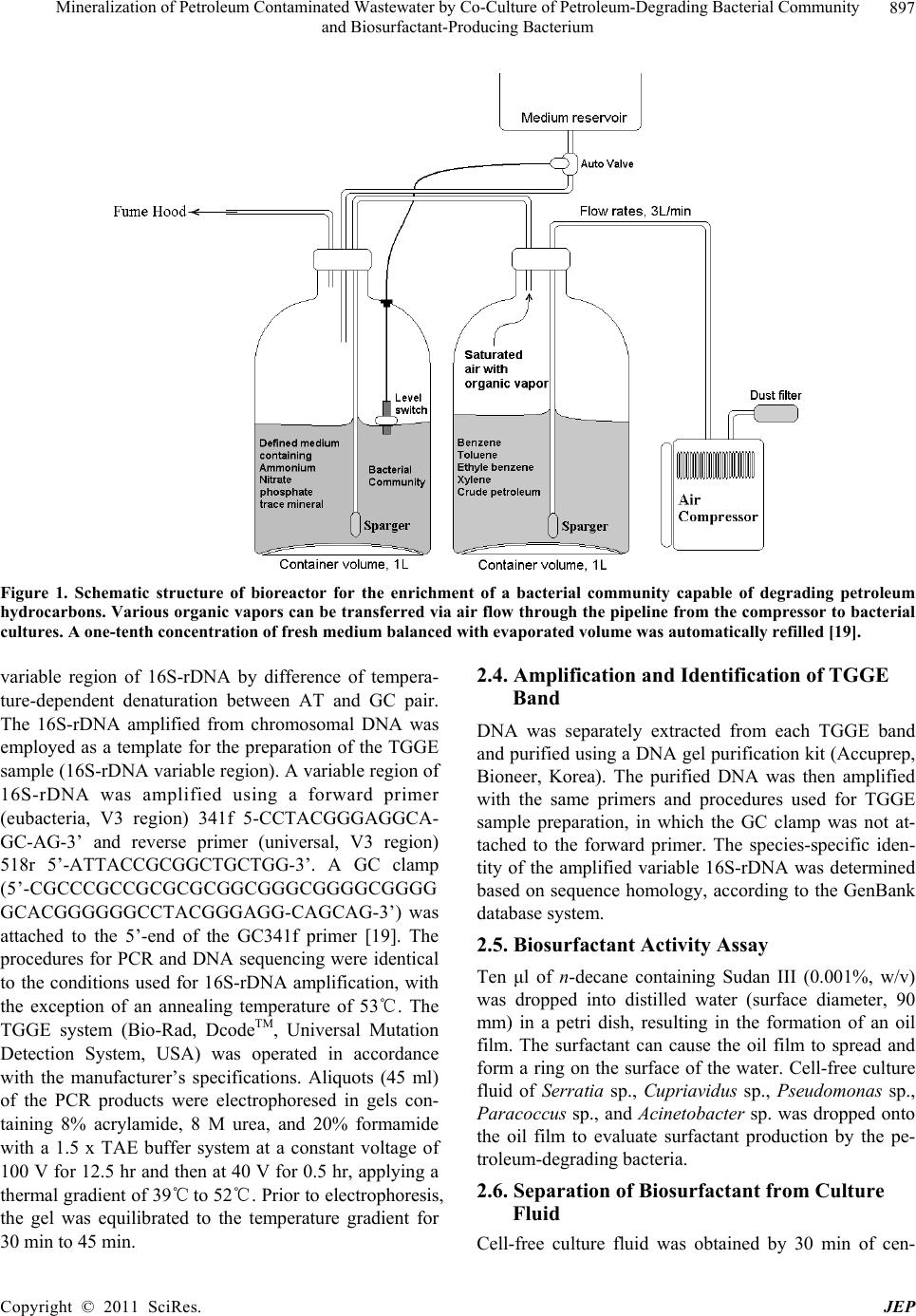 Mineralization of Petroleum Contaminated Wastewater by Co-Culture of Petroleum-Degrading Bacterial Community 897 and Biosurfactant-Producing Bacterium Figure 1. Schematic structure of bioreactor for the enrichment of a bacterial community capable of degrading petroleum hydrocarbons. Various organic vapors can be transferred via air flow through the pipeline from the compressor to bacterial cultures. A one-tenth concentration of fresh medium balanced with evaporated volume was automatically refilled [19]. variable region of 16S-rDNA by difference of tempera- ture-dependent denaturation between AT and GC pair. The 16S-rDNA amplified from chromosomal DNA was employed as a template for the preparation of the TGGE sample (16S-rDNA variable region). A variable region of 16S-rDNA was amplified using a forward primer (eubacteria, V3 region) 341f 5-CCTACGGGAGGCA- GC-AG-3’ and reverse primer (universal, V3 region) 518r 5’-ATTACCGCGGCTGCTGG-3’. A GC clamp (5’-CGCCCGCCGCGCGCGGCGGGCGGGGCGGGG GCACGGGGGGCCTACGGGAGG-CAGCAG-3’) was attached to the 5’-end of the GC341f primer [19]. The procedures for PCR and DNA sequencing were identical to the conditions used for 16S-rDNA amplification, with the exception of an annealing temperature of 53℃. The TGGE system (Bio-Rad, DcodeTM, Universal Mutation Detection System, USA) was operated in accordance with the manufacturer’s specifications. Aliquots (45 ml) of the PCR products were electrophoresed in gels con- taining 8% acrylamide, 8 M urea, and 20% formamide with a 1.5 x TAE buffer system at a constant voltage of 100 V for 12.5 hr and then at 40 V for 0.5 hr, applying a thermal gradient of 39℃ to 52℃. Prior to electrophoresis, the gel was equilibrated to the temperature gradient for 30 min to 45 min. 2.4. Amplification and Identification of TGGE Band DNA was separately extracted from each TGGE band and purified using a DNA gel purification kit (Accuprep, Bioneer, Korea). The purified DNA was then amplified with the same primers and procedures used for TGGE sample preparation, in which the GC clamp was not at- tached to the forward primer. The species-specific iden- tity of the amplified variable 16S-rDNA was determined based on sequence homology, according to the GenBank database system. 2.5. Biosurfactant Activity Assay Ten μl of n-decane containing Sudan III (0.001%, w/v) was dropped into distilled water (surface diameter, 90 mm) in a petri dish, resulting in the formation of an oil film. The surfactant can cause the oil film to spread and form a ring on the surface of the water. Cell-free culture fluid of Serratia sp., Cupriavidus sp., Pseudomonas sp., Paracoccus sp., and Acinetobacter sp. was dropped onto the oil film to evaluate surfactant production by the pe- troleum-degrading bacteria. 2.6. Separation of Biosurfactant from Culture Fluid Cell-free culture fluid was obtained by 30 min of cen- Copyright © 2011 SciRes. JEP 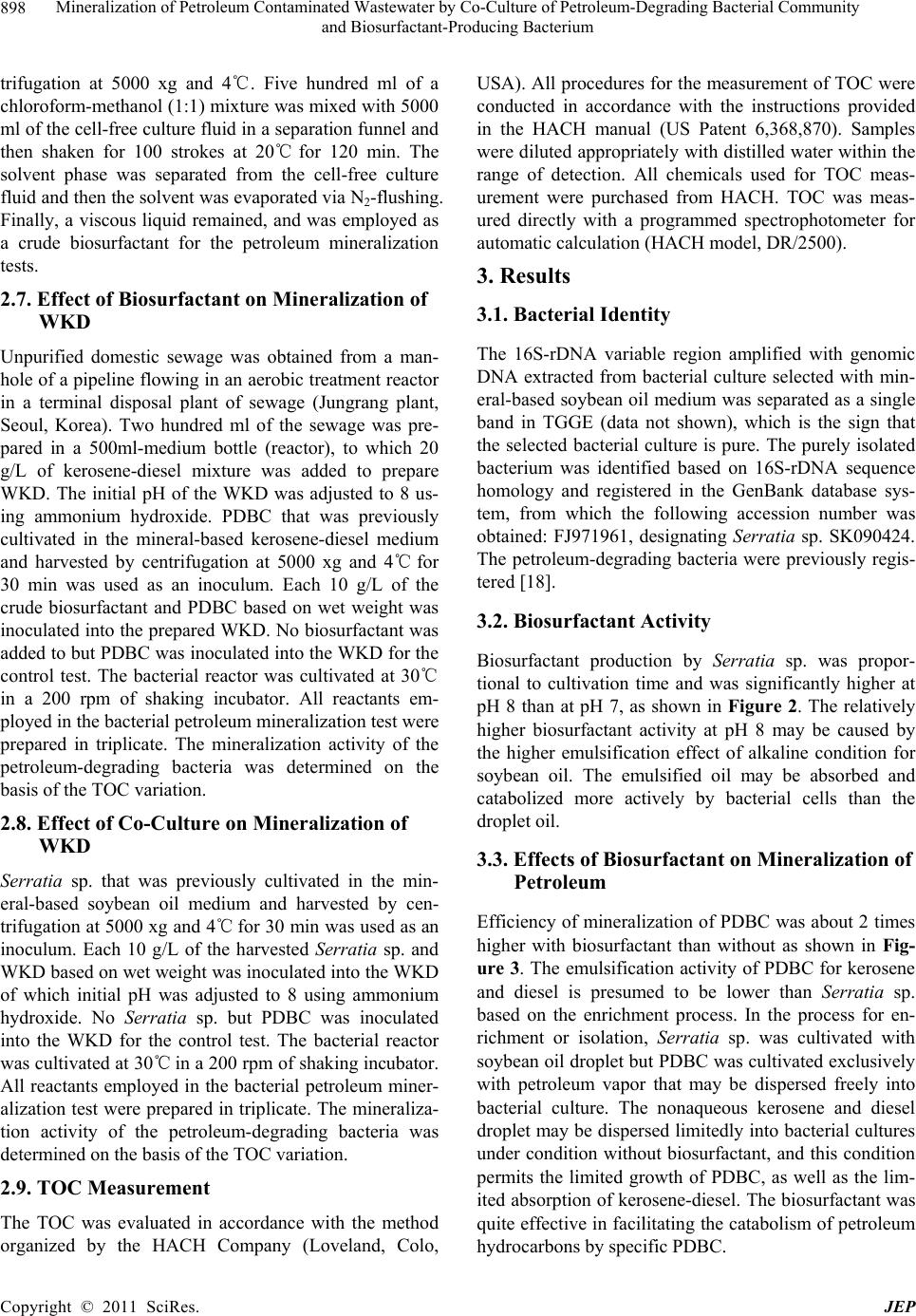 Mineralization of Petroleum Contaminated Wastewater by Co-Culture of Petroleum-Degrading Bacterial Community 898 and Biosurfactant-Producing Bacterium trifugation at 5000 xg and 4℃. Five hundred ml of a chloroform-methanol (1:1) mixture was mixed with 5000 ml of the cell-free culture fluid in a separation funnel and then shaken for 100 strokes at 20℃ for 120 min. The solvent phase was separated from the cell-free culture fluid and then the solvent was evaporated via N2-flushing. Finally, a viscous liquid remained, and was employed as a crude biosurfactant for the petroleum mineralization tests. 2.7. Effect of Biosurfactant on Mineralization of WKD Unpurified domestic sewage was obtained from a man- hole of a pipeline flowing in an aerobic treatment reactor in a terminal disposal plant of sewage (Jungrang plant, Seoul, Korea). Two hundred ml of the sewage was pre- pared in a 500ml-medium bottle (reactor), to which 20 g/L of kerosene-diesel mixture was added to prepare WKD. The initial pH of the WKD was adjusted to 8 us- ing ammonium hydroxide. PDBC that was previously cultivated in the mineral-based kerosene-diesel medium and harvested by centrifugation at 5000 xg and 4℃ for 30 min was used as an inoculum. Each 10 g/L of the crude biosurfactant and PDBC based on wet weight was inoculated into the prepared WKD. No biosurfactant was added to but PDBC was inoculated into the WKD for the control test. The bacterial reactor was cultivated at 30℃ in a 200 rpm of shaking incubator. All reactants em- ployed in the bacterial petroleum mineralization test were prepared in triplicate. The mineralization activity of the petroleum-degrading bacteria was determined on the basis of the TOC variation. 2.8. Effect of Co-Culture on Mineralization of WKD Serratia sp. that was previously cultivated in the min- eral-based soybean oil medium and harvested by cen- trifugation at 5000 xg and 4℃ for 30 min was used as an inoculum. Each 10 g/L of the harvested Serratia sp. and WKD based on wet weight was inoculated into the WKD of which initial pH was adjusted to 8 using ammonium hydroxide. No Serratia sp. but PDBC was inoculated into the WKD for the control test. The bacterial reactor was cultivated at 30℃ in a 200 rpm of shaking incubator. All reactants employed in the bacterial petroleum miner- alization test were prepared in triplicate. The mineraliza- tion activity of the petroleum-degrading bacteria was determined on the basis of the TOC variation. 2.9. TOC Measurement The TOC was evaluated in accordance with the method organized by the HACH Company (Loveland, Colo, USA). All procedures for the measurement of TOC were conducted in accordance with the instructions provided in the HACH manual (US Patent 6,368,870). Samples were diluted appropriately with distilled water within the range of detection. All chemicals used for TOC meas- urement were purchased from HACH. TOC was meas- ured directly with a programmed spectrophotometer for automatic calculation (HACH model, DR/2500). 3. Results 3.1. Bacterial Identity The 16S-rDNA variable region amplified with genomic DNA extracted from bacterial culture selected with min- eral-based soybean oil medium was separated as a single band in TGGE (data not shown), which is the sign that the selected bacterial culture is pure. The purely isolated bacterium was identified based on 16S-rDNA sequence homology and registered in the GenBank database sys- tem, from which the following accession number was obtained: FJ971961, designating Serratia sp. SK090424. The petroleum-degrading bacteria were previously regis- tered [18]. 3.2. Biosurfactant Activity Biosurfactant production by Serratia sp. was propor- tional to cultivation time and was significantly higher at pH 8 than at pH 7, as shown in Figure 2. The relatively higher biosurfactant activity at pH 8 may be caused by the higher emulsification effect of alkaline condition for soybean oil. The emulsified oil may be absorbed and catabolized more actively by bacterial cells than the droplet oil. 3.3. Effects of Biosurfactant on Mineralization of Petroleum Efficiency of mineralization of PDBC was about 2 times higher with biosurfactant than without as shown in Fig- ure 3. The emulsification activity of PDBC for kerosene and diesel is presumed to be lower than Serratia sp. based on the enrichment process. In the process for en- richment or isolation, Serratia sp. was cultivated with soybean oil droplet but PDBC was cultivated exclusively with petroleum vapor that may be dispersed freely into bacterial culture. The nonaqueous kerosene and diesel droplet may be dispersed limitedly into bacterial cultures under condition without biosurfactant, and this condition permits the limited growth of PDBC, as well as the lim- ited absorption of kerosene-diesel. The biosurfactant was quite effective in facilitating the catabolism of petroleum hydrocarbons by specific PDBC. Copyright © 2011 SciRes. JEP 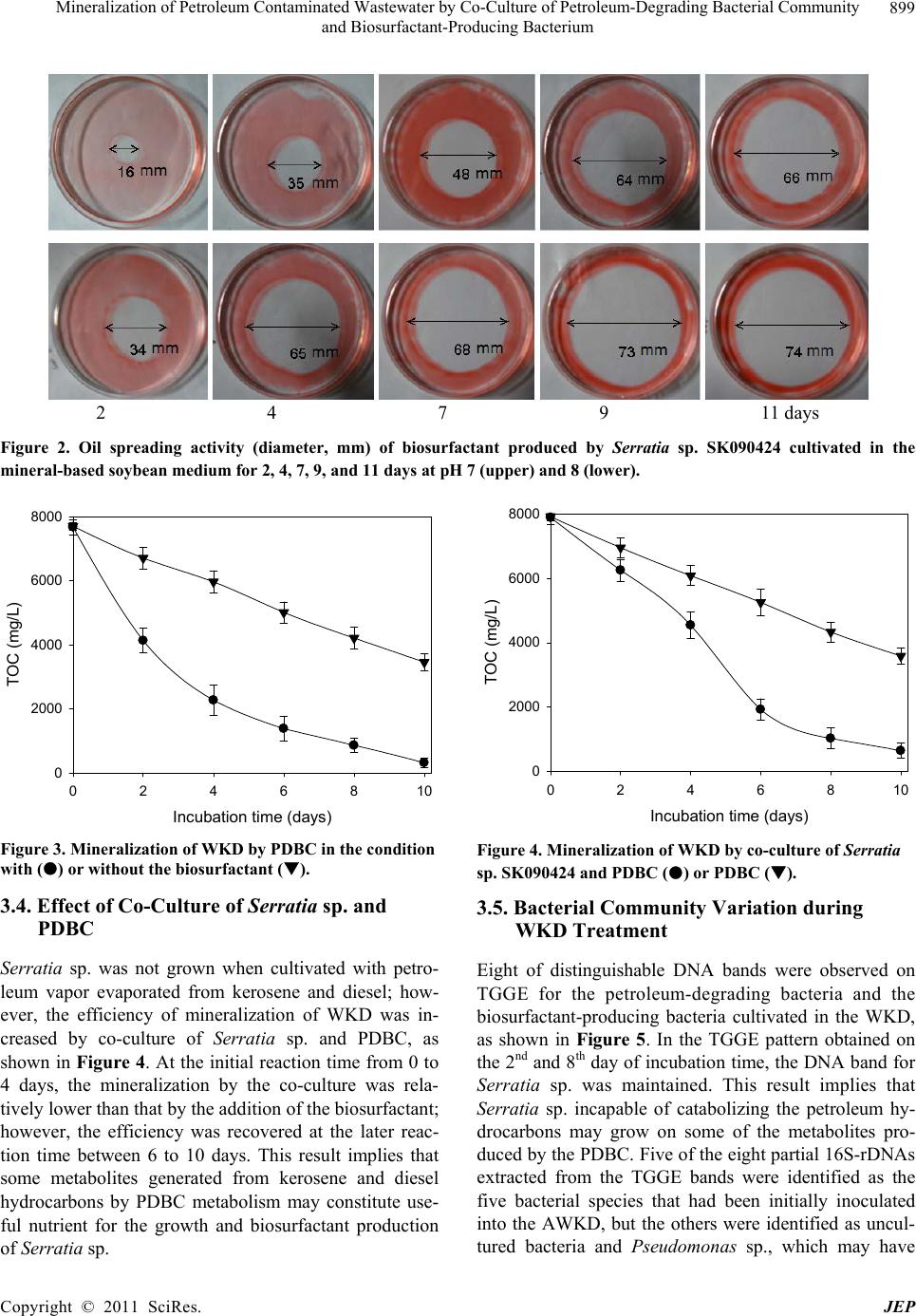 Mineralization of Petroleum Contaminated Wastewater by Co-Culture of Petroleum-Degrading Bacterial Community 899 and Biosurfactant-Producing Bacterium 2 4 7 9 11 days Figure 2. Oil spreading activity (diameter, mm) of biosurfactant produced by Serratia sp. SK090424 cultivated in the mineral-based soybea n me dium for 2, 4, 7, 9, and 11 days at pH 7 (upper) and 8 (lower). Incubation time (days) 0246810 TOC (mg/L ) 0 2000 4000 6000 8000 Figure 3. Mineralization of WKD by PDBC in the condition with () or without the biosurfactant (). 3.4. Effect of Co-Culture of Serratia sp. and PDBC Serratia sp. was not grown when cultivated with petro- leum vapor evaporated from kerosene and diesel; how- ever, the efficiency of mineralization of WKD was in- creased by co-culture of Serratia sp. and PDBC, as shown in Figure 4. At the initial reaction time from 0 to 4 days, the mineralization by the co-culture was rela- tively lower than that by the addition of the biosurfactant; however, the efficiency was recovered at the later reac- tion time between 6 to 10 days. This result implies that some metabolites generated from kerosene and diesel hydrocarbons by PDBC metabolism may constitute use- ful nutrient for the growth and biosurfactant production of Serratia sp. Incubation time (days) 0246810 TOC (mg/L) 0 2000 4000 6000 8000 Figure 4. Mineralization of WKD by co-culture of Serratia sp. SK090424 and PDBC () or PDBC (). 3.5. Bacterial Community Variation during WKD Treatment Eight of distinguishable DNA bands were observed on TGGE for the petroleum-degrading bacteria and the biosurfactant-producing bacteria cultivated in the WKD, as shown in Figure 5. In the TGGE pattern obtained on the 2nd and 8th day of incubation time, the DNA band for Serratia sp. was maintained. This result implies that Serratia sp. incapable of catabolizing the petroleum hy- drocarbons may grow on some of the metabolites pro- duced by the PDBC. Five of the eight partial 16S-rDNAs extracted from the TGGE bands were identified as the five bacterial species that had been initially inoculated into the AWKD, but the others were identified as uncul- tured bacteria and Pseudomonas sp., which may have Copyright © 2011 SciRes. JEP 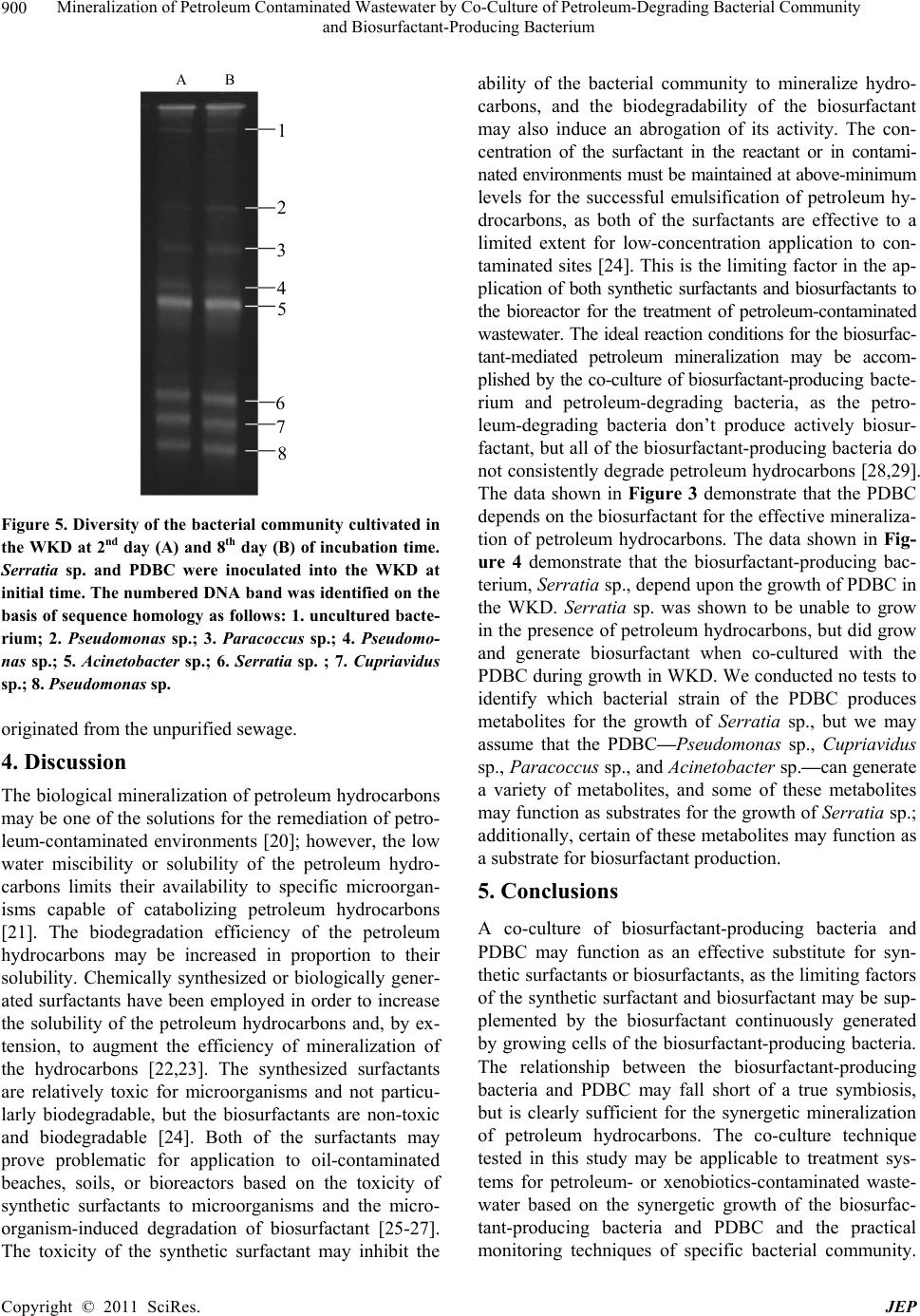 Mineralization of Petroleum Contaminated Wastewater by Co-Culture of Petroleum-Degrading Bacterial Community 900 and Biosurfactant-Producing Bacterium A B Figure 5. Diversity of the bacterial community cultivated in the WKD at 2nd day (A) and 8th day (B) of incubation time. Serratia sp. and PDBC were inoculated into the WKD at initial time. The numbered DNA band was identified on the basis of sequence homology as follow s: 1. uncultured bacte- rium; 2. Pseudomonas sp.; 3. Paracoccus sp.; 4. Pseudomo- nas sp.; 5. Acinetobacter sp.; 6. Serratia sp. ; 7. Cupriavidus sp.; 8. Pseudomonas sp. originated from the unpurified sewage. 4. Discussion The biological mineralization of petroleum hydrocarbons may be one of the solutions for the remediation of petro- leum-contaminated environments [20]; however, the low water miscibility or solubility of the petroleum hydro- carbons limits their availability to specific microorgan- isms capable of catabolizing petroleum hydrocarbons [21]. The biodegradation efficiency of the petroleum hydrocarbons may be increased in proportion to their solubility. Chemically synthesized or biologically gener- ated surfactants have been employed in order to increase the solubility of the petroleum hydrocarbons and, by ex- tension, to augment the efficiency of mineralization of the hydrocarbons [22,23]. The synthesized surfactants are relatively toxic for microorganisms and not particu- larly biodegradable, but the biosurfactants are non-toxic and biodegradable [24]. Both of the surfactants may prove problematic for application to oil-contaminated beaches, soils, or bioreactors based on the toxicity of synthetic surfactants to microorganisms and the micro- organism-induced degradation of biosurfactant [25-27]. The toxicity of the synthetic surfactant may inhibit the ability of the bacterial community to mineralize hydro- carbons, and the biodegradability of the biosurfactant may also induce an abrogation of its activity. The con- centration of the surfactant in the reactant or in contami- nated environments must be maintained at above-minimum levels for the successful emulsification of petroleum hy- drocarbons, as both of the surfactants are effective to a limited extent for low-concentration application to con- taminated sites [24]. This is the limiting factor in the ap- plication of both synthetic surfactants and biosurfactants to the bioreactor for the treatment of petroleum-contaminated wastewater. The ideal reaction conditions for the biosurfac- tant-mediated petroleum mineralization may be accom- plished by the co-culture of biosurfactant-producing bacte- rium and petroleum-degrading bacteria, as the petro- leum-degrading bacteria don’t produce actively biosur- factant, but all of the biosurfactant-producing bacteria do not consistently degrade petroleum hydrocarbons [28,29]. The data shown in Figure 3 demonstrate that the PDBC depends on the biosurfactant for the effective mineraliza- tion of petroleum hydrocarbons. The data shown in Fig- ure 4 demonstrate that the biosurfactant-producing bac- terium, Serratia sp., depend upon the growth of PDBC in the WKD. Serratia sp. was shown to be unable to grow in the presence of petroleum hydrocarbons, but did grow and generate biosurfactant when co-cultured with the PDBC during growth in WKD. We conducted no tests to identify which bacterial strain of the PDBC produces metabolites for the growth of Serratia sp., but we may assume that the PDBC—Pseudomonas sp., Cupriavidus sp., Paracoccus sp., and Acinetobacter sp.—can generate a variety of metabolites, and some of these metabolites may function as substrates for the growth of Serratia sp.; additionally, certain of these metabolites may function as a substrate for biosurfactant production. 1 2 3 4 5 6 7 8 5. Conclusions A co-culture of biosurfactant-producing bacteria and PDBC may function as an effective substitute for syn- thetic surfactants or biosurfactants, as the limiting factors of the synthetic surfactant and biosurfactant may be sup- plemented by the biosurfactant continuously generated by growing cells of the biosurfactant-producing bacteria. The relationship between the biosurfactant-producing bacteria and PDBC may fall short of a true symbiosis, but is clearly sufficient for the synergetic mineralization of petroleum hydrocarbons. The co-culture technique tested in this study may be applicable to treatment sys- tems for petroleum- or xenobiotics-contaminated waste- water based on the synergetic growth of the biosurfac- tant-producing bacteria and PDBC and the practical monitoring techniques of specific bacterial community. Copyright © 2011 SciRes. JEP 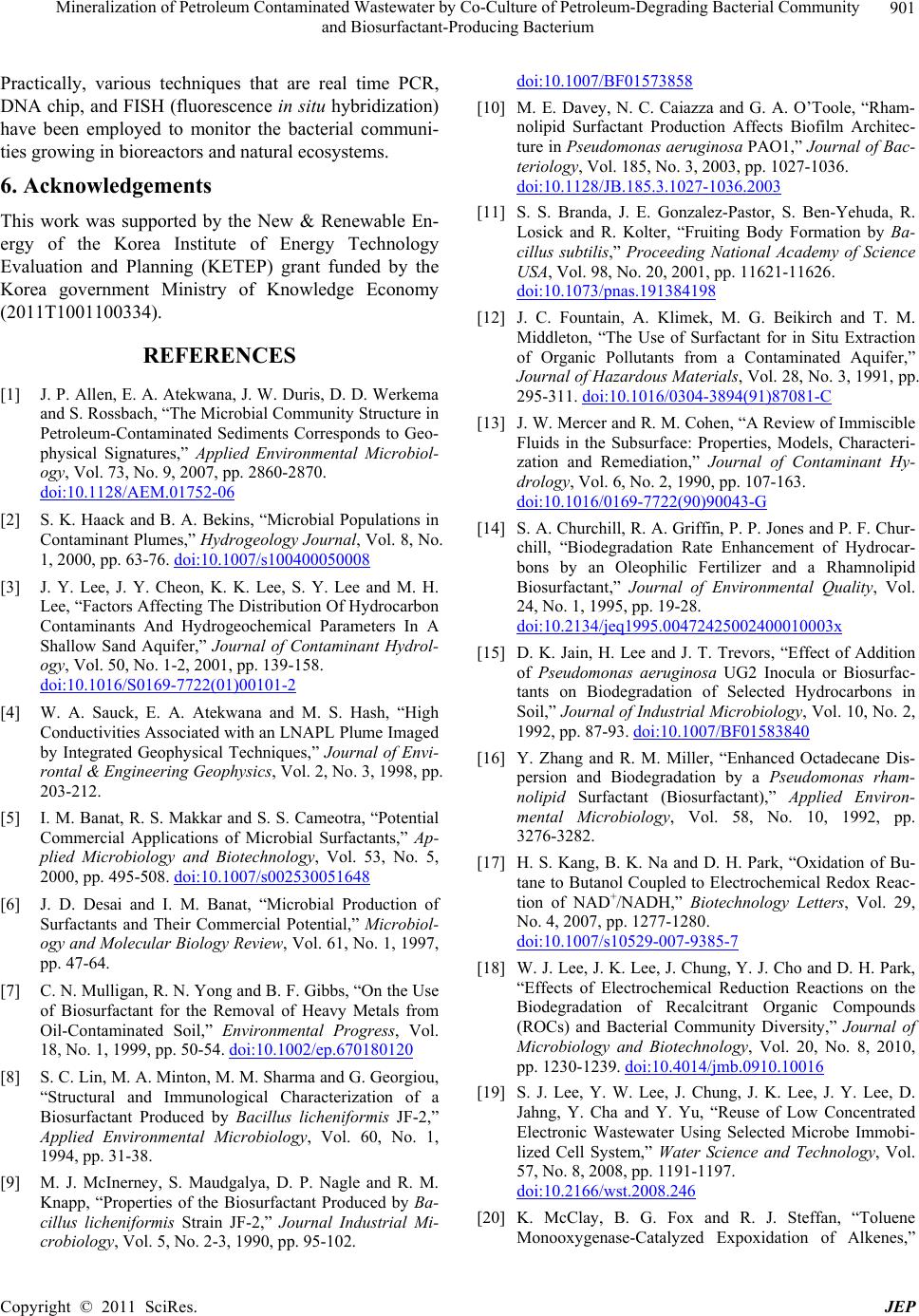 Mineralization of Petroleum Contaminated Wastewater by Co-Culture of Petroleum-Degrading Bacterial Community 901 and Biosurfactant-Producing Bacterium Practically, various techniques that are real time PCR, DNA chip, and FISH (fluorescence in situ hybridization) have been employed to monitor the bacterial communi- ties growing in bioreactors and natural ecosystems. 6. Acknowledgements This work was supported by the New & Renewable En- ergy of the Korea Institute of Energy Technology Evaluation and Planning (KETEP) grant funded by the Korea government Ministry of Knowledge Economy (2011T10011 00 334 ). REFERENCES [1] J. P. Allen, E. A. Atekwana, J. W. Duris, D. D. Werkema and S. Rossbach, “The Microbial Community Structure in Petroleum-Contaminated Sediments Corresponds to Geo- physical Signatures,” Applied Environmental Microbiol- ogy, Vol. 73, No. 9, 2007, pp. 2860-2870. doi:10.1128/AEM.01752-06 [2] S. K. Haack and B. A. Bekins, “Microbial Populations in Contaminant Plumes,” Hydrogeology Journal, Vol. 8, No. 1, 2000, pp. 63-76. doi:10.1007/s100400050008 [3] J. Y. Lee, J. Y. Cheon, K. K. Lee, S. Y. Lee and M. H. Lee, “Factors Affecting The Distribution Of Hydrocarbon Contaminants And Hydrogeochemical Parameters In A Shallow Sand Aquifer,” Journal of Contaminant Hydrol- ogy, Vol. 50, No. 1-2, 2001, pp. 139-158. doi:10.1016/S0169-7722(01)00101-2 [4] W. A. Sauck, E. A. Atekwana and M. S. Hash, “High Conductivities Associated with an LNAPL Plume Imaged by Integrated Geophysical Techniques,” Journal of Envi- rontal & Engineering Geophysics, Vol. 2, No. 3, 1998, pp. 203-212. [5] I. M. Banat, R. S. Makkar and S. S. Cameotra, “Potential Commercial Applications of Microbial Surfactants,” Ap- plied Microbiology and Biotechnology, Vol. 53, No. 5, 2000, pp. 495-508. doi:10.1007/s002530051648 [6] J. D. Desai and I. M. Banat, “Microbial Production of Surfactants and Their Commercial Potential,” Microbiol- ogy and Molecular Biology Review, Vol. 61, No. 1, 1997, pp. 47-64. [7] C. N. Mulligan, R. N. Yong and B. F. Gibbs, “On the Use of Biosurfactant for the Removal of Heavy Metals from Oil-Contaminated Soil,” Environmental Progress, Vol. 18, No. 1, 1999, pp. 50-54. doi:10.1002/ep.670180120 [8] S. C. Lin, M. A. Minton, M. M. Sharma and G. Georgiou, “Structural and Immunological Characterization of a Biosurfactant Produced by Bacillus licheniformis JF-2,” Applied Environmental Microbiology, Vol. 60, No. 1, 1994, pp. 31-38. [9] M. J. McInerney, S. Maudgalya, D. P. Nagle and R. M. Knapp, “Properties of the Biosurfactant Produced by Ba- cillus licheniformis Strain JF-2,” Journal Industrial Mi- crobiology, Vol. 5, No. 2-3, 1990, pp. 95-102. doi:10.1007/BF01573858 [10] M. E. Davey, N. C. Caiazza and G. A. O’Toole, “Rham- nolipid Surfactant Production Affects Biofilm Architec- ture in Pseudomonas aeruginosa PAO1,” Journal of Bac- teriology, Vol. 185, No. 3, 2003, pp. 1027-1036. doi:10.1128/JB.185.3.1027-1036.2003 [11] S. S. Branda, J. E. Gonzalez-Pastor, S. Ben-Yehuda, R. Losick and R. Kolter, “Fruiting Body Formation by Ba- cillus subtilis,” Proceeding National Academy of Science USA, Vol. 98, No. 20, 2001, pp. 11621-11626. doi:10.1073/pnas.191384198 [12] J. C. Fountain, A. Klimek, M. G. Beikirch and T. M. Middleton, “The Use of Surfactant for in Situ Extraction of Organic Pollutants from a Contaminated Aquifer,” Journal of Hazardous Materials, Vol. 28, No. 3, 1991, pp. 295-311. doi:10.1016/0304-3894(91)87081-C [13] J. W. Mercer and R. M. Cohen, “A Review of Immiscible Fluids in the Subsurface: Properties, Models, Characteri- zation and Remediation,” Journal of Contaminant Hy- drology, Vol. 6, No. 2, 1990, pp. 107-163. doi:10.1016/0169-7722(90)90043-G [14] S. A. Churchill, R. A. Griffin, P. P. Jones and P. F. Chur- chill, “Biodegradation Rate Enhancement of Hydrocar- bons by an Oleophilic Fertilizer and a Rhamnolipid Biosurfactant,” Journal of Environmental Quality, Vol. 24, No. 1, 1995, pp. 19-28. doi:10.2134/jeq1995.00472425002400010003x [15] D. K. Jain, H. Lee and J. T. Trevors, “Effect of Addition of Pseudomonas aeruginosa UG2 Inocula or Biosurfac- tants on Biodegradation of Selected Hydrocarbons in Soil,” Journal of Industrial Microbiology, Vol. 10, No. 2, 1992, pp. 87-93. doi:10.1007/BF01583840 [16] Y. Zhang and R. M. Miller, “Enhanced Octadecane Dis- persion and Biodegradation by a Pseudomonas rham- nolipid Surfactant (Biosurfactant),” Applied Environ- mental Microbiology, Vol. 58, No. 10, 1992, pp. 3276-3282. [17] H. S. Kang, B. K. Na and D. H. Park, “Oxidation of Bu- tane to Butanol Coupled to Electrochemical Redox Reac- tion of NAD+/NADH,” Biotechnology Letters, Vol. 29, No. 4, 2007, pp. 1277-1280. doi:10.1007/s10529-007-9385-7 [18] W. J. Lee, J. K. Lee, J. Chung, Y. J. Cho and D. H. Park, “Effects of Electrochemical Reduction Reactions on the Biodegradation of Recalcitrant Organic Compounds (ROCs) and Bacterial Community Diversity,” Journal of Microbiology and Biotechnology, Vol. 20, No. 8, 2010, pp. 1230-1239. doi:10.4014/jmb.0910.10016 [19] S. J. Lee, Y. W. Lee, J. Chung, J. K. Lee, J. Y. Lee, D. Jahng, Y. Cha and Y. Yu, “Reuse of Low Concentrated Electronic Wastewater Using Selected Microbe Immobi- lized Cell System,” Water Science and Technology, Vol. 57, No. 8, 2008, pp. 1191-1197. doi:10.2166/wst.2008.246 [20] K. McClay, B. G. Fox and R. J. Steffan, “Toluene Monooxygenase-Catalyzed Expoxidation of Alkenes,” Copyright © 2011 SciRes. JEP  Mineralization of Petroleum Contaminated Wastewater by Co-Culture of Petroleum-Degrading Bacterial Community and Biosurfactant-Producing Bacterium Copyright © 2011 SciRes. JEP 902 Applied Environmental Microbiology, Vol. 66, No. 5, 2000, pp.1877-1882. doi:10.1128/AEM.66.5.1877-1882.2000 [21] C. E. Cerniglia, “Biodegradation of Polycyclic Aromatic Hydrocarbons,” Current Opinion in Biotechnology, Vol. 4, No. 3, 1993, pp. 331-338. doi:10.1016/0958-1669(93)90104-5 [22] B. N. Aronstein and M. Alexander, “Effect of a Non-Ionic Surfactant Added to the Soil Surface on the Biodegradation of Aromatic Hydrocarbons within the Soil,” Applied Microbiology and Biotechnology, Vol. 39, No. 1, 1993, pp. 386-390. [23] E. Rosenberg, “Microbial Surfactants,” Critical Review in Biotechnology, Vol. 3, No. 2, 1986, pp. 109-132. doi:10.3109/07388558509150781 [24] T. Barkay, S. Navon-Venezia, E. Z. Ron and E. Rosenberg, “Enhancement of Solubilization and Biodeg- radation of Polyaromatic Hydrocarbons by the Bioemul- sifier Alasan,” Applied Environmental Microbiology, Vol. 65, No. 6, 1990, pp. 2697-2702. [25] S. Harvey, I. Elashvili, J. J. Valdes, D. Kamely and A. M. Chakrabarty, “Enhanced Removal of Exxon Valdez Spilled Oil from Alaskan Gravel by a Microbial Surfac- tant,” Biological Technology, Vol. 8, No. 3, 1990, pp. 228-230. [26] G. Bai, M. L. Brussenau and R. M. Miller, “Biosurfac- tant-Enhanced Removal of Residual Hydrocarbon from Soil,” Journal of Contaminant Hydrology, Vol. 25, No. 1-2, 1997, pp. 157-170. doi:10.1016/S0169-7722(96)00034-4 [27] A. Oberbremer, R. Müller-Hurtig and F. Wagner, “Effect of the Addition of Microbial Surfactants on Hydrocarbon Degradation in a Soil Population in a Stirred Reactor,” Applied Microbiology and Biotechnology, Vol. 32, No. 4, 1990, pp.485-489. doi:10.1007/BF00903788 [28] I. M. Banat, “Biosurfactants Production and Possible Uses in Microbial Enhanced Oil Recovery and Oil Pollu- tion Remediation,” A review, Bioresource Technology, Vol. 51, No. 1, 1995, pp. 1-12. doi:10.1016/0960-8524(94)00101-6 [29] Q. Li, C. Kang, H. Wang, C. Liu and C. Zhang, “Applica- tion of Microbial Enhanced Oil Recovery Technique to Daqing Oil Field,” Biochemical Engineering Journal, Vol. 11, No. 2-3, 2002, pp. 197-199. doi:10.1016/S1369-703X(02)00025-6 |