

Paper Menu >>
Journal Menu >>
 Journal of Environmental Protection, 2011, 2, 848-854 doi:10.4236/jep.2011.26096 Published Online August 2011 (http://www.SciRP.org/journal/jep) Copyright © 2011 SciRes. JEP Proximal Input of Polynuclear Aromatic Hydrocarbons (PAHs) in Groundwater Sources of Okrika Mainland, Nigeria C. G. Okoli, D. H. Ogbuagu*, C. L. Gilbert, S. Madu, R. F. Njoku-Tony Department of Environmental Technology, Federal University of Technology, Owerri, Nigeria. Email: [email protected] Received April 14th, 2011; revised May 26th, 2011; accepted July 9th, 2011. ABSTRACT The Port Harcourt Refinery Company situated at Okrika Mainland discharges its effluent into the Creeks surrounding this coastal land. The current study examined the presence of polynuclear aromatic hydrocarbons in groundwater sources of the coasta l settlement. Ten replicate samples were collected from 10 boreholes in the settlemen t using steril- ized amber glass bo ttles and fixed with co ncentrated H2SO4. They were later analyzed using Ga s chroma tography (GC). The Pearson product moment correlation coefficient (r) was used to determine the interactions of the PAHs detected while the One-way ANOVA was used to determine spatial variance equality in means of the PAHs components at P < 0.05. Further structure detection was made with means plots, utilizing pH as a predictor variab le. High concentration s of PAHs which exceeded the WHO maximum permissible limit for the PAHs in drinking water (0.002 mg/L) were re- corded from the b orehole samples. Acenaphthene had the highest concentration of 0.88317 (0.202494 ± 0.0652) mg /L, while acenaphthylene had the least maximum concentration of 0.18837 (0.04978 ± 0.0123). However, naphthalene r e- corded concentrations of between 0.00058 and 0.52510 (0.0874576 ± 0.03 472) mg/L, fluorene 0.00018 and 0.20438 (0.0527435 ± 0.01564) mg/L, phenanthrene 0.00041 and 0.26732 (0.0603780 ± 0.018634) mg/L, and anthracene be- tween 0.00029 and 0.25084 (0.0692785 ± 0.0176569) mg/L. There was significant variance inequality in means of the PAHs measured across the sampling locations at P < 0.05 [F(971.1318) > Fcrit(3.85563)]. A further structure detection re- vealed that the inequalities were con tributed by all the PAH co mponents, especially between BH 3 and BH 1, BH 4 and BH 2 and 5, as well as between BH 6 and BH 10. Very strong associations were observed between the PAH components at P < 0.01. BH 8 recorded the highest contamination level of the various PAHs due basically to its proximity to the refinery’s effluent discharge point (Ekerekana Creek) and channel. Hence the source of these pollutants could best be fingerprinted to the nearby Port Harcourt Refinery Company’s effluent discharges. These PAHs are not only ingested by drinking contaminated waters, but are further consumed when this water is used to prepare foods. This creates a great cause for public health concerns especially as several PAHs are known carcinogens. It is therefore, recommended that technologically advanced techniques of water treatment be developed in order to take care of the presence of PAHs in drinking water sources of the coastal dwellers. Keywords: Carcinogenic, Polynuclear Aromatic Hydrocarbons, Groundwater, Gas Chromatography, Okrikamainland 1. Introduction Crude oil refining processes generates a lot of solid, li- quid, and gaseous wastes into the environment. The li- quid wastes, collectively called effluents are usually dis- charged into nearby water bodies by operators. One of the toxic components of crude oil are the polynuclear aromatic hydrocarbons (PAHs). According to ATSDR [1], PAHs are generally formed during the incomplete combustion of coal, oil, gas, wood, or other organic sub- stance such as tobacco and charbroiled meat, and have been reported to be the most abundant of the main hy- drocarbons found in crude oil mixture [2,3]. They have also been identified in soils at uncontrolled disposal sites, including wood preservation, oil wastes, and coal gasifi- cation sites [4]. Marten and Frankenberger, Jr., [5] esti- mated that the half-life of PAHs can range from as short as 2 days (for naphthalene) to almost 400 days (for fluo- ranthene) in soils. Anthropogenic sources such as indus- trial production, transportation and waste incineration 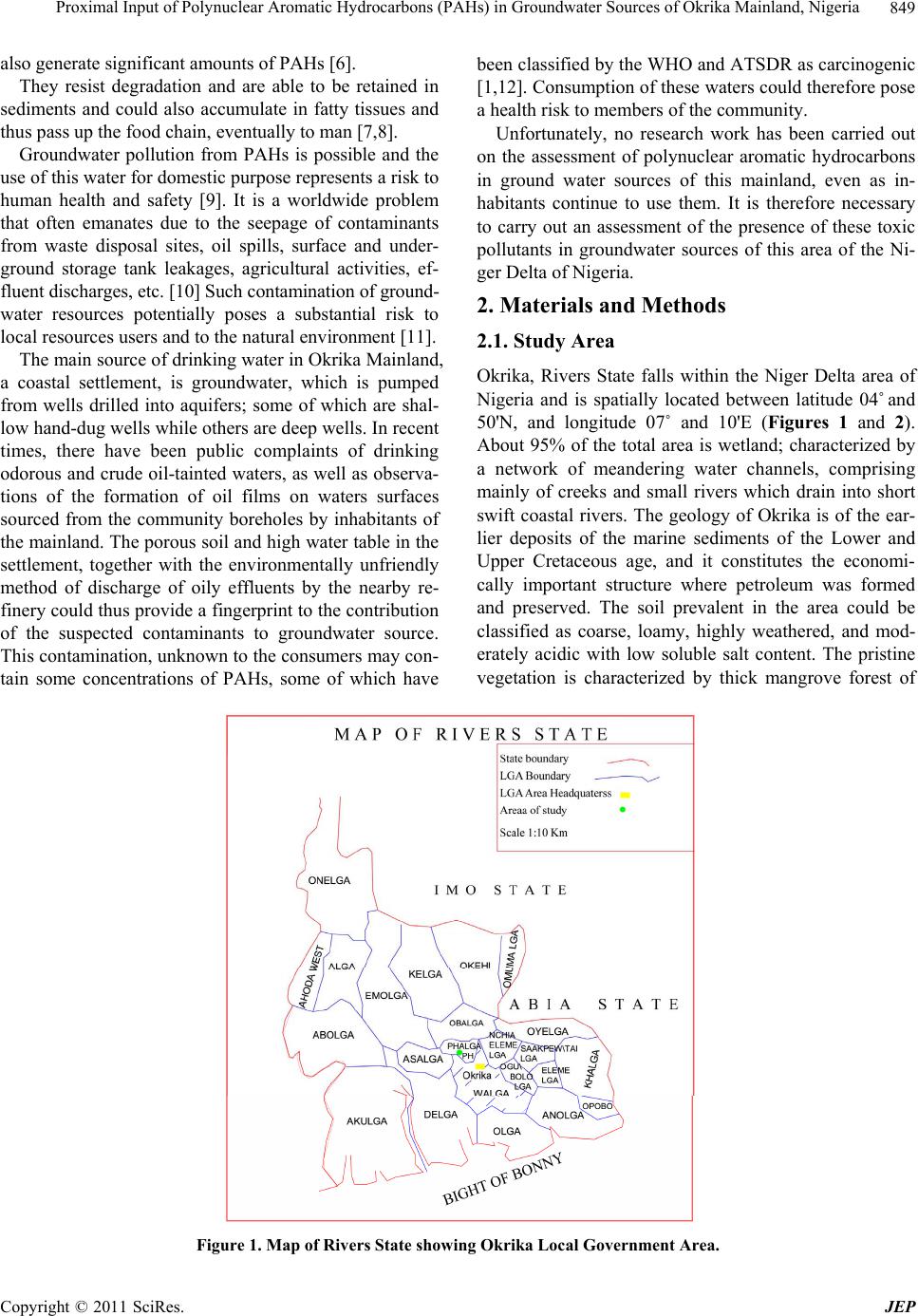 Proximal Input of Polynuclear Aromatic Hydrocarbons (PAHs) in Groundwater Sources of Okrika Mainland, Nigeria849 also generate significant amounts of PAHs [6]. They resist degradation and are able to be retained in sediments and could also accumulate in fatty tissues and thus pass up the food chain, eventually to man [7,8]. Groundwater pollution from PAHs is possible and the use of this water for domestic purpose represents a risk to human health and safety [9]. It is a worldwide problem that often emanates due to the seepage of contaminants from waste disposal sites, oil spills, surface and under- ground storage tank leakages, agricultural activities, ef- fluent discharges, etc. [10] Such contamination of ground- water resources potentially poses a substantial risk to local resources users and to the natural environment [11]. The main source of drinking water in Okrika Mainland, a coastal settlement, is groundwater, which is pumped from wells drilled into aquifers; some of which are shal- low hand-dug wells while others are deep wells. In recent times, there have been public complaints of drinking odorous and crude oil-tainted waters, as well as observa- tions of the formation of oil films on waters surfaces sourced from the community boreholes by inhabitants of the mainland. The porous soil and high water table in the settlement, together with the environmentally unfriendly method of discharge of oily effluents by the nearby re- finery could thus provide a fingerprint to the contribution of the suspected contaminants to groundwater source. This contamination, unknown to the consumers may con- tain some concentrations of PAHs, some of which have been classified by the WHO and ATSDR as carcinogenic [1,12]. Consumption of these waters could therefore pose a health risk to members of the community. Unfortunately, no research work has been carried out on the assessment of polynuclear aromatic hydrocarbons in ground water sources of this mainland, even as in- habitants continue to use them. It is therefore necessary to carry out an assessment of the presence of these toxic pollutants in groundwater sources of this area of the Ni- ger Delta of Nigeria. 2. Materials and Methods 2.1. Study Area Okrika, Rivers State falls within the Niger Delta area of Nigeria and is spatially located between latitude 04˚ and 50'N, and longitude 07˚ and 10'E (Figures 1 and 2). About 95% of the total area is wetland; characterized by a network of meandering water channels, comprising mainly of creeks and small rivers which drain into short swift coastal rivers. The geology of Okrika is of the ear- lier deposits of the marine sediments of the Lower and Upper Cretaceous age, and it constitutes the economi- cally important structure where petroleum was formed and preserved. The soil prevalent in the area could be classified as coarse, loamy, highly weathered, and mod- erately acidic with low soluble salt content. The pristine vegetation is characterized by thick mangrove forest of Figure 1. Map of Rivers State showing Okrika Local Government Area. Copyright © 2011 SciRes. JEP 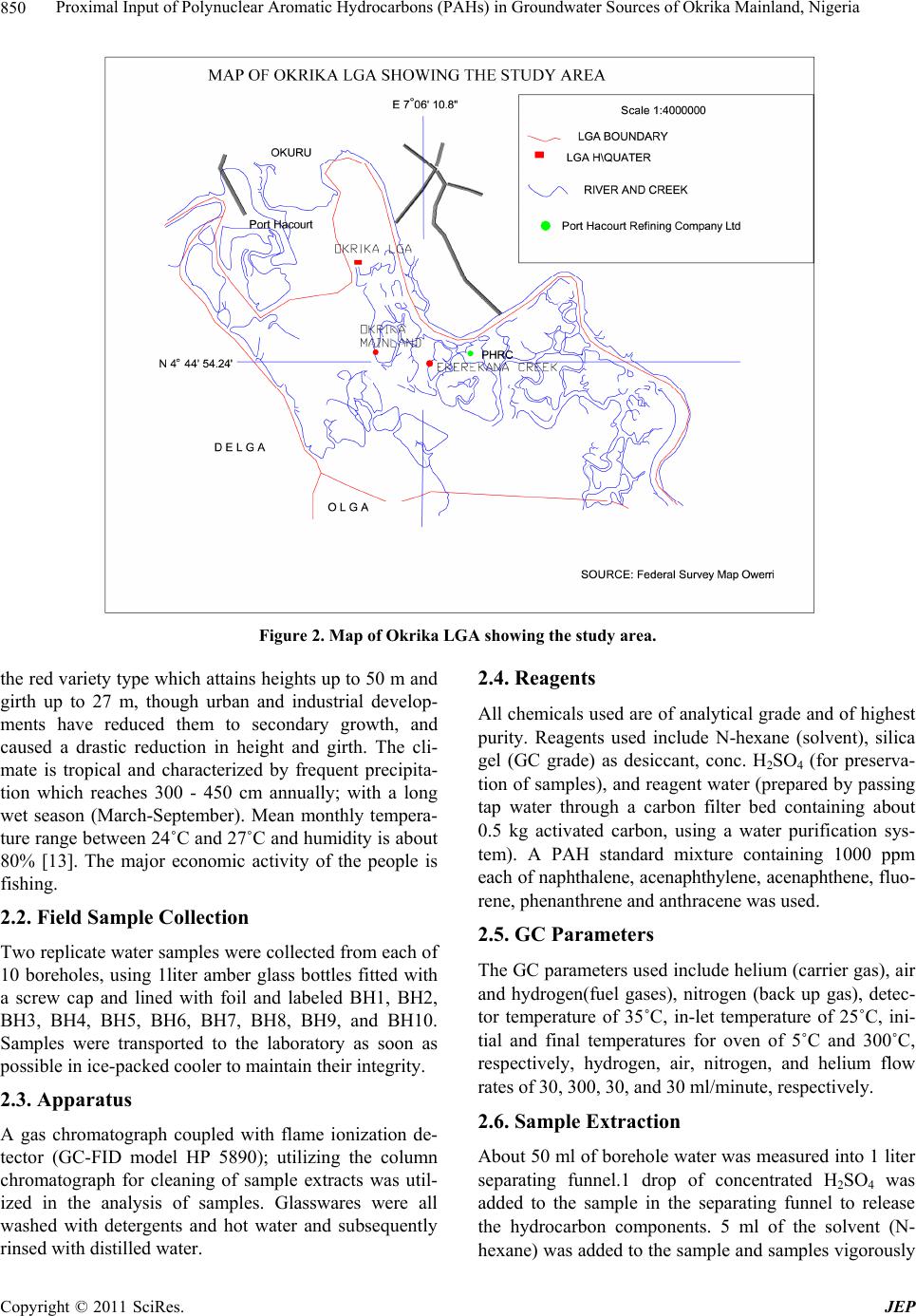 Proximal Input of Polynuclear Aromatic Hydrocarbons (PAHs) in Groundwater Sources of Okrika Mainland, Nigeria 850 Figure 2. Map of Okrika LGA showing the study area. the red variety type which attains heights up to 50 m and girth up to 27 m, though urban and industrial develop- ments have reduced them to secondary growth, and caused a drastic reduction in height and girth. The cli- mate is tropical and characterized by frequent precipita- tion which reaches 300 - 450 cm annually; with a long wet season (March-September). Mean monthly tempera- ture range between 24˚C and 27˚C and humidity is about 80% [13]. The major economic activity of the people is fishing. 2.2. Field Sample Collection Two replicate water samples were collected from each of 10 boreholes, using 1liter amber glass bottles fitted with a screw cap and lined with foil and labeled BH1, BH2, BH3, BH4, BH5, BH6, BH7, BH8, BH9, and BH10. Samples were transported to the laboratory as soon as possible in ice-packed cooler to maintain their integrity. 2.3. Apparatus A gas chromatograph coupled with flame ionization de- tector (GC-FID model HP 5890); utilizing the column chromatograph for cleaning of sample extracts was util- ized in the analysis of samples. Glasswares were all washed with detergents and hot water and subsequently rinsed with distilled water. 2.4. Reagents All chemicals used are of analytical grade and of highest purity. Reagents used include N-hexane (solvent), silica gel (GC grade) as desiccant, conc. H2SO4 (for preserva- tion of samples), and reagent water (prepared by passing tap water through a carbon filter bed containing about 0.5 kg activated carbon, using a water purification sys- tem). A PAH standard mixture containing 1000 ppm each of naphthalene, acenaphthylene, acenaphthene, fluo- rene, phenanthrene and anthracene was used. 2.5. GC Parameters The GC parameters used include helium (carrier gas), air and hydrogen(fuel gases), nitrogen (back up gas), detec- tor temperature of 35˚C, in-let temperature of 25˚C, ini- tial and final temperatures for oven of 5˚C and 300˚C, respectively, hydrogen, air, nitrogen, and helium flow rates of 30, 300, 30, and 30 ml/minute, respectively. 2.6. Sample Extraction About 50 ml of borehole water was measured into 1 liter separating funnel.1 drop of concentrated H2SO4 was added to the sample in the separating funnel to release the hydrocarbon components. 5 ml of the solvent (N- hexane) was added to the sample and samples vigorously Copyright © 2011 SciRes. JEP 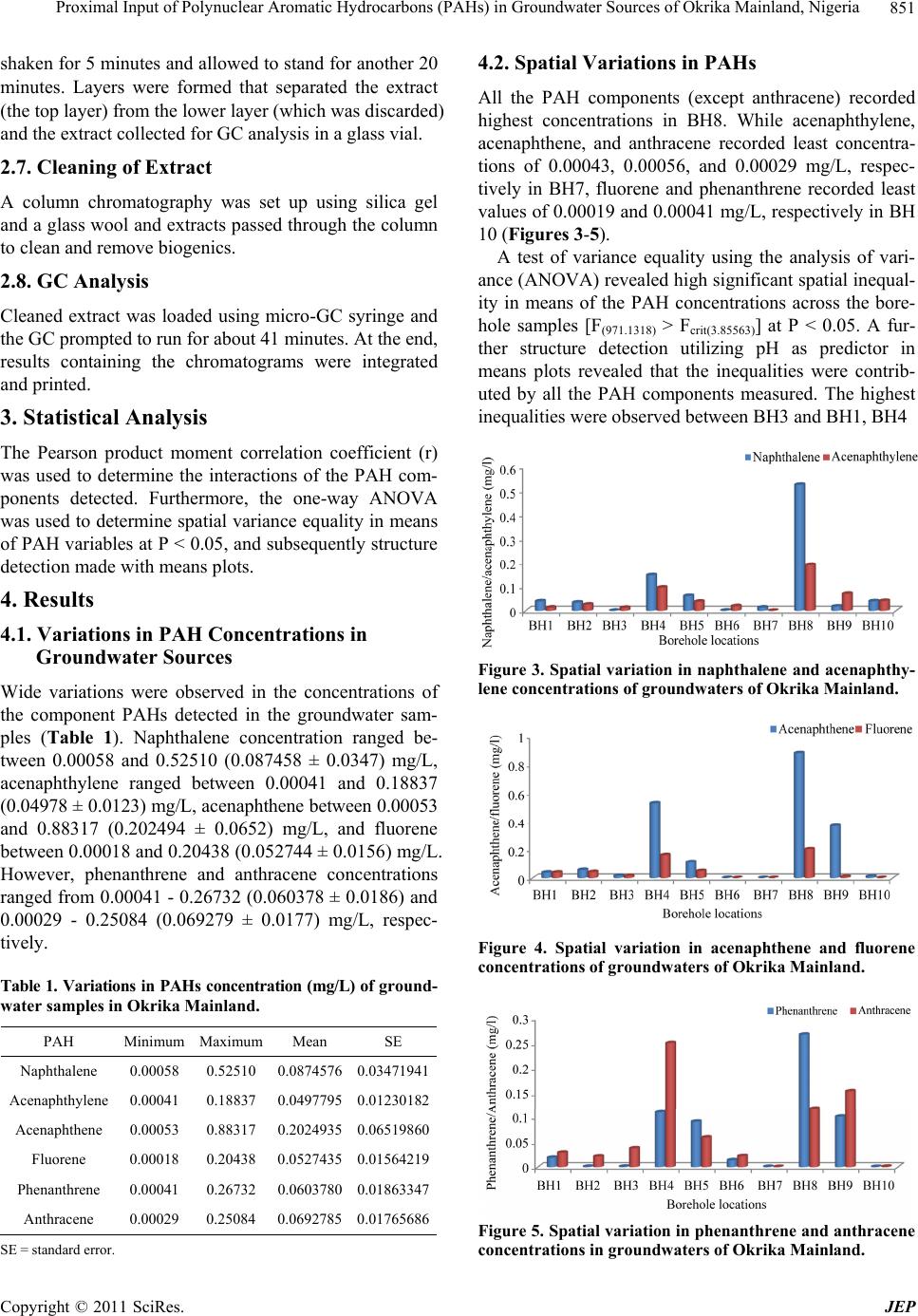 Proximal Input of Polynuclear Aromatic Hydrocarbons (PAHs) in Groundwater Sources of Okrika Mainland, Nigeria851 shaken for 5 minutes and allowed to stand for another 20 minutes. Layers were formed that separated the extract (the top layer) from the lower layer (which was discarded) and the extract collected for GC analysis in a glass vial. 2.7. Cleaning of Extract A column chromatography was set up using silica gel and a glass wool and extracts passed through the column to clean and remove biogenics. 2.8. GC Analysis Cleaned extract was loaded using micro-GC syringe and the GC prompted to run for about 41 minutes. At the end, results containing the chromatograms were integrated and printed. 3. Statistical Analysis The Pearson product moment correlation coefficient (r) was used to determine the interactions of the PAH com- ponents detected. Furthermore, the one-way ANOVA was used to determine spatial variance equality in means of PAH variables at P < 0.05, and subsequently structure detection made with means plots. 4. Results 4.1. Variations in PAH Concentrations in Groundwater Sources Wide variations were observed in the concentrations of the component PAHs detected in the groundwater sam- ples (Table 1). Naphthalene concentration ranged be- tween 0.00058 and 0.52510 (0.087458 ± 0.0347) mg/L, acenaphthylene ranged between 0.00041 and 0.18837 (0.04978 ± 0.0123) mg/L, acenaphthene between 0.00053 and 0.88317 (0.202494 ± 0.0652) mg/L, and fluorene between 0.00018 and 0.20438 (0.052744 ± 0.0156) mg/L. However, phenanthrene and anthracene concentrations ranged from 0.00041 - 0.26732 (0.060378 ± 0.0186) and 0.00029 - 0.25084 (0.069279 ± 0.0177) mg/L, respec- tively. Table 1. Variations in PAHs concentration (mg/L) of ground- water samples in Okrika Mainland. PAH Minimum Maximum Mean SE Naphthalene 0.00058 0.52510 0.0874576 0.03471941 Acenaphthylene 0.00041 0.18837 0.0497795 0.01230182 Acenaphthene 0.00053 0.88317 0.2024935 0.06519860 Fluorene 0.00018 0.20438 0.0527435 0.01564219 Phenanthrene 0.00041 0.26732 0.0603780 0.01863347 Anthracene 0.00029 0.25084 0.0692785 0.01765686 SE = standard error. 4.2. Spatial Variations in PAHs All the PAH components (except anthracene) recorded highest concentrations in BH8. While acenaphthylene, acenaphthene, and anthracene recorded least concentra- tions of 0.00043, 0.00056, and 0.00029 mg/L, respec- tively in BH7, fluorene and phenanthrene recorded least values of 0.00019 and 0.00041 mg/L, respectively in BH 10 (Figures 3-5). A test of variance equality using the analysis of vari- ance (ANOVA) revealed high significant spatial inequal- ity in means of the PAH concentrations across the bore- hole samples [F(971.1318) > Fcrit(3.85563)] at P < 0.05. A fur- ther structure detection utilizing pH as predictor in means plots revealed that the inequalities were contrib- uted by all the PAH components measured. The highest inequalities were observed between BH3 and BH1, BH4 Figure 3. Spatial variation in naphthalene and acenaphthy- lene concentrations of groundwate rs of Okrika Mainland. Figure 4. Spatial variation in acenaphthene and fluorene concentrations of groundwate rs of Okr i ka Mainland. Figure 5. Spatial variation in phe nanthrene and anthrac ene concentrations in groundwaters of Okrika Mainland. Copyright © 2011 SciRes. JEP 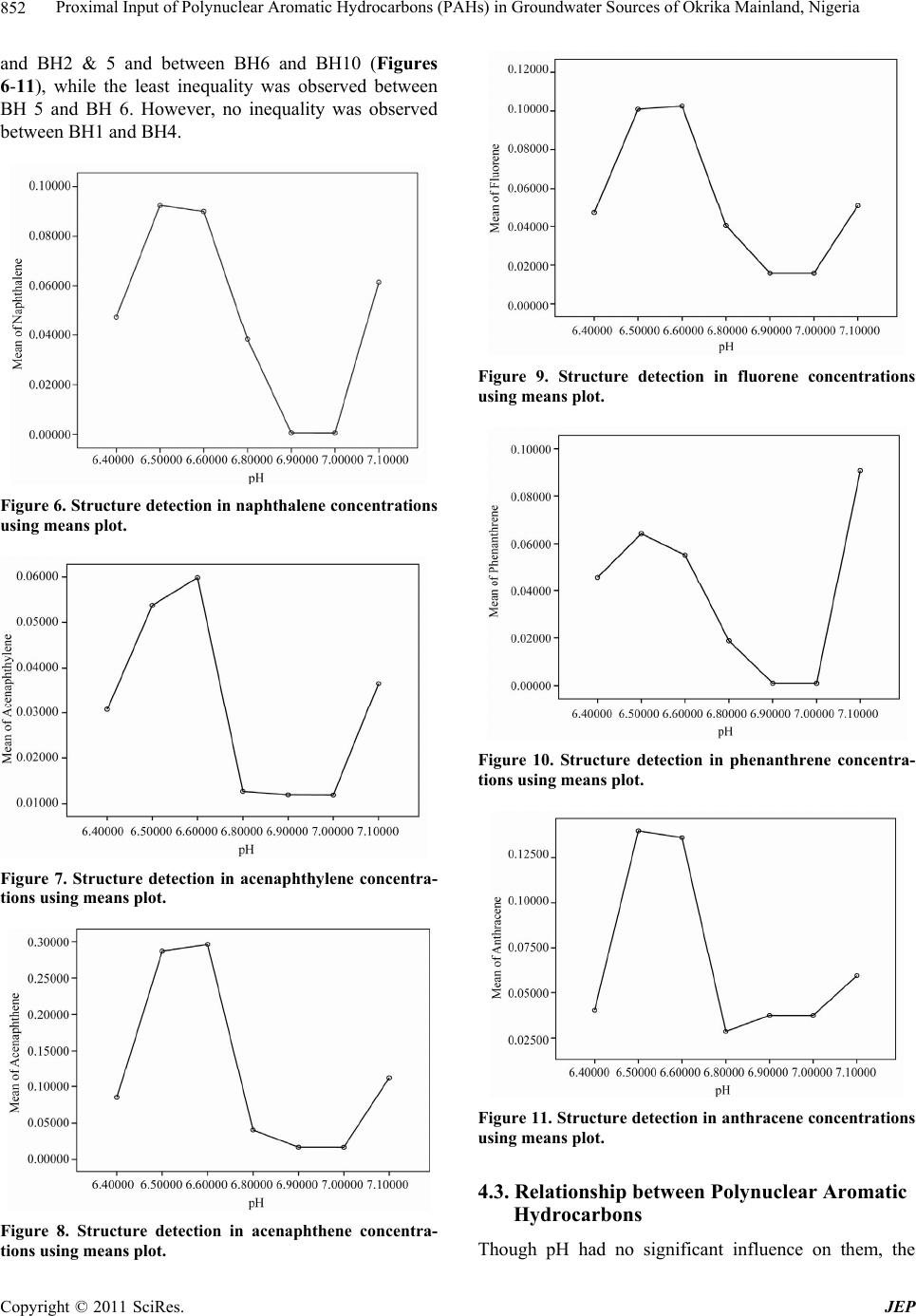 Proximal Input of Polynuclear Aromatic Hydrocarbons (PAHs) in Groundwater Sources of Okrika Mainland, Nigeria 852 and BH2 & 5 and between BH6 and BH10 (Figures 6-11), while the least inequality was observed between BH 5 and BH 6. However, no inequality was observed between BH1 and BH4. Figure 6. Structure detec tion in naphthalene concentrations using means plot. Figure 7. Structure detection in acenaphthylene concentra- tions using means plot. Figure 8. Structure detection in acenaphthene concentra- tions using means plot. Figure 9. Structure detection in fluorene concentrations using means plot. Figure 10. Structure detection in phenanthrene concentra- tions using means plot. Figure 11. Structure detection in anthracene concentrations using means plot. 4.3. Relationship between Polynuclear Aromatic Hydrocarbons Though pH had no significant influence on them, the Copyright © 2011 SciRes. JEP 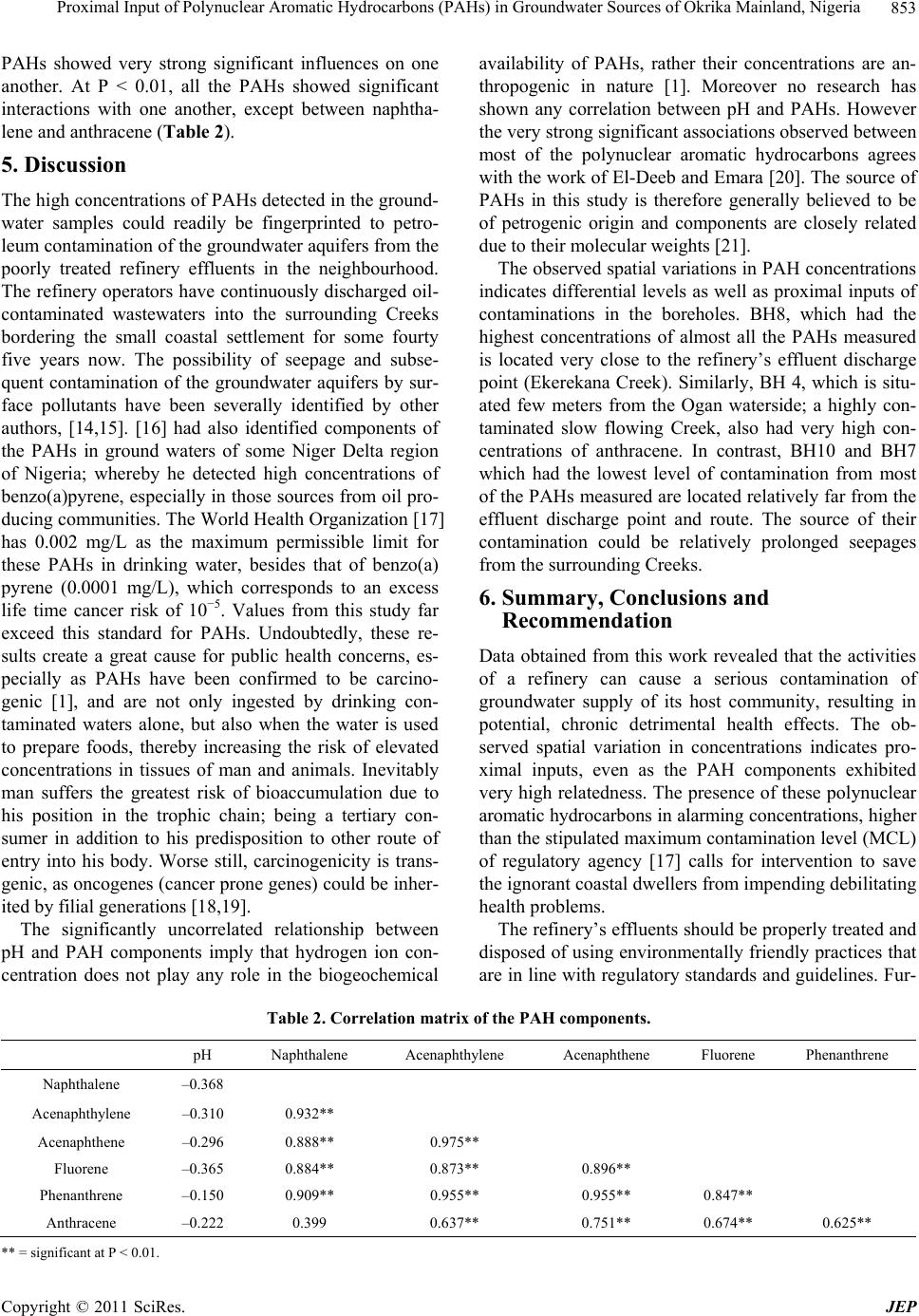 Proximal Input of Polynuclear Aromatic Hydrocarbons (PAHs) in Groundwater Sources of Okrika Mainland, Nigeria Copyright © 2011 SciRes. JEP 853 PAHs showed very strong significant influences on one another. At P < 0.01, all the PAHs showed significant interactions with one another, except between naphtha- lene and anthracene (Table 2). 5. Discussion The high concentrations of PAHs detected in the ground- water samples could readily be fingerprinted to petro- leum contamination of the groundwater aquifers from the poorly treated refinery effluents in the neighbourhood. The refinery operators have continuously discharged oil- contaminated wastewaters into the surrounding Creeks bordering the small coastal settlement for some fourty five years now. The possibility of seepage and subse- quent contamination of the groundwater aquifers by sur- face pollutants have been severally identified by other authors, [14,15]. [16] had also identified components of the PAHs in ground waters of some Niger Delta region of Nigeria; whereby he detected high concentrations of benzo(a)pyrene, especially in those sources from oil pro- ducing communities. The World Health Organization [17] has 0.002 mg/L as the maximum permissible limit for these PAHs in drinking water, besides that of benzo(a) pyrene (0.0001 mg/L), which corresponds to an excess life time cancer risk of 10−5. Values from this study far exceed this standard for PAHs. Undoubtedly, these re- sults create a great cause for public health concerns, es- pecially as PAHs have been confirmed to be carcino- genic [1], and are not only ingested by drinking con- taminated waters alone, but also when the water is used to prepare foods, thereby increasing the risk of elevated concentrations in tissues of man and animals. Inevitably man suffers the greatest risk of bioaccumulation due to his position in the trophic chain; being a tertiary con- sumer in addition to his predisposition to other route of entry into his body. Worse still, carcinogenicity is trans- genic, as oncogenes (cancer prone genes) could be inher- ited by filial generations [18,19]. The significantly uncorrelated relationship between pH and PAH components imply that hydrogen ion con- centration does not play any role in the biogeochemical availability of PAHs, rather their concentrations are an- thropogenic in nature [1]. Moreover no research has shown any correlation between pH and PAHs. However the very strong significant associations observed between most of the polynuclear aromatic hydrocarbons agrees with the work of El-Deeb and Emara [20]. The source of PAHs in this study is therefore generally believed to be of petrogenic origin and components are closely related due to their molecular weights [21]. The observed spatial variations in PAH concentrations indicates differential levels as well as proximal inputs of contaminations in the boreholes. BH8, which had the highest concentrations of almost all the PAHs measured is located very close to the refinery’s effluent discharge point (Ekerekana Creek). Similarly, BH 4, which is situ- ated few meters from the Ogan waterside; a highly con- taminated slow flowing Creek, also had very high con- centrations of anthracene. In contrast, BH10 and BH7 which had the lowest level of contamination from most of the PAHs measured are located relatively far from the effluent discharge point and route. The source of their contamination could be relatively prolonged seepages from the surrounding Creeks. 6. Summary, Conclusions and Recommendation Data obtained from this work revealed that the activities of a refinery can cause a serious contamination of groundwater supply of its host community, resulting in potential, chronic detrimental health effects. The ob- served spatial variation in concentrations indicates pro- ximal inputs, even as the PAH components exhibited very high relatedness. The presence of these polynuclear aromatic hydrocarbons in alarming concentrations, higher than the stipulated maximum contamination level (MCL) of regulatory agency [17] calls for intervention to save the ignorant coastal dwellers from impending debilitating health problems. The refinery’s effluents should be properly treated and disposed of using environmentally friendly practices that are in line with regulatory standards and guidelines. Fur- Table 2. Correlation matrix of the PAH components. pH Naphthalene Acenaphthylene Acenaphthene Fluorene Phenanthrene Naphthalene –0.368 Acenaphthylene –0.310 0.932** Acenaphthene –0.296 0.888** 0.975** Fluorene –0.365 0.884** 0.873** 0.896** Phenanthrene –0.150 0.909** 0.955** 0.955** 0.847** Anthracene –0.222 0.399 0.637** 0.751** 0.674** 0.625** ** = significant at P < 0.01. 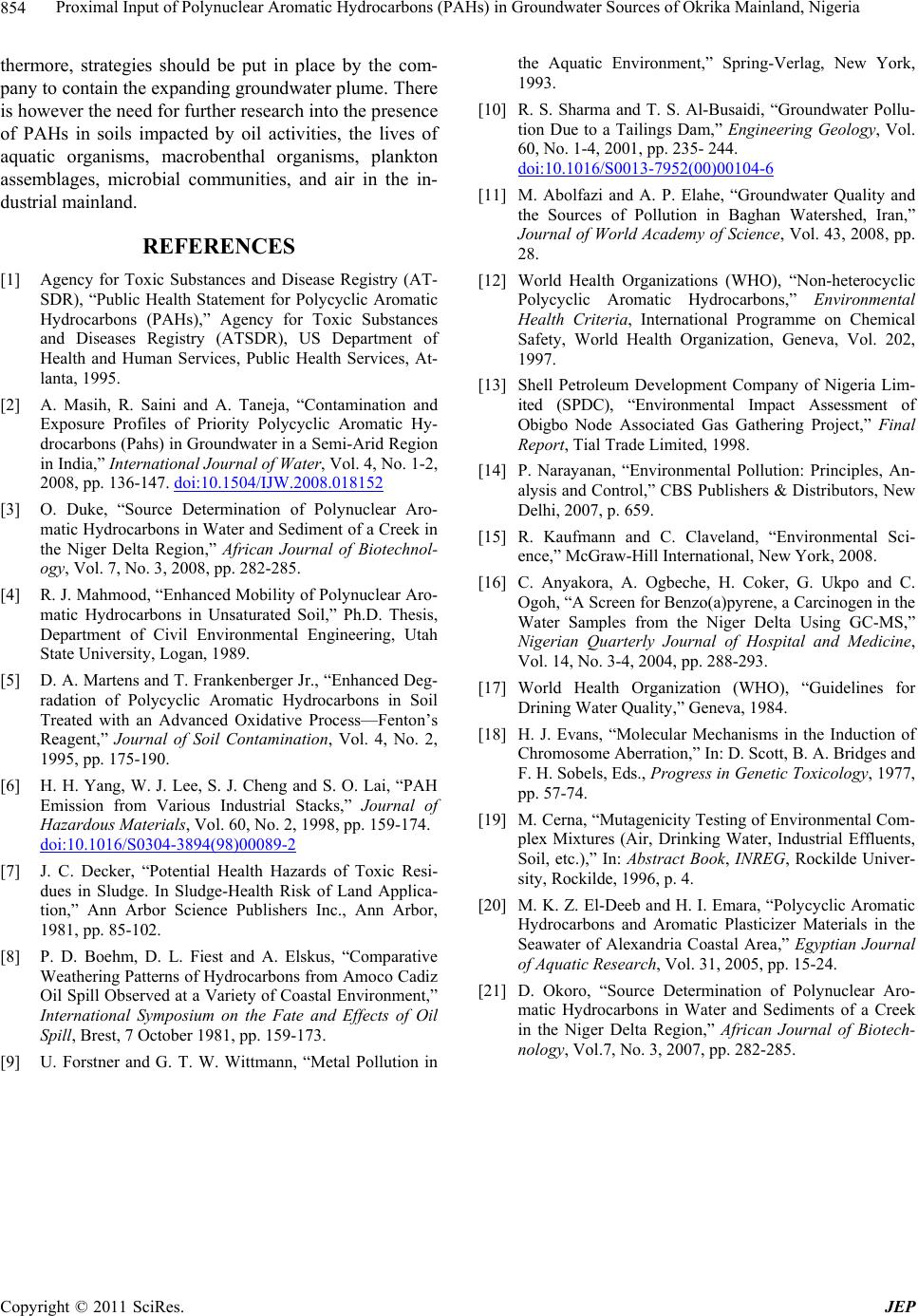 Proximal Input of Polynuclear Aromatic Hydrocarbons (PAHs) in Groundwater Sources of Okrika Mainland, Nigeria 854 thermore, strategies should be put in place by the com- pany to contain the expanding groundwater plume. There is however the need for further research into the presence of PAHs in soils impacted by oil activities, the lives of aquatic organisms, macrobenthal organisms, plankton assemblages, microbial communities, and air in the in- dustrial mainland. REFERENCES [1] Agency for Toxic Substances and Disease Registry (AT- SDR), “Public Health Statement for Polycyclic Aromatic Hydrocarbons (PAHs),” Agency for Toxic Substances and Diseases Registry (ATSDR), US Department of Health and Human Services, Public Health Services, At- lanta, 1995. [2] A. Masih, R. Saini and A. Taneja, “Contamination and Exposure Profiles of Priority Polycyclic Aromatic Hy- drocarbons (Pahs) in Groundwater in a Semi-Arid Region in India,” International Journal of Water, Vol. 4, No. 1-2, 2008, pp. 136-147. doi:10.1504/IJW.2008.018152 [3] O. Duke, “Source Determination of Polynuclear Aro- matic Hydrocarbons in Water and Sediment of a Creek in the Niger Delta Region,” African Journal of Biotechnol- ogy, Vol. 7, No. 3, 2008, pp. 282-285. [4] R. J. Mahmood, “Enhanced Mobility of Polynuclear Aro- matic Hydrocarbons in Unsaturated Soil,” Ph.D. Thesis, Department of Civil Environmental Engineering, Utah State University, Logan, 1989. [5] D. A. Martens and T. Frankenberger Jr., “Enhanced Deg- radation of Polycyclic Aromatic Hydrocarbons in Soil Treated with an Advanced Oxidative Process—Fenton’s Reagent,” Journal of Soil Contamination, Vol. 4, No. 2, 1995, pp. 175-190. [6] H. H. Yang, W. J. Lee, S. J. Cheng and S. O. Lai, “PAH Emission from Various Industrial Stacks,” Journal of Hazardous Materials, Vol. 60, No. 2, 1998, pp. 159-174. doi:10.1016/S0304-3894(98)00089-2 [7] J. C. Decker, “Potential Health Hazards of Toxic Resi- dues in Sludge. In Sludge-Health Risk of Land Applica- tion,” Ann Arbor Science Publishers Inc., Ann Arbor, 1981, pp. 85-102. [8] P. D. Boehm, D. L. Fiest and A. Elskus, “Comparative Weathering Patterns of Hydrocarbons from Amoco Cadiz Oil Spill Observed at a Variety of Coastal Environment,” International Symposium on the Fate and Effects of Oil Spill, Brest, 7 October 1981, pp. 159-173. [9] U. Forstner and G. T. W. Wittmann, “Metal Pollution in the Aquatic Environment,” Spring-Verlag, New York, 1993. [10] R. S. Sharma and T. S. Al-Busaidi, “Groundwater Pollu- tion Due to a Tailings Dam,” Engineering Geology, Vol. 60, No. 1-4, 2001, pp. 235- 244. doi:10.1016/S0013-7952(00)00104-6 [11] M. Abolfazi and A. P. Elahe, “Groundwater Quality and the Sources of Pollution in Baghan Watershed, Iran,” Journal of World Academy of Science, Vol. 43, 2008, pp. 28. [12] World Health Organizations (WHO), “Non-heterocyclic Polycyclic Aromatic Hydrocarbons,” Environmental Health Criteria, International Programme on Chemical Safety, World Health Organization, Geneva, Vol. 202, 1997. [13] Shell Petroleum Development Company of Nigeria Lim- ited (SPDC), “Environmental Impact Assessment of Obigbo Node Associated Gas Gathering Project,” Final Report, Tial Trade Limited, 1998. [14] P. Narayanan, “Environmental Pollution: Principles, An- alysis and Control,” CBS Publishers & Distributors, New Delhi, 2007, p. 659. [15] R. Kaufmann and C. Claveland, “Environmental Sci- ence,” McGraw-Hill International, New York, 2008. [16] C. Anyakora, A. Ogbeche, H. Coker, G. Ukpo and C. Ogoh, “A Screen for Benzo(a)pyrene, a Carcinogen in the Water Samples from the Niger Delta Using GC-MS,” Nigerian Quarterly Journal of Hospital and Medicine, Vol. 14, No. 3-4, 2004, pp. 288-293. [17] World Health Organization (WHO), “Guidelines for Drining Water Quality,” Geneva, 1984. [18] H. J. Evans, “Molecular Mechanisms in the Induction of Chromosome Aberration,” In: D. Scott, B. A. Bridges and F. H. Sobels, Eds., Progress in Genetic Toxicology, 1977, pp. 57-74. [19] M. Cerna, “Mutagenicity Testing of Environmental Com- plex Mixtures (Air, Drinking Water, Industrial Effluents, Soil, etc.),” In: Abstract Book, INREG, Rockilde Univer- sity, Rockilde, 1996, p. 4. [20] M. K. Z. El-Deeb and H. I. Emara, “Polycyclic Aromatic Hydrocarbons and Aromatic Plasticizer Materials in the Seawater of Alexandria Coastal Area,” Egyptian Journal of Aquatic Research, Vol. 31, 2005, pp. 15-24. [21] D. Okoro, “Source Determination of Polynuclear Aro- matic Hydrocarbons in Water and Sediments of a Creek in the Niger Delta Region,” African Journal of Biotech- nology, Vol.7, No. 3, 2007, pp. 282-285. Copyright © 2011 SciRes. JEP |