

Paper Menu >>
Journal Menu >>
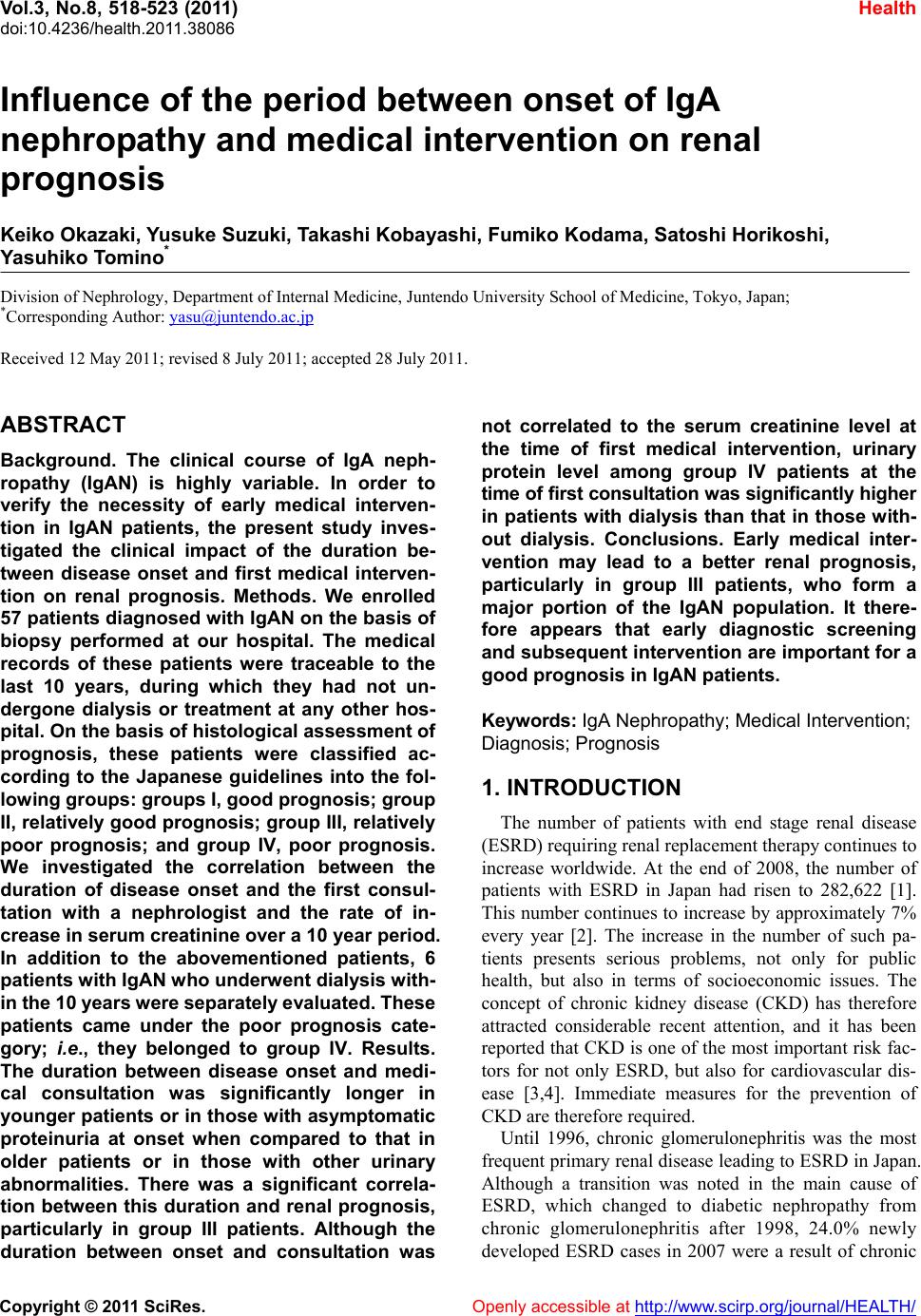 Vol.3, No.8, 518-523 (2011) doi:10.4236/health.2011.38086 Copyright © 2011 SciRes. Openly accessible at http://www.scirp.org/journal/HEALTH/ Health Influence of the period between onset of IgA nephropathy and medical intervention on renal prognosis Keiko Okazaki, Yusuke Suzuki, Takashi Kobayashi, Fumiko Kodama, Satoshi Horikoshi, Yasuhiko Tomino* Division of Nephrology, Department of Internal Medicine, Juntendo University School of Medicine, Tokyo, Japan; *Corresponding Author: [email protected] Received 12 May 2011; revised 8 July 2011; accepted 28 July 2011. ABSTRACT Background. The clinical course of IgA neph- ropathy (IgAN) is highly variable. In order to verify the necessity of early medical interven- tion in IgAN patients, the present study inves- tigated the clinical impact of the duration be- tween disease onset and first medical interven- tion on renal prognosis. Methods. We enrolled 57 patients diagnosed with IgAN on the basis of biopsy performed at our hospital. The medical records of these patients were traceable to the last 10 years, during which they had not un- dergone dialysis or treatment at any other hos- pital. On the basis of histological assessmen t of prognosis, these patients were classified ac- cording to the Japanese guidelines into the fol- lowing groups: groups I, good progn osis; gr oup II, relatively good prognosis; group III, relatively poor prognosis; and group IV, poor prognosis. We investigated the correlation between the duration of disease onset and the first consul- tation with a nephrologist and the rate of in- crease in serum creatinine ov er a 10 year period. In addition to the abovementioned patients, 6 patients with IgAN who underwent dialysis with- in the 10 y ears were separately ev aluated. These patients came under the poor prognosis cate- gory; i.e., they belonged to group IV. Results. The duration between disease onset and medi- cal consultation was significantly longer in younger patients or in those w ith asymptomatic proteinuria at onset when compared to that in older patients or in those with other urinary abnormalities. There was a significant correla- tion between this duration and renal prognosis, particularly in group III patients. Although the duration between onset and consultation was not correlated to the serum creatinine level at the time of first medical intervention, urinary protein level among group IV patients at the time of first consultation was significantly higher in patients with dialysis than that in those with- out dialysis. Conclusions. Early medical inter- vention may lead to a better renal prognosis, particularly in group III patients, who form a major portion of the IgAN population. It there- fore appears that early diagnostic screening and subsequent intervention are important for a good prognosis in IgAN patients. Keywords: IgA Nephropathy; Medical Intervention; Diagnosis; Prognosis 1. INTRODUCTION The number of patients with end stage renal disease (ESRD) requiring renal replacement therapy continues to increase worldwide. At the end of 2008, the number of patients with ESRD in Japan had risen to 282,622 [1]. This number continues to increase by approximately 7% every year [2]. The increase in the number of such pa- tients presents serious problems, not only for public health, but also in terms of socioeconomic issues. The concept of chronic kidney disease (CKD) has therefore attracted considerable recent attention, and it has been reported that CKD is one of the most important risk fac- tors for not only ESRD, but also for cardiovascular dis- ease [3,4]. Immediate measures for the prevention of CKD are therefore required. Until 1996, chronic glomerulonephritis was the most frequent primary renal disease leading to ESRD in Japan. Although a transition was noted in the main cause of ESRD, which changed to diabetic nephropathy from chronic glomerulonephritis after 1998, 24.0% newly developed ESRD cases in 2007 were a result of chronic 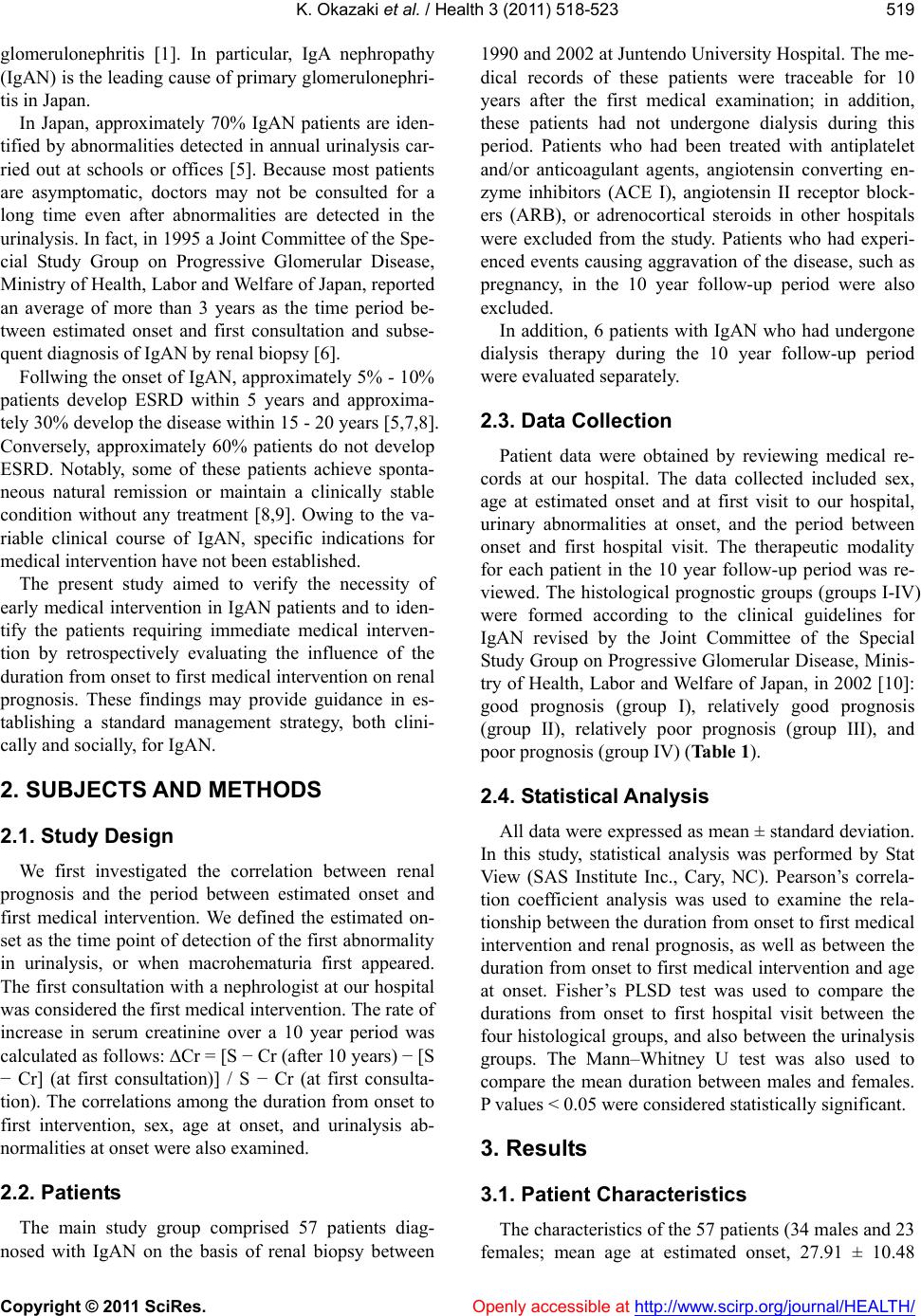 K. Okazaki et al. / Health 3 (2011) 518-523 Copyright © 2011 SciRes. Openly accessible at http://www.scirp.org/journal/HEALTH/ 519 glomerulonephritis [1]. In particular, IgA nephropathy (IgAN) is the leading cause of primary glomerulonephri- tis in Japan. In Japan, approximately 70% IgAN patients are iden- tified by abnormalities detected in annual urinalysis car- ried out at schools or offices [5]. Because most patients are asymptomatic, doctors may not be consulted for a long time even after abnormalities are detected in the urinalysis. In fact, in 1995 a Joint Committee of the Spe- cial Study Group on Progressive Glomerular Disease, Ministry of Health, Labor and Welfare of Japan, reported an average of more than 3 years as the time period be- tween estimated onset and first consultation and subse- quent diagnosis of IgAN by renal biopsy [6]. Follwing the onset of IgAN, approximately 5% - 10% patients develop ESRD within 5 years and approxima- tely 30% develop the disease within 15 - 20 years [5,7,8]. Conversely, approximately 60% patients do not develop ESRD. Notably, some of these patients achieve sponta- neous natural remission or maintain a clinically stable condition without any treatment [8,9]. Owing to the va- riable clinical course of IgAN, specific indications for medical intervention have not been established. The present study aimed to verify the necessity of early medical intervention in IgAN patients and to iden- tify the patients requiring immediate medical interven- tion by retrospectively evaluating the influence of the duration from onset to first medical intervention on renal prognosis. These findings may provide guidance in es- tablishing a standard management strategy, both clini- cally and socially, for IgAN. 2. SUBJECTS AND METHODS 2.1. Stud y Design We first investigated the correlation between renal prognosis and the period between estimated onset and first medical intervention. We defined the estimated on- set as the time point of detection of the first abnormality in urinalysis, or when macrohematuria first appeared. The first consultation with a nephrologist at our hospital was considered the first medical intervention. The rate of increase in serum creatinine over a 10 year period was calculated as follows: Cr = [S − Cr (after 10 years) − [S − Cr] (at first consultation)] / S − Cr (at first consulta- tion). The correlations among the duration from onset to first intervention, sex, age at onset, and urinalysis ab- normalities at onset were also examined. 2.2. Patients The main study group comprised 57 patients diag- nosed with IgAN on the basis of renal biopsy between 1990 and 2002 at Juntendo University Hospital. The me- dical records of these patients were traceable for 10 years after the first medical examination; in addition, these patients had not undergone dialysis during this period. Patients who had been treated with antiplatelet and/or anticoagulant agents, angiotensin converting en- zyme inhibitors (ACE I), angiotensin II receptor block- ers (ARB), or adrenocortical steroids in other hospitals were excluded from the study. Patients who had experi- enced events causing aggravation of the disease, such as pregnancy, in the 10 year follow-up period were also excluded. In addition, 6 patients with IgAN who had undergone dialysis therapy during the 10 year follow-up period were evaluated separately. 2.3. Data Collection Patient data were obtained by reviewing medical re- cords at our hospital. The data collected included sex, age at estimated onset and at first visit to our hospital, urinary abnormalities at onset, and the period between onset and first hospital visit. The therapeutic modality for each patient in the 10 year follow-up period was re- viewed. The histological prognostic groups (groups I-IV) were formed according to the clinical guidelines for IgAN revised by the Joint Committee of the Special Study Group on Progressive Glomerular Disease, Minis- try of Health, Labor and Welfare of Japan, in 2002 [10]: good prognosis (group I), relatively good prognosis (group II), relatively poor prognosis (group III), and poor prognosis (group IV) (Table 1). 2.4. Statistical Analysis All data were expressed as mean ± standard deviation. In this study, statistical analysis was performed by Stat View (SAS Institute Inc., Cary, NC). Pearson’s correla- tion coefficient analysis was used to examine the rela- tionship between the duration from onset to first medical intervention and renal prognosis, as well as between the duration from onset to first medical intervention and age at onset. Fisher’s PLSD test was used to compare the durations from onset to first hospital visit between the four histological groups, and also between the urinalysis groups. The Mann–Whitney U test was also used to compare the mean duration between males and females. P values < 0.05 were considered statistically significant. 3. Results 3.1. Patient Characteristics The characteristics of the 57 patients (34 males and 23 females; mean age at estimated onset, 27.91 ± 10.48 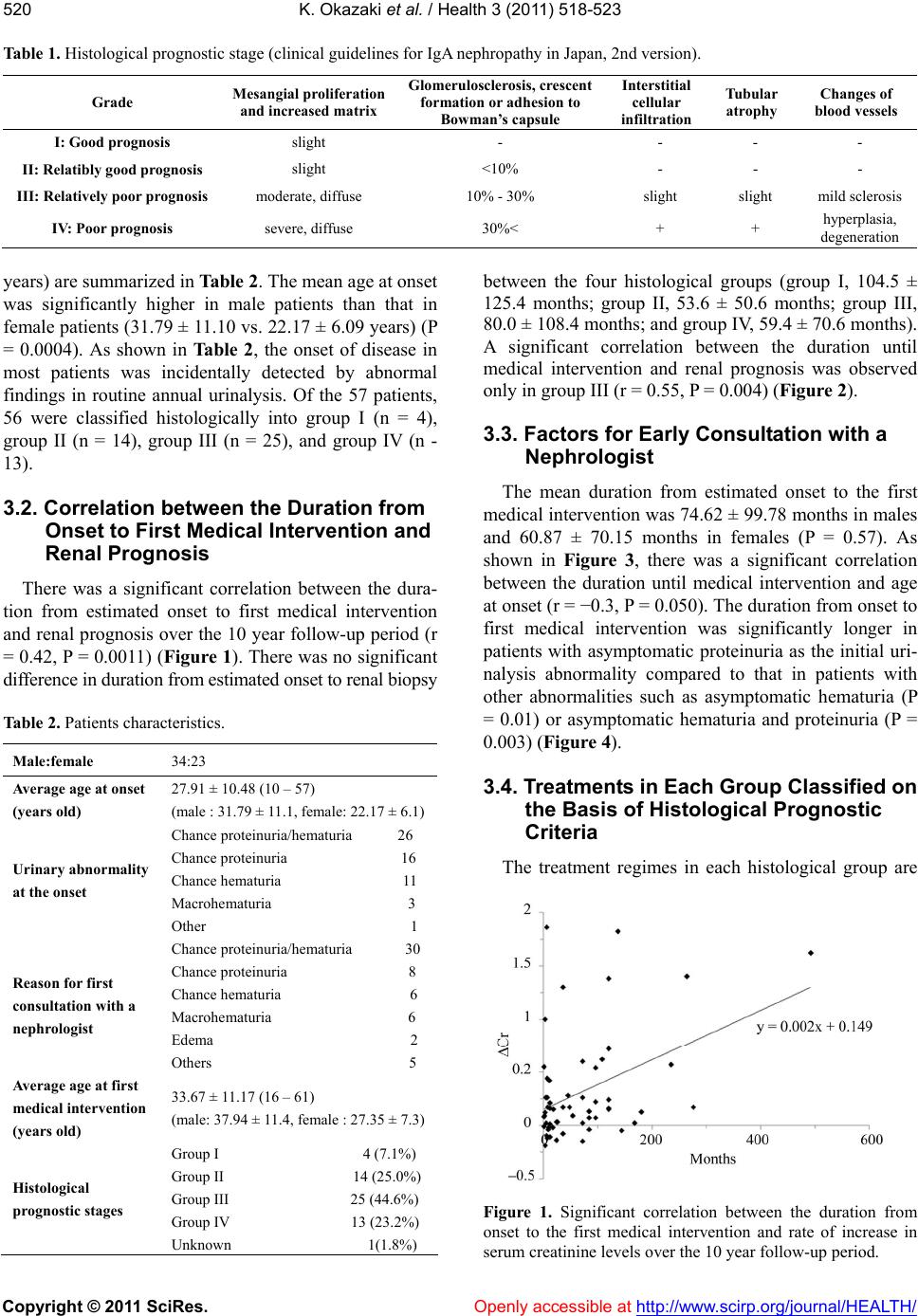 K. Okazaki et al. / Health 3 (2011) 518-523 Copyright © 2011 SciRes. http://www.scirp.org/journal/HEALTH/ 520 Table 1. Histological prognostic stage (clinical guidelines for IgA nephropathy in Japan, 2nd version). Grade Mesangial proliferation and increased matrix Glomerulosclerosis, crescent formation or adhesion to Bowman’s capsule Interstitial cellular infiltration Tubular atrophy Changes of blood vessels I: Good prognosis slight - - - - II: Relatibly good prognosis slight <10% - - - III: Relatively poor prognosis moderate, diffuse 10% - 30% slight slight mild sclerosis IV: Poor prognosis severe, diffuse 30%< + + hyperplasia, degeneration between the four histological groups (group I, 104.5 ± 125.4 months; group II, 53.6 ± 50.6 months; group III, 80.0 ± 108.4 months; and group IV, 59.4 ± 70.6 months). A significant correlation between the duration until medical intervention and renal prognosis was observed only in group III (r = 0.55, P = 0.004) (Figure 2). years) are summarized in Table 2. The mean age at onset was significantly higher in male patients than that in female patients (31.79 ± 11.10 vs. 22.17 ± 6.09 years) (P = 0.0004). As shown in Table 2, the onset of disease in most patients was incidentally detected by abnormal findings in routine annual urinalysis. Of the 57 patients, 56 were classified histologically into group I (n = 4), group II (n = 14), group III (n = 25), and group IV (n - 13). 3.3. Factors for Early Consultation with a Nephrologist The mean duration from estimated onset to the first medical intervention was 74.62 ± 99.78 months in males and 60.87 ± 70.15 months in females (P = 0.57). As shown in Figure 3, there was a significant correlation between the duration until medical intervention and age at onset (r = −0.3, P = 0.050). The duration from onset to first medical intervention was significantly longer in patients with asymptomatic proteinuria as the initial uri- nalysis abnormality compared to that in patients with other abnormalities such as asymptomatic hematuria (P = 0.01) or asymptomatic hematuria and proteinuria (P = 0.003) (Figure 4). 3.2. Correlation between the Duration from Onset to First Medical Intervention and Renal Prognosis There was a significant correlation between the dura- tion from estimated onset to first medical intervention and renal prognosis over the 10 year follow-up period (r = 0.42, P = 0.0011) (Figure 1). There was no significant difference in duration from estimated onset to renal biopsy Table 2. Patients characteristics. Male:female 34:23 Average age at onset (years old) 27.91 ± 10.48 (10 – 57) (male : 31.79 ± 11.1, female: 22.17 ± 6.1) Urinary abnormality at the onset Chance proteinuria/hematuria 26 Chance proteinuria 16 Chance hematuria 11 Macrohematuria 3 Other 1 Reason for first consultation with a nephrologist Chance proteinuria/hematuria 30 Chance proteinuria 8 Chance hematuria 6 Macrohematuria 6 Edema 2 Others 5 Average age at first medical intervention (years old) 33.67 ± 11.17 (16 – 61) (male: 37.94 ± 11.4, female : 27.35 ± 7.3) Histological prognostic st ag es Group I 4 (7.1%) Group II 14 (25.0%) Group III 25 (44.6%) Group IV 13 (23.2%) Unknown 1(1.8%) 3.4. Treatment s in Each Group Classified o n the Basis of Histological Prognostic Criteria The treatment regimes in each histological group are Figure 1. Significant correlation between the duration from onset to the first medical intervention and rate of increase in serum creatinine levels over the 10 year follow-up period. Openly accessible at 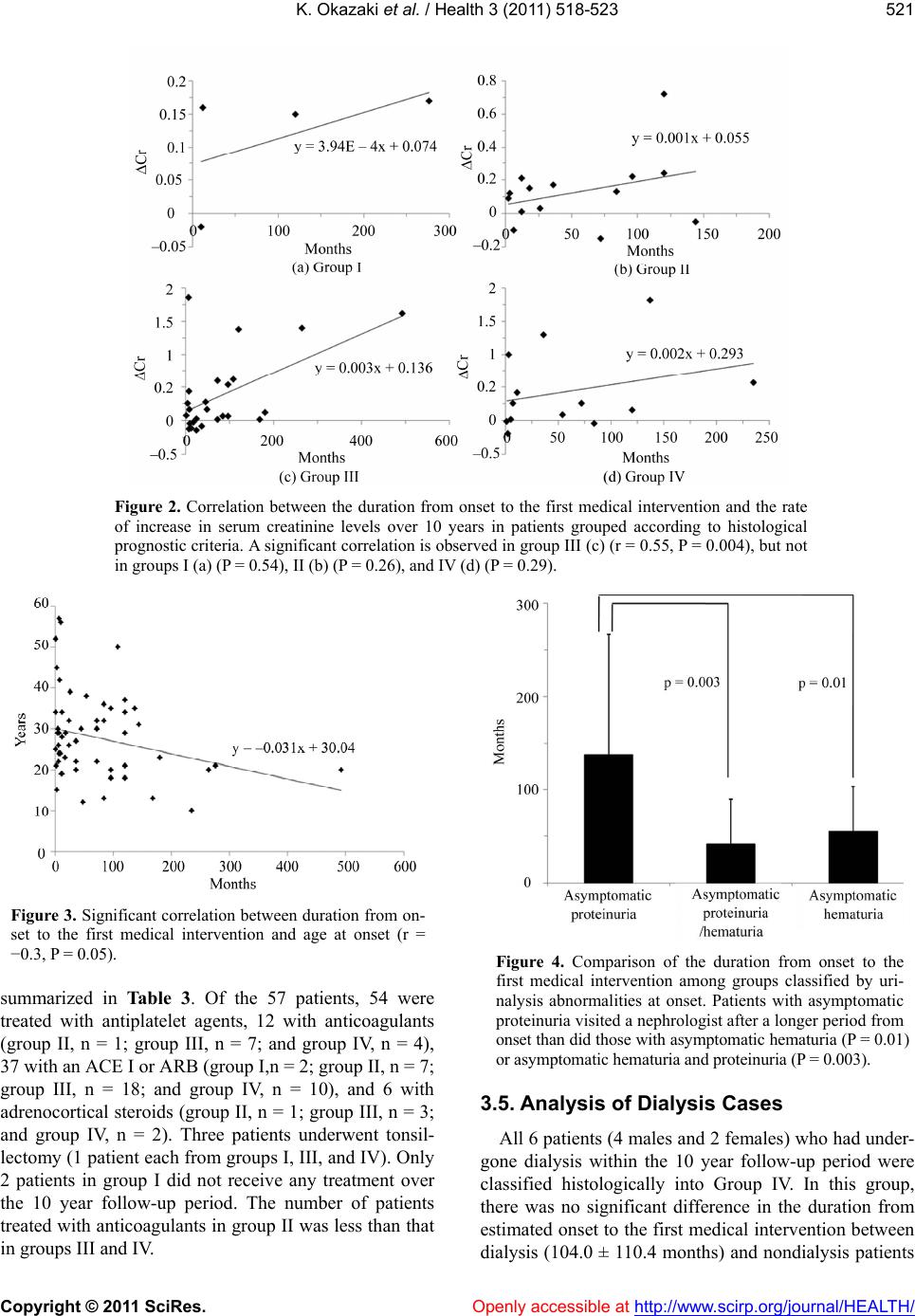 K. Okazaki et al. / Health 3 (2011) 518-523 Copyright © 2011 SciRes. Openly accessible at http://www.scirp.org/journal/HEALTH/ 521 Figure 2. Correlation between the duration from onset to the first medical intervention and the rate of increase in serum creatinine levels over 10 years in patients grouped according to histological prognostic criteria. A significant correlation is observed in group III (c) (r = 0.55, P = 0.004), but not in groups I (a) (P = 0.54), II (b) (P = 0.26), and IV (d) (P = 0.29). Figure 3. Significant correlation between duration from on- set to the first medical intervention and age at onset (r = −0.3, P = 0.05). summarized in Table 3. Of the 57 patients, 54 were treated with antiplatelet agents, 12 with anticoagulants (group II, n = 1; group III, n = 7; and group IV, n = 4), 37 with an ACE I or ARB (group I,n = 2; group II, n = 7; group III, n = 18; and group IV, n = 10), and 6 with adrenocortical steroids (group II, n = 1; group III, n = 3; and group IV, n = 2). Three patients underwent tonsil- lectomy (1 patient each from groups I, III, and IV). Only 2 patients in group I did not receive any treatment over the 10 year follow-up period. The number of patients treated with anticoagulants in group II was less than that in groups III and IV. Figure 4. Comparison of the duration from onset to the first medical intervention among groups classified by uri- nalysis abnormalities at onset. Patients with asymptomatic proteinuria visited a nephrologist after a longer period from onset than did those with asymptomatic hematuria (P = 0.01) or asymptomatic hematuria and proteinuria (P = 0.003). 3.5. Analysis of Dialysis Cases All 6 patients (4 males and 2 females) who had under- gone dialysis within the 10 year follow-up period were classified histologically into Group IV. In this group, there was no significant difference in the duration from estimated onset to the first medical intervention between dialysis (104.0 ± 110.4 months) and nondialysis patients 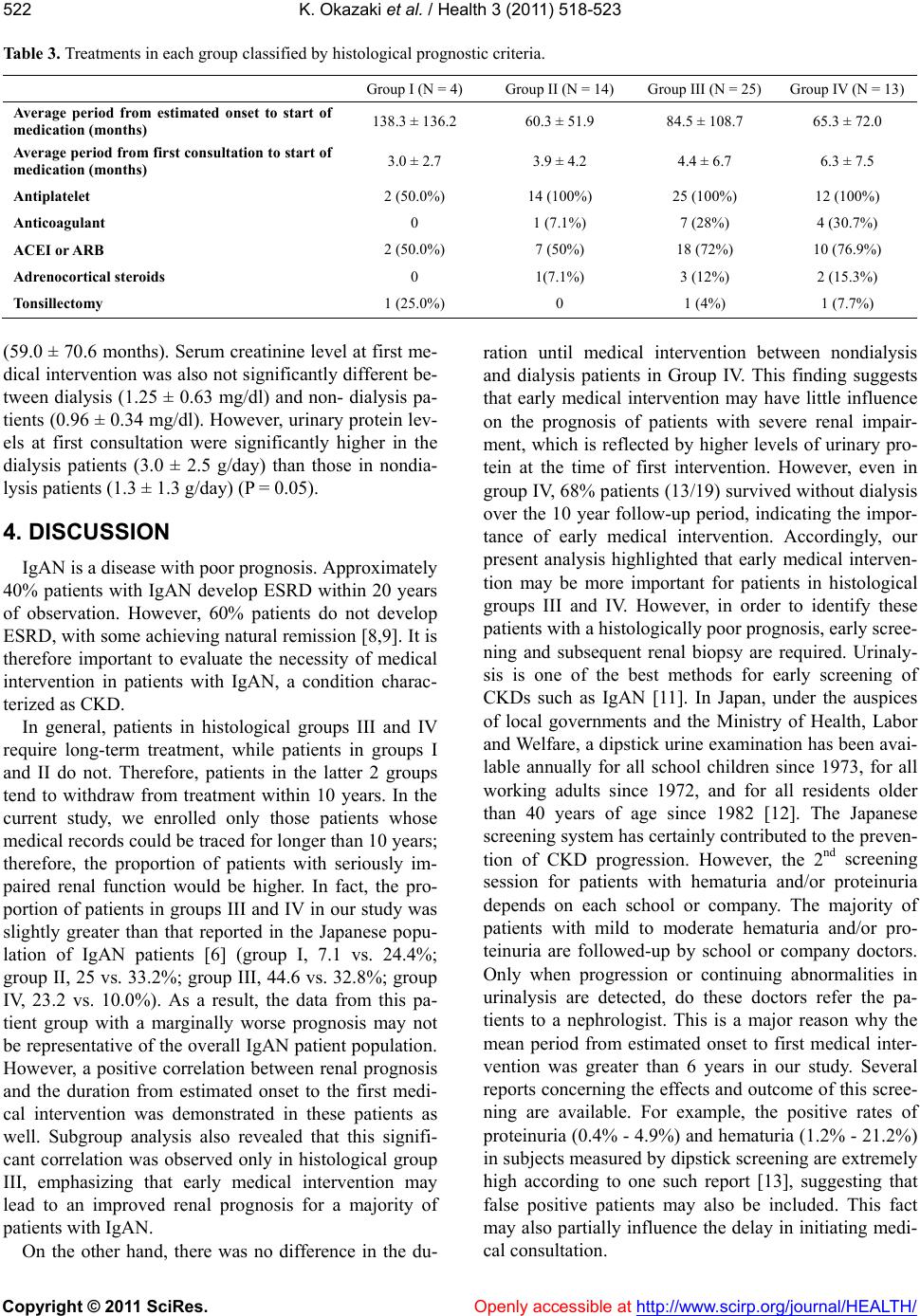 K. Okazaki et al. / Health 3 (2011) 518-523 Copyright © 2011 SciRes. Openly accessible at http://www.scirp.org/journal/HEALTH/ 522 Table 3. Treatments in each group classified by histological prognostic criteria. Group I (N = 4) Group II (N = 14) Group III (N = 25) Group IV (N = 13) Average period from estimated onset to start of medicatio n (months) 138.3 ± 136.2 60.3 ± 51.9 84.5 ± 108.7 65.3 ± 72.0 Average period from first consultation to start of medicatio n (months) 3.0 ± 2.7 3.9 ± 4.2 4.4 ± 6.7 6.3 ± 7.5 Antiplatelet 2 (50.0%) 14 (100%) 25 (100%) 12 (100%) Anticoagulant 0 1 (7.1%) 7 (28%) 4 (30.7%) ACEI or ARB 2 (50.0%) 7 (50%) 18 (72%) 10 (76.9%) Adrenocort ical steroids 0 1(7.1%) 3 (12%) 2 (15.3%) Tonsillectomy 1 (25.0%) 0 1 (4%) 1 (7.7%) (59.0 ± 70.6 months). Serum creatinine level at first me- dical intervention was also not significantly different be- tween dialysis (1.25 ± 0.63 mg/dl) and non- dialysis pa- tients (0.96 ± 0.34 mg/dl). However, urinary protein lev- els at first consultation were significantly higher in the dialysis patients (3.0 ± 2.5 g/day) than those in nondia- lysis patients (1.3 ± 1.3 g/day) (P = 0.05). 4. DISCUSSION IgAN is a disease with poor prognosis. Approximately 40% patients with IgAN develop ESRD within 20 years of observation. However, 60% patients do not develop ESRD, with some achieving natural remission [8,9]. It is therefore important to evaluate the necessity of medical intervention in patients with IgAN, a condition charac- terized as CKD. In general, patients in histological groups III and IV require long-term treatment, while patients in groups I and II do not. Therefore, patients in the latter 2 groups tend to withdraw from treatment within 10 years. In the current study, we enrolled only those patients whose medical records could be traced for longer than 10 years; therefore, the proportion of patients with seriously im- paired renal function would be higher. In fact, the pro- portion of patients in groups III and IV in our study was slightly greater than that reported in the Japanese popu- lation of IgAN patients [6] (group I, 7.1 vs. 24.4%; group II, 25 vs. 33.2%; group III, 44.6 vs. 32.8%; group IV, 23.2 vs. 10.0%). As a result, the data from this pa- tient group with a marginally worse prognosis may not be representative of the overall IgAN patient population. However, a positive correlation between renal prognosis and the duration from estimated onset to the first medi- cal intervention was demonstrated in these patients as well. Subgroup analysis also revealed that this signifi- cant correlation was observed only in histological group III, emphasizing that early medical intervention may lead to an improved renal prognosis for a majority of patients with IgAN. On the other hand, there was no difference in the du- ration until medical intervention between nondialysis and dialysis patients in Group IV. This finding suggests that early medical intervention may have little influence on the prognosis of patients with severe renal impair- ment, which is reflected by higher levels of urinary pro- tein at the time of first intervention. However, even in group IV, 68% patients (13/19) survived without dialysis over the 10 year follow-up period, indicating the impor- tance of early medical intervention. Accordingly, our present analysis highlighted that early medical interven- tion may be more important for patients in histological groups III and IV. However, in order to identify these patients with a histologically poor prognosis, early scree- ning and subsequent renal biopsy are required. Urinaly- sis is one of the best methods for early screening of CKDs such as IgAN [11]. In Japan, under the auspices of local governments and the Ministry of Health, Labor and Welfare, a dipstick urine examination has been avai- lable annually for all school children since 1973, for all working adults since 1972, and for all residents older than 40 years of age since 1982 [12]. The Japanese screening system has certainly contributed to the preven- tion of CKD progression. However, the 2nd screening session for patients with hematuria and/or proteinuria depends on each school or company. The majority of patients with mild to moderate hematuria and/or pro- teinuria are followed-up by school or company doctors. Only when progression or continuing abnormalities in urinalysis are detected, do these doctors refer the pa- tients to a nephrologist. This is a major reason why the mean period from estimated onset to first medical inter- vention was greater than 6 years in our study. Several reports concerning the effects and outcome of this scree- ning are available. For example, the positive rates of proteinuria (0.4% - 4.9%) and hematuria (1.2% - 21.2%) in subjects measured by dipstick screening are extremely high according to one such report [13], suggesting that false positive patients may also be included. This fact may also partially influence the delay in initiating medi- cal consultation. 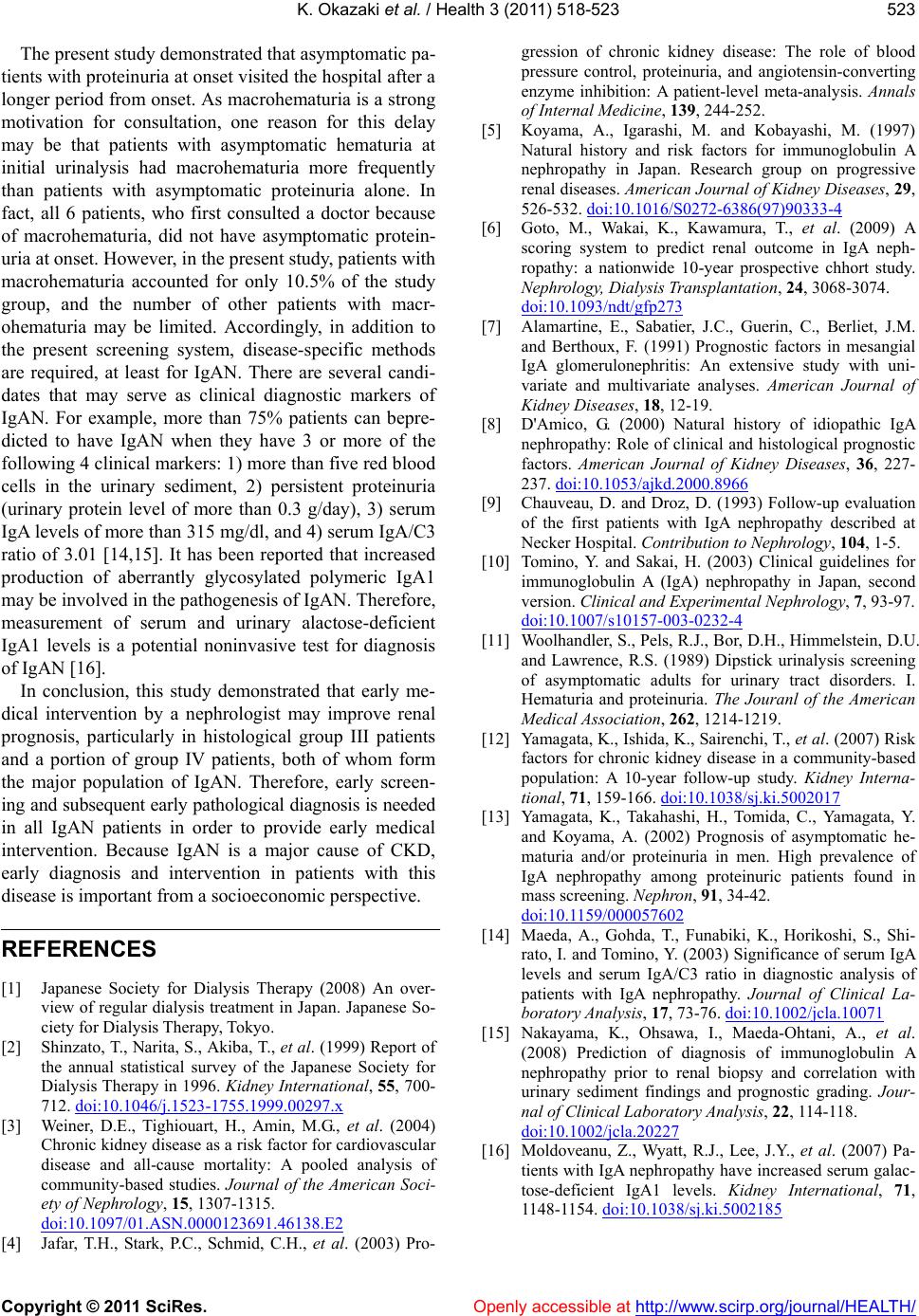 K. Okazaki et al. / Health 3 (2011) 518-523 Copyright © 2011 SciRes. Openly accessible at http://www.scirp.org/journal/HEALTH/ 523 The present study demonstrated that asymptomatic pa- tients with proteinuria at onset visited the hospital after a longer period from onset. As macrohematuria is a strong motivation for consultation, one reason for this delay may be that patients with asymptomatic hematuria at initial urinalysis had macrohematuria more frequently than patients with asymptomatic proteinuria alone. In fact, all 6 patients, who first consulted a doctor because of macrohematuria, did not have asymptomatic protein- uria at onset. However, in the present study, patients with macrohematuria accounted for only 10.5% of the study group, and the number of other patients with macr- ohematuria may be limited. Accordingly, in addition to the present screening system, disease-specific methods are required, at least for IgAN. There are several candi- dates that may serve as clinical diagnostic markers of IgAN. For example, more than 75% patients can bepre- dicted to have IgAN when they have 3 or more of the following 4 clinical markers: 1) more than five red blood cells in the urinary sediment, 2) persistent proteinuria (urinary protein level of more than 0.3 g/day), 3) serum IgA levels of more than 315 mg/dl, and 4) serum IgA/C3 ratio of 3.01 [14,15]. It has been reported that increased production of aberrantly glycosylated polymeric IgA1 may be involved in the pathogenesis of IgAN. Therefore, measurement of serum and urinary alactose-deficient IgA1 levels is a potential noninvasive test for diagnosis of IgAN [16]. In conclusion, this study demonstrated that early me- dical intervention by a nephrologist may improve renal prognosis, particularly in histological group III patients and a portion of group IV patients, both of whom form the major population of IgAN. Therefore, early screen- ing and subsequent early pathological diagnosis is needed in all IgAN patients in order to provide early medical intervention. Because IgAN is a major cause of CKD, early diagnosis and intervention in patients with this disease is important from a socioeconomic perspective. REFERENCES [1] Japanese Society for Dialysis Therapy (2008) An over- view of regular dialysis treatment in Japan. Japanese So- ciety for Dialysis Therapy, Tokyo. [2] Shinzato, T., Narita, S., Akiba, T., et al. (1999) Report of the annual statistical survey of the Japanese Society for Dialysis Therapy in 1996. Kidney International, 55, 700- 712. doi:10.1046/j.1523-1755.1999.00297.x [3] Weiner, D.E., Tighiouart, H., Amin, M.G., et al. (2004) Chronic kidney disease as a risk factor for cardiovascular disease and all-cause mortality: A pooled analysis of community-based studies. Journal of the American Soci- ety of Nephrology, 15, 1307-1315. doi:10.1097/01.ASN.0000123691.46138.E2 [4] Jafar, T.H., Stark, P.C., Schmid, C.H., et al. (2003) Pro- gression of chronic kidney disease: The role of blood pressure control, proteinuria, and angiotensin-converting enzyme inhibition: A patient-level meta-analysis. Annals of Internal Medicine, 139, 244-252. [5] Koyama, A., Igarashi, M. and Kobayashi, M. (1997) Natural history and risk factors for immunoglobulin A nephropathy in Japan. Research group on progressive renal diseases. American Journal of Kidney Diseases, 29, 526-532. doi:10.1016/S0272-6386(97)90333-4 [6] Goto, M., Wakai, K., Kawamura, T., et al. (2009) A scoring system to predict renal outcome in IgA neph- ropathy: a nationwide 10-year prospective chhort study. Nephrology, Dialysis Transplantation, 24, 3068-3074. doi:10.1093/ndt/gfp273 [7] Alamartine, E., Sabatier, J.C., Guerin, C., Berliet, J.M. and Berthoux, F. (1991) Prognostic factors in mesangial IgA glomerulonephritis: An extensive study with uni- variate and multivariate analyses. American Journal of Kidney Diseases, 18, 12-19. [8] D'Amico, G. (2000) Natural history of idiopathic IgA nephropathy: Role of clinical and histological prognostic factors. American Journal of Kidney Diseases, 36, 227- 237. doi:10.1053/ajkd.2000.8966 [9] Chauveau, D. and Droz, D. (1993) Follow-up evaluation of the first patients with IgA nephropathy described at Necker Hospital. Contribution to Nephrology, 104, 1-5. [10] Tomino, Y. and Sakai, H. (2003) Clinical guidelines for immunoglobulin A (IgA) nephropathy in Japan, second version. Clinical and Experimental Nephrology, 7, 93-97. doi:10.1007/s10157-003-0232-4 [11] Woolhandler, S., Pels, R.J., Bor, D.H., Himmelstein, D.U. and Lawrence, R.S. (1989) Dipstick urinalysis screening of asymptomatic adults for urinary tract disorders. I. Hematuria and proteinuria. The Jouranl of the American Medical Associati on, 262, 1214-1219. [12] Yamagata, K., Ishida, K., Sairenchi, T., et al. (2007) Risk factors for chronic kidney disease in a community-based population: A 10-year follow-up study. Kidney Interna- tional, 71, 159-166. doi:10.1038/sj.ki.5002017 [13] Yamagata, K., Takahashi, H., Tomida, C., Yamagata, Y. and Koyama, A. (2002) Prognosis of asymptomatic he- maturia and/or proteinuria in men. High prevalence of IgA nephropathy among proteinuric patients found in mass screening. Nephron, 91, 34-42. doi:10.1159/000057602 [14] Maeda, A., Gohda, T., Funabiki, K., Horikoshi, S., Shi- rato, I. and Tomino, Y. (2003) Significance of serum IgA levels and serum IgA/C3 ratio in diagnostic analysis of patients with IgA nephropathy. Journal of Clinical La- boratory Analysis, 17, 73-76. doi:10.1002/jcla.10071 [15] Nakayama, K., Ohsawa, I., Maeda-Ohtani, A., et al. (2008) Prediction of diagnosis of immunoglobulin A nephropathy prior to renal biopsy and correlation with urinary sediment findings and prognostic grading. Jour- nal of Clinical Laboratory Analysis, 22, 114-118. doi:10.1002/jcla.20227 [16] Moldoveanu, Z., Wyatt, R.J., Lee, J.Y., et al. (2007) Pa- tients with IgA nephropathy have increased serum galac- tose-deficient IgA1 levels. Kidney International, 71, 1148-1154. doi:10.1038/sj.ki.5002185 |