

Paper Menu >>
Journal Menu >>
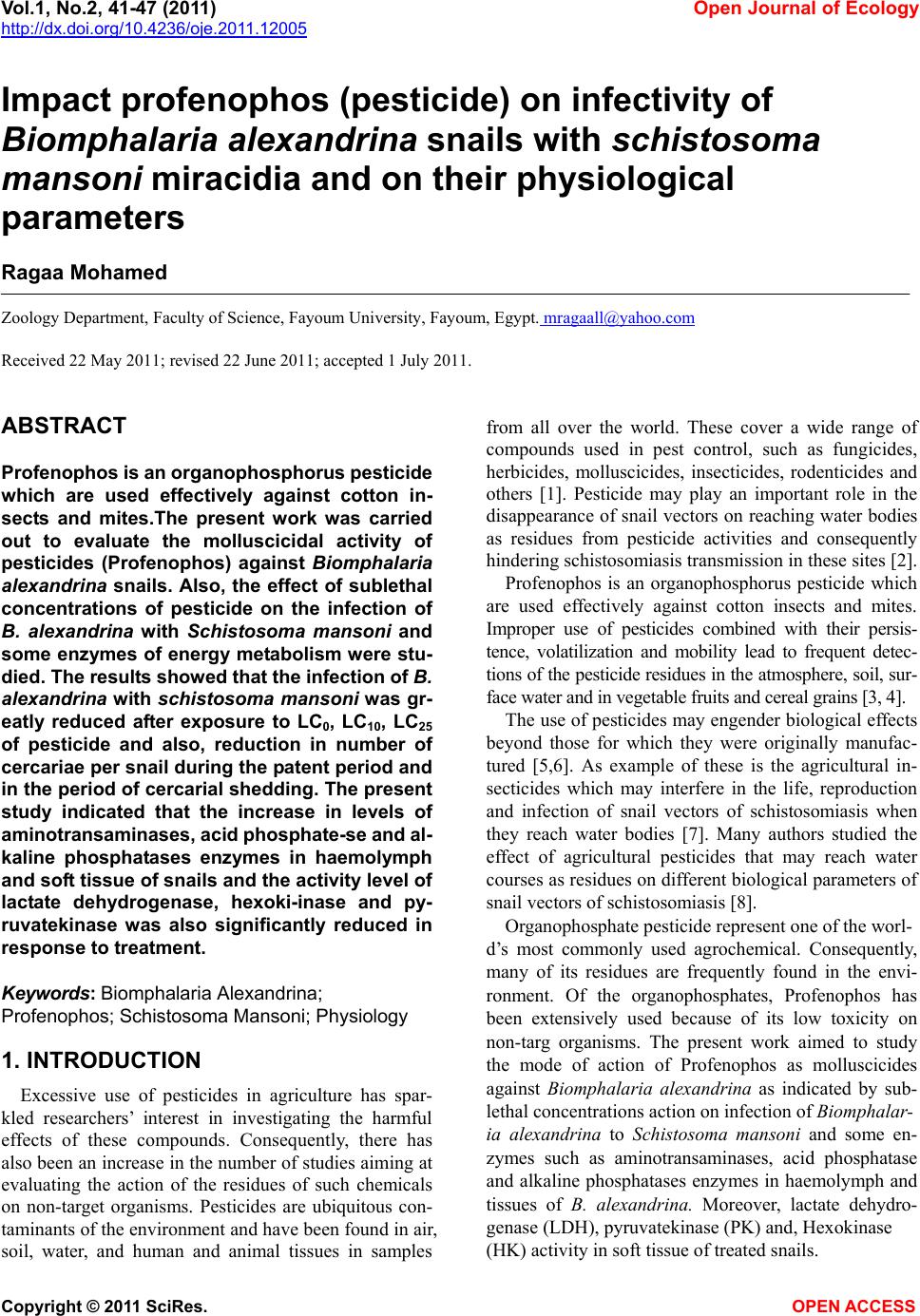 Vol.1, No.2, 41-47 (2011) http://dx.doi.org/10.4236/oje.2011.12005 Open Journal of Ecology Copyright © 2011 SciRes. OPEN A CCESS Impact profenophos (pesticide) on infectivity of Biomphalaria alexandrina snails with schistosoma mansoni miracidia and on their physiological parameters Ragaa Mohamed Zoology Department, Faculty of Science, Fayoum University, Fayoum, Egypt. [email protected] Received 22 May 2011; revised 22 June 2011; accepted 1 July 2011. ABSTRACT Profenophos is an organophosphoru s pesticide which are used effectively against cotton in- sects and mites.The present work was carried out to evaluate the molluscicidal activity of pesticides (Profenophos) against Biomphalaria alexandrina snails. Also, the effect of sublethal concentrations of pesticide on the infection of B. alexandrina with Schistosoma mansoni and some enzymes of energy metabolism were stu- died. The results showed that the infection of B. alexandrina with schistosoma mansoni was gr- eatly reduced after exposure to LC0, LC10, LC25 of pesticide and also, reduction in number of cercariae per snail during the patent period and in the period of cercarial shedding. The present study indicated that the increase in levels of aminotransaminases, acid phosp hate-se and al- kaline phosphatases enzymes in haemolymph and soft tissue of snails and the activity level of lactate dehydrogenase, hexoki-inase and py- ruvatekinase was also significantly reduced in response to treatmen t. Keywords: Biomphalaria Alexandrina; Profenophos; S chist osoma Mansoni; Physiology 1. INTRODUCTION Excessive use of pesticides in agriculture has spar- kled researchers’ interest in investigating the harmful effects of these compounds. Consequently, there has also been an increase in the number of studies aiming at evaluating the action of the residues of such chemicals on non-target organisms. Pesticides are ubiquitous con- taminants of the environment and have been found in air, soil, water, and human and animal tissues in samples from all over the world. These cover a wide range of compounds used in pest control, such as fungicides, herbicides, molluscicides, insecticides, rodenticides and others [1]. Pesticide may play an important role in the disappearance of snail vectors on reaching water bodies as residues from pesticide activities and consequently hindering schistosomiasis transmission in these sites [2]. Profenophos is an organophosphorus pesticide which are used effectively against cotton insects and mites. Improper use of pesticides combined with their persis- tence, volatilization and mobility lead to frequent detec- tions of the pesticide residues in the atmosphere, soil, sur- face water and in vegetable fruits and cereal grains [3, 4]. The use of pesticides may engender biological effects beyond those for which they were originally manufac- tured [5,6]. As example of these is the agricultural in- secticides which may interfere in the life, reproduction and infection of snail vectors of schistosomiasis when they reach water bodies [7]. Many authors studied the effect of agricultural pesticides that may reach water courses as residues on different biological parameters of snail vectors of schistosomiasis [8]. Organophosphate pestic i de re present one of the worl- d’s most commonly used agrochemical. Consequently, many of its residues are frequently found in the envi- ronment. Of the organophosphates, Profenophos has been extensively used because of its low toxicity on non-targ organisms. The present work aimed to study the mode of action of Profenophos as molluscicides against Biomphalaria alexandrina as indicated by sub- lethal concentrations action on infection of Biomphalar- ia alexandrina to Schistosoma mansoni and some en- zymes such as aminotransaminases, acid phosphatase and alkaline phosphatases enzymes in haemolymph and tissues of B. alexandrina. Moreover, lactate dehydro- genase (LDH), pyruvatekinase (PK) and, Hexokinase (HK) activity in soft tissue of treated snails. 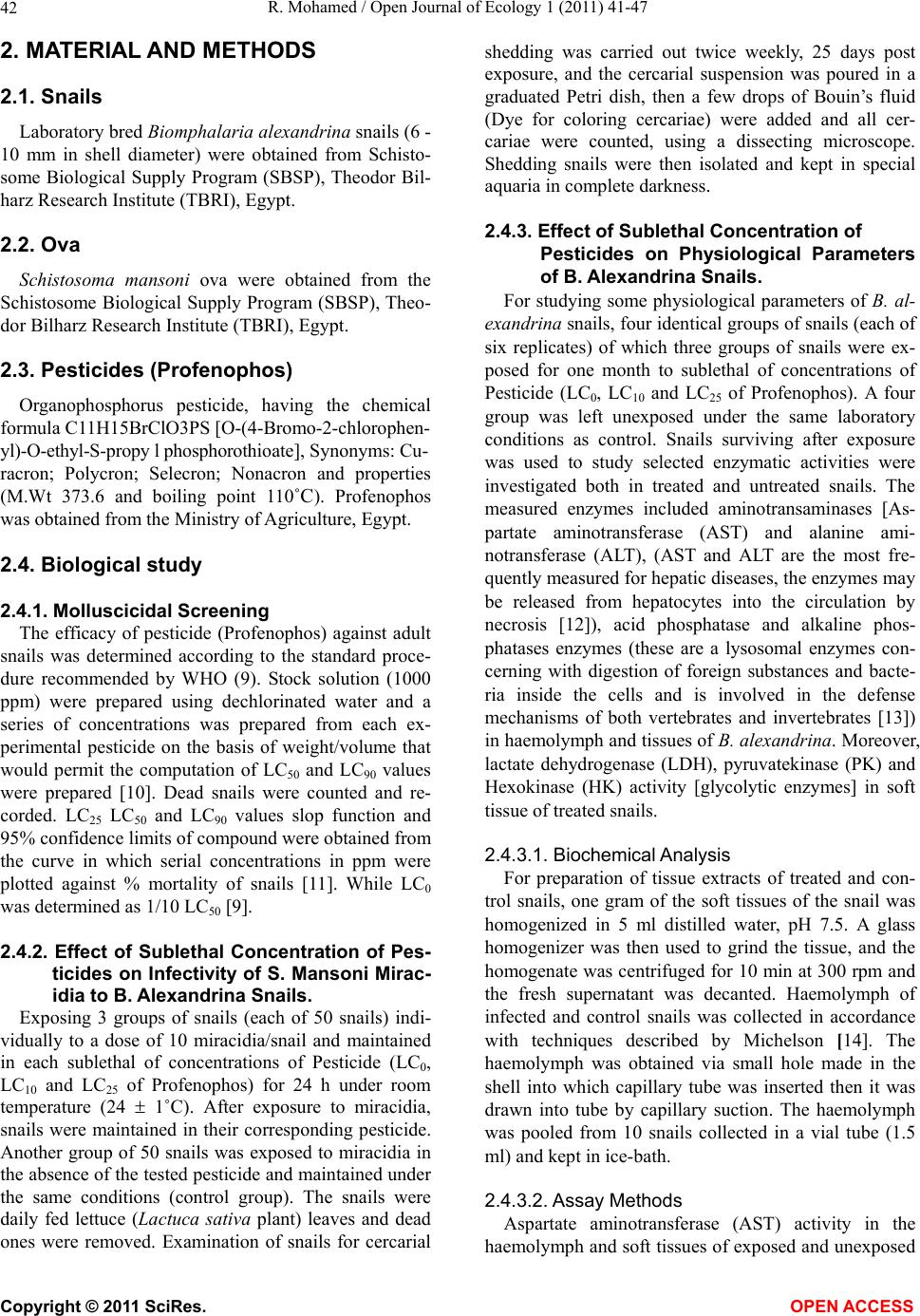 R. Mohamed / Open Journal of Ecology 1 (2011) 41-47 42 2. MATERIAL AND METHODS 2.1. Snails Laboratory bred Biomphalaria alexandrina snails (6 - 10 mm in shell diameter) were obtained from Schisto- some Biological Supply Program (SBSP), Theodor Bil- harz Research Institute (TBRI), Egypt. 2.2. Ova Schistosoma mansoni ova were obtained from the Schistosome Biological Supply Program (SBSP), Theo- dor Bilharz Research Institute (TBRI), Egypt. 2.3. Pesticides (Profenophos) Organophosphorus pesticide, having the chemical formula C11H15BrClO3PS [O-(4-Bromo-2-chlorophen- yl)-O-ethyl-S-propy l phospho rothioate], Synonyms: Cu- racron; Polycron; Selecron; Nonacron and properties (M.Wt 373.6 and boiling point 110˚C). Profenophos was obtained from the Ministry of Agriculture, Egypt. 2.4. Biological study 2.4.1. Molluscicidal Screening The efficacy of pesticide (Profenophos) against adult snails was determined according to the standard proce- dure recommended by WHO (9). Stock solution (1000 ppm) were prepared using dechlorinated water and a series of concentrations was prepared from each ex- perimental pesticide on the basis of weight/volume that would permit the computation of LC50 and LC90 values were prepared [10]. Dead snails were counted and re- corded. LC25 LC50 and LC90 values slop function and 95% confidence limits of compound were obtained from the curve in which serial concentrations in ppm were plotted against % mortality of snails [11]. While LC0 was determined as 1/10 LC50 [9]. 2.4.2. Effect of Sublethal Concentration of Pes- ticides on Infectivity of S. Mansoni Mirac- idia to B. Alexandrina Snails. Exposing 3 groups of snails (each of 50 snails) indi- vidually to a dose of 10 miracidia/snail and maintained in each sublethal of concentrations of Pesticide (LC0, LC10 and LC25 of Profenophos) for 24 h under room temperature (24 1˚C). After exposure to miracidia, snails were maintained in their corresponding pesticide. Another group of 50 snails was exposed to miracidia in the absence of the tested pesticide an d maintained under the same conditions (control group). The snails were daily fed lettuce (Lactuca sativa plant) leaves and dead ones were removed. Examination of snails for cercarial shedding was carried out twice weekly, 25 days post exposure, and the cercarial suspension was poured in a graduated Petri dish, then a few drops of Bouin’s fluid (Dye for coloring cercariae) were added and all cer- cariae were counted, using a dissecting microscope. Shedding snails were then isolated and kept in special aquaria in complete darkness. 2.4.3. Effect of Sublethal Concentration of Pesticides on Physiological Parameters of B. Alexandrina Snails. For studying some physiological parameters of B. al- exandrina snails, four identical groups of snails (each of six replicates) of which three groups of snails were ex- posed for one month to sublethal of concentrations of Pesticide (LC0, LC10 and LC25 of Profenophos). A four group was left unexposed under the same laboratory conditions as control. Snails surviving after exposure was used to study selected enzymatic activities were investigated both in treated and untreated snails. The measured enzymes included aminotransaminases [As- partate aminotransferase (AST) and alanine ami- notransferase (ALT), (AST and ALT are the most fre- quently measured for hepatic diseases, the enzymes may be released from hepatocytes into the circulation by necrosis [12]), acid phosphatase and alkaline phos- phatases enzymes (these are a lysosomal enzymes con- cerning with digestion of foreign substances and bacte- ria inside the cells and is involved in the defense mechanisms of both vertebrates and invertebrates [13]) in haemolymph and tissues of B. alexandrina. Moreover, lactate dehydrogenase (LDH), pyruvatekinase (PK) and Hexokinase (HK) activity [glycolytic enzymes] in soft tissue of treated snails. 2.4.3.1. Biochemical Analysis For preparation of tissue extracts of treated and con- trol snails, one gram of the soft tissues of the snail was homogenized in 5 ml distilled water, pH 7.5. A glass homogenizer was then used to grind the tissue, and the homogenate was centrifuged for 10 min at 300 rpm and the fresh supernatant was decanted. Haemolymph of infected and control snails was collected in accordance with techniques described by Michelson [14]. The haemolymph was obtained via small hole made in the shell into which capillary tube was inserted then it was drawn into tube by capillary suction. The haemolymph was pooled from 10 snails collected in a vial tube (1.5 ml) and kept in ice-bath. 2.4.3.2. Assay Methods Aspartate aminotransferase (AST) activity in the haemolymph and soft tissues of exposed and unexposed Copyright © 2011 SciRes. OPEN A CCESS 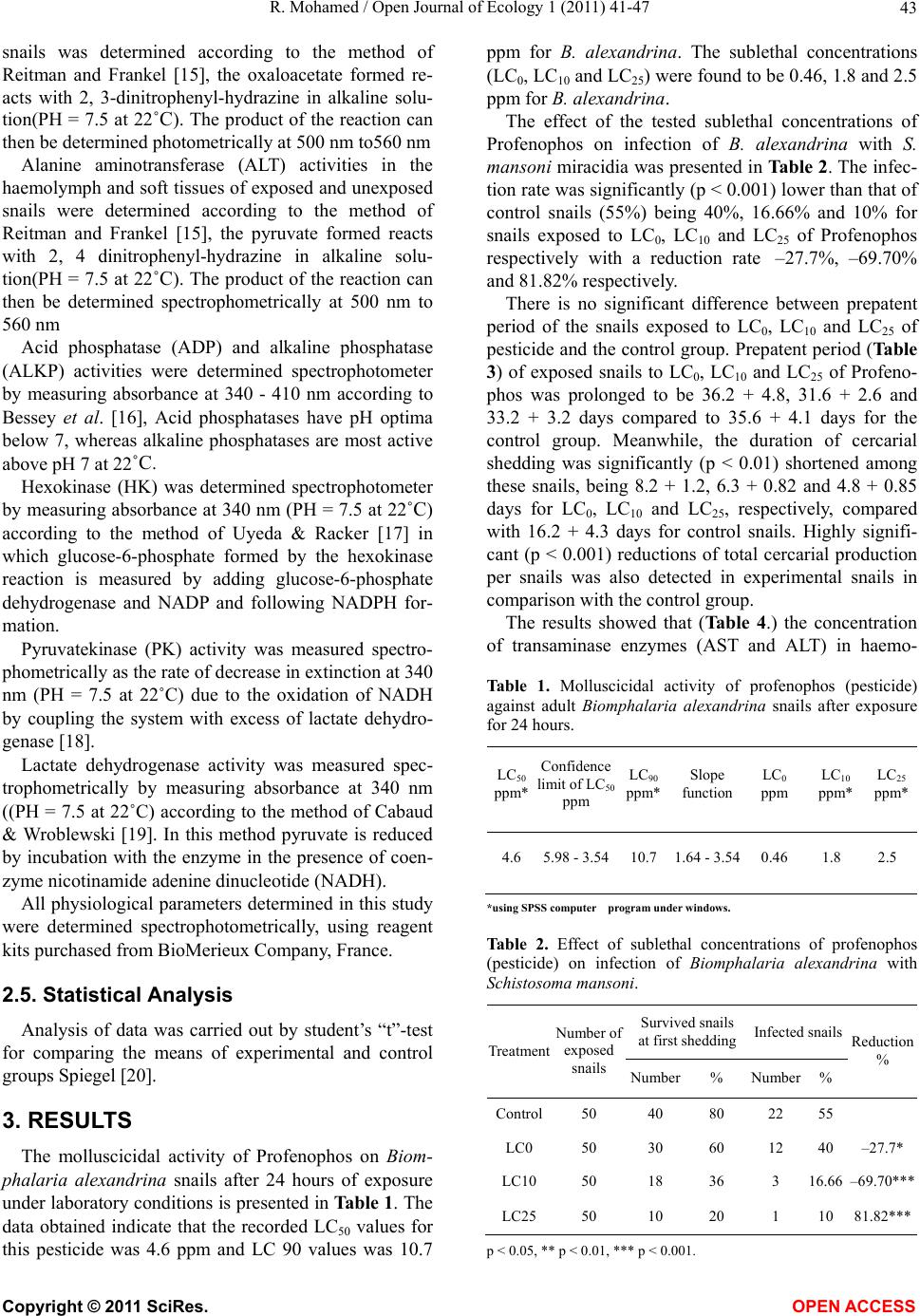 R. Mohamed / Open Journal of Ecology 1 (2011) 41-47 43 snails was determined according to the method of Reitman and Frankel [15], the oxaloacetate formed re- acts with 2, 3-dinitrophenyl-hydrazine in alkaline solu- tion(PH = 7.5 at 22˚C). The product of the reaction can then be determi ned p hotometrically at 500 nm to560 nm Alanine aminotransferase (ALT) activities in the haemolymph and soft tissues of exposed and unexposed snails were determined according to the method of Reitman and Frankel [15], the pyruvate formed reacts with 2, 4 dinitrophenyl-hydrazine in alkaline solu- tion(PH = 7.5 at 22˚C). The product of the reaction can then be determined spectrophometrically at 500 nm to 560 nm Acid phosphatase (ADP) and alkaline phosphatase (ALKP) activities were determined spectrophotometer by measuring absorbance at 340 - 410 nm according to Bessey et al. [16], Acid phosphatases have pH optima below 7, whereas alkaline phosphatases are most active above pH 7 at 22˚C. Hexokinase (HK) was determined spectrophotometer by measuring absorbance at 340 nm (PH = 7.5 at 22˚C) according to the method of Uyeda & Racker [17] in which glucose-6-phosphate formed by the hexokinase reaction is measured by adding glucose-6-phosphate dehydrogenase and NADP and following NADPH for- mation. Pyruvatekinase (PK) activity was measured spectro- phometrically as the rate of decrease in extinction at 340 nm (PH = 7.5 at 22˚C) due to the oxidation of NADH by coupling the system with excess of lactate dehydro- genase [18]. Lactate dehydrogenase activity was measured spec- trophometrically by measuring absorbance at 340 nm ((PH = 7.5 at 22˚C) according to the method of Cabaud & Wroblewski [19]. In this method pyruvate is reduced by incubation with the enzyme in the presence of coen- zyme nicotinamide adenine dinucleotide (NADH). All physiological parameters determined in this study were determined spectrophotometrically, using reagent kits purchased from BioMerieux Company, France. 2.5. Statistical Analysis Analysis of data was carried out by student’s “t”-test for comparing the means of experimental and control groups Spiegel [20]. 3. RESULTS The molluscicidal activity of Profenophos on Biom- phalaria alexandrina snails after 24 hours of exposure under laboratory conditions is presented in Table 1. The data obtained indicate that the recorded LC50 values for this pesticide was 4.6 ppm and LC 90 values was 10.7 ppm for B. alexandrina. The sublethal concentrations (LC0, LC10 and LC25) were found to be 0.46, 1.8 and 2.5 ppm for B. alexandr ina. The effect of the tested sublethal concentrations of Profenophos on infection of B. alexandrina with S. mansoni miracidia was presented in Table 2. The infec- tion rate was significantly (p < 0.001) lower than that of control snails (55%) being 40%, 16.66% and 10% for snails exposed to LC0, LC10 and LC25 of Profenophos respectively with a reduction rate –27.7%, –69.70% and 81.82% respectively. There is no significant difference between prepatent period of the snails exposed to LC0, LC10 and LC25 of pesticide and the control group. Prepatent period (Table 3) of exposed snails to LC0, LC10 and LC25 of Profeno- phos was prolonged to be 36.2 + 4.8, 31.6 + 2.6 and 33.2 + 3.2 days compared to 35.6 + 4.1 days for the control group. Meanwhile, the duration of cercarial shedding was significantly (p < 0.01) shortened among these snails, being 8.2 + 1.2, 6.3 + 0.82 and 4.8 + 0.85 days for LC0, LC10 and LC25, respectively, compared with 16.2 + 4.3 days for control snails. Highly signifi- cant (p < 0.001) reductions of total cercarial production per snails was also detected in experimental snails in comparison with the control group. The results showed that (Ta ble 4.) the concentration of transaminase enzymes (AST and ALT) in haemo- Table 1. Molluscicidal activity of profenophos (pesticide) against adult Biomphalaria alexandrina snails after exposure for 24 hours. LC50 ppm* Confidence limit of LC50 ppm LC90 ppm* Slope function LC0 ppm LC10 ppm* LC25 ppm* 4.6 5.98 - 3.5410.71.64 - 3.54 0.46 1.8 2.5 *using SPSS computer program under windows. Table 2. Effect of sublethal concentrations of profenophos (pesticide) on infection of Biomphalaria alexandrina with Schistosoma mansoni. Survived snails at first shedding Infected snails Treatment Number of exposed snails Number% Number % Reduction % Control50 40 80 22 55 LC0 50 30 60 12 40–27.7* LC10 50 18 36 3 16.66–69.70*** LC25 50 10 20 1 1081.82*** p < 0.05, ** p < 0.01, *** p < 0.001. Copyright © 2011 SciRes. OPEN A CCESS 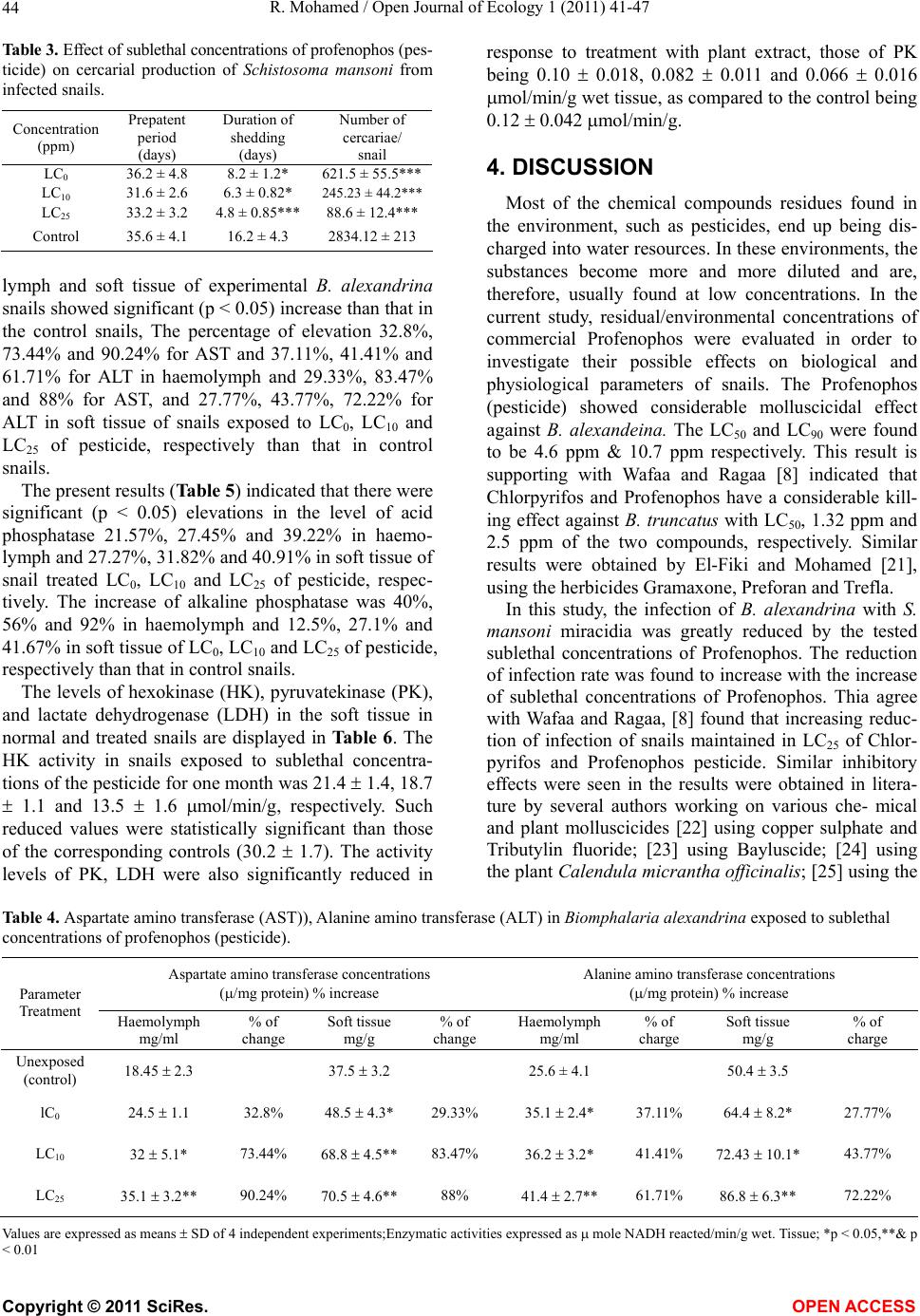 R. Mohamed / Open Journal of Ecology 1 (2011) 41-47 Copyright © 2011 SciRes. 44 OPEN ACCESS Table 3. E ffect of sublethal concentrations of profe nophos ( p e s- ticide) on cercarial production of Schistosoma mansoni from infected snails. Concentration (ppm) Prepatent period (days) Duration of shedding (days) Number of cercariae/ snail LC0 36.2 ± 4.8 8.2 ± 1.2* 621.5 ± 55.5 *** LC10 31.6 ± 2.6 6.3 ± 0.82* 245.23 ± 44.2*** LC25 33.2 ± 3.2 4.8 ± 0.85*** 88.6 ± 12.4*** Control 35.6 ± 4.1 16.2 ± 4.3 2834.12 ± 213 lymph and soft tissue of experimental B. alexandrina snails showed significant (p < 0.05) increase than that in the control snails, The percentage of elevation 32.8%, 73.44% and 90.24% for AST and 37.11%, 41.41% and 61.71% for ALT in haemolymph and 29.33%, 83.47% and 88% for AST, and 27.77%, 43.77%, 72.22% for ALT in soft tissue of snails exposed to LC0, LC10 and LC25 of pesticide, respectively than that in control snails. The present results (Table 5) indicated that there were significant (p < 0.05) elevations in the level of acid phosphatase 21.57%, 27.45% and 39.22% in haemo- lymph and 27.27%, 31.82% and 40.91% in soft tissue of snail treated LC0, LC10 and LC25 of pesticide, respec- tively. The increase of alkaline phosphatase was 40%, 56% and 92% in haemolymph and 12.5%, 27.1% and 41.67% in soft tissue of LC0, LC10 and LC25 of pesticide, respectively than that in control snails. The levels of hexokinase (HK), pyruvatekinase (PK), and lactate dehydrogenase (LDH) in the soft tissue in normal and treated snails are displayed in Tab le 6. The HK activity in snails exposed to sublethal concentra- tions of the pesticide for one month was 21.4 1.4, 18.7 1.1 and 13.5 1.6 mol/min/g, respectively. Such reduced values were statistically significant than those of the corresponding controls (30.2 1.7). The activity levels of PK, LDH were also significantly reduced in response to treatment with plant extract, those of PK being 0.10 0.018, 0.082 0.011 and 0.066 0.016 mol/min/g wet tissue, as compared to the control being 0.12 0.042 mol/min/g. 4. DISCUSSION Most of the chemical compounds residues found in the environment, such as pesticides, end up being dis- charged into water resources. In these environments, the substances become more and more diluted and are, therefore, usually found at low concentrations. In the current study, residual/environmental concentrations of commercial Profenophos were evaluated in order to investigate their possible effects on biological and physiological parameters of snails. The Profenophos (pesticide) showed considerable molluscicidal effect against B. alexandeina. The LC50 and LC90 were found to be 4.6 ppm & 10.7 ppm respectively. This result is supporting with Wafaa and Ragaa [8] indicated that Chlorpyrifos and Profenophos have a considerable kill- ing effect against B. truncatus with LC50, 1.32 ppm and 2.5 ppm of the two compounds, respectively. Similar results were obtained by El-Fiki and Mohamed [21], using the herbicides Gramaxone, Preforan and Trefla. In this study, the infection of B. alexandrina with S. mansoni miracidia was greatly reduced by the tested sublethal concentrations of Profenophos. The reduction of infection rate was found to increase with the increase of sublethal concentrations of Profenophos. Thia agree with Wafaa and Ragaa, [8] found that increasing reduc- tion of infection of snails maintained in LC25 of Chlor- pyrifos and Profenophos pesticide. Similar inhibitory effects were seen in the results were obtained in litera- ture by several authors working on various che- mical and plant molluscicides [22] using copper sulphate and Tributylin fluoride; [23] using Bayluscide; [24] using the plant Calendula micranth a officinalis; [25] using the Table 4. Aspartate amino transferase (AST)), Alanine amino transferase (ALT) in Biomphalaria alexandrina exposed to sublethal concentrations of profenophos (pesticide). Aspartate amino transferase concentrations (/mg protein) % increase Alanine amino transferase concentrations (/mg protein) % increase Parameter Treatment Haemolymph mg/ml % of change Soft tissue mg/g % of change Haemolymph mg/ml % of charge Soft tissue mg/g % of charge Unexposed (control) 18.45 2.3 37.5 3.2 25.6 ± 4.1 50.4 3.5 lC0 24.5 1.1 32.8% 48.5 4.3* 29.33% 35.1 2.4* 37.11% 64.4 8.2* 27.77% LC10 32 5.1* 73.44% 68.8 4.5**83.47% 36.2 3.2* 41.41% 72.43 10 .1* 43.77% LC25 35.1 3.2** 90.24% 70.5 4.6**88% 41.4 2.7* * 61.71% 86.8 6.3** 72.22% Values are expressed as means SD of 4 independent experiments;Enzymatic activities expressed as m ole NADH reacted/min/g wet. Tissue; *p < 0.05,**& p < 0.01 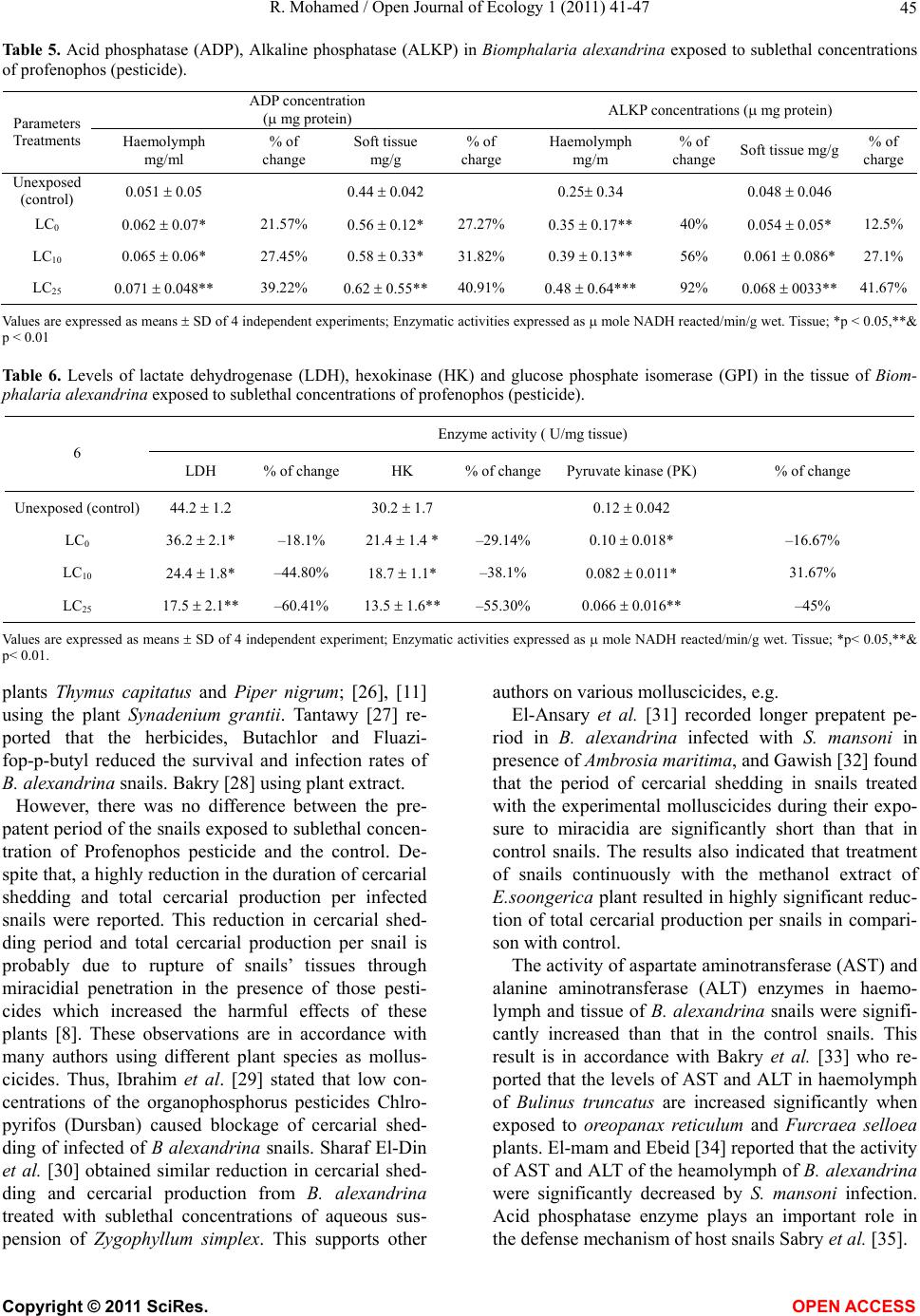 R. Mohamed / Open Journal of Ecology 1 (2011) 41-47 45 Table 5. Acid phosphatase (ADP), Alkaline phosphatase (ALKP) in Biomphalaria alexandrina exposed to sublethal concentrations of profenophos (pesticide). ADP concentration ( mg protein) ALKP concentrations ( mg protein) Parameters Treatments Haemolymph mg/ml % of change Soft tissue mg/g % of charge Haemolymph mg/m % of change Soft tissue mg/g% of charge Unexposed (control) 0.051 0.05 0.44 0.042 0.25 0.34 0.048 0.046 LC0 0.062 0.07* 21.57% 0.56 0.12* 27.27% 0.35 0.17** 40% 0.054 0.05* 12.5% LC10 0.065 0.06* 27.45% 0.58 0.33* 31.82% 0.39 0.13** 56% 0.061 0.086*27.1% LC25 0.071 0.048** 39.22% 0.62 0.55**40.91% 0.48 0.64*** 92% 0.068 0033**41.67% Values are exp ress ed as means SD of 4 independent experiments; Enzymatic activities expressed as mole NADH reacted/min/g wet. Tissue; *p < 0.05,**& p < 0.01 Tabl e 6 . Levels of lactate dehydrogenase (LDH), hexokinase (HK) and glucose phosphate isomerase (GPI) in the tissue of Biom- phalaria alexandrina exposed to sublethal concentrations of profenophos (pesticide). Enzyme activity ( U/mg tissue) 6 LDH % of change HK % of changePyruvate kinase (PK) % of change Unexposed (control) 44.2 1.2 30.2 1.7 0.12 0.042 LC0 36.2 2.1* –18.1% 21.4 1.4 *–29.14% 0.10 0.018* –16.67% LC10 24.4 1.8* –44.80% 18.7 1.1* –38.1% 0.082 0.011* 31.67% LC25 17.5 2.1**–60.41% 13.5 1.6**–55.30% 0.066 0.016** –45% Values are exp ressed as means SD of 4 independent experiment; Enzymatic activities expressed as mole NADH reacted/min/g wet. Tissue; *p< 0.05,**& p< 0.01. plants Thymus capitatus and Piper nigrum; [26], [11] using the plant Synadenium grantii. Tantawy [27] re- ported that the herbicides, Butachlor and Fluazi- fop-p-butyl reduced the survival and infection rates of B. alexandrina snail s. Bakry [28] using plant extract. However, there was no difference between the pre- patent period of the snails exposed to sublethal concen- tration of Profenophos pesticide and the control. De- spite that, a h ighly redu ction in th e duration of cercarial shedding and total cercarial production per infected snails were reported. This reduction in cercarial shed- ding period and total cercarial production per snail is probably due to rupture of snails’ tissues through miracidial penetration in the presence of those pesti- cides which increased the harmful effects of these plants [8]. These observations are in accordance with many authors using different plant species as mollus- cicides. Thus, Ibrahim et al. [29] stated that low con- centrations of the organophosphorus pesticides Chlro- pyrifos (Dursban) caused blockage of cercarial shed- ding of infected of B alexandrina snails. Sharaf El-Din et al. [30] obtained similar reduction in cercarial shed- ding and cercarial production from B. alexandrina treated with sublethal concentrations of aqueous sus- pension of Zygophyllum simplex. This supports other authors on various molluscicid es, e.g. El-Ansary et al. [31] recorded longer prepatent pe- riod in B. alexandrina infected with S. mansoni in presenc e of Ambrosia maritima, and Gawish [32] found that the period of cercarial shedding in snails treated with the experimental molluscicides during their expo- sure to miracidia are significantly short than that in control snails. The results also indicated that treatment of snails continuously with the methanol extract of E.soongerica plant resulted in highly significant reduc- tion of total cercarial production per snails in compari- son with control. The activity of aspartate aminotransferase (AST) and alanine aminotransferase (ALT) enzymes in haemo- lymph and tissue of B. alexandrina snails were signifi- cantly increased than that in the control snails. This result is in accordance with Bakry et al. [33] who re- ported that the levels of AST and ALT in haemolymph of Bulinus truncatus are increased significantly when exposed to oreopanax reticulum and Furcraea selloea plants. El-mam and Ebeid [34] reported that the activity of AST and ALT of the heamolymph of B. alexand rina were significantly decreased by S. mansoni infection. Acid phosphatase enzyme plays an important role in the defense mechanism of host snails Sabry et al. [35]. Copyright © 2011 SciRes. OPEN A CCESS 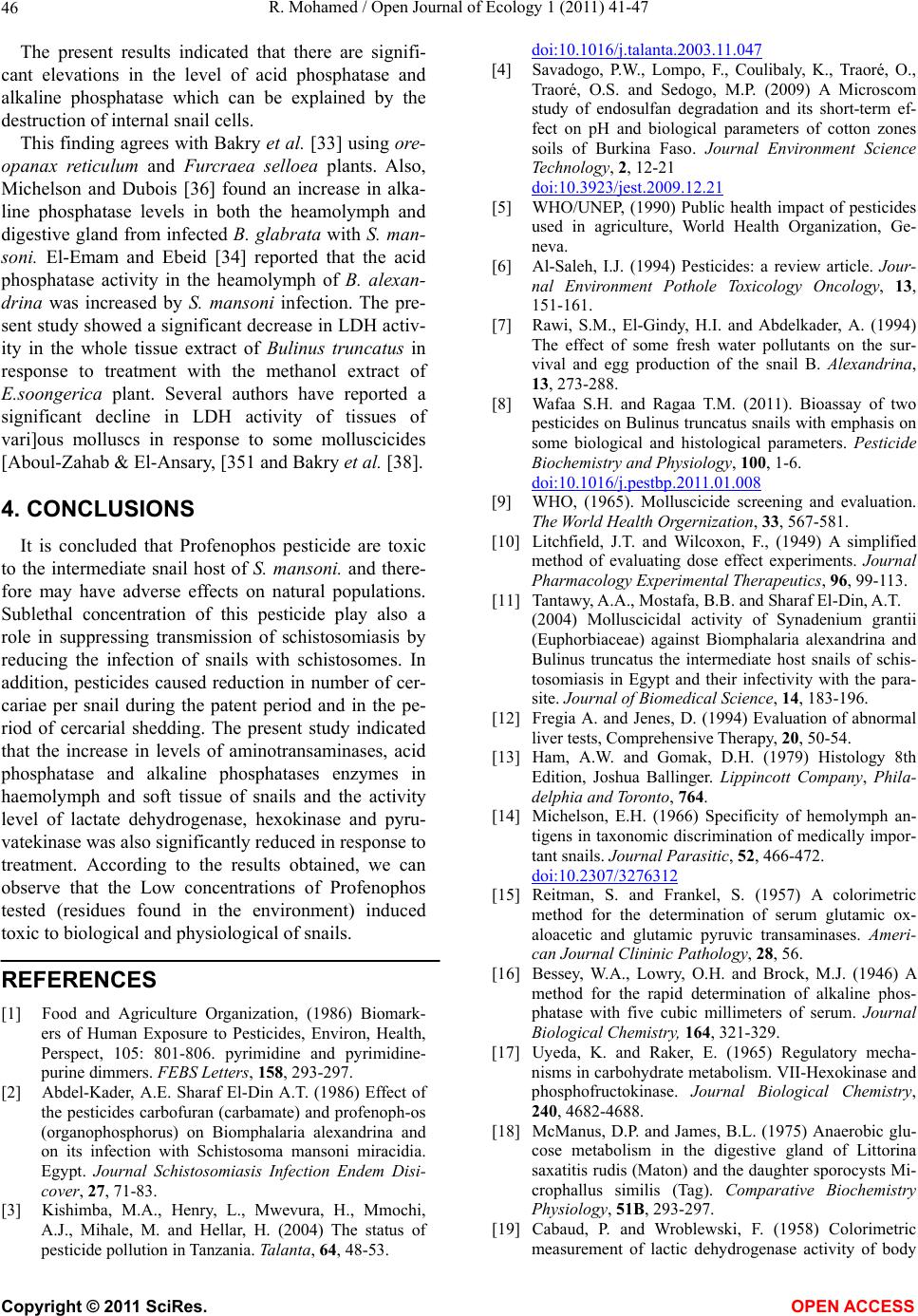 R. Mohamed / Open Journal of Ecology 1 (2011) 41-47 46 The present results indicated that there are signifi- cant elevations in the level of acid phosphatase and alkaline phosphatase which can be explained by the destruction of internal snail cells. This finding agrees with Bakry et al. [33] using ore- opanax reticulum and Furcraea selloea plants. Also, Michelson and Dubois [36] found an increase in alka- line phosphatase levels in both the heamolymph and digestive gland from infected B. glabrata with S. man- soni. El-Emam and Ebeid [34] reported that the acid phosphatase activity in the heamolymph of B. alexan- drina was increased by S. mansoni infection. The pre- sent study showed a significant decrease in LDH activ- ity in the whole tissue extract of Bulinus truncatus in response to treatment with the methanol extract of E.soongerica plant. Several authors have reported a significant decline in LDH activity of tissues of vari]ous molluscs in response to some molluscicides [Aboul-Zahab & El-Ansary, [351 and Bakry et al. [38]. 4. CONCLUSIONS It is concluded that Profenophos pesticide are toxic to the intermediate snail host of S. mansoni. and there- fore may have adverse effects on natural populations. Sublethal concentration of this pesticide play also a role in suppressing transmission of schistosomiasis by reducing the infection of snails with schistosomes. In addition, pesticides caused reduction in number of cer- cariae per snail during the patent period and in the pe- riod of cercarial shedding. The present study indicated that the increase in levels of aminotransaminases, acid phosphatase and alkaline phosphatases enzymes in haemolymph and soft tissue of snails and the activity level of lactate dehydrogenase, hexokinase and pyru- vatekinase was also significantly reduced in response to treatment. According to the results obtained, we can observe that the Low concentrations of Profenophos tested (residues found in the environment) induced toxic to biological and physiological of snails. REFERENCES [1] Food and Agriculture Organization, (1986) Biomark- ers of Human Exposure to Pesticides, Environ, Health, Perspect, 105: 801-806. pyrimidine and pyrimidine- purine dimmers. FEBS Letters, 158, 293-297. [2] Abdel-Kader, A.E. Sharaf El-Din A.T. (1986) Effect of the pesticides carbofuran (carbamate) and profenoph-os (organophosphorus) on Biomphalaria alexandrina and on its infection with Schistosoma mansoni miracidia. Egypt. Journal Schistosomiasis Infection Endem Disi- cover, 27, 71-83. [3] Kishimba, M.A., Henry, L., Mwevura, H., Mmochi, A.J., Mihale, M. and Hellar, H. (2004) The status of pesticide pollution in Tanzania. Talanta, 64, 48-53. doi:10.1016/j.talanta.2003.11.047 [4] Savadogo, P.W., Lompo, F., Coulibaly, K., Traoré, O., Traoré, O.S. and Sedogo, M.P. (2009) A Microscom study of endosulfan degradation and its short-term ef- fect on pH and biological parameters of cotton zones soils of Burkina Faso. Journal Environment Science Technology, 2, 12-21 doi:10.3923/jest.2009.12.21 [5] WHO/UNEP, (1990) Public health impact of pesticides used in agriculture, World Health Organization, Ge- neva. [6] Al-Saleh, I.J. (1994) Pesticides: a review article. Jour- nal Environment Pothole Toxicology Oncology, 13, 151-161. [7] Rawi, S.M., El-Gindy, H.I. and Abdelkader, A. (1994) The effect of some fresh water pollutants on the sur- vival and egg production of the snail B. Alexandrina, 13, 273-288. [8] Wafaa S.H. and Ragaa T.M. (2011). Bioassay of two pesticides on Bulinus truncatus snails with emphasis on some biological and histological parameters. Pesticide Biochemistry and Physiology, 100, 1-6. doi:10.1016/j.pestbp.2011.01.008 [9] WHO, (1965). Molluscicide screening and evaluation. The World Health Orgernization, 33, 567-581. [10] Litchfield, J.T. and Wilcoxon, F., (1949) A simplified method of evaluating dose effect experiments. Journal Pharmacology Experimental Therapeutics, 96, 99-113. [11] Tantawy, A.A., Mostafa, B.B. and Sharaf El-Din, A.T. (2004) Molluscicidal activity of Synadenium grantii (Euphorbiaceae) against Biomphalaria alexandrina and Bulinus truncatus the intermediate host snails of schis- tosomiasis in Egypt and their infectivity with the para- site. Journal of Biomedical Science, 14, 183-196. [12] Fregia A. and Jenes, D. (1994) Evaluation of abnormal liver tests, Comprehensive Therapy, 20, 50-54. [13] Ham, A.W. and Gomak, D.H. (1979) Histology 8th Edition, Joshua Ballinger. Lippincott Company, Phila- delphia and Toronto, 764. [14] Michelson, E.H. (1966) Specificity of hemolymph an- tigens in taxonomic discrimination of medically impor- tant snails. Journal Parasitic, 52, 466-472. doi:10.2307/3276312 [15] Reitman, S. and Frankel, S. (1957) A colorimetric method for the determination of serum glutamic ox- aloacetic and glutamic pyruvic transaminases. Ameri- can Journal Clininic Pathology, 28, 56. [16] Bessey, W.A., Lowry, O.H. and Brock, M.J. (1946) A method for the rapid determination of alkaline phos- phatase with five cubic millimeters of serum. Journal Biological Chemistry, 164, 321-329. [17] Uyeda, K. and Raker, E. (1965) Regulatory mecha- nisms in carbohydrate metabolism. VII-Hexokinase and phosphofructokinase. Journal Biological Chemistry, 240, 4682-4688. [18] McManus, D.P. and James, B.L. (1975) Anaerobic glu- cose metabolism in the digestive gland of Littorina saxatitis rudis (Maton) and the daughter sporocysts Mi- crophallus similis (Tag). Comparative Biochemistry Physiology, 51B, 293-297. [19] Cabaud, P. and Wroblewski, F. (1958) Colorimetric measurement of lactic dehydrogenase activity of body Copyright © 2011 SciRes. OPEN A CCESS  R. Mohamed / Open Journal of Ecology 1 (2011) 41-47 Copyright © 2011 SciRes. 47 OPEN ACCESS fluids. American Journal Clininic Pathology, 30, 234. [20] Spiegel, R.M. (1981) Theory and problems of Statistics, Schaum’s outline series, McGraw-Hill, Singapore. [21] El-Fiki, S.A. and Mohamed, A.M. (1978) Effect of some herbicides on the toxicity of certain molluscicides against Biomphalaria alexandrina snails. Egyptian Journal Bilhorod, 5, 91-100. [22] Bakry, F.A. (2006) Effect of methanol extracts of Fur- craea gigantean and Lampranthus spectabilis plants on Biomphalaria alexandrina infection by Schistosoma mansoni and on energy metabolism indicators. Journal Schistosomiasis Infection Endem Disicover, 28, 1-14. [23] Rizk, E.T. (1995) Studies on the effect of certain mol- luscicidal agents on the snail intermediate host of Schistosoma mansoni, Ph.D. Thesis, Facical Science, Tanta University Egypt, 120. [24] El-Emam, M., Shoeb, H. and Rifai, L. (1986) Snail control by Calendula micrantha officinalis, Journal Egyptian Sciences Parasitic, 16, 563-571. [25] Mostafa B.B. and Sharaf El-Din A.T.S. (2003). Effect of the plants Thymus capitatus and Piper nigrum on susceptibility of Biomphalaria snails and Albino mice to Schistosoma mansoni. Egyptian Journal Applied Science, 18, 15-23. [26] Sharaf EL-Din, A.T. El-Sayed, K. Mohamed, M.B (2004) Effect of Dithiopyridine carboxylic acid (herbi- cide) on Biomphalaria alexandrina snails and the free larval stages of Schistosoma mansoni. Journal Geramic Socience Zool, 43, 215-229. [27] Tantawy, A.A. (2002) Effect of two herbicides on some biological and biochemical parameters of Biomphalaria alexandrina. Journal Egyptian Sciences Parasitic, 32, 837-47. [28] Bakry, F.A. (2009) Use of some plant extracts to control Biomphalaria alexandrina snails with emphasis on some biological effects. Pesticide Biochemistry and Physiol- ogy, 95, 159-165. doi:10.1016/j.pestbp.2009.08.007 [29] Ibrahim, W.L., Furu, P., Ibrahim, A.M. and Christensen, N.O. (1992) Effect of the organophosphorous insecti- cide, chlorpyrifos (Dursban), on growth, fecundity and mortality of Biomphalaria alexandrina and on the pro- duction of Schistosoma mansoni cercariae in the snail. Journal of Helminthol, 66, 79-88. doi:10.1017/S0022149X00012633 [30] Sharaf El-Din, A.T., Bakry, F. A. and Tantawy, A. (2001) Molluscicidal activity of Zygophyllum simplex (Family; Zygophyllaceae) against Biomphalaria alexandrina and Bulinus truncates.Egyptian Journal of Aquatic Biology and Fisheries, 4, 131-143. [31] El-Ansary, A., El-Bardicy, S. Solima, S.M. and Zayed, N. (2000) Ambrosia maritima (Damsissa) affecting compatibility of Biomphalaria alexandrina snails to in- fection with Schistosoma mansoni through disturbing some glycolytic enzymes. Journal 1st International Conference Biolgogy Science, (ICBS) Tanta University. [32] Gawish, F.M. (1997) Evaluation of combination of certain molluscicide against Biomphalaria alexandrina and the free living stages of Schistosoma mansoni, Ph.D. Thesis, Zoology Department Girls College For Arts, Science & Education, Ain Shams University. [33] Bakry, F.A, Ismail, S.M and Abd El-Monem, S. (2004) Effect of two plant extracts on some Biological and en- zymatic activities of Bulinus truncatus with Schisto- soma haematobium. Journalof Fish Biology, 8, 313-446. [34] El-Emam, M.A., El-Amin, S.M., El-Sayed, M.M. and El-Nahas, H.A. (1996) Field trials to control the snail vectors of schistosomiasis and fascioliasis by the plant Anagallis arvensis (Primulaceae). Egyptian Journal Bil- horod, 18, 89-100. [35] Sabry, N.M. (1996) Laboratory evaluation of Earth Tec (an environmentally responsible copper sulphate prod- uct) as a molluscicide against Lymnaea cailliaudi snails. Egyptian Journal Medcine Science, 17, 623-635. [36] Michelson, E.H. and DuBois, L. (1973) Increased alka- line phosphatase in the hemolymph of the snail Biom- phalaria glabrata infected with Schistosoma mansoni. Comparative Biochemist Physiologic, 44, 763-767. [37] Aboul-Zahab, A.O and El-Ansary, A. (1992) Biologi- cal aspects of controlling snail hosts of bilharziasis us- ing wild and cultivated plant extracts. Ann Agric Sci- ence Moshtohor, 30, 1531-1539. [38] Bakry, F.A., Ragab, F.M.A and Sakran, A.M.A. (2002) Effect of some plant extracts with molluscicidal proper- ties on some biological and physiological parameters of Biomphalaria alexandrina snails. Journal Geramic So- cience Zool, 38D, 101-111. [39] Paul, J., Bekker, A.Y. and Duran, W.N. (1990) Calcium entry prevents leakage of macromolecules induced by ischemia-reperfusion in skeletal muscle. Circulation Research, 66, 1636-1642. [40] Prasad, M.R., Popeseu, L.M., Moraru, I.I., Liu, X., Maity, S., Engelman, R.M. and Das, D.K. (1991) Role of phospholipase A and C in myocardial schemicirepe- fusion injury. American Journal Physiology, 29, H877- H883. [41] Mohamed, A.M., Bakry, F.A. and Heiba, F.N. (2000) Effect of sublethal concentrations of Abamectin on Biomphalaria alexandrina snails and the free living stages of Schistosoma mansoni, Egyptian. Journal of Fish Biology, 4, 1-15. |