

Paper Menu >>
Journal Menu >>
 Vol.1, No.2, 35-40 (2011) http://dx.doi.org/10.4236/oje.2011.12004 Open Journal of Ecology Copyright © 2011 SciRes. OPEN A CCESS Salt tolerant culturable microbes accessible in the soil of the Sundarban Mangrove forest, India Subhajit Das1*, Minati De2, Raghab Ray1, Dipnarayan Ganguly1, Tapan Kumar Jana1, Tarun Kumar De1 1Department of Marine Science, University of Calcutta, Calcutta, India; *Corr esponding Author: [email protected] 2Maniktala Siksha Bhavan, Calcutta. Received 20 May 2011; revised 20 June 2011; accepted 30 June 2011. ABSTRACT Sundarban Mangrove forest is highly productive marine ecosystem where halophilic microbes actively participate in bio-mineralization and biotransformation of minerals. The population of aerobic halophilic microbes was studied to determine their distribution with the availability of different physicochemical parameters with increasing depth of this forest sediment. The present study revealed that microbes present in the top soil region w ere less tolerant to fluctua- tion in salinity than the middle and bottom segment. Microbes isolated from bottom seg- ment showed higher growth rate in anaerobic condition. A decreasing trend of total microbial population and organic carbon content of soil were found with increase in depth. In contrary a reverse profile was found for salinity. A signifi- cant stratification was found to exist among microbial population and the salty nature of the soil of Sundarban Mangrove forest. Keywords: Sundarban Mangrove Forest; Ecosystem; Halophilic Microbes; Aerobic Condition; Anaerobic Cond i ti o n 1. INTRODUCTION Some studies investigated the impacts of soil saliniza- tion on the microbial community and found that in- creasing salt levels had a significant negative impact on microbial populations. Yuan et al. [1] found that there was a significant negative exponential relationship be- tween soil salinity and soil microbial biomass and basal soil respiration. The distribution of microbial activities in estuarine systems is clearly complex and variable. Much research remains to be done in order to define the distributions of microbial activities and the major factors involved in controlling these distributions in mangrove dominated tropical estuaries. Salinity and sodicity properties of coastal soil determine the degrees of inhibition of mi- crobial activity and biochemical processes that are fun- damental in maintaining ecological quality and produc- tivity in soils of coastal regions [2]. Major products of general recycling of organic matter are detritus which is rich in enzymes and proteins and contains large micro- bial population [3]. Microbial compositions are the ma- jor participants in the carbon, sulphur, nitrogen and phosphorous cycles in mangrove forest [4-6]. Microbial activity is responsible for most of the carbon recycling in mangrove sediment under both in oxic and anoxic condi- tion. Many species of phosphat e sol ubilizi ng rhizosphere bacteria associated with black mangrove roots were found from the prev ious research works. The mechanism for phosphate solubilization probably involves the pro- duction of several organic acids [5]. Effects of NaCl, salinity (EC 5, 10, 15 dSm–1) were studied on the popu- lations of ammonium oxidizers, nitrite oxidizers and Azotobacter in rice rhizosphere in a pot-culture experi- ment. Increasing salinity reduced the population of both the groups of nitrifying bacteria. The growth rate of 4 ox idizers was found to be more susceptib le to salt stress than 4 oxidizers [7]. Halophilic and halotol- erant microorganisms are able to thrive and grow in sa- line and hypersaline environments. These microorgan- isms are being the object of basic studies in relation to the origin of life in our planet and the molecular mecha- nisms of adaptation to saline and hypersaline conditions [8]. Most investigation of anaerobic metabolism in natu- ral ecosystem have dealt with sulfate rich marine sedi- ments where sulfate reduction is the dominating process or eutrophic lake sediments where sulfate and nitrate is depleted in the hypolimnionn and in the superficial sediment layers leaving terminal carbon mineralization principally to methan e producing bacteria [9-11]. Sulfate + NH + NH 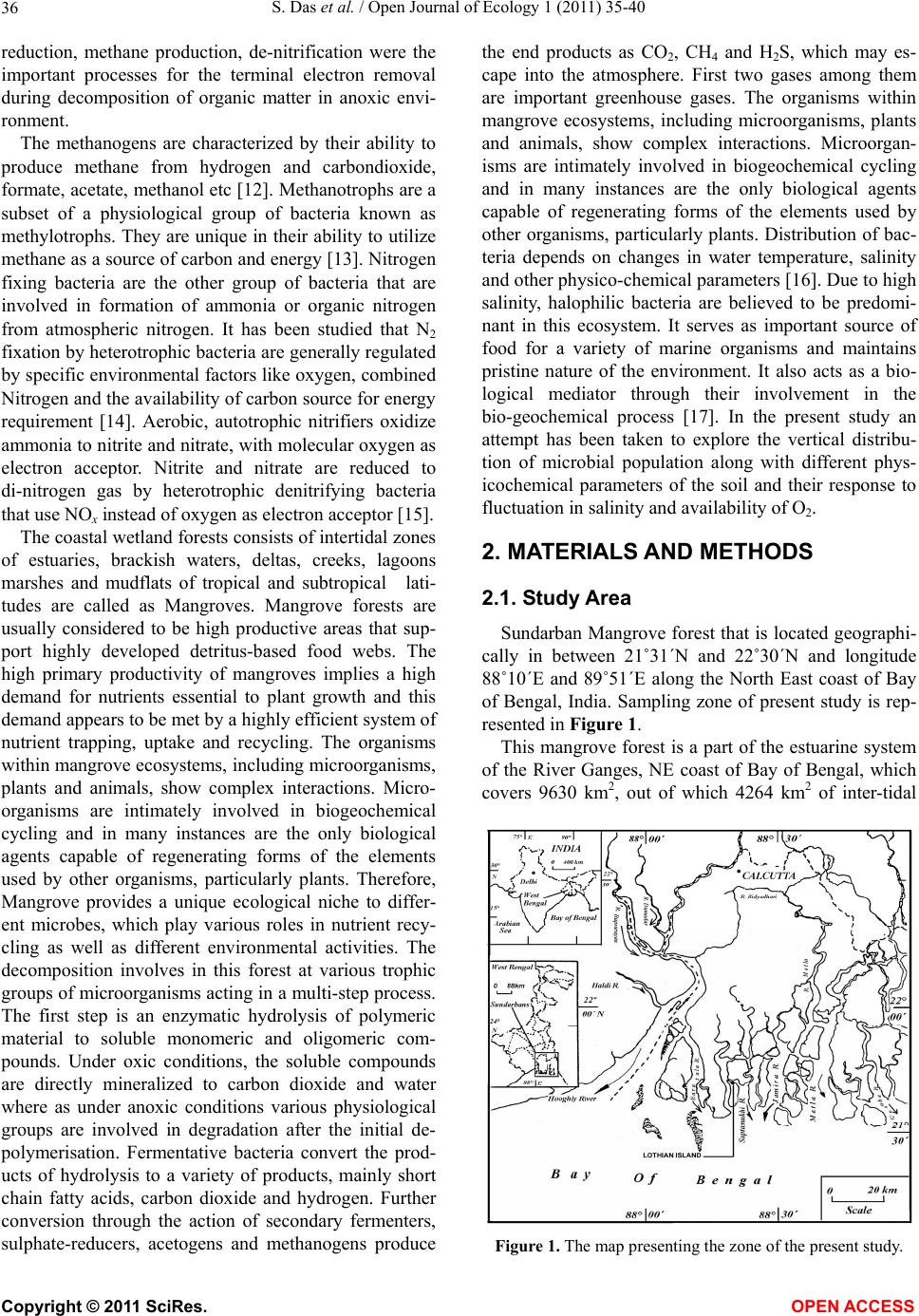 S. Das et al. / Open Journal of Ecology 1 (2011) 35-40 36 reduction, methane production, de-nitrification were the important processes for the terminal electron removal during decomposition of organic matter in anoxic envi- ronment. The methanogens are characterized by their ability to produce methane from hydrogen and carbondioxide, formate, acetate, methanol etc [12]. Methanotrophs are a subset of a physiological group of bacteria known as methylotrophs. They are unique in their ability to utilize methane as a source of carbon and energy [13]. Nitrogen fixing bacteria are the other group of bacteria that are involved in formation of ammonia or organic nitrogen from atmospheric nitrogen. It has been studied that N2 fixation by heterotrophic bacteria are generally regulated by specific environmental factors like oxygen, combined Nitrogen and the availab ility of carbon source fo r energy requirement [14]. Aerobic, autotrophic nitrifiers oxidize ammonia to nitrite and nitrate, with molecular ox ygen as electron acceptor. Nitrite and nitrate are reduced to di-nitrogen gas by heterotrophic denitrifying bacteria that use NOx instead of oxygen as electron acceptor [15]. The coastal wetland forests con sists of intertidal zon es of estuaries, brackish waters, deltas, creeks, lagoons marshes and mudflats of tropical and subtropical lati- tudes are called as Mangroves. Mangrove forests are usually considered to be high productive areas that sup- port highly developed detritus-based food webs. The high primary productivity of mangroves implies a high demand for nutrients essential to plant growth and this demand appears to be met by a highly efficient system of nutrient trapping, uptake and recycling. The organisms within mangrove ecosystems, including microorganisms, plants and animals, show complex interactions. Micro- organisms are intimately involved in biogeochemical cycling and in many instances are the only biological agents capable of regenerating forms of the elements used by other organisms, particularly plants. Therefore, Mangrove provides a unique ecological niche to differ- ent microbes, which play various roles in nutrient recy- cling as well as different environmental activities. The decomposition involves in this forest at various trophic groups of microorganisms acting in a multi-step process. The first step is an enzymatic hydrolysis of polymeric material to soluble monomeric and oligomeric com- pounds. Under oxic conditions, the soluble compounds are directly mineralized to carbon dioxide and water where as under anoxic conditions various physiological groups are involved in degradation after the initial de- polymerisation. Fermentative bacteria convert the prod- ucts of hydrolysis to a variety of products, mainly short chain fatty acids, carbon dioxide and hydrogen. Further conversion through the action of secondary fermenters, sulphate-reducers, acetogens and methanogens produce the end products as CO2, CH4 and H2S, which may es- cape into the atmosphere. First two gases among them are important greenhouse gases. The organisms within mangrove ecosystems, including microorganisms, plants and animals, show complex interactions. Microorgan- isms are intimately involved in biogeochemical cycling and in many instances are the only biological agents capable of regenerating forms of the elements used by other organisms, particularly plants. Distribution of bac- teria depends on changes in water temperature, salinity and other physico-chemical parameters [16]. Due to high salinity, halophilic bacteria are believed to be predomi- nant in this ecosystem. It serves as important source of food for a variety of marine organisms and maintains pristine nature of the environment. It also acts as a bio- logical mediator through their involvement in the bio-geochemical process [17]. In the present study an attempt has been taken to explore the vertical distribu- tion of microbial population along with different phys- icochemical parameters of the soil and their response to fluctuation in salinity an d availability of O2. 2. MATERIALS AND METHODS 2.1. Study Area Sundarban Mangrove forest that is located geographi- cally in between 21˚31´N and 22˚30´N and longitude 88˚10´E and 89˚51´E along the North East coast of Bay of Bengal, India. Sampling zone of present study is rep- resented in Figure 1. This mangrove forest is a part of the estuarine system of the River Ganges, NE coast of Bay of Bengal, which covers 9630 km2, out of which 4264 km2 of inter-tidal Figure 1. The map presenting the zone of the present study. Copyright © 2011 SciRes. OPEN A CCESS 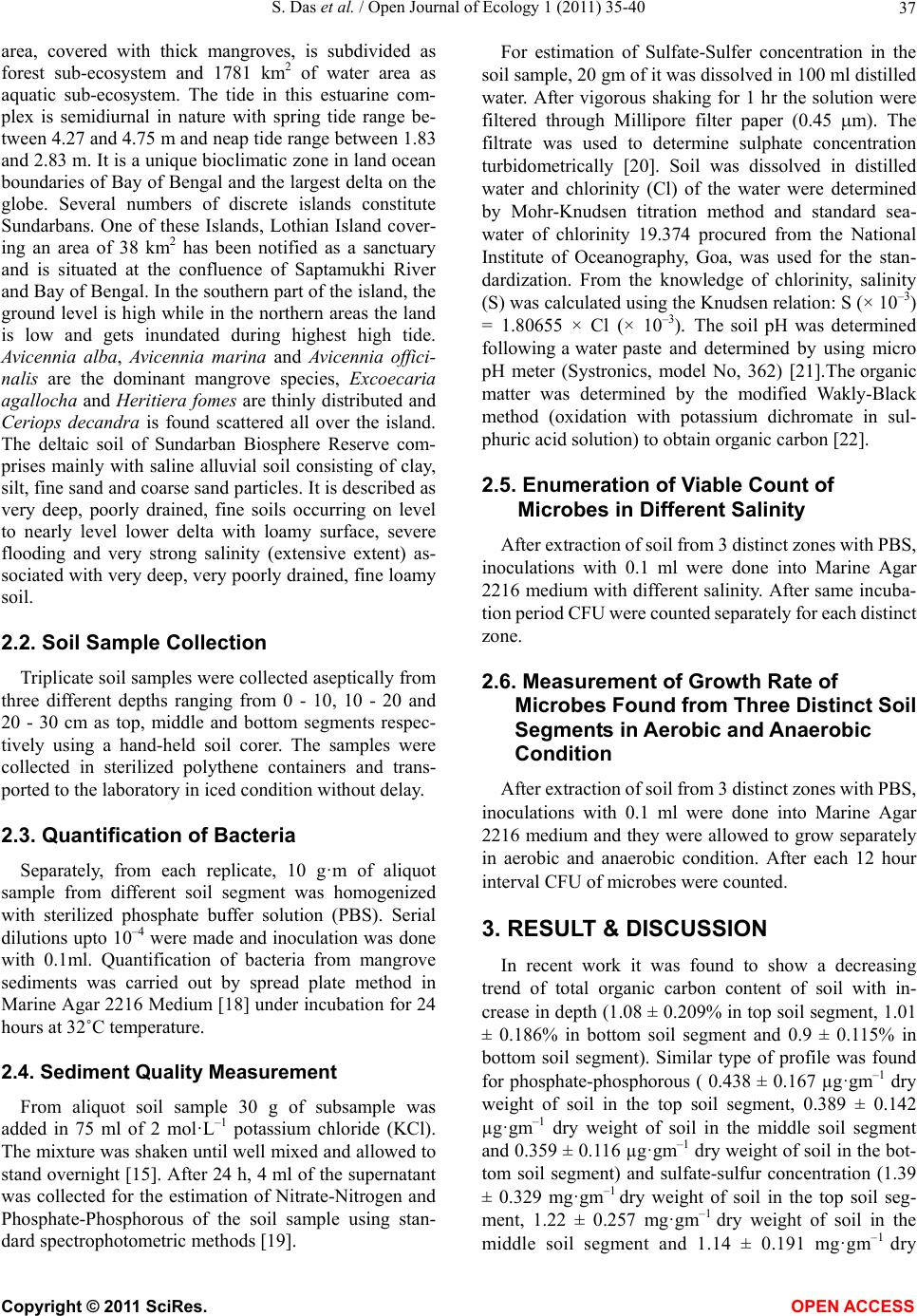 S. Das et al. / Open Journal of Ecology 1 (2011) 35-40 37 area, covered with thick mangroves, is subdivided as forest sub-ecosystem and 1781 km2 of water area as aquatic sub-ecosystem. The tide in this estuarine com- plex is semidiurnal in nature with spring tide range be- tween 4.27 and 4.75 m and neap tide range between 1.83 and 2.83 m. It is a unique bioclimatic zone in land o cean boundaries of Bay of Bengal and the largest delta on the globe. Several numbers of discrete islands constitute Sundarbans. One of these Islands, Lothian Island cover- ing an area of 38 km2 has been notified as a sanctuary and is situated at the confluence of Saptamukhi River and Bay of Bengal. In the southern part of the island, the ground level is high while in the northern areas the land is low and gets inundated during highest high tide. Avicennia alba, Avicennia marina and Avicennia offici- nalis are the dominant mangrove species, Excoecaria agallocha and Heritiera fomes are thinly distributed and Ceriops decandra is found scattered all over the island. The deltaic soil of Sundarban Biosphere Reserve com- prises mainly with saline alluvial soil consisting of clay, silt, fine sand and coarse sand p articles. It is described as very deep, poorly drained, fine soils occurring on level to nearly level lower delta with loamy surface, severe flooding and very strong salinity (extensive extent) as- sociated with very deep, very poorly drained, fine loamy soil. 2.2. Soil Sample Collection Triplicate soil samples were collected aseptically from three different depths ranging from 0 - 10, 10 - 20 and 20 - 30 cm as top, middle and bottom segments respec- tively using a hand-held soil corer. The samples were collected in sterilized polythene containers and trans- ported to the laboratory in iced co ndition without delay. 2.3. Quantification of Bacteria Separately, from each replicate, 10 g·m of aliquot sample from different soil segment was homogenized with sterilized phosphate buffer solution (PBS). Serial dilutions upto 1 0–4 were made and inoculation was done with 0.1ml. Quantification of bacteria from mangrove sediments was carried out by spread plate method in Marine Agar 2216 Medium [18] under incubation for 24 hours at 32˚C temperature. 2.4. Sediment Quality Measurement From aliquot soil sample 30 g of subsample was added in 75 ml of 2 mol·L–1 potassium chloride (KCl). The mixture was shaken un til well mixed and allowed to stand overnight [15]. After 24 h, 4 ml of the supernatant was collected for the estimation of Nitrate-Nitrogen and Phosphate-Phosphorous of the soil sample using stan- dard spectrophotometric methods [19]. For estimation of Sulfate-Sulfer concentration in the soil sample, 20 gm of it was dissolved in 100 ml distilled water. After vigorous shaking for 1 hr the solution were filtered through Millipore filter paper (0.45 m). The filtrate was used to determine sulphate concentration turbidometrically [20]. Soil was dissolved in distilled water and chlorinity (Cl) of the water were determined by Mohr-Knudsen titration method and standard sea- water of chlorinity 19.374 procured from the National Institute of Oceanography, Goa, was used for the stan- dardization. From the knowledge of chlorinity, salinity (S) was calculated using the Knudsen relation: S (× 10 –3) = 1.80655 × Cl (× 10–3). The soil pH was determined following a water paste and determined by using micro pH meter (Systronics, model No, 362) [21].The organic matter was determined by the modified Wakly-Black method (oxidation with potassium dichromate in sul- phuric acid solution) to obtain organic carbon [22]. 2.5. Enumeration of Viable Count of Microbes in Different Salinity After extraction of soil from 3 distinct zones with PBS, inoculations with 0.1 ml were done into Marine Agar 2216 medium with different salinity. After same incuba- tion period CFU we re counted sepa rately for each distinct zone. 2.6. Measurement of Growth Rate of Microbes Found from Three Distinct Soil Segments in Aerobic and Anaerobic Condition After extraction of soil from 3 distinct zones with PBS, inoculations with 0.1 ml were done into Marine Agar 2216 medium and they were allowed to grow separately in aerobic and anaerobic condition. After each 12 hour interval CFU of microbes were counted. 3. RESULT & DISCUSSION In recent work it was found to show a decreasing trend of total organic carbon content of soil with in- crease in depth (1.08 ± 0.209% in top soil segment, 1.01 ± 0.186% in bottom soil segment and 0.9 ± 0.115% in bottom soil segment). Similar type of profile was found for phosphate-phosphorous ( 0.438 ± 0.167 µg·gm–1 dry weight of soil in the top soil segment, 0.389 ± 0.142 µg·gm–1 dry weight of soil in the middle soil segment and 0.359 ± 0.116 µg·gm–1 dry weight of soil in the bot- tom soil segment) and sulfate-sulfur concentration (1.39 ± 0.329 mg·gm–1 dry weight of soil in the top soil seg- ment, 1.22 ± 0.257 mg·gm–1 dry weight of soil in the middle soil segment and 1.14 ± 0.191 mg·gm–1 dry Copyright © 2011 SciRes. OPEN A CCESS 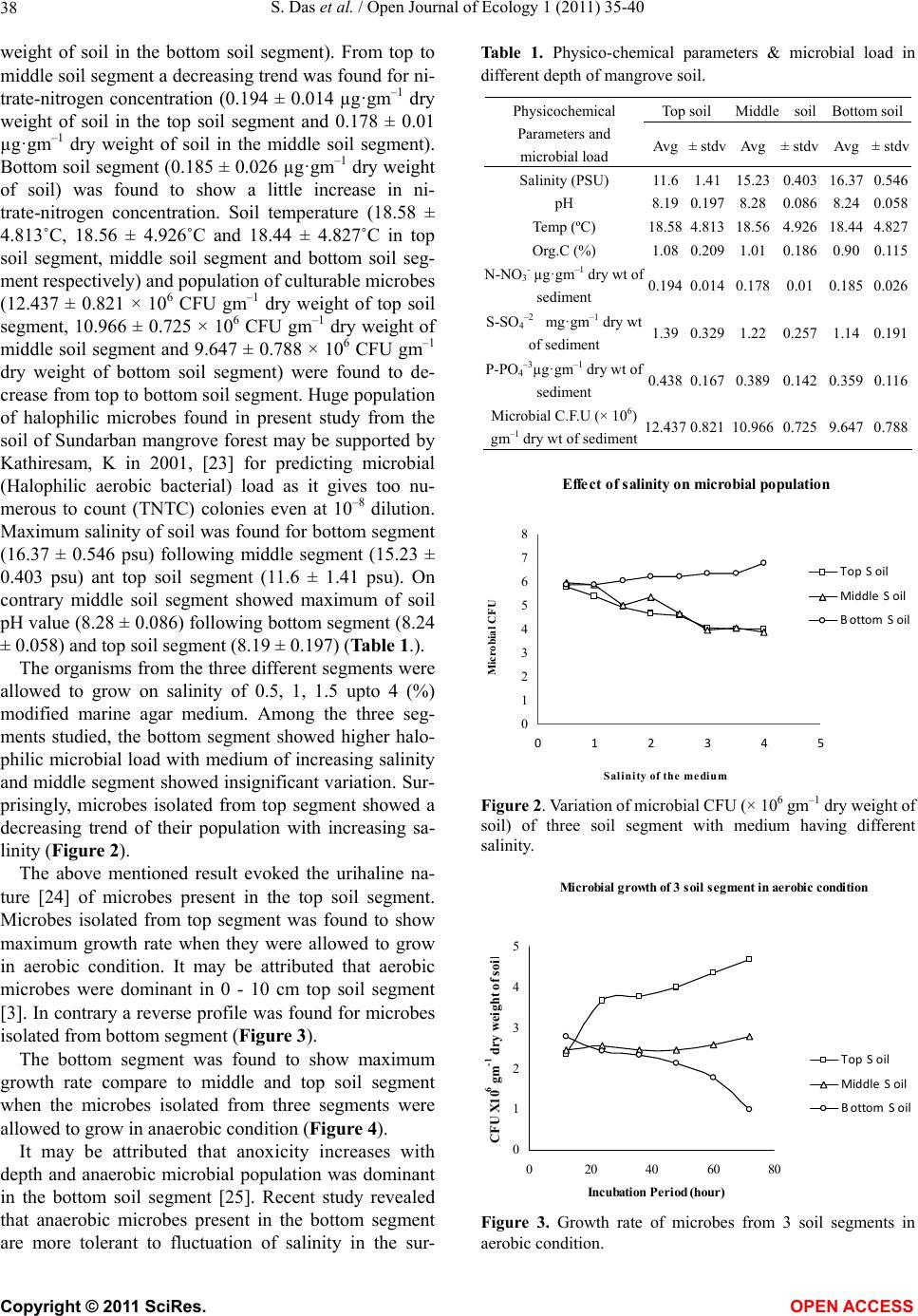 S. Das et al. / Open Journal of Ecology 1 (2011) 35-40 38 weight of soil in the bottom soil segment). From top to middle soil segment a decreasing trend was found for ni- trate-nitrogen concentration (0.194 ± 0.014 µg·gm–1 dry weight of soil in the top soil segment and 0.178 ± 0.01 µg·gm–1 dry weight of soil in the middle soil segment). Bottom soil segment (0.185 ± 0.026 µg·gm–1 dry weight of soil) was found to show a little increase in ni- trate-nitrogen concentration. Soil temperature (18.58 ± 4.813˚C, 18.56 ± 4.926˚C and 18.44 ± 4.827˚C in top soil segment, middle soil segment and bottom soil seg- ment respectively) and population of culturable microbes (12.437 ± 0.821 × 10⁶ CFU gm–1 dry weight of top soil segment, 10.966 ± 0.725 × 10⁶ CFU gm–1 dry weight of middle soil segment and 9.647 ± 0.788 × 10⁶ CFU gm–1 dry weight of bottom soil segment) were found to de- crease from top to bottom soil segment. Huge population of halophilic microbes found in present study from the soil of Sundarban mangrove forest may be supported by Kathiresam, K in 2001, [23] for predicting microbial (Halophilic aerobic bacterial) load as it gives too nu- merous to count (TNTC) colonies even at 10–8 dilution. Maximum salinity of soil was found for bottom segment (16.37 ± 0.546 psu) following middle segment (15.23 ± 0.403 psu) ant top soil segment (11.6 ± 1.41 psu). On contrary middle soil segment showed maximum of soil pH value (8.28 ± 0.086) following bottom segment (8.24 ± 0.058) and top soil segment (8.19 ± 0.197) (Table 1.). The organisms from the three different segments were allowed to grow on salinity of 0.5, 1, 1.5 upto 4 (%) modified marine agar medium. Among the three seg- ments studied, the bottom segment showed higher halo- philic microbial load with medium of increasing salinity and middle segment showed insignificant variation. Sur- prisingly, microbes isolated from top segment showed a decreasing trend of their population with increasing sa- linity (Figure 2). The above mentioned result evoked the urihaline na- ture [24] of microbes present in the top soil segment. Microbes isolated from top segment was found to show maximum growth rate when they were allowed to grow in aerobic condition. It may be attributed that aerobic microbes were dominant in 0 - 10 cm top soil segment [3]. In contrary a reverse profile was found for microbes isolated from bottom segment (Figure 3). The bottom segment was found to show maximum growth rate compare to middle and top soil segment when the microbes isolated from three segments were allowed to grow in anaerobic condition (Figure 4). It may be attributed that anoxicity increases with depth and anaerobic microbial population was dominant in the bottom soil segment [25]. Recent study revealed that anaerobic microbes present in the bottom segment are more tolerant to fluctuation of salinity in the sur- Table 1. Physico-chemical parameters & microbial load in different depth of mangrove soil. Top soil Middle soil Bottom soil Physicochemical Parameters and microbial load Avg± stdv Avg ± stdv Avg± stdv Salinity (PSU) 11.61.41 15.23 0.403 16.370.546 pH 8.190.197 8.28 0.086 8.240.058 Temp (ºC) 18.584.813 18.56 4.926 18.444.827 Org.C (%) 1.080.209 1.01 0.186 0.900.115 N-NO3- µg·gm–1 dry wt o f sediment 0.194 0.014 0.178 0.01 0.1850.026 S-SO4–2 mg·gm–1 dry wt of sediment 1.390.329 1.22 0.257 1.140.191 P-PO4–3µg·gm–1 dry wt of sediment 0.438 0.167 0.389 0.142 0.3590.116 Microbial C.F.U (× 106) gm–1 dry wt of sediment12.437 0.821 10.966 0.725 9.6470.788 Effec t of salinit y o n mic ro bial populatio n 0 1 2 3 4 5 6 7 8 012345 Salinity of the medium Micro bial CFU TopSoil Middle Soil B ottomSoil Figure 2 . Variation of microbial CFU (× 106 gm–1 dry weight of soil) of three soil segment with medium having different salinity. Micro bial growt h of 3 so il segmen t in a erobic condition 0 1 2 3 4 5 0 20406080 Incubation Period ( hour) CFU X10 6 gm -1 dry weight of soi l TopSoil Mid dleSoil BottomSoil Figure 3. Growth rate of microbes from 3 soil segments in aerobic condition. Copyright © 2011 SciRes. OPEN A CCESS 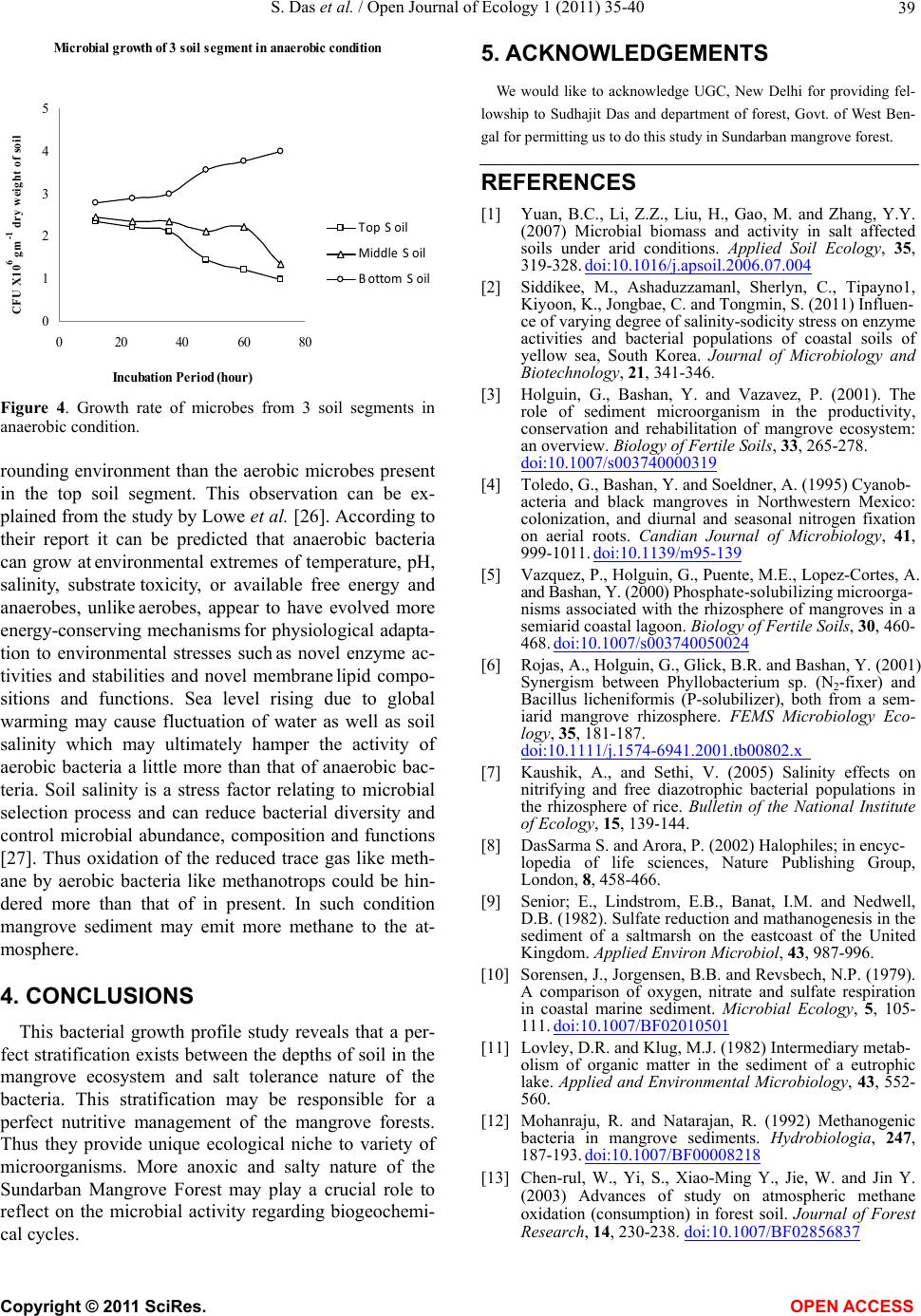 S. Das et al. / Open Journal of Ecology 1 (2011) 35-40 39 Mic r obial growth of 3 so il segment in anaerobic c on dit ion 0 1 2 3 4 5 0 20406080 I ncubation Period (hour) CFU X10 6 gm -1 dry w e ight of soil TopSoil Midd leSoil B ottomSoil Figure 4. Growth rate of microbes from 3 soil segments in anaerobic condition. rounding environment than the aerobic microbes present in the top soil segment. This observation can be ex- plained from the study by Lowe et al. [26]. According to their report it can be predicted that anaerobic bacteria can grow at environmental extremes of temperature, pH, salinity, substrate toxicity, or available free energy and anaerobes, unlike aerobes, appear to have evolved more energy-conserving mechanisms for physiological adapta- tion to environmental stresses such as novel enzyme ac- tivities and stabilities and novel membrane lipid compo- sitions and functions. Sea level rising due to global warming may cause fluctuation of water as well as soil salinity which may ultimately hamper the activity of aerobic bacteria a little more than that of anaerobic bac- teria. Soil salinity is a stress factor relating to microbial selection process and can reduce bacterial diversity and control microbial abundance, composition and functions [27]. Thus oxidation of the reduced trace gas like meth- ane by aerobic bacteria like methanotrops could be hin- dered more than that of in present. In such condition mangrove sediment may emit more methane to the at- mosphere. 4. CONCLUSIONS This bacterial growth profile study reveals that a per- fect stratification exists between the depths of soil in the mangrove ecosystem and salt tolerance nature of the bacteria. This stratification may be responsible for a perfect nutritive management of the mangrove forests. Thus they provide unique ecological niche to variety of microorganisms. More anoxic and salty nature of the Sundarban Mangrove Forest may play a crucial role to reflect on the microbial activity regarding biogeochemi- cal cycles. 5. ACKNOWLEDGEMENTS We would like to acknowledge UGC, New Delhi for providing fel- lowship to Sudhajit Das and department of forest, Govt. of West Ben- gal for permitting us to do this study in Sundarban mangrove forest. REFERENCES [1] Yuan, B.C., Li, Z.Z., Liu, H., Gao, M. and Zhang, Y.Y. (2007) Microbial biomass and activity in salt affected soils under arid conditions. Applied Soil Ecology, 35, 319-328. doi:10.1016/j.apsoil.2006.07.004 [2] Siddikee, M., Ashaduzzamanl, Sherlyn, C., Tipayno1, Kiyoon, K., Jongbae, C. and Tongmin, S. (2011) Influen- ce of varying degree of salinity-sodicity stress on enzyme activities and bacterial populations of coastal soils of yellow sea, South Korea. Journal of Microbiology and Biotechnology, 21, 341-346. [3] Holguin, G., Bashan, Y. and Vazavez, P. (2001). The role of sediment microorganism in the productivity, conservation and rehabilitation of mangrove ecosystem: an overview. Biology of Fe rtile Soils, 33, 265-278. doi:10.1007/s003740000319 [4] Toledo, G., Bashan, Y. and Soeldner, A. (1995) Cyanob- acteria and black mangroves in Northwestern Mexico: colonization, and diurnal and seasonal nitrogen fixation on aerial roots. Candian Journal of Microbiology, 41, 999-1011. doi:10.1139/m95-139 [5] Vazquez, P., Holguin, G., Puente, M.E., Lopez-Cortes, A. a nd Bas ha n, Y. ( 200 0) Ph osphate-solub ilizing m icroorga- nisms associated with the rhizosphere of mangroves in a semiarid coastal lagoon. Biology of Fertile Soils, 30, 460- 468. doi:10.1007/s003740050024 [6] Rojas, A., Holguin, G., Glick, B.R. and Bashan, Y. (2001) Synergism between Phyllobacterium sp. (N2-fixer) and Bacillus licheniformis (P-solubilizer), both from a sem- iarid mangrove rhizosphere. FEMS Microbiology Eco- logy, 35, 181-187. doi:10.1111/j.1574-6941.2001.tb00802.x [7] Kaushik, A., and Sethi, V. (2005) Salinity effects on nitrifying and free diazotrophic bacterial populations in the rhizosphere of rice. Bulletin of the National Institute of Ecology, 15, 139-144. [8] DasSarma S. and Arora, P. (2002) Halophiles; in encyc- lopedia of life sciences, Nature Publishing Group, London, 8, 458-466. [9] Senior; E., Lindstrom, E.B., Banat, I.M. and Nedwell, D.B. (1982). Sulfate reduction and mathanogenesis in the sediment of a saltmarsh on the eastcoast of the United Kingdom. Applied Environ Microbiol, 43, 987-996. [10] Sorensen, J., Jorgensen, B.B. and Revsbech, N.P. (1979). A comparison of oxygen, nitrate and sulfate respiration in coastal marine sediment. Microbial Ecology, 5, 105- 111. doi:10.1007/BF02010501 [11] Lovley, D.R. and Klug, M.J. (1982) Intermediary metab- olism of organic matter in the sediment of a eutrophic lake. Applied and Environmental Microbiology, 43, 552- 560. [12] Mohanraju, R. and Natarajan, R. (1992) Methanogenic bacteria in mangrove sediments. Hydrobiologia, 247, 187-193. doi:10.1007/BF00008218 [13] Chen-rul, W., Yi, S., Xiao-Ming Y., Jie, W. and Jin Y. (2003) Advances of study on atmospheric methane oxidation (consumption) in forest soil. Journal of Forest Research, 14, 230-238. doi:10.1007/BF02856837 Copyright © 2011 SciRes. OPEN A CCESS  S. Das et al. / Open Journal of Ecology 1 (2011) 35-40 Copyright © 2011 SciRes. 40 OPEN ACCESS [14] Teri, C.B. and Mary, K.F. (2005) Linking microbial community composition and soil processes in a Californ- ia annual grassland and mixed conifer fore st. Biogeoc- hemistry, 73, 395-415. [15] Riley, R.H., Peter, M. and Vitousek, P.M. (1995) Nutrient dynamics and nitrogen trace gas flux during ecosystem development in montane rain forest. Ecology, 76, 292- 304. doi:10.2307/1940650. [16] Alavandi, S. (1990) Relationship between heterotrophic bacteria and suspended particulate matter in the Arabian Sea. Indian Journal of Marine Sciences, 30, 89-92. [17] Capone, D.G. (2002) Microbial nitrogen cycle, in: Manu- al of environmental microbiology (Ed: C.J. Aurstic and R.L. Crawford), ASM Press, Washington D.C., 439. [18] Bianchi, A. and Giuliano, L., (1996) Enumeration of viable bacteria in the marine pelagic environment, Applied Environmental Microbiology, 62, 174-177. [19] Grasshoff, Ehrhardt and Kremling (1983) Standard methos for sea water analysys, 2nd Edition, Wiley-VCH, Geman. [20] American Public Health Association (APHA) (1995) Standard methods for the examination of water and wastewater: including bottom sediments and sludges. American Public Health Association, Washington D.C. [21] Tiwari, S. C., Tiwari, B. K. and Mishra, R. R (1989) Microbial community, enzyme activity and CO2 evolution in Pineapple Orchard soil. Tropical Ecology, 30, 265-273. [22] Walkley, A. and Black, J. A., (1934) An examination of Degtjareff method for determining soil organic matter, and a proposed modification of the chromic acid titration method. Soil Science, 37, 29-38. [23] Kathiresan, K. (2001) Biology of mangroves and man- grove ecosystem. In:Advances in marine biology (Ed.: A.J. Southward), Academic Press, U.K. 81-251. [24] Odum, E.P. (1971) Fundamentals of ecology. 2nd Edn., W.B. Saunders Company and Toppan Company, Phil- adelphia, U.S.A. 574-575. [25] Chun-Hua L., Hong-Wei, Z., Yuk-Shan, W. and Nora Fung-Yee T. (2009) Vertical distribution and anaerobic biodegradation of polycyclic aromatic hydrocarbons in mangrove sediments in Hong Kong, South China. Science of the Total Environment, 407, 5772-5779. [26] Lowe, S. E, Jain M. K. and Zeikus, J. G. (1993) Biology, ecology, and biotechnological applications of anaerobic bacteria adapted to environmental stresses in temperature, pH, salinity, or substrates. Microbiology and Biotech- nology Reviews, 57, 451-509. [27] Moradi1, A., Tahmourespour, A., Mehran Hoodaji, M. and Khorsandi, F. (2011) Effect of salinity on free living-diazotroph and total bacterial populations of two saline soils. African Journal of Microbiology Research, 5, 144-148. |