

Paper Menu >>
Journal Menu >>
 International Journal of Clinical Medicine, 2011, 2, 313-317 doi:10.4236/ijcm.2011.23054 Published Online July 2011 (http://www.SciRP.org/journal/ijcm) Copyright © 2011 SciRes. IJCM 313 Sickle Cell Disease and Pregnancy: Does Outcome Depend on Genotype or Phenotype? Catherine Berzolla1, Neil Stuart Seligman1, Aisha Nnoli1, Kevin Dysart2, Jason K. Baxter1, Samir K. Ballas3 1Division of Maternal-Fetal Medicine, Department of Obstetrics and Gynecology, Philadelphia, USA; 2Division of Neonatol- ogy/Nemours Foundation, Department of Pediatrics, Philadelphia, USA; 3Division of Hematology/Cardeza Foundation, Department of Internal Medicine, Jefferson Medical College of Thomas Jefferson University, Philadelphia, USA. Email: [email protected] Received February 25th, 2011; revised May 4th, 2011; accepted June 11th, 2011. ABSTRACT Objective: Women with sickle cell disease (SCD) who become pregnant are at risk for serious maternal and fetal com- plications. Our objective was to determine if pregnancy outcome is dependent on phenotype. Methods: Retrospective cohort study of pregnant women with SCD, including hemoglobin (Hb) SS, Hb SC and Hb Sβ-thalassemia, between January 1999 and December 2008. Antenatal and neonatal outcomes were compared between pregnancies with painful episodes and those without. The primary outcome was preterm birth (PTB) < 37 weeks. Secondary outcomes included maternal medical complications, antenatal complications, delivery outcomes and neonatal outcomes. Results: 31 women were included (18 (58%) with painful episodes, 13 (42%) without painful episodes). The median number of painful episodes was 2.5 (1 - 19) and these women required a median of 13 total days (1 - 59) of inpatient treatment. At delivery, women who had experienced painful episodes had lower Hb levels and were more likely to be taking chronic narcotic pain medications. The overall incidence of PTB < 37weeks was 55% and was not significantly different be- tween groups (11 (61%) with painful episodes versus 6 (46%) without painful episodes; p = 0.485). Secondary out- comes were also not significantly different between groups. There was one maternal death. Conclusion: Adverse ob- stetrical outcomes were more common among women with sickle cell disease who experienced painful crises however, in this small sample, the difference were not statistically significant. Keywords: Pregnancy, Sickle Cell Disease, Painful Vaso-Occlusive Episodes 1. Introduction Sickle cell disease (SCD) describes hemoglobinopathies associated with the phenomenon of sickling. These in- clude sickle cell anemia, or homozygosity for hemoglo- bin S (Hb SS), Hb SC disease (Hb SC), and Hb S-beta thalassemia (Hb Sβ). In the United States, the highest frequency of SCD is in African Americans, with an in- cidence of 1in 600 births [1,2]. In one study, the inci- dence of SCD by genotype was found to be 8.5, 4.4, and 2.2 per 100,000 infants screened for Hb SS, Hb SC, and Hb Sβ respectively [3]. Hispanics are also at a higher risk for SCD with at least 1 in 180 Hispanic infants hav- ing sickle cell trait. SCD is not associated with de- creased fertility in women, but those women who be- come pregnant are at a higher risk for maternal and fetal complications than the general population. More than one-third of pregnancies in women with SCD end in abortion, stillbirth, or neonatal death [4-6]. Other complications include painful episodes [7], anemia requiring transfusion [1], infection [1,5], pree- clampsia [5,6,8], and maternal death [1,8]. Intrauterine growth restriction [6,8,9], preterm delivery [6,8-10], and low birth weight [5,6,9] are also more common. The most common complication of SCD is painful vaso-occlusive crisis, now referred to as an acute or re- current painful episode. The frequency of painful epi- sodes peaks between the ages of 19 and 39 [11], which coincides with childbearing age. Pregnancy may also increase the frequency of painful episodes. Up to 55.8% of women with SCD will have at least one painful epi- sode during the course of their pregnancy [12]. Physiol- ogic changes during pregnancy, including hyperco- aguability, vascular stasis, and increased metabolic de- mands, predispose women to sickle cell-related compli- cations and may explain the increased frequency of 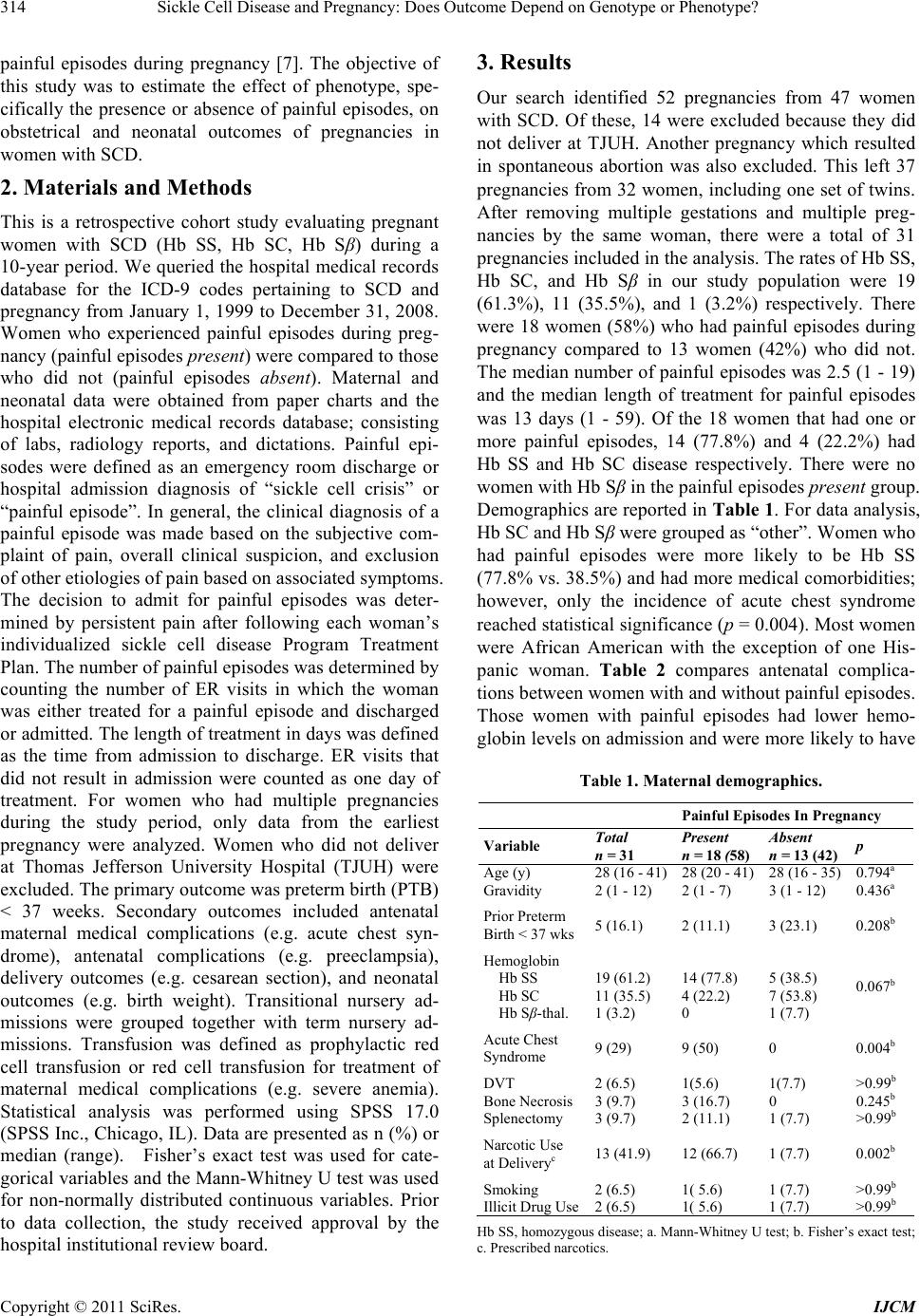 Sickle Cell Disease and Pregnancy: Does Outcome Depend on Genotype or Phenotype? 314 painful episodes during pregnancy [7]. The objective of this study was to estimate the effect of phenotype, spe- cifically the presence or absence of painful episodes, on obstetrical and neonatal outcomes of pregnancies in women with SCD. 2. Materials and Methods This is a retrospective cohort study evaluating pregnant women with SCD (Hb SS, Hb SC, Hb Sβ) during a 10-year period. We queried the hospital medical records database for the ICD-9 codes pertaining to SCD and pregnancy from January 1, 1999 to December 31, 2008. Women who experienced painful episodes during preg- nancy (painful episodes present) were compared to those who did not (painful episodes absent). Maternal and neonatal data were obtained from paper charts and the hospital electronic medical records database; consisting of labs, radiology reports, and dictations. Painful epi- sodes were defined as an emergency room discharge or hospital admission diagnosis of “sickle cell crisis” or “painful episode”. In general, the clinical diagnosis of a painful episode was made based on the subjective com- plaint of pain, overall clinical suspicion, and exclusion of other etiologies of pain based on associated symptoms. The decision to admit for painful episodes was deter- mined by persistent pain after following each woman’s individualized sickle cell disease Program Treatment Plan. The number of painful episodes was determined by counting the number of ER visits in which the woman was either treated for a painful episode and discharged or admitted. The length of treatment in days was defined as the time from admission to discharge. ER visits that did not result in admission were counted as one day of treatment. For women who had multiple pregnancies during the study period, only data from the earliest pregnancy were analyzed. Women who did not deliver at Thomas Jefferson University Hospital (TJUH) were excluded. The primary outcome was preterm birth (PTB) < 37 weeks. Secondary outcomes included antenatal maternal medical complications (e.g. acute chest syn- drome), antenatal complications (e.g. preeclampsia), delivery outcomes (e.g. cesarean section), and neonatal outcomes (e.g. birth weight). Transitional nursery ad- missions were grouped together with term nursery ad- missions. Transfusion was defined as prophylactic red cell transfusion or red cell transfusion for treatment of maternal medical complications (e.g. severe anemia). Statistical analysis was performed using SPSS 17.0 (SPSS Inc., Chicago, IL). Data are presented as n (%) or median (range). Fisher’s exact test was used for cate- gorical variables and the Mann-Whitney U test was used for non-normally distributed continuous variables. Prior to data collection, the study received approval by the hospital institutional review board. 3. Results Our search identified 52 pregnancies from 47 women with SCD. Of these, 14 were excluded because they did not deliver at TJUH. Another pregnancy which resulted in spontaneous abortion was also excluded. This left 37 pregnancies from 32 women, including one set of twins. After removing multiple gestations and multiple preg- nancies by the same woman, there were a total of 31 pregnancies included in the analysis. The rates of Hb SS, Hb SC, and Hb Sβ in our study population were 19 (61.3%), 11 (35.5%), and 1 (3.2%) respectively. There were 18 women (58%) who had painful episodes during pregnancy compared to 13 women (42%) who did not. The median number of painful episodes was 2.5 (1 - 19) and the median length of treatment for painful episodes was 13 days (1 - 59). Of the 18 women that had one or more painful episodes, 14 (77.8%) and 4 (22.2%) had Hb SS and Hb SC disease respectively. There were no women with Hb Sβ in the painful episodes present group. Demographics are reported in Ta ble 1. For data analysis, Hb SC and Hb Sβ were grouped as “other”. Women who had painful episodes were more likely to be Hb SS (77.8% vs. 38.5%) and had more medical comorbidities; however, only the incidence of acute chest syndrome reached statistical significance (p = 0.004). Most women were African American with the exception of one His- panic woman. Table 2 compares antenatal complica- tions between women with and without painful episodes. Those women with painful episodes had lower hemo- globin levels on admission and were more likely to have Table 1. Maternal demographics. Painful Episodes In Pregnancy Variable Total n = 31 Present n = 18 (58) Absent n = 13 (42)p Age (y) 28 (16 - 41)28 (20 - 41) 28 (16 - 35)0.794a Gravidity 2 (1 - 12) 2 (1 - 7) 3 (1 - 12) 0.436a Prior Preterm Birth < 37 wks 5 (16.1) 2 (11.1) 3 (23.1) 0.208b Hemoglobin Hb SS Hb SC Hb Sβ-thal. 19 (61.2) 11 (35.5) 1 (3.2) 14 (77.8) 4 (22.2) 0 5 (38.5) 7 (53.8) 1 (7.7) 0.067b Acute Chest Syndrome 9 (29) 9 (50) 0 0.004b DVT 2 (6.5) 1(5.6) 1(7.7) >0.99b Bone Necrosis 3 (9.7) 3 (16.7) 0 0.245b Splenectomy 3 (9.7) 2 (11.1) 1 (7.7) >0.99b Narcotic Use at Deliveryc 13 (41.9) 12 (66.7) 1 (7.7) 0.002b Smoking 2 (6.5) 1( 5.6) 1 (7.7) >0.99b Illicit Drug Use2 (6.5) 1( 5.6) 1 (7.7) >0.99b Hb SS, homozygous disease; a. Mann-Whitney U test; b. Fisher’s exact test; c. Prescribed narcotics. Copyright © 2011 SciRes. IJCM 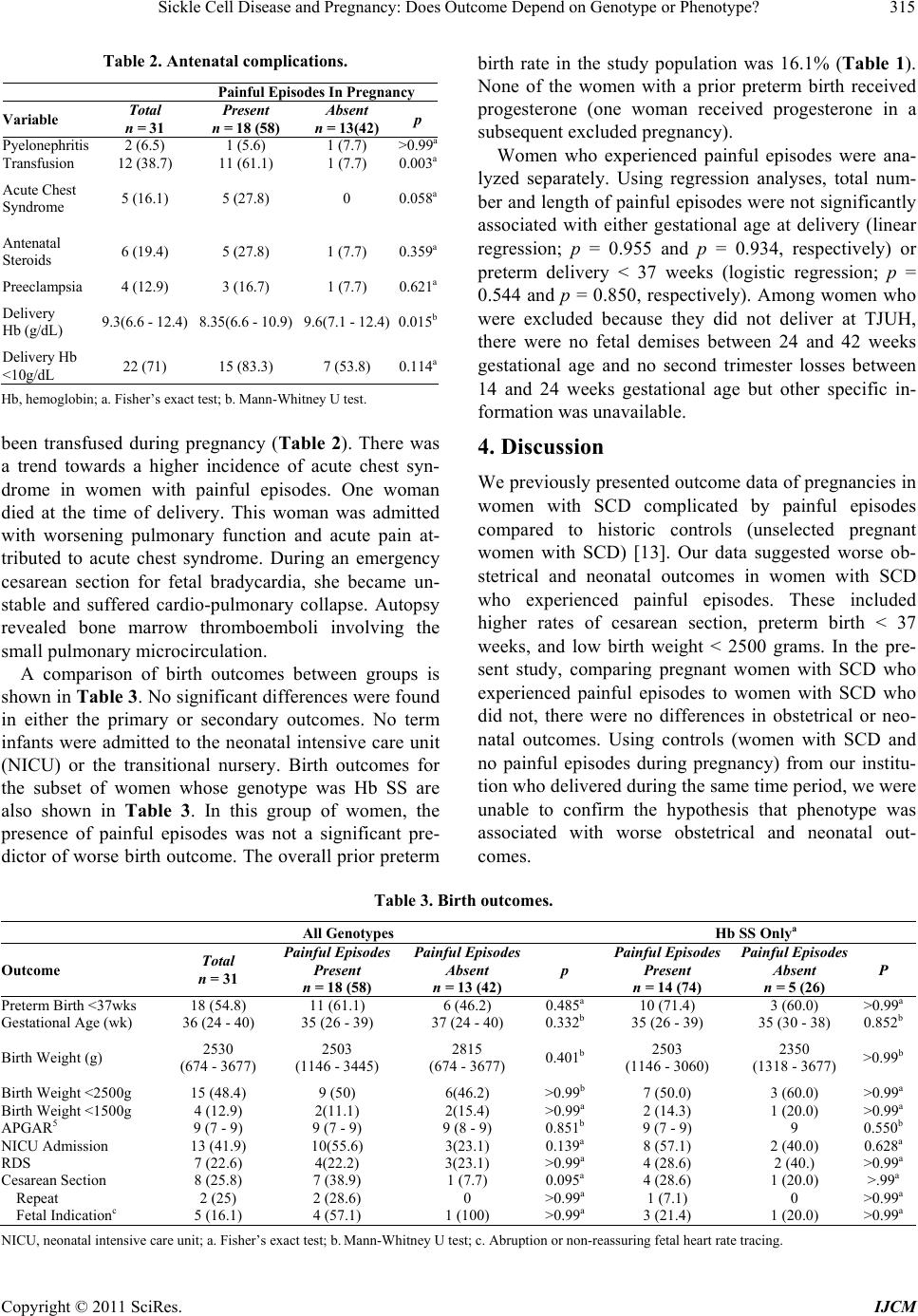 Sickle Cell Disease and Pregnancy: Does Outcome Depend on Genotype or Phenotype? Copyright © 2011 SciRes. IJCM 315 Table 2. Antenatal complications. Painful Episodes In Pregnancy Variable Total n = 31 Present n = 18 (58) Absent n = 13(42) p Pyelonephritis 2 (6.5) 1 (5.6) 1 (7.7) >0.99a Transfusion 12 (38.7) 11 (61.1) 1 (7.7) 0.003a Acute Chest Syndrome 5 (16.1) 5 (27.8) 0 0.058a Antenatal Steroids 6 (19.4) 5 (27.8) 1 (7.7) 0.359a Preeclampsia 4 (12.9) 3 (16.7) 1 (7.7) 0.621a Delivery Hb (g/dL) 9.3(6.6 - 12.4) 8.35(6.6 - 10.9) 9.6(7.1 - 12.4)0.015b Delivery Hb <10g/dL 22 (71) 15 (83.3) 7 (53.8) 0.114a Hb, hemoglobin; a. Fisher’s exact test; b. Mann-Whitney U test. been transfused during pregnancy (Table 2). There was a trend towards a higher incidence of acute chest syn- drome in women with painful episodes. One woman died at the time of delivery. This woman was admitted with worsening pulmonary function and acute pain at- tributed to acute chest syndrome. During an emergency cesarean section for fetal bradycardia, she became un- stable and suffered cardio-pulmonary collapse. Autopsy revealed bone marrow thromboemboli involving the small pulmonary microcirculation. A comparison of birth outcomes between groups is shown in Table 3 . No significant differences were found in either the primary or secondary outcomes. No term infants were admitted to the neonatal intensive care unit (NICU) or the transitional nursery. Birth outcomes for the subset of women whose genotype was Hb SS are also shown in Table 3. In this group of women, the presence of painful episodes was not a significant pre- dictor of worse birth outcome. The overall prior preterm birth rate in the study population was 16.1% (Table 1). None of the women with a prior preterm birth received progesterone (one woman received progesterone in a subsequent excluded pregnancy). Women who experienced painful episodes were ana- lyzed separately. Using regression analyses, total num- ber and length of painful episodes were not significantly associated with either gestational age at delivery (linear regression; p = 0.955 and p = 0.934, respectively) or preterm delivery < 37 weeks (logistic regression; p = 0.544 and p = 0.850, respectively). Among women who were excluded because they did not deliver at TJUH, there were no fetal demises between 24 and 42 weeks gestational age and no second trimester losses between 14 and 24 weeks gestational age but other specific in- formation was unavailable. 4. Discussion We previously presented outcome data of pregnancies in women with SCD complicated by painful episodes compared to historic controls (unselected pregnant women with SCD) [13]. Our data suggested worse ob- stetrical and neonatal outcomes in women with SCD who experienced painful episodes. These included higher rates of cesarean section, preterm birth < 37 weeks, and low birth weight < 2500 grams. In the pre- sent study, comparing pregnant women with SCD who experienced painful episodes to women with SCD who did not, there were no differences in obstetrical or neo- natal outcomes. Using controls (women with SCD and no painful episodes during pregnancy) from our institu- tion who delivered during the same time period, we were unable to confirm the hypothesis that phenotype was associated with worse obstetrical and neonatal out- comes. Table 3. Birth outcomes. All Genotypes Hb SS Onlya Outcome Total n = 31 Painful Episodes Present n = 18 (58) Painful Episodes Absent n = 13 (42) p Painful Episodes Present n = 14 (74) Painful Episodes Absent n = 5 (26) P Preterm Birth <37wks 18 (54.8) 11 (61.1) 6 (46.2) 0.485a10 (71.4) 3 (60.0) >0.99a Gestational Age (wk) 36 (24 - 40) 35 (26 - 39) 37 (24 - 40) 0.332b35 (26 - 39) 35 (30 - 38) 0.852b Birth Weight (g) 2530 (674 - 3677) 2503 (1146 - 3445) 2815 (674 - 3677) 0.401b2503 (1146 - 3060) 2350 (1318 - 3677)>0.99b Birth Weight <2500g 15 (48.4) 9 (50) 6(46.2) >0.99b7 (50.0) 3 (60.0) >0.99a Birth Weight <1500g 4 (12.9) 2(11.1) 2(15.4) >0.99a2 (14.3) 1 (20.0) >0.99a APGAR5 9 (7 - 9) 9 (7 - 9) 9 (8 - 9) 0.851b9 (7 - 9) 9 0.550b NICU Admission 13 (41.9) 10(55.6) 3(23.1) 0.139a8 (57.1) 2 (40.0) 0.628a RDS 7 (22.6) 4(22.2) 3(23.1) >0.99a4 (28.6) 2 (40.) >0.99a Cesarean Section Repeat Fetal Indicationc 8 (25.8) 2 (25) 5 (16.1) 7 (38.9) 2 (28.6) 4 (57.1) 1 (7.7) 0 1 (100) 0.095a >0.99a >0.99a 4 (28.6) 1 (7.1) 3 (21.4) 1 (20.0) 0 1 (20.0) >.99a >0.99a >0.99a NICU, neonatal intensive care unit; a. Fisher’s exact test; b. Mann-Whitney U test; c. Abruption or non-reassuring fetal heart rate tracing. 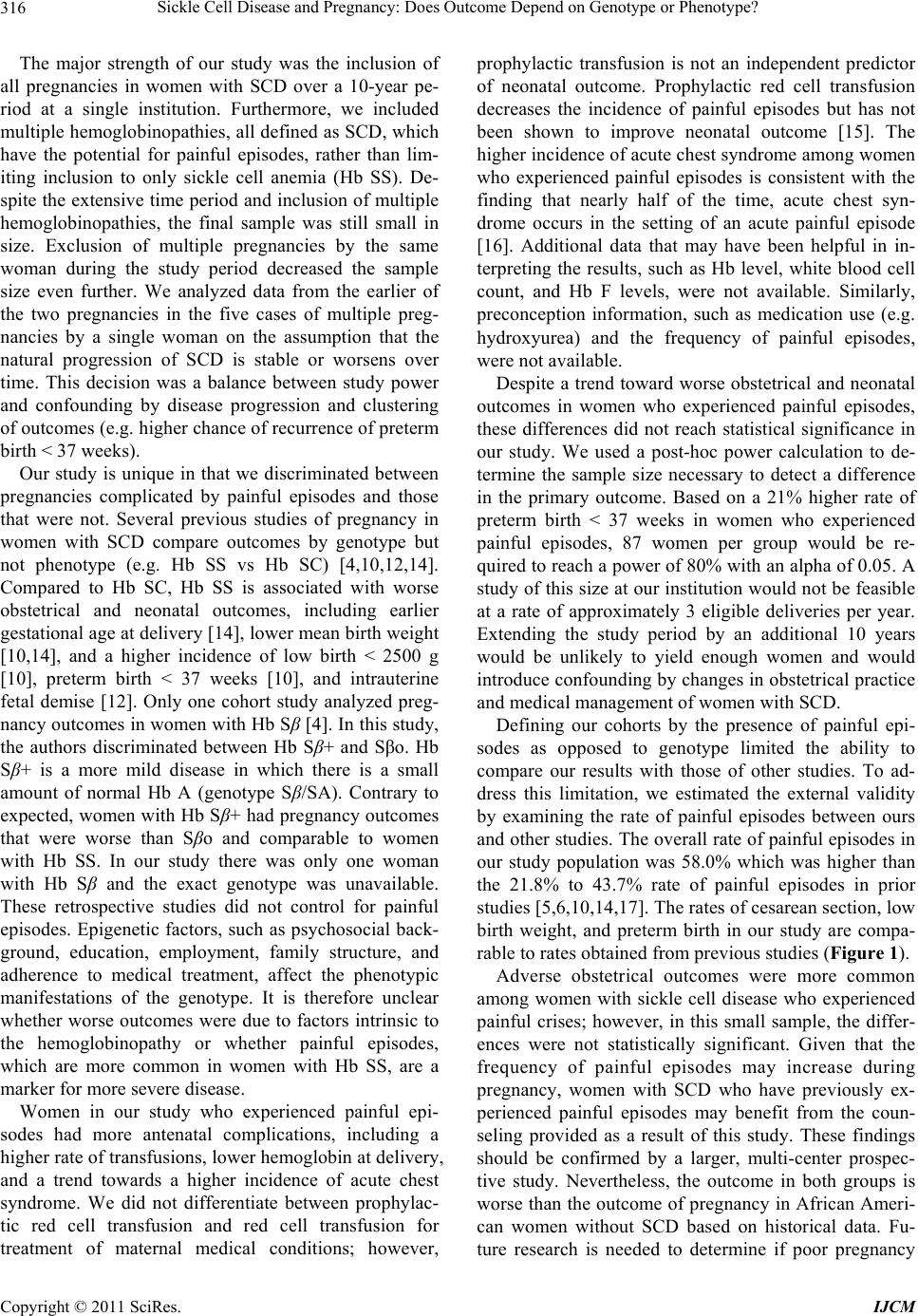 Sickle Cell Disease and Pregnancy: Does Outcome Depend on Genotype or Phenotype? 316 The major strength of our study was the inclusion of all pregnancies in women with SCD over a 10-year pe- riod at a single institution. Furthermore, we included multiple hemoglobinopathies, all defined as SCD, which have the potential for painful episodes, rather than lim- iting inclusion to only sickle cell anemia (Hb SS). De- spite the extensive time period and inclusion of multiple hemoglobinopathies, the final sample was still small in size. Exclusion of multiple pregnancies by the same woman during the study period decreased the sample size even further. We analyzed data from the earlier of the two pregnancies in the five cases of multiple preg- nancies by a single woman on the assumption that the natural progression of SCD is stable or worsens over time. This decision was a balance between study power and confounding by disease progression and clustering of outcomes (e.g. higher chance of recurrence of preterm birth < 37 weeks). Our study is unique in that we discriminated between pregnancies complicated by painful episodes and those that were not. Several previous studies of pregnancy in women with SCD compare outcomes by genotype but not phenotype (e.g. Hb SS vs Hb SC) [4,10,12,14]. Compared to Hb SC, Hb SS is associated with worse obstetrical and neonatal outcomes, including earlier gestational age at delivery [14], lower mean birth weight [10,14], and a higher incidence of low birth < 2500 g [10], preterm birth < 37 weeks [10], and intrauterine fetal demise [12]. Only one cohort study analyzed preg- nancy outcomes in women with Hb Sβ [4]. In this study, the authors discriminated between Hb Sβ+ and Sβo. Hb Sβ+ is a more mild disease in which there is a small amount of normal Hb A (genotype Sβ/SA). Contrary to expected, women with Hb Sβ+ had pregnancy outcomes that were worse than Sβo and comparable to women with Hb SS. In our study there was only one woman with Hb Sβ and the exact genotype was unavailable. These retrospective studies did not control for painful episodes. Epigenetic factors, such as psychosocial back- ground, education, employment, family structure, and adherence to medical treatment, affect the phenotypic manifestations of the genotype. It is therefore unclear whether worse outcomes were due to factors intrinsic to the hemoglobinopathy or whether painful episodes, which are more common in women with Hb SS, are a marker for more severe disease. Women in our study who experienced painful epi- sodes had more antenatal complications, including a higher rate of transfusions, lower hemoglobin at delivery, and a trend towards a higher incidence of acute chest syndrome. We did not differentiate between prophylac- tic red cell transfusion and red cell transfusion for treatment of maternal medical conditions; however, prophylactic transfusion is not an independent predictor of neonatal outcome. Prophylactic red cell transfusion decreases the incidence of painful episodes but has not been shown to improve neonatal outcome [15]. The higher incidence of acute chest syndrome among women who experienced painful episodes is consistent with the finding that nearly half of the time, acute chest syn- drome occurs in the setting of an acute painful episode [16]. Additional data that may have been helpful in in- terpreting the results, such as Hb level, white blood cell count, and Hb F levels, were not available. Similarly, preconception information, such as medication use (e.g. hydroxyurea) and the frequency of painful episodes, were not available. Despite a trend toward worse obstetrical and neonatal outcomes in women who experienced painful episodes, these differences did not reach statistical significance in our study. We used a post-hoc power calculation to de- termine the sample size necessary to detect a difference in the primary outcome. Based on a 21% higher rate of preterm birth < 37 weeks in women who experienced painful episodes, 87 women per group would be re- quired to reach a power of 80% with an alpha of 0.05. A study of this size at our institution would not be feasible at a rate of approximately 3 eligible deliveries per year. Extending the study period by an additional 10 years would be unlikely to yield enough women and would introduce confounding by changes in obstetrical practice and medical management of women with SCD. Defining our cohorts by the presence of painful epi- sodes as opposed to genotype limited the ability to compare our results with those of other studies. To ad- dress this limitation, we estimated the external validity by examining the rate of painful episodes between ours and other studies. The overall rate of painful episodes in our study population was 58.0% which was higher than the 21.8% to 43.7% rate of painful episodes in prior studies [5,6,10,14,17]. The rates of cesarean section, low birth weight, and preterm birth in our study are compa- rable to rates obtained from previous studies (Figure 1). Adverse obstetrical outcomes were more common among women with sickle cell disease who experienced painful crises; however, in this small sample, the differ- ences were not statistically significant. Given that the frequency of painful episodes may increase during pregnancy, women with SCD who have previously ex- perienced painful episodes may benefit from the coun- seling provided as a result of this study. These findings should be confirmed by a larger, multi-center prospec- tive study. Nevertheless, the outcome in both groups is worse than the outcome of pregnancy in African Ameri- can women without SCD based on historical data. Fu- ture research is needed to determine if poor pregnancy Copyright © 2011 SciRes. IJCM 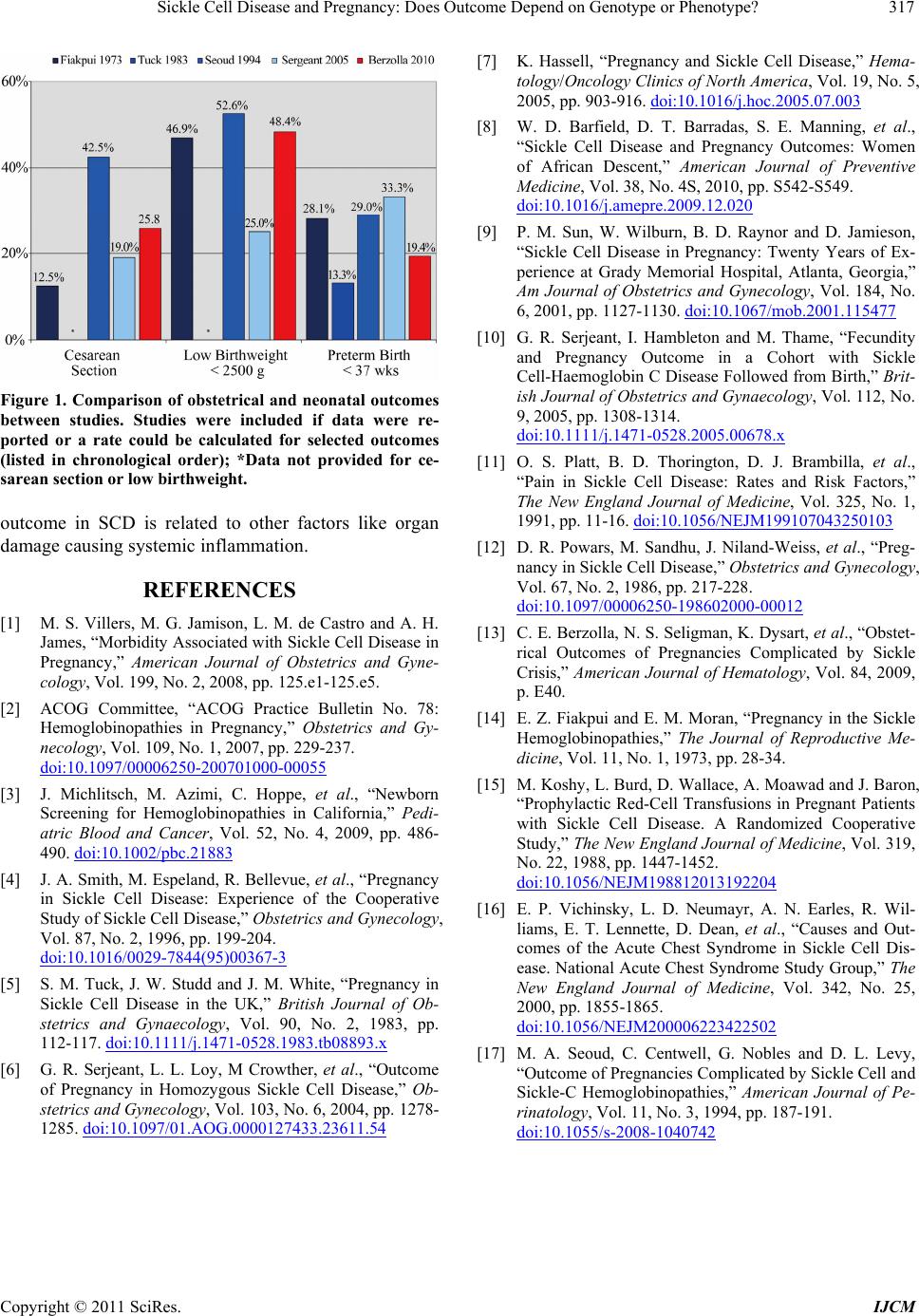 Sickle Cell Disease and Pregnancy: Does Outcome Depend on Genotype or Phenotype? Copyright © 2011 SciRes. IJCM 317 [7] K. Hassell, “Pregnancy and Sickle Cell Disease,” Hema- tology/Oncology Clinics of North America, Vol. 19, No. 5, 2005, pp. 903-916. doi:10.1016/j.hoc.2005.07.003 [8] W. D. Barfield, D. T. Barradas, S. E. Manning, et al., “Sickle Cell Disease and Pregnancy Outcomes: Women of African Descent,” American Journal of Preventive Medicine, Vol. 38, No. 4S, 2010, pp. S542-S549. doi:10.1016/j.amepre.2009.12.020 [9] P. M. Sun, W. Wilburn, B. D. Raynor and D. Jamieson, “Sickle Cell Disease in Pregnancy: Twenty Years of Ex- perience at Grady Memorial Hospital, Atlanta, Georgia,” Am Journal of Obstetrics and Gynecology, Vol. 184, No. 6, 2001, pp. 1127-1130. doi:10.1067/mob.2001.115477 [10] G. R. Serjeant, I. Hambleton and M. Thame, “Fecundity and Pregnancy Outcome in a Cohort with Sickle Cell-Haemoglobin C Disease Followed from Birth,” Brit- ish Journal of Obstetrics and Gynaecology, Vol. 112, No. 9, 2005, pp. 1308-1314. doi:10.1111/j.1471-0528.2005.00678.x Figure 1. Comparison of obstetrical and neonatal outcomes between studies. Studies were included if data were re- ported or a rate could be calculated for selected outcomes (listed in chronological order); *Data not provided for ce- sarean section or low birthweight. [11] O. S. Platt, B. D. Thorington, D. J. Brambilla, et al., “Pain in Sickle Cell Disease: Rates and Risk Factors,” The New England Journal of Medicine, Vol. 325, No. 1, 1991, pp. 11-16. doi:10.1056/NEJM199107043250103 outcome in SCD is related to other factors like organ damage causing systemic inflammation. [12] D. R. Powars, M. Sandhu, J. Niland-Weiss, et al., “Preg- nancy in Sickle Cell Disease,” Obstetrics and Gynecology, Vol. 67, No. 2, 1986, pp. 217-228. doi:10.1097/00006250-198602000-00012 REFERENCES [1] M. S. Villers, M. G. Jamison, L. M. de Castro and A. H. James, “Morbidity Associated with Sickle Cell Disease in Pregnancy,” American Journal of Obstetrics and Gyne- cology, Vol. 199, No. 2, 2008, pp. 125.e1-125.e5. [13] C. E. Berzolla, N. S. Seligman, K. Dysart, et al., “Obstet- rical Outcomes of Pregnancies Complicated by Sickle Crisis,” American Journal of Hematology, Vol. 84, 2009, p. E40. [2] ACOG Committee, “ACOG Practice Bulletin No. 78: Hemoglobinopathies in Pregnancy,” Obstetrics and Gy- necology, Vol. 109, No. 1, 2007, pp. 229-237. doi:10.1097/00006250-200701000-00055 [14] E. Z. Fiakpui and E. M. Moran, “Pregnancy in the Sickle Hemoglobinopathies,” The Journal of Reproductive Me- dicine, Vol. 11, No. 1, 1973, pp. 28-34. [15] M. Koshy, L. Burd, D. Wallace, A. Moawad and J. Baron, “Prophylactic Red-Cell Transfusions in Pregnant Patients with Sickle Cell Disease. A Randomized Cooperative Study,” The New England Journal of Medicine, Vol. 319, No. 22, 1988, pp. 1447-1452. doi:10.1056/NEJM198812013192204 [3] J. Michlitsch, M. Azimi, C. Hoppe, et al., “Newborn Screening for Hemoglobinopathies in California,” Pedi- atric Blood and Cancer, Vol. 52, No. 4, 2009, pp. 486- 490. doi:10.1002/pbc.21883 [4] J. A. Smith, M. Espeland, R. Bellevue, et al., “Pregnancy in Sickle Cell Disease: Experience of the Cooperative Study of Sickle Cell Disease,” Obstetrics and Gynecology, Vol. 87, No. 2, 1996, pp. 199-204. doi:10.1016/0029-7844(95)00367-3 [16] E. P. Vichinsky, L. D. Neumayr, A. N. Earles, R. Wil- liams, E. T. Lennette, D. Dean, et al., “Causes and Out- comes of the Acute Chest Syndrome in Sickle Cell Dis- ease. National Acute Chest Syndrome Study Group,” The New England Journal of Medicine, Vol. 342, No. 25, 2000, pp. 1855-1865. doi:10.1056/NEJM200006223422502 [5] S. M. Tuck, J. W. Studd and J. M. White, “Pregnancy in Sickle Cell Disease in the UK,” British Journal of Ob- stetrics and Gynaecology, Vol. 90, No. 2, 1983, pp. 112-117. doi:10.1111/j.1471-0528.1983.tb08893.x [17] M. A. Seoud, C. Centwell, G. Nobles and D. L. Levy, “Outcome of Pregnancies Complicated by Sickle Cell and Sickle-C Hemoglobinopathies,” American Journal of Pe- rinatology, Vol. 11, No. 3, 1994, pp. 187-191. doi:10.1055/s-2008-1040742 [6] G. R. Serjeant, L. L. Loy, M Crowther, et al., “Outcome of Pregnancy in Homozygous Sickle Cell Disease,” Ob- stetrics and Gynecology, Vol. 103, No. 6, 2004, pp. 1278- 1285. doi:10.1097/01.AOG.0000127433.23611.54 |