

Paper Menu >>
Journal Menu >>
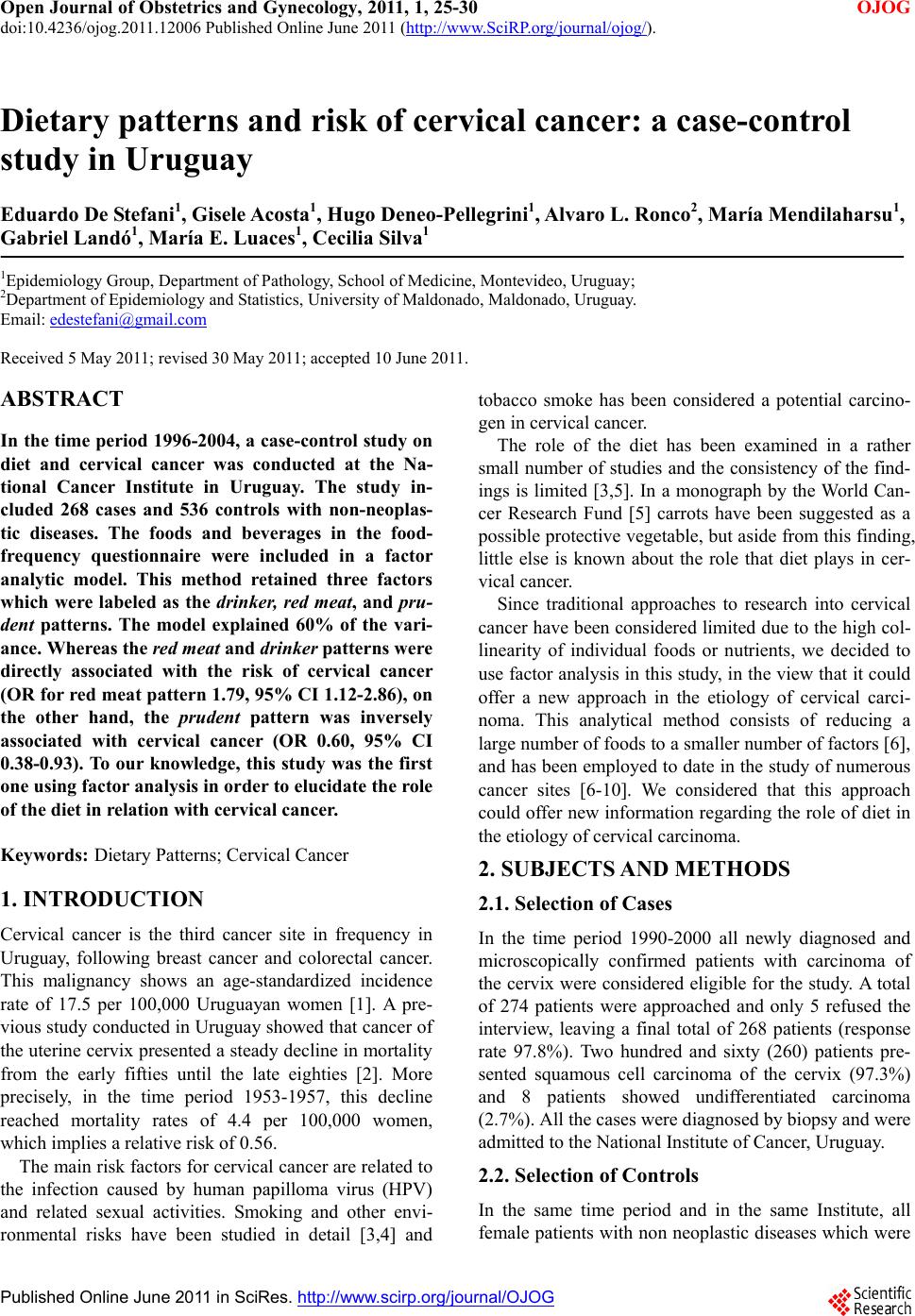 Open Journal of Obstetrics and Gynecology, 2011, 1, 25-30 doi:10.4236/ojog.2011.12006 Published Online June 2011 (http://www.SciRP.org/journal/ojog/ OJOG ). Published Online June 2011 in SciRes. http://www.scirp.org/journal/OJOG Dietary patterns and risk of cervical cancer: a case-control study in Uruguay Eduardo De Stefani1, Gisele Acosta1, Hugo Deneo-Pellegrini1, Alvaro L. Ronco2, María Mendilaharsu1, Gabriel Landó1, María E. Luaces1, Cecilia Silva1 1Epidemiology Group, Department of Pathology, School of Medicine, Montevideo, Uruguay; 2Department of Epidemiology and Statistics, University of Maldonado, Maldonado, Uruguay. Email: [email protected] Received 5 May 2011; revised 30 May 2011; accepted 10 June 2011. ABSTRACT In the time period 1996-2004, a case-control study on diet and cervical cancer was conducted at the Na- tional Cancer Institute in Uruguay. The study in- cluded 268 cases and 536 controls with non-neoplas- tic diseases. The foods and beverages in the food- frequency questionnaire were included in a factor analytic model. This method retained three factors which were labeled as the drinker, red meat, and pru- dent patterns. The model explained 60% of the vari- ance. Whereas the red me at and drinker patterns were directly associated with the risk of cervical cancer (OR for red meat pattern 1.79, 95% CI 1.12-2.86), on the other hand, the prudent pattern was inversely associated with cervical cancer (OR 0.60, 95% CI 0.38-0.93). To our knowledge, this study was the first one using factor analysis in order to elucidate the role of the d i et in relation with cervical cancer. Keywords: Dietary Patterns; Cervical Cancer 1. INTRODUCTION Cervical cancer is the third cancer site in frequency in Uruguay, following breast cancer and colorectal cancer. This malignancy shows an age-standardized incidence rate of 17.5 per 100,000 Uruguayan women [1]. A pre- vious study conducted in Uruguay showed that cancer of the uterine cervix presented a steady decline in mortality from the early fifties until the late eighties [2]. More precisely, in the time period 1953-1957, this decline reached mortality rates of 4.4 per 100,000 women, which implies a relative risk of 0.56. The main risk factors for cervical cancer are related to the infection caused by human papilloma virus (HPV) and related sexual activities. Smoking and other envi- ronmental risks have been studied in detail [3,4] and tobacco smoke has been considered a potential carcino- gen in cervical cancer. The role of the diet has been examined in a rather small number of studies and the consistency of the find- ings is limited [3,5]. In a monograph by the World Can- cer Research Fund [5] carrots have been suggested as a possible protective vegetable, but aside from this finding, little else is known about the role that diet plays in cer- vical cancer. Since traditional approaches to research into cervical cancer have been considered limited due to the high col- linearity of individual foods or nutrients, we decided to use factor analysis in this study, in the view that it could offer a new approach in the etiology of cervical carci- noma. This analytical method consists of reducing a large number of foods to a smaller number of factors [6], and has been employed to date in the study of numerous cancer sites [6-10]. We considered that this approach could offer new information regarding the role of diet in the etiology of cervical carcinoma. 2. SUBJECTS AND METHODS 2.1. Selection of Cases In the time period 1990-2000 all newly diagnosed and microscopically confirmed patients with carcinoma of the cervix were considered eligible for the study. A total of 274 patients were approached and only 5 refused the interview, leaving a final total of 268 patients (response rate 97.8%). Two hundred and sixty (260) patients pre- sented squamous cell carcinoma of the cervix (97.3%) and 8 patients showed undifferentiated carcinoma (2.7%). All the cases were diagnosed by biopsy and were admitted to the National Institute of Cancer, Uruguay. 2.2. Selection of Controls In the same time period and in the same Institute, all female patients with non neoplastic diseases which were 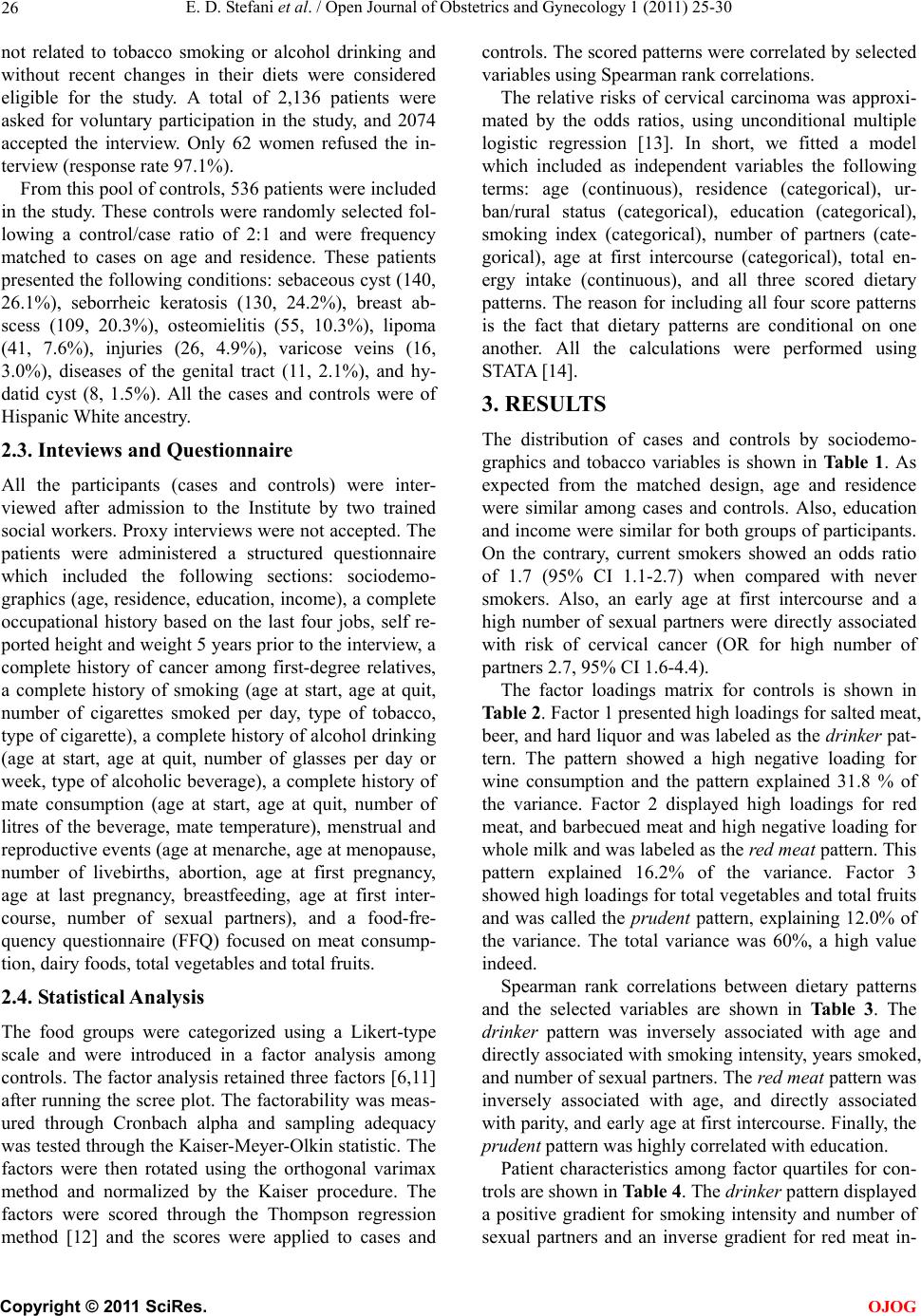 E. D. Stefani et al. / Open Journal of Obstetrics and Gynecology 1 (2011) 25-30 26 not related to tobacco smoking or alcohol drinking and without recent changes in their diets were considered eligible for the study. A total of 2,136 patients were asked for voluntary participation in the study, and 2074 accepted the interview. Only 62 women refused the in- terview (response rate 97.1%). From this pool of controls, 536 patients were included in the study. These controls were randomly selected fol- lowing a control/case ratio of 2:1 and were frequency matched to cases on age and residence. These patients presented the following conditions: sebaceous cyst (140, 26.1%), seborrheic keratosis (130, 24.2%), breast ab- scess (109, 20.3%), osteomielitis (55, 10.3%), lipoma (41, 7.6%), injuries (26, 4.9%), varicose veins (16, 3.0%), diseases of the genital tract (11, 2.1%), and hy- datid cyst (8, 1.5%). All the cases and controls were of Hispanic White ancestry. 2.3. Inteviews and Questionnaire All the participants (cases and controls) were inter- viewed after admission to the Institute by two trained social workers. Proxy interviews were not accepted. The patients were administered a structured questionnaire which included the following sections: sociodemo- graphics (age, residence, education, income), a complete occupational history based on the last four jobs, self re- ported height and weight 5 years prior to the interview, a complete history of cancer among first-degree relatives, a complete history of smoking (age at start, age at quit, number of cigarettes smoked per day, type of tobacco, type of cigarette), a complete history of alcohol drinking (age at start, age at quit, number of glasses per day or week, type of alcoholic beverage), a complete history of mate consumption (age at start, age at quit, number of litres of the beverage, mate temperature), menstrual and reproductive events (age at menarche, age at menopause, number of livebirths, abortion, age at first pregnancy, age at last pregnancy, breastfeeding, age at first inter- course, number of sexual partners), and a food-fre- quency questionnaire (FFQ) focused on meat consump- tion, dairy foods, total vegetables and total fruits. 2.4. Statistical Analysis The food groups were categorized using a Likert-type scale and were introduced in a factor analysis among controls. The factor analysis retained three factors [6,11] after running the scree plot. The factorability was meas- ured through Cronbach alpha and sampling adequacy was tested through the Kaiser-Meyer-Olkin statistic. The factors were then rotated using the orthogonal varimax method and normalized by the Kaiser procedure. The factors were scored through the Thompson regression method [12] and the scores were applied to cases and controls. The scored patterns were correlated by selected variables using Spearman rank correlations. The relative risks of cervical carcinoma was approxi- mated by the odds ratios, using unconditional multiple logistic regression [13]. In short, we fitted a model which included as independent variables the following terms: age (continuous), residence (categorical), ur- ban/rural status (categorical), education (categorical), smoking index (categorical), number of partners (cate- gorical), age at first intercourse (categorical), total en- ergy intake (continuous), and all three scored dietary patterns. The reason for including all four score patterns is the fact that dietary patterns are conditional on one another. All the calculations were performed using STATA [14]. 3. RESULTS The distribution of cases and controls by sociodemo- graphics and tobacco variables is shown in Ta b l e 1 . As expected from the matched design, age and residence were similar among cases and controls. Also, education and income were similar for both groups of participants. On the contrary, current smokers showed an odds ratio of 1.7 (95% CI 1.1-2.7) when compared with never smokers. Also, an early age at first intercourse and a high number of sexual partners were directly associated with risk of cervical cancer (OR for high number of partners 2.7, 95% CI 1.6-4.4). The factor loadings matrix for controls is shown in Table 2. Factor 1 presented high loadings for salted meat, beer, and hard liquor and was labeled as the drinker pat- tern. The pattern showed a high negative loading for wine consumption and the pattern explained 31.8 % of the variance. Factor 2 displayed high loadings for red meat, and barbecued meat and high negative loading for whole milk and was labeled as the red meat pattern. This pattern explained 16.2% of the variance. Factor 3 showed high loadings for total vegetables and total fruits and was called the prudent pattern, explaining 12.0% of the variance. The total variance was 60%, a high value indeed. Spearman rank correlations between dietary patterns and the selected variables are shown in Table 3. The drinker pattern was inversely associated with age and directly associated with smoking intensity, years smoked, and number of sexual partners. The red mea t pattern was inversely associated with age, and directly associated with parity, and early age at first intercourse. Finally, the prudent pattern was highly correlated with education. Patient characteristics among factor quartiles for con- trols are shown in Table 4. The drinker pattern displayed a positive gradient for smoking intensity and number of sexual partners and an inverse gradient for red meat in- C opyright © 2011 SciRes. OJOG 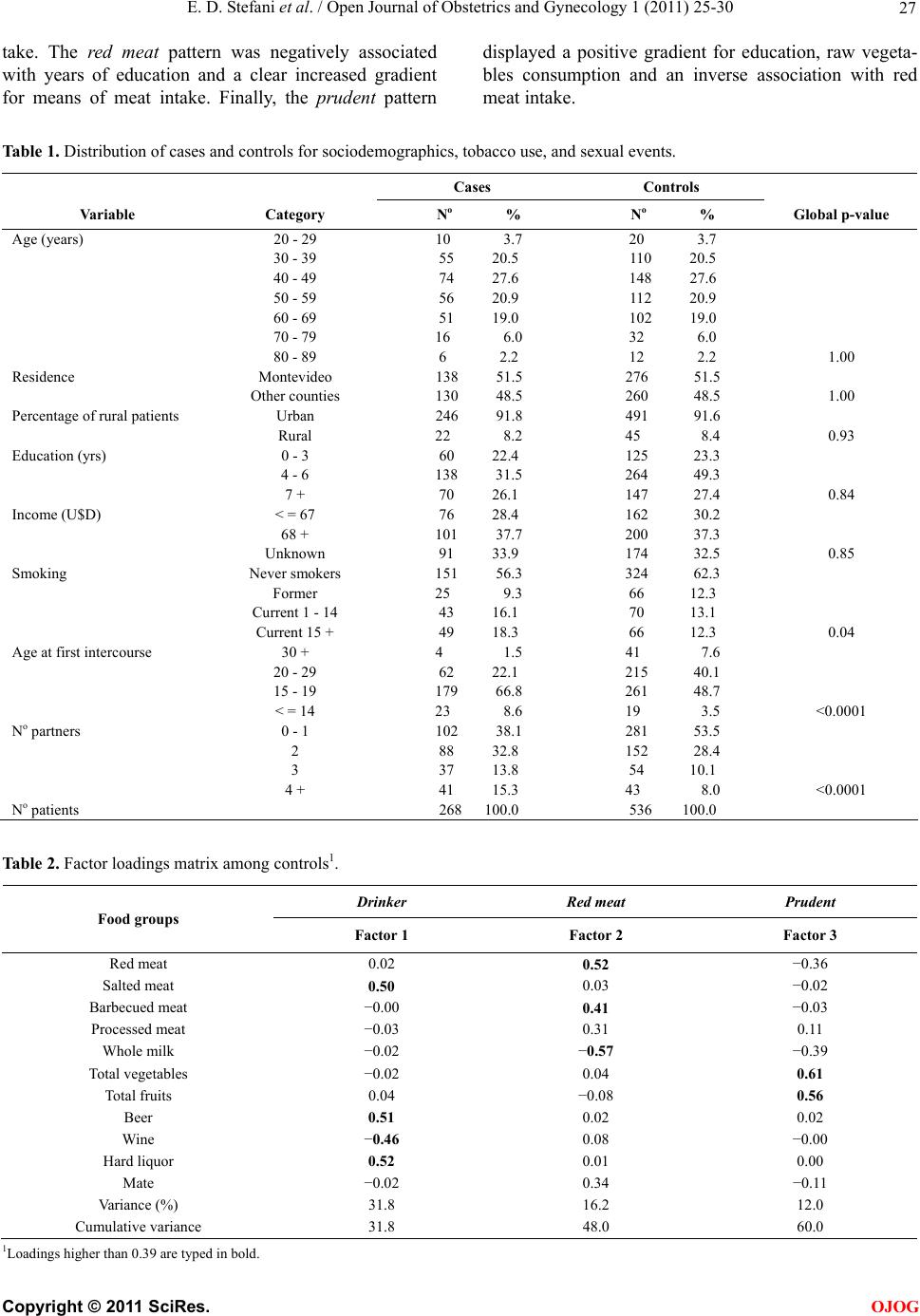 E. D. Stefani et al. / Open Journal of Obstetrics and Gynecology 1 (2011) 25-30 Copyright © 2011 SciRes. 27 OJOG take. The red meat pattern was negatively associated with years of education and a clear increased gradient for means of meat intake. Finally, the prudent pattern displayed a positive gradient for education, raw vegeta- bles consumption and an inverse association with red meat intake. Table 1. Distribution of cases and controls for sociodemographics, tobacco use, and sexual events. Cases Controls Variable Category No % N o % Global p-value Age (years) 20 - 29 10 3.7 20 3.7 30 - 39 55 20.5 110 20.5 40 - 49 74 27.6 148 27.6 50 - 59 56 20.9 112 20.9 60 - 69 51 19.0 102 19.0 70 - 79 16 6.0 32 6.0 80 - 89 6 2.2 12 2.2 1.00 Residence Montevideo 138 51.5 276 51.5 Other counties 130 48.5 260 48.5 1.00 Percentage of rural patients Urban 246 91.8 491 91.6 Rural 22 8.2 45 8.4 0.93 Education (yrs) 0 - 3 60 22.4 125 23.3 4 - 6 138 31.5 264 49.3 7 + 70 26.1 147 27.4 0.84 Income (U$D) < = 67 76 28.4 162 30.2 68 + 101 37.7 200 37.3 Unknown 91 33.9 174 32.5 0.85 Smoking Never smokers 151 56.3 324 62.3 Former 25 9.3 66 12.3 Current 1 - 14 43 16.1 70 13.1 Current 15 + 49 18.3 66 12.3 0.04 Age at first intercourse 30 + 4 1.5 41 7.6 20 - 29 62 22.1 215 40.1 15 - 19 179 66.8 261 48.7 < = 14 23 8.6 19 3.5 <0.0001 No partners 0 - 1 102 38.1 281 53.5 2 88 32.8 152 28.4 3 37 13.8 54 10.1 4 + 41 15.3 43 8.0 <0.0001 No patients 268 100.0 536 100.0 Table 2. Factor loadings matrix among controls1. Drinker Red meat Prudent Food groups Factor 1 Factor 2 Factor 3 Red meat 0.02 0.52 −0.36 Salted meat 0.50 0.03 −0.02 Barbecued meat −0.00 0.41 −0.03 Processed meat −0.03 0.31 0.11 Whole milk −0.02 −0.57 −0.39 Total vegetables −0.02 0.04 0.61 Total fruits 0.04 −0.08 0.56 Beer 0.51 0.02 0.02 Wine −0.46 0.08 −0.00 Hard liquor 0.52 0.01 0.00 Mate −0.02 0.34 −0.11 Variance (%) 31.8 16.2 12.0 Cumulative variance 31.8 48.0 60.0 1Loadings higher than 0.39 are typed in bold. 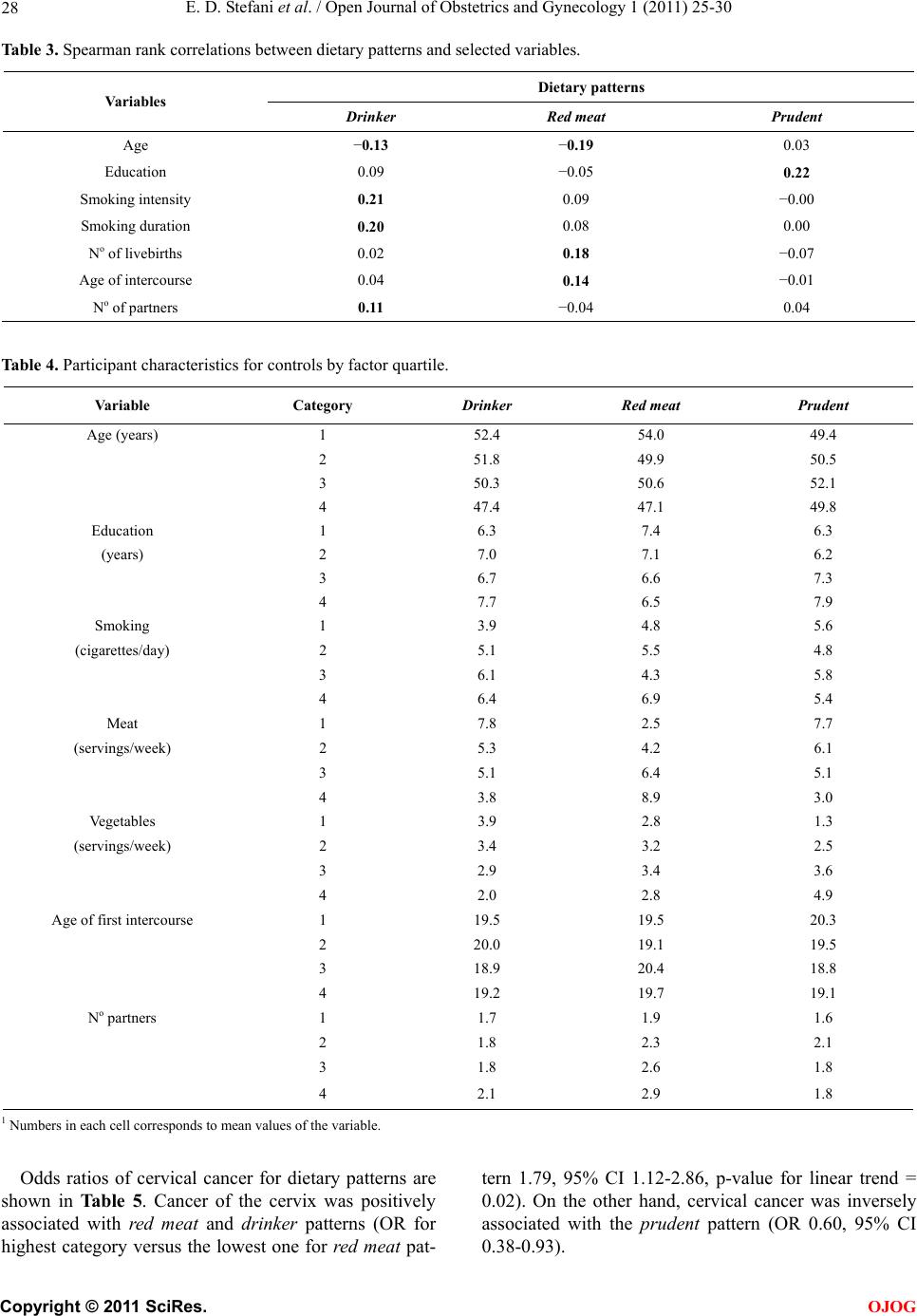 E. D. Stefani et al. / Open Journal of Obstetrics and Gynecology 1 (2011) 25-30 28 Table 3. Spearman rank correlations between dietary patterns and selected variables. Dietary patterns Variables Drinker Red meat Prudent Age −0.13 −0.19 0.03 Education 0.09 −0.05 0.22 Smoking intensity 0.21 0.09 −0.00 Smoking duration 0.20 0.08 0.00 No of livebirths 0.02 0.18 −0.07 Age of intercourse 0.04 0.14 −0.01 No of partners 0.11 −0.04 0.04 Table 4. Participant characteristics for controls by factor quartile. Variable Category Drinker Red meat Prudent Age (years) 1 52.4 54.0 49.4 2 51.8 49.9 50.5 3 50.3 50.6 52.1 4 47.4 47.1 49.8 Education 1 6.3 7.4 6.3 (years) 2 7.0 7.1 6.2 3 6.7 6.6 7.3 4 7.7 6.5 7.9 Smoking 1 3.9 4.8 5.6 (cigarettes/day) 2 5.1 5.5 4.8 3 6.1 4.3 5.8 4 6.4 6.9 5.4 Meat 1 7.8 2.5 7.7 (servings/week) 2 5.3 4.2 6.1 3 5.1 6.4 5.1 4 3.8 8.9 3.0 Vegetables 1 3.9 2.8 1.3 (servings/week) 2 3.4 3.2 2.5 3 2.9 3.4 3.6 4 2.0 2.8 4.9 Age of first intercourse 1 19.5 19.5 20.3 2 20.0 19.1 19.5 3 18.9 20.4 18.8 4 19.2 19.7 19.1 No partners 1 1.7 1.9 1.6 2 1.8 2.3 2.1 3 1.8 2.6 1.8 4 2.1 2.9 1.8 1 Numbers in each cell corresponds to mean values of the variable. Odds ratios of cervical cancer for dietary patterns are shown in Table 5. Cancer of the cervix was positively associated with red meat and drinker patterns (OR for highest category versus the lowest one for red meat pat- tern 1.79, 95% CI 1.12-2.86, p-value for linear trend = 0.02). On the other hand, cervical cancer was inversely associated with the prudent pattern (OR 0.60, 95% CI 0.38-0.93). C opyright © 2011 SciRes. OJOG 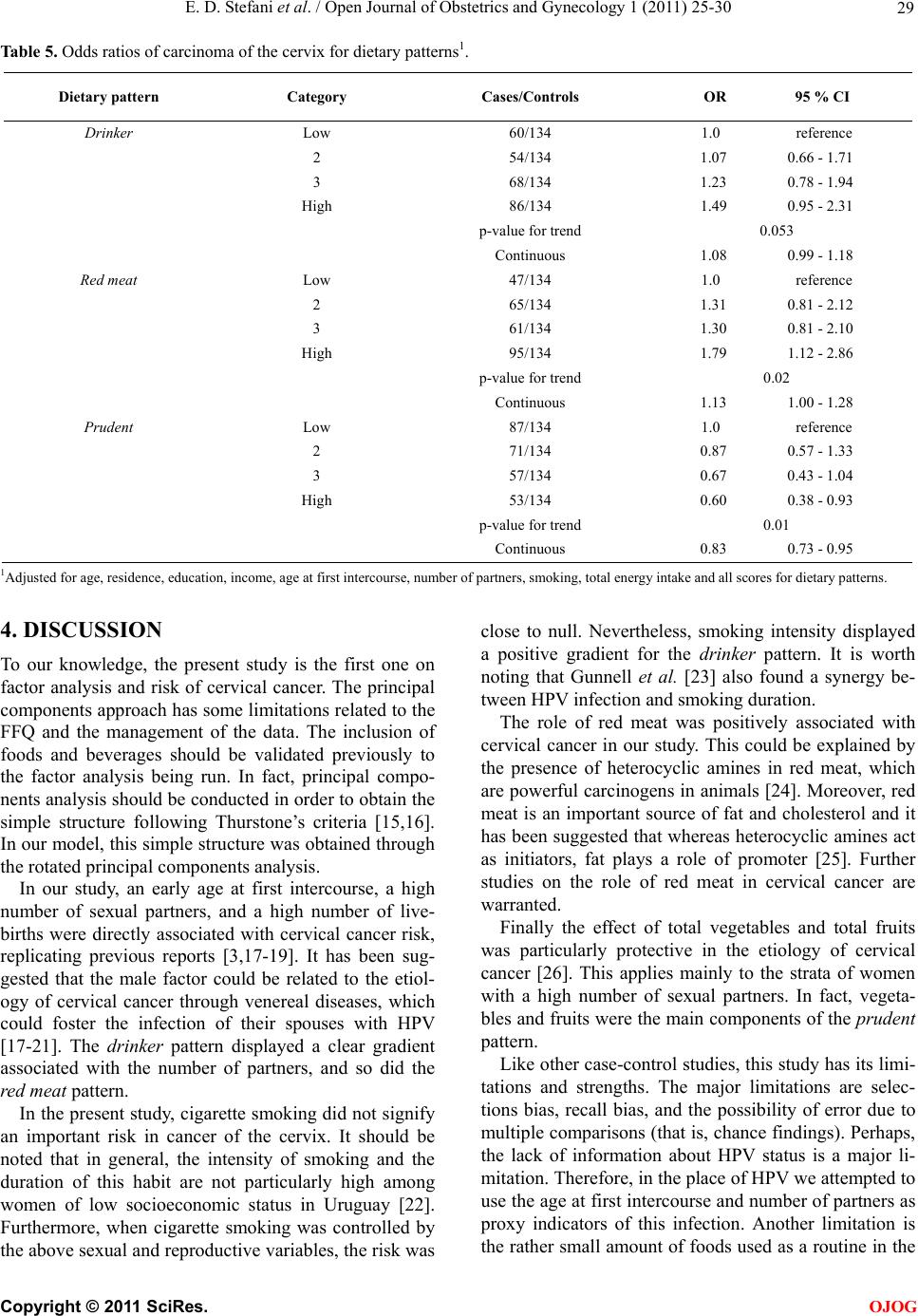 E. D. Stefani et al. / Open Journal of Obstetrics and Gynecology 1 (2011) 25-30 29 Table 5. Odds ratios of carcinoma of the cervix for dietary patterns1. Dietary pattern Category Cases/Controls OR 95 % CI Drinker Low 60/134 1.0 reference 2 54/134 1.07 0.66 - 1.71 3 68/134 1.23 0.78 - 1.94 High 86/134 1.49 0.95 - 2.31 p-value for trend 0.053 Continuous 1.08 0.99 - 1.18 Red meat Low 47/134 1.0 reference 2 65/134 1.31 0.81 - 2.12 3 61/134 1.30 0.81 - 2.10 High 95/134 1.79 1.12 - 2.86 p-value for trend 0.02 Continuous 1.13 1.00 - 1.28 Prudent Low 87/134 1.0 reference 2 71/134 0.87 0.57 - 1.33 3 57/134 0.67 0.43 - 1.04 High 53/134 0.60 0.38 - 0.93 p-value for trend 0.01 Continuous 0.83 0.73 - 0.95 1Adjusted for age, residence, education, income, age at first intercourse, number of partners, smoking, total energy intake and all scores for dietary patterns. 4. DISCUSSION To our knowledge, the present study is the first one on factor analysis and risk of cervical cancer. The principal components approach has some limitations related to the FFQ and the management of the data. The inclusion of foods and beverages should be validated previously to the factor analysis being run. In fact, principal compo- nents analysis should be conducted in order to obtain the simple structure following Thurstone’s criteria [15,16]. In our model, this simple structure was obtained through the rotated principal components analysis. In our study, an early age at first intercourse, a high number of sexual partners, and a high number of live- births were directly associated with cervical cancer risk, replicating previous reports [3,17-19]. It has been sug- gested that the male factor could be related to the etiol- ogy of cervical cancer through venereal diseases, which could foster the infection of their spouses with HPV [17-21]. The drinker pattern displayed a clear gradient associated with the number of partners, and so did the red me at pattern. In the present study, cigarette smoking did not signify an important risk in cancer of the cervix. It should be noted that in general, the intensity of smoking and the duration of this habit are not particularly high among women of low socioeconomic status in Uruguay [22]. Furthermore, when cigarette smoking was controlled by the above sexual and reproductive variables, the risk was close to null. Nevertheless, smoking intensity displayed a positive gradient for the drinker pattern. It is worth noting that Gunnell et al. [23] also found a synergy be- tween HPV infection and smoking duration. The role of red meat was positively associated with cervical cancer in our study. This could be explained by the presence of heterocyclic amines in red meat, which are powerful carcinogens in animals [24]. Moreover, red meat is an important source of fat and cholesterol and it has been suggested that whereas heterocyclic amines act as initiators, fat plays a role of promoter [25]. Further studies on the role of red meat in cervical cancer are warranted. Finally the effect of total vegetables and total fruits was particularly protective in the etiology of cervical cancer [26]. This applies mainly to the strata of women with a high number of sexual partners. In fact, vegeta- bles and fruits were the main components of the prudent pattern. Like other case-control studies, this study has its limi- tations and strengths. The major limitations are selec- tions bias, recall bias, and the possibility of error due to multiple comparisons (that is, chance findings). Perhaps, the lack of information about HPV status is a major li- mitation. Therefore, in the place of HPV we attempted to use the age at first intercourse and number of partners as proxy indicators of this infection. Another limitation is the rather small amount of foods used as a routine in the C opyright © 2011 SciRes. OJOG  E. D. Stefani et al. / Open Journal of Obstetrics and Gynecology 1 (2011) 25-30 30 FFQ administered by the Cancer Institute. Among the strengths, in the first place, is the power of the study, measured by the sampling adequacy, which allowed the estimation of small ORs as significant. Secondly, all the cases were validated by expert pathologists, and finally, the high response rate among cases and controls suggests that participants were drawn from the same population base. In summary, we conducted a factor analysis on the re- lationship between foods and beverages and risk of cer- vical cancer. Whereas the red meat pattern was directly associated with this malignancy, the prudent pattern was inversely associated with cancer of the cervix. In short, the main novelty of this study is the use of factor analy- sis in cervical cancer to evaluate the role of diet in this malignancy. REFERENCES [1] Barrios, E., Vassallo, J.A., Alonso, R., Garau, M. and Musetti, C. (2010) III Atlas de Incidencia del Cáncer en el Uruguay. Registro Nacional de Cáncer. Comisión Honoraria de Lucha contra el Cáncer, 87-88 (In Spanish). [2] De Stefani, E., Fierro, L., Barrios, E. and Ronco, A. (1994) Cancer mortality trends in Uruguay 1953-1991. International Journal of Cancer, 56, 634-639. doi:10.1002/ijc.2910560505 [3] Schiffman, M.H., Brinton, L.A., Devesa, S.S. and Fraumeni, J.F. (1996) Cervical cancer. In: Schottenfeld, D. and Fraumeni, J.F. Eds. Cancer Epidemiology and Prevention. Second Edition. Oxford University Press, New York, 1090-1116. [4] IARC Monographs on the evaluation of carcinogenic risks to humans. (2004) Tobacco smoke and involuntary smoking, 83, Lyon, France, 743-792. [5] World Cancer Research Fund/American Institute for Cancer Research (2007) Food, nutrition, physical activity, and the prevention of cancer: A global perspective. AICR, Washington DC, 302-304. [6] Mulaik, S.A. (2010) Foundations of Factor Analysis. Second Edition, CRC Press, Boca Raton, 276-279. [7] De Stefani, E., Deneo-Pellegrini, H., Boffetta, P., et al. (2009) Dietary patterns and risk of cancer: A factor analysis in Uruguay. International Journal of Cancer, 124, 1391-1397. doi:10.1002/ijc.24035 [8] Ronco, A.L., De Stefani, E., Boffetta, P., et al. (2006) Food patterns and risk of breast cancer: A factor analysis study in Uruguay. International Journal of Cancer, 11 9, 1672-1678. doi:10.1002/ijc.22021 [9] Dixon, L.B., Balder, H.B., Virtannen, M.J., et al. (2004) Dietary patterns associated with colon and rectum cancer: Results from the Dietary Patterns and Cancer (DIET- SCAN) Project. The American Journal of Clinical Nutri- tion, 80, 1003-1011. [10] Slattery, M.L., Boucher, K.M., Cann, B.J., et al. (1998) Eating patterns and risk of colon cancer. American Jour- nal of Epidemiology, 148, 4-16. [11] Gorsuch, R.L. (2008) Factor Analysis. Second Edition. Psychology Press, Taylor & Francis Group, London, 234- 236. [12] Thomson, G.H. (1951) The factorial analysis of human ability. University of London Press, London. [13] Rothman, K.J., Greenland, S. and Lash, T. (2008) Mod- ern epidemiology. Third Edition. Lippincott Williams & Wilkins, Philadelphia, 303-327. [14] StataCorp. (2007) Stata Statistical Software. Release 10. College Station, StataCorp LP, Texas. [15] Thurstone, L.L. (1947) Multiple factor analysis: A de- velopment and expansion of vectors of the mind. Univer- sity of Chicago Press, Chicago. [16] Kline, P. (2002) An easy guide to factor analysis. Rout- lege, New York. [17] Brinton, L.A., Reeves, W.C., Brenes, M.M., et al. (1989) The male factor in the etiology of cervical cancer among sexually monogamous women. International Journal of Cancer, 44, 199-203. doi:10.1002/ijc.2910440202 [18] Muñoz, N., Bosch, F.X., Shah, K.V., Meheus, A. (Editors) (1992) The epidemiology of human papillomavirus and cervical cancer. IARC Scientific Publications, Lyon. [19] Bosch, F.X., Manos, M.M., Muñoz, N., et al. (1995) Prevalence of human papillomavirus in cervical cancer: A worldwide perspective. Journal of the National Cancer Institute, 87, 796-802. doi:10.1093/jnci/87.11.796 [20] Herrero, R., Potischman, N., Brinton, L.A., et al. (1991) A case-control study of nutrient status and invasive cer- vical cancer: I. dietary indicators. American Journal of Epidemiology, 134, 1335-1346. [21] Castellsagué, X., Bosch, F.X., Muñoz, N., et al. (2002) Male circumsion, penile human papillomavirus infection, and cervical cancer in female partners. The New England Journal of Medicine, 346, 1105-1112. doi:10.1056/NEJMoa011688 [22] Carámbula, J.A., Ronco, A.L. and Niedworok, N.T. (1995) Investigación sociolaboral del tabaquismo en el Uruguay urbano. Programa Nacional de Prevencion del Cáncer de Pulmón. Dirección General de Salud. Ministerio de Salud Pública, Academia Nacional de Medicina, Uruguay, (In Spanish). [23] Gunnell, A.S., Tran, T.N., Torrang, A., et al. (2006) Syn- ergy between cigarette smoking and human papillomavi- rus type 16 in cervical cancer in situ development. Can- cer Epidemiology, Biomarkers & Prevention, 15, 2141- 2147. doi:10.1158/1055-9965.EPI-06-0399 [24] Sinha, R. (2002) An epidemiologic approach to studying heterocyclic amines. Mutation Research, 506-507, 197- 204. doi:10.1016/S0027-5107(02)00166-5 [25] Weisburger, J.H. (2002) Comments on the history and importance of aromatic and heterocyclic amines in public health. Mutation Research, 506-507, 9-20. doi:10.1016/S0027-5107(02)00147-1 [26] IARC Handbooks of Cancer Prevention. (2003) Fruit and Vegetables. IARC Press, Lyon, 8, 89-92. C opyright © 2011 SciRes. OJOG |