

Paper Menu >>
Journal Menu >>
 Low Carbon Economy, 2011, 2, 107-114 doi:10.4236/lce.2011.22014 Published Online June 2011 (http://www.SciRP.org/journal/lce) Copyright © 2011 SciRes. LCE Lifestyles and Their Impact on Energy-Related Investment Decisions Maria Gröger, Victoria Schmid, Thomas Bruckner Institute for Infrastructure and Resources Management, University of Leipzig, Leipzig, Germany. Email: [email protected] Received May 3rd, 2011; revised May 23rd, 2011; accepted June 2nd, 2011. ABSTRACT This paper presents an empirical survey of energy-related i nvestment decisions made by private households in Germany. The investment behaviour is segmented and discussed by applying the milieu approach. The decision makers are clus- tered in certain lifestyles, as represented by the Sinus-Milieus® from the Sinus Institute. To analyse the relationship between the lifestyles of house owners and their energy-related investment decisions, telephone interviews were con- ducted in order to acquire data on currently installed heating systems and preferences for future heating systems in private residential buildings. The results of the survey support the hypothesis of a link between lifestyles and the en- ergy-related investment behaviour. Based on the observed relationship between lifestyles and decisions on energy technologies, predictions of energy trends in private residential buildings can be improved. In addition, the knowledge about specific development paths allows the utilisation of the information for information campaigns and the promotion of energy supply technologies which lead to lower CO2-emissions. Keywords: Lifestyles, Consumers, Survey , Space Heating Technology 1. Introduction – Rationale for the Approach Private consumption, especially energy consumption, is one of the largest demand classes in most economies, and is therefore responsible for a major fraction of global emissions. Reducing energy use and related emissions in private households is an important step towards a more sustainable future in a carbon neutral economic society. In industrialised countries, the energy consumption in private households is dominated by the heating energy demand; indeed, with 67% space-heating is still the larg- est household energy end-use in the EU [1]. Many stud- ies [2-5] show that the use of fossil fuels for heating could be reduced significantly by more efficient heating systems, the use of renewable energies and an energy efficient retrofitting of buildings. However, the extent to which the theoretical reduction potential can be realized depends on individual decision processes. For instance, residential heat demand depends on the energy consump- tion behaviour of building owners. Such behaviour can be subdivided into two consumption profiles: Operational decisions of private households, e.g. using hot water and selecting an indoor temperature, are made intuitively and may not be changed expeditiously [6]. However, in order to be able to make energy-related in- vestment decisions, different technology options, the fu- ture energy demand and the estimated costs have to be considered. The study presented in this paper focuses on such investment decisions related to energy conversion technologies, which largely influence the final energy demand of buildings (cf. Figure 1). In doing so, this study concentrates on investment decisions in the resi- dential sector which are undertaken by private building owners. Diffusion of distributed energy technologies affects the entire urban energy system. Thus, environmental in- novations (e.g. the use of renewable energy) in this field are an important step towards a sustainable future. Using lifestyles is a possible approach for conducting research on environmental innovations in the context of energy consumption [7,8 ]. That data is complemented with find- ings from sociology, which indicate that a society can be clustered into social milieus [9]. This empirical socio- logical research has revealed that most people in a soci- ety are not homogeneous. They differ with respect to their preferences and knowledge, their ability to explore and process information, and therefore exhibit individual rates of acceptance of energy technologies. Consequently, Rogers [10] and Vishwanath [11] differentiate people according to their innovativeness because of the impact 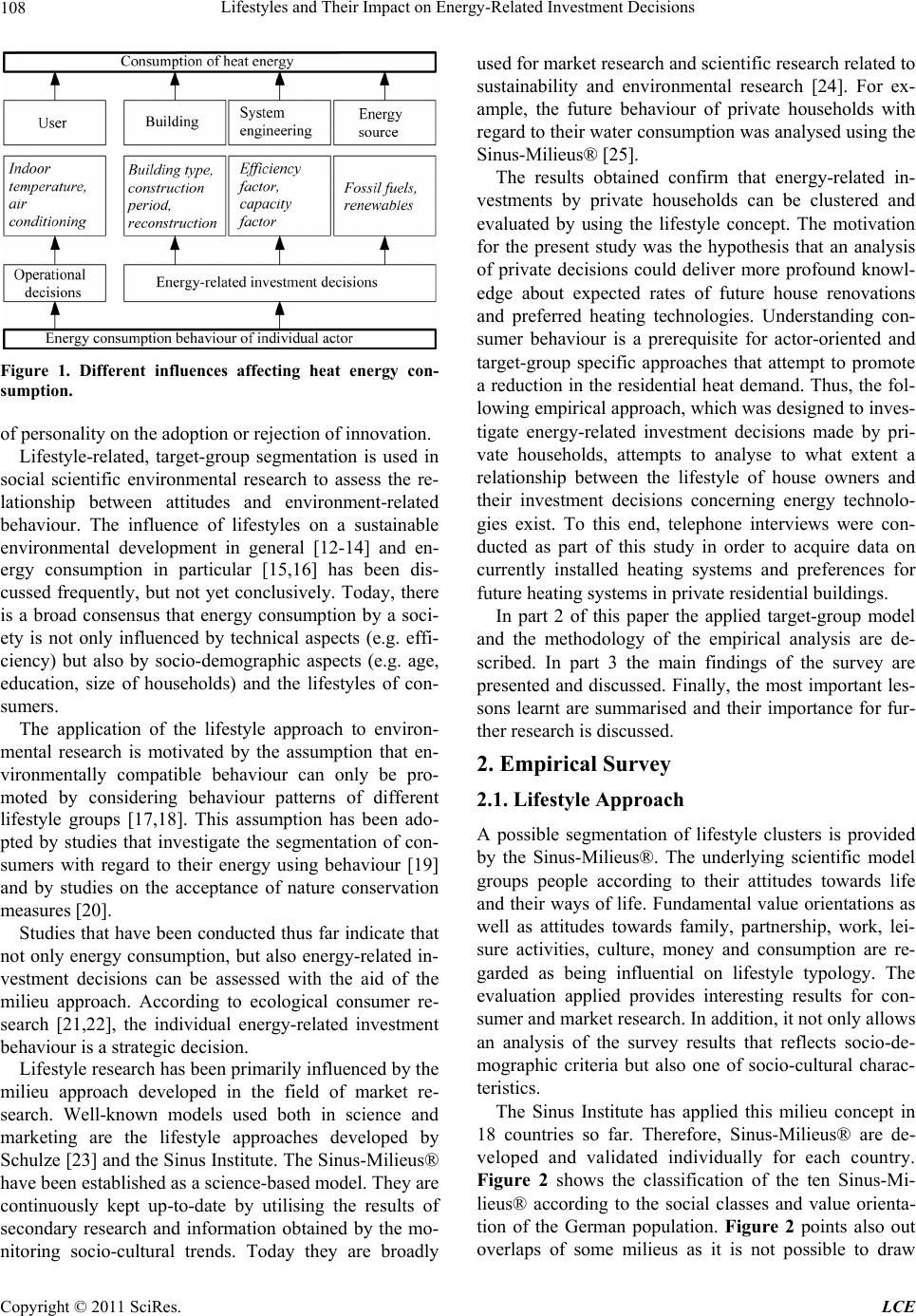 Lifestyles and Their Impact on Energy-Related Investment Decisions 108 Figure 1. Different influences affecting heat energy con- sumption. of personality on the adoption or rejection of innovation. Lifestyle-related, target-group segmentation is used in social scientific environmental research to assess the re- lationship between attitudes and environment-related behaviour. The influence of lifestyles on a sustainable environmental development in general [12-14] and en- ergy consumption in particular [15,16] has been dis- cussed frequently, but not yet conclusively. Today, there is a broad consensus that energy consumption by a soci- ety is not only influenced by technical aspects (e.g. effi- ciency) but also by socio-demographic aspects (e.g. age, education, size of households) and the lifestyles of con- sumers. The application of the lifestyle approach to environ- mental research is motivated by the assumption that en- vironmentally compatible behaviour can only be pro- moted by considering behaviour patterns of different lifestyle groups [17,18]. This assumption has been ado- pted by studies that investigate the segmentation of con- sumers with regard to their energy using behaviour [19] and by studies on the acceptance of nature conservation measures [20]. Studies that have been conducted thus far indicate that not only energy consumption, but also energy-related in- vestment decisions can be assessed with the aid of the milieu approach. According to ecological consumer re- search [21,22], the individual energy-related investment behaviour is a strategic decision. Lifestyle research has been primarily influenced by the milieu approach developed in the field of market re- search. Well-known models used both in science and marketing are the lifestyle approaches developed by Schulze [23] and the Sinus Institute. The Sinus-Milieus® have been established as a science-based model. They are continuously kept up-to-date by utilising the results of secondary research and information obtained by the mo- nitoring socio-cultural trends. Today they are broadly used for mark e t r e s e ar ch and scientific research related to sustainability and environmental research [24]. For ex- ample, the future behaviour of private households with regard to their water consumption was analysed using the Sinus-Milieus® [25]. The results obtained confirm that energy-related in- vestments by private households can be clustered and evaluated by using the lifestyle concept. The motivation for the present study was the hypothesis that an analysis of private decisions could deliver more profound knowl- edge about expected rates of future house renovations and preferred heating technologies. Understanding con- sumer behaviour is a prerequisite for actor-oriented and target-group specific approaches that attempt to promote a reduction in th e residential heat demand. Thus, the fol- lowing empirical approach, which was designed to inves- tigate energy-related investment decisions made by pri- vate households, attempts to analyse to what extent a relationship between the lifestyle of house owners and their investment decisions concerning energy technolo- gies exist. To this end, telephone interviews were con- ducted as part of this study in order to acquire data on currently installed heating systems and preferences for future heating systems in private residential buildings. In part 2 of this paper the applied target-group model and the methodology of the empirical analysis are de- scribed. In part 3 the main findings of the survey are presented and discussed. Finally, the most important les- sons learnt are summarised and their importance for fur- ther research is discussed. 2. Empirical Survey 2.1. Lifestyle Approach A possible segmentation of lifestyle clusters is provided by the Sinus-Milieus®. The underlying scientific model groups people according to their attitudes towards life and their ways of life. Fundamental value orientations as well as attitudes towards family, partnership, work, lei- sure activities, culture, money and consumption are re- garded as being influential on lifestyle typology. The evaluation applied provides interesting results for con- sumer and market research. In addition, it not only allows an analysis of the survey results that reflects socio-de- mographic criteria but also one of socio-cultural charac- teristics. The Sinus Institute has applied this milieu concept in 18 countries so far. Therefore, Sinus-Milieus® are de- veloped and validated individually for each country. Figure 2 shows the classification of the ten Sinus-Mi- lieus® according to the social classes and value orienta- tion of the German population. Figure 2 points also out overlaps of some milieus as it is not possible to draw C opyright © 2011 SciRes. LCE 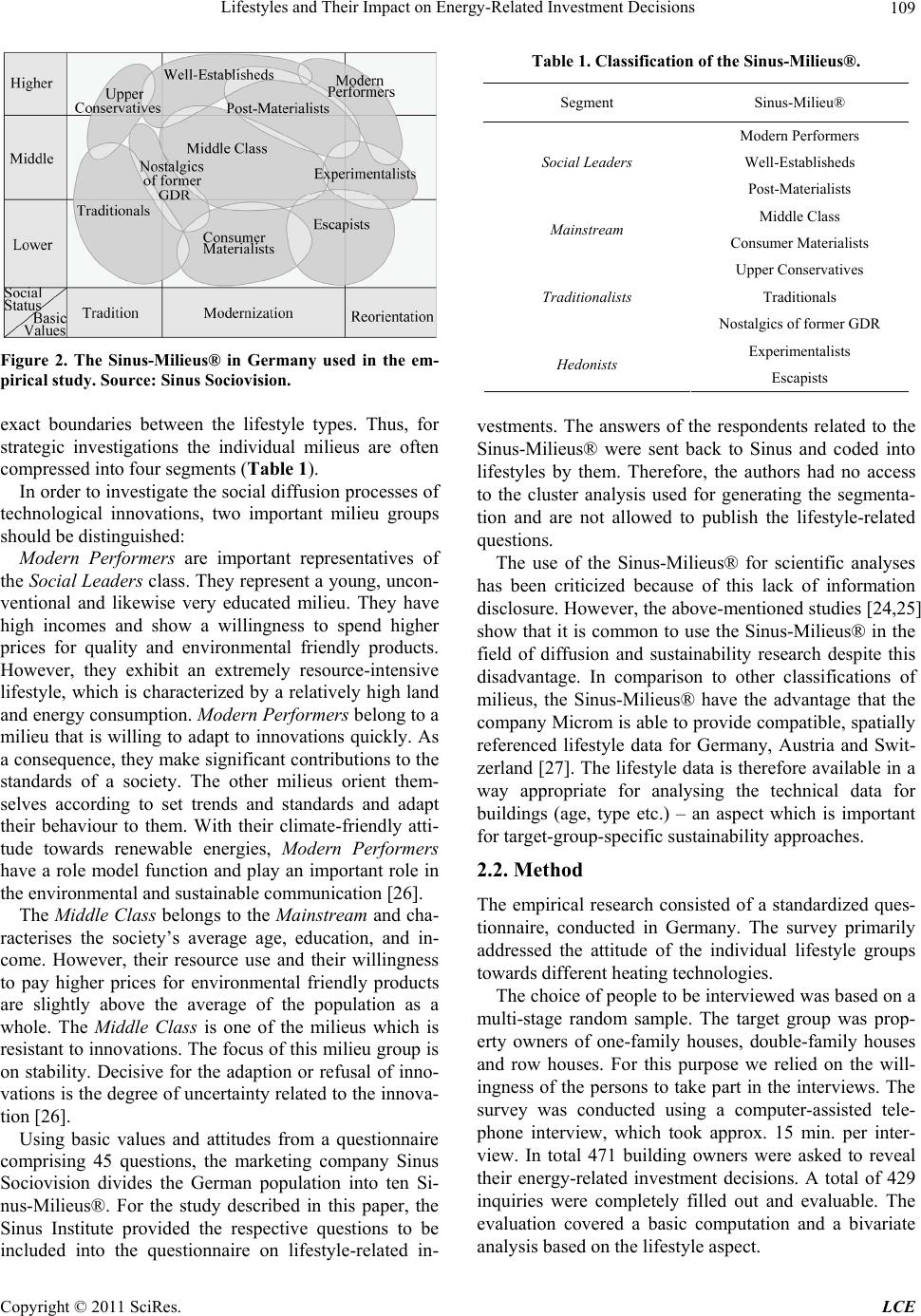 Lifestyles and Their Impact on Energy-Related Investment Decisions109 Figure 2. The Sinus-Milieus® in Germany used in the em- pirical study. Source: Sinus Sociovision. exact boundaries between the lifestyle types. Thus, for strategic investigations the individual milieus are often compressed into four segments (Table 1). In order to investigate the social diffusion processes of technological innovations, two important milieu groups should be disti ngui shed: Modern Performers are important representatives of the Social Leaders class. They rep resent a young , uncon- ventional and likewise very educated milieu. They have high incomes and show a willingness to spend higher prices for quality and environmental friendly products. However, they exhibit an extremely resource-intensive lifestyle, which is characterized by a relatively high land and energy consumption. Modern Performers belong to a milieu that is willing to adapt to innovations quickly. As a consequence, they make significant contributions to the standards of a society. The other milieus orient them- selves according to set trends and standards and adapt their behaviour to them. With their climate-friendly atti- tude towards renewable energies, Modern Performers have a role model function and play an important role in the environmental and sustainable communication [26]. The Middle Class b elongs to the Mainstream and cha- racterises the society’s average age, education, and in- come. However, their resource use and their willingness to pay higher prices for environmental friendly products are slightly above the average of the population as a whole. The Middle Class is one of the milieus which is resistant to innovations. The focus of this milieu group is on stability. Decisive for the adaption or refusal of inno- vations is the degr ee of uncertainty related to the innova- tion [26]. Using basic values and attitudes from a questionnaire comprising 45 questions, the marketing company Sinus Sociovision divides the German population into ten Si- nus-Milieus®. For the study described in this paper, the Sinus Institute provided the respective questions to be included into the questionnaire on lifestyle-related in- Table 1. Classification of the Sinus-Milieus®. Segment Sinus-Milieu® Modern Performers Well-Establisheds Social Leaders Post-Materialists Middle Class Mainstream Consumer Materialists Upper Conservatives Traditionals Traditionalists Nostalgics of former GDR Experimentalists Hedonists Escapists vestments. The answers of the respondents related to the Sinus-Milieus® were sent back to Sinus and coded into lifestyles by them. Therefore, the authors had no access to the cluster analysis used for generating the segmenta- tion and are not allowed to publish the lifestyle-related questions. The use of the Sinus-Milieus® for scientific analyses has been criticized because of this lack of information disclosure. However, the above-mentioned studies [24,25] show that it is common to use the Sinus-Milieus® in the field of diffusion and sustainability research despite this disadvantage. In comparison to other classifications of milieus, the Sinus-Milieus® have the advantage that the company Microm is able to provide compatible, spatially referenced lifestyle data for Germany, Austria and Swit- zerland [27]. The lifestyle data is therefore available in a way appropriate for analysing the technical data for buildings (age, type etc.) – an aspect which is important for target-group-specific su stainability approaches. 2.2. Method The empirical research consisted of a standardized ques- tionnaire, conducted in Germany. The survey primarily addressed the attitude of the individual lifestyle groups towards different heating technologies. The choice of people to be interviewed was based on a multi-stage random sample. The target group was prop- erty owners of one-family houses, double-family houses and row houses. For this purpose we relied on the will- ingness of the persons to take part in the interviews. The survey was conducted using a computer-assisted tele- phone interview, which took approx. 15 min. per inter- view. In total 471 building owners were asked to reveal their energy-related investment decisions. A total of 429 inquiries were completely filled out and evaluable. The evaluation covered a basic computation and a bivariate analysis based on the lifestyle aspect. Copyright © 2011 SciRes. LCE 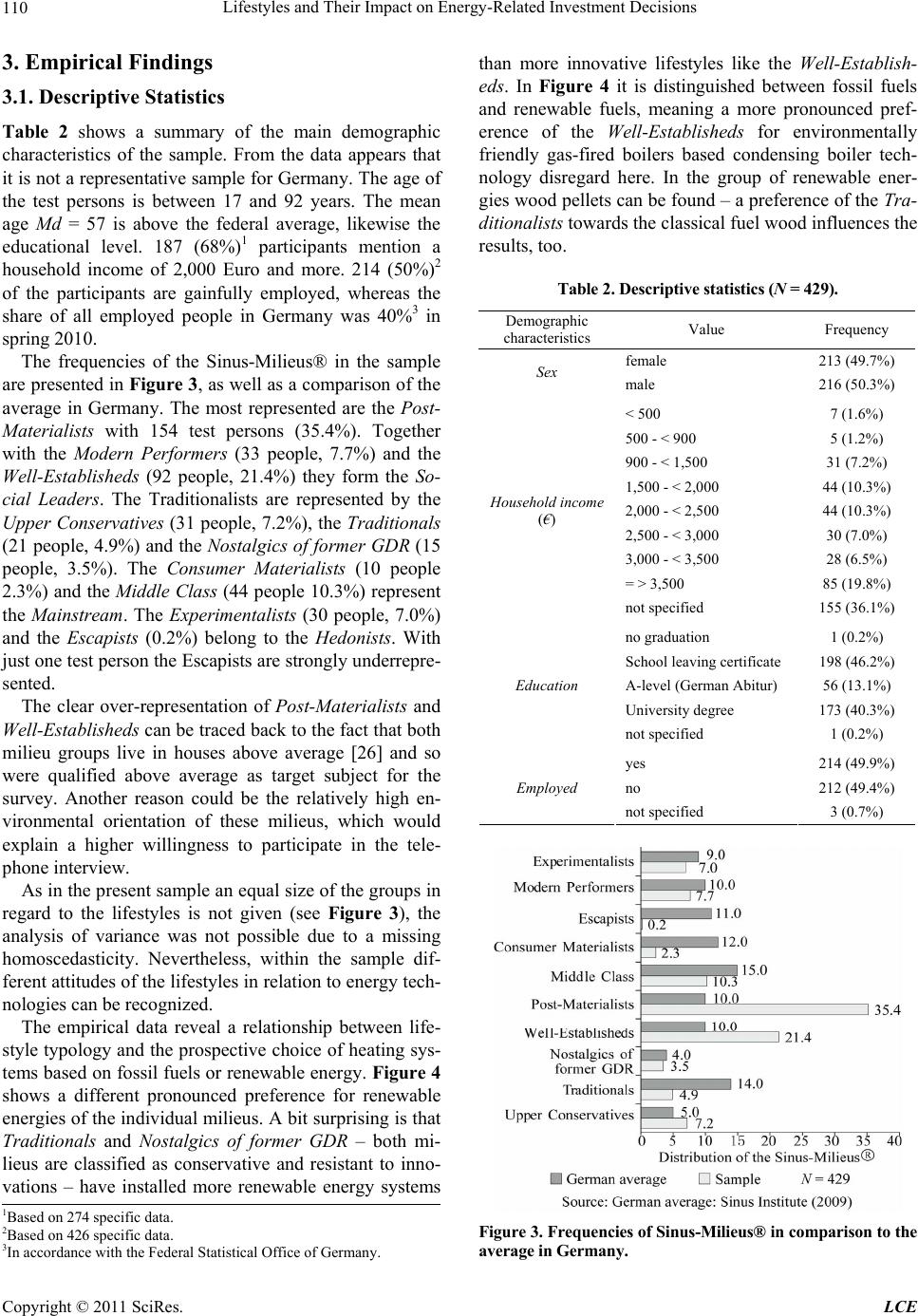 Lifestyles and Their Impact on Energy-Related Investment Decisions 110 3. Empirical Findings 3.1. Descriptive Statistics Table 2 shows a summary of the main demographic characteristics of the sample. From the data appears that it is not a representativ e sample for Germany. The age of the test persons is between 17 and 92 years. The mean age Md = 57 is above the federal average, likewise the educational level. 187 (68%)1 participants mention a household income of 2,000 Euro and more. 214 (50%)2 of the participants are gainfully employed, whereas the share of all employed people in Germany was 40%3 in spring 2010. The frequencies of the Sinus-Milieus® in the sample are presented in Figure 3, as well as a comparison of the average in Germany. The most represented are the Post- Materialists with 154 test persons (35.4%). Together with the Modern Performers (33 people, 7.7%) and the Well-Establisheds (92 people, 21.4%) they form the So- cial Leaders. The Traditionalists are represented by the Upper Conservatives (31 people, 7.2%), the Traditionals (21 people, 4.9%) and the Nostalgics of former GDR (15 people, 3.5%). The Consumer Materialists (10 people 2.3%) and the Middle Class (44 people 10.3%) represent the Mainstream. The Experimentalists (30 people, 7.0%) and the Escapists (0.2%) belong to the Hedonists. With just one test person the Escapists are strongly underrepre- sented. The clear over-representation of Post-Materialists and Well-Establisheds can be traced back to the fact that both milieu groups live in houses above average [26] and so were qualified above average as target subject for the survey. Another reason could be the relatively high en- vironmental orientation of these milieus, which would explain a higher willingness to participate in the tele- phone interview. As in the present sample an equ al size of the groups in regard to the lifestyles is not given (see Figure 3), the analysis of variance was not possible due to a missing homoscedasticity. Nevertheless, within the sample dif- ferent attitudes of the lifestyles in relation to energ y tech- nologies can be recognized. The empirical data reveal a relationship between life- style typology and the prospective choice of heating sys- tems based on fossil fuels or renewable energy. Figure 4 shows a different pronounced preference for renewable energies of the individual milieus. A bit surprising is th at Traditionals and Nostalgics of former GDR – both mi- lieus are classified as conservative and resistant to inno- vations – have installed more renewable energy systems than more innovative lifestyles like the Well-Establish- eds. In Figure 4 it is distinguished between fossil fuels and renewable fuels, meaning a more pronounced pref- erence of the Well-Establisheds for environmentally friendly gas-fired boilers based condensing boiler tech- nology disregard here. In the group of renewable ener- gies wood pe llets can be found – a prefer ence of the Tra- ditionalists towards the classical fuel wood influences the results, too. Table 2. Descriptive statistics (N = 429). Demographic characteristics Value Frequency female 213 (49.7%) Sex male 216 (50.3%) < 500 7 (1.6%) 500 - < 900 5 (1.2%) 900 - < 1,500 31 (7.2%) 1,500 - < 2,000 44 (10.3%) 2,000 - < 2,500 44 (10.3%) 2,500 - < 3,000 30 (7.0%) 3,000 - < 3,500 28 (6.5%) = > 3,500 85 (19.8%) Household income (€) not specified 155 (36.1%) no graduation 1 (0.2%) School leaving certificate 198 (46.2%) A-level (German Abitur) 56 (13.1%) University degree 173 (40.3%) Education not specified 1 (0.2%) yes 214 (49.9%) no 212 (49.4%) Employed not specified 3 (0.7%) 1Based on 274 specific data. 2Based on 426 specific data. 3In accordance with the Federal Statistical Office of Germany. Figure 3. Frequencies of Sinus-Milieus® in comparison to the average in Germany. C opyright © 2011 SciRes. LCE 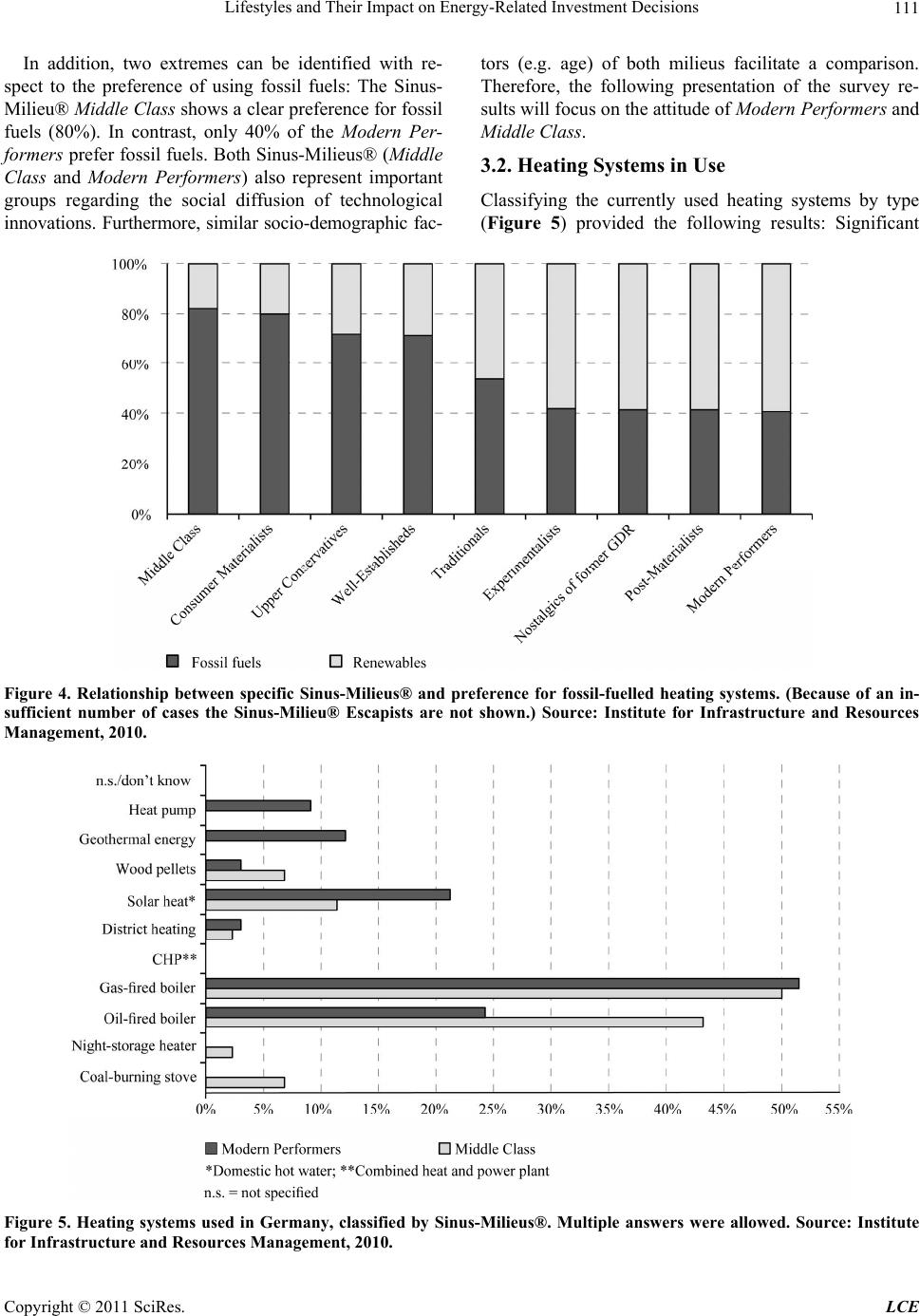 Lifestyles and Their Impact on Energy-Related Investment Decisions Copyright © 2011 SciRes. LCE 111 In addition, two extremes can be identified with re- spect to the preference of using fossil fuels: The Sinus- Milieu® Middle Class shows a clear preference for fossil fuels (80%). In contrast, only 40% of the Modern Per- formers prefer fossil fuels. Both Sinus-Milieus® (Middle Class and Modern Performers) also represent important groups regarding the social diffusion of technological innovations. Furthermore, similar socio-demographic fac- tors (e.g. age) of both milieus facilitate a comparison. Therefore, the following presentation of the survey re- sults will focus on the attitud e of Modern Performers and Middle Class. 3.2. Heating Systems in Use Classifying the currently used heating systems by type (Figure 5) provided the following results: Significant Figure 4. Relationship between specific Sinus-Milieus® and preference for fossil-fuelled heating systems. (Because of an in- sufficient number of cases the Sinus-Milieu® Escapists are not shown.) Source: Institute for Infrastructure and Resources Management, 2010. Figure 5. Heating systems used in Germany, classified by Sinus-Milieus®. Multiple answers were allowed. Source: Institute for Infrastructure and Resources Management, 2010. 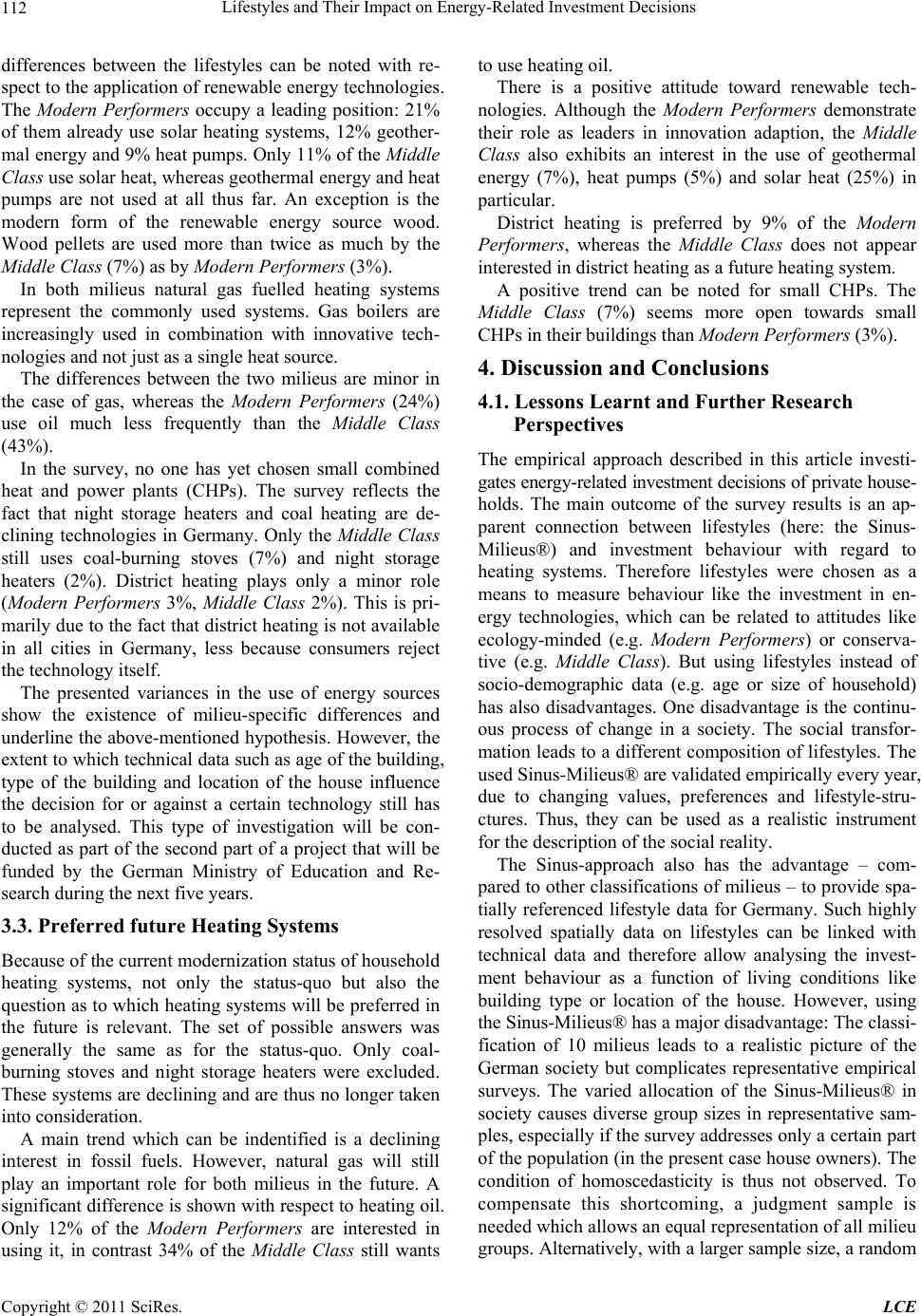 Lifestyles and Their Impact on Energy-Related Investment Decisions 112 differences between the lifestyles can be noted with re- spect to the application of renewable energy technologies. The Modern Performers occupy a leading position: 21% of them already use solar heating systems, 12% geother- mal energy and 9% heat pumps. Only 11 % of the Middle Class use solar heat, whereas geothermal energy and heat pumps are not used at all thus far. An exception is the modern form of the renewable energy source wood. Wood pellets are used more than twice as much by the Middle Class (7%) as by Modern Performers (3%). In both milieus natural gas fuelled heating systems represent the commonly used systems. Gas boilers are increasingly used in combination with innovative tech- nologies and not just as a single heat source. The differences between the two milieus are minor in the case of gas, whereas the Modern Performers (24%) use oil much less frequently than the Middle Class (43%). In the survey, no one has yet chosen small combined heat and power plants (CHPs). The survey reflects the fact that night storage heaters and coal heating are de- clining technologies in Germany. Only the Middle Class still uses coal-burning stoves (7%) and night storage heaters (2%). District heating plays only a minor role (Modern Performers 3%, Middle Class 2%). This is pri- marily due to the fact th at district heating is n ot available in all cities in Germany, less because consumers reject the technology itself. The presented variances in the use of energy sources show the existence of milieu-specific differences and underline the above-mentioned hypothesis. However, the extent to which techn ical data such as age of the building , type of the building and location of the house influence the decision for or against a certain technology still has to be analysed. This type of investigation will be con- ducted as part of the second part of a project that will be funded by the German Ministry of Education and Re- search during the next five years. 3.3. Preferred future Heating Systems Because of the current modernization status of household heating systems, not only the status-quo but also the question as to which heating systems will be preferred in the future is relevant. The set of possible answers was generally the same as for the status-quo. Only coal- burning stoves and night storage heaters were excluded. These systems are declining and are thus no longer taken into consideratio n. A main trend which can be indentified is a declining interest in fossil fuels. However, natural gas will still play an important role for both milieus in the future. A significant difference is shown with respect to heating oil. Only 12% of the Modern Performers are interested in using it, in contrast 34% of the Middle Class still wants to use heating oil. There is a positive attitude toward renewable tech- nologies. Although the Modern Performers demonstrate their role as leaders in innovation adaption, the Middle Class also exhibits an interest in the use of geothermal energy (7%), heat pumps (5%) and solar heat (25%) in particular. District heating is preferred by 9% of the Modern Performers, whereas the Middle Class does not appear interested in district heating as a future heating system. A positive trend can be noted for small CHPs. The Middle Class (7%) seems more open towards small CHPs in their buildings than Modern Performers (3%). 4. Discussion and Conclusions 4.1. Lessons Learnt and Further Research Perspectives The empirical approach described in this article investi- gates energy-related investment decisions of private house- holds. The main outcome of the survey results is an ap- parent connection between lifestyles (here: the Sinus- Milieus®) and investment behaviour with regard to heating systems. Therefore lifestyles were chosen as a means to measure behaviour like the investment in en- ergy technologies, which can be related to attitudes like ecology-minded (e.g. Modern Performers) or conserva- tive (e.g. Middle Class). But using lifestyles instead of socio-demographic data (e.g. age or size of household) has also disadvantages. One disadvantage is the continu- ous process of change in a society. The social transfor- mation leads to a different composition of lifestyles. The used Sinus-Milieus® are validated empirically every year, due to changing values, preferences and lifestyle-stru- ctures. Thus, they can be used as a realistic instrument for the description of the social reality. The Sinus-approach also has the advantage – com- pared to other classifications of milieus – to provide spa- tially referenced lifestyle data for Germany. Such highly resolved spatially data on lifestyles can be linked with technical data and therefore allow analysing the invest- ment behaviour as a function of living conditions like building type or location of the house. However, using the Sinus-Milieus® has a major disadv antage: Th e classi- fication of 10 milieus leads to a realistic picture of the German society but complicates representative empirical surveys. The varied allocation of the Sinus-Milieus® in society causes diverse group sizes in representative sam- ples, especially if the survey addresses only a certain part of the population (in the present case house owners). The condition of homoscedasticity is thus not observed. To compensate this shortcoming, a judgment sample is needed which allows an equ al representatio n of all milieu groups. Alternativel y, with a larger sample size, a rando m C opyright © 2011 SciRes. LCE 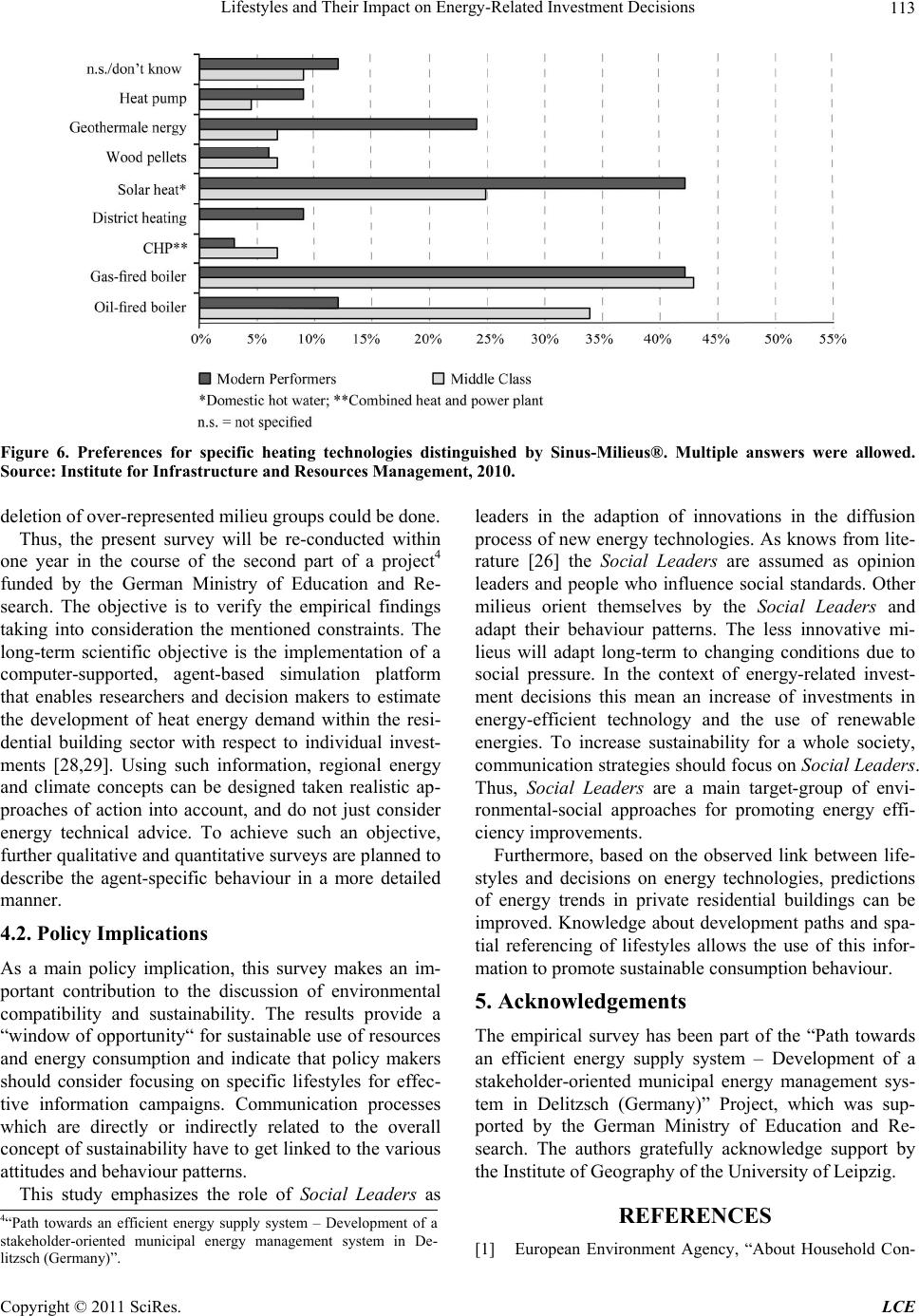 Lifestyles and Their Impact on Energy-Related Investment Decisions113 Figure 6. Preferences for specific heating technologies distinguished by Sinus-Milieus®. Multiple answers were allowed. Source: Institute for Infrastructure and Resources Management, 2010. deletion o f over-represe nt e d milieu groups c ould be done. Thus, the present survey will be re-conducted within one year in the course of the second part of a project4 funded by the German Ministry of Education and Re- search. The objective is to verify the empirical findings taking into consideration the mentioned constraints. The long-term scientific objective is the implementation of a computer-supported, agent-based simulation platform that enables researchers and decision makers to estimate the development of heat energy demand within the resi- dential building sector with respect to individual invest- ments [28,29]. Using such information, regional energy and climate concepts can be designed taken realistic ap- proaches of action into account, and do not just consider energy technical advice. To achieve such an objective, further qualitative and quan titative surveys are planned to describe the agent-specific behaviour in a more detailed manner. 4.2. Policy Implications As a main policy implication, this survey makes an im- portant contribution to the discussion of environmental compatibility and sustainability. The results provide a “window of opp ortunity“ for sustainable us e of resources and energy consumption and indicate that policy makers should consider focusing on specific lifestyles for effec- tive information campaigns. Communication processes which are directly or indirectly related to the overall concept of sustainab ility have to get linked to the various attitudes and behaviour patterns. This study emphasizes the role of Social Leaders as leaders in the adaption of innovations in the diffusion process of new energy technologies. As know s from lite- rature [26] the Social Leaders are assumed as opinion leaders and people who influence social standards. Other milieus orient themselves by the Social Leaders and adapt their behaviour patterns. The less innovative mi- lieus will adapt long-term to changing conditions due to social pressure. In the context of energy-related invest- ment decisions this mean an increase of investments in energy-efficient technology and the use of renewable energies. To increase sustainability for a whole society, communication strategies should focus on Social Leaders. Thus, Social Leaders are a main target-group of envi- ronmental-social approaches for promoting energy effi- ciency improvements. Furthermore, based on the observed link between life- styles and decisions on energy technologies, predictions of energy trends in private residential buildings can be improved. Knowledge about development paths and spa- tial referencing of lifestyles allows the use of this infor- mation to promote sustainable consumption behaviour. 5. Acknowledgements The empirical survey has been part of the “Path towards an efficient energy supply system – Development of a stakeholder-oriented municipal energy management sys- tem in Delitzsch (Germany)” Project, which was sup- ported by the German Ministry of Education and Re- search. The authors gratefully acknowledge support by the Institute of Geography of the University of Leipzig. REFERENCES 4“Path towards an efficient energy supply system – Development of a stakeholder-oriented municipal energy management system in De- litzsch (Germany)”. [1] European Environment Agency, “About Household Con- Copyright © 2011 SciRes. LCE 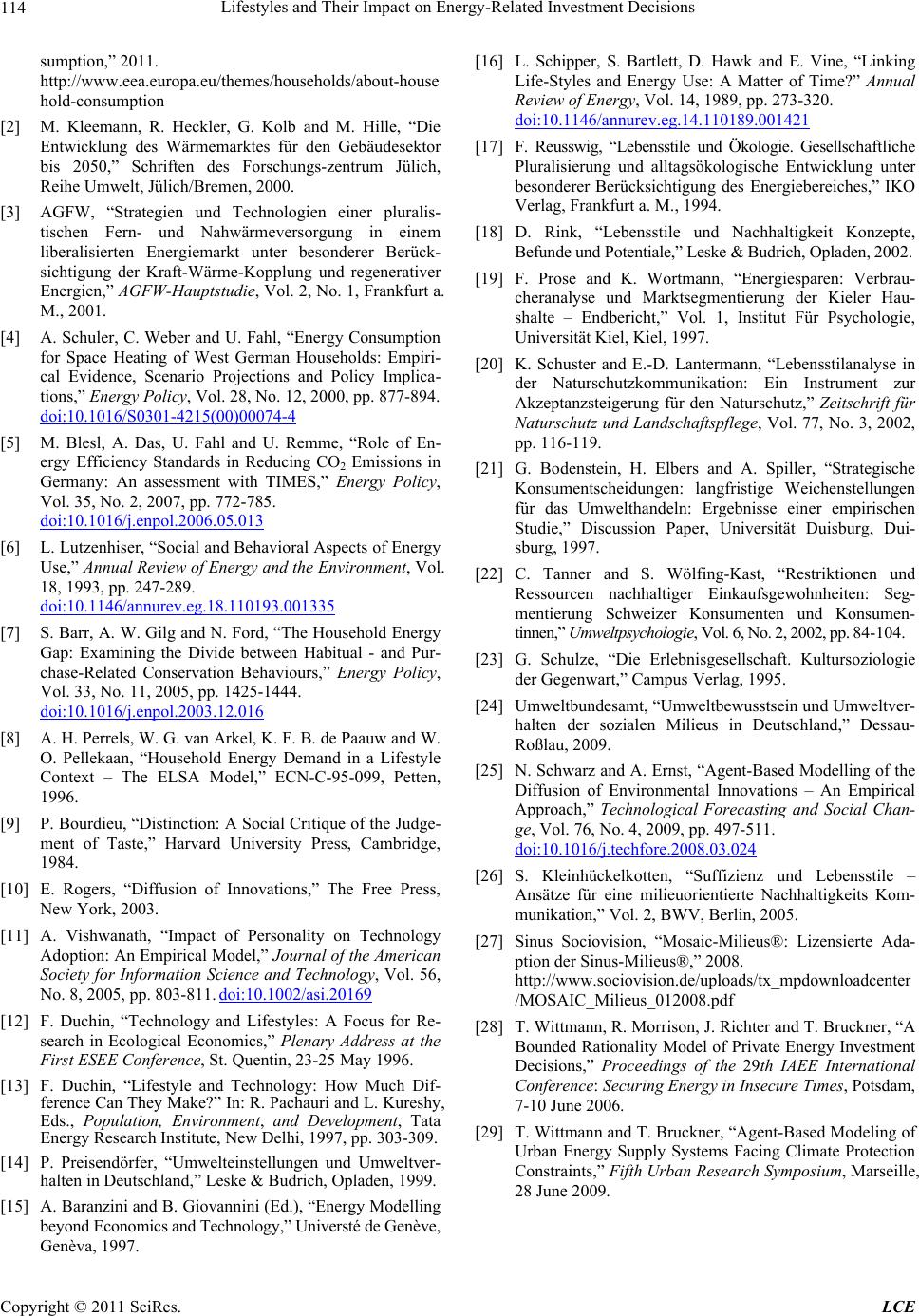 Lifestyles and Their Impact on Energy-Related Investment Decisions 114 sumption,” 2011. http://www.eea.europa.eu/themes/households/about-house hold-consumption [2] M. Kleemann, R. Heckler, G. Kolb and M. Hille, “Die Entwicklung des Wärmemarktes für den Gebäudesektor bis 2050,” Schriften des Forschungs-zentrum Jülich, Reihe Umwelt, Jülich/Bremen, 2000. [3] AGFW, “Strategien und Technologien einer pluralis- tischen Fern- und Nahwärmeversorgung in einem liberalisierten Energiemarkt unter besonderer Berück- sichtigung der Kraft-Wärme-Kopplung und regenerativer Energien,” AGFW-Hauptstudie, Vol. 2, No. 1, Frankfurt a. M., 2001. [4] A. Schuler, C. Weber and U. Fahl, “Energy Consumption for Space Heating of West German Households: Empiri- cal Evidence, Scenario Projections and Policy Implica- tions,” Energy Policy, Vol. 28, No. 12, 2000, pp. 877-894. doi:10.1016/S0301-4215(00)00074-4 [5] M. Blesl, A. Das, U. Fahl and U. Remme, “Role of En- ergy Efficiency Standards in Reducing CO2 Emissions in Germany: An assessment with TIMES,” Energy Policy, Vol. 35, No. 2, 2007, pp. 772-785. doi:10.1016/j.enpol.2006.05.013 [6] L. Lutzenhiser, “Social and Behavioral Aspects of Energy Use,” Annual Review of Energy and the Environment, Vol. 18, 1993, pp. 247-289. doi:10.1146/annurev.eg.18.110193.001335 [7] S. Barr, A. W. Gilg and N. Ford, “The Household Energy Gap: Examining the Divide between Habitual - and Pur- chase-Related Conservation Behaviours,” Energy Policy, Vol. 33, No. 11, 2005, pp. 1425-1444. doi:10.1016/j.enpol.2003.12.016 [8] A. H. Perrels, W. G. van Arkel, K. F. B. de Paauw and W. O. Pellekaan, “Household Energy Demand in a Lifestyle Context – The ELSA Model,” ECN-C-95-099, Petten, 1996. [9] P. Bourdieu, “Distinction: A Social Critique of the Judge- ment of Taste,” Harvard University Press, Cambridge, 1984. [10] E. Rogers, “Diffusion of Innovations,” The Free Press, New York, 2003. [11] A. Vishwanath, “Impact of Personality on Technology Adoption: An Empirical Model,” Journal of the American Society for Information Science and Technology, Vol. 56, No. 8, 2005, pp. 803-811. doi:10.1002/asi.20169 [12] F. Duchin, “Technology and Lifestyles: A Focus for Re- search in Ecological Economics,” Plenary Address at the First ESEE Conference, St. Quentin, 23-25 May 1996. [13] F. Duchin, “Lifestyle and Technology: How Much Dif- ference Can They Make?” In: R. Pachauri and L. Kureshy, Eds., Population, Environment, and Development, Tata Energy Research Institute, New Delhi, 1997, pp. 303-309. [14] P. Preisendörfer, “Umwelteinstellungen und Umweltver- halten in Deutschland,” Leske & Budrich, Opladen, 1999. [15] A. Baranzini and B. Giovannini (Ed.), “Energy Modelling beyond Economics and Technology,” Universté de Genève, Genèva, 1997. [16] L. Schipper, S. Bartlett, D. Hawk and E. Vine, “Linking Life-Styles and Energy Use: A Matter of Time?” Annual Review of Energy, Vol. 14, 1989, pp. 273-320. doi:10.1146/annurev.eg.14.110189.001421 [17] F. Reusswig, “Lebensstile und Ökologie. Gesellschaftliche Pluralisierung und alltagsökologische Entwicklung unter besonderer Berücksichtigung des Energiebereiches,” IKO Verlag, Frankfurt a. M., 1994. [18] D. Rink, “Lebensstile und Nachhaltigkeit Konzepte, Befunde und Potentiale,” Leske & Budrich, Opladen, 2002. [19] F. Prose and K. Wortmann, “Energiesparen: Verbrau- cheranalyse und Marktsegmentierung der Kieler Hau- shalte – Endbericht,” Vol. 1, Institut Für Psychologie, Universität Kiel, Kiel, 1997. [20] K. Schuster and E.-D. Lantermann, “Lebensstilanalyse in der Naturschutzkommunikation: Ein Instrument zur Akzeptanzsteigerung für den Naturschutz,” Zeitschrift für Naturschutz und Landschaftspflege, Vol. 77, No. 3, 2002, pp. 116-119. [21] G. Bodenstein, H. Elbers and A. Spiller, “Strategische Konsumentscheidungen: langfristige Weichenstellungen für das Umwelthandeln: Ergebnisse einer empirischen Studie,” Discussion Paper, Universität Duisburg, Dui- sburg, 1997. [22] C. Tanner and S. Wölfing-Kast, “Restriktionen und Ressourcen nachhaltiger Einkaufsgewohnheiten: Seg- mentierung Schweizer Konsumenten und Konsumen- tinnen,” Umweltpsychologie, Vol. 6, No. 2, 2002, pp. 84-104. [23] G. Schulze, “Die Erlebnisgesellschaft. Kultursoziologie der Gegenwart,” Campus Verlag, 1995. [24] Umweltbundesamt, “Umweltbewusstsein und Umweltver- halten der sozialen Milieus in Deutschland,” Dessau- Roßlau, 2009. [25] N. Schwarz and A. Ernst, “Agent-Based Modelling of the Diffusion of Environmental Innovations – An Empirical Approach,” Technological Forecasting and Social Chan- ge, Vol. 76, No. 4, 2009, pp. 497-511. doi:10.1016/j.techfore.2008.03.024 [26] S. Kleinhückelkotten, “Suffizienz und Lebensstile – Ansätze für eine milieuorientierte Nachhaltigkeits Kom- munikation,” Vol. 2, BWV, Berlin, 2005. [27] Sinus Sociovision, “Mosaic-Milieus®: Lizensierte Ada- ption der Sinus-Milieus®,” 2008. http://www.sociovision.de/uploads/tx_mpdownloadcenter /MOSAIC_Milieus_012008.pdf [28] T. Wittmann, R. Morrison, J. Richter and T. Bruckner, “A Bounded Rationality Model of Private Energy Investment Decisions,” Proceedings of the 29th IAEE International Conference: Securing Energy in Insecure Times, Potsdam, 7-10 June 2006. [29] T. Wittmann and T. Bruckner, “Agent-Based Modeling of Urban Energy Supply Systems Facing Climate Protection Constraints,” Fifth Urban Research Symposium, Marseille, 28 June 2009. C opyright © 2011 SciRes. LCE |