

Paper Menu >>
Journal Menu >>
 Vol.3, No.6, 370-377 (2011) doi:10.4236/health.2011.36063 C opyright © 2011 SciRes. Openly accessible at http://www.scirp.org/journal/HEALTH/ Health Sexual and reproductive health needs of adolescent girls from conservative and low-income families in Erzurum, Turkey Nesrin Reis1, Dilek Kilic2*, Raziye Engin2, Ozlem Karabulutlu2 1Bezmialem University, Health Sciences Faculty, Department of Nursing, Istanbul, Turkey; 2Ataturk University, Health Sciences Faculty, Department of Nursing, Erzurum, Turkey; *Corresponding Author: [email protected] Received 3 February 2011; revised 28 April 2011; accepted 5 May 2011. ABSTRACT The objective of this survey was to determine the sexual and reproductive health needs of conservative and/or economically challenged adolescent girls. A total of 310 subjects (16.5 ± 2.2 years old), attending three private institutes teaching Islamic matter and the holy Quran and two private institutes teaching carpet-weaving in Erzurum, Turkey, were interviewed between November 2004 and February 2005. The ques- tionnaire covered knowledge on reproductive health and s exua l ma tter s to attain their feelings prior to their first menarche, their practices during menstruation, and their awareness of gynecological and sexually transmitted dis- eases as well as their attitudes toward and re- sponsiveness to domestic violence. Their re- sponses showed that these issues were con- sidered taboo and/or embarrassing to share. Also, a considerable percentage of the girls had no or limited knowledge on reproductive health and sexual matters and mismanaged gyneco- logical problems and domestic violence. More- over, those had knowledge revealed that their sources were non-scientific information from unprofessional individuals. In conclusion, the conservative and/or economically challenged adolescent girls who are not attending regular high schools need professional lectures on re- productive health and sexual matters. Keywords: Reproductive Health; Sexual Health; Adolescent Gi rls 1. INTRODUCTION Of the world population in 2000, over one billion people were adolescents (10 - 19 years old) and 85% of them lived in developing countries, mainly Asian coun- tries [1]. They will contribute to population growth in next decades, suggesting that their education on sexual and reproductive health and their needs are extremely critical [2]. Moreover, they may be vulnerable to several diseases and problems, such as HIV and sexually trans- mitted diseases (STD) as well as experiencing unin- tended pregnancies and maternal complications, if they receive inaccurate or incomplete information on repro- ductive h ealth. A survey conducted by Polish researchers ascertained that adolescent girls were sexually active and 41.1% of them were referred to ineffective methods, which led to withdrawal during sexual intercourse, re- sulting in a higher rate of unwanted pregnancy, STD, and other sexual and reproductive health problems [3]. In fact, it was reported that 70% of the people STDs were at age ranging from 15 to 24 years [4]. Adolescent sexual and reproductive health education is still a ne- glected issue in many countries [5]. Especially the ado- lescents from the rural part of the developing countries are disadvantageous due to unavailability and/or inade- quacy of reproductive health care services and trainings [6-10]. While the reproductive and sexual health of ado- lescents is acknowledged as good from developed coun- tries to Western Europe cou ntries [11,12], there ar e stud- ies reporting that the reproductive and sexual health of adolescents in some European countries [13,14], Canada [12,15], and America [15-17] are poor. Worldwide, so- cietal shifts and behavioural patterns exacerbated by unique developmental vuln erabilities create a confluen ce of factors that place today’s adolescents at heightened risks for poor health outcomes [16]. Therefore, World- wide, all adolescents need sexual and reproductive health education and legal acts [13,16]. International Conference on Population and Development held in Cairo in 1994 recognized the reproductive rights as fun- damental human rights [9]. These rights cover that all adolescents should receive health care services and that 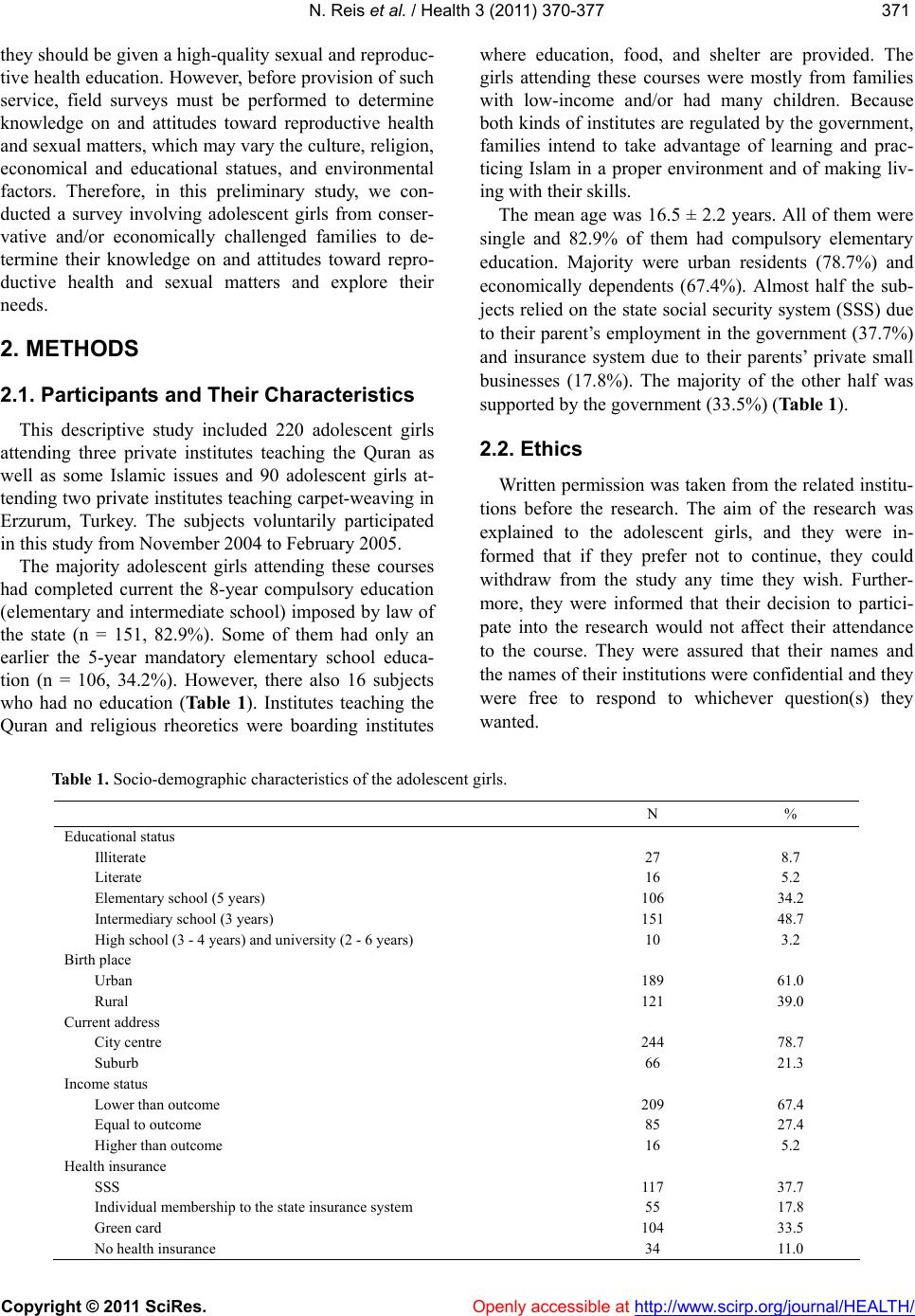 N. Reis et al. / Health 3 (2011) 370-377 Copyright © 2011 SciRes. Openly accessible at http://www.scirp.org/journal/HEALTH/ 371371 they should be given a h igh-quality sexu al and reproduc- tive health education . However, before provision of su ch service, field surveys must be performed to determine knowledge on and attitudes toward reproductive health and sexual matters, which may vary the culture, relig ion, economical and educational statues, and environmental factors. Therefore, in this preliminary study, we con- ducted a survey involving adolescent girls from conser- vative and/or economically challenged families to de- termine their knowledge on and attitudes toward repro- ductive health and sexual matters and explore their needs. 2. METHODS 2.1. Participants and Their Characteristics This descriptive study included 220 adolescent girls attending three private institutes teaching the Quran as well as some Islamic issues and 90 adolescent girls at- tending two private institutes teaching carpet-weaving in Erzurum, Turkey. The subjects voluntarily participated in this study from November 2004 to February 2005. The majority adolescent girls attending these courses had completed current the 8-year compulsory education (elementary and intermediate school) imposed by law of the state (n = 151, 82.9%). Some of them had only an earlier the 5-year mandatory elementary school educa- tion (n = 106, 34.2%). However, there also 16 subjects who had no education (Ta b l e 1 ). Institutes teaching the Quran and religious rheoretics were boarding institutes where education, food, and shelter are provided. The girls attending these courses were mostly from families with low-income and/or had many children. Because both kinds of institutes are regulated by the government, families intend to take advantage of learning and prac- ticing Islam in a proper environment and of making liv- ing with their skills. The mean age was 16.5 ± 2.2 years. All of them were single and 82.9% of them had compulsory elementary education. Majority were urban residents (78.7%) and economically dependents (67.4%). Almost half the sub- jects relied on the state social security system (SSS) due to their parent’s employment in the government (37.7%) and insurance system due to their parents’ private small businesses (17.8%). The majority of the other half was supported by the go vernment (33.5%) (Table 1). 2.2. Ethics Written permission was taken from the related institu- tions before the research. The aim of the research was explained to the adolescent girls, and they were in- formed that if they prefer not to continue, they could withdraw from the study any time they wish. Further- more, they were informed that their decision to partici- pate into the research would not affect their attendance to the course. They were assured that their names and the names of their institu tions were confiden tial and th ey were free to respond to whichever question(s) they wanted. Table 1. Socio-demographic characteristics of the adolescent girls. N % Educational status Illiterate 27 8.7 Literate 16 5.2 Elementary school (5 years) 106 34.2 Intermediary sc hool (3 years) 151 48.7 High school (3 - 4 years) and university ( 2 - 6 yea rs) 10 3.2 Birth place Urban 189 61.0 Rural 121 39.0 Current address City centre 244 78.7 Suburb 66 21.3 Income status Lower than outcome 209 67.4 Equal to outcome 85 27.4 Higher than outcome 16 5.2 Health insurance SSS 117 37.7 Individual membership to the state insura nce system 55 17.8 Green card 104 33.5 No health insurance 34 11.0 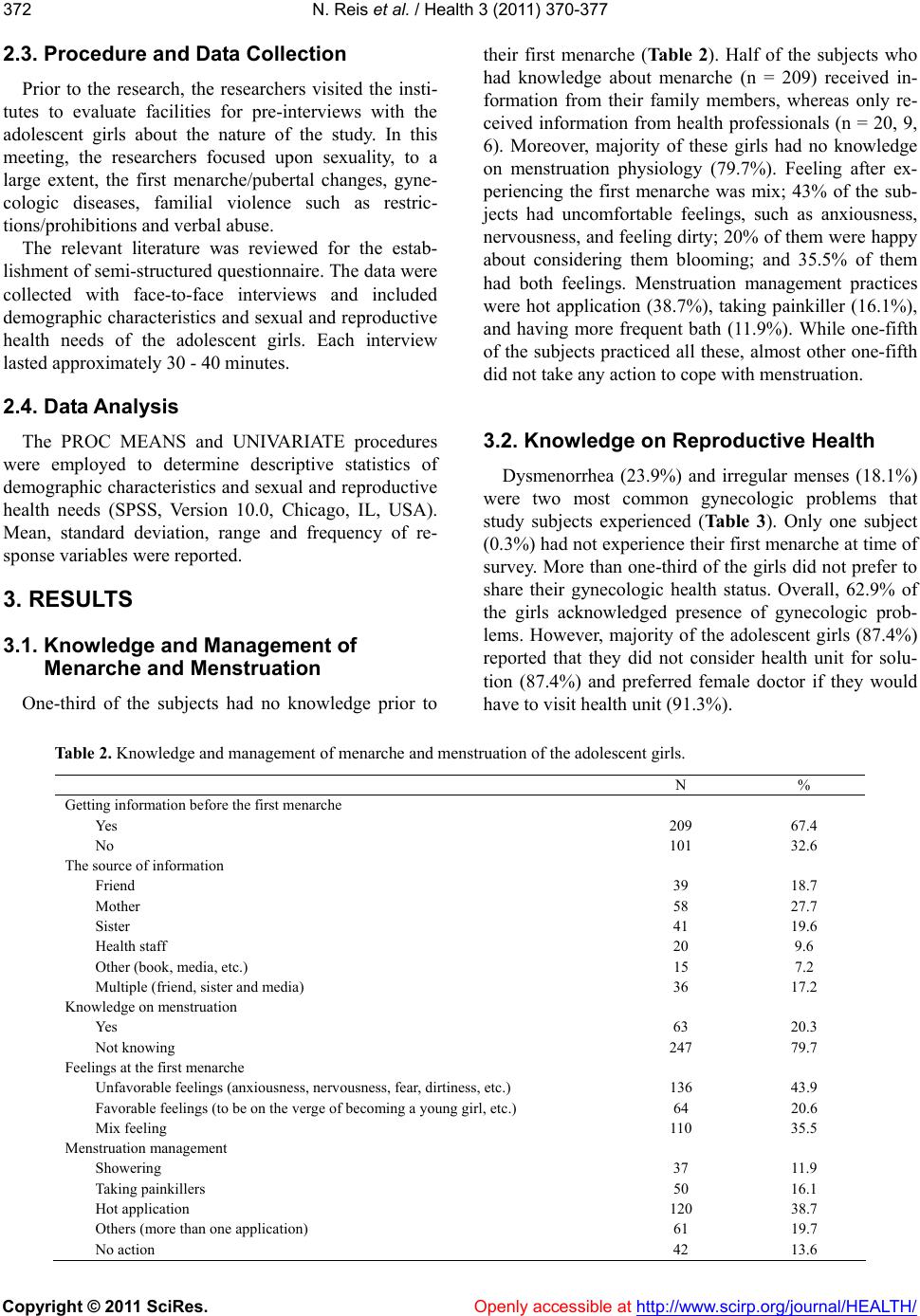 N. Reis et al. / Health 3 (2011) 370-377 Copyright © 2011 SciRes. Openly accessible at http://www.scirp.org/journal/HEALTH/ 372 2.3. Procedure and Data Collection Prior to the research, the researchers visited the insti- tutes to evaluate facilities for pre-interviews with the adolescent girls about the nature of the study. In this meeting, the researchers focused upon sexuality, to a large extent, the first menarche/pubertal changes, gyne- cologic diseases, familial violence such as restric- tions/prohibitions and verbal abuse. The relevant literature was reviewed for the estab- lishment of semi-structured questionnaire. Th e da ta were collected with face-to-face interviews and included demographic characteristics and sexual and reproductive health needs of the adolescent girls. Each interview lasted approximately 30 - 40 minutes. 2.4. Data Analysis The PROC MEANS and UNIVARIATE procedures were employed to determine descriptive statistics of demographic characteristics and sexual and reproductive health needs (SPSS, Version 10.0, Chicago, IL, USA). Mean, standard deviation, range and frequency of re- sponse variables were reported. 3. RESULTS 3.1. Knowledge and Management of Menarche and Menstruation One-third of the subjects had no knowledge prior to their first menarche (Ta b le 2 ). Half of the subjects who had knowledge about menarche (n = 209) received in- formation from their family members, whereas only re- ceived information from health professionals (n = 20, 9, 6). Moreover, majority of these girls had no knowledge on menstruation physiology (79.7%). Feeling after ex- periencing the first menarche was mix; 43% of the sub- jects had uncomfortable feelings, such as anxiousness, nervousness, and feeling dirty; 20% of them were happy about considering them blooming; and 35.5% of them had both feelings. Menstruation management practices were hot application (38.7%), taking painkiller (16.1%), and having more frequent bath (11.9%). While one-fifth of the subjects practiced all these, almost other one-fifth did not take any action to cope with menstruation. 3.2. Knowledge on Reproductive Health Dysmenorrhea (23.9%) and irregular menses (18.1%) were two most common gynecologic problems that study subjects experienced (Tab le 3 ). Only one subject (0.3%) had not experience their first menarche at time of survey. More than one-third of the girls did not prefer to share their gynecologic health status. Overall, 62.9% of the girls acknowledged presence of gynecologic prob- lems. However, majority of the adolescent girls (87.4%) reported that they did not consider health unit for solu- tion (87.4%) and preferred female doctor if they would have to visit health unit (91.3%). Table 2. Knowledge and management of menarche and menstruation of the adolescent girls. N % Getting inform a t i on before the f i r s t menarche Yes 209 67.4 No 101 32.6 The source of informa tion Friend 39 18.7 Mother 58 27.7 Sister 41 19.6 Health staff 20 9.6 Other (book, media, etc.) 15 7.2 Multiple (friend, sister and medi a) 36 17.2 Knowledge on menstruation Yes 63 20.3 Not knowing 247 79.7 Feelings at the first menarche Unfavorable feelings (anxiousness, n e rvousness, fear, dirtiness, etc.) 136 43.9 Favorable feelings (to be on the verge of becoming a young girl, etc.) 64 20.6 Mix feeling 110 35.5 Menstruation man agement Showering 37 11.9 Taking painkillers 50 16.1 Hot application 120 38.7 Others (more than one application) 61 19.7 No action 42 13.6 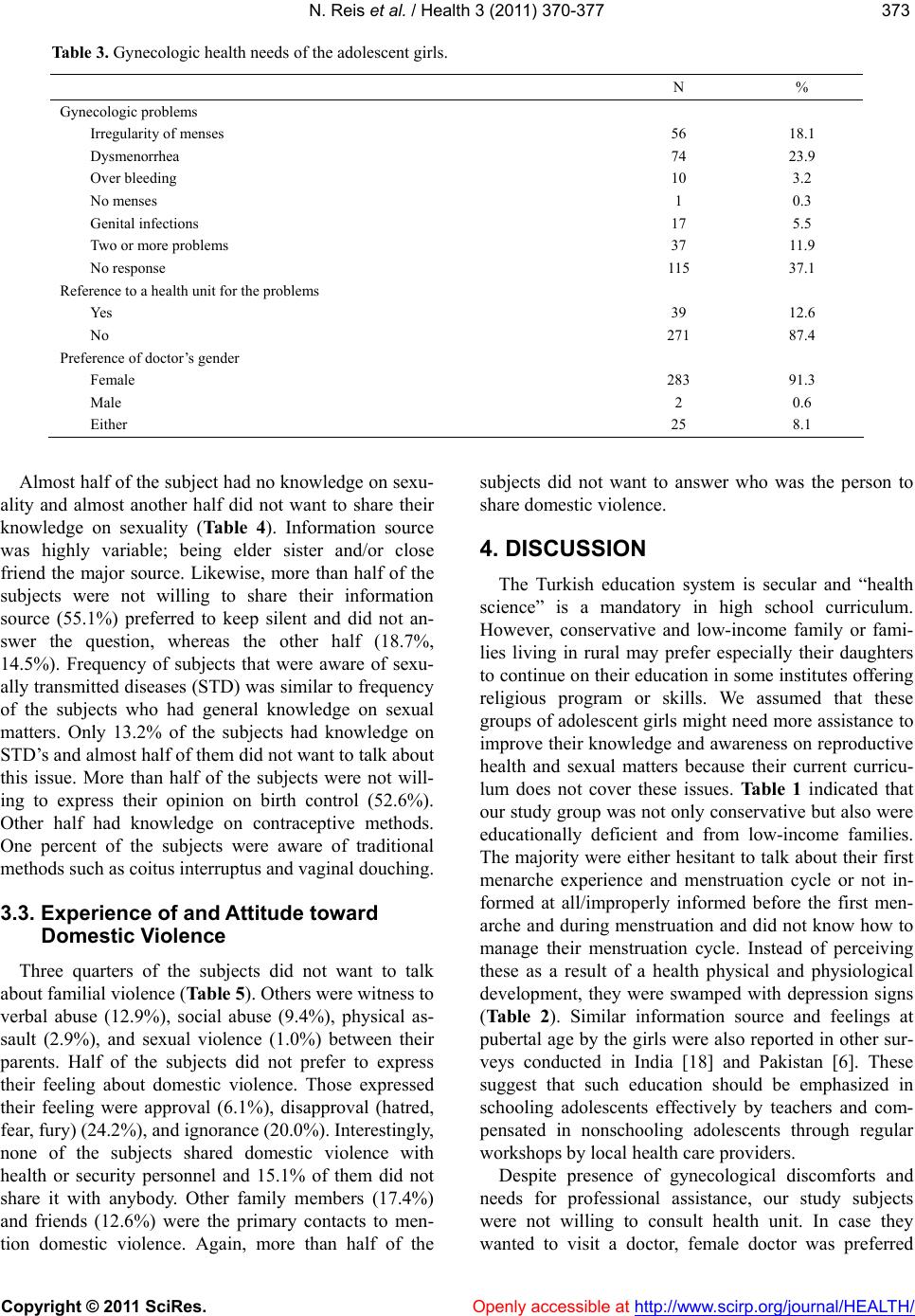 N. Reis et al. / Health 3 (2011) 370-377 Copyright © 2011 SciRes. Openly accessible at http://www.scirp.org/journal/HEALTH/ 373373 Table 3. Gynecologic health needs of the adolescent girls. N % Gynecologic problems Irregularity of menses 56 18.1 Dysmenorrhea 74 23.9 Over bleeding 10 3.2 No menses 1 0.3 Genital infections 17 5.5 Two or more problems 37 11.9 No response 115 37.1 Reference to a health unit for the problems Yes 39 12.6 No 271 87.4 Preference of doctor’s gender Female 283 91.3 Male 2 0.6 Either 25 8.1 Almost half of the subject had no know ledge on sexu- ality and almost another half did not want to share their knowledge on sexuality (Table 4). Information source was highly variable; being elder sister and/or close friend the major source. Likewise, more than half of the subjects were not willing to share their information source (55.1%) preferred to keep silent and did not an- swer the question, whereas the other half (18.7%, 14.5%). Frequency of subjects that were aware of sexu- ally transmitted diseases (STD) was similar to frequency of the subjects who had general knowledge on sexual matters. Only 13.2% of the subjects had knowledge on STD’s and almost half of them did no t want to talk about this issue. More than half of the subjects were not will- ing to express their opinion on birth control (52.6%). Other half had knowledge on contraceptive methods. One percent of the subjects were aware of traditional methods such as coitus interruptus and vaginal douching. 3.3. Experience of and Attitude toward Domestic Violence Three quarters of the subjects did not want to talk about familial violence (Table 5). Others we re witness to verbal abuse (12.9%), social abuse (9.4%), physical as- sault (2.9%), and sexual violence (1.0%) between their parents. Half of the subjects did not prefer to express their feeling about domestic violence. Those expressed their feeling were approval (6.1%), disapproval (hatred, fear, fury) (24.2%), and ignorance (20.0%). Interestingly, none of the subjects shared domestic violence with health or security personnel and 15.1% of them did not share it with anybody. Other family members (17.4%) and friends (12.6%) were the primary contacts to men- tion domestic violence. Again, more than half of the subjects did not want to answer who was the person to share domestic violence. 4. DISCUSSION The Turkish education system is secular and “health science” is a mandatory in high school curriculum. However, conservative and low-income family or fami- lies living in rural may prefer especially their daughters to continue on their education in some institutes offering religious program or skills. We assumed that these groups of adolescent girls might need more assistance to improve their know ledge and awareness on reproductiv e health and sexual matters because their current curricu- lum does not cover these issues. Ta b le 1 indicated that our study gro up was not on ly conserva tive but also were educationally deficient and from low-income families. The majority were either hesitant to talk about their first menarche experience and menstruation cycle or not in- formed at all/improperly informed before the first men- arche and during menstruation and did not know how to manage their menstruation cycle. Instead of perceiving these as a result of a health physical and physiological development, they were swamped with depression signs (Table 2). Similar information source and feelings at pubertal age by the girls were also reported in other sur- veys conducted in India [18] and Pakistan [6]. These suggest that such education should be emphasized in schooling adolescents effectively by teachers and com- pensated in nonschooling adolescents through regular workshops by local health care providers. Despite presence of gynecological discomforts and needs for professional assistance, our study subjects were not willing to consult health unit. In case they wanted to visit a doctor, female doctor was preferred 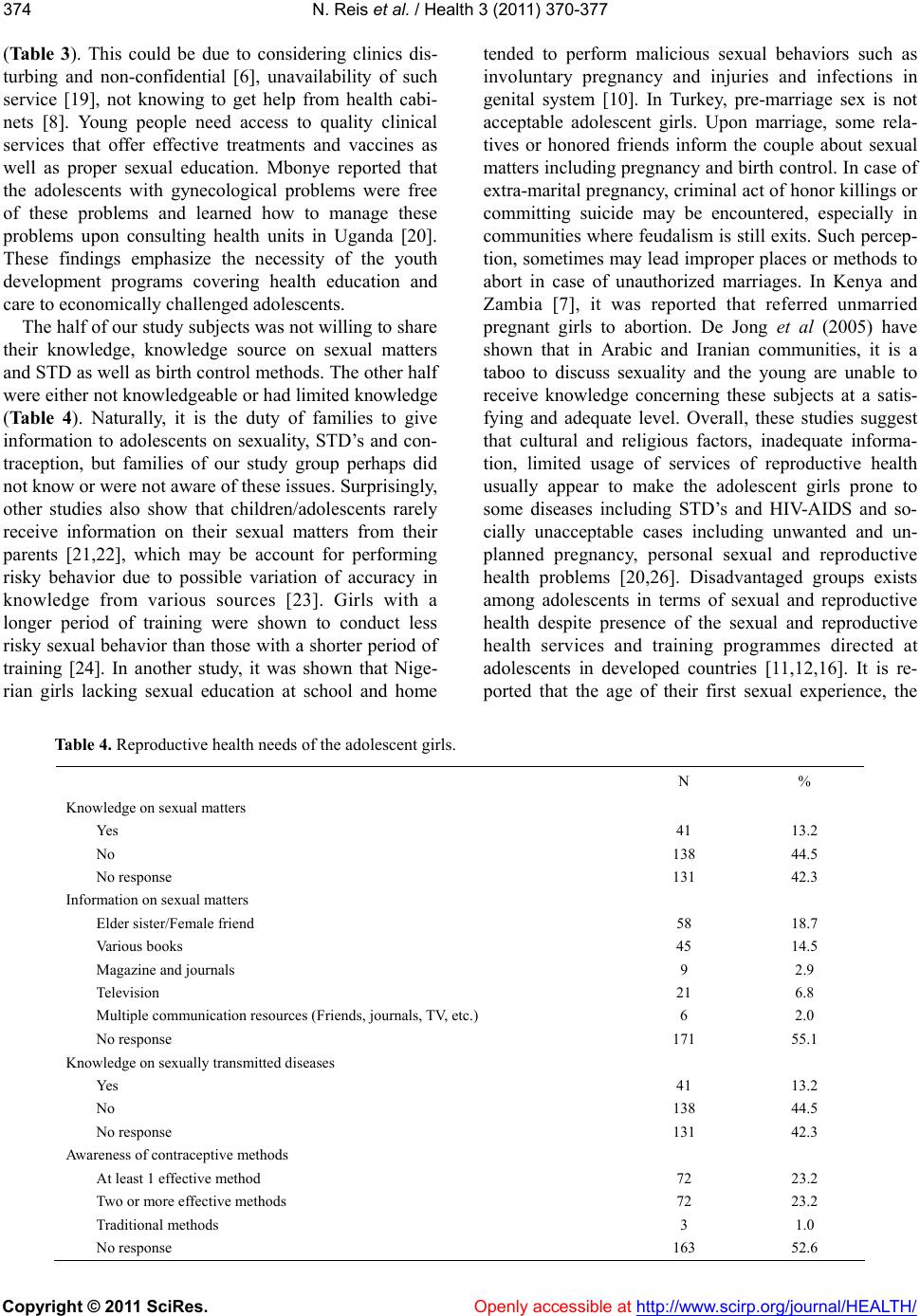 N. Reis et al. / Health 3 (2011) 370-377 Copyright © 2011 SciRes. Openly accessible at http://www.scirp.org/journal/HEALTH/ 374 (Ta b le 3). This could be due to considering clinics dis- turbing and non-confidential [6], unavailability of such service [19], not knowing to get help from health cabi- nets [8]. Young people need access to quality clinical services that offer effective treatments and vaccines as well as proper sexual education. Mbonye reported that the adolescents with gynecological problems were free of these problems and learned how to manage these problems upon consulting health units in Uganda [20]. These findings emphasize the necessity of the youth development programs covering health education and care to economically challenged adolescents. The half of our study subjects was no t willing to share their knowledge, knowledge source on sexual matters and STD as well as birth control methods. The other half were either not knowledgeable or had limited knowledge (Table 4). Naturally, it is the duty of families to give information to adolescents on sexuality, STD’s and con- traception, but families of our study group perhaps did not know or were not aware of these issues. Surprisingly, other studies also show that children/adolescents rarely receive information on their sexual matters from their parents [21,22], which may be account for performing risky behavior due to possible variation of accuracy in knowledge from various sources [23]. Girls with a longer period of training were shown to conduct less risky sexual behavior than those with a shorter period of training [24]. In another study, it was shown that Nige- rian girls lacking sexual education at school and home tended to perform malicious sexual behaviors such as involuntary pregnancy and injuries and infections in genital system [10]. In Turkey, pre-marriage sex is not acceptable adolescent girls. Upon marriage, some rela- tives or honored friends inform the couple about sexual matters including pregnancy and birth control. In case of extra-marital pregnancy, criminal act of honor killin gs or committing suicide may be encountered, especially in communities where feudalism is still exits. Such percep - tion, sometimes may lead improper places or methods to abort in case of unauthorized marriages. In Kenya and Zambia [7], it was reported that referred unmarried pregnant girls to abortion. De Jong et al (2005) have shown that in Arabic and Iranian communities, it is a taboo to discuss sexuality and the young are unable to receive knowledge concerning these subjects at a satis- fying and adequate level. Overall, these studies suggest that cultural and religious factors, inadequate informa- tion, limited usage of services of reproductive health usually appear to make the adolescent girls prone to some diseases including STD’s and HIV-AIDS and so- cially unacceptable cases including unwanted and un- planned pregnancy, personal sexual and reproductive health problems [20,26]. Disadvantaged groups exists among adolescents in terms of sexual and reproductive health despite presence of the sexual and reproductive health services and training programmes directed at adolescents in developed countries [11,12,16]. It is re- ported that the age of their first sexual experience, the Table 4. Reproductive health needs of the adolescent girls. N % Knowledge on sexual matters Yes 41 13.2 No 138 44.5 No response 131 42.3 Information on sexual matters Elder sister/Female friend 58 18.7 Various books 45 14.5 Magazine and journals 9 2.9 Television 21 6.8 Multiple communication resources (Friends, journals, TV, etc.) 6 2.0 No response 171 55.1 Knowledge on sexually transmitted diseases Yes 41 13.2 No 138 44.5 No response 131 42.3 Awareness of contraceptive method s At least 1 effective method 72 23.2 Two or more effective methods 72 23.2 Traditional methods 3 1.0 No response 163 52.6 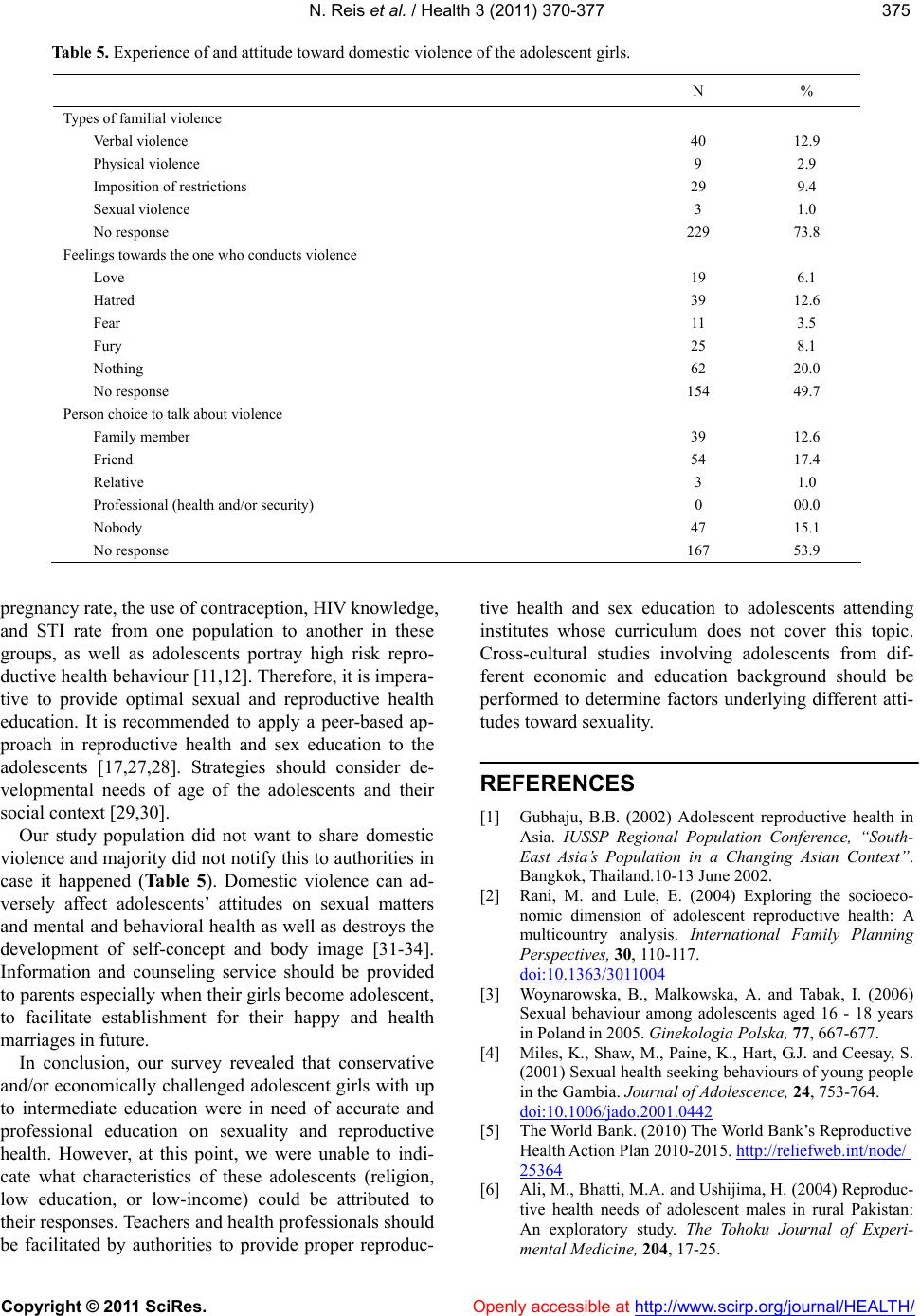 N. Reis et al. / Health 3 (2011) 370-377 Copyright © 2011 SciRes. Openly accessible at http://www.scirp.org/journal/HEALTH/ 375375 Table 5. Experience of and attitude toward domestic violence of the adolescent girls. N % Types of familial violence Verbal violence 40 12.9 Physical violence 9 2.9 Imposition of restrictions 29 9.4 Sexual violence 3 1.0 No response 229 73.8 Feelings towards the one who conducts violence Love 19 6.1 Hatred 39 12.6 Fear 11 3.5 Fury 25 8.1 Nothing 62 20.0 No response 154 49.7 Person choice to talk about violence Fami ly membe r 39 12.6 Friend 54 17.4 Relative 3 1.0 Professional (health and/or security) 0 00.0 Nobody 47 15.1 No response 167 53.9 pregnancy rate, the use of contraception, HIV knowledge, and STI rate from one population to another in these groups, as well as adolescents portray high risk repro- ductive health behaviour [11,12]. Therefore, it is impera- tive to provide optimal sexual and reproductive health education. It is recommended to apply a peer-based ap- proach in reproductive health and sex education to the adolescents [17,27,28]. Strategies should consider de- velopmental needs of age of the adolescents and their social context [29,30]. Our study population did not want to share domestic violence and majo rity did not notify this to authorities in case it happened (Ta ble 5). Domestic violence can ad- versely affect adolescents’ attitudes on sexual matters and mental and behavioral health as well as destroys the development of self-concept and body image [31-34]. Information and counseling service should be provided to parents especially when their girls become adolescent, to facilitate establishment for their happy and health marriages in future. In conclusion, our survey revealed that conservative and/or economically challenged adolescent girls with up to intermediate education were in need of accurate and professional education on sexuality and reproductive health. However, at this point, we were unable to indi- cate what characteristics of these adolescents (religion, low education, or low-income) could be attributed to their responses. Teachers and health professionals should be facilitated by authorities to provide proper reproduc- tive health and sex education to adolescents attending institutes whose curriculum does not cover this topic. Cross-cultural studies involving adolescents from dif- ferent economic and education background should be performed to determine factors underlying different atti- tudes toward sexu a lity. REFERENCES [1] Gubhaju, B.B. (2002) Adolescent reproductive health in Asia. IUSSP Regional Population Conference, “South- East Asia’s Population in a Changing Asian Context”. Bangkok, Thailand.10-13 June 2002. [2] Rani, M. and Lule, E. (2004) Exploring the socioeco- nomic dimension of adolescent reproductive health: A multicountry analysis. International Family Planning Perspectives, 30, 110-117. doi:10.1363/3011004 [3] Woynarowska, B., Malkowska, A. and Tabak, I. (2006) Sexual behaviour among adolescents aged 16 - 18 years in Poland in 2005. Ginekologia Polska, 77, 667-677. [4] Miles, K., Shaw, M., Paine, K., Hart, G.J. and Ceesay, S. (2001) Sexual health seeking behaviours of young people in the Gambia. Journal of Adolescence, 24, 753-764. doi:10.1006/jado.2001.0442 [5] The World Bank. (2010) The World Bank’s Reproductive Health Action Plan 2010-2015. http://reliefweb.int/node/ 25364 [6] Ali, M., Bhatti, M.A. and Ushijima, H. (2004) Reproduc- tive health needs of adolescent males in rural Pakistan: An exploratory study. The Tohoku Journal of Experi- mental Medicine, 204, 17-25. 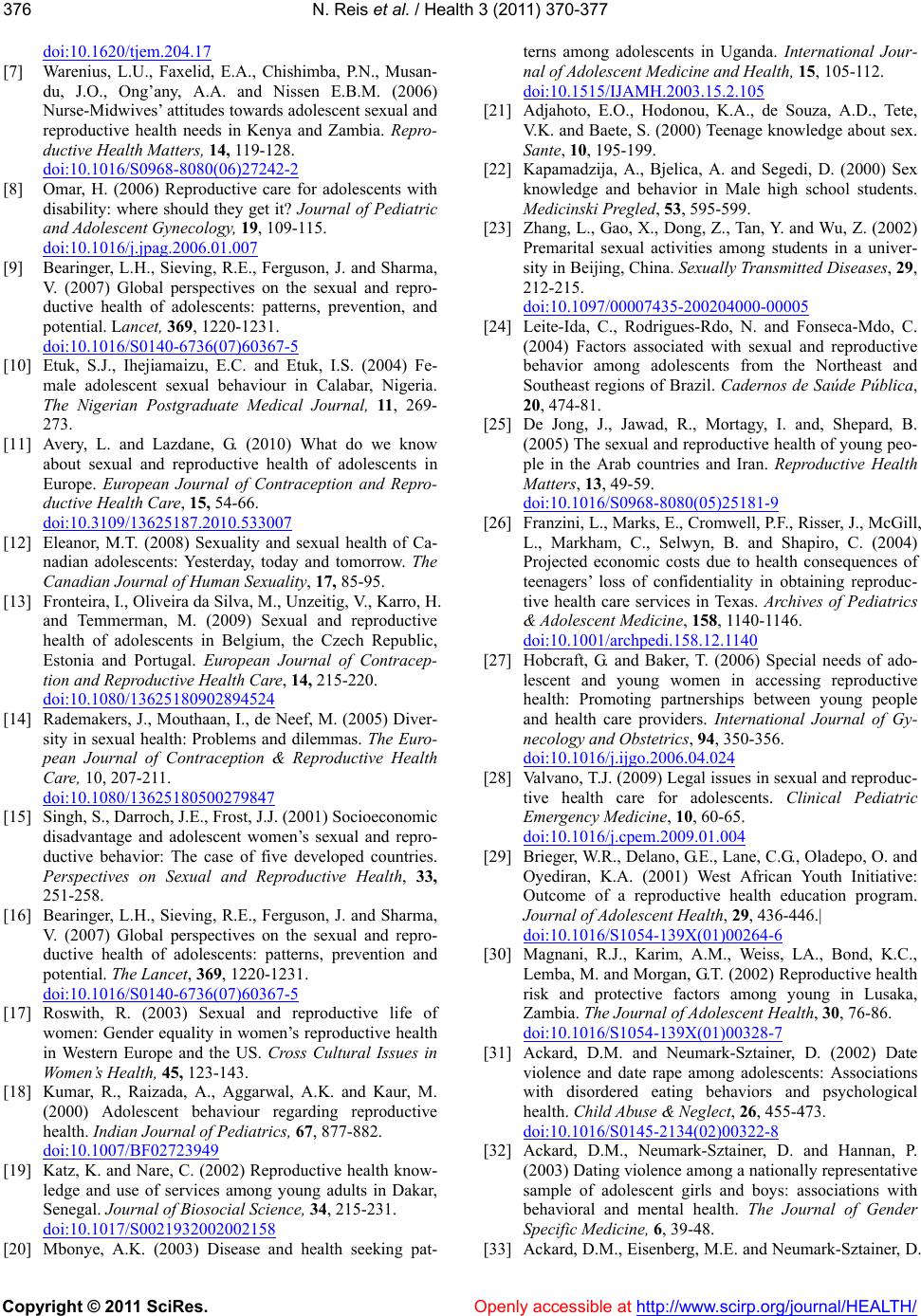 N. Reis et al. / Health 3 (2011) 370-377 Copyright © 2011 SciRes. Openly accessible at http://www.scirp.org/journal/HEALTH/ 376 doi:10.1620/tjem.204.17 [7] Warenius, L.U., Faxelid, E.A., Chishimba, P.N., Musan- du, J.O., Ong’any, A.A. and Nissen E.B.M. (2006) Nurse-Midwives’ attitudes towards adolescent sexual and reproductive health needs in Kenya and Zambia. Repro- ductive Health Matters, 14, 119-128. doi:10.1016/S0968-8080(06)27242-2 [8] Omar, H. (2006) Reproductive care for adolescents with disability: where should they get it? Journal of Pediatric and Adolescent Gynecolo gy, 19, 109-115. doi:10.1016/j.jpag.2006.01.007 [9] Bearinger, L.H., Sieving, R.E., Ferguson, J. and Sharma, V. (2007) Global perspectives on the sexual and repro- ductive health of adolescents: patterns, prevention, and potential. Lancet, 369, 1220-1231. doi:10.1016/S0140-6736(07)60367-5 [10] Etuk, S.J., Ihejiamaizu, E.C. and Etuk, I.S. (2004) Fe- male adolescent sexual behaviour in Calabar, Nigeria. The Nigerian Postgraduate Medical Journal, 11, 269- 273. [11] Avery, L. and Lazdane, G. (2010) What do we know about sexual and reproductive health of adolescents in Europe. European Journal of Contraception and Repro- ductive Health Care, 15, 54-66. doi:10.3109/13625187.2010.533007 [12] Eleanor, M.T. (2008) Sexuality and sexual health of Ca- nadian adolescents: Yesterday, today and tomorrow. The Canadian Journal of Human Sexuality, 17, 85-95. [13] Fronteira, I., Olivei ra da Silva, M., Unz eitig, V., Karro, H. and Temmerman, M. (2009) Sexual and reproductive health of adolescents in Belgium, the Czech Republic, Estonia and Portugal. European Journal of Contracep- tion and Reproductive Health Care, 14, 215-220. doi:10.1080/13625180902894524 [14] Rademakers, J., Mouthaan, I., de Neef, M. (2005) Diver- sity in sexual health: Problems and dilemmas. The Euro- pean Journal of Contraception & Reproductive Health Care, 10, 207-211. doi:10.1080/13625180500279847 [15] Singh, S., Darroch, J.E., Frost, J.J. (2001) Socioeconomic disadvantage and adolescent women’s sexual and repro- ductive behavior: The case of five developed countries. Perspectives on Sexual and Reproductive Health, 33, 251-258. [16] Bearinger, L.H., Sieving, R.E., Ferguson, J. and Sharma, V. (2007) Global perspectives on the sexual and repro- ductive health of adolescents: patterns, prevention and potential. The Lancet, 369, 1220-1231. doi:10.1016/S0140-6736(07)60367-5 [17] Roswith, R. (2003) Sexual and reproductive life of women: Gender equality in women’s reproductive health in Western Europe and the US. Cross Cultural Issues in Women’s Health, 45, 123-143. [18] Kumar, R., Raizada, A., Aggarwal, A.K. and Kaur, M. (2000) Adolescent behaviour regarding reproductive health. Indian Journal of Pediatrics, 67, 877-882. doi:10.1007/BF02723949 [19] Katz, K. and Nare, C. (2002) Reproductive health know- ledge and use of services among young adults in Dakar, Senegal. Journal of Biosocial Science, 34, 215-231. doi:10.1017/S0021932002002158 [20] Mbonye, A.K. (2003) Disease and health seeking pat- terns among adolescents in Uganda. International Jour- nal of Adolescent Medicine and Health, 15, 105-112. doi:10.1515/IJAMH.2003.15.2.105 [21] Adjahoto, E.O., Hodonou, K.A., de Souza, A.D., Tete, V.K. and Baete, S. (2000) Teenage knowledge about sex. Sante, 10, 195-199. [22] Kapamadzija, A., Bjelica, A. and Segedi, D. (2000) Sex knowledge and behavior in Male high school students. Medicinski Pregled, 53, 595-599. [23] Zhang, L., Gao, X., Dong, Z., Tan, Y. and Wu, Z. (2002) Premarital sexual activities among students in a univer- sity in Beijing, China. Sexually Transmitted Diseases, 29, 212-215. doi:10.1097/00007435-200204000-00005 [24] Leite-Ida, C., Rodrigues-Rdo, N. and Fonseca-Mdo, C. (2004) Factors associated with sexual and reproductive behavior among adolescents from the Northeast and Southeast regions of Brazil. Cadernos de Saúde Pública, 20, 474-81. [25] De Jong, J., Jawad, R., Mortagy, I. and, Shepard, B. (2005) The sexual and reproductive health of young peo- ple in the Arab countries and Iran. Reproductive Health Matters, 13, 49-59. doi:10.1016/S0968-8080(05)25181-9 [26] Franzini, L., Marks, E., Cromwell, P.F., Risser, J., McGill, L., Markham, C., Selwyn, B. and Shapiro, C. (2004) Projected economic costs due to health consequences of teenagers’ loss of confidentiality in obtaining reproduc- tive health care services in Texas. Archives of Pediatrics & Adolesc ent Medicine, 158, 1140-1146. doi:10.1001/archpedi.158.12.1140 [27] Hobcraft, G. and Baker, T. (2006) Special needs of ado- lescent and young women in accessing reproductive health: Promoting partnerships between young people and health care providers. International Journal of Gy- necology and Obstetrics, 94, 350-356. doi:10.1016/j.ijgo.2006.04.024 [28] Valvano, T. J. (2009) Legal issues in sexual and reproduc- tive health care for adolescents. Clinical Pediatric Emergency Medicine, 10, 60-65. doi:10.1016/j.cpem.2009.01.004 [29] Brieger, W.R., Delano, G.E., La ne, C.G., Oladepo, O. and Oyediran, K.A. (2001) West African Youth Initiative: Outcome of a reproductive health education program. Journal of Adolescent Health, 29, 436-446.| doi:10.1016/S1054-139X(01)00264-6 [30] Magnani, R.J., Karim, A.M., Weiss, LA., Bond, K.C., Lemba, M. and Morgan, G.T. (2002) Reproductive health risk and protective factors among young in Lusaka, Zambia. The Journal of Adolescent Health, 30, 76-86. doi:10.1016/S1054-139X(01)00328-7 [31] Ackard, D.M. and Neumark-Sztainer, D. (2002) Date violence and date rape among adolescents: Associations with disordered eating behaviors and psychological health. Child Abus e & Neglect, 26, 455-473. doi:10.1016/S0145-2134(02)00322-8 [32] Ackard, D.M., Neumark-Sztainer, D. and Hannan, P. (2003) Dating violence among a nationally representative sample of adolescent girls and boys: associations with behavioral and mental health. The Journal of Gender Specific Medicine, 6, 39-48. [33] Ackard, D.M., Eisenberg, M.E. and Neumark-Sztainer, D.  N. Reis et al. / Health 3 (2011) 370-377 Copyright © 2011 SciRes. http://www.scirp.org/journal/HEALTH/Openly accessible at 377377 (2007) Long-term impact of adolescent dating violence on the behavioral and psychological health of male and female youth. The Journal of Pediatrics, 151, 476-481. doi:10.1016/j.jpeds.2007.04.034 [34] Silverman, J.G., Raj, A., Mucci, L.A. and Hathaway, J.E. (2001) Dating violence against adolescent girls and asso- ciated substance use, unhealthy weight control, sexual risk behavior, pregnancy, and suicidality. The Journal of American Medical Association, 286, 572-579. doi:10.1001/jama.286.5.572 |