

Paper Menu >>
Journal Menu >>
 Journal of Geoscience and Environment Protection, 2014, 2, 38-40 Published Online December 2014 in SciRes. http://www.scirp.org/journal/gep http://dx.doi.org/10.4236/gep.2014.25006 How to cite this paper: Ge, L. Q., Zhao, J. K., & Luo, Y. Y. (2014). The Research on Earthquake Radon Anomalies. Journal of Geoscience and Environment Protection, 2, 38-40. http://dx.doi.org/10.4236/gep.2014.25006 The Research on Earthquake Radon Anomalies Liangquan Ge, Jian kun Zhao, Yaoyao Luo College of Applied Nu clear Technology and Automation Engineering, Chengdu Uni ver sit y of Technology, Chengdu, China Email: [email protected] Received Sep te mber 20 14 Abstract Radon is consid ered to be one of the most promi sing gases to p redicting th e ear th q uake. The wa- ter r ad on c oncentr ation is regular to monitori ng in dicat or. The rese arch on the formati on of the earth qu ak e radon an om al ie s (E RA) will produce great acade mic value and economic benefi ts. The ERA in slope-type can be seemed as a respons e of under grou nd wa ter rad o n ano mal ie s in the progress of te nsile str ess accumu lating. Keywords The Earth qu ak e Rad o n, The W ate r R ad on Anomalie s, Earth qu a ke P redic tion 1. Introduction To make the relatio nship between ear t hqua ke and radon anomaly clear, the Chinese seismo lo gis ts had done a lot of related research in radon and thoron exhalations dur ing fracture in 1970s. Luo Guang w ei proposed that radon concentration increased significantly under the uniaxia l p r e ssure (Luo, 1980). Based on the data of the AM RITASR Eart hq uake Monitor ing Station of India, Han Xue hui of TYUT present some neodoxy in 2000 as followed: after a new round of tectonic str ess action, ge ologic body will be to experience “compaction stage” firstly, and at this stage the te ctonic str e ss i mpact on geologic body increase grad ua l ly, the primary fracture will decrease with the increase of stress until to be closed, which shut down the original ra d on exha lation chan ne l . With all of these re aso ns, t he radon concentration will present downward obviously at this stage (Han, 2000). Afte r the Wenchua n Ms 8.0 ear t hqua ke , Gu Yi of Chengdu U niver si ty of Technology (CDUT) evaluated the ear thqua ke fault activit y by mea sur ing the so il radon concentratio n on the acti vit y fault sec tion, and the resul ts sho w t ha t t he met hod is effective and r eliab le (Gu, 2009). 2. The Forming Mechanism of Earthquake Radon Anomalie s In the process of ear thquake pr eparation, the underground rock in seis moge nic zone als o under goes the exp e- riences above the sta ge s. Whe n the rock ca nnot expand any more, the ti ny fractures will cluster to the main rup- ture le adin g to the e a r thquake swarm which is regarded as the pr ecursor for megaseism (QIN, 2011). In the ini- tial accumulation stage, the conne c t ivity between inner pores become worse and pore size get s s maller. It not 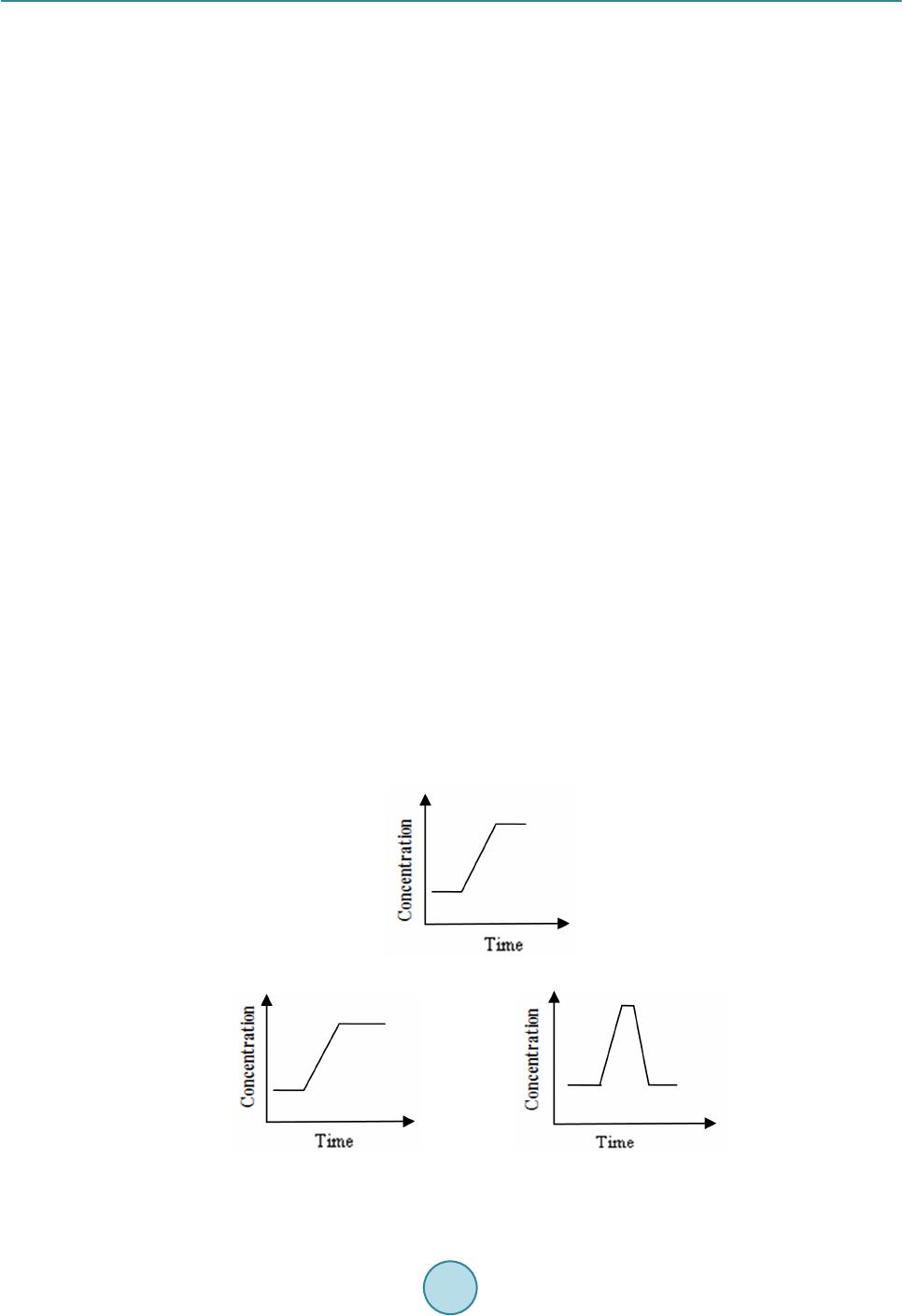 L. Q. Ge et al. 39 onl y reduces the effective space of the stor a ge for radon, but also blocks the migration of free radon in pores and fractures. Therefore, in the process of stress accumulation, the free radon concentration in the pores or fractures will be reduced whi ch is confirmed in the experiments. When the ro ck under continuous stre ss or greater stre ss, the porosity increases significantly, so does the pore conne c t ivi ty. Thi s not only increases the free radon concen- tration in the pore, but a lso drive s the migration of radon easily which is co nduc i ve to t he d etec tion. When the r ock undergo e s a tensile stress for lo ngti me, the c rack of rock will expa nd. Obviously, rock porosity and pore connectivit y will continue to increase, which is conducive to increase the fr ee radon concentration in rock pore and to easily migrate. As a result, no matter co mpressio n, s tretc hing, or deformation, the free radon concentration in rock pores will chan ge and an Ear t hquake Radon Anomaly (ERA) will form in seismogenic zo ne . Ba sed on the ERA, we not onl y may predict the cha nges of rock stress at the monitor ing plots, but also indica te the types of stres s loaded on the roc ks , suc h as co mpression is te ns ion str ess. 3. The Discussion of ERA Morphology In the pro cess of seis mo genic, t he ERA morphology is related to many factors includi ng the monito rin g area, measuring objects and the sensitivity of instrume nts. At present, the obj ect of long-ter m monitoring radon is groundwat e r . Since p hreatic fractures and pores are ful ly filled of water, the radon emi ts fr om rocks and dis- solve s in undergrou nd water immediately. Ground water becomes the carrier of radon migr atio n. So, the ERA is closely relative to undergro und water movement. According to the be haviors of radon in the pro cess of seismo- genic, the morphology of ERA can be expressed as “slope style”, “hook style” and “pulse style”, shown in Fig- ure 1. The slope type of ERA (Figure 1( a) ) is forming in seismog enic stretch area. In this area, tensile str ess forces on rocks a nd the tin y fractures in rocks may increase and expand gra dually, which is in fa vor of the storage and space for radon migration. The radon concentration in groundwate r will gra dually increase. In the process of rack sustai ned c ompre ssio n, the “slope style” anomaly may develop in multistep. The hook style of ERA (Figure 1( b)) may be observed in the seismo genic co mpressive area. T he ERA con- sists of descent stage a nd ascent stage. The descent stage represents the initial compactio n and elastic deforma- tion. In this stage , the fractures are compressed and the path of radon migration may be closed, which leads to reduce radon concentration in gro undwate r grad uall y. The ascent stage of ERA shows that cracks gro w crazily and r ocks b reak. In thi s stage , porosity and pore connec tiv it y increase fa s t, so does the concentration. The ra te of ascent is significantl y faster than that of descent. The pulse st yle (Figure 1 (c) ) describes the radon concentration in underground water increases and decrease rapidly. Its intensit y is strong, also can be superimposed on the “slope style” or “hoo k styl e ”. Thi s kind of (a) (b) (c) Figure 1. The patterns of ERA (a) slope-typ e; (b) hook-type; (c) pulse-type .  L. Q. Ge et al. 40 anomaly may be caused by a alternant deformation to expa nd the porosity or the radon releases from the rock fit fully. 4. The Discussion about ERA in Time -Space Domain As t he hal f -life of 222Rn is only 3.825 days , t he diffusion le ngth of radon in water is jus t a few centimeters. For this reason, the range of a radon anomaly in underground water is strongly depended on the moveme nt of under groundwat e r . Si nc e the r adio ac tive deca y equilibriu m between 222Rn a nd226Ra in a closed water-rock syste m takes 38 days tha t is about 10 times half-time of 222Rn, the range of ERA should co ver the dis tance of under- ground water movement in 38 days. The time span of ERA is the whole time of rock stres s acc umulating. To the s hort-t ime “slope type ” pattern caused by single co mpre ssion change, it takes 38 days to balance the radium-radon decay. For the long time ten- sile stres s accumulating, the “slope style” anomaly devel ops in multistep. It will impa ct t he whole process of sustained compression. The descent st a ge of “hook style” anomaly may de cline in multistep; the ascent sta ge presents rock broken superimposed many times. The “puls e s tyle” anomaly caused by radon released fitfully takes very short time to be formed. According to the monitor ing da ta to free radon released from soil, the puls e style is measured in units of hours or days. While it caused by a rock alternant deformation, the anomaly will sustain for longer time. In add ition, the more “pulse style” anomalies appear t he more tremendously stress chan ge will happen near the monitoring statio n. 5. Conclusion In the pro cess of seismogenic, no matter rocks e nd ure compr e ssio n, stretc hin g, or deformation, t he free radon concentration in rock pores will change a nd an E a r t hqua ke Radon Ano ma ly (ERA) will form in sei smogenic zone . The morphology of ERA can be described as “slope-type”, “hook-type” and “pul s e-type”. The slope type represents the undergro und radon anomaly in the se ismogenic s tretch area. T he ERA can cover where the un- der ground water with radon moves in 38 days a nd go thr ough the whole time of ro ck sustained c ompressi on. The ERA can reflect the states the rock in suc h as stretch, compression and br oken. So the monitorin g statio n should be located not only te nsile area but al so compre ssive zone. By analyzing the re giona l ERA comprehen- sively, we provide important reference information for seis molo gy a nd e arthqua ke p red ictio n. Acknowledgements The autho rs grat e f ul ly acknowle dge the financi a l support of: (1) National Natural Science Founda ti on of China thro ugh Gra nt No. 41074093 entitled “Research on mechanism of earthquake radon anomal y”. (2) The Na tional High-tech Re search and De velopme nt Program of China t hrough Grant 2012AA061803 entitled “Develop ment of high precisio n nuclear rad iatio n spectrometry”. References Luo , G. W., & Shi, X. Z. (1980) . E xperimental Results of Radon and Thorium Emanat ion s fro m Rock S peci men under Pressu re. Acta Seismologica Sinica, 2, 198-204. Han, X. H. (2000). The Ideal Curv e Model on Ea rth qu ake P red iction by Radon Monitoring. Journal of Taiyuan University of Technology, 31, 101 -103. Gu, Y (2009).Analysis and Evaluation of Faults Activities in Chengdu Region with Rad on C oncent ration Measur ements af- ter Wenchu an E arthq u ake. Journal of Engineering Geology, 17, 296-300 . Qin, S. Q. (2011). Seismogenic Law and Mode of Strong Earthq u akes. Journal of Ear th Sciences and Environment, 33, 311- 316. |