

Paper Menu >>
Journal Menu >>
 Vol.2, No.2, 86-93 (2011) doi:10.4236/as.2011.2 2013 C opyright © 2011 SciRes. Openly accessible at http://www.scirp.org/journal/AS/ Agricultural Sciences Soil reinforcement by a root system and its effects on sediment yield in response to concentrated flow in the loess plateau Peng Li1*, Zhanbin Li1,2 1School of Water Resources and Hydroelectric Power, Xi’an University of Technology, Xi’an, China; *Corresponding Aut h o r : [email protected] 2Institute of soil and Water Conservation, Chinese Academy of Sciences, Ministry of Water Resources, Yangling, China. Received 3 January 2010; revised 1 March 2011; accepted 23 March 2011. ABSTRACT The import ance of root s in soil conse rvation has long been underestimated due to a lack of sys- tematic studies conducted to evaluate root dis- tribution patterns and their effects on soil ero- sion. Current knowledge regarding root morp- hology and it s impact on soil erosion by water is limited; therefore, detailed analysis of the role that root systems play in controlling soil ero- sion is needed. In this study, stratified runoff sc- ouring at different soil depths in the field was conducted in a grassland area. The results indi- cated that both root biomass and soil water- stable aggregates decreased as soil depth in- creased at a ll three sites, while there was almost no change in soil bulk density at 1.3 g/cm3. Se- diment yields under different runoff discharge at different sites showed similar trends, and the sediment yield increased as the soil depth in- creased at all three sites. Further analysis re- vealed that close relationships existed between root biomass and the amount of water-stable aggregates and soil organic matter content, and that these factors greatly influenced soil ero- sion. Based on the data generated by the exper i- ment, equations describing the relationship be- tw een sediment production at different soil depths and root biomass were determined. Keyw ords: Root; Soil Properties; Soil Erosion; Se- diment Yield; Loess Plateau 1. INTRODUCTION The Loess Plateau is one of the most eroded areas in the world, and the resistance of loess to erosion forces has attracted a great deal of attention from researchers. A study conducted by Zhu [1] revealed that the low resis- tance of loess was related to its unique deposition pat- terns during its formation, and that it showed greatly improved resistance when vegetation was present. Due to the differences in soil properties across the profile, soil erosion exhibits various patterns, and these patterns tend to be more complex when vegetative coverage and root systems exist [2-4]. Because numerous studies [5-9] evaluating the impact of vegetation characteristics on soil erosion have been conducted, it is often assumed that all aspects of vegetation have been studied. How- ever, although many studies have investigated the effects of plant components such as leaves, stems, organic mat- ter, roots and exudates, on soil erosion, attention has predominantly been paid to the effects of the above- ground biomass on runoff hydraulics and soil erosion [5,10,11]. Conversely, systematic root studies are lacking, primarily due to difficulties in direct observation of their effects [12]. Despite this lack of information, a few stu- dies have verified that roots played a crucial role with respect to the effects of rainfall and runoff on soil ero- sion [3,4,9]. The presence of roots in soil provides me- chanical reinforcement; therefore, their presence is re- garded as one of the most important contributions of vegetation to soil stab ility [11,13,14]. The reinforcement of soil resistance to erosion by plant roots can be attributed to two aspects. First, roots and root remnants physically bind soil p articles, forming mechanical barriers to soil and water movement [15]. Major parameters influencing the mechanical influence of roots include root diameter, degree of bifurcation, appearance of root hairs, friction between roots and soil, and root system distribution [16]. Second, roots and root remnants excrete binding agents and form a food source for microorganisms that, in turn, produce other organic bindings [17,18]. These bindings increase the amount of stable soil aggregates over the long term, thereby reduc- 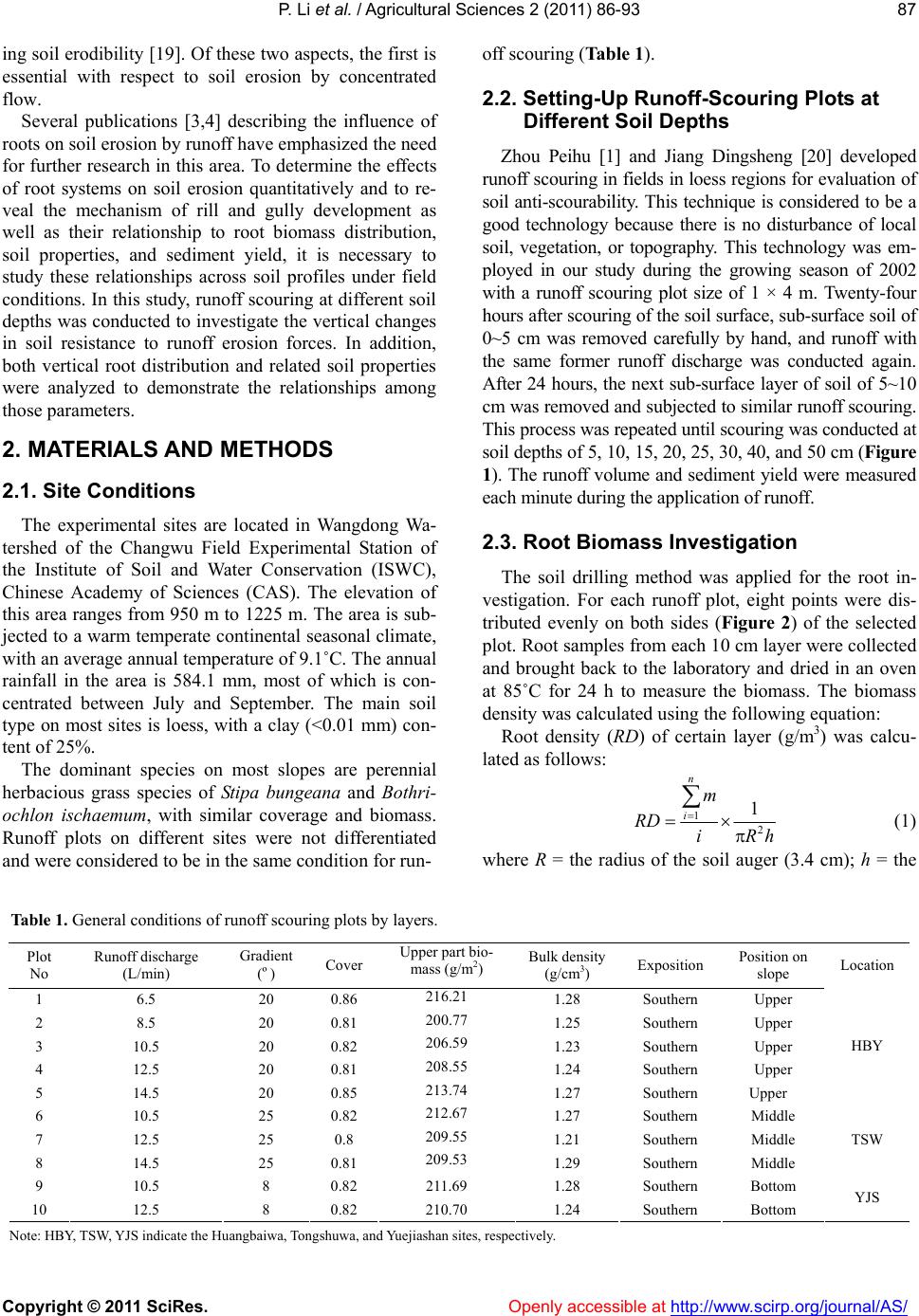 P. Li et al. / Agricultur al Sciences 2 (2011) 86-93 Copyright © 2011 SciRes. Openl y accessible at http:// www. scirp.o rg/journal/AS/ 87 ing soil erodibility [19]. Of these two asp ects, the first is essential with respect to soil erosion by concentrated flow. Several publications [3,4] describing the influence of roots on soil erosion by runoff have emphasized the need for further research in this area. To determine the effects of root systems on soil erosion quantitatively and to re- veal the mechanism of rill and gully development as well as their relationship to root biomass distribution, soil properties, and sediment yield, it is necessary to study these relationships across soil profiles under field conditions. In this study, ru noff scouring at different soil depths was conducted to investigate the vertical changes in soil resistance to runoff erosion forces. In addition, both vertical root distribution and related soil properties were analyzed to demonstrate the relationships among those parameters. 2. MATERIALS AND METHODS 2.1. Site Conditions The experimental sites are located in Wangdong Wa- tershed of the Changwu Field Experimental Station of the Institute of Soil and Water Conservation (ISWC), Chinese Academy of Sciences (CAS). The elevation of this area ranges from 950 m to 1225 m. The area is sub- jected to a warm temperate c ontinental seasonal climate, with an average annual temperature of 9.1˚C. The annual rainfall in the area is 584.1 mm, most of which is con- centrated between July and September. The main soil type on most sites is loess, with a clay (<0.01 mm) con- tent of 25%. The dominant species on most slopes are perennial herbacious grass species of Stipa bungeana and Bothri- ochlon ischaemum, with similar coverage and biomass. Runoff plots on different sites were not differentiated and were considered to be in th e same condition for run- off scouring (Table 1). 2.2. Setting-Up Runoff-Scouring Plots at Different Soil Depths Zhou Peihu [1] and Jiang Dingsheng [20] developed runoff scouring in fields in loess regions for evaluation of soil anti-sco urability. This tec hnique is considered to be a good technology because there is no disturbance of local soil, vegetation, or topography. This technology was em- ployed in our study during the growing season of 2002 with a runoff scouring plot size of 1 × 4 m. Twenty-four hours after scouring of the soil surface, sub-surface soil of 0~5 cm was removed carefully by hand, and runoff with the same former runoff discharge was conducted again. After 24 hours, the next sub-surface layer of soil of 5~10 cm was removed and subjected to similar runoff scouring. This process was repeated until scouring was conducted at soil depths of 5, 10, 15, 20, 25, 30, 40, and 50 cm (Figure 1). The runoff volume and sediment yield were measured each minute during the application of runoff. 2.3. Root Biomass Investigation The soil drilling method was applied for the root in- vestigation. For each runoff plot, eight points were dis- tributed evenly on both sides (Figure 2) of the selected plot. Root samples from each 10 cm layer were collected and brought back to the laboratory and dried in an oven at 85˚C for 24 h to measure the biomass. The biomass density was calculated using the following equation: Root density (RD) of certain layer (g/m3) was calcu- lated as follows: 12 1 n i m RD iRh (1) where R = the radius of the soil auger (3.4 cm); h = the Table 1. General conditions of runoff scouring plots by layers. Plot No Runoff discharge (L/min) Gradient (º) Cover Upper part bio- mass (g/m2) Bulk density (g/cm3) Exposition Position on slope Location 1 6.5 20 0.86 216.21 1.28 Southern Upper 2 8.5 20 0.81 200.77 1.25 Southern Upper 3 10.5 20 0.82 206.59 1.23 Southern Upper 4 12.5 20 0.81 208.55 1.24 Southern Upper 5 14.5 20 0.85 213.74 1.27 Southern Upper HBY 6 10.5 25 0.82 212.67 1.27 Southern Middle 7 12.5 25 0.8 209.55 1.21 Southern Middle 8 14.5 25 0.81 209.53 1.29 Southern Middle TSW 9 10.5 8 0.82 211.69 1.28 Southern Bottom 10 12.5 8 0.82 210.70 1.24 Southern Bottom YJS Note: HBY, TSW, YJS indicate the Huangbaiwa, Tongshuwa, and Yuejiashan sites, respec tively. 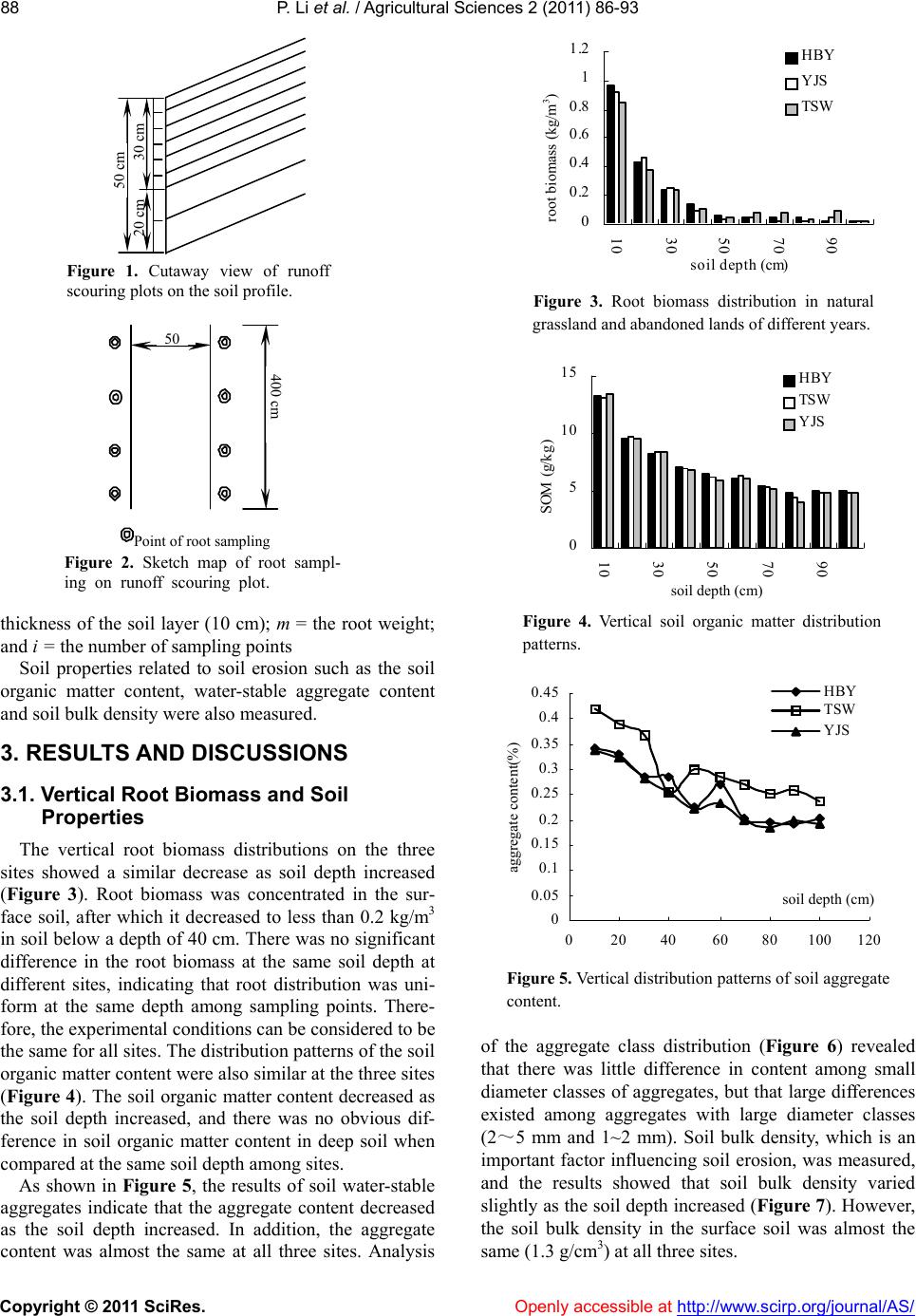 P. Li et al. / Agricultur al Sciences 2 (2011) 86-93 Copyright © 2011 SciRes. Openly accessible at http://www.scirp.org/journal/AS/ 88 Figure 1. Cutaway view of runoff scouring plots on the soil profile. P o in t o f r oot sa m p lin g 50 400cm Figure 2. Sketch map of root sampl- ing on runoff scouring plot. thickness of the soil layer (10 cm); m = the root weight; and i = the number of sampling points Soil properties related to soil erosion such as the soil organic matter content, water-stable aggregate content and soil bulk density were also measured. 3. RESULTS AND DIS CUS SIONS 3.1. Vertical Root Biomass and Soil Properties The vertical root biomass distributions on the three sites showed a similar decrease as soil depth increased (Figure 3). Root biomass was concentrated in the sur- face soil, after which it decreased to less than 0.2 kg/m3 in soil below a depth of 40 cm. There was no significant difference in the root biomass at the same soil depth at different sites, indicating that root distribution was uni- form at the same depth among sampling points. There- fore, the experimental conditions can be considered to be the same for all sites. The distribution patterns of th e soil organic matter content were also similar at the three sites (Figure 4). The soil organic matter content decreased as the soil depth increased, and there was no obvious dif- ference in soil organic matter content in deep soil when compared at the same soil depth among sites. As shown in Figure 5, the results of soil water-stable aggregates indicate that the aggregate content decreased as the soil depth increased. In addition, the aggregate content was almost the same at all three sites. Analysis 0 0.2 0.4 0.6 0.8 1 1.2 10 30 50 70 90 soil de pt h ( c m) root biomass (kg/m3) HBY YJS TSW Figure 3. Root biomass distribution in natural grassland and abandoned lands of different years. 0 5 10 15 10 30 50 70 90 soil depth (cm) SOM (g/kg) HBY TSW YJS Figure 4. Vertical soil organic matter distribution patterns. 0 0.05 0.1 0.15 0.2 0.25 0.3 0.35 0.4 0.45 020406080100120 soil de pth ( cm) aggregate content (%) HBY TSW YJS Figure 5. Vertical distribution patterns of soil aggregate content. of the aggregate class distribution (Figure 6) revealed that there was little difference in content among small diameter classes of aggregates, but that large differences existed among aggregates with large diameter classes (2~5 mm and 1~2 mm). Soil bulk density, which is an important factor influencing soil erosion, was measured, and the results showed that soil bulk density varied slightly as the soil depth increased (Figure 7). However, the soil bulk density in the surface soil was almost the same (1.3 g/cm3) at all three sites. 20 cm 30 cm 50 cm Point of root sampling root biomass (kg/m3) soil depth (cm) soil depth (cm) aggregate content(%) 50 400 cm 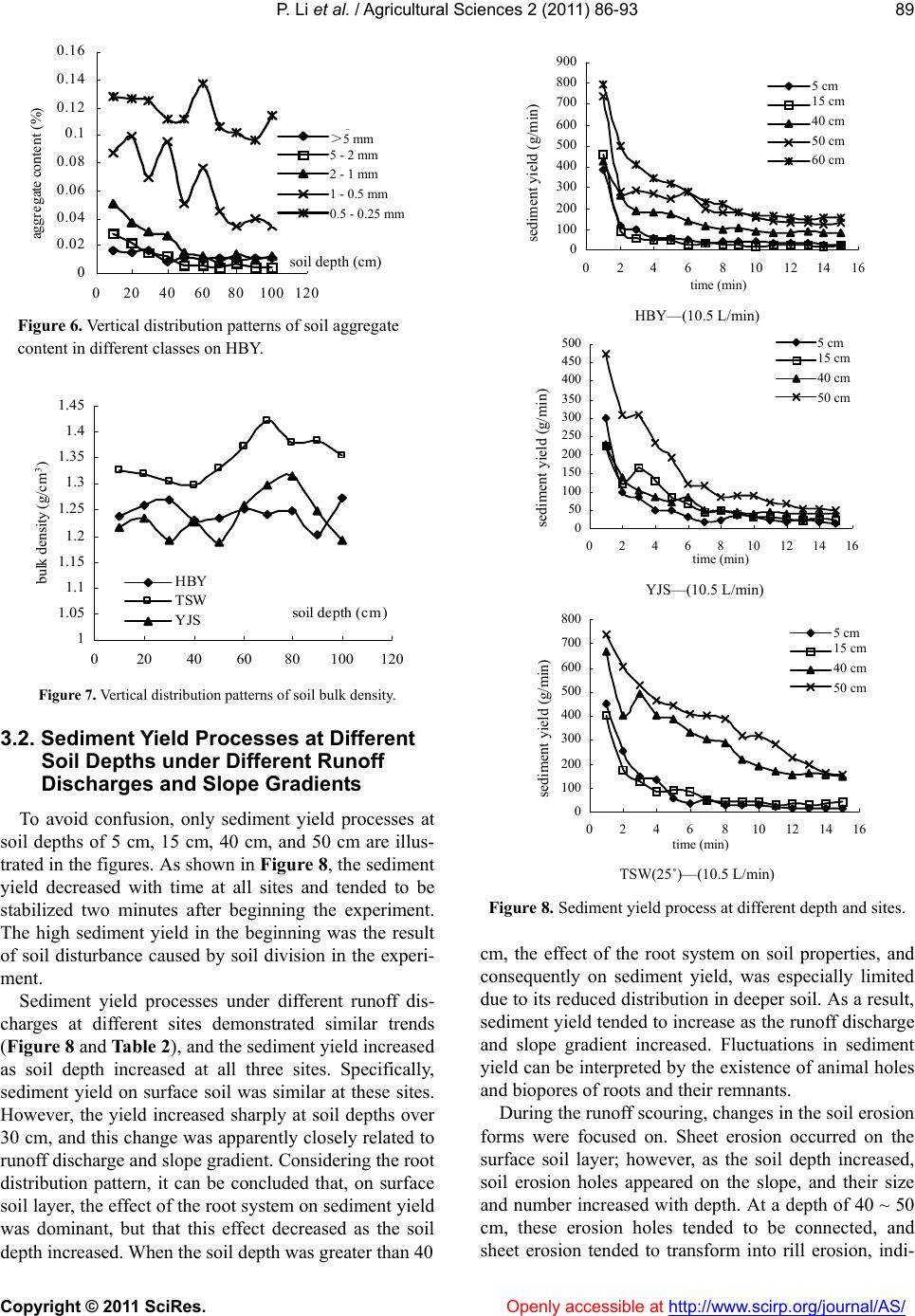 P. Li et al. / Agricultur al Sciences 2 (2011) 86-93 Copyright © 2011 SciRes. http://www.scirp. org/journal/AS/ 89 0 0.02 0.04 0.06 0.08 0.1 0.12 0.14 0.16 020406080100 120 0 100 200 300 400 500 600 700 800 900 0 24 6 810121416 5c m 15c m 40c m 50c m sediment yi eld (g/min) Openly accessible at soil de pth (cm) aggregate co ntent (%) >5mm 5-2mm 2-1mm 1-0.5mm 0.5- 0.25mm Figure 6. Vertical distribution patterns of soil aggregate content in different classes on HBY. 1 1.05 1.1 1.15 1.2 1.25 1.3 1.35 1.4 1.45 0 20406080100120 soil depth (cm) bulk density (g/cm 3 ) HBY TSW YJS Figure 7. Vertical distribution patterns of soil b ulk density. 3.2. Sediment Yield Processes at Different Soil Depths under Different Runoff Discharges and Slope Gradients To avoid confusion, only sediment yield processes at soil depths of 5 cm, 15 cm, 40 cm, and 50 cm are illus- trated in the figures. As shown in Figure 8, the sediment yield decreased with time at all sites and tended to be stabilized two minutes after beginning the experiment. The high sediment yield in the beginning was the result of soil disturbance caused by soil division in the experi- ment. Sediment yield processes under different runoff dis- charges at different sites demonstrated similar trends (Figure 8 and Table 2), and the sediment yield increased as soil depth increased at all three sites. Specifically, sediment yield on surface soil was similar at these sites. However, the yield increased sharply at soil depths over 30 cm, and this change was apparently closely related to runoff discharge and slope gradient. Considering the root distribution pattern, it can be concluded that, on surface soil layer, the effect of the root system on sediment yield was dominant, but that this effect decreased as the soil depth increased. When the soil depth was greater than 40 time (min) 60c m HBY—(10.5 L/min) 0 50 100 150 200 250 300 350 400 450 500 024681 time (min)0121416 sediment yield (g/min) 5c m 15c m 40c m 50c m YJS—(10.5 L/min) 0 100 200 300 400 500 600 700 800 0246810121416 ti me (min) sediment yield (g/min) 5cm 15cm 40cm 50cm TSW(25˚)—(10.5 L/min) Figure 8. Sediment yield process at different depth and sites. cm, the effect of the root system on soil properties, and consequently on sediment yield, was especially limited due to its reduced distribution in deeper soil. As a resu lt, sediment yield tended to increase as the runoff discharge and slope gradient increased. Fluctuations in sediment yield can be interpreted by the existence of animal holes and biopores of roots and their r emnants. During the runoff scouring, changes in th e so il ero sion forms were focused on. Sheet erosion occurred on the surface soil layer; however, as the soil depth increased, soil erosion holes appeared on the slope, and their size and number increased with depth. At a depth of 40 ~ 50 cm, these erosion holes tended to be connected, and sheet erosion tended to transform into rill erosion, indi- >5 mm 5 - 2 mm 2 - 1 mm 1 - 0.5 mm 0.5 - 0.25 mm soil depth (cm) 5 cm 15 cm 40 cm 50 cm sediment yield (g/min) 60 cm 5 cm 15 cm 40 cm 50 cm time (min) sediment yield (g/min) time (min) 5 cm 15 cm 40 cm 50 cm sediment yield (g/min) time (min) 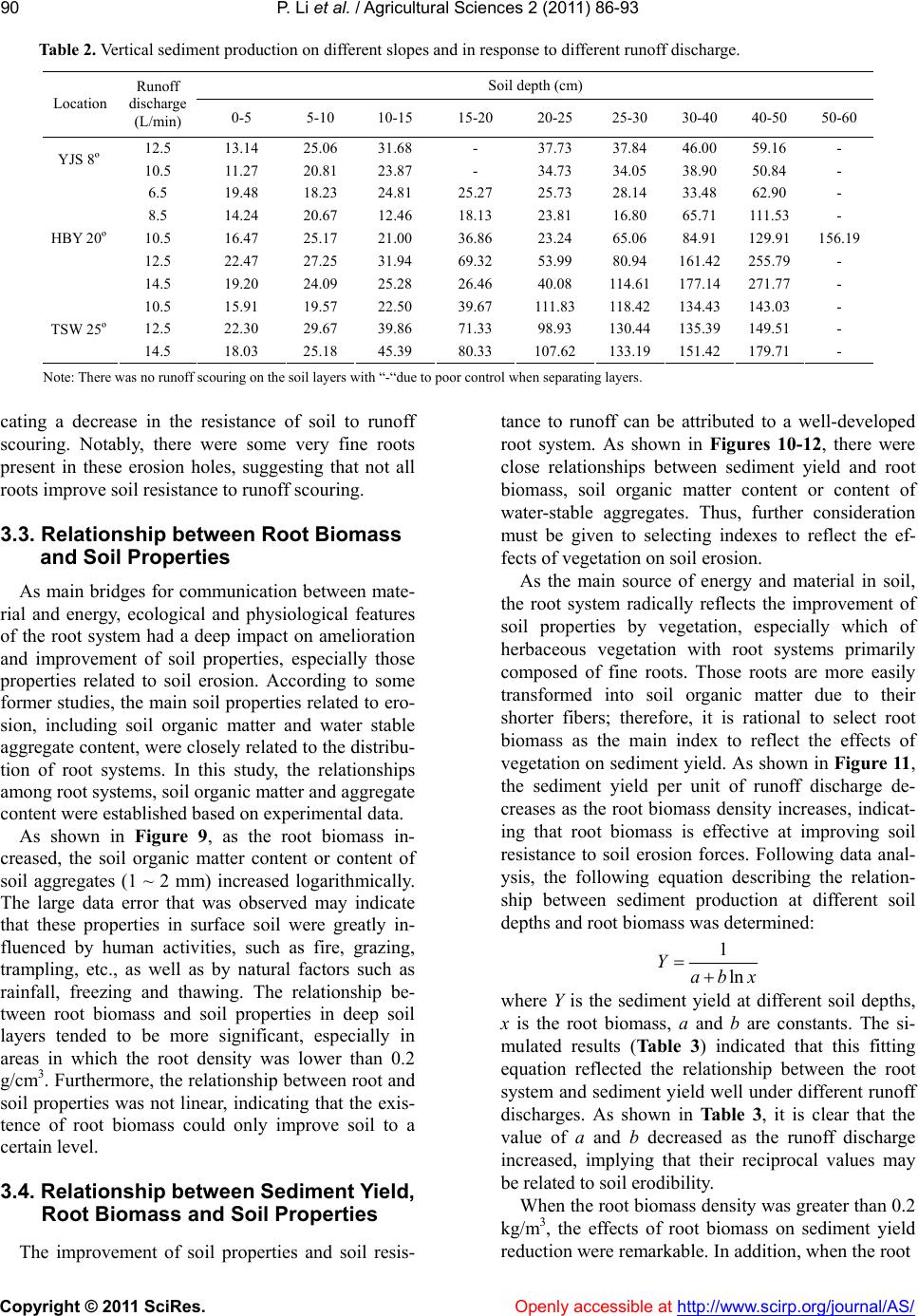 P. Li et al. / Agricultur al Sciences 2 (2011) 86-93 Copyright © 2011 SciRes. Openly accessible at http://www.scirp.org/journal/AS/ 90 Table 2. Vertical sediment production on different slopes and in response to different runoff discharge. Soil depth (cm) Location Runoff discharge (L/min) 0-5 5-10 10-15 15-20 20-25 25-30 30-40 40-50 50-60 12.5 13.14 25.06 31.68 - 37.73 37.84 46.00 59.16 - YJS 8º 10.5 11.27 20.81 23.87 - 34.73 34.05 38.90 50.84 - 6.5 19.48 18.23 24.81 25.27 25.73 28.14 33.48 62.90 - 8.5 14.24 20.67 12.46 18.13 23.81 16.80 65.71 111.53 - 10.5 16.47 25.17 21.00 36.86 23.24 65.06 84.91 129.91 156.19 12.5 22.47 27.25 31.94 69.32 53.99 80.94 161.42 255.79 - HBY 20º 14.5 19.20 24.09 25.28 26.46 40.08 114.61177.14 271.77 - 10.5 15.91 19.57 22.50 39.67 111.83 118.42134.43 143.03 - 12.5 22.30 29.67 39.86 71.33 98.93 130.44135.39 149.51 - TSW 25º 14.5 18.03 25.18 45.39 80.33 107.62 133.19151.42 179.71 - Note: There was no runoff scouri ng on the soil layers with “-“due to poor control when separating layers. cating a decrease in the resistance of soil to runoff scouring. Notably, there were some very fine roots present in these erosion holes, suggesting that not all roots improve soil resistance to runoff scouring. 3.3. Relationship between Root Biomass and Soil Properties As main bridges for communication between mate- rial and energy, ecological and physiological features of the root system had a deep impact on amelioration and improvement of soil properties, especially those properties related to soil erosion. According to some former studies, the main soil properties related to ero- sion, including soil organic matter and water stable aggregate content, were closely related to the distribu- tion of root systems. In this study, the relationships among root systems, soil organic matter and aggregate content were established based on experimental data. As shown in Figure 9, as the root biomass in- creased, the soil organic matter content or content of soil aggregates (1 ~ 2 mm) increased logarithmically. The large data error that was observed may indicate that these properties in surface soil were greatly in- fluenced by human activities, such as fire, grazing, trampling, etc., as well as by natural factors such as rainfall, freezing and thawing. The relationship be- tween root biomass and soil properties in deep soil layers tended to be more significant, especially in areas in which the root density was lower than 0.2 g/cm3. Furthermore, the relationship between root and soil properties was not linear, indicating that the exis- tence of root biomass could only improve soil to a certain level. 3.4. Relationship between Sediment Yield, Root Biomass and Soil Properties The improvement of soil properties and soil resis- tance to runoff can be attributed to a well-developed root system. As shown in Figures 10-12, there were close relationships between sediment yield and root biomass, soil organic matter content or content of water-stable aggregates. Thus, further consideration must be given to selecting indexes to reflect the ef- fects of vegetation on soil erosion. As the main source of energy and material in soil, the root system radically reflects the improvement of soil properties by vegetation, especially which of herbaceous vegetation with root systems primarily composed of fine roots. Those roots are more easily transformed into soil organic matter due to their shorter fibers; therefore, it is rational to select root biomass as the main index to reflect the effects of vegetation on sediment yield. As shown in Figure 11, the sediment yield per unit of runoff discharge de- creases as the root biomass density increases, indicat- ing that root biomass is effective at improving soil resistance to soil erosion forces. Following data anal- ysis, the following equation describing the relation- ship between sediment production at different soil depths and root biomass was determined: 1 ln Yab x where Y is the sediment yield at different soil depths, x is the root biomass, a and b are constants. The si- mulated results (Table 3) indicated that this fitting equation reflected the relationship between the root system and sediment yield well under different runoff discharges. As shown in Table 3, it is clear that the value of a and b decreased as the runoff discharge increased, implying that their reciprocal values may be related to soil erodibility. When the root biomass density was greater than 0.2 kg/m3, the effects of root biomass on sediment yield reduction were remarkable. In addition, when the root 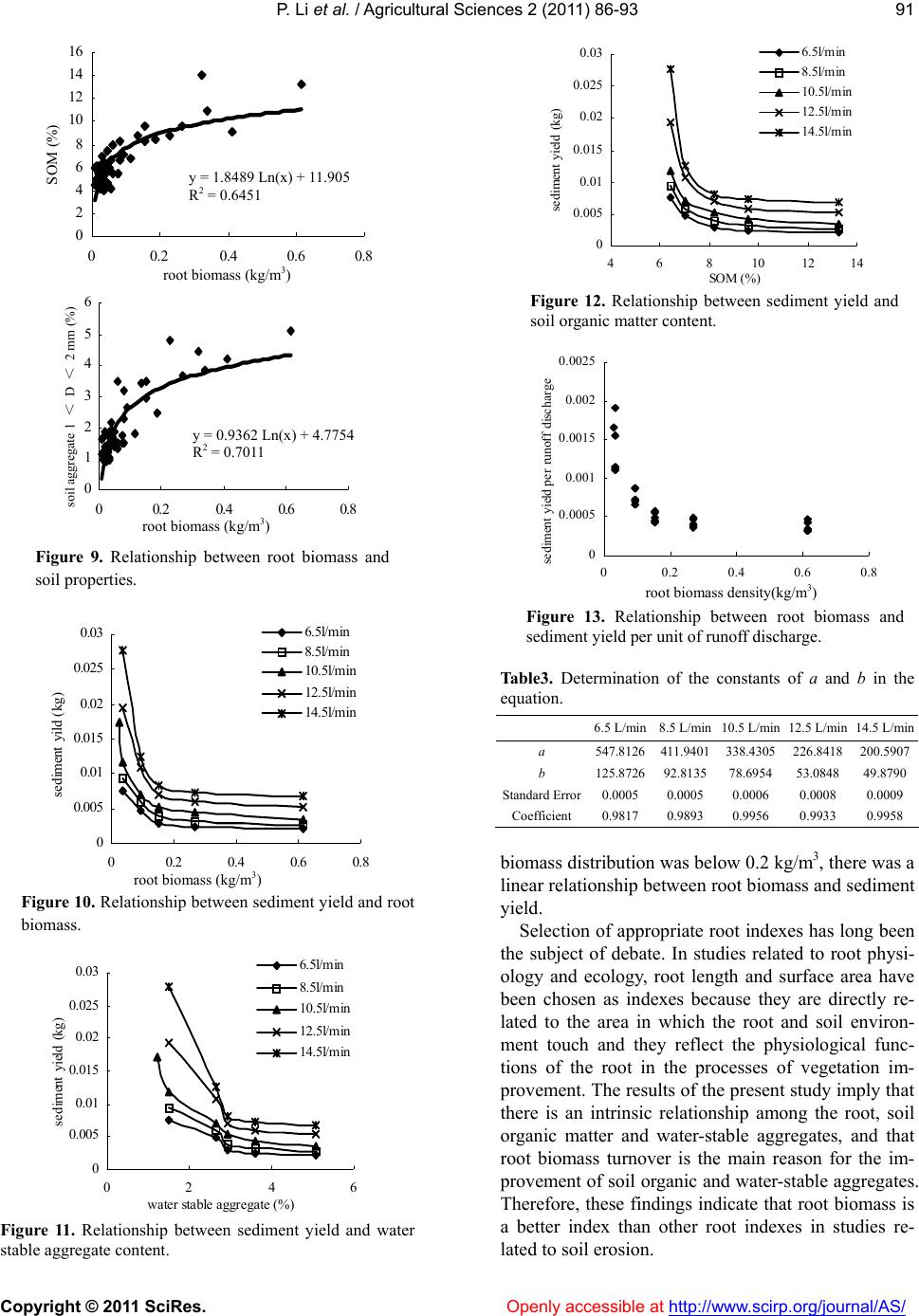 P. Li et al. / Agricultur al Sciences 2 (2011) 86-93 Copyright © 2011 SciRes. Openl y accessible at http:// www. scirp.o rg/journal/AS/ 91 y = 1.8489Ln(x) + 11.905 2 = 0.6451 0 2 4 6 8 10 12 14 16 00.20.4 0.6 0.8 oot biomass(kg/m3 SOM (%) R r) y = 0.9362Ln(x) + 4.775 4 R2 = 0.7011 0 1 2 3 4 5 6 00.20.4 0.6 0.8 root biomass(kg/m3) soil aggregate 1<D<2mm (%) Figure 9. Relationship between root biomass and soil properties. 0 0.005 0.01 0.015 0.02 0.025 0.03 00.2 0.4 0.6 0.8 root biomass (kg/m3) sediment yild (kg) 6.5l/min 8.5l/min 10.5l/min 12.5l/min 14.5l/min Figure 10. Relationship between sediment yield and root biomass. 0 0. 00 5 0.01 0. 01 5 0.02 0. 02 5 0.03 024 water s t abl e ag gregate (%) sediment yield (kg) 6 6. 5l/mi n 8. 5l/min 10. 5 l/min 12. 5 l/min 14. 5 l/min Figure 11. Relationship between sediment yield and water stable aggregate content. 0 0.005 0.01 0.015 0.02 0.025 0.03 46810121 SOM (%) sediment yield (kg) 4 6.5l/min 8.5l/min 10.5l/min 12.5l/min 14.5l/min Figure 12. Relationship between sediment yield and soil organic matter conte n t. 0 0.0005 0.001 0.0015 0.002 0.0025 00.2 0.4 0.6 0.8 ro ot bio ma ss density (kg/m3) sedim ent yield per r uno ff dis charge Figure 13. Relationship between root biomass and sediment yield per unit of runoff discharge. Table3. Determination of the constants of a and b in the equation. 6.5 L/min8.5 L/m in 10.5 L/m i n 12.5 L/min14.5 L/min a 547.8126411.9401 338.4305 226.8418200.5907 b 125.8726 92.8135 78.6954 53.084849.8790 Standard Error0.0005 0.0005 0.0006 0.0008 0.0009 Coefficient 0.9817 0.9893 0.9956 0.9933 0.9958 biomass distribution was below 0.2 kg/m3, there was a linear relationship between root biomass and sediment yield. Selection of appropriate root indexes has long been the subject of debate. In studies related to root physi- ology and ecology, root length and surface area have been chosen as indexes because they are directly re- lated to the area in which the root and soil environ- ment touch and they reflect the physiological func- tions of the root in the processes of vegetation im- provement. The results of the present stud y imply that there is an intrinsic relationship among the root, soil organic matter and water-stable aggregates, and that root biomass turnover is the main reason for the im- provement of soil organic and water-stable aggregates. Therefore, these findings indicate that root biomass is a better index than other root indexes in studies re- lated to soil erosion. y = 1.8489 Ln( x) + 11.905 R2 = 0.6451 root biomass (kg /m3) root biomass (kg /m3) y = 0.9362 Ln( x ) + 4.7754 R2 = 0.7011 soil agg r egate 1 < D < 2 mm (%) root biomass density(kg/m3) root biomass (kg /m3) 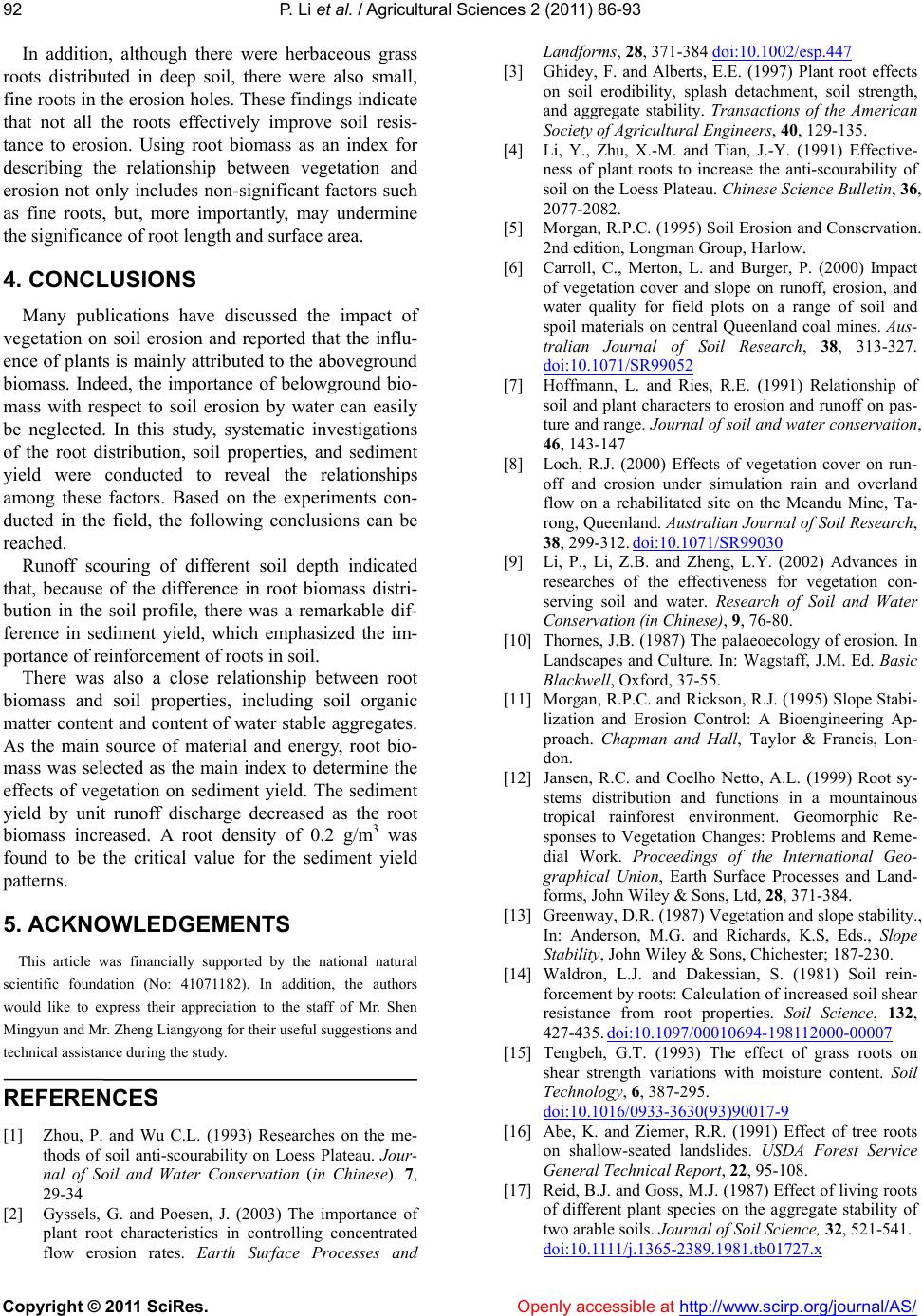 P. Li et al. / Agricultur al Sciences 2 (2011) 86-93 Copyright © 2011 SciRes. Openly accessible at http://www.scirp.org/journal/AS/ 92 In addition, although there were herbaceous grass roots distributed in deep soil, there were also small, fine roots in the erosion holes. These findings indicate that not all the roots effectively improve soil resis- tance to erosion. Using root biomass as an index for describing the relationship between vegetation and erosion not only includes non-significant factors such as fine roots, but, more importantly, may undermine the significance of root length and surface area. 4. CONCLUSIONS Many publications have discussed the impact of vegetation on soil erosion and reported that the influ- ence of plants is mainly attributed to the aboveground biomass. Indeed, the importance of belowground bio- mass with respect to soil erosion by water can easily be neglected. In this study, systematic investigations of the root distribution, soil properties, and sediment yield were conducted to reveal the relationships among these factors. Based on the experiments con- ducted in the field, the following conclusions can be reached. Runoff scouring of different soil depth indicated that, because of the difference in root biomass distri- bution in the soil profile, there was a remarkable dif- ference in sediment yield, which emphasized the im- portance of reinforcement of roots in soil. There was also a close relationship between root biomass and soil properties, including soil organic matter content and content of water stable aggregates. As the main source of material and energy, root bio- mass was selected as the main index to determine the effects of vegetation on sediment yield. The sediment yield by unit runoff discharge decreased as the root biomass increased. A root density of 0.2 g/m3 was found to be the critical value for the sediment yield patterns. 5. ACKNOWLEDGEMENTS This article was financially supported by the national natural scientific foundation (No: 41071182). In addition, the authors would like to express their appreciation to the staff of Mr. Shen Mingyun and Mr. Zheng Liangyong for their useful suggestions and technical assistance during the study. REFERENCES [1] Zhou, P. and Wu C.L. (1993) Researches on the me- thods of soil anti-scourability on Loess Plateau. Jour- nal of Soil and Water Conservation (in Chinese). 7, 29-34 [2] Gyssels, G. and Poesen, J. (2003) The importance of plant root characteristics in controlling concentrated flow erosion rates. Earth Surface Processes and Landforms, 28, 371-384 doi:10.1002/esp.447 [3] Ghidey, F. and Alberts, E.E. (1997) Plant root effects on soil erodibility, splash detachment, soil strength, and aggregate stability. Transactions of the American Society of Agricultural Engineers, 40, 129-135. [4] Li, Y., Zhu, X.-M. and Tian, J.-Y. (1991) Effective- ness of plant roots to increase the anti-scourability of soil on the Loess Plateau. Chinese Science Bulletin, 36, 2077-2082. [5] Morgan, R.P.C. (1995) Soil Erosion and Conservation. 2nd edition, Longman Group, Harlow. [6] Carroll, C., Merton, L. and Burger, P. (2000) Impact of vegetation cover and slope on runoff, erosion, and water quality for field plots on a range of soil and spoil materials on central Queenland coal mines. Aus- tralian Journal of Soil Research, 38, 313-327. doi:10.1071/SR99052 [7] Hoffmann, L. and Ries, R.E. (1991) Relationship of soil and plant characters to erosion and runoff on pas- ture and range. Journal of soil and water conservation, 46, 143-147 [8] Loch, R.J. (2000) Effects of vegetation cover on run- off and erosion under simulation rain and overland flow on a rehabilitated site on the Meandu Mine, Ta- rong, Queenland. Australian Journal of Soil Research, 38, 299-312. doi:10.1071/SR99030 [9] Li, P., Li, Z.B. and Zheng, L.Y. (2002) Advances in researches of the effectiveness for vegetation con- serving soil and water. Research of Soil and Water Conservation (in Chinese), 9, 76-80. [10] Thornes, J.B. (1987) The palaeoecology of erosion. In Landscapes and Culture. In: Wagstaff, J.M. Ed. Basic Blackwell, Oxford, 37-55. [11] Morgan, R.P.C. and Rickson, R.J. (1995) Slope Stabi- lization and Erosion Control: A Bioengineering Ap- proach. Chapman and Hall, Taylor & Francis, Lon- don. [12] Jansen, R.C. and Coelho Netto, A.L. (1999) Root sy- stems distribution and functions in a mountainous tropical rainforest environment. Geomorphic Re- sponses to Vegetation Changes: Problems and Reme- dial Work. Proceedings of the International Geo- graphical Union, Earth Surface Processes and Land- forms, John Wiley & Sons, Ltd, 28, 371-384. [13] Greenway, D.R. (1987) Vegetation and slope stability., In: Anderson, M.G. and Richards, K.S, Eds., Slope Stability, John Wiley & Sons, Chichester; 187-230. [14] Waldron, L.J. and Dakessian, S. (1981) Soil rein- forcement by roots: Calculation of increased soil shear resistance from root properties. Soil Science, 132, 427-435. doi:10.1097/00010694-198112000-00007 [15] Tengbeh, G.T. (1993) The effect of grass roots on shear strength variations with moisture content. Soil Technology, 6, 387-295. doi:10.1016/0933-3630(93)90017-9 [16] Abe, K. and Ziemer, R.R. (1991) Effect of tree roots on shallow-seated landslides. USDA Forest Service General Technical Report, 22, 95-108. [17] Reid, B.J. and Goss, M.J. (1987) Effect of living roots of different plant species on the aggregate stability of two arable soils. Journal of Soil Science, 32, 521-541. doi:10.1111/j.1365-2389.1981.tb01727.x  P. Li et al. / Agricultur al Sciences 2 (2011) 86-93 Copyright © 2011 SciRes. http://www.scirp. org/journal/AS/Openly accessible at 93 [18] Cresswell, H.P. and Kirkegaard, J.A. (1995) Subsoil amelioration by plant roots—The process and evident. Australian Journal of Soil Research, 33, 221-239. doi:10.1071/SR9950221 [19] Hartman, R. and De Boodt, M. (1974) The influence of the moisture content, texture and organic-matter on the aggregation of sandy and loamy soils. Geoderma 11, 53-62. doi:10.1016/0016-7061(74)90006-8 [20] Jiang, D.S., Fan X.K. and Li X.H. (1995) Researches on vertical and horizontal patterns of soil anti-scour- ablity on Loess Plateau. Journal of Soil and Water Conservation, 9, 1-8. |