

Paper Menu >>
Journal Menu >>
 Natural Science, 2009, 1, 17-22 NS http://dx.doi.org/10.4236/ns.2009.11004 Copyright © 2009 SciRes. OPEN ACCESS Research on the Graft Copolymerization of EH-lignin with acrylamide Run Fang1,2, Xian-Su Cheng*1, Jian Fu1, Zuan-Bin Zheng1 1College of Material Science and Engineering, Fuzhou University, Fuzhou 350002, China; 2Department of Chemistry and Chemical Engineering, Minjiang University, Fuzhou 350011, China. *Corresponding author: [email protected] Received 13 April 2009; revised 14 May 2009; accepted 23 May 2009. ABSTRACT Lignin isolated from enzymatic hydrolyzed corn- stalks (EH-lignin) is a renewable natural polymer noted for its versatility and applicability in a vari- ety of uses. Graft copolymerization of EH-lignin with acrylamide (AM) and the application of this copolymer as a flocculant in dye wastewater treatment were studied in this article. The influ- ences of some factors on yield of copolymer and the grafting ratio were investigated and the structure of EH-lignin/AM graft copolymer was characterized by FT-IR. According to the yield and the grafting ratio, the optimum conditions for graft copolymerization were as follows: initiator K2S2O8-Na2S2O3 with a quantity 3 wt% of EH-lignin, mass ratio of AM to EH-lignin was 2~3, reaction time 4h and temperature at 50℃. It was found that the absorption capacity of graft copolymer to two azo-dyes was enhanced with the increase of grafting ratio. Furthermore, the residue concen- tration of EH-lignin/AM graft copolymer remained in the supernatant after flocculation was much lower than that of pure EH-lignin. Keywords: Lignin; Acrylamide; Graft Copolymeriza- tion; Dye Wastewater; Decoloration 1. INTRODUCTION At present, the fossil resources are rapidly running out and the environmental pollutions are getting even more serious throughout the world. Great attention has been paid to the development of sustainable technologies based on renewable raw materials [1,2,3,4]. As a natural polymer, lignin is a renewable and biodegradable re- source and noted for its versatility and applicability in a variety of uses. Making use of these biomaterials will not only enhance the economic benefit of bioengineering but also diminish environmental pollutions [5,6]. EH-lignin is a novel ornanosolv lignin isolated from the residue of enzymatically hydrolyzed cornstalks as a by-product of fuel ethanol industry [7]. Compared with traditional lignosulfonate or alkali lignin, EH-lignin pos- sesses some valuable characteristics: lower content of sugar, less impurities and narrow molecular weight dis- tribution. Furthermore, since the enzymatic hydrolysis process of the cornstalks is carried out under relatively mild conditions, many functional groups such as pheno- lic hydroxyl, alcoholic hydroxyl and methoxyl are well preserved in EH-lignin [8,9,10]. Due to its abundant functional groups, EH-lignin can be used in dye wastewater treatment by adsorbing dyes through hydrogen bonding under acidic conditions. However, the concentration of residue lignin remains in supernatant after flocculation is very high, which may leads to a secondary pollution. In order to minimize the potential secondary pollution, graft copolymerization of EH-lignin with acrylamide (AM) was studied in this paper. The effects of some factors on the copolymeriza- tion were investigated. The structure of EH-lignin/AM copolymer was analyzed by FT-IR and its application in the dye wastewater treatment was evaluated. The residue concentration of this flocculant remains in the super- natant after flocculation was measured. 2. EXPERIMENTAL 2.1. Materials EH-lignin was supplied by Tianguang fuel ethanol com- pany (He’nan, China) in powder form and purified in laboratory according to procedures described in our pre- vious article [4]. Characteristics of purified EH-lignin are shown in Table 1. The details of two azo-dyes, acid red 274 (AR 274) and reactive red X-3B (RR X-3B), were shown in Fig. 1 and Table 2. Acrylamide were purchased from Guanghua chemical reagent Co., Ltd, China. All other reagents were of analytical grade. Table 1. Characteristics of EH-lignin. Residual sugar/% Ash /% Phenolic hy- droxyl/mmol.g-1 Mw Mw/Mn EHLignin 0.22 0.394.25 20621.22 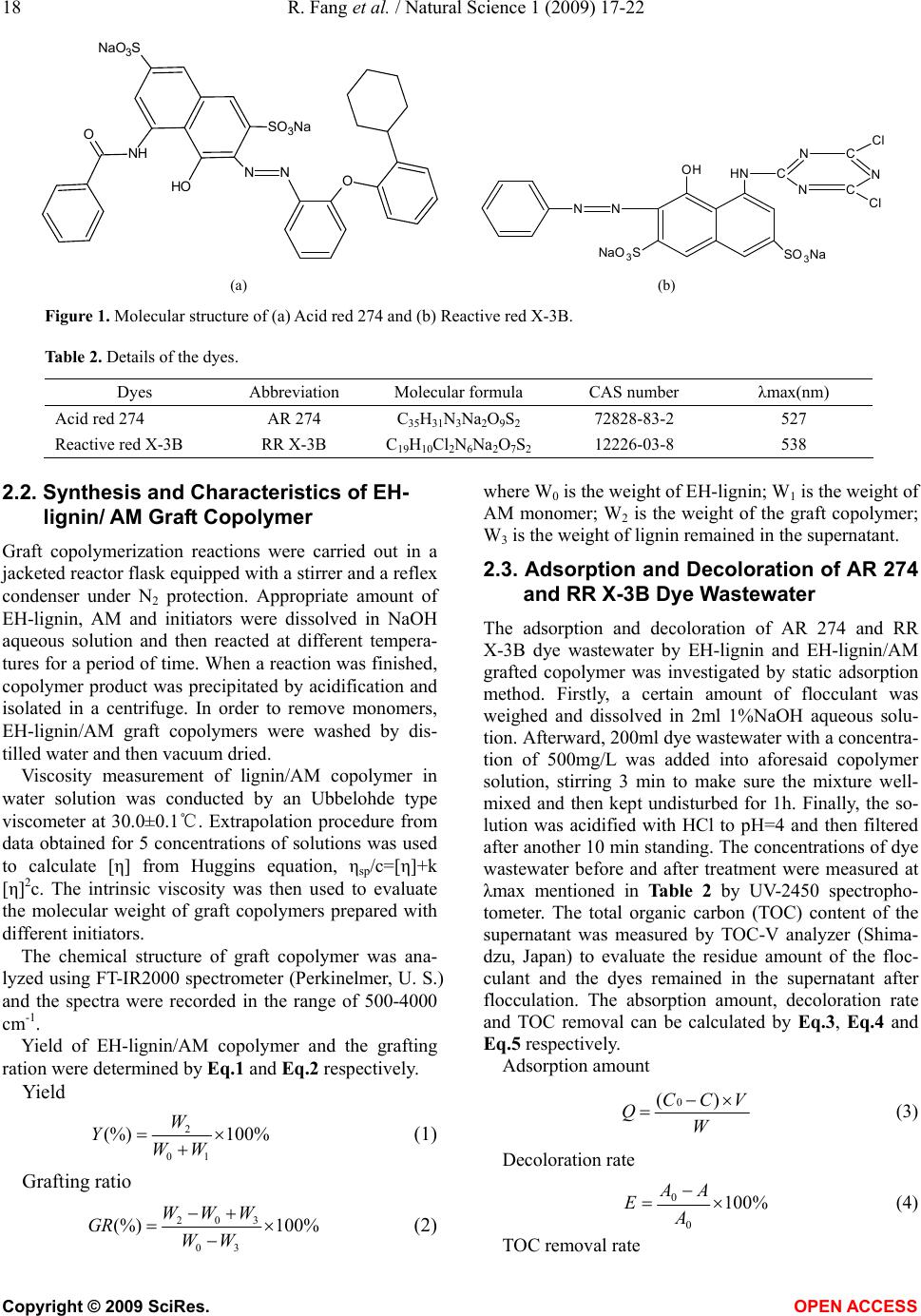 18 R. Fang et al. / Natural Science 1 (2009) 17-22 Copyright © 2009 SciRes. OPEN ACCESS SO3Na NaO3S NH O OH NN O NN OH NaO 3SSO3Na NHC N N C C N Cl Cl (a) (b) Figure 1. Molecular structure of (a) Acid red 274 and (b) Reactive red X-3B. Table 2. Details of the dyes. Dyes Abbreviation Molecular formula CAS number λmax(nm) Acid red 274 AR 274 C35H31N3Na2O9S2 72828-83-2 527 Reactive red X-3B RR X-3B C19H10Cl2N6Na2O7S2 12226-03-8 538 2.2. Synthesis and Characteristics of EH- lignin/ AM Graft Copolymer Graft copolymerization reactions were carried out in a jacketed reactor flask equipped with a stirrer and a reflex condenser under N2 protection. Appropriate amount of EH-lignin, AM and initiators were dissolved in NaOH aqueous solution and then reacted at different tempera- tures for a period of time. When a reaction was finished, copolymer product was precipitated by acidification and isolated in a centrifuge. In order to remove monomers, EH-lignin/AM graft copolymers were washed by dis- tilled water and then vacuum dried. Viscosity measurement of lignin/AM copolymer in water solution was conducted by an Ubbelohde type viscometer at 30.0±0.1. Extrapolation procedure from ℃ data obtained for 5 concentrations of solutions was used to calculate [η] from Huggins equation, ηsp/c=[η]+k [η]2c. The intrinsic viscosity was then used to evaluate the molecular weight of graft copolymers prepared with different initiators. The chemical structure of graft copolymer was ana- lyzed using FT-IR2000 spectrometer (Perkinelmer, U. S.) and the spectra were recorded in the range of 500-4000 cm-1. Yield of EH-lignin/AM copolymer and the grafting ration were determined by Eq.1 and Eq.2 respectively. Yield 2 01 (%) 100% W YWW (1) Grafting ratio 203 03 (%) 100% WWW GR WW (2) where W0 is the weight of EH-lignin; W1 is the weight of AM monomer; W2 is the weight of the graft copolymer; W3 is the weight of lignin remained in the supernatant. 2.3. Adsorption and Decoloration of AR 274 and RR X-3B Dye Wastewater The adsorption and decoloration of AR 274 and RR X-3B dye wastewater by EH-lignin and EH-lignin/AM grafted copolymer was investigated by static adsorption method. Firstly, a certain amount of flocculant was weighed and dissolved in 2ml 1%NaOH aqueous solu- tion. Afterward, 200ml dye wastewater with a concentra- tion of 500mg/L was added into aforesaid copolymer solution, stirring 3 min to make sure the mixture well- mixed and then kept undisturbed for 1h. Finally, the so- lution was acidified with HCl to pH=4 and then filtered after another 10 min standing. The concentrations of dye wastewater before and after treatment were measured at λmax mentioned in Table 2 by UV-2450 spectropho- tometer. The total organic carbon (TOC) content of the supernatant was measured by TOC-V analyzer (Shima- dzu, Japan) to evaluate the residue amount of the floc- culant and the dyes remained in the supernatant after flocculation. The absorption amount, decoloration rate and TOC removal can be calculated by Eq.3, Eq.4 and Eq.5 respectively. Adsorption amount W VCC Q )( 0 (3) Decoloration rate %100 0 0 A AA E (4) TOC removal rate 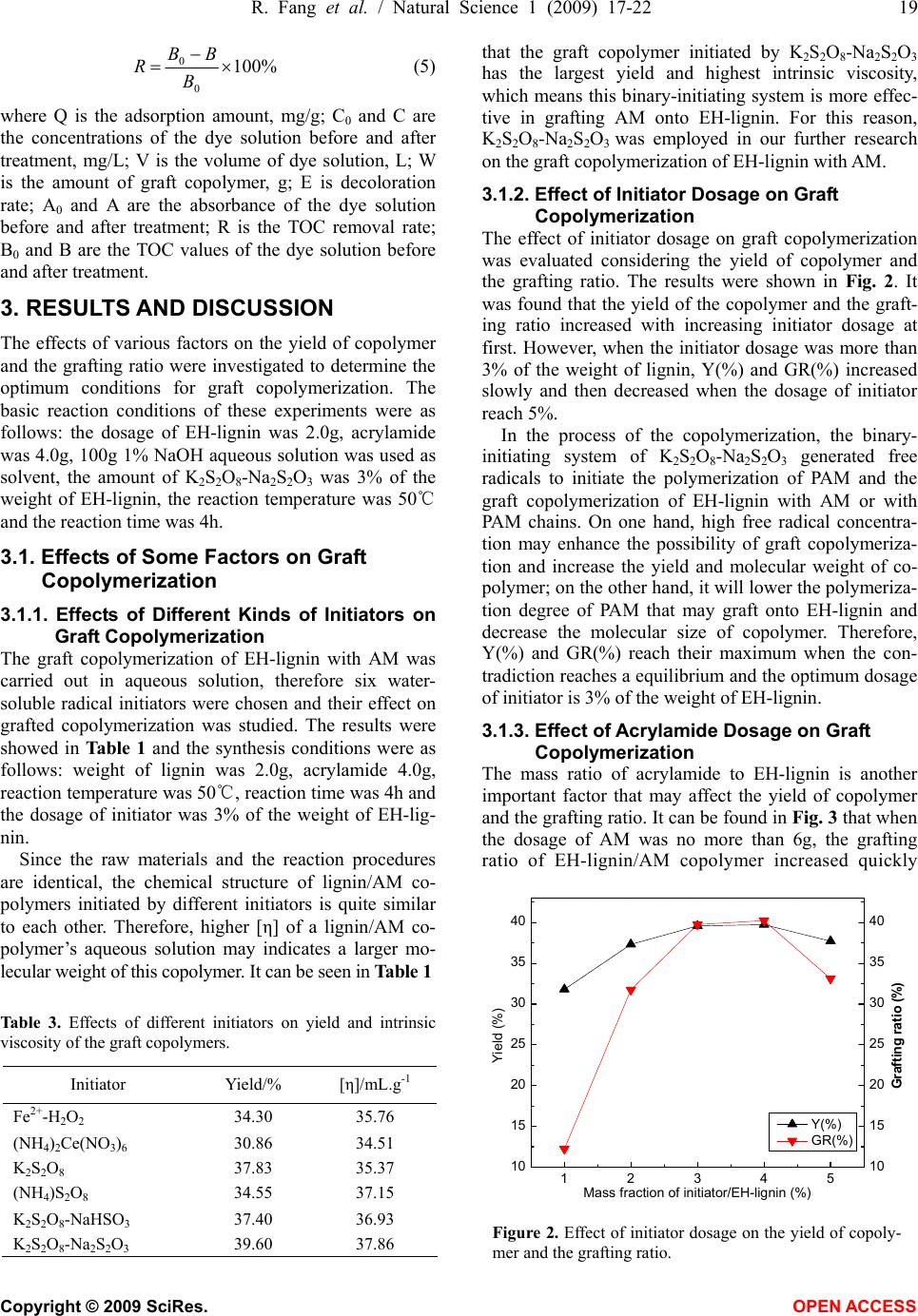 R. Fang et al. / Natural Science 1 (2009) 17-22 19 Copyright © 2009 SciRes. OPEN ACCESS %100 0 0 B BB R (5) where Q is the adsorption amount, mg/g; C0 and C are the concentrations of the dye solution before and after treatment, mg/L; V is the volume of dye solution, L; W is the amount of graft copolymer, g; E is decoloration rate; A0 and A are the absorbance of the dye solution before and after treatment; R is the TOC removal rate; B0 and B are the TOC values of the dye solution before and after treatment. 3. RESULTS AND DISCUSSION The effects of various factors on the yield of copolymer and the grafting ratio were investigated to determine the optimum conditions for graft copolymerization. The basic reaction conditions of these experiments were as follows: the dosage of EH-lignin was 2.0g, acrylamide was 4.0g, 100g 1% NaOH aqueous solution was used as solvent, the amount of K2S2O8-Na2S2O3 was 3% of the weight of EH-lignin, the reaction temperature was 50 ℃ and the reaction time was 4h. 3.1. Effects of Some Factors on Graft Copolymerization 3.1.1. Effects of Different Kinds of Initiators on Graft Copolymerization The graft copolymerization of EH-lignin with AM was carried out in aqueous solution, therefore six water- soluble radical initiators were chosen and their effect on grafted copolymerization was studied. The results were showed in Table 1 and the synthesis conditions were as follows: weight of lignin was 2.0g, acrylamide 4.0g, reaction temperature was 50, r℃eaction time was 4h and the dosage of initiator was 3% of the weight of EH-lig- nin. Since the raw materials and the reaction procedures are identical, the chemical structure of lignin/AM co- polymers initiated by different initiators is quite similar to each other. Therefore, higher [η] of a lignin/AM co- polymer’s aqueous solution may indicates a larger mo- lecular weight of this copolymer. It can be seen in Table 1 Table 3. Effects of different initiators on yield and intrinsic viscosity of the graft copolymers. Initiator Yield/% [η]/mL.g -1 Fe2+-H2O2 34.30 35.76 (NH4)2Ce(NO3)6 30.86 34.51 K2S2O8 37.83 35.37 (NH4)S2O8 34.55 37.15 K2S2O8-NaHSO3 37.40 36.93 K2S2O8-Na2S2O3 39.60 37.86 that the graft copolymer initiated by K2S2O8-Na2S2O3 has the largest yield and highest intrinsic viscosity, which means this binary-initiating system is more effec- tive in grafting AM onto EH-lignin. For this reason, K2S2O8-Na2S2O3 was employed in our further research on the graft copolymerization of EH-lignin with AM. 3.1.2. Effect of Initiator Dosage on Graft Copolymerization The effect of initiator dosage on graft copolymerization was evaluated considering the yield of copolymer and the grafting ratio. The results were shown in Fig. 2. It was found that the yield of the copolymer and the graft- ing ratio increased with increasing initiator dosage at first. However, when the initiator dosage was more than 3% of the weight of lignin, Y(%) and GR(%) increased slowly and then decreased when the dosage of initiator reach 5%. In the process of the copolymerization, the binary- initiating system of K2S2O8-Na2S2O3 generated free radicals to initiate the polymerization of PAM and the graft copolymerization of EH-lignin with AM or with PAM chains. On one hand, high free radical concentra- tion may enhance the possibility of graft copolymeriza- tion and increase the yield and molecular weight of co- polymer; on the other hand, it will lower the polymeriza- tion degree of PAM that may graft onto EH-lignin and decrease the molecular size of copolymer. Therefore, Y(%) and GR(%) reach their maximum when the con- tradiction reaches a equilibrium and the optimum dosage of initiator is 3% of the weight of EH-lignin. 3.1.3. Effect of Acrylamide Dosage on Graft Copolymerization The mass ratio of acrylamide to EH-lignin is another important factor that may affect the yield of copolymer and the grafting ratio. It can be found in Fig. 3 that when the dosage of AM was no more than 6g, the grafting ratio of EH-lignin/AM copolymer increased quickly 12345 10 15 20 25 30 35 40 10 15 20 25 30 35 40 Grafting ratio (%) Yield (%) Mass fraction of initiator/EH-lignin (%) Y(%) GR(%) Figure 2. Effect of initiator dosage on the yield of copoly- mer and the grafting ratio. 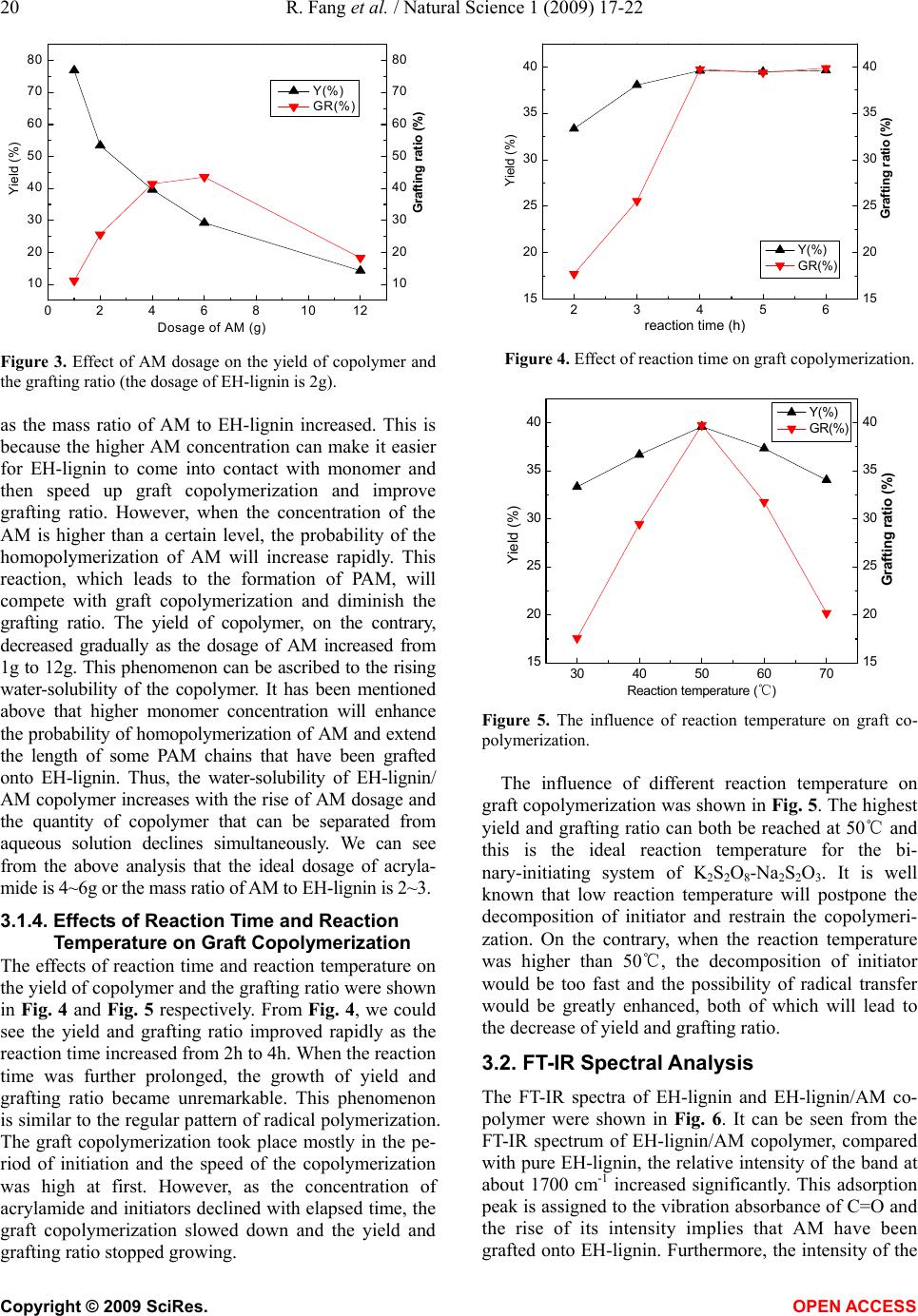 20 R. Fang et al. / Natural Science 1 (2009) 17-22 Copyright © 2009 SciRes. OPEN ACCESS 024681012 10 20 30 40 50 60 70 80 10 20 30 40 50 60 70 80 Grafting ratio (%) Yield (%) Y(%) GR(%) Dosage of AM (g) Figure 3. Effect of AM dosage on the yield of copolymer and the grafting ratio (the dosage of EH-lignin is 2g). as the mass ratio of AM to EH-lignin increased. This is because the higher AM concentration can make it easier for EH-lignin to come into contact with monomer and then speed up graft copolymerization and improve grafting ratio. However, when the concentration of the AM is higher than a certain level, the probability of the homopolymerization of AM will increase rapidly. This reaction, which leads to the formation of PAM, will compete with graft copolymerization and diminish the grafting ratio. The yield of copolymer, on the contrary, decreased gradually as the dosage of AM increased from 1g to 12g. This phenomenon can be ascribed to the rising water-solubility of the copolymer. It has been mentioned above that higher monomer concentration will enhance the probability of homopolymerization of AM and extend the length of some PAM chains that have been grafted onto EH-lignin. Thus, the water-solubility of EH-lignin/ AM copolymer increases with the rise of AM dosage and the quantity of copolymer that can be separated from aqueous solution declines simultaneously. We can see from the above analysis that the ideal dosage of acryla- mide is 4~6g or the mass ratio of AM to EH-lignin is 2~3. 3.1.4. Effects of Reaction Time and Reaction Temperature on Graft Copolymerization The effects of reaction time and reaction temperature on the yield of copolymer and the grafting ratio were shown in Fig. 4 and Fig. 5 respectively. From Fig. 4, we could see the yield and grafting ratio improved rapidly as the reaction time increased from 2h to 4h. When the reaction time was further prolonged, the growth of yield and grafting ratio became unremarkable. This phenomenon is similar to the regular pattern of radical polymerization. The graft copolymerization took place mostly in the pe- riod of initiation and the speed of the copolymerization was high at first. However, as the concentration of acrylamide and initiators declined with elapsed time, the graft copolymerization slowed down and the yield and grafting ratio stopped growing. 23456 15 20 25 30 35 40 15 20 25 30 35 40 Yield (%) Grafting ratio (%) Y(%) GR(%) reaction time (h) Figure 4. Effect of reaction time on graft copolymerization. 30 40 50 60 70 15 20 25 30 35 40 15 20 25 30 35 40 Grafting ratio (%) Yield (%) Y(%) GR(%) Reaction temperature (℃) Figure 5. The influence of reaction temperature on graft co- polymerization. The influence of different reaction temperature on graft copolymerization was shown in Fig. 5. The highest yield and grafting ratio can both be reached at 50 and ℃ this is the ideal reaction temperature for the bi- nary-initiating system of K2S2O8-Na2S2O3. It is well known that low reaction temperature will postpone the decomposition of initiator and restrain the copolymeri- zation. On the contrary, when the reaction temperature was higher than 50, the decomposition of initiator ℃ would be too fast and the possibility of radical transfer would be greatly enhanced, both of which will lead to the decrease of yield and grafting ratio. 3.2. FT-IR Spectral Analysis The FT-IR spectra of EH-lignin and EH-lignin/AM co- polymer were shown in Fig. 6. It can be seen from the FT-IR spectrum of EH-lignin/AM copolymer, compared with pure EH-lignin, the relative intensity of the band at about 1700 cm-1 increased significantly. This adsorption peak is assigned to the vibration absorbance of C=O and the rise of its intensity implies that AM have been grafted onto EH-lignin. Furthermore, the intensity of the 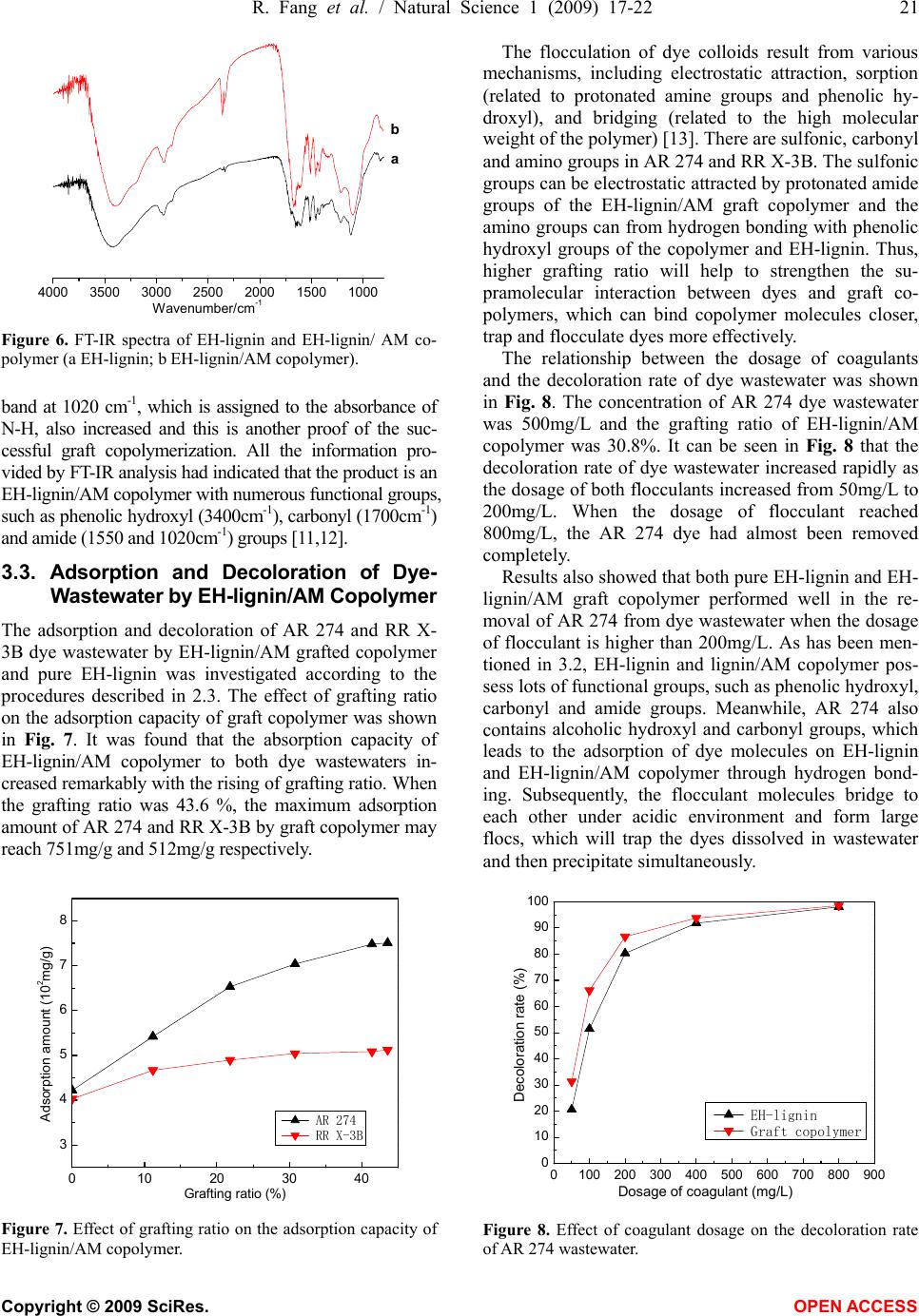 R. Fang et al. / Natural Science 1 (2009) 17-22 21 Copyright © 2009 SciRes. OPEN ACCESS 4000 3500 3000 2500 2000 15001000 Wavenu m ber / cm -1 a b Figure 6. FT-IR spectra of EH-lignin and EH-lignin/ AM co- polymer (a EH-lignin; b EH-lignin/AM copolymer). band at 1020 cm-1, which is assigned to the absorbance of N-H, also increased and this is another proof of the suc- cessful graft copolymerization. All the information pro- vided by FT-IR analysis had indicated that the product is an EH-lignin/AM copolymer with numerous functional groups, such as phenolic hydroxyl (3400cm-1), carbonyl (1700cm-1) and amide (1550 and 1020cm-1) groups [11,12]. 3.3. Adsorption and Decoloration of Dye- Wastewater by EH-lignin/AM Copolymer The adsorption and decoloration of AR 274 and RR X- 3B dye wastewater by EH-lignin/AM grafted copolymer and pure EH-lignin was investigated according to the procedures described in 2.3. The effect of grafting ratio on the adsorption capacity of graft copolymer was shown in Fig. 7. It was found that the absorption capacity of EH-lignin/AM copolymer to both dye wastewaters in- creased remarkably with the rising of grafting ratio. When the grafting ratio was 43.6 %, the maximum adsorption amount of AR 274 and RR X-3B by graft copolymer may reach 751mg/g and 512mg/g respectively. 0 10203040 3 4 5 6 7 8 Adsorption amount (102mg/g) Grafting ratio (%) AR 274 RR X-3B Figure 7. Effect of grafting ratio on the adsorption capacity of EH-lignin/AM copolymer. The flocculation of dye colloids result from various mechanisms, including electrostatic attraction, sorption (related to protonated amine groups and phenolic hy- droxyl), and bridging (related to the high molecular weight of the polymer) [13]. There are sulfonic, carbonyl and amino groups in AR 274 and RR X-3B. The sulfonic groups can be electrostatic attracted by protonated amide groups of the EH-lignin/AM graft copolymer and the amino groups can from hydrogen bonding with phenolic hydroxyl groups of the copolymer and EH-lignin. Thus, higher grafting ratio will help to strengthen the su- pramolecular interaction between dyes and graft co- polymers, which can bind copolymer molecules closer, trap and flocculate dyes more effectively. The relationship between the dosage of coagulants and the decoloration rate of dye wastewater was shown in Fig. 8. The concentration of AR 274 dye wastewater was 500mg/L and the grafting ratio of EH-lignin/AM copolymer was 30.8%. It can be seen in Fig. 8 that the decoloration rate of dye wastewater increased rapidly as the dosage of both flocculants increased from 50mg/L to 200mg/L. When the dosage of flocculant reached 800mg/L, the AR 274 dye had almost been removed completely. Results also showed that both pure EH-lignin and EH- lignin/AM graft copolymer performed well in the re- moval of AR 274 from dye wastewater when the dosage of flocculant is higher than 200mg/L. As has been men- tioned in 3.2, EH-lignin and lignin/AM copolymer pos- sess lots of functional groups, such as phenolic hydroxyl, carbonyl and amide groups. Meanwhile, AR 274 also contains alcoholic hydroxyl and carbonyl groups, which leads to the adsorption of dye molecules on EH-lignin and EH-lignin/AM copolymer through hydrogen bond- ing. Subsequently, the flocculant molecules bridge to each other under acidic environment and form large flocs, which will trap the dyes dissolved in wastewater and then precipitate simultaneously. 0100 200 300400 500 600 700 800 900 0 10 20 30 40 50 60 70 80 90 100 Decoloration rate (%) Dosage of coagulant (mg/L) EH-lignin Graft copolymer Figure 8. Effect of coagulant dosage on the decoloration rate of AR 274 wastewater. 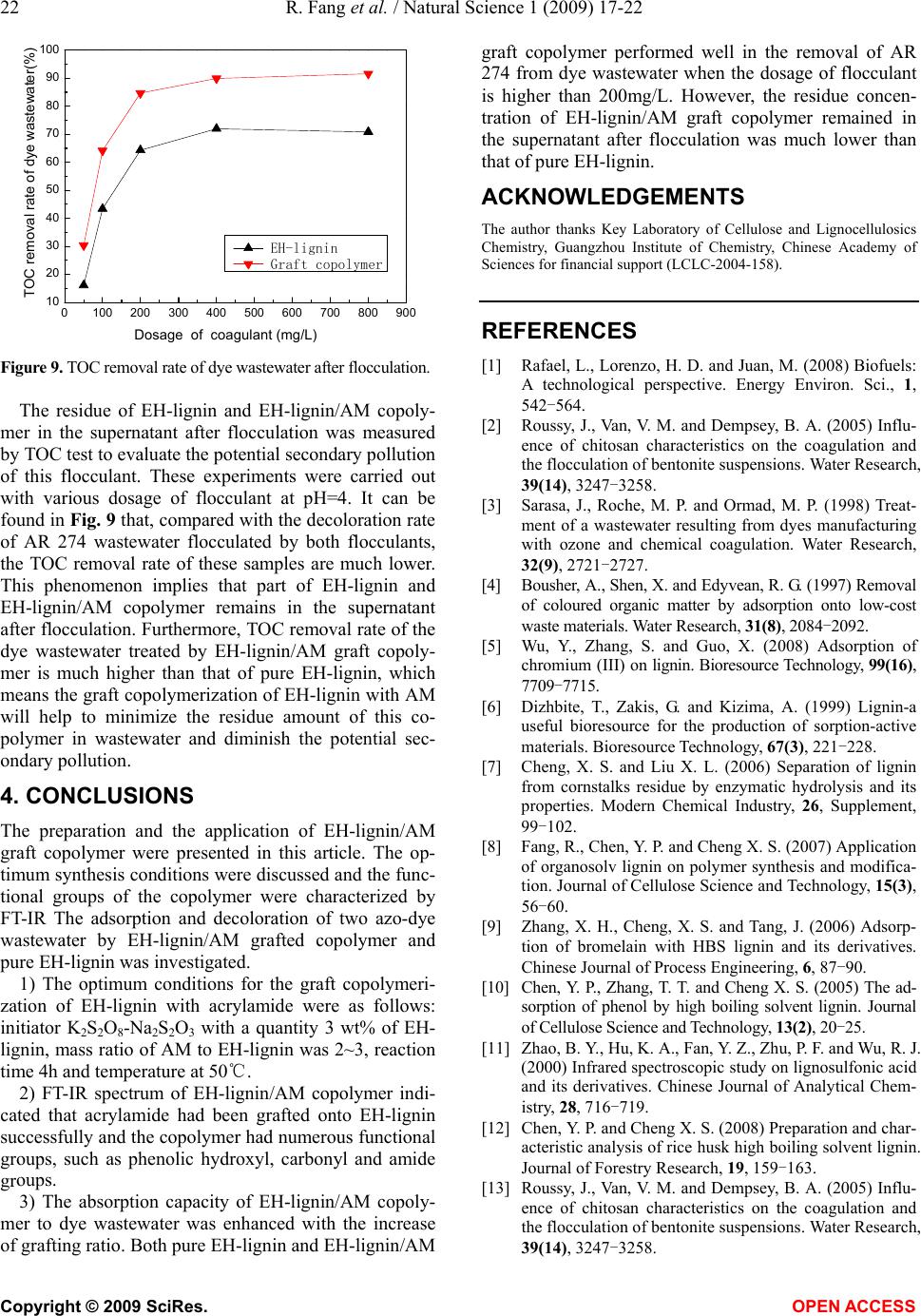 22 R. Fang et al. / Natural Science 1 (2009) 17-22 Copyright © 2009 SciRes. OPEN ACCESS 0100200 300 400 500 600700 800 900 10 20 30 40 50 60 70 80 90 100 Dosage of coagulant (mg/L) EH-lignin Graft copolymer TOC removal rate of dye wastewater(%) Figure 9. TOC removal rate of dye wastewater after flocculation. The residue of EH-lignin and EH-lignin/AM copoly- mer in the supernatant after flocculation was measured by TOC test to evaluate the potential secondary pollution of this flocculant. These experiments were carried out with various dosage of flocculant at pH=4. It can be found in Fig. 9 that, compared with the decoloration rate of AR 274 wastewater flocculated by both flocculants, the TOC removal rate of these samples are much lower. This phenomenon implies that part of EH-lignin and EH-lignin/AM copolymer remains in the supernatant after flocculation. Furthermore, TOC removal rate of the dye wastewater treated by EH-lignin/AM graft copoly- mer is much higher than that of pure EH-lignin, which means the graft copolymerization of EH-lignin with AM will help to minimize the residue amount of this co- polymer in wastewater and diminish the potential sec- ondary pollution. 4. CONCLUSIONS The preparation and the application of EH-lignin/AM graft copolymer were presented in this article. The op- timum synthesis conditions were discussed and the func- tional groups of the copolymer were characterized by FT-IR The adsorption and decoloration of two azo-dye wastewater by EH-lignin/AM grafted copolymer and pure EH-lignin was investigated. 1) The optimum conditions for the graft copolymeri- zation of EH-lignin with acrylamide were as follows: initiator K2S2O8-Na2S2O3 with a quantity 3 wt% of EH- lignin, mass ratio of AM to EH-lignin was 2~3, reaction time 4h and temperature at 50.℃ 2) FT-IR spectrum of EH-lignin/AM copolymer indi- cated that acrylamide had been grafted onto EH-lignin successfully and the copolymer had numerous functional groups, such as phenolic hydroxyl, carbonyl and amide groups. 3) The absorption capacity of EH-lignin/AM copoly- mer to dye wastewater was enhanced with the increase of grafting ratio. Both pure EH-lignin and EH-lignin/AM graft copolymer performed well in the removal of AR 274 from dye wastewater when the dosage of flocculant is higher than 200mg/L. However, the residue concen- tration of EH-lignin/AM graft copolymer remained in the supernatant after flocculation was much lower than that of pure EH-lignin. ACKNOWLEDGEMENTS The author thanks Key Laboratory of Cellulose and Lignocellulosics Chemistry, Guangzhou Institute of Chemistry, Chinese Academy of Sciences for financial support (LCLC-2004-158). REFERENCES [1] Rafael, L., Lorenzo, H. D. and Juan, M. (2008) Biofuels: A technological perspective. Energy Environ. Sci., 1, 542-564. [2] Roussy, J., Van, V. M. and Dempsey, B. A. (2005) Influ- ence of chitosan characteristics on the coagulation and the flocculation of bentonite suspensions. Water Research, 39(14), 3247-3258. [3] Sarasa, J., Roche, M. P. and Ormad, M. P. (1998) Treat- ment of a wastewater resulting from dyes manufacturing with ozone and chemical coagulation. Water Research, 32(9), 2721-2727. [4] Bousher, A., Shen, X. and Edyvean, R. G. (1997) Removal of coloured organic matter by adsorption onto low-cost waste materials. Water Research, 31(8), 2084-2092. [5] Wu, Y., Zhang, S. and Guo, X. (2008) Adsorption of chromium (III) on lignin. Bioresource Technology, 99(16), 7709-7715. [6] Dizhbite, T., Zakis, G. and Kizima, A. (1999) Lignin-a useful bioresource for the production of sorption-active materials. Bioresource Technology, 67(3), 221-228. [7] Cheng, X. S. and Liu X. L. (2006) Separation of lignin from cornstalks residue by enzymatic hydrolysis and its properties. Modern Chemical Industry, 26, Supplement, 99-102. [8] Fang, R., Chen, Y. P. and Cheng X. S. (2007) Application of organosolv lignin on polymer synthesis and modifica- tion. Journal of Cellulose Science and Technology, 15(3), 56-60. [9] Zhang, X. H., Cheng, X. S. and Tang, J. (2006) Adsorp- tion of bromelain with HBS lignin and its derivatives. Chinese Journal of Process Engineering, 6, 87-90. [10] Chen, Y. P., Zhang, T. T. and Cheng X. S. (2005) The ad- sorption of phenol by high boiling solvent lignin. Journal of Cellulose Science and Technology, 13(2), 20-25. [11] Zhao, B. Y., Hu, K. A., Fan, Y. Z., Zhu, P. F. and Wu, R. J. (2000) Infrared spectroscopic study on lignosulfonic acid and its derivatives. Chinese Journal of Analytical Chem- istry, 28, 716-719. [12] Chen, Y. P. and Cheng X. S. (2008) Preparation and char- acteristic analysis of rice husk high boiling solvent lignin. Journal of Forestry Research, 19, 159-163. [13] Roussy, J., Van, V. M. and Dempsey, B. A. (2005) Influ- ence of chitosan characteristics on the coagulation and the flocculation of bentonite suspensions. Water Research, 39(14), 3247-3258. |