

Paper Menu >>
Journal Menu >>
 Journal of Environmental Protection, 2011, 2, 243-254 doi:10.4236/jep.2011.23028 Published Online May 2011 (http://www.scirp.org/journal/jep) Copyright © 2011 SciRes. JEP 243 Characterization of Aromatic Hydrocarbon Degrading Bacteria from Petroleum Contaminated Sites Swarnakaran Hemalatha, Panchanathan Veeramanikandan Department of Biotechnology, Vels University, Chennai, India. Email: [email protected] Received November 18th, 2010; revised January 13th, 2011; accepted February 10th, 2011. ABSTRACT Aromatic hydrocarbons such as benzene, hexane, toluene, naphthalene and xylene degrading bacteria such as Flavo- bacterium spp.1 & 2 and Pseudomonas spp.1 & 2 were isolated from petroleum contaminated soil samples. They were resistant to heavy metals such as lead, iron, zinc, cobalt and mercury. The optimum pH for hydrocarbon degradation by Flavobacterium spp.1 was 9. Flavobacterium spp.2, Pseudomonas sp p.1 & 2 have shown optimum pH 7 for th eir deg- radation. The optimum temperature for hydrocarbon degradation by Flavobacterium spp.1 & 2 and Pseudomonas spp.1 & 2 were at 40˚C & 45˚C. Keywords: Aromatic Hydrocarbon, Flavobacterium, Pseudomonas, Heavy Metals, Temperature 1. Introduction Aromatic hydrocarbons are common environmental pol- lutants with toxic, genotoxic, mutagenic and carcinogenic properties [1]. They mainly occur in petroleum industry activities [2]. Oil spills because of pipeline breakages, tanks leakages or storage and transportation accidents can be considered as the most frequent causes of hydro- carbon release, included PAHs into soils [3]. BTEX compounds are components of gasoline and aviation fu- els that are carcinogenic and neurotoxic to most organ- isms [4]. Bacteria play a major role in hydrocarbon degrad ation. The reason for petroleum biodegradation is the ability of microorganisms to utilize hydrocarbons to satisfy their cell growth and energy needs. Low molecular weight alkanes are degraded most rapidly whereas mixed cul- tures carry out more extensive biodegradation of petro- leum through pure cultures [5,6]. Therefore, biodegrada- tion using microorganisms is usually preferred. They play major role in PAHs removal from contaminated environments because of some advantages such as cost effectiveness and more complete cleanup [7]. Toluene degrading bacteria putid a PaW1, P. putid a F1, P. mendocina KRI, Burkholderia cepacia G4, B. cepacia and Ralstonia p ickettii PKO1 were characterized [8]. The biodegradation of naphthalene has been well studied at the molecular level and thus it serves as one of the prin- cipal models for understanding the mechanisms of bacte- rial benzene ring metabolism. Isolates CMBLHC1- CMBLHC8 have potential use to clean up the environ- ment containing hydrocarbons such as salicylate, phe- nanthrene, SDS and naphthalene. Eight bacterial strains (CMBLHC1-CMBLHC8) were isolated from petrol pumps soil samples and their tolerance was also checked on other hydrocarbons such as 0.01 M salicylate, 0.008 M phenanthrene, 0.01 M SDS [sodium dodecyl sulfate) and naphthalene vapours [9]. CMBLHC2 and CMBLHC6 show maximum tolerance up to 0.5 M benzoic acid and CMBLHC2, CMBLHC4, CMBLHC7 showed maximum tolerance up to 0.5 M salicylate. Optimum pH ranged from 6.0 to 7.0. The optimum temperature for all strains was 37˚C. Isolated bacteria have also shown resistance against heavy metals and antibiotics. Twenty four bacteria capable of utilizing naphthalene as their sole source of carbon and energy for growth from three different soils in Nsukula, Nigeria were isolated and characterized [10]. The usage of petroleum hydro- carbon products has been increased. Therefore, the soil contamination with diesel and engine oil is becoming one of the major environmental problems. Various microbial species are effective degraders of hydrocarbons in natural environment. Microorganisms such as bacteria, fungi,  Characterization of Aromatic Hydrocarbon Degrading Bacteria from Petroleum Contaminated Sites 244 yeast and microalgae can degrade petroleum hydrocar- bons [11,12] . Flavobacterium, Acnetobacterium and Pseudomonas isolates are capable of utilizing used engine oil as a car- bon source. The potential of Flavobacterium, Acneto- bacterium and Pseudomonas for oil bioremediation in situ and ex situ were demonstrated [13]. Three bacteria such as Pseudomonas sp, Flavobacterium sp and Rhodo- coccus sp were isolated and considered as efficient gaso- line degrading bacteria. The optimal growth conditions of three bacteria including pH, temperature and the con- centration of gasoline were similar [14]. Bacterial and fungal species such as Pseudomonas, Bacillus, Micro- coccus, Aspergillus, Rhizopus, Muc or and Penicillium degrade hydrocarbon from the oil spilled area [15]. As the usage of petroleum hydrocarbons products in- creased, soil contamination with diesel and engine oils has become one of the major environmental problems. Uncontrolled and catastrophic releases of petroleum pose ecological and environmental repercussions, as a lot of hydrocarbon components are toxic and persistent in ter- restrial and aquatic environments. Several physico- chemical methods of decontaminating the environment have been established and employed. Biological degra- dation, a safe, effective and an economic alternative method, is a process of decay initiated by biological agents, specifically in this case by microorganisms. Therefore the counter measure to remediate soils con- taminated with oils is by bioremediation. Bioremediation provide an effective and efficient strategy to speed up the clean up process. Therefore, the present study deals with the isolation and characterization of aromatic hydrocar- bons degrading bacteria from oil contaminated sites. 2. Materials and Methods 2.1. Sample Collection About 5 g of soil samples were aseptically collected from different petroleum contaminated sites in and around Chennai City, Tamil Nadu, India. Immediately they were brought to the laboratory. All samples were placed in to sterile polythene bags and stored at 4˚C. 2.2. Hydrocarbon Substrates Hydrocarbon substrates such as Toluene, Benzene, Hex- ane, Xylene and Naphthalene were selected for study. 2.3. Isolation of Bacteria Bacteria were isolated from soil samples using an en- richment medium containing petrol. Petrol was added to the medium after autoclaving. 1.0 g of soil sample was inoculated into the medium and incubated at 170 rpm at 30˚C in an orbital shaker for one week. After one week, 1.0 ml of the sample was taken from each culture and transferred into fresh enrichment medium, followed by incubation as described above for one week. At the end of second week, the bacterial contents were serially di- luted and 10–2 dilution was placed in Bushnell Haas me- dium containing 15.0 g/L of pure agar. Inoculated plates were purified repeatedly by sub culturing. Pure culture was sto red in nutrient agar slants and stored at 4˚C. 2.4. Identification of Bacteria The bacteria isolated were identified based on physical characterization and the biochemical tests outlined in Bergey’s Manual of determinative Bacteriology [16]. 2.5. Characterization of Hydrocarbon Degrading Bacteria 2.5.1. Effect of Aromatic Hydrocarbon A loopful of isolated bacteria was inoculated in a freshly prepared and autoclaved BH medium in presence of five different aromatic hydrocarbons such as Benzene, Hex- ane, Toluene, Naphthalene and Xylene, whose concen- tration is 0.02%. After 24 hours of incubation at 30˚C, the utilization of the aromatic hydrocarbons as sole car- bon source was assayed for O.D at 600 nm in U-V spec- trophotometer at an interval of 30 minutes. The Bushnell Haas medium (BH) devoid of aromatic hydrocarbon served as con trol. 2.5.2. Effect of pH Enrichment BH medium with varying pH such as 5, 6, 7, 8, 9 were prepared and autoclaved. A loopful of isolated bacteria was inoculated into it. Th e utilization of suitable hydrocarbon at different pH was read at 600 nm in U-V spectrophotometer at an interval of 30 minutes. The me- dium devoid of hydrocarbons served as control. 2.5.3. Effect of Temperature A loopful of isolated bacteria was inoculated in enrich- ment BH medium. It was maintained at different tem- perature such as 30˚C - 45˚C. The utilization of suitable hydrocarbon at different temperature was read at 600 nm in UV spectrophotometer at an interval of 30 minutes. The medium devoid of hydrocarbons served as control. 2.6. Heavy Metal Tolerance Spectrum of Hydrocarbon Degrading Bacteria The tolerance of bacterial isolates to various heavy met- als such as Cobalt (Cobalt Chloride), Iron (Ferrous Sul- phate), Mercury (Mercury Sulphate), Zinc (Zinc Sulphate) and Lead (Lead acetate) was studied by inoculating loopful of overnight grown cultures on Nutrient agar plates amended with 1, 3 and 5 mM concentration of heavy metals and incubated at 37˚C. After 24 hours of incubation, the p lates were observed for growth. Nutr ient Copyright © 2011 SciRes. JEP  Characterization of Aromatic Hydrocarbon Degrading Bacteria from Petroleum Contaminated Sites 245 Agar plates without heavy metals served as control. 2.7. Estimation of Protein in Hydrocarbon Degrading Bacteria To 1ml of the bacterial supernatant, 1ml of 20% TCA was added and kept for half hour incubation. It was then centrifuged at 8000 rpm for 20 minutes. The pellet was washed with acetone twice and again centrifuged it. The supernatant was discarded and the pellet was dissolved in 0.2 m phosphate buffer. The sample was stored at 4˚C for further study. Protein concentrations were determined by Lowry’s method using BSA (bovine serum albumin) as standard. 3. Results and Discussion Polycyclic aromatic hydrocarbons are ubiquitous con- taminants of terrestrial ecosystems whose presence is attributable to a number of petrogenic and pyrogenic sources, which had increased since the end of the II world war. Environments contaminated with PAHs are considered hazardous to humans exposed to them. Therefore, removal of pollutants from the environment is essential. Varieties of physical, chemical and biological ways were adopted already. But bacterial bior emediation technique offers new possibilities to accelerate the pollu- tion degradation because they are widely present in the environment itself. In the present study, four bacterial isolates have been isolated from different petroleum contaminated soil sam- ples by crowded plate technique. With reference to physical and biochemical tests as outlined in Bergey’s manual of determinative bacteriology, the bacteria were identified as Flavobacterium species and Pseudomonas species (Table 1). Their potential to degrade PAH was studied. The isolate which have shown the highest Opti- cal Density (OD) value in different hydrocarbon was considered as the suitable hydrocarbon source for their degradation. The presence of local soil microbial popula- tion adapted to hydrocarbons form the basis of microbial methods. It is also believed that the isolated organisms should posses catabolic enzymes for the specific biodegradation in the presence of different PAHs. The catabolic path- ways, which encode the different aromatic hydrocarbon degradation routes, are frequently located on plasmids. Although degradation genes can be located on either chromosome or plasmid. Phenanthrene degrading Pseu- domonas from crude oil contaminated soil samples col- lected in a petroleum refining area were isolated and characterized [17]. They concluded that hydrocarbon deg- radation routes are frequently located on plasmid. All the four isolates degraded benzene, toluene, hex- ane, xylene and naphthalene. Flavobacterium sp. 1 have utilised xylene as carbon source and the highest OD of 0.37 was recorded (Figure 1). Flavobacterium sp. 2 have utilized toluene as carbon source and the highest OD of 0.372 was recorded (Figure 2). Pseudomonas sp. 1 and Pseudomonas sp. 2 have shown good growth in Toluene containing medium and the highest OD of 0.314 was recorded for both the organisms (Figures 3 & 4). The suitable hydrocarbon alone is not sufficient for bioremediation of environmental pollutants. Other physi- cal parameters such as pH and Temperature are also es- sential because physio-chemical influence cause the mi- crobial degradation of hydrocarbon. The optimum pH and temperature for degradation by four isolates were determined. The isolate, which have shown the highest OD value in varying pH, was considered as the suitable pH for their degradation and the results are represented in Figures 5-8. The optimum pH for Flavobacterium sp. 1 was recorded as pH 9. It shows the maximum peak value of 0.292 (Figure 5). The optimum pH for the Flavobac- terium sp. 2, Pseudomonas sp. 1 and Pseudomonas sp. 2 were recorded as pH 7 (Figures 6, 7 & 8). Moreover these isolates illustrate maximum peak value of 0.404, 0.207 and 0. 28 8 respect i vel y . The pH range that is most suitable for soil microor- ganism is below 6 and 8, with an optimum pH of about seven for most species. The optimum pH for Flavobacte- rium sp. 2, Pseudomonas sp. 1 and Pseudomonas sp. 2 was 7 in the presence of the hydrocarbon, which suppor ts the investigation done by [18] who studied the effects of aerobic bacterial mixtures pH, temperature and carbon sources on polyaromatic hydrocarbons. The optimal con- ditions for PAH biodegradation were determined as 30˚C and pH 7. The isolate, which have shown the highest OD value in varying temperature, was considered as the suitable temperature for their degradation. The optimum temperature for degradation by Flavobacterium sp. 1and 2 was at 40˚C. They have shown optimum OD value of 0.353 & 0.464 respectively (Figures 9 & 10). The opti- mum temperature for degradation by Pseudomonas spp1 was also at 40˚C. They have shown optimum OD value of 0.304. (Figure 11). But Pseudomonas sp. 2 degraded maximum hydrocarbon at 45˚C with OD of 0.345. (Fig- ure 12). The optimum petroleum degradation rate by aerobic bacteria occurs at temperature below 15 and 30˚C [19]. Since the selected organism have shown their maximum degradation at 40˚C and 45˚C, these organism can be used for bioremediation to be carried out in sum- mer months. Increases in optimum temperature increases the solubility of hydrocarbons to o. The biodegradation of aliphatic and aromatic hydro- carbons at high temperatures were investigated [20]. The solubility of naphthalene is increased by a factor of ap- proximately ten if the temperatur e is increased from 20 to Copyright © 2011 SciRes. JEP 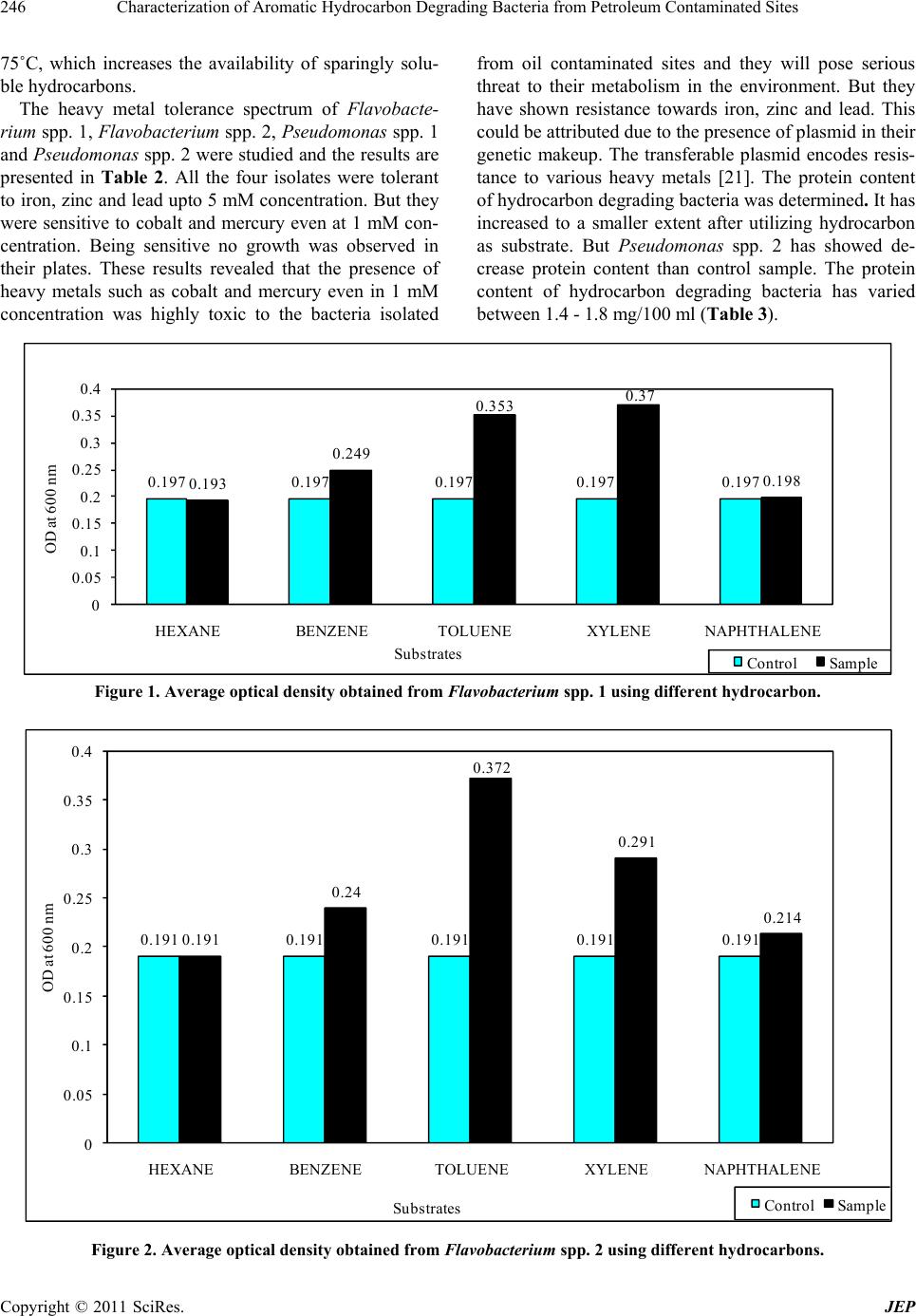 Characterization of Aromatic Hydrocarbon Degrading Bacteria from Petroleum Contaminated Sites Copyright © 2011 SciRes. JEP 246 75˚C, which increases the availability of sparingly solu- ble hydrocarbons. The heavy metal tolerance spectrum of Flavobacte- rium spp. 1, Flavobacterium spp. 2, Pseudomonas spp. 1 and Pseudomonas spp. 2 were studied and the results are presented in Table 2. All the four isolates were tolerant to iron, zinc and lead upto 5 mM concentration. But they were sensitive to cobalt and mercury even at 1 mM con- centration. Being sensitive no growth was observed in their plates. These results revealed that the presence of heavy metals such as cobalt and mercury even in 1 mM concentration was highly toxic to the bacteria isolated from oil contaminated sites and they will pose serious threat to their metabolism in the environment. But they have shown resistance towards iron, zinc and lead. This could be attributed due to the presence of plasmid in their genetic makeup. The transferable plasmid encodes resis- tance to various heavy metals [21]. The protein content of hydrocarbon degrading bacteria was determined. It has increased to a smaller extent after utilizing hydrocarbon as substrate. But Pseudomonas spp. 2 has showed de- crease protein content than control sample. The protein content of hydrocarbon degrading bacteria has varied between 1.4 - 1. 8 mg/100 ml (Table 3). 0.197 0.197 0.1970.1970.197 0.193 0.249 0.353 0.37 0.198 0 0.05 0.1 0.15 0.2 0.25 0.3 0.35 0.4 HEXANE BENZENETOLUENE XYLENENAPHTHALENE O D at 600 nm Substrates Control Sample Figure 1. Average optical density obtained from Flavobacterium spp. 1 using different hydrocarbon. 0.191 0.191 0.191 0.191 0.1910.191 0.24 0.372 0.291 0.214 0 0.05 0.1 0.15 0.2 0.25 0.3 0.35 0.4 HEXANE BENZENETOLUENE XYLENENAPHTHALENE O D a t 600 nm Substrates Control Sample Figure 2. Average optical density obtained from Flavobacterium spp. 2 using different hydrocarbons. 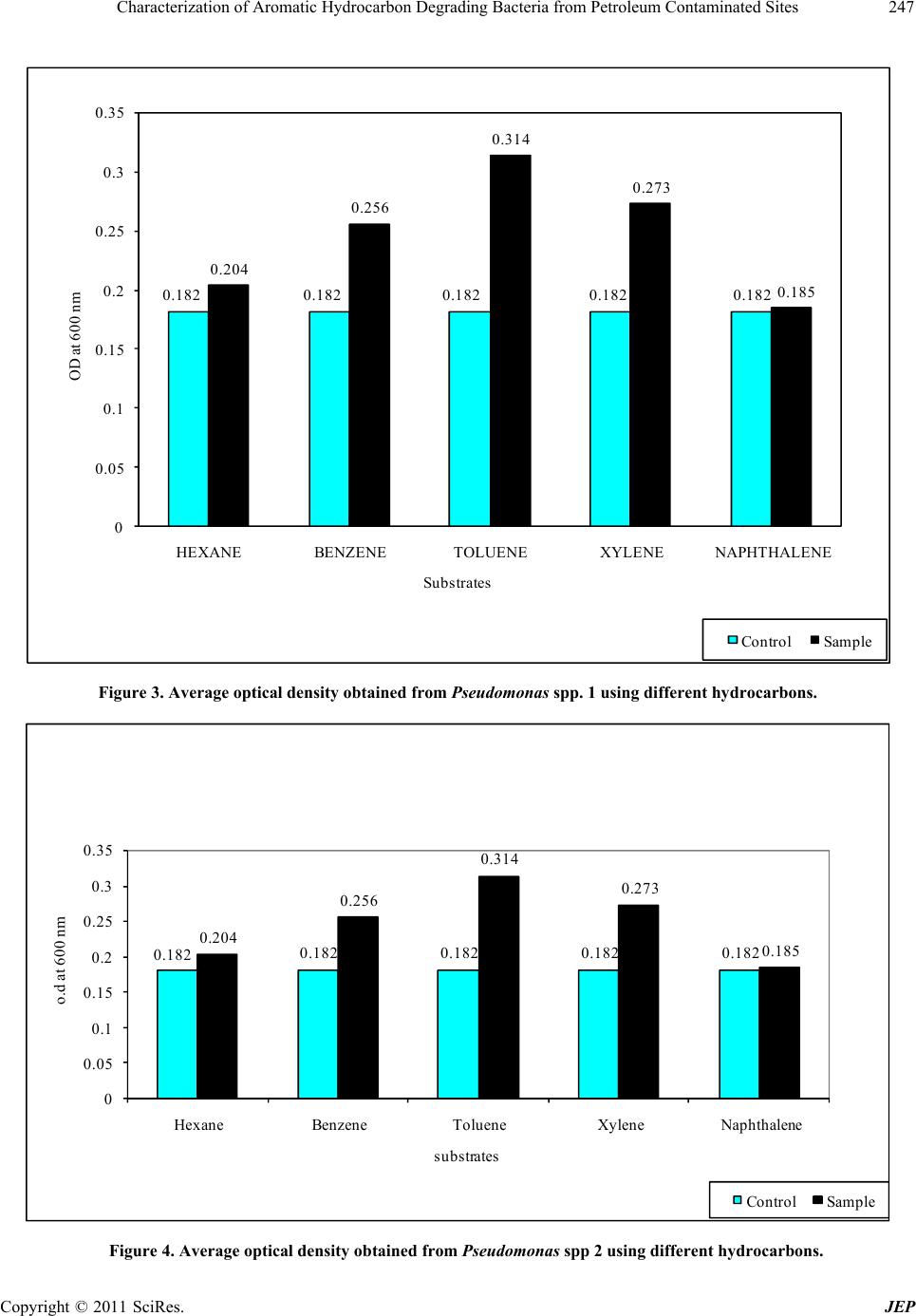 Characterization of Aromatic Hydrocarbon Degrading Bacteria from Petroleum Contaminated Sites 247 0.1820.182 0.1820.1820.182 0.204 0.256 0.314 0.273 0.185 0 0.05 0.1 0.15 0.2 0.25 0.3 0.35 HEXANE BENZENETOLUENE XYLENENAPHTHALEN E OD at 600 nm Sub strates Control Sample Figure 3. Average optical density obtained from Pseudomonas spp. 1 using different hydrocarbons. 0.182 0.182 0.182 0.182 0.182 0.204 0.256 0.314 0.273 0.185 0 0.05 0.1 0.15 0.2 0.25 0.3 0.35 HexaneBenzeneTolueneXylene Naphthalene o. d a t 600 n m substrates Control Sample Figure 4. Average optical density obtained from Pseudomonas spp 2 using different hydrocarbons. Copyright © 2011 SciRes. JEP 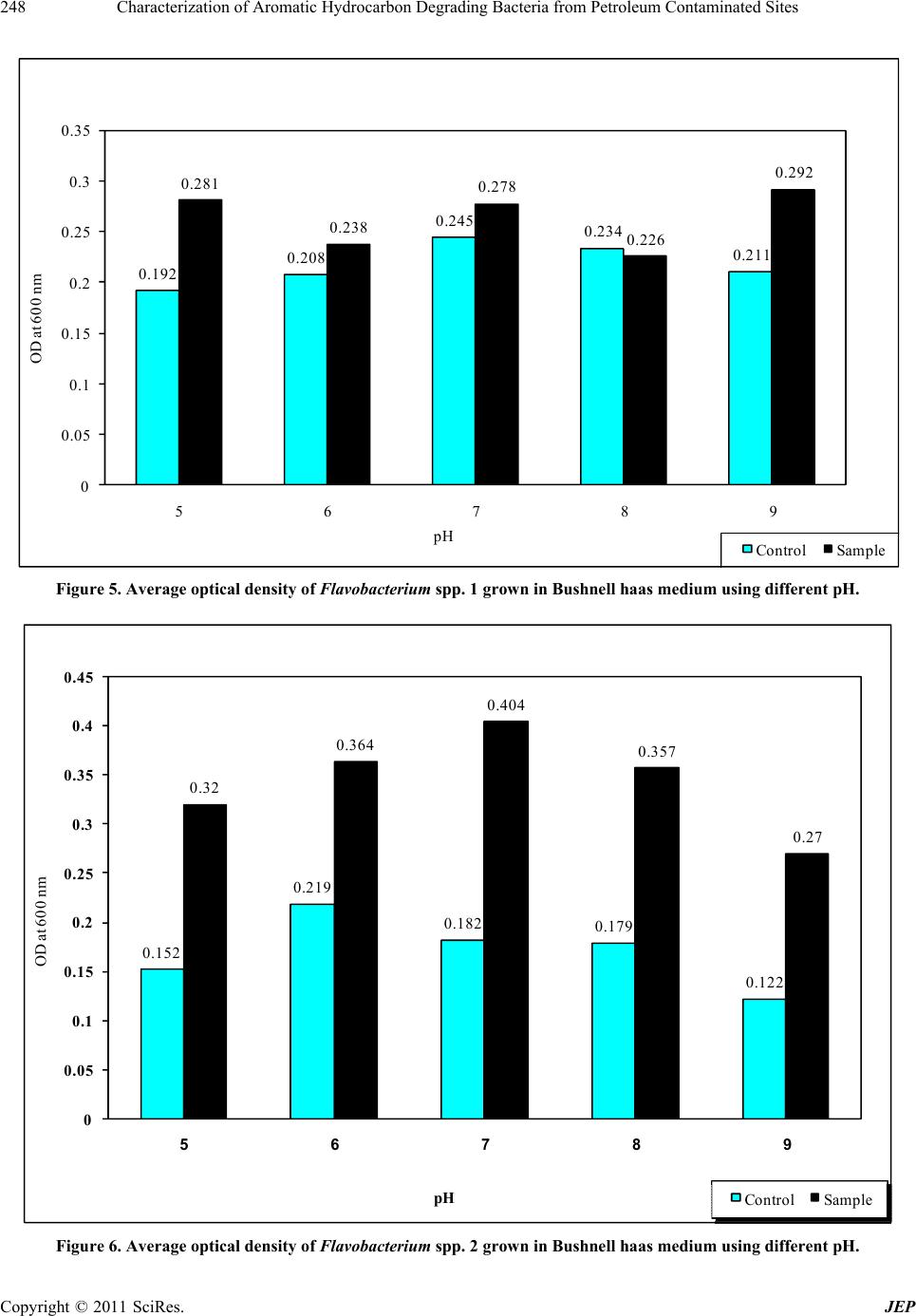 Characterization of Aromatic Hydrocarbon Degrading Bacteria from Petroleum Contaminated Sites 248 0.1920.208 0.2450.234 0.211 0.281 0.238 0.278 0.226 0.292 0 0.05 0.1 0.15 0.2 0.25 0.3 0.35 56789 O D a t 600 nm pH Control Sample Figure 5. Average optical density of Flavobacterium spp. 1 grown in Bushnell haas medium using different pH. 0.152 0.219 0.182 0.179 0.122 0.32 0.364 0.404 0.357 0.27 0 0.05 0.1 0.15 0.2 0.25 0.3 0.35 0.4 0.45 56789 O D a t 6 00 nm pH Control Sample Figure 6. Average optical density of Flavobacterium spp. 2 grown in Bushnell haas medium using different pH. Copyright © 2011 SciRes. JEP 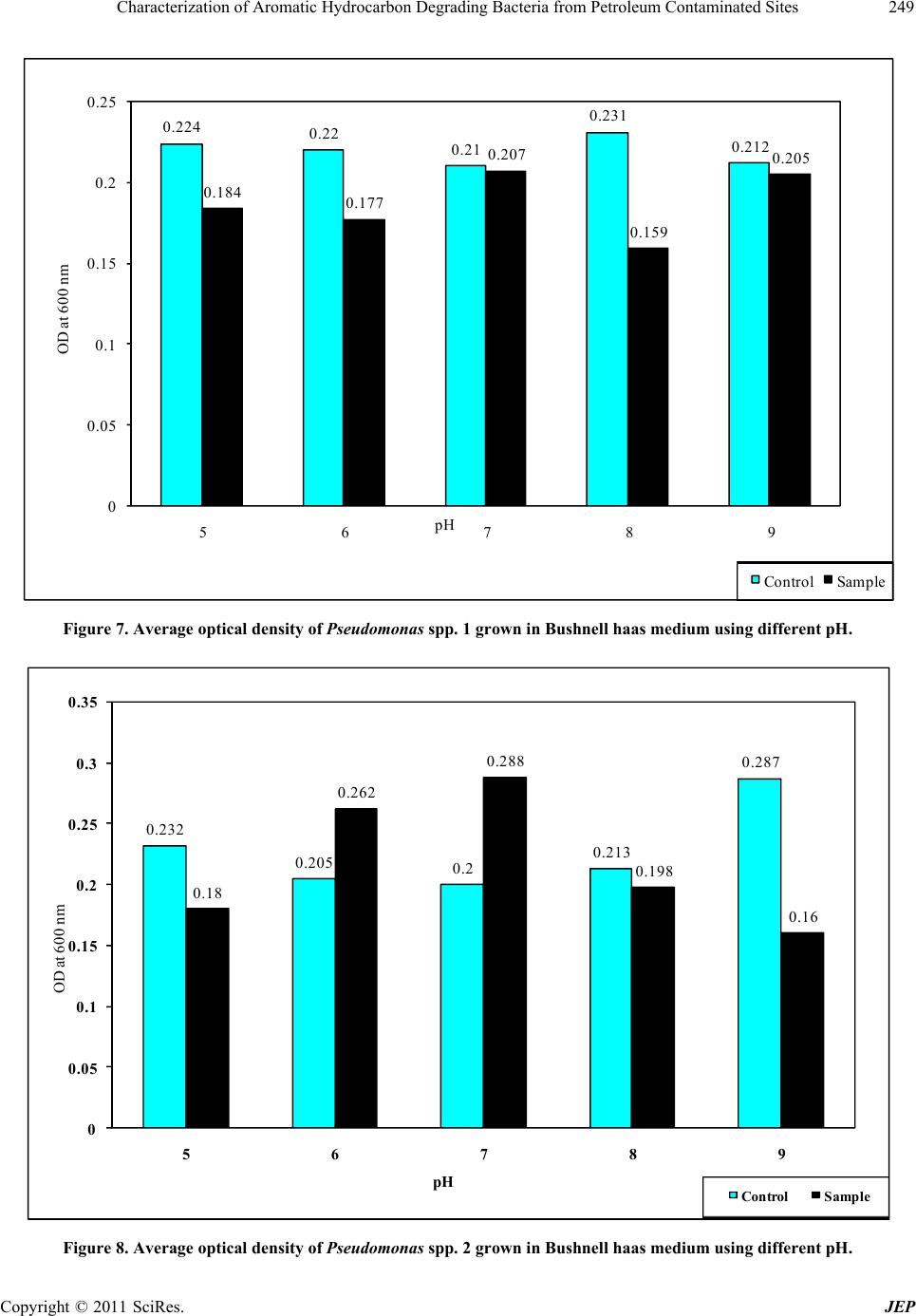 Characterization of Aromatic Hydrocarbon Degrading Bacteria from Petroleum Contaminated Sites 249 0.224 0.22 0.21 0.231 0.212 0.184 0.177 0.207 0.159 0.205 0 0.05 0.1 0.15 0.2 0.25 56789 O D a t 600 nm pH ControlSample Figure 7. Average optical density of Pseudomonas spp. 1 grown in Bushnell haas medium using different pH. 0.232 0.205 0.2 0.213 0.287 0.18 0.262 0.288 0.198 0.16 0 0.05 0.1 0.15 0.2 0.25 0.3 0.35 56789 OD at 600 nm pH Control Sampl e Figure 8. Average optical density of Pseudomonas spp. 2 grown in Bushnell haas medium using different pH. Copyright © 2011 SciRes. JEP 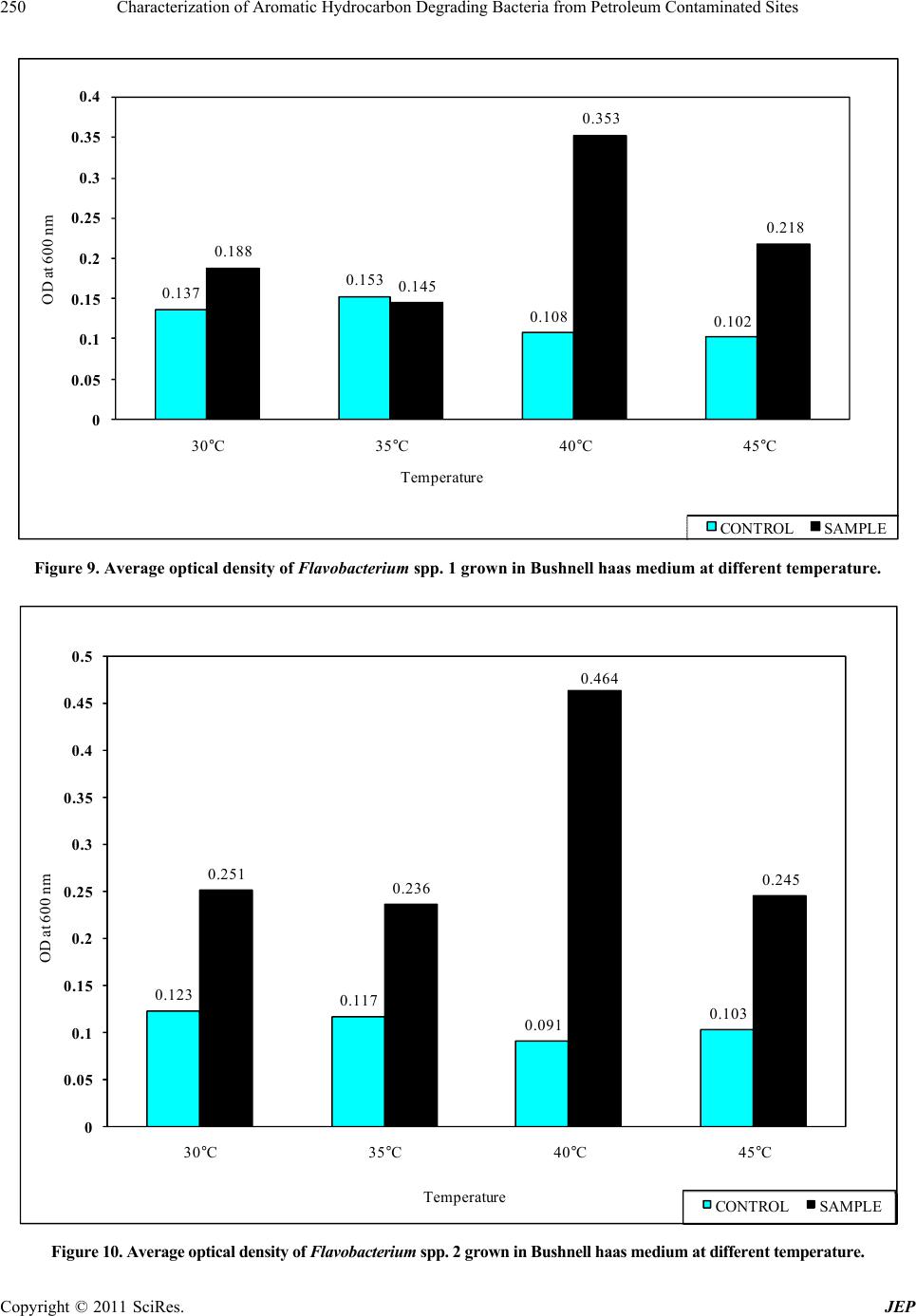 Characterization of Aromatic Hydrocarbon Degrading Bacteria from Petroleum Contaminated Sites 250 0.137 0.153 0.108 0.102 0.188 0.145 0.353 0.218 0 0.05 0.1 0.15 0.2 0.25 0.3 0.35 0.4 30°C35°C40°C45°C OD at 600 nm Temperature CONTROL SAMPLE Figure 9. Average optical density of Flavobacterium spp. 1 grown in Bushnell haas medium at different te mperature. 0.123 0.117 0.091 0.103 0.251 0.236 0.464 0.245 0 0.05 0.1 0.15 0.2 0.25 0.3 0.35 0.4 0.45 0.5 30°C35°C40°C45°C O D a t 600 nm Temperature CONTROL SAMPLE Figure 10. Average optical density of Flavobacterium spp. 2 grown in Bushnell haas medium at different temperature. Copyright © 2011 SciRes. JEP 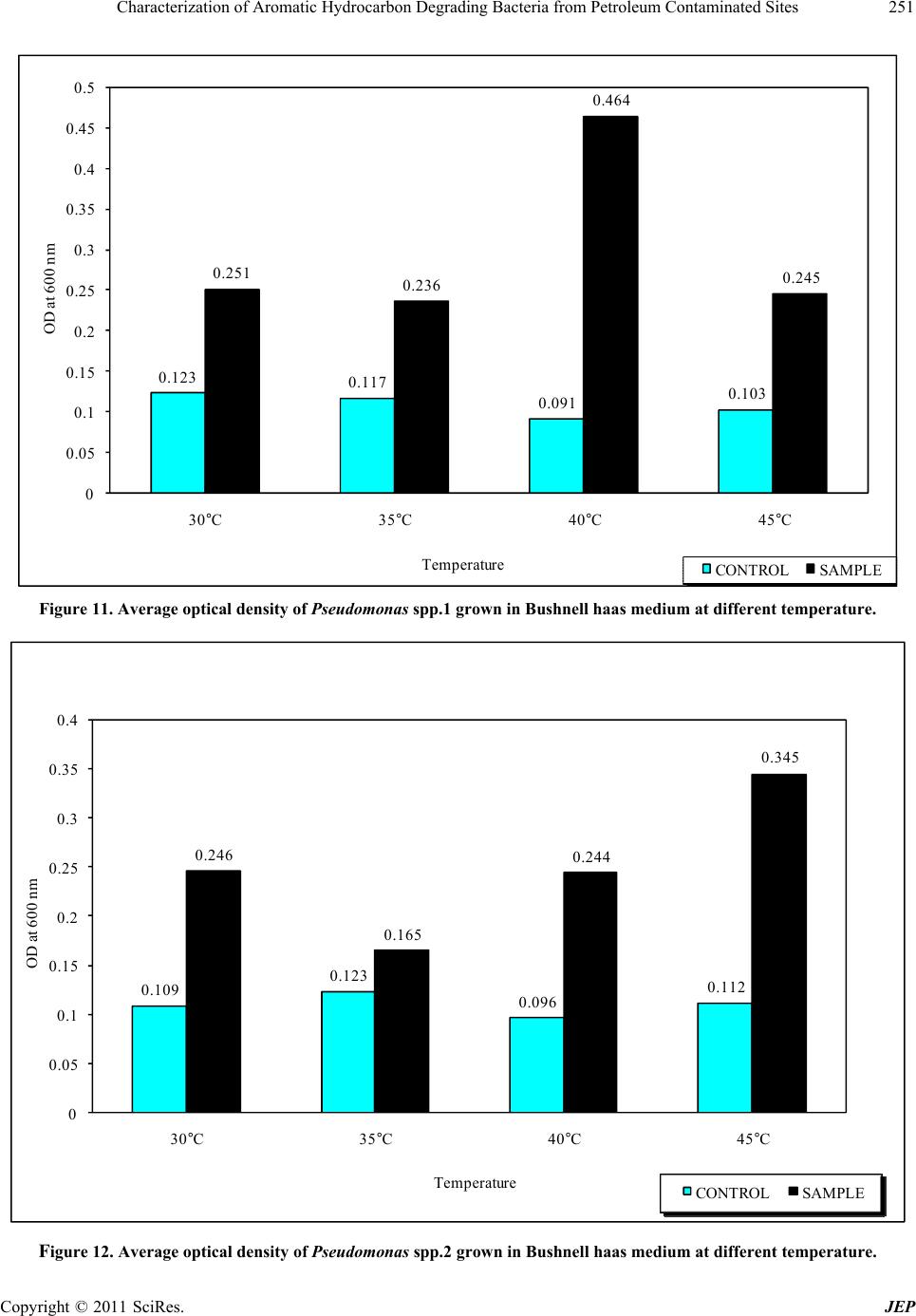 Characterization of Aromatic Hydrocarbon Degrading Bacteria from Petroleum Contaminated Sites 251 0.123 0.117 0.091 0.103 0.251 0.236 0.464 0.245 0 0.05 0.1 0.15 0.2 0.25 0.3 0.35 0.4 0.45 0.5 30°C35°C40°C45°C O D a t 600 nm Temperature CONTROL SAMPLE Figure 11. Average optical density of Pseudomonas spp.1 grown in Bushnell haas medium at different temperature. 0.109 0.123 0.096 0.112 0.246 0.165 0.244 0.345 0 0.05 0.1 0.15 0.2 0.25 0.3 0.35 0.4 30°C35°C40°C45°C O D a t 6 00 n m Temperature CONTROL SAMPLE Figure 12. Average optical density of Pseudomonas spp.2 grown in Bushnell haas medium at different temperature. Copyright © 2011 SciRes. JEP 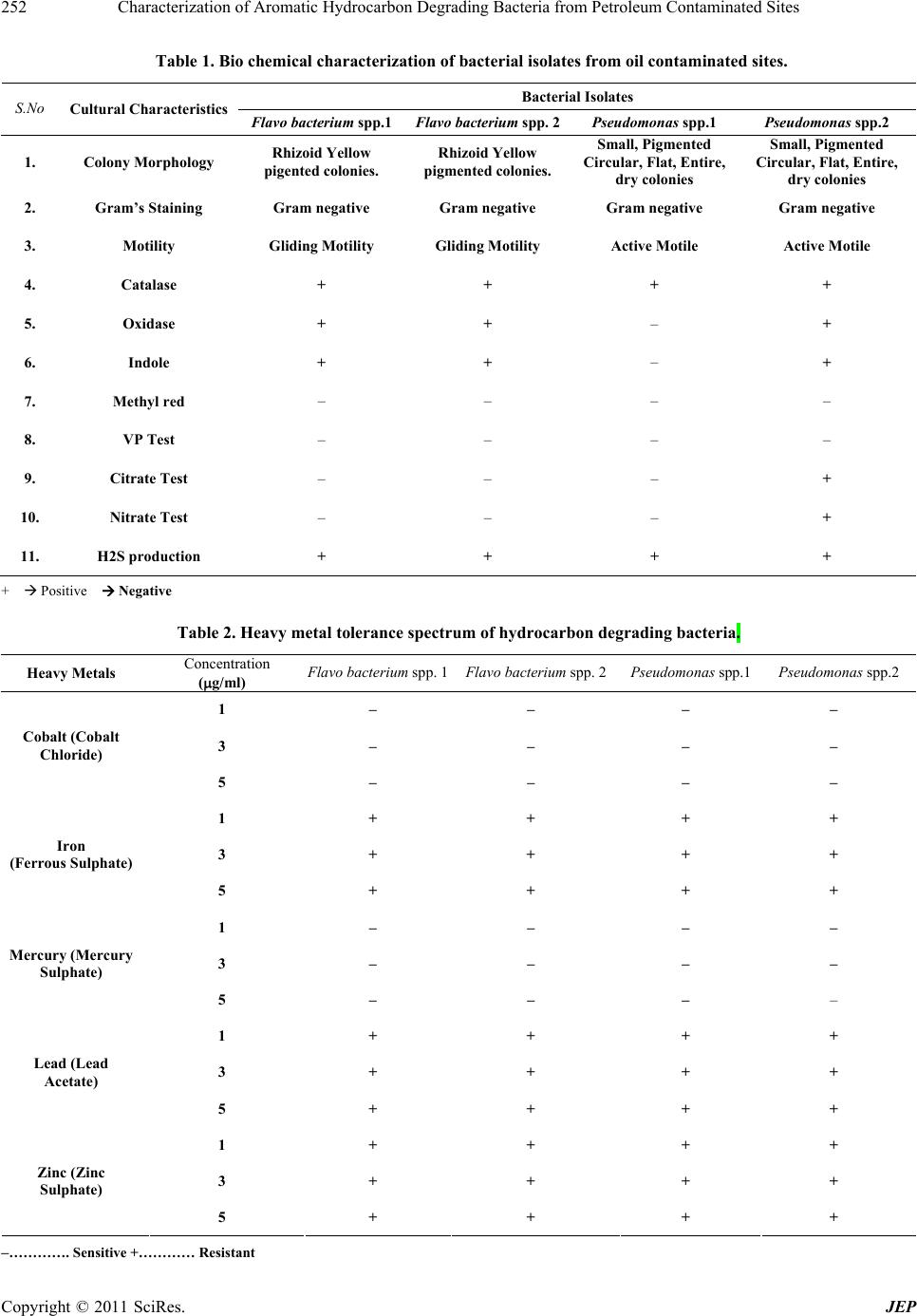 Characterization of Aromatic Hydrocarbon Degrading Bacteria from Petroleum Contaminated Sites 252 Table 1. Bio chemical characterization of bacterial isolates from oil contaminated sites. Bacterial Isolates S.No Cultural CharacteristicsFlavo bacterium spp.1Flavo bacterium spp. 2Pseudomonas spp.1 Pseudomonas spp.2 1. Colony Morphology Rhizoid Yellow pigented colonies. Rhizoid Yellow pigmented colonies. Small, Pigmented Circular, Flat, Entire, dry colonies Small, Pigmented Circular, Flat, Entire, dry colonies 2. Gram’s Staining Gram negative Gram negative Gram negative Gram negative 3. Motility Gliding Motility Gliding Motility Active Motile Active Motile 4. Catalase + + + + 5. Oxidase + + – + 6. Indole + + – + 7. Methyl red – – – – 8. VP Test – – – – 9. Citrate Test – – – + 10. Nitrate Test – – – + 11. H2S production + + + + + Positive Negativ e Table 2. Heavy metal tolerance spectrum of hydrocarbon degrading bacteria. Heavy Metals Concentration (g/ml) Flavo bacterium spp. 1Flavo bacterium spp. 2Pseudomonas spp.1 Pseudomonas spp.2 1 – – – – 3 – – – – Cobalt (Cobalt Chloride) 5 – – – – 1 + + + + 3 + + + + Iron (Ferrous Sulphate) 5 + + + + 1 – – – – 3 – – – – Mercury (Mercury Sulphate) 5 – – – – 1 + + + + 3 + + + + Lead (Lead Acetate) 5 + + + + 1 + + + + 3 + + + + Zinc (Zinc Sulphate) 5 + + + + –…………. Sensitive +………… Resistant Copyright © 2011 SciRes. JEP 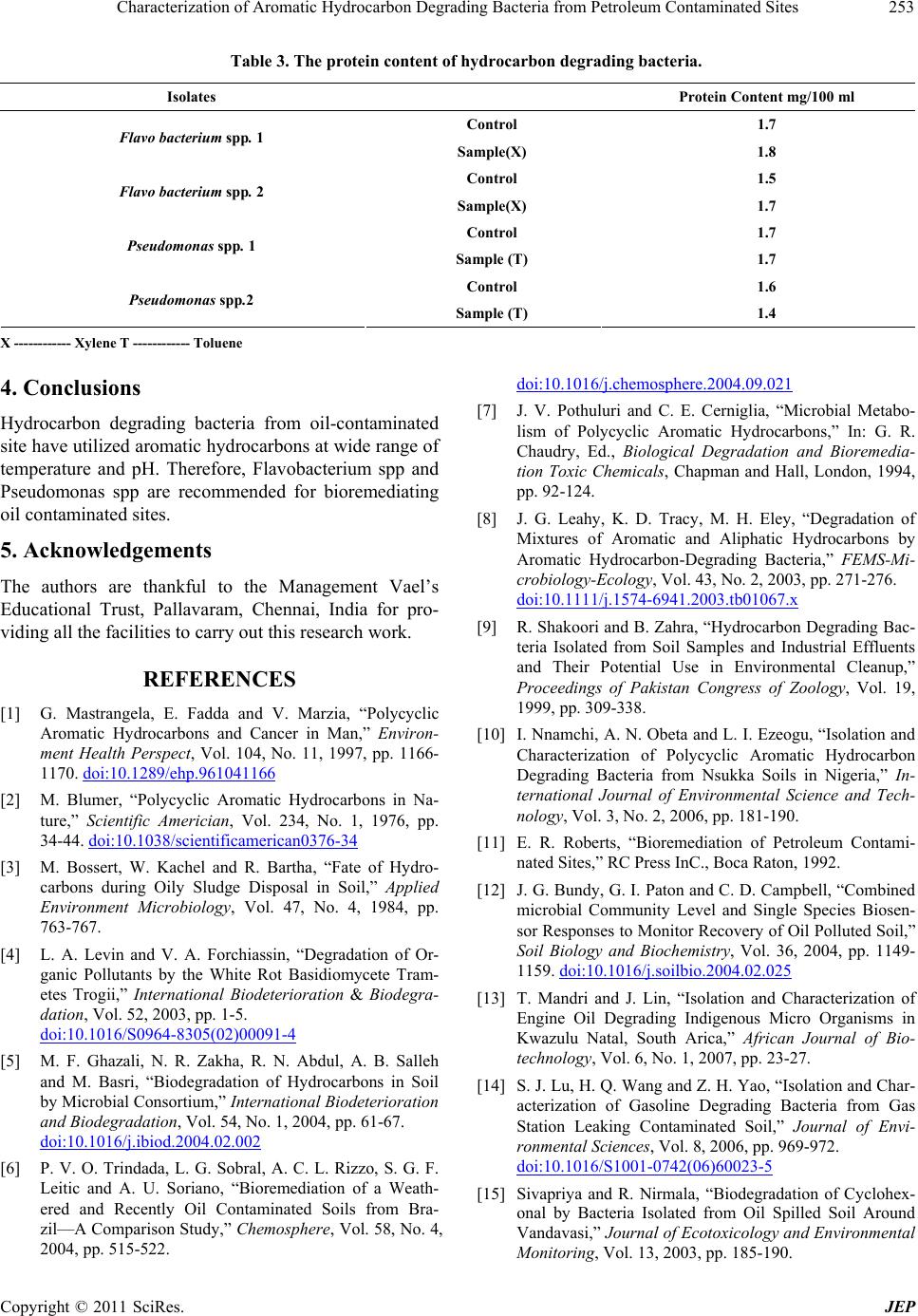 Characterization of Aromatic Hydrocarbon Degrading Bacteria from Petroleum Contaminated Sites Copyright © 2011 SciRes. JEP 253 Table 3. The protein conte nt of hydrocarbon degr ading bacteria. Isolates Protein Content mg/100 ml Control 1.7 Flavo bacterium spp. 1 Sample(X) 1.8 Control 1.5 Flavo bacterium spp. 2 Sample(X) 1.7 Control 1.7 Pseudomonas spp. 1 Sample (T) 1.7 Control 1.6 Pseudomonas spp.2 Sample (T) 1.4 X ------------ Xylene T ---------- -- Toluene 4. Conclusions Hydrocarbon degrading bacteria from oil-contaminated site have utilized aromatic hydrocarbons at wide range of temperature and pH. Therefore, Flavobacterium spp and Pseudomonas spp are recommended for bioremediating oil contaminated sites. 5. Acknowledgements The authors are thankful to the Management Vael’s Educational Trust, Pallavaram, Chennai, India for pro- viding all the facilities to carry out this research work. REFERENCES [1] G. Mastrangela, E. Fadda and V. Marzia, “Polycyclic Aromatic Hydrocarbons and Cancer in Man,” Environ- ment Health Perspect, Vol. 104, No. 11, 1997, pp. 1166- 1170. doi:10.1289/ehp.961041166 [2] M. Blumer, “Polycyclic Aromatic Hydrocarbons in Na- ture,” Scientific Americian, Vol. 234, No. 1, 1976, pp. 34-44. doi:10.1038/scientificamerican0376-34 [3] M. Bossert, W. Kachel and R. Bartha, “Fate of Hydro- carbons during Oily Sludge Disposal in Soil,” Applied Environment Microbiology, Vol. 47, No. 4, 1984, pp. 763-767. [4] L. A. Levin and V. A. Forchiassin, “Degradation of Or- ganic Pollutants by the White Rot Basidiomycete Tram- etes Trogii,” International Biodeterioration & Biodegra- dation, Vol. 52, 2003, pp. 1-5. doi:10.1016/S0964-8305(02)00091-4 [5] M. F. Ghazali, N. R. Zakha, R. N. Abdul, A. B. Salleh and M. Basri, “Biodegradation of Hydrocarbons in Soil by Microbial Consortium,” International Biodeterioration and Biodegradation, Vol. 54, No. 1, 2004, pp. 61-67. doi:10.1016/j.ibiod.2004.02.002 [6] P. V. O. Trindada, L. G. Sobral, A. C. L. Rizzo, S. G. F. Leitic and A. U. Soriano, “Bioremediation of a Weath- ered and Recently Oil Contaminated Soils from Bra- zil—A Comparison Study,” Chemosphere, Vol. 58, No. 4, 2004, pp. 515-522. doi:10.1016/j.chemosphere.2004.09.021 [7] J. V. Pothuluri and C. E. Cerniglia, “Microbial Metabo- lism of Polycyclic Aromatic Hydrocarbons,” In: G. R. Chaudry, Ed., Biological Degradation and Bioremedia- tion Toxic Chemicals, Chapman and Hall, London, 1994, pp. 92-124. [8] J. G. Leahy, K. D. Tracy, M. H. Eley, “Degradation of Mixtures of Aromatic and Aliphatic Hydrocarbons by Aromatic Hydrocarbon-Degrading Bacteria,” FEMS-Mi- crobiology-Ecology, Vol. 43, No. 2, 2003, pp. 271-276. doi:10.1111/j.1574-6941.2003.tb01067.x [9] R. Shakoori and B. Zahra, “Hydrocarbon Degrading Bac- teria Isolated from Soil Samples and Industrial Effluents and Their Potential Use in Environmental Cleanup,” Proceedings of Pakistan Congress of Zoology, Vol. 19, 1999, pp. 309-338. [10] I. Nnamchi, A. N. Obeta and L. I. Ezeogu, “Isolation and Characterization of Polycyclic Aromatic Hydrocarbon Degrading Bacteria from Nsukka Soils in Nigeria,” In- ternational Journal of Environmental Science and Tech- nology, Vol. 3, No. 2, 2006, pp. 181-190. [11] E. R. Roberts, “Bioremediation of Petroleum Contami- nated Sites,” RC Press InC., Boca Raton, 1992. [12] J. G. Bundy, G. I. Paton and C. D. Campbell, “Combined microbial Community Level and Single Species Biosen- sor Responses to Monitor Recovery of Oil Polluted Soil,” Soil Biology and Biochemistry, Vol. 36, 2004, pp. 1149- 1159. doi:10.1016/j.soilbio.2004.02.025 [13] T. Mandri and J. Lin, “Isolation and Characterization of Engine Oil Degrading Indigenous Micro Organisms in Kwazulu Natal, South Arica,” African Journal of Bio- technology, Vol. 6, No. 1, 2007, pp. 23-27. [14] S. J. Lu, H. Q. Wang and Z. H. Yao, “Isolation and Char- acterization of Gasoline Degrading Bacteria from Gas Station Leaking Contaminated Soil,” Journal of Envi- ronmental Sciences, Vol. 8, 2006, pp. 969-972. doi:10.1016/S1001-0742(06)60023-5 [15] Sivapriya and R. Nirmala, “Biodegradation of Cyclohex- onal by Bacteria Isolated from Oil Spilled Soil Around Vandavasi,” Journal of Ecotoxicology and Environmental Monitoring, Vol. 13, 2003, pp. 185-190.  Characterization of Aromatic Hydrocarbon Degrading Bacteria from Petroleum Contaminated Sites 254 [16] J. G. Holt, “Bergy’s Manual of Determinative Bacteriol- ogy,” 9th Edition, Williams and Wilkins, Philadelphia, 1994. [17] G. Coral and S. Karagoz, “Isolation and Characterization of Phenanthrene Degrading Bacteria from Petroleum Re- finery Soil,” Annals of Microbiology, Vol. 55, No. 4, 2005, pp. 255-259. [18] S. Y. Yuan, S. W. Chang, B. V. Chang, “Biodegradation of Polycyclic Aromatic Hydrocarbons in Sludge,” Bulle- tin of Environmental Contamination and Toxicology, Vol. 7, No. 3, 2003, pp. 625-632. doi:10.1007/s00128-003-8841-x [19] N. Englert, G. Harms and F. Widdel, “Aerobic Petroleum Degradation Rate of Aromatic Hydrocarbon,” Achieves of Microbiology, Vol.172, 1993, pp. 303-312. [20] H. Feitkenhauer and H. Mark, “Biodegradation of Ali- phatic and Aromatic Hydrocarbons at High Tempera- ture,” Water Science and Technology, Vol. 47, No. 10, 2003, pp. 123-130. [21] A. S. R. Ghosh and V. Singh, “Characterization of Large Plasmid Encoding Resistance to Toxic Heavy Metals in Salmonella Abortus Equi,” Biochemical and Biophysical Research Communications, Vol. 272, No. 1, 2000, pp. 6-11. doi:10.1006/bbrc.2000.2727 Copyright © 2011 SciRes. JEP |