

Paper Menu >>
Journal Menu >>
 Green and Sustainable Chemistry, 2011, 1, 19-25 doi:10.4236/gsc.2011.12004 Published Online May 2011 (http://www.SciRP.org/journal/gsc) Copyright © 2011 SciRes. GSC Recovery of in Situ-Generated Pd Nanoparticles with Linear Polystyrene Atsushi Ohtaka1*, Ryozo Kuroki1, Takuto Teratani1, Tsutomu Shinagawa2, Go Hamasaka3, Yasuhiro Uozumi3, Osamu Shimomura1, Ryôki Nomura1,4* 1Department of Applied Chemistry, Faculty of Engineering, Osaka Institute of Technology, Osaka, Japan 2Electronic Materials Research Division, Osaka Municipal Technical Research Institute, Osaka, Japan 3Institute for Molecular Science (IMS), Okazaki, Japan 4Nanomaterials and Microdevices Research Center, Osaka Institute of Technology, Osaka, Japan E-mail: [email protected] Received March 17, 2011; revised April 17, 2011; accepted April 24, 2011 Abstract Palladium nanoparticles generated in situ for Suzuki coupling reactions and aerobic alcohol oxidation in wa- ter were recovered completely using linear polystyrene. The resultant polystyrene-stabilized palladium nanoparticles were shown to be reusable without any loss of activity. Keywords: Polystyrene, Pd Nanoparticles, Water, Suzuki Coupling, Alcohol Oxidation 1. Introduction In view of the increasing demand for environmentally benign reaction processes, intensive efforts have been directed to reducing or eliminating the use of flammable, hazardous and nonrenewable organic solvents [1,2]. Pal- ladium-catalyzed reactions such as carbon-carbon cou- pling and alcohol oxidation, which are some of the most common transition-metal-catalyzed processes, are more and more often being performed in aqueous media. Re- covery of palladium catalysts is also important to enable reuse of these expensive reagents and to reduce palla- dium contamination of the isolated products. One reac- tion system employing a highly active immobilized catalyst shows good promise in incorporating these con- siderations [3]. However, the synthesis of heterogeneous catalysts typically requires several steps, such as prepa- ration of the polymer support, introduction of ligand units into the polymer support, and immobilization of the metal complex. In contrast, palladium nanoparticles (PdNPs) generated in situ are easy-to-use catalysts and have high catalytic activities for coupling reactions in water in the presence of additives such as quaternary ammonium salts [4,5], cationic and anionic surfactants [6,7], and poly(ethylene glycol) [8]. Nevertheless, re- covery of the palladium species can be difficult when the reaction is complete, as they are dispersed in water. Recently, we found that PdO nanoparticles (PdONPs) are readily stabilized on linear polystyrene, and the re- sultant polystyrene-stabilized PdONPs have high cata- lytic activities for Suzuki and copper-free Sonogashira coupling reactions in water [9,10]. Separately, polysty- rene-stabilized PdNPs have been prepared using a phenylboronic acid as the reductant. Based on these suc- cessful results, we proposed that PdNPs generated in situ for Suzuki coupling reactions might also be stabilized and recovered by linear polystyrene. Herein we report that in situ-generated PdNP catalysts can be recovered completely with linear polystyrene without loss of their catalytic activity. 2. Results and Discussion To investigate the recovery of in situ-generated PdNPs, we examined the Suzuki coupling reaction of bromoben- zene with 4-methylphenylboronic acid using Pd(OAc)2 as the catalyst in 1.5 M aqueous KOH solution at 80˚C for 1 h. Under these conditions, the coupling reaction pro- ceeded efficiently to give 4-methylbiphenyl quantita- tively, with no palladium species recovered. Simple fil- tration of the reaction mixture in the presence of linear polystyrene (Scheme 1, Mn = 6000, styrene/Pd = 9/1), however, led to recovery of the palladium species. In- ductively coupled plasma-atomic emission spectroscopy (ICP-AES) revealed that the quantitative recovery of Pd was achieved. In contrast, 85% and 86% of Pd were recov- 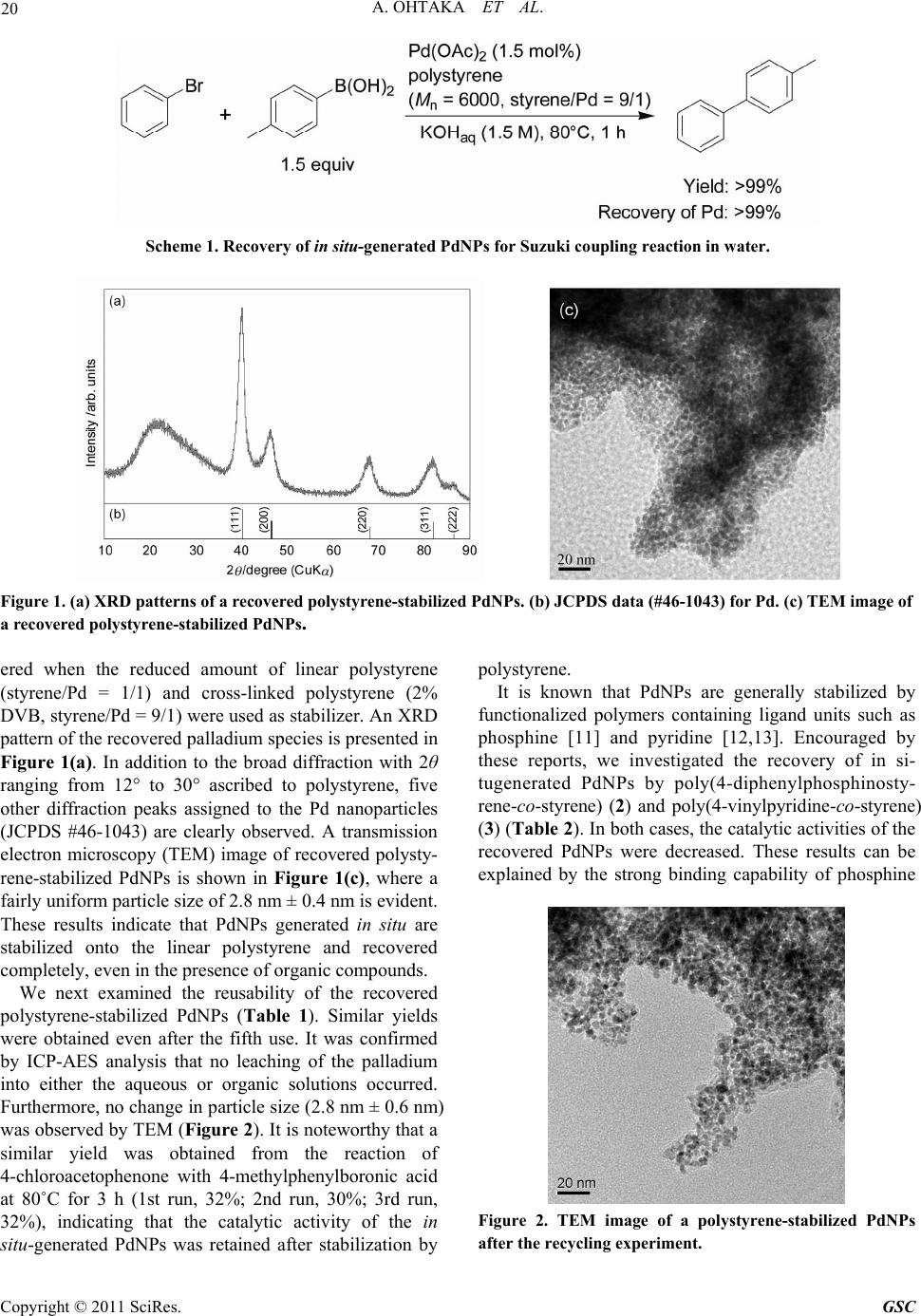 20 A. OHTAKA ET AL. Scheme 1. Recovery of in situ-generated PdNPs for Suzuki coupling reaction in water. Figure 1. (a) XRD patterns of a recovered polystyrene-stabilized PdNPs. (b) JCPDS data (#46-1043) for Pd. (c) TEM image of a recovered polystyrene-stabilized PdNPs. ered when the reduced amount of linear polystyrene (styrene/Pd = 1/1) and cross-linked polystyrene (2% DVB, styrene/Pd = 9/1) were used as stabilizer. An XRD pattern of the recovered palladium species is presented in Figure 1(a). In addition to the broad diffraction with 2θ ranging from 12° to 30° ascribed to polystyrene, five other diffraction peaks assigned to the Pd nanoparticles (JCPDS #46-1043) are clearly observed. A transmission electron microscopy (TEM) image of recovered polysty- rene-stabilized PdNPs is shown in Figure 1(c), where a fairly uniform particle size of 2.8 nm ± 0.4 nm is evident. These results indicate that PdNPs generated in situ are stabilized onto the linear polystyrene and recovered completely, even in the presence of organic compounds. We next examined the reusability of the recovered polystyrene-stabilized PdNPs (Table 1). Similar yields were obtained even after the fifth use. It was confirmed by ICP-AES analysis that no leaching of the palladium into either the aqueous or organic solutions occurred. Furthermore, no change in particle size (2.8 nm ± 0.6 nm) was observed by TEM (Figure 2). It is noteworthy that a similar yield was obtained from the reaction of 4-chloroacetophenone with 4-methylphenylboronic acid at 80˚C for 3 h (1st run, 32%; 2nd run, 30%; 3rd run, 32%), indicating that the catalytic activity of the in situ-generated PdNPs was retained after stabilization by polystyrene. It is known that PdNPs are generally stabilized by functionalized polymers containing ligand units such as phosphine [11] and pyridine [12,13]. Encouraged by these reports, we investigated the recovery of in si- tugenerated PdNPs by poly(4-diphenylphosphinosty- rene-co-styrene) (2) and poly(4-vinylpyridine-co-styrene) (3) (Table 2). In both cases, the catalytic activities of the recovered PdNPs were decreased. These results can be explained by the strong binding capability of phosphine Figure 2. TEM image of a polystyrene-stabilized PdNPs after the recycling experiment. Copyright © 2011 SciRes. GSC 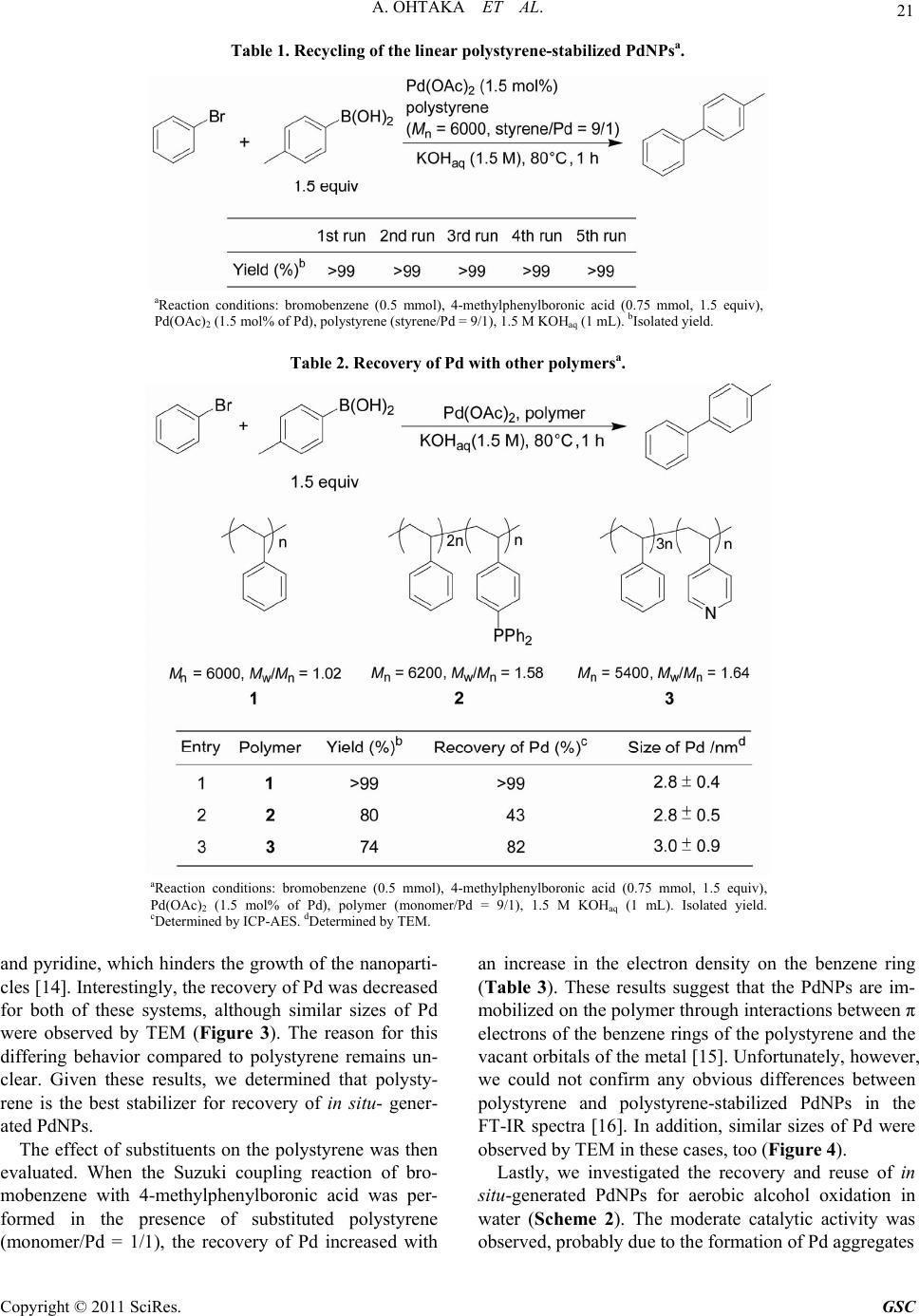 A. OHTAKA ET AL. 21 Table 1. Recycling of the linear polystyrene-stabilized PdNPs a. aReaction conditions: bromobenzene (0.5 mmol), 4-methylphenylboronic acid (0.75 mmol, 1.5 equiv), Pd(OAc)2 (1.5 mol% of Pd), polystyrene (styrene/Pd = 9/1), 1.5 M KOHaq (1 mL). bIsolated yield. Table 2. Recovery of Pd with other polymersa. aReaction conditions: bromobenzene (0.5 mmol), 4-methylphenylboronic acid (0.75 mmol, 1.5 equiv), Pd(OAc)2 (1.5 mol% of Pd), polymer (monomer/Pd = 9/1), 1.5 M KOHaq (1 mL). Isolated yield. cDetermined by ICP-AES. dDetermined by TEM. and pyridine, which hinders the growth of the nanoparti- cles [14]. Interestingly, the recovery of Pd was decreased for both of these systems, although similar sizes of Pd were observed by TEM (Figure 3). The reason for this differing behavior compared to polystyrene remains un- clear. Given these results, we determined that polysty- rene is the best stabilizer for recovery of in situ- gener- ated PdNPs. The effect of substituents on the polystyrene was then evaluated. When the Suzuki coupling reaction of bro- mobenzene with 4-methylphenylboronic acid was per- formed in the presence of substituted polystyrene (monomer/Pd = 1/1), the recovery of Pd increased with an increase in the electron density on the benzene ring (Table 3). These results suggest that the PdNPs are im- mobilized on the polymer through interactions between π electrons of the benzene rings of the polystyrene and the vacant orbitals of the metal [15]. Unfortunately, however, we could not confirm any obvious differences between polystyrene and polystyrene-stabilized PdNPs in the FT-IR spectra [16]. In addition, similar sizes of Pd were observed by TEM in these cases, too (Figure 4). Lastly, we investigated the recovery and reuse of in situ-generated PdNPs for aerobic alcohol oxidation in water (Scheme 2). The moderate catalytic activity was oberved, probably due to the formation of Pd aggregates s Copyright © 2011 SciRes. GSC 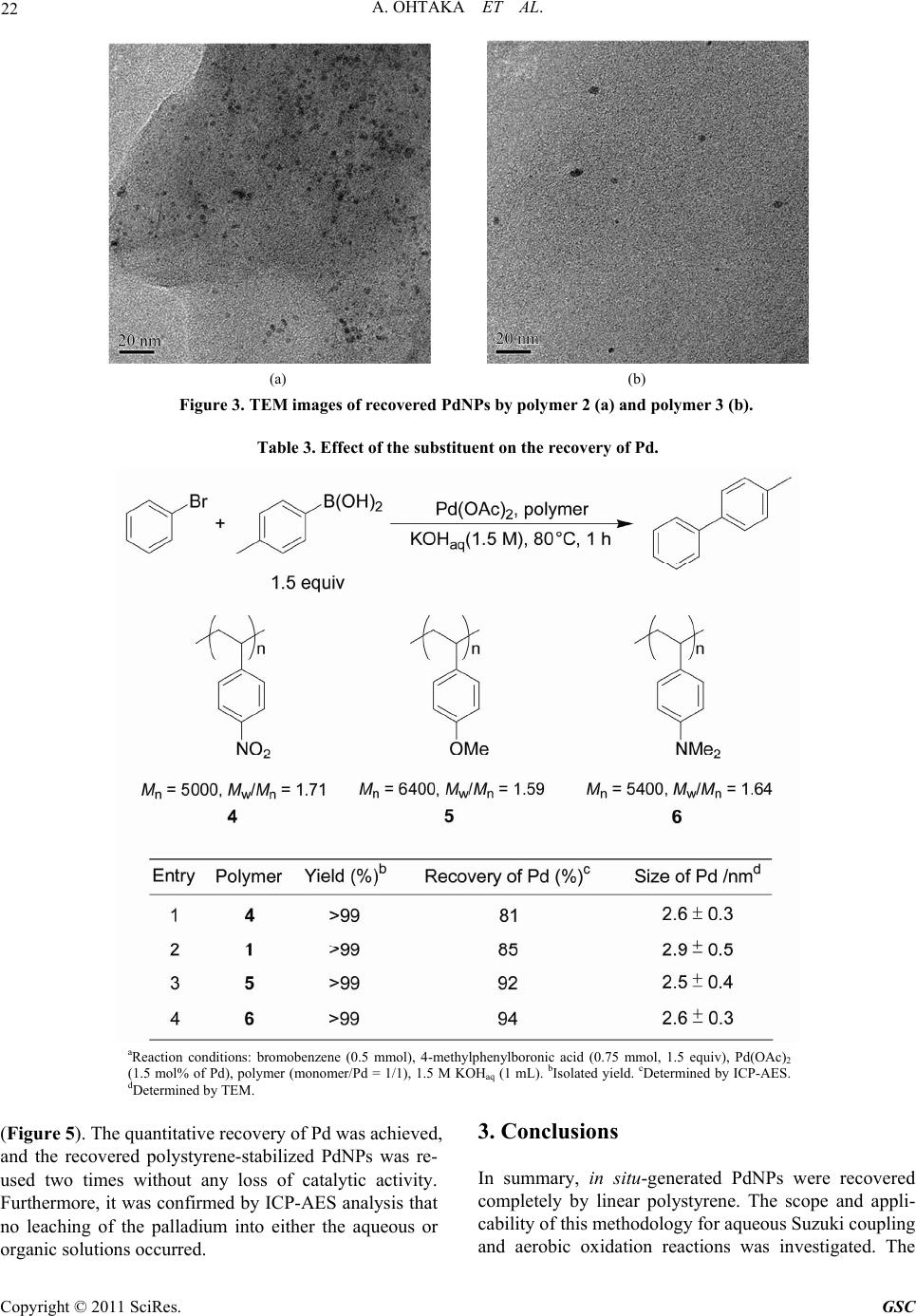 22 A. OHTAKA ET AL. (a) (b) Figure 3. TEM images of recovered PdNPs by polymer 2 (a) and polymer 3 (b). Table 3. Effect of the substituent on the recovery of Pd. aReaction conditions: bromobenzene (0.5 mmol), 4-methylphenylboronic acid (0.75 mmol, 1.5 equiv), Pd(OAc)2 (1.5 mol% of Pd), polymer (monomer/Pd = 1/1), 1.5 M KOHaq (1 mL). bIsolated yield. cDetermined by ICP-AES. dDetermined by TEM. (Figure 5). The quantitative recovery of Pd was achieved, and the recovered polystyrene-stabilized PdNPs was re- used two times without any loss of catalytic activity. Furthermore, it was confirmed by ICP-AES analysis that no leaching of the palladium into either the aqueous or organic solutions occurred. 3. Conclusions In summary, in situ-generated PdNPs were recovered completely by linear polystyrene. The scope and appli- cability of this methodology for aqueous Suzuki coupling and aerobic oxidation reactions was investigated. The Copyright © 2011 SciRes. GSC 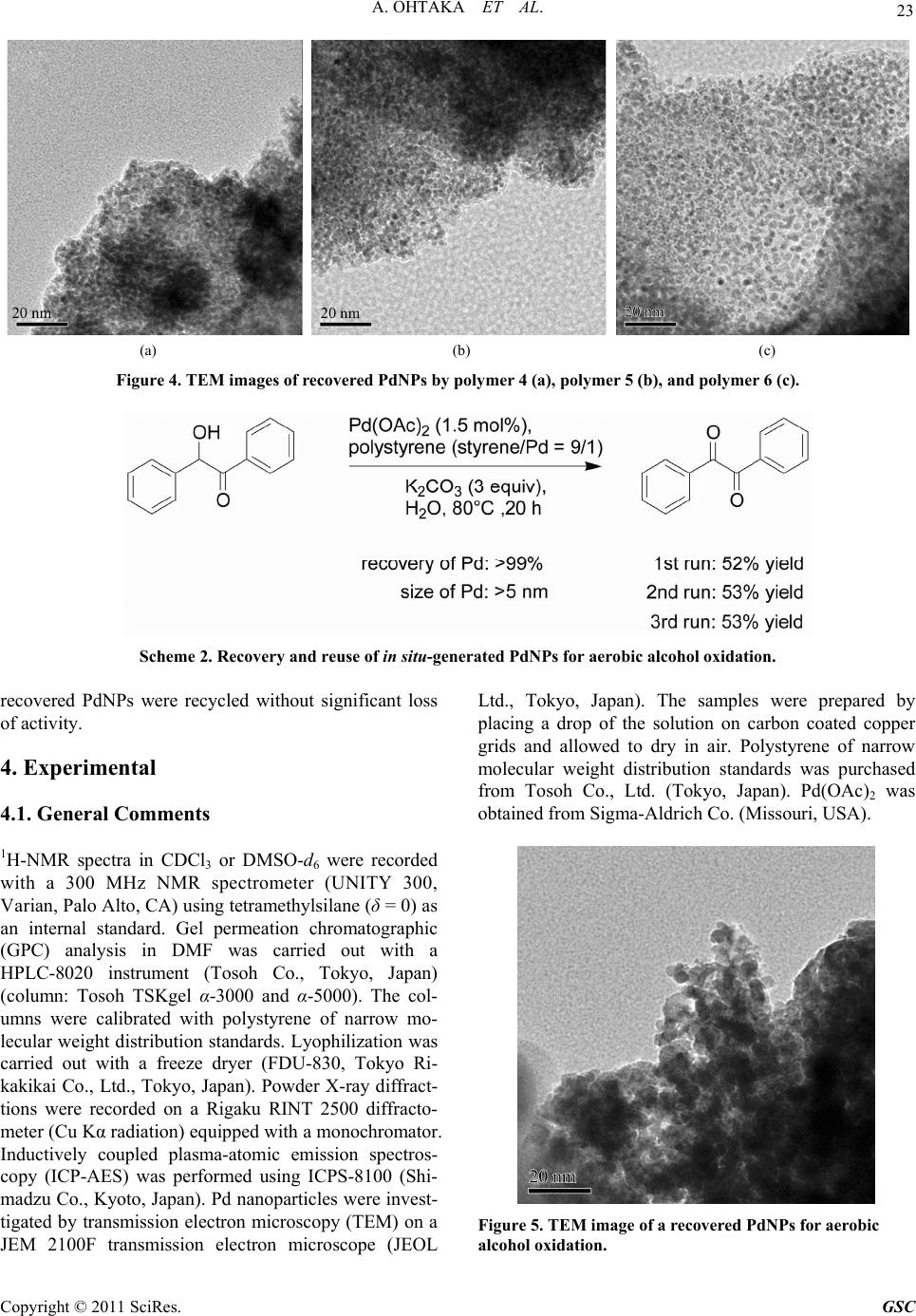 A. OHTAKA ET AL. Copyright © 2011 SciRes. GSC 23 (a) (b) (c) Figure 4. TEM images of recovered PdNPs by polymer 4 (a), polymer 5 (b), and polymer 6 (c). Scheme 2. Recovery and re use of in situ-generated PdNPs for aerobic alcohol oxidation. recovered PdNPs were recycled without significant loss of activity. 4. Experimental 4.1. General Comments 1H-NMR spectra in CDCl3 or DMSO-d6 were recorded with a 300 MHz NMR spectrometer (UNITY 300, Varian, Palo Alto, CA) using tetramethylsilane (δ = 0) as an internal standard. Gel permeation chromatographic (GPC) analysis in DMF was carried out with a HPLC-8020 instrument (Tosoh Co., Tokyo, Japan) (column: Tosoh TSKgel α-3000 and α-5000). The col- umns were calibrated with polystyrene of narrow mo- lecular weight distribution standards. Lyophilization was carried out with a freeze dryer (FDU-830, Tokyo Ri- kakikai Co., Ltd., Tokyo, Japan). Powder X-ray diffract- tions were recorded on a Rigaku RINT 2500 diffracto- meter (Cu Kα radiation) equipped with a monochromator. Inductively coupled plasma-atomic emission spectros- copy (ICP-AES) was performed using ICPS-8100 (Shi- madzu Co., Kyoto, Japan). Pd nanoparticles were invest- tigated by transmission electron microscopy (TEM) on a JEM 2100F transmission electron microscope (JEOL Ltd., Tokyo, Japan). The samples were prepared by placing a drop of the solution on carbon coated copper grids and allowed to dry in air. Polystyrene of narrow molecular weight distribution standards was purchased from Tosoh Co., Ltd. (Tokyo, Japan). Pd(OAc)2 was obtained from Sigma-Aldrich Co. (Missouri, USA). Figure 5. TEM image of a recovered PdNPs for aerobic alcohol oxidation. 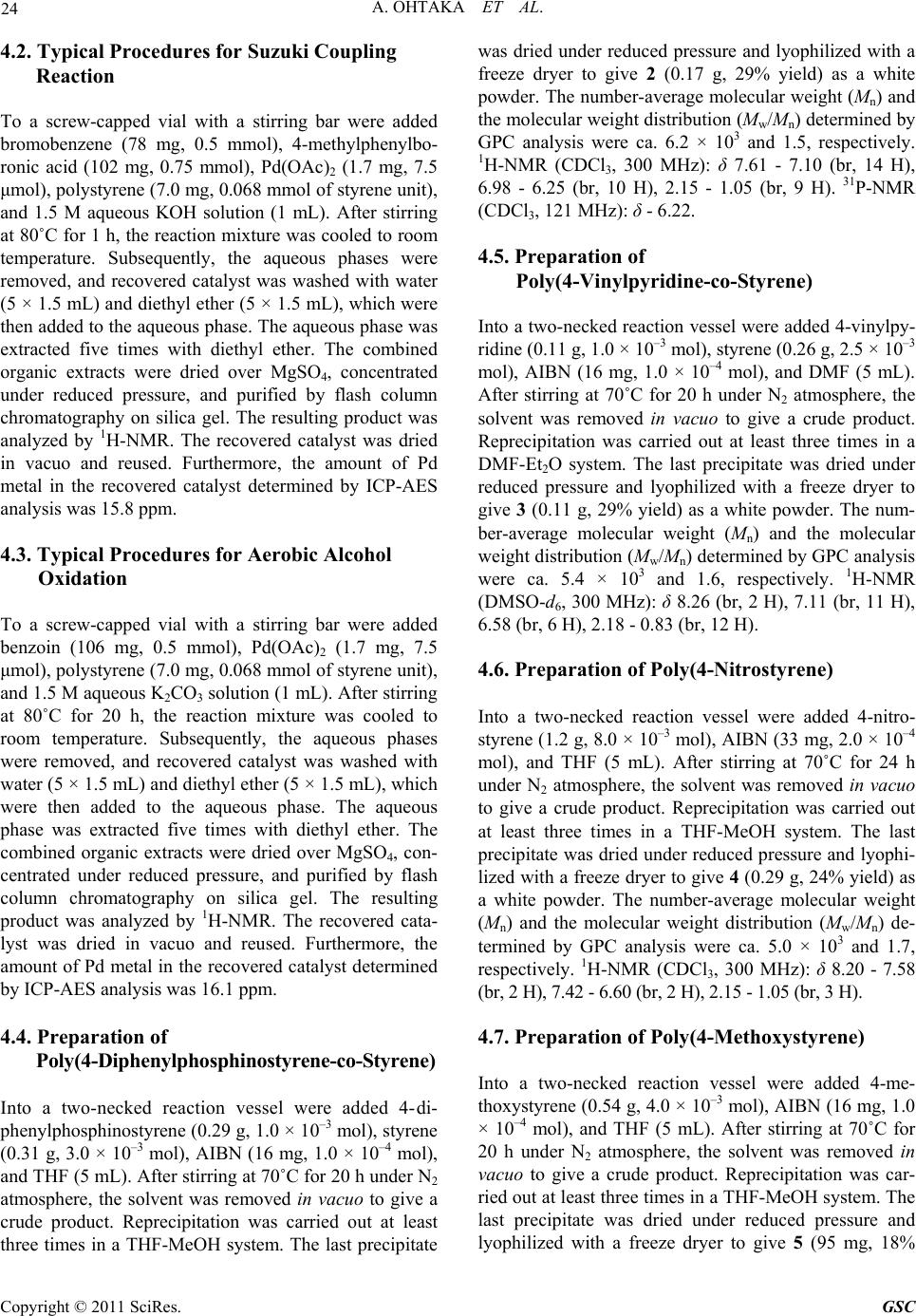 24 A. OHTAKA ET AL. 4.2. Typical Procedures for Suzuki Coupling Reaction To a screw-capped vial with a stirring bar were added bromobenzene (78 mg, 0.5 mmol), 4-methylphenylbo- ronic acid (102 mg, 0.75 mmol), Pd(OAc)2 (1.7 mg, 7.5 μmol), polystyrene (7.0 mg, 0.068 mmol of styrene unit), and 1.5 M aqueous KOH solution (1 mL). After stirring at 80˚C for 1 h, the reaction mixture was cooled to room temperature. Subsequently, the aqueous phases were removed, and recovered catalyst was washed with water (5 × 1.5 mL) and diethyl ether (5 × 1.5 mL), which were then added to the aqueous phase. The aqueous phase was extracted five times with diethyl ether. The combined organic extracts were dried over MgSO4, concentrated under reduced pressure, and purified by flash column chromatography on silica gel. The resulting product was analyzed by 1H-NMR. The recovered catalyst was dried in vacuo and reused. Furthermore, the amount of Pd metal in the recovered catalyst determined by ICP-AES analysis was 15.8 ppm. 4.3. Typical Procedures for Aerobic Alcohol Oxidation To a screw-capped vial with a stirring bar were added benzoin (106 mg, 0.5 mmol), Pd(OAc)2 (1.7 mg, 7.5 μmol), polystyrene (7.0 mg, 0.068 mmol of styrene unit), and 1.5 M aqueous K2CO3 solution (1 mL). After stirring at 80˚C for 20 h, the reaction mixture was cooled to room temperature. Subsequently, the aqueous phases were removed, and recovered catalyst was washed with water (5 × 1.5 mL) and diethyl ether (5 × 1.5 mL), which were then added to the aqueous phase. The aqueous phase was extracted five times with diethyl ether. The combined organic extracts were dried over MgSO4, con- centrated under reduced pressure, and purified by flash column chromatography on silica gel. The resulting product was analyzed by 1H-NMR. The recovered cata- lyst was dried in vacuo and reused. Furthermore, the amount of Pd metal in the recovered catalyst determined by ICP-AES analysis was 16.1 ppm. 4.4. Preparation of Poly(4-Diphenylphosphinostyrene-co-Styrene) Into a two-necked reaction vessel were added 4- di- phenylphosphinostyrene (0.29 g, 1.0 × 10⁻³ mol), styrene (0.31 g, 3.0 × 10⁻³ mol), AIBN (16 mg, 1.0 × 10⁻⁴ mol), and THF (5 mL). After stirring at 70˚C for 20 h under N2 atmosphere, the solvent was removed in vacuo to give a crude product. Reprecipitation was carried out at least three times in a THF-MeOH system. The last precipitate was dried under reduced pressure and lyophilized with a freeze dryer to give 2 (0.17 g, 29% yield) as a white powder. The number-average molecular weight (Mn) and the molecular weight distribution (Mw/Mn) determined by GPC analysis were ca. 6.2 × 10³ and 1.5, respectively. 1H-NMR (CDCl3, 300 MHz): δ 7.61 - 7.10 (br, 14 H), 6.98 - 6.25 (br, 10 H), 2.15 - 1.05 (br, 9 H). 31P-NMR (CDCl3, 121 MHz): δ - 6.22. 4.5. Preparation of Poly(4-Vinylpyridine-co-Styrene) Into a two-necked reaction vessel were added 4-vinylpy- ridine (0.11 g, 1.0 × 10⁻³ mol), styrene (0.26 g, 2.5 × 10⁻³ mol), AIBN (16 mg, 1.0 × 10⁻⁴ mol), and DMF (5 mL). After stirring at 70˚C for 20 h under N2 atmosphere, the solvent was removed in vacuo to give a crude product. Reprecipitation was carried out at least three times in a DMF-Et2O system. The last precipitate was dried under reduced pressure and lyophilized with a freeze dryer to give 3 (0.11 g, 29% yield) as a white powder. The num- ber-average molecular weight (Mn) and the molecular weight distribution (Mw/Mn) determined by GPC analysis were ca. 5.4 × 10³ and 1.6, respectively. 1H-NMR (DMSO-d6, 300 MHz): δ 8.26 (br, 2 H), 7.11 (br, 11 H), 6.58 (br, 6 H), 2.18 - 0.83 (br, 12 H). 4.6. Preparation of Poly(4-Nitrostyrene) Into a two-necked reaction vessel were added 4-nitro- styrene (1.2 g, 8.0 × 10⁻³ mol), AIBN (33 mg, 2.0 × 10⁻⁴ mol), and THF (5 mL). After stirring at 70˚C for 24 h under N2 atmosphere, the solvent was removed in vacuo to give a crude product. Reprecipitation was carried out at least three times in a THF-MeOH system. The last precipitate was dried under reduced pressure and lyophi- lized with a freeze dryer to give 4 (0.29 g, 24% yield) as a white powder. The number-average molecular weight (Mn) and the molecular weight distribution (Mw/Mn) de- termined by GPC analysis were ca. 5.0 × 10³ and 1.7, respectively. 1H-NMR (CDCl3, 300 MHz): δ 8.20 - 7.58 (br, 2 H), 7.42 - 6.60 (br, 2 H), 2.15 - 1.05 (br, 3 H). 4.7. Preparation of Poly(4-Methoxystyrene) Into a two-necked reaction vessel were added 4-me- thoxystyrene (0.54 g, 4.0 × 10⁻³ mol), AIBN (16 mg, 1.0 × 10⁻⁴ mol), and THF (5 mL). After stirring at 70˚C for 20 h under N2 atmosphere, the solvent was removed in vacuo to give a crude product. Reprecipitation was car- ried out at least three times in a THF-MeOH system. The last precipitate was dried under reduced pressure and lyophilized with a freeze dryer to give 5 (95 mg, 18% Copyright © 2011 SciRes. GSC 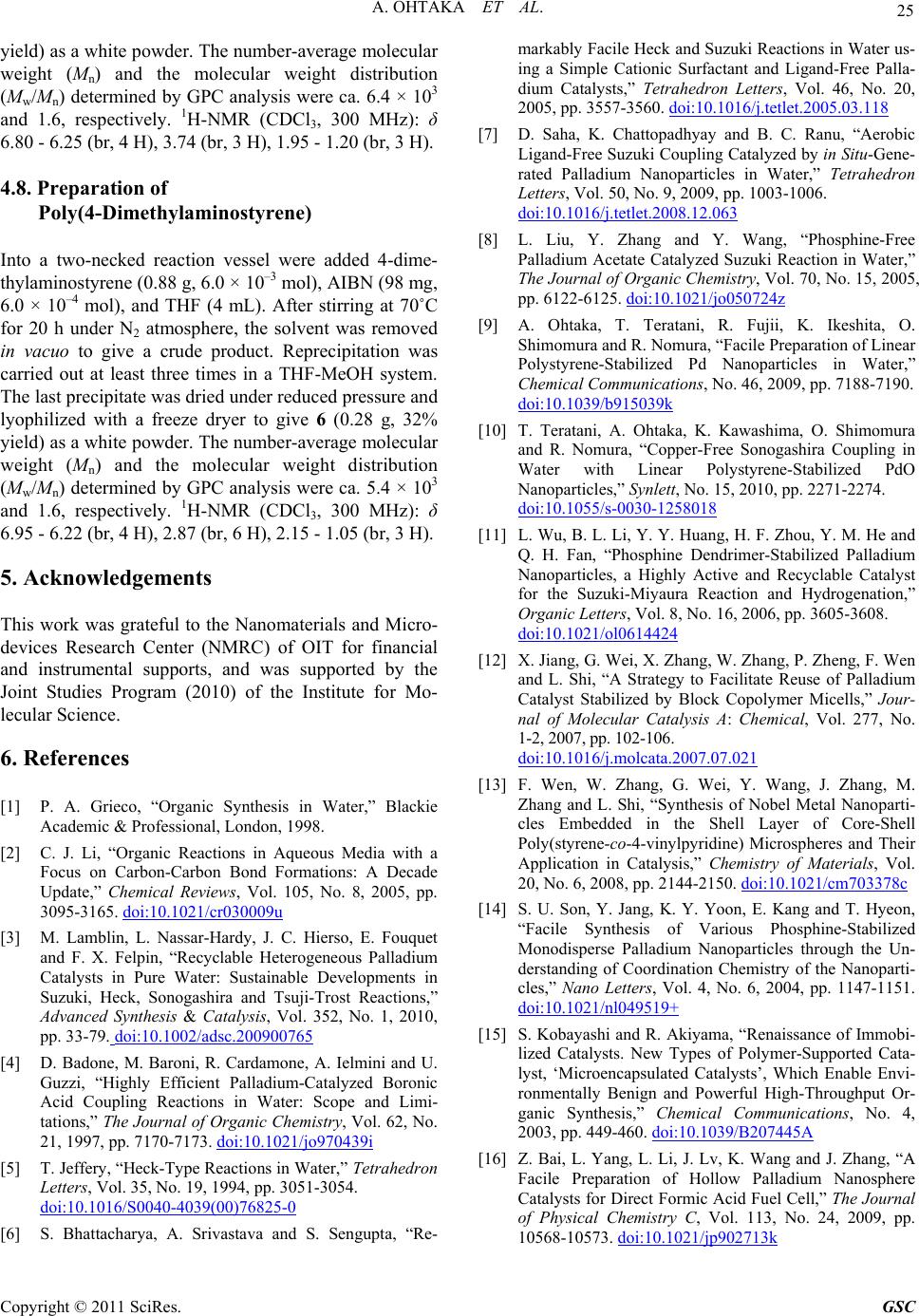 A. OHTAKA ET AL. 25 yield) as a white powder. The number-average molecular weight (Mn) and the molecular weight distribution (Mw/Mn) determined by GPC analysis were ca. 6.4 × 10³ and 1.6, respectively. 1H-NMR (CDCl3, 300 MHz): δ 6.80 - 6.25 (br, 4 H), 3.74 (br, 3 H), 1.95 - 1.20 (br, 3 H). 4.8. Preparation of Poly(4-Dimethylaminostyrene) Into a two-necked reaction vessel were added 4-dime- thylaminostyrene (0.88 g, 6.0 × 10⁻³ mol), AIBN (98 mg, 6.0 × 10⁻⁴ mol), and THF (4 mL). After stirring at 70˚C for 20 h under N2 atmosphere, the solvent was removed in vacuo to give a crude product. Reprecipitation was carried out at least three times in a THF-MeOH system. The last precipitate was dried under reduced pressure and lyophilized with a freeze dryer to give 6 (0.28 g, 32% yield) as a white powder. The number-average molecular weight (Mn) and the molecular weight distribution (Mw/Mn) determined by GPC analysis were ca. 5.4 × 10³ and 1.6, respectively. 1H-NMR (CDCl3, 300 MHz): δ 6.95 - 6.22 (br, 4 H), 2.87 (br, 6 H), 2.15 - 1.05 (br, 3 H). 5. Acknowledgements This work was grateful to the Nanomaterials and Micro- devices Research Center (NMRC) of OIT for financial and instrumental supports, and was supported by the Joint Studies Program (2010) of the Institute for Mo- lecular Science. 6. References [1] P. A. Grieco, “Organic Synthesis in Water,” Blackie Academic & Professional, London, 1998. [2] C. J. Li, “Organic Reactions in Aqueous Media with a Focus on Carbon-Carbon Bond Formations: A Decade Update,” Chemical Reviews, Vol. 105, No. 8, 2005, pp. 3095-3165. doi:10.1021/cr030009u [3] M. Lamblin, L. Nassar-Hardy, J. C. Hierso, E. Fouquet and F. X. Felpin, “Recyclable Heterogeneous Palladium Catalysts in Pure Water: Sustainable Developments in Suzuki, Heck, Sonogashira and Tsuji-Trost Reactions,” Advanced Synthesis & Catalysis, Vol. 352, No. 1, 2010, pp. 33-79. doi:10.1002/adsc.200900765 [4] D. Badone, M. Baroni, R. Cardamone, A. Ielmini and U. Guzzi, “Highly Efficient Palladium-Catalyzed Boronic Acid Coupling Reactions in Water: Scope and Limi- tations,” The Journal of Organic Chemistry, Vol. 62, No. 21, 1997, pp. 7170-7173. doi:10.1021/jo970439i [5] T. Jeffery, “Heck-Type Reactions in Water,” Tetrahedron Letters, Vol. 35, No. 19, 1994, pp. 3051-3054. doi:10.1016/S0040-4039(00)76825-0 [6] S. Bhattacharya, A. Srivastava and S. Sengupta, “Re- markably Facile Heck and Suzuki Reactions in Water us- ing a Simple Cationic Surfactant and Ligand-Free Palla- dium Catalysts,” Tetrahedron Letters, Vol. 46, No. 20, 2005, pp. 3557-3560. doi:10.1016/j.tetlet.2005.03.118 [7] D. Saha, K. Chattopadhyay and B. C. Ranu, “Aerobic Ligand-Free Suzuki Coupling Catalyzed by in Situ-Gene- rated Palladium Nanoparticles in Water,” Tetrahedron Letters, Vol. 50, No. 9, 2009, pp. 1003-1006. doi:10.1016/j.tetlet.2008.12.063 [8] L. Liu, Y. Zhang and Y. Wang, “Phosphine-Free Palladium Acetate Catalyzed Suzuki Reaction in Water,” The Journal of Organic Chemistry, Vol. 70, No. 15, 2005, pp. 6122-6125. doi:10.1021/jo050724z 8-7190. [9] A. Ohtaka, T. Teratani, R. Fujii, K. Ikeshita, O. Shimomura and R. Nomura, “Facile Preparation of Linear Polystyrene-Stabilized Pd Nanoparticles in Water,” Chemical Communications, No. 46, 2009, pp. 718 doi:10.1039/b915039k [10] T. Teratani, A. Ohtaka, K. Kawashima, O. Shimomura and R. Nomura, “Copper-Free Sonogashira Coupling in Water with Linear Polystyrene-Stabilized PdO Nanoparticles,” Synlett, No. 15, 2010, pp. 2271-2274. doi:10.1055/s-0030-1258018 [11] L. Wu, B. L. Li, Y. Y. Huang, H. F. Zhou, Y. M. He and Q. H. Fan, “Phosphine Dendrimer-Stabilized Palladium Nanoparticles, a Highly Active and Recyclable Catalyst for the Suzuki-Miyaura Reaction and Hydrogenation,” Organic Letters, Vol. 8, No. 16, 2006, pp. 3605-3608. doi:10.1021/ol0614424 [12] X. Jiang, G. Wei, X. Zhang, W. Zhang, P. Zheng, F. Wen and L. Shi, “A Strategy to Facilitate Reuse of Palladium Catalyst Stabilized by Block Copolymer Micells,” Jour- nal of Molecular Catalysis A: Chemical, Vol. 277, No. 1-2, 2007, pp. 102-106. doi:10.1016/j.molcata.2007.07.021 [13] F. Wen, W. Zhang, G. Wei, Y. Wang, J. Zhang, M. Zhang and L. Shi, “Synthesis of Nobel Metal Nanoparti- cles Embedded in the Shell Layer of Core-Shell Poly(styrene-co-4-vinylpyridine) Microspheres and Their Application in Catalysis,” Chemistry of Materials, Vol. 20, No. 6, 2008, pp. 2144-2150. doi:10.1021/cm703378c [14] S. U. Son, Y. Jang, K. Y. Yoon, E. Kang and T. Hyeon, “Facile Synthesis of Various Phosphine-Stabilized Monodisperse Palladium Nanoparticles through the Un- derstanding of Coordination Chemistry of the Nanoparti- cles,” Nano Letters, Vol. 4, No. 6, 2004, pp. 1147-1151. doi:10.1021/nl049519+ [15] S. Kobayashi and R. Akiyama, “Renaissance of Immobi- lized Catalysts. New Types of Polymer-Supported Cata- lyst, ‘Microencapsulated Catalysts’, Which Enable Envi- ronmentally Benign and Powerful High-Throughput Or- ganic Synthesis,” Chemical Communications, No. 4, 2003, pp. 449-460. doi:10.1039/B207445A [16] Z. Bai, L. Yang, L. Li, J. Lv, K. Wang and J. Zhang, “A Facile Preparation of Hollow Palladium Nanosphere Catalysts for Direct Formic Acid Fuel Cell,” The Journal of Physical Chemistry C, Vol. 113, No. 24, 2009, pp. 10568-10573. doi:10.1021/jp902713k Copyright © 2011 SciRes. GSC |