

Paper Menu >>
Journal Menu >>
 Communications and Network, 2013, 5, 112-115 doi:10.4236/cn.2013.51B025 Published Online February 2013 (http://www.scirp.org/journal/cn) Copyright © 2013 SciRes. CN The Effect o f O nl i ne - to - Mobile Trust Transfer on the Foundation of Mobile Banking Trust Bangjun Wang, Chu Shan School of Computer Science & Technology, Soochow University, Suzhou, China Email: [email protected] Received 2012 ABSTRACT The paper mainly studies the influences of trust transfer on the establishment of consumers’ initial trust. Based on the theory of signal transmission and self-efficiency, the study builds a trust transfer model aiming at the same subject be- tween different environments. The results shows that when the consumers’ perceived change of environment is little, prior successful experiences will improve the consumers’ perceptions of self-ability, which probably lowers the effect of bank’s role on the establishment of initial trust. Therefore, banks should cultivate consumers’ perceptions of their relative advantages in the original environment and thus improve the consumers’ dependency in the new environment to avoid the loss of consumers and build a long-term relationship. Keywords: Trust; Mobile Banking; Online-to-Mobile Trust Transfer 1. Introduction Mobile banking is an emerging application of mobile commerce that could become an additional revenue sour ce to both banks and telecom service providers [1]. It en- ables customers to access their bank account through mobile devices to conduct conventional and innovative financial transactions without the limitations of place and time [2]. China was reported as the largest internet and the biggest mobile phone market in the world. Given the size of the Chinese market, it is necessary to pay atten- tion to this area. Despite the alleged benefits of mobile banking, its ac- ceptance has been short of industry expectations. One plausible explanation may be consumers’ lack of initial trust in mobile bankingservices [2,3]. After all, mobile banking is a form of service convergence enabled by innovative technologies. When a new innovative service is introduced, there is no direct prior experience to fall back on. It is therefore expected that a person’s initial trust, based on certain perceptive and possibly irrational forces such as cognitive cu es, will play an important role in the decision to adopt mobile banking [2,4]. The objective of this research is to reveal the mechan- isms associated with the initial formation of people’s trust in mobile banking. And this research will fill a re- search gap by focusing on online to mobile trust transfer process, which has received almost no attention [5-7]. To achieve the research goal, a research model is introduced to define relationships among the studied variables, and relevant hypotheses are proposed. The research model and accompanying hypotheses are empirically validated based on survey data gathered from online banking users who had mobile device and had not signed up for mobile banking. The paper concludes with a discussion of find- ings and subsequent implications. 2. Theoretical Foundation and Hypothesis As a type of mobile-commerce, mobile banking is spreading in Chinese. In fact, m-commerce itself is a subset of e-commerce, and therefore mobile banking can be considered an e-commerce application [8]. Mobile banking is an innovation that could become one of m- commerce’s value-added applications and could have a huge economic impact 8. Despite the overall low enthu- siasm for m-commerce, people are more willing to em- brace mobile banking. 2.1. Trust Tr ansfer Trust transfer means transfer of trust from one domain, such as offline, to another, such as online. For example, the trust that customers perceive in an offline company, like Wal-mart, tends to extend easily to favorable percep- tions about its web service. Trust for certain company means consumer brand knowledge that relates to the cognitive representation of the brand [9]. Consumer 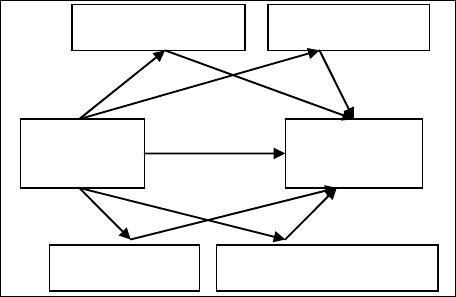 B. J. WANG, C. SHAN Copyright © 2013 SciRes. CN 113 brand knowledge can be defined in terms of the personal meaning about a brand stored in consumer memory [10, 11] Therefore, if customers possess a sound memory about an online bank’s brand, then such memory affects consumer’s usage behavior about the mobile banking of- fered by the same brand [12,13]. Based on the survey of bank corporate clients in Sin- gapore, Nex (2003) found that customers’ trust towards the land-based bank was the key factor influencing the adoption of electronic banking service which offered by the same bank. He also found the cumaltive effects of customer satisfaction have a positive impact on the pro- pensity to use electronic banking [14]. Kun chang lee (2007) iden tified four types of trust transfer based on the diversification of beha vior environment. They also found that the trust in an offline bank will influence four per- ceptions about its online banking counterpart (flow, structure assurance, perceived web site satisfaction and perceived extent of future use) [10]. Huei-Huang Kuan et al. (2007) examined the formation of online trust en- countered by potential customers of a brick and click retailer before they visit its online web s ite. Their research revealed that word-of-mouth, offline trust and expected sanctioning power were significant in forming online trust [15]. Yang qing et al. (2007) empirically tested the trust transference from offline presence to online pres- ence and addressed the underlying reasons. They testified that the offline trust is one of the major sources contri- buting to its initial online trust building [16]. 2.2. Hypothesis and Model Figure 1 shows the research model of this paper. The objective of this research is to reveal the mechanisms associated with the initial formation of people’s trust in mobile banking and intention to use the service. And what’s new for this paper is that we focus on the impact of online to mobile trust transfer process, which has re- ceived almost no attention. According to the theory of innovation, the characteris- tics of an innovative technology influence the degree of its adoption and diffusion [17]. Despite the noted weak- nesses of handsets, such as small screen size and keypad, mobile banking offers benefits unmatched by traditional offline and online banking services. Convenience, flex- ibility and other perceived advantages may contribute to the formation of trust even before a customer actually uses a service [18]. Therefore, we posit that: H1: Customers’ perceptions of security contribute po- sitively to the formation of customers’ trust in mobile banking. H2: Customers’ perceptions of privacy protection con- tribute positively to the formation of customers’ trust in mobile banking. According to the theory of innovation, the characteris- Trust in online banking Perceived security Perceived ease of use Perceived usefulness Trust in mobile banking Perceived privacy protection H1 H2 H3 H4 H5 H6 H7 H8 H9 Figure 1. Research model. tics of an innovative technology influence the degree of its adoption and diffusion [19]. Despite the noted weak- nesses of handsets, such as small screen size and keypad, mobile banking offers benefits unmatched by traditional offline and online banking services. Convenience, flex- ibility and other perceived advantages may contribute to the formation of trust even before a customer actually uses a service [17]. Therefore, we posit that: H3: Perceived ease of use contribute positively to the formation of customers’ trust in mobile banking. H4: Perceived usefulness contribute positively to the formation of customers trust in mobile banking. Morgan and Hunt (1994) felt trust exists “when one party has confidence in an exchange partner’s reliability and integrity” [20]. If a customer is trust in a bank in the internet channel, h e or she must have enough conf idence on the bank’s ability, integrity and benevolence. There- fore, customers’ trust in online banking service will be helpful to reduce customers’ perceived risk to use mobile banking service of the same bank. Online banking trust would, thus, positively influence the formation of mobile banking initial trust. H5: Trust in an online bankin g positively influe nce the formation of mobile banking initial trust. Bank’s availability of formalized structural assurances will discourage opportunistic behaviors and protect cus- tomers from financial lost. If customers trust in the bank’s online service, this trust should transfer to beliefs that the bank’s mobile system is safe and secure. This is natural, especially for the similar technology background of online banking and mobile banking. Therefore, we proposed that: H6: Trust in an online banking positively influence perceived security of mobile banking. H7: Trust in an online banking positively influence perceived privacy protection of mobile banking. The technology background of mobile banking is sim- ilar to the online banking. Customer’s prior experience with computer and internet technology will influence both attitudes towards mobile banking and actual behav-  B. J. WANG, C. SHAN Copyright © 2013 SciRes. CN 114 iors [8]. Swin yard and Ghee (1985) found that ATM card holders were have more favorable attitudes towards ATMs, towards change, and towards computers, and to be more venturesome and have more self-confidence [21]. Similarly, we proposed that the more they trust in the online banking, the more they believe that new technol- ogy will make their life better, and the more they believe mobile banking will consistent with their life style, past experience. So it is logical to hypothesize that: H8: Trust in an online banking positively influence perceived ease of use of mobile banking. H9: Trust in an online banking positively influences perceived usefulness of mobile banking. 3. Research Method and Data Collection The research was carried out on online banking custom- ers who have available device to use mobile banking but never use it. A questionnaire was designed based on a seven-point Likert-type scale ranging from 1 (strongly disagree) to 7 (strongly agree). To test the psychometric properties of the constructs, a questionnaire pretest was given to 97 e-commerce association members. The res- pondents were volunteers and were not told the re- search’s objective. The convergent validity and unidi- mensionality of each co nstruct was verified using a prin- cipal component factor and analysis for factors with ei- genvalues above 1, using a varimax rotation. Each item loaded on the intended construct, and each Cronbach’s alpha exceeded 0.8. The measurements used display in Table 1. Respondents included 525 cell-phone users who have the experience of online banking. In all, 313 res- pondents were selected from them. 4. Empirical Results and Findings The proposed hypotheses were tested with PLS. The re- sults of the analysis are depicted in Table 2 and Figure 2. The results show that the hypotheses are all supported except H8, H9. These result suggested that trust transfer have the significant impact on initial trust formation in the context of new technology based banking service. The explained variance of relative advantage and com- patibility is lower than 20%, this is partly because that only one factor is involved in this model to explain. Online banking tru st had stron g and positive in fluence on the mobile banking initial trust (H5) and its antecedents (H1, H6). This supports the existence of online-to-mo- bile trust transfer process. Trust in online banking had no obvious influence on relative advantage and compatibil- ity, th is maybe because the difference between the online and mobile banking services. 5. Managerial Implications and Limitations Based on the empirical results, this study arrives at the Table 1. Descriptive statistics of samples. Measure Freq. Percent Total Items 178 100% Age 21 - 29 30 - 39 40- Missing 81 64 21 12 50.2% 38.5% 12.0% 9.3% Position Employee Chief employee Manager Director Others 58 89 26 1 4 29.7% 53.9% 12.5% 0.8% 3.1% Male Work Experience (year) 0 - 3 3 - 6 6 - 9 9 - 12 12- Missing 16 42 44 43 24 9 12.5% 17.2% 18.8% 33.6% 10.9% 7% Total 135 100% Age 21 - 29 30 - 39 40- Missing 66 50 15 4 54.1% 35.3% 5.9% 4.7% Position Employee Chief employee Manager Director Others 48 23 10 1 3 56.5% 27.1% 11.8% 1.2% 3.5% Female Work experience (year) 0 - 3 3 - 6 6 - 9 9 - 12 12- Missing 6 8 20 38 10 3 7.1% 9.4% 23.5% 44.7% 11.8% 3.5% Tr ust i n online banking Perceived security Relative advantage Compatibility Initial trus t in mobile banking Perceived privacy protection 0.39 ** 0.37 ** 0.30 ** 0.23 ** 0.41 ** 0.26 ** 0.31 0.09 0.07 R 2 = 0.56 R 2 = 0.11 R 2 = 0.09 R 2 = 0.24 R 2 = 0.30 *p < 0.05, **p < 0. 01, ***p < 0.001. Figure 2. Results.  B. J. WANG, C. SHAN Copyright © 2013 SciRes. CN 115 Table 2. The results of data analysis. Measures Items Composite reliability Average variance extracted Trust in online banking 3 0.879 0.793 Trust in mobile banking 3 0.857 0.701 Perceived usefulness 3 0.899 0.795 Perceived ease of use 4 0.847 0.700 Perceived security 3 0.785 0.621 Perceived privacy protection 4 0.817 0.699 following implications. First, the trust in online banking is important to trigger customers’ positive perception about mobile banking. Our research model shows that the trust of online banking has strong and positive influence on the formation of mobile banking initial tr ust. Then, an online company with strong online trust can build up a high level of mobile trust. Second, the online-to-mobile trust transfer process provides a unified view for under- standing the effects of online trust on mobile trust. The empirical results suggest that the bank can leverage their online trust to produce mobile structural assurance and perceived compatibility. The study can be more reasonab le if based on longitu- dinal data. This constitutes a limitation of our research. Sample size is another limitation, although the size is adequate. The education background of the respondents is not taken into account. The cu lture is also the key fac- tor to influence customers’ usage behavior, we leave it for futur e re se arch. REFERENCES [1] Li, “People Daily,” 2002. www.english.peopledaily.com.cn/business [2] G. Kim, B. S. Shin and H. G. Lee, “Understanding Dyna- mics between Initil Trust and Usage Intentions of Mobile Banking,” Information Systems Journal, 2007. [3] K. K. Kim and B. Prabhakar, “Initial Trust and the Adop- tion of B2C e-Commerce: The Case of Internet Banking,” ACM Sigmis Database, Vol. 35, 2004, pp. 50-64. http://dx.doi.org/10.1145/1007965.1007970 [4] D. H. Mcknight, L. L. Cummings and N. L. Chervany, “Initial Trust Formation in New Organization Relation- ships,” Academy of Management Review, Vol. 23, 1998, pp. 473-490. [5] D. H. Mcknight, V. Choudhury and C. Kacmar, “Devel- oping and Validating Trust Measure for e-Commerce: An Integrative Typology,” Information System Research, Vol. 13, 2002, pp. 297-323. http://dx.doi.org/10.1287/isre.13.3.334.81 [6] D. H. Mcknight, V. Choudhury and C. Kacmar, “The Impact of Initial Consumer Trust in Intentions to Transact with a Web Site: A Trust Building Model,” Journal of Strategic Information Systems, Vol. 1, 2002, pp. 473-490. [7] M. Koufaris and W. Hampton-Sosa, “The Development of Initial Trust in an Online Company by New Custom- ers,” Information and Management, Vol. 41, 2004, pp. 377-397. [8] S. Laforet and X. Y. Li, “Consumers’ Attitudes towards Online and Mobile Banking in China,” International J our- nal of Bank Marketing, Vol. 23, No. 5, 2005, pp. 362- 380. [9] J. P. Peter and J. C. Olson, “Consumer Behavior,” Irwin, Chicago, 2001. [10] K. C. Lee, Inwonkang and D. H. Mcknight, “Transfer from Offline Trust to Key Online Perceptions: An Em- pirical Study,” IEEE Translation Journal on Magnetics in Japan, Vol. 54, No. 4, 2007. [11] K. J. Stewart, “Trust Transfer on the World Wide Web, Organization Science,” 2003 Informas, Vol. 14, No. 1, 2003, pp. 5-17. [12] Q. Yang, L. H. Huang and Y. J. Xu, “Role of Trust Trans- fer in E-Commerce Acceptance,” Tsinghua Sceience and Technology, Vol. 13, 2008. [13] D. Gefen and D. W. Straub, “Consumer Trust in B2C e- Commerce and the Importance of Social Presence: Ex- periments in e-Products and e-Service,” Omega, Vol. 32, 2004, pp. 407-424. http://dx.doi.org/10.1016/j.omega.2004.01.006 [14] N. Rexha, R. P. J. Kingshott and A. Shang Aw, “The Impact of the Relational Plan on Adoption of Electronic Banking,” Journal of Service Marketing, Vol. 17, No.1, 2003, pp. 53-67. http://dx.doi.org/10.1108/08876040310461273 [15] K. H. Lim, C. L. Sia, M. K.O. Lee and J. Benbasat, “Do I Trust You Online, and If So, Will I Buy? An Empirical Study of Two Trust-Building Strategies,” Journal of Ma- nagement Information System, Vol. 23, No. 2, 2006, pp. 233-266. [16] K. J. Stewart, “How Hypertext Links Influence Consumer Perceptions to Build and Degrade Trust Online,” Journal of Management Information System, Vol. 23, No. 1, 2006, pp. 183-210. [17] N. J. Black, A. Lockett, H. Winklhofer and C. Ennew, “The Adoption of Internet Financial Services: A Qualita- tive Study,” International Journal of Retail & Distribu- tion Management, Vol. 29, No. 8, 2001, pp. 390-398. http://dx.doi.org/10.1108/09590550110397033 [18] H.-H. Kuan and G.-W. Bock, “Trust Transference in Brick and Click Retailers: An Investigation of the Before- Online-Visit Phase,” Information & Management, Vol. 44, 2007, pp. 175-187. http://dx.doi.org/10.1016/j.im.2006.12.002 [19] D. Gefen, E. Karahanna and D. W. Steaub, “Trust and TAM in Online Shopping: An Integrated Model,” MIS Quarterly, Vol. 27, 2003, pp. 51-91. [20] D. Gefen, “E-Commerce: The Role of Familiarity and Trust,” Omega, Vol. 28, 2000, pp. 725-737. [21] V. N. Polatoglu and S. Ekin, “An Empirical Investigation of the Turkish Consumers’ Acceptance of Internet Bank- ing.” |