

Paper Menu >>
Journal Menu >>
 Journal of Applied Mathematics and Physics, 2014, 2, 170-175 Published Online April 2014 in SciRes. http://www.scirp.org/journal/jamp http://dx.doi.org/10.4236/jamp.2014.25021 How to cite this paper: Khan, A.R. and Fukhar-ud-din, H. (2014) Common Fixed Point Iterations of Generalized Asymptoti- cally Quasi-Nonexpansive Mappings in Hyperbolic Spaces. Journal of Applied Mathematics and Physics, 2, 170-175. http://dx.doi.org/10.4236/jamp.2014.25021 Common Fixed Point Iterations of Generalized Asymptotically Quasi-Nonexpansive Mappings in Hyperbolic Spaces A. R. Khan, H. Fukhar-ud-din Department of Mathematics and Statistics, King Fahd University of Petroleum and Minerals, Dhahran, Saudi Arabia Email: [email protected], [email protected] Received Dec emb er 2013 Abstract We introduce a general iterative method for a finite family of generalized asymptotically quasi- nonexpansive mappings in a hyperbolic space and study its strong convergence. The new iterative method includes multi-step iterative method of Khan et al. [1] as a special case. Our results are new in hyperbolic spaces and generalize many known results in Banach spaces and CAT(0) sp aces, simultaneousl y. Keywords Hyperbolic Space, General Iterative Method, Generali zed Asymptot ically Qu asi-Nonex pansi ve Mapping, Common Fixed Point, S tron g Conve rgenc e 1. Introduction Let C be a nonempty subset of a metric space X and :TC C→ be a mapping. Throughout this paper, we assume that ()FT , the set of fixed points of T is nonempty and {1,2, 3,,}.Ir= … The mapping T is: 1) asymptotically nonexpansive if there exists a sequence of real numbers { } n u in [ ) 0,∞ with lim 0 n n u →∞ = such that ( ) ( ) ,1(, ) nn n dTxTyud xy≤+ for all ,xy C∈ and 1n≥ 2) asymptotically quasi -nonexpansive if there exists a sequence of real numbers { } n u in [ ) 0,∞ with lim 0 n n u →∞ = such that ( ) ( ) ,1(, ) nn dTxpu dxp≤+ for all , ()x CpFT∈∈ and 1n≥ 3) generalized asymptotically quasi-nonexpansive if there exist two se- quences of real numbers { } n u and { } n c in [ ) 0,∞ with lim0 lim nn nn uc →∞ →∞ = = such that ( ) ( )( ) ,, , nnn dTxpdxp udxpc≤+ + for all , ()x CpFT∈∈ and 1n≥ (iv) uniformly L -Lipschitzian if there exists a constant 0L> such that ( ) ,(, ) nn dTxTx Ldxy≤ for all ,xy C∈ and 1n≥ (v) ( ) L γ −−  A. R. Khan, H. Fukhar-ud-din 171 uniformly Lipschitzian if there are constants 0, 0L γ >> such that ( ) ,(, ) nn dTxTx Ldxy γ ≤ for all ,xy C∈ and 1n≥ and (vi) semi-compact if for any sequence { } n x in C wit h ( ) lim ,0 nn n d x Tx →∞ = , there exists a subsequence { } i n x of { } n x such that . i n x cC→∈ Let ( ) ,Xd be a metric space. Suppose that there exists a family F of metric segments such that any two points ,xy in X are endpoints of a unique metric segment [ ][ ] ,,xy Fxy∈ is an isometric image of the real line interval ( ) 0, ,d xy ). We shall denote by (1 )xy αα ⊕− the unique point of [ ] ,xy which satisfies ( ,)(1)(,)and(,)( ,)for[0,1].dxzdxy dzydxyJ α αα =−= ∈= Such metric spaces are usually called convex metric spaces [2] [3]. One can easily deduce that 01x yy⊕= , 10x yx⊕= and (1 )x xx αα ⊕− = from the definition of a convex metric space [2]. A convex metric space X is hyperbolic if ((1) ,(1))(,)(1) ( ,)dxy zwdxzdyw αααααα ⊕−⊕−≤+− for all ,,,xyzw X∈ and J α ∈ . For zw= , the hyperbolic inequality reduces to convex structure [3]. ( ) ( ) ()() () 1,, 1,.dxyzd xzdyz αα αα ⊕− ≤+− (1.1) A nonempty subset C of a convex metric space X is convex if (1 )x yC αα ⊕− ∈ for all ,xy C∈ and .J α ∈ Normed spaces and their subsets are linear hyperbolic spaces while (0) CAT spaces [4]-[6] qualify for the criteria of nonlinear hyperbolic spaces [2] [7]. A convex metric space X is uniformly convex [7] if ()() () () 1 11 ,inf 1,:,,,,,0, 22 rdaxyd axrdayrdxyr r δε ε = −⊕≤≤≥> for any ,0a Xr∈> and 0 ε > . From now onwards we assume that X is a uniformly convex hyperbolic space with the property that for every 0, 0s ε ≥> , there exists (, )0s ηε > depending on and such that (,)(,) 0rs δεηε >> for any rs> . We now translate the iterative method (1.3) [1] from normed space setting to the more general setup of hy- perbolic space as follows: 11 , ,1 nrn n xCxU xn + ∈= ≥ (1.2) whe r e ( ) ( ) ( ) ( ) ( ) 0 111 01 2 2212 1 the identity mapping 1 1 1 n n n nnn n n nnn n rnrn rrn rn UI U xaTUxax Uxa TUxax U xaTUxax − = = ⊕− = ⊕− = ⊕− and { } : i Ti I∈ is a family of generalized asymptotically quasi-nonexpansive self-mappings of C , i.e. , ( ) ()() ,1 , n iiini in dTxpu dxpc≤+ + for all xC∈ and ( ){} ,, i iin pFTiI u∈∈ and { } in c are sequences in [0, )∞ with 1in n u ∞ = <∞ ∑ and 1 in n c ∞ = <∞ ∑ for each i . The purpose of this paper is to: 1) establish convergence of iterative method (1.2) to a common fixed point of a finite family of generalized asymptotically quasi-nonexpansive mappings on a hyperbolic space(uniformly convex hyperbolic space). Our work is a significant generalization of the corresponding results in Banach spaces and (0)CAT spaces. In the sequel, we assume that ( ) . i iI F FT ∈ = ≠∅ 2. Convergence Theorems in Hyperbolic Space Lemma 2.1. Let C be a nonempty, closed and convex subset of a hyperbolic space X . Then, for the sequence  A. R. Khan, H. Fukhar-ud-din 172 { } n x in (1.2), there are sequences { } n v and { } n ξ in [ ) 0,∞ satisfying 11 , nn nn v ξ ∞∞ = = <∞ <∞ ∑∑ such that 1) ()()() 1 ,1, , nnn n dxpv dx p ξ + ≤+ + for all pF∈ and all 1 n≥ 2) ()() 11 ,( ,), nmn n n dxpMdx p ξ ∞ += ≤+ ∑ for all pF∈ and 1 1, 1,0.nmM≥≥ > Proof. (a) Let pF∈ and max n in iI vu ∈ = for all 1.n≥ Since 1in nu ∞ =<∞ ∑ for each i , therefore 1n nv ∞ =<∞ ∑ . Now we have ()( ) ( ) ()() ( ) ()()() ()()()()() 111 01111 1 111111 1 ,1 ,1,, 1,1, 1,1,. nn nnnnnn nnnnn nnnnn nnnnnn n dUxpdaTUxaxpa dxpadTxp adx paudx pcudx pcvdx pc =⊕− ≤−+ ≤− ++ +≤+ +≤++ Assume that ()()() () 1 1 ,1 ,1 kk kn nnnnin k i dUxpv dxpvc − = ≤+++ ∑ holds for some 1.k> Consider ( ) ( ) ( )( ) ( ) ( ) ( ) ( ) ( ) ( ) ( ) ( ) ( ) ( ) ( )() ( ) ( ) ( )( ) ( ) ( ) ( ) ( )( )( )( ) ( ) ( ) ( ) ( ) ( ) ( )( )( ) ( )( ) 11 1111 1 11 111 111 11 111 1 ,1 ,1,, 1 ,1, 1,1 , 1 ,11 nn nkknnnnkkn n kn knknknkn nkn n knkn knknkn nkn n knknkn knkn k n nn knknkn kn dUxpdaTUxaxpadxp adTUxp adxp audUxp ac adxp acaudUxp adx pacavv ++ ++++ + ++ +++ +++ ++ +++ + =⊕−≤−+ ≤−+ ++ ≤−++ + ≤−++++ ()( ) ( ) ( ) ()() ( ) ( ) ( )( ) ()() ( ) ( ) ( )()( ) 1 1 11 11 11 1 1 1 1 1 1 1 ,1 11 ,11 ,1 1 ,1 k nn in k kk nn nnn nin knknkn knkn kk n k i k i k i nn in dx pvc a vdxpavcavdxpavc vdx pvc − + +− = + = + = ++ +++ + ++ ≤−+++++ ++ ≤+ ++ ∑ ∑ ∑ By mathematical induction, we have ( ) () () () 1 1 ,1, 1,1. jj j jn nnnnin i dUxpvdxpvcjr − = ≤+ ++≤≤ ∑ (2.1) Now, by (1.2) and (2.1), we obtain ( ) ( ) ( ) ( ) ( ) ( ) ()() ( ) ( ) ( ) ()() ()()( )()()( ) ( )()( ) 11 1 1 1 12 1 1 1 , 1, ,1 , 1,1, 1 1,11, 1 ,11 n nrn rrn rn n rn rnrnn rn rnrnnrnrn n rn r rr rnrnnnninrn rnrnn i r rr rn nnrn nininr i dxpd aTUxaxp adTUxpa dxp audUxpcadxp auvdx pvcacadx p avdxpav cca +− − − − −− = − = = ⊕− ≤ +− ≤++ +− ≤ ++++++− ≤++ ++− ∑ ∑ ()() ( )()( ) () () ( ) ( )() () ()()() () 1 1 1 1 11 1 1 , 1 1,1 11 1 1,1 ! 1,1 1,, nn rr r rn rnnnrnnin i rr r k rn rnnnrnnin ki r r rr nnninnnn i dx p aavdxpav c rrr k aavdx pavc k vdx pvcvdx p ξ − = − − = = − = ≤−++ ++ −… −+ =−+++ + ≤+ ++≤+ + ∑ ∑∑ ∑ Where ( ) 1 1 supsup 1, rr n nin i M MvMc ξ − = ==+= ∑ and 1n n ξ ∞ = <∞ ∑ . (b) We know that 1 exptt+≤ for 0t≥ . Thus, by part (a), we have 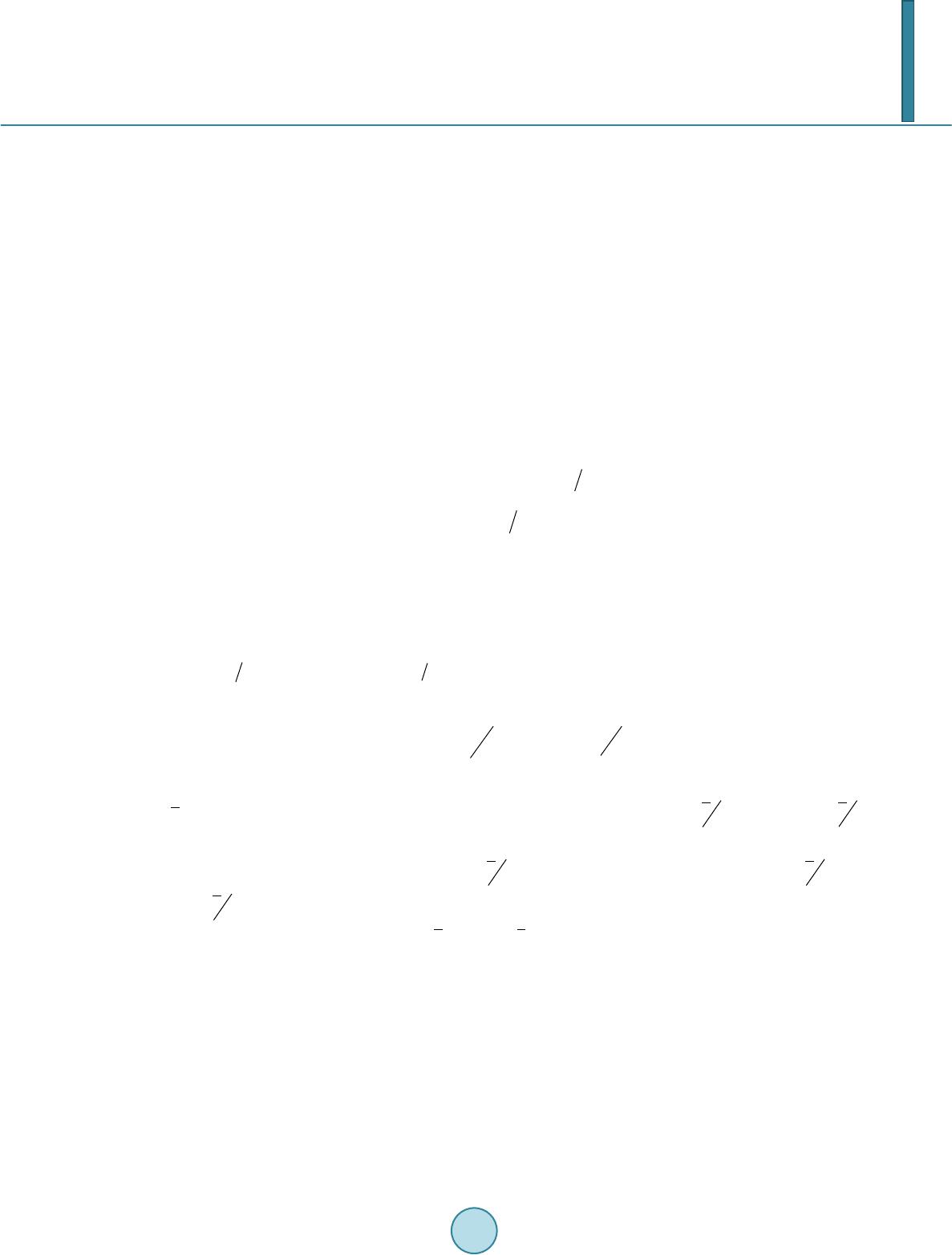 A. R. Khan, H. Fukhar-ud-din 173 () ()( ) ()( ) () () () () ( ) ( ) ( ) ( ) () 11 1 11 1 1 2212 1 11 1 1 11 1 1 ,1 , exp , exp , exp , exp,, , where r nmnm nmnm nm nmnm nmnmnmnm nm nmnmnm ini i inin in ini ni ii i dx pdxp rdx p rrdx p rvdx pv rvdx pM dx p M νξ νξ ν νξξ ξ ξξ ++−+−+− +− +−+− +−+−+−+− +− +−+− +− = =+= ∞∞ ∞ = == ≤+ + ≤+ ≤ +++ ≤+ ≤+=+ ∑ ∑∑ ∑∑ ∑ ( ) 1 exp . i i rv ∞ = =∑ Theorem 2.2. Let C be a nonempty, closed and convex subset of a complete hyperbolic space X . Then the sequence { } n x in (1.2) converges strongly to a point in F if and only if liminf(,)0 nn dxF →∞ = , where ( ) ,inf( ,) pF d xFdxp ∈ = . Proof. We only prove the sufficiency. By Lemma 2.1 (a), we have ()()() 1 ,1,for all and 1. r nnn n dxpvdx ppFn ξ + ≤++∈ ≥ Therefore, ( ) () () ( ) ( ) ( ) ( ) 11 , 111!, rk nnn n k dxFrrrkk vdxF ξ += ≤+−… −++ ∑ As 1 , n n v ∞ = <∞ ∑ so ()() ( ) ( ) 11 1 1! rk n nk rrrkk v ∞ = = − …− +<∞ ∑∑ . Now 1n n ξ ∞ = <∞ ∑ in Lemma 2.1 (a), so by Lemma 1.1 [1] and liminf(,)0 nn dxF →∞ = , we get that lim(, )0 nn dxF →∞ = . Let 0. ε > From the proof of Lemma 2.1 (b), we have ()() () ( ) ( ) 11 ,, ,1, nm nnmnni in dxxdxFdxFM dxFM ξ ++ ∞ = ≤+≤++ ∑ (2.2) Since lim(, )0 nn dxF →∞ = and i in ξ ∞ = <∞ ∑ , therefore there exists a natural number 0 n such that ( ) ( ) 1 , 21 n dxF M ε ≤+ and 1 2 i in M ξε ∞ = < ∑ for all 0 nn≥ . So for all integers 0 , 1, n nm ≥≥ we obtain from (2.2) that ( ) () () 11 1 1 ,1 . 2 21 nmn dx xMMM M εε ε + ≤++ = + Thus, { } n x is a Cauchy sequence in X and so converges to qX∈ . Finally, we show that qF∈ . For any 0 ε > , there exists natural number 1 n such that ()( ) , inf,3 npFn dxFdx p ε ∈ = < and ( ) ,2 n dxq ε < for all 1 nn≥ . There must exist * pF∈ such that ( ) * ,2 n dx p ε < for all 1 nn≥ , in particular, ( ) * 1 ,2 n dx p ε < and ( ) 1,. 2 n dx q ε < Hence () () ( ) ** 11 ,, , nn dpqdxpdx q ε ≤ +< . Since ε is arbitrary, therefore ( ) * , 0.dpq= That is, *.qp F = ∈ Theorem 2.3. Let C be a nonempty, closed and convex subset of a complete convex metric space X , If ( ) lim ,0 nn in d xTx →∞ = for the sequence { } n x in (1.2), iI∈ and one of the mappings is semi-compact, then { } n x converges strongly to pF∈ . Proof. Let l T be semi-compact for some 1.lr≤≤ Then there exists a subsequence { } i x of { } n x such that . i x pC →∈ Hence ( )() ,lim ,0. j li li n dpTpdx Tx →∞ = = Thus pF∈ and so by Theorem 2.2, { } n x converges strongly to a common fixed point of the family of mappings.  A. R. Khan, H. Fukhar-ud-din 174 3. Results in a Uniformly Convex Hyperbolic Space Lemma 3.1.Let C be a nonempty, closed and convex subset of a uniformly convex hyperbolic space X . Then, for the sequence { } n x in (1.2) with [ ] ,1 in a δδ ∈− for some 1 0, 2 δ ∈ , we have ( ) ( )lim, nn adx p →∞ exists for all pF∈ (b) ( ) lim, 0, nn jn d xTx →∞ = for each jI∈ . Proof. (a) Let pF∈ and max , ni Iin vu ∈ = for all 1 n≥ .By Lemma 1.1 [1] and Lemma 2.1 (a), it follows that ( ) lim , nn dx p →∞ exists. Assume that () lim ,. nn dx pc →∞ = (3.1) (b) The inequality (2.1) together with (3.1) gives that ( ) limsup, ,1. njn n dU xpcjr →∞ ≤ ≤≤ (3.2) Note that () () ( ) ( ) () ( ) ( ) () ()( ) ( ) ( )()() ( ) ()() ( ) ()( ) () ( ) ( ) ()( ) () 11 1 1 12 1 1 12 1 , ,1, 1,1, 11,1 , 1,1,1 , n nrnnrn rnrnn rn rnnnrnrn n rn n rnnrnnrn rnrnn rnr nrn n rnnrnnrn rnrnn rnr nrn r dxpdUxpdaTUxa xp avdUxpcadxp avdaTUxaxpaca dxp avadTUxpadxpaca dxp a +− − − −− − − −− − = =⊕− ≤++ +− =+⊕−++ − ≤ ++−++− ≤ ( ) ( ) ( ) ( ) ( ) ( ) () () ( ) () ( ) () ( ) ( ) () () () () ( )( ) 22 12 1 22 11 11 1 12 1,11 , 11 1,11, 11 1. nnnrnn n rnrnrn rnnrnnrn rn rn rr rj rj innjn ninnn ij ij rr rjrj rj in nin n jnrnnrn jn ij ij av dUxpaav dxp aavca vc av dUxpav dxp a vca vcavc −− − −− −− =+=+ − −− + =+=+ ++− + ++ ++ ≤ ++−+ +++++…+ + ∏∏ ∏∏ and therefore, we have ( )()()( ) ( ) ( ) 11 1 ,, ,, 1 jn nn rn rj rjrj njn njn rj n c dx pdxpc dxpdUxp c v δ δδ δ + − −−+ + − ≤−+++++ + Hence ( ) liminf , njnn cdU xp →∞ ≤ , 1.jr≤≤ (3.3) Using (3.2) and (3.3), we have ( ) lim , njn n dU xpc →∞ = . That is, ( ) ( ) ( ) 1 li 1,m n njn jnjnn jn d aTUxaxpc →∞ − ⊕− = for 1.jr≤≤ This together with (3.1), (3.2) and Lemma 2.5 [8] gives that ( ) ( ) 1 lm ,0i n n jnn jn dTUx x →∞ − = for 1.jr≤≤ (3.4) If 1j= , we have by (3.4), ( ) 1 lm ,0i n n nn dTx x →∞ = . In case { } 2,3,4,,jr∈ , we observe that ( ) ( ) ( )()() ( ) ( ) ( )() ( ) 11 11211 2 ,, ,1,0 nn nnnjnnjnn jnjnj njnjnjn dxUxdxaTU xaxadTU xx −− −−−−−− =⊕− ≤→ (3.5)  A. R. Khan, H. Fukhar-ud-din 175 Since j T is ( ) L γ −− uniformly Lipschitzian, therefore the inequality () () () ( ) ( ) ( ) ( ) () ( ) , 111 1 , ,,,, n nnnn jnnjnj nj nnnnjnn jn jnjnjn dTxxdTxTU xdTU xxLdxU xdTU xx γ −−− − ≤+ ≤+ together with (3.4) and (3.5) gives that ( ) lim , 0. n jnn n dTx x →∞ = Hence, ( ) , 0as n jn n dTx xn→→∞ for 1.jr≤≤ (3.6) Note that ( ) ( ) ( ) ( ) ( ) ( ) 111 , ,1,0. nn nnnrn rnnrnnrnnrn rn rn dxxdxaTU xax adxTU x +−− =⊕− ≤→ Let us observe that: ( ) ( ) ()() ( ) ( ) () ( ) ( ) 111 1 1 111 1 1 111 ,, ,,, , ,,,. nnn n njnnnnjnjnjnjnjn nn nnnjnnnjnn dxTxdxxdxTxdTxTx dTxTx dx xdxTxLdxxLdTx x γ γ +++ + + +++ + + +++ ≤+ ++ ≤++ + So by ( ) L γ −− uniformly Lipschitzian property of j T , (3.5) and (3.6), we get ( ) , 0,1lim nn jn d xTxjr →∞ = ≤≤ . Theorem 3.2. Under the hypotheses of Lemma 3.1, assume that, for some 1jr ≤≤ , m j T is semi-compact for some positive integer m. Then {} n x in (1.2), converges strongly to a point in F . Proof. Fix jI∈ and suppose m j T is semi-compact for some 1.m≥ By Lemma 3.1 (b), we obtain ()() ()() ( ) ( ) ( ) 1 122 ,,,, , ,1(, )0. mmmmm jnnjnj nj njnjnjnjnn jn njn n dTxxdT xTxdTx TxdTxTxdTxx d TxxmLdTxx γ − −− ≤++++ ≤ +−→ Since { } n x is bounded and m j T is semi-compact, { } n x has a convergent subsequence { } i n x such that i n x qC→∈ . Hence, by Lemma 3.1 (b), we have ( ) ( ) , lim,0, jj inn in d qTqdxTxiI →∞ == ∈ . Thus qF∈ and so by Theorem 2.2, { } n x converges strongly to a common fixed point q of the family {} : i Ti I ∈ . Acknowledgements The author A. R. Khan is grateful to KACST for supporting the research project ARP-32-34. The author H. Fukhar-ud-din acknowledges King Fahd University of Petroleum & Minerals for supporting research project IN121037. References [1] Khan, A.R., Domlo, A.A. and Fukhar-ud-din, H. (2008) Common Fixed Points Noor Iteration for a Finite Family of Asymptotically Quasi-Nonexpansive Mappings in Banach Space. Journal of Mathematical Analysis and Applications. 341, 1-11. http://dx.doi.org/10.1016/j.jmaa.2007.06.051 [2] Menger, K. (1928) Untersuchungenüberallgemeine Metrik. Mathematische Annalen, 100, 75-163. http://dx.doi.org/10.1007/BF01448840 [3] Takahashi, W. (1970) A Convexity in Metric Spaces and Nonexpansive Mappings. Kodai. Math Sem. Rep., 22, 142-149. http://dx.doi.org/10.2996/kmj/1138846111 [4] Bridson, M. and Haefliger, A. (1999) Metric Spaces of Non-Positive Curvature. Springer-Verlag, Berlin, Heidelberg, New York. http://dx.doi.org/10.1007/978-3-662-12494 -9 [5] Fukhar-ud-din, H. (2013) Strong Convergence of an Ishikawa-type Algorithm inCAT (0) Spaces. Fixed Point Theory and Applications, 2013, 207. [6] Khan, A.R., Khamsi, M.A. and Fukhar-ud-din, H. (2011) Strong Convergence of a General Iteration Scheme in CAT(0) Spaces, Nonlinear Anal. 74, 783-791. http://dx.doi.org/10.1016/j.na.2010.09.029 [7] Goebel, K. and Reich, S. (1984) Uniform Convexity, Hyperbolic Geometry, and Nonexpansive Mappings. Series of Monographs and Textbooks in Pure and Applied Mathematics, Dekker, New York. [8] Khan, A.R., Fukhar-ud-din, H. and Khan, M.A.A. (2012) An Implicit Algorithm for Two Finite Families of Nonex- pansive Maps in Hyperbolic Spaces. Fixed Point Theory and Applications, 2012, 54. |