

Paper Menu >>
Journal Menu >>
 International Journal of Geosciences, 2014, 5, 12-19 Published Online Januar y 2014 (http://www.scirp.org/journal/ijg) http://dx.doi.org/10.4236/ijg.2014.51003 Nannostratigr aphy an d P alaeoecolo gy of t he Uppermost Mozduran Formation in the Jozak Section in West Kopet-Dagh (NE Iran) Mohammad Anvar Moheghy*, Fatemeh Hadavi Department of Geology, Facult y of Science, Ferdowsi University of Mashhad, Mashhad, Iran Email: *[email protected] Received November 2, 2013; r evised D ecember 3, 2013; accep ted January 1, 201 4 Copyright © 2014 Mohammad Anvar Moheghy, Fatemeh Hadavi. This is an open access article distributed under the Creative Commons Attribution License, which permits unrestricted use, distribution, and reproduction in any medium, provided the original work is properly cited. In accordance of the Creative Commons Attribution License all Copyrights © 2014 are reserved for SCIRP and the owner of the intellectual property Moh ammad Anvar Mo heghy, Fatemeh Had avi. All Copyright © 2014 ar e guarded by law and by SCIRP as a guardian. ABSTRACT This pa per disc usses t he bio stratigraphy and palaeoecology of calcareous nannofossils of the uppermost Mozdu- ran Formation in the Jozak section in west Kopet-Dagh basin. The Mozduran Formation consists of white to grey Limestone. In the stu died sectio ns, samples a re t aken and prepa red with smear slides. In the Jozak section, 17 species have been determined. Based on nannoplanktons and as a result of biostratigraphy studies, the nan- nofossil standard zones (CC4) are identified. According to this zone, the age of the studied thickness is Early Hauterivian in this section in west Ko pe t-Dagh basin. The presence of warm water indicators (Nannoconus, Watznaueria , L ithraphidite s) suggests warm surface water conditions in the studied thickness. In the Jozak sec- tion based on Nannoc o nus spp. , low fertility conditions a re suggested. The studied area is deposited in low to middle latitudes and shallo w marine enviro nments. KEYWORDS Nannostratigraphy; Paleoecology; Mo z dur an; Shurije h; Kopet-Dagh; Iran 1. Introduction Kopet-Dagh has a complete Cretaceous sedimentary succession comprising marine shales, marly limestone and subordinate sandstones. This sequence seems to represent all stages of the Cretaceous [1]. The earliest paleontological studies of the Cretaceous Formations o f the Kopet-Dagh and particularly Mozduran Formation have been focused on the base on foraminifera. The first comprehensive research on the calcareous nannofossils of the Mozduran Formation in the east of Kopet-Dagh in the Mozduran and Taherabad sections was undertaken by Hadavi and Khodadadi [2]. Based on Calcareous nannofossils, the age of the boundary between the Mozduran and Shurijeh Forma- tions is Early Berriasian in the Mozduran section and Late Valanginian in the Taherab ad section. All of previous studies were inclusive study of whole formation, but in the present study, for the first time, bi- ostratigraphy and paleoecology of the uppermost Moz- duran Formation in the Jozak section in west Kopet- Dagh basin were discussed. 2. Geological Setting The Mozduran Formation consists of shallow marine dolomite and thin gypsum layers in the eastern part of Kopeh-Dagh basi n, s ugges tin g that t he b asin i s sha llo wer in the east than the west [3]. At Mozduran pass, the type locality, the unit is about 500 m thick and overlies the Moz duran For mation wit h an ap parent unc onfor mity and is overlain by red clastic beds of Shurijeh Formation. From the type locality southeastwards the thickness of the Mozduran Formation decreases considerably and the limestone and dolomites are replaced by sandstones, red clastic rocks, and evaporites similar to the Shurijeh li- *Corresponding author. OPEN ACCESS IJG 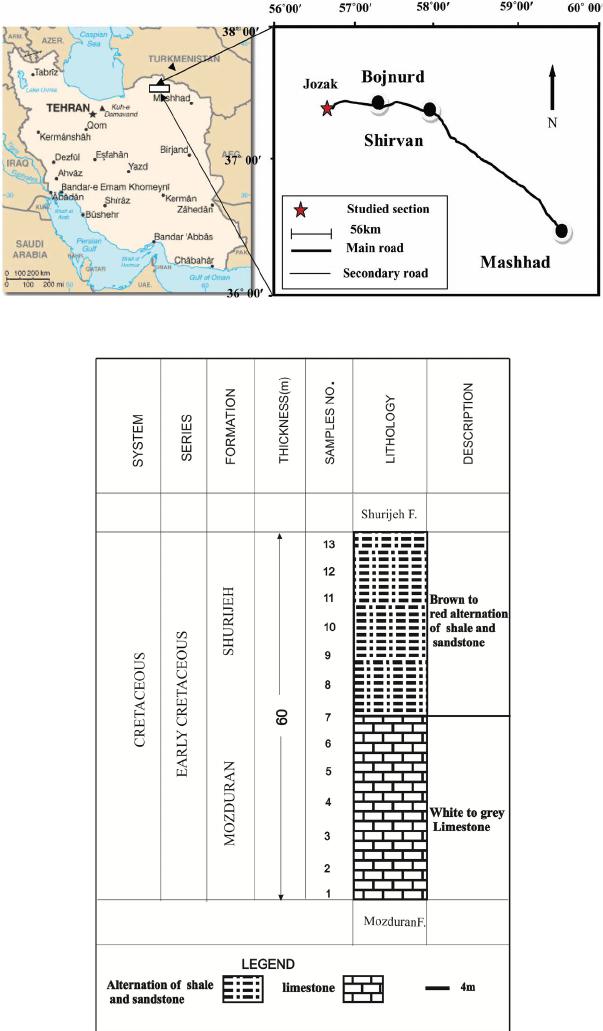 M. A. MOHEGHY, F. HADAVI 13 thology [4]. The Shurijeh Formation consists of conspicuous red beds, mainly sandstones and conglomerates; in more northwestern outcrops the unit contains also some thin gypsom layers and oolithic Limestone bands. Later, The Shurijeh Formation was found to interfinger laterally with the overlying Tirgan Formation northwest of the Shurijeh type area. The thickness of the Shurijeh Forma- tion varies from about 250 to 900 m [3]. The detailed observation of nannofossils gave us very useful data, so this study is based on microscopic ana- lyses of the calcareous nannoplanktons found in the samples that were taken from the boundary between Mozdur an and Shurijeh Format ions in west Kopet-Dagh (Figure 1). The thickness of the samples was 60 m in this section and contained white to gre y Li mestone and brown to red alternation of shale and sandstone (Figure 2). Figure 1 . Geographical situation of studied section. Figure 2 . Lithostrat igraphic column of t he bo undar y between Mozdur an and Shurij eh Fo rmations in t he Jozak s ection. OPEN ACCESS IJG 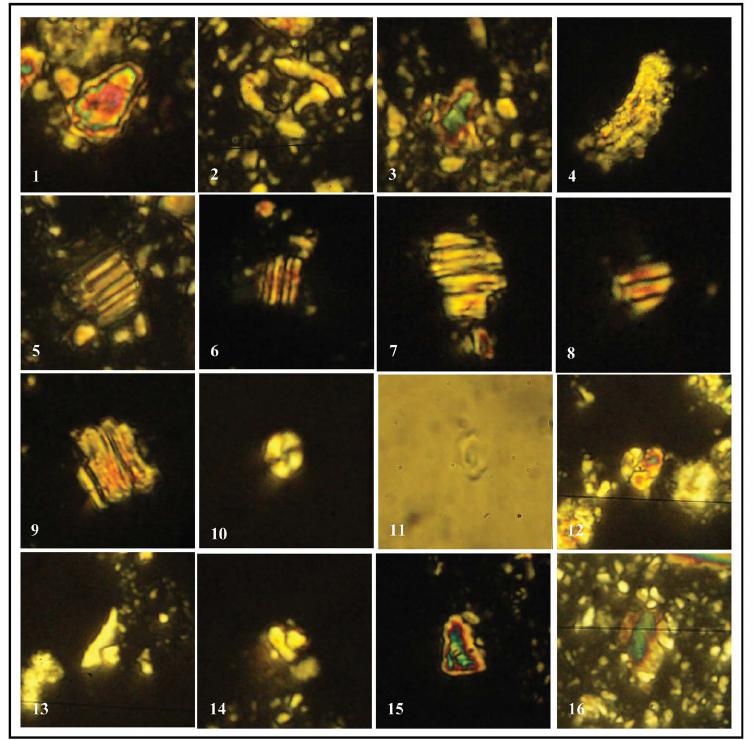 M. A. MOHEGHY, F. HADAVI 14 3. Samples and Methods A total of 13 samples from the boundary between Moz- duran and Shurijeh Formations were collected. For cal- careous nannofossils preparation, a small surface of the sample was scraped with a razor blade (the razor used in these preparations was washed with distilled water be- tween samples) until a fresh surface was obtained, and then, a small amou nt of sedimen t was mixed with a dr op of distilled water and spread out evenly across a micro- scope cover glass (we paid attention to the homogeneity of the deposition so that calcareous nannofossils are evenly distrib uted on the slide ); after this, susp ension has dried up on a hot plate. The work area and the hot plate that were used in making the smear slides were cleaned using 10% HCl between sample preparations. This was done to reduce the chance of contamination. The exami- nation of nannofloras was performed by using a light microscope at 1250× magnification. Digital images were captured with a digital camera. All images were taken in either cross polarized light (XP L) or plane p olar ized light (PPL), they are shown on the (Plates 1-3). At first all calcareous nannofossil specimens encountered were iden- tified following the taxonomic schemes of several re- nowne d a uthors [5-9] and then counted for the purpose of palaeoecological studies. For counting in some purview, all nannofossil species were counted. The percentage of each species for drawing the diagrams was calculated (Tables 1, 2). 4. Nannofossils Biostratigraphy and Zonation In the b oundar y between M ozdura n and Shurij eh For ma- tions, biostratigraphic studies of calcareous nannofossils have allowed the identification of calcareous nannofos- Plate 1. All figures ×1250. (1): Nannoconus kamptneri, sample No. 5; (2): Zeugrha bdotus erect us, s a mpl e N o. 1; (3, 4): Nanno- conus steinmannii, 3 sample No. 5, 4 sample No. 8; (5-7): Conusphaer a me xi c a na, 5 sample No. 3, 6 sample No. 7, 7 sample No. 10; (8, 9): Nannoconus dolomiticus, 8 sample No. 2, 9 sample No. 7; (10, 11): Watznaueria barnesae, 10 sample No. 1, 11 sam- ple No. 1; (12): Assip et ra tereb rod entarius, sample No. 1; (13, 14): Didemnum minutum, 13 sample No. 1, 14 sample No. 4; (15): Nannoconus kamptneri, sample No. 9; (16): Nannoconus sp. sample No. 1 2. OPEN ACCESS IJG 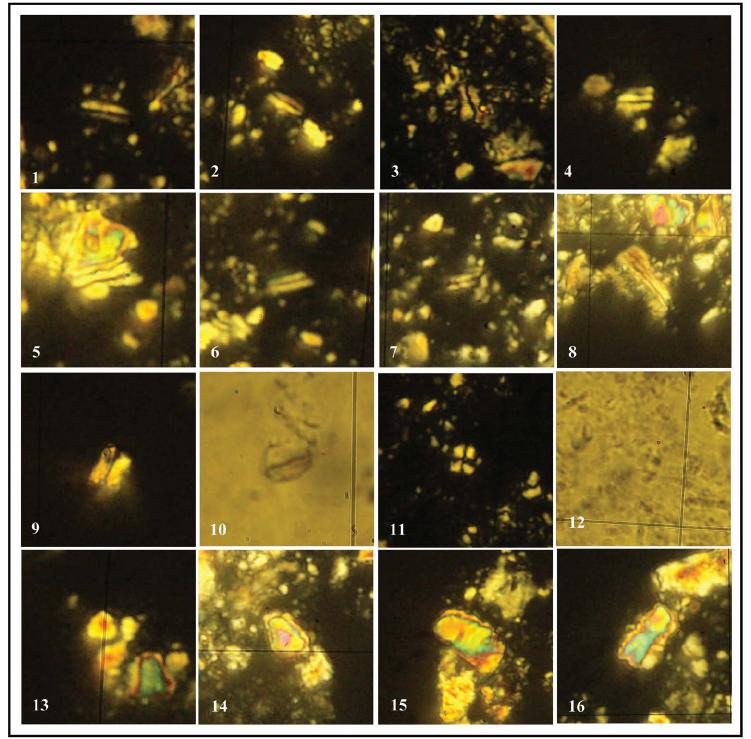 M. A. MOHEGHY, F. HADAVI 15 Plate 2. All figures ×1250. (1-8): Lithraphidites bollii, 1 sample No. 2, 2 sample No. 5, 3 sample No. 9, 4 sample No. 6, 5 sample No. 1, 6 sample No. 4, 7 sample No. 6, 8 sample No. 5; (9, 10): Nannoconus dolomiticus, 9 sample No. 5, 10 sample No. 2; (11, 12): Watznaueria biporta, 11 sample No. 1, 12 sample No. 1; (13): Tetralithus pseudotrifidus, sample No. 6; (14-16): Nannoco- nus bucheri, 14 sample No. 6, 15 ample No. 4, 16 sample No. 11. sils biozone CRETARHABDUS LORIEI (CC 4) in the Jozak section with Early Hauterivian eage. This zone was proposed by Sissingh [10]. The base of this zone is de- fined as the first occurance (FO) of Cretarhabdus loriei and the last occurance (LO) of Speetonia colligata de- fines the top of the zone. Remarks: The FO of Chiastozygus striatus is used in the Boreal realm as a substitute marker for C. loriei. Sis- singh suggested [10] a subdivision of CC 4 by the LO of Biscutum sa lebrosum. T his has b ee n fou nd to b e an unre- liable event, since B. salebrosum was found by several authors in the Barremian and the Aptian/Albian. Perch- Nielsen [11] suggested the FO of Eprolithus antiquus and the LO of Cruciel lipsis cu villieri as additional events to subdivide the Hauterivian in the Boreal realm. She also used the LO of Chiastozygus striatus as a substitute marker event for the top of CC 4. Thierstein [12] had used the FO of Lithraphidites bollii and the LO of C. cuvillieri for the subdivision of the Hauterivian in the Tethyan realm. L. bollii was not found in the Boreal realm. In this boundary, Cretarhabdus loriei was ab se nt b ut L. bollii is present, therefore according to Thierstein [12] the age of the studied thicknes s is Early Hauterivian. 5. Nannofossils Diversity and Abundance Abundant nannofossil assemblages and their occurrence in shallow, ner itic settings in the Early Creta c e ous trop ic s migration events into other eutrophic settings may have occurred during periodic warming intervals [13]. In the uppermost Mozduran Formation, 17 species were identified (Tables 1, 2). In spite of the indurated lithology of the Mozduran and Shurijeh Formations, Nannofloras are moderately preserved and relatively low in diversity in this boundary. In these intervals, the low nannofossil total abundances, and the poorly diversified OPEN ACCESS IJG 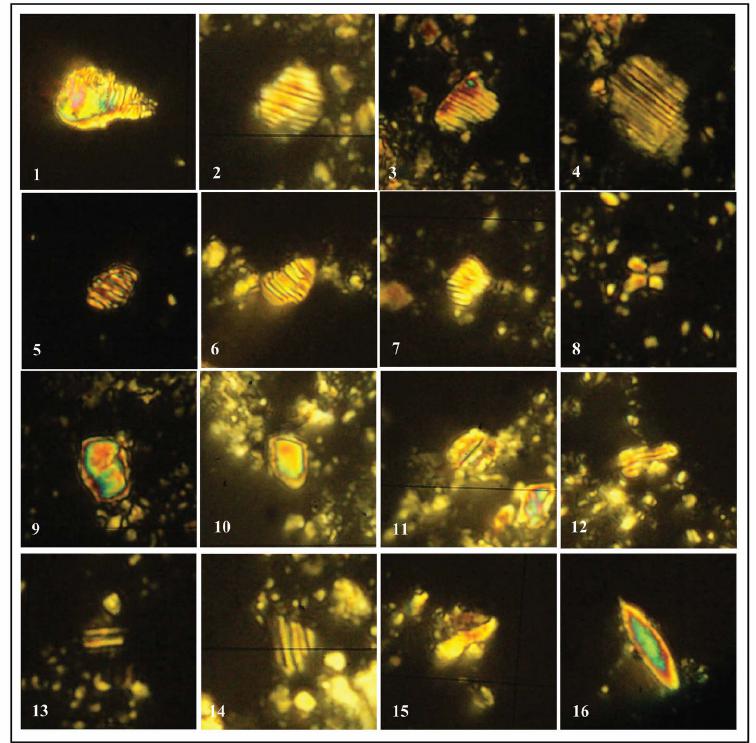 M. A. MOHEGHY, F. HADAVI 16 Plate 3. All figur e s ×1250 . (1): Nannoconus colomii, 1 sample No. 3; (2-7): Calcicalathina alta, 2 sample No. 6, 2 sample No. 4, 3 sample No. 9, 4 sample No.10, 5 sa mple No. 12, 6 sample No. 2, 6 sample No.7; (8): Tetralithus cassianus, 8 samp le No. 3, (9, 10): Nannoconus bucheri, 9 sample No. 8, 10 sample No. 2; (11): Nannoconus dolomiticus, 11 sample No. 2; (12, 13): Lithra- phidites bollii, 12 s ample No. 5, 1 3 sample No. 10; (14): Conusphaera Mexicana, 14 sample No. 5; (15): Didemnum m inutum, 15 sample No. 4; (15): Scapholithus fossilism, sample No. 6. nannofossil assemblages are probably indicative of un- favorable conditions in the water column [14]. The ab- undance of all species does not follow a general pattern as some species tend to increase or decline from base to top. T he most c ommo n gene ra withi n the assemb lage a re Nannoconus. In addition, Some species belonging to the genera Watznaueria, Zeugrhabdotus, Tetralithus, Assi- petra, Calcicalathina, Conusphaera and Lithraphid ites are present in the assemblage but occurred only sporadi- cally with relatively low percentage (Tables 1, 2). 6. Palaeoecology Calcareous nannoplanktons are widespread in the recent oceans, from coastal areas to open ocean settings. The distribution of calcareous nannoplankton is intimately linked to climatic zones and climate changes [15]. In the present studies the following results obtained based on the abundance species of calcareous nannofossils. 6.1. Fertility Indices It has been demonstrated that calcareous nannofossil fer- tility can play an important role in the reconstruction the paleoenvironmental settings. Some nannofossil species are good indicators of surface water fertility. Biscutum spp. (mainly B. constans and B. ellipticum) and Zeugr- habdotus s pp. (mainl y Z. erectus) are considered as indi- cators of high surface water fertility in unstable envi- ronments such as oceanic sites of upwellingor shelf areas where trophic conditions may have been enhanced by storm mixing or by runoff [16]. However, Biscutum (mainly B. constans) is considered as an indicator of less eutrophic conditions than Zeugrhabdotus spp. [17]. Cre- tarhabdus spp., T. orionatus and Nannoconus spp. are classified as indicators of low fertility conditions by dif- OPEN ACCESS IJG 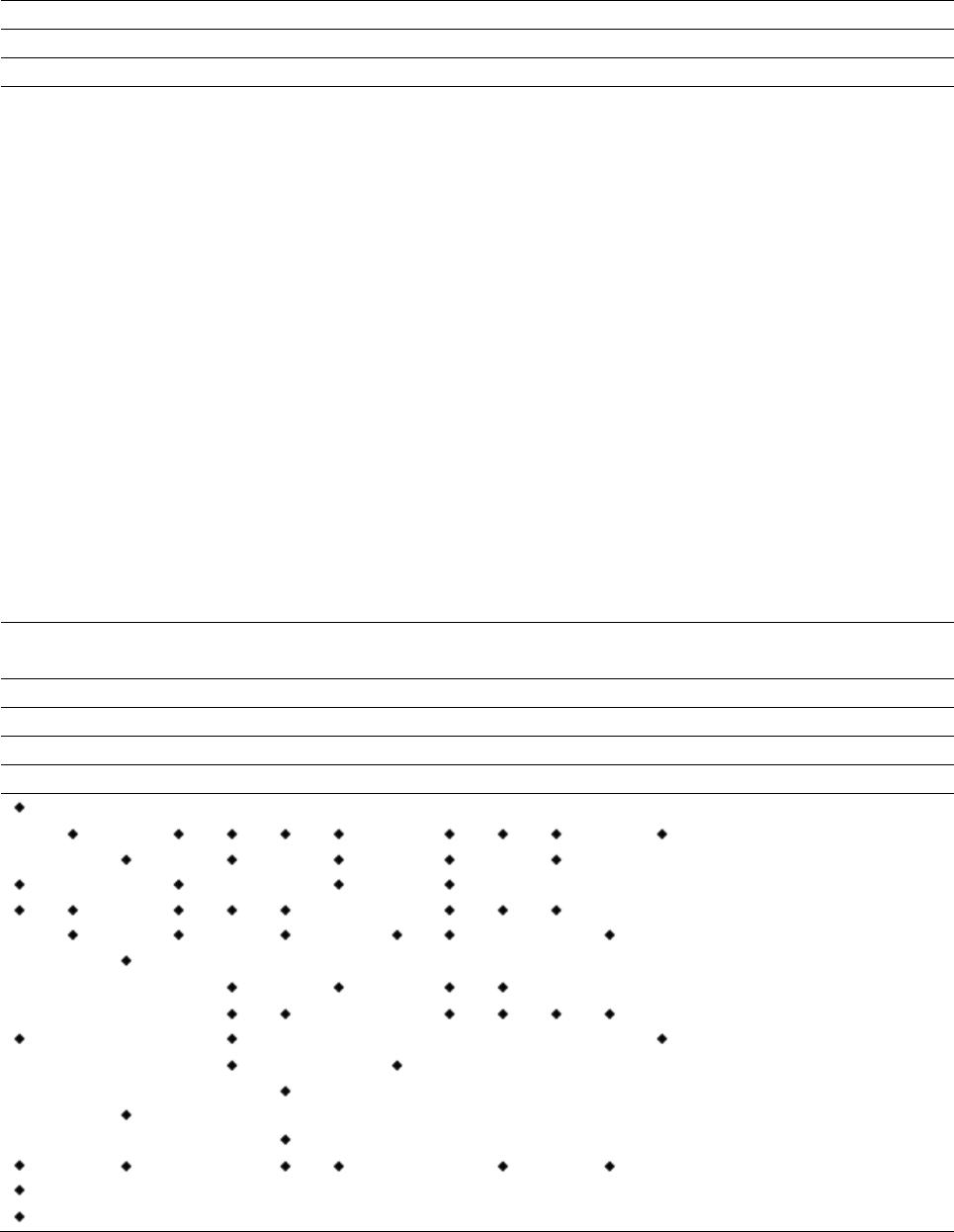 M. A. MOHEGHY, F. HADAVI 17 Table 1 . Ab unda n ce ta bl e of t h e re c og niz e d c al c are o us na n nof o ssi l s peci e s i n sample s fr o m t he u pper most Mozduran F or ma- tion in the the Jozak section. EARLY HAUTERIVIAN AGE MOZDURAN SHURIJEH FORMATION 1 2 3 4 5 6 7 8 9 10 11 12 13 SAMPLE No. 12.50 0.00 0.00 0.00 0.00 0.00 0.00 0.00 0.00 0.00 0.00 0.00 0.00 As s i pe tra ter e b r o dentarius 0.00 16.64 0.00 14.28 18.00 20.02 35.20 0.00 25.50 40.20 26.00 0.00 52.70 Calcic alathina al ta 0.00 0.00 37.30 0.00 9.09 0.00 15.00 0.00 7.50 0.00 24.40 0.00 0.00 Conusphaera mexicana 12.50 0.00 0.00 28.57 0.00 0.00 20.00 0.00 17.20 0.00 0.00 0.00 0.00 Didemnum minutum 12.00 16.66 0.00 20.50 18.19 23.00 0.00 0.00 8.69 22.20 26.00 0.00 0.00 Lithraphidites bollii 0.00 16.60 0.00 36.65 0.00 10.44 0.00 55.20 18.36 0.00 0.00 53.30 0.00 Nannoconus bucheri 0.00 0.00 32.40 0.00 0.00 0.00 0.00 0.00 0.00 0.00 0.00 0.00 0.00 Nannoconus colomii 0.00 50.10 0.00 0.00 17.18 0.00 29.80 0.00 10.80 21.00 0.00 0.00 0.00 Nannoconus dolomiticus 0.00 0.00 0.00 0.00 9.09 20.32 0.00 0.00 11.95 16.60 23.60 46.70 0.00 Nannoconus kamptneri 12.50 0.00 0.00 0.00 18.18 0.00 0.00 0.00 0.00 0.00 0.00 0.00 47.30 Nannoconus sp. 0.00 0.00 0.00 0.00 0.00 14.11 0.00 0.00 0.00 0.00 0.00 0.00 0.00 Scapholithus fossilis 0.00 0.00 0.00 0.00 10.27 0.00 0.00 44.80 0.00 0.00 0.00 0.00 0.00 Nannoconus steinmannii 0.00 0.00 30.30 0.00 0.00 0.00 0.00 0.00 0.00 0.00 0.00 0.00 0.00 Tetralithus cassianus 0.00 0.00 0.00 0.00 0.00 12.11 0.00 0.00 0.00 0.00 0.00 0.00 0.00 Tetralithus pseudotrifidus 10.50 0.00 0.00 0.00 0.00 0.00 0.00 0.00 0.00 0.00 0.00 0.00 0.00 Watznaue ri a barnesa e 16.00 0.00 0.00 0.00 0.00 0.00 0.00 0.00 0.00 0.00 0.00 0.00 0.00 Watznaue ri a biporta 24.00 0.00 0.00 0.00 0.00 0.00 0.00 0.00 0.00 0.00 0.00 0.00 0.00 Zeugrhabdotus erectus C. lorie i Nannofoss il event CC4 Nannofossil zone (Sissingh 1977) Table 2. Di stri buti on of calc areous nanno fossils in the uppermost Mo zduran Formation fro m the Jo za k section. EARLY HAUTERIVIAN AGE MOZDURAN SHURIJEH FORMATION CC4 ZONE Sissingh (1977) 1 2 3 4 5 6 7 8 9 10 11 12 13 SA MPLE No. Assipetra terebrodentarius Calc i c alathina al ta Conus phaera mex icana Didemnum minutum Lithraphidites bollii Nannoconus bucheri Nannoconus colomii Nannoconus dolomiticus Nannoconus ka mptneri Nannoconus sp. Scapholithus fossilis Nannoconus st einmann ii Tetralithus cassianus Tetralithus pseudotrifidus Watznaueria barnesae Watznaueria biporta Z eugrhabdotu s erectus OPEN ACCESS IJG M. A. MOHEGHY, F. HADAVI 18 ferent authors [16,18]. Nannoconus spp. is the most ab- unda nt nan nofo ssil gro up i n all sa mples exa mined i n this study but Biscutum sp p. were absent and Zeugrhabdotus spp. were very rare. According to abundance of nanno- fossil assemblage in the Jozak section, were suggested that the basin supported a restricted nannoflora, domi- nated by shelf-adapted taxa with low fertility conditions of surface waters. 6.2. Depth The limiting role of water depth may be explained by a number of interrelated neritic factors including environ- mental stability, turbulence, transparency, salinity, and nutrie nts or even wat er depth itself if the or ganism had a benthic li fe-cycle stage [19]. The reasonably comprehen- sive Early to Mid-Cretaceous biogeographic data suggest there is now little doubt that the paleoecology of nanno- conids was in some way related to water depth Nanno- conus spp. has been interpreted as restricted to the lower photic zone and to be controlled by fluctuations of the depth of the nutricline [20]. Consequently, changes in abundance of nannoconids and other coccoliths have been used to reconstruct the fertility of surface waters and nutria cline dynamics. High abundances of Nanno- conus spp. may indicate a deep chlorop hyl l maximum zone (DCM) with an increased productivity in the lower photic zone [21]. Therefore, based on the high abun- dances of Nannoconus spp., the Mozduran and Shurijeh Formations were deposited in the relatively shallow ma- rine environ ment . 6.3. Temperature and Latitudinal Distribution Various species of Mesozoic calcareous nannofossils have different temperature ranges [22] Cosmopolitan taxa like Watznaueria barnesae covered a broad temper- ature range, being common both in the low and the high latitudes throughout most of the Mesozoic. Watznaueria barnesae was common in tropical and subpolar regions and may thus be viewed as a eurythermal taxon [23]. Other groups (e. g. Nannoconus, Conusphaera, Micula) are most common in low latitudinal settings where they were partly rock forming. Since they are rare in the Bo- real Realm they have often been interpreted as Tethyan warm water taxa [24]. Some cold water taxa (e. g. Ste- phanolithion, Biscutum, Crucibis cuturn, Repagulum par- videntatum, Seribiscutu m primitivurn, Sollasites falklan- densis, Ceratolithin a , Kamptnerius, Nephrolithus) show restricted palaeobiogeographic distribution patterns. These taxa are most common only in the high latitudes [25]. The diverse assemblages of the low latitudes are dom- inated by Watznaueria spp., Rhagodiscus asper, Nanno- conus spp., Micrantholithus spp. and Conusphaera spp. These thermophile warm water taxa [17,26] indicate relatively warm surface water temperatures of the trop- ics and subtropic. These evidences suggest warm sur- face water conditions and relatively low-middle latitude in the up permost Mozd uran Formati on in the J ozak sec- tion. 7. Comparison of Calcareous Nannofossils in the West and East Kopet-Dagh According to biostratigraphic studies, in the east Kopet- Dagh, 19 species belonging to 12 genera of calcareous nannofossils were recognized from the uppermost Moz- duran Formation in the Mozduran section and 19 species belo nging to 1 3 genera in the Taher abad sect ion. No ca l- careous nannofossils were found in the lower part of the Shurijeh Formation [2]. But In the Jozak section 17 nan- noplanktonic species of 10genera were identified from Mozduran and S hurijeh Fo rma tions (Tables 1, 2), unlike the east Kopet-Dagh, Calcareous nannofossils existed in the Shurijeh Formation in the west Kopet-Dagh, there- fore, we conclude that environmental conditions in the Mozduran and the Taherabad sections in the east of Ko- pet-Dagh were better for calcareous preservation nanno- fossils than t he west of Kopet-Dagh. palaeoecological Comparison of the uppermost Moz- duran Formation in the Jozak section in the west and Mozduran and Taherabad sections in the east Kopet- Dagh shows low fertility conditions, relatively low lati- tude, warm water condition and shallow marine envi- ronments. Based on Calcareous nannofossils, the upper- most Mozduran Formation is assignable to Sissingh’s (1977) [10] biozone CC1 (Early Berriasian) at the Moz- duran section and to biozone CC3 (Late Valanginian) at the Taherabad section in the east [2] and biozone CC4 (Early Hauterivian) at the Jozak section in the west, in- dicating that the age of the top of the Mozduran Forma- tion is diachronous across the basin and the uppermost Mozduran Formation is younger from east to west in the Kopeh-Dagh basin. 8. Conclusion In this study, 17 species were identified in the boundary between Mozduran and Shurijeh Formations in the Jozak section. As the result of biostratigraphic studies, a bio- zone is su gge sted whic h is eq uiva lent to CC4 o f Si ssing h [10]. In the base of this zone, the age of studied thickness is Early Hauterivian. Acc ording to the studies, the nanno- fossil assemblages show mod erately preservation and the abundant variation of species suggests that the Mozduran and Shurijeh Formations were deposited in the relatively shallow marine environments in low to middle latitudes with warm surface water a nd low fertility cond itions. OPEN ACCESS IJG  M. A. MOHEGHY, F. HADAVI 19 REFERENCES [1] J. Stöcklin, “Structural History and Tectonics of Iran: A Review,” Bulletin of the American Association of Petro- leum Geologists, Vol. 52, No. 7, 1968, pp. 1229 -1258. [2] F. Hadavi and L. Khodadadi, “Nannos Tratigraphy and Palaeoecology of Uppermost Mozduran Formation in the Kopeh-Dagh Range (NE Iran),” Arabian Journal of Geos- cience, Vol. 5, No. 6, 2013, pp. 70-71. http://dx.doi.org/10.1007/s12517-013-0839-z [3] J. Stöcklin, “Stratigraphic Lexicon of Iran,” Ministry of Industry and Mines, Geological Survey of Iran, Report No. 18, 1971. [4] A. A. Harb, “The Stratigraphy, Tectonics and Petroleum geology of the Kopet-Dagh Region, Northern Iran,” Ph.D. Thesis, London University, London, 1979. [5] H. R. Thierstein, “Mesozoic Calcareous Nannoplankton Biostratigraphy of Marine Sediments,” Marine Micro- paleontology, Vol. 1, 1976, pp. 325-362. http://dx.doi.org/10.1016/0377-8398(76)90015-3 [6] K. Perch-Nielsen, “Mesozoic Calcareous Nannofossils,” In: H. M. Bolli, J. B. S aunders and K . Perch -Nielsen, Eds., Plankton Stratigraphy, Cambridge University Pres s, Cam- bridge, 1985, pp. 329-426. [7] J. R. Williams and T. J. Bralower, “Nannofossil Assem- blages, Finefraction Stable Isotopes, and the Pal eoceano- graphy of the Valanginian-Barremian (Early Cretaceous) North Sea Basin,” Paleoceanography, Vol. 10, No. 4, 1995, pp. 815-839.doi.org/10.1029/95PA00977 [8] J. L. Shamrock, D. K. Watkins, “Evolution of the Creta- ceous Calcareous Nannofossil Genus Eiffellithus and Its Biostratigraphic Significance,” Cretaceous Research Journal, Vol. 30, No. 5, 2009, pp. 1083-1102. http://dx.doi.org/10.1016/j.cretres.2009.03.009 [9] F . Gi r aud , D. Olivero, F. Baudin, S. Rebou let, B. Pittet, O. Proux, “Minor Changes in Surface -Water Fertility across the Oceanic Anoxic Event 1d (latest Albian, SE France) Evidenced by Calcareous Nannofossils,” International Journal of Earth Sciences, V ol. 92 , No. 2, 2003, pp. 267 - 284. [10] W. Sissingh, “Biostratigraphy of Cretaceous Calcareous Nannoplankton,” Geologie en Minjbouw, Vol. 56, No. 1 , 1977, pp. 37-65. [11] K. Perch-Ni elsen, “Calcareous Nannofossils from the Cretaceousbetween the North Sea and Mediterranean,” Aspekte der kreideEuropas IUGS series A, Vol. 6, No. 2 , 1979, pp. 223-272. [12] H. R. Thierstein, “Mesozoic Calcareous Nannoplankton Biostratigraphy of Marine Sediments,” Marine Micro- paleontology, Vol. 1, 1976, pp. 325-362. http://dx.doi.org/10.1016/0377-8398(76)90015-3 [13] N. Thibault and S. Gardin, “Maastrichtian Calcareous Nannofossil Biostratigraphy and Paleoecology in the Equatorial Atlantic (Demerara Rise, ODP Leg 207 Hole 1258A),” Revue de Micropaléontologie, Vol. 49, No. 4, 2006, pp. 199-214. doi.org/10.1016/j.revmic.2006.08.002 [14] C. Street and P. R. Bown, “Palaeobiogeography of Early Cretaceous (Berriasian-Barremian) Calcareous Nannop- lankton,” Marine Micropaleontology, Vol. 39, No. 1-4, 2000, pp. 265- 291. http://dx.doi.org/10.1016/S0377-8398(00)00024-4 [15] E. Erba, “The First 150 Million Years History of Calca- reous Nannoplankton: Biosphere-Geosp Here in Tera- cions,” Palaeogeography Palaeoclimatology Palaeoe- cology, Vol. 232, No. 3, 2006, pp. 237-250. http://dx.doi.org/10.1016/j.palaeo.2005.09.013 [16] P. H. Roth and K. R. Krumbach, “Middle Cretaceous Nannofossil Biogeography and Preservation in the Atlan- tic and Indian Oceans: Implications for Palaeoceanogra- phy,” Marine Micropaleontology, V o l. 10 , No. 1 -3, 1986, pp. 235-266. http://dx.doi.org/10.1016/0377-8398(86)90031-9 [17] E. Erba, F. Castradori, G. Guasti and M. Ripepe, “Caca- reous Nannofossils and Mi lankovitch Cycles: The Ex- ample of the Gault Clay Formation (Southern England),” Palaeogeography, Palaeoclimatology, Palaeoecology, Vol. 9 3, No. 1-2, 1992, pp. 47-69. http://dx.doi.org/10.1016/0031-0182(92)90183-6 [18] D. K. Watkins, “Nannoplankton Productivity Fluctuations and Rh ythmical lybedded Pelagic Carb onates of the Green- horn Limestone (Upper Cretaceou s),” Palaeogeography, Palaeoclimatology, Palaeoecology, Vol. 74, No. 1-2, 1989, pp. 75-86. http://dx.doi.org/10.1016/0031-0182(89)90020-5 [19] G. Busson and D. Noël, “Les Nannoconidés Indicateur- senvironnementaux des Oceans et Mers Épicontinentales du Jurassique Terminal et du Crétacé Inférieur,” Oceano- logica Acta, Vol. 14, No. 4, 1991, pp. 333-356. [20] J. O. Herrle, J. Pross, O. Friedrich and C. Hemleben, “Short-Term Environmental Changes in the Cretaceous Tethyan Ocean: Microp alaeontolo gi cal Evidence from the Early Albian Ocean ic Anoxic Event 1b,” Terra No va, Vol . 15, No. 1, 2003, pp. 14-19. http://dx.doi.org/10.1046/j.1365-3121.2003.00448.x [21] E. Erba, “Nannofossils and Superplumes the Early Aptian Nannoconid Crisis,” Paleoceanography, Vol. 9, No. 3, 1994, pp. 483-501. http://dx.doi.org/10.1029/94PA00258 [22] A. Lees, “Calcareous Nannofossils Biogeography Illu- strates Palaeoclimate Change in the Late Cretaceous In- dian Ocean,” Cretaceous Research, Vol. 2 3, No. 5, 2002, pp. 537-634. http://dx.doi.org/10.1006/cres.2003.1021 [23] J. Mutferlose, “Calcareous Nannofossit Palaeoceanogra- phy of the Early Cretaceous of NW Europe,” Mitteilun- gen aus dem Geologischen Staatsinstitut in Hamburg, Vol. 77, 19 96, pp. 291-313. [24] J. Mutterlose, “Biostratigraphy and Palaeobiogeography of Early Cretaceous Calcareous Nannofossils,” Creta- ceous R es earch, Vol. 13, No. 2, 1992, pp. 167-189. http://dx.doi.org/10.1016/0195-6671(92)90034-N [25] J. Mutterlose, A. Bornemann and J. O. Herrle, “Mesozoic Calcareous Nannofossils—State of the Art,” Paläontolo- gische Zeitschrift, Vol. 79, No. 1, 2005, pp. 113-133. http://dx.doi.org/10.1007/BF03021757 [26] E. Erba, “Mid-Cretaceous Cyclic P elagic Facies fr om t he U mbr i a n-Marchean Basin: What Do Calcareous Nanno- fossils Suggest?” International Nannoplankton Associa- tion Newsletters, Vol. 9, No. 4, 1987, p p. 52-53. OPEN ACCESS IJG |