

Paper Menu >>
Journal Menu >>
 Open Journal of Forestry 2014. Vol.4, No.1, 24-27 Published Online January 2014 in SciRes (http://www.scirp.org/journal/ojf) http://dx.doi.org/10.4236/ojf.2014.41004 OPEN ACCESS 24 Isolation of Total Saponins from Sapindus mukorossi Gaerth Menghao Du*, Sumei Huang, Jinping Zhang, Jingwen Wang, Lisong Hu, Jingmin Jiang Research Institute of Subtropical Forestry, CAF, Fuyang, China Email: *[email protected] Received October 7th, 2013; revised November 16th, 2013; accepted November 30th, 2013 Copyright © 2014 Menghao Du et al. This is an o pen access article d istribu ted un der the Creative C ommons At- tribution License, which permits unrestricted use, distribution, and reproduction in any medium, provided the original work is properly cited. In accordance of the Creative Commons Attribution License all Copyrights © 2014 are reserved for SCIRP an d th e o wner o f the in tellectual prop erty Menghao Du et al. All Copyright © 2014 are guarded by law and by SCIRP as a guardian. The study has been carried out to investigate the effects of single factors such as solvents extraction tem- perature, times, solid-liquid ration, and the time of extractions on the yields of saponins present in the pulp of Sapindus mukorossi Gaerth. On this basis, an L9 orthogonal design of experiment was adopted to determine the optimal conditions for the extraction of saponins. The factors that influence the extraction of saponins are put in the order of extraction times, extraction time, solid-liquid ration, and the best com- bination is that the powder of the pulp is extracted with EtOH (solid-to-solvent ratio = 1:8, w/v) for three times at 60˚C for 3 hours. Under these conditions, about 1.63 g saponins will be extracted from 10 g raw material. The stability test showed that the Sapindus mukuross saponins can maintain surface activity at water temperature (25˚C - 40˚C), pH (6.3 - 7.7) and water hardness (50 - 250 mg∙L−1). It is proved that Sapindus mukuross saponins are quality non-ionic active agent. Keywords: Saponins; Sapindus mukorossi Gaerth; Orthogonal Design; Extraction Introduction The species of the genus of Sapindus belonging to the Sa- pindaceae, has about five to twelve species of shrubs and small trees (FRPS, 1998). Members of the genus are commonly known as soapberries or soapnuts because the fruit pulp is used to make soap (FRPS, 1998). There is about 10% saponins in fruit pulp (FRPS, 1998), which makes it an ideal resource for the extraction of Saponins. Saponin, a natural non-ionic surfac- tant, not only has a good emulsifying, separating and dispersing capability but also i s a good foam stabiliz er with a great clean- ing capacity (Zhang et al., 1993). Thus, it can be used as foam stabilizer for the building concrete (Lin, 1977), pesticide syn- ergist (Hong & Tokunaga, 2000), and it also has antiviral, re- ducing blood pressure functions (Huang et al., 2007; Ibrahim et al., 2006, 2008; Kuo et al., 2005; Yukiyoshi, 2001; Yata et al., 1986), so it is widely used in daily chemical industries, building materials, food industries and agriculture. Usually, saponin is extracted by using solvent like water, ethanol and methanol (Huang et al., 2008; Rao & Sang, 2006). Accordingly, this experiment will use ground pulp of Sapindus mukorossi as raw material. Meanwhile the impact brought about by different solvent, extraction times, extraction dura- tions and different solid-liquid ratios has been investigated. Materials and Methods Plant and Chemical Materi a l Fruits pulps of S. mukorossi were collected from Tiantai of Zhejiang Province, China, in November 2008. Prior to all ex- tractions, fruits pulp was dried at 60˚C for 48 h and was ground in a Wiley mill to pass a 0.5 mm poresize screen. Chromato- graph solvents used during the study were of HPLC grade and the other solvents and reagents used during the study were of AR grade. Extraction Process The main factors that affect the extraction of saponins like extraction solvents, temperature, time, times and materi als ratio (weight of the fruit pulp: volume of the extracting solvent), were studied individually. The optimum extraction conditions were determined by L9(34) orthogonal design of experiments i.e. three levels and three different parameters. Estimation of Total Saponins Saponins sample was collected from extraction solution with labware. Saponins concentration was measured in sample by HPLC (column: SymmetryTM C18 (3.9 mm i.d × 150 mm), 40˚C, Flowing phase: CH3CN:H2O (H2O:90% → 20%, 30 min), 1ml∙mi n−1; detection wavelength: 210nm). Stability Study This study was carried out at vary water temperature (25, 35, 40˚C), pH (6.3, 7.0, 7. 7), water hardness (50, 100, 250 mg∙L−1) with aqueous solutions having a saponin content of 4%. The Cmc and γCmc were determined by dynamic tension meter. Statistical Analysis The results are expressed as means ± SD unless otherwise *Corresponding author. 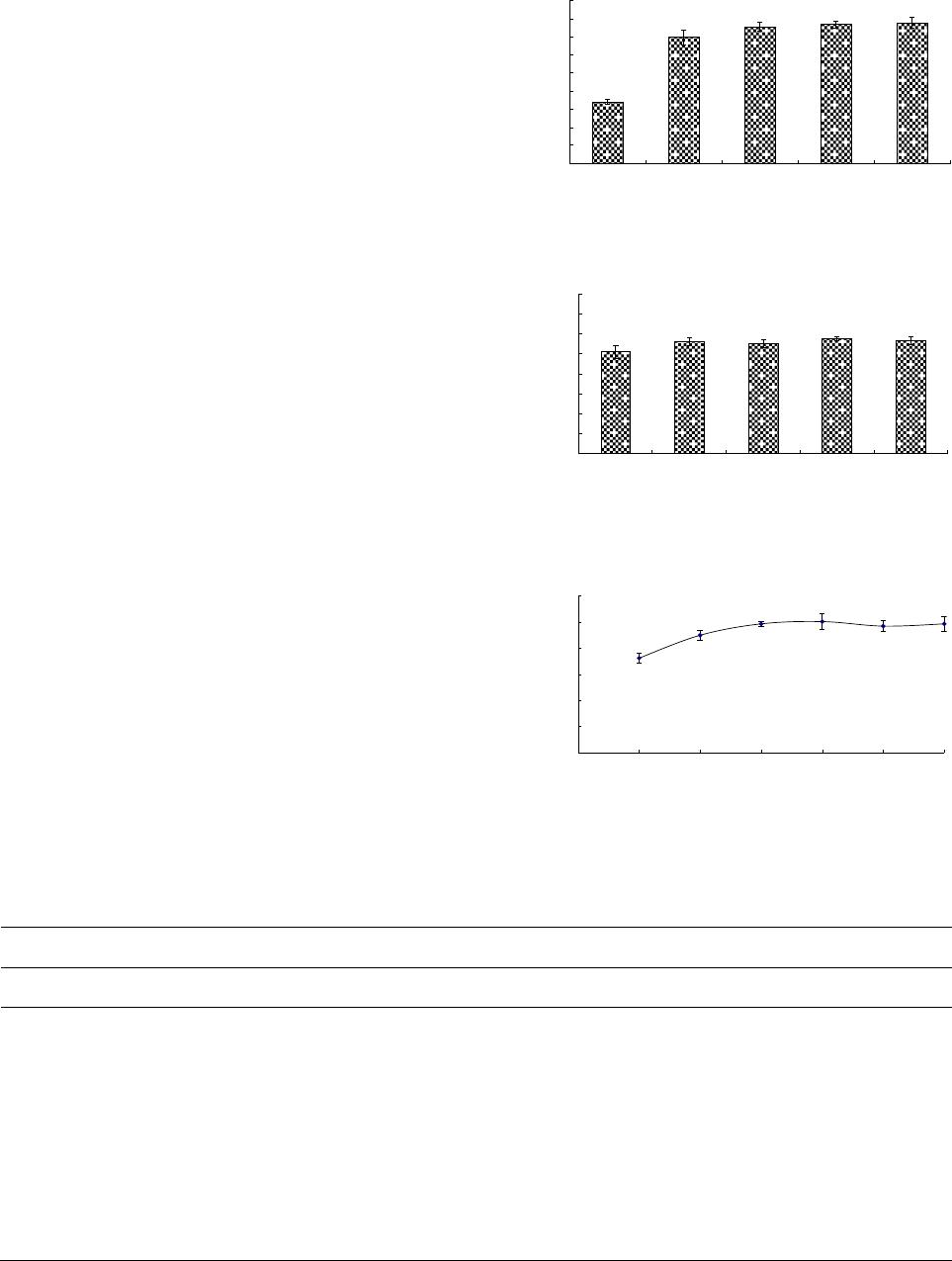 M. H. DU ET AL. OPEN ACCESS 25 stated. The evaluation of statistical significance was determined by the one-way ANOVA test, these analyses were done with SPSS for WINDOWS, version 19.0, and with small letter < 0.05, capital letter < 0.01 considered to be statistically signifi- cant. Results and Discu ssion Saponins in S. mukorossi Gaerth were extracted by nine sol- vents, and its content was measured by HPLC. The best ex- tracting solvents was ethanol which can result in the high productivity of saponin, good quality of saponin colour and volatiles (Table 1). Figure 1 showed the yields of saponins tended to increase with a rise in the temperature range from 20˚C to 50˚C. It may be probable that the greater speed of the molecule movements in higher temperature so that saponins diffused more quickly from cell to extracting agent. But the yields of saponins could be slight changed temperature of surpassing 60˚C. Tempera- ture’s effect on extraction is dual. On one hand, higher temper- ature can accelerate the solvent flow and thus increase the sa- ponins content and on the other hand, higher temperature can decrease the fluid density that may reduce the extraction effi- ciency. Hence, it was found that 60˚C was the optimum tem- perature for extracting the saponins. Figure 2 showed the yields of saponins extracted was mini- mum at 1:6 materials ratio. Further increase in the material ratio leads to slight changed in the yields of saponins. This pheno- menon might be due to the fact that when the material ratio reached a certain level, the extract has well dissolved in the solution that may lead the contents of the extract become satu- rated and prevent further increase. The yields of saponins extracted for 4 h reached maxima and prolonged extraction may not increasing yield (Figure 3). T his increase in the saponins content may be due to the synergistic effect of other parameters involved. The yields of saponins obviously increased with the no. of extractions from 1 time to 2 times. But the yields of saponins could be slight changed when the no. of extractions surpassing 2 times (Figure 4). The parameters and the orthogonal design of experiment for the extraction of saponins were given in the Tables 2 and 3. bB bB bB aA bB 0.00 0.20 0.40 0.60 0.80 1.00 1.20 1.40 1.60 1.80 20℃40℃ 50℃60℃70℃ Extraction temperature Yield of Saponins (g/10g dry fruit pulp) Figure 1. Effects of temperature on the yield of S. mukorossi Gaerth. Saponins. Ethanol, solid-liquid ratio 1:20, time 6 h, 2 extraction times. Solid-solvent ratio a a a a a 1.00 1.10 1.20 1.30 1.40 1.50 1.60 1.70 1.80 1:6 1:8 1:10 1:12 1:15 Yield of Saponins (g/10g dry fruit pulp) Figure 2. Effects of the solid -solvent ratio on the yield of S. mukorossi Gaerth. Saponins. Ethanol, temperature 60˚C, time 3 h, 2 extraction times. 1.00 1.10 1.20 1.30 1.40 1.50 1.60 0 1 2 345 6 a b b b b b Extraction time yield of Saponins (g/10g dry fruit pulp) Figure 3. Effects of extract time on the yield of S. mukorossi Gaerth. Saponins. Ethanol, temperature 60˚C, solid-liquid ratio 1:10, 2 extraction times. Table 1. Effects of solvents on the characteristics of S. mukorossi Gaerth. Saponins (means ± SD). Extracting solvents MeOH EtOH Acetone Butanol H2O 95% MeOH 95% EtOH 95% Acetone 95% Butanol Mass of Saponins (g) 0.68 ± 0.12 1.54 ± 0.09 1.00 ± 0.12 0.98 ± 0.02 0.63 ± 0.11 1.19 ± 0.09 1.51 ± 0.06 1.37 ± 0.10 1.45 ± 0.07 Purity (%) 63.62 72.63 73.48 69.90 35.03 59.15 70.48 72.42 67.80 Desiccation situation Easy Easy Easy Easy Difficult Little viscosity Easy Easy Easy Characters of the dry substance yellow powder Off-white powder Light yellow powder Light yellow powder Brown glue Yellow powder Off-white powder Off-white powder Light yellow powder volatiles Slightly sweet special fragrance Special fragrance special fragrance Heavily sweet slightly sweet special fragrance special fragrance Special fragrance Note: Temperature 60˚C, solid-liquid r atio 1:20, time 6 h, 2 extraction times. 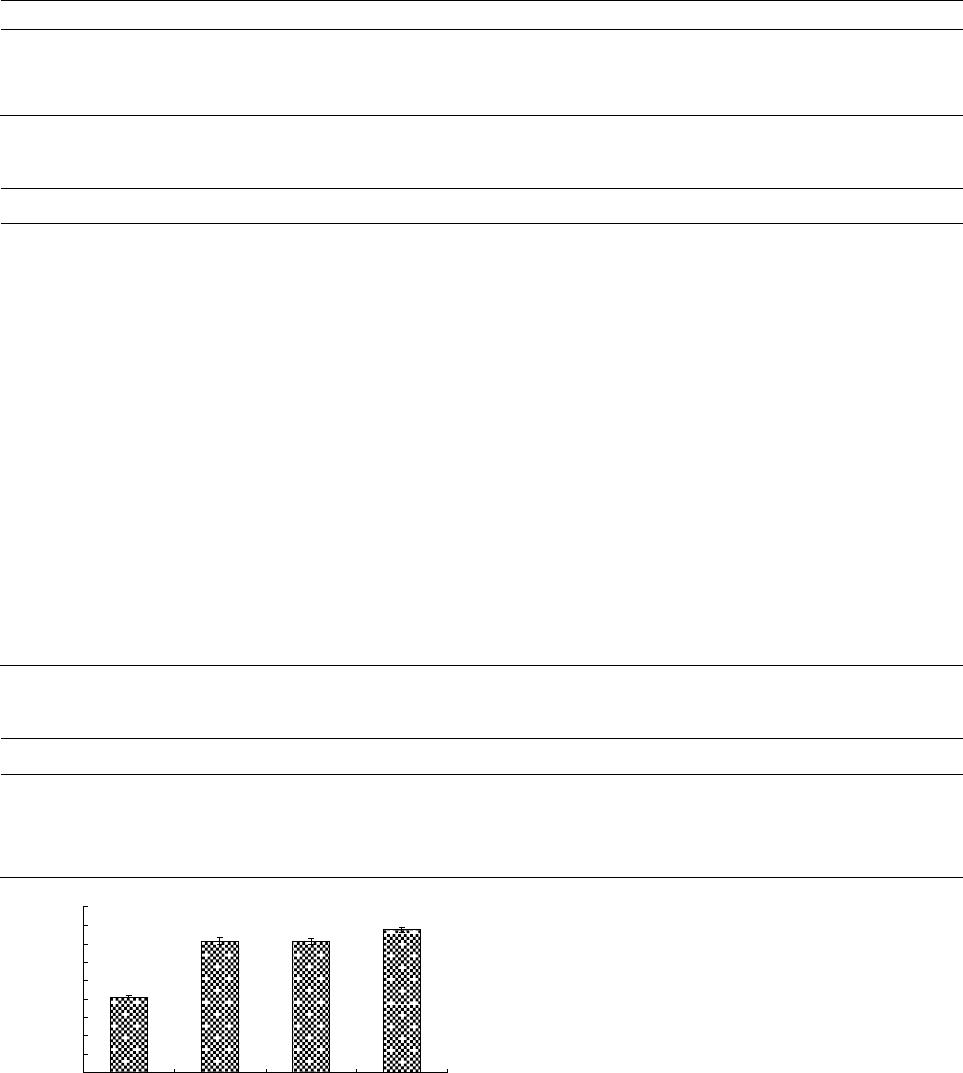 M. H. DU ET AL. OPEN ACCESS 26 Table 2. Factors and levels of orthogonal test. Levels Extraction times (A) Solid-liquid ration (B) Extraction time (C) 1 1 1:8 2 2 2 1:9 3 3 3 1:10 4 Table 3. Design and result of orthogonal test. Test No. A B C Yield of S. mukor ossi Gaerth. Saponins (g) 1 1 1 1 1.05 2 1 2 2 1.34 3 1 3 3 0.92 4 2 1 2 1.48 5 2 2 3 0.89 6 2 3 1 1.29 7 3 1 3 1.54 8 3 2 1 1.57 9 3 3 2 1.61 k1 1.04 1.36 1.30 k2 1.22 1.20 1.41 k3 1.57 1.27 1.12 R 0.54 0.08 0.29 Table 4. Influence of different factors on the surface activity of Sapindus mukuross saponins. Temperature (˚C) Water hardness (mg∙L−1) pH 25 35 40 50 100 250 6.3 7.0 7.7 Cmc (mg∙L −1 ) 32.9 24.8 21.6 39.3 56.8 76.9 33.4 60.4 76.8 γCmc (mN∙m−1) 36.3 35.2 34.2 35.9 36.1 37.4 36.5 37.6 38.2 b b b a 0.00 0.20 0.40 0.60 0.80 1.00 1.20 1.40 1.60 1.80 1 23 4 Extraction times Yield of Saponins (g/10g dry fruit pulp) Figure 4. Effects of extraction times on the yield of S. mukorossi Gaerth. Sapo- nins. Ethanol, temperature 60˚C, solid-liquid ratio 1:10, time 3 h. The factors that influence the extraction of saponins are put in the order of extraction times, extraction time, solid-liquid ratio, and the best combination is when the powder of the pulp is extracted with EtOH (solid-to-solvent ratio = 1:8, w/v) for three times at 60 ˚C for 3 hours. Under these conditions, about 1.63 g saponins will be extracted from 10 g raw material. The results show that the Sapindus mukuross saponins can maintain surface activity at water temperature (25˚C - 40˚C), pH (6.3 - 7.7) and water hardness (50 - 250 mg∙L−1) (Table 4). Conclusion When the powder of the pulp was extracted with EtOH ( solid- to-solvent ratio = 1:8, w/v) for three times at 60˚C for 3 hours, namely in the best extraction condition, the largest yield of saponins (1.63 g saponins will be extracted from 10 g raw ma- terial) was obtained. The stability test showed that the Sapindus mukorossi saponins can maintain surface activity at water con- ditions under which people normally use detergent. It is proved  M. H. DU ET AL. OPEN ACCESS 27 that Sapindus mukorossi saponins are quality non-ionic active agent. Thus, we can conclude that this technology for saponins extraction from S. mukorossi Gaerth. is efficient and environ- mentally friendly. Acknowledgements The authors are grateful for the financial support by State Forestry Administration P. R. China and Forest Department of Zhejiang Province, China (Project number: 200804032, 2010SY03), for carrying out the above research work. REFERENCES Editorial Committee of the Flora of China of Chinese Academy of Science (1998) Flora of China. Beijing: Beijing Science Press. Zhang, M. J., Liu, P. R., Zhao, J. Z., et al. (1993). Study on the com- prehensive utilization of Sapindus mukorssi. Natural Product Re- search and Development, 5, 76-78. Lin, Q. S. (1977). The chemical composition of Chinese herbal medi- cine. Beijing: People’s Medical Publishing House. Hong, K. J., & Tokunaga, S. (2000), Extraction of heavy metals from MSW inciner ator fly ash using sa ponins. Chemospher e, 41, 345-352. http://dx.doi.org/10.1016/S0045-6535(99)00489-0 Ibrahim, M., Khan, A. A., Tiwari, S. K., et a1. (2006). Antimicrobial activity of Sapindus mukorossi and Rh eum emodi extra cts against H. pylori: In vitro and in vivo studies. World Journal of Gastroenterol- ogy, 14, 7136-7142. Kuo, Y. H., Huang, H. C., Yang Kuo, L. M., et al. (2005). New dam- marane-type saponins fro m the galls of Sapindus mukorossi. Journal of Agricultural and Food Chem istry, 53, 4722-4727. http://dx.doi.org/10.1021/jf047963s Ibrahim, M., Khaja, M. N., Aara, A., et al. (2008). Hepatoprotective activity of Sapindus mukorossi and Rheum emodi extracts: In vitro and in vivo studies. World Journal of Gastroenterology, 14, 2566- 2571. http://dx.doi.org/10.3748/wjg.14.2566 Yukiyoshi, T. (2001). The spermicidal affection of sapindus. Natural Medicines, 55, 563-568. Yata, N., Sugihara, N., Yamajo, R., et al. (1986). Enchanced small intestinal absorption of β-lactam antibiotic in rats in the presence of monodesmosides isolated from pericarps of Sapindus mukorossi (Enmei-hi). Journal of Pharmacobio-Dynamics, 9, 211-217. http://dx.doi.org/10.1248/bpb1978.9.211 Huang, H. C., Tsai, W. J., Law, C. C., et al. (2007). Anti-platelet Ag- gregation Tr iterpene saponins from the galls of Sapindus mukorossi. Chemical and Pharmaceutical Bulletin, 55, 1412-1415. http://dx.doi.org/10.1248/cpb.55.1412 Huang, H. C., Wu, M. D., Ts ai, W. J., et al. (2008). Triterpen oid sapo- nins from the fruits and galls of Sapindus mukorossi. Phytochemistry, 69, 1609-1616. http://dx.doi.org/10.1016/j.phytochem.2007.10.033 Rao, H. Z., & Sang, C. T. (2006). Microwave-assisted extraction tech- nology of sapindus-saponin. Journal of Liaoning University of Pe- troleum & Chemical Technology, 26, 70-72. |