

Paper Menu >>
Journal Menu >>
 Journal of Cancer Therapy, 2013, 4, 1499-1505 Published Online December 2013 (http://www.scirp.org/journal/jct) http://dx.doi.org/10.4236/jct.2013.410181 Open Access JCT 1499 Detection of Polymorphisms of DNA Repair Genes (XRCC1 and XPC) in Prostate Cancer* Amani Fouad Sorour1, Iman Mamdouh Talaat2#, Tamer Mohammed Abou Youssif3, Mohamed Adel Atta3 1Department of Clinical Pathology, Faculty of Medicine, Alexandria University, Alexandria, Egypt; 2Department of Pathology, Fac- ulty of Medicine, Alexandria University, Alexandria, Egypt; 3Department of Genitourinary, Faculty of Medicine, Alexandria Univer- sity, Alexandria, Egypt. Email: #[email protected] Received November 23rd, 2013; revised December 13th, 2013; accepted December 20th, 2013 Copyright © 2013 Amani Fouad Sorour et al. This is an open access article distributed under the Creative Commons Attribution License, which permits unrestricted use, distribution, and reproduction in any medium, provided the original work is properly cited. In accordance of the Creative Commons Attribution License all Copyrights © 2013 are reserved for SCIRP and the owner of the intellectual property Amani Fouad Sorour et al. All Copyright © 2013 are guarded by law and by SCIRP as a guardian. ABSTRACT Prostate cancer is a common disease with a multifactorial and complex etiology. It is the most common male malig- nancy and the second leading cause of death in many countries. The widespread use of PSA testing has increased the detection of this cancer at earlier stages, although this diagnostic method has proved to be insufficient to identify the disease. DNA in most cells is regularly damaged by endogenous and exogenous mutagens. At least four main partially overlapping damage repair pathways operate in mammals. Common polymorphisms in DNA repair genes may alter protein function and an individual’s capacity to repair damaged DNA; deficits in repair capacity may lead to genetic instability and carcinogenesis. In the present study, we investigated the genotypic distribution of XRCC1 and XPC polymorphisms and its association with prostate cancer risk, pathological staging and Gleason’s scoring. The present study was conducted in the departments of Clinical Pathology, Pathology, and Urology Faculty of Medicine, Alexandria University-Egypt. A total number of 50 patients with pathologically confirmed prostate cancer and 50 age-matched control subjects were enrolled in this study. The diagnosis was made on the basis of histopathological findings, follow- ing radical prostatectomy or transurethral resection of the prostate (TURP). Genomic DNA was extracted from periph- eral blood using QIAamp blood DNA isolation kits. PCR followed by enzymatic digestion of the PCR products for (XRCC1, XPC) was used for the genotyping of these polymorphisms. Statistical analyses were performed using SPSS statistics version 20. The genotype frequencies of the studied polymorphisms in all the samples (n = 100), PC patients (n = 50) and healthy controls (n = 50) were consistent with the Hardy-Weinberg equilibrium distribution (p-value > 0.05). There was no statistical difference in the genotypes of the XRCC1 Arg399Gln and XPC Lys939Gln between cases and controls. The “Gln” allele frequency of XPC Lys939Gln as well as the “Gln” allele frequency of XRCC1 Arg399Gln tended to be lower in controls than in PC patients. Yet, these decreases were not statistically significant. We also examined the combined effect of XPC and XRCC1 and we found a decreased PC risk when XPC 939 Lys/Lys + Lys/Gln and XRCC1 399 Arg/Arg + Arg/Gln are combined (OR = 0.370, 95% CI = 0.142 - 0.962). Keywords: Prostate Cancer; Polymorphisms; PCR; XRCC1; XPC 1. Introduction Prostate cancer is a common disease with a multifactorial and complex etiology. It is the most common male ma- lignancy and the second leading cause of death in many countries [1]. Several risk factors such as ethnicity, fam- ily history, and age have been shown to be associated with the increased prostate cancer risk [2]. The widespread use of PSA testing has increased the detection of this cancer at earlier stages, although this diagnostic method has proved to be insufficient to iden- tify the disease [3]. Pathological staging and Gleason scores for grading are the most important prognostic factors but they have *Conflict of interest: The authors report no conflict of interest. #Corresponding author. 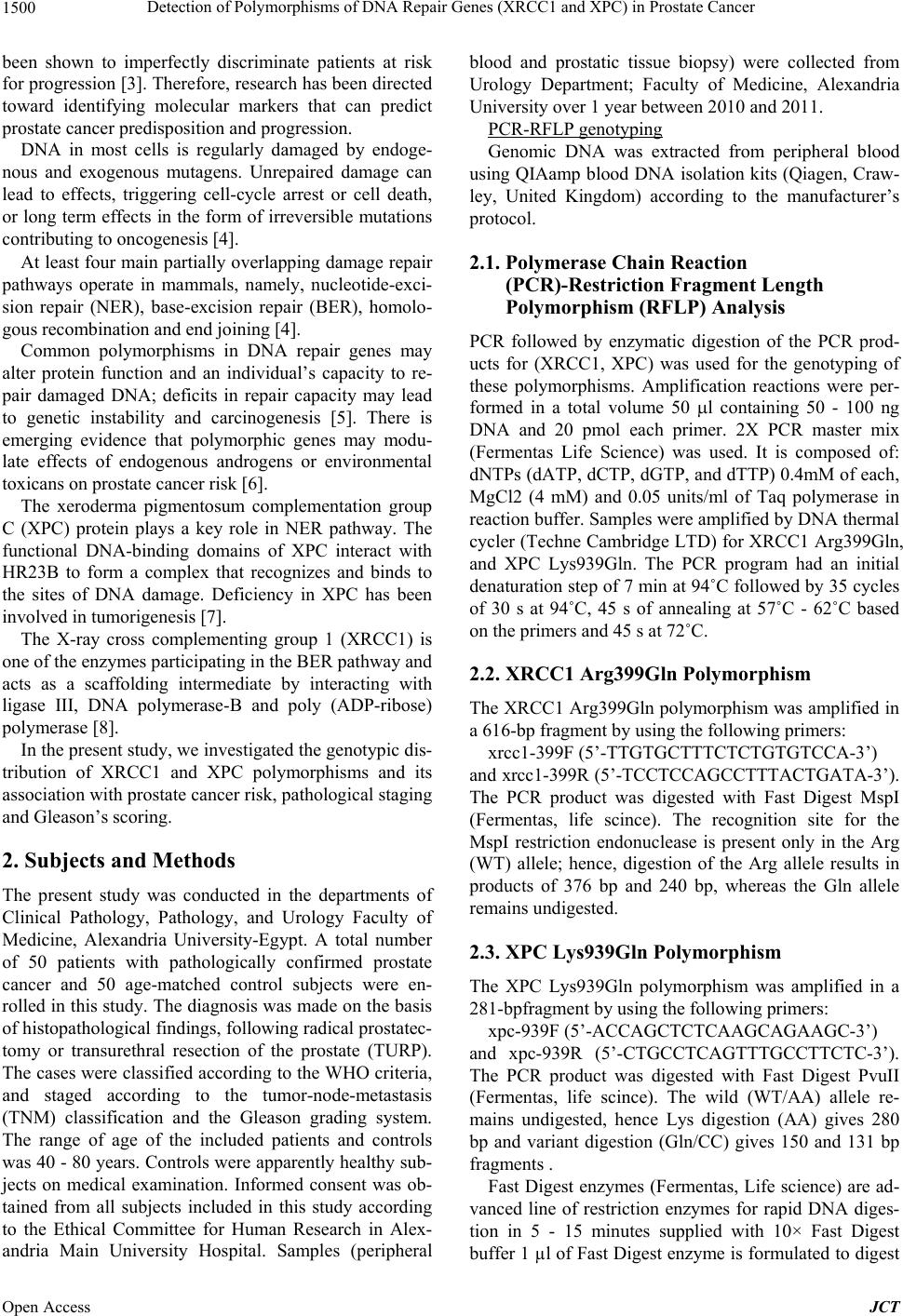 Detection of Polymorphisms of DNA Repair Genes (XRCC1 and XPC) in Prostate Cancer 1500 been shown to imperfectly discriminate patients at risk for progression [3]. Therefore, research has been directed toward identifying molecular markers that can predict prostate cancer predisposition and progression. DNA in most cells is regularly damaged by endoge- nous and exogenous mutagens. Unrepaired damage can lead to effects, triggering cell-cycle arrest or cell death, or long term effects in the form of irreversible mutations contributing to oncogenesis [4]. At least four main partially overlapping damage repair pathways operate in mammals, namely, nucleotide-exci- sion repair (NER), base-excision repair (BER), homolo- gous recombination and end joining [4]. Common polymorphisms in DNA repair genes may alter protein function and an individual’s capacity to re- pair damaged DNA; deficits in repair capacity may lead to genetic instability and carcinogenesis [5]. There is emerging evidence that polymorphic genes may modu- late effects of endogenous androgens or environmental toxicans on prostate cancer risk [6]. The xeroderma pigmentosum complementation group C (XPC) protein plays a key role in NER pathway. The functional DNA-binding domains of XPC interact with HR23B to form a complex that recognizes and binds to the sites of DNA damage. Deficiency in XPC has been involved in tumorigenesis [7]. The X-ray cross complementing group 1 (XRCC1) is one of the enzymes participating in the BER pathway and acts as a scaffolding intermediate by interacting with ligase III, DNA polymerase-B and poly (ADP-ribose) polymerase [8]. In the present study, we investigated the genotypic dis- tribution of XRCC1 and XPC polymorphisms and its association with prostate cancer risk, pathological staging and Gleason’s scoring. 2. Subjects and Methods The present study was conducted in the departments of Clinical Pathology, Pathology, and Urology Faculty of Medicine, Alexandria University-Egypt. A total number of 50 patients with pathologically confirmed prostate cancer and 50 age-matched control subjects were en- rolled in this study. The diagnosis was made on the basis of histopathological findings, following radical prostatec- tomy or transurethral resection of the prostate (TURP). The cases were classified according to the WHO criteria, and staged according to the tumor-node-metastasis (TNM) classification and the Gleason grading system. The range of age of the included patients and controls was 40 - 80 years. Controls were apparently healthy sub- jects on medical examination. Informed consent was ob- tained from all subjects included in this study according to the Ethical Committee for Human Research in Alex- andria Main University Hospital. Samples (peripheral blood and prostatic tissue biopsy) were collected from Urology Department; Faculty of Medicine, Alexandria University over 1 year between 2010 and 2011. PCR-RFLP genotyping Genomic DNA was extracted from peripheral blood using QIAamp blood DNA isolation kits (Qiagen, Craw- ley, United Kingdom) according to the manufacturer’s protocol. 2.1. Polymerase Chain Reaction (PCR)-Restriction Fragment Length Polymorphism (RFLP) Analysis PCR followed by enzymatic digestion of the PCR prod- ucts for (XRCC1, XPC) was used for the genotyping of these polymorphisms. Amplification reactions were per- formed in a total volume 50 l containing 50 - 100 ng DNA and 20 pmol each primer. 2X PCR master mix (Fermentas Life Science) was used. It is composed of: dNTPs (dATP, dCTP, dGTP, and dTTP) 0.4mM of each, MgCl2 (4 mM) and 0.05 units/ml of Taq polymerase in reaction buffer. Samples were amplified by DNA thermal cycler (Techne Cambridge LTD) for XRCC1 Arg399Gln, and XPC Lys939Gln. The PCR program had an initial denaturation step of 7 min at 94˚C followed by 35 cycles of 30 s at 94˚C, 45 s of annealing at 57˚C - 62˚C based on the primers and 45 s at 72˚C. 2.2. XRCC1 Arg399Gln Polymorphism The XRCC1 Arg399Gln polymorphism was amplified in a 616-bp fragment by using the following primers: xrcc1-399F (5’-TTGTGCTTTCTCTGTGTCCA-3’) and xrcc1-399R (5’-TCCTCCAGCCTTTACTGATA-3’). The PCR product was digested with Fast Digest MspI (Fermentas, life scince). The recognition site for the MspI restriction endonuclease is present only in the Arg (WT) allele; hence, digestion of the Arg allele results in products of 376 bp and 240 bp, whereas the Gln allele remains undigested. 2.3. XPC Lys939Gln Polymorphism The XPC Lys939Gln polymorphism was amplified in a 281-bpfragment by using the following primers: xpc-939F (5’-ACCAGCTCTCAAGCAGAAGC-3’) and xpc-939R (5’-CTGCCTCAGTTTGCCTTCTC-3’). The PCR product was digested with Fast Digest PvuII (Fermentas, life scince). The wild (WT/AA) allele re- mains undigested, hence Lys digestion (AA) gives 280 bp and variant digestion (Gln/CC) gives 150 and 131 bp fragments . Fast Digest enzymes (Fermentas, Life science) are ad- vanced line of restriction enzymes for rapid DNA diges- tion in 5 - 15 minutes supplied with 10× Fast Digest buffer 1 µl of Fast Digest enzyme is formulated to digest Open Access JCT 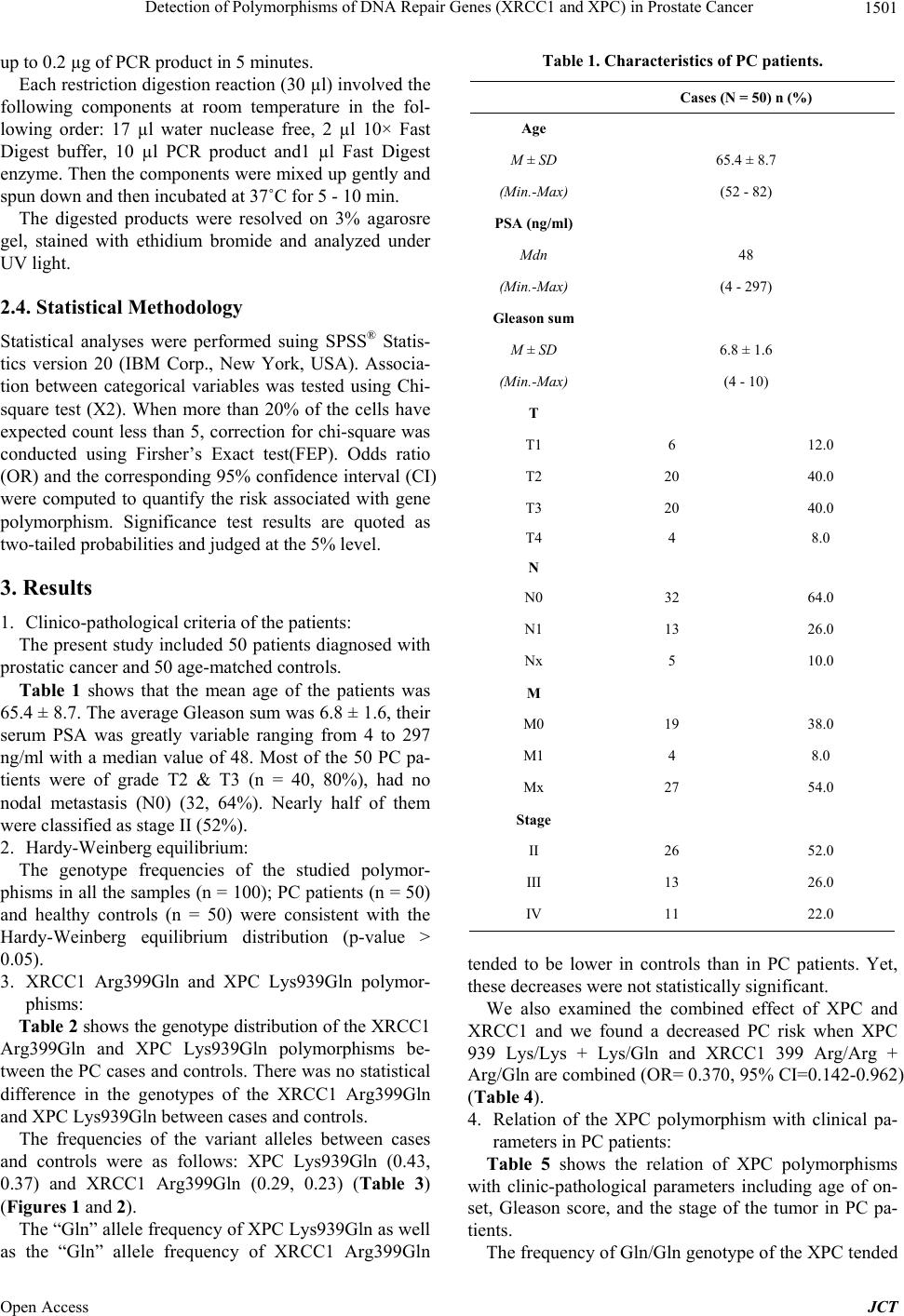 Detection of Polymorphisms of DNA Repair Genes (XRCC1 and XPC) in Prostate Cancer 1501 up to 0.2 µg of PCR product in 5 minutes. Each restriction digestion reaction (30 µl) involved the following components at room temperature in the fol- lowing order: 17 µl water nuclease free, 2 µl 10× Fast Digest buffer, 10 µl PCR product and1 µl Fast Digest enzyme. Then the components were mixed up gently and spun down and then incubated at 37˚C for 5 - 10 min. The digested products were resolved on 3% agarosre gel, stained with ethidium bromide and analyzed under UV light. 2.4. Statistical Methodology Statistical analyses were performed suing SPSS® Statis- tics version 20 (IBM Corp., New York, USA). Associa- tion between categorical variables was tested using Chi- square test (Χ2). When more than 20% of the cells have expected count less than 5, correction for chi-square was conducted using Firsher’s Exact test(FEP). Odds ratio (OR) and the corresponding 95% confidence interval (CI) were computed to quantify the risk associated with gene polymorphism. Significance test results are quoted as two-tailed probabilities and judged at the 5% level. 3. Results 1. Clinico-pathological criteria of the patients: The present study included 50 patients diagnosed with prostatic cancer and 50 age-matched controls. Table 1 shows that the mean age of the patients was 65.4 ± 8.7. The average Gleason sum was 6.8 ± 1.6, their serum PSA was greatly variable ranging from 4 to 297 ng/ml with a median value of 48. Most of the 50 PC pa- tients were of grade T2 & T3 (n = 40, 80%), had no nodal metastasis (N0) (32, 64%). Nearly half of them were classified as stage II (52%). 2. Hardy-Weinberg equilibrium: The genotype frequencies of the studied polymor- phisms in all the samples (n = 100); PC patients (n = 50) and healthy controls (n = 50) were consistent with the Hardy-Weinberg equilibrium distribution (p-value > 0.05). 3. XRCC1 Arg399Gln and XPC Lys939Gln polymor- phisms: Table 2 shows the genotype distribution of the XRCC1 Arg399Gln and XPC Lys939Gln polymorphisms be- tween the PC cases and controls. There was no statistical difference in the genotypes of the XRCC1 Arg399Gln and XPC Lys939Gln between cases and controls. The frequencies of the variant alleles between cases and controls were as follows: XPC Lys939Gln (0.43, 0.37) and XRCC1 Arg399Gln (0.29, 0.23) (Table 3) (Figures 1 and 2). The “Gln” allele frequency of XPC Lys939Gln as well as the “Gln” allele frequency of XRCC1 Arg399Gln Table 1. Characteristics of PC patients. Cases (N = 50) n (%) Age M ± SD 65.4 ± 8.7 (Min.-Max) (52 - 82) PSA (ng/ml) Mdn 48 (Min.-Max) (4 - 297) Gleason sum M ± SD 6.8 ± 1.6 (Min.-Max) (4 - 10) T T1 6 12.0 T2 20 40.0 T3 20 40.0 T4 4 8.0 N N0 32 64.0 N1 13 26.0 Nx 5 10.0 M M0 19 38.0 M1 4 8.0 Mx 27 54.0 Stage II 26 52.0 III 13 26.0 IV 11 22.0 tended to be lower in controls than in PC patients. Yet, these decreases were not statistically significant. We also examined the combined effect of XPC and XRCC1 and we found a decreased PC risk when XPC 939 Lys/Lys + Lys/Gln and XRCC1 399 Arg/Arg + Arg/Gln are combined (OR= 0.370, 95% CI=0.142-0.962) (Table 4). 4. Relation of the XPC polymorphism with clinical pa- rameters in PC patients: Table 5 shows the relation of XPC polymorphisms with clinic-pathological parameters including age of on- set, Gleason score, and the stage of the tumor in PC pa- tients. The frequency of Gln/Gln genotype of the XPC tended Open Access JCT 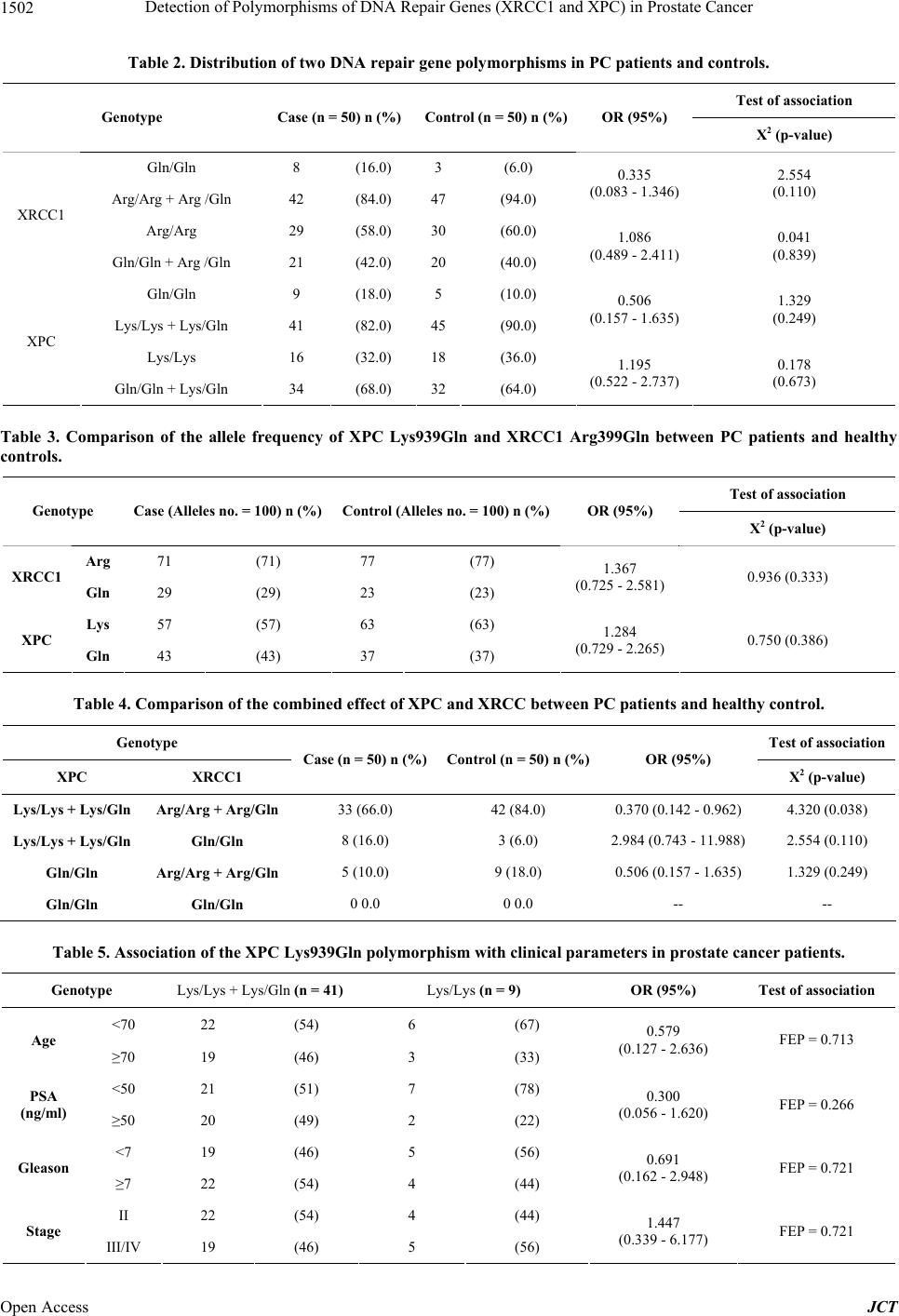 Detection of Polymorphisms of DNA Repair Genes (XRCC1 and XPC) in Prostate Cancer Open Access JCT 1502 Table 2. Distribution of two DNA repair gene polymorphisms in PC patients and controls. Test of association Genotype Case (n = 50) n (%)Control (n = 50) n (%)OR (95%) Χ2 (p-value) Gln/Gln 8 (16.0) 3 (6.0) Arg/Arg + Arg /Gln 42 (84.0) 47(94.0) 0.335 (0.083 - 1.346) 2.554 (0.110) Arg/Arg 29 (58.0) 30(60.0) XRCC1 Gln/Gln + Arg /Gln 21 (42.0) 20(40.0) 1.086 (0.489 - 2.411) 0.041 (0.839) Gln/Gln 9 (18.0) 5 (10.0) Lys/Lys + Lys/Gln 41 (82.0) 45(90.0) 0.506 (0.157 - 1.635) 1.329 (0.249) Lys/Lys 16 (32.0) 18(36.0) XPC Gln/Gln + Lys/Gln 34 (68.0) 32(64.0) 1.195 (0.522 - 2.737) 0.178 (0.673) Table 3. Comparison of the allele frequency of XPC Lys939Gln and XRCC1 Arg399Gln between PC patients and healthy controls. Test of association Genotype Case (Alleles no. = 100) n (%) Control (Alleles no. = 100) n (%)OR (95%) Χ2 (p-value) Arg 71 (71) 77 (77) XRCC1 Gln 29 (29) 23 (23) 1.367 (0.725 - 2.581)0.936 (0.333) Lys 57 (57) 63 (63) XPC Gln 43 (43) 37 (37) 1.284 (0.729 - 2.265)0.750 (0.386) Table 4. Comparison of the combined effect of XPC and XRCC between PC patients and healthy control. Genotype Test of association XPC XRCC1 Case (n = 50) n (%)Control (n = 50) n (%)OR (95%) Χ2 (p-value) Lys/Lys + Lys/Gln Arg/Arg + Arg/Gln 33 (66.0) 42 (84.0) 0.370 (0.142 - 0.962) 4.320 (0.038) Lys/Lys + Lys/Gln Gln/Gln 8 (16.0) 3 (6.0) 2.984 (0.743 - 11.988) 2.554 (0.110) Gln/Gln Arg/Arg + Arg/Gln 5 (10.0) 9 (18.0) 0.506 (0.157 - 1.635) 1.329 (0.249) Gln/Gln Gln/Gln 0 0.0 0 0.0 -- -- Table 5. Association of the XPC Lys939Gln polymorphism with clinical parameters in prostate cancer patients. Genotype Lys/Lys + Lys/Gln (n = 41) Lys/Lys (n = 9) OR (95%) Test of association <70 22 (54) 6 (67) Age ≥70 19 (46) 3 (33) 0.579 (0.127 - 2.636) FEP = 0.713 <50 21 (51) 7 (78) PSA (ng/ml) ≥50 20 (49) 2 (22) 0.300 (0.056 - 1.620) FEP = 0.266 <7 19 (46) 5 (56) Gleason ≥7 22 (54) 4 (44) 0.691 (0.162 - 2.948) FEP = 0.721 II 22 (54) 4 (44) Stage III/IV 19 (46) 5 (56) 1.447 (0.339 - 6.177) FEP = 0.721 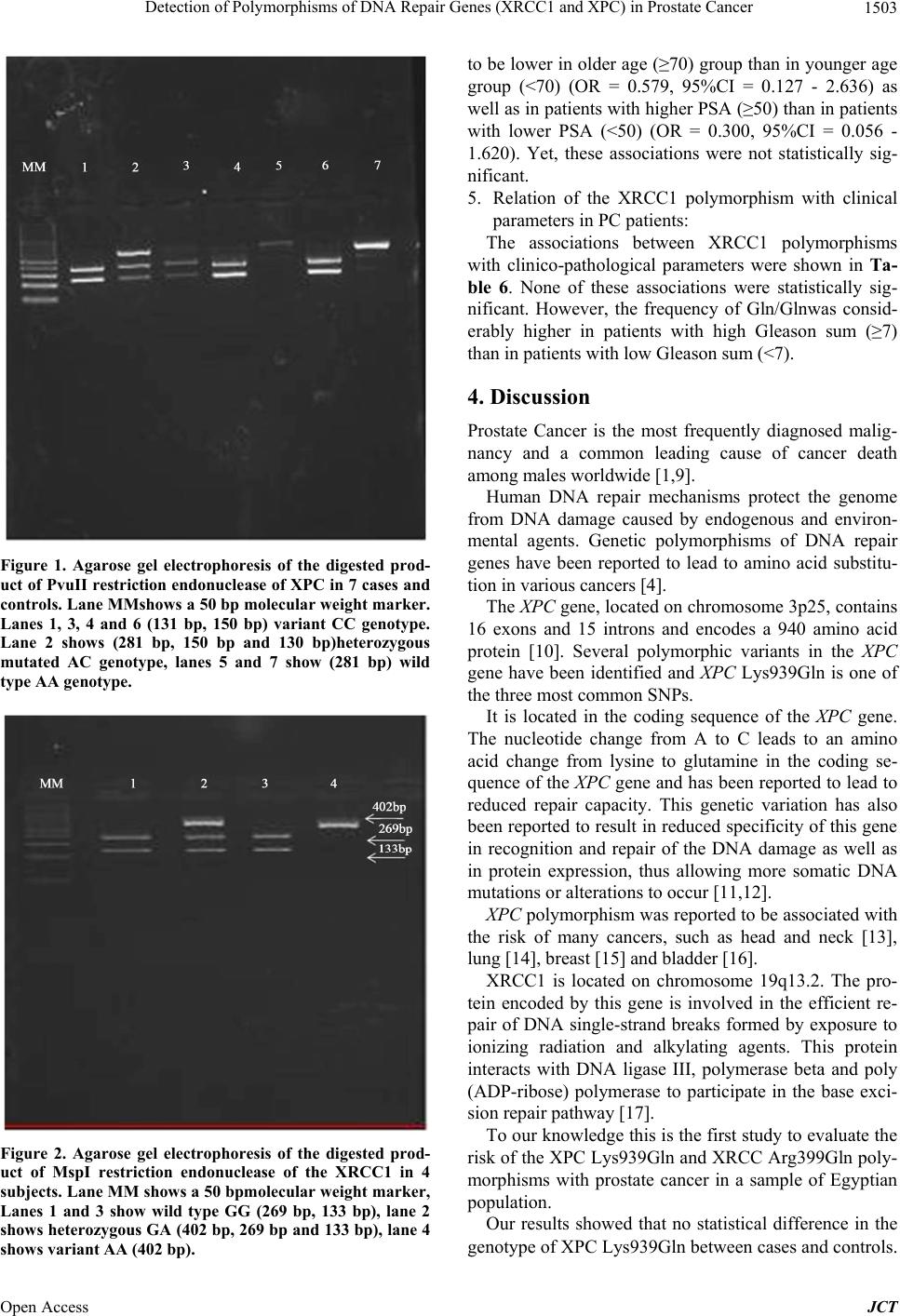 Detection of Polymorphisms of DNA Repair Genes (XRCC1 and XPC) in Prostate Cancer 1503 Figure 1. Agarose gel electrophoresis of the digested prod- uct of PvuII restriction endonuclease of XPC in 7 cases and controls. Lane MMshows a 50 bp molecular weight marker. Lanes 1, 3, 4 and 6 (131 bp, 150 bp) variant CC genotype. Lane 2 shows (281 bp, 150 bp and 130 bp)heterozygous mutated AC genotype, lanes 5 and 7 show (281 bp) wild type AA genotype. Figure 2. Agarose gel electrophoresis of the digested prod- uct of MspI restriction endonuclease of the XRCC1 in 4 subjects. Lane MM shows a 50 bpmolecular weight marker, Lanes 1 and 3 show wild type GG (269 bp, 133 bp), lane 2 shows heterozygous GA (402 bp, 269 bp and 133 bp), lane 4 shows variant AA (402 bp). to be lower in older age (≥70) group than in younger age group (<70) (OR = 0.579, 95%CI = 0.127 - 2.636) as well as in patients with higher PSA (≥50) than in patients with lower PSA (<50) (OR = 0.300, 95%CI = 0.056 - 1.620). Yet, these associations were not statistically sig- nificant. 5. Relation of the XRCC1 polymorphism with clinical parameters in PC patients: The associations between XRCC1 polymorphisms with clinico-pathological parameters were shown in Ta - ble 6. None of these associations were statistically sig- nificant. However, the frequency of Gln/Glnwas consid- erably higher in patients with high Gleason sum (≥7) than in patients with low Gleason sum (<7). 4. Discussion Prostate Cancer is the most frequently diagnosed malig- nancy and a common leading cause of cancer death among males worldwide [1,9]. Human DNA repair mechanisms protect the genome from DNA damage caused by endogenous and environ- mental agents. Genetic polymorphisms of DNA repair genes have been reported to lead to amino acid substitu- tion in various cancers [4]. The XPC gene, located on chromosome 3p25, contains 16 exons and 15 introns and encodes a 940 amino acid protein [10]. Several polymorphic variants in the XPC gene have been identified and XPC Lys939Gln is one of the three most common SNPs. It is located in the coding sequence of the XPC gene. The nucleotide change from A to C leads to an amino acid change from lysine to glutamine in the coding se- quence of the XPC gene and has been reported to lead to reduced repair capacity. This genetic variation has also been reported to result in reduced specificity of this gene in recognition and repair of the DNA damage as well as in protein expression, thus allowing more somatic DNA mutations or alterations to occur [11,12]. XPC polymorphism was reported to be associated with the risk of many cancers, such as head and neck [13], lung [14], breast [15] and bladder [16]. XRCC1 is located on chromosome 19q13.2. The pro- tein encoded by this gene is involved in the efficient re- pair of DNA single-strand breaks formed by exposure to ionizing radiation and alkylating agents. This protein interacts with DNA ligase III, polymerase beta and poly (ADP-ribose) polymerase to participate in the base exci- sion repair pathway [17]. To our knowledge this is the first study to evaluate the risk of the XPC Lys939Gln and XRCC Arg399Gln poly- morphisms with prostate cancer in a sample of Egyptian population. Our results showed that no statistical difference in the enotype of XPC Lys939Gln between cases and controls. g Open Access JCT 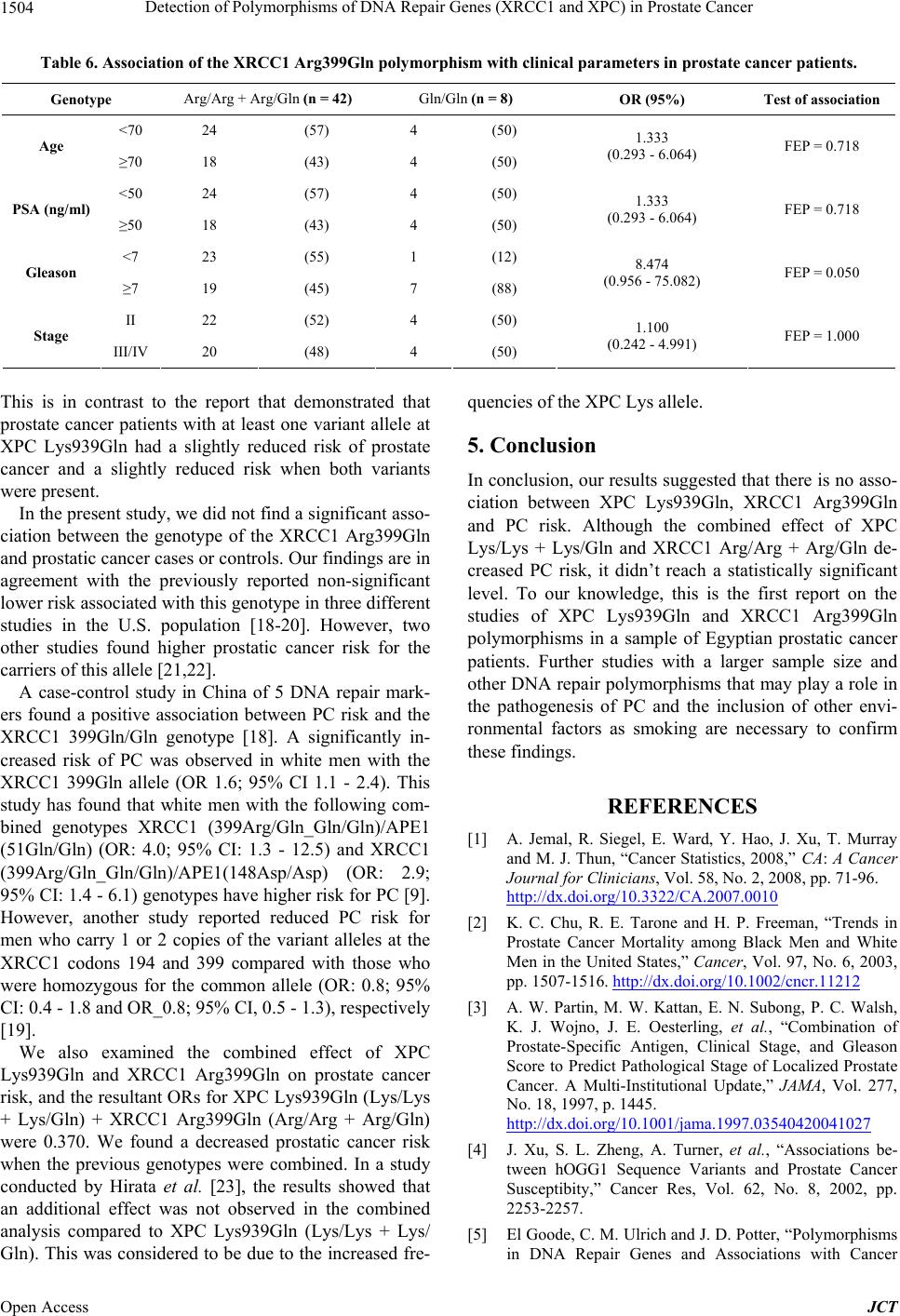 Detection of Polymorphisms of DNA Repair Genes (XRCC1 and XPC) in Prostate Cancer 1504 Table 6. Association of the XRCC1 Arg399Gln polymorphism with clinical parameters in prostate cancer patients. Genotype Arg/Arg + Arg/Gln (n = 42) Gln/Gln (n = 8) OR (95%) Test of association <70 24 (57) 4 (50) Age ≥70 18 (43) 4 (50) 1.333 (0.293 - 6.064) FEP = 0.718 <50 24 (57) 4 (50) PSA (ng/ml) ≥50 18 (43) 4 (50) 1.333 (0.293 - 6.064) FEP = 0.718 <7 23 (55) 1 (12) Gleason ≥7 19 (45) 7 (88) 8.474 (0.956 - 75.082) FEP = 0.050 II 22 (52) 4 (50) Stage III/IV 20 (48) 4 (50) 1.100 (0.242 - 4.991) FEP = 1.000 This is in contrast to the report that demonstrated that prostate cancer patients with at least one variant allele at XPC Lys939Gln had a slightly reduced risk of prostate cancer and a slightly reduced risk when both variants were present. In the present study, we did not find a significant asso- ciation between the genotype of the XRCC1 Arg399Gln and prostatic cancer cases or controls. Our findings are in agreement with the previously reported non-significant lower risk associated with this genotype in three different studies in the U.S. population [18-20]. However, two other studies found higher prostatic cancer risk for the carriers of this allele [21,22]. A case-control study in China of 5 DNA repair mark- ers found a positive association between PC risk and the XRCC1 399Gln/Gln genotype [18]. A significantly in- creased risk of PC was observed in white men with the XRCC1 399Gln allele (OR 1.6; 95% CI 1.1 - 2.4). This study has found that white men with the following com- bined genotypes XRCC1 (399Arg/Gln_Gln/Gln)/APE1 (51Gln/Gln) (OR: 4.0; 95% CI: 1.3 - 12.5) and XRCC1 (399Arg/Gln_Gln/Gln)/APE1(148Asp/Asp) (OR: 2.9; 95% CI: 1.4 - 6.1) genotypes have higher risk for PC [9]. However, another study reported reduced PC risk for men who carry 1 or 2 copies of the variant alleles at the XRCC1 codons 194 and 399 compared with those who were homozygous for the common allele (OR: 0.8; 95% CI: 0.4 - 1.8 and OR_0.8; 95% CI, 0.5 - 1.3), respectively [19]. We also examined the combined effect of XPC Lys939Gln and XRCC1 Arg399Gln on prostate cancer risk, and the resultant ORs for XPC Lys939Gln (Lys/Lys + Lys/Gln) + XRCC1 Arg399Gln (Arg/Arg + Arg/Gln) were 0.370. We found a decreased prostatic cancer risk when the previous genotypes were combined. In a study conducted by Hirata et al. [23], the results showed that an additional effect was not observed in the combined analysis compared to XPC Lys939Gln (Lys/Lys + Lys/ Gln). This was considered to be due to the increased fre- quencies of the XPC Lys allele. 5. Conclusion In conclusion, our results suggested that there is no asso- ciation between XPC Lys939Gln, XRCC1 Arg399Gln and PC risk. Although the combined effect of XPC Lys/Lys + Lys/Gln and XRCC1 Arg/Arg + Arg/Gln de- creased PC risk, it didn’t reach a statistically significant level. To our knowledge, this is the first report on the studies of XPC Lys939Gln and XRCC1 Arg399Gln polymorphisms in a sample of Egyptian prostatic cancer patients. Further studies with a larger sample size and other DNA repair polymorphisms that may play a role in the pathogenesis of PC and the inclusion of other envi- ronmental factors as smoking are necessary to confirm these findings. REFERENCES [1] A. Jemal, R. Siegel, E. Ward, Y. Hao, J. Xu, T. Murray and M. J. Thun, “Cancer Statistics, 2008,” CA: A Cancer Journal for Clinicians, Vol. 58, No. 2, 2008, pp. 71-96. http://dx.doi.org/10.3322/CA.2007.0010 [2] K. C. Chu, R. E. Tarone and H. P. Freeman, “Trends in Prostate Cancer Mortality among Black Men and White Men in the United States,” Cancer, Vol. 97, No. 6, 2003, pp. 1507-1516. http://dx.doi.org/10.1002/cncr.11212 [3] A. W. Partin, M. W. Kattan, E. N. Subong, P. C. Walsh, K. J. Wojno, J. E. Oesterling, et al., “Combination of Prostate-Specific Antigen, Clinical Stage, and Gleason Score to Predict Pathological Stage of Localized Prostate Cancer. A Multi-Institutional Update,” JAMA, Vol. 277, No. 18, 1997, p. 1445. http://dx.doi.org/10.1001/jama.1997.03540420041027 [4] J. Xu, S. L. Zheng, A. Turner, et al., “Associations be- tween hOGG1 Sequence Variants and Prostate Cancer Susceptibity,” Cancer Res, Vol. 62, No. 8, 2002, pp. 2253-2257. [5] El Goode, C. M. Ulrich and J. D. Potter, “Polymorphisms in DNA Repair Genes and Associations with Cancer Open Access JCT 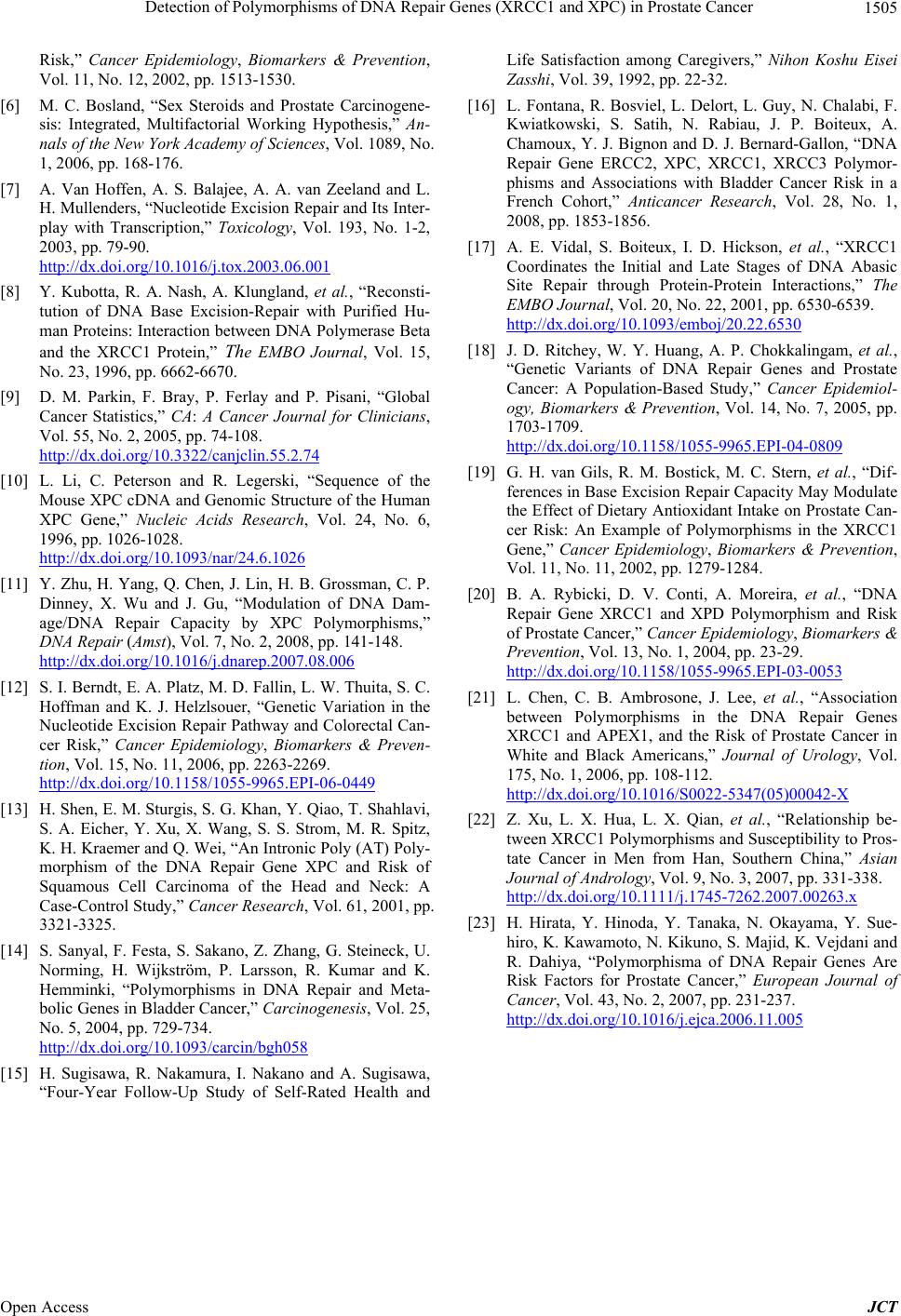 Detection of Polymorphisms of DNA Repair Genes (XRCC1 and XPC) in Prostate Cancer 1505 Risk,” Cancer Epidemiology, Biomarkers & Prevention, Vol. 11, No. 12, 2002, pp. 1513-1530. [6] M. C. Bosland, “Sex Steroids and Prostate Carcinogene- sis: Integrated, Multifactorial Working Hypothesis,” An- nals of the New York Academy of Sciences, Vol. 1089, No. 1, 2006, pp. 168-176. [7] A. Van Hoffen, A. S. Balajee, A. A. van Zeeland and L. H. Mullenders, “Nucleotide Excision Repair and Its Inter- play with Transcription,” Toxicology, Vol. 193, No. 1-2, 2003, pp. 79-90. http://dx.doi.org/10.1016/j.tox.2003.06.001 [8] Y. Kubotta, R. A. Nash, A. Klungland, et al., “Reconsti- tution of DNA Base Excision-Repair with Purified Hu- man Proteins: Interaction between DNA Polymerase Beta and the XRCC1 Protein,” The EMBO Journal, Vol. 15, No. 23, 1996, pp. 6662-6670. [9] D. M. Parkin, F. Bray, P. Ferlay and P. Pisani, “Global Cancer Statistics,” CA: A Cancer Journal for Clinicians, Vol. 55, No. 2, 2005, pp. 74-108. http://dx.doi.org/10.3322/canjclin.55.2.74 [10] L. Li, C. Peterson and R. Legerski, “Sequence of the Mouse XPC cDNA and Genomic Structure of the Human XPC Gene,” Nucleic Acids Research, Vol. 24, No. 6, 1996, pp. 1026-1028. http://dx.doi.org/10.1093/nar/24.6.1026 [11] Y. Zhu, H. Yang, Q. Chen, J. Lin, H. B. Grossman, C. P. Dinney, X. Wu and J. Gu, “Modulation of DNA Dam- age/DNA Repair Capacity by XPC Polymorphisms,” DNA Repair (Amst), Vol. 7, No. 2, 2008, pp. 141-148. http://dx.doi.org/10.1016/j.dnarep.2007.08.006 [12] S. I. Berndt, E. A. Platz, M. D. Fallin, L. W. Thuita, S. C. Hoffman and K. J. Helzlsouer, “Genetic Variation in the Nucleotide Excision Repair Pathway and Colorectal Can- cer Risk,” Cancer Epidemiology, Biomarkers & Preven- tion, Vol. 15, No. 11, 2006, pp. 2263-2269. http://dx.doi.org/10.1158/1055-9965.EPI-06-0449 [13] H. Shen, E. M. Sturgis, S. G. Khan, Y. Qiao, T. Shahlavi, S. A. Eicher, Y. Xu, X. Wang, S. S. Strom, M. R. Spitz, K. H. Kraemer and Q. Wei, “An Intronic Poly (AT) Poly- morphism of the DNA Repair Gene XPC and Risk of Squamous Cell Carcinoma of the Head and Neck: A Case-Control Study,” Cancer Research, Vol. 61, 2001, pp. 3321-3325. [14] S. Sanyal, F. Festa, S. Sakano, Z. Zhang, G. Steineck, U. Norming, H. Wijkström, P. Larsson, R. Kumar and K. Hemminki, “Polymorphisms in DNA Repair and Meta- bolic Genes in Bladder Cancer,” Carcinogenesis, Vol. 25, No. 5, 2004, pp. 729-734. http://dx.doi.org/10.1093/carcin/bgh058 [15] H. Sugisawa, R. Nakamura, I. Nakano and A. Sugisawa, “Four-Year Follow-Up Study of Self-Rated Health and Life Satisfaction among Caregivers,” Nihon Koshu Eisei Zasshi, Vol. 39, 1992, pp. 22-32. [16] L. Fontana, R. Bosviel, L. Delort, L. Guy, N. Chalabi, F. Kwiatkowski, S. Satih, N. Rabiau, J. P. Boiteux, A. Chamoux, Y. J. Bignon and D. J. Bernard-Gallon, “DNA Repair Gene ERCC2, XPC, XRCC1, XRCC3 Polymor- phisms and Associations with Bladder Cancer Risk in a French Cohort,” Anticancer Research, Vol. 28, No. 1, 2008, pp. 1853-1856. [17] A. E. Vidal, S. Boiteux, I. D. Hickson, et al., “XRCC1 Coordinates the Initial and Late Stages of DNA Abasic Site Repair through Protein-Protein Interactions,” The EMBO Journal, Vol. 20, No. 22, 2001, pp. 6530-6539. http://dx.doi.org/10.1093/emboj/20.22.6530 [18] J. D. Ritchey, W. Y. Huang, A. P. Chokkalingam, et al., “Genetic Variants of DNA Repair Genes and Prostate Cancer: A Population-Based Study,” Cancer Epidemiol- ogy, Biomarkers & Prevention, Vol. 14, No. 7, 2005, pp. 1703-1709. http://dx.doi.org/10.1158/1055-9965.EPI-04-0809 [19] G. H. van Gils, R. M. Bostick, M. C. Stern, et al., “Dif- ferences in Base Excision Repair Capacity May Modulate the Effect of Dietary Antioxidant Intake on Prostate Can- cer Risk: An Example of Polymorphisms in the XRCC1 Gene,” Cancer Epidemiology, Biomarkers & Prevention, Vol. 11, No. 11, 2002, pp. 1279-1284. [20] B. A. Rybicki, D. V. Conti, A. Moreira, et al., “DNA Repair Gene XRCC1 and XPD Polymorphism and Risk of Prostate Cancer,” Cancer Epidemiology, Biomarkers & Prevention, Vol. 13, No. 1, 2004, pp. 23-29. http://dx.doi.org/10.1158/1055-9965.EPI-03-0053 [21] L. Chen, C. B. Ambrosone, J. Lee, et al., “Association between Polymorphisms in the DNA Repair Genes XRCC1 and APEX1, and the Risk of Prostate Cancer in White and Black Americans,” Journal of Urology, Vol. 175, No. 1, 2006, pp. 108-112. http://dx.doi.org/10.1016/S0022-5347(05)00042-X [22] Z. Xu, L. X. Hua, L. X. Qian, et al., “Relationship be- tween XRCC1 Polymorphisms and Susceptibility to Pros- tate Cancer in Men from Han, Southern China,” Asian Journal of Andrology, Vol. 9, No. 3, 2007, pp. 331-338. http://dx.doi.org/10.1111/j.1745-7262.2007.00263.x [23] H. Hirata, Y. Hinoda, Y. Tanaka, N. Okayama, Y. Sue- hiro, K. Kawamoto, N. Kikuno, S. Majid, K. Vejdani and R. Dahiya, “Polymorphisma of DNA Repair Genes Are Risk Factors for Prostate Cancer,” European Journal of Cancer, Vol. 43, No. 2, 2007, pp. 231-237. http://dx.doi.org/10.1016/j.ejca.2006.11.005 Open Access JCT |