

Paper Menu >>
Journal Menu >>
 Open Journal of Stomatology, 2013, 3, 492-496 OJST http://dx.doi.org/10.4236/ojst.2013.39080 Published Online December 2013 (http://www.scirp.org/journal/ojst/) The antibiotic utilization at the university dentistry clinical center of Kosovo Fehim Haliti1, Naim Haliti2, Ferit Koçani3, Agim Begzati1, Fatmir Dragidella4, Luljeta Ferizi1, Lumnije Krasniqi1, Dafina Doberdoli1, Shqiprim Bajrami1, Shaip Krasniqi5 1Pediatric Dentistry, Department of Stomatology, Faculty of Medicine, University of Prishtina “Hasan Prishtina”, Prishtina, Kosovo 2Institute of Forensic Pathology, Faculty of Medicine, University of Prishtina “Hasan Prishtina”, Prishtina, Kosovo 3Restorative Dentistry and Endodontology, Department of Stomatology, Faculty of Medicine, University of Prishtina “Hasan Prishtina”, Prishtina, Kosovo 4Peridontology and Oral Medicine, Department of Stomatology, Faculty of Medicine, University of Prishtina “Hasan Prishtina”, Prishtina, Kosovo 5Institute of Pharmacology and Toxicology and Clinical Pharmacology, Faculty of Medicine, University of Prishtina “Hasan Prishtina”, Prishtina, Kosovo Email: [email protected] Received 11 October 2013; revised 16 November 2013; accepted 1 December 2013 Copyright © 2013 Fehim Haliti et al. This is an open access article distributed under the Creative Commons Attribution License, which permits unrestricted use, distribution, and reproduction in any medium, provided the original work is properly cited. ABSTRACT Antibiotic drugs are a very important drug group considering their frequent use, safety profile and their impact on bacterial resistance induction. Aim: To investigate the utilization of antibiotic drugs at the University Dentistry Clinical Center of Kosovo (UDCCK). Methodology: Retrospective and descrip- tive study. Patient records were used as a data source collected for a period of 3 months. The total number of registered outpatients in the UDCCK was 1117 patients. The data analysis was performed using the WHO methodology and results were expressed in DDD per 1000 inhabitants per day. Results: The total prescription of antibiotics at UDCCK was 7.18 DDD/ 1000 inhabitants/day. Antibiotics were prescribed for 86 or 7.70% of patients. The most commonly pre- scribed antibiotic was Amoxicillin with clavulonic acid 3.12 (43.45%) DDD, followed by Metronidazole 2.31 DDD and Amoxicillin 1.25 DDD. Erythromycin and Cefalexin were prescribed evidently less com- pared to other antibiotics (0.38 and 0.12 DDD/1000 inhabitant/day, respectively). Conclusions: The quan- titative analysis showed no rationality of prescription of antibiotics in UDCCK. Generally, the use of anti- biotics in both departments of UDCCK is higher compared to other countries. We recommend the im- plementation of restrictive prescription standards for antibiotics. Keywords: Antibiotic; Utilization; ATC/DDD 1. INTRODUCTION In pharmaco-therapeutic clinical practice, antimicrobials are considered to be a group of drugs of essential value, due to their common prescription, therapeuticall success, and their impact on the development of bacterial resis- tance [1,2]. Their magnitude of prescription is significant not only for in-patients but also fo r outpatients. Scien tific evidence reports that antibiotics are the most commonly prescribed medications in the USA, and they contribute approximately 20% - 50% of the total medications used [3]. Antibiotics are an essential group in oral health care as well. The use of these medications requires restrictive prescription by respecting all standards for rational use in order to achieve the highest rate of treatment, less side effects and not to induce the bacterial resistance [4]. The clinical evidence reports that antibiotic prescriptions by dental and medical practitioners are asso ciated with con- siderable percentage of medication errors and abuse [5, 6]. To achieve the standards for rational prescription of antibiotics by dentists requires knowledge of the bacte- riological profile of infections in oral-facial region, choosing of an antibiotic with adequate spectrum of ac- tivity and selecting the safest an tibiotic possible [7,8]. To achieve the standards for rational prescription set in a national drug policy of various countries, there are con- tinuing professional education programs on clinical therapy for medical personnel including strategies for systematic surveys on antibiotic prescribing. All these activities provide feedback information and evaluation of drug prescribing for implementing adequate measures aimed at raising standards for rational prescribing prac- OPEN ACCESS 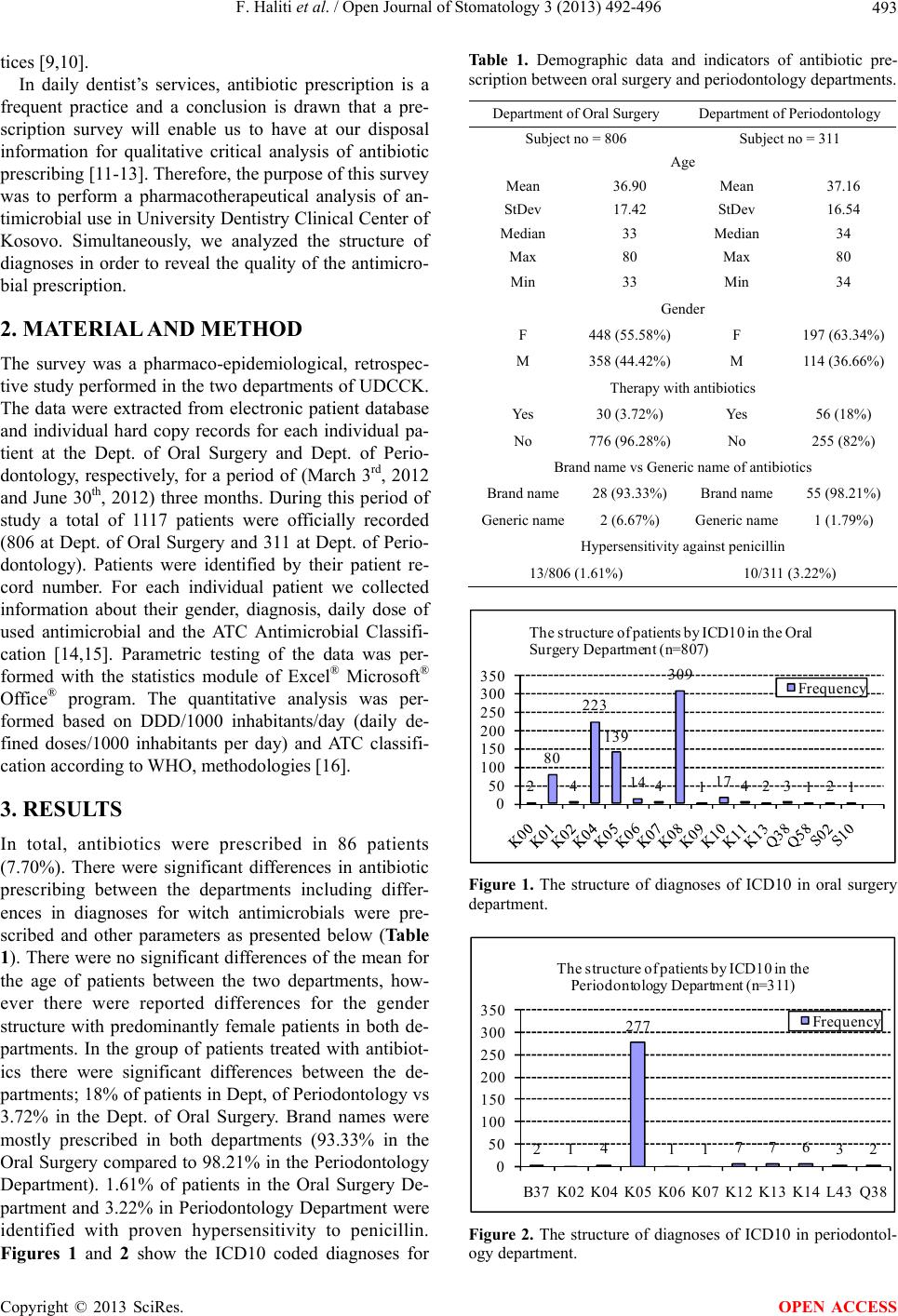 F. Haliti et al. / Open Journal of Stomatology 3 (2013) 492-496 493 tices [9,10]. In daily dentist’s services, antibiotic prescription is a frequent practice and a conclusion is drawn that a pre- scription survey will enable us to have at our disposal information for qualitative critical analysis of antibiotic prescrib ing [11-13]. Therefore, the purpose of this survey was to perform a pharmacotherapeutical analysis of an- timicrobial us e in University Den tistry Clinical Center of Kosovo. Simultaneously, we analyzed the structure of diagnoses in order to reveal the quality of the antimicro- bial prescription. 2. MATERIAL AND METHOD The survey was a pharmaco-epidemiological, retrospec- tive study performed in the two departments of UDCCK. The data were extracted from electronic patient database and individual hard copy records for each individual pa- tient at the Dept. of Oral Surgery and Dept. of Perio- dontology, respectively, for a period of (March 3rd, 2012 and June 30th, 2012) three months. During this period of study a total of 1117 patients were officially recorded (806 at Dept. of Oral Surgery and 311 at Dept. of Perio- dontology). Patients were identified by their patient re- cord number. For each individual patient we collected information about their gender, diagnosis, daily dose of used antimicrobial and the ATC Antimicrobial Classifi- cation [14,15]. Parametric testing of the data was per- formed with the statistics module of Excel® Microsoft® Office® program. The quantitative analysis was per- formed based on DDD/1000 inhabitants/day (daily de- fined doses/1000 inhabitants per day) and ATC classifi- cation according to WHO, methodologies [16]. 3. RESULTS In total, antibiotics were prescribed in 86 patients (7.70%). There were significant differences in antibiotic prescribing between the departments including differ- ences in diagnoses for witch antimicrobials were pre- scribed and other parameters as presented below (Table 1). There were no significant differences of the mean for the age of patients between the two departments, how- ever there were reported differences for the gender structure with predominantly female patients in both de- partments. In the group of patients treated with antibiot- ics there were significant differences between the de- partments; 18% of patients in Dept, of Periodontology vs 3.72% in the Dept. of Oral Surgery. Brand names were mostly prescribed in both departments (93.33% in the Oral Surgery compared to 98.21% in the Periodontology Department). 1.61% of patients in the Oral Surgery De- partment and 3.22% in Periodontology Department were identified with proven hypersensitivity to penicillin. Figures 1 and 2 show the ICD10 coded diagnoses for Table 1. Demographic data and indicators of antibiotic pre- scription between oral surgery and periodontology departments. Department of Oral Surgery Department of Periodontology Subject no = 806 Subject no = 311 Age Mean 36.90 Mean 37.16 StDev 17.42 StDev 16.54 Median 33 Median 34 Max 80 Max 80 Min 33 Min 34 Gender F 448 (55.58%)F 197 (63.34%) M 358 (44.42%)M 114 (36.66%) Therapy with antibiotics Yes 30 (3.72%) Yes 56 (18%) No 776 (96.28%)No 255 (82%) Brand name vs Generic name of antibiotics Brand name 28 (93.33%) Brand name 55 (98.21%) Generic name2 (6.67%) Generic name 1 (1.79%) Hypersensitivity against penicillin 13/806 (1.61%) 10/311 (3.22%) 2 80 4 223 139 14 4 309 117 423121 0 50 100 150 200 250 300 350 The structu re of patients by ICD10 in the Ora l S urg e ry De part ment (n = 80 7) Frequency Figure 1. The structure of diagnoses of ICD10 in oral surgery department. 214 277 1177632 0 50 100 150 200 250 300 350 B37K02 K04K05K06K07 K12K13K14L43Q38 The structu re of patien ts by ICD10 in the P er i odontol o gyD epar tme n t (n= 31 1) Frequency Figure 2. The structure of diagnoses of ICD10 in periodontol- ogy department. Copyright © 2013 SciRes. OPEN ACCESS 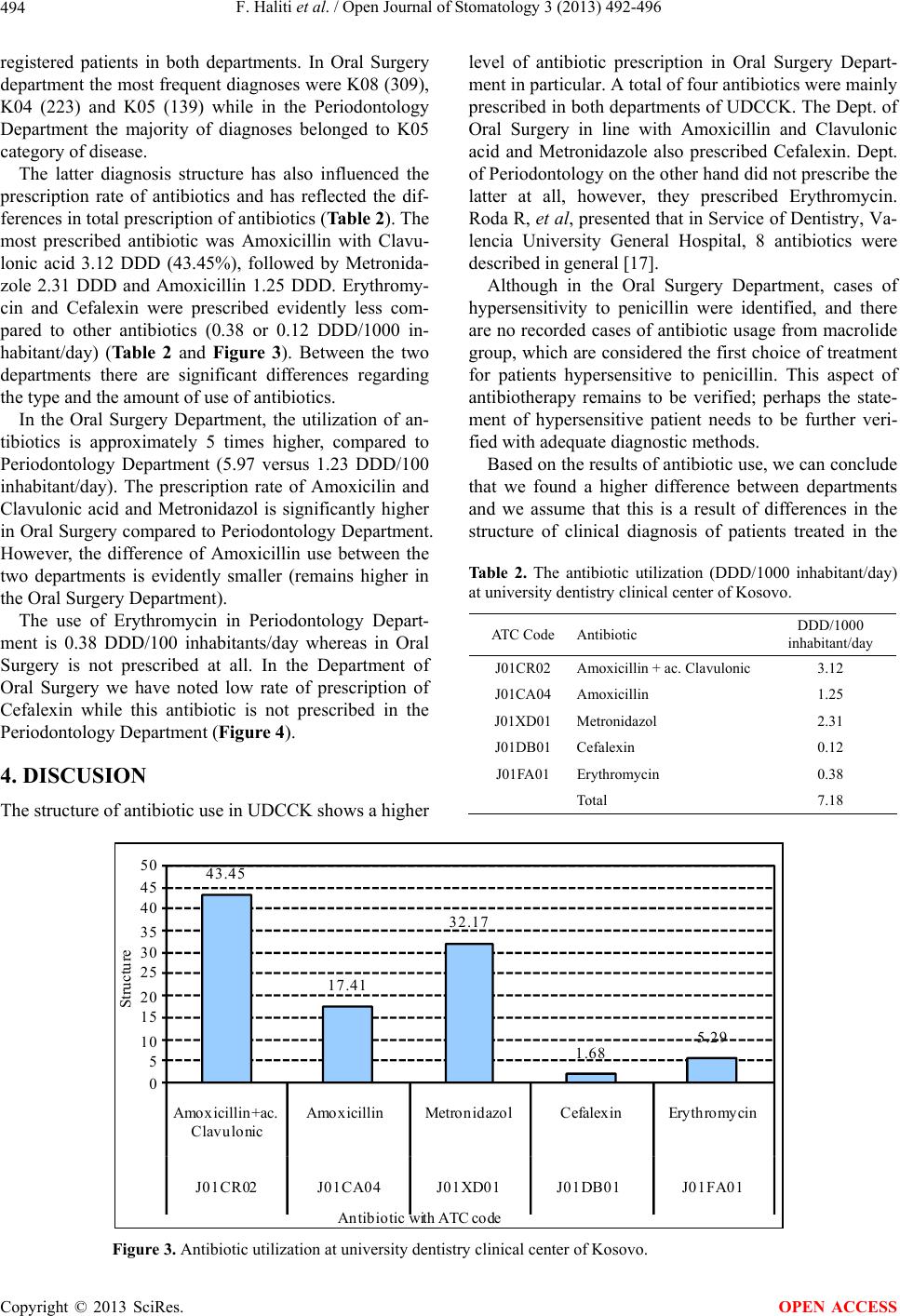 F. Haliti et al. / Open Journal of Stomatology 3 (2013) 492-496 Copyright © 2013 SciRes. 494 level of antibiotic prescription in Oral Surgery Depart- ment in particular. A total of four antibiotics were mainly prescribed in both departments of UDCCK. The Dept. of Oral Surgery in line with Amoxicillin and Clavulonic acid and Metronidazole also prescribed Cefalexin. Dept. of Periodontology on the other hand did not prescribe the latter at all, however, they prescribed Erythromycin. Roda R, et al, presented that in Service of Dentistry, Va- lencia University General Hospital, 8 antibiotics were described i n g eneral [1 7]. registered patients in both departments. In Oral Surgery department the most frequent diagnoses were K08 (309), K04 (223) and K05 (139) while in the Periodontology Department the majority of diagnoses belonged to K05 category of disease. The latter diagnosis structure has also influenced the prescription rate of antibiotics and has reflected the dif- ferences in total prescription of antibio tics ( Table 2). The most prescribed antibiotic was Amoxicillin with Clavu- lonic acid 3.12 DDD (43.45%), followed by Metronida- zole 2.31 DDD and Amoxicillin 1.25 DDD. Erythromy- cin and Cefalexin were prescribed evidently less com- pared to other antibiotics (0.38 or 0.12 DDD/1000 in- habitant/day) (Tab le 2 and Figure 3). Between the two departments there are significant differences regarding the type and the amount of use of antibiotics. Although in the Oral Surgery Department, cases of hypersensitivity to penicillin were identified, and there are no recorded cases of antibiotic usage from macrolide group, which are considered the first choice of treatment for patients hypersensitive to penicillin. This aspect of antibiotherapy remains to be verified; perhaps the state- ment of hypersensitive patient needs to be further veri- fied with adequate diag nostic methods. In the Oral Surgery Department, the utilization of an- tibiotics is approximately 5 times higher, compared to Periodontology Department (5.97 versus 1.23 DDD/100 inhabitant/day). The prescription rate of Amoxicilin and Clavulonic acid and Metronidazol is significantly higher in Oral Surgery compared to Periodontology Dep artment. However, the difference of Amoxicillin use between the two departments is evidently smaller (remains higher in the Oral Surgery Department). Based on the results of antibiotic u se, we can conclude that we found a higher difference between departments and we assume that this is a result of differences in the structure of clinical diagnosis of patients treated in the Tab le 2 . The antibiotic utilization (DDD/1000 inhabitant/day) at university dentistry clinical center of Kosovo. The use of Erythromycin in Periodontology Depart- ment is 0.38 DDD/100 inhabitants/day whereas in Oral Surgery is not prescribed at all. In the Department of Oral Surgery we have noted low rate of prescription of Cefalexin while this antibiotic is not prescribed in the Periodontology Department (Figure 4). ATC Code Antibiotic DDD/1000 inhabitant/day J01CR02 Amoxicillin + ac. Clavulonic 3.12 J01CA04 Amoxicillin 1.25 J01XD01 Metronidazol 2.31 J01DB01 Cefalexin 0.12 J01FA01 Erythromycin 0.38 Total 7.18 4. DISCUSION The structure of antibiotic use in UDCCK shows a higher 43.45 17.41 32.17 1.68 5.29 0 5 10 15 20 25 30 35 40 45 50 Amoxicillin+ac. Clavulonic Amoxicillin MetronidazolCefalexinErythromycin J01CR02J01CA04J01XD01J01DB01 J01FA01 Antibiotic with ATC code 50 45 40 35 30 25 20 15 10 5 0 Structu re Figure 3. Antibiotic utilization at university dentistry clinical center of Kosovo. OPEN ACCESS 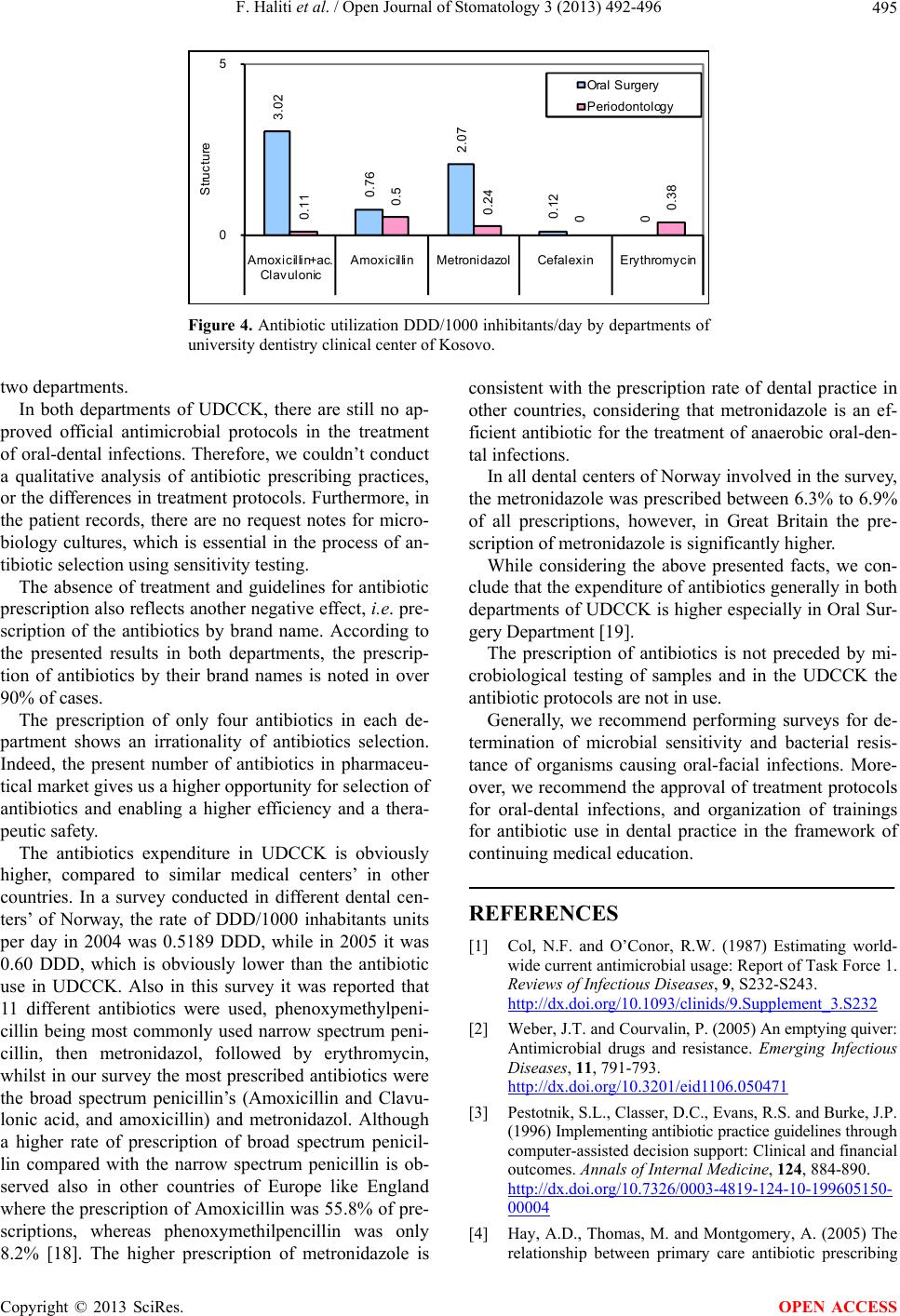 F. Haliti et al. / Open Journal of Stomatology 3 (2013) 492-496 495 3.02 0.76 2.07 0.12 0 0.11 0.5 0.24 0 0.38 0 5 Amoxicillin+ac. ClavulonicAmoxicillin MetronidazolCefalexinErythromycin Structure Ora l Surgery Periodontolog y Figure 4. Antibiotic utilization DDD/1000 inhibitants/day by departments of university dentistry clinical center of Kosovo. two depart ments. In both departments of UDCCK, there are still no ap- proved official antimicrobial protocols in the treatment of oral-dental infections. Therefore, we couldn’t conduct a qualitative analysis of antibiotic prescribing practices, or the differences in treatment protocols. Furthermore, in the patient records, there are no request notes for micro- biology cultures, which is essential in the process of an- tibiotic selection using sensitivity testing. The absence of treatment and guidelines for antibiotic prescription also reflects another negative effect, i.e. pre- scription of the antibiotics by brand name. According to the presented results in both departments, the prescrip- tion of antibiotics by their brand names is noted in over 90% of ca s e s . The prescription of only four antibiotics in each de- partment shows an irrationality of antibiotics selection. Indeed, the present number of antibiotics in pharmaceu- tical market gives us a higher opportunity for selection of antibiotics and enabling a higher efficiency and a thera- peutic safety. The antibiotics expenditure in UDCCK is obviously higher, compared to similar medical centers’ in other countries. In a survey conducted in different dental cen- ters’ of Norway, the rate of DDD/1000 inhabitants units per day in 2004 was 0.5189 DDD, while in 2005 it was 0.60 DDD, which is obviously lower than the antibiotic use in UDCCK. Also in this survey it was reported that 11 different antibiotics were used, phenoxymethylpeni- cillin being most commonly used narrow spectrum peni- cillin, then metronidazol, followed by erythromycin, whilst in our survey the most prescribed antibiotics were the broad spectrum penicillin’s (Amoxicillin and Clavu- lonic acid, and amoxicillin) and metronidazol. Although a higher rate of prescription of broad spectrum penicil- lin compared with the narrow spectrum penicillin is ob- served also in other countries of Europe like England where the prescription of Amoxicillin was 55 .8% of pre- scriptions, whereas phenoxymethilpencillin was only 8.2% [18]. The higher prescription of metronidazole is consistent with the prescription rate of dental practice in other countries, considering that metronidazole is an ef- ficient antibiotic for the treatment of anaerobic oral-den- tal infections. In all dental centers of Norway involved in the survey, the metronidazole was prescribed between 6.3% to 6.9% of all prescriptions, however, in Great Britain the pre- scription of metronidazole is significantly higher. While considering the above presented facts, we con- clude that the exp enditure of antibiotics generally in bo th departments of UDCCK is higher especially in Oral Sur- gery Department [19]. The prescription of antibiotics is not preceded by mi- crobiological testing of samples and in the UDCCK the antibiotic protocols are not in use. Generally, we recommend performing surveys for de- termination of microbial sensitivity and bacterial resis- tance of organisms causing oral-facial infections. More- over, we recommend the approval of treatment protocols for oral-dental infections, and organization of trainings for antibiotic use in dental practice in the framework of continuing medical education. REFERENCES [1] Col, N.F. and O’Conor, R.W. (1987) Estimating world- wide current antimicrobial usage: Report of Task Force 1. Reviews of Infectious Diseases, 9, S232-S243. http://dx.doi.org/10.1093/clinids/9.Supplement_3.S232 [2] Weber, J .T. and C ourvalin, P . (2005) An emptying quiver : Antimicrobial drugs and resistance. Emerging Infectious Diseases, 11, 791-793. http://dx.doi.org/10.3201/eid1106.050471 [3] Pestotnik, S.L., Classer, D.C., Evans, R. S. an d Burke, J. P. (1996) Implementing antibiotic practice guidelines through computer-assisted decision support: Clinical and financial outcomes. Annals of Internal Medicine, 124, 884-890. http://dx.doi.org/10.7326/0003-4819-124-10-199605150- 00004 [4] Hay, A.D., Thomas, M. and Montgomery, A. (2005) The relationship between primary care antibiotic prescribing Copyright © 2013 SciRes. OPEN ACCESS  F. Haliti et al. / Open Journal of Stomatology 3 (2013) 492-496 496 and bacterial resistance in adults in the community: A controlled observational study using individual patient data. Journal of Antimicrobial Chemotherapy, 56, 146- 153. http://dx.doi.org/10.1093/jac/dki181 [5] Prober, C.G. and Gold, R. (1980) Antibiotic abuse: Spare the child. Canadian Medical Association Journal, 122, 7- 9. [6] Kunin, C.M., Johandsen, K.S. and Warning, A.M. (1990) Report of a symposium on use and abuse of antibiotics worldwide. Reviews of Infectious Diseases, 12, 12-19. http://dx.doi.org/10.1093/clinids/12.1.12 [7] Goossens, H., Guillemot, D., Ferech, M., Schlemmer, B., Costers, M., van Breda, M., Baker, L.J., Cars, O. and Davey, P.G. (2006) National campaigns to improve anti- biotic use. European Journal of Clinical Pharmacology, 62, 373-379. http://dx.doi.org/10.1007/s00228-005-0094-7 [8] American Dental Association and American Academy of Orthopedic Surgeons (2003) Antibiotic prophylaxis for dental patients with total joint replacements. Journal of American Dental Associ ation, 134, 895-899. [9] McGowan, B., Bergin, C., Bennett, K. and Barry, M. (2008) Utilization of antibiotic therapy in community practice. Irish Medical Journal, 101, 273-276. [10] Goossens, H., Guillemot, D., Ferech, M., Schlemmer, B., Costers, M., van Breda, M., Baker, L.J., Cars, O. and Davey, P.G. (2006) National campaigns to improve anti- biotic use. European Journal of Clinical Pharmacology, 62, 373-379. http://dx.doi.org/10.1007/s00228-005-0094-7 [11] Pallasch, T.J. and Slots, J. (2000) Antibiotic prophylaxis and the medically compromised patient. Periodontology, 10, 107-138. http://dx.doi.org/10 .1111/j.1600-0757.1996.tb00071.x [12] Van de Sande-Bruinsma, N., Grundmann, H., Verloo, D., Tiemersma, E., Monen, J., Goossens, H. and Ferech, M. (2008) Antimicrobial drug use and resistance in Europe. Emerging Infectious Diseases, 14, 1722-1730. http://dx.doi.org/10.3201/eid1411.070467 [13] Al-Haroni, M. and Skaug, N. (2006) Knowledge of pre- scribing antimicrobials among Yemeni general dentists. Acta Odontologica Scandinavica, 64, 274-280. http://dx.doi.org/10.1080/00016350600672829 [14] WHO Collaborating Centre to Drug Statistics Methodol- ogy (2007) The ATC/DDD system. http:www.whocc.no/atcddd/ [15] (2002) WHO Collaborating Centre for drug statistics me- thodology. ATC Index with DDDs, Oslo. [16] (2002) WHO Collaborating Centre for drug statistics me- thodology. Guidelines for ATC Classification and DDD Assignment, Oslo. [17] Poveda Roda, R., Bagan, J.V., Sanchis Bielsa, J.M. and Carbonell Pastor, E. (2007) Antibiotic use in dental prac- tice. A review. Medicina Oral Patologia Oral y Cirugia Bucal, 12, E186-E192. [18] Al-Haroni, M. and Skaug, N. (2007) Incidence of antibi- otic prescribing in dental practice in Norway and its con- tribution to national consumption. Journal of Antimicro- bial Chemotherapy, 59, 1161-1166. http://dx.doi.org/10.1093/jac/dkm090 [19] Palmer, N.O., Martin, M.V., Pealing, R., et al. (2000) An analysis of antibiotic prescriptions from general dental practitioners in England. Journal of Antimicrobial Che- motherapy, 46, 1033-1035. http://dx.doi.org/10.1093/jac/46.6.1033 Copyright © 2013 SciRes. OPEN ACCESS |