

Paper Menu >>
Journal Menu >>
 Journal of Environmental Protection, 2013, 4, 41-48 Published Online December 2013 (http://www.scirp.org/journal/jep) http://dx.doi.org/10.4236/jep.2013.412A1005 Open Access JEP Radiological Hazards for Marble and Granite Used at Shak El Thouban Industrial Zone in Egypt Amany T. Sroor1, Saher M. Darwish2*, Samia M. El-Bahi1, Mohamed G. Abdel Karim2 1Nuclear Physics Laboratory, Faculty of Girls, Ain Shams University, Cairo, Egypt; 2Physics Department, Faculty of Science, Cairo University, Giza, Egypt. Email: *[email protected] Received October 1st, 2013; revised October 31st, 2013; accepted November 28th, 2013 Copyright © 2013 Amany T. Sroor et al. This is an open access article distributed under the Creative Commons Attribution License, which permits unrestricted use, distribution, and reproduction in any medium, provided the original work is properly cited. In accor- dance of the Creative Commons Attribution License all Copyrights © 2013 are reserved for SCIRP and the owner of the intellectual property Amany T. Sroor et al. All Copyright © 2013 are guarded by law and by SCIRP as a guardian. ABSTRACT The background level of radiation in the natural environment surrounds us at all times. Levels of natural occurring ra- dioactivity in marble and granite used at Shak El Thouban industrial zone in Cairo, Egypt have been investigated using HPGe detector through gamma-ray spectrometry. The activity concentration of radionuclides in the 238U-, 232Th-series and 40K has been determined. The average activity concentration of 238U, 232Th and 40K for marble samples was 23.77 Bq/kg ranged from (10.91 to 45.4), 10.75 Bq/kg ranged from (5.46 to 23.61) and 520.43 Bq/kg ranged from (382.30 to 1132.41), respectively. The 238 U, 232Th and 40K activity concentration for granite samples were 54.31 Bq/kg ranged from (12.04 to 106.34), 113.57 Bq/kg ranged from (23.91 to 270.36) and 7867.51 Bq/kg ranged from (2017.60 to 11436.91), respectively. Concerning the radiological risk, the radium equivalent activity, external and internal radiation hazard indices, the radiation level index and absorbed dose rate were evaluated. The mass exhalation rates of 222Rn and emanation coefficient have been also calculated. The mass exhalation rate of radon was found to be from 14.86 to 137.13 and 16.48 to 155.26 µBq/kg·s for marble and granite samples, respectively. The mean values of the specific ac- tivity of 226Ra, activity of 238U before and after sealing time and the mass exhalation rate of radon for granite samples are twice that for marble samples. All radiological indices and the mass exhalation rate of radon are lower than the per- missible levels for building material in all marble samples, while all granite samples are higher and unsafe and pose a risk to the workers and users of these products due to the emanation of radon that may accumulate by time, especially in closed spaces. Keywords: Radiological Hazards; Marble; Granite; HPGe Detector; Shak El Thouban 1. Introduction Since the Earth formed and life developed, background radiation has been our constant companion. Primordial radionuclides are found around the globe in igneous and sedimentary rock. These radionuclides migrate from rocks into soil, water, and even air. Human activities such as uranium mining have also redistributed these radionuclides. Primordial radionuclides include the series of radionuclides produced when uranium and thorium decay, as well as potassium-40. Usually much attention is paid to 226Ra due to 222Rn exhalation and the subse- quent internal exposure that a person constantly inhales. The specific activities of 238U, 232Th and 40K in building raw materials (such as cement, brick, concrete, soil, mar- ble, granite, sand, etc.) mainly depend on their geological sites of origin and their geochemical characteristics. Therefore, knowledge of radiation levels and basic ra- diological parameters in building materials is essential to assess possible risks to human health. Over the past decade, a number of studies have been reported on the activity concentrations of natural ra- dionuclides for marble and granite samples obtained from different countries in the world [1-7]. As a result of its geological location, Egypt possesses very rich natural stone (mainly marble and granite) re- serves in various colors and patterns [8]. Natural stone has become the standard material used for many luxu- rious homes and high price apartments. Marble and gra- *Corresponding author.  Radiological Hazards for Marble and Granite Used at Shak El Thouban Industrial Zone in Egypt 42 nite are used for cooking work places, bathrooms, en- trance halls and living rooms. Accordingly there is a good demand for tiles, especially marble for interior flooring owing to its aesthetic features, whereas granite is chiefly used for exterior cladding and in the funerary art [9,10]. The area of Shak El Thouban in Katameyya has be- come a conglomeration of around 400 factories consti- tuting 60% to 70% of marble and granite factories in Egypt working in the marble and granite industry. More than two thousand workshops for complementary indus- tries employ about 25 thousand workers other than 30 thousand workers indirect employment. Problems in these regions are outbreak of a group of diseases (e.g.: tinea, intestinal colic and chest disease) among workers in Shak El Thouban as a result of drinking water and food contamination. Marble and granite industry has stone waste in generally a highly polluting waste due to both its highly alkaline nature and its manufacturing and processing techniques, which impose a health threat to the surroundings. Shak El Thouban industrial cluster in Egypt is imposing an alarm threat to the surrounding communities, the new Maadi, Zahraa Elmaadi, residen- tial area, and the ecology of the neighboring Wadi Degla protectorate. The present study aims to determine the activity con- centration of 238 U, 232Th and 40K of twenty six marble and granite samples wide locally used at Shak El Thou- ban industrial zone in Egypt, using HPGe detector in a low background configuration. The results are used to assess the potential radiological hazards associated with these materials by computing the radium equivalent ac- tivity, radiation hazard indices and absorbed dose rate. The radon mass exhalation rate and the emanation coef- ficient were also determined and evaluated for all exam- ined samples. 2. Material and Methods 2.1. Sampling and Sample Preparation The area of Shak El Thouban industrial zone in Kata- meyya, Egypt has become a conglomeration of factories working in the marble and granite industries. Twenty six different types of marble, granite samples (nineteen sam- ples of marble coded M1 to M19, seven samples of gran- ite coded G20 to G26) were collected from different fac- tories at Shak El Thouban industrial zone (Tables 1 and 2, respectively). Table 1. Average activity concentrations of 238U, 232Th and 40K for nineteen different marble samples used in Shak El Thou- ban, Egypt. Sample Commercial name (Origin) 238U Bq/kg 232Th Bq/kg 40K Bq/kg M1 Prashia (El-Aish, Egypt) 14.63 9.41 453.89 M2 Zafarana (Zafarana, Egypt) 27.51 9.03 431.34 M3 Serpagenty (El-Arish, Egypt) 21.22 8.33 525.85 M4 Sinai (RasGharbe, Egypt) 30.47 9.42 534.46 M5 Triesta (South Sinai, Egypt) 11.09 5.46 602.64 M6 Galala (Suez, Egypt) 17.97 10.45 532.77 M7 Golden Yellow (Egypt) 15.04 6.88 478.13 M8 Galala Extra (Suez, Egypt) 23.84 7.71 515.05 M9 Golden Beach (Egypt) 15.76 8.54 692.08 M10 Red marble (Turkey) 13.04 8.46 449.70 M11 Emperador (Spain) 79.44 23.61 568.56 M12 PerlatoSvevo (Italy) 10.91 11.13 435.43 M13 Weight marble (Turkey) 18.08 10.08 435.79 M14 Rosa (India) 16.82 11.01 1132.41 M15 Emperador (Lebanon) 18.06 8.87 394.51 M16 Crema (Turkey) 15.78 8.20 463.05 M17 Green marble (India) 19.42 11.51 400.57 M18 Emperador (Syria) 45.40 19.61 382.30 M19 Emperador Brown (China) 37.23 16.63 459.69 Mean 23.77 10.75 520.43 P. L. 50 50 500 P. L.: Permissible level. Open Access JEP  Radiological Hazards for Marble and Granite Used at Shak El Thouban Industrial Zone in Egypt 43 Table 2. Average activity concentrations of 238U, 232Th and 40K for seven different granite samples used in Shak El Thouban, Egypt. Sample Commercial name (Origin) 238U Bq/kg 232Th Bq/kg 40K Bq/kg G20 Ghandola (Aswan, Egypt) 106.34 142.73 9175.02 G21 Red Granite (Aswan, Egypt) 40.45 108.14 11436.91 G22 Red Gharda (Ghardaqah, Egypt) 91.35 270.36 10820.41 G23 Black Aswan (Aswan, Egypt) 12.04 23.91 2017.60 G24 Ghazal Dark (Aswan, Egypt) 38.70 129.13 9734.34 G25 Tan Brown Granite (India) 58.72 82.70 8447.16 G26 Black Granite (India) 32.56 37.99 3441.16 Mean 54.31 113.57 7867.51 P. L. 50 50 500 P. L.: Permissible level. The samples were crushed, dried and sieved through 200 mesh size. Weighted samples were placed in poly- ethylene bottles of 250 cm3 volume. The bottles were completely sealed for more than one month to allow ra- dioactive equilibrium to be reached between 238U and 232Th and their corresponding daughters to be measured by gamma spectrometry. This step was necessary to en- sure that radon gas is confined within the volume and the daughters will also remain in the sample. 2.2. Experimental Method for Gamma Spectroscopy The detection system consists of an ORTEC hyper pure germanium (HPGe) detector of sensitive volume of 76.11 cm3, preamplifier, spectroscopy amplifier, high voltage power supply and the multichannel analyzer. The HPGe detector has a full width at half maximum of 0.9 keV at the 122 keV gamma transition of 57Co and 1.85 keV at 1332.5 keV of 60Co gamma transition with photopeak efficiency 30%. To reduce the gamma-ray background, a cylindrical lead shield with a fixed bottom and a movable cover shielded the detector. The lead shield contained two inner concentric cylinders of copper and cadmium to prevent interference X-rays by lead. The energy calibra- tion of the HPGe spectrometer was carried out by using standard point sources (60Co, 133Ba, 137Cs, 226Ra and 241Am). Absolute efficiency calibration curves are calcu- lated for activity determination of the sample by using standard 238U and 232Th with activities of 2120.37 and 1333.96 Bq, respectively and potassium chloride KCl solutions with activity 15.9 Bq [11], contained in the same cylindrical bottles with the same volume 250 cm3 and having the same nature as the investigated samples. The standards and the samples were prepared with a uni- form geometry. In order to determine the background distribution in the environment around the detector, an empty bottle was counted in the same manner and ge- ometry as the samples. The background spectra were used to correct the areas of gamma rays for measured isotopes. The quality assurance of the measurements was carried out by a daily energy and efficiency calibrations and repeating each sample measurements. Each sample was analyzed for a time of 70,000 seconds to obtain the gamma-ray spectrum with good statistics. The gamma emitting radionuclide specifically recorded was 238U, 226Ra, 232Th and 40K. The 238U radionuclide was estimated from the 351.9 keV (36.7%) and 295.2 keV (13.3%) gamma peaks of 214Pb and 609.3 keV (46.1%), 1120.3 keV (15%), and 1764 keV (15.9%) gamma peaks of 214Bi. 232Th radionu- clide was estimated from the 338.6 keV (11.27%) and 911.1 keV (29%) gamma peaks of 228Ac and 583.1 keV (84.5%) and 2614.7 keV (9.9%) gamma peaks of 208Tl. The 226Ra concentration was measured from its gamma- ray peak at 186.1 keV. 40K radionuclide was estimated using 1460.8 keV (10.7%) gamma peak from 40K itself to determine the concentration of 40K in different sam- ples. 3. Results and Discussion Activity concentrations (in Bq/kg) of naturally occurring radionuclides isotopes reported in each of the 238U-series and 232Th-series in the marble and granite used at Shak El Thouban industrial zone in Egypt have been determined. The activity concentration values of 226Ra, 214Bi and 214Pb for 238U were found to be 17.99 to 163.58 Bq/kg, 10.54 to 73.13 Bq/kg and 3.96 to 82.31 Bq/kg, respec- tively. Similarly for 232Th the activity concentration val- ues of 228Ac were varied from 8.87 to 96.68 Bq/kg and 208Tl were varied from 4.56 to 84.01 Bq/kg. The average activity concentrations in marble samples were found to be 23.77 Bq/kg ranged from10.91 to 45.40 Bq/kg for 238U, 10.75 Bq/kg ranged from 5.46 to 23.61 Bq/kg for 232Th and 520.43 Bq/kg ranged from 382.30 to Open Access JEP 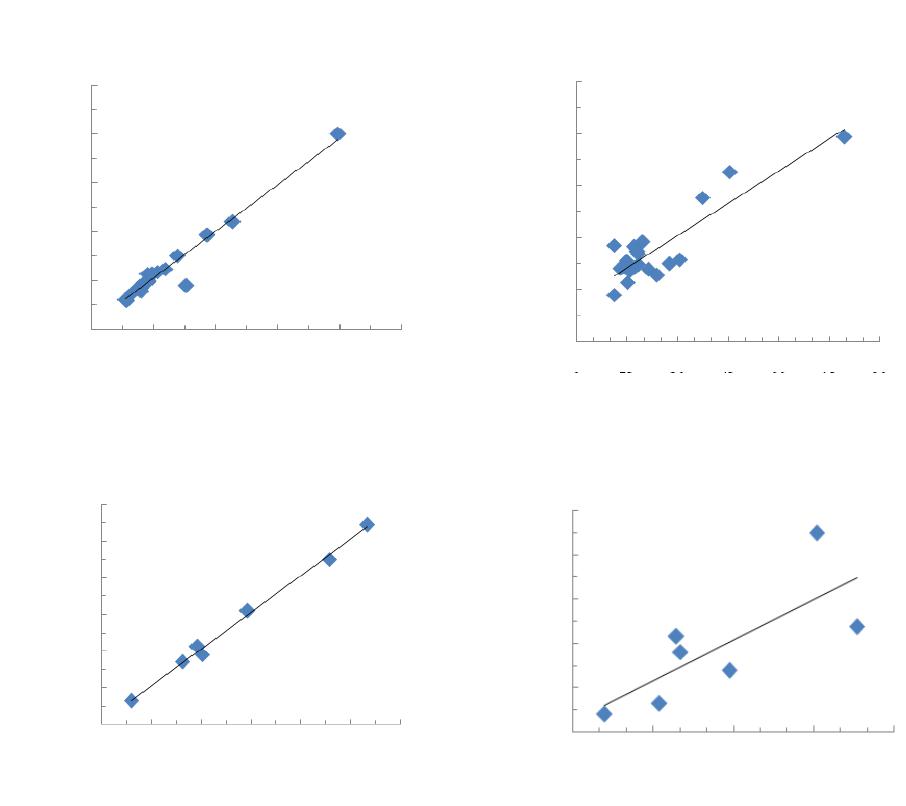 Radiological Hazards for Marble and Granite Used at Shak El Thouban Industrial Zone in Egypt 44 1132.41 Bq/kg for 40K, as reported in Table 1. The activ- ity concentrations in granite samples were varied from 12.04 to 106.340 Bq/kg with a mean value 55.31 Bq/kg for 238U, 23.91 to 270.36 Bq/kg with a mean value 113.57 Bq/kg for 232Th and 2017.60 to 11436.91 Bq/kg with a mean value 7867.51 Bq/kg for 40K, as reported in Table 2. It is clear that the activity concentrations of 238U, 232Th and 40K in marble samples are within the permissi- ble levels 50, 50 and 500 Bq/kg [12], while that in gran- ite samples are higher than the permissible levels. Studies were performed between the combinations of radionuclides like 238U and 226Ra as well as 238U and 232Th activity concentrations. Figure 1 represents the relation between (238U, 226Ra) as well as (238U, 232Th) activities for marble and granite samples under investiga- tion. Strong correlations were observed between (238U and 226Ra) with (R2 = 0.95, N =19) for marble samples and with (R2 = 0.995, N = 7) for granite samples which clear the radioactive equilibrium in uranium series. Simi- larly, moderate correlation were also observed between (238U and 232Th) with (R2 = 0.78, N =19) for marble sam- ples and with (R2 = 0.57, N = 7) for granite samples due to the high activity concentration of 238U than 232Th. Assessment of radiological hazards was made by cal- culating the radium equivalent activities, external and internal hazard indices. The radium equivalent activity (Raeq) is a weighted sum of activities of the 226Ra, 232Th and 40K based on the assumption that 370 Bq/kg of Ra, 259 Bq/kg of Th and 4810 Bq/kg of K produce the same gamma-ray dose rates as given by the following equation [13]: .. eq RaThK RaA143A0 077A The results obtained for the radium equivalent activity index Raeq of all samples of marble and granite are varied from 59.77 to 156.89 Bq/kg and from 201.58 to 1311.14 N = 19 R 2 = 0.95 0 20 4060 80 100 238 U (Bq/kg) 30 60 90 120 150 226 Ra (Bq/kg) 0 Correlation between 238 U and 226 Ra formarble samples N = 19 R 2 = 0.78 0153045 60 75 238 U (Bq/kg) 6 12 18 24 30 232 Th (Bq/kg) 0 Correlation between 238 U and 232 Thfor marble samples 90 N = 7 R 2 = 0.995 0 20 40 60 80 100 238 U (Bq/kg) 30 60 90 120 150 226 Ra (Bq/kg) 0 Correlation between 238 U and 226 Ra for granite samples 120 180 N = 7 R 2 = 0.57 03060 90 238 U (Bq/kg) 60 120 232 Th (Bq/kg) 0 Correlation between 238 U and 232 Th for granite samples 120 180 240 300 Figure 1. Correlation between (238U, 226Ra) and (238U, 232Th) concentrations for samples under investigation. Open Access JEP  Radiological Hazards for Marble and Granite Used at Shak El Thouban Industrial Zone in Egypt 45 Bq/kg respectively as listed in Table 3. It is observed that the values of radium equivalent index of all marble samples and black granite samples (G23 and G26) are lower than the recommended value 370 Bq/kg [14] while the other granite samples are higher than the recom- mended value. The other factors indicating radiological hazards are external (Hex) and internal (Hin) hazard indices which measure the radiation exposure due to the radioactivity and defined by the following equations [15,16]: ex RaThK HA370A259A4810 int RaThk HA185 A259 A4810 ARa, ATh, and AK are the activity concentration (in Bq/kg) of 226Ra, 232Th and 40K, respectively. In order to keep the radiation hazards to be insignificant, the value of Hex and Hint must be less than unity [17,18]. The external and internal hazard indices of marble samples are varied from 0.16 to 0.42 and 0.19 to 0.64 mGy/yr, respectively and that of granite samples are var- ied from 0.54 to 3.54 and 0.58 to 3.79 mGy/yr, respec- tively as listed in Table 3. It is noticed that external and internal hazards indices are lower than unity for all mar- ble and black granite samples (G23 and G26) while the other granite samples are higher than unity. To estimate the level of γ-radiation hazard associated Table 3. The values of radium equivalent, external and internal hazard indices, radioactivity level index and dose rate for marble and granite samples under investigation. Sample Raeq Bq/kg Hex mGy/y Hin mGy/y Iγ Dose rate nGy/h M1 63.03 0.17 0.21 0.50 31.99 M2 73.64 0.20 0.27 0.56 36.27 M3 73.62 0.20 0.26 0.58 37.18 M4 85.10 0.23 0.31 0.66 42.23 M5 65.30 0.18 0.21 0.53 34.26 M6 73.94 0.20 0.25 0.58 37.50 M7 61.69 0.17 0.21 0.49 31.54 M8 74.52 0.20 0.27 0.58 37.43 M9 81.26 0.22 0.26 0.65 42.14 M10 59.77 0.16 0.20 0.47 30.51 M11 156.98 0.42 0.64 1.05 74.00 M12 60.36 0.16 0.19 0.48 30.75 M13 66.04 0.18 0.23 0.51 33.13 M14 119.76 0.32 0.37 0.98 63.16 M15 61.12 0.17 0.21 0.47 30.55 M16 63.16 0.17 0.21 0.50 32.08 M17 66.72 0.18 0.23 0.51 33.13 M18 102.88 0.28 0.40 0.76 48.81 M19 96.41 0.26 0.36 0.72 46.68 G20 1016.92 2.75 3.03 8.29 534.42 G21 1075.74 2.90 3.01 9.02 580.65 G22 1311.14 3.54 3.79 10.57 683.26 G23 201.58 0.54 0.58 1.67 107.72 G24 972.90 2.63 2.73 8.07 520.59 G25 827.41 2.23 2.39 6.88 443.05 G26 351.85 0.95 1.04 2.90 187.02 P. L. 370 < 1 < 1 < 1 55 P . L.: Permissible level. Open Access JEP  Radiological Hazards for Marble and Granite Used at Shak El Thouban Industrial Zone in Egypt 46 with the natural radionuclides another radiation level index suggested by OECD’s NEA [19] are evaluated using the following equation: γRa Th k IA150 A100 A1500 ARa, ATh, and AK are the activity concentration (in Bq/ kg) of 226Ra, 232Th and 40K, respectively. The radiation level index Iγ of marble and granite samples are varied from 0.47 to 1.05 and from 1.67 to 10.57, respectively which is found to be less than unity for all marble sam- ples and higher than unity for all granite samples, as listed in Table 3. The absorbed dose rate in air express the received dose in the open air from the radiation emitted from radionu- clides activity concentrations in the environmental mate- rials. This factor is important quantity to assess when considering radiation risk to a bio system. The absorbed dose rate, D (nGy/h) in air at 1m above the ground level owing to the concentration of 238U, 232Th and 40K [15,20] is given by: ... UThK D0 4299A0666A0 042A ARa, ATh, and AK are the activity concentration (in Bq/kg) of 226Ra, 232Th and 40K, respectively. The absorbed dose rate for samples under investigation varied from 30.51 to 74.00 with mean value 39.65 nGy/h for marble and from 107.72 to 683.26 with mean value 436.67 nGy/h for granite, as presented in Table 3. It is clear that its values are lower than the recommended value 55 nGy/h for all marble samples except marble sample M11 and all granite samples. The mass exhalation rate (ERn) and emanation rate co- efficient of radon (CRn) that can diffuse through the raw and building materials is also a very important radio- logical index used to evaluate the amount of the 222Rn emanation fraction released from the building raw mate- rials and products containing naturally occurring ra- dionuclides such as 222Rn in radioactive equilibrium with its parent. The emanation coefficient of radon (CRn) was determined [21] according to: Rn 0 CCCC C0 and C are the net count rate of radon at the sealing time of the samples and after equilibrium (after 30 days), respectively. The mass exhalation rate of radon is the product of the emanation coefficient of radon (ERa) and production rate of radon [21]. The mass exhalation rate (ERn in Bq/kg·s) is determined using the following equation: RnRnRa Rn ECAλ ARa is the specific activity of 226Ra (in Bq/kg) and λRn is the decay constant of 222Rn (λRn = 2.1 × 10⁻⁶ s−1). The mean value of the emanation coefficient CRn and the 222Rn mass exhalation rate ERn of the samples under investigation are listed in Table 4. It is clear that the values of the emanation coefficient and the 222Rn exhale- tion rate for all samples under investigation were ranged Table 4. The specific activity of 226Ra, activity of 238U before and after sealing time, the emanation coefficient and the radon mass exhalation rate for marble and granite samples under investigation. Sample Specific activity of 226Ra (Bq/kg) 238U-series (Bq/kg) before C0 238U-series (Bq/kg) after C Emanation coefficient of Radon CRn Mass exhalation rate for 222Rn (µBq/kg·s) M1 25.00 18.50 14.63 0.44 23.18 M2 44.80 35.50 27.51 0.44 41.08 M3 35.08 33.50 21.22 0.39 28.57 M4 26.70 42.51 30.47 0.42 23.41 M5 17.60 16.49 11.09 0.40 14.86 M6 29.98 22.12 17.97 0.45 28.22 M7 24.73 19.52 15.04 0.44 22.60 M8 36.82 33.79 23.84 0.41 31.98 M9 25.22 19.52 15.76 0.45 23.66 M10 22.26 18.69 13.05 0.41 19.22 M11 120.03 66.58 79.44 0.54 137.13 M12 17.99 15.21 10.91 0.42 15.78 M13 33.91 23.51 18.08 0.43 30.95 M14 28.53 20.81 16.82 0.45 26.78 M15 29.03 23.31 18.06 0.44 26.61 M16 23.11 19.52 15.78 0.45 21.70 M17 33.79 24.41 19.41 0.44 31.44 M18 66.01 52.45 45.39 0.46 64.31 M19 57.73 45.01 37.23 0.45 54.89 G20 163.58 128.93 106.34 0.45 155.26 G21 56.90 54.38 40.45 0.43 50.97 G22 135.34 101.70 91.35 0.47 134.49 G23 19.33 17.61 12.04 0.41 16.49 G24 63.95 53.73 38.69 0.42 56.22 G25 92.95 62.23 58.72 0.49 94.76 G26 51.06 48.71 32.56 0.40 42.96 Open Access JEP 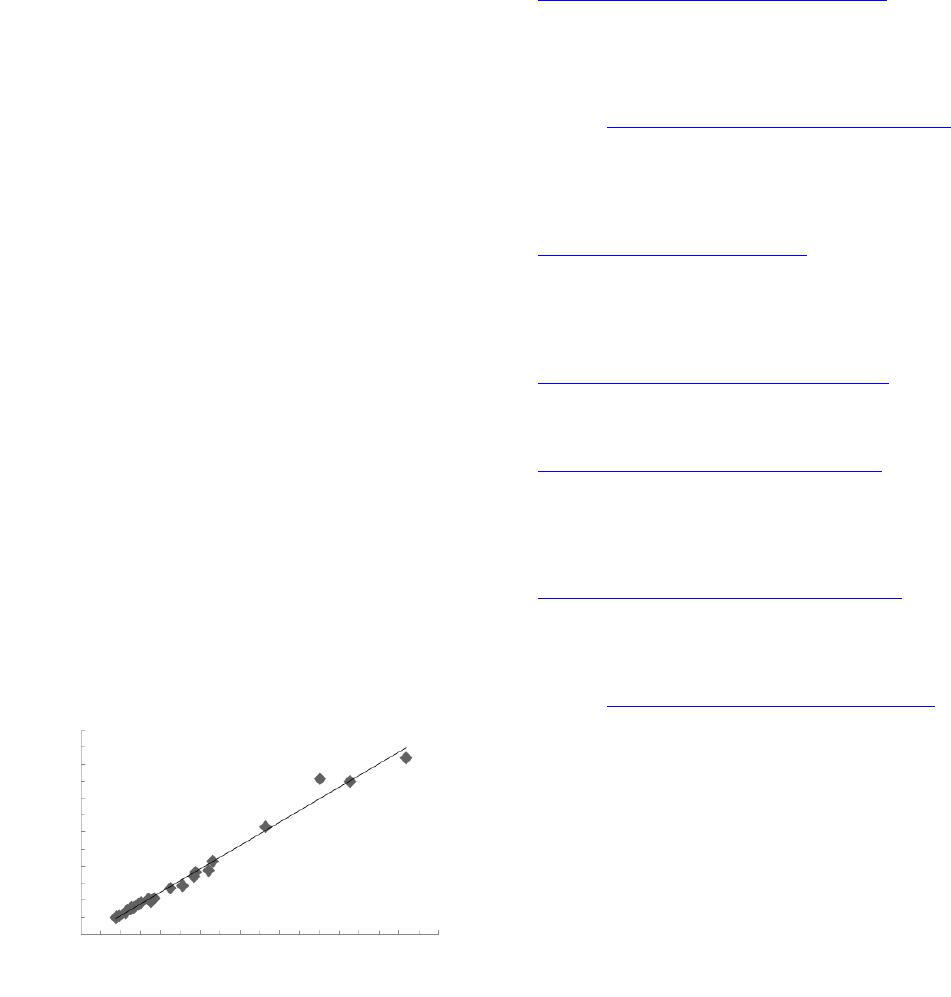 Radiological Hazards for Marble and Granite Used at Shak El Thouban Industrial Zone in Egypt 47 from 0.39 to 0.54 and 14.86 to 155.26 μBq/(kg·s), re- spectively. The mass exhalation rate of 222Rn in marble and granite were varied from 14.86 to 137.13 and 16.48 to 155.26 µBq/kg·s, respectively. Figure 2 shows a strong correlation between the spe- cific activity of 226Ra and 222Rn mass exhalation rate with (R2 = 0.986, N = 26) for marble and granite samples, which means that 222Rn and 226Ra accompanied each other and that the individual result for any one of the radionuclide concentration is a good predictor of the concentration of the other. 4. Conclusions Environmental monitoring should be carried out for mar- bles and granites used at Shak El Thouban industrial zone in Katameyya, Egypt where people might be ex- posed to radioactivity. The levels of natural radioactivity in marble and granite samples were determined using high resolution gamma-ray spectrometry. The results can be useful in the assessment of the radiological hazard associated with the exposures and the radiation doses due to naturally radioactive element contents in marble and granite samples. We noticed that there is a strong corre- lation between radium-226 and uranium-238 in marbel and granite samples which means that the two elements accompanied each other. Also, there is a strong correlation between the specific activity of radium and radon mass exhalation rate, so the knowledge of uranium concentra- tions gives a good estimate of the radon concentrations in the samples and its escape to the atmosphere. The present study showed that the measured marble samples were within the recommended safety limits and did not pose any significant source of radiation hazard inhabitants. It is also clear that, the high activity concen- tration, radioactive level and mass exhalation rate of the radon within most granite samples pose a radiation haz- ard to the workers and users of the this product and cause a great effect on the humans health, especially those working in closed spaces since the emanated radon may R2 = 0.986 N = 26 0 20 40 60 80100 120 140 160180 Specific activity of 226Ra (Bq/kg) 0 30 60 90 120 150 180 Mass exhalation rate for 222Rn (μBp/kg.s) Figure 2. Mass exhalation rate for 222Rn verses specific ac- tivity of 226Ra for all samples under investigation. be accumulated by time. Therefore, safety rules and pre- cautions should be necessary for workers and users of granite types, especially in closed spaces. REFERENCES [1] U. Cevic, N. Damla, A. I. Kobya, A. Celik and A. Kara, “Radiation Dose Estimation and Mass Attenuation Co- efficients of Marble Used in Turkey,” Annals of Nuclear Energy, Vol. 37, No. 12, 2010, pp. 1705-1711. http://dx.doi.org/10.1016/j.anucene.2010.07.011 [2] D. Malczewski, L. Teper and J. Dorda, “Assessment of Natural and Anthropogenic Radioactivity Levels in Rocks and Soils in the Environs of Swieradow Zdroj in Sudetes, Poland, by in Situ Gamma-Ray Spectrometry,” Journal of Environmental Radioactivity Vol. 73, No. 3, 2004, pp. 233-245. http://dx.doi.org/10.1016/j.jenvrad.2003.08.010 [3] T. A. Myatt, J. G. Allen, T. Minegishi, W. B. Mccarthy, J. H. Stewart, D. L. Macintosh and J. F. Mccarthy, “As- sessing Exposure to Granite Countertops-Part 1, Radia- tion,” Journal of Exposure Science and Environmental Epidemiology, Vol. 20, No. 3, 2010, pp. 273-280. http://dx.doi.org/10.1038/jes.2009.44 [4] Y. Örgün, N. Altinsoy, A. H. Gültekin, G. Karahan and N. Celebi, “Natural Radioactivity Levels in Granitic Plutons and Groundwaters in Southeast Part of Eskisehir, Tur- key,” Applied Radiation and Isotopes, Vol. 63, No. 2, 2005, pp. 267-275. http://dx.doi.org/10.1016/j.apradiso.2005.03.008 [5] A. T. Przylibski, “Concentration of 226Ra in Rocks of the Southern Part of Lower Silesia,” Journal of Environ- mental Radioactivity, Vol. 75, No. 2, 2004, pp. 171-191. http://dx.doi.org/10.1016/j.jenvrad.2003.12.003 [6] N. Walley El-Dine, A. El-Shershaby, F. Ahmed and A. S. Abdel-Haleem, “Measurement of Radioactivity and Ra- don Exhalation Rate in Different Kinds of Marbles and Granites,” Applied Radiation and Isotopes, Vol. 55, No. 6, 2001, pp. 853-860. http://dx.doi.org/10.1016/S0969-8043(01)00107-5 [7] M. S. Yasir, A. Abd Majid and R. Yahaya, “Study of Natural Radionuclides and Its Radiation Hazard Index in Malaysian Building Materials,” Journal of Radioanalyti- cal and Nuclear Chemistry, Vol. 273, No. 3, 2007, pp. 539-541. http://dx.doi.org/10.1007/s10967-007-0905-7 [8] R. Ciccu, R. Cosentino, C. Montani, A. El Kotb and H. Hamdy, “Strategic Study on the Egyptian Marble and Granite Sector,” Industrial Modernisation Centre (IMC), Cairo, 2005. [9] T. H. Selim and A. I. Kandil, “Characteristics of Marble Industry in Egypt: Structure, Conduct and Performance,” International Business and Economics Research Journal, Vol. 5, No. 1, 2006, pp. 25-34. [10] IAEA, “Preparation and Certification of IAEA Gamma Spectrometry Reference Materials, RGU-1, RGTH-1 and RGK-1,” International Atomic Energy Agency, Report- IAEA/RL/148, 1987. [11] UNSCEAR, “Sources and Effects of Ionizing Radiation,” United Nations, New York, 1993. [12] A. G. E. Abbady, “Estimation of Radiation Hazard Indi- Open Access JEP  Radiological Hazards for Marble and Granite Used at Shak El Thouban Industrial Zone in Egypt 48 ces from Sedimentary Rock in Upper Egypt,” Applied Radiation and Isotope, Vol. 60, No. 1, 2004, pp. 111-114. http://dx.doi.org/10.1016/j.apradiso.2003.09.012 [13] UNSCEAR, “Sources and Effects and Risks of Ionizing Radiation,” Report to the General Assembly, with Scien- tific Annexes, United Nations, New York, 2000. [14] A. M. El Arabi, A. G. E. Abbady and A. S. Hussein, “Gamma-Ray Measurements of Natural Radioactivity in Sedimentary Rocks from Egypt,” Nuclear Science and Techniques, Vol. 17, No. 2, 2006, pp. 123-128. http://dx.doi.org/10.1016/S1001-8042(06)60024-9 [15] M. Tufail, N. Akhter and M. Wqes, “Measurement of Terrestrial Radiation for Assessment of Gamma Dose from Cultivated and Barren Saline Soils of Faisalabad in Paki- stan,” Radiation Measurements, Vol. 41, No. 4, 2006, pp. 443-451. http://dx.doi.org/10.1016/j.radmeas.2005.01.007 [16] N. M. Ibrahim, B. El Ezaby, N. Nada, T. M. Abd El- Makasoud and S. N. Abd El Azem, “Radioactivity Con- centration in Some Industrial Ores and Their Waste Pro- ducts by Gamma Spectrometry,” The 7th Conference of Nuclear Physics and Application, Cairo, 2000, pp. 6-10. [17] A. Nada, “Gamma Spectroscopic Analysis for Estimation of Natural Radioactivity Levels in Some Granite Rocks of Eastern Desert, Egypt,” Cairo Arab Journal of Nuclear Science and Application, Vol. 37, No. 2, 2004, pp. 201- 222. [18] OECD Organization of Economic Cooperation and De- velopment, “Exposure to Radiation from Natural Radio- activity in Building Materials,” Report by a Group of Experts of the OECD Nuclear Energy Agency, OECD, Paris, 1979. [19] T. R. Ajayi and O. O. Kuforiji, “Natural Radioactivity Measurement in Rock Samples of Ondo and Ekiti States in Nigeria,” Radiation Measurements, Vol. 33, No. 1, 2000, pp. 13-16. http://dx.doi.org/10.1016/S1350-4487(00)00092-5 [20] G. J. White and A. S. Road, “Radon Emanation from NORM Contaminated Pipe Scale and Soil at Petroleum Industry Sites,” Journal of Environmental Radioactivity, Vol. 54, No. 3, 2001, pp. 401-13. http://dx.doi.org/10.1016/S0265-931X(00)00156-9 [21] M. I. Chowdhury, M. N. Alam and K. S. Ahmed, “Con- centration of Radionuclides in Building and Ceramic Ma- terials of Bangladish and Evaluation of Radiation Haz- ard,” Journal of Radioanalytical Nuclear Chemistry, Vol. 231, No. 1-2, 1998, pp. 117-122. http://dx.doi.org/10.1007/BF02388016 Open Access JEP |