

Paper Menu >>
Journal Menu >>
 World Journal of Cardiovascular Diseases, 2013, 3, 573-580 WJCD http://dx.doi.org/10.4236/wjcd.2013.39090 Published Online December 2013 (http://www.scirp.org/journal/wjcd/) Incremental value of preprocedural coronary computed tomographic angiography to classical coronary angiography for prediction of PCI complexity in left main stenosis Imre Benedek, Monica Chitu, Istvan Kovacs, Bajka Balazs, Theodora Benedek University of Medicine and Pharmacy of Tirgu Mures, Tirgu Mures, Romania Email: [email protected] Received 24 October 2013; revised 25 November 2013; accepted 6 December 2013 Copyright © 2013 Imre Benedek et al. This is an open access article distributed under the Creative Commons Attribution License, which permits unrestricted use, distribution, and reproduction in any medium, provided the original work is properly cited. ABSTRACT Introduction: The aim of our study was to assess the incremental value of Coronary Computed Tomogra- phy Angiography (CCTA) added to classical coro- nary angiography, for complex characterization of coronary lesions and prediction of procedural com- plexity in patients with significant left main (LM) stenoses. Material and Methods: Thirty-six patients with LM disease were enrolled in the study, and each subject underwent CCTA followed by coronary an- giography and percutaneous revascularization. Re- sults: Logistic regression analysis indicated a good correlation between the angiographic-calculated and the CCTA-derived Syntax scores for the whole group (r = 0.87, p < 0.0001) and for the high risk subgroup (r = 0.86, p < 0.0001), but not for the low and inter- mediate risk (r = 0.38, p = 0.21 and r = 0.62, p = 0.07 respectively). In cases which required complex PCI procedures, both angiographic and CCTA Syntax score were significantly higher than those who did not require complex revascularization procedures (24.5 +/− 11.5 vs 32.2 +/− 14.6, p = 0.09 for Angio Syntax, 35.3 +/− 11.5 vs 25.2 +/− 11.3, p = 0.01 for CCTA). In the same time, Ca scoring was significantly higher and plaque volumes were significantly larger in cases requiring complex revascularization procedures (299.5 +/− 359.6 vs 917.3 +/− 495.4, p = 0.04 for cal- cium score, 79.7 +/− 28.5 vs 108.7 +/− 25.3 mm3, p = 0.002 for plaque volumes). Multivariate analysis iden- tified the following CCTA parameters as significant predictors of increased risk for complex intervention in LM lesions: plaque volume (OR 8.00, p = 0.008), Ca scoring (OR 6.37, p = 0.02) and CCTA Syntax score (OR 6.87, p = 0.01). Conclusions: CCTA de- rived parameters provide incremental information to classical coronary angiography for preoperative as- sessment of lesion severity in complex left main steno- sis. CCTA derived Syntax score significantly corre- lates with the classical Coronary Angiography Syntax score and identifies the subgroup of patients who will be more exposed to procedural complications during the revascularization interventions. Keywords: Left Main; Syntax Score; Coronary Computed Tomographic Angiography 1. INTRODUCTION The coronary angiography has become nowadays the gold standard technique for diagnosis of coronary artery stenoses, including those located in the left main (LM) coronary artery. A positive coronary angiography showing severe nar- rowing of the LM indicates an urgent need for revas- cularization, which could improve the tolerance to is- chaemic events in other coronary territories and reduce the progression of the associated ventricular dysfunction [1,2]. Percutaneous coronary revascularization has been recently recognized to represent a viable therapeutic alternative in patients with severe left main (LM) steno- sis. Despite of the well-known high risk associated with complex interventional procedures in unprotected LM diseases, percutaneous interventions are increasingly used in the treatment of complex LM lesions [3]. Many studies attempted to reveal the role of interven- tional revascularization in such cases, as an alternative to the traditional coronary artery bypass grafting. The SYN- TAX trial (The Synergy between Percutaneous Coronary Intervention with TAXUS and Cardiac Surgery) in- OPEN ACCESS  I. Benedek et al. / World Journal of Cardiovascular Diseases 3 (2013) 573-580 574 cluded 3.075 patients with left main coronary disease or three-vessel disease or both, who were randomized to surgical or percutaneous revascularization [4,5]. The re- sults of the trial revealed the role of percutaneous reva- scularization in several subsets of patients, especially those with isolated left main disease or left main disease associated with one vessel disease, and led to develop- ment of the Syntax score. Syntax trial led to development of the Syntax score, a complex angiographic score based on characterization of coronary lesions according to specific angiographic para- meters, such as tortuosity, bifurcation, the presence of a total occlusion or intracoronary thrombus, calcification, the dominance, type and number of lesions [6,7]. A Syntax score below 22 classifies the lesion in the low-risk category, a score between 22 and 32 is associa- ted with medium risk, while a score above 33 indicates a high-risk lesion. This score system became widely accepted in clinical practice immediately after the Syntax trial and nowadays many cases of left main disease are referred for surgical or interventional treatment based on the calculated Syn- tax score, the general recommendations being in favor of percutaneous revascularization in cases of low or me- dium Syntax scores and in favor of surgery in cases with high Syntax scores [8,9]. However, calculation of Syntax score relies only on the information provided by coronary angiography. De- spite the recent widespread use of Coronary Computed Tomographyc Angiography (CCTA), key information provided by this technique such as calcium scoring or plaque volumes is rarely taken into consideration when establishing the indication for percutaneous coronary in- tervention (PCI) in LM diseases [10]. However, CCTA provides incremental value to classical coronary angio- graphy with regard to complex characterization of coro- nary lesions. As CCTA offers the unique opportunity for assessment of atheromatous plaque burden and calcium content, together with a three-dimensional representation of the lesion, it could predict a more complex interven- tional procedure in cases with high calcium burden, large plaques or difficult anatomy. The aim of our study was to assess the incremental value of CCTA on the top of information provided by the classical coronary angiography, for complex characteri- zation of left main stenoses and prediction of procedural complexity in patients with significant LM stenoses. 2. METHODS 2.1. Study Population This was a single center prospective non-randomized study to evaluate the incremental value of the informa- tion provided by CCTA on the top of those obtained by classical coronary angiography in complex characteri- zation of coronary lesions in patients with significant left main disease. Thirty-six patients with LM disease at the clinical pre- sentation were enrolled in the study, and each subject underwent 64 multi-slice CT followed by coronary an- giography and percutaneous revascularization. All pa- tients gave written informed consent, and the study pro- tocol was approved by the ethics committee of the center where the study was conducted. The inclusion criteria were age >18 years, documented significant (>50%) stenosis of the LM coronary artery and willingness to participate in the study. Patients with contraindications for the repeated administration of con- trast agents were excluded from the study. 2.2. CCTA Analysis All CT acquisitions were made using multi-slice 64 So- matom Sensation CT (Siemens, Germany) with a 64 × 0.5 mm detector collimation. During an inspiratory breath-hold, 60 ml of an iodinated contrast agent (Iopa- midol, 370 mg I/ml, Bayer Healthcare, Germany) was infused at a speed of 4.0 ml/sec followed by 20 ml at 2.0 ml/sec. All examinations were preceded by the admini- stration of a short-acting betablocker to achieve the de- sired heart rate and were conducted only after achieving a stable heart rate below 60 beats/min. All acquired images were transferred to a workstation (Siemens, Ger- many) for data processing, measurements and inter- pretation The following information provided by CCTA have been used for assessing the severity of the lesions and to calculate the CCTA-Syntax score: degree of calcification in the left main lesion, global calcium burden expressed by calcium score, coronary stenosis severity (in the left main and in the rest of the coronary tree), length and diameter of the left main, involvement of the origin of left anterior descending artery and circumflex artery, anatomic distribution (type of dominance), extension of calcification at the origin of the main arteries, involve- ment of the ostium of the left main, and the plaque volume. All these information have been evaluated by Angio CT multislice 64 using multiplanar 3D recon- structions. 2.3. Coronary Angiography Analysis Coronary angiography analysis was performed using an Artis Zee Floor Angiograph (Siemens, Germany), using repeated injections of 3 - 5 ml contrast material in the left main coronary lumen and image aquisitions in different incidences, with different angles and tiltings of the X-ray tube. A significant left main stenosis was defined as a >50% Copyright © 2013 SciRes. OPEN ACCESS  I. Benedek et al. / World Journal of Cardiovascular Diseases 3 (2013) 573-580 575 narrowing of the LM lumen at coronaty angiography in at least one incidence. Angiographic assessment included the following para- meters which served for calculation of Syntax scores, according to the algorhythm available on the web (www.syntaxscore.com): coronary dominance, number and location of lesions, presence of a total occlusion in one coronary artery, bifurcation or aorto-ostial lesion, severe tortuosity, lesion length, presence of calcification or thrombus. All these parameters were assessed for every individual lesion, the final Syntax score being re- presented by the sum of individual scores of all coronary lesions. According to their Syntax score, patients were divided into three groups: low risk (Syntax score <22)—12 patients; intermediate risk (Syntax score between 23 and 32)—8 patients, and high risk (Syntax score above 33)— 16 patients. 2.4. Percutaneous Coronary Intervention All PCI procedures were performed according to stan- dard practice and the complexity of PCI was retrospec- tively assessed immediately after the intervention. A complex PCI was defined when each of the following parameters were recorded during the procedure: use of kissing balloon, use of high-pressure balloons or postdi- latation, radiation time >25 min or usage of >400 ml contrast media. Complex PCI was required for 20 pa- tients, while 16 patients underwent non-complex PCI. The study objectives were as follows: 1) To demonstrate the correlation between CCTA— derived Syntax score and coronary angiography-derived Syntax score in significant LM lesions, in the global population of the study and in the subsets of patients with low, medium and high risk lesions. 2) To demonstrate the correlation between Ca scoring determined by CCTA and Syntax score determined by CCTA and Coronary Angiography. 3) To identify the significant CCTA and angiogra- phic-derived predictors of complex PCI procedures in significant LM stenoses. 2.5. Statistical Analysis All statistical analyses were performed using the Graph Pad InStat software, version 3.1, (GraphPad software Inc., San Diego, California, MA, USA). Categorical va- riables are expressed as percentages. Fisher’s exact test was used for comparing the categorical variables. Con- tinuous values are expressed as the mean and standard deviation, and statistical significance was determined using the Mann-Whitney test. Multivariate logistic re- gression was used to assess the predictors for need of complex PCI intervention. Statistical significance was considered for a p value <0.05, and all p values were 2-sided. 3. RESULTS Baseline characteristics of the 36 patients with LM dis- eased included in the study are listed in Table 1. We recorded the predominance of gender male (67.4%) and a significant presence of risk factors: hypertension in 58.3%, hyperlipidemia in 41.6%, diabetes in 33.33% and smoking in 36.1% of cases. CCTA characteristics at baseline indicated an average calcium score of 784.9 +/− 77.6 and a mean LM plaque burden of 96.6 +/− 30.0 mm3. 3.1. Correlation between CCTA—Derived Syntax Score and Coronary Angiography-Derived Syntax Score in Significant LM Lesions There were no significant differences between the mean Syntax score calculated by angiography and those calcu- lated by CCTA. Angio Syntax score was slightly lower than the one calculated by CCTA in the global population of the study (29.1 +/− 13.9 versus 31.6 +/− 12.6, p = 0.4), however this difference was not statistically significant. We per- Table 1. Baseline characteristics of study population (n = 36). Characteristic Values n (%) Age, years 62.9 +/− 9.5 95% CI 59.7 - 69.2 Gender, male 29 (67.4) Left Ventricular Ejection Fraction 49.2 +/− 7.2 95% CI 46.7 - 51.7 Cardiovascular risk factors Hypertension 21 (58.3) Hyperlipidemia 15 (41.6) Diabetes 12 (33.3) Smoker* 13 (36.1) Obesity (BMS > 25 km/m2) 11 (30.5) CCTA analysis Calcium scoring 784.9 +/− 77.6 95% CI 627.1 - 942.7 LM plaque burden 224.3 +/− 45.0 95% CI 132.8 - 315.8 *Past or present; Data are represented as mean+/− standard deviation or as number (percentage). Copyright © 2013 SciRes. OPEN ACCESS  I. Benedek et al. / World Journal of Cardiovascular Diseases 3 (2013) 573-580 Copyright © 2013 SciRes. 576 OPEN ACCESS formed a subgroup analysis of Angio versus CCTA Syn- tax score in the subgroups with low, intermediate and high risk. We found that in the low risk subgroup coro- nary angiography seems to underestimate the severity of the lesions as compared to CCTA (Angio Syntax score 13.0 +/− 4.8 compared with CCTA Syntax score 18.9 +/− 7.6, p = 0.03). However, we did not find any statisti- cally significant difference in Angio versus CCTA Syn- tax scores for the intermediate risk (28.2 +/− 4.1 vs 30.7 +/− 8.1, p = 0.4) and high risk subgroups (42.4 +/− 5.9 vs 43 +/− 8.2, p = 0.8) Table 2. Similarly with the observation recorded in the global population of the study, in all the subgroups the Coro- nary Angiography Syntax score seems to underestimate the severity of coronary lesions as compared with CCTA Syntax score. Similarly, logistic regression analysis indicated a good correlation between the Angiography-derived and the CCTA-derived Syntax scores for the whole group (r = 0.87, p < 0.0001) and for the high risk subgrouo (r = 0.86, p < 0.0001), but not for the low and intermediate risk (r = 0.38, p = 0.21 and r = 0.62, p = 0.07 respectively) Figure 1. 3.2. Correlation between Ca Scoring Determined by CCTA and Syntax Score Determined by CCTA and Coronary Angiography Calcium score is a CCTA-derived parameter useful for prediction of coronary lesions severity. We found a good correlation between the calcium score determined by CCTA and the Syntax scores, either as determined by Coronary Angiography (r = 0.72, p < 0.0001) or by CCTA (r = 0.69, p < 0.0001) Figure 2. CCTA and angiographic-derived predictors of com- plex PCI procedures in significant LM stenoses. Another objective of the study was to identify CCTA and coronary angiography-derived predictors of complex PCI procedures. In cases which required complex PCI procedures, both angiographic and CCTA Syntax score were significantly higher than in those who did not re- quire complex revascularization procedures (24.5 +/− 11.5 vs 32.2 +/− 14.6, p = 0.09 for Angio Syntax, 35.3 +/− 11.5 vs 25.2 +/− 11.3, p = 0.01 for CCTA Syntax). In the same time, Ca scoring was significantly higher and plaque volumes significantly larger in cases requiring complex revascularization procedures (299.5 +/− 359.6 vs 917.3 +/− 495.4, p = 0.04 for calcium score, 79.7 +/− 28.5 vs 108.7 +/− 25.3 mm3, p = 0.002 for plaque vol- umes) (Figure 3). Figure 4 is an exemplification of a significant LM stenosis with high calcium content and a large volume atheromatous plaque in the LM, visualized by 3D CCTA (A), multiplanar reconstruction CCTA (B) and angiogra- phic aspect before (C) and after PCI (D), the lesion ap- pearing much more severe in CCTA than in conventional angiography. On the other hand, clinical parameters such as ejection fraction did not show any statistically significant dif- ference between the subgroup of patients necessitating complex PCI procedures and those who did not Table 3. Multivariate analysis identified the following CCTA- derived parameters as significant predictors of increased risk for complex intervention in LM lesions: plaque volume (Odds Ratio 8.00, p = 0.008), Ca scoring (Odds Ratio 6.37, p = 0.02) and CCTA Syntax score (Odds Ratio 6.87, p = 0.01). Angiography-derived Syntax score Table 2. Low CT-attenuation plaques and IVUS-derived markers of vulnerability in culprit lesions. Angiographic Syntax score CCTA Syntax score p value Global population of the study 0.4 Mean +/− SD 29.1 +/− 13.9 31.6 +/− 12.6 95% confidence interval 24.4 - 33.8 27.3 - 35.9 Low risk group (Syntax score < 22), n = 12 0.03 Mean +/− SD 13.0 +/− 4.8 18.9 +/− 7.6 95% confidence interval 9.9 - 16.1 14.1 - 23.7 Medium risk group (Syntax score 23 - 32), n = 8 0.4 Mean +/− SD 28.2 +/− 4.1 30.7 +/− 8.1 95% confidence interval 25.1 - 31.4 24.6 - 37.0 High risk group (Syntax score > 33), n = 16 0.8 Mean +/− SD 42.4 +/− 5.9 43 +/− 8.2 95% confidence interval 39.2 - 45.7 38.5 - 47.5 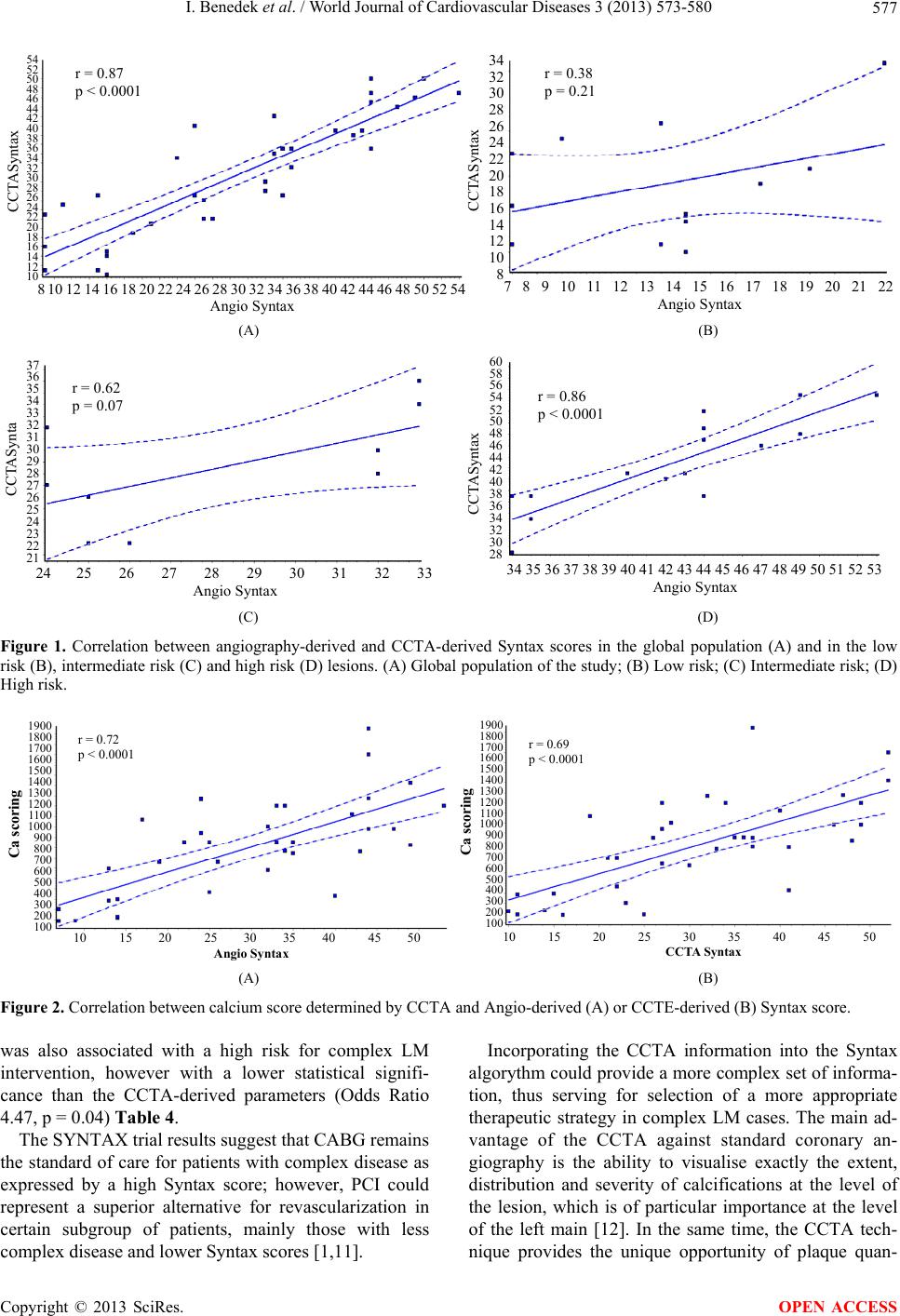 I. Benedek et al. / World Journal of Cardiovascular Diseases 3 (2013) 573-580 577 7 8 9 10 11 12 13 14 15 16 17 18 19 20 21 22 Angio Syntax CCTASyntax 34 32 30 28 26 24 22 20 18 16 14 12 10 8 54 52 50 48 46 44 42 40 38 36 34 32 30 28 26 24 22 20 18 16 14 12 10 r = 0.87 p < 0.0001 CCTASyntax 8 10 12 14 16 18 20 22 24 26 28 30 32 34 36 38 40 42 44 46 48 50 52 54 Angio Syntax r = 0.38 p = 0.21 (A) (B) 24 25 26 27 28 29 30 31 32 33 Angio Syntax 34 35 36 37 38 39 40 41 42 43 44 45 46 47 48 49 50 51 52 53 Angio Syntax CCTASynta 37 36 35 34 33 32 31 30 29 28 27 26 25 24 23 22 21 r = 0.62 p = 0.07 r = 0.86 p < 0.0001 CCTASyntax 60 58 56 54 52 50 48 46 44 42 40 38 36 34 32 30 28 (C) (D) Figure 1. Correlation between angiography-derived and CCTA-derived Syntax scores in the global population (A) and in the low risk (B), intermediate risk (C) and high risk (D) lesions. (A) Global population of the study; (B) Low risk; (C) Intermediate risk; (D) High risk. 10 15 20 25 30 35 40 45 50 Angio Syntax 1900 1800 1700 1600 1500 1400 1300 1200 1100 1000 900 800 700 600 500 400 300 200 100 r = 0.72 p < 0.0001 Ca scoring r = 0.69 p < 0.0001 10 15 20 25 30 35 40 45 50 CCTA Syntax 1900 1800 1700 1600 1500 1400 1300 1200 1100 1000 900 800 700 600 500 400 300 200 100 Ca scoring (A) (B) Figure 2. Correlation between calcium score determined by CCTA and Angio-derived (A) or CCTE-derived (B) Syntax score. was also associated with a high risk for complex LM intervention, however with a lower statistical signifi- cance than the CCTA-derived parameters (Odds Ratio 4.47, p = 0.04) Table 4. The SYNTAX trial results suggest that CABG remains the standard of care for patients with complex disease as expressed by a high Syntax score; however, PCI could represent a superior alternative for revascularization in certain subgroup of patients, mainly those with less complex disease and lower Syntax scores [1,11]. Incorporating the CCTA information into the Syntax algorythm could provide a more complex set of informa- tion, thus serving for selection of a more appropriate therapeutic strategy in complex LM cases. The main ad- vantage of the CCTA against standard coronary an- giography is the ability to visualise exactly the extent, distribution and severity of calcifications at the level of the lesion, which is of particular importance at the level of the left main [12]. In the same time, the CCTA tech- nique provides the unique opportunity of plaque quan- Copyright © 2013 SciRes. OPEN ACCESS 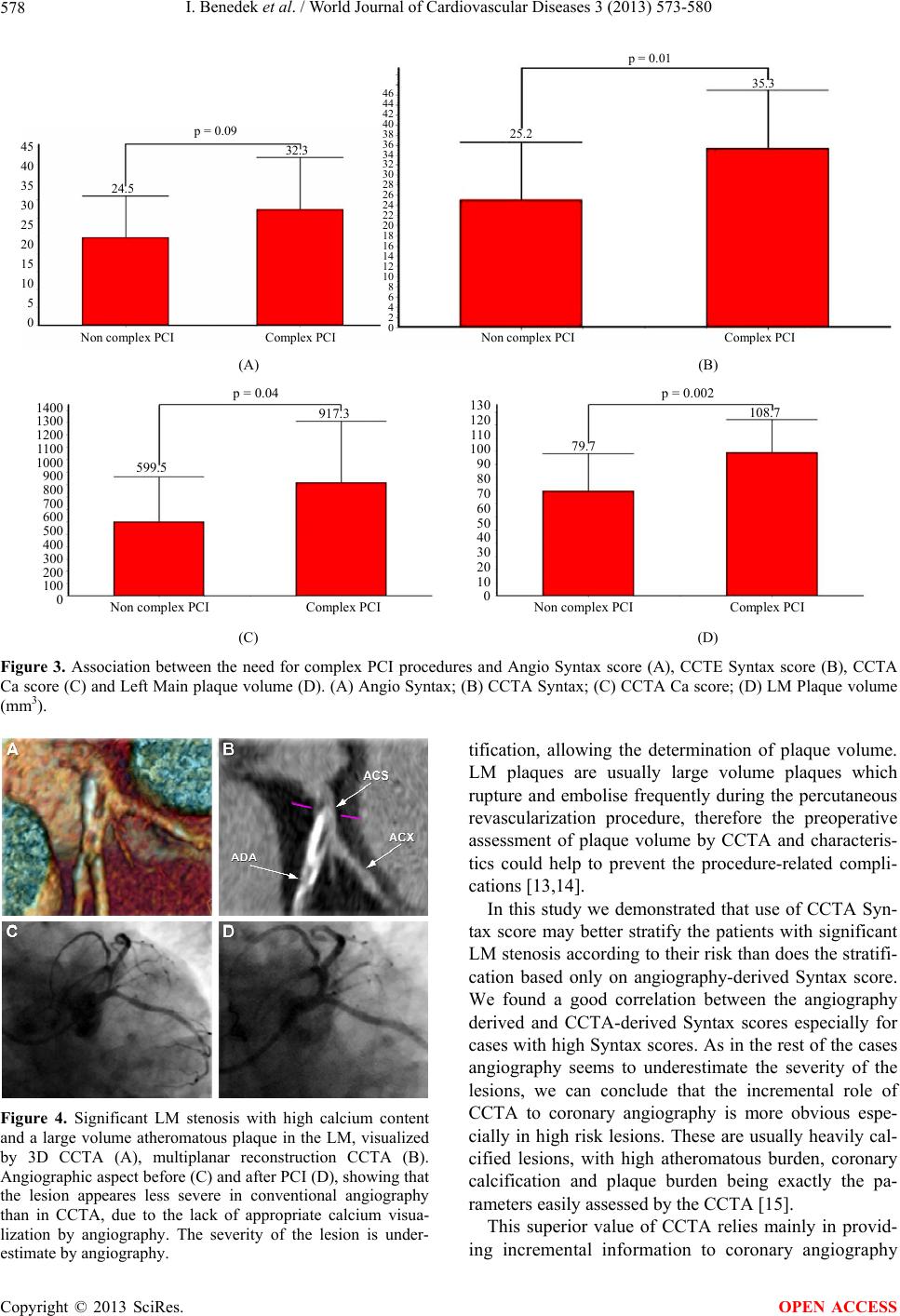 I. Benedek et al. / World Journal of Cardiovascular Diseases 3 (2013) 573-580 578 45 40 35 30 25 20 15 10 5 0 p = 0.09 24.5 32.3 p =0.01 35.3 25.2 N on complex PCI Complex PCI N on complex PCI Complex PCI 46 44 42 40 38 36 34 32 30 28 26 24 22 20 18 16 14 12 10 8 6 4 2 0 (A) (B) p = 0.04 599.5 917.3 79.7 108.7 p = 0.002 1400 1300 1200 1100 1000 900 800 700 600 500 400 300 200 100 0 N on complex PCI Complex PCI N on complex PCI Complex PCI 130 120 110 100 90 80 70 60 50 40 30 20 10 0 (C) (D) Figure 3. Association between the need for complex PCI procedures and Angio Syntax score (A), CCTE Syntax score (B), CCTA Ca score (C) and Left Main plaque volume (D). (A) Angio Syntax; (B) CCTA Syntax; (C) CCTA Ca score; (D) LM Plaque volume (mm3). Figure 4. Significant LM stenosis with high calcium content and a large volume atheromatous plaque in the LM, visualized by 3D CCTA (A), multiplanar reconstruction CCTA (B). Angiographic aspect before (C) and after PCI (D), showing that the lesion appeares less severe in conventional angiography than in CCTA, due to the lack of appropriate calcium visua- lization by angiography. The severity of the lesion is under- estimate by angiography. tification, allowing the determination of plaque volume. LM plaques are usually large volume plaques which rupture and embolise frequently during the percutaneous revascularization procedure, therefore the preoperative assessment of plaque volume by CCTA and characteris- tics could help to prevent the procedure-related compli- cations [13,14]. In this study we demonstrated that use of CCTA Syn- tax score may better stratify the patients with significant LM stenosis according to their risk than does the stratifi- cation based only on angiography-derived Syntax score. We found a good correlation between the angiography derived and CCTA-derived Syntax scores especially for cases with high Syntax scores. As in the rest of the cases angiography seems to underestimate the severity of the lesions, we can conclude that the incremental role of CCTA to coronary angiography is more obvious espe- cially in high risk lesions. These are usually heavily cal- cified lesions, with high atheromatous burden, coronary calcification and plaque burden being exactly the pa- rameters easily assessed by the CCTA [15]. This superior value of CCTA relies mainly in provid- ing incremental information to coronary angiography Copyright © 2013 SciRes. OPEN ACCESS 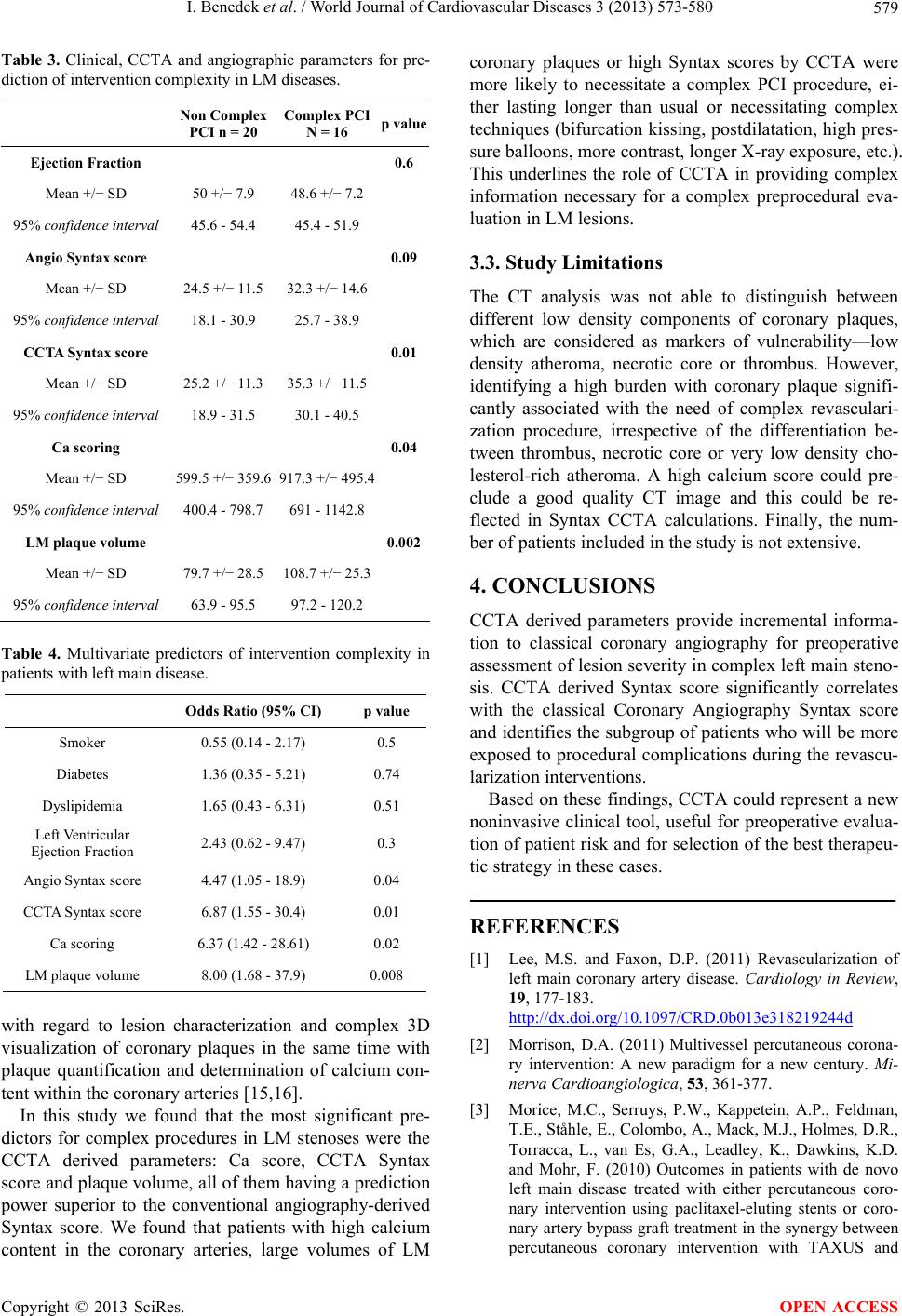 I. Benedek et al. / World Journal of Cardiovascular Diseases 3 (2013) 573-580 579 Table 3. Clinical, CCTA and angiographic parameters for pre- diction of intervention complexity in LM diseases. Non Complex PCI n = 20 Complex PCI N = 16 p value Ejection Fraction 0.6 Mean +/− SD 50 +/− 7.9 48.6 +/− 7.2 95% confidence interval 45.6 - 54.4 45.4 - 51.9 Angio Syntax score 0.09 Mean +/− SD 24.5 +/− 11.5 32.3 +/− 14.6 95% confidence interval 18.1 - 30.9 25.7 - 38.9 CCTA Syntax score 0.01 Mean +/− SD 25.2 +/− 11.3 35.3 +/− 11.5 95% confidence interval 18.9 - 31.5 30.1 - 40.5 Ca scoring 0.04 Mean +/− SD 599.5 +/− 359.6 917.3 +/− 495.4 95% confidence interval 400.4 - 798.7 691 - 1142.8 LM plaque volume 0.002 Mean +/− SD 79.7 +/− 28.5 108.7 +/− 25.3 95% confidence interval 63.9 - 95.5 97.2 - 120.2 Table 4. Multivariate predictors of intervention complexity in patients with left main disease. Odds Ratio (95% CI) p value Smoker 0.55 (0.14 - 2.17) 0.5 Diabetes 1.36 (0.35 - 5.21) 0.74 Dyslipidemia 1.65 (0.43 - 6.31) 0.51 Left Ventricular Ejection Fraction 2.43 (0.62 - 9.47) 0.3 Angio Syntax score 4.47 (1.05 - 18.9) 0.04 CCTA Syntax score 6.87 (1.55 - 30.4) 0.01 Ca scoring 6.37 (1.42 - 28.61) 0.02 LM plaque volume 8.00 (1.68 - 37.9) 0.008 with regard to lesion characterization and complex 3D visualization of coronary plaques in the same time with plaque quantification and determination of calcium con- tent within the coronary arteries [15,16]. In this study we found that the most significant pre- dictors for complex procedures in LM stenoses were the CCTA derived parameters: Ca score, CCTA Syntax score and plaque volume, all of them having a prediction power superior to the conventional angiography-derived Syntax score. We found that patients with high calcium content in the coronary arteries, large volumes of LM coronary plaques or high Syntax scores by CCTA were more likely to necessitate a complex PCI procedure, ei- ther lasting longer than usual or necessitating complex techniques (bifurcation kissing, postdilatation, high pres- sure balloons, more contrast, longer X-ray exposure, etc.). This underlines the role of CCTA in providing complex information necessary for a complex preprocedural eva- luation in LM lesions. 3.3. Study Limitations The CT analysis was not able to distinguish between different low density components of coronary plaques, which are considered as markers of vulnerability—low density atheroma, necrotic core or thrombus. However, identifying a high burden with coronary plaque signifi- cantly associated with the need of complex revasculari- zation procedure, irrespective of the differentiation be- tween thrombus, necrotic core or very low density cho- lesterol-rich atheroma. A high calcium score could pre- clude a good quality CT image and this could be re- flected in Syntax CCTA calculations. Finally, the num- ber of patients included in the study is not extensive. 4. CONCLUSIONS CCTA derived parameters provide incremental informa- tion to classical coronary angiography for preoperative assessment of lesion severity in complex left main steno- sis. CCTA derived Syntax score significantly correlates with the classical Coronary Angiography Syntax score and identifies the subgroup of patients who will be more exposed to procedural complications during the revascu- larization interventions. Based on these findings, CCTA could represent a new noninvasive clinical tool, useful for preoperative evalua- tion of patient risk and for selection of the best therapeu- tic strategy in these cases. REFERENCES [1] Lee, M.S. and Faxon, D.P. (2011) Revascularization of left main coronary artery disease. Cardiology in Review, 19, 177-183. http://dx.doi.org/10.1097/CRD.0b013e318219244d [2] Morrison, D.A. (2011) Multivessel percutaneous corona- ry intervention: A new paradigm for a new century. Mi- nerva Cardioangiologica, 53, 361-377. [3] Morice, M.C., Serruys, P.W., Kappetein, A.P., Feldman, T.E., Ståhle, E., Colombo, A., Mack, M.J., Holmes, D.R., Torracca, L., van Es, G.A., Leadley, K., Dawkins, K.D. and Mohr, F. (2010) Outcomes in patients with de novo left main disease treated with either percutaneous coro- nary intervention using paclitaxel-eluting stents or coro- nary artery bypass graft treatment in the synergy between percutaneous coronary intervention with TAXUS and Copyright © 2013 SciRes. OPEN ACCESS 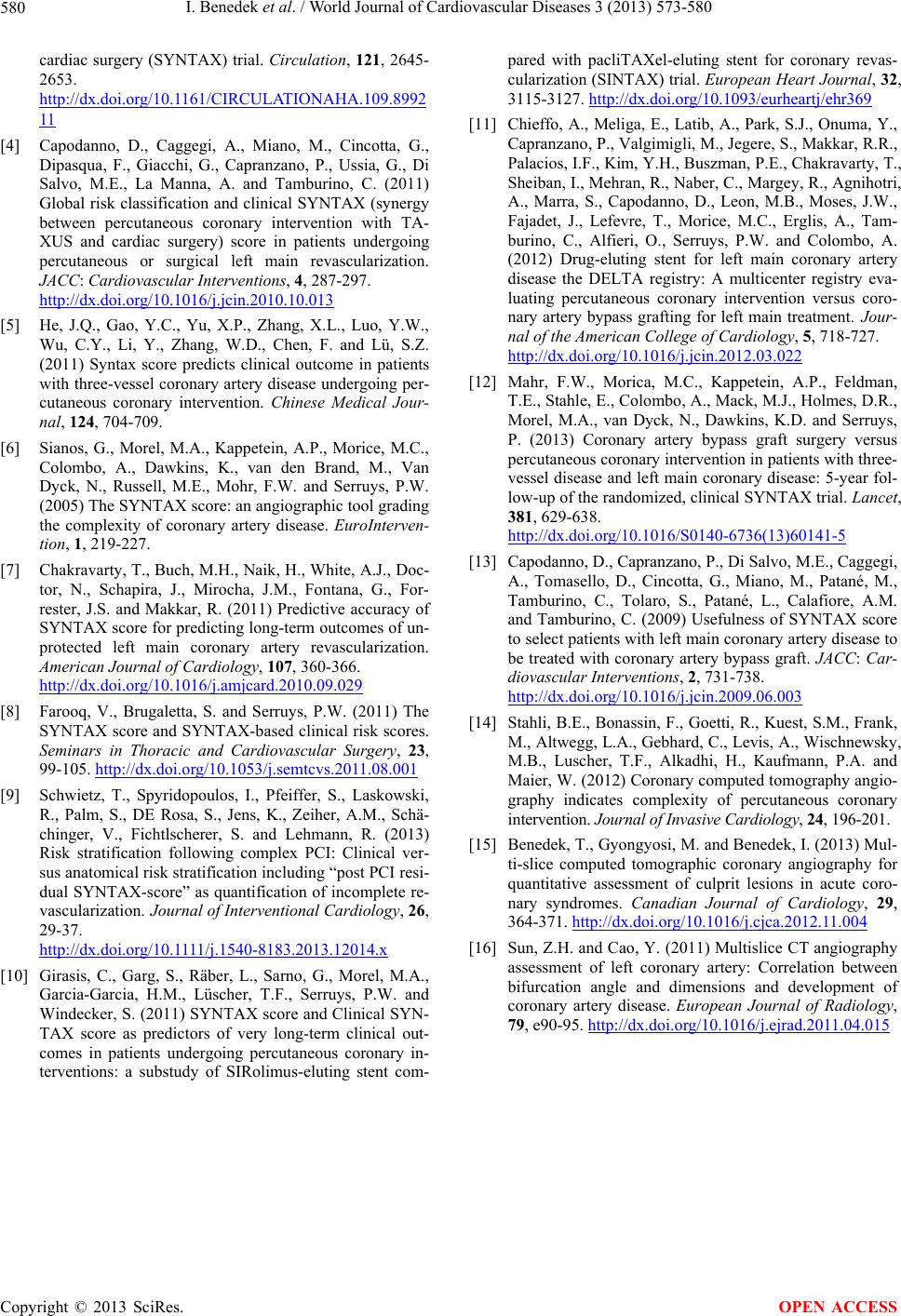 I. Benedek et al. / World Journal of Cardiovascular Diseases 3 (2013) 573-580 Copyright © 2013 SciRes. 580 OPEN ACCESS cardiac surgery (SYNTAX) trial. Circulation, 121, 2645- 2653. http://dx.doi.org/10.1161/CIRCULATIONAHA.109.8992 11 [4] Capodanno, D., Caggegi, A., Miano, M., Cincotta, G., Dipasqua, F., Giacchi, G., Capranzano, P., Ussia, G., Di Salvo, M.E., La Manna, A. and Tamburino, C. (2011) Global risk classification and clinical SYNTAX (synergy between percutaneous coronary intervention with TA- XUS and cardiac surgery) score in patients undergoing percutaneous or surgical left main revascularization. JACC: Cardiovascular Interventions, 4, 287-297. http://dx.doi.org/10.1016/j.jcin.2010.10.013 [5] He, J.Q., Gao, Y.C., Yu, X.P., Zhang, X.L., Luo, Y.W., Wu, C.Y., Li, Y., Zhang, W.D., Chen, F. and Lü, S.Z. (2011) Syntax score predicts clinical outcome in patients with three-vessel coronary artery disease undergoing per- cutaneous coronary intervention. Chinese Medical Jour- nal, 124, 704-709. [6] Sianos, G., Morel, M.A., Kappetein, A.P., Morice, M.C., Colombo, A., Dawkins, K., van den Brand, M., Van Dyck, N., Russell, M.E., Mohr, F.W. and Serruys, P.W. (2005) The SYNTAX score: an angiographic tool grading the complexity of coronary artery disease. EuroInterven- tion, 1, 219-227. [7] Chakravarty, T., Buch, M.H., Naik, H., White, A.J., Doc- tor, N., Schapira, J., Mirocha, J.M., Fontana, G., For- rester, J.S. and Makkar, R. (2011) Predictive accuracy of SYNTAX score for predicting long-term outcomes of un- protected left main coronary artery revascularization. American Journal of Cardiology, 107, 360-366. http://dx.doi.org/10.1016/j.amjcard.2010.09.029 [8] Farooq, V., Brugaletta, S. and Serruys, P.W. (2011) The SYNTAX score and SYNTAX-based clinical risk scores. Seminars in Thoracic and Cardiovascular Surgery, 23, 99-105. http://dx.doi.org/10.1053/j.semtcvs.2011.08.001 [9] Schwietz, T., Spyridopoulos, I., Pfeiffer, S., Laskowski, R., Palm, S., DE Rosa, S., Jens, K., Zeiher, A.M., Schä- chinger, V., Fichtlscherer, S. and Lehmann, R. (2013) Risk stratification following complex PCI: Clinical ver- sus anatomical risk stratification including “post PCI resi- dual SYNTAX-score” as quantification of incomplete re- vascularization. Journal of Interventional Cardiology, 26, 29-37. http://dx.doi.org/10.1111/j.1540-8183.2013.12014.x [10] Girasis, C., Garg, S., Räber, L., Sarno, G., Morel, M.A., Garcia-Garcia, H.M., Lüscher, T.F., Serruys, P.W. and Windecker, S. (2011) SYNTAX score and Clinical SYN- TAX score as predictors of very long-term clinical out- comes in patients undergoing percutaneous coronary in- terventions: a substudy of SIRolimus-eluting stent com- pared with pacliTAXel-eluting stent for coronary revas- cularization (SINTAX) trial. European Heart Journal, 32, 3115-3127. http://dx.doi.org/10.1093/eurheartj/ehr369 [11] Chieffo, A., Meliga, E., Latib, A., Park, S.J., Onuma, Y., Capranzano, P., Valgimigli, M., Jegere, S., Makkar, R.R., Palacios, I.F., Kim, Y.H., Buszman, P.E., Chakravarty, T., Sheiban, I., Mehran, R., Naber, C., Margey, R., Agnihotri, A., Marra, S., Capodanno, D., Leon, M.B., Moses, J.W., Fajadet, J., Lefevre, T., Morice, M.C., Erglis, A., Tam- burino, C., Alfieri, O., Serruys, P.W. and Colombo, A. (2012) Drug-eluting stent for left main coronary artery disease the DELTA registry: A multicenter registry eva- luating percutaneous coronary intervention versus coro- nary artery bypass grafting for left main treatment. Jour- nal of the American College of Cardiology, 5, 718-727. http://dx.doi.org/10.1016/j.jcin.2012.03.022 [12] Mahr, F.W., Morica, M.C., Kappetein, A.P., Feldman, T.E., Stahle, E., Colombo, A., Mack, M.J., Holmes, D.R., Morel, M.A., van Dyck, N., Dawkins, K.D. and Serruys, P. (2013) Coronary artery bypass graft surgery versus percutaneous coronary intervention in patients with three- vessel disease and left main coronary disease: 5-year fol- low-up of the randomized, clinical SYNTAX trial. Lancet, 381, 629-638. http://dx.doi.org/10.1016/S0140-6736(13)60141-5 [13] Capodanno, D., Capranzano, P., Di Salvo, M.E., Caggegi, A., Tomasello, D., Cincotta, G., Miano, M., Patané, M., Tamburino, C., Tolaro, S., Patané, L., Calafiore, A.M. and Tamburino, C. (2009) Usefulness of SYNTAX score to select patients with left main coronary artery disease to be treated with coronary artery bypass graft. JACC: Car- diovascular Interventions, 2, 731-738. http://dx.doi.org/10.1016/j.jcin.2009.06.003 [14] Stahli, B.E., Bonassin, F., Goetti, R., Kuest, S.M., Frank, M., Altwegg, L.A., Gebhard, C., Levis, A., Wischnewsky, M.B., Luscher, T.F., Alkadhi, H., Kaufmann, P.A. and Maier, W. (2012) Coronary computed tomography angio- graphy indicates complexity of percutaneous coronary intervention. Journal of Invasive Cardiology, 24, 196-201. [15] Benedek, T., Gyongyosi, M. and Benedek, I. (2013) Mul- ti-slice computed tomographic coronary angiography for quantitative assessment of culprit lesions in acute coro- nary syndromes. Canadian Journal of Cardiology, 29, 364-371. http://dx.doi.org/10.1016/j.cjca.2012.11.004 [16] Sun, Z.H. and Cao, Y. (2011) Multislice CT angiography assessment of left coronary artery: Correlation between bifurcation angle and dimensions and development of coronary artery disease. European Journal of Radiology, 79, e90-95. http://dx.doi.org/10.1016/j.ejrad.2011.04.015 |