

Paper Menu >>
Journal Menu >>
 Surgical Science, 2013, 4, 547-553 Published Online December 2013 (http://www.scirp.org/journal/ss) http://dx.doi.org/10.4236/ss.2013.412106 Open Access SS Complications, Mineral and Vitamin Deficiencies: Comparison between Roux-en-Y Gastric Bypass and Sleeve Gastrectomy* Nina Sauer1#, Jan Wienecke1, Clarissa Schulze zur Wiesfch1, Stefan Wolter2, Oliver Mann2, Jens Aberle1 1Department for Endocrinology and Diabetology, University Hospital Hamburg Eppendorf (UKE), Hamburg, Germany 2Department for Visceral and Abdominal Surgery, University Hospital Hamburg Eppendorf (UKE), Hamburg, Germany Email: #[email protected] Received October 22, 2013; revised November 20, 2013; accepted November 28, 2013 Copyright © 2013 Nina Sauer et al. This is an open access article distributed under the Creative Commons Attribution License, which permits unrestricted use, distribution, and reproduction in any medium, provided the original work is properly cited. ABSTRACT Objective: Nutritional deficiencies are known side-effects of bariatric surgeries, specifically in those that bypass the proximal intestine. Therefore, in clinical practice, vitamin and mineral supplementations are often necessary after such operations. It was our intention to evaluate, whether alimentary deficiencies occur with the same frequency in patients following Sleeve-Gastrectomy (SG) compared to Roux-en-Y Gastric Bypass (RYGB) surgeries. Methods: We con- ducted a retrospective data analysis of 171 patients (121 RYGB, 50 SG). Vitamin levels were compared between SG and RYGB patients over the first post-operative year. Furthermore, regression analysis was performed with regard to vitamin and iron supplementations and their recommended dosages. Complications occurring within the first post-sur- gical year were documented as well. Results: Other than vitamin B6 deficiency, which was found to be more frequent in SG patients, there was no other significant difference regarding the type of operation and the number of patients who had these deficiencies. There was no significant difference in average vitamin and iron levels between RYGB and SG. A minimum dose of 1000 IU vitamin D per day was necessary to affect vitamin D levels. The intramuscular administra- tion of vitamin B12 was the only route found to be effective. Complications within the first year were rare. Conclusions: Against common assumptions, vitamin and iron deficiencies in SG patients are not less frequent in the first post-surgi- cal year in comparison to RYGB patients. Standard supplementations should include iron in premenopausal women: Vitamin D at least 1000 IU per day and vitamin B12 i.m. administration in case of a deficiency. Keywords: Nutritional Deficiencies; Vitamin Supplementation; Bariatric Surgery 1. Introduction Bariatric surgeries are considered to be low risk com- plications. However, vitamin and iron deficiencies occur more frequently in patients with time after bariatric sur- gery. The impact of the type of surgery on these deficien- cies in former studies has been controversial. In Roux- en-Y Gastric Bypass (RYGB), a small stomach pouch is created. The small intestine is separated by the distal liga- ment of Treitz and the distal intestines are connected by anastomosis with the stomach pouch. The pancreaticobi- liary limb is joined approximately by 100 - 250 cm distal of the stomach pouch thereby causing nutrition to bypass the proximal intestines. On the contrary, in Sleeve Gas- trectomy (SG), mostly the gastric volume is decreased, therefore, nutritional deficiencies are mainly expected in RYGB. In our study, we have investigated a group of obese patients (n = 171) undergoing the two most com- mon types of bariatric surgeries (RYGB or SG), with regard to the prevalence of iron and vitamin deficien- cies one year after the procedure, as well as the post- surgical complication rates in our patients. 2. Patients and Methods *The authors declare no conflict of interest. Informed consent was obtained from all patients. #Corresponding author. Data was collected retrospectively from patients who had 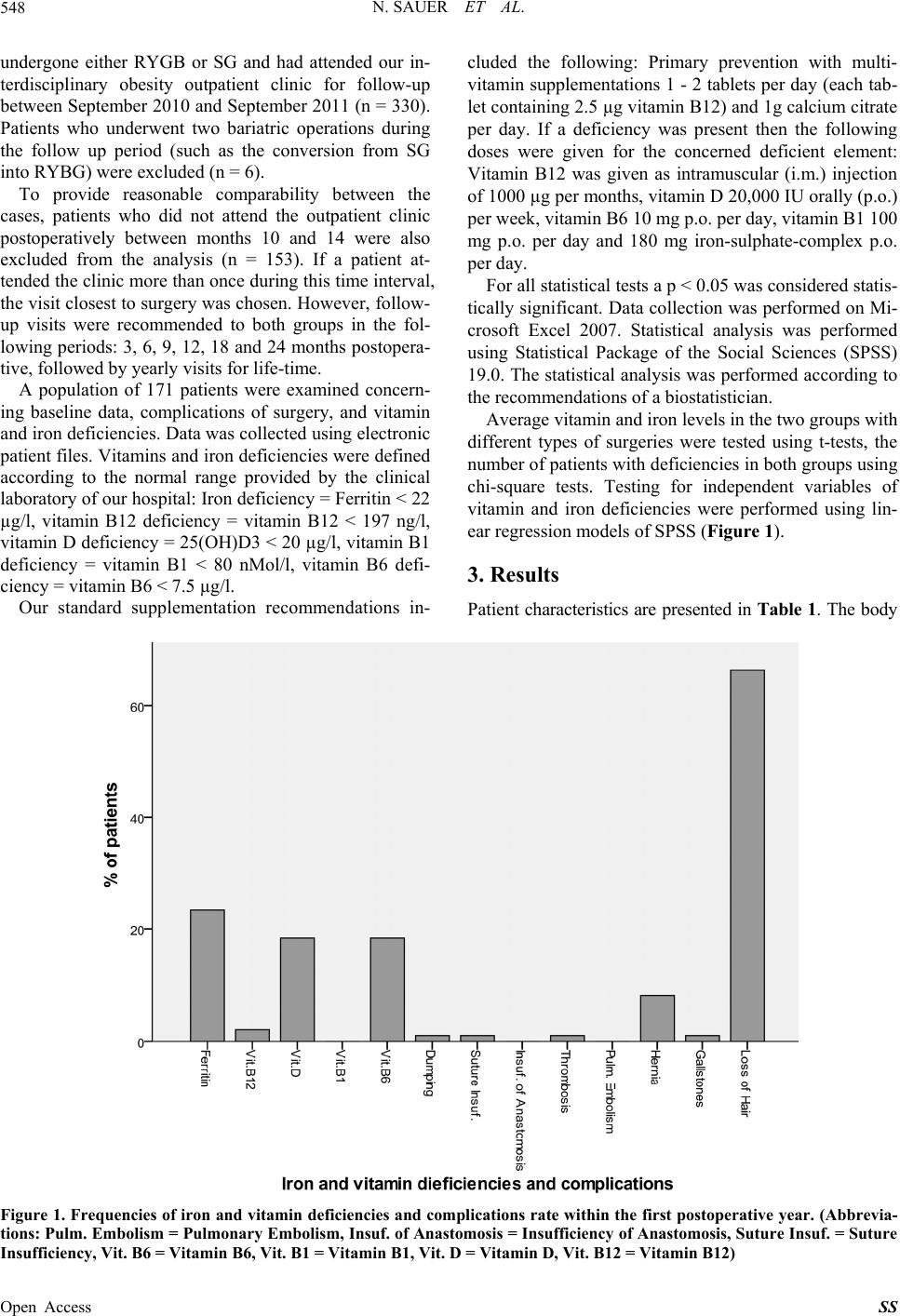 N. SAUER ET AL. 548 undergone either RYGB or SG and had attended our in- terdisciplinary obesity outpatient clinic for follow-up between September 2010 and September 2011 (n = 330). Patients who underwent two bariatric operations during the follow up period (such as the conversion from SG into RYBG) were excluded (n = 6). To provide reasonable comparability between the cases, patients who did not attend the outpatient clinic postoperatively between months 10 and 14 were also excluded from the analysis (n = 153). If a patient at- tended the clinic more than once during this time interval, the visit closest to surgery was chosen. However, follow- up visits were recommended to both groups in the fol- lowing periods: 3, 6, 9, 12, 18 and 24 months postopera- tive, followed by yearly visits for life-time. A population of 171 patients were examined concern- ing baseline data, complications of surgery, and vitamin and iron deficiencies. Data was collected using electronic patient files. Vitamins and iron deficiencies were defined according to the normal range provided by the clinical laboratory of our hospital: Iron deficiency = Ferritin < 22 µg/l, vitamin B12 deficiency = vitamin B12 < 197 ng/l, vitamin D deficiency = 25(OH)D3 < 20 µg/l, vitamin B1 deficiency = vitamin B1 < 80 nMol/l, vitamin B6 defi- ciency = vitamin B6 < 7.5 µg/l. Our standard supplementation recommendations in- cluded the following: Primary prevention with multi- vitamin supplementations 1 - 2 tablets per day (each tab- let containing 2.5 µg vitamin B12) and 1g calcium citrate per day. If a deficiency was present then the following doses were given for the concerned deficient element: Vitamin B12 was given as intramuscular (i.m.) injection of 1000 µg per months, vitamin D 20,000 IU orally (p.o.) per week, vitamin B6 10 mg p.o. per day, vitamin B1 100 mg p.o. per day and 180 mg iron-sulphate-complex p.o. per day. For all statistical tests a p < 0.05 was considered statis- tically significant. Data collection was performed on Mi- crosoft Excel 2007. Statistical analysis was performed using Statistical Package of the Social Sciences (SPSS) 19.0. The statistical analysis was performed according to the recommendations of a biostatistician. Average vitamin and iron levels in the two groups with different types of surgeries were tested using t-tests, the number of patients with deficiencies in both groups using chi-square tests. Testing for independent variables of vitamin and iron deficiencies were performed using lin- ear regression models of SPSS (Figure 1). 3. Results Patient characteristics are presented in Table 1. The body Figure 1. Frequencies of iron and vitamin deficiencies and complications rate within the first postoperative year. (Abbrevia- tions: Pulm. Embolism = Pulmonary Embolism, Insuf. of Anastomosis = Insufficiency of Anastomosis, Suture Insuf. = Sutur e Insufficiency, Vit. B6 = Vitamin B6, Vit. B1 = Vitamin B1, Vit. D = Vitamin D, Vit. B12 = Vitamin B12) Open Access SS 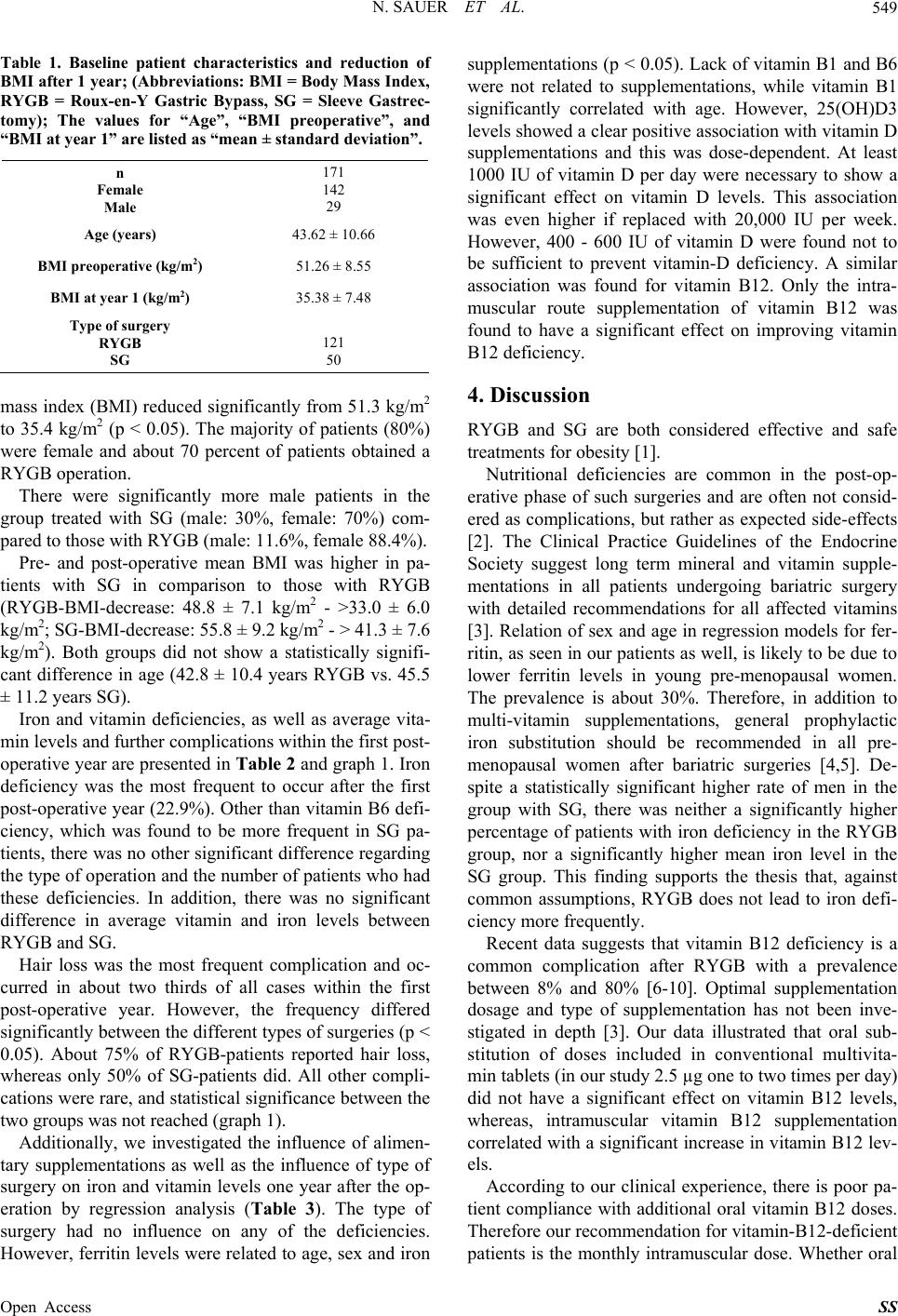 N. SAUER ET AL. 549 Table 1. Baseline patient characteristics and reduction of BMI after 1 year; (Abbreviations: BMI = Bod y Mass Index, RYGB = Roux-en-Y Gastric Bypass, SG = Sleeve Gastrec- tomy); The values for “Age”, “BMI preoperative”, and “BMI at year 1” are listed as “mean ± standard deviation”. n Female Male 171 142 29 Age (years) 43.62 ± 10.66 BMI preoperative (kg/m2) 51.26 ± 8.55 BMI at year 1 (kg/m2) 35.38 ± 7.48 Type of surgery RYGB SG 121 50 mass index (BMI) reduced significantly from 51.3 kg/m2 to 35.4 kg/m2 (p < 0.05). The majority of patients (80%) were female and about 70 percent of patients obtained a RYGB operation. There were significantly more male patients in the group treated with SG (male: 30%, female: 70%) com- pared to those with RYGB (male: 11.6%, female 88.4%). Pre- and post-operative mean BMI was higher in pa- tients with SG in comparison to those with RYGB (RYGB-BMI-decrease: 48.8 ± 7.1 kg/m2 - >33.0 ± 6.0 kg/m2; SG-BMI-decrease: 55.8 ± 9.2 kg/m2 - > 41.3 ± 7.6 kg/m2). Both groups did not show a statistically signifi- cant difference in age (42.8 ± 10.4 years RYGB vs. 45.5 ± 11.2 years SG). Iron and vitamin deficiencies, as well as average vita- min levels and further complications within the first post- operative year are presented in Table 2 and graph 1. Iron deficiency was the most frequent to occur after the first post-operative year (22.9%). Other than vitamin B6 defi- ciency, which was found to be more frequent in SG pa- tients, there was no other significant difference regarding the type of operation and the number of patients who had these deficiencies. In addition, there was no significant difference in average vitamin and iron levels between RYGB and SG. Hair loss was the most frequent complication and oc- curred in about two thirds of all cases within the first post-operative year. However, the frequency differed significantly between the different types of surgeries (p < 0.05). About 75% of RYGB-patients reported hair loss, whereas only 50% of SG-patients did. All other compli- cations were rare, and statistical significance between the two groups was not reached (graph 1). Additionally, we investigated the influence of alimen- tary supplementations as well as the influence of type of surgery on iron and vitamin levels one year after the op- eration by regression analysis (Table 3). The type of surgery had no influence on any of the deficiencies. However, ferritin levels were related to age, sex and iron supplementations (p < 0.05). Lack of vitamin B1 and B6 were not related to supplementations, while vitamin B1 significantly correlated with age. However, 25(OH)D3 levels showed a clear positive association with vitamin D supplementations and this was dose-dependent. At least 1000 IU of vitamin D per day were necessary to show a significant effect on vitamin D levels. This association was even higher if replaced with 20,000 IU per week. However, 400 - 600 IU of vitamin D were found not to be sufficient to prevent vitamin-D deficiency. A similar association was found for vitamin B12. Only the intra- muscular route supplementation of vitamin B12 was found to have a significant effect on improving vitamin B12 deficiency. 4. Discussion RYGB and SG are both considered effective and safe treatments for obesity [1]. Nutritional deficiencies are common in the post-op- erative phase of such surgeries and are often not consid- ered as complications, but rather as expected side-effects [2]. The Clinical Practice Guidelines of the Endocrine Society suggest long term mineral and vitamin supple- mentations in all patients undergoing bariatric surgery with detailed recommendations for all affected vitamins [3]. Relation of sex and age in regression models for fer- ritin, as seen in our patients as well, is likely to be due to lower ferritin levels in young pre-menopausal women. The prevalence is about 30%. Therefore, in addition to multi-vitamin supplementations, general prophylactic iron substitution should be recommended in all pre- menopausal women after bariatric surgeries [4,5]. De- spite a statistically significant higher rate of men in the group with SG, there was neither a significantly higher percentage of patients with iron deficiency in the RYGB group, nor a significantly higher mean iron level in the SG group. This finding supports the thesis that, against common assumptions, RYGB does not lead to iron defi- ciency more frequently. Recent data suggests that vitamin B12 deficiency is a common complication after RYGB with a prevalence between 8% and 80% [6-10]. Optimal supplementation dosage and type of supplementation has not been inve- stigated in depth [3]. Our data illustrated that oral sub- stitution of doses included in conventional multivita- min tablets (in our study 2.5 µg one to two times per day) did not have a significant effect on vitamin B12 levels, whereas, intramuscular vitamin B12 supplementation correlated with a significant increase in vitamin B12 lev- els. According to our clinical experience, there is poor pa- tient compliance with additional oral vitamin B12 doses. Therefore our recommendation for vitamin-B12-deficient patients is the monthly intramuscular dose. Whether oral Open Access SS 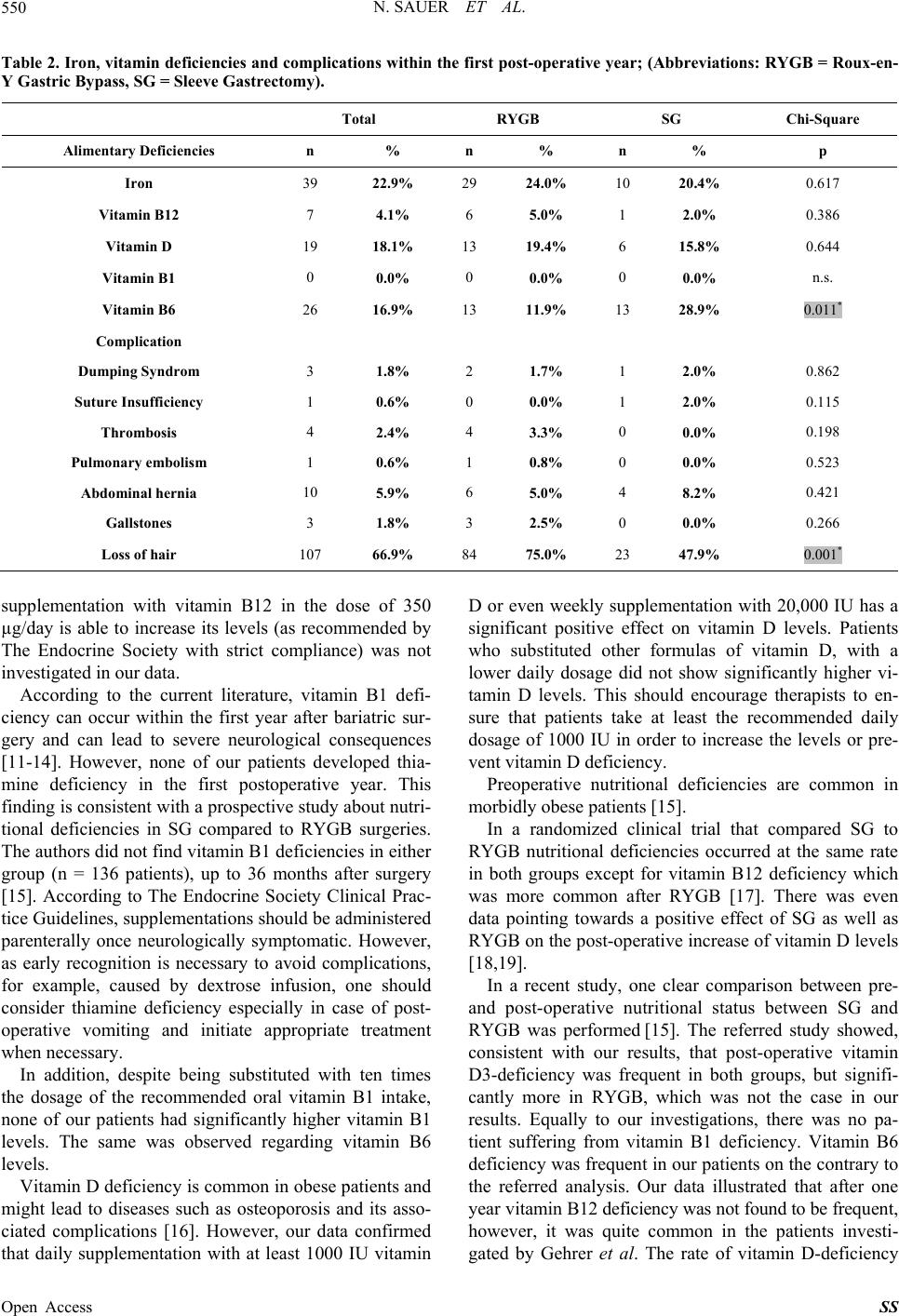 N. SAUER ET AL. 550 Table 2. Iron, vitamin deficiencies and complications within the first post-operative year; (Abbreviations: RYGB = Roux-en- Y Gastric Bypass, SG = Sleeve Gastrectomy). Total RYGB SG Chi-Square Alimentary Deficiencies n % n % n % p Iron 39 22.9% 29 24.0% 10 20.4% 0.617 Vitamin B12 7 4.1% 6 5.0% 1 2.0% 0.386 Vitamin D 19 18.1% 13 19.4% 6 15.8% 0.644 Vitamin B1 0 0.0% 0 0.0% 0 0.0% n.s. Vitamin B6 26 16.9% 13 11.9% 13 28.9% 0.011* Complication Dumping Syndrom 3 1.8% 2 1.7% 1 2.0% 0.862 Suture Insufficiency 1 0.6% 0 0.0% 1 2.0% 0.115 Thrombosis 4 2.4% 4 3.3% 0 0.0% 0.198 Pulmonary em bolism 1 0.6% 1 0.8% 0 0.0% 0.523 Abdominal hernia 10 5.9% 6 5.0% 4 8.2% 0.421 Gallstones 3 1.8% 3 2.5% 0 0.0% 0.266 Loss of hair 107 66.9% 84 75.0% 23 47.9% 0.001* supplementation with vitamin B12 in the dose of 350 µg/day is able to increase its levels (as recommended by The Endocrine Society with strict compliance) was not investigated in our data. According to the current literature, vitamin B1 defi- ciency can occur within the first year after bariatric sur- gery and can lead to severe neurological consequences [11-14]. However, none of our patients developed thia- mine deficiency in the first postoperative year. This finding is consistent with a prospective study about nutri- tional deficiencies in SG compared to RYGB surgeries. The authors did not find vitamin B1 deficiencies in either group (n = 136 patients), up to 36 months after surgery [15]. According to The Endocrine Society Clinical Prac- tice Guidelines, supplementations should be administered parenterally once neurologically symptomatic. However, as early recognition is necessary to avoid complications, for example, caused by dextrose infusion, one should consider thiamine deficiency especially in case of post- operative vomiting and initiate appropriate treatment when necessary. In addition, despite being substituted with ten times the dosage of the recommended oral vitamin B1 intake, none of our patients had significantly higher vitamin B1 levels. The same was observed regarding vitamin B6 levels. Vitamin D deficiency is common in obese patients and might lead to diseases such as osteoporosis and its asso- ciated complications [16]. However, our data confirmed that daily supplementation with at least 1000 IU vitamin D or even weekly supplementation with 20,000 IU has a significant positive effect on vitamin D levels. Patients who substituted other formulas of vitamin D, with a lower daily dosage did not show significantly higher vi- tamin D levels. This should encourage therapists to en- sure that patients take at least the recommended daily dosage of 1000 IU in order to increase the levels or pre- vent vitamin D deficiency. Preoperative nutritional deficiencies are common in morbidly obese patients [15]. In a randomized clinical trial that compared SG to RYGB nutritional deficiencies occurred at the same rate in both groups except for vitamin B12 deficiency which was more common after RYGB [17]. There was even data pointing towards a positive effect of SG as well as RYGB on the post-operative increase of vitamin D levels [18,19]. In a recent study, one clear comparison between pre- and post-operative nutritional status between SG and RYGB was performed [15]. The referred study showed, consistent with our results, that post-operative vitamin D3-deficiency was frequent in both groups, but signifi- cantly more in RYGB, which was not the case in our results. Equally to our investigations, there was no pa- tient suffering from vitamin B1 deficiency. Vitamin B6 deficiency was frequent in our patients on the contrary to the referred analysis. Our data illustrated that after one year vitamin B12 deficiency was not found to be frequent, however, it was quite common in the patients investi- gated by Gehrer et al. The rate of vitamin D-deficiency Open Access SS 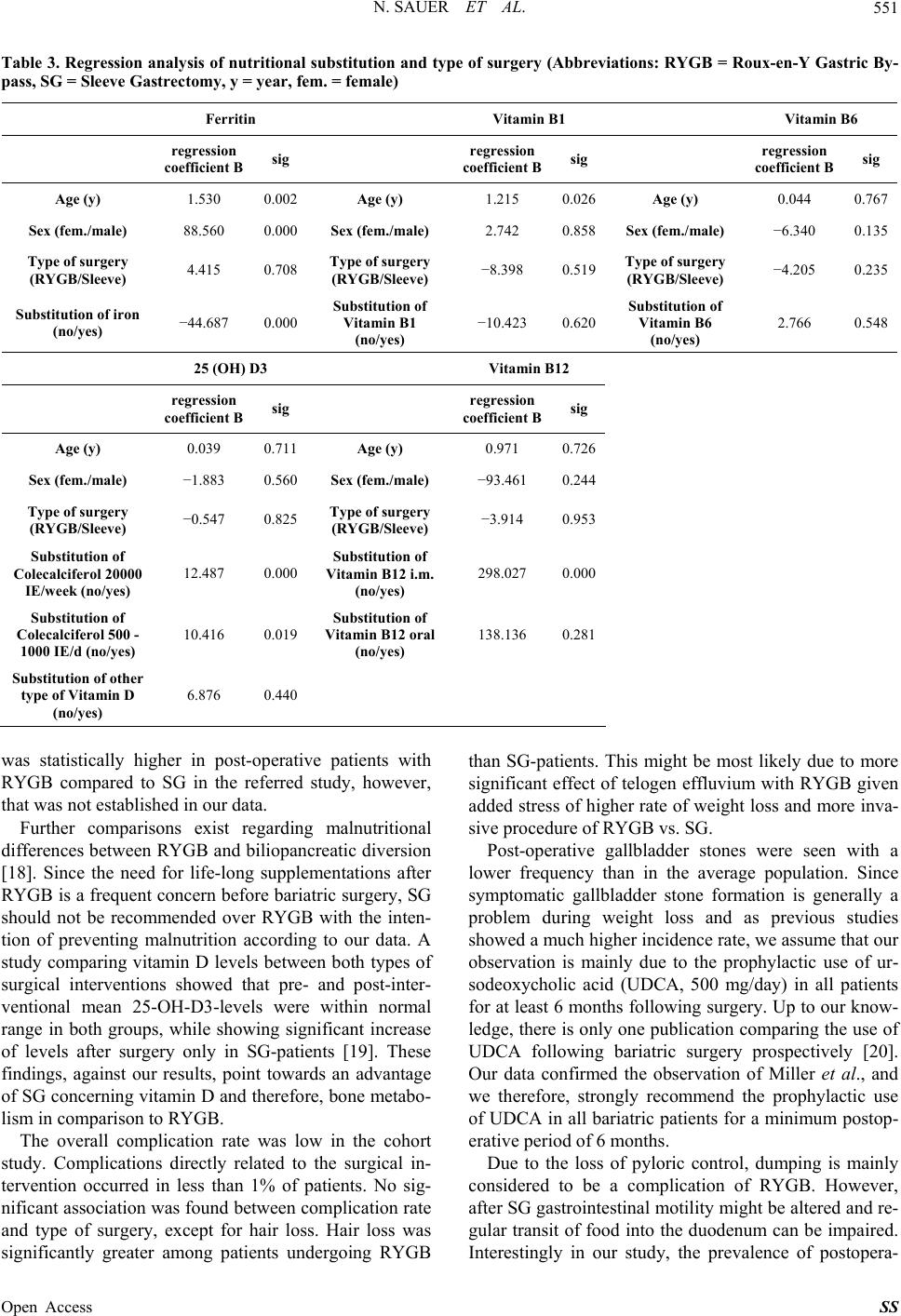 N. SAUER ET AL. 551 Table 3. Regression analysis of nutritional substitution and type of surgery (Abbreviations: RYGB = Roux-en-Y Gastric By- pass, SG = Sleeve Gastrectomy, y = year, fem. = female) Ferritin Vitamin B1 Vitamin B6 regression coefficient B sig regression coefficient Bsig regression coefficient Bsig Age (y) 1.530 0.002 Age (y) 1.215 0.026Age (y) 0.044 0.767 Sex (fem./male) 88.560 0.000 Sex (fem./male) 2.742 0.858Sex (fem./male) −6.340 0.135 Type of surgery (RYGB/Sleeve) 4.415 0.708 Type of surgery (RYGB/Sleeve) −8.398 0.519Type of surgery (RYGB/Sleeve) −4.205 0.235 Substitution of iron (no/yes) −44.687 0.000 Substitution of Vitamin B1 (no/yes) −10.423 0.620 Substitution of Vitamin B6 (no/yes) 2.766 0.548 25 (OH) D3 Vitamin B12 regression coefficient B sig regression coefficient Bsig Age (y) 0.039 0.711 Age (y) 0.971 0.726 Sex (fem./male) −1.883 0.560 Sex (fem./male) −93.461 0.244 Type of surgery (RYGB/Sleeve) −0.547 0.825 Type of surgery (RYGB/Sleeve) −3.914 0.953 Substitution of Colecalciferol 20000 IE/week (no/yes) 12.487 0.000 Substitution of Vitamin B12 i.m. (no/yes) 298.027 0.000 Substitution of Colecalciferol 500 - 1000 IE/d (no/yes) 10.416 0.019 Substitution of Vitamin B12 oral (no/yes) 138.136 0.281 Substitution of other type of Vitamin D (no/yes) 6.876 0.440 was statistically higher in post-operative patients with RYGB compared to SG in the referred study, however, that was not established in our data. Further comparisons exist regarding malnutritional differences between RYGB and biliopancreatic diversion [18]. Since the need for life-long supplementations after RYGB is a frequent concern before bariatric surgery, SG should not be recommended over RYGB with the inten- tion of preventing malnutrition according to our data. A study comparing vitamin D levels between both types of surgical interventions showed that pre- and post-inter- ventional mean 25-OH-D3-levels were within normal range in both groups, while showing significant increase of levels after surgery only in SG-patients [19]. These findings, against our results, point towards an advantage of SG concerning vitamin D and therefore, bone metabo- lism in comparison to RYGB. The overall complication rate was low in the cohort study. Complications directly related to the surgical in- tervention occurred in less than 1% of patients. No sig- nificant association was found between complication rate and type of surgery, except for hair loss. Hair loss was significantly greater among patients undergoing RYGB than SG-patients. This might be most likely due to more significant effect of telogen effluvium with RYGB given added stress of higher rate of weight loss and more inva- sive procedure of RYGB vs. SG. Post-operative gallbladder stones were seen with a lower frequency than in the average population. Since symptomatic gallbladder stone formation is generally a problem during weight loss and as previous studies showed a much higher incidence rate, we assume that our observation is mainly due to the prophylactic use of ur- sodeoxycholic acid (UDCA, 500 mg/day) in all patients for at least 6 months following surgery. Up to our know- ledge, there is only one publication comparing the use of UDCA following bariatric surgery prospectively [20]. Our data confirmed the observation of Miller et al., and we therefore, strongly recommend the prophylactic use of UDCA in all bariatric patients for a minimum postop- erative period of 6 months. Due to the loss of pyloric control, dumping is mainly considered to be a complication of RYGB. However, after SG gastrointestinal motility might be altered and re- gular transit of food into the duodenum can be impaired. Interestingly in our study, the prevalence of postopera- Open Access SS 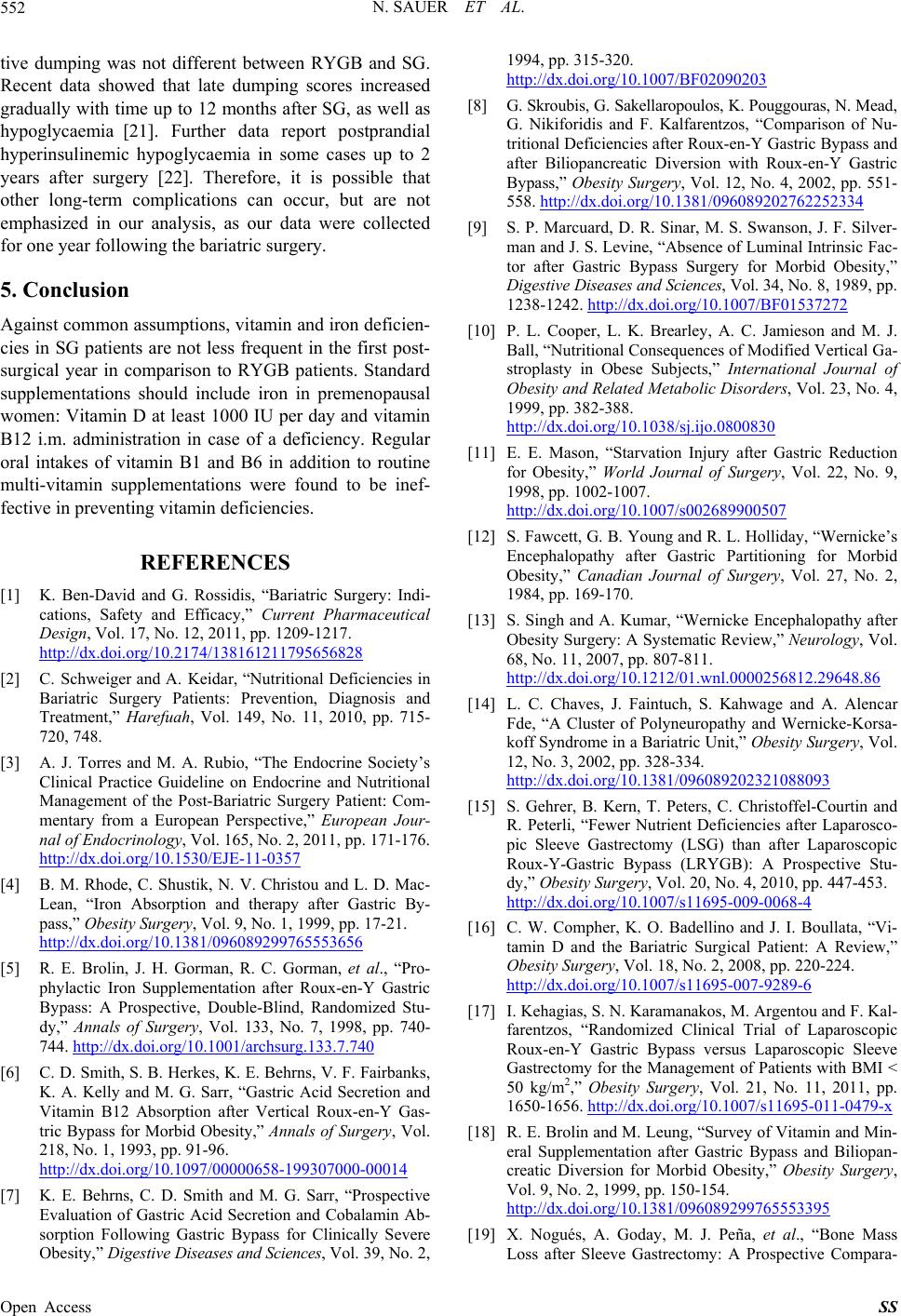 N. SAUER ET AL. 552 tive dumping was not different between RYGB and SG. Recent data showed that late dumping scores increased gradually with time up to 12 months after SG, as well as hypoglycaemia [21]. Further data report postprandial hyperinsulinemic hypoglycaemia in some cases up to 2 years after surgery [22]. Therefore, it is possible that other long-term complications can occur, but are not emphasized in our analysis, as our data were collected for one year following the bariatric surgery. 5. Conclusion Against common assumptions, vitamin and iron deficien- cies in SG patients are not less frequent in the first post- surgical year in comparison to RYGB patients. Standard supplementations should include iron in premenopausal women: Vitamin D at least 1000 IU per day and vitamin B12 i.m. administration in case of a deficiency. Regular oral intakes of vitamin B1 and B6 in addition to routine multi-vitamin supplementations were found to be inef- fective in preventing vitamin deficiencies. REFERENCES [1] K. Ben-David and G. Rossidis, “Bariatric Surgery: Indi- cations, Safety and Efficacy,” Current Pharmaceutical Design, Vol. 17, No. 12, 2011, pp. 1209-1217. http://dx.doi.org/10.2174/138161211795656828 [2] C. Schweiger and A. Keidar, “Nutritional Deficiencies in Bariatric Surgery Patients: Prevention, Diagnosis and Treatment,” Harefuah, Vol. 149, No. 11, 2010, pp. 715- 720, 748. [3] A. J. Torres and M. A. Rubio, “The Endocrine Society’s Clinical Practice Guideline on Endocrine and Nutritional Management of the Post-Bariatric Surgery Patient: Com- mentary from a European Perspective,” European Jour- nal of Endocrinology, Vol. 165, No. 2, 2011, pp. 171-176. http://dx.doi.org/10.1530/EJE-11-0357 [4] B. M. Rhode, C. Shustik, N. V. Christou and L. D. Mac- Lean, “Iron Absorption and therapy after Gastric By- pass,” Obesity Surgery, Vol. 9, No. 1, 1999, pp. 17-21. http://dx.doi.org/10.1381/096089299765553656 [5] R. E. Brolin, J. H. Gorman, R. C. Gorman, et al., “Pro- phylactic Iron Supplementation after Roux-en-Y Gastric Bypass: A Prospective, Double-Blind, Randomized Stu- dy,” Annals of Surgery, Vol. 133, No. 7, 1998, pp. 740- 744. http://dx.doi.org/10.1001/archsurg.133.7.740 [6] C. D. Smith, S. B. Herkes, K. E. Behrns, V. F. Fairbanks, K. A. Kelly and M. G. Sarr, “Gastric Acid Secretion and Vitamin B12 Absorption after Vertical Roux-en-Y Gas- tric Bypass for Morbid Obesity,” Annals of Surgery, Vol. 218, No. 1, 1993, pp. 91-96. http://dx.doi.org/10.1097/00000658-199307000-00014 [7] K. E. Behrns, C. D. Smith and M. G. Sarr, “Prospective Evaluation of Gastric Acid Secretion and Cobalamin Ab- sorption Following Gastric Bypass for Clinically Severe Obesity,” Digestive Diseases and Sciences, Vol. 39, No. 2, 1994, pp. 315-320. http://dx.doi.org/10.1007/BF02090203 [8] G. Skroubis, G. Sakellaropoulos, K. Pouggouras, N. Mead, G. Nikiforidis and F. Kalfarentzos, “Comparison of Nu- tritional Deficiencies after Roux-en-Y Gastric Bypass and after Biliopancreatic Diversion with Roux-en-Y Gastric Bypass,” Obesity Surgery, Vol. 12, No. 4, 2002, pp. 551- 558. http://dx.doi.org/10.1381/096089202762252334 [9] S. P. Marcuard, D. R. Sinar, M. S. Swanson, J. F. Silver- man and J. S. Levine, “Absence of Luminal Intrinsic Fac- tor after Gastric Bypass Surgery for Morbid Obesity,” Dig est ive Disea ses a nd Sciences, Vol. 34, No. 8, 1989, pp. 1238-1242. http://dx.doi.org/10.1007/BF01537272 [10] P. L. Cooper, L. K. Brearley, A. C. Jamieson and M. J. Ball, “Nutritional Consequences of Modified Vertical Ga- stroplasty in Obese Subjects,” International Journal of Obesity and Related Metabolic Disorders, Vol. 23, No. 4, 1999, pp. 382-388. http://dx.doi.org/10.1038/sj.ijo.0800830 [11] E. E. Mason, “Starvation Injury after Gastric Reduction for Obesity,” World Journal of Surgery, Vol. 22, No. 9, 1998, pp. 1002-1007. http://dx.doi.org/10.1007/s002689900507 [12] S. Fawcett, G. B. Young and R. L. Holliday, “Wernicke’s Encephalopathy after Gastric Partitioning for Morbid Obesity,” Canadian Journal of Surgery, Vol. 27, No. 2, 1984, pp. 169-170. [13] S. Singh and A. Kumar, “Wernicke Encephalopathy after Obesity Surgery: A Systematic Review,” Neurology, Vol. 68, No. 11, 2007, pp. 807-811. http://dx.doi.org/10.1212/01.wnl.0000256812.29648.86 [14] L. C. Chaves, J. Faintuch, S. Kahwage and A. Alencar Fde, “A Cluster of Polyneuropathy and Wernicke-Korsa- koff Syndrome in a Bariatric Unit,” Obesity Surgery, Vol. 12, No. 3, 2002, pp. 328-334. http://dx.doi.org/10.1381/096089202321088093 [15] S. Gehrer, B. Kern, T. Peters, C. Christoffel-Courtin and R. Peterli, “Fewer Nutrient Deficiencies after Laparosco- pic Sleeve Gastrectomy (LSG) than after Laparoscopic Roux-Y-Gastric Bypass (LRYGB): A Prospective Stu- dy,” Obesity Surgery, Vol. 20, No. 4, 2010, pp. 447-453. http://dx.doi.org/10.1007/s11695-009-0068-4 [16] C. W. Compher, K. O. Badellino and J. I. Boullata, “Vi- tamin D and the Bariatric Surgical Patient: A Review,” Obesity Surgery, Vol. 18, No. 2, 2008, pp. 220-224. http://dx.doi.org/10.1007/s11695-007-9289-6 [17] I. Kehagias, S. N. Karamanakos, M. Argentou and F. Kal- farentzos, “Randomized Clinical Trial of Laparoscopic Roux-en-Y Gastric Bypass versus Laparoscopic Sleeve Gastrectomy for the Management of Patients with BMI < 50 kg/m2,” Obesity Surgery, Vol. 21, No. 11, 2011, pp. 1650-1656. http://dx.doi.org/10.1007/s11695-011-0479-x [18] R. E. Brolin and M. Leung, “Survey of Vitamin and Min- eral Supplementation after Gastric Bypass and Biliopan- creatic Diversion for Morbid Obesity,” Obesity Surgery, Vol. 9, No. 2, 1999, pp. 150-154. http://dx.doi.org/10.1381/096089299765553395 [19] X. Nogués, A. Goday, M. J. Peña, et al., “Bone Mass Loss after Sleeve Gastrectomy: A Prospective Compara- Open Access SS  N. SAUER ET AL. Open Access SS 553 tive Study with Gastric Bypass,” Cirugía Española, Vol. 88, No. 2, 2010, pp. 103-109. http://dx.doi.org/10.1016/j.ciresp.2010.04.008 [20] K. Miller, E. Hell, B. Lang and E. Lengauer, “Gallstone Formation Prophylaxis after Gastric Restrictive Proce- dures for Weight Loss: A Randomized Double-Blind Pla- cebo-Controlled Trial,” Annals of Surgery, Vol. 238, No. 5, 2003, pp. 697-702. http://dx.doi.org/10.1097/01.sla.0000094305.77843.cf [21] D. Papamargaritis, G. Koukoulis, E. Sioka, et al., “Dump- ing Symptoms and Incidence of Hypoglycaemia after Provocation Test at 6 and 12 Months after Laparoscopic Sleeve Gastrectomy,” Obesity Surgery, Vol. 22, No. 10, 2012, pp. 1600-1606. http://dx.doi.org/10.1007/s11695-012-0711-3 [22] G. J. Service, G. B. Thompson, F. J. Service, J. C. Andrews, M. L. Collazo-Clavell and R. V. Lloyd, “Hyperinsuline- mic Hypoglycemia with Nesidioblastosis after Gastric- Bypass Surgery,” The New England Journal of Medicine, Vol. 353, No. 3, 2005, pp. 249-254. http://dx.doi.org/10.1056/NEJMoa043690 |