

Paper Menu >>
Journal Menu >>
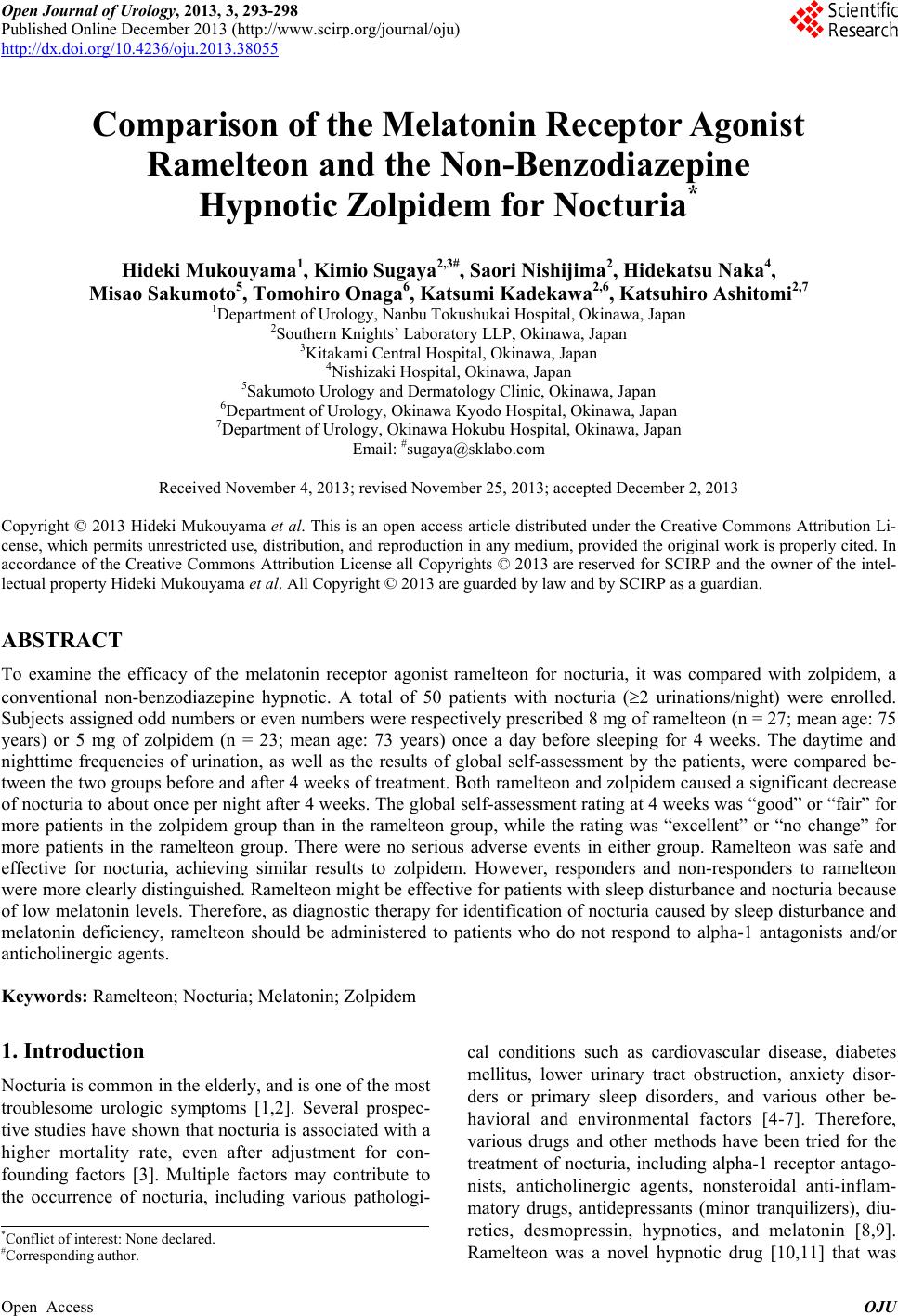 Open Journal of Urology, 2013, 3, 293-298 Published Online December 2013 (http://www.scirp.org/journal/oju) http://dx.doi.org/10.4236/oju.2013.38055 Open Access OJU Comparison of the Melatonin Receptor Agonist Ramelteon and the Non-Benzodiazepine Hypnotic Zolpidem for Nocturia* Hideki Mukouyama1, Kimio Sugaya2,3#, Saori Nishijima2, Hidekatsu Naka4, Misao Sakumoto5, Tomohiro Onaga6, Katsumi Kadekawa2,6, Katsuhiro Ashitomi2,7 1Department of Urology, Nanbu Tokushukai Hospital, Okinawa, Japan 2Southern Knights’ Laboratory LLP, Okinawa, Japan 3Kitakami Central Hospital, Okinawa, Japan 4Nishizaki Hospital, Okinawa, Japan 5Sakumoto Urology and Dermatology Clinic, Okinawa, Japan 6Department of Urology, Okinawa Kyodo Hospital, Okinawa, Japan 7Department of Urology, Okinawa Hokubu Hospital, Okinawa, Japan Email: #[email protected] Received November 4, 2013; revised November 25, 2013; accepted December 2, 2013 Copyright © 2013 Hideki Mukouyama et al. This is an open access article distributed under the Creative Commons Attribution Li- cense, which permits unrestricted use, distribution, and reproduction in any medium, provided the original work is properly cited. In accordance of the Creative Commons Attribution License all Copyrights © 2013 are reserved for SCIRP and the owner of the intel- lectual property Hideki Mukouyama et al. All Copyright © 2013 are guarded by law and by SCIRP as a guardian. ABSTRACT To examine the efficacy of the melatonin receptor agonist ramelteon for nocturia, it was compared with zolpidem, a conventional non-benzodiazepine hypnotic. A total of 50 patients with nocturia (2 urinations/night) were enrolled. Subjects assigned odd nu mbers or even numbers wer e respectively prescribed 8 mg of ramelteon (n = 27; mean age: 75 years) or 5 mg of zolpidem (n = 23; mean age: 73 years) once a day before sleeping for 4 weeks. The daytime and nighttime frequencies of urination, as well as the results of global self-assessment by the patients, were compared be- tween the two groups before and after 4 weeks of treatment. Both ramelteon and zolpidem caused a significant decrease of nocturia to about once per n ight after 4 weeks. The g lobal self-assessment rating at 4 weeks was “good” or “fair” for more patients in the zolpidem group than in the ramelteon group, while the rating was “excellent” or “no change” for more patients in the ramelteon group. There were no serious adverse events in either group. Ramelteon was safe and effective for nocturia, achieving similar results to zolpidem. However, responders and non-responders to ramelteon were more clearly distinguished. Ramelteon might be effective for patients with sleep disturbance and nocturia because of low melatonin levels. Therefore, as diagnostic therapy for identification of nocturia caused by sleep disturbance and melatonin deficiency, ramelteon should be administered to patients who do not respond to alpha-1 antagonists and/or anticholinergic agents. Keywords: Ramelteon; Nocturia; Melatonin; Zolpid em 1. Introduction Nocturia is common in th e elderly, and is on e of the most troublesome urologic symptoms [1,2]. Several prospec- tive studies have shown that nocturia is associated with a higher mortality rate, even after adjustment for con- founding factors [3]. Multiple factors may contribute to the occurrence of nocturia, including various pathologi- cal conditions such as cardiovascular disease, diabetes mellitus, lower urinary tract obstruction, anxiety disor- ders or primary sleep disorders, and various other be- havioral and environmental factors [4-7]. Therefore, various drugs and other methods have been tried for the treatment of nocturia, including alpha-1 receptor antago- nists, anticholinergic agents, nonsteroidal anti-inflam- matory drugs, antidepressants (minor tranquilizers), diu- retics, desmopressin, hypnotics, and melatonin [8,9]. Ramelteon was a novel hypnotic drug [10,11] that was *Conflict of interest: None declared. #Corresponding autho r . 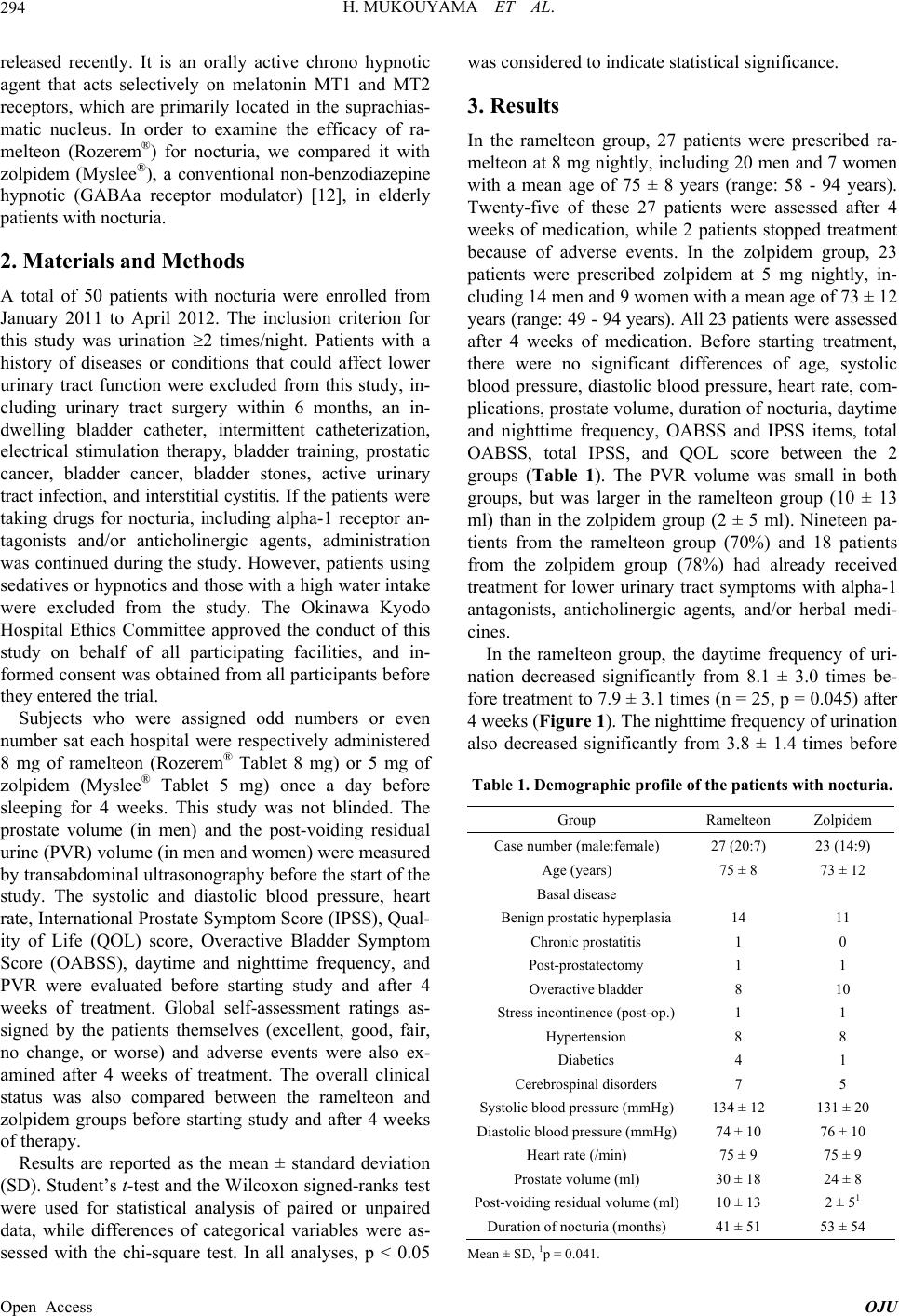 H. MUKOUYAMA ET AL. 294 released recently. It is an orally active chrono hypnotic agent that acts selectively on melatonin MT1 and MT2 receptors, which are primarily located in the suprachias- matic nucleus. In order to examine the efficacy of ra- melteon (Rozerem®) for nocturia, we compared it with zolpidem (Myslee®), a conventional non-benzodiazepine hypnotic (GABAa receptor modulator) [12], in elderly patients with nocturia. 2. Materials and Methods A total of 50 patients with nocturia were enrolled from January 2011 to April 2012. The inclusion criterion for this study was urination 2 times/night. Patients with a history of diseases or conditions that could affect lower urinary tract function were excluded from this study, in- cluding urinary tract surgery within 6 months, an in- dwelling bladder catheter, intermittent catheterization, electrical stimulation therapy, bladder training, prostatic cancer, bladder cancer, bladder stones, active urinary tract infection, and interstitial cystitis. If the patients were taking drugs for nocturia, including alpha-1 receptor an- tagonists and/or anticholinergic agents, administration was continued during the study. However, patients using sedatives or hypnotics and those with a high water intake were excluded from the study. The Okinawa Kyodo Hospital Ethics Committee approved the conduct of this study on behalf of all participating facilities, and in- formed consent was obtained from all participants b efore they entered the trial. Subjects who were assigned odd numbers or even number sat each hospital were respectively administered 8 mg of ramelteon (Rozerem® Tablet 8 mg) or 5 mg of zolpidem (Myslee® Tablet 5 mg) once a day before sleeping for 4 weeks. This study was not blinded. The prostate volume (in men) and the post-voiding residual urine (PVR) volume (in men and women) were measured by transabdominal u ltrasonograph y before the start of th e study. The systolic and diastolic blood pressure, heart rate, International Prostate Symptom Score (IPSS), Qual- ity of Life (QOL) score, Overactive Bladder Symptom Score (OABSS), daytime and nighttime frequency, and PVR were evaluated before starting study and after 4 weeks of treatment. Global self-assessment ratings as- signed by the patients themselves (excellent, good, fair, no change, or worse) and adverse events were also ex- amined after 4 weeks of treatment. The overall clinical status was also compared between the ramelteon and zolpidem groups before starting study and after 4 weeks of therapy. Results are reported as the mean ± standard deviation (SD). Student’s t-test and the Wilcoxon signed-ranks test were used for statistical analysis of paired or unpaired data, while differences of categorical variables were as- sessed with the chi-square test. In all analyses, p < 0.05 was considered to indicate statistical significance. 3. Results In the ramelteon group, 27 patients were prescribed ra- melteon at 8 mg nightly, including 20 men and 7 women with a mean age of 75 ± 8 years (range: 58 - 94 years). Twenty-five of these 27 patients were assessed after 4 weeks of medication, while 2 patients stopped treatment because of adverse events. In the zolpidem group, 23 patients were prescribed zolpidem at 5 mg nightly, in- cluding 14 men and 9 wo men with a mean age of 73 ± 12 years (range: 49 - 94 years). All 23 patients were assess ed after 4 weeks of medication. Before starting treatment, there were no significant differences of age, systolic blood pressure, diastolic blood pressure, heart rate, com- plications, prostate volu me, duration of nocturia, daytime and nighttime frequency, OABSS and IPSS items, total OABSS, total IPSS, and QOL score between the 2 groups (Table 1). The PVR volume was small in both groups, but was larger in the ramelteon group (10 ± 13 ml) than in the zolpidem group (2 ± 5 ml). Nineteen pa- tients from the ramelteon group (70%) and 18 patients from the zolpidem group (78%) had already received treatment for lower urinary tract symptoms with alpha-1 antagonists, anticholinergic agents, and/or herbal medi- cines. In the ramelteon group, the daytime frequency of uri- nation decreased significantly from 8.1 ± 3.0 times be- fore treatment to 7.9 ± 3.1 times (n = 25, p = 0.045) after 4 weeks (Figure 1). The nighttime frequency of urination also decreased significantly from 3.8 ± 1.4 times before Table 1. Demographic profile of the patients with nocturia. Group Ramelteon Zolpidem Case number (male:female) 27 (20:7) 23 (14:9) Age (years) 75 ± 8 73 ± 12 Basal disease Benign prostatic hyperplasia 14 11 Chronic prostatitis 1 0 Post-prostatectomy 1 1 Overactive bladder 8 10 Stress incontinence (post-op.)1 1 Hypertension 8 8 Diabetics 4 1 Cerebrospinal disorders 7 5 Systolic blood pressure (mmHg)134 ± 12 131 ± 20 Diastolic blood press ure (mmHg)74 ± 10 76 ± 10 Heart rate (/min) 75 ± 9 75 ± 9 Prostate volume (ml) 30 ± 18 24 ± 8 Post-voiding residual volume (ml) 10 ± 13 2 ± 51 Duration of nocturia (months) 41 ± 51 53 ± 54 Mean ± SD, 1p = 0.041. Open Access OJU 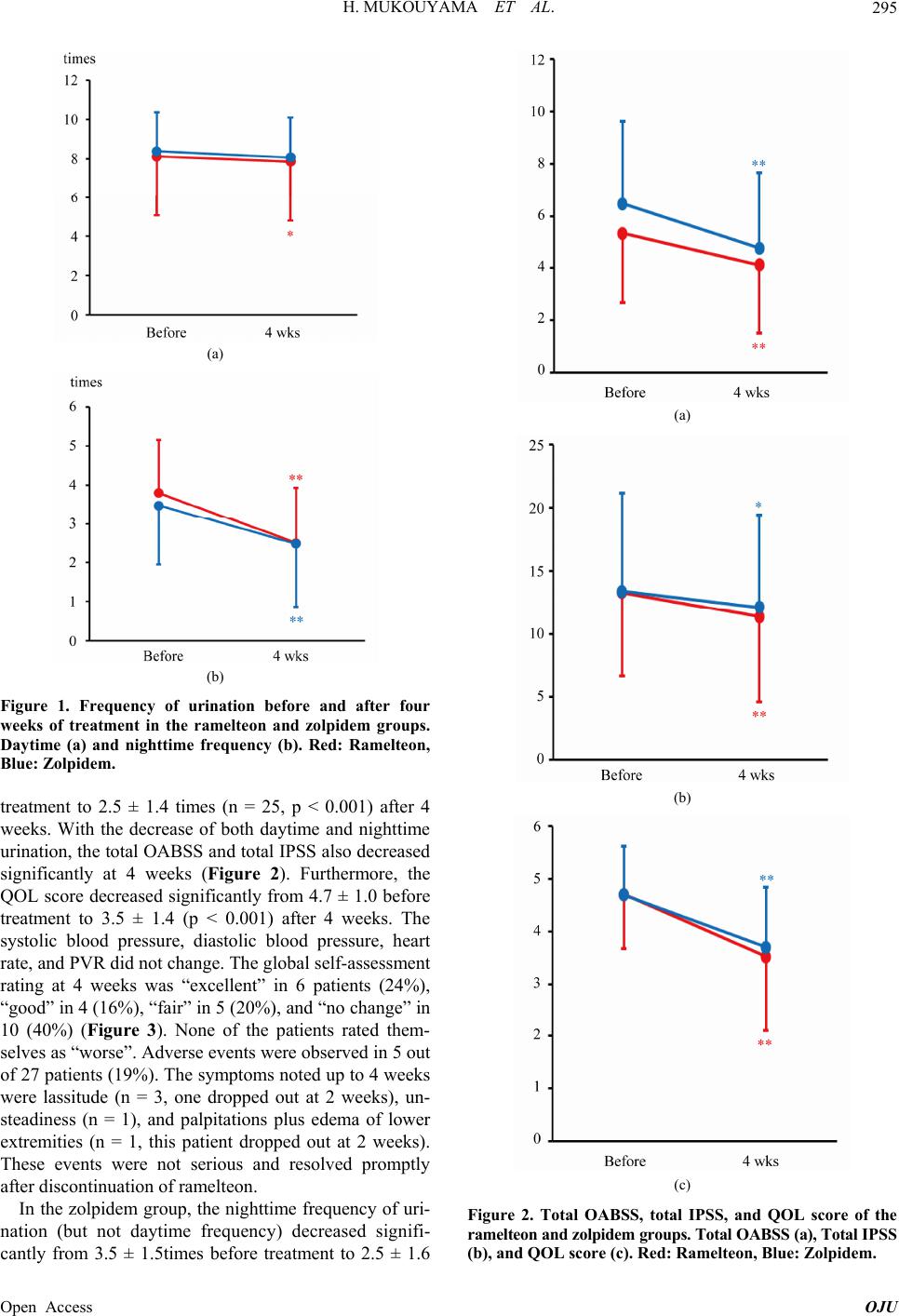 H. MUKOUYAMA ET AL. 295 (a) (b) Figure 1. Frequency of urination before and after four weeks of treatment in the ramelteon and zolpidem groups. Daytime (a) and nighttime frequency (b). Red: Ramelteon, Blue: Zolpidem. treatment to 2.5 ± 1.4 times (n = 25, p < 0.001) after 4 weeks. With the decrease of both daytime and nighttime urination, the total OABSS an d total IPSS also decreased significantly at 4 weeks (Figure 2). Furthermore, the QOL score decreased significantly from 4.7 ± 1.0 before treatment to 3.5 ± 1.4 (p < 0.001) after 4 weeks. The systolic blood pressure, diastolic blood pressure, heart rate, and PVR did not change. The global self-assessment rating at 4 weeks was “excellent” in 6 patients (24%), “good” in 4 (16%), “fair” in 5 (20%), and “no change” in 10 (40%) (Figure 3). None of the patients rated them- selves as “worse”. Adverse events were observed in 5 out of 27 patients (19%). The symptoms noted up to 4 weeks were lassitude (n = 3, one dropped out at 2 weeks), un- steadiness (n = 1), and palpitations plus edema of lower extremities (n = 1, this patient dropped out at 2 weeks). These events were not serious and resolved promptly after discontinuation of ramelteon. In the zolp idem g roup, the nighttime frequency of uri- nation (but not daytime frequency) decreased signifi- cantly from 3.5 ± 1.5times before treatment to 2.5 ± 1.6 (a) (b) (c) Figure 2. Total OABSS, total IPSS, and QOL score of the ramelteon and zolpidem groups. Total OABSS (a), Total IPS S (b), and QOL score (c). Red: Ramelteon, Blue : Zolpidem. Open Access OJU 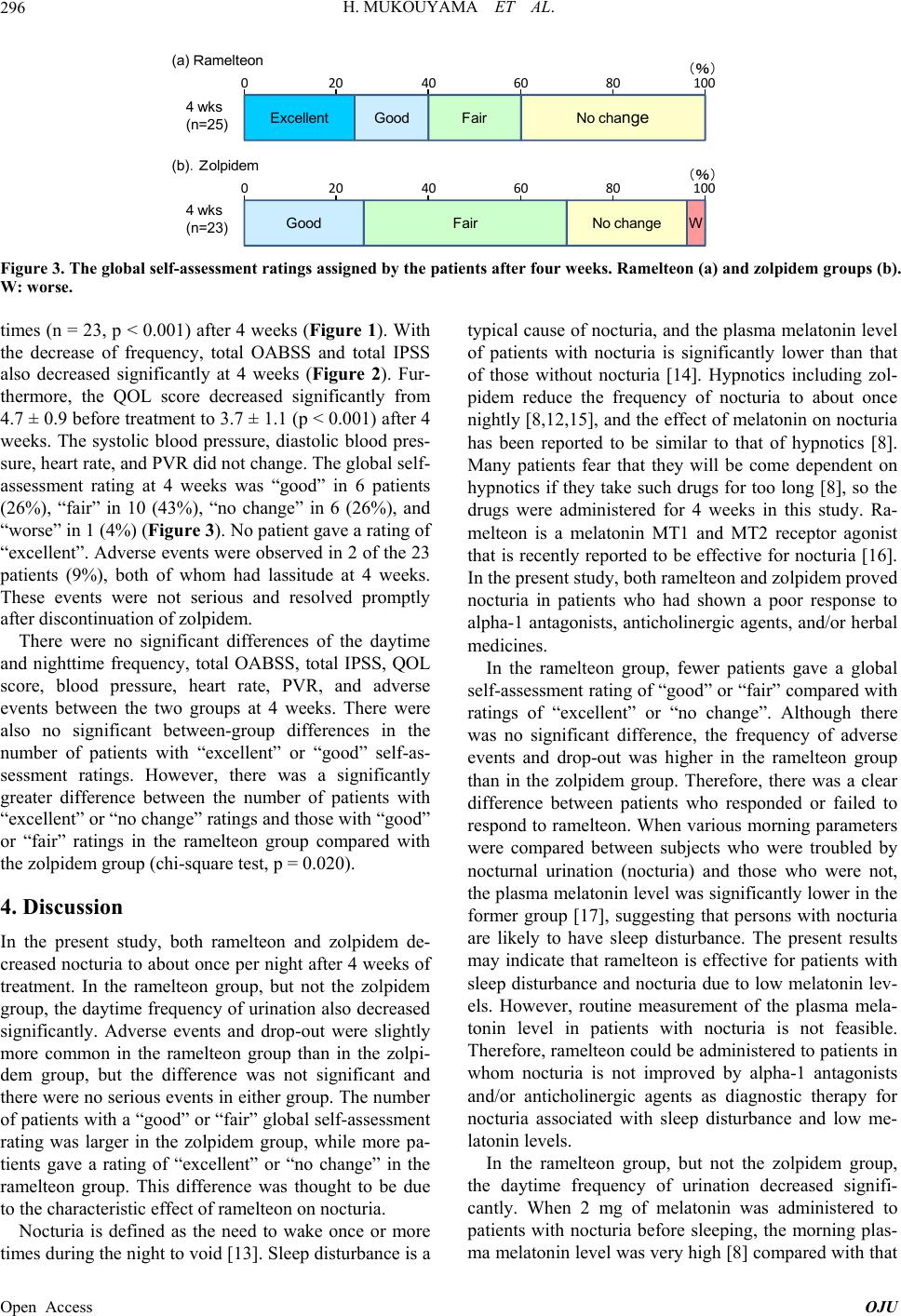 H. MUKOUYAMA ET AL. Open Access OJU 296 Excellent Good Fair No cha nge Good Fair No changeW 0 20406080 (%) 100 0 20406080 (%) 100 (a) Ramelteon (b).Zolpidem 4 wks (n=25) 4 wks (n=23) Figure 3. The global self-assessment ratings assigned by the patients after four weeks. Ramelteon (a) and zolpidem groups (b). W: worse. times (n = 23, p < 0.001) after 4 weeks (Figure 1). With the decrease of frequency, total OABSS and total IPSS also decreased significantly at 4 weeks (Figure 2). Fur- thermore, the QOL score decreased significantly from 4.7 ± 0.9 before treatment to 3.7 ± 1.1 (p < 0.001) after 4 weeks. The systolic blood pressure, diastolic blood pres- sure, heart rate, and PVR did not change. The global self- assessment rating at 4 weeks was “good” in 6 patients (26%), “fair” in 10 (43%), “no change” in 6 (26%), and “worse” in 1 (4%) (Figure 3). No patient gave a rating of “excellent”. Adverse events were observed in 2 of the 23 patients (9%), both of whom had lassitude at 4 weeks. These events were not serious and resolved promptly after discontinuation of zolpidem. typical cause of nocturia, and the plasma melatonin level of patients with nocturia is significantly lower than that of those without nocturia [14]. Hypnotics including zol- pidem reduce the frequency of nocturia to about once nightly [8,12,15], and the effect of melatonin on nocturia has been reported to be similar to that of hypnotics [8]. Many patients fear that they will be come dependent on hypnotics if they take such drugs for too long [8], so the drugs were administered for 4 weeks in this study. Ra- melteon is a melatonin MT1 and MT2 receptor agonist that is recently reported to be effective for nocturia [16]. In the present study, both ramelteon and zolpidem proved nocturia in patients who had shown a poor response to alpha-1 antagonists, anticholinergic agents, and/or herbal medicines. There were no significant differences of the daytime and nighttime frequency, total OABSS, total IPSS, QOL score, blood pressure, heart rate, PVR, and adverse events between the two groups at 4 weeks. There were also no significant between-group differences in the number of patients with “excellent” or “good” self-as- sessment ratings. However, there was a significantly greater difference between the number of patients with “excellent” or “no change” ratings and those with “good ” or “fair” ratings in the ramelteon group compared with the zolpidem group (chi-square test, p = 0.020). In the ramelteon group, fewer patients gave a global self-assessment rating of “good” or “fair” compared with ratings of “excellent” or “no change”. Although there was no significant difference, the frequency of adverse events and drop-out was higher in the ramelteon group than in the zolpidem group. Therefore, there was a clear difference between patients who responded or failed to respond to ramelteon. When various morning parameters were compared between subjects who were troubled by nocturnal urination (nocturia) and those who were not, the plasma melatonin level was significantly lower in the former group [17], suggesting that persons with nocturia are likely to have sleep disturbance. The present results may indicate that ramelteon is effective for patients with sleep disturbance and nocturia due to low melatonin lev- els. However, routine measurement of the plasma mela- tonin level in patients with nocturia is not feasible. Therefore, ramelteon could be administered to patients in whom nocturia is not improved by alpha-1 antagonists and/or anticholinergic agents as diagnostic therapy for nocturia associated with sleep disturbance and low me- latonin levels. 4. Discussion In the present study, both ramelteon and zolpidem de- creased nocturia to about on ce per night after 4 weeks of treatment. In the ramelteon group, but not the zolpidem group, the dayti me frequen cy of urination also decreased significantly. Adverse events and drop-out were slightly more common in the ramelteon group than in the zolpi- dem group, but the difference was not significant and there were no serious even ts in either group. The number of patients with a “good” or “fair” global self-assessment rating was larger in the zolpidem group, while more pa- tients gave a rating of “excellent” or “no change” in the ramelteon group. This difference was thought to be due to the characteristic effect of ramelteon on nocturia. In the ramelteon group, but not the zolpidem group, the daytime frequency of urination decreased signifi- cantly. When 2 mg of melatonin was administered to patients with nocturia before sleeping, the morning plas- ma melatonin level was very high [8] co mpared with that Nocturia is defined as the need to wake once or more times during the night to void [13]. Sleep disturbance is a  H. MUKOUYAMA ET AL. 297 in persons without nocturia [14]. Melatonin inhibits the contraction of isolated rat bladder smooth muscle [18], and increases bladder capacity in rats [19]. Therefore, administering melatonin or ramelteon before sleeping might also have a beneficial influence on lower urinary tract function in the daytime. 5. Conclusion Ramelteon was safe and effective for nocturia, achieving similar results to zolpidem, although responders and non-responders to ramelteon were more clearly distin- guished. Ramelteon may be effective for patients who have sleep disturbance and nocturia associated with low melatonin levels. Accordingly, ramelteon could be used as diagnostic therapy for nocturia caused by sleep dis- turbance and low melatonin levels in patients whose nocturia is not improved by alpha-1 antagonists and/or anticholinergic agents. REFERENCES [1] M. H. Blanker, A. M. Bohnen, F. P. Groeneveld, R. M. Bernsen, A. Prins and J. L. Ruud Bosch, “Normal Void- ing Patterns and Determinants of Increased Diurnal and Nocturnal Voiding Frequency in Elderly Men,” Journal of Urology, Vol. 164, No. 4, 2000, pp. 1201-1205. http://dx.doi.org/10.1016/S0022-5347(05)67141-8 [2] M. H. Blanker, R. M. Bernsen, J. L. Bosch, S. Thomas, F. P. Groeneveld, A. D. Prins and A. M. Bohnen, “Relation between Noc turnal Voiding Freque ncy and Nocturnal U ri ne Production in Older Men,” Urology, Vol. 60, No. 4, 2002, pp. 612-616. http://dx.doi.org/10.1016/S0090-4295(02)01818-6 [3] K. Yoshimura, “Correlates for Nocturia: A Review of Epidemiological Studies,” Journal of Urology, Vol. 19, No. 4, 2012, pp. 317-329. [4] J. P. Weiss, J. G. Blaivas, D. S. Stember and M. M. Brooks, “Nocturia in Adults. Etiology and Classification,” Neuro- urology and Urodynamics, Vol. 17, No. 5, 1998, pp. 467- 472. http://dx.doi.org/10.1002/(SICI)1520-6777(1998)17:5<46 7::AID-NAU2>3.0.CO;2-B [5] J. P. Weiss, J. G. Blaivas, D. S. Stember and D. C. Chai- kin, “Evaluation of the Etiology of Nocturia in Men: The Nocturia and Nocturnal Bladder Capacity Indices,” Neu- rourology and Urodynamics, Vol. 18, No. 6, 1999, pp. 559-565. http://dx.doi.org/10.1002/(SICI)1520-6777(1999)18:6<55 9::AID-NAU6>3.0.CO;2-D [6] K. Yoshimura, N. Terada, Y. Matsui, A. Terai, N. Kinu- kawa and Y. Arai, “Prevalence of and Risk Factors for Nocturia: Analysis of a Health Screening Program,” International Journal of Urology, Vol. 11, No. 5, 2004, pp. 282-287. http://dx.doi.org/10.1111/j.1442-2042.2004.00791.x [7] L. W. Gourova, C. van de Beek, M. G. Spigt, F. H. Nieman and P. E. van Kerrebroeck, “Predictive Factors for Nocturia in Elderly Men: A Cross-Sectional Study in 21 General Practices,” BJU International, Vol. 97, No. 3, 2006, pp. 528-532. http://dx.doi.org/10.1111/j.1464-410X.2006.06029.x [8] K. Sugaya S. Nishijima, M. Miyazato, K. Kadekawa and Y. Ogawa, “Effects of Melatonin and Rilmazafone on Nocturia in the Elderly,” Journal of International Medical Research, Vol. 35, No. 5, 2007, pp. 685-691. [9] O. Nishizawa, I. Araki, O. Ishizuka, N. Uchimura, H. Oh-oka, S. Ozono, H. Kakizaki, M. Kasahara, M. Gotoh, R. Sakakibara, H. Shinbo, K. Sugaya, Y. Suzuki, A. Sone, M. Takei, M. Takeda, A. Hirayama, Y. Homma, O. Ya- maguchi, T. Yamanishi, O. Yokoyama and M. Yoshida, “Clinical Guidelines for Nocturia,” International Journal of Urology, Vol. 17, No. 5, 2010, pp. 379-409. [10] G. Zammit, S. Wang-Weigand, M. Rosenthal and X. P en g, “Effect of Ramelteon on Middle-of-the-Night Balance in Older Adults with Chronic Insomnia,” Journal of Clinical Sleep Medicine, Vol. 15, No. 1, 2009, pp. 34-40. [11] S. R. Pandi-Perumal, V. Srinivasan, D. W. Spence, A. Moscovitch, R. Hardeland, G. M. Brown and D. P. Car- dinali, “Ramelteon: A Review of Its Therapeutic Potential in Sleep Disorders,” Advances in Therapy, Vol. 26, No. 6, 2009, pp. 613-626. http://dx.doi.org/10.1007/s12325-009-0041-6 [12] Y. S. Song and J. H. Ku, “Zolpidem Pharmacotherapy Combined with Alpha-Blocker Therapy for Nocturia Un- responsive to Alpha-Blocker Monotherapy in Men with Lower Urinary Tract Symptoms: A Preliminary Study,” International Urology and Nephrology, Vol. 39, No. 4, 2007, pp. 1147-1152. [13] P. Abrams, L. Cardozo, M. Fall, D. Griffiths, P. Rosier, U. Ulmsten, P. Van Kerrebroeck, A. Victor and A. Wein, “Standardisation Sub-Committee of the International Con- tinence Society: The Standardisation of Terminology in Lower Urinary Tract Function: Report from the Stan- dardisation Sub-Committee of the International Conti- nence Society,” Urology, Vol. 61, No. 1, 2003, pp. 37-49. http://dx.doi.org/10.1016/S0090-4295(02)02243-4 [14] K. Sugaya, S. Nishijima, M. Oda, T. Owan, M. Miyazato and Y. Ogawa, “Biochemical and Body Composition Analysis of Nocturia in the Elderly,” Neurourology and Urodynamics, Vol. 27, No. 3, 2008, pp. 205-211. http://dx.doi.org/10.1002/nau.20492 [15] K. Fujikawa, M. Kasahara, Y. Matsui and H. Takeuchi, “Human Atrial Natriuretic Peptide Is a Useful Criterion in Treatment of Nocturia,” Scandinavian Journal of Urology and Nephrology, Vol. 35, No. 4, 2001, pp. 310-313. http://dx.doi.org/10.1080/003655901750425909 [16] N. Shimizu, M. Nozawa, Y. Itami, Y. Yamamoto and Y. Hayashi, “A Study on Efficacy of Ramelteon in Patients with Insomnia and Nocturia,” Japanese Journal of Uro- logical Surgery, Vol. 24, 2011, pp. 1473-1479. [17] K. Sugaya, S. Nishijima, M. Miyazato, T. Owan, Y. Oshi- ro, A. Uchida, S. Hokama and Y. Ogawa, “Investigation of Biochemical Factors Related to Non-Bothersome Noc- turnal Urination,” BioMed Research, Vol. 28, No. 4, 2007, pp. 458-460. http://dx.doi.org/10.2220/biomedres.28.213 [18] J. H. Han, I. H. Chang, S. C. Myung, M. Y. Lee, W. Y. Open Access OJU  H. MUKOUYAMA ET AL. Open Access OJU 298 Kim, S. Y. Lee, S. W. Lee and K. D. Kim, “A Novel Pathway Underlying the Inhibitory Effects of Melatonin on Isolated Rat Urinary Bladder Contraction,” The Ko- rean Journal of Physiology & Pharmacology, Vol. 16, No. 1, 2012, pp. 37-42. http://dx.doi.org/10.4196/kjpp.2012.16.1.37 [19] Y. Matsuta, A. Yusup, K. Tanase, H. Ishida, H. Akino and O. Yokoyama, “Melatonin Increases Bladder Capac- ity via GABAergic System and Decreases Urine Volume in Rats,” Journal of Urology, Vol. 184, No. 1, 2010, pp. 386-391. http://dx.doi.org/10.1016/j.juro.2010.03.002 |