

Paper Menu >>
Journal Menu >>
 Journal of Cosmetics, Dermatological Sciences and Applications, 2013, 3, 44-48 Published Online November 2013 (http://www.scirp.org/journal/jcdsa) http://dx.doi.org/10.4236/jcdsa.2013.33A2011 Open Access JCDSA Dermatology Procedural and Surgical Skills Workshop for Medical and Physician Assistant Students* Julie Martin, Sheila Z. Jalalat, Richard F. Wagner# The University of Texas Medical Branch, Galveston, USA. Email: #[email protected] Received October 22nd, 2013; revised November 16th, 2013; accepted November 23rd, 2013 Copyright © 2013 Julie Martin et al. This is an open access article distributed under the Creative Commons Attribution License, which permits unrestricted use, distribution, and reproduction in any medium, provided the original work is properly cited. ABSTRACT Background: Evidence indicating the limited amount of hands-on experience in the current era of medical training has raised concern regarding students’ development and potential deficiencies in the performance of basic procedural skills. Studies have demonstrated the value of surgical workshops for medical students; however evaluation of improved stu- dent performance during future clerkships or residencies has yet to be assessed. We initiated and evaluated a resi- dent-led surgical skills wo rkshop for students thro ugh the Department of Dermatology. Methods: Participants received instructions on surgical tools/techniques followed by hands-on practice. Anonymous surveys administered to 24 medi- cal and physician assistant students assessed their skill level, confidence lev el, and likelihood of using surgical skills in future practice pre- and post-wor kshop using a 1 - 5 Lik ert scale. Overall experience was also assessed. Non-parametric bivariate tests were used for analysis to account for non-normal distribution of the data. Results: There was a statisti- cally significant change in skill (p = 0.0001) and conf iden ce (p = 0.0001) level post work shop. There was no signif icant difference in utility. There were also no statistically significant differen ces based on the year of medical stud ent train ing, medical student versus physician assistant student responses, or number of procedures performed prior to the workshop. Estimated cost per participant was $5.65. Conclusions: Research supports our finding that workshop learning experi- ences increase students’ ability to p erform common procedu ral skills, th eir confidence, and desire to practice such skills. Further studies are necessary to determine the impact of these skills workshops on long-term clinical performance in future clerkships and residencies. Keywords: Procedural Skills; Workshop; Dermatology; Resid e nts; Medical Students 1. Introduction Recent studies have shown trends towards an increas- ingly limited amount of hands-on experience for medical students in the current era of medical training [1-10]. This observation increases concern regarding students’ development and potential inadequacies in basic skills performance. The commonest reported obstacles to teaching basic technical skills include faculty and resi- dent time constraints, medicolegal concerns such as mal- practice liability, costs, students’ safety includ ing disease transmission, and patient preference [11]. Given the ex- panding role of multiple surgical procedures in derma- tology clinical practice, sources highlight that resident training in procedural skills must be con tinually assessed to keep pace with changes in the specialty [12]. Recent evidence suggests that residents as teacher-trainers im- prove resident attitudes and perceptions toward teaching as well as their theoretical knowledge, skills, and teach- ing behavior [11,13]. Furthermore, it has also been shown that medical students ascribe one-third of their clinical education to the teaching of interns and residents and consider them to be important role models and men- tors [14-18]. Training opportunities during clinical years have been shown to promote skill instruction when they are most likely to contribute to accelerating clinical learn - ing [19]. In addition, student experiences, such as acting internships, have also been designed to provide valuable practice in learning procedural skills [20]. Given the in- formation gathered from recent literature, we decided to show our recent experience with resident-led surgical skills workshops for medical and physician assistant stu- *Presented in part at the Semiannual Meeting of the Dermatology Teachers Exchange Group, Chicago, Illinois, September 27, 2013. #Corresponding author. 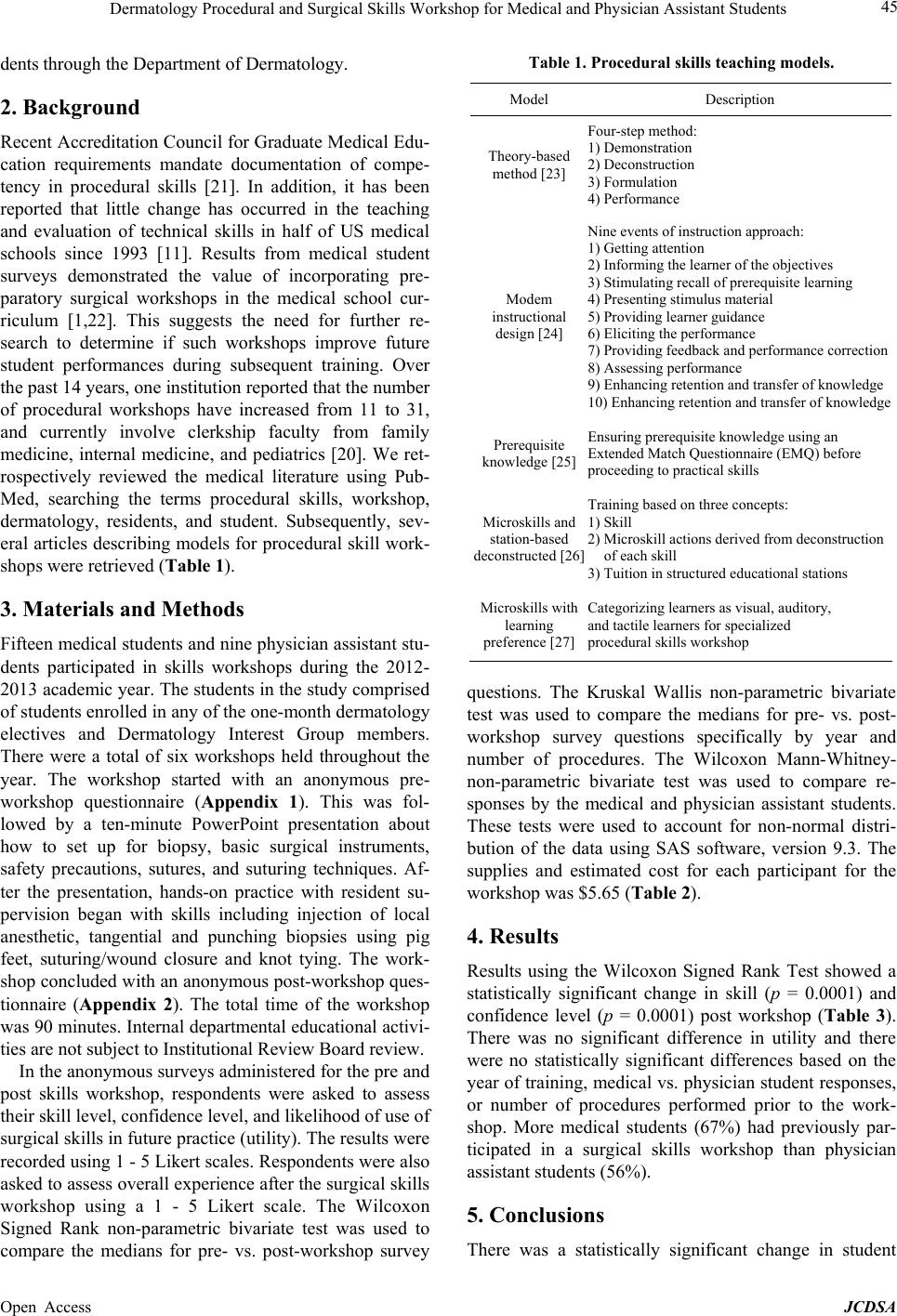 Dermatology Procedural and Surgical Skills Workshop for Medical and Physician Assistant Students 45 dents through the Department of Dermatology. 2. Background Recent Accreditation Council for Graduate Medical Edu- cation requirements mandate documentation of compe- tency in procedural skills [21]. In addition, it has been reported that little change has occurred in the teaching and evaluation of technical skills in half of US medical schools since 1993 [11]. Results from medical student surveys demonstrated the value of incorporating pre- paratory surgical workshops in the medical school cur- riculum [1,22]. This suggests the need for further re- search to determine if such workshops improve future student performances during subsequent training. Over the past 14 years, one institution reported th at the nu mber of procedural workshops have increased from 11 to 31, and currently involve clerkship faculty from family medicine, internal medicine, and pediatrics [20]. We ret- rospectively reviewed the medical literature using Pub- Med, searching the terms procedural skills, workshop, dermatology, residents, and student. Subsequently, sev- eral articles describing models for procedural skill work- shops we r e r e t rieved (Table 1). 3. Materials and Methods Fifteen medical students and nine physician assistant stu- dents participated in skills workshops during the 2012- 2013 academic year. Th e students in the study comprised of students enrolled in any of the one-month dermatology electives and Dermatology Interest Group members. There were a total of six workshops held throughout the year. The workshop started with an anonymous pre- workshop questionnaire (Appendix 1). This was fol- lowed by a ten-minute PowerPoint presentation about how to set up for biopsy, basic surgical instruments, safety precautions, sutures, and suturing techniques. Af- ter the presentation, hands-on practice with resident su- pervision began with skills including injection of local anesthetic, tangential and punching biopsies using pig feet, suturing/wound closure and knot tying. The work- shop concluded with an anonymous post-workshop ques- tionnaire (Appendix 2). The total time of the workshop was 90 minutes. Internal departmental educational activi- ties are not subject to Institutional Review Board review. In the anonymous surveys administered for the pre and post skills workshop, respondents were asked to assess their skill level, confidence level, and likelihood of use of surgical skills in future practice (utility). Th e results were recorded using 1 - 5 Likert scales. Respondents were also asked to assess overall experience after the surgical sk ills workshop using a 1 - 5 Likert scale. The Wilcoxon Signed Rank non-parametric bivariate test was used to compare the medians for pre- vs. post-workshop survey Table 1. Procedural skills teaching models. Model Description Theory-based method [23] Four-step method: 1) Demonstration 2) Deconstructio n 3) Formulation 4) Perform ance Modem instructional design [24] Nine events of instruction approach: 1) Getting attention 2) Informi n g t h e learner of the objectiv e s 3) Stimulatin g recall of prerequisite learning 4) Presenting stimulus materia l 5) Providing learner guidance 6) Eliciting the performance 7) Providing feedback and performance correction 8) Assessing performance 9) Enhancing re t e n t i o n and transfer of kn o w ledge 10) Enhancing retention and transfer o f k nowledge Prerequisite knowledge [25] Ensuring prerequisite knowledge using an Extended Match Questionnaire (EMQ) before proceeding to practical skills Microskills and station-based deconstructed [26] Training based o n three concepts: 1) Skill 2) Microskill actions derived from deconstructi on of each skill 3) Tuition in structured educational stations Microskills with learning preference [27] Categorizing learners as visual, auditory, and tactile learners for specialized procedural skills workshop questions. The Kruskal Wallis non-parametric bivariate test was used to compare the medians for pre- vs. post- workshop survey questions specifically by year and number of procedures. The Wilcoxon Mann-Whitney- non-parametric bivariate test was used to compare re- sponses by the medical and physician assistant students. These tests were used to account for non-normal distri- bution of the data using SAS software, version 9.3. The supplies and estimated cost for each participant for the worksho p wa s $5.65 (Table 2). 4. Results Results using the Wilcoxon Signed Rank Test showed a statistically significant change in skill (p = 0.0001) and confidence level (p = 0.0001) post workshop (Table 3). There was no significant difference in utility and there were no statistically significant differences based on the year of training, medical vs. physician student responses, or number of procedures performed prior to the work- shop. More medical students (67%) had previously par- ticipated in a surgical skills workshop than physician assistant students (56%). 5. Conclusions There was a statistically significant change in student Open Access JCDSA 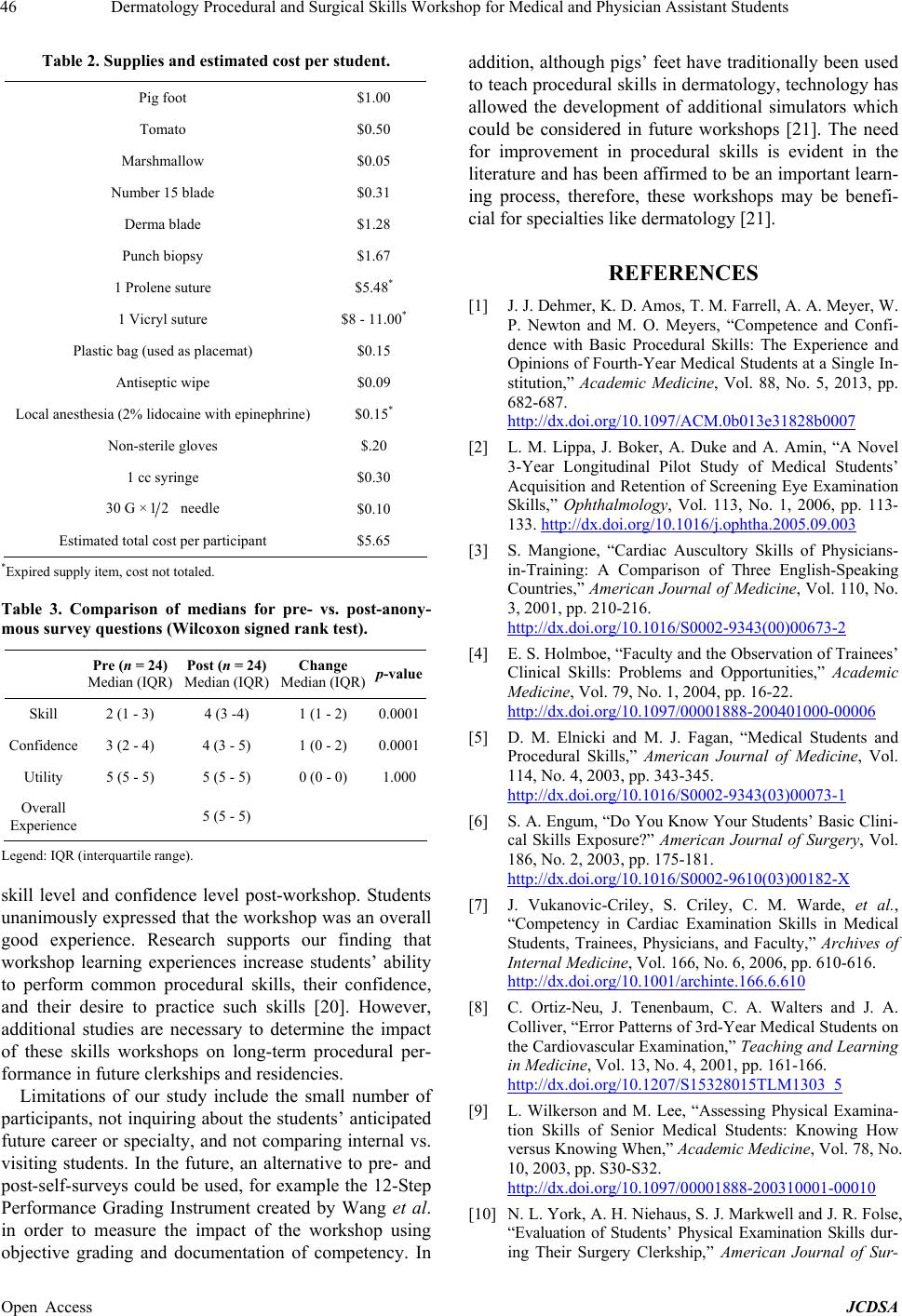 Dermatology Procedural and Surgical Skills Workshop for Medical and Physician Assistant Students 46 Table 2. Supplies and estimated cost per student. Pig foot $1.00 Tomato $0.50 Marshmallow $0.05 Number 15 blade $0.31 Derma blade $1.28 Punch biopsy $1.67 1 Prolene suture $5.48* 1 Vicryl suture $8 - 11.00* Plastic bag (used as placemat) $0.15 Antiseptic wipe $0.09 Local anesthesia (2% lidocaine with epinephrine) $0.15* Non-sterile gloves $.2 0 1 cc syringe $0.30 30 G ×12 needle $0.10 Estimated total cost per participant $5.65 *Expired supply item, cost not totaled. Table 3. Comparison of medians for pre- vs. post-anony- mous survey questions (Wilcoxon signe d ra nk te st). Pre (n = 24) Median (IQR) Post (n = 24) Median (IQR) Change Median (IQR)p-value Skill 2 (1 - 3) 4 (3 -4) 1 (1 - 2) 0.0001 Confidence 3 (2 - 4) 4 (3 - 5) 1 (0 - 2) 0.0001 Utility 5 (5 - 5) 5 (5 - 5) 0 (0 - 0) 1.000 Overall Experience 5 (5 - 5) Legend: IQR (interquartile rang e). skill level and confidence level post-workshop. Students unanimously expressed that the workshop was an overall good experience. Research supports our finding that workshop learning experiences increase students’ ability to perform common procedural skills, their confidence, and their desire to practice such skills [20]. However, additional studies are necessary to determine the impact of these skills workshops on long-term procedural per- formance in future clerkships and residencies. Limitations of our study include the small number of participants, not inqu iring about the students’ anticipated future career or specialty, and not comparing internal vs. visiting students. In the future, an alternative to pre- and post-self-surveys could be used, for example the 12-Step Performance Grading Instrument created by Wang et al. in order to measure the impact of the workshop using objective grading and documentation of competency. In addition, although pigs’ feet ha ve traditionally been used to teach procedural skills in dermatology, technology has allowed the development of additional simulators which could be considered in future workshops [21]. The need for improvement in procedural skills is evident in the literature and has been affirmed to be an important learn- ing process, therefore, these workshops may be benefi- cial for specialties like dermatology [21]. REFERENCES [1] J. J. Dehmer, K. D. Amos, T. M. Farrell, A. A. Meyer, W. P. Newton and M. O. Meyers, “Competence and Confi- dence with Basic Procedural Skills: The Experience and Opinions of Fourth-Year Medical Students at a Single In- stitution,” Academic Medicine, Vol. 88, No. 5, 2013, pp. 682-687. http://dx.doi.org/10.1097/ACM.0b013e31828b0007 [2] L. M. Lippa, J. Boker, A. Duke and A. Amin, “A Novel 3-Year Longitudinal Pilot Study of Medical Students’ Acquisition and Retention of Screening Eye Examination Skills,” Ophthalmology, Vol. 113, No. 1, 2006, pp. 113- 133. http://dx.doi.org/10.1016/j.ophtha.2005.09.003 [3] S. Mangione, “Cardiac Auscultory Skills of Physicians- in-Training: A Comparison of Three English-Speaking Countries,” American Journal of Medicine, Vol. 110, No. 3, 2001, pp. 210-216. http://dx.doi.org/10.1016/S0002-9343(00)00673-2 [4] E. S. Holmboe, “Faculty and the Observation of Trainees’ Clinical Skills: Problems and Opportunities,” Academic Medicine, Vol. 79, No. 1, 2004, pp. 16-22. http://dx.doi.org/10.1097/00001888-200401000-00006 [5] D. M. Elnicki and M. J. Fagan, “Medical Students and Procedural Skills,” American Journal of Medicine, Vol. 114, No. 4, 2003, pp. 343-345. http://dx.doi.org/10.1016/S0002-9343(03)00073-1 [6] S. A. Engum, “Do You Know Your Student s’ Basic Cli ni- cal Skills Exposure?” American Journal of Surgery, Vol. 186, No. 2, 2003, pp. 175-181. http://dx.doi.org/10.1016/S0002-9610(03)00182-X [7] J. Vukanovic-Criley, S. Criley, C. M. Warde, et al., “Competency in Cardiac Examination Skills in Medical Students, Trainees, Physicians, and Faculty,” Archives of Internal Medicine, Vol. 166, No. 6, 2006, pp. 610-616. http://dx.doi.org/10.1001/archinte.166.6.610 [8] C. Ortiz-Neu, J. Tenenbaum, C. A. Walters and J. A. Colliver, “Error Patterns of 3rd-Year Medical Students on the Cardiovascular Examination,” Teaching and Learning in Medici ne, Vol. 13, No. 4, 2001, pp. 161-166. http://dx.doi.org/10.1207/S15328015TLM1303_5 [9] L. Wilkerson and M. Lee, “Assessing Physical Examina- tion Skills of Senior Medical Students: Knowing How versus Knowing When,” Academic Medicine, Vol. 78, No. 10, 2003, pp. S30-S32. http://dx.doi.org/10.1097/00001888-200310001-00010 [10] N. L. York, A. H. Niehaus, S. J. Markwell and J. R. Folse, “Evaluation of Students’ Physical Examination Skills dur- ing Their Surgery Clerkship,” American Journal of Sur- Open Access JCDSA 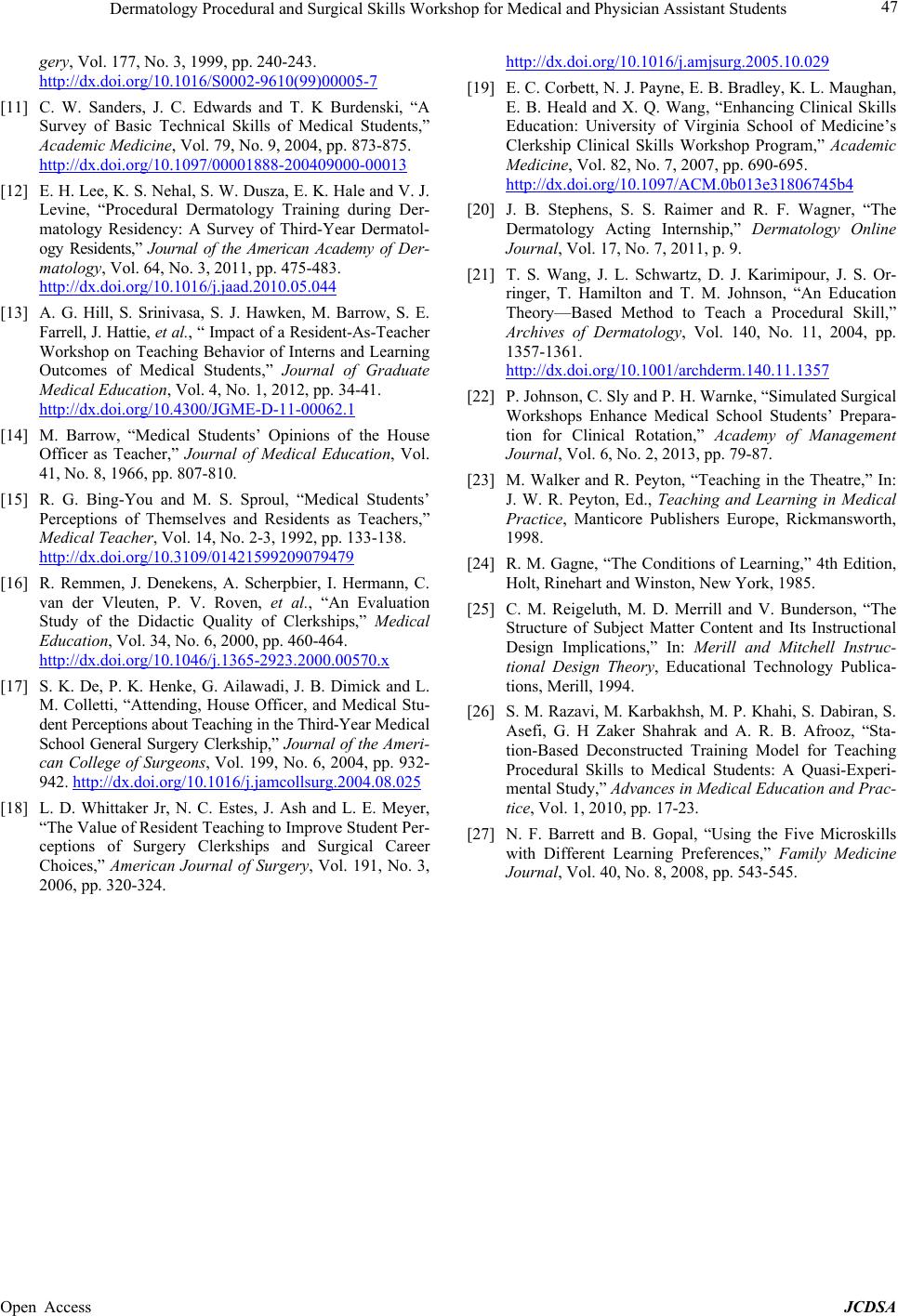 Dermatology Procedural and Surgical Skills Workshop for Medical and Physician Assistant Students Open Access JCDSA 47 gery, Vol. 177, No. 3, 1999, pp. 240-243. http://dx.doi.org/10.1016/S0002-9610(99)00005-7 [11] C. W. Sanders, J. C. Edwards and T. K Burdenski, “A Survey of Basic Technical Skills of Medical Students,” Academic Medicine, Vol. 79, No. 9, 2004, pp. 873-875. http://dx.doi.org/10.1097/00001888-200409000-00013 [12] E. H. Lee, K. S. Nehal, S. W. Dusza, E. K. Hale and V. J. Levine, “Procedural Dermatology Training during Der- matology Residency: A Survey of Third-Year Dermatol- ogy Residents,” Journal of the American Academy of Der- matology, Vol. 64, No. 3, 2011, pp. 475-483. http://dx.doi.org/10.1016/j.jaad.2010.05.044 [13] A. G. Hill, S. Srinivasa, S. J. Hawken, M. Barrow, S. E. Farrell, J. Hattie, et al., “ Impact of a Resident-As-Teacher Workshop on Teaching Behavior of Interns and Learning Outcomes of Medical Students,” Journal of Graduate Medical Education, Vol. 4, No. 1, 2012, pp. 34-41. http://dx.doi.org/10.4300/JGME-D-11-00062.1 [14] M. Barrow, “Medical Students’ Opinions of the House Officer as Teacher,” Journal of Medical Education, Vol. 41, No. 8, 1966, pp. 807-810. [15] R. G. Bing-You and M. S. Sproul, “Medical Students’ Perceptions of Themselves and Residents as Teachers,” Medical Teacher, Vol. 14, No. 2-3, 1992, pp. 133-138. http://dx.doi.org/10.3109/01421599209079479 [16] R. Remmen, J. Denekens, A. Scherpbier, I. Hermann, C. van der Vleuten, P. V. Roven, et al., “An Evaluation Study of the Didactic Quality of Clerkships,” Medical Education, Vol. 34, No. 6, 2000, pp. 460-464. http://dx.doi.org/10.1046/j.1365-2923.2000.00570.x [17] S. K. De, P. K. Henke, G. Ailawadi, J. B. Dimick and L. M. Colletti, “Attending, House Officer, and Medical Stu- dent Perceptions about Teaching in the Third-Year Medical School General Surgery Clerkship,” Journal of the Ameri- can College of Surgeons, Vol. 199, No. 6, 2004, pp. 932- 942. http://dx.doi.org/10.1016/j.jamcollsurg.2004.08.025 [18] L. D. Whittaker Jr, N. C. Estes, J. Ash and L. E. Meyer, “The Value of Resident Teaching to Improve Student Per- ceptions of Surgery Clerkships and Surgical Career Choices,” American Journal of Surgery, Vol. 191, No. 3, 2006, pp. 320-324. http://dx.doi.org/10.1016/j.amjsurg.2005.10.029 [19] E. C. Corbett, N. J. Payne, E. B. Bradley, K. L. Maughan, E. B. Heald and X. Q. Wang, “Enhancing Clinical Skills Education: University of Virginia School of Medicine’s Clerkship Clinical Skills Workshop Program,” Academic Medicine, Vol. 82, No. 7, 2007, pp. 690-695. http://dx.doi.org/10.1097/ACM.0b013e31806745b4 [20] J. B. Stephens, S. S. Raimer and R. F. Wagner, “The Dermatology Acting Internship,” Dermatology Online Journal, Vol. 17, No. 7, 2011, p. 9. [21] T. S. Wang, J. L. Schwartz, D. J. Karimipour, J. S. Or- ringer, T. Hamilton and T. M. Johnson, “An Education Theory—Based Method to Teach a Procedural Skill,” Archives of Dermatology, Vol. 140, No. 11, 2004, pp. 1357-1361. http://dx.doi.org/10.1001/archderm.140.11.1357 [22] P. Johnson, C. Sly and P. H. Warnke, “Simulated Surgical Workshops Enhance Medical School Students’ Prepara- tion for Clinical Rotation,” Academy of Management Journal, Vol. 6, No. 2, 2013, pp. 79-87. [23] M. Walker and R. Peyton, “Teaching in the Theatre,” In: J. W. R. Peyton, Ed., Teaching and Learning in Medical Practice, Manticore Publishers Europe, Rickmansworth, 1998. [24] R. M. Gagne, “The Conditions of Learning,” 4th Edition, Holt, Rinehart and Winston, New York, 1985. [25] C. M. Reigeluth, M. D. Merrill and V. Bunderson, “The Structure of Subject Matter Content and Its Instructional Design Implications,” In: Merill and Mitchell Instruc- tional Design Theory, Educational Technology Publica- tions, Merill, 1994. [26] S. M. Razavi, M. Karbakhsh, M. P. Khahi, S. Dabiran, S. Asefi, G. H Zaker Shahrak and A. R. B. Afrooz, “Sta- tion-Based Deconstructed Training Model for Teaching Procedural Skills to Medical Students: A Quasi-Experi- mental Study,” Advances in Medical Education and Prac- tice, Vol. 1, 2010, pp. 17-23. [27] N. F. Barrett and B. Gopal, “Using the Five Microskills with Different Learning Preferences,” Family Medicine Journal, Vol. 40, No. 8, 2008, pp. 543-545. 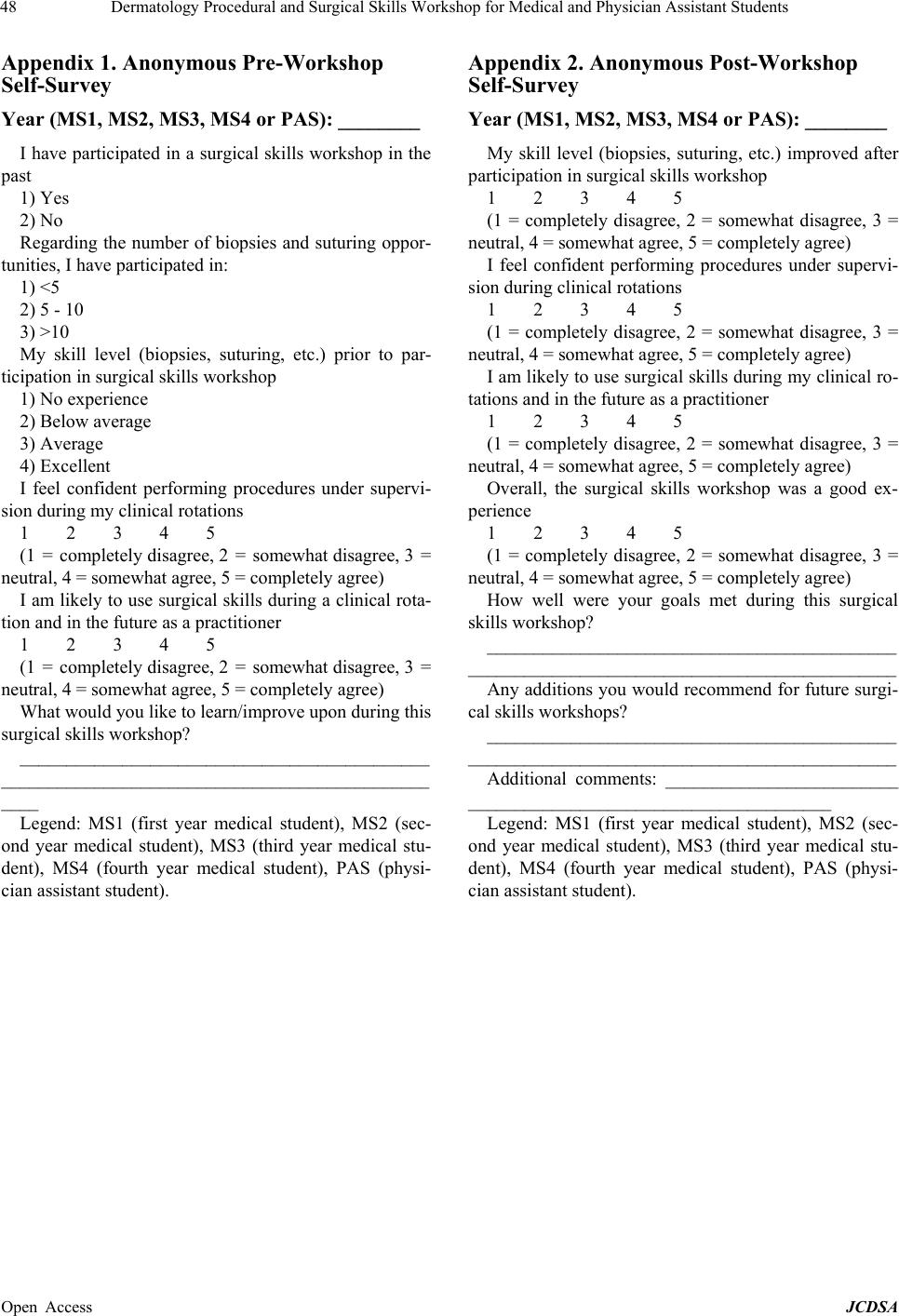 Dermatology Procedural and Surgical Skills Workshop for Medical and Physician Assistant Students 48 Appendix 1. Anonymous Pre-Workshop Self-Survey Year (MS1, MS2, MS3, MS4 or PAS): ________ I have participated in a surgical skills workshop in the past 1) Yes 2) No Regarding the number of biopsies and suturing oppor- tunities, I have participated in: 1) <5 2) 5 - 10 3) >10 My skill level (biopsies, suturing, etc.) prior to par- ticipation in surgical skills workshop 1) No experience 2) Below average 3) Average 4) Excellent I feel confident performing procedures under supervi- sion during my clinical rotations 1 2 3 4 5 (1 = completely disagree, 2 = somewhat disagree, 3 = neutral, 4 = somewhat agree, 5 = completely agree) I am likely to use surgical skills du ring a clinical rota- tion and in the future as a practitioner 1 2 3 4 5 (1 = completely disagree, 2 = somewhat disagree, 3 = neutral, 4 = somewhat agree, 5 = completely agree) What would you like to learn/improve upon during this surgical skills workshop? ____________________________________________ ______________________________________________ ____ Legend: MS1 (first year medical student), MS2 (sec- ond year medical student), MS3 (third year medical stu- dent), MS4 (fourth year medical student), PAS (physi- cian assistant student). Appendix 2. Anonymous Post-Workshop Self-Survey Year (MS1, MS2, MS3, MS4 or PAS): ________ My skill level (biopsies, suturing, etc.) improved after participation in surgical skills workshop 1 2 3 4 5 (1 = completely disagree, 2 = somewhat disagree, 3 = neutral, 4 = somewhat agree, 5 = completely agree) I feel confident performing procedures under supervi- sion during clinical rotations 1 2 3 4 5 (1 = completely disagree, 2 = somewhat disagree, 3 = neutral, 4 = somewhat agree, 5 = completely agree) I am likely to use surgical skills d uring my clinical ro- tations and in the future as a practitioner 1 2 3 4 5 (1 = completely disagree, 2 = somewhat disagree, 3 = neutral, 4 = somewhat agree, 5 = completely agree) Overall, the surgical skills workshop was a good ex- perience 1 2 3 4 5 (1 = completely disagree, 2 = somewhat disagree, 3 = neutral, 4 = somewhat agree, 5 = completely agree) How well were your goals met during this surgical skills workshop? ____________________________________________ ______________________________________________ Any addition s you would recommend for future surgi- cal skills workshops? ____________________________________________ ______________________________________________ Additional comments: _________________________ _______________________________________ Legend: MS1 (first year medical student), MS2 (sec- ond year medical student), MS3 (third year medical stu- dent), MS4 (fourth year medical student), PAS (physi- cian assistant student). Open Access JCDSA |