

Technology and Investment
Vol.14 No.03(2023), Article ID:127384,17 pages
10.4236/ti.2023.143011
Augmented Reality Application to Highlight Health Policies about Refugee Students in the Interwar Period. An Example of Empathetic Study of an Archival Collection
Antonis Hourdakis1, Yannis Ieronymakis1, Manolis Kounalakis1, Marina Souka1, Konstantinos Stefanidis2, Nikolaos Partarakis2, Emmanouil Zidianakis2, Irini Kontaki2, Theodoros Evdaimon2, Giorgos Papadakakis2
1Department of Primary Education, University of Crete, C.S.R.H.E.T.P.*, Rethymno, Greece
2Human-Computer Interaction (HCI) Laboratory# of The Institute of Computer Science of The Foundation for Research and Technology Hellas (ICS-FORTH), Herakleion, Greece

Copyright © 2023 by author(s) and Scientific Research Publishing Inc.
This work is licensed under the Creative Commons Attribution International License (CC BY 4.0).
http://creativecommons.org/licenses/by/4.0/



Received: July 2, 2023; Accepted: August 28, 2023; Published: August 31, 2023
ABSTRACT
The present research attempts, using virtual/augmented reality (AR) technologies, to highlight, through selected digitized documents from the archival collection of the Cretan Didaskaleion (1901-1935), the eugenic policies implemented by the Greek state in the field of public health in relation to the refugee students of the Didaskaleion during the interwar period (1918-1939). The theoretical basis of our approach is that a digitized archive can better support the emergence of the emotion of an archival material (the emotional weight of historical events requires an empathetic investigation), (b) immersion through the use of virtual/augmented reality technologies constitutes an engaging process through which an emotional turn to history is achieved. The aim of this research is to provide researchers with access to a virtual archival
1. Introduction: Augmented/Immersive Electronic Research of Archival Collections
In this research, the digitization of an archival collection is understood as a dynamic process aiming, among other things, at: 1) producing valid metadata through automated procedures relevant to the access, management and processing, 2) utilizing this digitization process for research purposes during the study, documentation and interpretation of its data. Through this process, digital data acquire the possibility of a relational-dynamic correlation and operation (e-researching) with other databases through various and mixed systemic approaches (cognitive, affective) of presentation (by choice), narration and interpretation of the historical/educational past. In this sense, the archival collection of the Cretan Didaskaleion is approached through the digitization and production of upgraded metadata, linked to external databases such as SearchCulture and ABEKT.
The digitized status of the documents activates more directly the historical, social, political and empathetic dimension of the archival material through simulations and graphics, offering new techniques for reading and understanding the material compared to its conventional form, as it provides access to a variety of digital resources. Therefore, e-researching in the digital humanities and social sciences aims at activating an expanded and upgraded approach as well as exploiting the digitized substance of the documents. These techniques are followed during the digital representation of selected documents of Didaskaleion, in order to achieve a multi-sensory perception of their content by the researcher. The available digital Web 2.0. tools now provide the ability to process and correlate large volumes of data and share research results ( Gupta & Müller-Birn, 2018 ).
The research requirements for this specific digitization project we are presenting presuppose a combined investigation of the archival collection and the metadata that constitute it. On the one hand, the form of our metadata corresponds to different types of documents (documents, books, portable objects), on the other hand, it expresses the content of these documents at different levels. In this context, the concept of electronic research, through the simulation and combination of digital data, offers two parameters.
The first parameter refers to interoperability, which involves the use and study of existing information through the development and use of digital tools and environments ( McPherson, 2008 ), enabling joint environments (loci communes) to be created for reading and studying digital content, as well as producing associations and comparisons, so that the (meta) data from one system (a digitized archive) can be read and understood by another system ( Heflin & Hendler, 2000 ). This ensures a multi-layered and enriched reception and redefinition of historical knowledge and experience of the past ( Hourdakis et al., 2023: pp. 2619-2621 ). This purpose is served by the access to the digital content of the archival material of the Cretan Didaskaleion from different external databases (SearchCulture, ΑΒΕΚΤ).
The second parameter refers to the use of virtual/augmented reality technologies (A.R.) in the field of history and culture ( Kysela & Štorková, 2015 ; Cipresso et al., 2018 ). Augmented reality is described as a combination of the digital and the physical world in order to augment the experience of the latter ( Challenor & Ma, 2019: p. 1 ). An example of such a technology within our research is the combination of images, audio, text and graphics from a camera on a mobile device with three dimension (3D) digital models ( Viyanon et al., 2017: pp. 1-7 ). As far as our research is concerned, selected documents from the archival collection of the Cretan Didaskaleion are used, which, through the appropriate graphic representation and integrated in an augmented environment, enable the researcher to immerse him/herself in the historical time and space where the events described in them took place.
However, the use of augmented reality in historical research raises several issues, such as how it is utilized to enhance historical/archival research and, in particular, how it is able to convey the emotional “charge” of historical events that is “hidden” in the archival material ( Challenor & Ma, 2019: p. 2 ). That is, how the researchers will “empathize” with the protagonists of another historical period ( Berti et al., 2009 ), and the emotional universe in which the events were experienced and played out.
This is directly related to the immersive learning and experience that augmented reality can induce ( Blanco-Fernández et al., 2014 ). Through “living” such an experience, the researcher is able to understand a historical event more deeply, gaining a way of emotionally “decoding” the acting subjects in the archive. Immersion, as an engaging experience, serves historical empathy, facilitating the researchers’ virtual transport into the past when interfacing with the digital documents in their synchronicity; via the multiple possibilities of representing reality that immersion provides regarding the reception, understanding and use of documents, so that it can enhance academic research ( Cranny-Francis, 2011 ). In our research, the researcher’s immersion refers to the perception and processing of the political, social and emotional implications of the health policies implemented by the Greek state during the interwar period among the Asia Minor refugees—students of the Cretan Didaskaleion.
However, the development of augmented reality applications within the museum space has recently been explored in relation to the possibility of digital representation of the exhibits/documents hosted therein ( Kiryakova, 2021 ). Therefore, the main goal is to create a graphical digital environment that will assist the critical/reflective consideration and reception of the museum narrative and the archival collection (and, specifically, the Museum of Education of the C.S.R.H.E.T.P) in the context of a digital cultural heritage. In the digital dimension, all those micro-historical elements of the “traces” left behind by their creators are presented more directly, as in the “big” or even “impersonal” data of the archives, the scale of observation changes and become more “human” ( Hitchcock, 2011 ). More specifically, a part of the exhibits of the Museum of Education belongs to the portable archival collection of the Cretan Didaskaleion. These exhibits are used in combination with the digitized printed documents in an augmented reality environment to digitally represent the historical past and to enable the researcher to perceive it in an interactive way.
In this way, the museum or archival space can be “de-territorialized” ( Sturken, 2004: p. 79 ), and simultaneously offers more interactive possibilities to the researchers; since now, the electronic repository enables information sharing through the creation of digital applications which establish conditions of personalized interface with the documents/exhibits ( Chourdakis et al., 2019: pp. 8770-8772 ). In short, new technologies in historical research through experientiality, interface and the attractiveness of the immersive environment, can bring to light socio-emotional “invisibilities” of archival material which is the main goal of this study. In such an open and participatory environment, the researcher's reflective and empathetic engagement with the content is facilitated by alternative methodologies that digitally equip them with more mixed resources.
2. Public Health Control, Paedology, Eugenics and Teaching Studies in the Interwar Period in an Immersive Environment
The following historical overview serves, as a case study, to link the aforementioned theoretical framework with the documents of the Cretan Didaskaleion, which were selected in the present research. More specifically, augmented reality technologies will highlight the emotional implications of the health policies applied to refugee students at the Cretan Didaskaleion. These policies are briefly presented in this chapter in conjunction with eugenic theory, which provided their theoretical substantiation.
The present study focuses on the Greek state’s attempt during the interwar period to control the social body through the implementation of health policies, which primarily targeted the refugee populations that entered its territory after the Asia Minor catastrophe. During that time period, Greece was faced with the urgent need to care for and rehabilitate a large number of refugees, the majority of whom were impoverished, debilitated and prone to infections, food disorders and other diseases ( Katsapis, 2003: p. 39 ). The emotional weight of these historical events, which constitute contemporary issues for historical research and require an empathetic investigation and extended research reflection, is attempted to be highlighted through the use of immersion technologies in the approach and management of our research data.
Historical sources demonstrate the traumatic nature of the living conditions that prevailed at the time. Indicatively, Fokion Kopanaris, General Director of the Macedonian Sanitary Service, described health risks in the cities from the spread of infectious diseases transmitted by prisoners, hostages of war and the thousands of refugees who arrived ( Savvas, 1922: p. 68 ; Kopanaris, 1933: pp. 25+47 ; Siampos, 1973: p. 98 ). This situation is confirmed by the Professor of the Athens School of Health, Vassilios Valaoras, who, considering the statistical data on general mortality in various European countries in the period 1921-1935, ranks Greece among the highest ones ( Valaoras, 1943: p. 81 ).
In order to limit these consequences, the Greek state took specific measures. These measures, however, (embedded in a process of social control and the enforcement of medical rules), aimed more at policing health than providing care, imposing more a form of “bio-power” on the lives of these people ( Liakos, 1988: p. 177 ). Indicative of this is the fact that an authoritative grid of public health surveillance was provided for with the establishment of the Medical Council, the Health Inspector and the Medical Officer of Health ( Law. 346/7-11-1914 “About the Supervision of Public Health” ).
In particular, the sanitary measures for the refugees from Asia Minor were aimed at isolating them in specific areas while the settlement committees justified such decisions with the contention of “natural selection” ( Savvas & Kardamatis, 1928: p. 689 ; Theodorou, 2011: p. 235 ). These decisions reflected the eugenicist concepts of that period.
Therefore, the health policies towards refugees, which we have chosen as a historical example in this study, are considered to carry a strong emotional charge, as they had acquired dimensions of social panic, which can further strengthen the investigative gaze of the researcher, inviting them to examine the historical documents from the perspective of empathy.
Part of this state public health programme included vaccinations in the refugee camps. Among the documents of the Didaskaleion1, that have been studied in this research, there is book written by Emmanuel Labadarios (1931) , the first Greek doctor to vaccinate refugee children with the anti-tuberculosis vaccine. This book, Lessons in School Hygiene (1923), is provided in digital format within the immersive environment that we have created though digital technologies. This document will also be associated with museum objects/exhibits, such as the syringe, gauze, medical forceps and alcohol, with which the researcher will be able to interact immersively. The ultimate goal of this procedure (A.R. scenario) will be the empathetic approach of the historical period under investigation and the “transportation” of the researcher into the position of the refugee or even the vaccinator.
Thus, based on the recordings of vaccinations, we are able to further explore and understand both the social context and policies surrounding the issues of dealing with the morbidity of the refugee population and public health as well as the emotional dimension they inherently posed.
Another example used in the present research concerns the Vaccination Certificates, which were necessary documents for participation in the Didaskaleion entrance examinations, and the Medical Certificates with which the Medical Officers of Health confirmed the physical integrity and the absence of a communicable disease of the examined student. These documents seem to be linked, on the one hand, to social perceptions and state policies on public health to protect the healthy population, and on the other hand, to the eugenic concepts of the time about the medicalization of the body and the exclusion of the “physically disadvantaged”. Such documents placed in an immersive environment will challenge the researcher to empathize with the traumatic and painful consequences of such bio-political acts of exclusions in the lives of the students of the Cretan Didaskaleion. The medicalization of health and especially of childhood is, thus, placed at the centre of the political power of the Liberal party led by El. Venizelos, who, however, recognized the imperfection of the organization of health services ( Dardavessis, 2008: p. 103 ). Ap. Doxiadis, Deputy Minister of Health in Venizelos’ government, in a speech to the League of Nations in 1929, stated that the unprecedented influx of large numbers of refugees made the task of the health authorities in Greece even more difficult ( Liakos, 1993: p. 327 ).
Therefore, the immersive representation of the digitized documents we have (“Degeneration” and “The Criminal Man”), which depict state policies in relation to eugenic theories2, will serve as an indicator of “sensitivities” for the researcher; in order to turn their attention to the historical, social and especially emotional reflections of the socially acting persons.
In this sense, we consider that Emmanuel Labadarios, Professor of Paedology and School Hygiene at the University of Athens, and a catalyst in the implementation of the educational welfare policy of El. Venizelos, is a representative case study for the empathetic immersion approach we are attempting with our documentary material; we believe that his work ( Law 2882/1922 ; Labadarios, 1928 ; Theodorou & Karakatsani, 2003 ) contributes to our approach to the historical-emotional context of the research. Furthermore, the embodied experiences of the history of medicine and disease, which have been silenced in the field of history ( Eustace et al., 2012: p. 1489 ), can be used as extremely useful material in the emergence of a “history of emotions” and, in particular, of the teachers and students of the Cretan Didaskaleion.
Labadarios’ scientific thinking is essentially summarized in the concept of “anthropological augmentation”, a scientific methodology of paedology, in which emphasis is placed on the concept of “paedometry” and many other measuring activities on characteristics of the human body, which are linked to the intellectual development of the child (1923: 5). This methodology highlights the impact of school hygiene practices on the emotional world of the Cretan Didaskaleion students.
At the beginning of the 20th century, there was an intense debate in the international scientific community on the concept of school hygiene ( Stefanou, 1940: p. 528 ). During the same period, the idea of eugenics was systematized at an international level and a tendency to medicalize and biologize social problems is discernible, which is very useful for the interpretation of our documents. In this discourse, we can identify both extreme voices (“negative eugenics”) and more moderate ones (“positive eugenics”) for the scientific regulation of human reproduction, so that a more “perfected” human form emerges ( Roberts, 1964: p. 298 ; Wilson, 2014 ; Kokkinos, 2021: pp. 109-111 ).
In Greece, the aforementioned view seems to have influenced people who held important political positions during the period under examination; for example, the eugenicist Ap. Doxiadis, as mentioned above. Doxiadis (1928) , adopting views of biological politics, considered that the differentiation of social classes should not be based on the economic status of the family, but on the value of its biological capital. Labadarios (1917: pp. 6-7) accepted the same paradigm of paedological psychometrics, and sought to reach the levels of accuracy and perfection of the anthropometric method.
In the Didaskaleia of Greece, according to Law 240/1914, with the first organization of the School Medical Service, two main services were established: 1) the school medical examination of prospective students in order to determine their physical fitness—in relation to their teaching duties, and 2) the lesson of Hygiene ( Labadarios, 1920: p. 83 ).
Based on the above, we selected these particular documents, in order to understand their emotional impact and, above all, to design a virtual and augmented reality application that meets the challenge (affective computing3) of reliving such a traumatic situation.
3. Methodology
The archival collection of the Cretan Didaskaleion (throughout the period of its operation from 1901-1935) constitutes a “monumental site”, which is digitally highlighted through interoperability, as the unified management of metadata ensures, among other things, the combination of data from different digital resources/sources.
This research attempts, using virtual/augmented reality (A.R.) technologies, to highlight through the selected digitized documents of its archival collection the policies that the Greek state applied in the field of public health in periods of conflict, political and war turmoil, aiming to a certain extent at disciplinary control and medicalization of the social body. The key-question is how the researcher will empathically operate in relation to the case study of the archival material during the historical period to which we refer. The starting point of this approach is that we consider the digitized archive itself to support the emergence of historical sentiment (Asia Minor disaster-refugee, eugenic theory, health policies in the interwar period). Therefore, the immersive process is to act multiplicatively for the researcher of this period in an “intangible” memorial “place”, because it involves a strong emotional impact on people who experienced the effects of refugeeism and their marginalization or stigmatization in the name of the health policies.
In this paper, as a “case study” of the interconnection of archival material and its metadata with immersive technologies, we believe that the researcher’s empathy can be achieved. This case study was chosen as representative of the augmented reality applications implemented in the Project. The expected research outcome will be the access of the researchers to a virtual archival-museum environment where the user will be able to interact with the digital representations of the documents and exhibits of the Cretan Didaskaleion. Moreover, they will be able to engage in multi-sensory interaction experiences through virtual reality technologies, so that: 1) discover the emotional/affective connotations of the archival material and the historical period to which it refers; 2) expand their research perspective, reflecting around the formulation of new research questions and issues, which in a conventional/linear study of the same material would not be a fortiori given, making the virtual experience more experiential, more participatory and emotional/empathic.
For this purpose, a scenario was designed and developed which encompasses the basic aspects of our topic and is composed of selected documents from the archival collection and a supplementary documentary material referring to events and people from the specific historical period. Our goal is to ensure the required level of correlation, representational communication and interpretation of historical events/documents in a virtual reality environment. Through immersion, we believe that the researcher will be able to feel and experience new knowledge based on the virtual correlation of documents, objects and books through a reconstruction of the virtual world based on the emotional substrate of the documents.
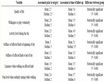
In the present paper, representative documentary material of the archival collection is used. This material was selected based on the intention to activate the empathetic perception and consequently the imagination and creativity of the researcher. It is also expected to help the latter to discover the emotional content of the archive in order to make new connections among the documents. As a result of the aforementioned process, there will be an opportunity to formulate new research questions that will enrich historical research ( Kiryakova, 2021 ). The documentary material (Table 1) includes.
In addition to the aforementioned documents, in order to further enhance the immersion that may cause the emotional involvement of the researcher, some additional documents (Table 2) are used.
An augmented reality application for smart mobile devices (Android, iOS) that aims to enhance the user/researcher experience when accessing of selected
Table 1. Documentary material.
aLoose documents and books from the lending library.
Table 2. Additional documents.
aFrame and photographs.
documents from the archival collection of the Cretan Didaskaleion. It provides full access to digital material (text, photos, video clips, audio) related to the available points of interest, allowing researchers to receive educational information in a fascinating and interactive way, creating occasions for dialogue with the archival material during their visit to the immersive environment, along with a digital enhancement of the emotional aspects derived from the documents. The application applies the appropriate technological tools for displaying points of interest using Augmented Reality (AR) technology, providing the ability to view augmented information through mobile device screens. In particular, the superimposition of digital content on the physical environment is supported, based on environment recognition from a combination of camera input, device sensors (gyroscope) and special algorithms (SLAM).
4. Description of the Immersive A.R. Scenario
This chapter presents a brief description of the augmented reality (A.R.) environment, which is a case study of the digitized archival collection of the Cretan Didaskaleion. More specifically 1) the virtual space environment and 2) the actions that the researcher can take within the immersion environment. In particular, their t degree of empathetic motivation and whether this environment influenced their perception of the archival material of Cretan Didaskaleion will be evaluated.
More specifically, the user points with a portable device on the painting/frame depicting the human brain. On the brain—the centre of emotions and all human functions—seven (7) points are shown (Figure 1).
In the first active point, the cover of the book “The Criminal Man” appears. The brain image will blush as an indication of the emotional charge that an enlarged passage from this book (p. 101) can stimulate: “we are investigating prisons and schools to make sure if young criminals have physical abnormalities”.
In the second active point, the cover of the book “Degeneration” appears. The image of the person in the frame is gradually distorted to show the implications of eugenic theory and its applications to human emotions. There are also some underlined quotes from the book (p. 12) that are connected to the documents of the archival collection (evoking empathy), such as the following, “the owner of the seed of disease becomes incapable of fulfilling his human destiny”.
In the third active point, on the quote of the frame, the following phrase is enlarged and circled: “In my private anatomical laboratory”. In this way the instrumentalization/ laboratorization of theories, that serve political purposes and racial perceptions, is highlighted.
In the fourth active point (Figure 2), the cover of the book “Lessons in School Hygiene” is displayed, followed by an excerpt from the book (p. 5): “the so-called


Figure 1. Augmenting the painting with digital information using a smart mobile device.

Figure 2. Augmentation of the painting with a specific excerpt after selecting a point of interest.
Science of the Child or ‘Paedology’... examines the physical, mental and moral condition of the child, applying various methods of experimental physiology and psychology”. It is obvious that Paedology as an anthropometric science studied the biological, morphological and functional determination of the physiological and psychological development of the child.
Focusing on the fifth active point of the frame (outside the brain), the following documents appear:
1) Photograph of Em. Labadarios, accompanied by a brief description of the administrative positions he has held concerning the school health policies in Greece.
2) Photograph of Ap. Doxiadis, which is accompanied by a short text concerning the implementation of eugenic theory in the reorganization of public health with the assistance of the repressive mechanisms of the state.
3) Photograph from the historical archive of ERT (ERT Archives SA) entitled “Orphaned refugee children from Asia Minor during an outdoor medical examination in front of the pillars of Olympian Zeus”, in order to demonstrate that the primary concern of health practices was the medical control of the most vulnerable social groups.
4) Photographs of the syringe, medical gauze, medical forceps and alcohol (from the Museum of Education of the C.S.R.H.E.T.P.) that were used for vaccination. As social objects, they activate the researcher’s imagination and creativity ( Zhang et al., 2017 ), prompting them to empathize with the acting social subjects, in this case refugees, as a “suffering” social body.
At the sixth active point of the frame, a Medical Certificate appears as an image, which is placed in the center of the frame, where it will then be enlarged, followed by the appearance of a Vaccination Certificate.
Finally, at the seventh active point of the frame, a video of the Project’s website will be displayed, showing the metadata of the documents of the archival collection used in the scenario (three books, one medical certificate and one vaccination certificate). In this way, the interoperability services implemented in this Project are highlighted.
After completing the tour of the virtual environment, the users will be provided with an indicative contemporary scientific reference list.
5. Research Findings
The findings of our research can be summarized at two levels: 1) at the level of historical results. 2) At the level of historical research.
At the level of historical results, we gained a global picture of the health policies that the Greek state applied towards the Asia Minor refugees in the interwar period. It was found that these policies attempted to control the population, especially the refugees, who were considered a public health hazard. We would therefore be talking about policies of bio-power, as was seen with the isolation of refugees in certain areas.
The historical results also demonstrate the correlation of the policies followed with the eugenicist concepts of that period in Greece and internationally. This finding is based on the evidence of the archival collection (see Books from the Historical Library of the Cretan Didaskaleion). It is also demonstrated through the action of specific persons (Doxiadis, Labadarios, etc.), who either played a political role in the period or were known for their scientific achievements.
A direct link between the above and the training of students in the Cretan Didaskaleion emerged through procedures to verify the physical fitness of students. The school examinations, on the basis of which the degree of performance of their teaching duties was determined, were linked to scientific theories and paedometric methodologies. These theories correlated a person’s intellectual development with his or her physical characteristics.
Health policies towards refugees, according to the above-mentioned data, extend to a second level, which is related to historical research. This second level can be seen from two perspectives. The first refers to the emotional charge of both the historical period under consideration and the selected documents from the archival collection of the Cretan Didaskaleion, which corresponds to the given period. The emotional dimension, as discussed in the previous chapters, constitutes a finding of our research that is reflected in the case study we have chosen to examine. It is primarily concerned with the reflection and empathy of the researcher examining the particular historical documents.
The second perspective refers to the enhancement of the researcher’s empathy and by extension of the emotional turn to history, through the use of new technologies in augmented immersive reality environments. For this purpose, an augmented reality application was designed and presented that meets the challenge of reviving the historical events indicated in selected documents of the archival collection of the Cretan Didaskaleion. The immersive scenario that was designed places our specific digitized documents in an immersive environment to challenge the researcher to empathize with the traumatic effects of bio-political exclusion on the lives of the students of the Cretan Didaskaleion. In this way, we believe that the main purpose of this paper is achieved in order to direct the research interest to the historical, social and especially emotional reflections of the acting social subjects.
6. Conclusion
This paper has presented a case of applying upgraded e-researching to the digital humanities and social sciences, specifically, in the field of history of education, adopting an empathetic approach to its research.
The documents of the archival collection chosen to be used concern a very sensitive and little touched-upon issue in the relevant bibliography, regarding education and health policies towards refugee students of the Cretan Didaskaleion in Heraklion during the Greek interwar period in combination with the theories of eugenics of the same period. The multimodal presentation of the additional documentary material offers the researcher the possibility to interact with virtual items that correspond to physical items of the museum collection which were also selected as representative examples of the epistemological shift of historiography in “emotional history”. This process, due to its immersive nature, significantly highlights issues of historical empathy in historical interpretive research methodology in general. This finding is based on the fact that the immersed researcher, through digitization, is more likely to experience the emotions expressed by the evidence and thus to empathize with the acting social subjects of their research ( Kaakinen et al., 2018: p. 10 ).
In particular, through the graphic (re)representation of selected points/nodes of the additional documentary material, an alternative empathetic methodological approach to the basic documents is highlighted. The aim of this study is to show the researcher in a more tangible and experiential way the process of instrumentalization of school hygiene, through the implementation of eugenic policies in a very specific historical context regarding the education of the students of the Cretan Didaskaleion in Heraklion.
Funding
This study is part of the project “Digitization of archival material of the museums of the University of Crete Museum of Education and Museum of Medicine of Crete”, Operational Programme “Competitiveness, Entrepreneurship and Innovation 2014-2020”, European Regional Development Fund (ERDF), implemented by the Museum of Education of the C.S.R.H.E.T.P. (Centre for the Study and Research of the History of Education and the Teaching Profession) in collaboration with the Laboratory of Human-Computer Interaction and the Pervasive Intelligence Programme of the Institute of Computer Science of FORTH TE-FORTH-ICS.
Conflicts of Interest
The authors declare no conflicts of interest regarding the publication of this paper.
Cite this paper
Hourdakis, A., Ieronymakis, Y., Kounalakis, M., Souka, M., Stefanidis, K., Partarakis, N., Zidianakis, E., Kontaki, I., Evdaimon, T., & Papadakakis, G. (2023). Augmented Reality Application to Highlight Health Policies about Refugee Students in the Interwar Period. An Example of Empathetic Study of an Archival Collection. Technology and Investment, 14, 171-187. https://doi.org/10.4236/ti.2023.143011
References
- 1. Berti, A. E., Baldin, I., & Toneatti, L. (2009). Empathy in History. Understanding a Past Institution (Ordeal) in Children and Young Adults When Description and Rationale Are Provided. Contemporary Educational Psychology, 34, 278-288. https://doi.org/10.1016/j.cedpsych.2009.06.002 [Paper reference 1]
- 2. Blanco-Fernández, Y., López-Nores, M., Pazos-Arias, J. J., Gil-Solla, A., Ramos-Cabrer, M., & García-Duque, J. (2014). REENACT: A Step Forward in Immersive Learning about Human History by Augmented Reality, Role Playing and Social Networking. Expert Systems with Applications, 41, 4811-4828. https://doi.org/10.1016/j.eswa.2014.02.018 [Paper reference 1]
- 3. Challenor, J., & Ma, M. (2019). A Review of Augmented Reality Applications for History Education and Heritage Visualisation. Multimodal Technologies and Interaction, 3, Article No. 39. https://doi.org/10.3390/mti3020039 [Paper reference 2]
- 4. Chourdakis, A., Ieronimakis, J., Souka, M., & Kounalakis, M. (2019). Culture Identity, Museum and New Technologies: Enhancing Museological Learning. In EDULEARN19 Proceedings (pp. 8770-8776). IATED. https://doi.org/10.21125/edulearn.2019.2177 [Paper reference 1]
- 5. Cipresso, P., Giglioli, I. A. C., Raya, M. A., & Riva, G. (2018). The Past, Present, and Future of Virtual and Augmented Reality Research: A Network and Cluster Analysis of the Literature. Frontiers in Psychology, 9, Article 2086. https://doi.org/10.3389/fpsyg.2018.02086 [Paper reference 1]
- 6. Cranny-Francis, A. (2011). Semefulness: A Social Semiotics of Touch. Social Semiotics, 21, 463-481. https://doi.org/10.1080/10350330.2011.591993 [Paper reference 1]
- 7. Dardavessis, Th. (2008). The Organization of the Central Administration for Health Policy in the Interwar Period. In C. Kyriopoulos (Ed.), Public Health and Social Policy: Εleftherios Venizelos and His Era (pp. 99-111). Papazisis. (In Greek) [Paper reference 1]
- 8. Doxiadis, A. (1928). Biological Policy Based on Population Growth. Hellenic Letters, 3, 49-51. (In Greek) [Paper reference 1]
- 9. Eustace, N., Lean, E., Livingston, J., Plamber, J., Reddy, W., & Rosenwein, B. (2012). AHR Conversation: The Historical Study of Emotions. American Historical Review, 117, 1487-1531. https://doi.org/10.1093/ahr/117.5.1487 [Paper reference 1]
- 10. Gupta, S., & Müller-Birn, C. (2018). A Study of E-Research and Its Relation with Research Data Life Cycle: A Literature Perspective. Benchmarking: An International Journal, 25, 1656-1680. https://doi.org/10.1108/BIJ-02-2017-0030 [Paper reference 1]
- 11. Heflin, J., & Hendler, J. (2000). Semantic Interoperability on the Web. In Proceedings of Extreme Markup Languages (Vol. 2000, pp. 111-120). Defense Technical Information Center. [Paper reference 1]
- 12. Hitchcock, T. (2011). Culturomics, Big Data, Code Breakers and the Casaubon Delusion. Historyonics Blog. [Paper reference 1]
- 13. Hourdakis, A., Ieronimakis, J., Souka, M., & Kounalakis, M. (2023). Creating Alternative Digital Repositories in Humanities: Digitalization of the Archival Collection of the Museum of Education of the University of Crete. In: INTED2023 Proceedings (pp. 2619-2627). IATED. https://doi.org/10.21125/inted.2023.0736 [Paper reference 1]
- 14. Kaakinen, J. K., Papp-Zipernovszky, O., Werlen, E., Castells, N., Bergamin, P., Baccino, T., & Jacobs, A. M. (2018). Emotional and Motivational Aspects of Digital Reading. In M. Barzillai, J. Thomson, S. Schroeder, & P. van den Broek (Eds.), Learning to Read in a Digital World (pp. 141-164). John Benjamins Publishing Company. https://doi.org/10.1075/swll.17.06kaa [Paper reference 1]
- 15. Katsapis, K. (2003). Public Health, Refugees and State Intervention in Interwar Greece. In Μ. Tzedopoulos (Ed.), Beyond the Catastrophe in the Period between Greece and Greece in the Inter-War Period: Publication of the Foundation of the Hellenic World (pp. 19-40). Foundation of the Hellenic World. (In Greek) [Paper reference 1]
- 16. Kiryakova, G. (2021). The Immersive Power of Augmented Power. In Y. Rybarczyk (Ed.), Human 4.0—From Biology to Cybernetic (pp. 22-37). IntechOpen. [Paper reference 2]
- 17. Kokkinos, G. (2021). “Significant” and “Insignificant” Life: Eugenics, Degeneration, Biopolitics: The Doctor in the Role of Social Healer and National Reformer. Taxideftis. (In Greek) [Paper reference 1]
- 18. Kopanaris, F. (1933). The Public Health in Greece. Typis Christos Chronopoulos. (In Greek) [Paper reference 1]
- 19. Kysela, J., & Štorková, P. (2015). Using Augmented Reality as a Medium for Teaching History and Tourism. Procedia-Social and Behavioral Sciences, 174, 926-931. https://doi.org/10.1016/j.sbspro.2015.01.713 [Paper reference 1]
- 20. Labadarios, E. (1917). Paedology and School Hygiene. Athens, Ethniko Typographeio. (In Greek) [Paper reference 1]
- 21. Labadarios, E. (1923). Lessons in School Hygiene. Hellenic Red Cross, School of Visiting Sisters. (In Greek) [Paper reference 1]
- 22. Labadarios, E. (1928). School Hygiene (2nd ed.). Typis ‘‘Sfendonis’’. (In Greek) [Paper reference 1]
- 23. Labadarios, Ε. (1931). The Anti-Tuberculosis Vaccine BCG and the Results of Its Implementation in Greece by the Hellenic Red Cross. Dimitrakos Publishers. (In Greek) [Paper reference 1]
- 24. Labadarios. Ε. (1920). The Pedagogical Sciences and Their Introduction to Me. Paedology, 3, 83-86. (In Greek) [Paper reference 1]
- 25. Law 2882/1922 ‘On Reforming and Supplementing the Ministry of Health and Social Welfare, Renamed the Ministry of Health and Social Welfare’. Journal of Laws No 122, Issue A, 22-07-1922. (In Greek) [Paper reference 1]
- 26. Law. 346/7-11-1914 ‘About the Supervision of Public Health’. (In Greek) [Paper reference 1]
- 27. Liakos, A. (1988). From Guardian State to Welfare State. In Proceedings of the Symposium on Eleftherios Venizelos (pp. 169-185). Hellenic Literary and Historical Archive. (In Greek) [Paper reference 1]
- 28. Liakos, A. (1993). Labour and Politics in Inter-War Greece. The International Labour Office and the Emergence of Social Institutions. Research and Education Foundation of the Commercial Bank of Greece. (In Greek) [Paper reference 1]
- 29. Lombroso, C. (1925). The Criminal Man (M. Anninos, Trans.). Christos D. Fexis. (In Greek) [Paper reference 1]
- 30. McPherson, T. (2008). Dynamic Vernaculars: Emergent Digital Forms in Contemporary Scholarship. Lecture Presented to HUMLab Seminar, Umeå University. [Paper reference 1]
- 31. Nordau, M. (1922). Degeneration (A. Vlachos, Trans.). Christos Fexis & Vassilis Kombouyas. (In Greek) [Paper reference 1]
- 32. Picard, R. W. (1997). Affective Computing. M.I.T Media Laboratory Perceptual Computing Section Technical Report No. 321. https://affect.media.mit.edu/pdfs/95.picard.pdf [Paper reference 1]
- 33. Roberts, C. (1964). Some Reflections on Positive Eugenics. Perspectives in Biology and Medicine, 7, 297-308. https://doi.org/10.1353/pbm.1964.0054 [Paper reference 1]
- 34. Savvas, K. (1922). On the Establishment of the Ministry of Health and Social Welfare. Archives of Medicine, 3, 65-72. (In Greek) [Paper reference 1]
- 35. Savvas, K., Kardamatis, I. (1928). Malaria in Greece. Printing House of Leonidas Paraskevas. (In Greek) [Paper reference 1]
- 36. Siampos, G. (1973). Demographic Evolution of Modern Greece (1821-1985). Athens. (In Greek) [Paper reference 2]
- 37. Stefanou, D. (1940). School Hygiene after Elements of Paedology. H. Pavlopoulos. (In Greek) [Paper reference 1]
- 38. Sturken, M. (2004). Mobilities of Time and Space: Technologies of the Modern and the Postmodern. In: Technological Visions: The Hopes and Fears that Shape New Technology (pp. 71-91). Temple University Press. [Paper reference 1]
- 39. Theodorou, V. (2011). Malnutrition and Tuberculosis in the Interwar Period: Healthy Nutrition and the Organization of Student Rations (1928-1932). Mnemon, 30, 233-262. (In Greek) [Paper reference 1]
- 40. Theodorou, V., & Karakatsani, D. (2003). The Outdoor Education Movement in the First Decades of the 20th Century. Social Perception and Medical-Pedagogical Quests. Issues in the History of Education, 2, 55-78. [Paper reference 1]
- 41. Valaoras, V. (1943). Elements of Biometrics and Biostatistics. Typis N. Vafeiadaki. (In Greek)
- 42. Viyanon, W., Songsuittipong, T., Piyapaisarn, P., & Sudchid, S. (2017). AR Furniture: Integrating Augmented Reality Technology to Enhance Interior Design Using Marker and Markerless Tracking. In Proceedings of the 2nd International Conference on Intelligent Information Processing (pp. 1-7). Association for Computing Machinery. https://doi.org/10.1145/3144789.3144825 [Paper reference 1]
- 43. Wilson, R. A. (2014). Eugenics: Positive vs Negative. Eugenics Archives. [Paper reference 1]
- 44. Zhang, C., Perkis, A., & Arndt, S. (2017). Spatial Immersion versus Emotional Immersion, Which Is More Immersive? In 2017 Ninth International Conference on Quality of Multimedia Experience (QoMEX) (pp. 1-6). IEEE. https://doi.org/10.1109/QoMEX.2017.7965655 [Paper reference 1]
NOTES
1The Didaskaleion in Heraklion operated from 1901 to 1933 and was the first official institution for teacher training in Crete. After the end of itsoperation, it was replaced by the Pedagogical Academy of Heraklion. These two institutions had serious pedagogical effect in Greece, although they did not manage to function as university institutions.
2Law. 4152/1929 “On the teaching of Hygiene in State schools”, that introduces—enforces health and paedological courses in all levels of education.
3 Picard, R.W. (1997) . Affective Computing. M.I.T Media Laboratory Perceptual Computing Section Technical Report No. 321 (Available from: https://affect.media.mit.edu/pdfs/95.picard.pdf, accessed: 14/06/23).
NOTES
*C.S.R.H.H.E.T.P. was founded to serve the research and teaching needs in the field of research and study of the documents of the History of Education, the history of the teaching profession over time and for the more systematic teaching of history and culture in Greek schools. C.S.R.H.E.T.P. has collected, preserved and maintained the Archives of the Cretan Didaskaleion and the Pedagogical Academy of Heraklion (the first teacher training institutions in the Greek state), as well as their Historical Library.
#The Human-Computer Interaction (HCI) Laboratory of the Institute of Computer Science of the Foundation for Research and Technology-Hellas (ICS-FORTH) is an internationally recognized centre of excellence with long experience in the development of interactive systems that follow the human centered design approach. The research activities of the Laboratory are based on the principles of Design for All and Universal Access and include the development of innovative methods and tools for the design and implementation of accessible interactive applications and services.