

Paper Menu >>
Journal Menu >>
 American Journal of Plant Sciences, 2013, 4, 2193-2198 Published Online November 2013 (http://www.scirp.org/journal/ajps) http://dx.doi.org/10.4236/ajps.2013.411272 Open Access AJPS 2193 Antimicrobial Activity and Rates of Tannins in Stryphnodendron adstringens Mart. Accessions Collected in the Brazilian Cerrado Giovana Maria Lanchoti Fiori1*, Ana Lucia Fachin1, Valéria S. C. Correa2, Bianca Waleria Bertoni1, Silvana Giuliatti3, Saulo França Amui3, Suzelei de Castro França1, Ana Maria Soares Pereira1 1University of Ribeirão Preto—UNAERP, Ribeirão Preto, Brazil; 2Reserve EcoCerrado Brazil, Araxá, Brazil; 3Department of Genetics, University of São Paulo—USP, Ribeirão Preto, Brazil. Email: *[email protected] Received September 2nd, 2013; revised October 20th, 2013; accepted October 25th, 2013 Copyright © 2013 Giovana Maria Lanchoti Fiori et al. This is an open access article distributed under the Creative Commons Attri- bution License, which permits unrestricted use, distribution, and reproduction in any medium, provided the original work is properly cited. ABSTRACT Inner bark extracts of Stryphnodendron adstringens, a leguminous tree species known as Barbatimão, are often incor- porated to phytotherapic formulations due to their antimicrobial and healing activities. In this study, extracts from S. adstringens accessions collected in 12 distinct locations were investigated in order to determine the rates of tannins in inner barks and to validate S. adstringens antibacterial and antifungal effectiveness. Yields of tannins were quantified by colorimetric assay following methodology described in the Brazilian Pharmacopoeia and the antimicrobial activity was determined by microdilution technique proposed by the National Commi ttee for Clinical Laboratory Standards us- ing S. adstringens h ydroalcoho lic and aqueous extr acts and semi-purif ied fractions. Inv estigated extracts did not present significant antibacterial activity though aqueous extracts exhibited antifungal effect against both Trichophyton rubrum mutant and clinical strains (MIC 156 µg/mL). A positive correlation b etween tannin concentration and antifungal activ- ity was observed and the accessio ns collected in Delfinópolis (MG) were considered elite. Keywords: Cerrado; Barbatimão; Genetic Diversity; Phytoterapy 1. Introduction Stryphnodendron adstringens, a leguminous tree species endemic to the Cerrado (savanna biome) is popularly known as barbatimão and its inner bark extracts are tra- ditionally used for ulcer and wound healing [1]. S. ad- stringens extract is rich in condensed tannins which are known to induce tissue repair [2]. Preclinical trials reported the regenerative action of S. adstringens inner bark aqueous extracts [3] and clinical trials validated S. adstringens healing action on pressure ulcers [4], leading to the development of an effectively commercialized phytopharmaceutical brand named Fito- scar®. Several studies using S. adstringens inner bark extracts have reported their efficacy as anti-inflammatory in subacute and chronic models of inflammation [5], anti- nociceptive [6], anti-protozoal [7] and antimicrobial [8]. Human infections caused by fungi and bacteria in- creased drastically in the last years. The treatment of mycosis is based on the therapy used against bacteria and antifungals, which are less prevalent if compared to an- tibacterial agents. Additionally, the therapeutics used against microorganisms is not always effective, causing resistance or recurrence, producing significant toxicity. The dermatophyte Trichophyton rubrum which usually causes well-characterized superficial mycosis acts as invasive in immunodepressed patients [9,10], reported the in vitro occurrence of a mutant of the T. rubrum (gri1) with a knock-out mutation in the ABC genes, that are drug sensitive and can be used to test new compounds with specific fungitoxicity [11]. Considering that the production of secondary metabo- lites in plants and the consequen t therap eutic activity o f a medicinal species are directly affected by its genetics, *Corresponding a uthor. 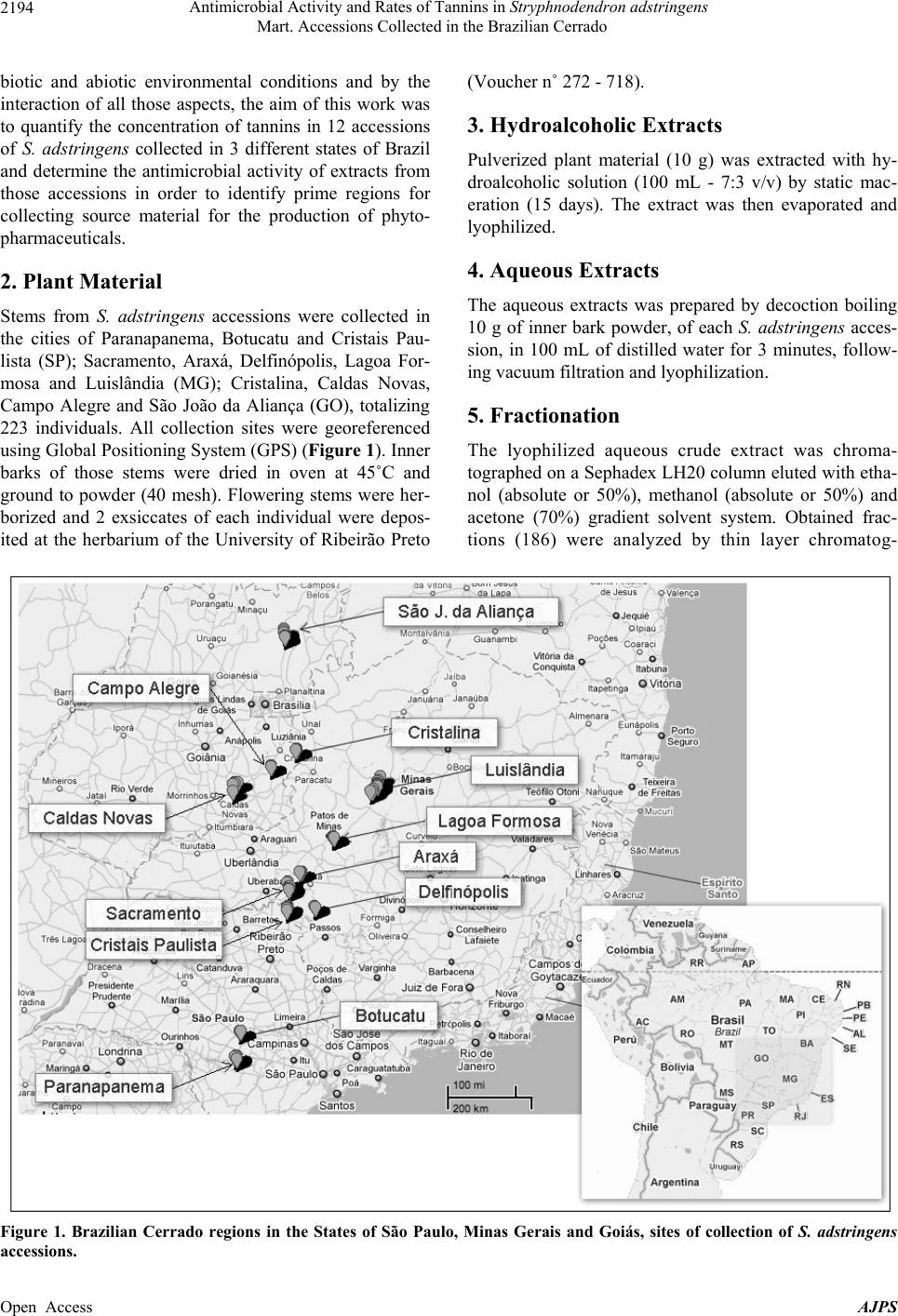 Antimicrobial Activity and Rates of Tannins in Stryphnodendron adstringens Mart. Accessions Collected in the Brazilian Cerrado 2194 biotic and abiotic environmental conditions and by the interaction of all those aspects, the aim of this work was to quantify the concentration of tannins in 12 accessions of S. adstringens collected in 3 different states of Brazil and determine the antimicrobial activity of extracts from those accessions in order to identify prime regions for collecting source material for the production of phyto- pharmaceuticals. 2. Plant Material Stems from S. adstringens accessions were collected in the cities of Paranapanema, Botucatu and Cristais Pau- lista (SP); Sacramento, Araxá, Delfinópolis, Lagoa For- mosa and Luislândia (MG); Cristalina, Caldas Novas, Campo Alegre and São João da Aliança (GO), totalizing 223 individuals. All collection sites were georeferenced using Global Positioning System (GPS) (Figure 1). Inner barks of those stems were dried in oven at 45˚C and ground to powder (40 mesh). Flowering stems were her- borized and 2 exsiccates of each individual were depos- ited at the herbarium of the University of Ribeirão Preto (Vouche r n˚ 272 - 718). 3. Hydroalcoholic Extracts Pulverized plant material (10 g) was extracted with hy- droalcoholic solution (100 mL - 7:3 v/v) by static mac- eration (15 days). The extract was then evaporated and lyophilized. 4. Aqueous Extracts The aqueous extracts was prepared by decoction boiling 10 g of inner bark powder, of each S. adstringens acces- sion, in 100 mL of distilled water for 3 minutes, follow- ing vacuum filtration and lyoph ilization. 5. Fractionation The lyophilized aqueous crude extract was chroma- tographed on a Sephadex LH20 column eluted with etha- nol (absolute or 50%), methanol (absolute or 50%) and acetone (70%) gradient solvent system. Obtained frac- tions (186) were analyzed by thin layer chromatog- Figure 1. Brazilian Cerrado regions in the States of São Paulo, Minas Gerais and Goiás, sites of collection of S. adstringens ccessions. a Open Access AJPS 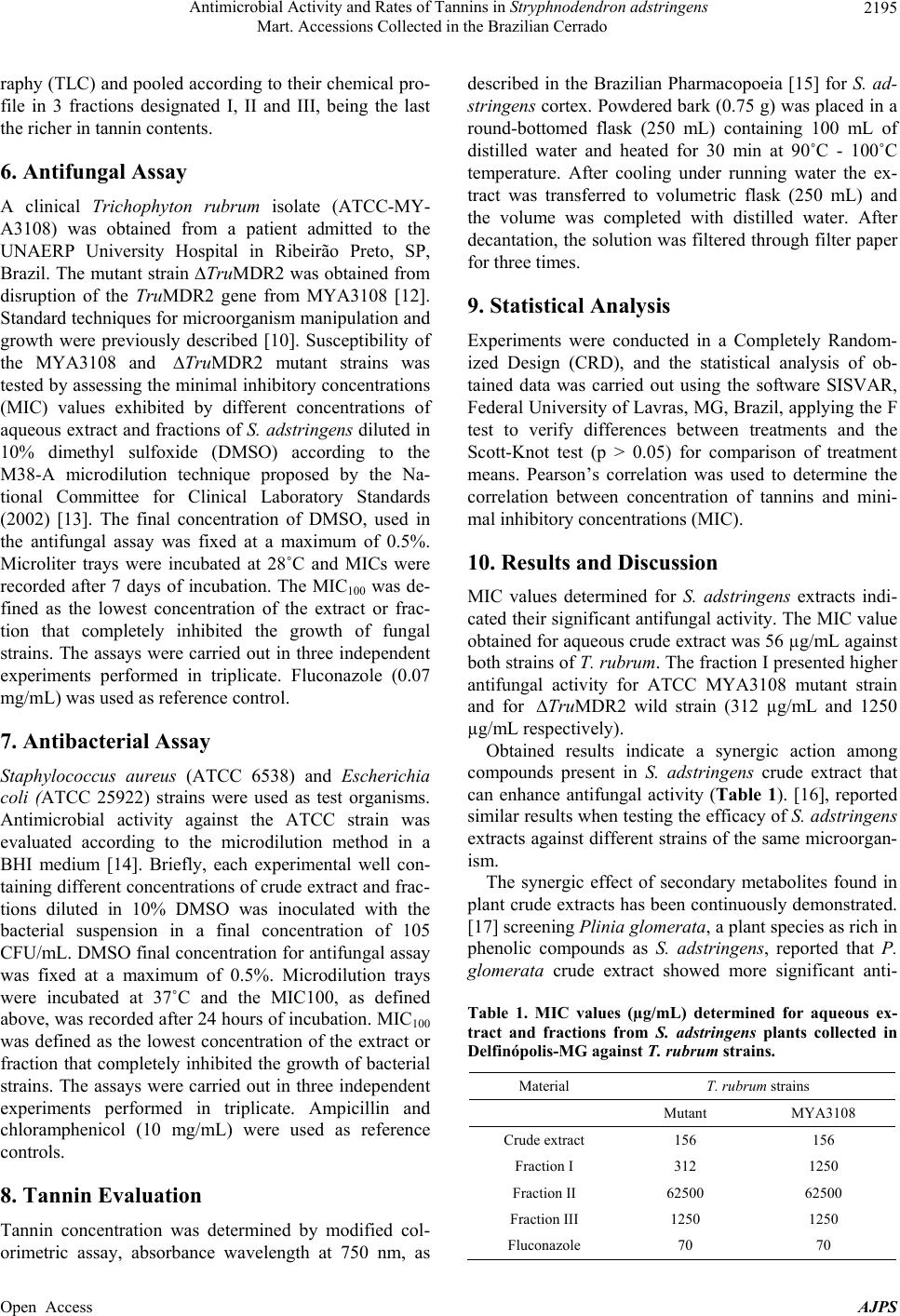 Antimicrobial Activity and Rates of Tannins in Stryphnodendron adstringens Mart. Accessions Collected in the Brazilian Cerrado 2195 raphy (TLC) and pooled according to their chemical pro- file in 3 fractions designated I, II and III, being the last the richer in tannin contents. 6. Antifungal Assay A clinical Trichophyton rubrum isolate (ATCC-MY- A3108) was obtained from a patient admitted to the UNAERP University Hospital in Ribeirão Preto, SP, Brazil. The mutant strain TruMDR2 was obtained from disruption of the TruMDR2 gene from MYA3108 [12]. Standard techniques for microorganism manipulation and growth were previously described [10]. Susceptibility of the MYA3108 and TruMDR2 mutant strains was tested by assessing the minimal inh ibitory concentrations (MIC) values exhibited by different concentrations of aqueous extract and fractions of S. adstringens diluted in 10% dimethyl sulfoxide (DMSO) according to the M38-A microdilution technique proposed by the Na- tional Committee for Clinical Laboratory Standards (2002) [13]. The final concentration of DMSO, used in the antifungal assay was fixed at a maximum of 0.5%. Microliter trays were incubated at 28˚C and MICs were recorded after 7 days of incubation. The MIC100 was de- fined as the lowest concentration of the extract or frac- tion that completely inhibited the growth of fungal strains. The assays were carried out in three independent experiments performed in triplicate. Fluconazole (0.07 mg/mL) was used as reference control. 7. Antibacterial Assay Staphylococcus aureus (ATCC 6538) and Escherichia coli (ATCC 25922) strains were used as test organisms. Antimicrobial activity against the ATCC strain was evaluated according to the microdilution method in a BHI medium [14]. Briefly, each experimental well con- taining different concentration s of crude extract and frac- tions diluted in 10% DMSO was inoculated with the bacterial suspension in a final concentration of 105 CFU/mL. DMSO final concentration for antifung al assay was fixed at a maximum of 0.5%. Microdilution trays were incubated at 37˚C and the MIC100, as defined above, was re corded after 24 hours of incubation . MIC100 was defined as the lowest concentration of the extract or fraction that completely inhibited the growth of bacterial strains. The assays were carried out in three independent experiments performed in triplicate. Ampicillin and chloramphenicol (10 mg/mL) were used as reference controls. 8. Tannin Evaluation Tannin concentration was determined by modified col- orimetric assay, absorbance wavelength at 750 nm, as described in the Brazilian Pharmacopoeia [15] for S. ad- stringens cortex. Powdered bark (0.75 g) was placed in a round-bottomed flask (250 mL) containing 100 mL of distilled water and heated for 30 min at 90˚C - 100˚C temperature. After cooling under running water the ex- tract was transferred to volumetric flask (250 mL) and the volume was completed with distilled water. After decantation, the solution was filtered through filter paper for three times. 9. Statistical Analysis Experiments were conducted in a Completely Random- ized Design (CRD), and the statistical analysis of ob- tained data was carried out using the software SISVAR, Federal University of Lavras, MG, Brazil, applying the F test to verify differences between treatments and the Scott-Knot test (p > 0.05) for comparison of treatment means. Pearson’s correlation was used to determine the correlation between concentration of tannins and mini- mal inhibitory concentrations (MIC). 10. Results and Discussion MIC values determined for S. adstringens extracts indi- cated their significant an tifungal activity. The MIC value obtained for aqueous crude extract was 56 µg/mL against both strains of T. rubrum. The fraction I presented higher antifungal activity for ATCC MYA3108 mutant strain and for TruMDR2 wild strain (312 µg/mL and 1250 µg/mL respectively). Obtained results indicate a synergic action among compounds present in S. adstringens crude extract that can enhance antifungal activity (Table 1). [16], reported similar results when testing the efficacy of S. adstringens extracts against different strains of th e same mic roorg an- ism. The synergic effect of secondary metabolites found in plant crude extracts has been continuously demonstrated. [17] screening Plinia glomerata, a plant species as rich in phenolic compounds as S. adstringens, reported that P. glomerata crude extract showed more significant anti- Table 1. MIC values (µg/mL) determined for aqueous ex- tract and fractions from S. adstringens plants collected in Delfinópolis-MG against T. rubrum strains. Material T. rubrum strains Mutant MYA3108 Crude extract 156 156 Fraction I 312 1250 Fraction II 62500 62500 Fraction III 1250 1250 Fluconazole 70 70 Open Access AJPS 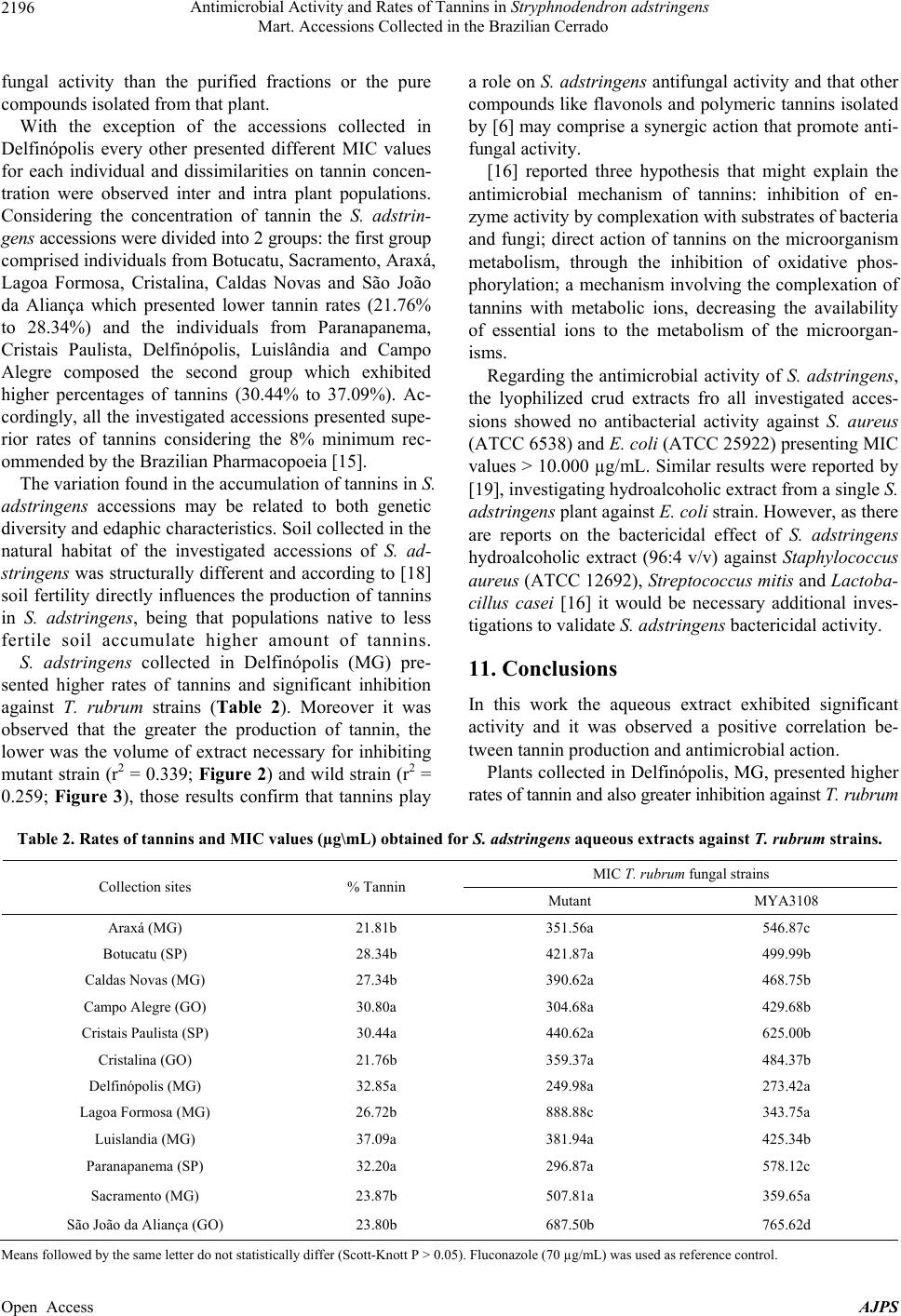 Antimicrobial Activity and Rates of Tannins in Stryphnodendron adstringens Mart. Accessions Collected in the Brazilian Cerrado 2196 fungal activity than the purified fractions or the pure compounds isolated from that plant. With the exception of the accessions collected in Delfinópolis every other presented different MIC values for each individual and dissimilarities on tannin concen- tration were observed inter and intra plant populations. Considering the concentration of tannin the S. adstrin- gens accessions were divided into 2 groups: the first group comprised individuals from Botucatu, Sacramento, Araxá, Lagoa Formosa, Cristalina, Caldas Novas and São João da Aliança which presented lower tannin rates (21.76% to 28.34%) and the individuals from Paranapanema, Cristais Paulista, Delfinópolis, Luislândia and Campo Alegre composed the second group which exhibited higher percentages of tannins (30.44% to 37.09%). Ac- cordingly, all the investigated accessions presented supe- rior rates of tannins considering the 8% minimum rec- ommended by the Brazilian Pharmacopoeia [15]. The variation found in the accumulation of tannins in S. adstringens accessions may be related to both genetic diversity and edaphic characteristics. Soil collected in the natural habitat of the investigated accessions of S. ad- stringens was structurally different and according to [18] soil fertility directly influences the production of tannins in S. adstringens, being that populations native to less fertile soil accumulate higher amount of tannins. S. adstringens collected in Delfinópolis (MG) pre- sented higher rates of tannins and significant inhibition against T. rubrum strains (Table 2). Moreover it was observed that the greater the production of tannin, the lower was the volume of extract necessary for inhibiting mutant strain (r2 = 0.339; Figure 2) and wild strain (r2 = 0.259; Figure 3), those results confirm that tannins play a role on S. adstringens antifungal activity and that other compounds like flavonols and polymeric tannins isolated by [6] may comprise a synergic action that promote anti- fungal activity. [16] reported three hypothesis that might explain the antimicrobial mechanism of tannins: inhibition of en- zyme activity by complexation with substrates of bacteria and fungi; direct action of tannins on the microorganism metabolism, through the inhibition of oxidative phos- phorylation; a mechanism involving the complexation of tannins with metabolic ions, decreasing the availability of essential ions to the metabolism of the microorgan- isms. Regarding the antimicrobial activity of S. adstringens, the lyophilized crud extracts fro all investigated acces- sions showed no antibacterial activity against S. aureus (ATCC 6538) and E. coli (ATCC 25922) presenting MIC values > 10.000 µg/mL. Similar results were reported by [19], investigating hydroalcoholic extract from a single S. adstringens plant against E. coli strain. However, as there are reports on the bactericidal effect of S. adstringens hydroalcoholic extract (96:4 v/v) against Staphylococcus aureus (ATCC 12692), S treptococcus mitis and Lactoba- cillus casei [16] it would be necessary additional inves- tigations to validate S. adstringens bactericidal activity. 11. Conclusions In this work the aqueous extract exhibited significant activity and it was observed a positive correlation be- tween tannin production and antimicrobial action. Plants collected in Delfinópolis, MG, presented higher rates of tannin and also greater inhibition against T. rubrum Table 2. Rates of tannins and MIC values (µg\mL) obtained for S. adstringens aqueous extracts against T. rubrum strains. MIC T. rubrum fungal strains Collection sites % Tannin Mutant MYA3108 Araxá (MG) 21.81b 351.56a 546.87c Botucatu (SP) 28.34b 421.87 a 499.99b Caldas Novas (MG) 27.34b 390.62a 468.75b Campo Alegre (GO) 30.80a 304.68a 429.68b Cristais Paulista (SP) 30.44 a 440.62a 625.00b Cristalina (GO) 21.76b 359.37a 4 8 4.37b Delfinópolis (MG) 32.85a 249.98a 273.42a Lagoa Formosa (MG ) 26.72b 888.88c 343.75a Luislandia (MG) 37.09a 381.94a 425.34b Paranapanema (SP) 32.20a 296.87a 578.12c Sacramento (MG) 23.87b 507.81a 359.65a São João da Aliança (GO) 23.80b 687.50b 765.62d Means follow ed by the s ame letter do not statistically differ (Scott-Knott P > 0.05). Fluconazole (70 µg/mL) was use d as reference control. Open Access AJPS 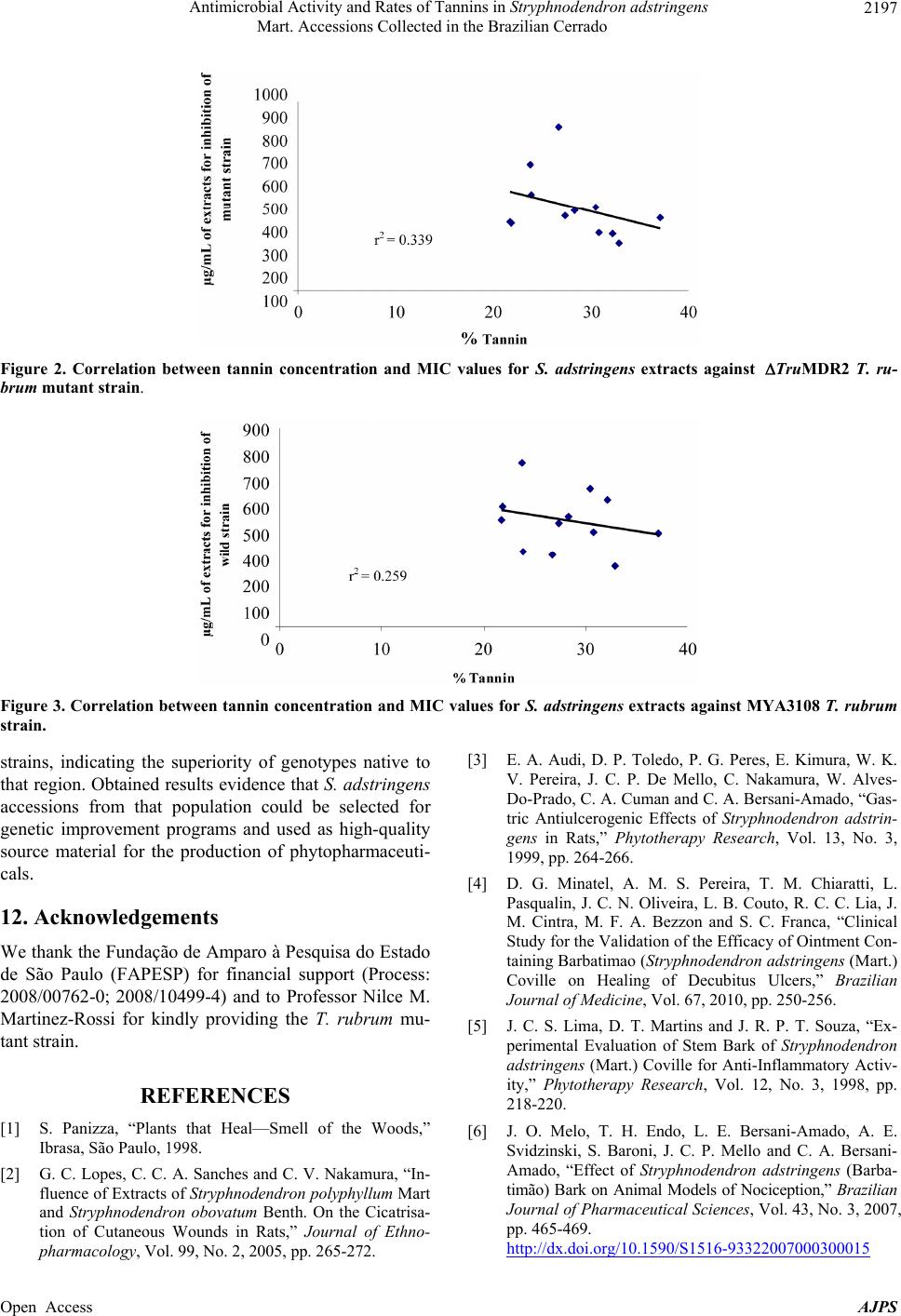 Antimicrobial Activity and Rates of Tannins in Stryphnodendron adstringens Mart. Accessions Collected in the Brazilian Cerrado 2197 Figure 2. Correlation between tannin concentration and MIC values for S. adstringens extracts against TruMDR2 T. ru- brum mutant strain. Figure 3. Correlation betwe en tannin concentration and MIC values for S. adstringens extracts against MYA3108 T. rubrum strain. strains, indicating the superiority of genotypes native to that region. Obtained results evid ence that S. adstringens accessions from that population could be selected for genetic improvement programs and used as high-quality source material for the production of phytopharmaceuti- cals. 12. Acknowledgements We thank the Fundação de Amparo à Pesquisa do Estado de São Paulo (FAPESP) for financial support (Process: 2008/00762-0; 2008/10499-4) and to Professor Nilce M. Martinez-Rossi for kindly providing the T. rubrum mu- tant strain. REFERENCES [1] S. Panizza, “Plants that Heal—Smell of the Woods,” Ibrasa, São Paulo, 1998. [2] G. C. Lopes, C. C. A. Sanches and C. V. Nakamura, “In- fluence of Extracts of Stryphnodendron polyphyllum Mart and Stryphnodendron obovatum Benth. On the Cicatrisa- tion of Cutaneous Wounds in Rats,” Journal of Ethno- pharmacology, Vol. 99, No. 2, 2005, pp. 265-272. [3] E. A. Audi, D. P. Toledo, P. G. Peres, E. Kimura, W. K. V. Pereira, J. C. P. De Mello, C. Nakamura, W. Alves- Do-Prado, C. A. Cuman and C. A. Bersani-Amado, “Gas- tric Antiulcerogenic Effects of Stryphnodendron adstrin- gens in Rats,” Phytotherapy Research, Vol. 13, No. 3, 1999, pp. 264-266. [4] D. G. Minatel, A. M. S. Pereira, T. M. Chiaratti, L. Pasqualin, J. C. N. Oliveira, L. B. Couto, R. C. C. Lia, J. M. Cintra, M. F. A. Bezzon and S. C. Franca, “Clinical Study for the Validation of the Efficacy of Ointment Con- taining Barbatimao (Stryphnodendron adstringens (Mart.) Coville on Healing of Decubitus Ulcers,” Brazilian Journal of Medicine, Vol. 67, 2010, pp. 250-256. [5] J. C. S. Lima, D. T. Martins and J. R. P. T. Souza, “Ex- perimental Evaluation of Stem Bark of Stryphnodendron adstringens (Mart.) Coville for Anti-Inflammatory Activ- ity,” Phytotherapy Research, Vol. 12, No. 3, 1998, pp. 218-220. [6] J. O. Melo, T. H. Endo, L. E. Bersani-Amado, A. E. Svidzinski, S. Baroni, J. C. P. Mello and C. A. Bersani- Amado, “Effect of Stryphnodendron adstringens (Barba- timão) Bark on Animal Models of Nociception,” Brazilian Journal of Pharmaceutical Sciences, Vol. 43, No. 3, 2007, pp. 465-469. http://dx.doi.org/10.1590/S1516-93322007000300015 Open Access AJPS 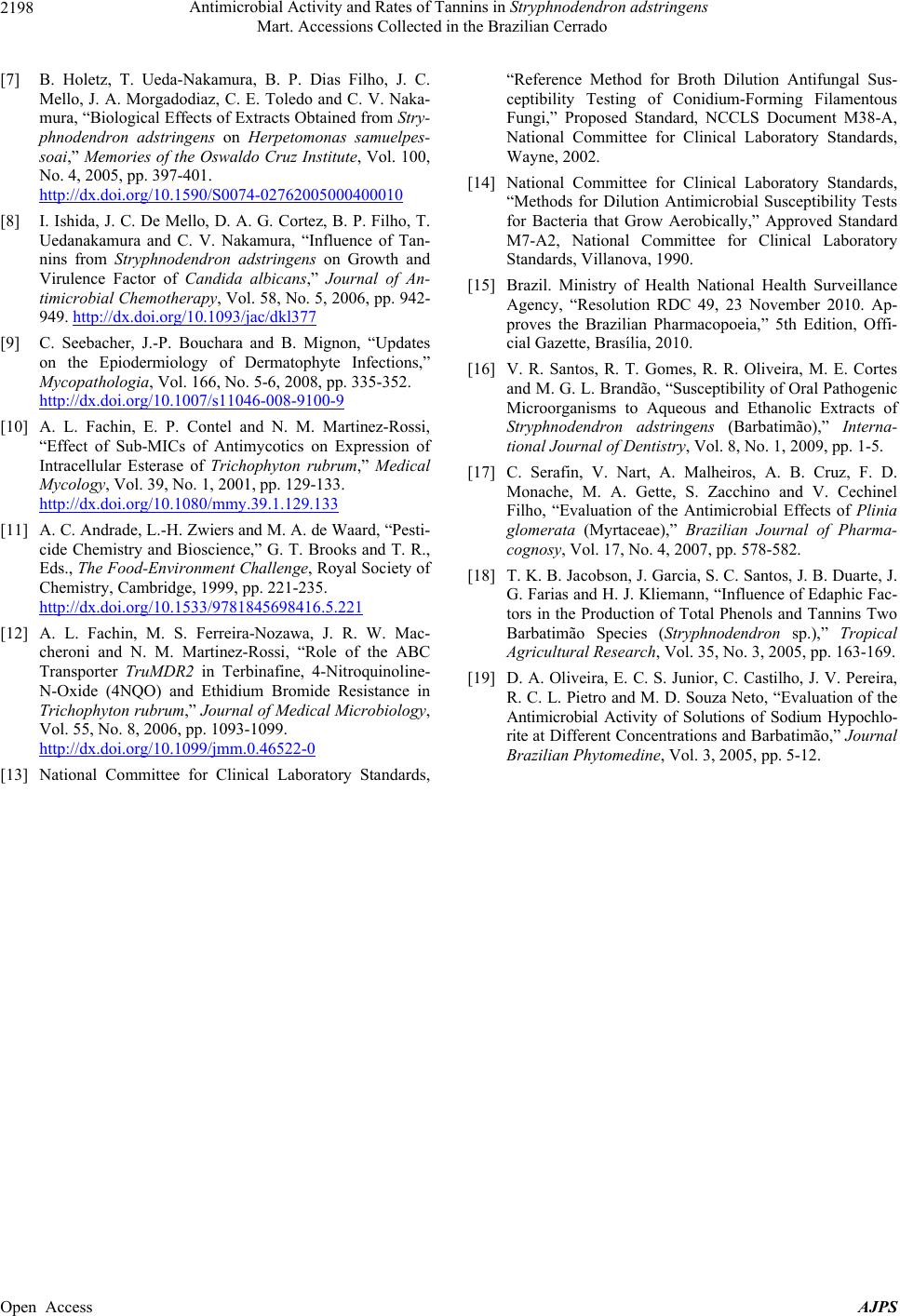 Antimicrobial Activity and Rates of Tannins in Stryphnodendron adstringens Mart. Accessions Collected in the Brazilian Cerrado 2198 [7] B. Holetz, T. Ueda-Nakamura, B. P. Dias Filho, J. C. Mello, J. A. Morgadodiaz, C. E. Toledo and C. V. Naka- mura, “Biological Effects of Extracts Obtained from Stry- phnodendron adstringens on Herpetomonas samuelpes- soai,” Memories of the Oswaldo Cruz Institute, Vol. 100, No. 4, 2005, pp. 397-401. http://dx.doi.org/10.1590/S0074-02762005000400010 [8] I. Ishida, J. C. De Mello, D. A. G. Cortez, B. P. Filho, T. Uedanakamura and C. V. Nakamura, “Influence of Tan- nins from Stryphnodendron adstringens on Growth and Virulence Factor of Candida albicans,” Journal of An- timicrobial Chemotherapy, Vol. 58, No. 5, 2006, pp. 942- 949. http://dx.doi.org/10.1093/jac/dkl377 [9] C. Seebacher, J.-P. Bouchara and B. Mignon, “Updates on the Epiodermiology of Dermatophyte Infections,” Mycopathologia, Vol. 166, No. 5-6, 2008, pp. 335-352. http://dx.doi.org/10.1007/s11046-008-9100-9 [10] A. L. Fachin, E. P. Contel and N. M. Martinez-Rossi, “Effect of Sub-MICs of Antimycotics on Expression of Intracellular Esterase of Trichophyton rubrum,” Medical Mycology, Vol. 39, No. 1, 2001, pp. 129-133. http://dx.doi.org/10.1080/mmy.39.1.129.133 [11] A. C. Andrade, L.-H. Zwiers and M. A. de Waard, “Pesti- cide Chemistry and Bioscience,” G. T. Brooks and T. R., Eds., The Food-Environment Challenge, Royal Society of Chemistry, Cambridge, 1999, pp. 221-235. http://dx.doi.org/10.1533/9781845698416.5.221 [12] A. L. Fachin, M. S. Ferreira-Nozawa, J. R. W. Mac- cheroni and N. M. Martinez-Rossi, “Role of the ABC Transporter TruMDR2 in Terbinafine, 4-Nitroquinoline- N-Oxide (4NQO) and Ethidium Bromide Resistance in Trichophyton rubrum,” Journal of Medical Microbiology, Vol. 55, No. 8, 2006, pp. 1093-1099. http://dx.doi.org/10.1099/jmm.0.46522-0 [13] National Committee for Clinical Laboratory Standards, “Reference Method for Broth Dilution Antifungal Sus- ceptibility Testing of Conidium-Forming Filamentous Fungi,” Proposed Standard, NCCLS Document M38-A, National Committee for Clinical Laboratory Standards, Wayne, 2002. [14] National Committee for Clinical Laboratory Standards, “Methods for Dilution Antimicrobial Susceptibility Tests for Bacteria that Grow Aerobically,” Approved Standard M7-A2, National Committee for Clinical Laboratory Standards, Villanova, 1990. [15] Brazil. Ministry of Health National Health Surveillance Agency, “Resolution RDC 49, 23 November 2010. Ap- proves the Brazilian Pharmacopoeia,” 5th Edition, Offi- cial Gazette, Brasília, 2010. [16] V. R. Santos, R. T. Gomes, R. R. Oliveira, M. E. Cortes and M. G. L. Brandão, “Susceptibility of Oral Pathogenic Microorganisms to Aqueous and Ethanolic Extracts of Stryphnodendron adstringens (Barbatimão),” Interna- tional Journal of Dentistry, Vol. 8, No. 1, 2009, pp. 1-5. [17] C. Serafin, V. Nart, A. Malheiros, A. B. Cruz, F. D. Monache, M. A. Gette, S. Zacchino and V. Cechinel Filho, “Evaluation of the Antimicrobial Effects of Plinia glomerata (Myrtaceae),” Brazilian Journal of Pharma- cognosy, Vol. 17, No. 4, 2007, pp. 578-582. [18] T. K. B. Jacobson, J. Garcia, S. C. Santos, J. B. Duarte, J. G. Farias and H. J. Kliemann, “Influence of Edaphic Fac- tors in the Production of Total Phenols and Tannins Two Barbatimão Species (Stryphnodendron sp.),” Tropical Agricultural Research, Vol. 35, No. 3, 2005, pp. 163-169. [19] D. A. Oliveira, E. C. S. Junior, C. Castilho, J. V. Pereira, R. C. L. Pietro and M. D. Souza Neto, “Evaluation of the Antimicrobial Activity of Solutions of Sodium Hypochlo- rite at Different Concentrations and Barbatimão,” Journal Brazilian Phytomedine, Vol. 3, 2005, pp. 5-12. Open Access AJPS |