

Paper Menu >>
Journal Menu >>
 American Journal of Plant Sciences, 2013, 4, 2174-2180 Published Online November 2013 (http://www.scirp.org/journal/ajps) http://dx.doi.org/10.4236/ajps.2013.411269 Open Access AJPS The Effects of Auxins and Cytokinin on Growth and Development of (Musa sp.) Var. “Yangambi” Explants in Tissue Culture Munguatosha Ngomuo1, Emerald Mneney2, Patrick Ndakidemi1* 1School of Life Sciences, Nelson Mandela African Institution of Science and Technology, Arusha, Tanzania; 2Mikocheni Agricul- tural Research Institute, Dar es Salaam, Tanzania. Email: *[email protected] Received August 12th, 2013; revised September 12th, 2013; accepted October 21st, 2013 Copyright © 2013 Munguatosha Ngomuo et al. This is an open access article distributed under the Creative Commons Attribution License, which permits unrestricted use, distribution, and reproduction in any medium, provided the original work is properly cited. ABSTRACT The aim of this study was to investigate the effects of concentration of different growth regulators (auxins and cyto- kinins) on growth and development of banana shoot tips cultured in vitro. Explants were taken from young suckers of field grown plants of var. “Yangambi”. The shoot tips were cultured on MS media supplemented with different concen- trations of BAP (0, 2, 4, 6 and 8 mg/l) with or without IAA at concentration of 0.34 mg/l. At the rooting phase, the me- dia was supplemented with different concentrations of IBA (0.1, 0.5, 1.0, 1.5 and 2.0 mg/l) with or without BAP at concentration of 0.2 mg/l. The results indicated that 6.0 mg/l BAP significantly increased the number of shoots formed and the interaction of 6 mg/l BAP with 0.35 mg/l IAA significantly increased the fresh weight. For rooting, 2.0 mg/l IBA was more efficient in number and length of roots produced than all other treatments. Keywords: Bud’s Proliferation; Fresh Weight; In-Vitro Rooting; Root Length; Micro Propagation; Shoot Length; Var. “Yangambi” 1. Introduction Growth regulators play a key role for developing a spe- cific mode of growth in the cultured cells or tissues, which may be due to accumulation of specific biochemi- cal contents in them. The single or combination of dif- ferent hormones in the medium causes maintenance of specific and balanced inorganic and organic contents in the growing tissue. This leads the cells or tissues to de- velop either into shoots/or roots or even death [1]. In tissue culture, plant growth regulators are important media components in determining the development and developmental pathway of the plant cells. Growth regu- lators are used in different proportions to break dor- mancy and enhance shoot formation since it is well demonstrated that the apical dormancy is under control of these growth regulators [2]. The cytokinins and auxins are of importance in in-vitro culture as the later are con- cerned with root formation, the former is mainly required in the media for shoot formation and growth of buds [3]. These growth regulators are required in combination in the media as it is always the manipulation and variation of auxins and cytokinins levels that can successfully change the growth behavior of plant cultures [4]. Cytokinins such as benzyl aminopurine (BAP) and ki- netin are known to reduce the apical meristem domi- nance and induce both axiliary and adventitious shoot formation from meristematic explants in banana [5]. However, the application of higher BAP concentrations inhibits elongation of adventitious meristems and the conversion into complete plants [6]. Auxins and other growth regulators such as gibberel- lins play important roles in the growth and differentiation of cultured cells and tissues [7,8]. Auxins such as Naph- talene acetic acid (NAA) have been reported to promote plant rooting in vitro [9,10]. The use of cytokinin in plant nutrient media for in-vi- tro culture depends on plant tissue growth stage and ex- pected end product. In studies conducted on banana, apical meristems were *Corresponding author.  The Effects of Auxins and Cytokinin on Growth and Development of (Musa sp.) Var. “Yangambi” Explants in Tissue Culture 2175 cultured in media of high cytokinin concentration or lower cytokinin at the first stage then transferred to a media with higher cytokinin concentration where the increase in concentration especially BA significantly enhanced buds proliferation [10]. Apart from the influence of genotypes, shoot prolifera- tion rate and elongation are influenced by cytokinin types and their concentration. Adenine-based cytokinins are used in several Musa spp. for in-vitro propagation [11]. N6-benzylaminopurine (BAP) is the most commonly preferred cytokinin [9]. The others are isopentyladenine (2-ip), zeatin and kinetin [12]. The concentration of ex- ogenous cytokinin appears to be the main factor affecting multiplication. Many other studies have reported the use of auxins and cytokinin in tissue culture. Gubbuk and Pekmzci (2004) [11] reported that moderate concentrations of cytokinins increased the shoot proliferation rate, but very high con- centrations decreased multiplication and especially de- pressed shoot elongation. Also they reported higher shoot proliferation and elongation with Thidiazuron (TDZ) than with BAP. However, BAP above 20 μM and TDZ over 2 μM decreased shoot elongation. The use of TDZ is known to inhibit shoot elongation. In another study, it was found that TDZ at 0.91 μM induced the largest number of shoots, but at higher concentration of TDZ (9.1 μM), elongation of shoots was inhibited and clumps of small globular buds appeared at the base of shoots [13]. In a study on effects of auxin/cytokinin combination on shoot proliferation on banana cultivars, Arinaitwe et al. reported that incorporation of a strong auxin in the media suppressed the shoot proliferation rates of the ba- nana cultivars [15]. On media modified with low cyto- kinin/auxin ratios, for example 16.8/1.0 and 16.8/1.2 ZN/NAA combinations, the East African Highland ba- nana (AAA-EA) cultivars showed single shoot develop- ment and callus induction due to apical dominance re- sulted from increased level of auxin concentration [15]. In another study, Buah et al. [15] demonstrated that dif- ferences exist in the relative strengths of different cyto- kinin types in inducing shoots. This differential ability of different hormones in inducing shoots in vitro may be attributed to factors such as stability, mobility and the rate of conjugation and oxidation of hormones. The concentration and combination of auxins and cy- tokinins in the nutrient mediums is an important factor which determines successful plant regeneration [16]. Thus for efficient in-vitro propagation of banana the study of optimum combination of cytokinins and auxins and their interaction in a tissue culture medium for a spe- cific cultivar is necessary. 2. Materials and Methods 2.1. Plant Materials and Sterilization Young suckers of Musa var. “Yangambi” were collected from a healthy true to type mother plants. After removing the leaves and the roots, the suckers were thoroughly washed with tape water and liquid soap to remove ad- hering soil. The suckers were trimmed to size by remov- ing layers of the developing leaves. Then the suckers were rinsed with clean tape water and soaked in 1 g/l ascorbic acid for one hour before transfer to laminar flow. The shoot apices explants were sequentially treated with 70% alcohol for 30 seconds, then treated with 100% (v/v) hypochlorite (the active ingredient was 3.85% sodium hypochlorite) mixed with few drops of Tween 20 for one hour in order to sterilize the surface. This was then fol- lowed with treatment of 50% (v/v) hypochlorite of the same active ingredient for 30 minutes. The explants were further trimmed to remove the remaining hypochlorite and rinsed with sterile distilled water before initiation. 2.2. Culture Conditions and Media for Buds Proliferation The explants were placed in culture vessels containing 20 mls of culture media containing MS basal salts supplemented with 20 g/l sucrose, vitamins; glycine 2 g/l, pyridoxine 0.5 g/l, Nicotinic acid 0.5 g/l, Thiamine 0.1 g/l and Myo inositol at 0.1 g/l. The media was also sup- plemented with different concentrations of BAP and IAA as shown in (Table 1) and solidified with 4.5 g/l of agar. The pH was adjusted to 5.8 prior to autoclaving at 121˚C for 15 min. 2.3. Roots Initiation Media Good established shoots were transferred to root initia- tion media. This media consisted of MS basal salts with Table 1. Different concentrations of BAP and IAA used for buds proliferation. Treatments Concentration (mg/l) MS + BAP 0 MS + BAP 2 MS + BAP 4 MS + BAP 6 MS + BAP 8 MS + (BAP + IAA) 0 + 0.35 MS + (BAP + IAA) 2 + 0.35 MS + (BAP + IAA) 4 + 0.35 MS + (BAP + IAA) 6 + 0.35 MS + (BAP + IAA) 8 + 0.35 Open Access AJPS 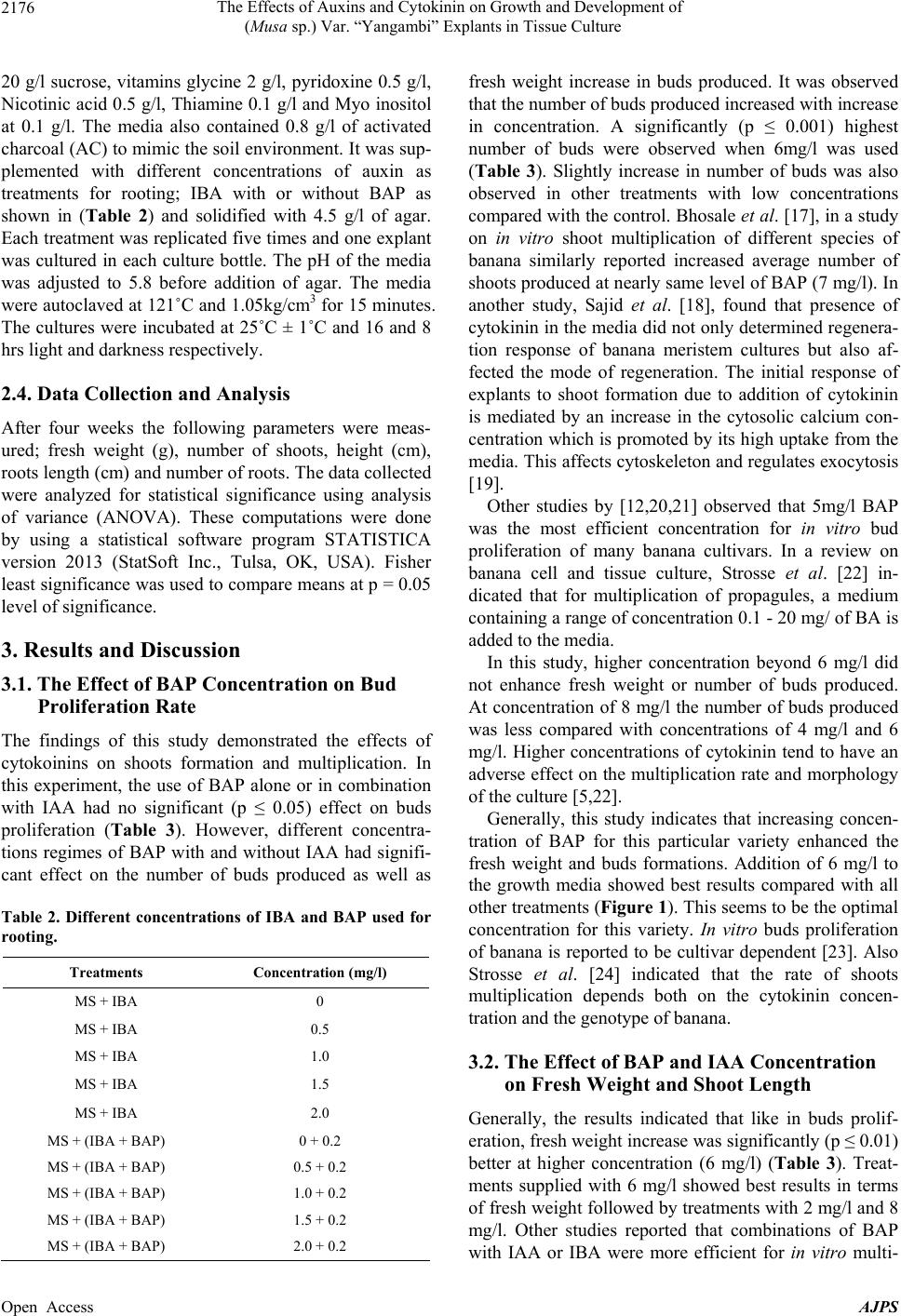 The Effects of Auxins and Cytokinin on Growth and Development of (Musa sp.) Var. “Yangambi” Explants in Tissue Culture 2176 20 g/l sucrose, vitamins glycine 2 g/l, pyridoxine 0.5 g/l, Nicotinic acid 0.5 g/l, Thiamine 0.1 g/l and Myo inositol at 0.1 g/l. The media also contained 0.8 g/l of activated charcoal (AC) to mimic the soil environment. It was sup- plemented with different concentrations of auxin as treatments for rooting; IBA with or without BAP as shown in (Table 2) and solidified with 4.5 g/l of agar. Each treatment was replicated five times and one explant was cultured in each culture bottle. The pH of the media was adjusted to 5.8 before addition of agar. The media were autoclaved at 121˚C and 1.05kg/cm3 for 15 minutes. The cultures were incubated at 25˚C ± 1˚C and 16 and 8 hrs light and darkness respectively. 2.4. Data Collection and Analysis After four weeks the following parameters were meas- ured; fresh weight (g), number of shoots, height (cm), roots length (cm) and number of roots. The data collected were analyzed for statistical significance using analysis of variance (ANOVA). These computations were done by using a statistical software program STATISTICA version 2013 (StatSoft Inc., Tulsa, OK, USA). Fisher least significance was used to compare means at p = 0.05 level of significance. 3. Results and Discussion 3.1. The Effect of BAP Concentration on Bud Proliferation Rate The findings of this study demonstrated the effects of cytokoinins on shoots formation and multiplication. In this experiment, the use of BAP alone or in combination with IAA had no significant (p ≤ 0.05) effect on buds proliferation (Table 3). However, different concentra- tions regimes of BAP with and without IAA had signifi- cant effect on the number of buds produced as well as Table 2. Different concentrations of IBA and BAP used for rooting. Treatments Concentration (mg/l) MS + IBA 0 MS + IBA 0.5 MS + IBA 1.0 MS + IBA 1.5 MS + IBA 2.0 MS + (IBA + BAP) 0 + 0.2 MS + (IBA + BAP) 0.5 + 0.2 MS + (IBA + BAP) 1.0 + 0.2 MS + (IBA + BAP) 1.5 + 0.2 MS + (IBA + BAP) 2.0 + 0.2 fresh weight increase in buds produced. It was observed that the number of buds produced increased with increase in concentration. A significantly (p ≤ 0.001) highest number of buds were observed when 6mg/l was used (Table 3). Slightly increase in number of buds was also observed in other treatments with low concentrations compared with the control. Bhosale et al. [17], in a study on in vitro shoot multiplication of different species of banana similarly reported increased average number of shoots produced at nearly same level of BAP (7 mg/l). In another study, Sajid et al. [18], found that presence of cytokinin in the media did not only determined regenera- tion response of banana meristem cultures but also af- fected the mode of regeneration. The initial response of explants to shoot formation due to addition of cytokinin is mediated by an increase in the cytosolic calcium con- centration which is promoted by its high uptake from the media. This affects cytoskeleton and regulates exocytosis [19]. Other studies by [12,20,21] observed that 5mg/l BAP was the most efficient concentration for in vitro bud proliferation of many banana cultivars. In a review on banana cell and tissue culture, Strosse et al. [22] in- dicated that for multiplication of propagules, a medium containing a range of concentration 0.1 - 20 mg/ of BA is added to the media. In this study, higher concentration beyond 6 mg/l did not enhance fresh weight or number of buds produced. At concentration of 8 mg/l the number of buds produced was less compared with concentrations of 4 mg/l and 6 mg/l. Higher concentrations of cytokinin tend to have an adverse effect on the multiplication rate and morphology of the culture [5,22]. Generally, this study indicates that increasing concen- tration of BAP for this particular variety enhanced the fresh weight and buds formations. Addition of 6 mg/l to the growth media showed best results compared with all other treatments (Figure 1). This seems to be the optimal concentration for this variety. In vitro buds proliferation of banana is reported to be cultivar dependent [23]. Also Strosse et al. [24] indicated that the rate of shoots multiplication depends both on the cytokinin concen- tration and the genotype of banana. 3.2. The Effect of BAP and IAA Concentration on Fresh Weight and Shoot Length Generally, the results indicated that like in buds prolif- eration, fresh weight increase was significantly (p ≤ 0.01) better at higher concentration (6 mg/l) (Table 3). Treat- ments supplied with 6 mg/l showed best results in terms of fresh weight followed by treatments with 2 mg/l and 8 mg/l. Other studies reported that combinations of BAP with IAA or IBA were more efficient for in vitro multi- Open Access AJPS 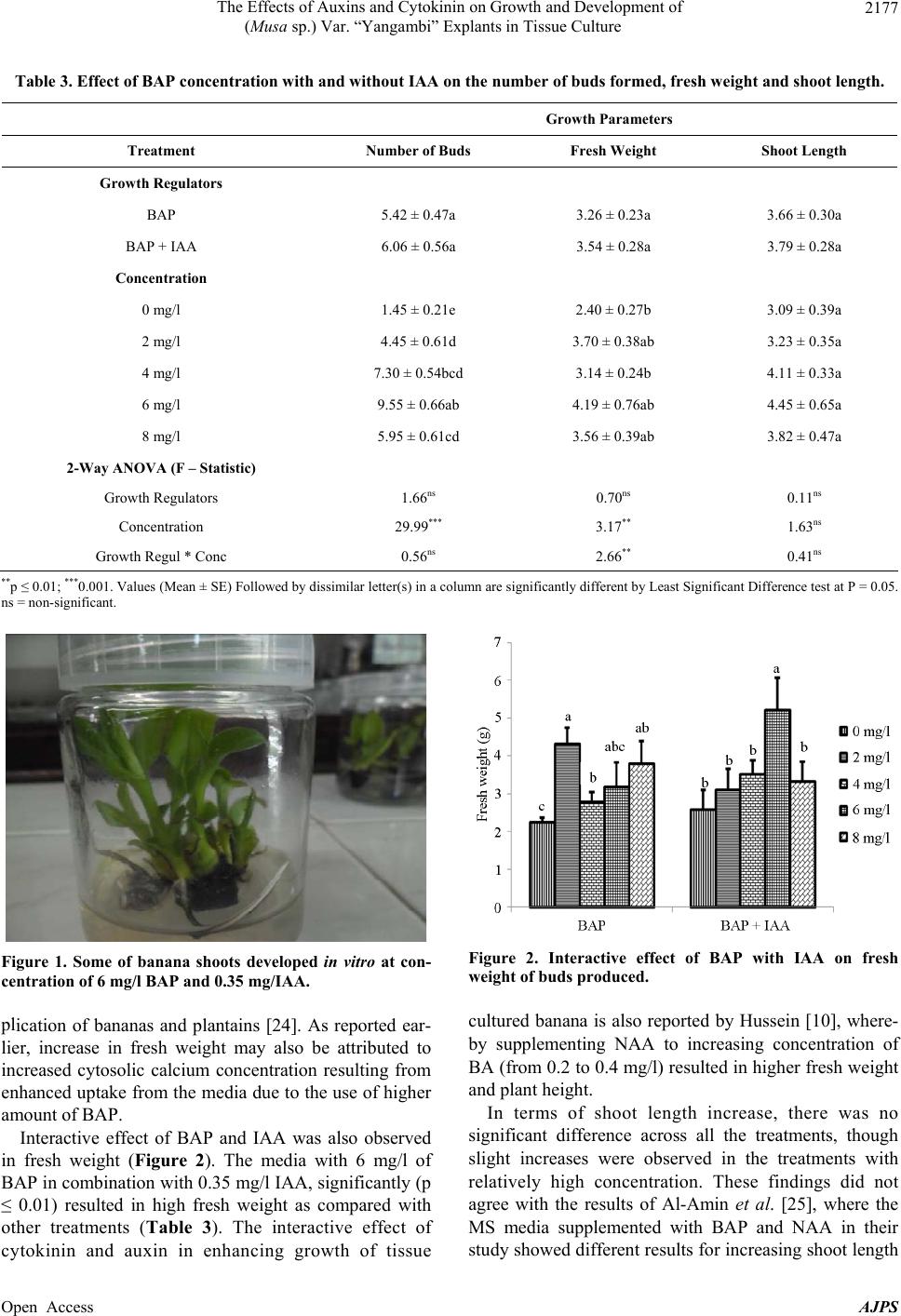 The Effects of Auxins and Cytokinin on Growth and Development of (Musa sp.) Var. “Yangambi” Explants in Tissue Culture Open Access AJPS 2177 Table 3. Effect of BAP concentration with and without IAA on the number of buds formed, fresh weight and shoot length. Growth Parameters Treatment Number of Buds Fresh Weight Shoot Length Growth Regulators BAP 5.42 ± 0.47a 3.26 ± 0.23a 3.66 ± 0.30a BAP + IAA 6.06 ± 0.56a 3.54 ± 0.28a 3.79 ± 0.28a Concentration 0 mg/l 1.45 ± 0.21e 2.40 ± 0.27b 3.09 ± 0.39a 2 mg/l 4.45 ± 0.61d 3.70 ± 0.38ab 3.23 ± 0.35a 4 mg/l 7.30 ± 0.54bcd 3.14 ± 0.24b 4.11 ± 0.33a 6 mg/l 9.55 ± 0.66ab 4.19 ± 0.76ab 4.45 ± 0.65a 8 mg/l 5.95 ± 0.61cd 3.56 ± 0.39ab 3.82 ± 0.47a 2-Way ANOVA (F – Statistic) Growth Regulators 1.66ns 0.70ns 0.11ns Concentration 29.99*** 3.17** 1.63ns Growth Regul * Conc 0.56ns 2.66** 0.41ns **p ≤ 0.01; ***0.001. Values (Mean ± SE) Followed by dissimilar letter(s) in a column are significantly different by Least Significant Difference test at P = 0.05. ns = non-significant. Figure 2. Interactive effect of BAP with IAA on fresh weight of buds produced. Figure 1. Some of banana shoots developed in vitro at con- centration of 6 mg/l BAP and 0.35 mg/IAA. cultured banana is also reported by Hussein [10], where- by supplementing NAA to increasing concentration of BA (from 0.2 to 0.4 mg/l) resulted in higher fresh weight and plant height. plication of bananas and plantains [24]. As reported ear- lier, increase in fresh weight may also be attributed to increased cytosolic calcium concentration resulting from enhanced uptake from the media due to the use of higher amount of BAP. In terms of shoot length increase, there was no significant difference across all the treatments, though slight increases were observed in the treatments with relatively high concentration. These findings did not agree with the results of Al-Amin et al. [25], where the MS media supplemented with BAP and NAA in their study showed different results for increasing shoot length Interactive effect of BAP and IAA was also observed in fresh weight (Figure 2). The media with 6 mg/l of BAP in combination with 0.35 mg/l IAA, significantly (p ≤ 0.01) resulted in high fresh weight as compared with other treatments (Table 3). The interactive effect of cytokinin and auxin in enhancing growth of tissue 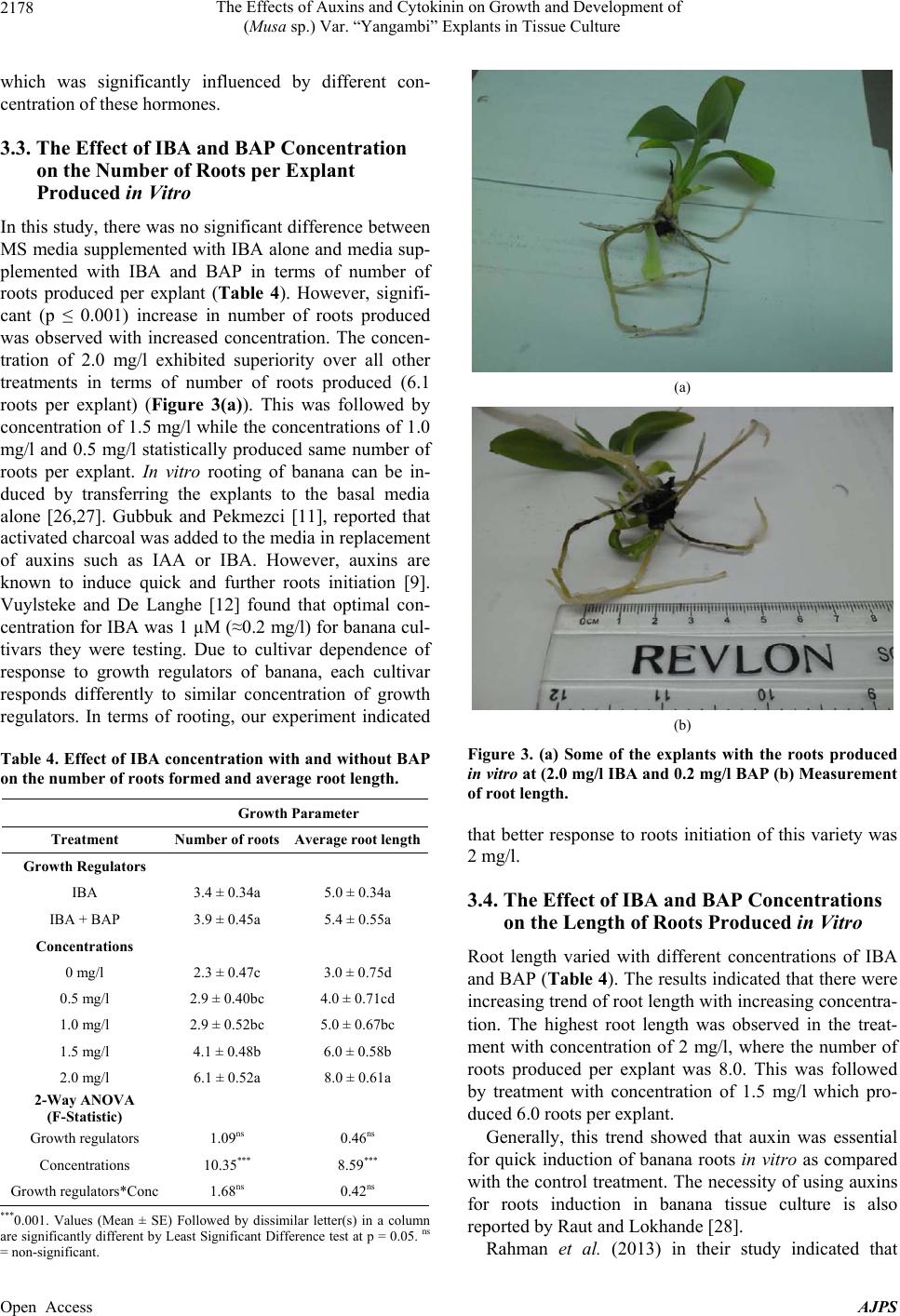 The Effects of Auxins and Cytokinin on Growth and Development of (Musa sp.) Var. “Yangambi” Explants in Tissue Culture 2178 which was significantly influenced by different con- centration of these hormones. 3.3. The Effect of IBA and BAP Concentration on the Number of Roots per Explant Produced in Vitro In this study, there was no significant difference between MS media supplemented with IBA alone and media sup- plemented with IBA and BAP in terms of number of roots produced per explant (Table 4). However, signifi- cant (p ≤ 0.001) increase in number of roots produced was observed with increased concentration. The concen- tration of 2.0 mg/l exhibited superiority over all other treatments in terms of number of roots produced (6.1 roots per explant) (Figure 3(a)). This was followed by concentration of 1.5 mg/l while the concentrations of 1.0 mg/l and 0.5 mg/l statistically produced same number of roots per explant. In vitro rooting of banana can be in- duced by transferring the explants to the basal media alone [26,27]. Gubbuk and Pekmezci [11], reported that activated charcoal was added to the media in replacement of auxins such as IAA or IBA. However, auxins are known to induce quick and further roots initiation [9]. Vuylsteke and De Langhe [12] found that optimal con- centration for IBA was 1 µM (≈0.2 mg/l) for banana cul- tivars they were testing. Due to cultivar dependence of response to growth regulators of banana, each cultivar responds differently to similar concentration of growth regulators. In terms of rooting, our experiment indicated Table 4. Effect of IBA concentration with and without BAP on the number of roots formed and average root length. Growth Parameter Treatment Number of roots Average root length Growth Regulators IBA 3.4 ± 0.34a 5.0 ± 0.34a IBA + BAP 3.9 ± 0.45a 5.4 ± 0.55a Concentrations 0 mg/l 2.3 ± 0.47c 3.0 ± 0.75d 0.5 mg/l 2.9 ± 0.40bc 4.0 ± 0.71cd 1.0 mg/l 2.9 ± 0.52bc 5.0 ± 0.67bc 1.5 mg/l 4.1 ± 0.48b 6.0 ± 0.58b 2.0 mg/l 6.1 ± 0.52a 8.0 ± 0.61a 2-Way ANOVA (F-Statistic) Growth regulators 1.09ns 0.46ns Concentrations 10.35*** 8.59*** Growth regulators*Conc 1.68ns 0.42ns ***0.001. Values (Mean ± SE) Followed by dissimilar letter(s) in a column are significantly different by Least Significant Difference test at p = 0.05. ns = non-significant. (a) (b) Figure 3. (a) Some of the explants with the roots produced in vitro at (2.0 mg/l IBA and 0.2 mg/l BAP (b) Measurement of root length. that better response to roots initiation of this variety was 2 mg/l. 3.4. The Effect of IBA and BAP Concentrations on the Length of Roots Produced in Vitro Root length varied with different concentrations of IBA and BAP (Table 4 ). The results indicated that there were increasing trend of root length with increasing concentra- tion. The highest root length was observed in the treat- ment with concentration of 2 mg/l, where the number of roots produced per explant was 8.0. This was followed by treatment with concentration of 1.5 mg/l which pro- duced 6.0 roots per explant. Generally, this trend showed that auxin was essential for quick induction of banana roots in vitro as compared with the control treatment. The necessity of using auxins for roots induction in banana tissue culture is also reported by Raut and Lokhande [28]. Rahman et al. (2013) in their study indicated that Open Access AJPS 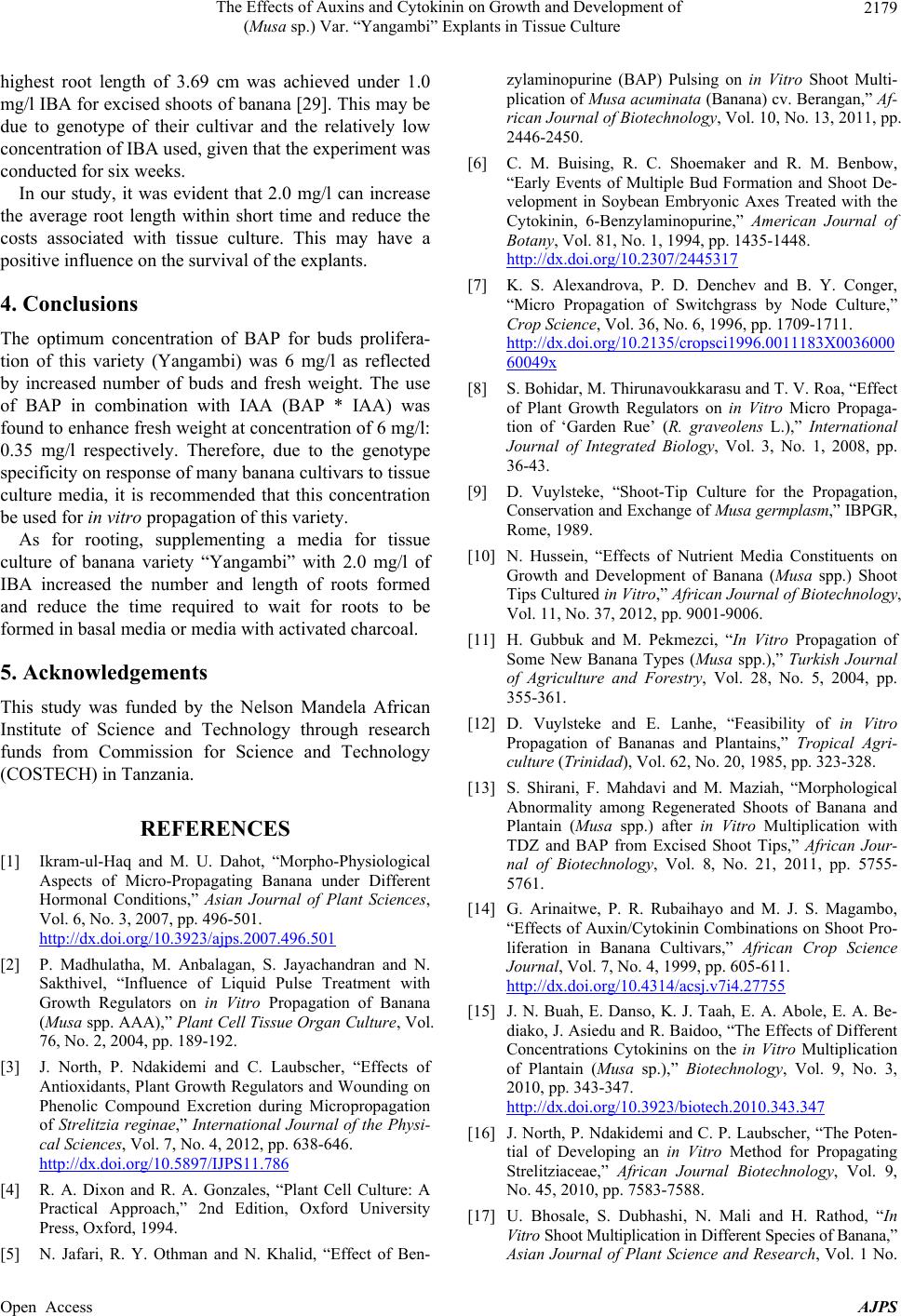 The Effects of Auxins and Cytokinin on Growth and Development of (Musa sp.) Var. “Yangambi” Explants in Tissue Culture 2179 highest root length of 3.69 cm was achieved under 1.0 mg/l IBA for excised shoots of banana [29]. This may be due to genotype of their cultivar and the relatively low concentration of IBA used, given that the experiment was conducted for six weeks. In our study, it was evident that 2.0 mg/l can increase the average root length within short time and reduce the costs associated with tissue culture. This may have a positive influence on the survival of the explants. 4. Conclusions The optimum concentration of BAP for buds prolifera- tion of this variety (Yangambi) was 6 mg/l as reflected by increased number of buds and fresh weight. The use of BAP in combination with IAA (BAP * IAA) was found to enhance fresh weight at concentration of 6 mg/l: 0.35 mg/l respectively. Therefore, due to the genotype specificity on response of many banana cultivars to tissue culture media, it is recommended that this concentration be used for in vitro propagation of this variety. As for rooting, supplementing a media for tissue culture of banana variety “Yangambi” with 2.0 mg/l of IBA increased the number and length of roots formed and reduce the time required to wait for roots to be formed in basal media or media with activated charcoal. 5. Acknowledgements This study was funded by the Nelson Mandela African Institute of Science and Technology through research funds from Commission for Science and Technology (COSTECH) in Tanzania. REFERENCES [1] Ikram-ul-Haq and M. U. Dahot, “Morpho-Physiological Aspects of Micro-Propagating Banana under Different Hormonal Conditions,” Asian Journal of Plant Sciences, Vol. 6, No. 3, 2007, pp. 496-501. http://dx.doi.org/10.3923/ajps.2007.496.501 [2] P. Madhulatha, M. Anbalagan, S. Jayachandran and N. Sakthivel, “Influence of Liquid Pulse Treatment with Growth Regulators on in Vitro Propagation of Banana (Musa spp. AAA),” Plant Cell Tissue Organ Culture, Vol. 76, No. 2, 2004, pp. 189-192. [3] J. North, P. Ndakidemi and C. Laubscher, “Effects of Antioxidants, Plant Growth Regulators and Wounding on Phenolic Compound Excretion during Micropropagation of Strelitzia reginae,” International Journal of the Physi- cal Sciences, Vol. 7, No. 4, 2012, pp. 638-646. http://dx.doi.org/10.5897/IJPS11.786 [4] R. A. Dixon and R. A. Gonzales, “Plant Cell Culture: A Practical Approach,” 2nd Edition, Oxford University Press, Oxford, 1994. [5] N. Jafari, R. Y. Othman and N. Khalid, “Effect of Ben- zylaminopurine (BAP) Pulsing on in Vitro Shoot Multi- plication of Musa acuminata (Banana) cv. Berangan,” Af- rican Journal of Biotechnology, Vol. 10, No. 13, 2011, pp. 2446-2450. [6] C. M. Buising, R. C. Shoemaker and R. M. Benbow, “Early Events of Multiple Bud Formation and Shoot De- velopment in Soybean Embryonic Axes Treated with the Cytokinin, 6-Benzylaminopurine,” American Journal of Botany, Vol. 81, No. 1, 1994, pp. 1435-1448. http://dx.doi.org/10.2307/2445317 [7] K. S. Alexandrova, P. D. Denchev and B. Y. Conger, “Micro Propagation of Switchgrass by Node Culture,” Crop Science, Vol. 36, No. 6, 1996, pp. 1709-1711. http://dx.doi.org/10.2135/cropsci1996.0011183X0036000 60049x [8] S. Bohidar, M. Thirunavoukkarasu and T. V. Roa, “Effect of Plant Growth Regulators on in Vitro Micro Propaga- tion of ‘Garden Rue’ (R. graveolens L.),” International Journal of Integrated Biology, Vol. 3, No. 1, 2008, pp. 36-43. [9] D. Vuylsteke, “Shoot-Tip Culture for the Propagation, Conservation and Exchange of Musa germplasm,” IBPGR, Rome, 1989. [10] N. Hussein, “Effects of Nutrient Media Constituents on Growth and Development of Banana (Musa spp.) Shoot Tips Cultured in Vitro,” African Journal of Biotechnology, Vol. 11, No. 37, 2012, pp. 9001-9006. [11] H. Gubbuk and M. Pekmezci, “In Vitro Propagation of Some New Banana Types (Musa spp.),” Turkish Journal of Agriculture and Forestry, Vol. 28, No. 5, 2004, pp. 355-361. [12] D. Vuylsteke and E. Lanhe, “Feasibility of in Vitro Propagation of Bananas and Plantains,” Tropical Agri- culture (Trinidad), Vol. 62, No. 20, 1985, pp. 323-328. [13] S. Shirani, F. Mahdavi and M. Maziah, “Morphological Abnormality among Regenerated Shoots of Banana and Plantain (Musa spp.) after in Vitro Multiplication with TDZ and BAP from Excised Shoot Tips,” African Jour- nal of Biotechnology, Vol. 8, No. 21, 2011, pp. 5755- 5761. [14] G. Arinaitwe, P. R. Rubaihayo and M. J. S. Magambo, “Effects of Auxin/Cytokinin Combinations on Shoot Pro- liferation in Banana Cultivars,” African Crop Science Journal, Vol. 7, No. 4, 1999, pp. 605-611. http://dx.doi.org/10.4314/acsj.v7i4.27755 [15] J. N. Buah, E. Danso, K. J. Taah, E. A. Abole, E. A. Be- diako, J. Asiedu and R. Baidoo, “The Effects of Different Concentrations Cytokinins on the in Vitro Multiplication of Plantain (Musa sp.),” Biotechnology, Vol. 9, No. 3, 2010, pp. 343-347. http://dx.doi.org/10.3923/biotech.2010.343.347 [16] J. North, P. Ndakidemi and C. P. Laubscher, “The Poten- tial of Developing an in Vitro Method for Propagating Strelitziaceae,” African Journal Biotechnology, Vol. 9, No. 45, 2010, pp. 7583-7588. [17] U. Bhosale, S. Dubhashi, N. Mali and H. Rathod, “In Vitro Shoot Multiplication in Different Species of Banana,” Asian Journal of Plant Science and Research, Vol. 1 No. Open Access AJPS  The Effects of Auxins and Cytokinin on Growth and Development of (Musa sp.) Var. “Yangambi” Explants in Tissue Culture Open Access AJPS 2180 3, 2011, pp. 23-27. [18] A. A. A. Sajid, N. H. Naveed, A. Majid, A. Saleem, A. U. Khan, F. I. Jafery and S. Naz, “Initiation, Proliferation and Development of Micro-Propagation System for Mass Scale Production of Banana through Meristem Culture,” African Journal of Biotechnology, Vol. 10, No. 70, 2011, pp. 15731-15738. [19] A. Hagar, G. Debus, H. G. Edil, H. Strosky and R. Serrano, “Auxin Induces Exocytosis and the Rapid Synthesis of a High Turnover Pool of Plasma Membrane H+-APTase,” Planta, Vol. 185, No. 4, 1991, pp. 527-537. [20] L. Venkatachalam, R. V. Sreedhar and N. Bhagyalakshmi, “Micro Propagation in Banana Using High Levels Does Not Involve Any Genetic Change as Revealed by RAPD and ISSR Markers,” Plant Growth Regulation, Vol. 51, No. 3, 2007, pp. 192-205. http://dx.doi.org/10.1007/s10725-006-9154-y [21] M. W. Bairu, W. A. Strik, K. Dolezal and J. V. Staden, “The Role of Topolins in Micro Propagation and Soma- clonal Variation of Banana Cultivars ‘Williums’ and ‘Grand Naine’ (Musa spp. AAA),” Plant Cell, Tissue and Organ Culture, Vol. 95, No. 3, 2008, pp. 373-379. http://dx.doi.org/10.1007/s11240-008-9451-4 [22] H. Strosse, I. Van den Houwe and B. Panis, “Banana Cell and Tissue Culture Review,” Science Publishers, Inc., Gainesville, 2004. [23] G. Arinaitwe, P. R. Rubaihayo and M. J. S. Magambo, “Proliferation Rate Effects of Cytokinins on Banana (Musa spp.) Cultivars,” Scientia Horticulturae, Vol. 86, No. 1, 2000, pp. 13-21. http://dx.doi.org/10.1016/S0304-4238(00)00124-2 [24] D. Dhed’a, F. Dumortier, B. Panis, D. Vuylsteke and E. De Langhe, “Plant Regeneration in Cell Suspension Cul- tures of Cooking Banana ‘Bluggoe’ Cultivar (Musa spp. ABB Group),” Fruits, Vol. 46, No. 2, 1991, pp. 125-135. [25] M. D. Al-Amin, M. R. Karim, M. R. Amin, S. Rahman and A. N. M Manun, “In Vitro Micro Propagation of Ba- nana,” Bangladesh Journal of Agriculture Research, Vol. 34, No. 4, 2009, pp. 645-659. [26] R. L. Jarret, W. Rodriguez and R. Fernandez, “Evaluation, Tissue Culture Propagation and Dissemination of ‘Saba’ and ‘Pelipita’ Plantains in Costa Rica,” Scientia Hor- ticulturae, Vol. 25, No. 2, 1985, pp. 137-147. http://dx.doi.org/10.1016/0304-4238(85)90085-8 [27] S. S. Cronauer and A. D. Krikorian, “Multiplication of Musa from Excised Stem Tips,” Annals of Botany, Vol. 53, No. 3, 1984, pp. 321-328. [28] R. S. Raut and V. E. Lokhande, “Propagation of Plantain through Meristem Culture,” Annals of Plant Physiology, Vol. 3, No. 2, 1989, pp. 256-260. [29] S. Rahman, N. Biswas, M. M. Hassan, M. G. Ahmed, A. Mamun, M. R. Islam, M. Moniruzzaman and M. E. Haque, “Micro Propagation of Banana (Musa sp.) cv. Agnishwar by in Vitro Shoot Tip Culture,” International Research Journal of Biotechnology, Vol. 4, No. 4, 2013, pp. 83-88. |