

Paper Menu >>
Journal Menu >>
 American Journal of Plant Sciences, 2013, 4, 2118-2125 Published Online November 2013 (http://www.scirp.org/journal/ajps) http://dx.doi.org/10.4236/ajps.2013.411263 Open Access AJPS Hormonal Requirements Trigger Different Organogenic Pathways on Tomato Nodal Explants Salem Jehan, A. M. Hassanein Central Laboratory of Genetic Engineering, Faculty of Science, Sohag University, Sohag, Egypt. Email: hassanein[email protected] Received August 21st, 2013; revised September 21st, 2013; accepted October 17th, 2013 Copyright © 2013 Salem Jehan, A. M. Hassanein. This is an open access article distributed under the Creative Commons Attribution License, which permits unrestricted use, distribution, and reproduction in any medium, provided the original work is properly cited. ABSTRACT In this work, nodal-disk segments (4 - 6 mm in diameter × 5 - 6 mm in length) were obtained from established shoot culture, resulted from disinfected tomato seedlings, and they were suitable to induce different organogenic pathway under the influence of specific hormonal treatment. Application of BAP (1 - 2.5 mg/l) alone or in combination of 0.5 mg/l NAA resulted in induction of shoot formation. Somatic embryogenesis was rarely appeared (6%) when relatively low concentration of BAP (1.5 mg/l) with low concentration of IAA (0.5 mg/l IAA) was applied. Root induction was triggered when nodal explants or shoot cuttings were cultured on MS medium with (1 mg/l IAA, IBA or NAA) or without auxins, but the best result was obtained when 1 mg/l IAA was used. Application of 0.5 mg/l NAA stimulated callus formation but the best result was obtained when the three different phytohormoes were used (0.5 mg/l 2,4-D + 1 mg/l NAA + 0.5 mg/l BAP). These results indicated that nodal segments, as described in this protocol, can be used as alternative to other types of explants such as cotyledon, hypocotyl and leaf explants. Keywords: Growth Regulators; Nodal Segment; Organogenesis; Tissue Culture; Tomato 1. Introduction Tomato is one of the major vegetable crops for human being; it belongs to the family Solanaceae. The botanical name of tomato is Lycopersicon esculentum Mill. It is a diploid plant with 2n = 24 chromosomes. Tomato is a natural perennial plant, but it is commercially cultivated as an annual crop. It is grown in almost every country of the world—in the field, greenhouses and net houses [1]. Tomato is an important crop worldwide for fresh mar- ket or processing. It is necessary for the human being because it contains high amounts of antioxidant vitamins such as vitamins A and C, fiber, and considerable quanti- ties of antioxidants such as flavonoids, zeaxanthin, b-carotenes, lutein, and lycopene [2]. Lycopenes protect cells and other structures in the human body from harm- ful oxygen-free radicals, therefore they decrease the risk of cancers [3,4]. In addition, tomato has also great poten- tial for transgenic applications, it was used for production of oral vaccines [5] and creation of a new anthocya- nin-enriched food for cancer prevention [6], and as model for functional genomics, proteomics and me- tabolomics to improve abiotic and biotic stress tolerance [7-9]. Genes were conventionally transferred by plant breed- ers from specific varieties to the related species by sexual hybridization to develop new cultivars with the desirable traits including high yield, stress and disease resistances. These methods have been faced a great challenge to de- velop new cultivars and sustain food production for the ever-growing human population. The adoption of new technologies such as plant tissue culture and recombinant DNA may achieve the goals. Since 1930s, plant tissue culture has been progressing. Consequently, tissue cul- ture techniques could be used for mass propagation [10], and induction of somaclonal variation [11]. In vitro regeneration from cultivated tomato explants on synthetic medium has been a subject of research be- cause of the commercial value of the crop and its amena- bility for further improvement via genetic manipulation. Consequently, numerous studies on plant regeneration from a wide range of tissues and organs of wild and cul- tivated tomato germplasm were conducted for selection of cell lines for biotic and abiotic stresses [7,12], trans- formation [13], development of haploids [14], production of somatic hybrids [15], and mass propagation [16]. In tomato, adventious shoot formation was obtained 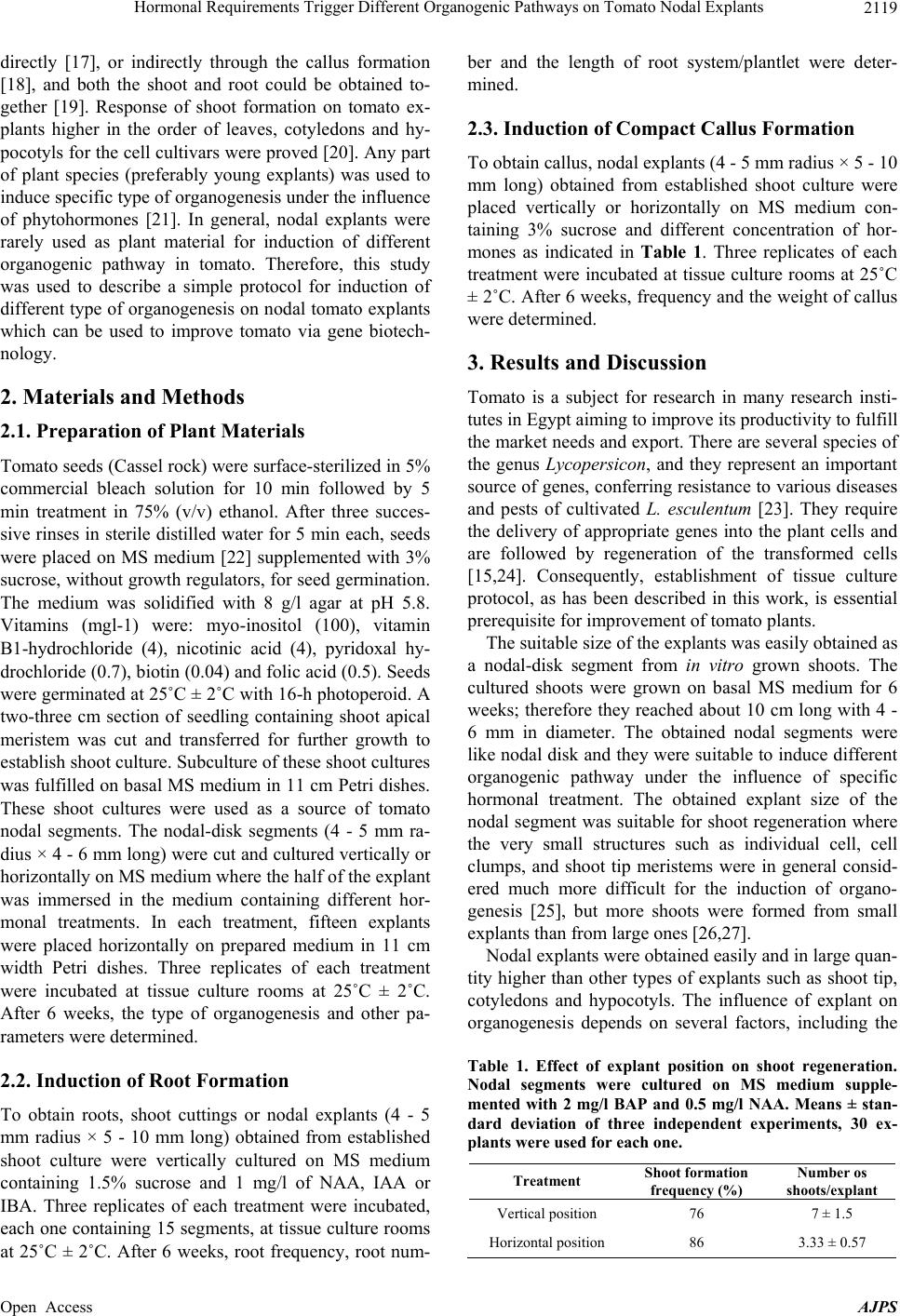 Hormonal Requirements Trigger Different Organogenic Pathways on Tomato Nodal Explants 2119 directly [17], or indirectly through the callus formation [18], and both the shoot and root could be obtained to- gether [19]. Response of shoot formation on tomato ex- plants higher in the order of leaves, cotyledons and hy- pocotyls for the cell cultivars were proved [20]. Any part of plant species (preferably young explants) was used to induce specific type of organogenesis under the influence of phytohormones [21]. In general, nodal explants were rarely used as plant material for induction of different organogenic pathway in tomato. Therefore, this study was used to describe a simple protocol for induction of different type of organogenesis on nodal tomato explants which can be used to improve tomato via gene biotech- nology. 2. Materials and Methods 2.1. Preparation of Plant Materials Tomato seeds (Cassel rock) were surface-sterilized in 5% commercial bleach solution for 10 min followed by 5 min treatment in 75% (v/v) ethanol. After three succes- sive rinses in sterile distilled water for 5 min each, seeds were placed on MS medium [22] supplemented with 3% sucrose, without growth regulators, for seed germination. The medium was solidified with 8 g/l agar at pH 5.8. Vitamins (mgl-1) were: myo-inositol (100), vitamin B1-hydrochloride (4), nicotinic acid (4), pyridoxal hy- drochloride (0.7), biotin (0.04) and folic acid (0.5). Seeds were germinated at 25˚C ± 2˚C with 16-h photoperoid. A two-three cm section of seedling containing shoot apical meristem was cut and transferred for further growth to establish shoot culture. Subculture of these shoot cultures was fulfilled on basal MS medium in 11 cm Petri dishes. These shoot cultures were used as a source of tomato nodal segments. The nodal-disk segments (4 - 5 mm ra- dius × 4 - 6 mm long) were cut and cultured vertically or horizontally on MS medium where the half of the explant was immersed in the medium containing different hor- monal treatments. In each treatment, fifteen explants were placed horizontally on prepared medium in 11 cm width Petri dishes. Three replicates of each treatment were incubated at tissue culture rooms at 25˚C ± 2˚C. After 6 weeks, the type of organogenesis and other pa- rameters were determined. 2.2. Induction of Root Formation To obtain roots, shoot cuttings or nodal explants (4 - 5 mm radius × 5 - 10 mm long) obtained from established shoot culture were vertically cultured on MS medium containing 1.5% sucrose and 1 mg/l of NAA, IAA or IBA. Three replicates of each treatment were incubated, each one containing 15 segments, at tissue culture rooms at 25˚C ± 2˚C. After 6 weeks, root frequency, root num- ber and the length of root system/plantlet were deter- mined. 2.3. Induction of Compact Callus Formation To obtain callus, nodal explants (4 - 5 mm radius × 5 - 10 mm long) obtained from established shoot culture were placed vertically or horizontally on MS medium con- taining 3% sucrose and different concentration of hor- mones as indicated in Table 1. Three replicates of each treatment were incubated at tissue culture rooms at 25˚C ± 2˚C. After 6 weeks, frequency and the weight of callus were determined. 3. Results and Discussion Tomato is a subject for research in many research insti- tutes in Egypt aiming to improve its productivity to fulfill the market needs and export. There are several species of the genus Lycopersicon, and they represent an important source of genes, conferring resistance to various diseases and pests of cultivated L. esculentum [23]. They require the delivery of appropriate genes into the plant cells and are followed by regeneration of the transformed cells [15,24]. Consequently, establishment of tissue culture protocol, as has been described in this work, is essential prerequisite for improvement of tomato plants. The suitable size of the explants was easily obtained as a nodal-disk segment from in vitro grown shoots. The cultured shoots were grown on basal MS medium for 6 weeks; therefore they reached about 10 cm long with 4 - 6 mm in diameter. The obtained nodal segments were like nodal disk and they were suitable to induce different organogenic pathway under the influence of specific hormonal treatment. The obtained explant size of the nodal segment was suitable for shoot regeneration where the very small structures such as individual cell, cell clumps, and shoot tip meristems were in general consid- ered much more difficult for the induction of organo- genesis [25], but more shoots were formed from small explants than from large ones [26,27]. Nodal explants were obtained easily and in large quan- tity higher than other types of explants such as shoot tip, cotyledons and hypocotyls. The influence of explant on organogenesis depends on several factors, including the Table 1. Effect of explant position on shoot regeneration. Nodal segments were cultured on MS medium supple- mented with 2 mg/l BAP and 0.5 mg/l NAA. Means ± stan- dard deviation of three independent experiments, 30 ex- plants were used for each one. Treatment Shoot formation frequency (%) Number os shoots/explant Vertical position 76 7 ± 1.5 Horizontal position 86 3.33 ± 0.57 Open Access AJPS 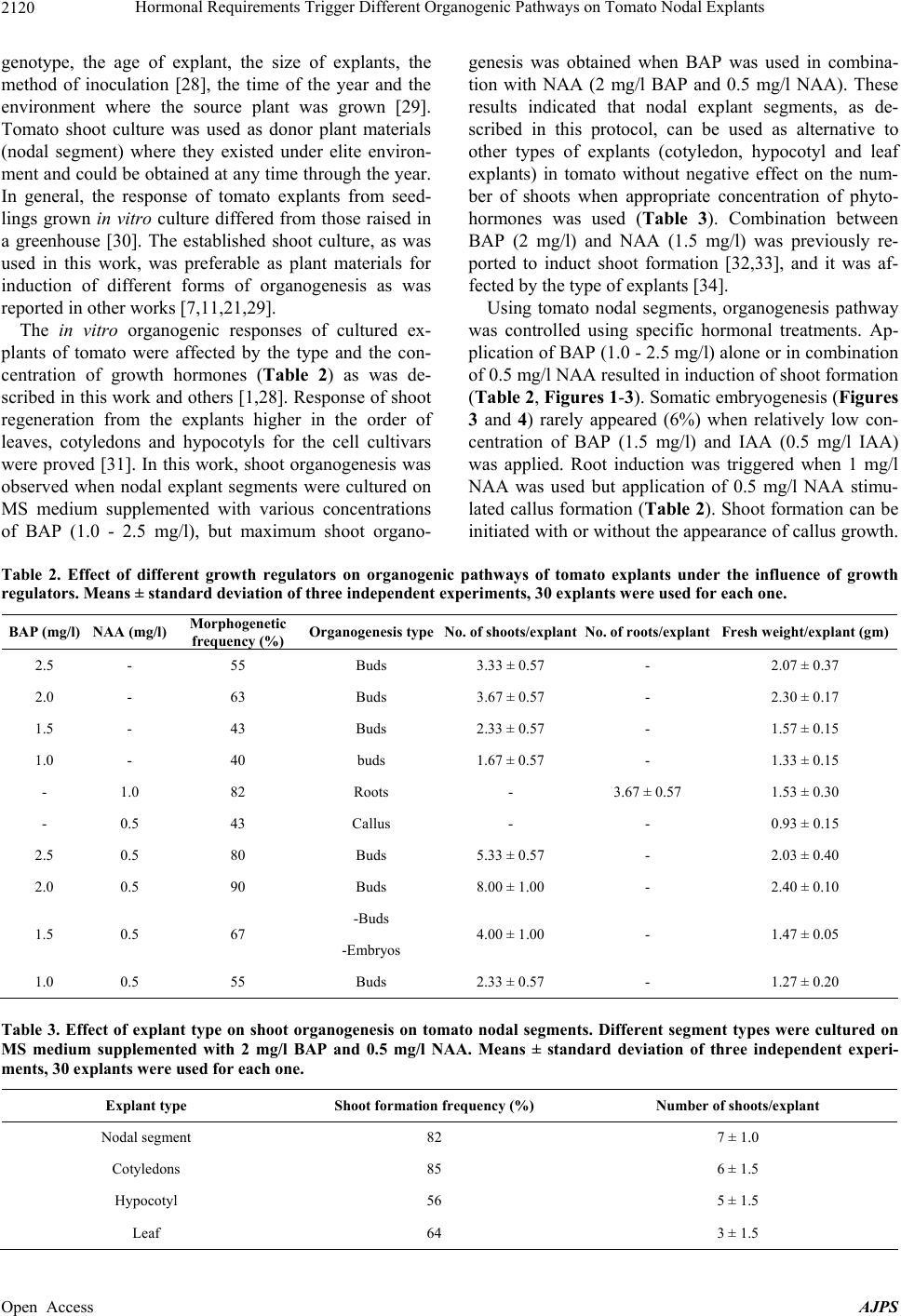 Hormonal Requirements Trigger Different Organogenic Pathways on Tomato Nodal Explants Open Access AJPS 2120 genotype, the age of explant, the size of explants, the method of inoculation [28], the time of the year and the environment where the source plant was grown [29]. Tomato shoot culture was used as donor plant materials (nodal segment) where they existed under elite environ- ment and could be obtained at any time through the year. In general, the response of tomato explants from seed- lings grown in vitro culture differed from those raised in a greenhouse [30]. The established shoot culture, as was used in this work, was preferable as plant materials for induction of different forms of organogenesis as was reported in other works [7,11,21,29]. The in vitro organogenic responses of cultured ex- plants of tomato were affected by the type and the con- centration of growth hormones (Table 2) as was de- scribed in this work and others [1,28]. Response of shoot regeneration from the explants higher in the order of leaves, cotyledons and hypocotyls for the cell cultivars were proved [31]. In this work, shoot organogenesis was observed when nodal explant segments were cultured on MS medium supplemented with various concentrations of BAP (1.0 - 2.5 mg/l), but maximum shoot organo- genesis was obtained when BAP was used in combina- tion with NAA (2 mg/l BAP and 0.5 mg/l NAA). These results indicated that nodal explant segments, as de- scribed in this protocol, can be used as alternative to other types of explants (cotyledon, hypocotyl and leaf explants) in tomato without negative effect on the num- ber of shoots when appropriate concentration of phyto- hormones was used (Table 3). Combination between BAP (2 mg/l) and NAA (1.5 mg/l) was previously re- ported to induct shoot formation [32,33], and it was af- fected by the type of explants [34]. Using tomato nodal segments, organogenesis pathway was controlled using specific hormonal treatments. Ap- plication of BAP (1.0 - 2.5 mg/l) alone or in combination of 0.5 mg/l NAA resulted in induction of shoot formation (Table 2, Figures 1-3). Somatic embryogenesis (Figures 3 and 4) rarely appeared (6%) when relatively low con- centration of BAP (1.5 mg/l) and IAA (0.5 mg/l IAA) was applied. Root induction was triggered when 1 mg/l NAA was used but application of 0.5 mg/l NAA stimu- lated callus formation (Table 2). Shoot formation can be initiated with or without the appearance of callus growth. Table 2. Effect of different growth regulators on organogenic pathways of tomato explants under the influence of growth regulators. Means ± standard deviation of three independent experiments, 30 explants were used for each one. BAP (mg/l) NAA (mg/l) Morphogenetic frequency (%) Organogenesis typeNo. of shoots/explantNo. of roots/explant Fresh weight/explant (gm) 2.5 - 55 Buds 3.33 ± 0.57 - 2.07 ± 0.37 2.0 - 63 Buds 3.67 ± 0.57 - 2.30 ± 0.17 1.5 - 43 Buds 2.33 ± 0.57 - 1.57 ± 0.15 1.0 - 40 buds 1.67 ± 0.57 - 1.33 ± 0.15 - 1.0 82 Roots - 3.67 ± 0.57 1.53 ± 0.30 - 0.5 43 Callus - - 0.93 ± 0.15 2.5 0.5 80 Buds 5.33 ± 0.57 - 2.03 ± 0.40 2.0 0.5 90 Buds 8.00 ± 1.00 - 2.40 ± 0.10 -Buds 1.5 0.5 67 -Embryos 4.00 ± 1.00 - 1.47 ± 0.05 1.0 0.5 55 Buds 2.33 ± 0.57 - 1.27 ± 0.20 Table 3. Effect of explant type on shoot organogenesis on tomato nodal segments. Different segment types were cultured on MS medium supplemented with 2 mg/l BAP and 0.5 mg/l NAA. Means ± standard deviation of three independent experi- ments, 30 explants were used for each one. Explant type Shoot formation frequency (%) Number of shoots/explant Nodal segment 82 7 ± 1.0 Cotyledons 85 6 ± 1.5 Hypocotyl 56 5 ± 1.5 Leaf 64 3 ± 1.5 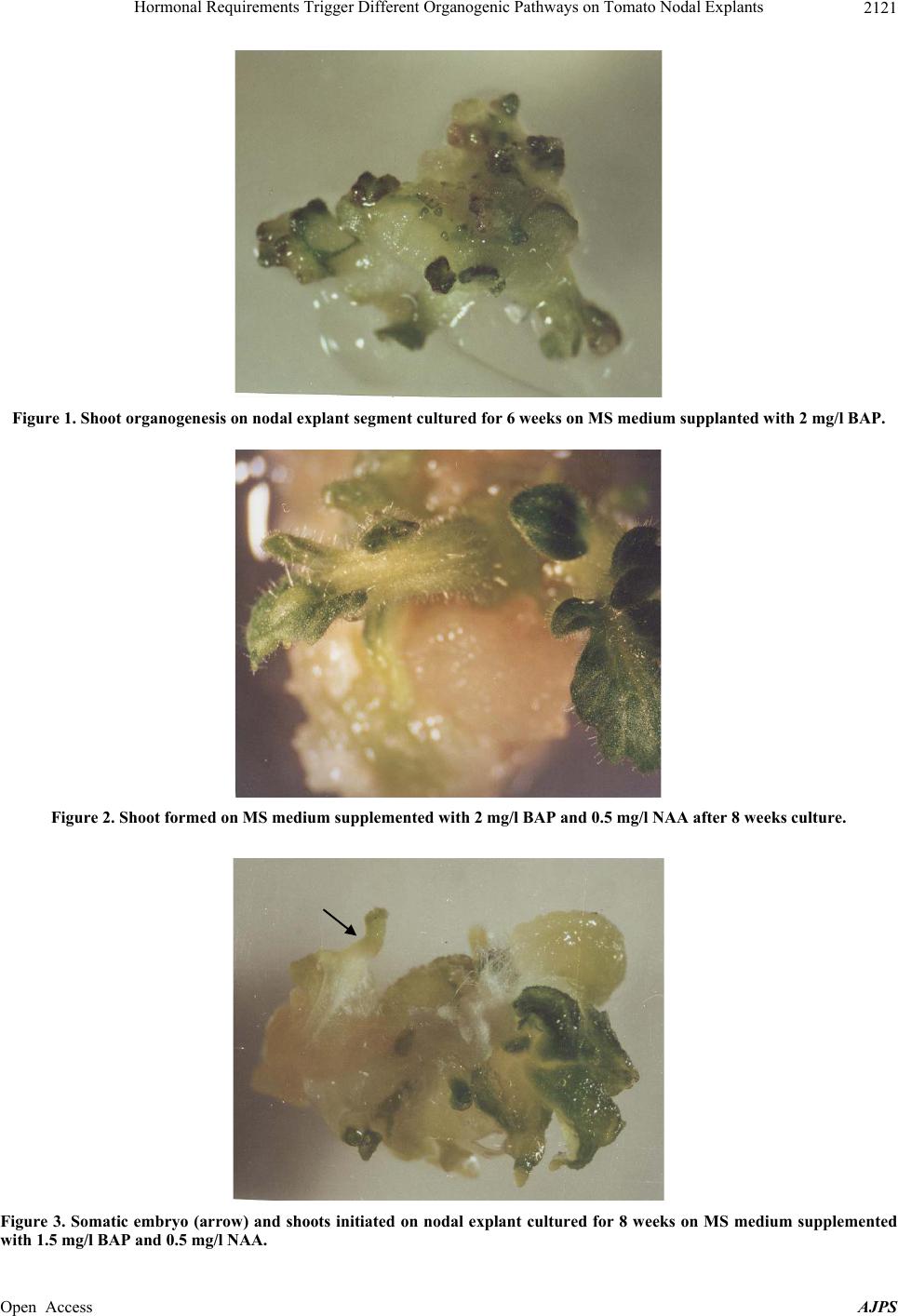 Hormonal Requirements Trigger Different Organogenic Pathways on Tomato Nodal Explants 2121 Figure 1. Shoot organogenesis on nodal explant segment cultured for 6 weeks on MS medium supplanted with 2 mg/l BAP. Figure 2. Shoot formed on MS medium supplemented with 2 mg/l BAP and 0.5 mg/l NAA after 8 wee ks culture . Figure 3. Somatic embryo (arrow ) and shoots initiated on nodal explant cultured for 8 weeks on MS medium supplemented with 1.5 mg/l BAP and 0.5 mg/l NAA. Open Access AJPS 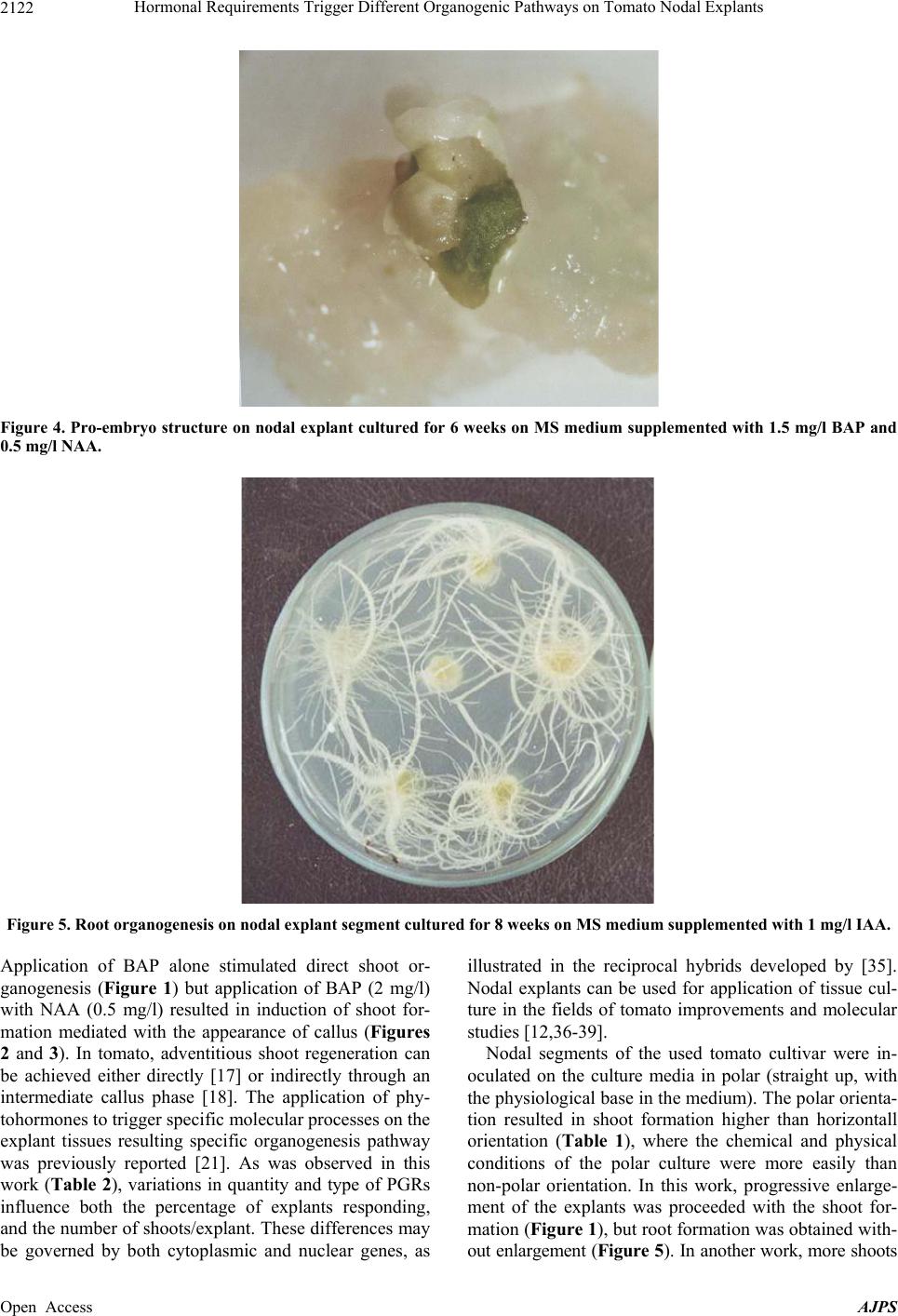 Hormonal Requirements Trigger Different Organogenic Pathways on Tomato Nodal Explants Open Access AJPS 2122 Figure 4. Pro-embryo structure on nodal explant cultured for 6 weeks on MS medium supplemented with 1.5 mg/l BAP and 0.5 mg/l NAA. Figure 5. Root organogenesis on nodal explant segment cultured for 8 weeks on MS medium supplemented with 1 mg/l IAA. Application of BAP alone stimulated direct shoot or- ganogenesis (Figure 1) but application of BAP (2 mg/l) with NAA (0.5 mg/l) resulted in induction of shoot for- mation mediated with the appearance of callus (Figures 2 and 3). In tomato, adventitious shoot regeneration can be achieved either directly [17] or indirectly through an intermediate callus phase [18]. The application of phy- tohormones to trigger specific molecular processes on the explant tissues resulting specific organogenesis pathway was previously reported [21]. As was observed in this work (Table 2), variations in quantity and type of PGRs influence both the percentage of explants responding, and the number of shoots/explant. These differences may be governed by both cytoplasmic and nuclear genes, as illustrated in the reciprocal hybrids developed by [35]. Nodal explants can be used for application of tissue cul- ture in the fields of tomato improvements and molecular studies [12,36-39]. Nodal segments of the used tomato cultivar were in- oculated on the culture media in polar (straight up, with the physiological base in the medium). The polar orienta- tion resulted in shoot formation higher than horizontall orientation (Table 1), where the chemical and physical conditions of the polar culture were more easily than non-polar orientation. In this work, progressive enlarge- ment of the explants was proceeded with the shoot for- mation (Figure 1), but root formation was obtained with- out enlargement (Figure 5). In another work, more shoots 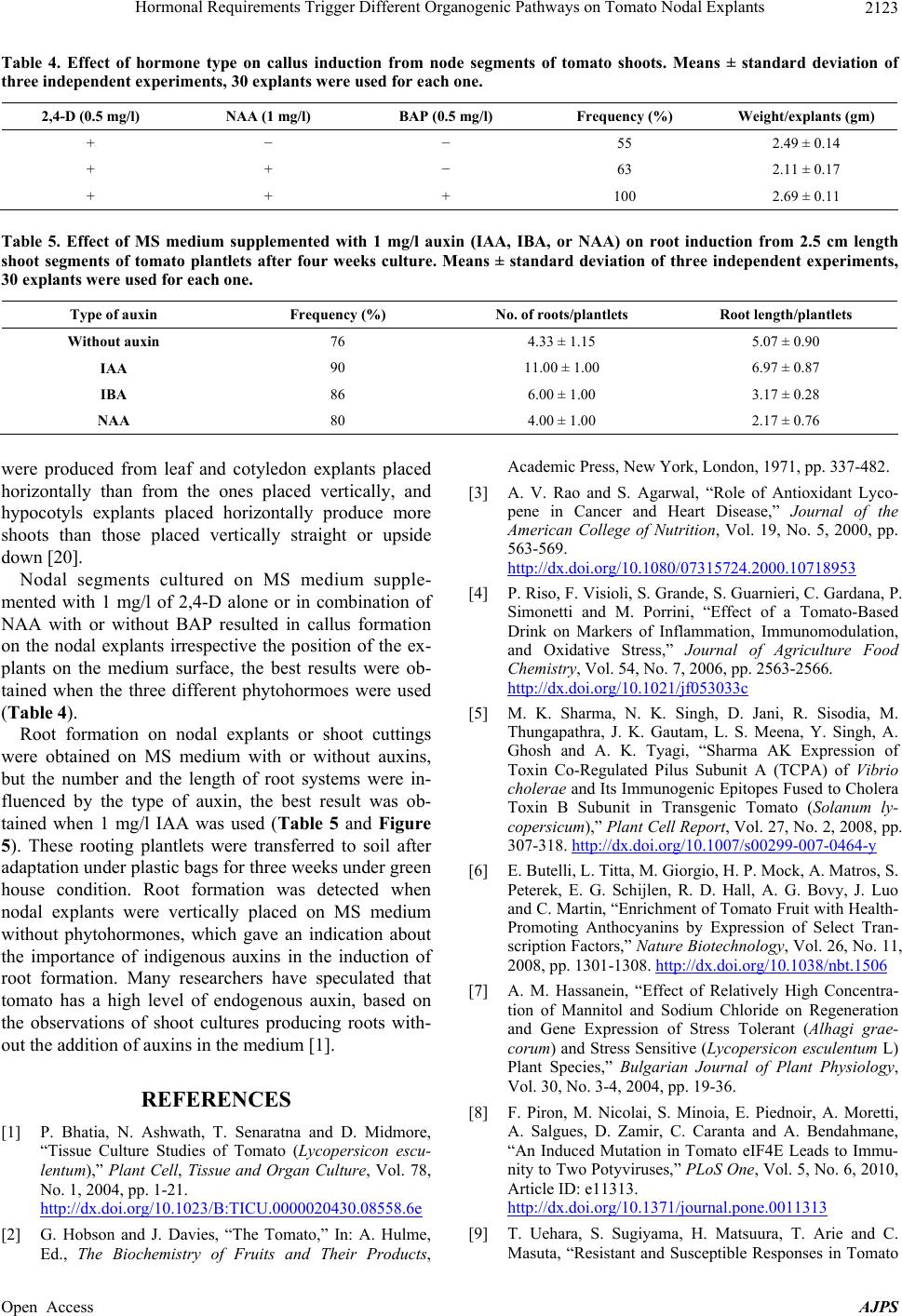 Hormonal Requirements Trigger Different Organogenic Pathways on Tomato Nodal Explants 2123 Table 4. Effect of hormone type on callus induction from node segments of tomato shoots. Means ± standard deviation of three independent experiments, 30 explants were used for each one. 2,4-D (0.5 mg/l) NAA (1 mg/l) BAP (0.5 mg/l) Frequency (%) Weight/explants (gm) + − − 55 2.49 ± 0.14 + + − 63 2.11 ± 0.17 + + + 100 2.69 ± 0.11 Table 5. Effect of MS medium supplemented with 1 mg/l auxin (IAA, IBA, or NAA) on root induction from 2.5 cm length shoot segments of tomato plantlets after four weeks culture. Means ± standard deviation of three independent experiments, 30 explants were used for each one. Type of auxin Frequency (%) No. of roots/plantlets Root length/plantlets Without auxin 76 4.33 ± 1.15 5.07 ± 0.90 IAA 90 11.00 ± 1.00 6.97 ± 0.87 IBA 86 6.00 ± 1.00 3.17 ± 0.28 NAA 80 4.00 ± 1.00 2.17 ± 0.76 were produced from leaf and cotyledon explants placed horizontally than from the ones placed vertically, and hypocotyls explants placed horizontally produce more shoots than those placed vertically straight or upside down [20]. Nodal segments cultured on MS medium supple- mented with 1 mg/l of 2,4-D alone or in combination of NAA with or without BAP resulted in callus formation on the nodal explants irrespective the position of the ex- plants on the medium surface, the best results were ob- tained when the three different phytohormoes were used (Table 4). Root formation on nodal explants or shoot cuttings were obtained on MS medium with or without auxins, but the number and the length of root systems were in- fluenced by the type of auxin, the best result was ob- tained when 1 mg/l IAA was used (Table 5 and Figure 5). These rooting plantlets were transferred to soil after adaptation under plastic bags for three weeks under green house condition. Root formation was detected when nodal explants were vertically placed on MS medium without phytohormones, which gave an indication about the importance of indigenous auxins in the induction of root formation. Many researchers have speculated that tomato has a high level of endogenous auxin, based on the observations of shoot cultures producing roots with- out the addition of auxins in the medium [1]. REFERENCES [1] P. Bhatia, N. Ashwath, T. Senaratna and D. Midmore, “Tissue Culture Studies of Tomato (Lycopersicon escu- lentum),” Plant Cell, Tissue and Organ Culture, Vol. 78, No. 1, 2004, pp. 1-21. http://dx.doi.org/10.1023/B:TICU.0000020430.08558.6e [2] G. Hobson and J. Davies, “The Tomato,” In: A. Hulme, Ed., The Biochemistry of Fruits and Their Products, Academic Press, New York, London, 1971, pp. 337-482. [3] A. V. Rao and S. Agarwal, “Role of Antioxidant Lyco- pene in Cancer and Heart Disease,” Journal of the American College of Nutrition, Vol. 19, No. 5, 2000, pp. 563-569. http://dx.doi.org/10.1080/07315724.2000.10718953 [4] P. Riso, F. Visioli, S. Grande, S. Guarnieri, C. Gardana, P. Simonetti and M. Porrini, “Effect of a Tomato-Based Drink on Markers of Inflammation, Immunomodulation, and Oxidative Stress,” Journal of Agriculture Food Chemistry, Vol. 54, No. 7, 2006, pp. 2563-2566. http://dx.doi.org/10.1021/jf053033c [5] M. K. Sharma, N. K. Singh, D. Jani, R. Sisodia, M. Thungapathra, J. K. Gautam, L. S. Meena, Y. Singh, A. Ghosh and A. K. Tyagi, “Sharma AK Expression of Toxin Co-Regulated Pilus Subunit A (TCPA) of Vibrio cholerae and Its Immunogenic Epitopes Fused to Cholera Toxin B Subunit in Transgenic Tomato (Solanum ly- copersicum),” Plant Cell Report, Vol. 27, No. 2, 2008, pp. 307-318. http://dx.doi.org/10.1007/s00299-007-0464-y [6] E. Butelli, L. Titta, M. Giorgio, H. P. Mock, A. Matros, S. Peterek, E. G. Schijlen, R. D. Hall, A. G. Bovy, J. Luo and C. Martin, “Enrichment of Tomato Fruit with Health- Promoting Anthocyanins by Expression of Select Tran- scription Factors,” Nature Biotechnology, Vol. 26, No. 11, 2008, pp. 1301-1308. http://dx.doi.org/10.1038/nbt.1506 [7] A. M. Hassanein, “Effect of Relatively High Concentra- tion of Mannitol and Sodium Chloride on Regeneration and Gene Expression of Stress Tolerant (Alhagi grae- corum) and Stress Sensitive (Lycopersicon esculentum L) Plant Species,” Bulgarian Journal of Plant Physiology, Vol. 30, No. 3-4, 2004, pp. 19-36. [8] F. Piron, M. Nicolai, S. Minoia, E. Piednoir, A. Moretti, A. Salgues, D. Zamir, C. Caranta and A. Bendahmane, “An Induced Mutation in Tomato eIF4E Leads to Immu- nity to Two Potyviruses,” PLoS One, Vol. 5, No. 6, 2010, Article ID: e11313. http://dx.doi.org/10.1371/journal.pone.0011313 [9] T. Uehara, S. Sugiyama, H. Matsuura, T. Arie and C. Masuta, “Resistant and Susceptible Responses in Tomato Open Access AJPS 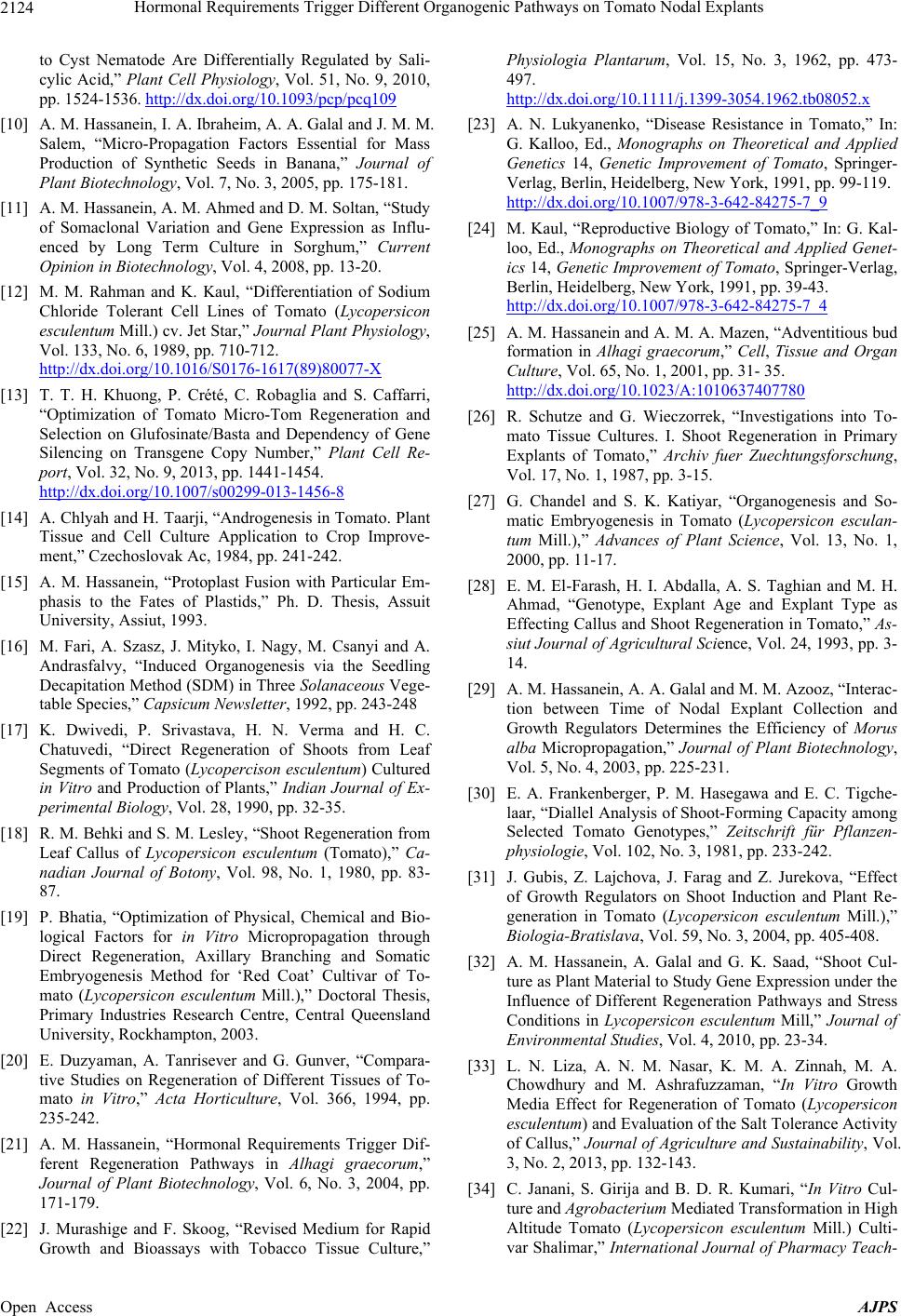 Hormonal Requirements Trigger Different Organogenic Pathways on Tomato Nodal Explants 2124 to Cyst Nematode Are Differentially Regulated by Sali- cylic Acid,” Plant Cell Physiology, Vol. 51, No. 9, 2010, pp. 1524-1536. http://dx.doi.org/10.1093/pcp/pcq109 [10] A. M. Hassanein, I. A. Ibraheim, A. A. Galal and J. M. M. Salem, “Micro-Propagation Factors Essential for Mass Production of Synthetic Seeds in Banana,” Journal of Plant Biotechnology, Vol. 7, No. 3, 2005, pp. 175-181. [11] A. M. Hassanein, A. M. Ahmed and D. M. Soltan, “Study of Somaclonal Variation and Gene Expression as Influ- enced by Long Term Culture in Sorghum,” Current Opinion in Biotechnology, Vol. 4, 2008, pp. 13-20. [12] M. M. Rahman and K. Kaul, “Differentiation of Sodium Chloride Tolerant Cell Lines of Tomato (Lycopersicon esculentum Mill.) cv. Jet Star,” Journal Plant Physiology, Vol. 133, No. 6, 1989, pp. 710-712. http://dx.doi.org/10.1016/S0176-1617(89)80077-X [13] T. T. H. Khuong, P. Crété, C. Robaglia and S. Caffarri, “Optimization of Tomato Micro-Tom Regeneration and Selection on Glufosinate/Basta and Dependency of Gene Silencing on Transgene Copy Number,” Plant Cell Re- port, Vol. 32, No. 9, 2013, pp. 1441-1454. http://dx.doi.org/10.1007/s00299-013-1456-8 [14] A. Chlyah and H. Taarji, “Androgenesis in Tomato. Plant Tissue and Cell Culture Application to Crop Improve- ment,” Czechoslovak Ac, 1984, pp. 241-242. [15] A. M. Hassanein, “Protoplast Fusion with Particular Em- phasis to the Fates of Plastids,” Ph. D. Thesis, Assuit University, Assiut, 1993. [16] M. Fari, A. Szasz, J. Mityko, I. Nagy, M. Csanyi and A. Andrasfalvy, “Induced Organogenesis via the Seedling Decapitation Method (SDM) in Three Solanaceous Vege- table Species,” Capsicum Newsletter, 1992, pp. 243-248 [17] K. Dwivedi, P. Srivastava, H. N. Verma and H. C. Chatuvedi, “Direct Regeneration of Shoots from Leaf Segments of Tomato (Lycopercison esculentum) Cultured in Vitro and Production of Plants,” Indian Journal of Ex- perimental Biology, Vol. 28, 1990, pp. 32-35. [18] R. M. Behki and S. M. Lesley, “Shoot Regeneration from Leaf Callus of Lycopersicon esculentum (Tomato),” Ca- nadian Journal of Botony, Vol. 98, No. 1, 1980, pp. 83- 87. [19] P. Bhatia, “Optimization of Physical, Chemical and Bio- logical Factors for in Vitro Micropropagation through Direct Regeneration, Axillary Branching and Somatic Embryogenesis Method for ‘Red Coat’ Cultivar of To- mato (Lycopersicon esculentum Mill.),” Doctoral Thesis, Primary Industries Research Centre, Central Queensland University, Rockhampton, 2003. [20] E. Duzyaman, A. Tanrisever and G. Gunver, “Compara- tive Studies on Regeneration of Different Tissues of To- mato in Vitro,” Acta Horticulture, Vol. 366, 1994, pp. 235-242. [21] A. M. Hassanein, “Hormonal Requirements Trigger Dif- ferent Regeneration Pathways in Alhagi graecorum,” Journal of Plant Biotechnology, Vol. 6, No. 3, 2004, pp. 171-179. [22] J. Murashige and F. Skoog, “Revised Medium for Rapid Growth and Bioassays with Tobacco Tissue Culture,” Physiologia Plantarum, Vol. 15, No. 3, 1962, pp. 473- 497. http://dx.doi.org/10.1111/j.1399-3054.1962.tb08052.x [23] A. N. Lukyanenko, “Disease Resistance in Tomato,” In: G. Kalloo, Ed., Monographs on Theoretical and Applied Genetics 14, Genetic Improvement of Tomato, Springer- Verlag, Berlin, Heidelberg, New York, 1991, pp. 99-119. http://dx.doi.org/10.1007/978-3-642-84275-7_9 [24] M. Kaul, “Reproductive Biology of Tomato,” In: G. Kal- loo, Ed., Monographs on Theoretical and Applied Genet- ics 14, Genetic Improvement of Tomato, Springer-Verlag, Berlin, Heidelberg, New York, 1991, pp. 39-43. http://dx.doi.org/10.1007/978-3-642-84275-7_4 [25] A. M. Hassanein and A. M. A. Mazen, “Adventitious bud formation in Alhagi graecorum,” Cell, Tissue and Organ Culture, Vol. 65, No. 1, 2001, pp. 31- 35. http://dx.doi.org/10.1023/A:1010637407780 [26] R. Schutze and G. Wieczorrek, “Investigations into To- mato Tissue Cultures. I. Shoot Regeneration in Primary Explants of Tomato,” Archiv fuer Zuechtungsforschung, Vol. 17, No. 1, 1987, pp. 3-15. [27] G. Chandel and S. K. Katiyar, “Organogenesis and So- matic Embryogenesis in Tomato (Lycopersicon esculan- tum Mill.),” Advances of Plant Science, Vol. 13, No. 1, 2000, pp. 11-17. [28] E. M. El-Farash, H. I. Abdalla, A. S. Taghian and M. H. Ahmad, “Genotype, Explant Age and Explant Type as Effecting Callus and Shoot Regeneration in Tomato,” As- siut Journal of Agricultural Science, Vol. 24, 1993, pp. 3- 14. [29] A. M. Hassanein, A. A. Galal and M. M. Azooz, “Interac- tion between Time of Nodal Explant Collection and Growth Regulators Determines the Efficiency of Morus alba Micropropagation,” Journal of Plant Biotechnology, Vol. 5, No. 4, 2003, pp. 225-231. [30] E. A. Frankenberger, P. M. Hasegawa and E. C. Tigche- laar, “Diallel Analysis of Shoot-Forming Capacity among Selected Tomato Genotypes,” Zeitschrift für Pflanzen- physiologie, Vol. 102, No. 3, 1981, pp. 233-242. [31] J. Gubis, Z. Lajchova, J. Farag and Z. Jurekova, “Effect of Growth Regulators on Shoot Induction and Plant Re- generation in Tomato (Lycopersicon esculentum Mill.),” Biologia-Bratislava, Vol. 59, No. 3, 2004, pp. 405-408. [32] A. M. Hassanein, A. Galal and G. K. Saad, “Shoot Cul- ture as Plant Material to Study Gene Expression under the Influence of Different Regeneration Pathways and Stress Conditions in Lycopersicon esculentum Mill,” Journal of Environmental Studies, Vol. 4, 2010, pp. 23-34. [33] L. N. Liza, A. N. M. Nasar, K. M. A. Zinnah, M. A. Chowdhury and M. Ashrafuzzaman, “In Vitro Growth Media Effect for Regeneration of Tomato (Lycopersicon esculentum) and Evaluation of the Salt Tolerance Activity of Callus,” Journal of Agriculture and Sustainability, Vol. 3, No. 2, 2013, pp. 132-143. [34] C. Janani, S. Girija and B. D. R. Kumari, “In Vitro Cul- ture and Agrobacterium Mediated Transformation in High Altitude Tomato (Lycopersicon esculentum Mill.) Culti- var Shalimar,” International Journal of Pharmacy Teach- Open Access AJPS  Hormonal Requirements Trigger Different Organogenic Pathways on Tomato Nodal Explants Open Access AJPS 2125 ing & Practices, Vol. 4, No. 1, 2013, pp. 483-488. [35] S. Ohki, C. Bigot and J. Mousseau, “Analysis of Shoot Forming Capacity in Vitro in Two Lines of Tomato (Ly- copersicon esculentum Mill.) and Their Hybrids,” Plant & Cell Physiology, Vol. 19, No. 1, 1978, pp. 27-42. [36] M. Koornneef, J. Bade, C. Hanhart, K. Horsman, J. Schel, W. Soppe, R. Verkerk and P. Zabel, “Characterization and Mapping of a Gene Controlling Shoot Regeneration in Tomato,” Plant Journal, Vol. 3, No. 1, 1993, pp. 131- 141. http://dx.doi.org/10.1111/j.1365-313X.1993.tb00016.x [37] D. K. Srivastava, V. K. Gupta and D. R. Sharma, “In Vitro Selection and Characterization of Water Stress Tol- erant Callus Cultures of Tomato (Lycopersicon esculent- tum L.),” Indian Journal of Plant Physiology, Vol. 38, No. 2, 1995, pp. 99-104. [38] T. Takashina, T. Suzuki, H. Egashira and S. Imanishi, “New Molecular Markers Linked with the High Shoot Regeneration Capacity of the Wild Tomato Species Ly- copersicon chilense,” Breeding Scienc e, Vol. 48, 1998, pp. 109-113. [39] R. T. Faria, D. Destro, J. C. Bespalhok Filho and R. D. Illg, “Introgression of in Vitro Regeneration Capability of Lycopersicon pimpinellifolium Mill into Recalcitrant To- mato Cultivars,” Euphytica, Vol. 124, No. 1, 2002, pp. 59-63. http://dx.doi.org/10.1023/A:1015693902836 |