

Paper Menu >>
Journal Menu >>
 Food and Nutrition Sciences, 2013, 4, 47-55 Published Online November 2013 (http://www.scirp.org/journal/fns) http://dx.doi.org/10.4236/fns.2013.411A007 Open Access FNS Lactic Acid Fermentation of Peppers Maria Rosa Alberto1,2, Maria Francisca Perera1, Mario Eduardo Arena1,2* 1Facultad de Bioquímica, Química y Farmacia, Universidad Nacional de Tucumán (UNT), Tucumán, Argentina; 2Centro Científico Tecnológico Tucumán—Consejo Nacional de Investigaciones Científicas y Tecnológicas (CCT-CONICET), Tucumán, Argentina. Email: *[email protected] Received August 21st, 2013; revised September 21st, 2013; accepted September 30th, 2013 Copyright © 2013 Maria Rosa Alberto et al. This is an open access article distributed under the Creative Commons Attribution Li- cense, which permits unrestricted use, distribution, and reproduction in any medium, provided the original work is properly cited. ABSTRACT Different peppers fermentations (Capsicum annum, grossum variety) were assayed: spontaneous, native microflora sup- plemented individually with Lactobacillus planta rum N8, Leuconostoc mesentereroides L. or Pediococcus pentosaceus 12p and by pure or combined cultures of these lactic acid bacteria (LAB). In order to eliminate the native flora, different kinds of heat treatment were assayed. The treatment selected was heating in autoclaved after research 3/4 atmosphere and to turn off. Fermentations were carried out at 22˚C and 30˚C and the culture media contained 2% or 0.2% glucose and 4% NaCl. Sugar consumption, pH reduction and acid production were higher at 30˚C than at 22˚C. At both tem- peratures, spontaneous fermentation showed a slower rate reduction in pH than inoculated samples. Diminution in pH in presence of 2% glucose was faster than at 0.2%, but minimum pH was in both case lower than 3.0. Maximum growth was reached between 2 and 5 days of fermentation in all the samples assayed. After 30 days of incubation in presence of 2% glucose the survival of LAB was nearly 5 log ufc/ml. The survival was higher at the lower temperature assayed for both glucose concentrations. Organoleptic properties of peppers fermented with a mixed culture of Leuconostoc mes- enteroides and Pediococcus pentosaceus were found best by a human panel. This sample has a relation lactic acid/acetic acid of nearly 3 in the conditions assayed. Keywords: Fermentation; Lactic Acid Bacteria; Peppers; Capsicum annu m 1. Introduction There are different forms to conserve food. One of them consists of increasing the acidity, which can be obtained artificially through addition of weak acids, or naturally by fermentation, obtaining free additive products. Fermentation can be developed spontaneously by the native microflora or after inoculation with lactic acid bacteria (LAB). In many cases, the fermentation is led by the indigenous flora and varies regarding substrate, tem- perature and storage conditions; consequently, the final product has variable sensorial properties. The use of starter cultures would be an appropriate approach for the control and optimization of the fermen- tation process in order to minimize variations in the or- ganoleptic quality and microbiological stability. LAB are responsible for the fermentation of many vegetables and this process contributes to flavour, texture and aroma characteristics of the food. Additionally it guaranties a hygienically conservation and commercial stability. Lactic acid fermentation requires no or very little en- ergy in the form of heat, allows the preservation of fresh vegetables or vegetables process minimally [1] and it im- proves the digestibility and nutritional value of the food [2]. The demand of fermented products has experienced an important increase in recent years, as consumers recog- nize that fermentation plays an important and beneficial role in human nutrition, health and nourishing safety [3]. Peppers are consumed mature or immature, raw or in conserves or pickles. The information available on fer- mentation of peppers is little. According to data provided by the National Centre of Studies and Agricultural Inves- tigations of Cuba (C.E.N.A.I.C.) peppers can be ferment- ed by the native microflora. Peppers represent an impor- tant crop in the northwest of Argentina, but the product is not available all year round, and for this reason a presser- vation process is necessary. Considering the technological importance of controll- ed fermentation of vegetables for the industry, different *Corresponding author.  Lactic Acid Fermentation of Peppers 48 heat treatments and fermentation processes were assessed, in order to obtain an adequate product. The aim was to select a suitable starter culture in order to conduct an appropriate fermentation of Argentine peppers and to ob- tain a controlled process and a product of stable quality through time. 2. Materials and Methods 2.1. Organisms Lactobacillus plantarum N8 [4], Leuconostoc mesenter- eroides L. [5] and Pediococcus pentosaceus 12p [6] were isolated from orange, tomato and grape, respectively. The bacteria were pre-cultured in MRS [7] broth sup- plemented with 15% (v/v) tomato juice and incubated at 30˚C. 2.2. Peppers Mature peppers (Capsicum annum variety grossum) were obtained from Salta province, Argentina, and carefully selected, without blows, apparent damages or microbe- ological alterations. The peppers were washed with abun- dant water and cut in fine strips. The seeds were elimi- nated and the peppers were processed within 48 hours of cultivation. 2.3. Heating Procedures In order to eliminate the native flora without changing sensory properties, different heating techniques were assessed. Peppers were placed in 250 ml of a sterile solu- tion of glucose and NaCl with or without inoculation with LAB (Lactobacillus plantarum N8). Heating tech- niques assayed were: heating the samples in autoclaved with fluent steam during 5 min.; heating in autoclaved after research 3/4 atmosphere and to turn off, and heating in autoclaved during 3 min. after research 3/4 atmos- phere. Peppers (40 g) were subjected to heat treatments in a solution of 5% glucose and 4% NaCl (250 ml). After each treatment they were incubated at 30˚C for one week. In order to evaluate the best technique: cell counts (cfu/ ml), pH and organoleptic characteristics such as colour of the peppers and consistency and colour of the solution were tested. 2.4. Fermentation Fermentation was carried out under previously labora- tory-optimized conditions, at 22˚C and at 30˚C. The peppers (40 g) were incubated in 235 ml sterile solution containing (g/l): glucose (2 and 20) and NaCl (4); initial pH was 5.0. Each glucose concentration and temperature was therefore assayed with the 12 samples. Without heating: Natural Fermentation with the native flora (NF), NF plus Lactobacillus plantarum N8; NF plus Leuconostoc mes- enteroides L.; NF plus Pediococcus pentosaceus 12p. Samples with heating: without inoculation (Control); with pure cultures of Lactobacillus plantarum N8; Leu- conostoc mesenteroides L. or Pediococcus pentosaceus 12p; with mixed cultures of two pure cultures (Lactoba- cillus plantarum N8 and Leuconostoc mesenteroides L.; Lactobacillus plantarum N8 and Pediococcus pento- saceus 12p or Leuconostoc mesenteroides L. and Pedio- coccus pentosaceus 12p); and the mixed cultures of the three strains cited. In order to conserve the fermentation atmosphere of each sample different flasks were used for each assay (0, 1, 2, 5, 10, 20 and 30 days), because once the flasks were opened the samples could not continue being incubated due to the entrance of oxygen and the risk of loss of the atmosphere generated by the fermentation process. 2.5. Starter Culture For the preparation of the starter culture, microorganisms grown in MRS were centrifuged at 30,000 g during 10 min., washed with sterile distilled water, centrifuged again and resuspended in a solution of glucose and NaCl, fitting an OD560 between 0.9 and 1 (107 cfu/ml). In the mixed cultures proportions were 1:1 and 1:1:1. The bac- teria were inoculated in experimental media at a total cell concentration of 1 - 2 × 10⁷ cfu/ml. Samples were taken after 0, 1, 2, 5, 10, 20 and 30 days incubation for growth measurement and stored frozen (−18˚C) for subsequent analyses. 2.6. Growth Measurement Bacterial growth was determined spectrophotometrically by measurement of optical density at 560 nm and by di- rect counting of cells on MRS agar supplemented with 15% (v/v) tomato juice, pH 6.0. 2.7. Analytical Determinations The pH was determined with a pH-meter equipped with a glass electrode, which was calibrated against standard buffer solutions (Anedra) at pH 4.0 and 7.0. Glucose and fructose were analysed by HPLC [8]. Organic acids were determined by HPLC analysis. Sample proteins were eliminated: 0.5 ml of a 6% tri- chloroacetic acid solution was added to 0.5 ml of the sample. The mixture was stirred on a vortex during 3 min. and then centrifuged during 5 min at 30,000 g. The pel- let was discarded and the supernatant was membrane- filtered (0.45 μ). The solvent used for separation was 0.01 N sulphuric acid. The samples were filtered using a sterile membrane of 0.45 μ stirrer. HPLC was performed with Gilson equipment with an infrared detector and in- Open Access FNS  Lactic Acid Fermentation of Peppers 49 tegrator (Hewlett Packard, HP 3396 Series II). An ORH- 801 column for organic acids was used, containing a ma- trix of 300 × 6.5 mm, packed with a polymer of cationic interchange in its hydrogenated form. The column was operated at 22˚C with a flow speed of 0.500 ml/min. 2.8. Sensorial Determinations Organoleptic characteristics were evaluated by a group of selected people using the double blind test. The group was integrated by 10 people of both sexes (6 men and 4 women) and different age (23 - 45 years old). The human testers evaluated the peppers fermented under the condi- tions assayed according to their visual aspect, flavour and aroma. The parameters were selected according to those proposed by Seseña et al. [9] for the tasting of fermented eggplants. 2.9. Conservation of the Fermented Peppers The fermented peppers were conserved during three months at room temperature in the same fermentation medium or in commercial vinegar (5% acetic acid) with 2% NaCl. In the case of commercial vinegar, the peppers were washed with distilled sterile water after 30 days of fer- mentation and they were placed with the vinegar in ster- ile bottles. 2.10. Spoilage Microorganism Possible spoilage of the pickles was assayed for the fol- lowing microorganisms: yeasts, Clostridium botulinum and enterobacteria, using Sabouraud, SPS agar and Mac Conkey, respectively. 2.11. Statistial Analysis The data were analysed by the Balanced ANOVA Test. Variable means showing statistical significance were compared using Tukey’s test (Minitab Student R14). 3. Results and Discussion 3.1. Heat Effect on the Organoleptic Characteristic of Peppers Table 1 shows the effect of heating techniques on or- ganoleptic properties before fermentation. The results were similar for inoculated and noninoculated samples and indicate that all heat treatments affect colour and consistency of peppers. In absence of heat (control) or in presence of fluent steam the bacteria (wild or inoculated) can grow and a decrease in pH was observed after 7 days of incubation. In the control media, with or without inoculation, the pH decreased two units, whereas the pH decreased only 0.3 units after seven days in samples treated with fluent steam. Consequently, fluent steam was inappropriate as a bactericidal procedure. The lowest alteration in the sensory properties oc- curred when the products were put under fluent steam and when they were heating in autoclaved until research 3/4 atmosphere and turn off immediately. The last pro- cedure has the advantage that inactive the native flora and produces fewer organoleptic modifications than the same treatment during 3 min. Therefore, the technique applied in this study to study the effect of the bacterial inoculums in the vegetable fermentation was heating peppers in solution at 3/4 atmosphere in autoclave and extinguished. 3.2. Cell Growth Table 2 shows maximum development of the microor- ganisms under the different fermentation conditions. The starters were inoculated at a concentration 100 times higher than the native flora, according to procedures proposed by Gardner et al. [10] and in agreement with Seseña et al. [9], who used lactic acid bacteria starters to carry out the fermentation of vegetables at a concentra- tion of 107 cfu/ml. Maximum values of viable cells were obtained be- tween the second and fifth day of fermentation; as of this time the number of viable cells began diminishing or remained stable. This is common in diverse vegetable fermentation processes, such as cucumbers and cabbage for the elaboration of sauerkraut [11]. For samples without heating procedure at both glucose concentrations, in general highest growth was observed at 22˚C. This effect could be due to adaptation of the native microflora to growth at room temperature. How- ever, inoculated samples with heat treatment showed higher growth at 30˚C than at 22˚C. In these conditions, at glucose concentration of 2% maximum development was higher than at 0.2%, nevertheless the 10-fold higher glucose concentration did not produce a proportional increase in the cell number. At both glucose concentrations, survival at room tem- perature (22˚C) was higher than at 30˚C, with the excep- tion of NF samples at 2% glucose, in which survival was higher at 30˚C (Table 3). After 30 days incubation at 30˚C, lowest microbial survival was observed after heat treatment and inoculated with a pure culture of Leuconostoc mesenteroides or in a combination with one or two LAB at both glucose con- centrations (Table 3). In the controlled fermentations and inoculated with Leuconostoc mesenteroides L. the lower survival can be explained by weak resistance to the low pH. The results agree with those reported by Gardner et al. [10] for carrots, onions and cabbages. Open Access FNS 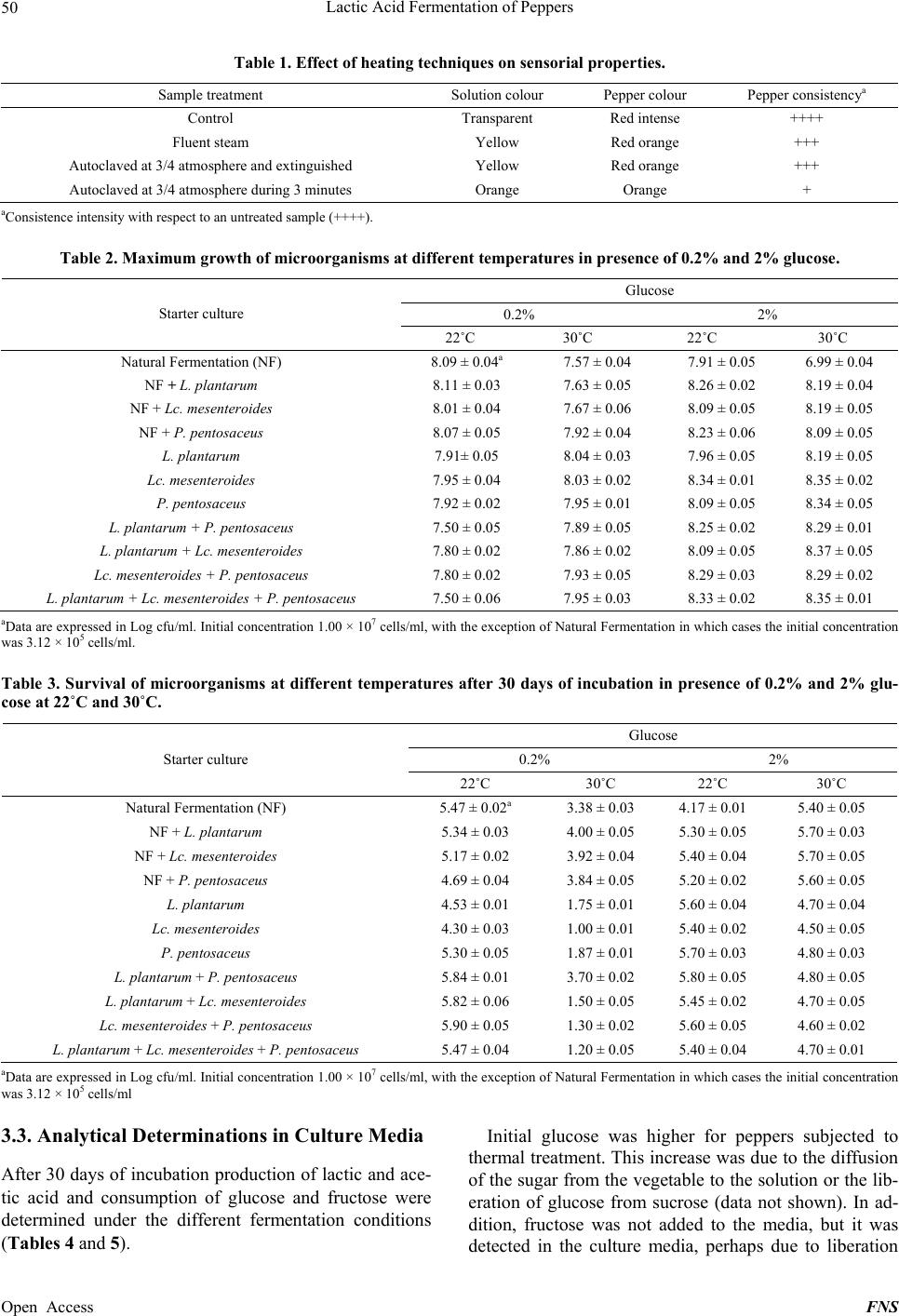 Lactic Acid Fermentation of Peppers Open Access FNS 50 Table 1. Effect of heating techniques on sensorial pr operties. Sample treatment Solution colour Pepper colour Pepper consistencya Control Transparent Red intense ++++ Fluent steam Yellow Red orange +++ Autoclaved at 3/4 atmosphere and extinguished Yellow Red orange +++ Autoclaved at 3/4 atmosphere during 3 minutes Orange Orange + aConsistence intensity with respect to an untreated sample (++++). Table 2. Maximum growth of microorganisms at different temperatures in presence of 0.2% and 2% glucose. Glucose 0.2% 2% Starter culture 22˚C 30˚C 22˚C 30˚C Natural Fermentation (NF) 8.09 ± 0.04a 7.57 ± 0.04 7.91 ± 0.05 6.99 ± 0.04 NF + L. plantarum 8.11 ± 0.03 7.63 ± 0.05 8.26 ± 0.02 8.19 ± 0.04 NF + Lc. mesenteroides 8.01 ± 0.04 7.67 ± 0.06 8.09 ± 0.05 8.19 ± 0.05 NF + P. pentosaceus 8.07 ± 0.05 7.92 ± 0.04 8.23 ± 0.06 8.09 ± 0.05 L. plantarum 7.91± 0.05 8.04 ± 0.03 7.96 ± 0.05 8.19 ± 0.05 Lc. mesenteroides 7.95 ± 0.04 8.03 ± 0.02 8.34 ± 0.01 8.35 ± 0.02 P. pentosaceus 7.92 ± 0.02 7.95 ± 0.01 8.09 ± 0.05 8.34 ± 0.05 L. plantarum + P. pentosaceus 7.50 ± 0.05 7.89 ± 0.05 8.25 ± 0.02 8.29 ± 0.01 L. plantarum + Lc. mesenteroides 7.80 ± 0.02 7.86 ± 0.02 8.09 ± 0.05 8.37 ± 0.05 Lc. mesenteroides + P. pentosaceus 7.80 ± 0.02 7.93 ± 0.05 8.29 ± 0.03 8.29 ± 0.02 L. plantarum + Lc. mesenteroides + P. pentosaceus 7.50 ± 0.06 7.95 ± 0.03 8.33 ± 0.02 8.35 ± 0.01 aData are expressed in Log cfu/ml. Initial concentration 1.00 × 10⁷ cells/ml, with the exception of Natural Fermentation in which cases the initial concentration was 3.12 × 10⁵ cells/ml. Table 3. Survival of microorganisms at different temperatures after 30 days of incubation in presence of 0.2% and 2% glu- cose at 22˚C and 30˚C. Glucose 0.2% 2% Starter culture 22˚C 30˚C 22˚C 30˚C Natural Fermentation (NF) 5.47 ± 0.02a 3.38 ± 0.03 4.17 ± 0.01 5.40 ± 0.05 NF + L. plantarum 5.34 ± 0.03 4.00 ± 0.05 5.30 ± 0.05 5.70 ± 0.03 NF + Lc. mesenteroides 5.17 ± 0.02 3.92 ± 0.04 5.40 ± 0.04 5.70 ± 0.05 NF + P. pentosaceus 4.69 ± 0.04 3.84 ± 0.05 5.20 ± 0.02 5.60 ± 0.05 L. plantarum 4.53 ± 0.01 1.75 ± 0.01 5.60 ± 0.04 4.70 ± 0.04 Lc. mesenteroides 4.30 ± 0.03 1.00 ± 0.01 5.40 ± 0.02 4.50 ± 0.05 P. pentosaceus 5.30 ± 0.05 1.87 ± 0.01 5.70 ± 0.03 4.80 ± 0.03 L. plantarum + P. pentosaceus 5.84 ± 0.01 3.70 ± 0.02 5.80 ± 0.05 4.80 ± 0.05 L. plantarum + Lc. mesenteroides 5.82 ± 0.06 1.50 ± 0.05 5.45 ± 0.02 4.70 ± 0.05 Lc. mesenteroides + P. pentosaceus 5.90 ± 0.05 1.30 ± 0.02 5.60 ± 0.05 4.60 ± 0.02 L. plantarum + Lc. mesenteroides + P. pentosaceus 5.47 ± 0.04 1.20 ± 0.05 5.40 ± 0.04 4.70 ± 0.01 aData are expressed in Log cfu/ml. Initial concentration 1.00 × 10⁷ cells/ml, with the exception of Natural Fermentation in which cases the initial concentration was 3.12 × 10⁵ cells/ml 3.3. Analytical Determinations in Culture Media After 30 days of incubation production of lactic and ace- tic acid and consumption of glucose and fructose were determined under the different fermentation conditions (Tables 4 and 5). Initial glucose was higher for peppers subjected to thermal treatment. This increase was due to the diffusion of the sugar from the vegetable to the solution or the lib- eration of glucose from sucrose (data not shown). In ad- dition, fructose was not added to the media, but it was detected in the culture media, perhaps due to liberation 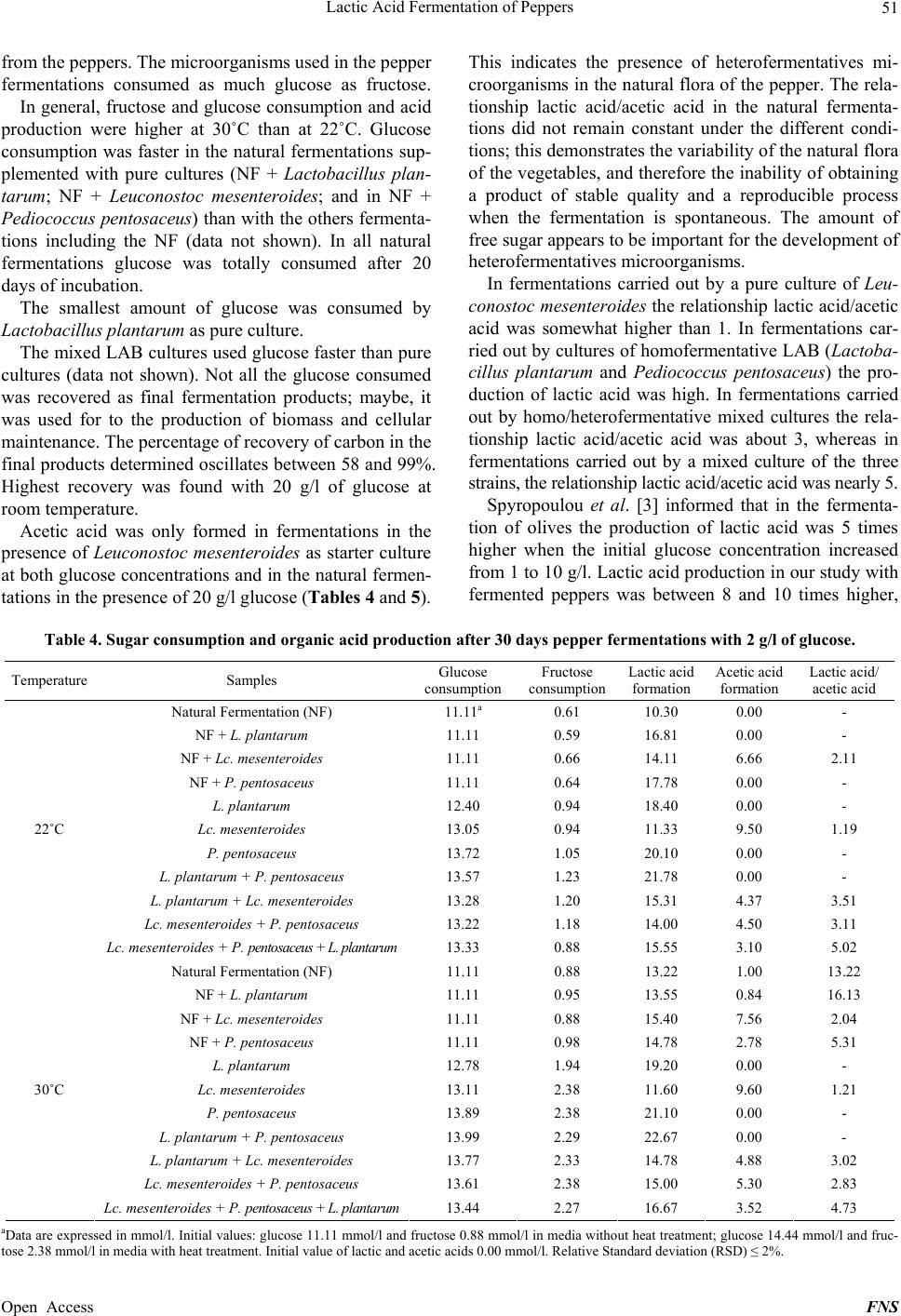 Lactic Acid Fermentation of Peppers 51 from the peppers. The microorganisms used in the pepper fermentations consumed as much glucose as fructose. In general, fructose and glucose consumption and acid production were higher at 30˚C than at 22˚C. Glucose consumption was faster in the natural fermentations sup- plemented with pure cultures (NF + Lactobacillus plan- tarum; NF + Leuconostoc mesenteroides; and in NF + Pediococcus pentosaceus) than with the others fermenta- tions including the NF (data not shown). In all natural fermentations glucose was totally consumed after 20 days of incubation. The smallest amount of glucose was consumed by Lactobacillus plantarum as pure culture. The mixed LAB cultures used glucose faster than pure cultures (data not shown). Not all the glucose consumed was recovered as final fermentation products; maybe, it was used for to the production of biomass and cellular maintenance. The percentage of recovery of carbon in the final products determined oscillates between 58 and 99%. Highest recovery was found with 20 g/l of glucose at room temperature. Acetic acid was only formed in fermentations in the presence of Leuconostoc mesenteroides as starter culture at both glucose concentrations and in the natural fermen- tations in the presence of 20 g/l glucose (Tables 4 and 5). This indicates the presence of heterofermentatives mi- croorganisms in the natural flora of the pepper. The rela- tionship lactic acid/acetic acid in the natural fermenta- tions did not remain constant under the different condi- tions; this demonstrates the variability of the natural flora of the vegetables, and therefore the inability of obtaining a product of stable quality and a reproducible process when the fermentation is spontaneous. The amount of free sugar appears to be important for the development of heterofermentatives microorganisms. In fermentations carried out by a pure culture of Leu- conostoc mesenteroides the relationship lactic acid/acetic acid was somewhat higher than 1. In fermentations car- ried out by cultures of homofermentative LAB (Lactoba- cillus plantarum and Pediococcus pentosaceus) the pro- duction of lactic acid was high. In fermentations carried out by homo/heterofermentative mixed cultures the rela- tionship lactic acid/acetic acid was about 3, whereas in fermentations carried out by a mixed culture of the three strains, the relationship lactic acid/acetic acid was nearly 5. Spyropoulou et al. [3] informed that in the fermenta- tion of olives the production of lactic acid was 5 times higher when the initial glucose concentration increased from 1 to 10 g/l. Lactic acid production in our study with fermented peppers was between 8 and 10 times higher, Table 4. Sugar consumption and organic acid production after 30 days pepper fermentations with 2 g/l of glucose. Temperature Samples Glucose consumption Fructose consumption Lactic acid formation Acetic acid formation Lactic acid/ acetic acid Natural Fermentation (NF) 11.11a 0.61 10.30 0.00 - NF + L. plantarum 11.11 0.59 16.81 0.00 - NF + Lc. mesenteroides 11.11 0.66 14.11 6.66 2.11 NF + P. pentosaceus 11.11 0.64 17.78 0.00 - L. plantarum 12.40 0.94 18.40 0.00 - Lc. mesenteroides 13.05 0.94 11.33 9.50 1.19 P. pentosaceus 13.72 1.05 20.10 0.00 - L. plantarum + P. pentosaceus 13.57 1.23 21.78 0.00 - L. plantarum + Lc. mesenteroides 13.28 1.20 15.31 4.37 3.51 Lc. mesenteroides + P. pentosaceus 13.22 1.18 14.00 4.50 3.11 22˚C Lc. mesenteroides + P. pentosaceus + L. plantarum13.33 0.88 15.55 3.10 5.02 Natural Fermentation (NF) 11.11 0.88 13.22 1.00 13.22 NF + L. plantarum 11.11 0.95 13.55 0.84 16.13 NF + Lc. mesenteroides 11.11 0.88 15.40 7.56 2.04 NF + P. pentosaceus 11.11 0.98 14.78 2.78 5.31 L. plantarum 12.78 1.94 19.20 0.00 - Lc. mesenteroides 13.11 2.38 11.60 9.60 1.21 P. pentosaceus 13.89 2.38 21.10 0.00 - L. plantarum + P. pentosaceus 13.99 2.29 22.67 0.00 - L. plantarum + Lc. mesenteroides 13.77 2.33 14.78 4.88 3.02 Lc. mesenteroides + P. pentosaceus 13.61 2.38 15.00 5.30 2.83 30˚C Lc. mesenteroides + P. pentosaceus + L. plantarum13.44 2.27 16.67 3.52 4.73 aData are expressed in mmol/l. Initial values: glucose 11.11 mmol/l and fructose 0.88 mmol/l in media without heat treatment; glucose 14.44 mmol/l and fruc- tose 2.38 mmol/l in media with heat treatment. Initial value of lactic and acetic acids 0.00 mmol/l. Relative Standard deviation (RSD) ≤ 2%. Open Access FNS 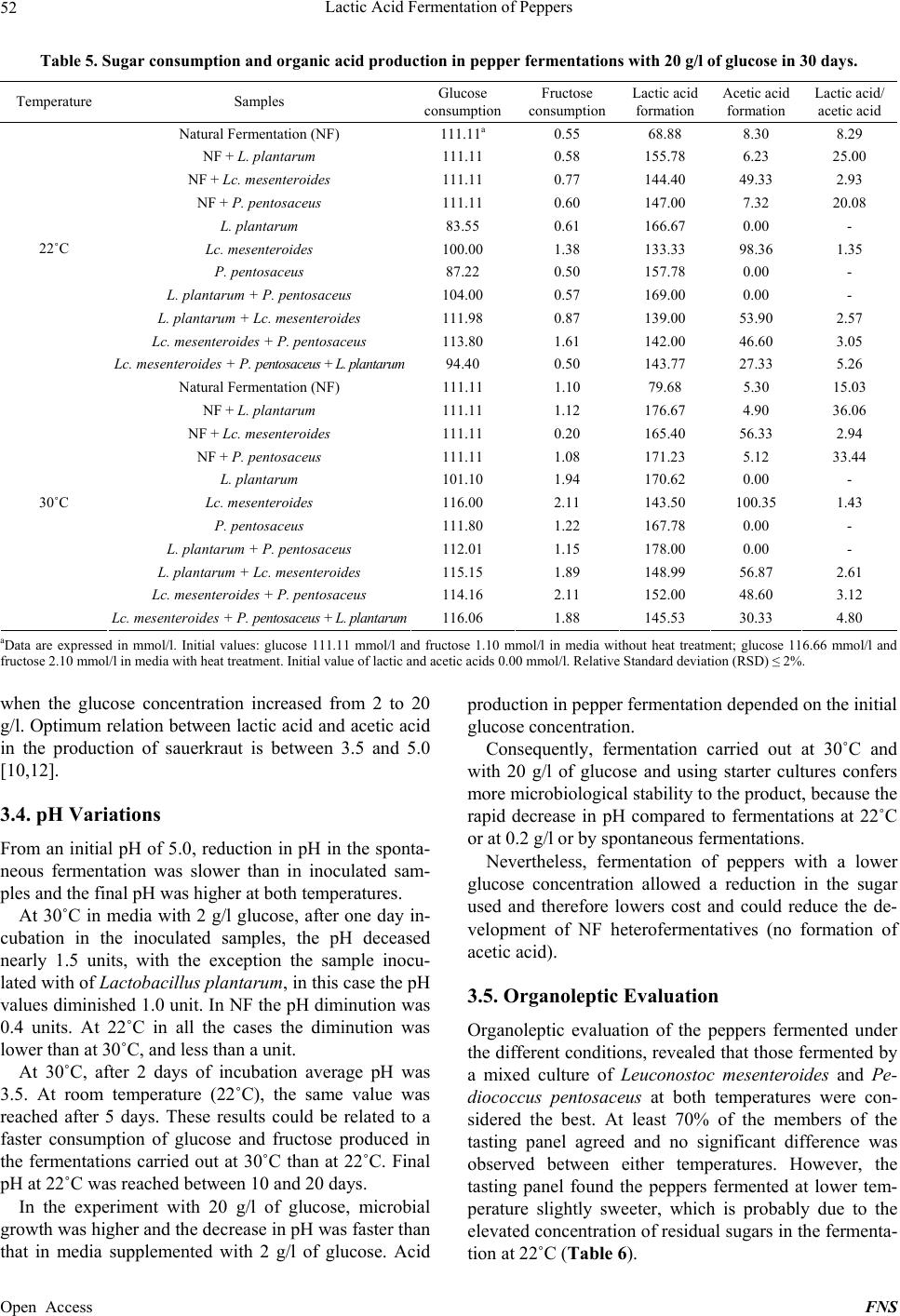 Lactic Acid Fermentation of Peppers 52 Table 5. Sugar consumption and organic acid production in pepper fermentations with 20 g/l of glucose in 30 days. Temperature Samples Glucose consumption Fructose consumption Lactic acid formation Acetic acid formation Lactic acid/ acetic acid Natural Fermentation (NF) 111.11a 0.55 68.88 8.30 8.29 NF + L. plantarum 111.11 0.58 155.78 6.23 25.00 NF + Lc. mesenteroides 111.11 0.77 144.40 49.33 2.93 NF + P. pentosaceus 111.11 0.60 147.00 7.32 20.08 L. plantarum 83.55 0.61 166.67 0.00 - Lc. mesenteroides 100.00 1.38 133.33 98.36 1.35 P. pentosaceus 87.22 0.50 157.78 0.00 - L. plantarum + P. pentosaceus 104.00 0.57 169.00 0.00 - L. plantarum + Lc. mesenteroides 111.98 0.87 139.00 53.90 2.57 Lc. mesenteroides + P. pentosaceus 113.80 1.61 142.00 46.60 3.05 22˚C Lc. mesenteroides + P. pentosaceus + L. plantarum94.40 0.50 143.77 27.33 5.26 Natural Fermentation (NF) 111.11 1.10 79.68 5.30 15.03 NF + L. plantarum 111.11 1.12 176.67 4.90 36.06 NF + Lc. mesenteroides 111.11 0.20 165.40 56.33 2.94 NF + P. pentosaceus 111.11 1.08 171.23 5.12 33.44 L. plantarum 101.10 1.94 170.62 0.00 - Lc. mesenteroides 116.00 2.11 143.50 100.35 1.43 P. pentosaceus 111.80 1.22 167.78 0.00 - L. plantarum + P. pentosaceus 112.01 1.15 178.00 0.00 - L. plantarum + Lc. mesenteroides 115.15 1.89 148.99 56.87 2.61 Lc. mesenteroides + P. pentosaceus 114.16 2.11 152.00 48.60 3.12 30˚C Lc. mesenteroides + P. pentosaceus + L. plantarum116.06 1.88 145.53 30.33 4.80 aData are expressed in mmol/l. Initial values: glucose 111.11 mmol/l and fructose 1.10 mmol/l in media without heat treatment; glucose 116.66 mmol/l and fructose 2.10 mmol/l in media with heat treatment. Initial value of lactic and acetic acids 0.00 mmol/l. Relative Standard deviation (RSD) ≤ 2%. when the glucose concentration increased from 2 to 20 g/l. Optimum relation between lactic acid and acetic acid in the production of sauerkraut is between 3.5 and 5.0 [10,12]. 3.4. pH Variations From an initial pH of 5.0, reduction in pH in the sponta- neous fermentation was slower than in inoculated sam- ples and the final pH was higher at both temperatures. At 30˚C in media with 2 g/l glucose, after one day in- cubation in the inoculated samples, the pH deceased nearly 1.5 units, with the exception the sample inocu- lated with of Lactobacillus plantarum, in this case the pH values diminished 1.0 unit. In NF the pH diminution was 0.4 units. At 22˚C in all the cases the diminution was lower than at 30˚C, and less than a unit. At 30˚C, after 2 days of incubation average pH was 3.5. At room temperature (22˚C), the same value was reached after 5 days. These results could be related to a faster consumption of glucose and fructose produced in the fermentations carried out at 30˚C than at 22˚C. Final pH at 22˚C was reached between 10 and 20 days. In the experiment with 20 g/l of glucose, microbial growth was higher and the decrease in pH was faster than that in media supplemented with 2 g/l of glucose. Acid production in pepper fermentation depended on the initial glucose concentration. Consequently, fermentation carried out at 30˚C and with 20 g/l of glucose and using starter cultures confers more microbiological stability to the product, because the rapid decrease in pH compared to fermentations at 22˚C or at 0.2 g/l or by spontaneous fermentations. Nevertheless, fermentation of peppers with a lower glucose concentration allowed a reduction in the sugar used and therefore lowers cost and could reduce the de- velopment of NF heterofermentatives (no formation of acetic acid). 3.5. Organoleptic Evaluation Organoleptic evaluation of the peppers fermented under the different conditions, revealed that those fermented by a mixed culture of Leuconostoc mesenteroides and Pe- diococcus pentosaceus at both temperatures were con- sidered the best. At least 70% of the members of the tasting panel agreed and no significant difference was observed between either temperatures. However, the tasting panel found the peppers fermented at lower tem- perature slightly sweeter, which is probably due to the elevated concentration of residual sugars in the fermenta- tion at 22˚C (Table 6). Open Access FNS 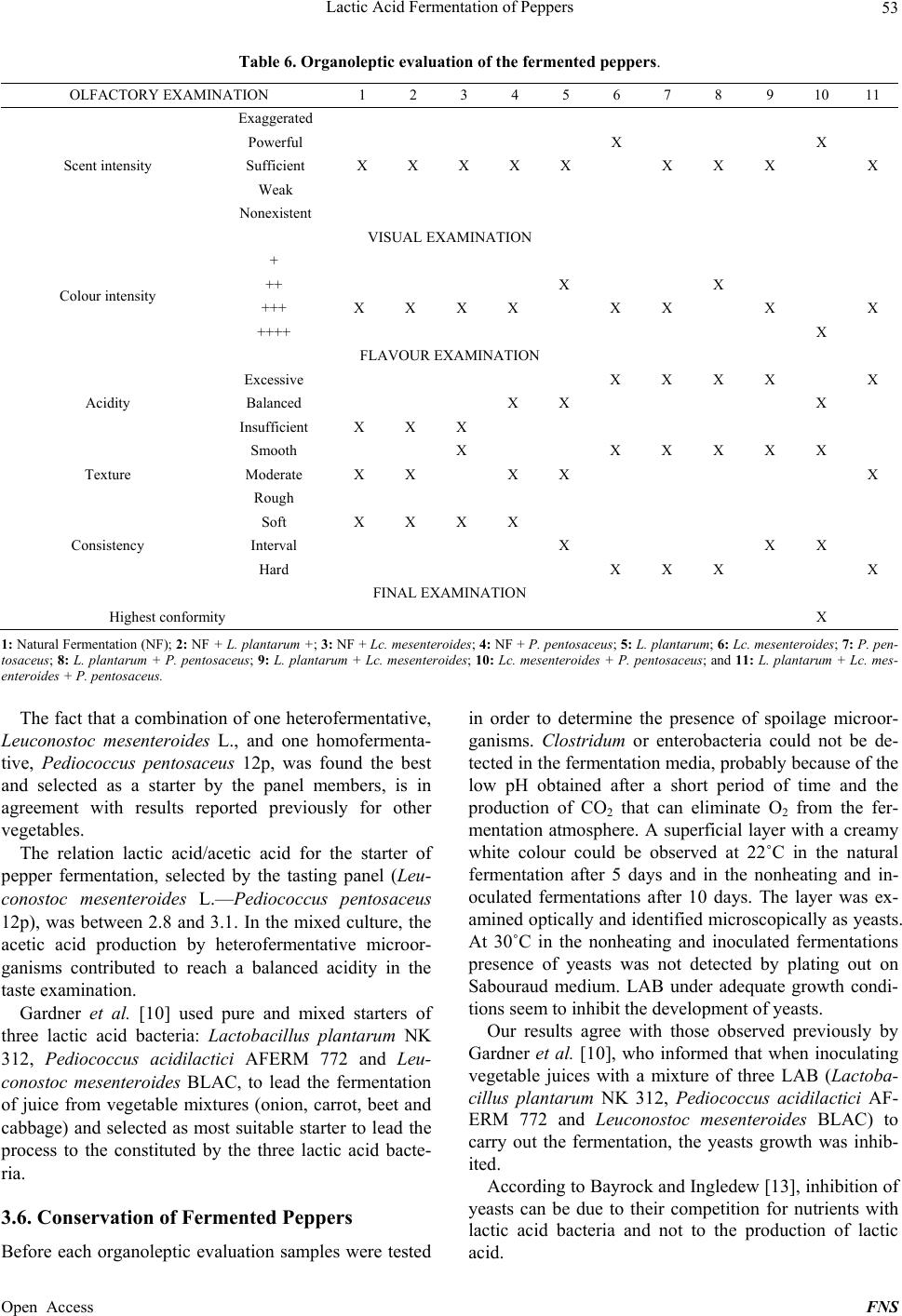 Lactic Acid Fermentation of Peppers 53 Table 6. Organoleptic evaluation of the fermented peppers. OLFACTORY EXAMINATION 1 2 3 4 5 6 7 8 9 10 11 Exaggerated Powerful X X Sufficient X X X X X X X X X Weak Scent intensity Nonexistent VISUAL EXAMINATION + ++ X X +++ X X X X X X X X Colour intensity ++++ X FLAVOUR EXAMINATION Excessive X X X X X Balanced X X X Acidity Insufficient X X X Smooth X X X X X X Moderate X X X X X Texture Rough Soft X X X X Interval X X X Consistency Hard X X X X FINAL EXAMINATION Highest conformity X 1: Natural Fermentation (NF); 2: NF + L . plan tarum +; 3: NF + Lc. mesenteroides; 4: NF + P. pentosaceus; 5: L. plantarum; 6: Lc. mesenteroides; 7: P. pen- tosaceus; 8: L. plantarum + P. pentosaceus; 9: L. plantarum + Lc. mesenteroides; 10: Lc. mesenteroides + P. pentosaceus; and 11: L. plantarum + Lc. mes- enteroides + P. pentosaceus. The fact that a combination of one heterofermentative, Leuconostoc mesenteroides L., and one homofermenta- tive, Pediococcus pentosaceus 12p, was found the best and selected as a starter by the panel members, is in agreement with results reported previously for other vegetables. The relation lactic acid/acetic acid for the starter of pepper fermentation, selected by the tasting panel (Leu- conostoc mesenteroides L.—Pediococcus pentosaceus 12p), was between 2.8 and 3.1. In the mixed culture, the acetic acid production by heterofermentative microor- ganisms contributed to reach a balanced acidity in the taste examination. Gardner et al. [10] used pure and mixed starters of three lactic acid bacteria: Lactobacillus plantarum NK 312, Pediococcus acidilactici AFERM 772 and Leu- conostoc mesenteroides BLAC, to lead the fermentation of juice from vegetable mixtures (onion, carrot, beet and cabbage) and selected as most suitable starter to lead the process to the constituted by the three lactic acid bacte- ria. 3.6. Conservation of Fermented Peppers Before each organoleptic evaluation samples were tested in order to determine the presence of spoilage microor- ganisms. Clostridum or enterobacteria could not be de- tected in the fermentation media, probably because of the low pH obtained after a short period of time and the production of CO2 that can eliminate O2 from the fer- mentation atmosphere. A superficial layer with a creamy white colour could be observed at 22˚C in the natural fermentation after 5 days and in the nonheating and in- oculated fermentations after 10 days. The layer was ex- amined optically and identified microscopically as yeasts. At 30˚C in the nonheating and inoculated fermentations presence of yeasts was not detected by plating out on Sabouraud medium. LAB under adequate growth condi- tions seem to inhibit the development of yeasts. Our results agree with those observed previously by Gardner et al. [10], who informed that when inoculating vegetable juices with a mixture of three LAB (Lactoba- cillus plantarum NK 312, Pediococcus acidilactici AF- ERM 772 and Leuconostoc mesenteroides BLAC) to carry out the fermentation, the yeasts growth was inhib- ited. According to Bayrock and Ingledew [13], inhibition of yeasts can be due to their competition for nutrients with lactic acid bacteria and not to the production of lactic acid. Open Access FNS  Lactic Acid Fermentation of Peppers 54 Bonestroo et al. [14] outlined that the inhibition of spoilage yeasts in fermented salads is probably due to a combination of the formation of lactic acid and CO2 and the reduction in concentration of residual oxygen. The large presence of health-promoting compounds and the sensory features of pepper fruits may encourage food processing that aims at preserving functional com- pounds and agreeable sensory characteristics for ex- tended shelf-life, possibly at room temperature [15-18]. Di Cagno et al. [17] demonstrated that fermentation by autochthonous and selected lactic acid bacteria strains (Lactobacillus plantarum, Lactobacillus curvatus and Weissella confusa), combined with heat treatment, al- lowed the manufacture and storage at room temperature (30 days) of safe red and yellow peppers with sensory attributes similar to raw fruits. The microbial and sensory features of peppers stored with sunflower seeds oil were almost similar to those stored without suspending liquid. In this study, two possible methods for pepper conser- vation were assayed after 30 days of fermentation: one in the some fermentation media and the other remove the peppers to the fermentation media and conserve them in commercial vinegar. The peppers conserved in the same media of fermenta- tion during 3 months, did not present significant modify- cations in the sensorial property. The survival of LAB after 3 months stayed in the order to 104 cfu/ml, suggest- ing the possibility of use pepper fermentation as source of probiotic. This could be given additional value to the fermentation of vegetables, and consider it as a func- tional food. Peppers conserved by the same period of time in vinegar, were excessively acid and had bleached com- pletely after two months of storage, probably due to de- stabilization of the peppers caused by the acidity. LAB, after 3 months, were not detected. Growth of pathogenic microorganisms was not de- tected under either conservation condition. However, it is more convenient to conserve fermented vegetables in their own fermentation media, because they do not nega- tively modify the sensorial properties and the survival of LAB after 3 months of storage are high. Peppers in commercial conserves lack skin, whereas in this peppers fermentation, the peppers were not peeled, since the fermentation process improves the digestibility of the skin. From the results it is possible to suggest that fermenta- tions be controlled at 30˚C, because the fast drop in pH gives greater microbiological stability to the product. Fermented vegetables are generally not pasteurized and do not have artificial preservatives. The use of LAB cultures with adequate technological conditions could acidify the media quickly and thus diminishing the pos- sibility of their deterioration during storage. LAB com- pete with other microorganisms for nutrients and space, so their growth eliminates undesirable microorganisms. Biopreservation is mainly due to the synthesis of a wide variety of antagonistic primary and secondary metabo- lites including organic acids, carbon dioxide [19]. Lactic acid fermentation undoubtedly represents the easiest and the most suitable way for increasing the daily consump- tion of fresh-like vegetables and fruits [18]. Moreover BAL consumption can exert beneficial effects on health level. In this work we have demonstrated the possibility of obtaining fermented peppers with excellent organoleptic qualities without inclusion of artificial additives. Con- trolled lactic acid fermentation of Capsicum annum could be an interesting technological procedure to conserve this product. 4. Acknowledgements This work was supported by grants from Consejo Na- cional de Investigaciones Científicas y Técnicas (CONI- CET), Consejo de Investigaciones de la Universi-dad Nacional de Tucumán (CIUNT). REFERENCES [1] K. H. Steinkraus, “Lactic Acid Fermentation in Produc- tion of Foods from Vegetables, Cereals and Legumes,” Antonie Van Leewenhoek, Vol. 49, No. 3, 1983, pp. 337- 348. http://dx.doi.org/10.1007/BF00399508 [2] E. Caplice and G. F. Fittzgerald, “Food Fermentations: Role of Microorganisms in Food Production and Preser- vation,” International Journal of Food Microbiology, Vol. 50, No. 1-2, 1999, pp.131-149. http://dx.doi.org/10.1016/S0168-1605(99)00082-3 [3] K. E. Spyropoulou, N. G. Chorianopoulos, P. N. Skanda- mis and G. J. Nychas, “Survival de Escherichia coli O157: H7 during the Fermentation of Spanish Style Green Ol- ives (Conserveola Variety) Supplemented with Different Carbon Sources,” International Journal of Food Micro- biology, Vol. 66, 2001, pp. 3-11. http://dx.doi.org/10.1016/S0168-1605(00)00510-9. [4] M. E. Arena, F. M. Saguir and M. C. Manca de Nadra, “Inhibition of Growth of Lactobacillus plantarum Isola- ted from Citrus Fruits in the Presence of Organics Acids,” Microbiology-Aliments-Nutrition, Vol. 14, No. 3, 1996, pp. 219-226. [5] S. A. Sajur, F. M. Saguir and M. C. Manca de Nadra, “Ef- fect of Dominant Specie of Lactic Acid Bacteria from To- mato on Natural Microflora Development in Tomato Pu- rée,” Food Cont rol, Vol. 18, No. 5, 2007, pp. 594-600. http://dx.doi.org/10.1016/j.foodcont.2006.02.006 [6] A. M. Strasser de Saad and M. C. Manca de Nadra, “Iso- lation and Identification of Lactic Acid Bacteria from Cafayate (Argentina) Wines,” Microbiology—Aliments —Nutrition, Vol. 5, 1987, pp. 45-49. [7] J. C. De Man, M. Rogosa and M. R. Sharpe, “A Medium Open Access FNS  Lactic Acid Fermentation of Peppers Open Access FNS 55 for the Cultivation of Lactobacilli,” Journal of Applied Bacteriology, Vol. 23, No. 1, 1960, pp. 130-135. http://dx.doi.org/10.1111/j.1365-2672.1960.tb00188.x [8] A. M. Wilson, T. M. Work, A. A. Bushway and R. J. Bu- shway, “HPLC Determination of Fructose, Glucose, and Sucrose in Potatoes,” Journal of Food Science, Vol. 46, No. 1, 1981, pp. 300-301. http://dx.doi.org/10.1111/j.1365-2621.1981.tb14589.x [9] S. Seseña, I. Sanchez Hurtado, M. A. González Vinas and L. Palop, “Contribution of Starter Culture to the Sensory Characteristics of Fermented Almagro Eggplants,” Inter- national Journal of Food Microbiology, Vol. 67, No. 3, 2001, pp. 197-205. http://dx.doi.org/10.1016/S0168-1605(01)00442-1 [10] N. J. Gardner, T. Savard, P. Obermeier, G. Caldwell and C. P. Champagne, “Selection and Characterization of Mi- xed Starter Cultures for Lactic Acid Fermentation of Carrot, Cabbage, Beet and Onion Vegetable Mixtures,” International Journal of Food Microbiology, Vol. 64, No. 3, 2001, pp. 261-275. http://dx.doi.org/10.1016/S0168-1605(00)00461-X [11] W. C. Frazir and D. C. Westhoff, “Contaminación, Con- servación y Alteración de las Hortalizas y de las Frutas,” Food Microbiology, McGraw Hill, New York, 1993, pp. 259-288. [12] M. R. Adams and M. O. Mosa, “Alimentos Fermentados y Alimentos Microbianos,” Microbiología de los Alimen- tos, Zaragoza,1995. [13] D. P. Bayrock and W. M. Ingledew, “Inhibition of Yeast by Lactic Acid Bacteria in Continuous Culture: Nutrient Depletion and/or Acid Toxicity?” Journal of Industrial Microbiology and Biotechnology, Vol. 31, No. 8, 2004, pp. 362-368. http://dx.doi.org/10.1007/s10295-004-0156-3 [14] M. H. Bonestroo, J. C. Wit, B. J. Kusters and F. M. Rombouts, “Inhibition of the Growth of Yeasts in Fer- mented Salads,” International Journal of Food Microbi- ology, Vol. 17, No. 4, 1993, pp. 311-320. http://dx.doi.org/10.1016/0168-1605(93)90201-Q [15] J. M. Navarro, P. Flores, C. Garrido and V. Martinez, “Changes in the Contents of Antioxidants Compounds in Pepper Fruits at Different Ripening Stages, as Affected by Salinity,” Food Chemistry, Vol. 96, No. 1, 2006, pp. 66-73. http://dx.doi.org/10.1016/j.foodchem.2005.01.057 [16] S. M. Castro, J. A. Saraiva, J. A. Lopes-da-Silva, I. Del- gadillo, A. Van Loey, C. Smout and M. Hendrickx, “Ef- fect of Thermal Blanching and High Pressure Treatments on Sweet Green and Red Bell Peppers Fruits (Capsicum annum L.),” Food Chemistry, Vol. 107, No. 4, 2008, pp. 1436-1449. http://dx.doi.org/10.1016/j.foodchem.2007.09.074 [17] R. Di Cagno, R. F. Surico, G. Minervini and M. De An- gelis, “Use of Autochthonous Starters to Ferment Red and Yellow Peppers (Capsicum annum L.) to Be Stored at Room Temperature,” International Journal of Food Mi- crobiology, Vol. 130, No. 2, 2009, pp. 108-116. http://dx.doi.org/10.1016/j.ijfoodmicro.2009.01.019 [18] R. Di Cagno, R. Coda, M. De Angelis and M. Gobbetti, “Exploitation of Vegetables and Fruits through Lactic Acid Fermentation,” Food Microbiology, Vol. 33, No. 1, 2013, pp. 1-10. http://dx.doi.org/10.1016/j.fm.2012.09.003 [19] L. Fan and L. Truelstrup Hansen, “Fermentation and Bio- preservation of Plant Based Foods with Lactic Acid Bac- teria,” In: Y. H. Hui, Ed., Handbook of Plant Based Fer- mented Food and Beverage Technology, 2nd Edition, CRC Press, Boca Raton, pp. 35-48. |