

Paper Menu >>
Journal Menu >>
 Open Journal of Obstetrics and Gynecology, 2013, 3, 35-40 OJOG http://dx.doi.org/10.4236/ojog.2013.39A005 Published Online November 2013 (http://www.scirp.org/journal/ojog/) Partner profile of pregnant women who have obstetric prenatal high risk in a university hospital south of Brazil Gisele Perin Guimarães1,2, Jussara Gue Martini3,4,5 1Clinical Nurse Neonatology Service of the Regional Hospital of St. Joseph, São José, Brazil 2Internment Facility Screening Obstetrical and Gynecological Hospital of the Federal University of Santa Catarina, Florianópolis, Brazil 3Department of Nu r sing and the Graduate Program in Nursing at UFSC, Florianópolis, Brazil 4Graduate Program in Respiratory Sciences, Federal University of Rio Grande do Sul, Porto Alegre, Brazil 5Center for Health Research, Researcher Group Research in Nursing and Health Education and IEG, Florianópolis, Brazil Email: [email protected], [email protected] Received 23 September 2013; revised 20 October 2013; accepted 27 October 2013 Copyright © 2013 Gisele Perin Guimarães, Jussara Gue Martini. This is an open access article distributed under the Creative Com- mons Attribution License, which permits unrestricted use, distribution, and reproduction in any medium, provided the original work is properly cited. ABSTRACT This study aimed to relate the social and obstetric risk factors presented by pregnant women who un- derwent high risk prenatal in a southern Brazil hos- pital unit. This is a quantitative research. The data collection was conducted from January to September 2012, where 12 high-risk pregnancies and nine com- panions with diversified social and obstetric condi- tions were seen. The analysis was by simple statistics. Pregnant women social profile results indicated that predominant age group was 31 to 40 years old; all had some degree of education; 84% Catholic; 75% of pregnant women were accompanied by someone of their choice during high risk prenatal care; and 50% of the choices were for her spouse; half of these preg- nant women have a professional occupation. Obstet- rics findings demonstrated that the majority of women were not planning on the pregnancy, only 17% started prenatal care in the first trimester, 42% had already presented risk in previous pregnancy, 58% of women were classified as high risk due to fetal abnormalities. Given these findings, it is clear that high-risk preg- nancy as a period involving several factors, including social and obstetric that, when connected, can com- promise the process of gestating for both the mother and the fetus. Keywords: Pregnancy; Prenatal Care; High Risk; Nursing 1. INTRODUCTION Pregnancy is considered as a physiological event in a couple’s life, with a period of evolution, mostly un- eventful, surrounded by sensations that generate pleasure and expectation s in the months that follow until the end- ing weeks of gestation. However, this period considered physiologic in women’s lives, it is often modified as a result of certain conditions, which triggers specific char- acteristics that may evolve unfavorably, representing both maternal and fetal risks, with the possibility to ad- mission at a hospital. Women who experience a pregnancy outside the nor- mal range and that are perceived in a health-disease process are called “high risk pregnancies” [1]. The maternal and fetal risks are not only related to ob- stetric factors of the current pregnancy, but also external factors that aggregate unfavorable situations to a favor- able evolution of the pregnancy, those directly related to social conditi on s, an d hi st o ry of previous pregnancies. Another factor that must be taken into consideration is the high number of pregnant teens in our midst, and that has been associated with an increased frequency of ad- verse obstetric outcomes such as low birth weight, pre- mature delivery, maternal death and perinatal mortality, preeclampsia and cesarean birth, among others. Not that these are classified as high risk, but the possibility of be- coming in the course of pregnancy is higher when com- pared wit h pregnant women of ot he r a ge groups [2]. Therefore, this article aims to understand the social and obstetric profile of pregnant women who underwent prenatal high risk in a hospital in southern Brazil. The importance of identifying the social and obstetric profile of pregnant women helps promote a deeper un- derstanding of the family contexts advantages and diffi- culties and its relationship, as well as, the risk that rated OPEN ACCESS 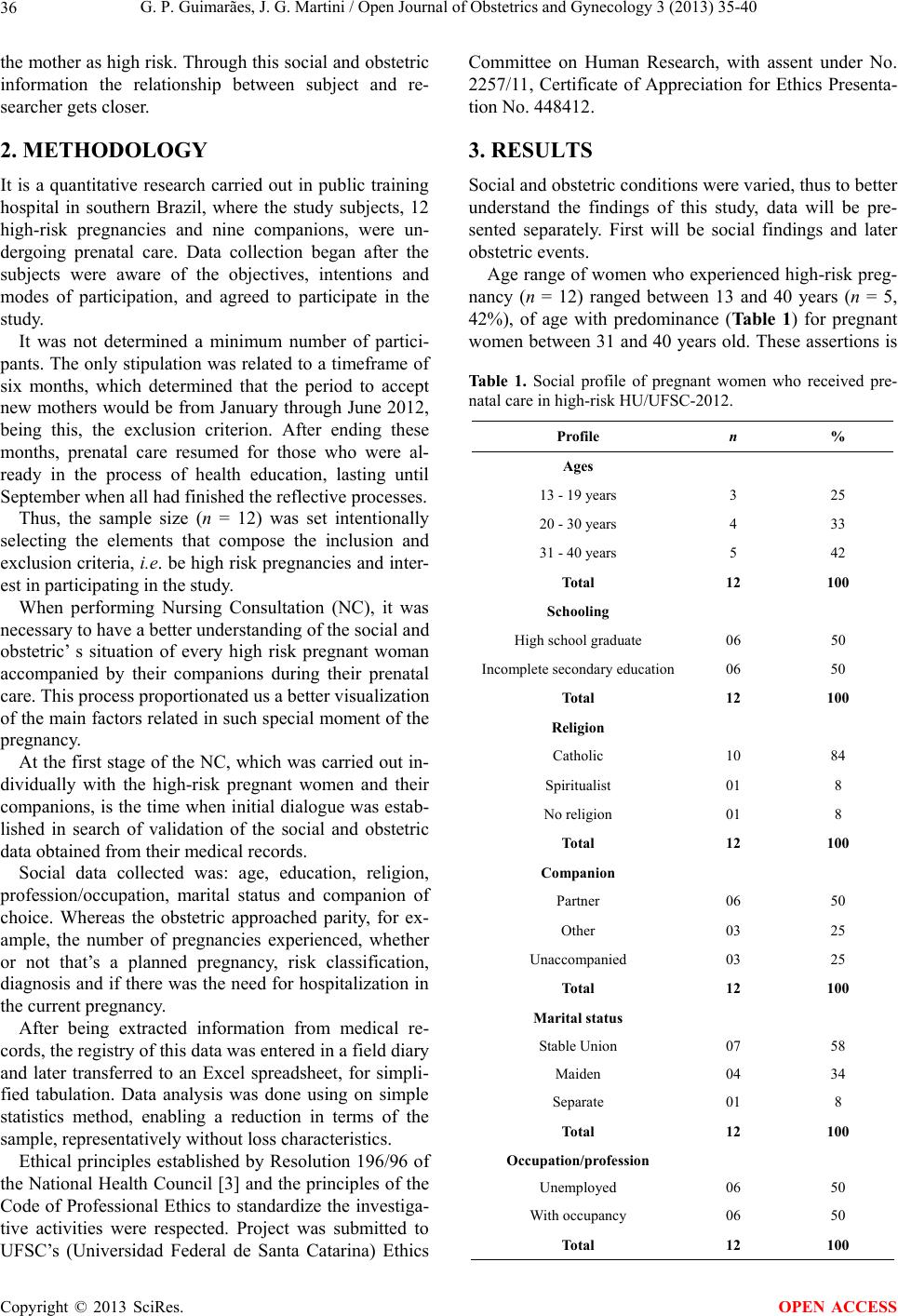 G. P. Guimarães, J. G. Martini / Open Journal of Obstetrics and Gynecology 3 (2013) 35-40 36 the mother as high risk. Through this social and obstetric information the relationship between subject and re- searcher get s closer. 2. METHODOLOGY It is a quantitative research carried out in public training hospital in southern Brazil, where the study subjects, 12 high-risk pregnancies and nine companions, were un- dergoing prenatal care. Data collection began after the subjects were aware of the objectives, intentions and modes of participation, and agreed to participate in the study. It was not determined a minimum number of partici- pants. The only stipu lation was related to a timeframe of six months, which determined that the period to accept new mothers would be from January through June 2012, being this, the exclusion criterion. After ending these months, prenatal care resumed for those who were al- ready in the process of health education, lasting until September when all had finished the reflective processes. Thus, the sample size (n = 12) was set intentionally selecting the elements that compose the inclusion and exclusion criteria, i.e. be high risk pregnancies and inter- est in participating in th e study. When performing Nursing Consultation (NC), it was necessary to have a better understanding of the social and obstetric’ s situation of every high risk pregnant woman accompanied by their companions during their prenatal care. This process proportionated us a better visualization of the main factors related in such special moment of the pregnancy. At the first stage of the NC, which was carried out in- dividually with the high-risk pregnant women and their companions, is the time when initial dialog ue was estab- lished in search of validation of the social and obstetric data obtained from their medical records. Social data collected was: age, education, religion, profession/occupation, marital status and companion of choice. Whereas the obstetric approached parity, for ex- ample, the number of pregnancies experienced, whether or not that’s a planned pregnancy, risk classification, diagnosis and if there was the need for hospitalizatio n in the current pregnancy. After being extracted information from medical re- cords, the registry of this data was entered in a field diary and later transferred to an Excel spreadsheet, for simpli- fied tabulation. Data analysis was done using on simple statistics method, enabling a reduction in terms of the sample, representatively without loss characteristics. Ethical principles established by Resolution 196/96 of the National Health Coun cil [3] and the principles of the Code of Professional Ethics to standardize the investiga- tive activities were respected. Project was submitted to UFSC’s (Universidad Federal de Santa Catarina) Ethics Committee on Human Research, with assent under No. 2257/11, Certificate of Appreciation for Ethics Presenta- tion No. 448412. 3. RESULTS Social and obstetric conditions were varied, thus to better understand the findings of this study, data will be pre- sented separately. First will be social findings and later obstetric events. Age range of women who experienced high-risk preg- nancy (n = 12) ranged between 13 and 40 years (n = 5, 42%), of age with predominance (Ta b l e 1) for pregnant women between 31 and 40 years old. These assertions is Table 1. Social profile of pregnant women who received pre- natal care in high-risk HU/UFSC-2012. Profile n % Ages 13 - 19 years 3 25 20 - 30 years 4 33 31 - 40 years 5 42 Total 12 100 Schooling High school graduate 06 50 Incomplete secondary education06 50 Total 12 100 Religion Catholic 10 84 Spiritualist 01 8 No religion 01 8 Total 12 100 Companion Partner 06 50 Other 03 25 Unaccompanied 03 25 Total 12 100 Marital status Stable Unio n 07 58 Maiden 04 34 Separate 01 8 Total 12 100 Occupation/profession Unemployed 06 50 With occupancy 06 50 Total 12 100 Copyright © 2013 SciRes. OPEN ACCESS 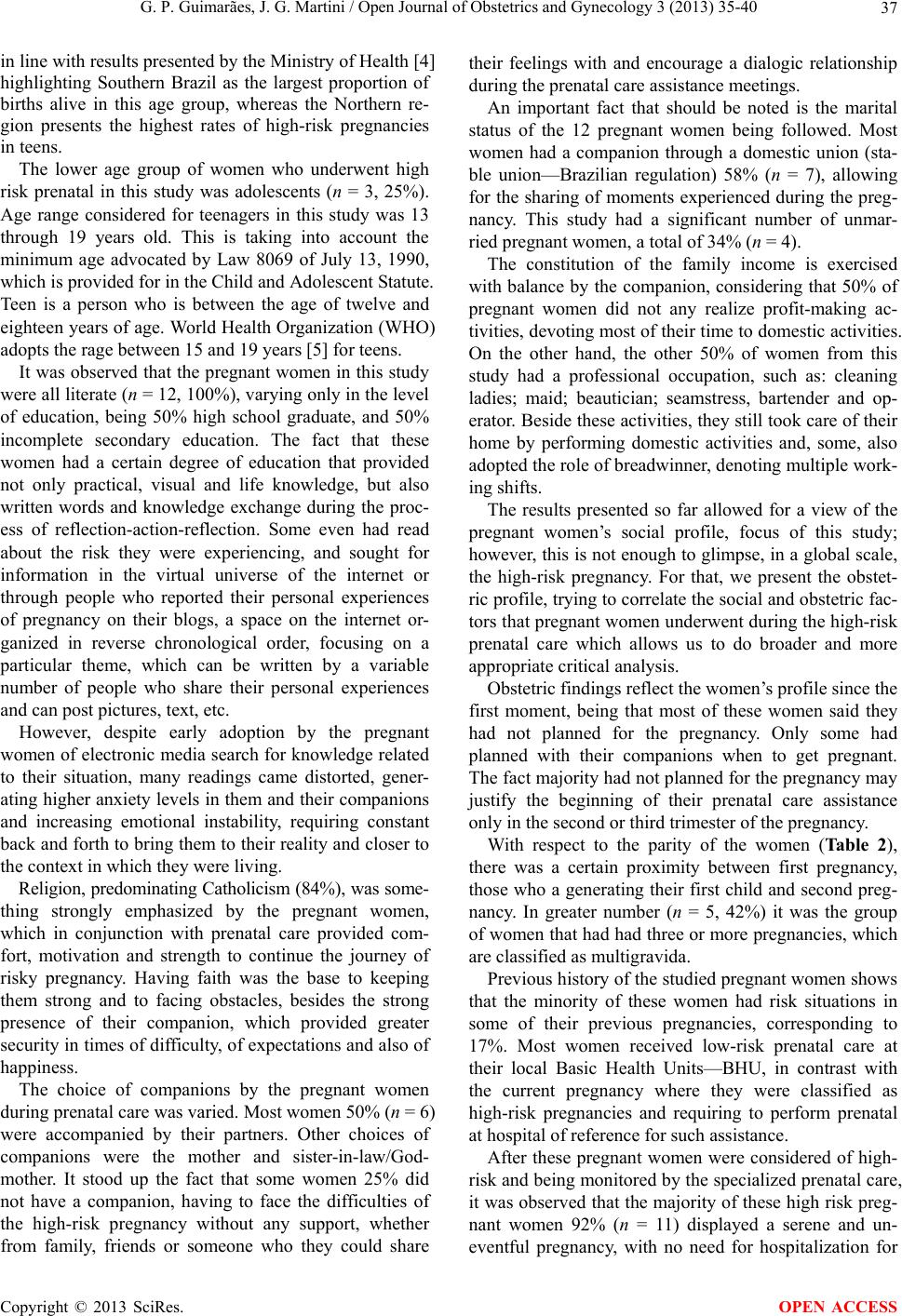 G. P. Guimarães, J. G. Martini / Open Journal of Obstetrics and Gynecology 3 (2013) 35-40 37 in line with results presented by the Min istry of Health [4] highlighting Southern Brazil as the largest proportion of births alive in this age group, whereas the Northern re- gion presents the highest rates of high-risk pregnancies in teens. The lower age group of women who underwent high risk prenatal in this study was adolescents (n = 3, 25%). Age range considered for teenagers in this study was 13 through 19 years old. This is taking into account the minimum age advocated by Law 8069 of July 13, 1990, which is provided for in the Child and Ad olescent Statute. Teen is a person who is between the age of twelve and eighteen years of age. World Health Organization (WHO) adopts the rage between 15 and 19 years [5] for teens. It was observed that the pregnant women in this study were all literate (n = 12, 100%), varying only in the level of education, being 50% high school graduate, and 50% incomplete secondary education. The fact that these women had a certain degree of education that provided not only practical, visual and life knowledge, but also written words and knowledge exchange during the proc- ess of reflection-action-reflection. Some even had read about the risk they were experiencing, and sought for information in the virtual universe of the internet or through people who reported their personal experiences of pregnancy on their blogs, a space on the internet or- ganized in reverse chronological order, focusing on a particular theme, which can be written by a variable number of people who share their personal experiences and can post pictures, text, etc. However, despite early adoption by the pregnant women of electronic media search for knowledge related to their situation, many readings came distorted, gener- ating higher anxiety levels in them and their companions and increasing emotional instability, requiring constant back and forth to bring them to th eir reality and closer to the context in which they were living . Religion, predominating Catholicism (84%), was some- thing strongly emphasized by the pregnant women, which in conjunction with prenatal care provided com- fort, motivation and strength to continue the journey of risky pregnancy. Having faith was the base to keeping them strong and to facing obstacles, besides the strong presence of their companion, which provided greater security in times of difficulty, o f expectations and also of happiness. The choice of companions by the pregnant women during prenatal care was varied. M ost women 50% (n = 6) were accompanied by their partners. Other choices of companions were the mother and sister-in-law/God- mother. It stood up the fact that some women 25% did not have a companion, having to face the difficulties of the high-risk pregnancy without any support, whether from family, friends or someone who they could share their feelings with and encourage a dialogic relationship during the prenatal care assistance meetings. An important fact that should be noted is the marital status of the 12 pregnant women being followed. Most women had a companion through a domestic union (sta- ble union—Brazilian regulation) 58% (n = 7), allowing for the sharing of moments experienced during the preg- nancy. This study had a significant number of unmar- ried pregnant women, a total of 34% (n = 4). The constitution of the family income is exercised with balance by the companion, considering that 50% of pregnant women did not any realize profit-making ac- tivities, devoting most of their time to domestic activities. On the other hand, the other 50% of women from this study had a professional occupation, such as: cleaning ladies; maid; beautician; seamstress, bartender and op- erator. Beside these activities, they still took care of their home by performing domestic activities and, some, also adopted the role of br eadwinner, denoting multiple work- ing shifts. The results presented so far allowed for a view of the pregnant women’s social profile, focus of this study; however, this is not enough to glimpse, in a global scale, the high-risk pregnancy. For that, we present the obstet- ric profile, trying to correlate the social and obstetric fac- tors that pregnant women underwent during the high-risk prenatal care which allows us to do broader and more appropriate critical analysis. Obstetric findings reflect the women’s profile since the first moment, being that most of these women said they had not planned for the pregnancy. Only some had planned with their companions when to get pregnant. The fact majority had not planned for the pregnancy may justify the beginning of their prenatal care assistance only in the second or third trimester of the pregnancy. With respect to the parity of the women (Table 2), there was a certain proximity between first pregnancy, those who a generating their first child and second preg- nancy. In greater number (n = 5, 42%) it was the group of women that had had three or more pregnancies, which are classified as multigravida. Previous history of the studied pregnant women shows that the minority of these women had risk situations in some of their previous pregnancies, corresponding to 17%. Most women received low-risk prenatal care at their local Basic Health Units—BHU, in contrast with the current pregnancy where they were classified as high-risk pregnancies and requiring to perform prenatal at hospital of reference for such assistance. After these pregnant women were considered of high- risk and being monitored by the specialized prenatal care, it was observed that the majority o f these high risk preg- nant women 92% (n = 11) displayed a serene and un- eventful pregnancy, with no need for hospitalization for Copyright © 2013 SciRes. OPEN ACCESS 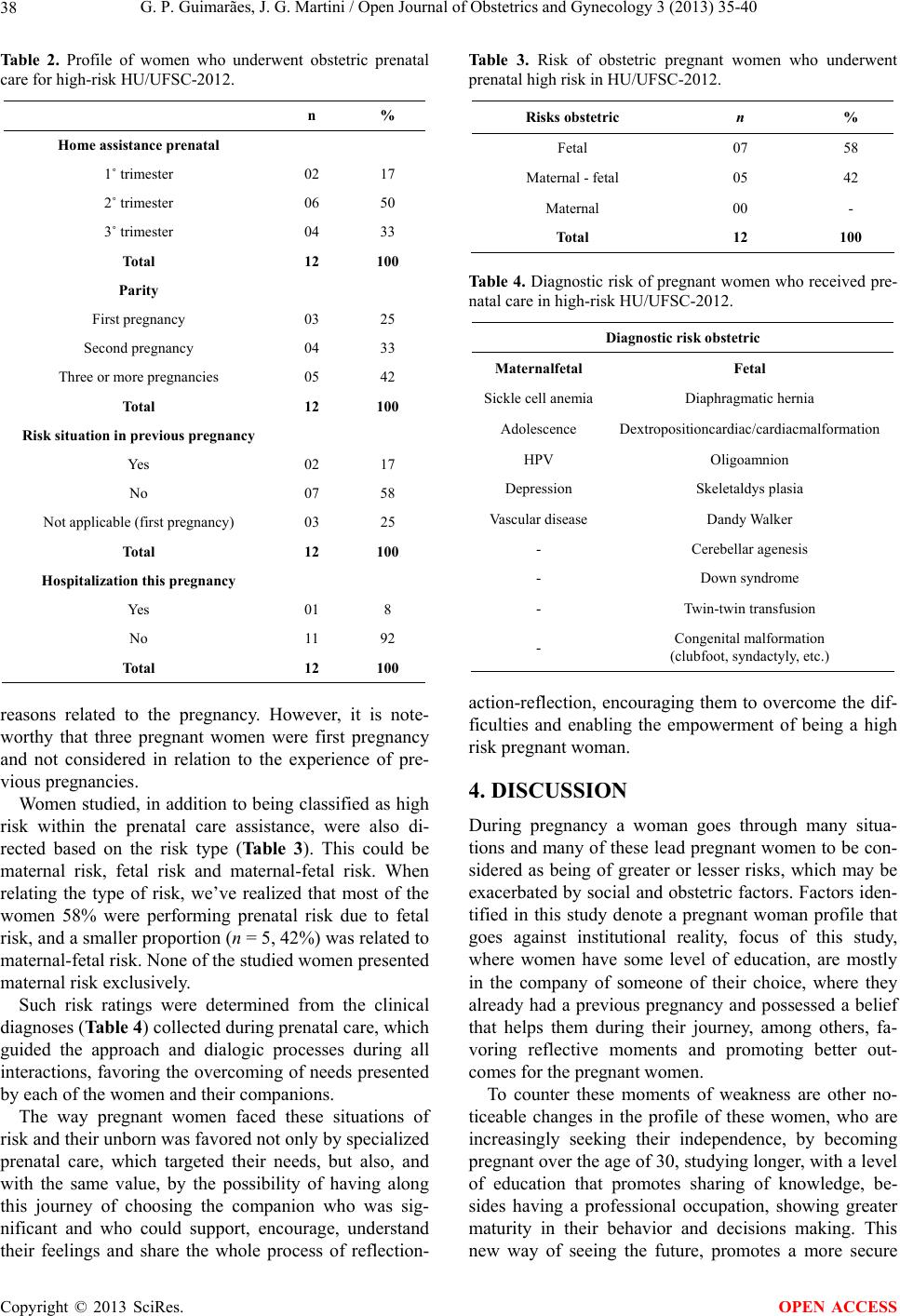 G. P. Guimarães, J. G. Martini / Open Journal of Obstetrics and Gynecology 3 (2013) 35-40 38 Table 2. Profile of women who underwent obstetric prenatal care for high-risk HU/UFSC-2012. n % Home assistance prenatal 1˚ trimester 02 17 2˚ trimester 06 50 3˚ trimester 04 33 Total 12 100 Parity First pregnancy 03 25 Second pregnancy 04 33 Three or more pregnancies 05 42 Total 12 100 Risk situation in previous pregnancy Yes 02 17 No 07 58 Not applicable (first pregnancy) 03 25 Total 12 100 Hospitalization this pregnancy Yes 01 8 No 11 92 Total 12 100 reasons related to the pregnancy. However, it is note- worthy that three pregnant women were first pregnancy and not considered in relation to the experience of pre- vious pregnancies. Women studied, in addition to being classified as high risk within the prenatal care assistance, were also di- rected based on the risk type (Table 3). This could be maternal risk, fetal risk and maternal-fetal risk. When relating the type of risk, we’ve realized that most of the women 58% were performing prenatal risk due to fetal risk, and a smaller propor tion (n = 5, 42%) was related to maternal-fetal risk. None of the studied women presented maternal risk exclusively. Such risk ratings were determined from the clinical diagnoses (Table 4) collected during prenatal care, which guided the approach and dialogic processes during all interactions, favoring the overco ming of needs presented by each of the women and their companions. The way pregnant women faced these situations of risk and their unborn was favored not only by specialized prenatal care, which targeted their needs, but also, and with the same value, by the possibility of having along this journey of choosing the companion who was sig- nificant and who could support, encourage, understand their feelings and share the whole process of reflection- Table 3. Risk of obstetric pregnant women who underwent prenatal high risk in HU/UFSC-2012. Risks obstetric n % Fetal 07 58 Maternal - fetal 05 42 Maternal 00 - Total 12 100 Table 4. Diagnostic risk of pregnant women who received pre- natal care in high-risk HU/UFSC-2012. Diagnostic risk obstetric Maternalfetal Fetal Sickle cell anemiaDiaphra gmatic hernia Adolescence Dextropositioncardiac/cardiacmalformation HPV Oligoamnion Depression Skeletaldys plasia Vascular disease Dandy Walker - Cerebellar agenesis - Down syndrome - Twin-twin transfusion - Congenital malformation (clubfoot, syndactyly, etc.) action-reflection, encouraging them to overcome the dif- ficulties and enabling the empowerment of being a high risk pregnant wom a n . 4. DISCUSSION During pregnancy a woman goes through many situa- tions and many of these lead pregnant women to be con- sidered as being of greater or lesser risks, which may be exacerbated by social and obstetric factors. Factors iden- tified in this study denote a pregnant woman profile that goes against institutional reality, focus of this study, where women have some level of education, are mostly in the company of someone of their choice, where they already had a previous pregnancy and possessed a belief that helps them during their journey, among others, fa- voring reflective moments and promoting better out- comes for the pregnant women. To counter these moments of weakness are other no- ticeable changes in the profile of these women, who are increasingly seeking their independence, by becoming pregnant over the age of 30, studying longer, with a level of education that promotes sharing of knowledge, be- sides having a professional occupation, showing greater maturity in their behavior and decisions making. This new way of seeing the future, promotes a more secure Copyright © 2013 SciRes. OPEN ACCESS  G. P. Guimarães, J. G. Martini / Open Journal of Obstetrics and Gynecology 3 (2013) 35-40 39 and determined acting. In line with the findings of this study are the notes made by [6] that highlight the main reasons for an ad- vanced maternal age pregnancy, among these, the desire to invest in their academic training/studying and profes- sional career; a choice for a later stable conjugal rela- tionship; the formation of new unions; infertility prob- lems among others. On the other hand, the age of the women above 30 years is identified as a factor directly related to maternal mortality, particularly when associated with multigravida and other risk factors such as, low literacy and the ab- sence of a companion during pregnancy. Therefore, women in this age group should be considered as high- risk pregnancies and will receive qualified prenatal care, tailored to their needs [7]. Despite their maturity, sentiment of insecurity, uncer- tainty, anxieties arise and are intensified at all times when confronted with new scenarios. However, these feelings are mitigated by faith and the belief of a higher Being, regardless of religious belief. It is this greater Being that gives strength and courage to face the diffi- culties during the course of the high risk prenatal [8]. Factors such as maturity of the studied pregnant women, linked to the faith that motivates them to keep going can be associated, in most cases, to the emotional support received from their companions, as well as their family, where the latter two, as faith, can provide for better emotional stability. Although some pregnant women were not accompa- nied by their spouses during the high risk prenatal care, they were able to count on someon e close to them, which proportionated a participatory presence in moments of reflection-action-reflection. For these ladies, it is impor- tant to build, in a collective space, their life stories, where they can share wishes and desires [9]. Several scientific studies, both domestic and interna- tional attest to the benefits of having the presence of a companion. Besides feeling more secure during the course of pregnancy, these women also demonstrated more confidence during labo r [10]. However, we must consider that the absence of a sig- nificant other during the prenatal care is unfavorable to overcoming difficulties, not only during these times, but especially regarding the continuation of the dialog and on the return home, to the workplace and to the family. Therefore, when the pregnant woman does not have a person of reference, it is important that the relationship between mother and nurse be even closer and stronger, as many of these women consider the nurse as being this particular provider of security and attention. Regardless of the situation, in the world of a high risk pregnancy, nursing consultations should be surrounded by a lot of dialogue, reflection and action throughout the whole time information is being shared. Authors [11] point out to the importance of nurses in the prenatal care, as besides answering questions to the pregnant women and their companions during the meet- ings, this professional class has been contributing for the strengthening of a relationship of trust and closeness, as well as, providing comprehensive care with educational actions to the pregnant women, their unborn baby and companion. Perhaps, a strong influence over the lack of compan- ionship during the prenatal care of high risk in this study may be related to unplanned pregnancy. This factor also has strong relationship to the late beginning of prenatal care, in the second trimester of pregnancy, which is a period where these women begin to understand the physical and emotional changes typical of the gestational developing period, when they seek for health services to start the prenatal care. In those situations where there was no planned preg- nancy, risk factors for recurrence should be considered, especially when the mother is a teenager [12]. Thus, preventive care for a new pregnancy should be part of the educational and reflective actions during the high risk prenatal care. For most pregnant women, the experienced risk in the pregnancy is something unique, not previously lived, that’s because it is their first pregnancy or for previous pregnancy being within a favorable development and classified as low risk. The experience of the current pregnancy of risk, was monitored, in almost all pregnant women, as outpatient, in other words, it was managed to keep the situation of fetal or maternal-fetal risk adequately controlled an d sta- ble, with no need for hospitalization at the maternity ward. 5. FINAL CONSIDERATIONS In spite of the wide range of diagnoses identified during the course of pregnancy, we noticed that the most classi- fication of obstetric risk was related to pathologies such depressive state and even depression. The latter is con- sidered as the disease of the century, and when combined with hormonal and mood changes, it generates instability and disbelief of a promising future. Based on our findings, we realized that the high risk pregnancy as a period that involves many factors, among them, social and obstetric that when connected, can com- promise the gestation process for both the mother and the fetus. In this sense, it is essential that the nurse, as an active professional during the prenatal care, promote a space that allows for dialog among all individuals within the pregnancy context, who are the pregnant woman, her companion and healthy professionals, by offering mo- Copyright © 2013 SciRes. OPEN ACCESS  G. P. Guimarães, J. G. Martini / Open Journal of Obstetrics and Gynecology 3 (2013) 35-40 Copyright © 2013 SciRes. 40 ments of dialogue, reflections and actions that will pro- gressively facilitate the overcoming of difficulties ex- perienced during high risk pregnancies. OPEN ACCESS Among the study limitations, we can cite the absence of a spouse, for we could profile the couple and family better understand the organization as well as the lack of studies more specifically for high-risk pregnancies. We suggest that further studies look in depth to the pregnant women’s social and obstetric reality in their institution, and that they understand how to create a dia- logue channel among professionals, pregnant women and their companions, so that they can better d eal with issues that permeate a risky pregnancy, promoting actions to overcome difficulties experienced during the entire ges- tational period, that will help these individuals play an active role in the changes related to their own life story. Among the recommendations, we believe that there is a need for a broader look by professionals who assist in high risk prenatal care, where the nur se should know the social and obstetric situation of each of the pregnant women and their companions, allowing them to correlate the main risk factors in an attempt to minimize them in the current pregnancy. REFERENCES [1] Brazil, Ministry of Health, Department of Health Policy (2000) Technical Manual of high risk pregnancy. 3rd Edition, Ministry of Health, Brasilia. [2] Magalhaes, M.L., et al. (2006) Pregnancy in early and late adolescence: No difference in obstetric risks? Revista Brasileira de Ginecologia e Obstetrícia, 28, 446-452. http://www.scielo.br/scielo.php?script=sci_arttext&pid=S 0100-72032006000800002&lng=pt&nrm=iso [3] Brazil, the National Health Council (1996) Guidelines and rules for human research. Resolution No. 196, CNS, Brasilia. [4] Brazil, Ministry of Health, Office of Strategic and Participative Management. Department Articulation Inter federativa (2012) Guidelines on indicators of agreeing on guidelines, objectives and goals in 2012. Ministry of Health, Brasilia. [5] Walselfisz, J.J. (2012) Map of violence 2012 children and adolescents in Brazil. Brazil Cebela FLACSO, Rio de Janeiro. [6] Gravena, A.A.F., et al. (2012) Perinatal outcome in pre- gnancies later. Revista da Escola de Enfermagem da USP, 46, 15-21. [7] Soares, V.M.N., Schor, N. and Tavares, C.M. (2008) Lives risky: A reflection on the relationship between the number of pregnancies and maternal mortality. Brazilian Journal of Human Growth and Development, 18, 254-263. http://producao.usp.br/handle/BDPI/14320 [8] Baldwin, L.S.C., et al. (2011) Spirituality, coping and nursing: An integrative literature review. http://www.revista.ufpe.br/revistaenfermagem/index.php/ revista/article/viewFile/1737/pdf_456 [9] Basso, J.F. and Monticelli, M. (2010) Expectations, preg- nant women and caregivers for humanized birth. Latin American Journal of Nursing, 18, 390-397. [10] Lessa, R. and da Rose, A.H.V. (2010) Nursing and host: An importance of dialogic interaction in prenatal. http://dialnet.unirioja.es/servlet/articulo?codigo=3651897 [11] Cunha, M.A., Mamede, M.V.L., Dotto, M.G. and Mam- ede, F.V. (2009) Prenatal care: Essential skills performed by nurses. Escola Anna Nery Revista de Enfermagem, 13, 145-153. [12] Silva, A.A., et al. (2013) Factors associated with recur- rence of teenage pregnancy in a maternity hospital: Case- control study. Cad Public Health, Rio de Janeiro, 29, 496-506. |