

Paper Menu >>
Journal Menu >>
 Open Journal of Applied Sciences, 2013, 3, 430-435 Published Online November 2013 (http://www.scirp.org/journal/ojapps) http://dx.doi.org/10.4236/ojapps.2013.37053 Open Access OJAppS Efficacy of Different Conc entrations of Aloe chabaudii Leaf Gel as a Substitute for a Sulfonamide for the Control of Avian Coccidiosis Marvelous Sungirai, Moses Mucheni, Lawrence Masaka Department of Livestock and Wildlife Management, Midlands State University, Gweru, Zimbabwe Email: [email protected] Received July 24, 2013 ; revised September 26, 2013 ; accepted October 4, 2013 Copyright © 2013 Marvelous Sungirai et al. This is an open access article distributed under the Creative Commons Attribution Li- cense, which permits unrestricted use, distribution, and reproduction in any medium, provided the original work is properly cited. ABSTRACT The objective of this study was to investigate the effectiveness of Aloe chabaud ii schonland juice as a potential substi- tute of sulphonamide drugs and to measure its effects when administered at different concentrations in the control of avian coccidiosis. 30 cobb and 500 broiler chickens were used for the experiment. The broilers were randomised into six groups of five birds each and the groups were assigned to six treatments in a Complete Randomised Design (CRD). Four of the groups were given any one of the following treatments, different concentrations of Aloe (weight/volume: 10%, 20% and 30%) and a sulphonamide. There was a control group which was not given a treatment and one cohort group which was neither infected nor treated. At two weeks of age, 25 of the birds were infected with coccidia via drinking water using infected chicken fecal matter, while the remaining five birds were left uninfected. Infection pro- ceeded for 1 week and after the infection period, fecal oocysts were counted from each individual bird using the McMaster technique. Treatments started one day after the infection and continued for one week after 20 gram samples of fecal matter were taken from each bird per treatment and oocysts were counted. After oocyst counting, all birds were slaughtered and lesion scoring was done on the intestines using the Johnson and Reid technique. Data was analysed for oocysts count in different treatments, fecal egg count reduction, relative risk of coccidiosis and the effectiveness of Aloe concentrations as a substitute for a commercial sulphonamide. The results showed that the concentrations of Aloe used in the experiment were not effective as compared to the sulphonamide in controlling coccidiosis as the fecal egg reduc- tion was below 90% for all concentrations. The relative risk of coccidiosis infection in the farm was found to be 100%, meaning that coccidiosis is a disease of economic importance at the farm. However, there was a reduction in the fecal oocyst count with increase in Aloe juice concentration to control coccidiosis, though this could not be compared to sul- phonamide (ESB3) which was more effective (p < 0.05). This study has shown that there is potential for use of Aloe chabaudii leaf gel as a chemotherapeutic though much research is needed to determine absolute concentrations which will make it comparable to commercially available drugs in terms of efficacy. Keywords: Aloe chabaudii; Coccidiosis; Sulphonamide; Efficacy 1. Introduction Avian coccidiosis is among the most costly and wide- spread infectious diseases in the poultry industry [1]. In Zimbabwe, the disease is of socio-economic importance among newly resettled and rural poultry farmers [2]. The land reform programme which started in the year of 2000 led to an increase in the number of small scale broiler farmers countrywide. Many of these farmers practice ex- tensive to semi-extensive poultry production. This is comprised mainly of a wide range of free range and broiler chicken farming, where disease incidence of poul- try coccidiosis has been on the rise [2]. The majority of resettled farmers still use primitive production structures such as poor poultry housing, and this coupled together with the use of untreated water from unprotected water sources such as dams, open wells and rivers increases the chance of incidences of diseases such as avian coccidiosis. Due to the liquidity challenges the country currently faces, resource-poor farmers are unable to purchase commercial drugs, and this coupled together with the closure of veterinary shops in commu- nal and resettlement areas leads to challenges in the con- 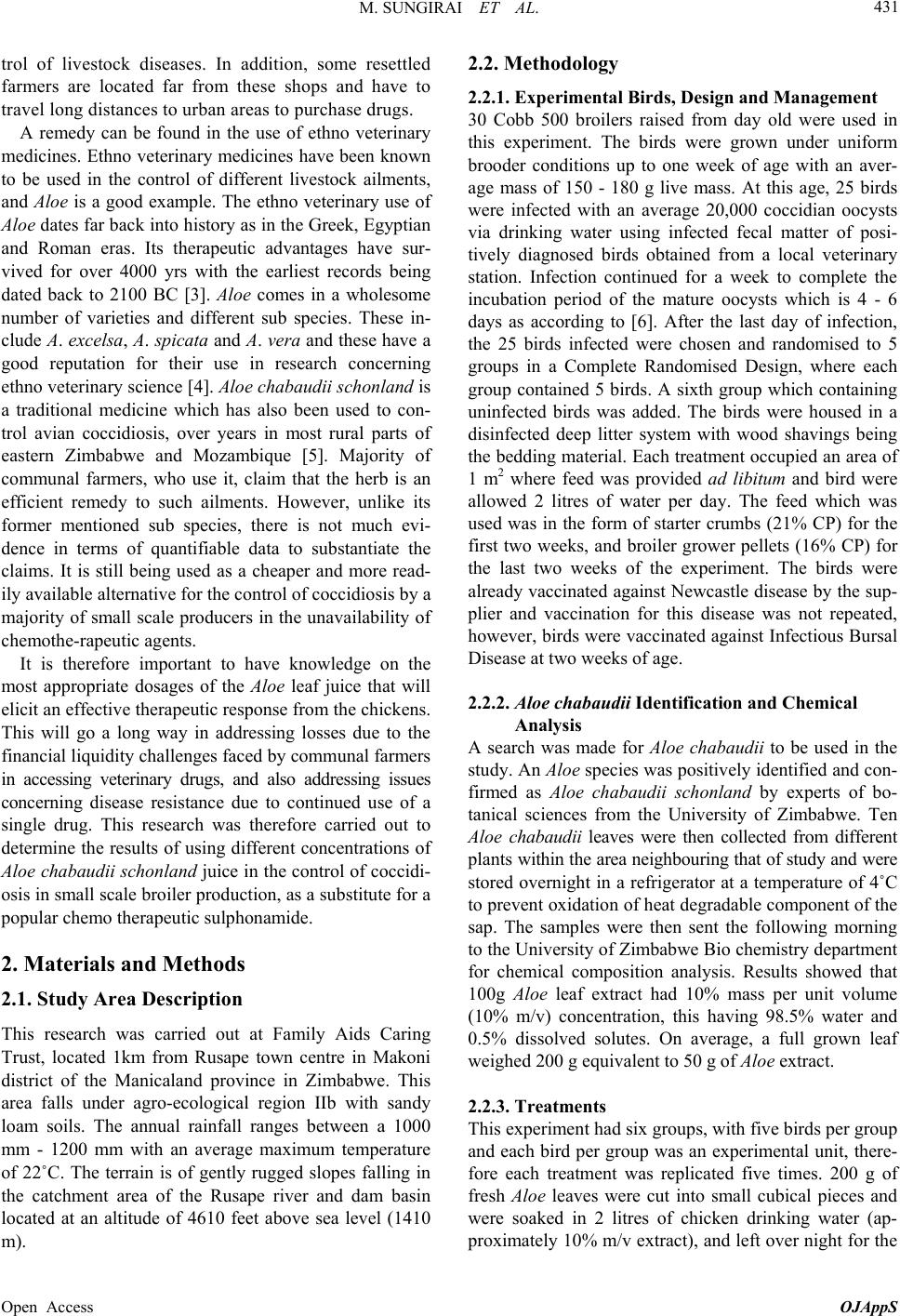 M. SUNGIRAI ET AL. 431 trol of livestock diseases. In addition, some resettled farmers are located far from these shops and have to travel long distances to urban areas to purchase drugs. A remedy can be found in the use of ethno veterinary medicines. Ethno veterinary medicines have been known to be used in the control of different livestock ailments, and Aloe is a good example. The ethno veterinary use of Aloe dates far back into history as in the Greek, Egyptian and Roman eras. Its therapeutic advantages have sur- vived for over 4000 yrs with the earliest records being dated back to 2100 BC [3]. Aloe comes in a wholesome number of varieties and different sub species. These in- clude A. excelsa, A. spicata and A. vera and these have a good reputation for their use in research concerning ethno veterinary science [4]. Aloe chabaudii schonland is a traditional medicine which has also been used to con- trol avian coccidiosis, over years in most rural parts of eastern Zimbabwe and Mozambique [5]. Majority of communal farmers, who use it, claim that the herb is an efficient remedy to such ailments. However, unlike its former mentioned sub species, there is not much evi- dence in terms of quantifiable data to substantiate the claims. It is still being used as a cheaper and more read- ily available alternative for the control of coccidiosis by a majority of small scale producers in the unavailability of chemothe-rapeutic agents. It is therefore important to have knowledge on the most appropriate dosages of the Aloe leaf juice that will elicit an effective therapeutic response from the chickens. This will go a long way in addressing losses due to the financial liquidity challenges faced by communal farmers in accessing veterinary drugs, and also addressing issues concerning disease resistance due to continued use of a single drug. This research was therefore carried out to determine the results of using different concentrations of Aloe chabaudii schonland juice in the control of coccidi- osis in small scale broiler production, as a substitute for a popular chemo therapeutic sulphonamide. 2. Materials and Methods 2.1. Study Area Description This research was carried out at Family Aids Caring Trust, located 1km from Rusape town centre in Makoni district of the Manicaland province in Zimbabwe. This area falls under agro-ecological region IIb with sandy loam soils. The annual rainfall ranges between a 1000 mm - 1200 mm with an average maximum temperature of 22˚C. The terrain is of gently rugged slopes falling in the catchment area of the Rusape river and dam basin located at an altitude of 4610 feet above sea level (1410 m). 2.2. Methodology 2.2.1. Experimental Birds, Design and Management 30 Cobb 500 broilers raised from day old were used in this experiment. The birds were grown under uniform brooder conditions up to one week of age with an aver- age mass of 150 - 180 g live mass. At this age, 25 birds were infected with an average 20,000 coccidian oocysts via drinking water using infected fecal matter of posi- tively diagnosed birds obtained from a local veterinary station. Infection continued for a week to complete the incubation period of the mature oocysts which is 4 - 6 days as according to [6]. After the last day of infection, the 25 birds infected were chosen and randomised to 5 groups in a Complete Randomised Design, where each group contained 5 birds. A sixth group which containing uninfected birds was added. The birds were housed in a disinfected deep litter system with wood shavings being the bedding material. Each treatment occupied an area of 1 m2 where feed was provided ad libitum and bird were allowed 2 litres of water per day. The feed which was used was in the form of starter crumbs (21% CP) for the first two weeks, and broiler grower pellets (16% CP) for the last two weeks of the experiment. The birds were already vaccinated against Newcastle disease by the sup- plier and vaccination for this disease was not repeated, however, birds were vaccinated against Infectious Bursal Disease at two weeks of age. 2.2.2. Aloe chabaudii Identification and Chemical Analysis A search was made for Aloe chabaudii to be used in the study. An Aloe species was positively identified and con- firmed as Aloe chabaudii schonland by experts of bo- tanical sciences from the University of Zimbabwe. Ten Aloe chabaudii leaves were then collected from different plants within the area neighbouring that of study and were stored overnight in a refrigerator at a temperature of 4˚C to prevent oxidation of heat degradable component of the sap. The samples were then sent the following morning to the University of Zimbabwe Bio chemistry department for chemical composition analysis. Results showed that 100g Aloe leaf extract had 10% mass per unit volume (10% m/v) concentration, this having 98.5% water and 0.5% dissolved solutes. On average, a full grown leaf weighed 200 g equivalent to 50 g of Aloe extract. 2.2.3. Treatments This experiment had six groups, with five birds per group and each bird per group was an experimental unit, there- fore each treatment was replicated five times. 200 g of fresh Aloe leaves were cut into small cubical pieces and were soaked in 2 litres of chicken drinking water (ap- proximately 10% m/v extract), and left over night for the Open Access OJAppS 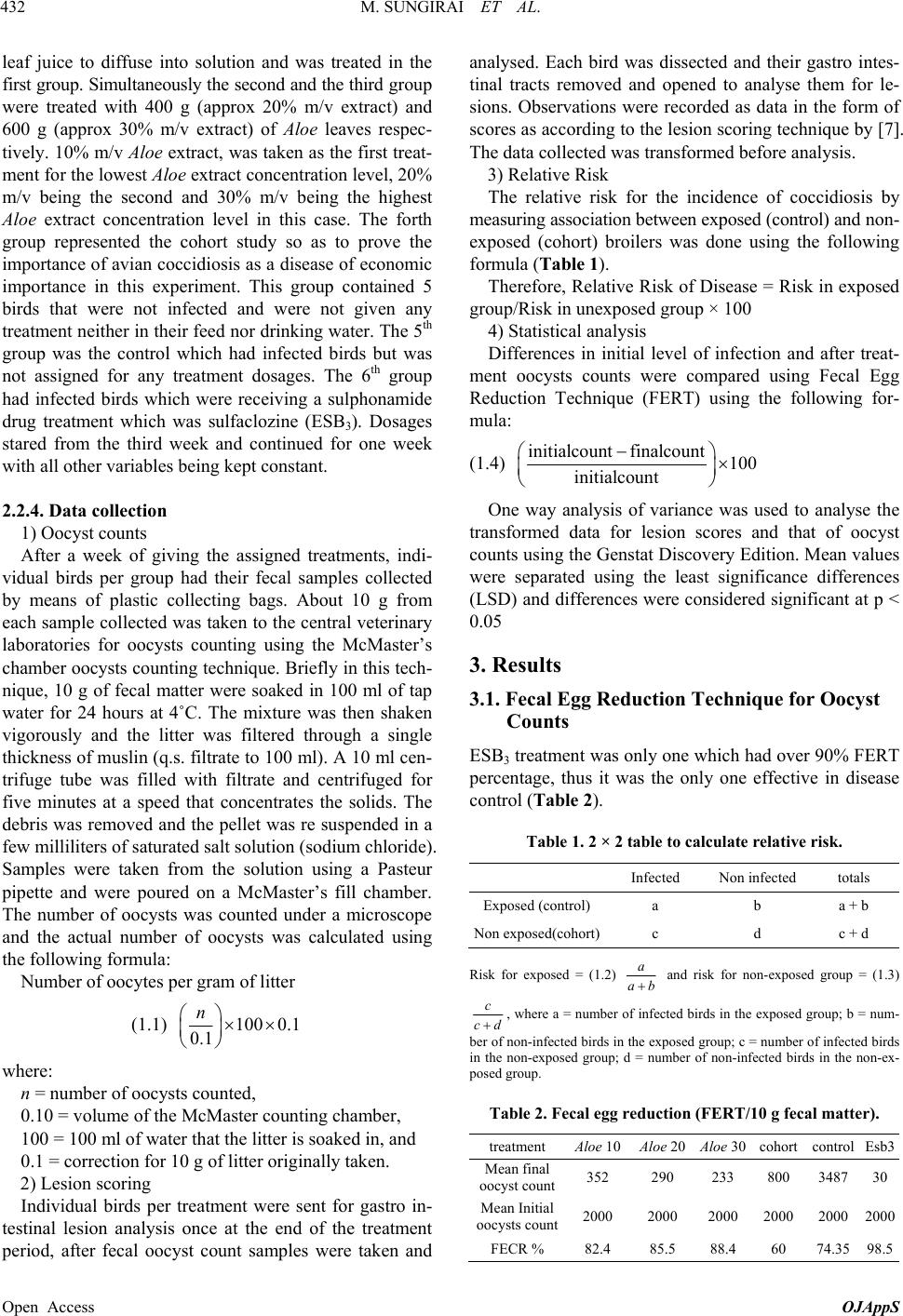 M. SUNGIRAI ET AL. 432 leaf juice to diffuse into solution and was treated in the first group. Simultaneously the second and the third group were treated with 400 g (approx 20% m/v extract) and 600 g (approx 30% m/v extract) of Aloe leaves respec- tively. 10% m/v Aloe extract, was taken as the first treat- ment for the lowest Aloe extract concentration level, 20% m/v being the second and 30% m/v being the highest Aloe extract concentration level in this case. The forth group represented the cohort study so as to prove the importance of avian coccidiosis as a disease of economic importance in this experiment. This group contained 5 birds that were not infected and were not given any treatment neither in their feed nor drinking water. The 5th group was the control which had infected birds but was not assigned for any treatment dosages. The 6th group had infected birds which were receiving a sulphonamide drug treatment which was sulfaclozine (ESB3). Dosages stared from the third week and continued for one week with all other variables being kept constant. 2.2.4. Data collection 1) Oocyst counts After a week of giving the assigned treatments, indi- vidual birds per group had their fecal samples collected by means of plastic collecting bags. About 10 g from each sample collected was taken to the central veterinary laboratories for oocysts counting using the McMaster’s chamber oocysts counting technique. Briefly in this tech- nique, 10 g of fecal matter were soaked in 100 ml of tap water for 24 hours at 4˚C. The mixture was then shaken vigorously and the litter was filtered through a single thickness of muslin (q.s. filtrate to 100 ml). A 10 ml cen- trifuge tube was filled with filtrate and centrifuged for five minutes at a speed that concentrates the solids. The debris was removed and the pellet was re suspended in a few milliliters of saturated salt solution (sodium chloride). Samples were taken from the solution using a Pasteur pipette and were poured on a McMaster’s fill chamber. The number of oocysts was counted under a microscope and the actual number of oocysts was calculated using the following formula: Number of oocytes per gram of litter (1.1) 100 0.1 0.1 n where: n = number of oocysts counted, 0.10 = volume of the McMaster counting chamber, 100 = 100 ml of water that the litter is soaked in, and 0.1 = correction for 10 g of litter originally taken. 2) Lesion scoring Individual birds per treatment were sent for gastro in- testinal lesion analysis once at the end of the treatment period, after fecal oocyst count samples were taken and analysed. Each bird was dissected and their gastro intes- tinal tracts removed and opened to analyse them for le- sions. Observations were recorded as data in the form of scores as according to the lesion scoring technique by [7]. The data collected was transformed before analysis. 3) Relative Risk The relative risk for the incidence of coccidiosis by measuring association between exposed (control) and non- exposed (cohort) broilers was done using the following formula (Table 1). Therefore, Relative Risk of Disease = Risk in exposed group/Risk in unexposed group × 100 4) Statistical analysis Differences in initial level of infection and after treat- ment oocysts counts were compared using Fecal Egg Reduction Technique (FERT) using the following for- mula: (1.4) initialcount finalcount100 initialcount One way analysis of variance was used to analyse the transformed data for lesion scores and that of oocyst counts using the Genstat Discovery Edition. Mean values were separated using the least significance differences (LSD) and differences were considered significant at p < 0.05 3. Results 3.1. Fecal Egg Reduction Technique for Oocyst Counts ESB3 treatment was only one which had over 90% FERT percentage, thus it was the only one effective in disease control (Table 2). Table 1. 2 × 2 table to calculate relative risk. Infected Non infected totals Exposed (control)a b a + b Non exposed(cohort)c d c + d Risk for exposed = (1.2) a ab and risk for non-exposed group = (1.3) c cd , where a = number of infected birds in the exposed group; b = num- ber of non-infected birds in the exposed group; c = number of infected birds in the non-exposed group; d = number of non-infected birds in the non-ex- posed group. Table 2. Fecal egg reduction (FERT/10 g fecal matter). treatment Aloe 10Aloe 20 Aloe 30 cohort controlEsb3 Mean final oocyst count352 290 233 800 348730 Mean Initial oocysts count2000 2000 2000 2000 20002000 FECR % 82.4 85.5 88.4 60 74.3598.5 Open Access OJAppS 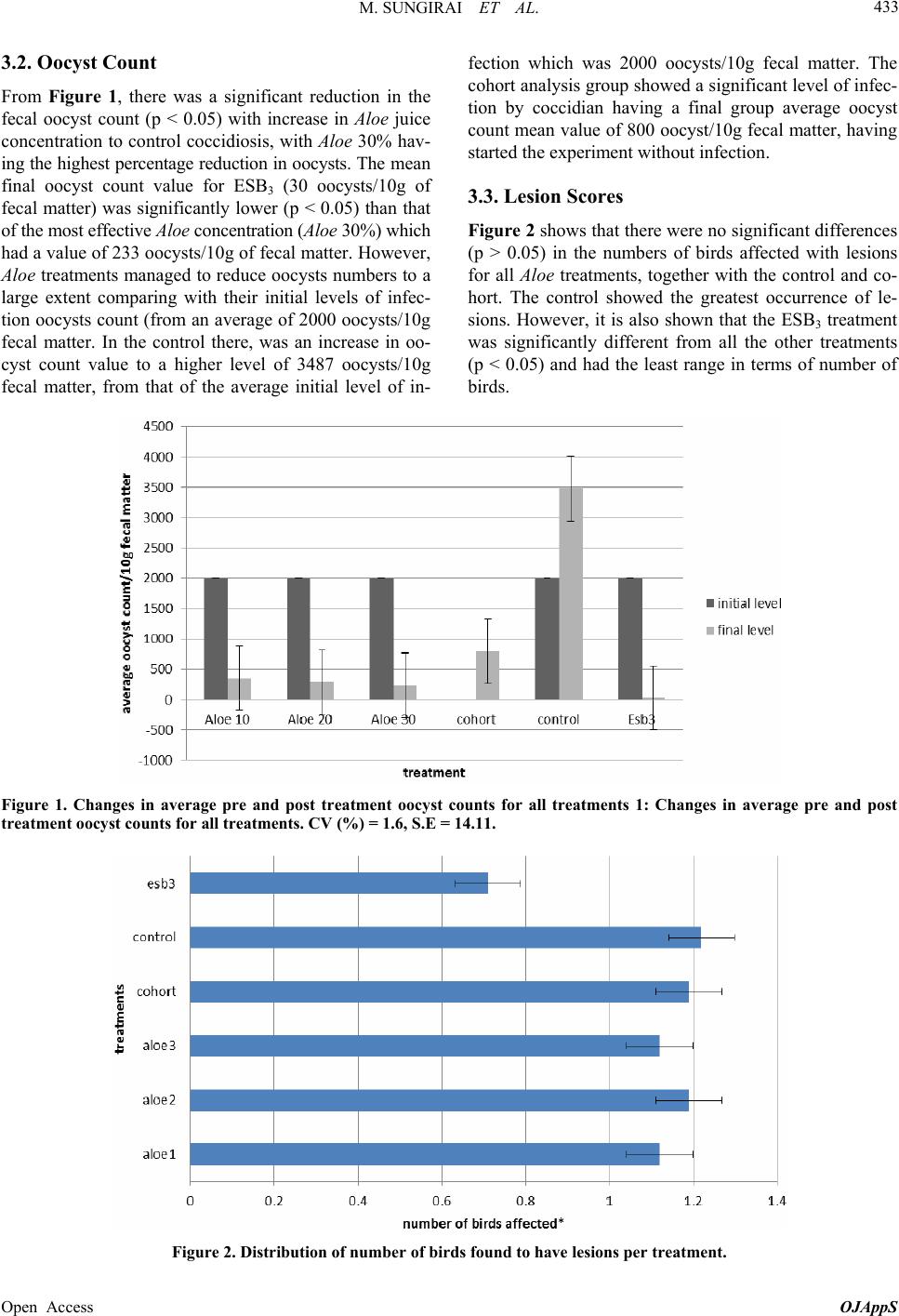 M. SUNGIRAI ET AL. Open Access OJAppS 433 3.2. Oocyst Count From Figure 1, there was a significant reduction in the fecal oocyst count (p < 0.05) with increase in Aloe juice concentration to control coccidiosis, with Aloe 30% hav- ing the highest percentage reduction in oocysts. The mean final oocyst count value for ESB3 (30 oocysts/10g of fecal matter) was significantly lower (p < 0.05) than that of the most effective Aloe concentration (Aloe 30%) which had a value of 233 oocysts/10g of fecal matter. However, Aloe treatments managed to reduce oocysts numbers to a large extent comparing with their initial levels of infec- tion oocysts count (from an average of 2000 oocysts/10g fecal matter. In the control there, was an increase in oo- cyst count value to a higher level of 3487 oocysts/10g fecal matter, from that of the average initial level of in- fection which was 2000 oocysts/10g fecal matter. The cohort analysis group showed a significant level of infec- tion by coccidian having a final group average oocyst count mean value of 800 oocyst/10g fecal matter, having started the experiment without infection. 3.3. Lesion Scores Figure 2 shows that there were no significant differences (p ˃ 0.05) in the numbers of birds affected with lesions for all Aloe treatments, together with the control and co- hort. The control showed the greatest occurrence of le- sions. However, it is also shown that the ESB3 treatment was significantly different from all the other treatments (p < 0.05) and had the least range in terms of number of birds. Figure 1. Changes in average pre and post treatment oocyst counts for all treatments 1: Changes in average pre and post treatment oocyst counts for all treatments. CV (%) = 1.6, S.E = 14.11. Figure 2. Distribution of number of bi rds found to have lesions per trea tment. 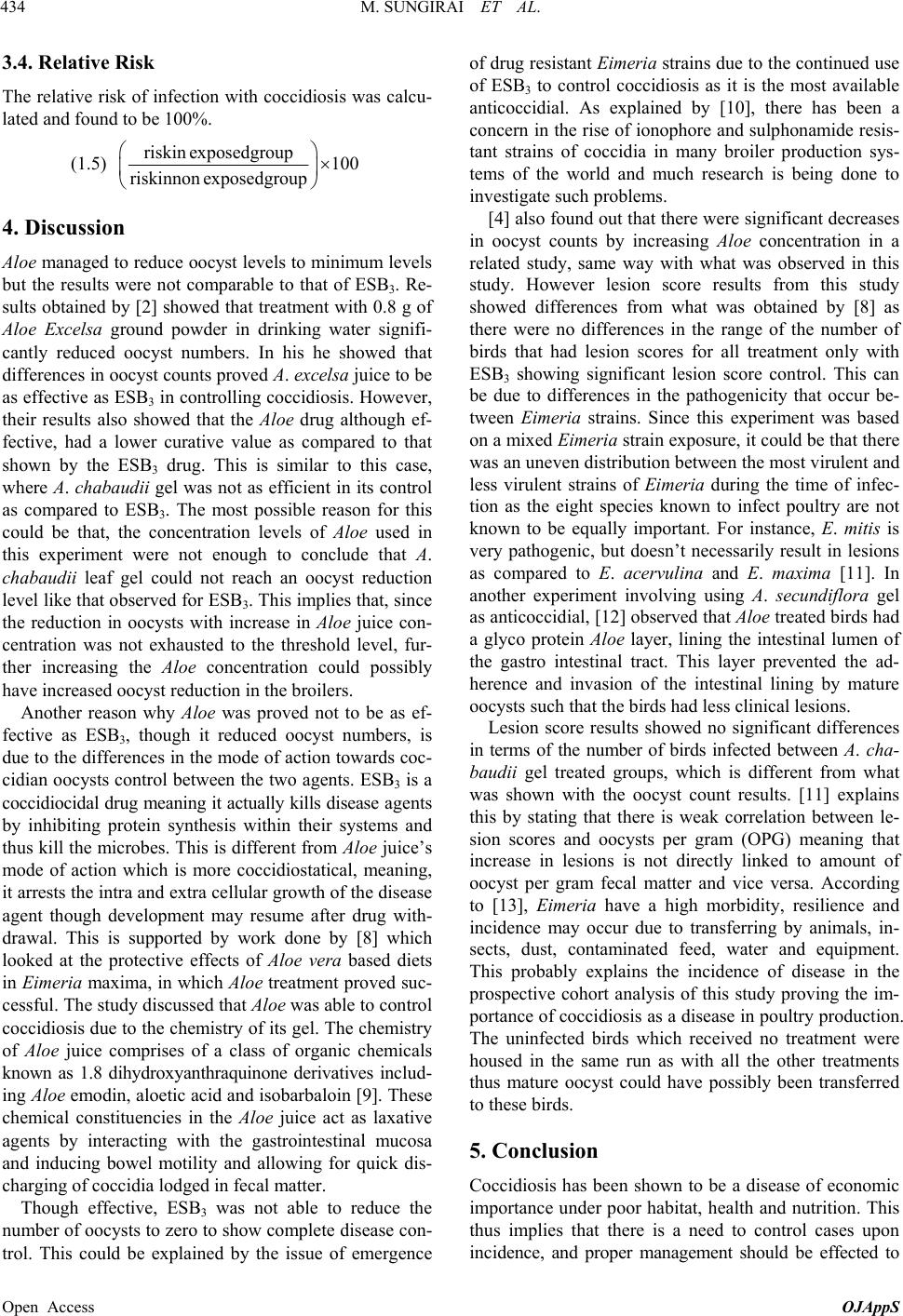 M. SUNGIRAI ET AL. 434 3.4. Relative Risk The relative risk of infection with coccidiosis was calcu- lated and found to be 100%. (1.5) riskin exposedgroup100 riskinnon exposedgroup 4. Discussion Aloe managed to reduce oocyst levels to minimum levels but the results were not comparable to that of ESB3. Re- sults obtained by [2] showed that treatment with 0.8 g of Aloe Excelsa ground powder in drinking water signifi- cantly reduced oocyst numbers. In his he showed that differences in oocyst counts proved A. excelsa juice to be as effective as ESB3 in controlling coccidiosis. However, their results also showed that the Aloe drug although ef- fective, had a lower curative value as compared to that shown by the ESB3 drug. This is similar to this case, where A. chabaudii gel was not as efficient in its control as compared to ESB3. The most possible reason for this could be that, the concentration levels of Aloe used in this experiment were not enough to conclude that A. chabaudii leaf gel could not reach an oocyst reduction level like that observed for ESB3. This implies that, since the reduction in oocysts with increase in Aloe juice con- centration was not exhausted to the threshold level, fur- ther increasing the Aloe concentration could possibly have increased oocyst reduction in the broilers. Another reason why Aloe was proved not to be as ef- fective as ESB3, though it reduced oocyst numbers, is due to the differences in the mode of action towards coc- cidian oocysts control between the two agents. ESB3 is a coccidiocidal drug meaning it actually kills disease agents by inhibiting protein synthesis within their systems and thus kill the microbes. This is different from Aloe juice’s mode of action which is more coccidiostatical, meaning, it arrests the intra and extra cellular growth of the disease agent though development may resume after drug with- drawal. This is supported by work done by [8] which looked at the protective effects of Aloe vera based diets in Eimeria maxima, in which Aloe treatment proved suc- cessful. The study discussed that Aloe was able to control coccidiosis due to the chemistry of its gel. The chemistry of Aloe juice comprises of a class of organic chemicals known as 1.8 dihydroxyanthraquinone derivatives includ- ing Aloe emodin, aloetic acid and isobarbaloin [9]. These chemical constituencies in the Aloe juice act as laxative agents by interacting with the gastrointestinal mucosa and inducing bowel motility and allowing for quick dis- charging of coccidia lodged in fecal matter. Though effective, ESB3 was not able to reduce the number of oocysts to zero to show complete disease con- trol. This could be explained by the issue of emergence of drug resistant Eimeria strains due to the continued use of ESB3 to control coccidiosis as it is the most available anticoccidial. As explained by [10], there has been a concern in the rise of ionophore and sulphonamide resis- tant strains of coccidia in many broiler production sys- tems of the world and much research is being done to investigate such problems. [4] also found out that there were significant decreases in oocyst counts by increasing Aloe concentration in a related study, same way with what was observed in this study. However lesion score results from this study showed differences from what was obtained by [8] as there were no differences in the range of the number of birds that had lesion scores for all treatment only with ESB3 showing significant lesion score control. This can be due to differences in the pathogenicity that occur be- tween Eimeria strains. Since this experiment was based on a mixed Eimeria strain exposure, it could be that there was an uneven distribution between the most virulent and less virulent strains of Eimeria during the time of infec- tion as the eight species known to infect poultry are not known to be equally important. For instance, E. mitis is very pathogenic, but doesn’t necessarily result in lesions as compared to E. acervulina and E. maxima [11]. In another experiment involving using A. secu ndiflora gel as anticoccidial, [12] observed that Aloe treated birds had a glyco protein Aloe layer, lining the intestinal lumen of the gastro intestinal tract. This layer prevented the ad- herence and invasion of the intestinal lining by mature oocysts such that the birds had less clinical lesions. Lesion score results showed no significant differences in terms of the number of birds infected between A. cha- baudii gel treated groups, which is different from what was shown with the oocyst count results. [11] explains this by stating that there is weak correlation between le- sion scores and oocysts per gram (OPG) meaning that increase in lesions is not directly linked to amount of oocyst per gram fecal matter and vice versa. According to [13], Eimeria have a high morbidity, resilience and incidence may occur due to transferring by animals, in- sects, dust, contaminated feed, water and equipment. This probably explains the incidence of disease in the prospective cohort analysis of this study proving the im- portance of coccidiosis as a disease in poultry production. The uninfected birds which received no treatment were housed in the same run as with all the other treatments thus mature oocyst could have possibly been transferred to these birds. 5. Conclusion Coccidiosis has been shown to be a disease of economic importance under poor habitat, health and nutrition. This thus implies that there is a need to control cases upon incidence, and proper management should be effected to Open Access OJAppS  M. SUNGIRAI ET AL. 435 prevent disease prevalence. Aloe chabaudii has been shown to be a potential chemotherapeutic for coccidiosis as seen by the reduction in fecal oocysts. However, it is not as effective as ESB3 in controlling coccidiosis, therefore, it can be used as a coccidiostat to control the disease in the absence of more effective drugs. Future studies are recommended to increase the concentration (m/v) of Aloe chabaudii to levels beyond those used in this study. There is also a need to increase the number of birds per group and repeat data collection more than once to increase amount of data and accuracy of results. Lastly, future studies should determine the cost effectiveness of using Aloe in controlling coccidiosis as compared to the use of sulphonamides. 6. Acknowledgements The authors would like to acknowledge the following for their contributions towards this work FACT Rusape for providing all the requirements that were needed for this research. Our sincere gratitude to Dr. C. Zimudzi, of the University of Zimbabwe Botany department, Dr. E. Ku- pahwana from Makoni District Veterinary department, Dr. Swiswa from Central Veterinary Laboratories and Mr. A. Samutsa from Livestock Production Department, Ma- koni District. REFERENCES [1] H. D. Chapman, “Origins of Coccidiosis Research in the Fowl—The First Fifty Years,” Avian diseases, Vol. 47, No. 1, 2003, pp. 1-20. [2] C. T. Gadzirayi, J. F. Mupangwa and E. Mutandwa, “Ef- fectiveness of Aloe excelsa in Controlling Coccidiosis in Broilers,” Journal of Sustainable Development in Africa, Vol. 7, 2005, pp. 74- 80. [3] A. Bassetti and S. Sala, “The Great Aloe Book,” 1st Edi- tion (USA), Zuccari Editions, 2005, pp. 47-51. [4] F. R. Durrani, S. Ullah, N. Chand, Z. Durrani, and S. Akhtar, “Using Aqeous Extract of Aloe Gel as Anticoc- cidial and Immunostimulant Agent in Broiler Produc- tion,” Sarhad Journal of Agriculture, Vol. 24, No. 4, 2008, pp. 665-670. [5] M. Mwale, E. Bhebhe, M. Chimonyo and T. E. Halimani, “Use of Herbal Plants in Poultry Health Management in the Mushagashe Small-Scale Commercial Farming Area in Zimbabwe,” International Journal of Applied Research in Veterinary Medicine, Vol. 3, No. 2, 2005, pp. 163-170. [6] D. P. Conway and M. E. McKenzie, “Poultry Coccidiosis: Diagnostic and Testing Procedures,” Wiley-Blackwell, Ho- boken, 2007. [7] J. Johnson and W. M. Reid, “Anticoccidial Drugs: Lesion Scoring Techniques in Battery and Floor-Pen Experiments with Chickens,” Experimental Parasitology, Vol. 28, No. 1, 1970, pp. 30-36. [8] D. Yim, S. S. Kang, D. W. Kim, S. H. Kim, H. S. Lillehoj and W. Min, “Protective Effects of Aloe vera Based Diets in Eimeria maxima Infected Broiler Chickens,” Experi- mental Parasitology, Vol. 127, No. 1, pp. 2011, pp. 322- 325.http://dx.doi.org/10.1016/j.exppara.2010.08.010 [9] J. H. Hamman, “Composition and Applications of Aloe vera Leaf Gel,” Molecules, Vol. 13, No. 8, 2008, pp. 1599- 1616. http://dx.doi.org/10.3390/molecules13081599 [10] S. Shane, “Controlling Coccidiosis: Current Practice, Future Choices,” WATT P oultry USA, Vol. 9, No. 5, 2008, pp. 32-37. [11] M. De Gussem, “Coccidiosis in Poultry: Review on Di- agnosis, Control, Prevention and Interaction with Overall Gut Health,” Proceedings of the 16th European Sympo- sium on Poultry Nutrition, Strasbourg, 26-30 August, 2007, pp. 253-261. [12] R. K. Waihenya, M. M. A. Mtambo, G. Nkwengulila and U. M. Minga, “Efficacy of Crude Extract of Aloe Secun- diflora against Salmonella Gallinarum in Experimentally Infected Free-Range Chickens in Tanzania,” Journal of Ethnopharmacology, Vol. 79, No. 3, 2002, pp. 317-323. http://dx.doi.org/10.1016/S0378-8741(01)00397-X [13] W. H. Ott, “Coccidiosis: Experimental Designs Involving Drug Mixtures,” Experimental Parasitology, Vol. 28, No. 1, 1970, pp. 81-86. http://dx.doi.org/10.1016/0014-4894(70)90069-X Open Access OJAppS |