

Paper Menu >>
Journal Menu >>
 Vol.5, No.11, 1139-1144 (2013) Natural Science http://dx.doi.org/10.4236/ns.2013.511140 Production of low cost Bacillus thuringiensis based-biopesticide for management of chickpea pod-borer Helicoverpa armigera (Huebn) in Pakistan Abida Bibi1*, Khalique Ahmed2, Najma Ayub1, Sadia Alam3* 1Department of Microbiology, Quaid-i-Azam University, Islamabad, Pakistan; *Corresponding Author: [email protected] 2KarakuramUniversity, Gilgit, Pakistan 3Departmentof Microbiology, University of Haripur, Haripur, Pakistan; *Corresponding Author: [email protected] Received 30 April 2013; revised 30 May 2013; accepted 7 June 2013 Copyright © 2013 Abida Bibi et al. This is an open access article distributed under the Creative Commons Attribution License, which permits unrestricted use, distribution, and reproduction in any medium, provided the original work is properly cited. ABSTRACT The biopesticide was prepared from locally available low cost ingredients: dried beef blood, molasses and mineral salts (ZnCl2, MgCl2, MnCl2, CaCl2CaCl2, and FeCl3) which were used as me- dium for the laboratory scale production of Ba- cillus thuringiensis (B.t.) bio-pesticide by shake flask technique. Indigenous B.t. isolate PA-Sb- 46.3 which produced two crystals—bi-pyramidal and cuboidal was found 73.6 times toxic against H. armigera than reference strain Bacillus thur- ingiensis var. kurstaki (HD-I-S-1980) used. Me- dium was fermented for 72 hours at 30˚C ± 2˚C and 160 rpm. 72 h fermented medium showed 95% - 99% sprulation, with spore yield of 3.97 × 10⁹ spores/ml, and LC50 value to 1st instar larvae of H. arm igera was 0.53 μg/ml diet. Preservatives and diluents used in the biopesticide were found to be effective to store at room temperature over a period of 30 months. These observations sug- gested that the biopesticide produced was ef- fective and highly economical for the industrial scale production to manage H. armigera in Paki- stan. Keyw ords: Beef Blood; Molasses; Indigenous B.t. Isolate PA-Sb-46.3; Sporulation; Entomotoxicity; Biopesticide 1. INTRODUCTION Among the insect pests, chickpea pod-borer, Heli- coverpaarmigera occupies a prominent position and has attained a status of topmost agricultural pest in Pakistan, China and India [1]. The most destructive pest H. ar- migera is polyphagous in nature and has been recorded by Iqbal, and Mohyuddin, 1990 [2] on 62 host plants, and on more than 100 plant hosts by different researchers [3-6]. Synthetic chemical insecticides for the control of in- sect pests are commonly used in Pakistan which are not only expensive but also have created a number of prob- lems like water pollution, biological and environmental hazards, and development of resistant in pests [6]. H. armigera has also shown resistance to various groups of chemicals in Pakistan. These problems have increased the importance for the development and the use of safe and target specific bio-insecticides, e.g., Bacillus thuringien- sis (B.t.). The entomopathogenic bacterium (Bacillus thurin- giensis (B.t.)) during sporulation produces crystalline proteins which are associated with the insecticidal activity of B.t. against different insects larvae of Lepidopteran, Dipteran, Coleopteran and some other pests. These crys- talline proteins are harmless to humans, vertebrates and plants, are completely biodegradable and cause no toxic residual products to accumulate in the environment. That is why this bacterium is widely used as microbial insec- ticide in agriculture and forestry for the control of pests, and in human health sector for the elimination of disease vectors [7]. Hence due to the safety associated with B.t., tremen- dous interest has been developed towards the production of a new commercial B.t. products. B.t. products are being used successfully on large scales in India, China, US, Australia and many other countries of the world whereas in Pakistan no attention has been given towards their production and use. The main objective of this diligent effort is the production of low cost and effective B.t. bio- pesticide by a simple and effective process (shake flask/ fermentation technology) to manage H. armigera in- festing chickpea in Pakistan. Copyright © 2013 SciRes. OPEN ACCESS 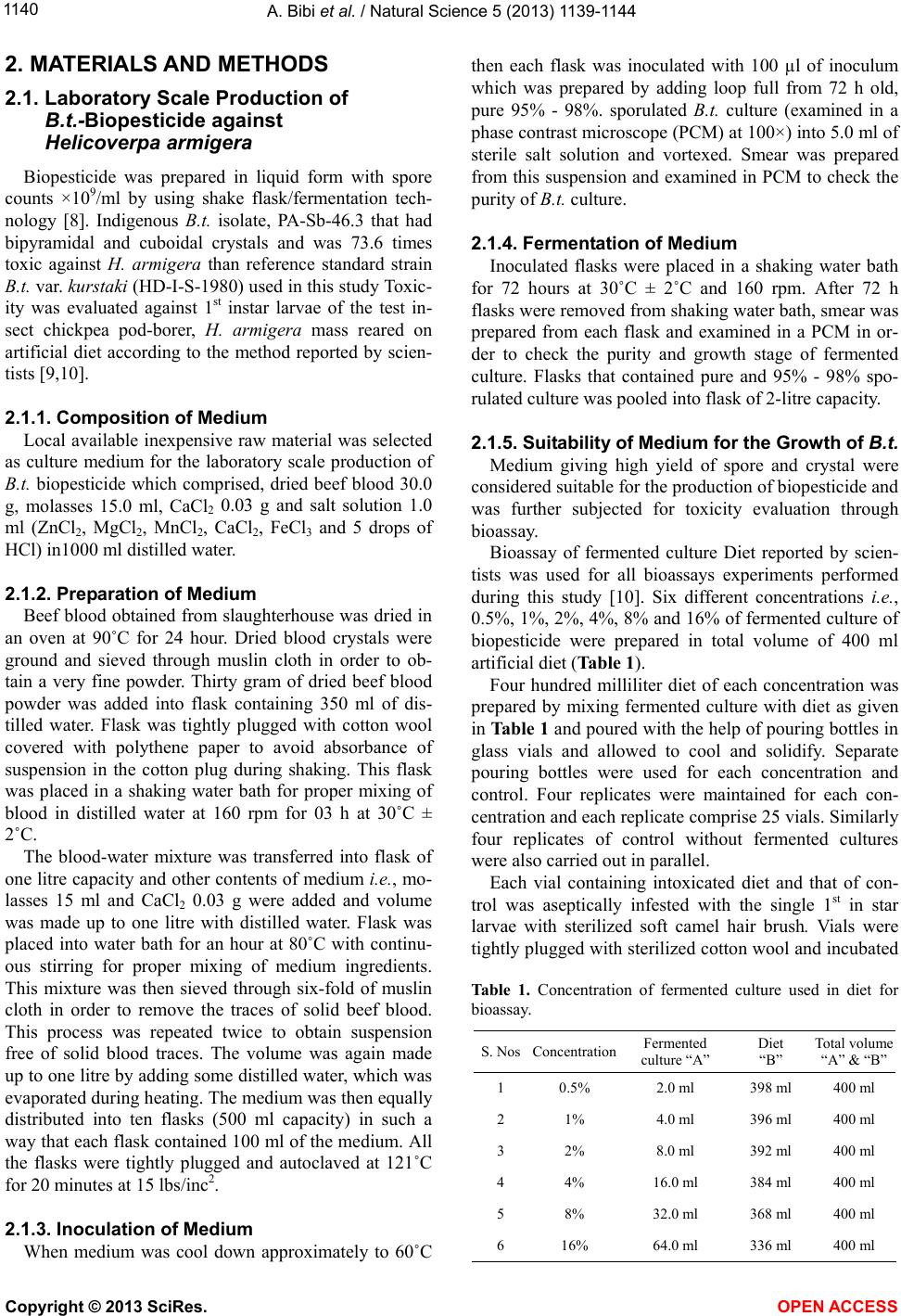 A. Bibi et al. / Natural Science 5 (2013) 1139-1144 1140 2. MATERIALS AND METHODS 2.1. Laboratory Scale Production of B.t.-Biopesticide against Helicoverpa armigera Biopesticide was prepared in liquid form with spore counts ×109/ml by using shake flask/fermentation tech- nology [8]. Indigenous B.t. isolate, PA-Sb-46.3 that had bipyramidal and cuboidal crystals and was 73.6 times toxic against H. armigera than reference standard strain B.t. var. kurstaki (HD-I-S-1980) used in this study Toxic- ity was evaluated against 1st instar larvae of the test in- sect chickpea pod-borer, H. armigera mass reared on artificial diet according to the method reported by scien- tists [9,10]. 2.1.1. Composition of Medium Local available inexpensive raw material was selected as culture medium for the laboratory scale production of B.t. biopesticide which comprised, dried beef blood 30.0 g, molasses 15.0 ml, CaCl2 0.03 g and salt solution 1.0 ml (ZnCl2, MgCl2, MnCl2, CaCl2, FeCl3 and 5 drops of HCl) in1000 ml distilled water. 2.1.2. Preparation of Medium Beef blood obtained from slaughterhouse was dried in an oven at 90˚C for 24 hour. Dried blood crystals were ground and sieved through muslin cloth in order to ob- tain a very fine powder. Thirty gram of dried beef blood powder was added into flask containing 350 ml of dis- tilled water. Flask was tightly plugged with cotton wool covered with polythene paper to avoid absorbance of suspension in the cotton plug during shaking. This flask was placed in a shaking water bath for proper mixing of blood in distilled water at 160 rpm for 03 h at 30˚C ± 2˚C. The blood-water mixture was transferred into flask of one litre capacity and other contents of medium i.e., mo- lasses 15 ml and CaCl2 0.03 g were added and volume was made up to one litre with distilled water. Flask was placed into water bath for an hour at 80˚C with continu- ous stirring for proper mixing of medium ingredients. This mixture was then sieved through six-fold of muslin cloth in order to remove the traces of solid beef blood. This process was repeated twice to obtain suspension free of solid blood traces. The volume was again made up to one litre by adding some distilled water, which was evaporated during heating. The medium was then equally distributed into ten flasks (500 ml capacity) in such a way that each flask contained 100 ml of the medium. All the flasks were tightly plugged and autoclaved at 121˚C for 20 minutes at 15 lbs/inc2. 2.1.3. Inoculation of Medium When medium was cool down approximately to 60˚C then each flask was inoculated with 100 µl of inoculum which was prepared by adding loop full from 72 h old, pure 95% - 98%. sporulated B.t. culture (examined in a phase contrast microscope (PCM) at 100×) into 5.0 ml of sterile salt solution and vortexed. Smear was prepared from this suspension and examined in PCM to check the purity of B.t. culture. 2.1.4. Fermentation of Medium Inoculated flasks were placed in a shaking water bath for 72 hours at 30˚C ± 2˚C and 160 rpm. After 72 h flasks were removed from shaking water bath, smear was prepared from each flask and examined in a PCM in or- der to check the purity and growth stage of fermented culture. Flasks that contained pure and 95% - 98% spo- rulated culture was pooled into flask of 2-litre capacity. 2.1.5. Suitability of Medium for the Growth of B.t. Medium giving high yield of spore and crystal were considered suitable for the production of biopesticide and was further subjected for toxicity evaluation through bioassay. Bioassay of fermented culture Diet reported by scien- tists was used for all bioassays experiments performed during this study [10]. Six different concentrations i.e., 0.5%, 1%, 2%, 4%, 8% and 16% of fermented culture of biopesticide were prepared in total volume of 400 ml artificial diet (Table 1). Four hundred milliliter diet of each concentration was prepared by mixing fermented culture with diet as given in Table 1 and poured with the help of pouring bottles in glass vials and allowed to cool and solidify. Separate pouring bottles were used for each concentration and control. Four replicates were maintained for each con- centration and each replicate comprise 25 vials. Similarly four replicates of control without fermented cultures were also carried out in parallel. Each vial containing intoxicated diet and that of con- trol was aseptically infested with the single 1st in star larvae with sterilized soft camel hair brush. Vials were tightly plugged with sterilized cotton wool and incubated Table 1. Concentration of fermented culture used in diet for bioassay. S. NosConcentrationFermented culture “A” Diet “B” Total volume “A” & “B” 1 0.5% 2.0 ml 398 ml 400 ml 2 1% 4.0 ml 396 ml 400 ml 3 2% 8.0 ml 392 ml 400 ml 4 4% 16.0 ml 384 ml 400 ml 5 8% 32.0 ml 368 ml 400 ml 6 16% 64.0 ml 336 ml 400 ml Copyright © 2013 SciRes. OPEN ACCESS 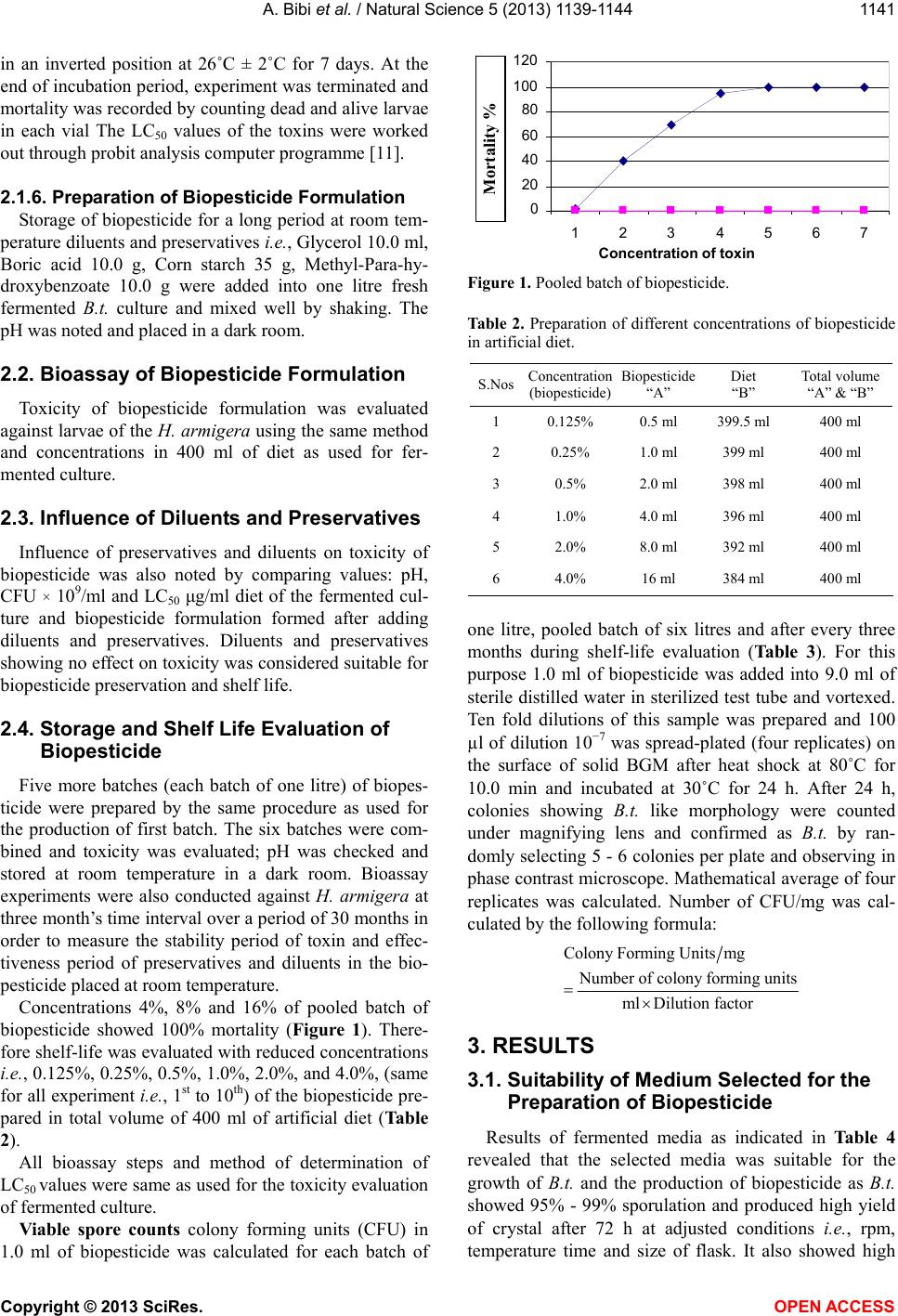 A. Bibi et al. / Natural Science 5 (2013) 1139-1144 1141 in an inverted position at 26˚C ± 2˚C for 7 days. At the end of incubation period, experiment was terminated and mortality was recorded by counting dead and alive larvae in each vial The LC50 values of the toxins were worked out through probit analysis computer programme [11]. 2.1.6. Preparation of Biopesticide Formulation Storage of biopesticide for a long period at room tem- perature diluents and preservatives i.e., Glycerol 10.0 ml, Boric acid 10.0 g, Corn starch 35 g, Methyl-Para-hy- droxybenzoate 10.0 g were added into one litre fresh fermented B.t. culture and mixed well by shaking. The pH was noted and placed in a dark room. 2.2. Bioassay of Biopesticide Formulation Toxicity of biopesticide formulation was evaluated against larvae of the H. armigera using the same method and concentrations in 400 ml of diet as used for fer- mented culture. 2.3. Influence of Diluents and Preservatives Influence of preservatives and diluents on toxicity of biopesticide was also noted by comparing values: pH, CFU × 109/ml and LC50 μg/ml diet of the fermented cul- ture and biopesticide formulation formed after adding diluents and preservatives. Diluents and preservatives showing no effect on toxicity was considered suitable for biopesticide preservation and shelf life. 2.4. Storage and Shelf Life Evaluation of Biopesticide Five more batches (each batch of one litre) of biopes- ticide were prepared by the same procedure as used for the production of first batch. The six batches were com- bined and toxicity was evaluated; pH was checked and stored at room temperature in a dark room. Bioassay experiments were also conducted against H. armigera at three month’s time interval over a period of 30 months in order to measure the stability period of toxin and effec- tiveness period of preservatives and diluents in the bio- pesticide placed at room temperature. Concentrations 4%, 8% and 16% of pooled batch of biopesticide showed 100% mortality (Figure 1). There- fore shelf-life was evaluated with reduced concentrations i.e., 0.125%, 0.25%, 0.5%, 1.0%, 2.0%, and 4.0%, (same for all experiment i.e., 1st to 10th) of the biopesticide pre- pared in total volume of 400 ml of artificial diet (Table 2). All bioassay steps and method of determination of LC50 values were same as used for the toxicity evaluation of fermented culture. Viable spore counts colony forming units (CFU) in 1.0 ml of biopesticide was calculated for each batch of 0 20 40 60 80 100 120 1234567 Concentration of toxin Mortality % Figure 1. Pooled batch of biopesticide. Tab le 2. Preparation of different concentrations of biopesticide in artificial diet. S.Nos Concentration (biopesticide) Biopesticide “A” Diet “B” Total volume “A” & “B” 1 0.125% 0.5 ml 399.5 ml 400 ml 2 0.25% 1.0 ml 399 ml 400 ml 3 0.5% 2.0 ml 398 ml 400 ml 4 1.0% 4.0 ml 396 ml 400 ml 5 2.0% 8.0 ml 392 ml 400 ml 6 4.0% 16 ml 384 ml 400 ml one litre, pooled batch of six litres and after every three months during shelf-life evaluation (Table 3). For this purpose 1.0 ml of biopesticide was added into 9.0 ml of sterile distilled water in sterilized test tube and vortexed. Ten fold dilutions of this sample was prepared and 100 µl of dilution 10−7 was spread-plated (four replicates) on the surface of solid BGM after heat shock at 80˚C for 10.0 min and incubated at 30˚C for 24 h. After 24 h, colonies showing B.t. like morphology were counted under magnifying lens and confirmed as B.t. by ran- domly selecting 5 - 6 colonies per plate and observing in phase contrast microscope. Mathematical average of four replicates was calculated. Number of CFU/mg was cal- culated by the following formula: Colony Forming Unitsmg Number of colony forming units mlDilution factor 3. RESULTS 3.1. Suitability of Medium Selected for the Preparation of Biopesticide Results of fermented media as indicated in Table 4 revealed that the selected media was suitable for the growth of B.t. and the production of biopesticide as B.t. showed 95% - 99% sporulation and produced high yield of crystal after 72 h at adjusted conditions i.e., rpm, temperature time and size of flask. It also showed high Copyright © 2013 SciRes. OPEN ACCESS 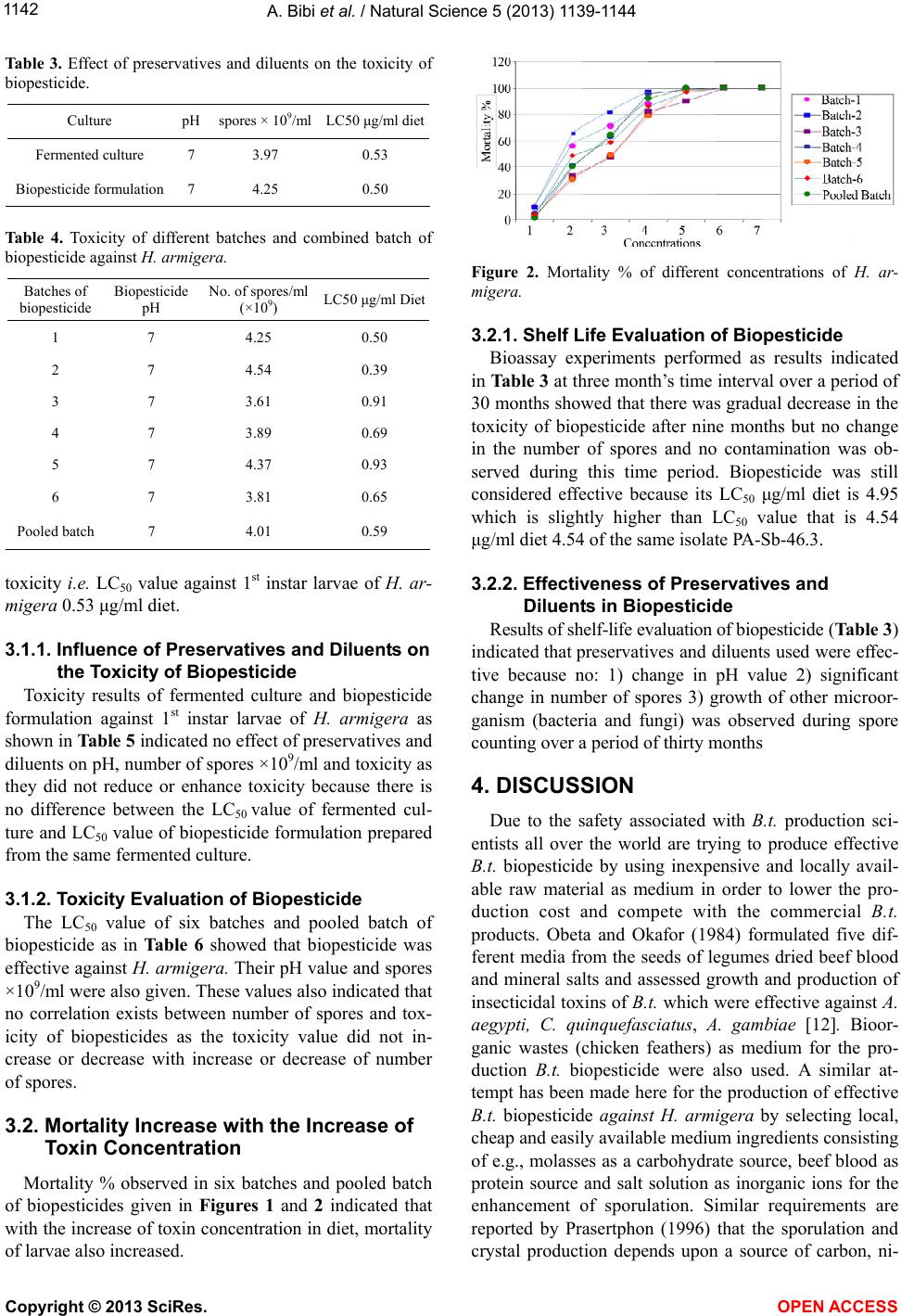 A. Bibi et al. / Natural Science 5 (2013) 1139-1144 1142 Table 3. Effect of preservatives and diluents on the toxicity of biopesticide. Culture pH spores × 109/ml LC50 μg/ml diet Fermented culture 7 3.97 0.53 Biopesticide formulation 7 4.25 0.50 Table 4. Toxicity of different batches and combined batch of biopesticide against H. armigera. Batches of biopesticide Biopesticide pH No. of spores/ml (×109) LC50 μg/ml Diet 1 7 4.25 0.50 2 7 4.54 0.39 3 7 3.61 0.91 4 7 3.89 0.69 5 7 4.37 0.93 6 7 3.81 0.65 Pooled batch 7 4.01 0.59 toxicity i.e. LC50 value against 1st instar larvae of H. ar- migera 0.53 μg/ml diet. 3.1.1. Influence of Preservatives and Diluents on the Toxicity of Biopesticide Toxicity results of fermented culture and biopesticide formulation against 1st instar larvae of H. armigera as shown in Table 5 indicated no effect of preservatives and diluents on pH, number of spores ×109/ml and toxicity as they did not reduce or enhance toxicity because there is no difference between the LC50 value of fermented cul- ture and LC50 value of biopesticide formulation prepared from the same fermented culture. 3.1.2. Toxicity Evaluation of Biopesticide The LC50 value of six batches and pooled batch of biopesticide as in Ta b l e 6 showed that biopesticide was effective against H. armigera. Their pH value and spores ×109/ml were also given. These values also indicated that no correlation exists between number of spores and tox- icity of biopesticides as the toxicity value did not in- crease or decrease with increase or decrease of number of spores. 3.2. Mortality Increase with the Increase of Toxin Concentration Mortality % observed in six batches and pooled batch of biopesticides given in Figures 1 and 2 indicated that with the increase of toxin concentration in diet, mortality of larvae also increased. Figure 2. Mortality % of different concentrations of H. ar- migera. 3.2.1. Shelf Life Evaluation of Biopesticide Bioassay experiments performed as results indicated in Table 3 at three month’s time interval over a period of 30 months showed that there was gradual decrease in the toxicity of biopesticide after nine months but no change in the number of spores and no contamination was ob- served during this time period. Biopesticide was still considered effective because its LC50 μg/ml diet is 4.95 which is slightly higher than LC50 value that is 4.54 μg/ml diet 4.54 of the same isolate PA-Sb-46.3. 3.2.2. Effectiveness of Preservatives and Diluents in Biopesticide Results of shelf-life evaluation of biopesticide (Table 3) indicated that preservatives and diluents used were effec- tive because no: 1) change in pH value 2) significant change in number of spores 3) growth of other microor- ganism (bacteria and fungi) was observed during spore counting over a period of thirty months 4. DISCUSSION Due to the safety associated with B.t. production sci- entists all over the world are trying to produce effective B.t. biopesticide by using inexpensive and locally avail- able raw material as medium in order to lower the pro- duction cost and compete with the commercial B.t. products. Obeta and Okafor (1984) formulated five dif- ferent media from the seeds of legumes dried beef blood and mineral salts and assessed growth and production of insecticidal toxins of B.t. which were effective against A. aegypti, C. quinquefasciatus, A. gambiae [12]. Bioor- ganic wastes (chicken feathers) as medium for the pro- duction B.t. biopesticide were also used. A similar at- tempt has been made here for the production of effective B.t. biopesticide against H. armigera by selecting local, cheap and easily available medium ingredients consisting of e.g., molasses as a carbohydrate source, beef blood as protein source and salt solution as inorganic ions for the enhancement of sporulation. Similar requirements are reported by Prasertphon (1996) that the sporulation and rystal production depends upon a source of carbon, ni- c Copyright © 2013 SciRes. OPEN ACCESS 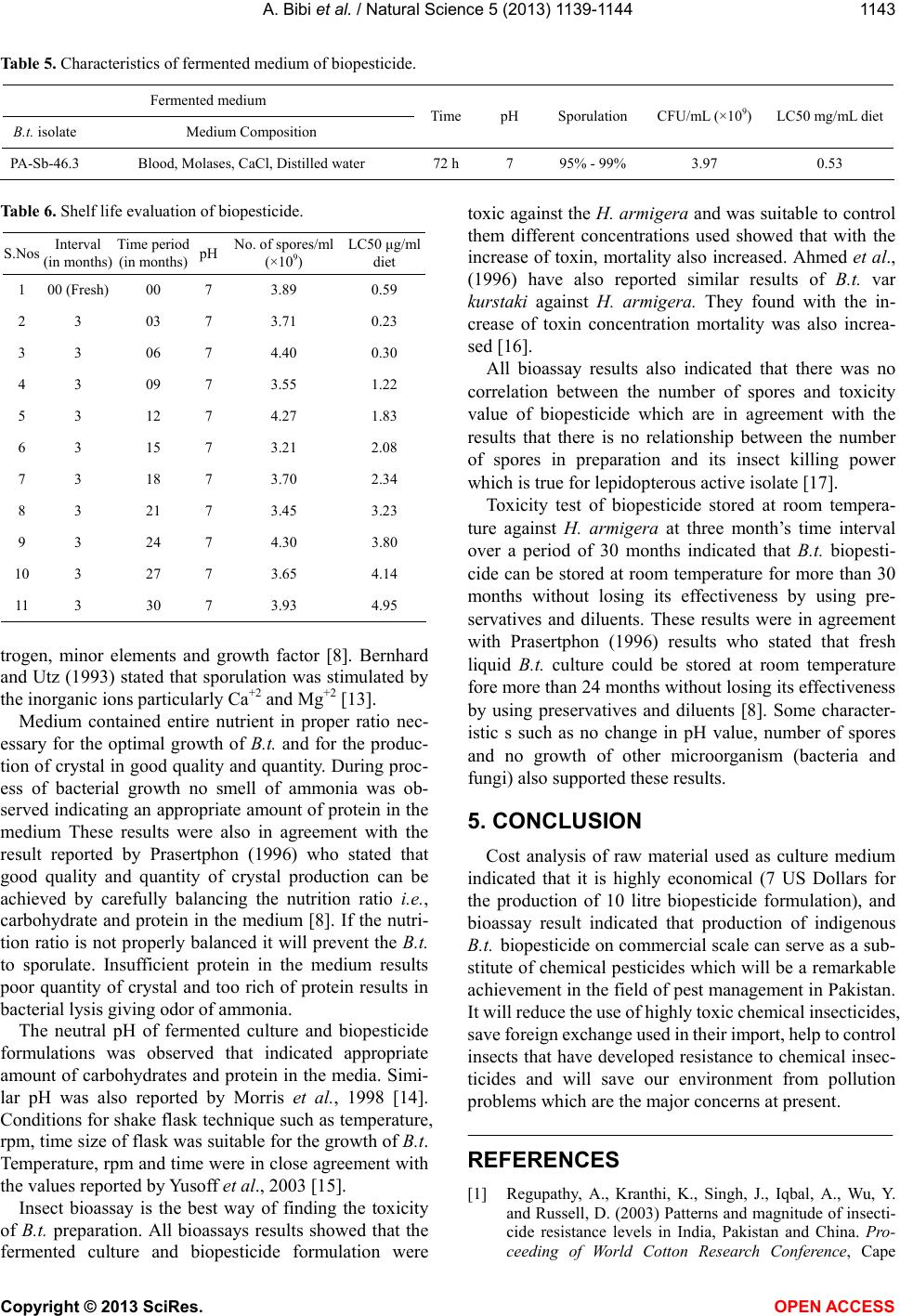 A. Bibi et al. / Natural Science 5 (2013) 1139-1144 Copyright © 2013 SciRes. 114 3 Table 5. Characteristics of fermented medium of biopesticide. Fermented medium B.t. isolate Medium Composition Time pH Sporulation CFU/mL (×109) LC50 mg/mL diet PA-Sb-46.3 Blood, Molases, CaCl, Distilled water 72 h 7 95% - 99% 3.97 0.53 Table 6. Shelf life evaluation of biopesticide. S.Nos Interval (in months) Time period (in months) pH No. of spores/ml (×109) LC50 μg/ml diet 1 00 (Fresh) 00 7 3.89 0.59 2 3 03 7 3.71 0.23 3 3 06 7 4.40 0.30 4 3 09 7 3.55 1.22 5 3 12 7 4.27 1.83 6 3 15 7 3.21 2.08 7 3 18 7 3.70 2.34 8 3 21 7 3.45 3.23 9 3 24 7 4.30 3.80 10 3 27 7 3.65 4.14 11 3 30 7 3.93 4.95 OPEN ACCESS trogen, minor elements and growth factor [8]. Bernhard and Utz (1993) stated that sporulation was stimulated by the inorganic ions particularly Ca+2 and Mg+2 [13]. Medium contained entire nutrient in proper ratio nec- essary for the optimal growth of B.t. and for the produc- tion of crystal in good quality and quantity. During proc- ess of bacterial growth no smell of ammonia was ob- served indicating an appropriate amount of protein in the medium These results were also in agreement with the result reported by Prasertphon (1996) who stated that good quality and quantity of crystal production can be achieved by carefully balancing the nutrition ratio i.e., carbohydrate and protein in the medium [8]. If the nutri- tion ratio is not properly balanced it will prevent the B.t. to sporulate. Insufficient protein in the medium results poor quantity of crystal and too rich of protein results in bacterial lysis giving odor of ammonia. The neutral pH of fermented culture and biopesticide formulations was observed that indicated appropriate amount of carbohydrates and protein in the media. Simi- lar pH was also reported by Morris et al., 1998 [14]. Conditions for shake flask technique such as temperature, rpm, time size of flask was suitable for the growth of B.t. Temperature, rpm and time were in close agreement with the values reported by Yusoff et al., 2003 [15]. Insect bioassay is the best way of finding the toxicity of B.t. preparation. All bioassays results showed that the fermented culture and biopesticide formulation were toxic against the H. armigera and was suitable to control them different concentrations used showed that with the increase of toxin, mortality also increased. Ahmed et al., (1996) have also reported similar results of B.t. var kurstaki against H. armigera. They found with the in- crease of toxin concentration mortality was also increa- sed [16]. All bioassay results also indicated that there was no correlation between the number of spores and toxicity value of biopesticide which are in agreement with the results that there is no relationship between the number of spores in preparation and its insect killing power which is true for lepidopterous active isolate [17]. Toxicity test of biopesticide stored at room tempera- ture against H. armigera at three month’s time interval over a period of 30 months indicated that B.t. biopesti- cide can be stored at room temperature for more than 30 months without losing its effectiveness by using pre- servatives and diluents. These results were in agreement with Prasertphon (1996) results who stated that fresh liquid B.t. culture could be stored at room temperature fore more than 24 months without losing its effectiveness by using preservatives and diluents [8]. Some character- istic s such as no change in pH value, number of spores and no growth of other microorganism (bacteria and fungi) also supported these results. 5. CONCLUSION Cost analysis of raw material used as culture medium indicated that it is highly economical (7 US Dollars for the production of 10 litre biopesticide formulation), and bioassay result indicated that production of indigenous B.t. biopesticide on commercial scale can serve as a sub- stitute of chemical pesticides which will be a remarkable achievement in the field of pest management in Pakistan. It will reduce the use of highly toxic chemical insecticides, save foreign exchange used in their import, help to control insects that have developed resistance to chemical insec- ticides and will save our environment from pollution problems which are the major concerns at present. REFERENCES [1] Regupathy, A., Kranthi, K., Singh, J., Iqbal, A., Wu, Y. and Russell, D. (2003) Patterns and magnitude of insecti- cide resistance levels in India, Pakistan and China. Pro- ceeding of World Cotton Research Conference, Cape  A. Bibi et al. / Natural Science 5 (2013) 1139-1144 1144 Town, 9-13 March 2003, 30.9. [2] Iqbal, N. and Mohyuddin, A.I. (1990) Eco. Biology of Heliothis spp in Pakistan. Pakistan Journal of Agricul- tural Research, 2, 257-266 [3] Baloch, A.A. (1989) Insect pests of cotton, their identifi- cation, mode of damage and control strategy. Proceedings of workshop organized by CWM Project of Sindh in Col- laboration with USAID, Sakrand, 20-25 May 1989, 20. [4] Baloch, A.A., Kalroo, A.M. and Sanjrani, M.W. (2000) A perspective review on eco-biological aspect of Helico- verpa (Heliothis) armigera Hubn (Lepidoptera: Noctui- dae) as a pest of cotton in Pakistan. I. Taxonomy, biology, ecology and population dynamics. Balochistan Journal of Agricultural Science, 1, 36-43. [5] Hazara, A.H., Khan, J., Shakeel, M., Iqbal, M. and Bajoi, A.H. (2000) Population dynamics and control of Heli- covepa (Heliothis) armigera, Hubner (Lepidoptera; Noc- tuidae) on different crops in Balochistan. Balochistan Journal of Agricultural Science, 1, 52-62. [6] Malik, M.F., Hussainy, S.W., Rahman, D.U., Munir, A. and Ali, L. (2002) Efficacy of synthetic pheromone for the control of Helicoverpa armigera in tomato. Asian Journal of Plant Sciences, in press. [7] Schnepf, E., Crickmore, N., Van Rie, J., Lereclus, D., Baum, J., Feitelson, J., Zeigler, D.R. and Dean, D.H. (1998) Bacillus thuringiensis and its pesticidal crystal proteins. Microbiology and Molecular Biology Reviews, 62, 775-806. [8] Prasertphon, S. (1996) Historical background on use of Bacillus thuringiensisin Thailand. Proceeding of 2nd Rim Conference on Biotechnology of B.t. and Its Impact on the Environment, 1-14. [9] Ahmed, K., Kongming, Wu, Liang, G. and Guo, Y. (2006) Cross resistance of Cry1Ac resistant cotton bollworm Helicovera armigerato various spore-delta endotoxin of Bacillus thuringiensis Berliner. Pakistan Journal of Bio- logical Sciences, 9, 1639-1649. http://dx.doi.org/10.3923/pjbs.2006.1639.1649 [10] Ahmed, K., Khalique, F. and Malik, B.A. (1998) Evalua- tion of synergistic interactions between Bacillus thur- ingiensis and malic acid against Chickpea Pod-Borer, Helicoverpa armigera (Huebn) (Lepidoptera: Noctuidae). Pakistan Journal of Biological Sciences, 1, 105-108. http://dx.doi.org/10.3923/pjbs.1998.105.108 [11] LeOra Software (1987) POLO-PC-a user’s guide to pro- bit or logit analysis. LeOra Software, Berkeley. [12] Obeta, J.A.N. and Okafor, N. (1984) Medium for the production of primary powder of Bacillus thuringiensis- subsp, israelensis. Applied and Environmental Microbi- ology, 47, 863-867 [13] Bernhard, K. and Utz, R. (1993) Production of Bacillus thuringiensisinsecticide for experimental and commercial uses. In: Entwistle, P. F., Cory, J.S., Baily, M.J. and Higgs, S., Eds., Bacillus thuringiensis, an Environmental Bio- pesticide: Theory and Practice. Wiley & Sons, Chichester, New York, Toronto, 255-267. [14] Morris, O.N., Converse, V., Kanagaratnam, P. and Cote, J.C. (1998) Isolation, Characterization and Culture of Ba- cillus thuringiensis from soil and dust from grain storage bins and their toxicity for Mamestraconfigurata (Lepi- doptera: Noctuidae). The Canadian Entomologist, 130, 515-537. http://dx.doi.org/10.4039/Ent130515-4 [15] Yusoff, W.M.W., Masri, M.M.M. and Mei, C.C. (2003) Effect of ammonium sulphate on the sporulation of Ba- cillus thuringiensis subsp. AizawaiSN2 (A local isolate) during batch fermentation. Journal Te knology, 39, 53-60. [16] Ahmed, K., Khalique, F., Malik, B.A. and Ferro, D.N. (1996) Susceptibility of larval instars of Helicoverpa (Heliothis) armigera to HD-1-δ-1980 and relative toxici- ties of commercial Bacillus thuringiensis. The 2nd Pa- cific Rim Conference on Biotechnology of B.t., Chiang Mai, 579-594. [17] Dulmage, H.T. and Rhodes, R.A. (1971) Production of pathogens on artificial media. In: Burges, H.D. and Hus- say, N.W., Eds., Microbial Control of Insect Pests and Mite, Academic Press, New York, 161. Copyright © 2013 SciRes. OPEN ACCESS |