

Paper Menu >>
Journal Menu >>
 Journal of Cancer Therapy, 2013, 4, 1321-1329 http://dx.doi.org/10.4236/jct.2013.48156 Published Online October 2013 (http://www.scirp.org/journal/jct) 1321 The Unmet Need in Chronic Lymphocytic Leukemia: Impact of Comorbidity Burden on Treatment Patterns and Outcomes in Elderly Patients* Sacha Satram-Hoang1#, Carolina Reyes2,3, Khang Q. Hoang1, Faiyaz Momin1, Sandra Skettino2 1Q. D. Research, Inc., Granite Bay, USA; 2Genentech, Inc., South San Francisco, USA; 3University of California San Francisco, San Francisco, USA. Email: #[email protected] Received September 18th, 2013; revised October 15th, 2013; accepted October 22nd, 2013 Copyright © 2013 Sacha Satram-Hoang et al. This is an open access article distributed under the Creative Commons Attribution License, which permits unrestricted use, distribution, and reproduction in any medium, provided the original work is properly cited. ABSTRACT Introduction: Chronic lymphocytic leukemia (CLL) is a disease of the elderly. Elderly patients often have increased comorbidity burden and loss of organ reserve that may impact their ability to tolerate cancer therapy. We described real- world characteristics of typical CLL patients and identified factors predictive of receiving treatment. Methods: A ret- rospective cohort analysis of 8343 first primary CLL patients was performed using the linked Surveillance, Epidemiol- ogy, and End Results-Medicare database. Patients were diagnosed from 1/1/1998 to 12/31/2007, >66 years, and con- tinuously enrolled in Medicare Parts A and B in the year prior to diagnosis. Comorbidity was examined using the Na- tional Cancer Institute comorbidity index and the Cumulative Illness Rating Scale. Cox and Logistic regression model- ing assessed patient characteristics predictive of receiving treatment within the first year after diagnosis. Results: Me- dian follow-up time from diagnosis was 782 days. During the study time period, there were 3366 (40%) treated patients and 4977 (60%) untreated. Even among those diagnosed with advanced stage (n = 4213), 57% were not treated. Treated patients were younger at diagnosis compared to untreated (76 vs. 79; p < 0.0001). In general, as age increased, the inci- dence and severity of comorbidities increased. In multivariate regression analyses, the treatment rate was significantly lower among patients >80 years, females, and with early stage disease; and significantly decreased with increasing co- morbidity burden. Conclusions: Age, gender, comorbidity and stage were predictive of receiving treatment. Among patients with advanced stage, 57% were not being treated possibly due to older age and/or higher comorbidity burden. Keywords: Chronic Lymphocytic Leukemia; Elderly Patients; Comorbidities; Treatment; Survival 1. Introduction Chronic lymphocytic leukemia (CLL) is the most com- mon type of leukemia diagnosed in older adults [1-3], with 68% of new cases diagnosed in individuals 65 years or older and median age at diagnosis of 72 years [3,4]. Elderly patients are frequently compromised by concur- rent pathologic conditions and/or physiological decline of major organ systems; little is known about the spec- trum or frequency of comorbidities in CLL patients. Loss of organ reserve and the comorbidities associated with aging are considered important determinants of patients’ ability to tolerate the side effects of cancer therapy [5]. However, the majority of CLL clinical trials primarily enroll younger patients who are otherwise in good health and are better able to tolerate treatment-related adverse events [6-9], and this makes optimal treatment strategies and disease management unclear for typical patients. Both age and comorbidities are significantly associ- ated with the prognosis of patients with CLL, with older age being one of the most significant predictors of over- all survival [6,10]. Fludarabine, cyclophosphamide, and rituximab (FCR) is considered the gold standard first-line treatment for physically fit CLL patients [6,11], but those with comorbid conditions may receive alternative thera- pies or a chemotherapy dose reduction in the FCR regi- men [12-14]. *Funding Source: This study was funded by Genentech, Inc. through a contract with Q.D. Research, Inc. Financial Disclosure: Dr. Satram-Hoang, Dr. Hoang, and Mr. Momin work for Q.D. Research, Inc. in a research and consulting capacity. Dr. Reyes and Dr. Skettino are employees and shareholders of Genentech Inc. #Corresponding author. Copyright © 2013 SciRes. JCT  The Unmet Need in Chronic Lymphocytic Leukemia: Impact of Comorbidity Burden on Treatment Patterns and Outcomes in Elderly Patients 1322 Given that elderly, unfit CLL patients have more lim- ited treatment options, the goal of this study was to un- derstand the unmet need in a real-world elderly (age- eligible for Medicare) cohort of patients. First, we char- acterized who received treatment in terms of demogra- phic and clinical characteristics, including comorbidities. Second, we evaluated the patient factors associated with the likelihood of receiving treatment. 2. Methods 2.1. Data Sources We utilized population-based claims data from the Sur- veillance, Epidemiology, and End Results (SEER)-Me- dicare linked database. Institutional review board appro- val was waived due to the absence of personal identifiers in the SEER-Medicare database. As described elsewhere [15], this database provides information on Medicare pa- tients included in SEER, a nationally representative col- lection of 18 population-based registries of all incident cancers from diverse geographic areas covering approxi- mately 26% of the United States population. All incident cancer patients who are reported to the SEER registries are cross-matched with a master file of Medicare enroll- ment [16]. Approximately 97% of individuals 65 years or older are eligible for Medicare and receive Part A cover- age for inpatient care, skilled nursing care, home health- care, and hospice care. Approximately 95% of benefici- aries also subscribe to Part B, which covers physician services and outpatient care [17]. The SEER-Medicare linkage includes all persons eligible for Medicare who were reported to the SEER database through 2007 and their Medicare claims for inpatient services covered un- der Part A and outpatient and physician services covered by Part B through 2009. 2.2. Study Population Patients eligible for this study were 1) diagnosed with a first primary CLL from January 1, 1998 to December 31, 2007, 2) age 66 years or older at diagnosis, and 3) con- tinuously enrolled in Medicare Part A and B during the 12 months prior to diagnosis. Patients were excluded if their date of death was recorded prior to or during the same month as the month of diagnosis, if they were en- rolled in a health maintenance organization (HMO) at any time during the 12 months prior to diagnosis (be- cause data were unavailable for these periods), and if there was documentation of 2 or more claims for chemo- therapy prior to their diagnosis of CLL (to ensure that they were previously untreated). 2.3. Study Variables Registries reporting to the SEER program routinely col- lect data on: patient demographics (age, race/ethnicity, residence, and socioeconomic status based on income and education per census tract); primary tumor site, tu- mor morphology, and stage at diagnosis; first course of treatment; and follow-up for vital status. Median annual household income at the census tract level and the per- centage of the population who completed specific levels of education at the ZIP code level were used as a proxy for socioeconomic status. The SEER site code was used to identify patients with a diagnosis of CLL. The SEER database does not provide stage at diagnosis for CLL. Based on the Rai and Binet staging systems for CLL [18, 19], we created a proxy for stage at diagnosis by classi- fying patients as “advanced stage disease” if anemia and/or thrombocytopenia were present in the claims da- tabase [20]. To identify treated patients, claims for chemotherapy and immunotherapy administration [21], data were ab- stracted from 5 merged SEER-Medicare files including Medicare provider analysis and review (MEDPAR), car- rier claims (NCH), outpatient claims (OUTSAF), durable medical equipment (DME), and prescription drug event (PDE) files. In July 2006, Medicare coverage was ex- panded to include prescription drugs under Medicare Part D. Chlorambucil is covered by Medicare Part D and data for its use were only available from 2007 to 2009 in the PDE file. Chemotherapy and immunotherapy was char- acterized and quantified using International Classifica- tion of Disease (ICD) diagnosis codes, ICD procedural codes, Current Procedural Terminology (CPT) codes, Healthcare Common Procedure Coding System (HCPCS) codes, and revenue center codes. We searched claims for specific drug codes to identify the type of chemotherapy or immunotherapy used. The absence of these claims was interpreted as lack of treatment while the first chemo- therapy/immunotherapy claim following the date of di- agnosis indicated the start of therapy. The National Cancer Institute (NCI) comorbidity in- dex [22] was calculated for each patient using diagnosis and procedure codes in the Medicare Parts A and B claims files to identify the 15 non-cancer comorbidities from the Charlson Comorbidity Index (CCI) [23]. A weight is assigned to each condition based on its poten- tial influence on 2-year mortality, and the weights are summed to obtain a comorbidity index for each patient. The CCI accounts for the number and severity of the conditions with higher scores indicating a greater burden of comorbid disease. Comorbidity was also examined using the organ sys- tems in the Cumulative Illness Rating Scale (CIRS) [24, 25]. The CIRS uses physician ratings of the degree of pathology and impairment in 14 major organ groups. Disease severity data were not available in this claims- based analysis to calculate the total CIRS score. There- Copyright © 2013 SciRes. JCT 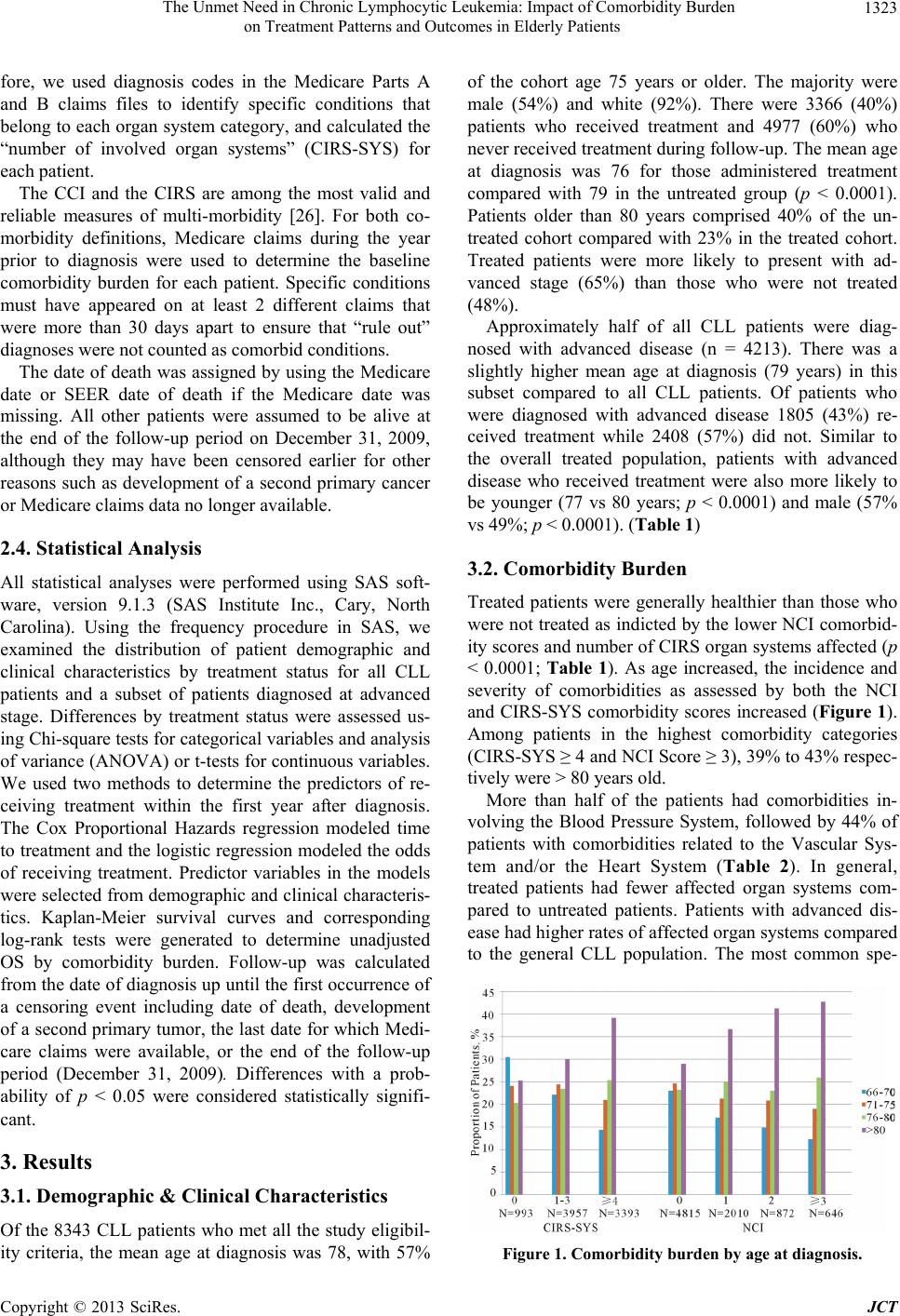 The Unmet Need in Chronic Lymphocytic Leukemia: Impact of Comorbidity Burden on Treatment Patterns and Outcomes in Elderly Patients 1323 fore, we used diagnosis codes in the Medicare Parts A and B claims files to identify specific conditions that belong to each organ system category, and calculated the “number of involved organ systems” (CIRS-SYS) for each patient. The CCI and the CIRS are among the most valid and reliable measures of multi-morbidity [26]. For both co- morbidity definitions, Medicare claims during the year prior to diagnosis were used to determine the baseline comorbidity burden for each patient. Specific conditions must have appeared on at least 2 different claims that were more than 30 days apart to ensure that “rule out” diagnoses were not counted as comorbid conditions. The date of death was assigned by using the Medicare date or SEER date of death if the Medicare date was missing. All other patients were assumed to be alive at the end of the follow-up period on December 31, 2009, although they may have been censored earlier for other reasons such as development of a second primary cancer or Medicare claims data no longer available. 2.4. Statistical Analysis All statistical analyses were performed using SAS soft- ware, version 9.1.3 (SAS Institute Inc., Cary, North Carolina). Using the frequency procedure in SAS, we examined the distribution of patient demographic and clinical characteristics by treatment status for all CLL patients and a subset of patients diagnosed at advanced stage. Differences by treatment status were assessed us- ing Chi-square tests for categorical variables and analysis of variance (ANOVA) or t-tests for continuous variables. We used two methods to determine the predictors of re- ceiving treatment within the first year after diagnosis. The Cox Proportional Hazards regression modeled time to treatment and the logistic regression modeled the odds of receiving treatment. Predictor variables in the models were selected from demographic and clinical characteris- tics. Kaplan-Meier survival curves and corresponding log-rank tests were generated to determine unadjusted OS by comorbidity burden. Follow-up was calculated from the date of diagnosis up until the first occurrence of a censoring event including date of death, development of a second primary tumor, the last date for which Medi- care claims were available, or the end of the follow-up period (December 31, 2009). Differences with a prob- ability of p < 0.05 were considered statistically signifi- cant. 3. Results 3.1. Demographic & Clinical Characteristics Of the 8343 CLL patients who met all the study eligibil- ity criteria, the mean age at diagnosis was 78, with 57% of the cohort age 75 years or older. The majority were male (54%) and white (92%). There were 3366 (40%) patients who received treatment and 4977 (60%) who never received treatment during follow-up. The mean age at diagnosis was 76 for those administered treatment compared with 79 in the untreated group (p < 0.0001). Patients older than 80 years comprised 40% of the un- treated cohort compared with 23% in the treated cohort. Treated patients were more likely to present with ad- vanced stage (65%) than those who were not treated (48%). Approximately half of all CLL patients were diag- nosed with advanced disease (n = 4213). There was a slightly higher mean age at diagnosis (79 years) in this subset compared to all CLL patients. Of patients who were diagnosed with advanced disease 1805 (43%) re- ceived treatment while 2408 (57%) did not. Similar to the overall treated population, patients with advanced disease who received treatment were also more likely to be younger (77 vs 80 years; p < 0.0001) and male (57% vs 49%; p < 0.0001). (Table 1) 3.2. Comorbidity Burden Treated patients were generally healthier than those who were not treated as indicted by the lower NCI comorbid- ity scores and number of CIRS organ systems affected (p < 0.0001; Table 1). As age increased, the incidence and severity of comorbidities as assessed by both the NCI and CIRS-SYS comorbidity scores increased (Figure 1). Among patients in the highest comorbidity categories (CIRS-SYS ≥ 4 and NCI Score ≥ 3), 39% to 43% respec- tively were > 80 years old. More than half of the patients had comorbidities in- volving the Blood Pressure System, followed by 44% of patients with comorbidities related to the Vascular Sys- tem and/or the Heart System (Table 2). In general, treated patients had fewer affected organ systems com- pared to untreated patients. Patients with advanced dis- ease had higher rates of affected organ systems compared to the general CLL population. The most common spe- Figure 1. Comorbidity burden by age at diagnosis. Copyright © 2013 SciRes. JCT 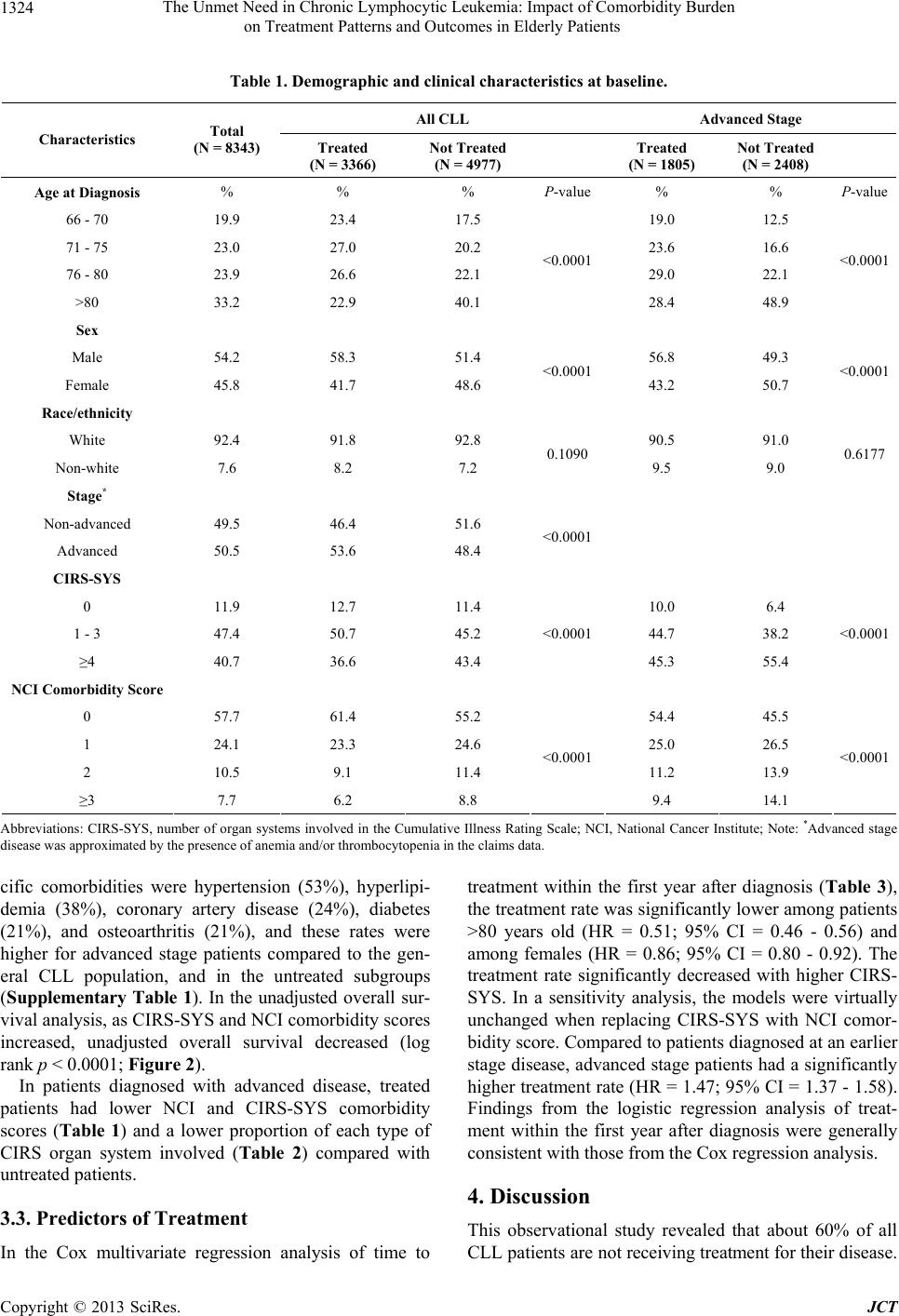 The Unmet Need in Chronic Lymphocytic Leukemia: Impact of Comorbidity Burden on Treatment Patterns and Outcomes in Elderly Patients Copyright © 2013 SciRes. JCT 1324 Table 1. Demographic and clinical characteristics at baseline. All CLL Advanced Stage Characteristics Total (N = 8343) Treated (N = 3366) Not Treated (N = 4977) Treated (N = 1805) Not Treated (N = 2408) Age at Diagnosis % % % P-value% % P-value 66 - 70 19.9 23.4 17.5 19.0 12.5 71 - 75 23.0 27.0 20.2 23.6 16.6 76 - 80 23.9 26.6 22.1 29.0 22.1 >80 33.2 22.9 40.1 <0.0001 28.4 48.9 <0.0001 Sex Male 54.2 58.3 51.4 56.8 49.3 Female 45.8 41.7 48.6 <0.0001 43.2 50.7 <0.0001 Race/ethnicity White 92.4 91.8 92.8 90.5 91.0 Non-white 7.6 8.2 7.2 0.1090 9.5 9.0 0.6177 Stage* Non-advanced 49.5 46.4 51.6 Advanced 50.5 53.6 48.4 <0.0001 CIRS-SYS 0 11.9 12.7 11.4 10.0 6.4 1 - 3 47.4 50.7 45.2 44.7 38.2 ≥4 40.7 36.6 43.4 <0.0001 45.3 55.4 <0.0001 NCI Comorbidity Score 0 57.7 61.4 55.2 54.4 45.5 1 24.1 23.3 24.6 25.0 26.5 2 10.5 9.1 11.4 11.2 13.9 ≥3 7.7 6.2 8.8 <0.0001 9.4 14.1 <0.0001 Abbreviations: CIRS-SYS, number of organ systems involved in the Cumulative Illness Rating Scale; NCI, National Cancer Institute; Note: *Advanced stage disease was approximated by the presence of anemia and/or thrombocytopenia in the claims data. cific comorbidities were hypertension (53%), hyperlipi- demia (38%), coronary artery disease (24%), diabetes (21%), and osteoarthritis (21%), and these rates were higher for advanced stage patients compared to the gen- eral CLL population, and in the untreated subgroups (Supplementary Table 1). In the unadjusted overall sur- vival analysis, as CIRS-SYS and NCI comorbidity scores increased, unadjusted overall survival decreased (log rank p < 0.0001; Figure 2). In patients diagnosed with advanced disease, treated patients had lower NCI and CIRS-SYS comorbidity scores (Table 1) and a lower proportion of each type of CIRS organ system involved (Ta ble 2) compared with untreated patients. 3.3. Predictors of Treatment In the Cox multivariate regression analysis of time to treatment within the first year after diagnosis (Table 3), the treatment rate was significantly lower among patients >80 years old (HR = 0.51; 95% CI = 0.46 - 0.56) and among females (HR = 0.86; 95% CI = 0.80 - 0.92). The treatment rate significantly decreased with higher CIRS- SYS. In a sensitivity analysis, the models were virtually unchanged when replacing CIRS-SYS with NCI comor- bidity score. Compared to patients diagnosed at an earlier stage disease, advanced stage patients had a significantly higher treatment rate (HR = 1.47; 95% CI = 1.37 - 1.58). Findings from the logistic regression analysis of treat- ment within the first year after diagnosis were generally consistent with those from the Cox regression analysis. 4. Discussion This observational study revealed that about 60% of all CLL patients are not receiving treatment for their disease.  The Unmet Need in Chronic Lymphocytic Leukemia: Impact of Comorbidity Burden on Treatment Patterns and Outcomes in Elderly Patients 1325 Table 2. Cumulative illness rating scale organ system type by treatment status. All CLL Advanced Stage Total (N = 8343) Treated (N = 3366) Not Treated (N = 4977) Treated (N = 1805) Not Treated (N = 2408) Organ System % % % P-value % % P-value Blood Pressure 53.1 51.0 54.5 0.0017 68.6 74.4 <0.0001 Vascular 44.4 43.4 45.1 0.1360 67.0 67.1 0.9523 Heart 43.9 40.8 45.9 <0.0001 63.8 71.3 <0.0001 Endocrine/Metabolic 31.1 28.8 32.7 0.0002 46.5 50.7 0.0061 Genitourinary 29.6 29.8 29.6 0.8350 49.0 54.2 0.0009 Musculoskeletal 29.1 27.0 30.6 0.0004 43.5 52.2 <0.0001 Respiratory 21.0 19.9 21.7 0.0482 39.1 41.6 0.1081 Neurological 16.9 13.0 19.6 <0.0001 24.0 36.1 <0.0001 Upper GI 12.4 12.3 12.4 0.8197 27.5 28.4 0.5143 Lower GI 10.7 10.1 11.1 0.1727 26.6 28.4 0.2178 Psychiatric 9.5 5.2 12.4 <0.0001 11.2 26.9 <0.0001 Ear/Nose/Throat 6.6 7.3 6.1 0.0365 12.4 10.3 0.0316 Renal 5.7 4.3 6.7 <0.0001 13.2 18.8 <0.0001 Liver 2.3 2.3 2.2 0.7258 10.1 8.8 0.1727 No CIRS Comorbidity 11.9 12.7 11.4 0.0691 2.0 0.7 0.0001 Abbreviations: CLL, chronic lymphocytic leukemia; GI, gastrointestinal. Figure 2. Unadjusted overall survival by comorbidity burden. This high non-treatment rate may be partly explained by the “watch and wait” strategy for asymptomatic disease. Historically, patients with low- or intermediate-risk early stage disease are managed with active surveillance (watch and wait) while treatment is indicated for patients with advanced disease [2,27]. However, understanding the intent of treatment or no treatment is a challenge with claims-based investigations. In our study, we used “ad- vanced stage disease” as an indicator of higher risk status and thus likely eligibility for treatment, making the high non-treatment rate (57%) in this subgroup noteworthy. The high proportion of advanced stage patients who went untreated may be explained by the medical fitness of patients. This is evidenced by the slightly older at diag- Copyright © 2013 SciRes. JCT  The Unmet Need in Chronic Lymphocytic Leukemia: Impact of Comorbidity Burden on Treatment Patterns and Outcomes in Elderly Patients 1326 Table 3. Multivariate analysis of treatment within the first year after diagnosis. Cox Model of Time to Tr ea t ment Logistic Regression of Treatment Characteristics N HR 95% CI OR 95% CI Age at Diagnosis 66 - 70 (ref) 1661 71 - 75 1917 1.00 0.91 - 1.10 1.06 0.90 - 1.25 76 - 80 1996 0.91 0.83 - 1.01 0.97 0.83 - 1.15 >80 2769 0.51 0.46 - 0.56 0.62 0.53 - 0.73 Sex Male (ref) 4521 Female 3822 0.86 0.80 - 0.92 0.76 0.68 - 0.86 Race/ethnicity Non-White (ref) 632 White 7711 0.96 0.85 - 1.09 1.02 0.83 - 1.27 Stage* Non-advanced (ref) 4130 Advanced 4213 1.47 1.37 - 1.58 2.29 2.04 - 2.58 CIRS-SYS 0 (ref) 993 1 - 3 3957 0.97 0.87 - 1.08 0.64 0.55 - 0.77 ≥4 3393 0.79 0.70 - 0.88 0.56 0.47 - 0.67 Geographic region MidWest (ref) 1077 Northeast 533 1.07 0.90 - 1.27 0.94 0.72 - 1.25 South 3760 1.08 0.97 - 1.21 0.95 0.80 - 1.13 West 2973 1.06 0.95 - 1.19 0.91 0.78 - 1.10 Median Income Quartiles 1-Low (ref) 2166 2 2059 1.06 0.96 - 1.17 1.09 0.93 - 1.29 3 2061 1.12 1.02 - 1.24 1.15 0.99 - 1.36 4-High 2057 1.12 1.01 - 1.23 1.12 0.96 - 1.33 Abbreviations: CIRS-SYS, number of organ systems involved in the Cumulative Illness Rating Scale; Note: *Advanced stage disease was approximated by the presence of anemia and/or thrombocytopenia in the claims data. nosis and/or higher comorbidity burden in advanced stage patients compared to all CLL patients. Although our multivariate regression models confirmed that ad- vanced stage patients had a 47% higher likelihood of receiving treatment compared to patients with non-ad- vanced disease; both older age and higher comorbidity were significant independent predictors of decreased likelihood of receiving treatment and appear to carry more weight, rather than disease stage, in clinicians’ de- cisions to treat. Major comorbidities were evident in 42% of the pa- tients based on the NCI comorbidity index while 41% had multiple comorbidities involving at least 4 organ systems according to the CIRS. The frequency of comor- bidities in our analysis is comparable to the rate of 46% reported by Thurmes and colleagues in an analysis of 1195 patients newly diagnosed with CLL at the Mayo Clinic from 1995 to 2006 [10]. The median age at diag- nosis in that study was 68 years compared to 77 in the current study. In the current analysis, a simple count of affected organ systems based on the CIRS revealed at least one coexisting medical condition (regardless of se- verity) for 88% of patients. This was also consistent with the 89% of patients with at least one coexisting medical condition reported by Thurmes and colleagues [10]. The CIRS has been utilized as a tool for some clinical Copyright © 2013 SciRes. JCT  The Unmet Need in Chronic Lymphocytic Leukemia: Impact of Comorbidity Burden on Treatment Patterns and Outcomes in Elderly Patients 1327 investigators in order to identify patients with coexisting medical conditions that might influence the efficacy and safety of treatment [28]. Importantly, among patients in the highest comorbidity categories (CIRS-SYS ≥ 4 and NCI Score ≥ 3), 39% to 43% respectively were >80 years old. We found that higher comorbidity was associated with decreased unad- justed overall survival. However, this finding may be confounded by the fact that the presence of comorbidities may have resulted in the decision to withhold treatment due to tolerability concerns; and this lack of treatment may have contributed to the lower overall survival. Patient preferences, physicians’ tendencies to treat pa- tients according to chronologic age and lack of evidence- based guidelines for treating elderly patients are cited as factors that lead to under-treatment [29]. There is a great need in CLL to evaluate efficacy and safety of treatment in trials that include more elderly patients so that treat- ment strategies for elderly patients can be better sup- ported by clinical trial results. Study Strengths and Limitations This study has several strengths, including the large sample size from the SEER-Medicare database, a popu- lation-based registry that includes a wide geographic representation of patients with a diagnosis of CLL in the United States. The database includes information about inpatient and outpatient claims, covered services, all claims regardless of residence or service area, and longi- tudinal data with claims for services from the time a per- son is eligible for Medicare until the date of death. However, use of the SEER-Medicare data for this type of analysis has some limitations, particularly for determin- ing accurate utilization rates of oral chemotherapy. Medi- care claims data more accurately identify agents that are intravenously administered since oral agents are covered under Medicare Part D [30] and it is estimated that only 53% of Medicare beneficiaries with cancer were enrolled in Medicare Part D in 2009 [31]. Incomplete enrollment in Medicare Part D may be a factor that contributed to our finding of low treatment rates due to the lack of treat- ment information for patients who only received oral agents or who may have received these oral treatments prior to their coverage from Medicare Part D. The SEER registry does not collect staging informa- tion for leukemia. We included claims for anemia and/or thrombocytopenia as a surrogate for advanced stage and this may not adequately assess stage for all patients in our study. Also, the use of anemia as a marker of disease severity may be subject to bias as there may be multiple causes of anemia in elderly patients, such as renal im- pairment. The incidence of renal impairment increases significantly in this age group. However, <6% of our entire cohort had renal impairment making it unlikely to introduce significant bias into the analysis. The SEER-Medicare database also does not provide data on performance status or lifestyle factors. These factors could affect the treatment rates we observed or clinicians’ decision to treat these patients. This analysis also does not provide information about patients enrolled in HMOs since claims data for these patients are not col- lected by Medicare. It is conceivable that treatment pat- terns, and prognosis may differ between HMO and Me- dicare enrollees. Another area that warrants further re- search is a comparison of the treatment patterns and out- comes of patients enrolled in HMOs compared with those in fee-for-service plans. Research is also required to evaluate patterns and outcomes of care for patients with varying performance status since this information is not included in the SEER-Medicare database and we were unable to examine possible interactions between performance status and probability of receiving treat- ment. Furthermore, our assumption that patients with multi- ple CIRS conditions have a higher comorbidity burden may be subject to interpretation error since we had no information about the severity of comorbidities. The da- tabase did not provide information about the length of time since the patient was diagnosed with a specific co- morbid condition or the impact of comorbidity on per- formance status and activities of daily living. However, given the nature of the claims-based data source, we as- sumed that the conditions were of sufficient severity (moderate to severe) to warrant consultation with a phy- sician or receipt of treatment for the condition that re- sulted in a claim. 5. Conclusion In summary, this real-world analysis of Medicare eligible CLL patients showed that regardless of disease stage, elderly patients with a high comorbidity burden are less likely to receive treatment for their disease. The current findings suggest an opportunity to improve treatment ap- proaches of elderly patients with coexisting medical con- ditions in order to achieve more favorable clinical out- comes in an increasingly aging population. 6. Acknowledgements The authors would like to thank Mr. Sridhar Guduru for programming support, Dr. Michelle Byrtek for statistical consult, Dr. Jia Li for thoughtful review of the manu- script and Carole Alison Chrvala PhD, of Health Matters, Inc. for editorial assistance. We acknowledge the efforts of the Applied Research Program, NCI (Bethesda, MD), the Office of Information Services and the Office of Stra- tegic Planning, Health Care Financing Administration Copyright © 2013 SciRes. JCT  The Unmet Need in Chronic Lymphocytic Leukemia: Impact of Comorbidity Burden on Treatment Patterns and Outcomes in Elderly Patients 1328 (Baltimore, MD), Information Management Services, Inc. (Silver Spring, MD), and the Surveillance, Epidemiology, and End Results (SEER) Program tumor registries in the creation of the SEER-Medicare database. The interpreta- tion and reporting of these data are the sole responsibility of the authors. REFERENCES [1] G. M. Dores, W. F. Anderson, R. E. Curtis, et al., “Chro- nic Lymphocytic Leukaemia and Small Lymphocytic Lymphoma: Overview of the Descriptive Epidemiology,” British Journal of Haematology, Vol. 139, No. 5, 2007, pp. 809-819. http://dx.doi.org/10.1111/j.1365-2141.2007.06856.x [2] J. G. Gribben, “Chronic Lymphocytic Leukemia: Plan- ning for an Aging Population,” Expert Review of Antican- cer Therapy, Vol. 10, No. 9, 2010, pp. 1389-1394. http://dx.doi.org/10.1586/era.10.127 [3] N. A. Howlader, M. Krapcho, et al., “SEER Cancer Sta- tistics Review, 1975-2009 (Vintage 2009 Populations),” National Cancer Institute, Bethesda, 2011. [4] R. Siegel, C. DeSantis, K. Virgo, et al., “Cancer Treat- ment and Survivorship Statistics, 2012,” CA: A Cancer Journal for Clinicians, Vol. 62, No. 4, 2012, pp. 220-241. http://dx.doi.org/10.3322/caac.21149 [5] C. Zent, “Chronic Lymphocytic Leukemia in the Elderly: Who Should Be Treated?” 2010 Educational Book, 2010. http://www.asco.org/ascov2/Education+&+Training/Educ ational+Book?&vmview=edbk_detail_view&confID=74 &abstractID=60 [6] L. Smolej, “How I Treat Elderly or Comorbid Patients with Chronic Lymphocytic Leukemia,” Acta Medica (Hradec Kralove), Vol. 53, 2010, pp. 213-220. [7] B. Eichhorst, V. Goede and M. Hallek, “Treatment of El- derly Patients with Chronic Lymphocytic Leukemia,” Leukemia & Lymphoma, Vol. 50, No. 2, 2009, pp. 171- 178. http://dx.doi.org/10.1080/10428190802688517 [8] J. C. Byrd, K. Rai, B. L. Peterson, et al., “Addition of Rituximab to Fludarabine May Prolong Progression-Free Survival and Overall Survival in Patients with Previously Untreated Chronic Lymphocytic Leukemia: An Updated Retrospective Comparative Analysis of CALGB 9712 and CALGB 9011,” Blood, Vol. 105, No. 1, 2005, pp 49- 53. http://dx.doi.org/10.1182/blood-2004-03-0796 [9] M. Hallek, K. Fischer, G. Fingerle-Rowson, et al., “Addi- tion of Rituximab to Fludarabine and Cyclophosphamide in Patients with Chronic Lymphocytic Leukaemia: A Ran- domised, Open-Label, Phase 3 Trial,” Lancet, Vol. 376, No. 9747, 2010, pp. 1164-1174. http://dx.doi.org/10.1016/S0140-6736(10)61381-5 [10] P. Thurmes, T. Call, S. Slager, et al., “Comorbid Condi- tions and Survival in Unselected, Newly Diagnosed Pa- tients with Chronic Lymphocytic Leukemia,” Leukemia & Lymphoma, Vol. 49, No. 1, 2008, pp. 49-56. http://dx.doi.org/10.1080/10428190701724785 [11] L. Smolej, “Therapy of Elderly/Comorbid Patients with Chronic Lymphocytic Leukemia,” Current Pharmaceuti- cal Design, Vol. 18, No. 23, 2012, pp. 3399-3405. http://dx.doi.org/10.2174/138161212801227096 [12] K. A. Foon, M. Boyiadzis, S. R. Land, et al., “Chemo- immunotherapy with Low-Dose Fludarabine and Cyclo- phosphamide and High Dose Rituximab in Previously Un- treated Patients with Chronic Lymphocytic Leukemia,” Journal of Clinical Oncology, Vol. 27, No. 4, 2009, pp. 498-503. http://dx.doi.org/10.1200/JCO.2008.17.2619 [13] F. Forconi, A. Fabbri, M. Lenoci, et al., “Low-Dose Oral Fludarabine Plus Cyclophosphamide in Elderly Patients with Untreated and Relapsed or Refractory Chronic Lym- phocytic Leukaemia,” Hematological Oncology, Vol. 26, No. 4, 2008, pp. 247-251. http://dx.doi.org/10.1002/hon.868 [14] National Comprehensive Cancer Network, NCCN Clini- cal Practice Guidelines in Oncology, Non-Hodgkin’s Lym- phomas, Vol. 3, 2012. [15] J. L. Warren, C. N. Klabunde, D. Schrag, et al., “Over- view of the SEER-Medicare Data: Content, Research Ap- plications, and Generalizability to the United States Eld- erly Population,” Medical Care, Vol. 40, No. 8, 2002, pp. IV-3-IV-18. http://dx.doi.org/10.1097/00005650-200208001-00002 [16] A. L. Potosky, G. F. Riley, J. D. Lubitz, et al., “Potential for Cancer Related Health Services Research Using a Linked Medicare-Tumor Registry Database,” Medical Care, Vol. 31, No. 8, 1993, pp. 732-748. http://dx.doi.org/10.1097/00005650-199308000-00006 [17] N. C. Institute, “SEER-Medicare: How the SEER and Medicare Data Are Linked,” 2007. http://healthservices.cancer.gov/seermedicare/overview/li nked.html [18] J. L. Binet, A. Auquier, G. Dighiero, et al., “A New Prog- nostic Classification of Chronic Lymphocytic Leukemia Derived from a Multivariate Survival Analysis,” Cancer, Vol. 48, No. 1, 1981, pp. 198-206. http://dx.doi.org/10.1002/1097-0142(19810701)48:1<198 ::AID-CNCR2820480131>3.0.CO;2-V [19] K. R. Rai, A. Sawitsky, E. P. Cronkite, et al., “Clinical Staging of Chronic Lymphocytic Leukemia,” Blood, Vol. 46, No. 2, 1975, pp. 219-234. [20] M. D. Danese, R. I. Griffiths, M. Gleeson, et al., “An Observational Study of Outcomes after Initial Infused Therapy in Medicare Patients Diagnosed with Chronic Lymphocytic Leukemia,” Blood, Vol. 117, No. 13, 2011, pp. 3505-3513. http://dx.doi.org/10.1182/blood-2010-08-301929 [21] J. L. Warren, L. C. Harlan, A. Fahey, et al., “Utility of the SEER-Medicare Data to Identify Chemotherapy Use,” Medical Care, Vol. 40, No. 8, 2002, pp. IV-55-IV-61. http://dx.doi.org/10.1097/00005650-200208001-00008 [22] C. N. Klabunde, J. M. Legler, J. L. Warren, et al., “A Re- fined Comorbidity Measurement Algorithm for Claims- Based Studies of Breast, Prostate, Colorectal, and Lung Cancer Patients,” Annals of Epidemiology, Vol. 17, No. 8, 2007, pp. 584-590. http://dx.doi.org/10.1016/j.annepidem.2007.03.011 Copyright © 2013 SciRes. JCT  The Unmet Need in Chronic Lymphocytic Leukemia: Impact of Comorbidity Burden on Treatment Patterns and Outcomes in Elderly Patients Copyright © 2013 SciRes. JCT 1329 [23] M. E. Charlson, P. Pompei, K. L. Ales, et al., “A New Method of Classifying Prognostic Comorbidity in Longi- tudinal Studies: Development and Validation,” Journal of Chronic Diseases, Vol. 40, No. 5, 1987, pp. 373-383. http://dx.doi.org/10.1016/0021-9681(87)90171-8 [24] B. S. Linn, M. W. Linn and L. Gurel, “Cumulative illness rating scale. Journal of the American Geriatrics Society, Vol. 16, 1968, pp. 622-626. [25] P. A. Parmelee, P. D. Thuras, I. R. Katz, et al., “Valida- tion of the Cumulative Illness Rating Scale in a Geriatric Residential Population,” Journal of the American Geriat- rics Society, Vol. 43, 1995, pp. 130-137. [26] V. de Groot, H. Beckerman, G. J. Lankhorst, et al., “How to Measure Comorbidity: A Critical Review of Available Methods,” J our nal of Clinical Epidemiology, Vol. 56, No. 3, 2003, pp. 221-229. http://dx.doi.org/10.1016/S0895-4356(02)00585-1 [27] T. M. Johnson, “Treatment and Management of Chronic Lymphocytic Leukemia in the Elderly: What the Pharma- cist Clinician Should Know,” The Consultant Pharmacist, Vol. 27, No. 4, 2012, pp. 274-285. http://dx.doi.org/10.4140/TCP.n.2012.274 [28] B. R. V. Goede, S. Stilgenbauer, et al., “Cumulative Ill- ness Rating Scale (CIRS) Is a Valuable Tool to Assess and Weigh Comorbidity in Patients with Chronic Lym- phocytic Leukemia (CLL): Results from the CLL8 Trial of the German CLL Study Group (GCLLSG),” European Hematolgy Association. [29] D. C. Dale, “Poor Prognosis in Elderly Patients with Can- cer: The Role of Bias and Undertreatment,” The Journal of Supportive Oncology, Vol. 1, No. 1, 2003, pp. 11-7. [30] J. L. Lund, T. Sturmer, L. C. Harlan, et al., “Identifying Specific Chemotherapeutic Agents in Medicare Data: A Validation Study,” Medical Care, Vol. 51, No. 5, 2013, pp. e27-e34. http://dx.doi.org/10.1097/MLR.0b013e31823ab60f [31] “Number of Part D Enrollees,” National Cancer Institute, Bethesda, 2012. Supplementary Table 1. Cumulative illness rating scale conditions by treatment status. All CLL Advanced Stage Top CIRS Conditions (Organ System) Total (N = 8343) Treated (N = 3366) Not Treated (N = 4977) Treated (N = 1805) Not Treated (N = 2408) (%) (%) (%) (%) (%) Hypertension (Blood Pressure) 53.1 51.0 54.5 55.3 60.8 Hyperlipidemia(Vascular) 37.5 38.9 36.6 43.1 40.3 Coronary Artery Disease (Heart) 23.8 23.3 24.2 28.0 30.7 Diabetes (Endocrine) 21.1 20.2 21.8 23.8 25.5 Osteoarthritis (Musculosketal) 20.9 19.5 21.8 22.8 25.8 Atrial Fibrillation (Heart) 19.8 17.9 21.0 21.4 26.5 Chronic Obstructive Pulmonary Disease (Respiratory) 15.6 14.5 16.4 17.3 20.3 BPH (Genitourinary) 14.1 16.0 12.8 17.3 14.1 Congestive Heart Failure (Heart) 13.6 9.9 16.1 13.9 22.3 Hypothyroid (Endocrine) 12.6 11.3 13.5 14.3 16.2 Urosepsis (Genitourinary) 12.2 10.0 13.6 12.1 18.0 Cerebral Vascular Accident (Neurological) 11.8 9.9 13.1 12.5 17.4 Osteoporosis (Musculoskeletal) 10.9 9.3 12.0 10.7 14.5 Valvular Disease (Heart) 10.3 9.6 10.8 12.5 14.7 Acute Urinary Retention (Genitourinary) 10.2 9.9 10.4 11.5 12.7 Abbreviations: CIRS, Cumulative Illness Rating Scale. |